

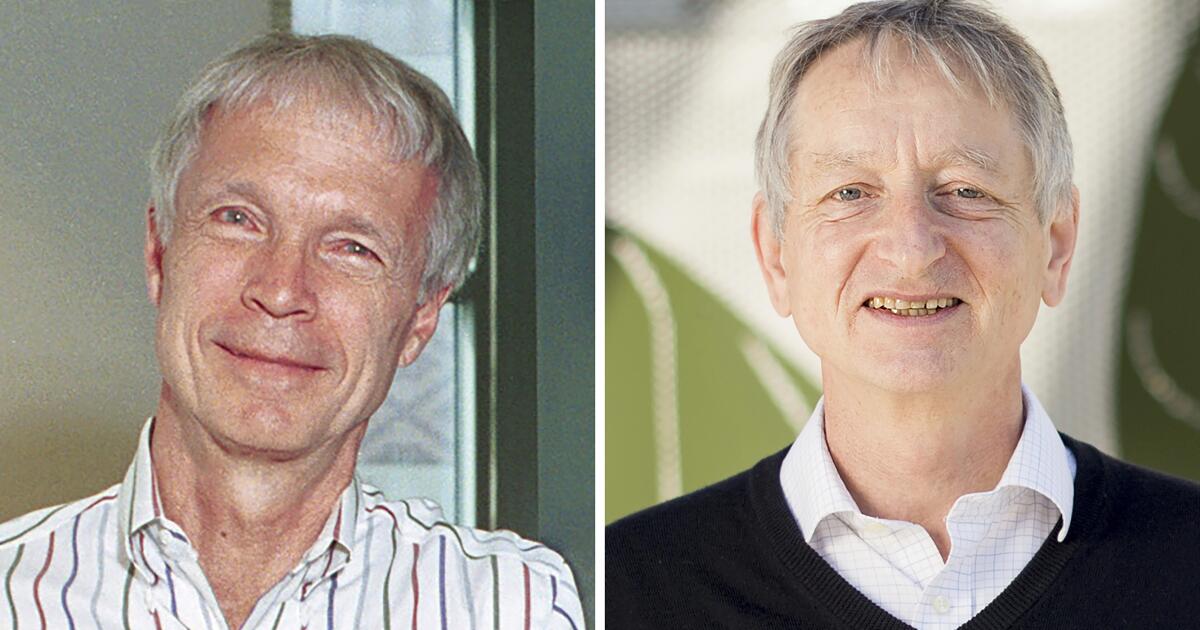
On Tuesday morning, Princeton University professor John Hopfield and University of Toronto professor Geoffrey Hinton won the Nobel Prize in Physics 2024 for their foundational discoveries and inventions that pioneered modern artificial intelligence.
Hopfield joined Caltech as faculty in 1980 and, two years later, published his seminal paper in which he applied principles of the brain to computer circuits, creating a neural network able to hold memory and recognize patterns.
Building off of Hopfield’s network, Hinton created a model that could not only distinguish between different patterns or images, but generate new ones altogether. His development later landed him a job at Google after the tech giant bought his company.
“These artificial neural networks have been used to advance research across physics topics as diverse as particle physics, material science and astrophysics,” said Ellen Moons, chair of the Nobel Committee for Physics, at the announcement. “The laureates discoveries and inventions form the building blocks of machine learning.”
The researchers will split a prize of roughly $1 million.
Hopfield was recruited to Caltech in 1978 after the university appointed a new president with a background in physics.
After years of attempting to model the human brain, Hopfield finally made his breakthrough in early 1980. He called Caltech a “splendid environment” for testing out his various ideas.
Around the same time, Hinton had left UC San Diego for Carnegie Mellon in Pittsburgh, where he developed his model based on Hopfield’s.
Called the Boltzmann machine, the model formed the basis of current generative AI models like ChatGPT (the “G” stands for “generative”).
Hinton and two of his students created a company based on the research in 2012, focused on using AI to identify common objects in photos, like flowers and dogs. Shortly after, Google bought it at auction for $44 million.
Hinton quit his job at the tech giant in 2023 so he could publicly voice concerns about the technology he helped invent.
He fears people will no longer be able to distinguish AI-generated images and videos from real ones and opposes the use of AI on the battlefield. Hinton said a part of him regrets his life’s work.

On Tuesday morning, Princeton University professor John Hopfield and University of Toronto professor Geoffrey Hinton won the Nobel Prize in Physics 2024 for their foundational discoveries and inventions that pioneered modern artificial intelligence.
Hopfield joined Caltech as faculty in 1980 and, two years later, published his seminal paper in which he applied principles of the brain to computer circuits, creating a neural network able to hold memory and recognize patterns.
Building off of Hopfield’s network, Hinton created a model that could not only distinguish between different patterns or images, but generate new ones altogether. His development later landed him a job at Google after the tech giant bought his company.
“These artificial neural networks have been used to advance research across physics topics as diverse as particle physics, material science and astrophysics,” said Ellen Moons, chair of the Nobel Committee for Physics, at the announcement. “The laureates discoveries and inventions form the building blocks of machine learning.”
The researchers will split a prize of roughly $1 million.
Hopfield was recruited to Caltech in 1978 after the university appointed a new president with a background in physics.
After years of attempting to model the human brain, Hopfield finally made his breakthrough in early 1980. He called Caltech a “splendid environment” for testing out his various ideas.
Around the same time, Hinton had left UC San Diego for Carnegie Mellon in Pittsburgh, where he developed his model based on Hopfield’s.
Called the Boltzmann machine, the model formed the basis of current generative AI models like ChatGPT (the “G” stands for “generative”).
Hinton and two of his students created a company based on the research in 2012, focused on using AI to identify common objects in photos, like flowers and dogs. Shortly after, Google bought it at auction for $44 million.
Hinton quit his job at the tech giant in 2023 so he could publicly voice concerns about the technology he helped invent.
He fears people will no longer be able to distinguish AI-generated images and videos from real ones and opposes the use of AI on the battlefield. Hinton said a part of him regrets his life’s work.

On Tuesday morning, Princeton University professor John Hopfield and University of Toronto professor Geoffrey Hinton won the Nobel Prize in Physics 2024 for their foundational discoveries and inventions that pioneered modern artificial intelligence.
Hopfield joined Caltech as faculty in 1980 and, two years later, published his seminal paper in which he applied principles of the brain to computer circuits, creating a neural network able to hold memory and recognize patterns.
Building off of Hopfield’s network, Hinton created a model that could not only distinguish between different patterns or images, but generate new ones altogether. His development later landed him a job at Google after the tech giant bought his company.
“These artificial neural networks have been used to advance research across physics topics as diverse as particle physics, material science and astrophysics,” said Ellen Moons, chair of the Nobel Committee for Physics, at the announcement. “The laureates discoveries and inventions form the building blocks of machine learning.”
The researchers will split a prize of roughly $1 million.
Hopfield was recruited to Caltech in 1978 after the university appointed a new president with a background in physics.
After years of attempting to model the human brain, Hopfield finally made his breakthrough in early 1980. He called Caltech a “splendid environment” for testing out his various ideas.
Around the same time, Hinton had left UC San Diego for Carnegie Mellon in Pittsburgh, where he developed his model based on Hopfield’s.
Called the Boltzmann machine, the model formed the basis of current generative AI models like ChatGPT (the “G” stands for “generative”).
Hinton and two of his students created a company based on the research in 2012, focused on using AI to identify common objects in photos, like flowers and dogs. Shortly after, Google bought it at auction for $44 million.
Hinton quit his job at the tech giant in 2023 so he could publicly voice concerns about the technology he helped invent.
He fears people will no longer be able to distinguish AI-generated images and videos from real ones and opposes the use of AI on the battlefield. Hinton said a part of him regrets his life’s work.
On Tuesday morning, Princeton University professor John Hopfield and University of Toronto professor Geoffrey Hinton won the Nobel Prize in Physics 2024 for their foundational discoveries and inventions that pioneered modern artificial intelligence.
Hopfield joined Caltech as faculty in 1980 and, two years later, published his seminal paper in which he applied principles of the brain to computer circuits, creating a neural network able to hold memory and recognize patterns.
Building off of Hopfield’s network, Hinton created a model that could not only distinguish between different patterns or images, but generate new ones altogether. His development later landed him a job at Google after the tech giant bought his company.
“These artificial neural networks have been used to advance research across physics topics as diverse as particle physics, material science and astrophysics,” said Ellen Moons, chair of the Nobel Committee for Physics, at the announcement. “The laureates discoveries and inventions form the building blocks of machine learning.”
The researchers will split a prize of roughly $1 million.
Hopfield was recruited to Caltech in 1978 after the university appointed a new president with a background in physics.
After years of attempting to model the human brain, Hopfield finally made his breakthrough in early 1980. He called Caltech a “splendid environment” for testing out his various ideas.
Around the same time, Hinton had left UC San Diego for Carnegie Mellon in Pittsburgh, where he developed his model based on Hopfield’s.
Called the Boltzmann machine, the model formed the basis of current generative AI models like ChatGPT (the “G” stands for “generative”).
Hinton and two of his students created a company based on the research in 2012, focused on using AI to identify common objects in photos, like flowers and dogs. Shortly after, Google bought it at auction for $44 million.
Hinton quit his job at the tech giant in 2023 so he could publicly voice concerns about the technology he helped invent.
He fears people will no longer be able to distinguish AI-generated images and videos from real ones and opposes the use of AI on the battlefield. Hinton said a part of him regrets his life’s work.

On Tuesday morning, Princeton University professor John Hopfield and University of Toronto professor Geoffrey Hinton won the Nobel Prize in Physics 2024 for their foundational discoveries and inventions that pioneered modern artificial intelligence.
Hopfield joined Caltech as faculty in 1980 and, two years later, published his seminal paper in which he applied principles of the brain to computer circuits, creating a neural network able to hold memory and recognize patterns.
Building off of Hopfield’s network, Hinton created a model that could not only distinguish between different patterns or images, but generate new ones altogether. His development later landed him a job at Google after the tech giant bought his company.
“These artificial neural networks have been used to advance research across physics topics as diverse as particle physics, material science and astrophysics,” said Ellen Moons, chair of the Nobel Committee for Physics, at the announcement. “The laureates discoveries and inventions form the building blocks of machine learning.”
The researchers will split a prize of roughly $1 million.
Hopfield was recruited to Caltech in 1978 after the university appointed a new president with a background in physics.
After years of attempting to model the human brain, Hopfield finally made his breakthrough in early 1980. He called Caltech a “splendid environment” for testing out his various ideas.
Around the same time, Hinton had left UC San Diego for Carnegie Mellon in Pittsburgh, where he developed his model based on Hopfield’s.
Called the Boltzmann machine, the model formed the basis of current generative AI models like ChatGPT (the “G” stands for “generative”).
Hinton and two of his students created a company based on the research in 2012, focused on using AI to identify common objects in photos, like flowers and dogs. Shortly after, Google bought it at auction for $44 million.
Hinton quit his job at the tech giant in 2023 so he could publicly voice concerns about the technology he helped invent.
He fears people will no longer be able to distinguish AI-generated images and videos from real ones and opposes the use of AI on the battlefield. Hinton said a part of him regrets his life’s work.
On Tuesday morning, Princeton University professor John Hopfield and University of Toronto professor Geoffrey Hinton won the Nobel Prize in Physics 2024 for their foundational discoveries and inventions that pioneered modern artificial intelligence.
Hopfield joined Caltech as faculty in 1980 and, two years later, published his seminal paper in which he applied principles of the brain to computer circuits, creating a neural network able to hold memory and recognize patterns.
Building off of Hopfield’s network, Hinton created a model that could not only distinguish between different patterns or images, but generate new ones altogether. His development later landed him a job at Google after the tech giant bought his company.
“These artificial neural networks have been used to advance research across physics topics as diverse as particle physics, material science and astrophysics,” said Ellen Moons, chair of the Nobel Committee for Physics, at the announcement. “The laureates discoveries and inventions form the building blocks of machine learning.”
The researchers will split a prize of roughly $1 million.
Hopfield was recruited to Caltech in 1978 after the university appointed a new president with a background in physics.
After years of attempting to model the human brain, Hopfield finally made his breakthrough in early 1980. He called Caltech a “splendid environment” for testing out his various ideas.
Around the same time, Hinton had left UC San Diego for Carnegie Mellon in Pittsburgh, where he developed his model based on Hopfield’s.
Called the Boltzmann machine, the model formed the basis of current generative AI models like ChatGPT (the “G” stands for “generative”).
Hinton and two of his students created a company based on the research in 2012, focused on using AI to identify common objects in photos, like flowers and dogs. Shortly after, Google bought it at auction for $44 million.
Hinton quit his job at the tech giant in 2023 so he could publicly voice concerns about the technology he helped invent.
He fears people will no longer be able to distinguish AI-generated images and videos from real ones and opposes the use of AI on the battlefield. Hinton said a part of him regrets his life’s work.
On Tuesday morning, Princeton University professor John Hopfield and University of Toronto professor Geoffrey Hinton won the Nobel Prize in Physics 2024 for their foundational discoveries and inventions that pioneered modern artificial intelligence.
Hopfield joined Caltech as faculty in 1980 and, two years later, published his seminal paper in which he applied principles of the brain to computer circuits, creating a neural network able to hold memory and recognize patterns.
Building off of Hopfield’s network, Hinton created a model that could not only distinguish between different patterns or images, but generate new ones altogether. His development later landed him a job at Google after the tech giant bought his company.
“These artificial neural networks have been used to advance research across physics topics as diverse as particle physics, material science and astrophysics,” said Ellen Moons, chair of the Nobel Committee for Physics, at the announcement. “The laureates discoveries and inventions form the building blocks of machine learning.”
The researchers will split a prize of roughly $1 million.
Hopfield was recruited to Caltech in 1978 after the university appointed a new president with a background in physics.
After years of attempting to model the human brain, Hopfield finally made his breakthrough in early 1980. He called Caltech a “splendid environment” for testing out his various ideas.
Around the same time, Hinton had left UC San Diego for Carnegie Mellon in Pittsburgh, where he developed his model based on Hopfield’s.
Called the Boltzmann machine, the model formed the basis of current generative AI models like ChatGPT (the “G” stands for “generative”).
Hinton and two of his students created a company based on the research in 2012, focused on using AI to identify common objects in photos, like flowers and dogs. Shortly after, Google bought it at auction for $44 million.
Hinton quit his job at the tech giant in 2023 so he could publicly voice concerns about the technology he helped invent.
He fears people will no longer be able to distinguish AI-generated images and videos from real ones and opposes the use of AI on the battlefield. Hinton said a part of him regrets his life’s work.
On Tuesday morning, Princeton University professor John Hopfield and University of Toronto professor Geoffrey Hinton won the Nobel Prize in Physics 2024 for their foundational discoveries and inventions that pioneered modern artificial intelligence.
Hopfield joined Caltech as faculty in 1980 and, two years later, published his seminal paper in which he applied principles of the brain to computer circuits, creating a neural network able to hold memory and recognize patterns.
Building off of Hopfield’s network, Hinton created a model that could not only distinguish between different patterns or images, but generate new ones altogether. His development later landed him a job at Google after the tech giant bought his company.
“These artificial neural networks have been used to advance research across physics topics as diverse as particle physics, material science and astrophysics,” said Ellen Moons, chair of the Nobel Committee for Physics, at the announcement. “The laureates discoveries and inventions form the building blocks of machine learning.”
The researchers will split a prize of roughly $1 million.
Hopfield was recruited to Caltech in 1978 after the university appointed a new president with a background in physics.
After years of attempting to model the human brain, Hopfield finally made his breakthrough in early 1980. He called Caltech a “splendid environment” for testing out his various ideas.
Around the same time, Hinton had left UC San Diego for Carnegie Mellon in Pittsburgh, where he developed his model based on Hopfield’s.
Called the Boltzmann machine, the model formed the basis of current generative AI models like ChatGPT (the “G” stands for “generative”).
Hinton and two of his students created a company based on the research in 2012, focused on using AI to identify common objects in photos, like flowers and dogs. Shortly after, Google bought it at auction for $44 million.
Hinton quit his job at the tech giant in 2023 so he could publicly voice concerns about the technology he helped invent.
He fears people will no longer be able to distinguish AI-generated images and videos from real ones and opposes the use of AI on the battlefield. Hinton said a part of him regrets his life’s work.

On Tuesday morning, Princeton University professor John Hopfield and University of Toronto professor Geoffrey Hinton won the Nobel Prize in Physics 2024 for their foundational discoveries and inventions that pioneered modern artificial intelligence.
Hopfield joined Caltech as faculty in 1980 and, two years later, published his seminal paper in which he applied principles of the brain to computer circuits, creating a neural network able to hold memory and recognize patterns.
Building off of Hopfield’s network, Hinton created a model that could not only distinguish between different patterns or images, but generate new ones altogether. His development later landed him a job at Google after the tech giant bought his company.
“These artificial neural networks have been used to advance research across physics topics as diverse as particle physics, material science and astrophysics,” said Ellen Moons, chair of the Nobel Committee for Physics, at the announcement. “The laureates discoveries and inventions form the building blocks of machine learning.”
The researchers will split a prize of roughly $1 million.
Hopfield was recruited to Caltech in 1978 after the university appointed a new president with a background in physics.
After years of attempting to model the human brain, Hopfield finally made his breakthrough in early 1980. He called Caltech a “splendid environment” for testing out his various ideas.
Around the same time, Hinton had left UC San Diego for Carnegie Mellon in Pittsburgh, where he developed his model based on Hopfield’s.
Called the Boltzmann machine, the model formed the basis of current generative AI models like ChatGPT (the “G” stands for “generative”).
Hinton and two of his students created a company based on the research in 2012, focused on using AI to identify common objects in photos, like flowers and dogs. Shortly after, Google bought it at auction for $44 million.
Hinton quit his job at the tech giant in 2023 so he could publicly voice concerns about the technology he helped invent.
He fears people will no longer be able to distinguish AI-generated images and videos from real ones and opposes the use of AI on the battlefield. Hinton said a part of him regrets his life’s work.
On Tuesday morning, Princeton University professor John Hopfield and University of Toronto professor Geoffrey Hinton won the Nobel Prize in Physics 2024 for their foundational discoveries and inventions that pioneered modern artificial intelligence.
Hopfield joined Caltech as faculty in 1980 and, two years later, published his seminal paper in which he applied principles of the brain to computer circuits, creating a neural network able to hold memory and recognize patterns.
Building off of Hopfield’s network, Hinton created a model that could not only distinguish between different patterns or images, but generate new ones altogether. His development later landed him a job at Google after the tech giant bought his company.
“These artificial neural networks have been used to advance research across physics topics as diverse as particle physics, material science and astrophysics,” said Ellen Moons, chair of the Nobel Committee for Physics, at the announcement. “The laureates discoveries and inventions form the building blocks of machine learning.”
The researchers will split a prize of roughly $1 million.
Hopfield was recruited to Caltech in 1978 after the university appointed a new president with a background in physics.
After years of attempting to model the human brain, Hopfield finally made his breakthrough in early 1980. He called Caltech a “splendid environment” for testing out his various ideas.
Around the same time, Hinton had left UC San Diego for Carnegie Mellon in Pittsburgh, where he developed his model based on Hopfield’s.
Called the Boltzmann machine, the model formed the basis of current generative AI models like ChatGPT (the “G” stands for “generative”).
Hinton and two of his students created a company based on the research in 2012, focused on using AI to identify common objects in photos, like flowers and dogs. Shortly after, Google bought it at auction for $44 million.
Hinton quit his job at the tech giant in 2023 so he could publicly voice concerns about the technology he helped invent.
He fears people will no longer be able to distinguish AI-generated images and videos from real ones and opposes the use of AI on the battlefield. Hinton said a part of him regrets his life’s work.
On Tuesday morning, Princeton University professor John Hopfield and University of Toronto professor Geoffrey Hinton won the Nobel Prize in Physics 2024 for their foundational discoveries and inventions that pioneered modern artificial intelligence.
Hopfield joined Caltech as faculty in 1980 and, two years later, published his seminal paper in which he applied principles of the brain to computer circuits, creating a neural network able to hold memory and recognize patterns.
Building off of Hopfield’s network, Hinton created a model that could not only distinguish between different patterns or images, but generate new ones altogether. His development later landed him a job at Google after the tech giant bought his company.
“These artificial neural networks have been used to advance research across physics topics as diverse as particle physics, material science and astrophysics,” said Ellen Moons, chair of the Nobel Committee for Physics, at the announcement. “The laureates discoveries and inventions form the building blocks of machine learning.”
The researchers will split a prize of roughly $1 million.
Hopfield was recruited to Caltech in 1978 after the university appointed a new president with a background in physics.
After years of attempting to model the human brain, Hopfield finally made his breakthrough in early 1980. He called Caltech a “splendid environment” for testing out his various ideas.
Around the same time, Hinton had left UC San Diego for Carnegie Mellon in Pittsburgh, where he developed his model based on Hopfield’s.
Called the Boltzmann machine, the model formed the basis of current generative AI models like ChatGPT (the “G” stands for “generative”).
Hinton and two of his students created a company based on the research in 2012, focused on using AI to identify common objects in photos, like flowers and dogs. Shortly after, Google bought it at auction for $44 million.
Hinton quit his job at the tech giant in 2023 so he could publicly voice concerns about the technology he helped invent.
He fears people will no longer be able to distinguish AI-generated images and videos from real ones and opposes the use of AI on the battlefield. Hinton said a part of him regrets his life’s work.
On Tuesday morning, Princeton University professor John Hopfield and University of Toronto professor Geoffrey Hinton won the Nobel Prize in Physics 2024 for their foundational discoveries and inventions that pioneered modern artificial intelligence.
Hopfield joined Caltech as faculty in 1980 and, two years later, published his seminal paper in which he applied principles of the brain to computer circuits, creating a neural network able to hold memory and recognize patterns.
Building off of Hopfield’s network, Hinton created a model that could not only distinguish between different patterns or images, but generate new ones altogether. His development later landed him a job at Google after the tech giant bought his company.
“These artificial neural networks have been used to advance research across physics topics as diverse as particle physics, material science and astrophysics,” said Ellen Moons, chair of the Nobel Committee for Physics, at the announcement. “The laureates discoveries and inventions form the building blocks of machine learning.”
The researchers will split a prize of roughly $1 million.
Hopfield was recruited to Caltech in 1978 after the university appointed a new president with a background in physics.
After years of attempting to model the human brain, Hopfield finally made his breakthrough in early 1980. He called Caltech a “splendid environment” for testing out his various ideas.
Around the same time, Hinton had left UC San Diego for Carnegie Mellon in Pittsburgh, where he developed his model based on Hopfield’s.
Called the Boltzmann machine, the model formed the basis of current generative AI models like ChatGPT (the “G” stands for “generative”).
Hinton and two of his students created a company based on the research in 2012, focused on using AI to identify common objects in photos, like flowers and dogs. Shortly after, Google bought it at auction for $44 million.
Hinton quit his job at the tech giant in 2023 so he could publicly voice concerns about the technology he helped invent.
He fears people will no longer be able to distinguish AI-generated images and videos from real ones and opposes the use of AI on the battlefield. Hinton said a part of him regrets his life’s work.
On Tuesday morning, Princeton University professor John Hopfield and University of Toronto professor Geoffrey Hinton won the Nobel Prize in Physics 2024 for their foundational discoveries and inventions that pioneered modern artificial intelligence.
Hopfield joined Caltech as faculty in 1980 and, two years later, published his seminal paper in which he applied principles of the brain to computer circuits, creating a neural network able to hold memory and recognize patterns.
Building off of Hopfield’s network, Hinton created a model that could not only distinguish between different patterns or images, but generate new ones altogether. His development later landed him a job at Google after the tech giant bought his company.
“These artificial neural networks have been used to advance research across physics topics as diverse as particle physics, material science and astrophysics,” said Ellen Moons, chair of the Nobel Committee for Physics, at the announcement. “The laureates discoveries and inventions form the building blocks of machine learning.”
The researchers will split a prize of roughly $1 million.
Hopfield was recruited to Caltech in 1978 after the university appointed a new president with a background in physics.
After years of attempting to model the human brain, Hopfield finally made his breakthrough in early 1980. He called Caltech a “splendid environment” for testing out his various ideas.
Around the same time, Hinton had left UC San Diego for Carnegie Mellon in Pittsburgh, where he developed his model based on Hopfield’s.
Called the Boltzmann machine, the model formed the basis of current generative AI models like ChatGPT (the “G” stands for “generative”).
Hinton and two of his students created a company based on the research in 2012, focused on using AI to identify common objects in photos, like flowers and dogs. Shortly after, Google bought it at auction for $44 million.
Hinton quit his job at the tech giant in 2023 so he could publicly voice concerns about the technology he helped invent.
He fears people will no longer be able to distinguish AI-generated images and videos from real ones and opposes the use of AI on the battlefield. Hinton said a part of him regrets his life’s work.
On Tuesday morning, Princeton University professor John Hopfield and University of Toronto professor Geoffrey Hinton won the Nobel Prize in Physics 2024 for their foundational discoveries and inventions that pioneered modern artificial intelligence.
Hopfield joined Caltech as faculty in 1980 and, two years later, published his seminal paper in which he applied principles of the brain to computer circuits, creating a neural network able to hold memory and recognize patterns.
Building off of Hopfield’s network, Hinton created a model that could not only distinguish between different patterns or images, but generate new ones altogether. His development later landed him a job at Google after the tech giant bought his company.
“These artificial neural networks have been used to advance research across physics topics as diverse as particle physics, material science and astrophysics,” said Ellen Moons, chair of the Nobel Committee for Physics, at the announcement. “The laureates discoveries and inventions form the building blocks of machine learning.”
The researchers will split a prize of roughly $1 million.
Hopfield was recruited to Caltech in 1978 after the university appointed a new president with a background in physics.
After years of attempting to model the human brain, Hopfield finally made his breakthrough in early 1980. He called Caltech a “splendid environment” for testing out his various ideas.
Around the same time, Hinton had left UC San Diego for Carnegie Mellon in Pittsburgh, where he developed his model based on Hopfield’s.
Called the Boltzmann machine, the model formed the basis of current generative AI models like ChatGPT (the “G” stands for “generative”).
Hinton and two of his students created a company based on the research in 2012, focused on using AI to identify common objects in photos, like flowers and dogs. Shortly after, Google bought it at auction for $44 million.
Hinton quit his job at the tech giant in 2023 so he could publicly voice concerns about the technology he helped invent.
He fears people will no longer be able to distinguish AI-generated images and videos from real ones and opposes the use of AI on the battlefield. Hinton said a part of him regrets his life’s work.
On Tuesday morning, Princeton University professor John Hopfield and University of Toronto professor Geoffrey Hinton won the Nobel Prize in Physics 2024 for their foundational discoveries and inventions that pioneered modern artificial intelligence.
Hopfield joined Caltech as faculty in 1980 and, two years later, published his seminal paper in which he applied principles of the brain to computer circuits, creating a neural network able to hold memory and recognize patterns.
Building off of Hopfield’s network, Hinton created a model that could not only distinguish between different patterns or images, but generate new ones altogether. His development later landed him a job at Google after the tech giant bought his company.
“These artificial neural networks have been used to advance research across physics topics as diverse as particle physics, material science and astrophysics,” said Ellen Moons, chair of the Nobel Committee for Physics, at the announcement. “The laureates discoveries and inventions form the building blocks of machine learning.”
The researchers will split a prize of roughly $1 million.
Hopfield was recruited to Caltech in 1978 after the university appointed a new president with a background in physics.
After years of attempting to model the human brain, Hopfield finally made his breakthrough in early 1980. He called Caltech a “splendid environment” for testing out his various ideas.
Around the same time, Hinton had left UC San Diego for Carnegie Mellon in Pittsburgh, where he developed his model based on Hopfield’s.
Called the Boltzmann machine, the model formed the basis of current generative AI models like ChatGPT (the “G” stands for “generative”).
Hinton and two of his students created a company based on the research in 2012, focused on using AI to identify common objects in photos, like flowers and dogs. Shortly after, Google bought it at auction for $44 million.
Hinton quit his job at the tech giant in 2023 so he could publicly voice concerns about the technology he helped invent.
He fears people will no longer be able to distinguish AI-generated images and videos from real ones and opposes the use of AI on the battlefield. Hinton said a part of him regrets his life’s work.
On Tuesday morning, Princeton University professor John Hopfield and University of Toronto professor Geoffrey Hinton won the Nobel Prize in Physics 2024 for their foundational discoveries and inventions that pioneered modern artificial intelligence.
Hopfield joined Caltech as faculty in 1980 and, two years later, published his seminal paper in which he applied principles of the brain to computer circuits, creating a neural network able to hold memory and recognize patterns.
Building off of Hopfield’s network, Hinton created a model that could not only distinguish between different patterns or images, but generate new ones altogether. His development later landed him a job at Google after the tech giant bought his company.
“These artificial neural networks have been used to advance research across physics topics as diverse as particle physics, material science and astrophysics,” said Ellen Moons, chair of the Nobel Committee for Physics, at the announcement. “The laureates discoveries and inventions form the building blocks of machine learning.”
The researchers will split a prize of roughly $1 million.
Hopfield was recruited to Caltech in 1978 after the university appointed a new president with a background in physics.
After years of attempting to model the human brain, Hopfield finally made his breakthrough in early 1980. He called Caltech a “splendid environment” for testing out his various ideas.
Around the same time, Hinton had left UC San Diego for Carnegie Mellon in Pittsburgh, where he developed his model based on Hopfield’s.
Called the Boltzmann machine, the model formed the basis of current generative AI models like ChatGPT (the “G” stands for “generative”).
Hinton and two of his students created a company based on the research in 2012, focused on using AI to identify common objects in photos, like flowers and dogs. Shortly after, Google bought it at auction for $44 million.
Hinton quit his job at the tech giant in 2023 so he could publicly voice concerns about the technology he helped invent.
He fears people will no longer be able to distinguish AI-generated images and videos from real ones and opposes the use of AI on the battlefield. Hinton said a part of him regrets his life’s work.

