

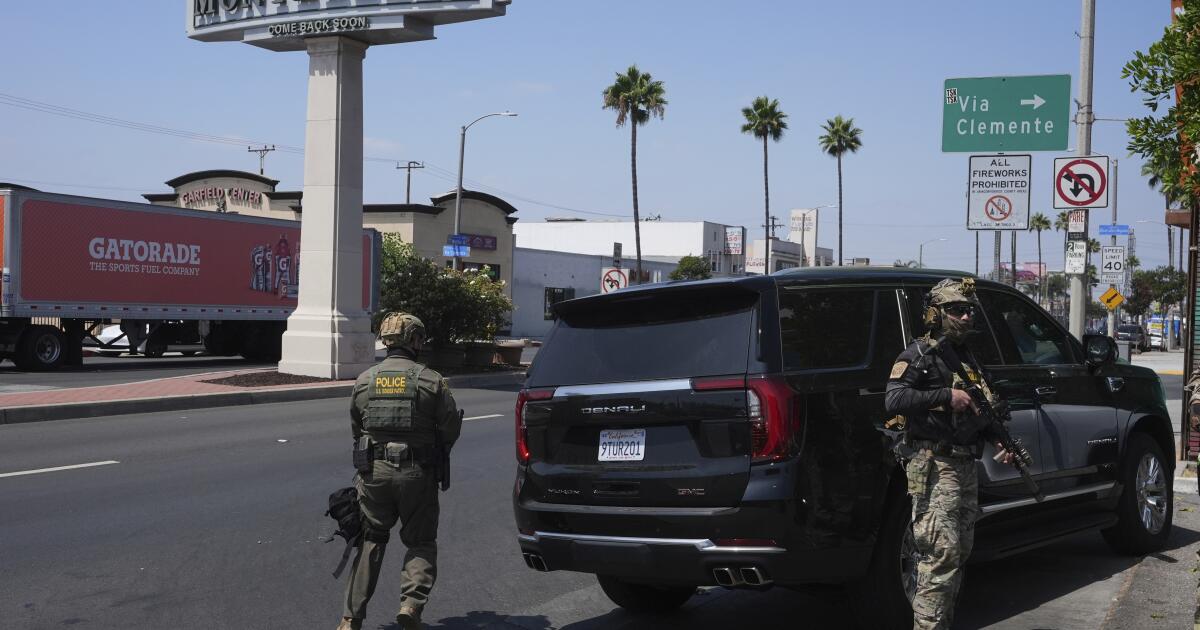
By almost every measure, Latino communities are bearing the brunt of the Trump administration’s mass deportation campaign, according to a new report.
The League of United Latin American Citizens or LULAC, a Latino civil rights organization, found that court-sanctioned racial profiling has contributed to the disproportionate targeting of Latinos regardless of their immigration status.
“The impact of mass deportation is falling on Latinos as an ethnic group, not on undocumented immigrants as a legal category,” the report read in part. “U.S. citizens, lawful permanent residents, work-authorized immigrants, and multi-generational American families are absorbing measurable harm: economic, physical, and civic.”
Although other immigrant groups have been targeted, LULAC found that Immigration and Customs Enforcement agents have mostly focused on immigrants from Latin America, particularly workers with no criminal history, who are also more likely to face violence or be placed in detention centers with substandard conditions.
Citing a recent UCLA study, LULAC said from January to October, federal immigration agents arrested more than 187,000 Latinos and deported more than 126,000.
Latino arrests also jumped from under 3,900 to nearly 6,000 after Stephen Miller, White House senior advisor and chief architect of President Trump’s immigration policy, set a new goal of arresting 3,000 undocumented people a day.
In an email response to The Times, a spokesperson with the Department of Homeland Security rejected the report’s findings.
“Allegations that DHS law enforcement engages in ‘racial profiling’ are disgusting, reckless, and categorically FALSE,” the spokesperson wrote. “What makes someone a target for immigration enforcement is if they are illegally in the U.S.—NOT their skin color, race, or ethnicity.”
“Law enforcement officers use ‘reasonable suspicion’ to investigate immigration status and probable cause to make arrests consistent with the Fourth Amendment to the U.S. Constitution,” the spokesperson added. “The Supreme Court has already vindicated us on these practices.”
LULAC’s report comes amid recent court filings claiming that federal immigration agents were caught on body camera footage and in text messages using racial slurs when referring to Latinos.
Additionally, Congress recently approved nearly $70 billion in immigration enforcement funding to cover the rest of Trump’s term with at least $38 billion to go to ICE and $26 billion to Customs and Border Protection.
LULAC said in putting the report together it reviewed public data and published studies to provide a fact sheet that paints a broader picture about the impact mass deportations are having on Latinos.
“The people being removed are disproportionately working-age, employed and without criminal records — the demographic core of the workforce in construction, hospitality, agriculture, food processing, and care work,” the report read.
As of July 11, more than 65,000 people were being held in detention and about 70% of the population had no criminal convictions, according to Transactional Records Access Clearinghouse, a data gathering organization.
ICE detention data show that about 40% of detainees were being held for civil immigration violations including visa overstays and work visa violations.
Unless previously deported, living in the country illegally is considered a civil violation rather than a crime and carries penalties such as arrests, fines and deportation proceedings.
The indiscriminate immigration raids that terrorized Latino communities appeared to have worsened after the Supreme Court’s 6-3 decision in September, according to LULAC’s report.
The Supreme Court justices overturned a district court injunction that barred immigration agents in Los Angeles from roving around Home Depots and car washes, stopping brown-skinned, Spanish-speaking day laborers and others from arrest on immigration charges.
But once the injunction lifted, federal immigration agents descended once more on Latino communities, even stopping U.S. citizens, according to LULAC.
This month, the American Civil Liberties Union reviewed more than 1,200 enforcement incidents across eight states, identifying 155 U.S. citizens who were detained, targeted, or experienced law enforcement misconduct, and 437 incidents involving likely racial profiling. It also identified 214 children affected, including 32 Americans.
LULAC said the immigration raids had an economic impact. Citing a recent UCLA study, it said small business and Latino entrepreneurs in Los Angeles County saw foot traffic drop significantly, losing millions in potential revenue in June 2025.
A spokesperson for LULAC could not immediately be reached for comment.

By almost every measure, Latino communities are bearing the brunt of the Trump administration’s mass deportation campaign, according to a new report.
The League of United Latin American Citizens or LULAC, a Latino civil rights organization, found that court-sanctioned racial profiling has contributed to the disproportionate targeting of Latinos regardless of their immigration status.
“The impact of mass deportation is falling on Latinos as an ethnic group, not on undocumented immigrants as a legal category,” the report read in part. “U.S. citizens, lawful permanent residents, work-authorized immigrants, and multi-generational American families are absorbing measurable harm: economic, physical, and civic.”
Although other immigrant groups have been targeted, LULAC found that Immigration and Customs Enforcement agents have mostly focused on immigrants from Latin America, particularly workers with no criminal history, who are also more likely to face violence or be placed in detention centers with substandard conditions.
Citing a recent UCLA study, LULAC said from January to October, federal immigration agents arrested more than 187,000 Latinos and deported more than 126,000.
Latino arrests also jumped from under 3,900 to nearly 6,000 after Stephen Miller, White House senior advisor and chief architect of President Trump’s immigration policy, set a new goal of arresting 3,000 undocumented people a day.
In an email response to The Times, a spokesperson with the Department of Homeland Security rejected the report’s findings.
“Allegations that DHS law enforcement engages in ‘racial profiling’ are disgusting, reckless, and categorically FALSE,” the spokesperson wrote. “What makes someone a target for immigration enforcement is if they are illegally in the U.S.—NOT their skin color, race, or ethnicity.”
“Law enforcement officers use ‘reasonable suspicion’ to investigate immigration status and probable cause to make arrests consistent with the Fourth Amendment to the U.S. Constitution,” the spokesperson added. “The Supreme Court has already vindicated us on these practices.”
LULAC’s report comes amid recent court filings claiming that federal immigration agents were caught on body camera footage and in text messages using racial slurs when referring to Latinos.
Additionally, Congress recently approved nearly $70 billion in immigration enforcement funding to cover the rest of Trump’s term with at least $38 billion to go to ICE and $26 billion to Customs and Border Protection.
LULAC said in putting the report together it reviewed public data and published studies to provide a fact sheet that paints a broader picture about the impact mass deportations are having on Latinos.
“The people being removed are disproportionately working-age, employed and without criminal records — the demographic core of the workforce in construction, hospitality, agriculture, food processing, and care work,” the report read.
As of July 11, more than 65,000 people were being held in detention and about 70% of the population had no criminal convictions, according to Transactional Records Access Clearinghouse, a data gathering organization.
ICE detention data show that about 40% of detainees were being held for civil immigration violations including visa overstays and work visa violations.
Unless previously deported, living in the country illegally is considered a civil violation rather than a crime and carries penalties such as arrests, fines and deportation proceedings.
The indiscriminate immigration raids that terrorized Latino communities appeared to have worsened after the Supreme Court’s 6-3 decision in September, according to LULAC’s report.
The Supreme Court justices overturned a district court injunction that barred immigration agents in Los Angeles from roving around Home Depots and car washes, stopping brown-skinned, Spanish-speaking day laborers and others from arrest on immigration charges.
But once the injunction lifted, federal immigration agents descended once more on Latino communities, even stopping U.S. citizens, according to LULAC.
This month, the American Civil Liberties Union reviewed more than 1,200 enforcement incidents across eight states, identifying 155 U.S. citizens who were detained, targeted, or experienced law enforcement misconduct, and 437 incidents involving likely racial profiling. It also identified 214 children affected, including 32 Americans.
LULAC said the immigration raids had an economic impact. Citing a recent UCLA study, it said small business and Latino entrepreneurs in Los Angeles County saw foot traffic drop significantly, losing millions in potential revenue in June 2025.
A spokesperson for LULAC could not immediately be reached for comment.

By almost every measure, Latino communities are bearing the brunt of the Trump administration’s mass deportation campaign, according to a new report.
The League of United Latin American Citizens or LULAC, a Latino civil rights organization, found that court-sanctioned racial profiling has contributed to the disproportionate targeting of Latinos regardless of their immigration status.
“The impact of mass deportation is falling on Latinos as an ethnic group, not on undocumented immigrants as a legal category,” the report read in part. “U.S. citizens, lawful permanent residents, work-authorized immigrants, and multi-generational American families are absorbing measurable harm: economic, physical, and civic.”
Although other immigrant groups have been targeted, LULAC found that Immigration and Customs Enforcement agents have mostly focused on immigrants from Latin America, particularly workers with no criminal history, who are also more likely to face violence or be placed in detention centers with substandard conditions.
Citing a recent UCLA study, LULAC said from January to October, federal immigration agents arrested more than 187,000 Latinos and deported more than 126,000.
Latino arrests also jumped from under 3,900 to nearly 6,000 after Stephen Miller, White House senior advisor and chief architect of President Trump’s immigration policy, set a new goal of arresting 3,000 undocumented people a day.
In an email response to The Times, a spokesperson with the Department of Homeland Security rejected the report’s findings.
“Allegations that DHS law enforcement engages in ‘racial profiling’ are disgusting, reckless, and categorically FALSE,” the spokesperson wrote. “What makes someone a target for immigration enforcement is if they are illegally in the U.S.—NOT their skin color, race, or ethnicity.”
“Law enforcement officers use ‘reasonable suspicion’ to investigate immigration status and probable cause to make arrests consistent with the Fourth Amendment to the U.S. Constitution,” the spokesperson added. “The Supreme Court has already vindicated us on these practices.”
LULAC’s report comes amid recent court filings claiming that federal immigration agents were caught on body camera footage and in text messages using racial slurs when referring to Latinos.
Additionally, Congress recently approved nearly $70 billion in immigration enforcement funding to cover the rest of Trump’s term with at least $38 billion to go to ICE and $26 billion to Customs and Border Protection.
LULAC said in putting the report together it reviewed public data and published studies to provide a fact sheet that paints a broader picture about the impact mass deportations are having on Latinos.
“The people being removed are disproportionately working-age, employed and without criminal records — the demographic core of the workforce in construction, hospitality, agriculture, food processing, and care work,” the report read.
As of July 11, more than 65,000 people were being held in detention and about 70% of the population had no criminal convictions, according to Transactional Records Access Clearinghouse, a data gathering organization.
ICE detention data show that about 40% of detainees were being held for civil immigration violations including visa overstays and work visa violations.
Unless previously deported, living in the country illegally is considered a civil violation rather than a crime and carries penalties such as arrests, fines and deportation proceedings.
The indiscriminate immigration raids that terrorized Latino communities appeared to have worsened after the Supreme Court’s 6-3 decision in September, according to LULAC’s report.
The Supreme Court justices overturned a district court injunction that barred immigration agents in Los Angeles from roving around Home Depots and car washes, stopping brown-skinned, Spanish-speaking day laborers and others from arrest on immigration charges.
But once the injunction lifted, federal immigration agents descended once more on Latino communities, even stopping U.S. citizens, according to LULAC.
This month, the American Civil Liberties Union reviewed more than 1,200 enforcement incidents across eight states, identifying 155 U.S. citizens who were detained, targeted, or experienced law enforcement misconduct, and 437 incidents involving likely racial profiling. It also identified 214 children affected, including 32 Americans.
LULAC said the immigration raids had an economic impact. Citing a recent UCLA study, it said small business and Latino entrepreneurs in Los Angeles County saw foot traffic drop significantly, losing millions in potential revenue in June 2025.
A spokesperson for LULAC could not immediately be reached for comment.
By almost every measure, Latino communities are bearing the brunt of the Trump administration’s mass deportation campaign, according to a new report.
The League of United Latin American Citizens or LULAC, a Latino civil rights organization, found that court-sanctioned racial profiling has contributed to the disproportionate targeting of Latinos regardless of their immigration status.
“The impact of mass deportation is falling on Latinos as an ethnic group, not on undocumented immigrants as a legal category,” the report read in part. “U.S. citizens, lawful permanent residents, work-authorized immigrants, and multi-generational American families are absorbing measurable harm: economic, physical, and civic.”
Although other immigrant groups have been targeted, LULAC found that Immigration and Customs Enforcement agents have mostly focused on immigrants from Latin America, particularly workers with no criminal history, who are also more likely to face violence or be placed in detention centers with substandard conditions.
Citing a recent UCLA study, LULAC said from January to October, federal immigration agents arrested more than 187,000 Latinos and deported more than 126,000.
Latino arrests also jumped from under 3,900 to nearly 6,000 after Stephen Miller, White House senior advisor and chief architect of President Trump’s immigration policy, set a new goal of arresting 3,000 undocumented people a day.
In an email response to The Times, a spokesperson with the Department of Homeland Security rejected the report’s findings.
“Allegations that DHS law enforcement engages in ‘racial profiling’ are disgusting, reckless, and categorically FALSE,” the spokesperson wrote. “What makes someone a target for immigration enforcement is if they are illegally in the U.S.—NOT their skin color, race, or ethnicity.”
“Law enforcement officers use ‘reasonable suspicion’ to investigate immigration status and probable cause to make arrests consistent with the Fourth Amendment to the U.S. Constitution,” the spokesperson added. “The Supreme Court has already vindicated us on these practices.”
LULAC’s report comes amid recent court filings claiming that federal immigration agents were caught on body camera footage and in text messages using racial slurs when referring to Latinos.
Additionally, Congress recently approved nearly $70 billion in immigration enforcement funding to cover the rest of Trump’s term with at least $38 billion to go to ICE and $26 billion to Customs and Border Protection.
LULAC said in putting the report together it reviewed public data and published studies to provide a fact sheet that paints a broader picture about the impact mass deportations are having on Latinos.
“The people being removed are disproportionately working-age, employed and without criminal records — the demographic core of the workforce in construction, hospitality, agriculture, food processing, and care work,” the report read.
As of July 11, more than 65,000 people were being held in detention and about 70% of the population had no criminal convictions, according to Transactional Records Access Clearinghouse, a data gathering organization.
ICE detention data show that about 40% of detainees were being held for civil immigration violations including visa overstays and work visa violations.
Unless previously deported, living in the country illegally is considered a civil violation rather than a crime and carries penalties such as arrests, fines and deportation proceedings.
The indiscriminate immigration raids that terrorized Latino communities appeared to have worsened after the Supreme Court’s 6-3 decision in September, according to LULAC’s report.
The Supreme Court justices overturned a district court injunction that barred immigration agents in Los Angeles from roving around Home Depots and car washes, stopping brown-skinned, Spanish-speaking day laborers and others from arrest on immigration charges.
But once the injunction lifted, federal immigration agents descended once more on Latino communities, even stopping U.S. citizens, according to LULAC.
This month, the American Civil Liberties Union reviewed more than 1,200 enforcement incidents across eight states, identifying 155 U.S. citizens who were detained, targeted, or experienced law enforcement misconduct, and 437 incidents involving likely racial profiling. It also identified 214 children affected, including 32 Americans.
LULAC said the immigration raids had an economic impact. Citing a recent UCLA study, it said small business and Latino entrepreneurs in Los Angeles County saw foot traffic drop significantly, losing millions in potential revenue in June 2025.
A spokesperson for LULAC could not immediately be reached for comment.

By almost every measure, Latino communities are bearing the brunt of the Trump administration’s mass deportation campaign, according to a new report.
The League of United Latin American Citizens or LULAC, a Latino civil rights organization, found that court-sanctioned racial profiling has contributed to the disproportionate targeting of Latinos regardless of their immigration status.
“The impact of mass deportation is falling on Latinos as an ethnic group, not on undocumented immigrants as a legal category,” the report read in part. “U.S. citizens, lawful permanent residents, work-authorized immigrants, and multi-generational American families are absorbing measurable harm: economic, physical, and civic.”
Although other immigrant groups have been targeted, LULAC found that Immigration and Customs Enforcement agents have mostly focused on immigrants from Latin America, particularly workers with no criminal history, who are also more likely to face violence or be placed in detention centers with substandard conditions.
Citing a recent UCLA study, LULAC said from January to October, federal immigration agents arrested more than 187,000 Latinos and deported more than 126,000.
Latino arrests also jumped from under 3,900 to nearly 6,000 after Stephen Miller, White House senior advisor and chief architect of President Trump’s immigration policy, set a new goal of arresting 3,000 undocumented people a day.
In an email response to The Times, a spokesperson with the Department of Homeland Security rejected the report’s findings.
“Allegations that DHS law enforcement engages in ‘racial profiling’ are disgusting, reckless, and categorically FALSE,” the spokesperson wrote. “What makes someone a target for immigration enforcement is if they are illegally in the U.S.—NOT their skin color, race, or ethnicity.”
“Law enforcement officers use ‘reasonable suspicion’ to investigate immigration status and probable cause to make arrests consistent with the Fourth Amendment to the U.S. Constitution,” the spokesperson added. “The Supreme Court has already vindicated us on these practices.”
LULAC’s report comes amid recent court filings claiming that federal immigration agents were caught on body camera footage and in text messages using racial slurs when referring to Latinos.
Additionally, Congress recently approved nearly $70 billion in immigration enforcement funding to cover the rest of Trump’s term with at least $38 billion to go to ICE and $26 billion to Customs and Border Protection.
LULAC said in putting the report together it reviewed public data and published studies to provide a fact sheet that paints a broader picture about the impact mass deportations are having on Latinos.
“The people being removed are disproportionately working-age, employed and without criminal records — the demographic core of the workforce in construction, hospitality, agriculture, food processing, and care work,” the report read.
As of July 11, more than 65,000 people were being held in detention and about 70% of the population had no criminal convictions, according to Transactional Records Access Clearinghouse, a data gathering organization.
ICE detention data show that about 40% of detainees were being held for civil immigration violations including visa overstays and work visa violations.
Unless previously deported, living in the country illegally is considered a civil violation rather than a crime and carries penalties such as arrests, fines and deportation proceedings.
The indiscriminate immigration raids that terrorized Latino communities appeared to have worsened after the Supreme Court’s 6-3 decision in September, according to LULAC’s report.
The Supreme Court justices overturned a district court injunction that barred immigration agents in Los Angeles from roving around Home Depots and car washes, stopping brown-skinned, Spanish-speaking day laborers and others from arrest on immigration charges.
But once the injunction lifted, federal immigration agents descended once more on Latino communities, even stopping U.S. citizens, according to LULAC.
This month, the American Civil Liberties Union reviewed more than 1,200 enforcement incidents across eight states, identifying 155 U.S. citizens who were detained, targeted, or experienced law enforcement misconduct, and 437 incidents involving likely racial profiling. It also identified 214 children affected, including 32 Americans.
LULAC said the immigration raids had an economic impact. Citing a recent UCLA study, it said small business and Latino entrepreneurs in Los Angeles County saw foot traffic drop significantly, losing millions in potential revenue in June 2025.
A spokesperson for LULAC could not immediately be reached for comment.
By almost every measure, Latino communities are bearing the brunt of the Trump administration’s mass deportation campaign, according to a new report.
The League of United Latin American Citizens or LULAC, a Latino civil rights organization, found that court-sanctioned racial profiling has contributed to the disproportionate targeting of Latinos regardless of their immigration status.
“The impact of mass deportation is falling on Latinos as an ethnic group, not on undocumented immigrants as a legal category,” the report read in part. “U.S. citizens, lawful permanent residents, work-authorized immigrants, and multi-generational American families are absorbing measurable harm: economic, physical, and civic.”
Although other immigrant groups have been targeted, LULAC found that Immigration and Customs Enforcement agents have mostly focused on immigrants from Latin America, particularly workers with no criminal history, who are also more likely to face violence or be placed in detention centers with substandard conditions.
Citing a recent UCLA study, LULAC said from January to October, federal immigration agents arrested more than 187,000 Latinos and deported more than 126,000.
Latino arrests also jumped from under 3,900 to nearly 6,000 after Stephen Miller, White House senior advisor and chief architect of President Trump’s immigration policy, set a new goal of arresting 3,000 undocumented people a day.
In an email response to The Times, a spokesperson with the Department of Homeland Security rejected the report’s findings.
“Allegations that DHS law enforcement engages in ‘racial profiling’ are disgusting, reckless, and categorically FALSE,” the spokesperson wrote. “What makes someone a target for immigration enforcement is if they are illegally in the U.S.—NOT their skin color, race, or ethnicity.”
“Law enforcement officers use ‘reasonable suspicion’ to investigate immigration status and probable cause to make arrests consistent with the Fourth Amendment to the U.S. Constitution,” the spokesperson added. “The Supreme Court has already vindicated us on these practices.”
LULAC’s report comes amid recent court filings claiming that federal immigration agents were caught on body camera footage and in text messages using racial slurs when referring to Latinos.
Additionally, Congress recently approved nearly $70 billion in immigration enforcement funding to cover the rest of Trump’s term with at least $38 billion to go to ICE and $26 billion to Customs and Border Protection.
LULAC said in putting the report together it reviewed public data and published studies to provide a fact sheet that paints a broader picture about the impact mass deportations are having on Latinos.
“The people being removed are disproportionately working-age, employed and without criminal records — the demographic core of the workforce in construction, hospitality, agriculture, food processing, and care work,” the report read.
As of July 11, more than 65,000 people were being held in detention and about 70% of the population had no criminal convictions, according to Transactional Records Access Clearinghouse, a data gathering organization.
ICE detention data show that about 40% of detainees were being held for civil immigration violations including visa overstays and work visa violations.
Unless previously deported, living in the country illegally is considered a civil violation rather than a crime and carries penalties such as arrests, fines and deportation proceedings.
The indiscriminate immigration raids that terrorized Latino communities appeared to have worsened after the Supreme Court’s 6-3 decision in September, according to LULAC’s report.
The Supreme Court justices overturned a district court injunction that barred immigration agents in Los Angeles from roving around Home Depots and car washes, stopping brown-skinned, Spanish-speaking day laborers and others from arrest on immigration charges.
But once the injunction lifted, federal immigration agents descended once more on Latino communities, even stopping U.S. citizens, according to LULAC.
This month, the American Civil Liberties Union reviewed more than 1,200 enforcement incidents across eight states, identifying 155 U.S. citizens who were detained, targeted, or experienced law enforcement misconduct, and 437 incidents involving likely racial profiling. It also identified 214 children affected, including 32 Americans.
LULAC said the immigration raids had an economic impact. Citing a recent UCLA study, it said small business and Latino entrepreneurs in Los Angeles County saw foot traffic drop significantly, losing millions in potential revenue in June 2025.
A spokesperson for LULAC could not immediately be reached for comment.
By almost every measure, Latino communities are bearing the brunt of the Trump administration’s mass deportation campaign, according to a new report.
The League of United Latin American Citizens or LULAC, a Latino civil rights organization, found that court-sanctioned racial profiling has contributed to the disproportionate targeting of Latinos regardless of their immigration status.
“The impact of mass deportation is falling on Latinos as an ethnic group, not on undocumented immigrants as a legal category,” the report read in part. “U.S. citizens, lawful permanent residents, work-authorized immigrants, and multi-generational American families are absorbing measurable harm: economic, physical, and civic.”
Although other immigrant groups have been targeted, LULAC found that Immigration and Customs Enforcement agents have mostly focused on immigrants from Latin America, particularly workers with no criminal history, who are also more likely to face violence or be placed in detention centers with substandard conditions.
Citing a recent UCLA study, LULAC said from January to October, federal immigration agents arrested more than 187,000 Latinos and deported more than 126,000.
Latino arrests also jumped from under 3,900 to nearly 6,000 after Stephen Miller, White House senior advisor and chief architect of President Trump’s immigration policy, set a new goal of arresting 3,000 undocumented people a day.
In an email response to The Times, a spokesperson with the Department of Homeland Security rejected the report’s findings.
“Allegations that DHS law enforcement engages in ‘racial profiling’ are disgusting, reckless, and categorically FALSE,” the spokesperson wrote. “What makes someone a target for immigration enforcement is if they are illegally in the U.S.—NOT their skin color, race, or ethnicity.”
“Law enforcement officers use ‘reasonable suspicion’ to investigate immigration status and probable cause to make arrests consistent with the Fourth Amendment to the U.S. Constitution,” the spokesperson added. “The Supreme Court has already vindicated us on these practices.”
LULAC’s report comes amid recent court filings claiming that federal immigration agents were caught on body camera footage and in text messages using racial slurs when referring to Latinos.
Additionally, Congress recently approved nearly $70 billion in immigration enforcement funding to cover the rest of Trump’s term with at least $38 billion to go to ICE and $26 billion to Customs and Border Protection.
LULAC said in putting the report together it reviewed public data and published studies to provide a fact sheet that paints a broader picture about the impact mass deportations are having on Latinos.
“The people being removed are disproportionately working-age, employed and without criminal records — the demographic core of the workforce in construction, hospitality, agriculture, food processing, and care work,” the report read.
As of July 11, more than 65,000 people were being held in detention and about 70% of the population had no criminal convictions, according to Transactional Records Access Clearinghouse, a data gathering organization.
ICE detention data show that about 40% of detainees were being held for civil immigration violations including visa overstays and work visa violations.
Unless previously deported, living in the country illegally is considered a civil violation rather than a crime and carries penalties such as arrests, fines and deportation proceedings.
The indiscriminate immigration raids that terrorized Latino communities appeared to have worsened after the Supreme Court’s 6-3 decision in September, according to LULAC’s report.
The Supreme Court justices overturned a district court injunction that barred immigration agents in Los Angeles from roving around Home Depots and car washes, stopping brown-skinned, Spanish-speaking day laborers and others from arrest on immigration charges.
But once the injunction lifted, federal immigration agents descended once more on Latino communities, even stopping U.S. citizens, according to LULAC.
This month, the American Civil Liberties Union reviewed more than 1,200 enforcement incidents across eight states, identifying 155 U.S. citizens who were detained, targeted, or experienced law enforcement misconduct, and 437 incidents involving likely racial profiling. It also identified 214 children affected, including 32 Americans.
LULAC said the immigration raids had an economic impact. Citing a recent UCLA study, it said small business and Latino entrepreneurs in Los Angeles County saw foot traffic drop significantly, losing millions in potential revenue in June 2025.
A spokesperson for LULAC could not immediately be reached for comment.
By almost every measure, Latino communities are bearing the brunt of the Trump administration’s mass deportation campaign, according to a new report.
The League of United Latin American Citizens or LULAC, a Latino civil rights organization, found that court-sanctioned racial profiling has contributed to the disproportionate targeting of Latinos regardless of their immigration status.
“The impact of mass deportation is falling on Latinos as an ethnic group, not on undocumented immigrants as a legal category,” the report read in part. “U.S. citizens, lawful permanent residents, work-authorized immigrants, and multi-generational American families are absorbing measurable harm: economic, physical, and civic.”
Although other immigrant groups have been targeted, LULAC found that Immigration and Customs Enforcement agents have mostly focused on immigrants from Latin America, particularly workers with no criminal history, who are also more likely to face violence or be placed in detention centers with substandard conditions.
Citing a recent UCLA study, LULAC said from January to October, federal immigration agents arrested more than 187,000 Latinos and deported more than 126,000.
Latino arrests also jumped from under 3,900 to nearly 6,000 after Stephen Miller, White House senior advisor and chief architect of President Trump’s immigration policy, set a new goal of arresting 3,000 undocumented people a day.
In an email response to The Times, a spokesperson with the Department of Homeland Security rejected the report’s findings.
“Allegations that DHS law enforcement engages in ‘racial profiling’ are disgusting, reckless, and categorically FALSE,” the spokesperson wrote. “What makes someone a target for immigration enforcement is if they are illegally in the U.S.—NOT their skin color, race, or ethnicity.”
“Law enforcement officers use ‘reasonable suspicion’ to investigate immigration status and probable cause to make arrests consistent with the Fourth Amendment to the U.S. Constitution,” the spokesperson added. “The Supreme Court has already vindicated us on these practices.”
LULAC’s report comes amid recent court filings claiming that federal immigration agents were caught on body camera footage and in text messages using racial slurs when referring to Latinos.
Additionally, Congress recently approved nearly $70 billion in immigration enforcement funding to cover the rest of Trump’s term with at least $38 billion to go to ICE and $26 billion to Customs and Border Protection.
LULAC said in putting the report together it reviewed public data and published studies to provide a fact sheet that paints a broader picture about the impact mass deportations are having on Latinos.
“The people being removed are disproportionately working-age, employed and without criminal records — the demographic core of the workforce in construction, hospitality, agriculture, food processing, and care work,” the report read.
As of July 11, more than 65,000 people were being held in detention and about 70% of the population had no criminal convictions, according to Transactional Records Access Clearinghouse, a data gathering organization.
ICE detention data show that about 40% of detainees were being held for civil immigration violations including visa overstays and work visa violations.
Unless previously deported, living in the country illegally is considered a civil violation rather than a crime and carries penalties such as arrests, fines and deportation proceedings.
The indiscriminate immigration raids that terrorized Latino communities appeared to have worsened after the Supreme Court’s 6-3 decision in September, according to LULAC’s report.
The Supreme Court justices overturned a district court injunction that barred immigration agents in Los Angeles from roving around Home Depots and car washes, stopping brown-skinned, Spanish-speaking day laborers and others from arrest on immigration charges.
But once the injunction lifted, federal immigration agents descended once more on Latino communities, even stopping U.S. citizens, according to LULAC.
This month, the American Civil Liberties Union reviewed more than 1,200 enforcement incidents across eight states, identifying 155 U.S. citizens who were detained, targeted, or experienced law enforcement misconduct, and 437 incidents involving likely racial profiling. It also identified 214 children affected, including 32 Americans.
LULAC said the immigration raids had an economic impact. Citing a recent UCLA study, it said small business and Latino entrepreneurs in Los Angeles County saw foot traffic drop significantly, losing millions in potential revenue in June 2025.
A spokesperson for LULAC could not immediately be reached for comment.

By almost every measure, Latino communities are bearing the brunt of the Trump administration’s mass deportation campaign, according to a new report.
The League of United Latin American Citizens or LULAC, a Latino civil rights organization, found that court-sanctioned racial profiling has contributed to the disproportionate targeting of Latinos regardless of their immigration status.
“The impact of mass deportation is falling on Latinos as an ethnic group, not on undocumented immigrants as a legal category,” the report read in part. “U.S. citizens, lawful permanent residents, work-authorized immigrants, and multi-generational American families are absorbing measurable harm: economic, physical, and civic.”
Although other immigrant groups have been targeted, LULAC found that Immigration and Customs Enforcement agents have mostly focused on immigrants from Latin America, particularly workers with no criminal history, who are also more likely to face violence or be placed in detention centers with substandard conditions.
Citing a recent UCLA study, LULAC said from January to October, federal immigration agents arrested more than 187,000 Latinos and deported more than 126,000.
Latino arrests also jumped from under 3,900 to nearly 6,000 after Stephen Miller, White House senior advisor and chief architect of President Trump’s immigration policy, set a new goal of arresting 3,000 undocumented people a day.
In an email response to The Times, a spokesperson with the Department of Homeland Security rejected the report’s findings.
“Allegations that DHS law enforcement engages in ‘racial profiling’ are disgusting, reckless, and categorically FALSE,” the spokesperson wrote. “What makes someone a target for immigration enforcement is if they are illegally in the U.S.—NOT their skin color, race, or ethnicity.”
“Law enforcement officers use ‘reasonable suspicion’ to investigate immigration status and probable cause to make arrests consistent with the Fourth Amendment to the U.S. Constitution,” the spokesperson added. “The Supreme Court has already vindicated us on these practices.”
LULAC’s report comes amid recent court filings claiming that federal immigration agents were caught on body camera footage and in text messages using racial slurs when referring to Latinos.
Additionally, Congress recently approved nearly $70 billion in immigration enforcement funding to cover the rest of Trump’s term with at least $38 billion to go to ICE and $26 billion to Customs and Border Protection.
LULAC said in putting the report together it reviewed public data and published studies to provide a fact sheet that paints a broader picture about the impact mass deportations are having on Latinos.
“The people being removed are disproportionately working-age, employed and without criminal records — the demographic core of the workforce in construction, hospitality, agriculture, food processing, and care work,” the report read.
As of July 11, more than 65,000 people were being held in detention and about 70% of the population had no criminal convictions, according to Transactional Records Access Clearinghouse, a data gathering organization.
ICE detention data show that about 40% of detainees were being held for civil immigration violations including visa overstays and work visa violations.
Unless previously deported, living in the country illegally is considered a civil violation rather than a crime and carries penalties such as arrests, fines and deportation proceedings.
The indiscriminate immigration raids that terrorized Latino communities appeared to have worsened after the Supreme Court’s 6-3 decision in September, according to LULAC’s report.
The Supreme Court justices overturned a district court injunction that barred immigration agents in Los Angeles from roving around Home Depots and car washes, stopping brown-skinned, Spanish-speaking day laborers and others from arrest on immigration charges.
But once the injunction lifted, federal immigration agents descended once more on Latino communities, even stopping U.S. citizens, according to LULAC.
This month, the American Civil Liberties Union reviewed more than 1,200 enforcement incidents across eight states, identifying 155 U.S. citizens who were detained, targeted, or experienced law enforcement misconduct, and 437 incidents involving likely racial profiling. It also identified 214 children affected, including 32 Americans.
LULAC said the immigration raids had an economic impact. Citing a recent UCLA study, it said small business and Latino entrepreneurs in Los Angeles County saw foot traffic drop significantly, losing millions in potential revenue in June 2025.
A spokesperson for LULAC could not immediately be reached for comment.
By almost every measure, Latino communities are bearing the brunt of the Trump administration’s mass deportation campaign, according to a new report.
The League of United Latin American Citizens or LULAC, a Latino civil rights organization, found that court-sanctioned racial profiling has contributed to the disproportionate targeting of Latinos regardless of their immigration status.
“The impact of mass deportation is falling on Latinos as an ethnic group, not on undocumented immigrants as a legal category,” the report read in part. “U.S. citizens, lawful permanent residents, work-authorized immigrants, and multi-generational American families are absorbing measurable harm: economic, physical, and civic.”
Although other immigrant groups have been targeted, LULAC found that Immigration and Customs Enforcement agents have mostly focused on immigrants from Latin America, particularly workers with no criminal history, who are also more likely to face violence or be placed in detention centers with substandard conditions.
Citing a recent UCLA study, LULAC said from January to October, federal immigration agents arrested more than 187,000 Latinos and deported more than 126,000.
Latino arrests also jumped from under 3,900 to nearly 6,000 after Stephen Miller, White House senior advisor and chief architect of President Trump’s immigration policy, set a new goal of arresting 3,000 undocumented people a day.
In an email response to The Times, a spokesperson with the Department of Homeland Security rejected the report’s findings.
“Allegations that DHS law enforcement engages in ‘racial profiling’ are disgusting, reckless, and categorically FALSE,” the spokesperson wrote. “What makes someone a target for immigration enforcement is if they are illegally in the U.S.—NOT their skin color, race, or ethnicity.”
“Law enforcement officers use ‘reasonable suspicion’ to investigate immigration status and probable cause to make arrests consistent with the Fourth Amendment to the U.S. Constitution,” the spokesperson added. “The Supreme Court has already vindicated us on these practices.”
LULAC’s report comes amid recent court filings claiming that federal immigration agents were caught on body camera footage and in text messages using racial slurs when referring to Latinos.
Additionally, Congress recently approved nearly $70 billion in immigration enforcement funding to cover the rest of Trump’s term with at least $38 billion to go to ICE and $26 billion to Customs and Border Protection.
LULAC said in putting the report together it reviewed public data and published studies to provide a fact sheet that paints a broader picture about the impact mass deportations are having on Latinos.
“The people being removed are disproportionately working-age, employed and without criminal records — the demographic core of the workforce in construction, hospitality, agriculture, food processing, and care work,” the report read.
As of July 11, more than 65,000 people were being held in detention and about 70% of the population had no criminal convictions, according to Transactional Records Access Clearinghouse, a data gathering organization.
ICE detention data show that about 40% of detainees were being held for civil immigration violations including visa overstays and work visa violations.
Unless previously deported, living in the country illegally is considered a civil violation rather than a crime and carries penalties such as arrests, fines and deportation proceedings.
The indiscriminate immigration raids that terrorized Latino communities appeared to have worsened after the Supreme Court’s 6-3 decision in September, according to LULAC’s report.
The Supreme Court justices overturned a district court injunction that barred immigration agents in Los Angeles from roving around Home Depots and car washes, stopping brown-skinned, Spanish-speaking day laborers and others from arrest on immigration charges.
But once the injunction lifted, federal immigration agents descended once more on Latino communities, even stopping U.S. citizens, according to LULAC.
This month, the American Civil Liberties Union reviewed more than 1,200 enforcement incidents across eight states, identifying 155 U.S. citizens who were detained, targeted, or experienced law enforcement misconduct, and 437 incidents involving likely racial profiling. It also identified 214 children affected, including 32 Americans.
LULAC said the immigration raids had an economic impact. Citing a recent UCLA study, it said small business and Latino entrepreneurs in Los Angeles County saw foot traffic drop significantly, losing millions in potential revenue in June 2025.
A spokesperson for LULAC could not immediately be reached for comment.
By almost every measure, Latino communities are bearing the brunt of the Trump administration’s mass deportation campaign, according to a new report.
The League of United Latin American Citizens or LULAC, a Latino civil rights organization, found that court-sanctioned racial profiling has contributed to the disproportionate targeting of Latinos regardless of their immigration status.
“The impact of mass deportation is falling on Latinos as an ethnic group, not on undocumented immigrants as a legal category,” the report read in part. “U.S. citizens, lawful permanent residents, work-authorized immigrants, and multi-generational American families are absorbing measurable harm: economic, physical, and civic.”
Although other immigrant groups have been targeted, LULAC found that Immigration and Customs Enforcement agents have mostly focused on immigrants from Latin America, particularly workers with no criminal history, who are also more likely to face violence or be placed in detention centers with substandard conditions.
Citing a recent UCLA study, LULAC said from January to October, federal immigration agents arrested more than 187,000 Latinos and deported more than 126,000.
Latino arrests also jumped from under 3,900 to nearly 6,000 after Stephen Miller, White House senior advisor and chief architect of President Trump’s immigration policy, set a new goal of arresting 3,000 undocumented people a day.
In an email response to The Times, a spokesperson with the Department of Homeland Security rejected the report’s findings.
“Allegations that DHS law enforcement engages in ‘racial profiling’ are disgusting, reckless, and categorically FALSE,” the spokesperson wrote. “What makes someone a target for immigration enforcement is if they are illegally in the U.S.—NOT their skin color, race, or ethnicity.”
“Law enforcement officers use ‘reasonable suspicion’ to investigate immigration status and probable cause to make arrests consistent with the Fourth Amendment to the U.S. Constitution,” the spokesperson added. “The Supreme Court has already vindicated us on these practices.”
LULAC’s report comes amid recent court filings claiming that federal immigration agents were caught on body camera footage and in text messages using racial slurs when referring to Latinos.
Additionally, Congress recently approved nearly $70 billion in immigration enforcement funding to cover the rest of Trump’s term with at least $38 billion to go to ICE and $26 billion to Customs and Border Protection.
LULAC said in putting the report together it reviewed public data and published studies to provide a fact sheet that paints a broader picture about the impact mass deportations are having on Latinos.
“The people being removed are disproportionately working-age, employed and without criminal records — the demographic core of the workforce in construction, hospitality, agriculture, food processing, and care work,” the report read.
As of July 11, more than 65,000 people were being held in detention and about 70% of the population had no criminal convictions, according to Transactional Records Access Clearinghouse, a data gathering organization.
ICE detention data show that about 40% of detainees were being held for civil immigration violations including visa overstays and work visa violations.
Unless previously deported, living in the country illegally is considered a civil violation rather than a crime and carries penalties such as arrests, fines and deportation proceedings.
The indiscriminate immigration raids that terrorized Latino communities appeared to have worsened after the Supreme Court’s 6-3 decision in September, according to LULAC’s report.
The Supreme Court justices overturned a district court injunction that barred immigration agents in Los Angeles from roving around Home Depots and car washes, stopping brown-skinned, Spanish-speaking day laborers and others from arrest on immigration charges.
But once the injunction lifted, federal immigration agents descended once more on Latino communities, even stopping U.S. citizens, according to LULAC.
This month, the American Civil Liberties Union reviewed more than 1,200 enforcement incidents across eight states, identifying 155 U.S. citizens who were detained, targeted, or experienced law enforcement misconduct, and 437 incidents involving likely racial profiling. It also identified 214 children affected, including 32 Americans.
LULAC said the immigration raids had an economic impact. Citing a recent UCLA study, it said small business and Latino entrepreneurs in Los Angeles County saw foot traffic drop significantly, losing millions in potential revenue in June 2025.
A spokesperson for LULAC could not immediately be reached for comment.
By almost every measure, Latino communities are bearing the brunt of the Trump administration’s mass deportation campaign, according to a new report.
The League of United Latin American Citizens or LULAC, a Latino civil rights organization, found that court-sanctioned racial profiling has contributed to the disproportionate targeting of Latinos regardless of their immigration status.
“The impact of mass deportation is falling on Latinos as an ethnic group, not on undocumented immigrants as a legal category,” the report read in part. “U.S. citizens, lawful permanent residents, work-authorized immigrants, and multi-generational American families are absorbing measurable harm: economic, physical, and civic.”
Although other immigrant groups have been targeted, LULAC found that Immigration and Customs Enforcement agents have mostly focused on immigrants from Latin America, particularly workers with no criminal history, who are also more likely to face violence or be placed in detention centers with substandard conditions.
Citing a recent UCLA study, LULAC said from January to October, federal immigration agents arrested more than 187,000 Latinos and deported more than 126,000.
Latino arrests also jumped from under 3,900 to nearly 6,000 after Stephen Miller, White House senior advisor and chief architect of President Trump’s immigration policy, set a new goal of arresting 3,000 undocumented people a day.
In an email response to The Times, a spokesperson with the Department of Homeland Security rejected the report’s findings.
“Allegations that DHS law enforcement engages in ‘racial profiling’ are disgusting, reckless, and categorically FALSE,” the spokesperson wrote. “What makes someone a target for immigration enforcement is if they are illegally in the U.S.—NOT their skin color, race, or ethnicity.”
“Law enforcement officers use ‘reasonable suspicion’ to investigate immigration status and probable cause to make arrests consistent with the Fourth Amendment to the U.S. Constitution,” the spokesperson added. “The Supreme Court has already vindicated us on these practices.”
LULAC’s report comes amid recent court filings claiming that federal immigration agents were caught on body camera footage and in text messages using racial slurs when referring to Latinos.
Additionally, Congress recently approved nearly $70 billion in immigration enforcement funding to cover the rest of Trump’s term with at least $38 billion to go to ICE and $26 billion to Customs and Border Protection.
LULAC said in putting the report together it reviewed public data and published studies to provide a fact sheet that paints a broader picture about the impact mass deportations are having on Latinos.
“The people being removed are disproportionately working-age, employed and without criminal records — the demographic core of the workforce in construction, hospitality, agriculture, food processing, and care work,” the report read.
As of July 11, more than 65,000 people were being held in detention and about 70% of the population had no criminal convictions, according to Transactional Records Access Clearinghouse, a data gathering organization.
ICE detention data show that about 40% of detainees were being held for civil immigration violations including visa overstays and work visa violations.
Unless previously deported, living in the country illegally is considered a civil violation rather than a crime and carries penalties such as arrests, fines and deportation proceedings.
The indiscriminate immigration raids that terrorized Latino communities appeared to have worsened after the Supreme Court’s 6-3 decision in September, according to LULAC’s report.
The Supreme Court justices overturned a district court injunction that barred immigration agents in Los Angeles from roving around Home Depots and car washes, stopping brown-skinned, Spanish-speaking day laborers and others from arrest on immigration charges.
But once the injunction lifted, federal immigration agents descended once more on Latino communities, even stopping U.S. citizens, according to LULAC.
This month, the American Civil Liberties Union reviewed more than 1,200 enforcement incidents across eight states, identifying 155 U.S. citizens who were detained, targeted, or experienced law enforcement misconduct, and 437 incidents involving likely racial profiling. It also identified 214 children affected, including 32 Americans.
LULAC said the immigration raids had an economic impact. Citing a recent UCLA study, it said small business and Latino entrepreneurs in Los Angeles County saw foot traffic drop significantly, losing millions in potential revenue in June 2025.
A spokesperson for LULAC could not immediately be reached for comment.
By almost every measure, Latino communities are bearing the brunt of the Trump administration’s mass deportation campaign, according to a new report.
The League of United Latin American Citizens or LULAC, a Latino civil rights organization, found that court-sanctioned racial profiling has contributed to the disproportionate targeting of Latinos regardless of their immigration status.
“The impact of mass deportation is falling on Latinos as an ethnic group, not on undocumented immigrants as a legal category,” the report read in part. “U.S. citizens, lawful permanent residents, work-authorized immigrants, and multi-generational American families are absorbing measurable harm: economic, physical, and civic.”
Although other immigrant groups have been targeted, LULAC found that Immigration and Customs Enforcement agents have mostly focused on immigrants from Latin America, particularly workers with no criminal history, who are also more likely to face violence or be placed in detention centers with substandard conditions.
Citing a recent UCLA study, LULAC said from January to October, federal immigration agents arrested more than 187,000 Latinos and deported more than 126,000.
Latino arrests also jumped from under 3,900 to nearly 6,000 after Stephen Miller, White House senior advisor and chief architect of President Trump’s immigration policy, set a new goal of arresting 3,000 undocumented people a day.
In an email response to The Times, a spokesperson with the Department of Homeland Security rejected the report’s findings.
“Allegations that DHS law enforcement engages in ‘racial profiling’ are disgusting, reckless, and categorically FALSE,” the spokesperson wrote. “What makes someone a target for immigration enforcement is if they are illegally in the U.S.—NOT their skin color, race, or ethnicity.”
“Law enforcement officers use ‘reasonable suspicion’ to investigate immigration status and probable cause to make arrests consistent with the Fourth Amendment to the U.S. Constitution,” the spokesperson added. “The Supreme Court has already vindicated us on these practices.”
LULAC’s report comes amid recent court filings claiming that federal immigration agents were caught on body camera footage and in text messages using racial slurs when referring to Latinos.
Additionally, Congress recently approved nearly $70 billion in immigration enforcement funding to cover the rest of Trump’s term with at least $38 billion to go to ICE and $26 billion to Customs and Border Protection.
LULAC said in putting the report together it reviewed public data and published studies to provide a fact sheet that paints a broader picture about the impact mass deportations are having on Latinos.
“The people being removed are disproportionately working-age, employed and without criminal records — the demographic core of the workforce in construction, hospitality, agriculture, food processing, and care work,” the report read.
As of July 11, more than 65,000 people were being held in detention and about 70% of the population had no criminal convictions, according to Transactional Records Access Clearinghouse, a data gathering organization.
ICE detention data show that about 40% of detainees were being held for civil immigration violations including visa overstays and work visa violations.
Unless previously deported, living in the country illegally is considered a civil violation rather than a crime and carries penalties such as arrests, fines and deportation proceedings.
The indiscriminate immigration raids that terrorized Latino communities appeared to have worsened after the Supreme Court’s 6-3 decision in September, according to LULAC’s report.
The Supreme Court justices overturned a district court injunction that barred immigration agents in Los Angeles from roving around Home Depots and car washes, stopping brown-skinned, Spanish-speaking day laborers and others from arrest on immigration charges.
But once the injunction lifted, federal immigration agents descended once more on Latino communities, even stopping U.S. citizens, according to LULAC.
This month, the American Civil Liberties Union reviewed more than 1,200 enforcement incidents across eight states, identifying 155 U.S. citizens who were detained, targeted, or experienced law enforcement misconduct, and 437 incidents involving likely racial profiling. It also identified 214 children affected, including 32 Americans.
LULAC said the immigration raids had an economic impact. Citing a recent UCLA study, it said small business and Latino entrepreneurs in Los Angeles County saw foot traffic drop significantly, losing millions in potential revenue in June 2025.
A spokesperson for LULAC could not immediately be reached for comment.
By almost every measure, Latino communities are bearing the brunt of the Trump administration’s mass deportation campaign, according to a new report.
The League of United Latin American Citizens or LULAC, a Latino civil rights organization, found that court-sanctioned racial profiling has contributed to the disproportionate targeting of Latinos regardless of their immigration status.
“The impact of mass deportation is falling on Latinos as an ethnic group, not on undocumented immigrants as a legal category,” the report read in part. “U.S. citizens, lawful permanent residents, work-authorized immigrants, and multi-generational American families are absorbing measurable harm: economic, physical, and civic.”
Although other immigrant groups have been targeted, LULAC found that Immigration and Customs Enforcement agents have mostly focused on immigrants from Latin America, particularly workers with no criminal history, who are also more likely to face violence or be placed in detention centers with substandard conditions.
Citing a recent UCLA study, LULAC said from January to October, federal immigration agents arrested more than 187,000 Latinos and deported more than 126,000.
Latino arrests also jumped from under 3,900 to nearly 6,000 after Stephen Miller, White House senior advisor and chief architect of President Trump’s immigration policy, set a new goal of arresting 3,000 undocumented people a day.
In an email response to The Times, a spokesperson with the Department of Homeland Security rejected the report’s findings.
“Allegations that DHS law enforcement engages in ‘racial profiling’ are disgusting, reckless, and categorically FALSE,” the spokesperson wrote. “What makes someone a target for immigration enforcement is if they are illegally in the U.S.—NOT their skin color, race, or ethnicity.”
“Law enforcement officers use ‘reasonable suspicion’ to investigate immigration status and probable cause to make arrests consistent with the Fourth Amendment to the U.S. Constitution,” the spokesperson added. “The Supreme Court has already vindicated us on these practices.”
LULAC’s report comes amid recent court filings claiming that federal immigration agents were caught on body camera footage and in text messages using racial slurs when referring to Latinos.
Additionally, Congress recently approved nearly $70 billion in immigration enforcement funding to cover the rest of Trump’s term with at least $38 billion to go to ICE and $26 billion to Customs and Border Protection.
LULAC said in putting the report together it reviewed public data and published studies to provide a fact sheet that paints a broader picture about the impact mass deportations are having on Latinos.
“The people being removed are disproportionately working-age, employed and without criminal records — the demographic core of the workforce in construction, hospitality, agriculture, food processing, and care work,” the report read.
As of July 11, more than 65,000 people were being held in detention and about 70% of the population had no criminal convictions, according to Transactional Records Access Clearinghouse, a data gathering organization.
ICE detention data show that about 40% of detainees were being held for civil immigration violations including visa overstays and work visa violations.
Unless previously deported, living in the country illegally is considered a civil violation rather than a crime and carries penalties such as arrests, fines and deportation proceedings.
The indiscriminate immigration raids that terrorized Latino communities appeared to have worsened after the Supreme Court’s 6-3 decision in September, according to LULAC’s report.
The Supreme Court justices overturned a district court injunction that barred immigration agents in Los Angeles from roving around Home Depots and car washes, stopping brown-skinned, Spanish-speaking day laborers and others from arrest on immigration charges.
But once the injunction lifted, federal immigration agents descended once more on Latino communities, even stopping U.S. citizens, according to LULAC.
This month, the American Civil Liberties Union reviewed more than 1,200 enforcement incidents across eight states, identifying 155 U.S. citizens who were detained, targeted, or experienced law enforcement misconduct, and 437 incidents involving likely racial profiling. It also identified 214 children affected, including 32 Americans.
LULAC said the immigration raids had an economic impact. Citing a recent UCLA study, it said small business and Latino entrepreneurs in Los Angeles County saw foot traffic drop significantly, losing millions in potential revenue in June 2025.
A spokesperson for LULAC could not immediately be reached for comment.
By almost every measure, Latino communities are bearing the brunt of the Trump administration’s mass deportation campaign, according to a new report.
The League of United Latin American Citizens or LULAC, a Latino civil rights organization, found that court-sanctioned racial profiling has contributed to the disproportionate targeting of Latinos regardless of their immigration status.
“The impact of mass deportation is falling on Latinos as an ethnic group, not on undocumented immigrants as a legal category,” the report read in part. “U.S. citizens, lawful permanent residents, work-authorized immigrants, and multi-generational American families are absorbing measurable harm: economic, physical, and civic.”
Although other immigrant groups have been targeted, LULAC found that Immigration and Customs Enforcement agents have mostly focused on immigrants from Latin America, particularly workers with no criminal history, who are also more likely to face violence or be placed in detention centers with substandard conditions.
Citing a recent UCLA study, LULAC said from January to October, federal immigration agents arrested more than 187,000 Latinos and deported more than 126,000.
Latino arrests also jumped from under 3,900 to nearly 6,000 after Stephen Miller, White House senior advisor and chief architect of President Trump’s immigration policy, set a new goal of arresting 3,000 undocumented people a day.
In an email response to The Times, a spokesperson with the Department of Homeland Security rejected the report’s findings.
“Allegations that DHS law enforcement engages in ‘racial profiling’ are disgusting, reckless, and categorically FALSE,” the spokesperson wrote. “What makes someone a target for immigration enforcement is if they are illegally in the U.S.—NOT their skin color, race, or ethnicity.”
“Law enforcement officers use ‘reasonable suspicion’ to investigate immigration status and probable cause to make arrests consistent with the Fourth Amendment to the U.S. Constitution,” the spokesperson added. “The Supreme Court has already vindicated us on these practices.”
LULAC’s report comes amid recent court filings claiming that federal immigration agents were caught on body camera footage and in text messages using racial slurs when referring to Latinos.
Additionally, Congress recently approved nearly $70 billion in immigration enforcement funding to cover the rest of Trump’s term with at least $38 billion to go to ICE and $26 billion to Customs and Border Protection.
LULAC said in putting the report together it reviewed public data and published studies to provide a fact sheet that paints a broader picture about the impact mass deportations are having on Latinos.
“The people being removed are disproportionately working-age, employed and without criminal records — the demographic core of the workforce in construction, hospitality, agriculture, food processing, and care work,” the report read.
As of July 11, more than 65,000 people were being held in detention and about 70% of the population had no criminal convictions, according to Transactional Records Access Clearinghouse, a data gathering organization.
ICE detention data show that about 40% of detainees were being held for civil immigration violations including visa overstays and work visa violations.
Unless previously deported, living in the country illegally is considered a civil violation rather than a crime and carries penalties such as arrests, fines and deportation proceedings.
The indiscriminate immigration raids that terrorized Latino communities appeared to have worsened after the Supreme Court’s 6-3 decision in September, according to LULAC’s report.
The Supreme Court justices overturned a district court injunction that barred immigration agents in Los Angeles from roving around Home Depots and car washes, stopping brown-skinned, Spanish-speaking day laborers and others from arrest on immigration charges.
But once the injunction lifted, federal immigration agents descended once more on Latino communities, even stopping U.S. citizens, according to LULAC.
This month, the American Civil Liberties Union reviewed more than 1,200 enforcement incidents across eight states, identifying 155 U.S. citizens who were detained, targeted, or experienced law enforcement misconduct, and 437 incidents involving likely racial profiling. It also identified 214 children affected, including 32 Americans.
LULAC said the immigration raids had an economic impact. Citing a recent UCLA study, it said small business and Latino entrepreneurs in Los Angeles County saw foot traffic drop significantly, losing millions in potential revenue in June 2025.
A spokesperson for LULAC could not immediately be reached for comment.
By almost every measure, Latino communities are bearing the brunt of the Trump administration’s mass deportation campaign, according to a new report.
The League of United Latin American Citizens or LULAC, a Latino civil rights organization, found that court-sanctioned racial profiling has contributed to the disproportionate targeting of Latinos regardless of their immigration status.
“The impact of mass deportation is falling on Latinos as an ethnic group, not on undocumented immigrants as a legal category,” the report read in part. “U.S. citizens, lawful permanent residents, work-authorized immigrants, and multi-generational American families are absorbing measurable harm: economic, physical, and civic.”
Although other immigrant groups have been targeted, LULAC found that Immigration and Customs Enforcement agents have mostly focused on immigrants from Latin America, particularly workers with no criminal history, who are also more likely to face violence or be placed in detention centers with substandard conditions.
Citing a recent UCLA study, LULAC said from January to October, federal immigration agents arrested more than 187,000 Latinos and deported more than 126,000.
Latino arrests also jumped from under 3,900 to nearly 6,000 after Stephen Miller, White House senior advisor and chief architect of President Trump’s immigration policy, set a new goal of arresting 3,000 undocumented people a day.
In an email response to The Times, a spokesperson with the Department of Homeland Security rejected the report’s findings.
“Allegations that DHS law enforcement engages in ‘racial profiling’ are disgusting, reckless, and categorically FALSE,” the spokesperson wrote. “What makes someone a target for immigration enforcement is if they are illegally in the U.S.—NOT their skin color, race, or ethnicity.”
“Law enforcement officers use ‘reasonable suspicion’ to investigate immigration status and probable cause to make arrests consistent with the Fourth Amendment to the U.S. Constitution,” the spokesperson added. “The Supreme Court has already vindicated us on these practices.”
LULAC’s report comes amid recent court filings claiming that federal immigration agents were caught on body camera footage and in text messages using racial slurs when referring to Latinos.
Additionally, Congress recently approved nearly $70 billion in immigration enforcement funding to cover the rest of Trump’s term with at least $38 billion to go to ICE and $26 billion to Customs and Border Protection.
LULAC said in putting the report together it reviewed public data and published studies to provide a fact sheet that paints a broader picture about the impact mass deportations are having on Latinos.
“The people being removed are disproportionately working-age, employed and without criminal records — the demographic core of the workforce in construction, hospitality, agriculture, food processing, and care work,” the report read.
As of July 11, more than 65,000 people were being held in detention and about 70% of the population had no criminal convictions, according to Transactional Records Access Clearinghouse, a data gathering organization.
ICE detention data show that about 40% of detainees were being held for civil immigration violations including visa overstays and work visa violations.
Unless previously deported, living in the country illegally is considered a civil violation rather than a crime and carries penalties such as arrests, fines and deportation proceedings.
The indiscriminate immigration raids that terrorized Latino communities appeared to have worsened after the Supreme Court’s 6-3 decision in September, according to LULAC’s report.
The Supreme Court justices overturned a district court injunction that barred immigration agents in Los Angeles from roving around Home Depots and car washes, stopping brown-skinned, Spanish-speaking day laborers and others from arrest on immigration charges.
But once the injunction lifted, federal immigration agents descended once more on Latino communities, even stopping U.S. citizens, according to LULAC.
This month, the American Civil Liberties Union reviewed more than 1,200 enforcement incidents across eight states, identifying 155 U.S. citizens who were detained, targeted, or experienced law enforcement misconduct, and 437 incidents involving likely racial profiling. It also identified 214 children affected, including 32 Americans.
LULAC said the immigration raids had an economic impact. Citing a recent UCLA study, it said small business and Latino entrepreneurs in Los Angeles County saw foot traffic drop significantly, losing millions in potential revenue in June 2025.
A spokesperson for LULAC could not immediately be reached for comment.

