

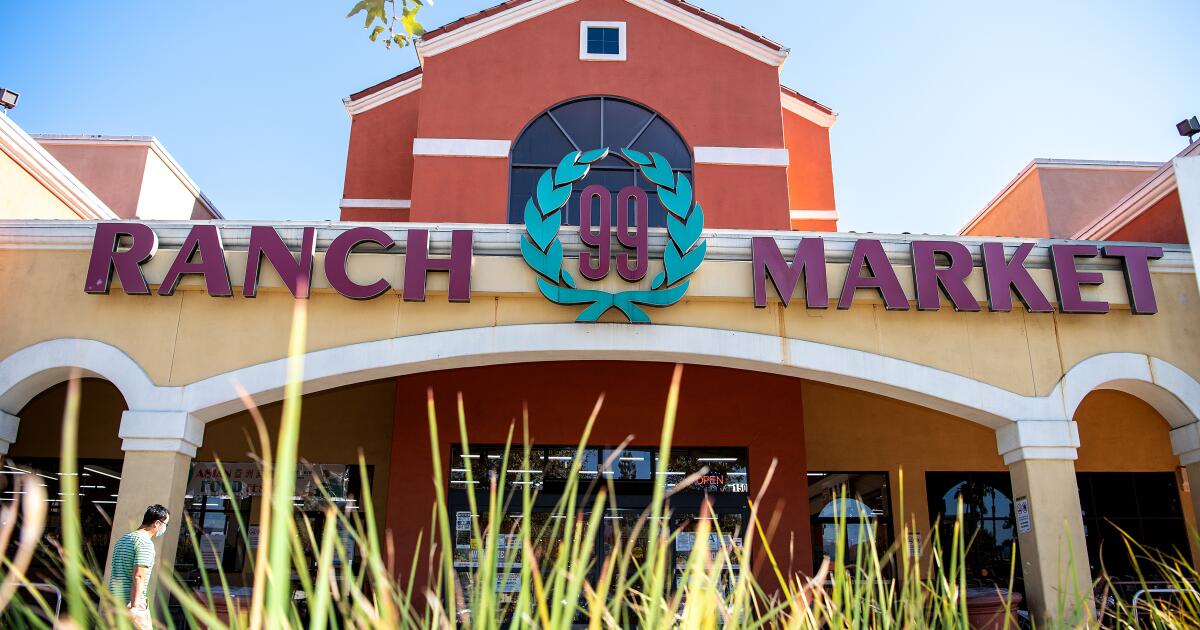
The federal government is suing 99 Ranch Market, alleging the nation’s largest Asian supermarket chain is discriminating against employees who are not Chinese.
The Equal Employment Opportunity Commission alleged in a lawsuit filed Tuesday that the Buena Park-based chain paid non-Chinese employees less money, didn’t promote them and scheduled them for fewer hours than their Chinese counterparts because of their race.
Non-Chinese managers were fired shortly after they had been hired and were replaced with Chinese managers, according to the complaint filed in a federal court in Los Angeles.
Additionally, the lawsuit states, non-Chinese employees felt they had to resign as a result of discrimination they faced at 99 Ranch, which has 66 locations across 11 states.
“Customer preference or beliefs that workers from certain groups are more productive do not justify national origin discrimination,” said Christine Park-Gonzalez, the EEOC’s L.A. District director.
The lawsuit was filed against Tawa Supermarket Inc., 99 Ranch’s parent company.
Tawa representatives did not immediately respond to requests for comment.
In May, the EEOC filed a discrimination lawsuit against the New York Times alleging discrimination against a white male employee, which the Times has rejected as politically motivated.
The EEOC also sued construction company Advanced Technology Group Inc., alleging bias toward American employees. The company has contested the claims.
Tawa Supermarket was founded in 1984 by Roger Chen, a Taiwanese immigrant. The first location opened in Westminster, selling imported food from Taiwan. The stores catered to Chinese residents in Southern California.
The name 99 Ranch Market comes from the lucky number 99, which is a homophone for the word “long-lasting” in Chinese.
The company remains family-owned, with Alice Chen, Roger’s daughter, taking over as chief executive in 2018 and Jonson Chen, Roger’s son, serving as chairman.

The federal government is suing 99 Ranch Market, alleging the nation’s largest Asian supermarket chain is discriminating against employees who are not Chinese.
The Equal Employment Opportunity Commission alleged in a lawsuit filed Tuesday that the Buena Park-based chain paid non-Chinese employees less money, didn’t promote them and scheduled them for fewer hours than their Chinese counterparts because of their race.
Non-Chinese managers were fired shortly after they had been hired and were replaced with Chinese managers, according to the complaint filed in a federal court in Los Angeles.
Additionally, the lawsuit states, non-Chinese employees felt they had to resign as a result of discrimination they faced at 99 Ranch, which has 66 locations across 11 states.
“Customer preference or beliefs that workers from certain groups are more productive do not justify national origin discrimination,” said Christine Park-Gonzalez, the EEOC’s L.A. District director.
The lawsuit was filed against Tawa Supermarket Inc., 99 Ranch’s parent company.
Tawa representatives did not immediately respond to requests for comment.
In May, the EEOC filed a discrimination lawsuit against the New York Times alleging discrimination against a white male employee, which the Times has rejected as politically motivated.
The EEOC also sued construction company Advanced Technology Group Inc., alleging bias toward American employees. The company has contested the claims.
Tawa Supermarket was founded in 1984 by Roger Chen, a Taiwanese immigrant. The first location opened in Westminster, selling imported food from Taiwan. The stores catered to Chinese residents in Southern California.
The name 99 Ranch Market comes from the lucky number 99, which is a homophone for the word “long-lasting” in Chinese.
The company remains family-owned, with Alice Chen, Roger’s daughter, taking over as chief executive in 2018 and Jonson Chen, Roger’s son, serving as chairman.

The federal government is suing 99 Ranch Market, alleging the nation’s largest Asian supermarket chain is discriminating against employees who are not Chinese.
The Equal Employment Opportunity Commission alleged in a lawsuit filed Tuesday that the Buena Park-based chain paid non-Chinese employees less money, didn’t promote them and scheduled them for fewer hours than their Chinese counterparts because of their race.
Non-Chinese managers were fired shortly after they had been hired and were replaced with Chinese managers, according to the complaint filed in a federal court in Los Angeles.
Additionally, the lawsuit states, non-Chinese employees felt they had to resign as a result of discrimination they faced at 99 Ranch, which has 66 locations across 11 states.
“Customer preference or beliefs that workers from certain groups are more productive do not justify national origin discrimination,” said Christine Park-Gonzalez, the EEOC’s L.A. District director.
The lawsuit was filed against Tawa Supermarket Inc., 99 Ranch’s parent company.
Tawa representatives did not immediately respond to requests for comment.
In May, the EEOC filed a discrimination lawsuit against the New York Times alleging discrimination against a white male employee, which the Times has rejected as politically motivated.
The EEOC also sued construction company Advanced Technology Group Inc., alleging bias toward American employees. The company has contested the claims.
Tawa Supermarket was founded in 1984 by Roger Chen, a Taiwanese immigrant. The first location opened in Westminster, selling imported food from Taiwan. The stores catered to Chinese residents in Southern California.
The name 99 Ranch Market comes from the lucky number 99, which is a homophone for the word “long-lasting” in Chinese.
The company remains family-owned, with Alice Chen, Roger’s daughter, taking over as chief executive in 2018 and Jonson Chen, Roger’s son, serving as chairman.
The federal government is suing 99 Ranch Market, alleging the nation’s largest Asian supermarket chain is discriminating against employees who are not Chinese.
The Equal Employment Opportunity Commission alleged in a lawsuit filed Tuesday that the Buena Park-based chain paid non-Chinese employees less money, didn’t promote them and scheduled them for fewer hours than their Chinese counterparts because of their race.
Non-Chinese managers were fired shortly after they had been hired and were replaced with Chinese managers, according to the complaint filed in a federal court in Los Angeles.
Additionally, the lawsuit states, non-Chinese employees felt they had to resign as a result of discrimination they faced at 99 Ranch, which has 66 locations across 11 states.
“Customer preference or beliefs that workers from certain groups are more productive do not justify national origin discrimination,” said Christine Park-Gonzalez, the EEOC’s L.A. District director.
The lawsuit was filed against Tawa Supermarket Inc., 99 Ranch’s parent company.
Tawa representatives did not immediately respond to requests for comment.
In May, the EEOC filed a discrimination lawsuit against the New York Times alleging discrimination against a white male employee, which the Times has rejected as politically motivated.
The EEOC also sued construction company Advanced Technology Group Inc., alleging bias toward American employees. The company has contested the claims.
Tawa Supermarket was founded in 1984 by Roger Chen, a Taiwanese immigrant. The first location opened in Westminster, selling imported food from Taiwan. The stores catered to Chinese residents in Southern California.
The name 99 Ranch Market comes from the lucky number 99, which is a homophone for the word “long-lasting” in Chinese.
The company remains family-owned, with Alice Chen, Roger’s daughter, taking over as chief executive in 2018 and Jonson Chen, Roger’s son, serving as chairman.

The federal government is suing 99 Ranch Market, alleging the nation’s largest Asian supermarket chain is discriminating against employees who are not Chinese.
The Equal Employment Opportunity Commission alleged in a lawsuit filed Tuesday that the Buena Park-based chain paid non-Chinese employees less money, didn’t promote them and scheduled them for fewer hours than their Chinese counterparts because of their race.
Non-Chinese managers were fired shortly after they had been hired and were replaced with Chinese managers, according to the complaint filed in a federal court in Los Angeles.
Additionally, the lawsuit states, non-Chinese employees felt they had to resign as a result of discrimination they faced at 99 Ranch, which has 66 locations across 11 states.
“Customer preference or beliefs that workers from certain groups are more productive do not justify national origin discrimination,” said Christine Park-Gonzalez, the EEOC’s L.A. District director.
The lawsuit was filed against Tawa Supermarket Inc., 99 Ranch’s parent company.
Tawa representatives did not immediately respond to requests for comment.
In May, the EEOC filed a discrimination lawsuit against the New York Times alleging discrimination against a white male employee, which the Times has rejected as politically motivated.
The EEOC also sued construction company Advanced Technology Group Inc., alleging bias toward American employees. The company has contested the claims.
Tawa Supermarket was founded in 1984 by Roger Chen, a Taiwanese immigrant. The first location opened in Westminster, selling imported food from Taiwan. The stores catered to Chinese residents in Southern California.
The name 99 Ranch Market comes from the lucky number 99, which is a homophone for the word “long-lasting” in Chinese.
The company remains family-owned, with Alice Chen, Roger’s daughter, taking over as chief executive in 2018 and Jonson Chen, Roger’s son, serving as chairman.
The federal government is suing 99 Ranch Market, alleging the nation’s largest Asian supermarket chain is discriminating against employees who are not Chinese.
The Equal Employment Opportunity Commission alleged in a lawsuit filed Tuesday that the Buena Park-based chain paid non-Chinese employees less money, didn’t promote them and scheduled them for fewer hours than their Chinese counterparts because of their race.
Non-Chinese managers were fired shortly after they had been hired and were replaced with Chinese managers, according to the complaint filed in a federal court in Los Angeles.
Additionally, the lawsuit states, non-Chinese employees felt they had to resign as a result of discrimination they faced at 99 Ranch, which has 66 locations across 11 states.
“Customer preference or beliefs that workers from certain groups are more productive do not justify national origin discrimination,” said Christine Park-Gonzalez, the EEOC’s L.A. District director.
The lawsuit was filed against Tawa Supermarket Inc., 99 Ranch’s parent company.
Tawa representatives did not immediately respond to requests for comment.
In May, the EEOC filed a discrimination lawsuit against the New York Times alleging discrimination against a white male employee, which the Times has rejected as politically motivated.
The EEOC also sued construction company Advanced Technology Group Inc., alleging bias toward American employees. The company has contested the claims.
Tawa Supermarket was founded in 1984 by Roger Chen, a Taiwanese immigrant. The first location opened in Westminster, selling imported food from Taiwan. The stores catered to Chinese residents in Southern California.
The name 99 Ranch Market comes from the lucky number 99, which is a homophone for the word “long-lasting” in Chinese.
The company remains family-owned, with Alice Chen, Roger’s daughter, taking over as chief executive in 2018 and Jonson Chen, Roger’s son, serving as chairman.
The federal government is suing 99 Ranch Market, alleging the nation’s largest Asian supermarket chain is discriminating against employees who are not Chinese.
The Equal Employment Opportunity Commission alleged in a lawsuit filed Tuesday that the Buena Park-based chain paid non-Chinese employees less money, didn’t promote them and scheduled them for fewer hours than their Chinese counterparts because of their race.
Non-Chinese managers were fired shortly after they had been hired and were replaced with Chinese managers, according to the complaint filed in a federal court in Los Angeles.
Additionally, the lawsuit states, non-Chinese employees felt they had to resign as a result of discrimination they faced at 99 Ranch, which has 66 locations across 11 states.
“Customer preference or beliefs that workers from certain groups are more productive do not justify national origin discrimination,” said Christine Park-Gonzalez, the EEOC’s L.A. District director.
The lawsuit was filed against Tawa Supermarket Inc., 99 Ranch’s parent company.
Tawa representatives did not immediately respond to requests for comment.
In May, the EEOC filed a discrimination lawsuit against the New York Times alleging discrimination against a white male employee, which the Times has rejected as politically motivated.
The EEOC also sued construction company Advanced Technology Group Inc., alleging bias toward American employees. The company has contested the claims.
Tawa Supermarket was founded in 1984 by Roger Chen, a Taiwanese immigrant. The first location opened in Westminster, selling imported food from Taiwan. The stores catered to Chinese residents in Southern California.
The name 99 Ranch Market comes from the lucky number 99, which is a homophone for the word “long-lasting” in Chinese.
The company remains family-owned, with Alice Chen, Roger’s daughter, taking over as chief executive in 2018 and Jonson Chen, Roger’s son, serving as chairman.
The federal government is suing 99 Ranch Market, alleging the nation’s largest Asian supermarket chain is discriminating against employees who are not Chinese.
The Equal Employment Opportunity Commission alleged in a lawsuit filed Tuesday that the Buena Park-based chain paid non-Chinese employees less money, didn’t promote them and scheduled them for fewer hours than their Chinese counterparts because of their race.
Non-Chinese managers were fired shortly after they had been hired and were replaced with Chinese managers, according to the complaint filed in a federal court in Los Angeles.
Additionally, the lawsuit states, non-Chinese employees felt they had to resign as a result of discrimination they faced at 99 Ranch, which has 66 locations across 11 states.
“Customer preference or beliefs that workers from certain groups are more productive do not justify national origin discrimination,” said Christine Park-Gonzalez, the EEOC’s L.A. District director.
The lawsuit was filed against Tawa Supermarket Inc., 99 Ranch’s parent company.
Tawa representatives did not immediately respond to requests for comment.
In May, the EEOC filed a discrimination lawsuit against the New York Times alleging discrimination against a white male employee, which the Times has rejected as politically motivated.
The EEOC also sued construction company Advanced Technology Group Inc., alleging bias toward American employees. The company has contested the claims.
Tawa Supermarket was founded in 1984 by Roger Chen, a Taiwanese immigrant. The first location opened in Westminster, selling imported food from Taiwan. The stores catered to Chinese residents in Southern California.
The name 99 Ranch Market comes from the lucky number 99, which is a homophone for the word “long-lasting” in Chinese.
The company remains family-owned, with Alice Chen, Roger’s daughter, taking over as chief executive in 2018 and Jonson Chen, Roger’s son, serving as chairman.

The federal government is suing 99 Ranch Market, alleging the nation’s largest Asian supermarket chain is discriminating against employees who are not Chinese.
The Equal Employment Opportunity Commission alleged in a lawsuit filed Tuesday that the Buena Park-based chain paid non-Chinese employees less money, didn’t promote them and scheduled them for fewer hours than their Chinese counterparts because of their race.
Non-Chinese managers were fired shortly after they had been hired and were replaced with Chinese managers, according to the complaint filed in a federal court in Los Angeles.
Additionally, the lawsuit states, non-Chinese employees felt they had to resign as a result of discrimination they faced at 99 Ranch, which has 66 locations across 11 states.
“Customer preference or beliefs that workers from certain groups are more productive do not justify national origin discrimination,” said Christine Park-Gonzalez, the EEOC’s L.A. District director.
The lawsuit was filed against Tawa Supermarket Inc., 99 Ranch’s parent company.
Tawa representatives did not immediately respond to requests for comment.
In May, the EEOC filed a discrimination lawsuit against the New York Times alleging discrimination against a white male employee, which the Times has rejected as politically motivated.
The EEOC also sued construction company Advanced Technology Group Inc., alleging bias toward American employees. The company has contested the claims.
Tawa Supermarket was founded in 1984 by Roger Chen, a Taiwanese immigrant. The first location opened in Westminster, selling imported food from Taiwan. The stores catered to Chinese residents in Southern California.
The name 99 Ranch Market comes from the lucky number 99, which is a homophone for the word “long-lasting” in Chinese.
The company remains family-owned, with Alice Chen, Roger’s daughter, taking over as chief executive in 2018 and Jonson Chen, Roger’s son, serving as chairman.
The federal government is suing 99 Ranch Market, alleging the nation’s largest Asian supermarket chain is discriminating against employees who are not Chinese.
The Equal Employment Opportunity Commission alleged in a lawsuit filed Tuesday that the Buena Park-based chain paid non-Chinese employees less money, didn’t promote them and scheduled them for fewer hours than their Chinese counterparts because of their race.
Non-Chinese managers were fired shortly after they had been hired and were replaced with Chinese managers, according to the complaint filed in a federal court in Los Angeles.
Additionally, the lawsuit states, non-Chinese employees felt they had to resign as a result of discrimination they faced at 99 Ranch, which has 66 locations across 11 states.
“Customer preference or beliefs that workers from certain groups are more productive do not justify national origin discrimination,” said Christine Park-Gonzalez, the EEOC’s L.A. District director.
The lawsuit was filed against Tawa Supermarket Inc., 99 Ranch’s parent company.
Tawa representatives did not immediately respond to requests for comment.
In May, the EEOC filed a discrimination lawsuit against the New York Times alleging discrimination against a white male employee, which the Times has rejected as politically motivated.
The EEOC also sued construction company Advanced Technology Group Inc., alleging bias toward American employees. The company has contested the claims.
Tawa Supermarket was founded in 1984 by Roger Chen, a Taiwanese immigrant. The first location opened in Westminster, selling imported food from Taiwan. The stores catered to Chinese residents in Southern California.
The name 99 Ranch Market comes from the lucky number 99, which is a homophone for the word “long-lasting” in Chinese.
The company remains family-owned, with Alice Chen, Roger’s daughter, taking over as chief executive in 2018 and Jonson Chen, Roger’s son, serving as chairman.
The federal government is suing 99 Ranch Market, alleging the nation’s largest Asian supermarket chain is discriminating against employees who are not Chinese.
The Equal Employment Opportunity Commission alleged in a lawsuit filed Tuesday that the Buena Park-based chain paid non-Chinese employees less money, didn’t promote them and scheduled them for fewer hours than their Chinese counterparts because of their race.
Non-Chinese managers were fired shortly after they had been hired and were replaced with Chinese managers, according to the complaint filed in a federal court in Los Angeles.
Additionally, the lawsuit states, non-Chinese employees felt they had to resign as a result of discrimination they faced at 99 Ranch, which has 66 locations across 11 states.
“Customer preference or beliefs that workers from certain groups are more productive do not justify national origin discrimination,” said Christine Park-Gonzalez, the EEOC’s L.A. District director.
The lawsuit was filed against Tawa Supermarket Inc., 99 Ranch’s parent company.
Tawa representatives did not immediately respond to requests for comment.
In May, the EEOC filed a discrimination lawsuit against the New York Times alleging discrimination against a white male employee, which the Times has rejected as politically motivated.
The EEOC also sued construction company Advanced Technology Group Inc., alleging bias toward American employees. The company has contested the claims.
Tawa Supermarket was founded in 1984 by Roger Chen, a Taiwanese immigrant. The first location opened in Westminster, selling imported food from Taiwan. The stores catered to Chinese residents in Southern California.
The name 99 Ranch Market comes from the lucky number 99, which is a homophone for the word “long-lasting” in Chinese.
The company remains family-owned, with Alice Chen, Roger’s daughter, taking over as chief executive in 2018 and Jonson Chen, Roger’s son, serving as chairman.
The federal government is suing 99 Ranch Market, alleging the nation’s largest Asian supermarket chain is discriminating against employees who are not Chinese.
The Equal Employment Opportunity Commission alleged in a lawsuit filed Tuesday that the Buena Park-based chain paid non-Chinese employees less money, didn’t promote them and scheduled them for fewer hours than their Chinese counterparts because of their race.
Non-Chinese managers were fired shortly after they had been hired and were replaced with Chinese managers, according to the complaint filed in a federal court in Los Angeles.
Additionally, the lawsuit states, non-Chinese employees felt they had to resign as a result of discrimination they faced at 99 Ranch, which has 66 locations across 11 states.
“Customer preference or beliefs that workers from certain groups are more productive do not justify national origin discrimination,” said Christine Park-Gonzalez, the EEOC’s L.A. District director.
The lawsuit was filed against Tawa Supermarket Inc., 99 Ranch’s parent company.
Tawa representatives did not immediately respond to requests for comment.
In May, the EEOC filed a discrimination lawsuit against the New York Times alleging discrimination against a white male employee, which the Times has rejected as politically motivated.
The EEOC also sued construction company Advanced Technology Group Inc., alleging bias toward American employees. The company has contested the claims.
Tawa Supermarket was founded in 1984 by Roger Chen, a Taiwanese immigrant. The first location opened in Westminster, selling imported food from Taiwan. The stores catered to Chinese residents in Southern California.
The name 99 Ranch Market comes from the lucky number 99, which is a homophone for the word “long-lasting” in Chinese.
The company remains family-owned, with Alice Chen, Roger’s daughter, taking over as chief executive in 2018 and Jonson Chen, Roger’s son, serving as chairman.
The federal government is suing 99 Ranch Market, alleging the nation’s largest Asian supermarket chain is discriminating against employees who are not Chinese.
The Equal Employment Opportunity Commission alleged in a lawsuit filed Tuesday that the Buena Park-based chain paid non-Chinese employees less money, didn’t promote them and scheduled them for fewer hours than their Chinese counterparts because of their race.
Non-Chinese managers were fired shortly after they had been hired and were replaced with Chinese managers, according to the complaint filed in a federal court in Los Angeles.
Additionally, the lawsuit states, non-Chinese employees felt they had to resign as a result of discrimination they faced at 99 Ranch, which has 66 locations across 11 states.
“Customer preference or beliefs that workers from certain groups are more productive do not justify national origin discrimination,” said Christine Park-Gonzalez, the EEOC’s L.A. District director.
The lawsuit was filed against Tawa Supermarket Inc., 99 Ranch’s parent company.
Tawa representatives did not immediately respond to requests for comment.
In May, the EEOC filed a discrimination lawsuit against the New York Times alleging discrimination against a white male employee, which the Times has rejected as politically motivated.
The EEOC also sued construction company Advanced Technology Group Inc., alleging bias toward American employees. The company has contested the claims.
Tawa Supermarket was founded in 1984 by Roger Chen, a Taiwanese immigrant. The first location opened in Westminster, selling imported food from Taiwan. The stores catered to Chinese residents in Southern California.
The name 99 Ranch Market comes from the lucky number 99, which is a homophone for the word “long-lasting” in Chinese.
The company remains family-owned, with Alice Chen, Roger’s daughter, taking over as chief executive in 2018 and Jonson Chen, Roger’s son, serving as chairman.
The federal government is suing 99 Ranch Market, alleging the nation’s largest Asian supermarket chain is discriminating against employees who are not Chinese.
The Equal Employment Opportunity Commission alleged in a lawsuit filed Tuesday that the Buena Park-based chain paid non-Chinese employees less money, didn’t promote them and scheduled them for fewer hours than their Chinese counterparts because of their race.
Non-Chinese managers were fired shortly after they had been hired and were replaced with Chinese managers, according to the complaint filed in a federal court in Los Angeles.
Additionally, the lawsuit states, non-Chinese employees felt they had to resign as a result of discrimination they faced at 99 Ranch, which has 66 locations across 11 states.
“Customer preference or beliefs that workers from certain groups are more productive do not justify national origin discrimination,” said Christine Park-Gonzalez, the EEOC’s L.A. District director.
The lawsuit was filed against Tawa Supermarket Inc., 99 Ranch’s parent company.
Tawa representatives did not immediately respond to requests for comment.
In May, the EEOC filed a discrimination lawsuit against the New York Times alleging discrimination against a white male employee, which the Times has rejected as politically motivated.
The EEOC also sued construction company Advanced Technology Group Inc., alleging bias toward American employees. The company has contested the claims.
Tawa Supermarket was founded in 1984 by Roger Chen, a Taiwanese immigrant. The first location opened in Westminster, selling imported food from Taiwan. The stores catered to Chinese residents in Southern California.
The name 99 Ranch Market comes from the lucky number 99, which is a homophone for the word “long-lasting” in Chinese.
The company remains family-owned, with Alice Chen, Roger’s daughter, taking over as chief executive in 2018 and Jonson Chen, Roger’s son, serving as chairman.
The federal government is suing 99 Ranch Market, alleging the nation’s largest Asian supermarket chain is discriminating against employees who are not Chinese.
The Equal Employment Opportunity Commission alleged in a lawsuit filed Tuesday that the Buena Park-based chain paid non-Chinese employees less money, didn’t promote them and scheduled them for fewer hours than their Chinese counterparts because of their race.
Non-Chinese managers were fired shortly after they had been hired and were replaced with Chinese managers, according to the complaint filed in a federal court in Los Angeles.
Additionally, the lawsuit states, non-Chinese employees felt they had to resign as a result of discrimination they faced at 99 Ranch, which has 66 locations across 11 states.
“Customer preference or beliefs that workers from certain groups are more productive do not justify national origin discrimination,” said Christine Park-Gonzalez, the EEOC’s L.A. District director.
The lawsuit was filed against Tawa Supermarket Inc., 99 Ranch’s parent company.
Tawa representatives did not immediately respond to requests for comment.
In May, the EEOC filed a discrimination lawsuit against the New York Times alleging discrimination against a white male employee, which the Times has rejected as politically motivated.
The EEOC also sued construction company Advanced Technology Group Inc., alleging bias toward American employees. The company has contested the claims.
Tawa Supermarket was founded in 1984 by Roger Chen, a Taiwanese immigrant. The first location opened in Westminster, selling imported food from Taiwan. The stores catered to Chinese residents in Southern California.
The name 99 Ranch Market comes from the lucky number 99, which is a homophone for the word “long-lasting” in Chinese.
The company remains family-owned, with Alice Chen, Roger’s daughter, taking over as chief executive in 2018 and Jonson Chen, Roger’s son, serving as chairman.
The federal government is suing 99 Ranch Market, alleging the nation’s largest Asian supermarket chain is discriminating against employees who are not Chinese.
The Equal Employment Opportunity Commission alleged in a lawsuit filed Tuesday that the Buena Park-based chain paid non-Chinese employees less money, didn’t promote them and scheduled them for fewer hours than their Chinese counterparts because of their race.
Non-Chinese managers were fired shortly after they had been hired and were replaced with Chinese managers, according to the complaint filed in a federal court in Los Angeles.
Additionally, the lawsuit states, non-Chinese employees felt they had to resign as a result of discrimination they faced at 99 Ranch, which has 66 locations across 11 states.
“Customer preference or beliefs that workers from certain groups are more productive do not justify national origin discrimination,” said Christine Park-Gonzalez, the EEOC’s L.A. District director.
The lawsuit was filed against Tawa Supermarket Inc., 99 Ranch’s parent company.
Tawa representatives did not immediately respond to requests for comment.
In May, the EEOC filed a discrimination lawsuit against the New York Times alleging discrimination against a white male employee, which the Times has rejected as politically motivated.
The EEOC also sued construction company Advanced Technology Group Inc., alleging bias toward American employees. The company has contested the claims.
Tawa Supermarket was founded in 1984 by Roger Chen, a Taiwanese immigrant. The first location opened in Westminster, selling imported food from Taiwan. The stores catered to Chinese residents in Southern California.
The name 99 Ranch Market comes from the lucky number 99, which is a homophone for the word “long-lasting” in Chinese.
The company remains family-owned, with Alice Chen, Roger’s daughter, taking over as chief executive in 2018 and Jonson Chen, Roger’s son, serving as chairman.

