


Washington DC
New York
Toronto
Distribution: (800) 510 9863
Press ID
  • Login
Binghamton Herald
Advertisement
Thursday, June 4, 2026
  • Home
  • World
  • Politics
  • Business
  • Technology
  • Culture
  • Health
  • Entertainment
  • Trending
No Result
View All Result
Binghamton Herald
No Result
View All Result
Home World

Federal judge orders ICE to end ‘knock and talk’ arrests of immigrants in Southern California

by Binghamton Herald Report
May 17, 2024
in World
Share on FacebookShare on Twitter

WASHINGTON — 

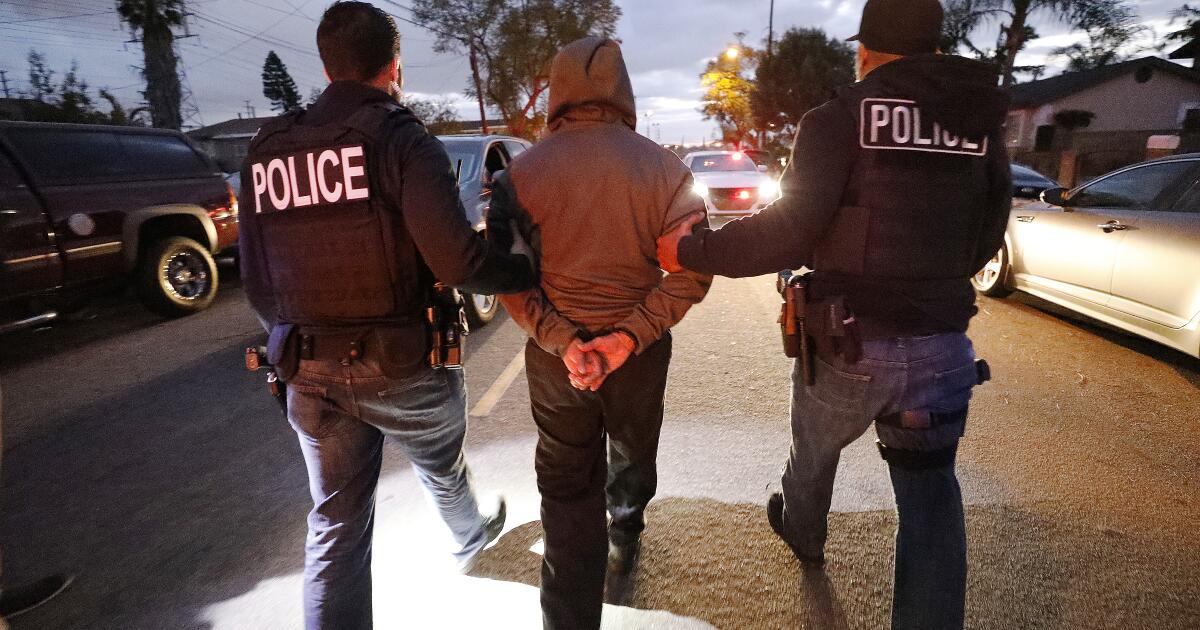
A federal judge in Los Angeles has ruled that a tactic used by federal immigration agents in Southern California to arrest people in their homes without a judicial warrant is unconstitutional and must end.

The judgment — issued Wednesday against the U.S. Immigration and Customs Enforcement agency — involves so-called knock and talk practices.

ICE didn’t immediately respond to a request for comment.

Advocates argued that the immigration agency rarely obtains judicial warrants and instead counts on immigrants answering their doors voluntarily. Advocates alleged agents routinely misrepresent themselves as police to gain entry so they can carry out an arrest.

Immigrant advocacy groups praised the ruling.

“It is a basic human right for immigrants to feel safe in their own homes and live without fear,” Lizbeth Abeln, interim director at the Inland Coalition for Immigrant Justice, wrote in a news release Thursday. “This won’t undo the years of harm done by ICE, but it is a good first step towards justice.”

The order applies only to ICE’s Los Angeles field office, which includes the counties of Los Angeles, Orange, San Bernardino, Riverside, Ventura, Santa Barbara and San Luis Obispo. An expert witness said that available data showed ICE’s knock and talk methods accounted for at least 8% of arrests in 2022.

Four examples listed in the order — occurring between 2017 and 2020 — illustrate instances in which immigration agents entered constitutionally protected areas around a person’s home, such as their porch, patio or backyard, to make contact for an arrest.

Advocates said the practice has continued since then in Los Angeles and across the country.

U.S. District Judge Otis D. Wright II rejected ICE’s argument that its agents could enter the private areas surrounding a home to knock on the door because mail carriers and delivery people routinely do so.

Immigration agents walk up to a resident’s home without consent and, when the person opens the door, the agents “generally state that they are ‘conducting an investigation,’” according to the order. ICE policies and training encourage agents to use knock and talks, calling the practice one of the four primary methods of apprehension.

“Despite often stating a different purpose for their visit, the true ‘intent’ and ‘actual purpose’ behind a ‘knock and talk’ is to make an immigration arrest,” the judge wrote.

The agents would be permitted to enter those areas if their goal was merely to ask questions, Wright wrote. But he said the Constitution prohibits them from doing so “without a judicial warrant with the intent to arrest the occupant.”

“The more accurate title,” Wright wrote, “would be ‘knock and arrests.’”

The ruling stems from a 2020 class-action lawsuit filed on behalf of two local advocacy organizations, the Inland Coalition for Immigrant Justice and the Coalition for Humane Immigrant Rights, as well as one individual, Osny Sorto-Vasquez Kidd.

The American Civil Liberties Union of Southern California, the UC Irvine School of Law Immigrant Rights Clinic, and the law firm Munger, Tolles & Olson represented the plaintiffs.

WASHINGTON — 

A federal judge in Los Angeles has ruled that a tactic used by federal immigration agents in Southern California to arrest people in their homes without a judicial warrant is unconstitutional and must end.

The judgment — issued Wednesday against the U.S. Immigration and Customs Enforcement agency — involves so-called knock and talk practices.

ICE didn’t immediately respond to a request for comment.

Advocates argued that the immigration agency rarely obtains judicial warrants and instead counts on immigrants answering their doors voluntarily. Advocates alleged agents routinely misrepresent themselves as police to gain entry so they can carry out an arrest.

Immigrant advocacy groups praised the ruling.

“It is a basic human right for immigrants to feel safe in their own homes and live without fear,” Lizbeth Abeln, interim director at the Inland Coalition for Immigrant Justice, wrote in a news release Thursday. “This won’t undo the years of harm done by ICE, but it is a good first step towards justice.”

The order applies only to ICE’s Los Angeles field office, which includes the counties of Los Angeles, Orange, San Bernardino, Riverside, Ventura, Santa Barbara and San Luis Obispo. An expert witness said that available data showed ICE’s knock and talk methods accounted for at least 8% of arrests in 2022.

Four examples listed in the order — occurring between 2017 and 2020 — illustrate instances in which immigration agents entered constitutionally protected areas around a person’s home, such as their porch, patio or backyard, to make contact for an arrest.

Advocates said the practice has continued since then in Los Angeles and across the country.

U.S. District Judge Otis D. Wright II rejected ICE’s argument that its agents could enter the private areas surrounding a home to knock on the door because mail carriers and delivery people routinely do so.

Immigration agents walk up to a resident’s home without consent and, when the person opens the door, the agents “generally state that they are ‘conducting an investigation,’” according to the order. ICE policies and training encourage agents to use knock and talks, calling the practice one of the four primary methods of apprehension.

“Despite often stating a different purpose for their visit, the true ‘intent’ and ‘actual purpose’ behind a ‘knock and talk’ is to make an immigration arrest,” the judge wrote.

The agents would be permitted to enter those areas if their goal was merely to ask questions, Wright wrote. But he said the Constitution prohibits them from doing so “without a judicial warrant with the intent to arrest the occupant.”

“The more accurate title,” Wright wrote, “would be ‘knock and arrests.’”

The ruling stems from a 2020 class-action lawsuit filed on behalf of two local advocacy organizations, the Inland Coalition for Immigrant Justice and the Coalition for Humane Immigrant Rights, as well as one individual, Osny Sorto-Vasquez Kidd.

The American Civil Liberties Union of Southern California, the UC Irvine School of Law Immigrant Rights Clinic, and the law firm Munger, Tolles & Olson represented the plaintiffs.

WASHINGTON — 

A federal judge in Los Angeles has ruled that a tactic used by federal immigration agents in Southern California to arrest people in their homes without a judicial warrant is unconstitutional and must end.

The judgment — issued Wednesday against the U.S. Immigration and Customs Enforcement agency — involves so-called knock and talk practices.

ICE didn’t immediately respond to a request for comment.

Advocates argued that the immigration agency rarely obtains judicial warrants and instead counts on immigrants answering their doors voluntarily. Advocates alleged agents routinely misrepresent themselves as police to gain entry so they can carry out an arrest.

Immigrant advocacy groups praised the ruling.

“It is a basic human right for immigrants to feel safe in their own homes and live without fear,” Lizbeth Abeln, interim director at the Inland Coalition for Immigrant Justice, wrote in a news release Thursday. “This won’t undo the years of harm done by ICE, but it is a good first step towards justice.”

The order applies only to ICE’s Los Angeles field office, which includes the counties of Los Angeles, Orange, San Bernardino, Riverside, Ventura, Santa Barbara and San Luis Obispo. An expert witness said that available data showed ICE’s knock and talk methods accounted for at least 8% of arrests in 2022.

Four examples listed in the order — occurring between 2017 and 2020 — illustrate instances in which immigration agents entered constitutionally protected areas around a person’s home, such as their porch, patio or backyard, to make contact for an arrest.

Advocates said the practice has continued since then in Los Angeles and across the country.

U.S. District Judge Otis D. Wright II rejected ICE’s argument that its agents could enter the private areas surrounding a home to knock on the door because mail carriers and delivery people routinely do so.

Immigration agents walk up to a resident’s home without consent and, when the person opens the door, the agents “generally state that they are ‘conducting an investigation,’” according to the order. ICE policies and training encourage agents to use knock and talks, calling the practice one of the four primary methods of apprehension.

“Despite often stating a different purpose for their visit, the true ‘intent’ and ‘actual purpose’ behind a ‘knock and talk’ is to make an immigration arrest,” the judge wrote.

The agents would be permitted to enter those areas if their goal was merely to ask questions, Wright wrote. But he said the Constitution prohibits them from doing so “without a judicial warrant with the intent to arrest the occupant.”

“The more accurate title,” Wright wrote, “would be ‘knock and arrests.’”

The ruling stems from a 2020 class-action lawsuit filed on behalf of two local advocacy organizations, the Inland Coalition for Immigrant Justice and the Coalition for Humane Immigrant Rights, as well as one individual, Osny Sorto-Vasquez Kidd.

The American Civil Liberties Union of Southern California, the UC Irvine School of Law Immigrant Rights Clinic, and the law firm Munger, Tolles & Olson represented the plaintiffs.

WASHINGTON — 

A federal judge in Los Angeles has ruled that a tactic used by federal immigration agents in Southern California to arrest people in their homes without a judicial warrant is unconstitutional and must end.

The judgment — issued Wednesday against the U.S. Immigration and Customs Enforcement agency — involves so-called knock and talk practices.

ICE didn’t immediately respond to a request for comment.

Advocates argued that the immigration agency rarely obtains judicial warrants and instead counts on immigrants answering their doors voluntarily. Advocates alleged agents routinely misrepresent themselves as police to gain entry so they can carry out an arrest.

Immigrant advocacy groups praised the ruling.

“It is a basic human right for immigrants to feel safe in their own homes and live without fear,” Lizbeth Abeln, interim director at the Inland Coalition for Immigrant Justice, wrote in a news release Thursday. “This won’t undo the years of harm done by ICE, but it is a good first step towards justice.”

The order applies only to ICE’s Los Angeles field office, which includes the counties of Los Angeles, Orange, San Bernardino, Riverside, Ventura, Santa Barbara and San Luis Obispo. An expert witness said that available data showed ICE’s knock and talk methods accounted for at least 8% of arrests in 2022.

Four examples listed in the order — occurring between 2017 and 2020 — illustrate instances in which immigration agents entered constitutionally protected areas around a person’s home, such as their porch, patio or backyard, to make contact for an arrest.

Advocates said the practice has continued since then in Los Angeles and across the country.

U.S. District Judge Otis D. Wright II rejected ICE’s argument that its agents could enter the private areas surrounding a home to knock on the door because mail carriers and delivery people routinely do so.

Immigration agents walk up to a resident’s home without consent and, when the person opens the door, the agents “generally state that they are ‘conducting an investigation,’” according to the order. ICE policies and training encourage agents to use knock and talks, calling the practice one of the four primary methods of apprehension.

“Despite often stating a different purpose for their visit, the true ‘intent’ and ‘actual purpose’ behind a ‘knock and talk’ is to make an immigration arrest,” the judge wrote.

The agents would be permitted to enter those areas if their goal was merely to ask questions, Wright wrote. But he said the Constitution prohibits them from doing so “without a judicial warrant with the intent to arrest the occupant.”

“The more accurate title,” Wright wrote, “would be ‘knock and arrests.’”

The ruling stems from a 2020 class-action lawsuit filed on behalf of two local advocacy organizations, the Inland Coalition for Immigrant Justice and the Coalition for Humane Immigrant Rights, as well as one individual, Osny Sorto-Vasquez Kidd.

The American Civil Liberties Union of Southern California, the UC Irvine School of Law Immigrant Rights Clinic, and the law firm Munger, Tolles & Olson represented the plaintiffs.


WASHINGTON — 

A federal judge in Los Angeles has ruled that a tactic used by federal immigration agents in Southern California to arrest people in their homes without a judicial warrant is unconstitutional and must end.

The judgment — issued Wednesday against the U.S. Immigration and Customs Enforcement agency — involves so-called knock and talk practices.

ICE didn’t immediately respond to a request for comment.

Advocates argued that the immigration agency rarely obtains judicial warrants and instead counts on immigrants answering their doors voluntarily. Advocates alleged agents routinely misrepresent themselves as police to gain entry so they can carry out an arrest.

Immigrant advocacy groups praised the ruling.

“It is a basic human right for immigrants to feel safe in their own homes and live without fear,” Lizbeth Abeln, interim director at the Inland Coalition for Immigrant Justice, wrote in a news release Thursday. “This won’t undo the years of harm done by ICE, but it is a good first step towards justice.”

The order applies only to ICE’s Los Angeles field office, which includes the counties of Los Angeles, Orange, San Bernardino, Riverside, Ventura, Santa Barbara and San Luis Obispo. An expert witness said that available data showed ICE’s knock and talk methods accounted for at least 8% of arrests in 2022.

Four examples listed in the order — occurring between 2017 and 2020 — illustrate instances in which immigration agents entered constitutionally protected areas around a person’s home, such as their porch, patio or backyard, to make contact for an arrest.

Advocates said the practice has continued since then in Los Angeles and across the country.

U.S. District Judge Otis D. Wright II rejected ICE’s argument that its agents could enter the private areas surrounding a home to knock on the door because mail carriers and delivery people routinely do so.

Immigration agents walk up to a resident’s home without consent and, when the person opens the door, the agents “generally state that they are ‘conducting an investigation,’” according to the order. ICE policies and training encourage agents to use knock and talks, calling the practice one of the four primary methods of apprehension.

“Despite often stating a different purpose for their visit, the true ‘intent’ and ‘actual purpose’ behind a ‘knock and talk’ is to make an immigration arrest,” the judge wrote.

The agents would be permitted to enter those areas if their goal was merely to ask questions, Wright wrote. But he said the Constitution prohibits them from doing so “without a judicial warrant with the intent to arrest the occupant.”

“The more accurate title,” Wright wrote, “would be ‘knock and arrests.’”

The ruling stems from a 2020 class-action lawsuit filed on behalf of two local advocacy organizations, the Inland Coalition for Immigrant Justice and the Coalition for Humane Immigrant Rights, as well as one individual, Osny Sorto-Vasquez Kidd.

The American Civil Liberties Union of Southern California, the UC Irvine School of Law Immigrant Rights Clinic, and the law firm Munger, Tolles & Olson represented the plaintiffs.

WASHINGTON — 

A federal judge in Los Angeles has ruled that a tactic used by federal immigration agents in Southern California to arrest people in their homes without a judicial warrant is unconstitutional and must end.

The judgment — issued Wednesday against the U.S. Immigration and Customs Enforcement agency — involves so-called knock and talk practices.

ICE didn’t immediately respond to a request for comment.

Advocates argued that the immigration agency rarely obtains judicial warrants and instead counts on immigrants answering their doors voluntarily. Advocates alleged agents routinely misrepresent themselves as police to gain entry so they can carry out an arrest.

Immigrant advocacy groups praised the ruling.

“It is a basic human right for immigrants to feel safe in their own homes and live without fear,” Lizbeth Abeln, interim director at the Inland Coalition for Immigrant Justice, wrote in a news release Thursday. “This won’t undo the years of harm done by ICE, but it is a good first step towards justice.”

The order applies only to ICE’s Los Angeles field office, which includes the counties of Los Angeles, Orange, San Bernardino, Riverside, Ventura, Santa Barbara and San Luis Obispo. An expert witness said that available data showed ICE’s knock and talk methods accounted for at least 8% of arrests in 2022.

Four examples listed in the order — occurring between 2017 and 2020 — illustrate instances in which immigration agents entered constitutionally protected areas around a person’s home, such as their porch, patio or backyard, to make contact for an arrest.

Advocates said the practice has continued since then in Los Angeles and across the country.

U.S. District Judge Otis D. Wright II rejected ICE’s argument that its agents could enter the private areas surrounding a home to knock on the door because mail carriers and delivery people routinely do so.

Immigration agents walk up to a resident’s home without consent and, when the person opens the door, the agents “generally state that they are ‘conducting an investigation,’” according to the order. ICE policies and training encourage agents to use knock and talks, calling the practice one of the four primary methods of apprehension.

“Despite often stating a different purpose for their visit, the true ‘intent’ and ‘actual purpose’ behind a ‘knock and talk’ is to make an immigration arrest,” the judge wrote.

The agents would be permitted to enter those areas if their goal was merely to ask questions, Wright wrote. But he said the Constitution prohibits them from doing so “without a judicial warrant with the intent to arrest the occupant.”

“The more accurate title,” Wright wrote, “would be ‘knock and arrests.’”

The ruling stems from a 2020 class-action lawsuit filed on behalf of two local advocacy organizations, the Inland Coalition for Immigrant Justice and the Coalition for Humane Immigrant Rights, as well as one individual, Osny Sorto-Vasquez Kidd.

The American Civil Liberties Union of Southern California, the UC Irvine School of Law Immigrant Rights Clinic, and the law firm Munger, Tolles & Olson represented the plaintiffs.

WASHINGTON — 

A federal judge in Los Angeles has ruled that a tactic used by federal immigration agents in Southern California to arrest people in their homes without a judicial warrant is unconstitutional and must end.

The judgment — issued Wednesday against the U.S. Immigration and Customs Enforcement agency — involves so-called knock and talk practices.

ICE didn’t immediately respond to a request for comment.

Advocates argued that the immigration agency rarely obtains judicial warrants and instead counts on immigrants answering their doors voluntarily. Advocates alleged agents routinely misrepresent themselves as police to gain entry so they can carry out an arrest.

Immigrant advocacy groups praised the ruling.

“It is a basic human right for immigrants to feel safe in their own homes and live without fear,” Lizbeth Abeln, interim director at the Inland Coalition for Immigrant Justice, wrote in a news release Thursday. “This won’t undo the years of harm done by ICE, but it is a good first step towards justice.”

The order applies only to ICE’s Los Angeles field office, which includes the counties of Los Angeles, Orange, San Bernardino, Riverside, Ventura, Santa Barbara and San Luis Obispo. An expert witness said that available data showed ICE’s knock and talk methods accounted for at least 8% of arrests in 2022.

Four examples listed in the order — occurring between 2017 and 2020 — illustrate instances in which immigration agents entered constitutionally protected areas around a person’s home, such as their porch, patio or backyard, to make contact for an arrest.

Advocates said the practice has continued since then in Los Angeles and across the country.

U.S. District Judge Otis D. Wright II rejected ICE’s argument that its agents could enter the private areas surrounding a home to knock on the door because mail carriers and delivery people routinely do so.

Immigration agents walk up to a resident’s home without consent and, when the person opens the door, the agents “generally state that they are ‘conducting an investigation,’” according to the order. ICE policies and training encourage agents to use knock and talks, calling the practice one of the four primary methods of apprehension.

“Despite often stating a different purpose for their visit, the true ‘intent’ and ‘actual purpose’ behind a ‘knock and talk’ is to make an immigration arrest,” the judge wrote.

The agents would be permitted to enter those areas if their goal was merely to ask questions, Wright wrote. But he said the Constitution prohibits them from doing so “without a judicial warrant with the intent to arrest the occupant.”

“The more accurate title,” Wright wrote, “would be ‘knock and arrests.’”

The ruling stems from a 2020 class-action lawsuit filed on behalf of two local advocacy organizations, the Inland Coalition for Immigrant Justice and the Coalition for Humane Immigrant Rights, as well as one individual, Osny Sorto-Vasquez Kidd.

The American Civil Liberties Union of Southern California, the UC Irvine School of Law Immigrant Rights Clinic, and the law firm Munger, Tolles & Olson represented the plaintiffs.

WASHINGTON — 

A federal judge in Los Angeles has ruled that a tactic used by federal immigration agents in Southern California to arrest people in their homes without a judicial warrant is unconstitutional and must end.

The judgment — issued Wednesday against the U.S. Immigration and Customs Enforcement agency — involves so-called knock and talk practices.

ICE didn’t immediately respond to a request for comment.

Advocates argued that the immigration agency rarely obtains judicial warrants and instead counts on immigrants answering their doors voluntarily. Advocates alleged agents routinely misrepresent themselves as police to gain entry so they can carry out an arrest.

Immigrant advocacy groups praised the ruling.

“It is a basic human right for immigrants to feel safe in their own homes and live without fear,” Lizbeth Abeln, interim director at the Inland Coalition for Immigrant Justice, wrote in a news release Thursday. “This won’t undo the years of harm done by ICE, but it is a good first step towards justice.”

The order applies only to ICE’s Los Angeles field office, which includes the counties of Los Angeles, Orange, San Bernardino, Riverside, Ventura, Santa Barbara and San Luis Obispo. An expert witness said that available data showed ICE’s knock and talk methods accounted for at least 8% of arrests in 2022.

Four examples listed in the order — occurring between 2017 and 2020 — illustrate instances in which immigration agents entered constitutionally protected areas around a person’s home, such as their porch, patio or backyard, to make contact for an arrest.

Advocates said the practice has continued since then in Los Angeles and across the country.

U.S. District Judge Otis D. Wright II rejected ICE’s argument that its agents could enter the private areas surrounding a home to knock on the door because mail carriers and delivery people routinely do so.

Immigration agents walk up to a resident’s home without consent and, when the person opens the door, the agents “generally state that they are ‘conducting an investigation,’” according to the order. ICE policies and training encourage agents to use knock and talks, calling the practice one of the four primary methods of apprehension.

“Despite often stating a different purpose for their visit, the true ‘intent’ and ‘actual purpose’ behind a ‘knock and talk’ is to make an immigration arrest,” the judge wrote.

The agents would be permitted to enter those areas if their goal was merely to ask questions, Wright wrote. But he said the Constitution prohibits them from doing so “without a judicial warrant with the intent to arrest the occupant.”

“The more accurate title,” Wright wrote, “would be ‘knock and arrests.’”

The ruling stems from a 2020 class-action lawsuit filed on behalf of two local advocacy organizations, the Inland Coalition for Immigrant Justice and the Coalition for Humane Immigrant Rights, as well as one individual, Osny Sorto-Vasquez Kidd.

The American Civil Liberties Union of Southern California, the UC Irvine School of Law Immigrant Rights Clinic, and the law firm Munger, Tolles & Olson represented the plaintiffs.

WASHINGTON — 

A federal judge in Los Angeles has ruled that a tactic used by federal immigration agents in Southern California to arrest people in their homes without a judicial warrant is unconstitutional and must end.

The judgment — issued Wednesday against the U.S. Immigration and Customs Enforcement agency — involves so-called knock and talk practices.

ICE didn’t immediately respond to a request for comment.

Advocates argued that the immigration agency rarely obtains judicial warrants and instead counts on immigrants answering their doors voluntarily. Advocates alleged agents routinely misrepresent themselves as police to gain entry so they can carry out an arrest.

Immigrant advocacy groups praised the ruling.

“It is a basic human right for immigrants to feel safe in their own homes and live without fear,” Lizbeth Abeln, interim director at the Inland Coalition for Immigrant Justice, wrote in a news release Thursday. “This won’t undo the years of harm done by ICE, but it is a good first step towards justice.”

The order applies only to ICE’s Los Angeles field office, which includes the counties of Los Angeles, Orange, San Bernardino, Riverside, Ventura, Santa Barbara and San Luis Obispo. An expert witness said that available data showed ICE’s knock and talk methods accounted for at least 8% of arrests in 2022.

Four examples listed in the order — occurring between 2017 and 2020 — illustrate instances in which immigration agents entered constitutionally protected areas around a person’s home, such as their porch, patio or backyard, to make contact for an arrest.

Advocates said the practice has continued since then in Los Angeles and across the country.

U.S. District Judge Otis D. Wright II rejected ICE’s argument that its agents could enter the private areas surrounding a home to knock on the door because mail carriers and delivery people routinely do so.

Immigration agents walk up to a resident’s home without consent and, when the person opens the door, the agents “generally state that they are ‘conducting an investigation,’” according to the order. ICE policies and training encourage agents to use knock and talks, calling the practice one of the four primary methods of apprehension.

“Despite often stating a different purpose for their visit, the true ‘intent’ and ‘actual purpose’ behind a ‘knock and talk’ is to make an immigration arrest,” the judge wrote.

The agents would be permitted to enter those areas if their goal was merely to ask questions, Wright wrote. But he said the Constitution prohibits them from doing so “without a judicial warrant with the intent to arrest the occupant.”

“The more accurate title,” Wright wrote, “would be ‘knock and arrests.’”

The ruling stems from a 2020 class-action lawsuit filed on behalf of two local advocacy organizations, the Inland Coalition for Immigrant Justice and the Coalition for Humane Immigrant Rights, as well as one individual, Osny Sorto-Vasquez Kidd.

The American Civil Liberties Union of Southern California, the UC Irvine School of Law Immigrant Rights Clinic, and the law firm Munger, Tolles & Olson represented the plaintiffs.

WASHINGTON — 

A federal judge in Los Angeles has ruled that a tactic used by federal immigration agents in Southern California to arrest people in their homes without a judicial warrant is unconstitutional and must end.

The judgment — issued Wednesday against the U.S. Immigration and Customs Enforcement agency — involves so-called knock and talk practices.

ICE didn’t immediately respond to a request for comment.

Advocates argued that the immigration agency rarely obtains judicial warrants and instead counts on immigrants answering their doors voluntarily. Advocates alleged agents routinely misrepresent themselves as police to gain entry so they can carry out an arrest.

Immigrant advocacy groups praised the ruling.

“It is a basic human right for immigrants to feel safe in their own homes and live without fear,” Lizbeth Abeln, interim director at the Inland Coalition for Immigrant Justice, wrote in a news release Thursday. “This won’t undo the years of harm done by ICE, but it is a good first step towards justice.”

The order applies only to ICE’s Los Angeles field office, which includes the counties of Los Angeles, Orange, San Bernardino, Riverside, Ventura, Santa Barbara and San Luis Obispo. An expert witness said that available data showed ICE’s knock and talk methods accounted for at least 8% of arrests in 2022.

Four examples listed in the order — occurring between 2017 and 2020 — illustrate instances in which immigration agents entered constitutionally protected areas around a person’s home, such as their porch, patio or backyard, to make contact for an arrest.

Advocates said the practice has continued since then in Los Angeles and across the country.

U.S. District Judge Otis D. Wright II rejected ICE’s argument that its agents could enter the private areas surrounding a home to knock on the door because mail carriers and delivery people routinely do so.

Immigration agents walk up to a resident’s home without consent and, when the person opens the door, the agents “generally state that they are ‘conducting an investigation,’” according to the order. ICE policies and training encourage agents to use knock and talks, calling the practice one of the four primary methods of apprehension.

“Despite often stating a different purpose for their visit, the true ‘intent’ and ‘actual purpose’ behind a ‘knock and talk’ is to make an immigration arrest,” the judge wrote.

The agents would be permitted to enter those areas if their goal was merely to ask questions, Wright wrote. But he said the Constitution prohibits them from doing so “without a judicial warrant with the intent to arrest the occupant.”

“The more accurate title,” Wright wrote, “would be ‘knock and arrests.’”

The ruling stems from a 2020 class-action lawsuit filed on behalf of two local advocacy organizations, the Inland Coalition for Immigrant Justice and the Coalition for Humane Immigrant Rights, as well as one individual, Osny Sorto-Vasquez Kidd.

The American Civil Liberties Union of Southern California, the UC Irvine School of Law Immigrant Rights Clinic, and the law firm Munger, Tolles & Olson represented the plaintiffs.

WASHINGTON — 

A federal judge in Los Angeles has ruled that a tactic used by federal immigration agents in Southern California to arrest people in their homes without a judicial warrant is unconstitutional and must end.

The judgment — issued Wednesday against the U.S. Immigration and Customs Enforcement agency — involves so-called knock and talk practices.

ICE didn’t immediately respond to a request for comment.

Advocates argued that the immigration agency rarely obtains judicial warrants and instead counts on immigrants answering their doors voluntarily. Advocates alleged agents routinely misrepresent themselves as police to gain entry so they can carry out an arrest.

Immigrant advocacy groups praised the ruling.

“It is a basic human right for immigrants to feel safe in their own homes and live without fear,” Lizbeth Abeln, interim director at the Inland Coalition for Immigrant Justice, wrote in a news release Thursday. “This won’t undo the years of harm done by ICE, but it is a good first step towards justice.”

The order applies only to ICE’s Los Angeles field office, which includes the counties of Los Angeles, Orange, San Bernardino, Riverside, Ventura, Santa Barbara and San Luis Obispo. An expert witness said that available data showed ICE’s knock and talk methods accounted for at least 8% of arrests in 2022.

Four examples listed in the order — occurring between 2017 and 2020 — illustrate instances in which immigration agents entered constitutionally protected areas around a person’s home, such as their porch, patio or backyard, to make contact for an arrest.

Advocates said the practice has continued since then in Los Angeles and across the country.

U.S. District Judge Otis D. Wright II rejected ICE’s argument that its agents could enter the private areas surrounding a home to knock on the door because mail carriers and delivery people routinely do so.

Immigration agents walk up to a resident’s home without consent and, when the person opens the door, the agents “generally state that they are ‘conducting an investigation,’” according to the order. ICE policies and training encourage agents to use knock and talks, calling the practice one of the four primary methods of apprehension.

“Despite often stating a different purpose for their visit, the true ‘intent’ and ‘actual purpose’ behind a ‘knock and talk’ is to make an immigration arrest,” the judge wrote.

The agents would be permitted to enter those areas if their goal was merely to ask questions, Wright wrote. But he said the Constitution prohibits them from doing so “without a judicial warrant with the intent to arrest the occupant.”

“The more accurate title,” Wright wrote, “would be ‘knock and arrests.’”

The ruling stems from a 2020 class-action lawsuit filed on behalf of two local advocacy organizations, the Inland Coalition for Immigrant Justice and the Coalition for Humane Immigrant Rights, as well as one individual, Osny Sorto-Vasquez Kidd.

The American Civil Liberties Union of Southern California, the UC Irvine School of Law Immigrant Rights Clinic, and the law firm Munger, Tolles & Olson represented the plaintiffs.

WASHINGTON — 

A federal judge in Los Angeles has ruled that a tactic used by federal immigration agents in Southern California to arrest people in their homes without a judicial warrant is unconstitutional and must end.

The judgment — issued Wednesday against the U.S. Immigration and Customs Enforcement agency — involves so-called knock and talk practices.

ICE didn’t immediately respond to a request for comment.

Advocates argued that the immigration agency rarely obtains judicial warrants and instead counts on immigrants answering their doors voluntarily. Advocates alleged agents routinely misrepresent themselves as police to gain entry so they can carry out an arrest.

Immigrant advocacy groups praised the ruling.

“It is a basic human right for immigrants to feel safe in their own homes and live without fear,” Lizbeth Abeln, interim director at the Inland Coalition for Immigrant Justice, wrote in a news release Thursday. “This won’t undo the years of harm done by ICE, but it is a good first step towards justice.”

The order applies only to ICE’s Los Angeles field office, which includes the counties of Los Angeles, Orange, San Bernardino, Riverside, Ventura, Santa Barbara and San Luis Obispo. An expert witness said that available data showed ICE’s knock and talk methods accounted for at least 8% of arrests in 2022.

Four examples listed in the order — occurring between 2017 and 2020 — illustrate instances in which immigration agents entered constitutionally protected areas around a person’s home, such as their porch, patio or backyard, to make contact for an arrest.

Advocates said the practice has continued since then in Los Angeles and across the country.

U.S. District Judge Otis D. Wright II rejected ICE’s argument that its agents could enter the private areas surrounding a home to knock on the door because mail carriers and delivery people routinely do so.

Immigration agents walk up to a resident’s home without consent and, when the person opens the door, the agents “generally state that they are ‘conducting an investigation,’” according to the order. ICE policies and training encourage agents to use knock and talks, calling the practice one of the four primary methods of apprehension.

“Despite often stating a different purpose for their visit, the true ‘intent’ and ‘actual purpose’ behind a ‘knock and talk’ is to make an immigration arrest,” the judge wrote.

The agents would be permitted to enter those areas if their goal was merely to ask questions, Wright wrote. But he said the Constitution prohibits them from doing so “without a judicial warrant with the intent to arrest the occupant.”

“The more accurate title,” Wright wrote, “would be ‘knock and arrests.’”

The ruling stems from a 2020 class-action lawsuit filed on behalf of two local advocacy organizations, the Inland Coalition for Immigrant Justice and the Coalition for Humane Immigrant Rights, as well as one individual, Osny Sorto-Vasquez Kidd.

The American Civil Liberties Union of Southern California, the UC Irvine School of Law Immigrant Rights Clinic, and the law firm Munger, Tolles & Olson represented the plaintiffs.

WASHINGTON — 

A federal judge in Los Angeles has ruled that a tactic used by federal immigration agents in Southern California to arrest people in their homes without a judicial warrant is unconstitutional and must end.

The judgment — issued Wednesday against the U.S. Immigration and Customs Enforcement agency — involves so-called knock and talk practices.

ICE didn’t immediately respond to a request for comment.

Advocates argued that the immigration agency rarely obtains judicial warrants and instead counts on immigrants answering their doors voluntarily. Advocates alleged agents routinely misrepresent themselves as police to gain entry so they can carry out an arrest.

Immigrant advocacy groups praised the ruling.

“It is a basic human right for immigrants to feel safe in their own homes and live without fear,” Lizbeth Abeln, interim director at the Inland Coalition for Immigrant Justice, wrote in a news release Thursday. “This won’t undo the years of harm done by ICE, but it is a good first step towards justice.”

The order applies only to ICE’s Los Angeles field office, which includes the counties of Los Angeles, Orange, San Bernardino, Riverside, Ventura, Santa Barbara and San Luis Obispo. An expert witness said that available data showed ICE’s knock and talk methods accounted for at least 8% of arrests in 2022.

Four examples listed in the order — occurring between 2017 and 2020 — illustrate instances in which immigration agents entered constitutionally protected areas around a person’s home, such as their porch, patio or backyard, to make contact for an arrest.

Advocates said the practice has continued since then in Los Angeles and across the country.

U.S. District Judge Otis D. Wright II rejected ICE’s argument that its agents could enter the private areas surrounding a home to knock on the door because mail carriers and delivery people routinely do so.

Immigration agents walk up to a resident’s home without consent and, when the person opens the door, the agents “generally state that they are ‘conducting an investigation,’” according to the order. ICE policies and training encourage agents to use knock and talks, calling the practice one of the four primary methods of apprehension.

“Despite often stating a different purpose for their visit, the true ‘intent’ and ‘actual purpose’ behind a ‘knock and talk’ is to make an immigration arrest,” the judge wrote.

The agents would be permitted to enter those areas if their goal was merely to ask questions, Wright wrote. But he said the Constitution prohibits them from doing so “without a judicial warrant with the intent to arrest the occupant.”

“The more accurate title,” Wright wrote, “would be ‘knock and arrests.’”

The ruling stems from a 2020 class-action lawsuit filed on behalf of two local advocacy organizations, the Inland Coalition for Immigrant Justice and the Coalition for Humane Immigrant Rights, as well as one individual, Osny Sorto-Vasquez Kidd.

The American Civil Liberties Union of Southern California, the UC Irvine School of Law Immigrant Rights Clinic, and the law firm Munger, Tolles & Olson represented the plaintiffs.

WASHINGTON — 

A federal judge in Los Angeles has ruled that a tactic used by federal immigration agents in Southern California to arrest people in their homes without a judicial warrant is unconstitutional and must end.

The judgment — issued Wednesday against the U.S. Immigration and Customs Enforcement agency — involves so-called knock and talk practices.

ICE didn’t immediately respond to a request for comment.

Advocates argued that the immigration agency rarely obtains judicial warrants and instead counts on immigrants answering their doors voluntarily. Advocates alleged agents routinely misrepresent themselves as police to gain entry so they can carry out an arrest.

Immigrant advocacy groups praised the ruling.

“It is a basic human right for immigrants to feel safe in their own homes and live without fear,” Lizbeth Abeln, interim director at the Inland Coalition for Immigrant Justice, wrote in a news release Thursday. “This won’t undo the years of harm done by ICE, but it is a good first step towards justice.”

The order applies only to ICE’s Los Angeles field office, which includes the counties of Los Angeles, Orange, San Bernardino, Riverside, Ventura, Santa Barbara and San Luis Obispo. An expert witness said that available data showed ICE’s knock and talk methods accounted for at least 8% of arrests in 2022.

Four examples listed in the order — occurring between 2017 and 2020 — illustrate instances in which immigration agents entered constitutionally protected areas around a person’s home, such as their porch, patio or backyard, to make contact for an arrest.

Advocates said the practice has continued since then in Los Angeles and across the country.

U.S. District Judge Otis D. Wright II rejected ICE’s argument that its agents could enter the private areas surrounding a home to knock on the door because mail carriers and delivery people routinely do so.

Immigration agents walk up to a resident’s home without consent and, when the person opens the door, the agents “generally state that they are ‘conducting an investigation,’” according to the order. ICE policies and training encourage agents to use knock and talks, calling the practice one of the four primary methods of apprehension.

“Despite often stating a different purpose for their visit, the true ‘intent’ and ‘actual purpose’ behind a ‘knock and talk’ is to make an immigration arrest,” the judge wrote.

The agents would be permitted to enter those areas if their goal was merely to ask questions, Wright wrote. But he said the Constitution prohibits them from doing so “without a judicial warrant with the intent to arrest the occupant.”

“The more accurate title,” Wright wrote, “would be ‘knock and arrests.’”

The ruling stems from a 2020 class-action lawsuit filed on behalf of two local advocacy organizations, the Inland Coalition for Immigrant Justice and the Coalition for Humane Immigrant Rights, as well as one individual, Osny Sorto-Vasquez Kidd.

The American Civil Liberties Union of Southern California, the UC Irvine School of Law Immigrant Rights Clinic, and the law firm Munger, Tolles & Olson represented the plaintiffs.

WASHINGTON — 

A federal judge in Los Angeles has ruled that a tactic used by federal immigration agents in Southern California to arrest people in their homes without a judicial warrant is unconstitutional and must end.

The judgment — issued Wednesday against the U.S. Immigration and Customs Enforcement agency — involves so-called knock and talk practices.

ICE didn’t immediately respond to a request for comment.

Advocates argued that the immigration agency rarely obtains judicial warrants and instead counts on immigrants answering their doors voluntarily. Advocates alleged agents routinely misrepresent themselves as police to gain entry so they can carry out an arrest.

Immigrant advocacy groups praised the ruling.

“It is a basic human right for immigrants to feel safe in their own homes and live without fear,” Lizbeth Abeln, interim director at the Inland Coalition for Immigrant Justice, wrote in a news release Thursday. “This won’t undo the years of harm done by ICE, but it is a good first step towards justice.”

The order applies only to ICE’s Los Angeles field office, which includes the counties of Los Angeles, Orange, San Bernardino, Riverside, Ventura, Santa Barbara and San Luis Obispo. An expert witness said that available data showed ICE’s knock and talk methods accounted for at least 8% of arrests in 2022.

Four examples listed in the order — occurring between 2017 and 2020 — illustrate instances in which immigration agents entered constitutionally protected areas around a person’s home, such as their porch, patio or backyard, to make contact for an arrest.

Advocates said the practice has continued since then in Los Angeles and across the country.

U.S. District Judge Otis D. Wright II rejected ICE’s argument that its agents could enter the private areas surrounding a home to knock on the door because mail carriers and delivery people routinely do so.

Immigration agents walk up to a resident’s home without consent and, when the person opens the door, the agents “generally state that they are ‘conducting an investigation,’” according to the order. ICE policies and training encourage agents to use knock and talks, calling the practice one of the four primary methods of apprehension.

“Despite often stating a different purpose for their visit, the true ‘intent’ and ‘actual purpose’ behind a ‘knock and talk’ is to make an immigration arrest,” the judge wrote.

The agents would be permitted to enter those areas if their goal was merely to ask questions, Wright wrote. But he said the Constitution prohibits them from doing so “without a judicial warrant with the intent to arrest the occupant.”

“The more accurate title,” Wright wrote, “would be ‘knock and arrests.’”

The ruling stems from a 2020 class-action lawsuit filed on behalf of two local advocacy organizations, the Inland Coalition for Immigrant Justice and the Coalition for Humane Immigrant Rights, as well as one individual, Osny Sorto-Vasquez Kidd.

The American Civil Liberties Union of Southern California, the UC Irvine School of Law Immigrant Rights Clinic, and the law firm Munger, Tolles & Olson represented the plaintiffs.

WASHINGTON — 

A federal judge in Los Angeles has ruled that a tactic used by federal immigration agents in Southern California to arrest people in their homes without a judicial warrant is unconstitutional and must end.

The judgment — issued Wednesday against the U.S. Immigration and Customs Enforcement agency — involves so-called knock and talk practices.

ICE didn’t immediately respond to a request for comment.

Advocates argued that the immigration agency rarely obtains judicial warrants and instead counts on immigrants answering their doors voluntarily. Advocates alleged agents routinely misrepresent themselves as police to gain entry so they can carry out an arrest.

Immigrant advocacy groups praised the ruling.

“It is a basic human right for immigrants to feel safe in their own homes and live without fear,” Lizbeth Abeln, interim director at the Inland Coalition for Immigrant Justice, wrote in a news release Thursday. “This won’t undo the years of harm done by ICE, but it is a good first step towards justice.”

The order applies only to ICE’s Los Angeles field office, which includes the counties of Los Angeles, Orange, San Bernardino, Riverside, Ventura, Santa Barbara and San Luis Obispo. An expert witness said that available data showed ICE’s knock and talk methods accounted for at least 8% of arrests in 2022.

Four examples listed in the order — occurring between 2017 and 2020 — illustrate instances in which immigration agents entered constitutionally protected areas around a person’s home, such as their porch, patio or backyard, to make contact for an arrest.

Advocates said the practice has continued since then in Los Angeles and across the country.

U.S. District Judge Otis D. Wright II rejected ICE’s argument that its agents could enter the private areas surrounding a home to knock on the door because mail carriers and delivery people routinely do so.

Immigration agents walk up to a resident’s home without consent and, when the person opens the door, the agents “generally state that they are ‘conducting an investigation,’” according to the order. ICE policies and training encourage agents to use knock and talks, calling the practice one of the four primary methods of apprehension.

“Despite often stating a different purpose for their visit, the true ‘intent’ and ‘actual purpose’ behind a ‘knock and talk’ is to make an immigration arrest,” the judge wrote.

The agents would be permitted to enter those areas if their goal was merely to ask questions, Wright wrote. But he said the Constitution prohibits them from doing so “without a judicial warrant with the intent to arrest the occupant.”

“The more accurate title,” Wright wrote, “would be ‘knock and arrests.’”

The ruling stems from a 2020 class-action lawsuit filed on behalf of two local advocacy organizations, the Inland Coalition for Immigrant Justice and the Coalition for Humane Immigrant Rights, as well as one individual, Osny Sorto-Vasquez Kidd.

The American Civil Liberties Union of Southern California, the UC Irvine School of Law Immigrant Rights Clinic, and the law firm Munger, Tolles & Olson represented the plaintiffs.

Previous Post

Why this company’s biggest fans turned against it

Next Post

Newsom boosted California’s public health spending during COVID. Now he wants to cut it

Leave a Reply Cancel reply

Your email address will not be published. Required fields are marked *

BROWSE BY CATEGORIES

  • Business
  • Culture
  • Entertainment
  • Health
  • Politics
  • Technology
  • Trending
  • Uncategorized
  • World
Binghamton Herald

© 2024 Binghamton Herald or its affiliated companies.

Navigate Site

  • About
  • Advertise
  • Terms & Conditions
  • Privacy Policy
  • Disclaimer
  • Contact

Follow Us

No Result
View All Result
  • Home
  • World
  • Politics
  • Business
  • Technology
  • Culture
  • Health
  • Entertainment
  • Trending

© 2024 Binghamton Herald or its affiliated companies.

Welcome Back!

Login to your account below

Forgotten Password?

Retrieve your password

Please enter your username or email address to reset your password.

Log In