

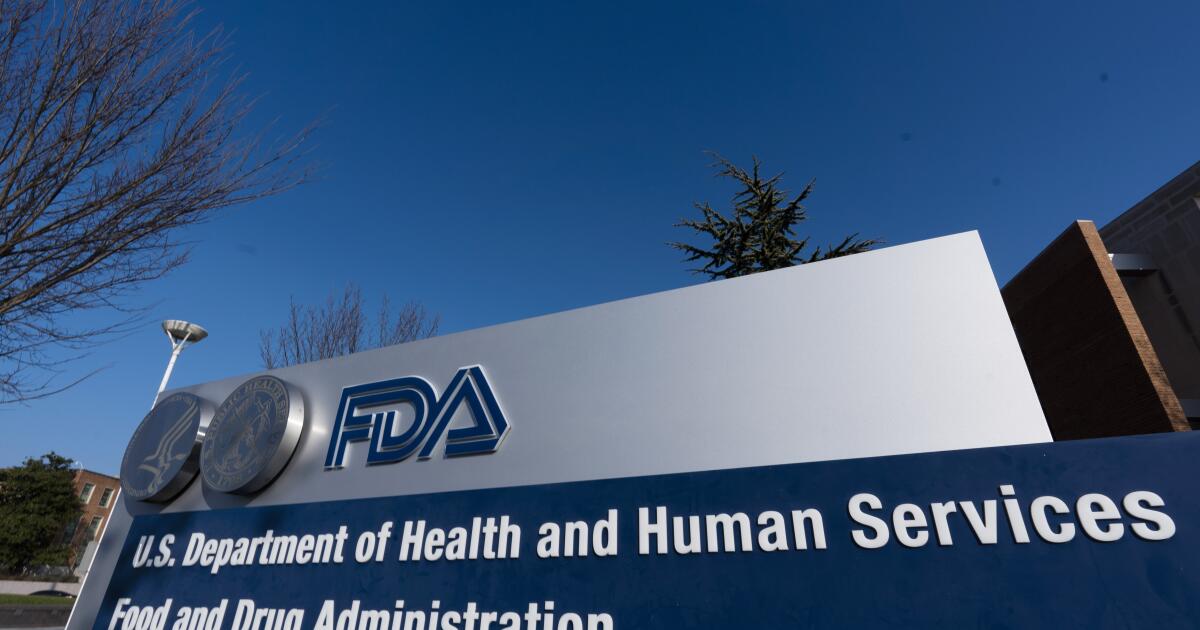
The Food and Drug Administration on Monday approved a new treatment for a type of bladder cancer.
The treatment, which will be sold under the brand name Anktiva, is intended for some patients suffering from certain types of non-muscle invasive bladder cancer, according to an FDA statement announcing the approval.
News of the FDA action was first reported by Reuters, which said, “The therapy works by activating types of disease fighting white blood cells called natural killer (NK) cells and T-cells to create long-term immunity in the body.”
The drug is now being developed by ImmunityBio of Culver City after its initial development by Altor BioScience of Miramar, Fla.
Dr. Patrick Soon-Shiong, whose family owns the Los Angeles Times, is executive chairman of ImmunityBio.
In a statement, Soon-Shiong heralded the FDA action and called Anktiva “a next-generation immunotherapy.”
The FDA approval was based on the results of a clinical trial led by Dr. Karim Chamie, an associate professor of urology at UCLA’s David Geffen School of Medicine. In a statement released by UCLA Health, Chamie said the treatment offers “a compelling alternative for patients who have exhausted conventional treatment options.”
Anktiva is intended for bladder cancer patients who did not respond to prior treatments, the FDA said. It is delivered via a catheter and prompts the patient’s own immune system “to mount a targeted attack against cancer cells,” Chamie said.
He noted that the treatment could spare some patients from invasive procedures, such as surgery to remove all or part of the bladder.
Most of the new bladder cancer diagnoses are non-muscle invasive — cancer found in the tissue that lines the inner surface of the bladder and hasn’t spread into the bladder wall, according to the UCLA statement. Patients with this type of cancer usually undergo surgery and a bacteria-based immunotherapy, which is placed directly into the bladder.
However, even with this treatment, the cancer can come back, and many patients don’t respond well to further treatment, leaving some patients with limited options.
Last May, according to Reuters, the FDA declined to approve the new therapy “due to deficiencies in the company’s application.” The FDA cited problems in its inspections and offered the firm suggestions for how to resolve the manufacturing issues that were raised, according to the wire service.

The Food and Drug Administration on Monday approved a new treatment for a type of bladder cancer.
The treatment, which will be sold under the brand name Anktiva, is intended for some patients suffering from certain types of non-muscle invasive bladder cancer, according to an FDA statement announcing the approval.
News of the FDA action was first reported by Reuters, which said, “The therapy works by activating types of disease fighting white blood cells called natural killer (NK) cells and T-cells to create long-term immunity in the body.”
The drug is now being developed by ImmunityBio of Culver City after its initial development by Altor BioScience of Miramar, Fla.
Dr. Patrick Soon-Shiong, whose family owns the Los Angeles Times, is executive chairman of ImmunityBio.
In a statement, Soon-Shiong heralded the FDA action and called Anktiva “a next-generation immunotherapy.”
The FDA approval was based on the results of a clinical trial led by Dr. Karim Chamie, an associate professor of urology at UCLA’s David Geffen School of Medicine. In a statement released by UCLA Health, Chamie said the treatment offers “a compelling alternative for patients who have exhausted conventional treatment options.”
Anktiva is intended for bladder cancer patients who did not respond to prior treatments, the FDA said. It is delivered via a catheter and prompts the patient’s own immune system “to mount a targeted attack against cancer cells,” Chamie said.
He noted that the treatment could spare some patients from invasive procedures, such as surgery to remove all or part of the bladder.
Most of the new bladder cancer diagnoses are non-muscle invasive — cancer found in the tissue that lines the inner surface of the bladder and hasn’t spread into the bladder wall, according to the UCLA statement. Patients with this type of cancer usually undergo surgery and a bacteria-based immunotherapy, which is placed directly into the bladder.
However, even with this treatment, the cancer can come back, and many patients don’t respond well to further treatment, leaving some patients with limited options.
Last May, according to Reuters, the FDA declined to approve the new therapy “due to deficiencies in the company’s application.” The FDA cited problems in its inspections and offered the firm suggestions for how to resolve the manufacturing issues that were raised, according to the wire service.

The Food and Drug Administration on Monday approved a new treatment for a type of bladder cancer.
The treatment, which will be sold under the brand name Anktiva, is intended for some patients suffering from certain types of non-muscle invasive bladder cancer, according to an FDA statement announcing the approval.
News of the FDA action was first reported by Reuters, which said, “The therapy works by activating types of disease fighting white blood cells called natural killer (NK) cells and T-cells to create long-term immunity in the body.”
The drug is now being developed by ImmunityBio of Culver City after its initial development by Altor BioScience of Miramar, Fla.
Dr. Patrick Soon-Shiong, whose family owns the Los Angeles Times, is executive chairman of ImmunityBio.
In a statement, Soon-Shiong heralded the FDA action and called Anktiva “a next-generation immunotherapy.”
The FDA approval was based on the results of a clinical trial led by Dr. Karim Chamie, an associate professor of urology at UCLA’s David Geffen School of Medicine. In a statement released by UCLA Health, Chamie said the treatment offers “a compelling alternative for patients who have exhausted conventional treatment options.”
Anktiva is intended for bladder cancer patients who did not respond to prior treatments, the FDA said. It is delivered via a catheter and prompts the patient’s own immune system “to mount a targeted attack against cancer cells,” Chamie said.
He noted that the treatment could spare some patients from invasive procedures, such as surgery to remove all or part of the bladder.
Most of the new bladder cancer diagnoses are non-muscle invasive — cancer found in the tissue that lines the inner surface of the bladder and hasn’t spread into the bladder wall, according to the UCLA statement. Patients with this type of cancer usually undergo surgery and a bacteria-based immunotherapy, which is placed directly into the bladder.
However, even with this treatment, the cancer can come back, and many patients don’t respond well to further treatment, leaving some patients with limited options.
Last May, according to Reuters, the FDA declined to approve the new therapy “due to deficiencies in the company’s application.” The FDA cited problems in its inspections and offered the firm suggestions for how to resolve the manufacturing issues that were raised, according to the wire service.
The Food and Drug Administration on Monday approved a new treatment for a type of bladder cancer.
The treatment, which will be sold under the brand name Anktiva, is intended for some patients suffering from certain types of non-muscle invasive bladder cancer, according to an FDA statement announcing the approval.
News of the FDA action was first reported by Reuters, which said, “The therapy works by activating types of disease fighting white blood cells called natural killer (NK) cells and T-cells to create long-term immunity in the body.”
The drug is now being developed by ImmunityBio of Culver City after its initial development by Altor BioScience of Miramar, Fla.
Dr. Patrick Soon-Shiong, whose family owns the Los Angeles Times, is executive chairman of ImmunityBio.
In a statement, Soon-Shiong heralded the FDA action and called Anktiva “a next-generation immunotherapy.”
The FDA approval was based on the results of a clinical trial led by Dr. Karim Chamie, an associate professor of urology at UCLA’s David Geffen School of Medicine. In a statement released by UCLA Health, Chamie said the treatment offers “a compelling alternative for patients who have exhausted conventional treatment options.”
Anktiva is intended for bladder cancer patients who did not respond to prior treatments, the FDA said. It is delivered via a catheter and prompts the patient’s own immune system “to mount a targeted attack against cancer cells,” Chamie said.
He noted that the treatment could spare some patients from invasive procedures, such as surgery to remove all or part of the bladder.
Most of the new bladder cancer diagnoses are non-muscle invasive — cancer found in the tissue that lines the inner surface of the bladder and hasn’t spread into the bladder wall, according to the UCLA statement. Patients with this type of cancer usually undergo surgery and a bacteria-based immunotherapy, which is placed directly into the bladder.
However, even with this treatment, the cancer can come back, and many patients don’t respond well to further treatment, leaving some patients with limited options.
Last May, according to Reuters, the FDA declined to approve the new therapy “due to deficiencies in the company’s application.” The FDA cited problems in its inspections and offered the firm suggestions for how to resolve the manufacturing issues that were raised, according to the wire service.

The Food and Drug Administration on Monday approved a new treatment for a type of bladder cancer.
The treatment, which will be sold under the brand name Anktiva, is intended for some patients suffering from certain types of non-muscle invasive bladder cancer, according to an FDA statement announcing the approval.
News of the FDA action was first reported by Reuters, which said, “The therapy works by activating types of disease fighting white blood cells called natural killer (NK) cells and T-cells to create long-term immunity in the body.”
The drug is now being developed by ImmunityBio of Culver City after its initial development by Altor BioScience of Miramar, Fla.
Dr. Patrick Soon-Shiong, whose family owns the Los Angeles Times, is executive chairman of ImmunityBio.
In a statement, Soon-Shiong heralded the FDA action and called Anktiva “a next-generation immunotherapy.”
The FDA approval was based on the results of a clinical trial led by Dr. Karim Chamie, an associate professor of urology at UCLA’s David Geffen School of Medicine. In a statement released by UCLA Health, Chamie said the treatment offers “a compelling alternative for patients who have exhausted conventional treatment options.”
Anktiva is intended for bladder cancer patients who did not respond to prior treatments, the FDA said. It is delivered via a catheter and prompts the patient’s own immune system “to mount a targeted attack against cancer cells,” Chamie said.
He noted that the treatment could spare some patients from invasive procedures, such as surgery to remove all or part of the bladder.
Most of the new bladder cancer diagnoses are non-muscle invasive — cancer found in the tissue that lines the inner surface of the bladder and hasn’t spread into the bladder wall, according to the UCLA statement. Patients with this type of cancer usually undergo surgery and a bacteria-based immunotherapy, which is placed directly into the bladder.
However, even with this treatment, the cancer can come back, and many patients don’t respond well to further treatment, leaving some patients with limited options.
Last May, according to Reuters, the FDA declined to approve the new therapy “due to deficiencies in the company’s application.” The FDA cited problems in its inspections and offered the firm suggestions for how to resolve the manufacturing issues that were raised, according to the wire service.
The Food and Drug Administration on Monday approved a new treatment for a type of bladder cancer.
The treatment, which will be sold under the brand name Anktiva, is intended for some patients suffering from certain types of non-muscle invasive bladder cancer, according to an FDA statement announcing the approval.
News of the FDA action was first reported by Reuters, which said, “The therapy works by activating types of disease fighting white blood cells called natural killer (NK) cells and T-cells to create long-term immunity in the body.”
The drug is now being developed by ImmunityBio of Culver City after its initial development by Altor BioScience of Miramar, Fla.
Dr. Patrick Soon-Shiong, whose family owns the Los Angeles Times, is executive chairman of ImmunityBio.
In a statement, Soon-Shiong heralded the FDA action and called Anktiva “a next-generation immunotherapy.”
The FDA approval was based on the results of a clinical trial led by Dr. Karim Chamie, an associate professor of urology at UCLA’s David Geffen School of Medicine. In a statement released by UCLA Health, Chamie said the treatment offers “a compelling alternative for patients who have exhausted conventional treatment options.”
Anktiva is intended for bladder cancer patients who did not respond to prior treatments, the FDA said. It is delivered via a catheter and prompts the patient’s own immune system “to mount a targeted attack against cancer cells,” Chamie said.
He noted that the treatment could spare some patients from invasive procedures, such as surgery to remove all or part of the bladder.
Most of the new bladder cancer diagnoses are non-muscle invasive — cancer found in the tissue that lines the inner surface of the bladder and hasn’t spread into the bladder wall, according to the UCLA statement. Patients with this type of cancer usually undergo surgery and a bacteria-based immunotherapy, which is placed directly into the bladder.
However, even with this treatment, the cancer can come back, and many patients don’t respond well to further treatment, leaving some patients with limited options.
Last May, according to Reuters, the FDA declined to approve the new therapy “due to deficiencies in the company’s application.” The FDA cited problems in its inspections and offered the firm suggestions for how to resolve the manufacturing issues that were raised, according to the wire service.
The Food and Drug Administration on Monday approved a new treatment for a type of bladder cancer.
The treatment, which will be sold under the brand name Anktiva, is intended for some patients suffering from certain types of non-muscle invasive bladder cancer, according to an FDA statement announcing the approval.
News of the FDA action was first reported by Reuters, which said, “The therapy works by activating types of disease fighting white blood cells called natural killer (NK) cells and T-cells to create long-term immunity in the body.”
The drug is now being developed by ImmunityBio of Culver City after its initial development by Altor BioScience of Miramar, Fla.
Dr. Patrick Soon-Shiong, whose family owns the Los Angeles Times, is executive chairman of ImmunityBio.
In a statement, Soon-Shiong heralded the FDA action and called Anktiva “a next-generation immunotherapy.”
The FDA approval was based on the results of a clinical trial led by Dr. Karim Chamie, an associate professor of urology at UCLA’s David Geffen School of Medicine. In a statement released by UCLA Health, Chamie said the treatment offers “a compelling alternative for patients who have exhausted conventional treatment options.”
Anktiva is intended for bladder cancer patients who did not respond to prior treatments, the FDA said. It is delivered via a catheter and prompts the patient’s own immune system “to mount a targeted attack against cancer cells,” Chamie said.
He noted that the treatment could spare some patients from invasive procedures, such as surgery to remove all or part of the bladder.
Most of the new bladder cancer diagnoses are non-muscle invasive — cancer found in the tissue that lines the inner surface of the bladder and hasn’t spread into the bladder wall, according to the UCLA statement. Patients with this type of cancer usually undergo surgery and a bacteria-based immunotherapy, which is placed directly into the bladder.
However, even with this treatment, the cancer can come back, and many patients don’t respond well to further treatment, leaving some patients with limited options.
Last May, according to Reuters, the FDA declined to approve the new therapy “due to deficiencies in the company’s application.” The FDA cited problems in its inspections and offered the firm suggestions for how to resolve the manufacturing issues that were raised, according to the wire service.
The Food and Drug Administration on Monday approved a new treatment for a type of bladder cancer.
The treatment, which will be sold under the brand name Anktiva, is intended for some patients suffering from certain types of non-muscle invasive bladder cancer, according to an FDA statement announcing the approval.
News of the FDA action was first reported by Reuters, which said, “The therapy works by activating types of disease fighting white blood cells called natural killer (NK) cells and T-cells to create long-term immunity in the body.”
The drug is now being developed by ImmunityBio of Culver City after its initial development by Altor BioScience of Miramar, Fla.
Dr. Patrick Soon-Shiong, whose family owns the Los Angeles Times, is executive chairman of ImmunityBio.
In a statement, Soon-Shiong heralded the FDA action and called Anktiva “a next-generation immunotherapy.”
The FDA approval was based on the results of a clinical trial led by Dr. Karim Chamie, an associate professor of urology at UCLA’s David Geffen School of Medicine. In a statement released by UCLA Health, Chamie said the treatment offers “a compelling alternative for patients who have exhausted conventional treatment options.”
Anktiva is intended for bladder cancer patients who did not respond to prior treatments, the FDA said. It is delivered via a catheter and prompts the patient’s own immune system “to mount a targeted attack against cancer cells,” Chamie said.
He noted that the treatment could spare some patients from invasive procedures, such as surgery to remove all or part of the bladder.
Most of the new bladder cancer diagnoses are non-muscle invasive — cancer found in the tissue that lines the inner surface of the bladder and hasn’t spread into the bladder wall, according to the UCLA statement. Patients with this type of cancer usually undergo surgery and a bacteria-based immunotherapy, which is placed directly into the bladder.
However, even with this treatment, the cancer can come back, and many patients don’t respond well to further treatment, leaving some patients with limited options.
Last May, according to Reuters, the FDA declined to approve the new therapy “due to deficiencies in the company’s application.” The FDA cited problems in its inspections and offered the firm suggestions for how to resolve the manufacturing issues that were raised, according to the wire service.

The Food and Drug Administration on Monday approved a new treatment for a type of bladder cancer.
The treatment, which will be sold under the brand name Anktiva, is intended for some patients suffering from certain types of non-muscle invasive bladder cancer, according to an FDA statement announcing the approval.
News of the FDA action was first reported by Reuters, which said, “The therapy works by activating types of disease fighting white blood cells called natural killer (NK) cells and T-cells to create long-term immunity in the body.”
The drug is now being developed by ImmunityBio of Culver City after its initial development by Altor BioScience of Miramar, Fla.
Dr. Patrick Soon-Shiong, whose family owns the Los Angeles Times, is executive chairman of ImmunityBio.
In a statement, Soon-Shiong heralded the FDA action and called Anktiva “a next-generation immunotherapy.”
The FDA approval was based on the results of a clinical trial led by Dr. Karim Chamie, an associate professor of urology at UCLA’s David Geffen School of Medicine. In a statement released by UCLA Health, Chamie said the treatment offers “a compelling alternative for patients who have exhausted conventional treatment options.”
Anktiva is intended for bladder cancer patients who did not respond to prior treatments, the FDA said. It is delivered via a catheter and prompts the patient’s own immune system “to mount a targeted attack against cancer cells,” Chamie said.
He noted that the treatment could spare some patients from invasive procedures, such as surgery to remove all or part of the bladder.
Most of the new bladder cancer diagnoses are non-muscle invasive — cancer found in the tissue that lines the inner surface of the bladder and hasn’t spread into the bladder wall, according to the UCLA statement. Patients with this type of cancer usually undergo surgery and a bacteria-based immunotherapy, which is placed directly into the bladder.
However, even with this treatment, the cancer can come back, and many patients don’t respond well to further treatment, leaving some patients with limited options.
Last May, according to Reuters, the FDA declined to approve the new therapy “due to deficiencies in the company’s application.” The FDA cited problems in its inspections and offered the firm suggestions for how to resolve the manufacturing issues that were raised, according to the wire service.
The Food and Drug Administration on Monday approved a new treatment for a type of bladder cancer.
The treatment, which will be sold under the brand name Anktiva, is intended for some patients suffering from certain types of non-muscle invasive bladder cancer, according to an FDA statement announcing the approval.
News of the FDA action was first reported by Reuters, which said, “The therapy works by activating types of disease fighting white blood cells called natural killer (NK) cells and T-cells to create long-term immunity in the body.”
The drug is now being developed by ImmunityBio of Culver City after its initial development by Altor BioScience of Miramar, Fla.
Dr. Patrick Soon-Shiong, whose family owns the Los Angeles Times, is executive chairman of ImmunityBio.
In a statement, Soon-Shiong heralded the FDA action and called Anktiva “a next-generation immunotherapy.”
The FDA approval was based on the results of a clinical trial led by Dr. Karim Chamie, an associate professor of urology at UCLA’s David Geffen School of Medicine. In a statement released by UCLA Health, Chamie said the treatment offers “a compelling alternative for patients who have exhausted conventional treatment options.”
Anktiva is intended for bladder cancer patients who did not respond to prior treatments, the FDA said. It is delivered via a catheter and prompts the patient’s own immune system “to mount a targeted attack against cancer cells,” Chamie said.
He noted that the treatment could spare some patients from invasive procedures, such as surgery to remove all or part of the bladder.
Most of the new bladder cancer diagnoses are non-muscle invasive — cancer found in the tissue that lines the inner surface of the bladder and hasn’t spread into the bladder wall, according to the UCLA statement. Patients with this type of cancer usually undergo surgery and a bacteria-based immunotherapy, which is placed directly into the bladder.
However, even with this treatment, the cancer can come back, and many patients don’t respond well to further treatment, leaving some patients with limited options.
Last May, according to Reuters, the FDA declined to approve the new therapy “due to deficiencies in the company’s application.” The FDA cited problems in its inspections and offered the firm suggestions for how to resolve the manufacturing issues that were raised, according to the wire service.
The Food and Drug Administration on Monday approved a new treatment for a type of bladder cancer.
The treatment, which will be sold under the brand name Anktiva, is intended for some patients suffering from certain types of non-muscle invasive bladder cancer, according to an FDA statement announcing the approval.
News of the FDA action was first reported by Reuters, which said, “The therapy works by activating types of disease fighting white blood cells called natural killer (NK) cells and T-cells to create long-term immunity in the body.”
The drug is now being developed by ImmunityBio of Culver City after its initial development by Altor BioScience of Miramar, Fla.
Dr. Patrick Soon-Shiong, whose family owns the Los Angeles Times, is executive chairman of ImmunityBio.
In a statement, Soon-Shiong heralded the FDA action and called Anktiva “a next-generation immunotherapy.”
The FDA approval was based on the results of a clinical trial led by Dr. Karim Chamie, an associate professor of urology at UCLA’s David Geffen School of Medicine. In a statement released by UCLA Health, Chamie said the treatment offers “a compelling alternative for patients who have exhausted conventional treatment options.”
Anktiva is intended for bladder cancer patients who did not respond to prior treatments, the FDA said. It is delivered via a catheter and prompts the patient’s own immune system “to mount a targeted attack against cancer cells,” Chamie said.
He noted that the treatment could spare some patients from invasive procedures, such as surgery to remove all or part of the bladder.
Most of the new bladder cancer diagnoses are non-muscle invasive — cancer found in the tissue that lines the inner surface of the bladder and hasn’t spread into the bladder wall, according to the UCLA statement. Patients with this type of cancer usually undergo surgery and a bacteria-based immunotherapy, which is placed directly into the bladder.
However, even with this treatment, the cancer can come back, and many patients don’t respond well to further treatment, leaving some patients with limited options.
Last May, according to Reuters, the FDA declined to approve the new therapy “due to deficiencies in the company’s application.” The FDA cited problems in its inspections and offered the firm suggestions for how to resolve the manufacturing issues that were raised, according to the wire service.
The Food and Drug Administration on Monday approved a new treatment for a type of bladder cancer.
The treatment, which will be sold under the brand name Anktiva, is intended for some patients suffering from certain types of non-muscle invasive bladder cancer, according to an FDA statement announcing the approval.
News of the FDA action was first reported by Reuters, which said, “The therapy works by activating types of disease fighting white blood cells called natural killer (NK) cells and T-cells to create long-term immunity in the body.”
The drug is now being developed by ImmunityBio of Culver City after its initial development by Altor BioScience of Miramar, Fla.
Dr. Patrick Soon-Shiong, whose family owns the Los Angeles Times, is executive chairman of ImmunityBio.
In a statement, Soon-Shiong heralded the FDA action and called Anktiva “a next-generation immunotherapy.”
The FDA approval was based on the results of a clinical trial led by Dr. Karim Chamie, an associate professor of urology at UCLA’s David Geffen School of Medicine. In a statement released by UCLA Health, Chamie said the treatment offers “a compelling alternative for patients who have exhausted conventional treatment options.”
Anktiva is intended for bladder cancer patients who did not respond to prior treatments, the FDA said. It is delivered via a catheter and prompts the patient’s own immune system “to mount a targeted attack against cancer cells,” Chamie said.
He noted that the treatment could spare some patients from invasive procedures, such as surgery to remove all or part of the bladder.
Most of the new bladder cancer diagnoses are non-muscle invasive — cancer found in the tissue that lines the inner surface of the bladder and hasn’t spread into the bladder wall, according to the UCLA statement. Patients with this type of cancer usually undergo surgery and a bacteria-based immunotherapy, which is placed directly into the bladder.
However, even with this treatment, the cancer can come back, and many patients don’t respond well to further treatment, leaving some patients with limited options.
Last May, according to Reuters, the FDA declined to approve the new therapy “due to deficiencies in the company’s application.” The FDA cited problems in its inspections and offered the firm suggestions for how to resolve the manufacturing issues that were raised, according to the wire service.
The Food and Drug Administration on Monday approved a new treatment for a type of bladder cancer.
The treatment, which will be sold under the brand name Anktiva, is intended for some patients suffering from certain types of non-muscle invasive bladder cancer, according to an FDA statement announcing the approval.
News of the FDA action was first reported by Reuters, which said, “The therapy works by activating types of disease fighting white blood cells called natural killer (NK) cells and T-cells to create long-term immunity in the body.”
The drug is now being developed by ImmunityBio of Culver City after its initial development by Altor BioScience of Miramar, Fla.
Dr. Patrick Soon-Shiong, whose family owns the Los Angeles Times, is executive chairman of ImmunityBio.
In a statement, Soon-Shiong heralded the FDA action and called Anktiva “a next-generation immunotherapy.”
The FDA approval was based on the results of a clinical trial led by Dr. Karim Chamie, an associate professor of urology at UCLA’s David Geffen School of Medicine. In a statement released by UCLA Health, Chamie said the treatment offers “a compelling alternative for patients who have exhausted conventional treatment options.”
Anktiva is intended for bladder cancer patients who did not respond to prior treatments, the FDA said. It is delivered via a catheter and prompts the patient’s own immune system “to mount a targeted attack against cancer cells,” Chamie said.
He noted that the treatment could spare some patients from invasive procedures, such as surgery to remove all or part of the bladder.
Most of the new bladder cancer diagnoses are non-muscle invasive — cancer found in the tissue that lines the inner surface of the bladder and hasn’t spread into the bladder wall, according to the UCLA statement. Patients with this type of cancer usually undergo surgery and a bacteria-based immunotherapy, which is placed directly into the bladder.
However, even with this treatment, the cancer can come back, and many patients don’t respond well to further treatment, leaving some patients with limited options.
Last May, according to Reuters, the FDA declined to approve the new therapy “due to deficiencies in the company’s application.” The FDA cited problems in its inspections and offered the firm suggestions for how to resolve the manufacturing issues that were raised, according to the wire service.
The Food and Drug Administration on Monday approved a new treatment for a type of bladder cancer.
The treatment, which will be sold under the brand name Anktiva, is intended for some patients suffering from certain types of non-muscle invasive bladder cancer, according to an FDA statement announcing the approval.
News of the FDA action was first reported by Reuters, which said, “The therapy works by activating types of disease fighting white blood cells called natural killer (NK) cells and T-cells to create long-term immunity in the body.”
The drug is now being developed by ImmunityBio of Culver City after its initial development by Altor BioScience of Miramar, Fla.
Dr. Patrick Soon-Shiong, whose family owns the Los Angeles Times, is executive chairman of ImmunityBio.
In a statement, Soon-Shiong heralded the FDA action and called Anktiva “a next-generation immunotherapy.”
The FDA approval was based on the results of a clinical trial led by Dr. Karim Chamie, an associate professor of urology at UCLA’s David Geffen School of Medicine. In a statement released by UCLA Health, Chamie said the treatment offers “a compelling alternative for patients who have exhausted conventional treatment options.”
Anktiva is intended for bladder cancer patients who did not respond to prior treatments, the FDA said. It is delivered via a catheter and prompts the patient’s own immune system “to mount a targeted attack against cancer cells,” Chamie said.
He noted that the treatment could spare some patients from invasive procedures, such as surgery to remove all or part of the bladder.
Most of the new bladder cancer diagnoses are non-muscle invasive — cancer found in the tissue that lines the inner surface of the bladder and hasn’t spread into the bladder wall, according to the UCLA statement. Patients with this type of cancer usually undergo surgery and a bacteria-based immunotherapy, which is placed directly into the bladder.
However, even with this treatment, the cancer can come back, and many patients don’t respond well to further treatment, leaving some patients with limited options.
Last May, according to Reuters, the FDA declined to approve the new therapy “due to deficiencies in the company’s application.” The FDA cited problems in its inspections and offered the firm suggestions for how to resolve the manufacturing issues that were raised, according to the wire service.
The Food and Drug Administration on Monday approved a new treatment for a type of bladder cancer.
The treatment, which will be sold under the brand name Anktiva, is intended for some patients suffering from certain types of non-muscle invasive bladder cancer, according to an FDA statement announcing the approval.
News of the FDA action was first reported by Reuters, which said, “The therapy works by activating types of disease fighting white blood cells called natural killer (NK) cells and T-cells to create long-term immunity in the body.”
The drug is now being developed by ImmunityBio of Culver City after its initial development by Altor BioScience of Miramar, Fla.
Dr. Patrick Soon-Shiong, whose family owns the Los Angeles Times, is executive chairman of ImmunityBio.
In a statement, Soon-Shiong heralded the FDA action and called Anktiva “a next-generation immunotherapy.”
The FDA approval was based on the results of a clinical trial led by Dr. Karim Chamie, an associate professor of urology at UCLA’s David Geffen School of Medicine. In a statement released by UCLA Health, Chamie said the treatment offers “a compelling alternative for patients who have exhausted conventional treatment options.”
Anktiva is intended for bladder cancer patients who did not respond to prior treatments, the FDA said. It is delivered via a catheter and prompts the patient’s own immune system “to mount a targeted attack against cancer cells,” Chamie said.
He noted that the treatment could spare some patients from invasive procedures, such as surgery to remove all or part of the bladder.
Most of the new bladder cancer diagnoses are non-muscle invasive — cancer found in the tissue that lines the inner surface of the bladder and hasn’t spread into the bladder wall, according to the UCLA statement. Patients with this type of cancer usually undergo surgery and a bacteria-based immunotherapy, which is placed directly into the bladder.
However, even with this treatment, the cancer can come back, and many patients don’t respond well to further treatment, leaving some patients with limited options.
Last May, according to Reuters, the FDA declined to approve the new therapy “due to deficiencies in the company’s application.” The FDA cited problems in its inspections and offered the firm suggestions for how to resolve the manufacturing issues that were raised, according to the wire service.
The Food and Drug Administration on Monday approved a new treatment for a type of bladder cancer.
The treatment, which will be sold under the brand name Anktiva, is intended for some patients suffering from certain types of non-muscle invasive bladder cancer, according to an FDA statement announcing the approval.
News of the FDA action was first reported by Reuters, which said, “The therapy works by activating types of disease fighting white blood cells called natural killer (NK) cells and T-cells to create long-term immunity in the body.”
The drug is now being developed by ImmunityBio of Culver City after its initial development by Altor BioScience of Miramar, Fla.
Dr. Patrick Soon-Shiong, whose family owns the Los Angeles Times, is executive chairman of ImmunityBio.
In a statement, Soon-Shiong heralded the FDA action and called Anktiva “a next-generation immunotherapy.”
The FDA approval was based on the results of a clinical trial led by Dr. Karim Chamie, an associate professor of urology at UCLA’s David Geffen School of Medicine. In a statement released by UCLA Health, Chamie said the treatment offers “a compelling alternative for patients who have exhausted conventional treatment options.”
Anktiva is intended for bladder cancer patients who did not respond to prior treatments, the FDA said. It is delivered via a catheter and prompts the patient’s own immune system “to mount a targeted attack against cancer cells,” Chamie said.
He noted that the treatment could spare some patients from invasive procedures, such as surgery to remove all or part of the bladder.
Most of the new bladder cancer diagnoses are non-muscle invasive — cancer found in the tissue that lines the inner surface of the bladder and hasn’t spread into the bladder wall, according to the UCLA statement. Patients with this type of cancer usually undergo surgery and a bacteria-based immunotherapy, which is placed directly into the bladder.
However, even with this treatment, the cancer can come back, and many patients don’t respond well to further treatment, leaving some patients with limited options.
Last May, according to Reuters, the FDA declined to approve the new therapy “due to deficiencies in the company’s application.” The FDA cited problems in its inspections and offered the firm suggestions for how to resolve the manufacturing issues that were raised, according to the wire service.

