

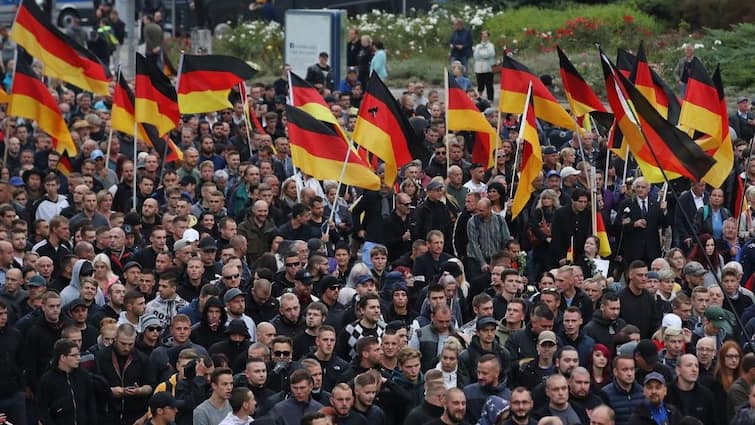
German Election 2025: Germany voted on Sunday in a snap election described by the BBC as “significant not just for Germany but for the rest of Europe and beyond”. One of the main issues on the voters’ mind is immigration, and a spate of attacks attributed to asylum-seekers has reportedly boosted the prospects of the far-right Alternative für Deutschland (AfD). The controversial party, described by critics as extremist, and almost treated as a pariah by the country’s other political players, is polling second according to the exit polls released after voting ended late Sunday night (IST).
The conservative Christian Democratic Union (CDU) leads the polls with an estimated 29% of the vote, going by the exit polls, while the incumbent Social Democratic Party (SPD) is third with 16 percent. The exit polls peg the share of the AfD — which has courted support from Trump-backer tech billionaire Elon Musk — at around 20%, its best showing ever.
Matthias Miersch, the secretary-general of Chancellor Olaf Scholz’s Social Democrats, called the election results a “historic defeat.” “This is very, very bitterly serious,” Miersch said as his party headed for third place.
The counting of the votes has begun, and the final result is expected to be clear by Monday.
Other key issues driving the voters are the German economy and the Ukraine-Russia war.
According to a report by German public broadcaster DW, around 59.2 million Germans in Germany were eligible to vote on Sunday, based on figures from the country’s Statistical Office.
“However, around 10 million people living in Germany won’t be able to cast a vote because they aren’t German citizens. That means about 14% of Germany’s adult population will be excluded from voting because of their nationality,” the report adds.
ALSO READ | Opinion: Germany Votes, Europe Waits — Why India Can’t Ignore The Political Shake-Up That Could Reshape EU
Why The Snap Election
The snap election comes seven months before the next parliamentary polls were scheduled to be held — the German parliament, or the Bundestag, is elected for four-year tenures, and the last election was held in September 2021. The snap poll was necessitated by the collapse of Chancellor Olaf Scholz’s three-way coalition. Scholz is a member of the centre-left SPD.
According to the Facts About Germany website, the country’s electoral system makes “it difficult for any single party to form a government on its own — a coalition government is the rule in Germany”. You can read all about Germany’s complex election system in this explainer.
The chancellor will be elected later based on a parliamentary vote.
AfD’s Rise
Founded in 2013, the AfD entered the Bundestag for the first time in 2017 with 12.6% of the vote. Former Chancellor Angela Merkel’s “decision in 2015 to allow in large numbers of migrants” was seen to have “supercharged” the AfD as a political force, the AP reported. Its vote share fell to 10.3% in the 2021 election, The Guardian reported at the time.
Read all about the AfD here.

German Election 2025: Germany voted on Sunday in a snap election described by the BBC as “significant not just for Germany but for the rest of Europe and beyond”. One of the main issues on the voters’ mind is immigration, and a spate of attacks attributed to asylum-seekers has reportedly boosted the prospects of the far-right Alternative für Deutschland (AfD). The controversial party, described by critics as extremist, and almost treated as a pariah by the country’s other political players, is polling second according to the exit polls released after voting ended late Sunday night (IST).
The conservative Christian Democratic Union (CDU) leads the polls with an estimated 29% of the vote, going by the exit polls, while the incumbent Social Democratic Party (SPD) is third with 16 percent. The exit polls peg the share of the AfD — which has courted support from Trump-backer tech billionaire Elon Musk — at around 20%, its best showing ever.
Matthias Miersch, the secretary-general of Chancellor Olaf Scholz’s Social Democrats, called the election results a “historic defeat.” “This is very, very bitterly serious,” Miersch said as his party headed for third place.
The counting of the votes has begun, and the final result is expected to be clear by Monday.
Other key issues driving the voters are the German economy and the Ukraine-Russia war.
According to a report by German public broadcaster DW, around 59.2 million Germans in Germany were eligible to vote on Sunday, based on figures from the country’s Statistical Office.
“However, around 10 million people living in Germany won’t be able to cast a vote because they aren’t German citizens. That means about 14% of Germany’s adult population will be excluded from voting because of their nationality,” the report adds.
ALSO READ | Opinion: Germany Votes, Europe Waits — Why India Can’t Ignore The Political Shake-Up That Could Reshape EU
Why The Snap Election
The snap election comes seven months before the next parliamentary polls were scheduled to be held — the German parliament, or the Bundestag, is elected for four-year tenures, and the last election was held in September 2021. The snap poll was necessitated by the collapse of Chancellor Olaf Scholz’s three-way coalition. Scholz is a member of the centre-left SPD.
According to the Facts About Germany website, the country’s electoral system makes “it difficult for any single party to form a government on its own — a coalition government is the rule in Germany”. You can read all about Germany’s complex election system in this explainer.
The chancellor will be elected later based on a parliamentary vote.
AfD’s Rise
Founded in 2013, the AfD entered the Bundestag for the first time in 2017 with 12.6% of the vote. Former Chancellor Angela Merkel’s “decision in 2015 to allow in large numbers of migrants” was seen to have “supercharged” the AfD as a political force, the AP reported. Its vote share fell to 10.3% in the 2021 election, The Guardian reported at the time.
Read all about the AfD here.

German Election 2025: Germany voted on Sunday in a snap election described by the BBC as “significant not just for Germany but for the rest of Europe and beyond”. One of the main issues on the voters’ mind is immigration, and a spate of attacks attributed to asylum-seekers has reportedly boosted the prospects of the far-right Alternative für Deutschland (AfD). The controversial party, described by critics as extremist, and almost treated as a pariah by the country’s other political players, is polling second according to the exit polls released after voting ended late Sunday night (IST).
The conservative Christian Democratic Union (CDU) leads the polls with an estimated 29% of the vote, going by the exit polls, while the incumbent Social Democratic Party (SPD) is third with 16 percent. The exit polls peg the share of the AfD — which has courted support from Trump-backer tech billionaire Elon Musk — at around 20%, its best showing ever.
Matthias Miersch, the secretary-general of Chancellor Olaf Scholz’s Social Democrats, called the election results a “historic defeat.” “This is very, very bitterly serious,” Miersch said as his party headed for third place.
The counting of the votes has begun, and the final result is expected to be clear by Monday.
Other key issues driving the voters are the German economy and the Ukraine-Russia war.
According to a report by German public broadcaster DW, around 59.2 million Germans in Germany were eligible to vote on Sunday, based on figures from the country’s Statistical Office.
“However, around 10 million people living in Germany won’t be able to cast a vote because they aren’t German citizens. That means about 14% of Germany’s adult population will be excluded from voting because of their nationality,” the report adds.
ALSO READ | Opinion: Germany Votes, Europe Waits — Why India Can’t Ignore The Political Shake-Up That Could Reshape EU
Why The Snap Election
The snap election comes seven months before the next parliamentary polls were scheduled to be held — the German parliament, or the Bundestag, is elected for four-year tenures, and the last election was held in September 2021. The snap poll was necessitated by the collapse of Chancellor Olaf Scholz’s three-way coalition. Scholz is a member of the centre-left SPD.
According to the Facts About Germany website, the country’s electoral system makes “it difficult for any single party to form a government on its own — a coalition government is the rule in Germany”. You can read all about Germany’s complex election system in this explainer.
The chancellor will be elected later based on a parliamentary vote.
AfD’s Rise
Founded in 2013, the AfD entered the Bundestag for the first time in 2017 with 12.6% of the vote. Former Chancellor Angela Merkel’s “decision in 2015 to allow in large numbers of migrants” was seen to have “supercharged” the AfD as a political force, the AP reported. Its vote share fell to 10.3% in the 2021 election, The Guardian reported at the time.
Read all about the AfD here.
German Election 2025: Germany voted on Sunday in a snap election described by the BBC as “significant not just for Germany but for the rest of Europe and beyond”. One of the main issues on the voters’ mind is immigration, and a spate of attacks attributed to asylum-seekers has reportedly boosted the prospects of the far-right Alternative für Deutschland (AfD). The controversial party, described by critics as extremist, and almost treated as a pariah by the country’s other political players, is polling second according to the exit polls released after voting ended late Sunday night (IST).
The conservative Christian Democratic Union (CDU) leads the polls with an estimated 29% of the vote, going by the exit polls, while the incumbent Social Democratic Party (SPD) is third with 16 percent. The exit polls peg the share of the AfD — which has courted support from Trump-backer tech billionaire Elon Musk — at around 20%, its best showing ever.
Matthias Miersch, the secretary-general of Chancellor Olaf Scholz’s Social Democrats, called the election results a “historic defeat.” “This is very, very bitterly serious,” Miersch said as his party headed for third place.
The counting of the votes has begun, and the final result is expected to be clear by Monday.
Other key issues driving the voters are the German economy and the Ukraine-Russia war.
According to a report by German public broadcaster DW, around 59.2 million Germans in Germany were eligible to vote on Sunday, based on figures from the country’s Statistical Office.
“However, around 10 million people living in Germany won’t be able to cast a vote because they aren’t German citizens. That means about 14% of Germany’s adult population will be excluded from voting because of their nationality,” the report adds.
ALSO READ | Opinion: Germany Votes, Europe Waits — Why India Can’t Ignore The Political Shake-Up That Could Reshape EU
Why The Snap Election
The snap election comes seven months before the next parliamentary polls were scheduled to be held — the German parliament, or the Bundestag, is elected for four-year tenures, and the last election was held in September 2021. The snap poll was necessitated by the collapse of Chancellor Olaf Scholz’s three-way coalition. Scholz is a member of the centre-left SPD.
According to the Facts About Germany website, the country’s electoral system makes “it difficult for any single party to form a government on its own — a coalition government is the rule in Germany”. You can read all about Germany’s complex election system in this explainer.
The chancellor will be elected later based on a parliamentary vote.
AfD’s Rise
Founded in 2013, the AfD entered the Bundestag for the first time in 2017 with 12.6% of the vote. Former Chancellor Angela Merkel’s “decision in 2015 to allow in large numbers of migrants” was seen to have “supercharged” the AfD as a political force, the AP reported. Its vote share fell to 10.3% in the 2021 election, The Guardian reported at the time.
Read all about the AfD here.

German Election 2025: Germany voted on Sunday in a snap election described by the BBC as “significant not just for Germany but for the rest of Europe and beyond”. One of the main issues on the voters’ mind is immigration, and a spate of attacks attributed to asylum-seekers has reportedly boosted the prospects of the far-right Alternative für Deutschland (AfD). The controversial party, described by critics as extremist, and almost treated as a pariah by the country’s other political players, is polling second according to the exit polls released after voting ended late Sunday night (IST).
The conservative Christian Democratic Union (CDU) leads the polls with an estimated 29% of the vote, going by the exit polls, while the incumbent Social Democratic Party (SPD) is third with 16 percent. The exit polls peg the share of the AfD — which has courted support from Trump-backer tech billionaire Elon Musk — at around 20%, its best showing ever.
Matthias Miersch, the secretary-general of Chancellor Olaf Scholz’s Social Democrats, called the election results a “historic defeat.” “This is very, very bitterly serious,” Miersch said as his party headed for third place.
The counting of the votes has begun, and the final result is expected to be clear by Monday.
Other key issues driving the voters are the German economy and the Ukraine-Russia war.
According to a report by German public broadcaster DW, around 59.2 million Germans in Germany were eligible to vote on Sunday, based on figures from the country’s Statistical Office.
“However, around 10 million people living in Germany won’t be able to cast a vote because they aren’t German citizens. That means about 14% of Germany’s adult population will be excluded from voting because of their nationality,” the report adds.
ALSO READ | Opinion: Germany Votes, Europe Waits — Why India Can’t Ignore The Political Shake-Up That Could Reshape EU
Why The Snap Election
The snap election comes seven months before the next parliamentary polls were scheduled to be held — the German parliament, or the Bundestag, is elected for four-year tenures, and the last election was held in September 2021. The snap poll was necessitated by the collapse of Chancellor Olaf Scholz’s three-way coalition. Scholz is a member of the centre-left SPD.
According to the Facts About Germany website, the country’s electoral system makes “it difficult for any single party to form a government on its own — a coalition government is the rule in Germany”. You can read all about Germany’s complex election system in this explainer.
The chancellor will be elected later based on a parliamentary vote.
AfD’s Rise
Founded in 2013, the AfD entered the Bundestag for the first time in 2017 with 12.6% of the vote. Former Chancellor Angela Merkel’s “decision in 2015 to allow in large numbers of migrants” was seen to have “supercharged” the AfD as a political force, the AP reported. Its vote share fell to 10.3% in the 2021 election, The Guardian reported at the time.
Read all about the AfD here.
German Election 2025: Germany voted on Sunday in a snap election described by the BBC as “significant not just for Germany but for the rest of Europe and beyond”. One of the main issues on the voters’ mind is immigration, and a spate of attacks attributed to asylum-seekers has reportedly boosted the prospects of the far-right Alternative für Deutschland (AfD). The controversial party, described by critics as extremist, and almost treated as a pariah by the country’s other political players, is polling second according to the exit polls released after voting ended late Sunday night (IST).
The conservative Christian Democratic Union (CDU) leads the polls with an estimated 29% of the vote, going by the exit polls, while the incumbent Social Democratic Party (SPD) is third with 16 percent. The exit polls peg the share of the AfD — which has courted support from Trump-backer tech billionaire Elon Musk — at around 20%, its best showing ever.
Matthias Miersch, the secretary-general of Chancellor Olaf Scholz’s Social Democrats, called the election results a “historic defeat.” “This is very, very bitterly serious,” Miersch said as his party headed for third place.
The counting of the votes has begun, and the final result is expected to be clear by Monday.
Other key issues driving the voters are the German economy and the Ukraine-Russia war.
According to a report by German public broadcaster DW, around 59.2 million Germans in Germany were eligible to vote on Sunday, based on figures from the country’s Statistical Office.
“However, around 10 million people living in Germany won’t be able to cast a vote because they aren’t German citizens. That means about 14% of Germany’s adult population will be excluded from voting because of their nationality,” the report adds.
ALSO READ | Opinion: Germany Votes, Europe Waits — Why India Can’t Ignore The Political Shake-Up That Could Reshape EU
Why The Snap Election
The snap election comes seven months before the next parliamentary polls were scheduled to be held — the German parliament, or the Bundestag, is elected for four-year tenures, and the last election was held in September 2021. The snap poll was necessitated by the collapse of Chancellor Olaf Scholz’s three-way coalition. Scholz is a member of the centre-left SPD.
According to the Facts About Germany website, the country’s electoral system makes “it difficult for any single party to form a government on its own — a coalition government is the rule in Germany”. You can read all about Germany’s complex election system in this explainer.
The chancellor will be elected later based on a parliamentary vote.
AfD’s Rise
Founded in 2013, the AfD entered the Bundestag for the first time in 2017 with 12.6% of the vote. Former Chancellor Angela Merkel’s “decision in 2015 to allow in large numbers of migrants” was seen to have “supercharged” the AfD as a political force, the AP reported. Its vote share fell to 10.3% in the 2021 election, The Guardian reported at the time.
Read all about the AfD here.
German Election 2025: Germany voted on Sunday in a snap election described by the BBC as “significant not just for Germany but for the rest of Europe and beyond”. One of the main issues on the voters’ mind is immigration, and a spate of attacks attributed to asylum-seekers has reportedly boosted the prospects of the far-right Alternative für Deutschland (AfD). The controversial party, described by critics as extremist, and almost treated as a pariah by the country’s other political players, is polling second according to the exit polls released after voting ended late Sunday night (IST).
The conservative Christian Democratic Union (CDU) leads the polls with an estimated 29% of the vote, going by the exit polls, while the incumbent Social Democratic Party (SPD) is third with 16 percent. The exit polls peg the share of the AfD — which has courted support from Trump-backer tech billionaire Elon Musk — at around 20%, its best showing ever.
Matthias Miersch, the secretary-general of Chancellor Olaf Scholz’s Social Democrats, called the election results a “historic defeat.” “This is very, very bitterly serious,” Miersch said as his party headed for third place.
The counting of the votes has begun, and the final result is expected to be clear by Monday.
Other key issues driving the voters are the German economy and the Ukraine-Russia war.
According to a report by German public broadcaster DW, around 59.2 million Germans in Germany were eligible to vote on Sunday, based on figures from the country’s Statistical Office.
“However, around 10 million people living in Germany won’t be able to cast a vote because they aren’t German citizens. That means about 14% of Germany’s adult population will be excluded from voting because of their nationality,” the report adds.
ALSO READ | Opinion: Germany Votes, Europe Waits — Why India Can’t Ignore The Political Shake-Up That Could Reshape EU
Why The Snap Election
The snap election comes seven months before the next parliamentary polls were scheduled to be held — the German parliament, or the Bundestag, is elected for four-year tenures, and the last election was held in September 2021. The snap poll was necessitated by the collapse of Chancellor Olaf Scholz’s three-way coalition. Scholz is a member of the centre-left SPD.
According to the Facts About Germany website, the country’s electoral system makes “it difficult for any single party to form a government on its own — a coalition government is the rule in Germany”. You can read all about Germany’s complex election system in this explainer.
The chancellor will be elected later based on a parliamentary vote.
AfD’s Rise
Founded in 2013, the AfD entered the Bundestag for the first time in 2017 with 12.6% of the vote. Former Chancellor Angela Merkel’s “decision in 2015 to allow in large numbers of migrants” was seen to have “supercharged” the AfD as a political force, the AP reported. Its vote share fell to 10.3% in the 2021 election, The Guardian reported at the time.
Read all about the AfD here.
German Election 2025: Germany voted on Sunday in a snap election described by the BBC as “significant not just for Germany but for the rest of Europe and beyond”. One of the main issues on the voters’ mind is immigration, and a spate of attacks attributed to asylum-seekers has reportedly boosted the prospects of the far-right Alternative für Deutschland (AfD). The controversial party, described by critics as extremist, and almost treated as a pariah by the country’s other political players, is polling second according to the exit polls released after voting ended late Sunday night (IST).
The conservative Christian Democratic Union (CDU) leads the polls with an estimated 29% of the vote, going by the exit polls, while the incumbent Social Democratic Party (SPD) is third with 16 percent. The exit polls peg the share of the AfD — which has courted support from Trump-backer tech billionaire Elon Musk — at around 20%, its best showing ever.
Matthias Miersch, the secretary-general of Chancellor Olaf Scholz’s Social Democrats, called the election results a “historic defeat.” “This is very, very bitterly serious,” Miersch said as his party headed for third place.
The counting of the votes has begun, and the final result is expected to be clear by Monday.
Other key issues driving the voters are the German economy and the Ukraine-Russia war.
According to a report by German public broadcaster DW, around 59.2 million Germans in Germany were eligible to vote on Sunday, based on figures from the country’s Statistical Office.
“However, around 10 million people living in Germany won’t be able to cast a vote because they aren’t German citizens. That means about 14% of Germany’s adult population will be excluded from voting because of their nationality,” the report adds.
ALSO READ | Opinion: Germany Votes, Europe Waits — Why India Can’t Ignore The Political Shake-Up That Could Reshape EU
Why The Snap Election
The snap election comes seven months before the next parliamentary polls were scheduled to be held — the German parliament, or the Bundestag, is elected for four-year tenures, and the last election was held in September 2021. The snap poll was necessitated by the collapse of Chancellor Olaf Scholz’s three-way coalition. Scholz is a member of the centre-left SPD.
According to the Facts About Germany website, the country’s electoral system makes “it difficult for any single party to form a government on its own — a coalition government is the rule in Germany”. You can read all about Germany’s complex election system in this explainer.
The chancellor will be elected later based on a parliamentary vote.
AfD’s Rise
Founded in 2013, the AfD entered the Bundestag for the first time in 2017 with 12.6% of the vote. Former Chancellor Angela Merkel’s “decision in 2015 to allow in large numbers of migrants” was seen to have “supercharged” the AfD as a political force, the AP reported. Its vote share fell to 10.3% in the 2021 election, The Guardian reported at the time.
Read all about the AfD here.

German Election 2025: Germany voted on Sunday in a snap election described by the BBC as “significant not just for Germany but for the rest of Europe and beyond”. One of the main issues on the voters’ mind is immigration, and a spate of attacks attributed to asylum-seekers has reportedly boosted the prospects of the far-right Alternative für Deutschland (AfD). The controversial party, described by critics as extremist, and almost treated as a pariah by the country’s other political players, is polling second according to the exit polls released after voting ended late Sunday night (IST).
The conservative Christian Democratic Union (CDU) leads the polls with an estimated 29% of the vote, going by the exit polls, while the incumbent Social Democratic Party (SPD) is third with 16 percent. The exit polls peg the share of the AfD — which has courted support from Trump-backer tech billionaire Elon Musk — at around 20%, its best showing ever.
Matthias Miersch, the secretary-general of Chancellor Olaf Scholz’s Social Democrats, called the election results a “historic defeat.” “This is very, very bitterly serious,” Miersch said as his party headed for third place.
The counting of the votes has begun, and the final result is expected to be clear by Monday.
Other key issues driving the voters are the German economy and the Ukraine-Russia war.
According to a report by German public broadcaster DW, around 59.2 million Germans in Germany were eligible to vote on Sunday, based on figures from the country’s Statistical Office.
“However, around 10 million people living in Germany won’t be able to cast a vote because they aren’t German citizens. That means about 14% of Germany’s adult population will be excluded from voting because of their nationality,” the report adds.
ALSO READ | Opinion: Germany Votes, Europe Waits — Why India Can’t Ignore The Political Shake-Up That Could Reshape EU
Why The Snap Election
The snap election comes seven months before the next parliamentary polls were scheduled to be held — the German parliament, or the Bundestag, is elected for four-year tenures, and the last election was held in September 2021. The snap poll was necessitated by the collapse of Chancellor Olaf Scholz’s three-way coalition. Scholz is a member of the centre-left SPD.
According to the Facts About Germany website, the country’s electoral system makes “it difficult for any single party to form a government on its own — a coalition government is the rule in Germany”. You can read all about Germany’s complex election system in this explainer.
The chancellor will be elected later based on a parliamentary vote.
AfD’s Rise
Founded in 2013, the AfD entered the Bundestag for the first time in 2017 with 12.6% of the vote. Former Chancellor Angela Merkel’s “decision in 2015 to allow in large numbers of migrants” was seen to have “supercharged” the AfD as a political force, the AP reported. Its vote share fell to 10.3% in the 2021 election, The Guardian reported at the time.
Read all about the AfD here.
German Election 2025: Germany voted on Sunday in a snap election described by the BBC as “significant not just for Germany but for the rest of Europe and beyond”. One of the main issues on the voters’ mind is immigration, and a spate of attacks attributed to asylum-seekers has reportedly boosted the prospects of the far-right Alternative für Deutschland (AfD). The controversial party, described by critics as extremist, and almost treated as a pariah by the country’s other political players, is polling second according to the exit polls released after voting ended late Sunday night (IST).
The conservative Christian Democratic Union (CDU) leads the polls with an estimated 29% of the vote, going by the exit polls, while the incumbent Social Democratic Party (SPD) is third with 16 percent. The exit polls peg the share of the AfD — which has courted support from Trump-backer tech billionaire Elon Musk — at around 20%, its best showing ever.
Matthias Miersch, the secretary-general of Chancellor Olaf Scholz’s Social Democrats, called the election results a “historic defeat.” “This is very, very bitterly serious,” Miersch said as his party headed for third place.
The counting of the votes has begun, and the final result is expected to be clear by Monday.
Other key issues driving the voters are the German economy and the Ukraine-Russia war.
According to a report by German public broadcaster DW, around 59.2 million Germans in Germany were eligible to vote on Sunday, based on figures from the country’s Statistical Office.
“However, around 10 million people living in Germany won’t be able to cast a vote because they aren’t German citizens. That means about 14% of Germany’s adult population will be excluded from voting because of their nationality,” the report adds.
ALSO READ | Opinion: Germany Votes, Europe Waits — Why India Can’t Ignore The Political Shake-Up That Could Reshape EU
Why The Snap Election
The snap election comes seven months before the next parliamentary polls were scheduled to be held — the German parliament, or the Bundestag, is elected for four-year tenures, and the last election was held in September 2021. The snap poll was necessitated by the collapse of Chancellor Olaf Scholz’s three-way coalition. Scholz is a member of the centre-left SPD.
According to the Facts About Germany website, the country’s electoral system makes “it difficult for any single party to form a government on its own — a coalition government is the rule in Germany”. You can read all about Germany’s complex election system in this explainer.
The chancellor will be elected later based on a parliamentary vote.
AfD’s Rise
Founded in 2013, the AfD entered the Bundestag for the first time in 2017 with 12.6% of the vote. Former Chancellor Angela Merkel’s “decision in 2015 to allow in large numbers of migrants” was seen to have “supercharged” the AfD as a political force, the AP reported. Its vote share fell to 10.3% in the 2021 election, The Guardian reported at the time.
Read all about the AfD here.
German Election 2025: Germany voted on Sunday in a snap election described by the BBC as “significant not just for Germany but for the rest of Europe and beyond”. One of the main issues on the voters’ mind is immigration, and a spate of attacks attributed to asylum-seekers has reportedly boosted the prospects of the far-right Alternative für Deutschland (AfD). The controversial party, described by critics as extremist, and almost treated as a pariah by the country’s other political players, is polling second according to the exit polls released after voting ended late Sunday night (IST).
The conservative Christian Democratic Union (CDU) leads the polls with an estimated 29% of the vote, going by the exit polls, while the incumbent Social Democratic Party (SPD) is third with 16 percent. The exit polls peg the share of the AfD — which has courted support from Trump-backer tech billionaire Elon Musk — at around 20%, its best showing ever.
Matthias Miersch, the secretary-general of Chancellor Olaf Scholz’s Social Democrats, called the election results a “historic defeat.” “This is very, very bitterly serious,” Miersch said as his party headed for third place.
The counting of the votes has begun, and the final result is expected to be clear by Monday.
Other key issues driving the voters are the German economy and the Ukraine-Russia war.
According to a report by German public broadcaster DW, around 59.2 million Germans in Germany were eligible to vote on Sunday, based on figures from the country’s Statistical Office.
“However, around 10 million people living in Germany won’t be able to cast a vote because they aren’t German citizens. That means about 14% of Germany’s adult population will be excluded from voting because of their nationality,” the report adds.
ALSO READ | Opinion: Germany Votes, Europe Waits — Why India Can’t Ignore The Political Shake-Up That Could Reshape EU
Why The Snap Election
The snap election comes seven months before the next parliamentary polls were scheduled to be held — the German parliament, or the Bundestag, is elected for four-year tenures, and the last election was held in September 2021. The snap poll was necessitated by the collapse of Chancellor Olaf Scholz’s three-way coalition. Scholz is a member of the centre-left SPD.
According to the Facts About Germany website, the country’s electoral system makes “it difficult for any single party to form a government on its own — a coalition government is the rule in Germany”. You can read all about Germany’s complex election system in this explainer.
The chancellor will be elected later based on a parliamentary vote.
AfD’s Rise
Founded in 2013, the AfD entered the Bundestag for the first time in 2017 with 12.6% of the vote. Former Chancellor Angela Merkel’s “decision in 2015 to allow in large numbers of migrants” was seen to have “supercharged” the AfD as a political force, the AP reported. Its vote share fell to 10.3% in the 2021 election, The Guardian reported at the time.
Read all about the AfD here.
German Election 2025: Germany voted on Sunday in a snap election described by the BBC as “significant not just for Germany but for the rest of Europe and beyond”. One of the main issues on the voters’ mind is immigration, and a spate of attacks attributed to asylum-seekers has reportedly boosted the prospects of the far-right Alternative für Deutschland (AfD). The controversial party, described by critics as extremist, and almost treated as a pariah by the country’s other political players, is polling second according to the exit polls released after voting ended late Sunday night (IST).
The conservative Christian Democratic Union (CDU) leads the polls with an estimated 29% of the vote, going by the exit polls, while the incumbent Social Democratic Party (SPD) is third with 16 percent. The exit polls peg the share of the AfD — which has courted support from Trump-backer tech billionaire Elon Musk — at around 20%, its best showing ever.
Matthias Miersch, the secretary-general of Chancellor Olaf Scholz’s Social Democrats, called the election results a “historic defeat.” “This is very, very bitterly serious,” Miersch said as his party headed for third place.
The counting of the votes has begun, and the final result is expected to be clear by Monday.
Other key issues driving the voters are the German economy and the Ukraine-Russia war.
According to a report by German public broadcaster DW, around 59.2 million Germans in Germany were eligible to vote on Sunday, based on figures from the country’s Statistical Office.
“However, around 10 million people living in Germany won’t be able to cast a vote because they aren’t German citizens. That means about 14% of Germany’s adult population will be excluded from voting because of their nationality,” the report adds.
ALSO READ | Opinion: Germany Votes, Europe Waits — Why India Can’t Ignore The Political Shake-Up That Could Reshape EU
Why The Snap Election
The snap election comes seven months before the next parliamentary polls were scheduled to be held — the German parliament, or the Bundestag, is elected for four-year tenures, and the last election was held in September 2021. The snap poll was necessitated by the collapse of Chancellor Olaf Scholz’s three-way coalition. Scholz is a member of the centre-left SPD.
According to the Facts About Germany website, the country’s electoral system makes “it difficult for any single party to form a government on its own — a coalition government is the rule in Germany”. You can read all about Germany’s complex election system in this explainer.
The chancellor will be elected later based on a parliamentary vote.
AfD’s Rise
Founded in 2013, the AfD entered the Bundestag for the first time in 2017 with 12.6% of the vote. Former Chancellor Angela Merkel’s “decision in 2015 to allow in large numbers of migrants” was seen to have “supercharged” the AfD as a political force, the AP reported. Its vote share fell to 10.3% in the 2021 election, The Guardian reported at the time.
Read all about the AfD here.
German Election 2025: Germany voted on Sunday in a snap election described by the BBC as “significant not just for Germany but for the rest of Europe and beyond”. One of the main issues on the voters’ mind is immigration, and a spate of attacks attributed to asylum-seekers has reportedly boosted the prospects of the far-right Alternative für Deutschland (AfD). The controversial party, described by critics as extremist, and almost treated as a pariah by the country’s other political players, is polling second according to the exit polls released after voting ended late Sunday night (IST).
The conservative Christian Democratic Union (CDU) leads the polls with an estimated 29% of the vote, going by the exit polls, while the incumbent Social Democratic Party (SPD) is third with 16 percent. The exit polls peg the share of the AfD — which has courted support from Trump-backer tech billionaire Elon Musk — at around 20%, its best showing ever.
Matthias Miersch, the secretary-general of Chancellor Olaf Scholz’s Social Democrats, called the election results a “historic defeat.” “This is very, very bitterly serious,” Miersch said as his party headed for third place.
The counting of the votes has begun, and the final result is expected to be clear by Monday.
Other key issues driving the voters are the German economy and the Ukraine-Russia war.
According to a report by German public broadcaster DW, around 59.2 million Germans in Germany were eligible to vote on Sunday, based on figures from the country’s Statistical Office.
“However, around 10 million people living in Germany won’t be able to cast a vote because they aren’t German citizens. That means about 14% of Germany’s adult population will be excluded from voting because of their nationality,” the report adds.
ALSO READ | Opinion: Germany Votes, Europe Waits — Why India Can’t Ignore The Political Shake-Up That Could Reshape EU
Why The Snap Election
The snap election comes seven months before the next parliamentary polls were scheduled to be held — the German parliament, or the Bundestag, is elected for four-year tenures, and the last election was held in September 2021. The snap poll was necessitated by the collapse of Chancellor Olaf Scholz’s three-way coalition. Scholz is a member of the centre-left SPD.
According to the Facts About Germany website, the country’s electoral system makes “it difficult for any single party to form a government on its own — a coalition government is the rule in Germany”. You can read all about Germany’s complex election system in this explainer.
The chancellor will be elected later based on a parliamentary vote.
AfD’s Rise
Founded in 2013, the AfD entered the Bundestag for the first time in 2017 with 12.6% of the vote. Former Chancellor Angela Merkel’s “decision in 2015 to allow in large numbers of migrants” was seen to have “supercharged” the AfD as a political force, the AP reported. Its vote share fell to 10.3% in the 2021 election, The Guardian reported at the time.
Read all about the AfD here.
German Election 2025: Germany voted on Sunday in a snap election described by the BBC as “significant not just for Germany but for the rest of Europe and beyond”. One of the main issues on the voters’ mind is immigration, and a spate of attacks attributed to asylum-seekers has reportedly boosted the prospects of the far-right Alternative für Deutschland (AfD). The controversial party, described by critics as extremist, and almost treated as a pariah by the country’s other political players, is polling second according to the exit polls released after voting ended late Sunday night (IST).
The conservative Christian Democratic Union (CDU) leads the polls with an estimated 29% of the vote, going by the exit polls, while the incumbent Social Democratic Party (SPD) is third with 16 percent. The exit polls peg the share of the AfD — which has courted support from Trump-backer tech billionaire Elon Musk — at around 20%, its best showing ever.
Matthias Miersch, the secretary-general of Chancellor Olaf Scholz’s Social Democrats, called the election results a “historic defeat.” “This is very, very bitterly serious,” Miersch said as his party headed for third place.
The counting of the votes has begun, and the final result is expected to be clear by Monday.
Other key issues driving the voters are the German economy and the Ukraine-Russia war.
According to a report by German public broadcaster DW, around 59.2 million Germans in Germany were eligible to vote on Sunday, based on figures from the country’s Statistical Office.
“However, around 10 million people living in Germany won’t be able to cast a vote because they aren’t German citizens. That means about 14% of Germany’s adult population will be excluded from voting because of their nationality,” the report adds.
ALSO READ | Opinion: Germany Votes, Europe Waits — Why India Can’t Ignore The Political Shake-Up That Could Reshape EU
Why The Snap Election
The snap election comes seven months before the next parliamentary polls were scheduled to be held — the German parliament, or the Bundestag, is elected for four-year tenures, and the last election was held in September 2021. The snap poll was necessitated by the collapse of Chancellor Olaf Scholz’s three-way coalition. Scholz is a member of the centre-left SPD.
According to the Facts About Germany website, the country’s electoral system makes “it difficult for any single party to form a government on its own — a coalition government is the rule in Germany”. You can read all about Germany’s complex election system in this explainer.
The chancellor will be elected later based on a parliamentary vote.
AfD’s Rise
Founded in 2013, the AfD entered the Bundestag for the first time in 2017 with 12.6% of the vote. Former Chancellor Angela Merkel’s “decision in 2015 to allow in large numbers of migrants” was seen to have “supercharged” the AfD as a political force, the AP reported. Its vote share fell to 10.3% in the 2021 election, The Guardian reported at the time.
Read all about the AfD here.
German Election 2025: Germany voted on Sunday in a snap election described by the BBC as “significant not just for Germany but for the rest of Europe and beyond”. One of the main issues on the voters’ mind is immigration, and a spate of attacks attributed to asylum-seekers has reportedly boosted the prospects of the far-right Alternative für Deutschland (AfD). The controversial party, described by critics as extremist, and almost treated as a pariah by the country’s other political players, is polling second according to the exit polls released after voting ended late Sunday night (IST).
The conservative Christian Democratic Union (CDU) leads the polls with an estimated 29% of the vote, going by the exit polls, while the incumbent Social Democratic Party (SPD) is third with 16 percent. The exit polls peg the share of the AfD — which has courted support from Trump-backer tech billionaire Elon Musk — at around 20%, its best showing ever.
Matthias Miersch, the secretary-general of Chancellor Olaf Scholz’s Social Democrats, called the election results a “historic defeat.” “This is very, very bitterly serious,” Miersch said as his party headed for third place.
The counting of the votes has begun, and the final result is expected to be clear by Monday.
Other key issues driving the voters are the German economy and the Ukraine-Russia war.
According to a report by German public broadcaster DW, around 59.2 million Germans in Germany were eligible to vote on Sunday, based on figures from the country’s Statistical Office.
“However, around 10 million people living in Germany won’t be able to cast a vote because they aren’t German citizens. That means about 14% of Germany’s adult population will be excluded from voting because of their nationality,” the report adds.
ALSO READ | Opinion: Germany Votes, Europe Waits — Why India Can’t Ignore The Political Shake-Up That Could Reshape EU
Why The Snap Election
The snap election comes seven months before the next parliamentary polls were scheduled to be held — the German parliament, or the Bundestag, is elected for four-year tenures, and the last election was held in September 2021. The snap poll was necessitated by the collapse of Chancellor Olaf Scholz’s three-way coalition. Scholz is a member of the centre-left SPD.
According to the Facts About Germany website, the country’s electoral system makes “it difficult for any single party to form a government on its own — a coalition government is the rule in Germany”. You can read all about Germany’s complex election system in this explainer.
The chancellor will be elected later based on a parliamentary vote.
AfD’s Rise
Founded in 2013, the AfD entered the Bundestag for the first time in 2017 with 12.6% of the vote. Former Chancellor Angela Merkel’s “decision in 2015 to allow in large numbers of migrants” was seen to have “supercharged” the AfD as a political force, the AP reported. Its vote share fell to 10.3% in the 2021 election, The Guardian reported at the time.
Read all about the AfD here.
German Election 2025: Germany voted on Sunday in a snap election described by the BBC as “significant not just for Germany but for the rest of Europe and beyond”. One of the main issues on the voters’ mind is immigration, and a spate of attacks attributed to asylum-seekers has reportedly boosted the prospects of the far-right Alternative für Deutschland (AfD). The controversial party, described by critics as extremist, and almost treated as a pariah by the country’s other political players, is polling second according to the exit polls released after voting ended late Sunday night (IST).
The conservative Christian Democratic Union (CDU) leads the polls with an estimated 29% of the vote, going by the exit polls, while the incumbent Social Democratic Party (SPD) is third with 16 percent. The exit polls peg the share of the AfD — which has courted support from Trump-backer tech billionaire Elon Musk — at around 20%, its best showing ever.
Matthias Miersch, the secretary-general of Chancellor Olaf Scholz’s Social Democrats, called the election results a “historic defeat.” “This is very, very bitterly serious,” Miersch said as his party headed for third place.
The counting of the votes has begun, and the final result is expected to be clear by Monday.
Other key issues driving the voters are the German economy and the Ukraine-Russia war.
According to a report by German public broadcaster DW, around 59.2 million Germans in Germany were eligible to vote on Sunday, based on figures from the country’s Statistical Office.
“However, around 10 million people living in Germany won’t be able to cast a vote because they aren’t German citizens. That means about 14% of Germany’s adult population will be excluded from voting because of their nationality,” the report adds.
ALSO READ | Opinion: Germany Votes, Europe Waits — Why India Can’t Ignore The Political Shake-Up That Could Reshape EU
Why The Snap Election
The snap election comes seven months before the next parliamentary polls were scheduled to be held — the German parliament, or the Bundestag, is elected for four-year tenures, and the last election was held in September 2021. The snap poll was necessitated by the collapse of Chancellor Olaf Scholz’s three-way coalition. Scholz is a member of the centre-left SPD.
According to the Facts About Germany website, the country’s electoral system makes “it difficult for any single party to form a government on its own — a coalition government is the rule in Germany”. You can read all about Germany’s complex election system in this explainer.
The chancellor will be elected later based on a parliamentary vote.
AfD’s Rise
Founded in 2013, the AfD entered the Bundestag for the first time in 2017 with 12.6% of the vote. Former Chancellor Angela Merkel’s “decision in 2015 to allow in large numbers of migrants” was seen to have “supercharged” the AfD as a political force, the AP reported. Its vote share fell to 10.3% in the 2021 election, The Guardian reported at the time.
Read all about the AfD here.

