

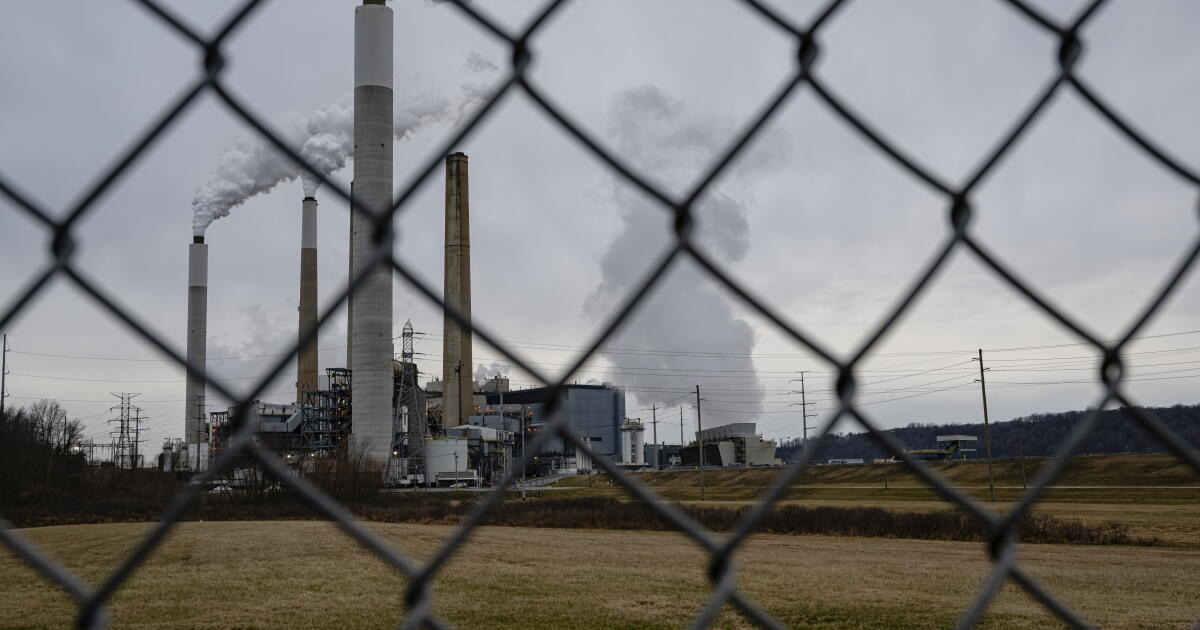
The U.S. Environmental Protection Agency said Monday it will no longer regulate planet-warming pollution from power plants that burn coal or natural gas.
The nation’s top environmental authority is rolling back most Biden-era limits on greenhouse gas emissions in an effort to remove “red tape” that drives up energy costs, agency officials said. They also announced a proposal to rescind regulations on the power sector from the Obama era and prevent future administrations from implementing new ones.
Making electricity from coal and gas is the second-largest source of greenhouse gas emissions in the U.S. and the leading driver of climate change globally.
“For over 15 years, the Obama and Biden administrations implemented a war on coal to destroy reliable and affordable energy,” EPA Administrator Lee Zeldin said in a statement. “The Trump Administration has come in to protect American energy and to make sure you can afford to keep the lights on.”
But experts say unchecked greenhouse gas emissions from power plants mean more global warming and set back progress on climate change across the U.S. California does not have any coal-fired power plants and has its own regulations on natural gas.
The rollback could result in as much as 5.8 billion metric tons of added carbon dioxide emissions by 2050, said Zealan Hoover, a former senior advisor to the EPA administrator in the Biden administration.
While electricity demand is rising, “we do not have to meet that electricity demand by highly polluting coal and gas plants,” Hoover said. “And when we do run coal and gas plants, we have the option to hold them to a high public health standard. This administration is choosing to cut those standards.”
The Biden administration’s rules would have required some coal plants to make major cuts in their emissions, in some cases by installing carbon-capture technology, changing how they operate or eventually retiring. They would also have required future natural gas plants to meet strict emissions standards, which they could achieve by converting to cleaner-burning fuels such as hydrogen. EPA officials now say the technology is not sufficiently available.
Besides the climate disturbance, which affects everyone, Monday’s rollback will most directly affect people who live near coal plants, which California has already phased out, and people who live near gas plants in states that don’t have their own regulations. California requires 90% of electricity to be zero-carbon by 2035 and 100% to be so by 2045. That would eliminate natural gas in the power sector.
California Air Resources Board spokesperson Lindsay Buckley said the Trump administration’s decision “has no effect on California’s rules and greenhouse gases from the state’s power plants are still regulated under Cap-and-Invest.” The latter regulation is the state’s backstop climate trading program that puts an ever-stricter cap on emissions across sectors and allows polluting businesses to buy and trade allowances to meet it.
Californians will still feel the effects of Monday’s decisions.
“Some of these coal-fired power plants are some of the biggest carbon polluters in the U.S. if not the world,” said Ethan Elkind, director of the UC Berkeley School of Law’s climate program. “It doesn’t directly affect California’s own state goals for decarbonizing our electricity sector, but removing environmental protections on those plants means that we’re going to be worsening climate change which definitely affects California.”
EPA officials said on a call Monday that the change will not include pollutants that directly harm health such as carbon monoxide and nitrogen dioxide, which are regulated separately. They argued that the 2024 rules established by the Biden administration — which set stringent standards for fossil fuel plants — were a “direct attempt to shift America away from affordable energy” in violation of the Clean Air Act.
In all, they said the action will save $310 billion for the power sector, primarily by avoiding costs to comply with the stricter rules and other forced investments.
But Hoover, the former Biden administration advisor, said those calculations omit how much the country would have saved in avoided healthcare costs. Increased pollution from coal and gas plants will cause hundreds of billions of dollars in negative health impacts from asthma, heart and lung disease and premature deaths, among other outcomes, he said.
“I reject the premise that you have to choose between clean air and abundant energy,” he said. “It’s actually the Trump administration that has been sabotaging affordable clean energy at every turn since taking office — they are intentionally choosing to promote sources of energy that make us sicker, and also in many cases cost more.”
Supporters meanwhile applauded the plan.
“The power plant rules finalized by the previous administration set unachievable timelines for implementation and threatened the nation’s grid reliability,” said Jay Timmons, president and chief executive of the National Assn. of Manufacturers, a large trade group. “Manufacturers thank EPA Administrator Lee Zeldin for listening to the concerns of our industry and taking action to enhance manufacturers’ access to America’s abundant energy resources.”
The EPA’s action is part of a series of steps to roll back regulatory protections over the last two years, including dismantling rules on pollution from cars, limits on mercury and other air toxics from power plants, and the federal government’s formal affirmation that climate change is harmful to human health and welfare, known as the endangerment finding.
In that instance as in this one, EPA officials argued that planet-warming greenhouse gas emissions are not “air pollutants” under the Clean Air Act and thus are not subject to federal regulations. A 2007 Supreme Court case, Massachusetts vs. EPA, determined that they are.
But EPA officials on Monday also pointed to a 2022 Supreme Court case that limited the agency’s authority to use the Clean Air Act to broadly restructure the nation’s electricity system, and said the Biden administration’s rules were “another example of the Democrats’ war on America’s natural resources.”
“Unlike past administrations that prioritized the interests of climate alarmists, President Trump promised to put the American people first and he is delivering,” Energy Secretary Chris Wright said in a statement.
The announcement comes as the International Energy Agency recently projected the world will burn more coal than ever this year, as conflict in the Middle East pushes up natural gas prices. Before the war, it anticipated a slight decline in global coal demand this year.
In the U.S., coal has been on the decline for decades, but use rose about 10% last year. That’s in large part because of new energy demand from data centers, which the president has promoted powering with coal, and the Trump administration’s championing of oil and gas development. Trump recently announced a $700-million investment in U.S. coal plants — including a coal export terminal in Oakland, which would be the first such terminal on the West Coast.
At the same time, the White House has struck deals with offshore wind developers to abandon their plans and invest instead in U.S. fossil fuel projects such as liquified natural gas. These actions are part of the administration’s broader agenda to “unleash American energy dominance.”
The EPA’s announcement also comes as international officials warn the world will soon breach the threshold of 1.5 degrees Celsius of global warming, widely considered a tipping point for the worst effects of climate change including worsening wildfires, heat waves, droughts and floods.
The rollback is likely to face immediate legal challenges.

The U.S. Environmental Protection Agency said Monday it will no longer regulate planet-warming pollution from power plants that burn coal or natural gas.
The nation’s top environmental authority is rolling back most Biden-era limits on greenhouse gas emissions in an effort to remove “red tape” that drives up energy costs, agency officials said. They also announced a proposal to rescind regulations on the power sector from the Obama era and prevent future administrations from implementing new ones.
Making electricity from coal and gas is the second-largest source of greenhouse gas emissions in the U.S. and the leading driver of climate change globally.
“For over 15 years, the Obama and Biden administrations implemented a war on coal to destroy reliable and affordable energy,” EPA Administrator Lee Zeldin said in a statement. “The Trump Administration has come in to protect American energy and to make sure you can afford to keep the lights on.”
But experts say unchecked greenhouse gas emissions from power plants mean more global warming and set back progress on climate change across the U.S. California does not have any coal-fired power plants and has its own regulations on natural gas.
The rollback could result in as much as 5.8 billion metric tons of added carbon dioxide emissions by 2050, said Zealan Hoover, a former senior advisor to the EPA administrator in the Biden administration.
While electricity demand is rising, “we do not have to meet that electricity demand by highly polluting coal and gas plants,” Hoover said. “And when we do run coal and gas plants, we have the option to hold them to a high public health standard. This administration is choosing to cut those standards.”
The Biden administration’s rules would have required some coal plants to make major cuts in their emissions, in some cases by installing carbon-capture technology, changing how they operate or eventually retiring. They would also have required future natural gas plants to meet strict emissions standards, which they could achieve by converting to cleaner-burning fuels such as hydrogen. EPA officials now say the technology is not sufficiently available.
Besides the climate disturbance, which affects everyone, Monday’s rollback will most directly affect people who live near coal plants, which California has already phased out, and people who live near gas plants in states that don’t have their own regulations. California requires 90% of electricity to be zero-carbon by 2035 and 100% to be so by 2045. That would eliminate natural gas in the power sector.
California Air Resources Board spokesperson Lindsay Buckley said the Trump administration’s decision “has no effect on California’s rules and greenhouse gases from the state’s power plants are still regulated under Cap-and-Invest.” The latter regulation is the state’s backstop climate trading program that puts an ever-stricter cap on emissions across sectors and allows polluting businesses to buy and trade allowances to meet it.
Californians will still feel the effects of Monday’s decisions.
“Some of these coal-fired power plants are some of the biggest carbon polluters in the U.S. if not the world,” said Ethan Elkind, director of the UC Berkeley School of Law’s climate program. “It doesn’t directly affect California’s own state goals for decarbonizing our electricity sector, but removing environmental protections on those plants means that we’re going to be worsening climate change which definitely affects California.”
EPA officials said on a call Monday that the change will not include pollutants that directly harm health such as carbon monoxide and nitrogen dioxide, which are regulated separately. They argued that the 2024 rules established by the Biden administration — which set stringent standards for fossil fuel plants — were a “direct attempt to shift America away from affordable energy” in violation of the Clean Air Act.
In all, they said the action will save $310 billion for the power sector, primarily by avoiding costs to comply with the stricter rules and other forced investments.
But Hoover, the former Biden administration advisor, said those calculations omit how much the country would have saved in avoided healthcare costs. Increased pollution from coal and gas plants will cause hundreds of billions of dollars in negative health impacts from asthma, heart and lung disease and premature deaths, among other outcomes, he said.
“I reject the premise that you have to choose between clean air and abundant energy,” he said. “It’s actually the Trump administration that has been sabotaging affordable clean energy at every turn since taking office — they are intentionally choosing to promote sources of energy that make us sicker, and also in many cases cost more.”
Supporters meanwhile applauded the plan.
“The power plant rules finalized by the previous administration set unachievable timelines for implementation and threatened the nation’s grid reliability,” said Jay Timmons, president and chief executive of the National Assn. of Manufacturers, a large trade group. “Manufacturers thank EPA Administrator Lee Zeldin for listening to the concerns of our industry and taking action to enhance manufacturers’ access to America’s abundant energy resources.”
The EPA’s action is part of a series of steps to roll back regulatory protections over the last two years, including dismantling rules on pollution from cars, limits on mercury and other air toxics from power plants, and the federal government’s formal affirmation that climate change is harmful to human health and welfare, known as the endangerment finding.
In that instance as in this one, EPA officials argued that planet-warming greenhouse gas emissions are not “air pollutants” under the Clean Air Act and thus are not subject to federal regulations. A 2007 Supreme Court case, Massachusetts vs. EPA, determined that they are.
But EPA officials on Monday also pointed to a 2022 Supreme Court case that limited the agency’s authority to use the Clean Air Act to broadly restructure the nation’s electricity system, and said the Biden administration’s rules were “another example of the Democrats’ war on America’s natural resources.”
“Unlike past administrations that prioritized the interests of climate alarmists, President Trump promised to put the American people first and he is delivering,” Energy Secretary Chris Wright said in a statement.
The announcement comes as the International Energy Agency recently projected the world will burn more coal than ever this year, as conflict in the Middle East pushes up natural gas prices. Before the war, it anticipated a slight decline in global coal demand this year.
In the U.S., coal has been on the decline for decades, but use rose about 10% last year. That’s in large part because of new energy demand from data centers, which the president has promoted powering with coal, and the Trump administration’s championing of oil and gas development. Trump recently announced a $700-million investment in U.S. coal plants — including a coal export terminal in Oakland, which would be the first such terminal on the West Coast.
At the same time, the White House has struck deals with offshore wind developers to abandon their plans and invest instead in U.S. fossil fuel projects such as liquified natural gas. These actions are part of the administration’s broader agenda to “unleash American energy dominance.”
The EPA’s announcement also comes as international officials warn the world will soon breach the threshold of 1.5 degrees Celsius of global warming, widely considered a tipping point for the worst effects of climate change including worsening wildfires, heat waves, droughts and floods.
The rollback is likely to face immediate legal challenges.

The U.S. Environmental Protection Agency said Monday it will no longer regulate planet-warming pollution from power plants that burn coal or natural gas.
The nation’s top environmental authority is rolling back most Biden-era limits on greenhouse gas emissions in an effort to remove “red tape” that drives up energy costs, agency officials said. They also announced a proposal to rescind regulations on the power sector from the Obama era and prevent future administrations from implementing new ones.
Making electricity from coal and gas is the second-largest source of greenhouse gas emissions in the U.S. and the leading driver of climate change globally.
“For over 15 years, the Obama and Biden administrations implemented a war on coal to destroy reliable and affordable energy,” EPA Administrator Lee Zeldin said in a statement. “The Trump Administration has come in to protect American energy and to make sure you can afford to keep the lights on.”
But experts say unchecked greenhouse gas emissions from power plants mean more global warming and set back progress on climate change across the U.S. California does not have any coal-fired power plants and has its own regulations on natural gas.
The rollback could result in as much as 5.8 billion metric tons of added carbon dioxide emissions by 2050, said Zealan Hoover, a former senior advisor to the EPA administrator in the Biden administration.
While electricity demand is rising, “we do not have to meet that electricity demand by highly polluting coal and gas plants,” Hoover said. “And when we do run coal and gas plants, we have the option to hold them to a high public health standard. This administration is choosing to cut those standards.”
The Biden administration’s rules would have required some coal plants to make major cuts in their emissions, in some cases by installing carbon-capture technology, changing how they operate or eventually retiring. They would also have required future natural gas plants to meet strict emissions standards, which they could achieve by converting to cleaner-burning fuels such as hydrogen. EPA officials now say the technology is not sufficiently available.
Besides the climate disturbance, which affects everyone, Monday’s rollback will most directly affect people who live near coal plants, which California has already phased out, and people who live near gas plants in states that don’t have their own regulations. California requires 90% of electricity to be zero-carbon by 2035 and 100% to be so by 2045. That would eliminate natural gas in the power sector.
California Air Resources Board spokesperson Lindsay Buckley said the Trump administration’s decision “has no effect on California’s rules and greenhouse gases from the state’s power plants are still regulated under Cap-and-Invest.” The latter regulation is the state’s backstop climate trading program that puts an ever-stricter cap on emissions across sectors and allows polluting businesses to buy and trade allowances to meet it.
Californians will still feel the effects of Monday’s decisions.
“Some of these coal-fired power plants are some of the biggest carbon polluters in the U.S. if not the world,” said Ethan Elkind, director of the UC Berkeley School of Law’s climate program. “It doesn’t directly affect California’s own state goals for decarbonizing our electricity sector, but removing environmental protections on those plants means that we’re going to be worsening climate change which definitely affects California.”
EPA officials said on a call Monday that the change will not include pollutants that directly harm health such as carbon monoxide and nitrogen dioxide, which are regulated separately. They argued that the 2024 rules established by the Biden administration — which set stringent standards for fossil fuel plants — were a “direct attempt to shift America away from affordable energy” in violation of the Clean Air Act.
In all, they said the action will save $310 billion for the power sector, primarily by avoiding costs to comply with the stricter rules and other forced investments.
But Hoover, the former Biden administration advisor, said those calculations omit how much the country would have saved in avoided healthcare costs. Increased pollution from coal and gas plants will cause hundreds of billions of dollars in negative health impacts from asthma, heart and lung disease and premature deaths, among other outcomes, he said.
“I reject the premise that you have to choose between clean air and abundant energy,” he said. “It’s actually the Trump administration that has been sabotaging affordable clean energy at every turn since taking office — they are intentionally choosing to promote sources of energy that make us sicker, and also in many cases cost more.”
Supporters meanwhile applauded the plan.
“The power plant rules finalized by the previous administration set unachievable timelines for implementation and threatened the nation’s grid reliability,” said Jay Timmons, president and chief executive of the National Assn. of Manufacturers, a large trade group. “Manufacturers thank EPA Administrator Lee Zeldin for listening to the concerns of our industry and taking action to enhance manufacturers’ access to America’s abundant energy resources.”
The EPA’s action is part of a series of steps to roll back regulatory protections over the last two years, including dismantling rules on pollution from cars, limits on mercury and other air toxics from power plants, and the federal government’s formal affirmation that climate change is harmful to human health and welfare, known as the endangerment finding.
In that instance as in this one, EPA officials argued that planet-warming greenhouse gas emissions are not “air pollutants” under the Clean Air Act and thus are not subject to federal regulations. A 2007 Supreme Court case, Massachusetts vs. EPA, determined that they are.
But EPA officials on Monday also pointed to a 2022 Supreme Court case that limited the agency’s authority to use the Clean Air Act to broadly restructure the nation’s electricity system, and said the Biden administration’s rules were “another example of the Democrats’ war on America’s natural resources.”
“Unlike past administrations that prioritized the interests of climate alarmists, President Trump promised to put the American people first and he is delivering,” Energy Secretary Chris Wright said in a statement.
The announcement comes as the International Energy Agency recently projected the world will burn more coal than ever this year, as conflict in the Middle East pushes up natural gas prices. Before the war, it anticipated a slight decline in global coal demand this year.
In the U.S., coal has been on the decline for decades, but use rose about 10% last year. That’s in large part because of new energy demand from data centers, which the president has promoted powering with coal, and the Trump administration’s championing of oil and gas development. Trump recently announced a $700-million investment in U.S. coal plants — including a coal export terminal in Oakland, which would be the first such terminal on the West Coast.
At the same time, the White House has struck deals with offshore wind developers to abandon their plans and invest instead in U.S. fossil fuel projects such as liquified natural gas. These actions are part of the administration’s broader agenda to “unleash American energy dominance.”
The EPA’s announcement also comes as international officials warn the world will soon breach the threshold of 1.5 degrees Celsius of global warming, widely considered a tipping point for the worst effects of climate change including worsening wildfires, heat waves, droughts and floods.
The rollback is likely to face immediate legal challenges.
The U.S. Environmental Protection Agency said Monday it will no longer regulate planet-warming pollution from power plants that burn coal or natural gas.
The nation’s top environmental authority is rolling back most Biden-era limits on greenhouse gas emissions in an effort to remove “red tape” that drives up energy costs, agency officials said. They also announced a proposal to rescind regulations on the power sector from the Obama era and prevent future administrations from implementing new ones.
Making electricity from coal and gas is the second-largest source of greenhouse gas emissions in the U.S. and the leading driver of climate change globally.
“For over 15 years, the Obama and Biden administrations implemented a war on coal to destroy reliable and affordable energy,” EPA Administrator Lee Zeldin said in a statement. “The Trump Administration has come in to protect American energy and to make sure you can afford to keep the lights on.”
But experts say unchecked greenhouse gas emissions from power plants mean more global warming and set back progress on climate change across the U.S. California does not have any coal-fired power plants and has its own regulations on natural gas.
The rollback could result in as much as 5.8 billion metric tons of added carbon dioxide emissions by 2050, said Zealan Hoover, a former senior advisor to the EPA administrator in the Biden administration.
While electricity demand is rising, “we do not have to meet that electricity demand by highly polluting coal and gas plants,” Hoover said. “And when we do run coal and gas plants, we have the option to hold them to a high public health standard. This administration is choosing to cut those standards.”
The Biden administration’s rules would have required some coal plants to make major cuts in their emissions, in some cases by installing carbon-capture technology, changing how they operate or eventually retiring. They would also have required future natural gas plants to meet strict emissions standards, which they could achieve by converting to cleaner-burning fuels such as hydrogen. EPA officials now say the technology is not sufficiently available.
Besides the climate disturbance, which affects everyone, Monday’s rollback will most directly affect people who live near coal plants, which California has already phased out, and people who live near gas plants in states that don’t have their own regulations. California requires 90% of electricity to be zero-carbon by 2035 and 100% to be so by 2045. That would eliminate natural gas in the power sector.
California Air Resources Board spokesperson Lindsay Buckley said the Trump administration’s decision “has no effect on California’s rules and greenhouse gases from the state’s power plants are still regulated under Cap-and-Invest.” The latter regulation is the state’s backstop climate trading program that puts an ever-stricter cap on emissions across sectors and allows polluting businesses to buy and trade allowances to meet it.
Californians will still feel the effects of Monday’s decisions.
“Some of these coal-fired power plants are some of the biggest carbon polluters in the U.S. if not the world,” said Ethan Elkind, director of the UC Berkeley School of Law’s climate program. “It doesn’t directly affect California’s own state goals for decarbonizing our electricity sector, but removing environmental protections on those plants means that we’re going to be worsening climate change which definitely affects California.”
EPA officials said on a call Monday that the change will not include pollutants that directly harm health such as carbon monoxide and nitrogen dioxide, which are regulated separately. They argued that the 2024 rules established by the Biden administration — which set stringent standards for fossil fuel plants — were a “direct attempt to shift America away from affordable energy” in violation of the Clean Air Act.
In all, they said the action will save $310 billion for the power sector, primarily by avoiding costs to comply with the stricter rules and other forced investments.
But Hoover, the former Biden administration advisor, said those calculations omit how much the country would have saved in avoided healthcare costs. Increased pollution from coal and gas plants will cause hundreds of billions of dollars in negative health impacts from asthma, heart and lung disease and premature deaths, among other outcomes, he said.
“I reject the premise that you have to choose between clean air and abundant energy,” he said. “It’s actually the Trump administration that has been sabotaging affordable clean energy at every turn since taking office — they are intentionally choosing to promote sources of energy that make us sicker, and also in many cases cost more.”
Supporters meanwhile applauded the plan.
“The power plant rules finalized by the previous administration set unachievable timelines for implementation and threatened the nation’s grid reliability,” said Jay Timmons, president and chief executive of the National Assn. of Manufacturers, a large trade group. “Manufacturers thank EPA Administrator Lee Zeldin for listening to the concerns of our industry and taking action to enhance manufacturers’ access to America’s abundant energy resources.”
The EPA’s action is part of a series of steps to roll back regulatory protections over the last two years, including dismantling rules on pollution from cars, limits on mercury and other air toxics from power plants, and the federal government’s formal affirmation that climate change is harmful to human health and welfare, known as the endangerment finding.
In that instance as in this one, EPA officials argued that planet-warming greenhouse gas emissions are not “air pollutants” under the Clean Air Act and thus are not subject to federal regulations. A 2007 Supreme Court case, Massachusetts vs. EPA, determined that they are.
But EPA officials on Monday also pointed to a 2022 Supreme Court case that limited the agency’s authority to use the Clean Air Act to broadly restructure the nation’s electricity system, and said the Biden administration’s rules were “another example of the Democrats’ war on America’s natural resources.”
“Unlike past administrations that prioritized the interests of climate alarmists, President Trump promised to put the American people first and he is delivering,” Energy Secretary Chris Wright said in a statement.
The announcement comes as the International Energy Agency recently projected the world will burn more coal than ever this year, as conflict in the Middle East pushes up natural gas prices. Before the war, it anticipated a slight decline in global coal demand this year.
In the U.S., coal has been on the decline for decades, but use rose about 10% last year. That’s in large part because of new energy demand from data centers, which the president has promoted powering with coal, and the Trump administration’s championing of oil and gas development. Trump recently announced a $700-million investment in U.S. coal plants — including a coal export terminal in Oakland, which would be the first such terminal on the West Coast.
At the same time, the White House has struck deals with offshore wind developers to abandon their plans and invest instead in U.S. fossil fuel projects such as liquified natural gas. These actions are part of the administration’s broader agenda to “unleash American energy dominance.”
The EPA’s announcement also comes as international officials warn the world will soon breach the threshold of 1.5 degrees Celsius of global warming, widely considered a tipping point for the worst effects of climate change including worsening wildfires, heat waves, droughts and floods.
The rollback is likely to face immediate legal challenges.

The U.S. Environmental Protection Agency said Monday it will no longer regulate planet-warming pollution from power plants that burn coal or natural gas.
The nation’s top environmental authority is rolling back most Biden-era limits on greenhouse gas emissions in an effort to remove “red tape” that drives up energy costs, agency officials said. They also announced a proposal to rescind regulations on the power sector from the Obama era and prevent future administrations from implementing new ones.
Making electricity from coal and gas is the second-largest source of greenhouse gas emissions in the U.S. and the leading driver of climate change globally.
“For over 15 years, the Obama and Biden administrations implemented a war on coal to destroy reliable and affordable energy,” EPA Administrator Lee Zeldin said in a statement. “The Trump Administration has come in to protect American energy and to make sure you can afford to keep the lights on.”
But experts say unchecked greenhouse gas emissions from power plants mean more global warming and set back progress on climate change across the U.S. California does not have any coal-fired power plants and has its own regulations on natural gas.
The rollback could result in as much as 5.8 billion metric tons of added carbon dioxide emissions by 2050, said Zealan Hoover, a former senior advisor to the EPA administrator in the Biden administration.
While electricity demand is rising, “we do not have to meet that electricity demand by highly polluting coal and gas plants,” Hoover said. “And when we do run coal and gas plants, we have the option to hold them to a high public health standard. This administration is choosing to cut those standards.”
The Biden administration’s rules would have required some coal plants to make major cuts in their emissions, in some cases by installing carbon-capture technology, changing how they operate or eventually retiring. They would also have required future natural gas plants to meet strict emissions standards, which they could achieve by converting to cleaner-burning fuels such as hydrogen. EPA officials now say the technology is not sufficiently available.
Besides the climate disturbance, which affects everyone, Monday’s rollback will most directly affect people who live near coal plants, which California has already phased out, and people who live near gas plants in states that don’t have their own regulations. California requires 90% of electricity to be zero-carbon by 2035 and 100% to be so by 2045. That would eliminate natural gas in the power sector.
California Air Resources Board spokesperson Lindsay Buckley said the Trump administration’s decision “has no effect on California’s rules and greenhouse gases from the state’s power plants are still regulated under Cap-and-Invest.” The latter regulation is the state’s backstop climate trading program that puts an ever-stricter cap on emissions across sectors and allows polluting businesses to buy and trade allowances to meet it.
Californians will still feel the effects of Monday’s decisions.
“Some of these coal-fired power plants are some of the biggest carbon polluters in the U.S. if not the world,” said Ethan Elkind, director of the UC Berkeley School of Law’s climate program. “It doesn’t directly affect California’s own state goals for decarbonizing our electricity sector, but removing environmental protections on those plants means that we’re going to be worsening climate change which definitely affects California.”
EPA officials said on a call Monday that the change will not include pollutants that directly harm health such as carbon monoxide and nitrogen dioxide, which are regulated separately. They argued that the 2024 rules established by the Biden administration — which set stringent standards for fossil fuel plants — were a “direct attempt to shift America away from affordable energy” in violation of the Clean Air Act.
In all, they said the action will save $310 billion for the power sector, primarily by avoiding costs to comply with the stricter rules and other forced investments.
But Hoover, the former Biden administration advisor, said those calculations omit how much the country would have saved in avoided healthcare costs. Increased pollution from coal and gas plants will cause hundreds of billions of dollars in negative health impacts from asthma, heart and lung disease and premature deaths, among other outcomes, he said.
“I reject the premise that you have to choose between clean air and abundant energy,” he said. “It’s actually the Trump administration that has been sabotaging affordable clean energy at every turn since taking office — they are intentionally choosing to promote sources of energy that make us sicker, and also in many cases cost more.”
Supporters meanwhile applauded the plan.
“The power plant rules finalized by the previous administration set unachievable timelines for implementation and threatened the nation’s grid reliability,” said Jay Timmons, president and chief executive of the National Assn. of Manufacturers, a large trade group. “Manufacturers thank EPA Administrator Lee Zeldin for listening to the concerns of our industry and taking action to enhance manufacturers’ access to America’s abundant energy resources.”
The EPA’s action is part of a series of steps to roll back regulatory protections over the last two years, including dismantling rules on pollution from cars, limits on mercury and other air toxics from power plants, and the federal government’s formal affirmation that climate change is harmful to human health and welfare, known as the endangerment finding.
In that instance as in this one, EPA officials argued that planet-warming greenhouse gas emissions are not “air pollutants” under the Clean Air Act and thus are not subject to federal regulations. A 2007 Supreme Court case, Massachusetts vs. EPA, determined that they are.
But EPA officials on Monday also pointed to a 2022 Supreme Court case that limited the agency’s authority to use the Clean Air Act to broadly restructure the nation’s electricity system, and said the Biden administration’s rules were “another example of the Democrats’ war on America’s natural resources.”
“Unlike past administrations that prioritized the interests of climate alarmists, President Trump promised to put the American people first and he is delivering,” Energy Secretary Chris Wright said in a statement.
The announcement comes as the International Energy Agency recently projected the world will burn more coal than ever this year, as conflict in the Middle East pushes up natural gas prices. Before the war, it anticipated a slight decline in global coal demand this year.
In the U.S., coal has been on the decline for decades, but use rose about 10% last year. That’s in large part because of new energy demand from data centers, which the president has promoted powering with coal, and the Trump administration’s championing of oil and gas development. Trump recently announced a $700-million investment in U.S. coal plants — including a coal export terminal in Oakland, which would be the first such terminal on the West Coast.
At the same time, the White House has struck deals with offshore wind developers to abandon their plans and invest instead in U.S. fossil fuel projects such as liquified natural gas. These actions are part of the administration’s broader agenda to “unleash American energy dominance.”
The EPA’s announcement also comes as international officials warn the world will soon breach the threshold of 1.5 degrees Celsius of global warming, widely considered a tipping point for the worst effects of climate change including worsening wildfires, heat waves, droughts and floods.
The rollback is likely to face immediate legal challenges.
The U.S. Environmental Protection Agency said Monday it will no longer regulate planet-warming pollution from power plants that burn coal or natural gas.
The nation’s top environmental authority is rolling back most Biden-era limits on greenhouse gas emissions in an effort to remove “red tape” that drives up energy costs, agency officials said. They also announced a proposal to rescind regulations on the power sector from the Obama era and prevent future administrations from implementing new ones.
Making electricity from coal and gas is the second-largest source of greenhouse gas emissions in the U.S. and the leading driver of climate change globally.
“For over 15 years, the Obama and Biden administrations implemented a war on coal to destroy reliable and affordable energy,” EPA Administrator Lee Zeldin said in a statement. “The Trump Administration has come in to protect American energy and to make sure you can afford to keep the lights on.”
But experts say unchecked greenhouse gas emissions from power plants mean more global warming and set back progress on climate change across the U.S. California does not have any coal-fired power plants and has its own regulations on natural gas.
The rollback could result in as much as 5.8 billion metric tons of added carbon dioxide emissions by 2050, said Zealan Hoover, a former senior advisor to the EPA administrator in the Biden administration.
While electricity demand is rising, “we do not have to meet that electricity demand by highly polluting coal and gas plants,” Hoover said. “And when we do run coal and gas plants, we have the option to hold them to a high public health standard. This administration is choosing to cut those standards.”
The Biden administration’s rules would have required some coal plants to make major cuts in their emissions, in some cases by installing carbon-capture technology, changing how they operate or eventually retiring. They would also have required future natural gas plants to meet strict emissions standards, which they could achieve by converting to cleaner-burning fuels such as hydrogen. EPA officials now say the technology is not sufficiently available.
Besides the climate disturbance, which affects everyone, Monday’s rollback will most directly affect people who live near coal plants, which California has already phased out, and people who live near gas plants in states that don’t have their own regulations. California requires 90% of electricity to be zero-carbon by 2035 and 100% to be so by 2045. That would eliminate natural gas in the power sector.
California Air Resources Board spokesperson Lindsay Buckley said the Trump administration’s decision “has no effect on California’s rules and greenhouse gases from the state’s power plants are still regulated under Cap-and-Invest.” The latter regulation is the state’s backstop climate trading program that puts an ever-stricter cap on emissions across sectors and allows polluting businesses to buy and trade allowances to meet it.
Californians will still feel the effects of Monday’s decisions.
“Some of these coal-fired power plants are some of the biggest carbon polluters in the U.S. if not the world,” said Ethan Elkind, director of the UC Berkeley School of Law’s climate program. “It doesn’t directly affect California’s own state goals for decarbonizing our electricity sector, but removing environmental protections on those plants means that we’re going to be worsening climate change which definitely affects California.”
EPA officials said on a call Monday that the change will not include pollutants that directly harm health such as carbon monoxide and nitrogen dioxide, which are regulated separately. They argued that the 2024 rules established by the Biden administration — which set stringent standards for fossil fuel plants — were a “direct attempt to shift America away from affordable energy” in violation of the Clean Air Act.
In all, they said the action will save $310 billion for the power sector, primarily by avoiding costs to comply with the stricter rules and other forced investments.
But Hoover, the former Biden administration advisor, said those calculations omit how much the country would have saved in avoided healthcare costs. Increased pollution from coal and gas plants will cause hundreds of billions of dollars in negative health impacts from asthma, heart and lung disease and premature deaths, among other outcomes, he said.
“I reject the premise that you have to choose between clean air and abundant energy,” he said. “It’s actually the Trump administration that has been sabotaging affordable clean energy at every turn since taking office — they are intentionally choosing to promote sources of energy that make us sicker, and also in many cases cost more.”
Supporters meanwhile applauded the plan.
“The power plant rules finalized by the previous administration set unachievable timelines for implementation and threatened the nation’s grid reliability,” said Jay Timmons, president and chief executive of the National Assn. of Manufacturers, a large trade group. “Manufacturers thank EPA Administrator Lee Zeldin for listening to the concerns of our industry and taking action to enhance manufacturers’ access to America’s abundant energy resources.”
The EPA’s action is part of a series of steps to roll back regulatory protections over the last two years, including dismantling rules on pollution from cars, limits on mercury and other air toxics from power plants, and the federal government’s formal affirmation that climate change is harmful to human health and welfare, known as the endangerment finding.
In that instance as in this one, EPA officials argued that planet-warming greenhouse gas emissions are not “air pollutants” under the Clean Air Act and thus are not subject to federal regulations. A 2007 Supreme Court case, Massachusetts vs. EPA, determined that they are.
But EPA officials on Monday also pointed to a 2022 Supreme Court case that limited the agency’s authority to use the Clean Air Act to broadly restructure the nation’s electricity system, and said the Biden administration’s rules were “another example of the Democrats’ war on America’s natural resources.”
“Unlike past administrations that prioritized the interests of climate alarmists, President Trump promised to put the American people first and he is delivering,” Energy Secretary Chris Wright said in a statement.
The announcement comes as the International Energy Agency recently projected the world will burn more coal than ever this year, as conflict in the Middle East pushes up natural gas prices. Before the war, it anticipated a slight decline in global coal demand this year.
In the U.S., coal has been on the decline for decades, but use rose about 10% last year. That’s in large part because of new energy demand from data centers, which the president has promoted powering with coal, and the Trump administration’s championing of oil and gas development. Trump recently announced a $700-million investment in U.S. coal plants — including a coal export terminal in Oakland, which would be the first such terminal on the West Coast.
At the same time, the White House has struck deals with offshore wind developers to abandon their plans and invest instead in U.S. fossil fuel projects such as liquified natural gas. These actions are part of the administration’s broader agenda to “unleash American energy dominance.”
The EPA’s announcement also comes as international officials warn the world will soon breach the threshold of 1.5 degrees Celsius of global warming, widely considered a tipping point for the worst effects of climate change including worsening wildfires, heat waves, droughts and floods.
The rollback is likely to face immediate legal challenges.
The U.S. Environmental Protection Agency said Monday it will no longer regulate planet-warming pollution from power plants that burn coal or natural gas.
The nation’s top environmental authority is rolling back most Biden-era limits on greenhouse gas emissions in an effort to remove “red tape” that drives up energy costs, agency officials said. They also announced a proposal to rescind regulations on the power sector from the Obama era and prevent future administrations from implementing new ones.
Making electricity from coal and gas is the second-largest source of greenhouse gas emissions in the U.S. and the leading driver of climate change globally.
“For over 15 years, the Obama and Biden administrations implemented a war on coal to destroy reliable and affordable energy,” EPA Administrator Lee Zeldin said in a statement. “The Trump Administration has come in to protect American energy and to make sure you can afford to keep the lights on.”
But experts say unchecked greenhouse gas emissions from power plants mean more global warming and set back progress on climate change across the U.S. California does not have any coal-fired power plants and has its own regulations on natural gas.
The rollback could result in as much as 5.8 billion metric tons of added carbon dioxide emissions by 2050, said Zealan Hoover, a former senior advisor to the EPA administrator in the Biden administration.
While electricity demand is rising, “we do not have to meet that electricity demand by highly polluting coal and gas plants,” Hoover said. “And when we do run coal and gas plants, we have the option to hold them to a high public health standard. This administration is choosing to cut those standards.”
The Biden administration’s rules would have required some coal plants to make major cuts in their emissions, in some cases by installing carbon-capture technology, changing how they operate or eventually retiring. They would also have required future natural gas plants to meet strict emissions standards, which they could achieve by converting to cleaner-burning fuels such as hydrogen. EPA officials now say the technology is not sufficiently available.
Besides the climate disturbance, which affects everyone, Monday’s rollback will most directly affect people who live near coal plants, which California has already phased out, and people who live near gas plants in states that don’t have their own regulations. California requires 90% of electricity to be zero-carbon by 2035 and 100% to be so by 2045. That would eliminate natural gas in the power sector.
California Air Resources Board spokesperson Lindsay Buckley said the Trump administration’s decision “has no effect on California’s rules and greenhouse gases from the state’s power plants are still regulated under Cap-and-Invest.” The latter regulation is the state’s backstop climate trading program that puts an ever-stricter cap on emissions across sectors and allows polluting businesses to buy and trade allowances to meet it.
Californians will still feel the effects of Monday’s decisions.
“Some of these coal-fired power plants are some of the biggest carbon polluters in the U.S. if not the world,” said Ethan Elkind, director of the UC Berkeley School of Law’s climate program. “It doesn’t directly affect California’s own state goals for decarbonizing our electricity sector, but removing environmental protections on those plants means that we’re going to be worsening climate change which definitely affects California.”
EPA officials said on a call Monday that the change will not include pollutants that directly harm health such as carbon monoxide and nitrogen dioxide, which are regulated separately. They argued that the 2024 rules established by the Biden administration — which set stringent standards for fossil fuel plants — were a “direct attempt to shift America away from affordable energy” in violation of the Clean Air Act.
In all, they said the action will save $310 billion for the power sector, primarily by avoiding costs to comply with the stricter rules and other forced investments.
But Hoover, the former Biden administration advisor, said those calculations omit how much the country would have saved in avoided healthcare costs. Increased pollution from coal and gas plants will cause hundreds of billions of dollars in negative health impacts from asthma, heart and lung disease and premature deaths, among other outcomes, he said.
“I reject the premise that you have to choose between clean air and abundant energy,” he said. “It’s actually the Trump administration that has been sabotaging affordable clean energy at every turn since taking office — they are intentionally choosing to promote sources of energy that make us sicker, and also in many cases cost more.”
Supporters meanwhile applauded the plan.
“The power plant rules finalized by the previous administration set unachievable timelines for implementation and threatened the nation’s grid reliability,” said Jay Timmons, president and chief executive of the National Assn. of Manufacturers, a large trade group. “Manufacturers thank EPA Administrator Lee Zeldin for listening to the concerns of our industry and taking action to enhance manufacturers’ access to America’s abundant energy resources.”
The EPA’s action is part of a series of steps to roll back regulatory protections over the last two years, including dismantling rules on pollution from cars, limits on mercury and other air toxics from power plants, and the federal government’s formal affirmation that climate change is harmful to human health and welfare, known as the endangerment finding.
In that instance as in this one, EPA officials argued that planet-warming greenhouse gas emissions are not “air pollutants” under the Clean Air Act and thus are not subject to federal regulations. A 2007 Supreme Court case, Massachusetts vs. EPA, determined that they are.
But EPA officials on Monday also pointed to a 2022 Supreme Court case that limited the agency’s authority to use the Clean Air Act to broadly restructure the nation’s electricity system, and said the Biden administration’s rules were “another example of the Democrats’ war on America’s natural resources.”
“Unlike past administrations that prioritized the interests of climate alarmists, President Trump promised to put the American people first and he is delivering,” Energy Secretary Chris Wright said in a statement.
The announcement comes as the International Energy Agency recently projected the world will burn more coal than ever this year, as conflict in the Middle East pushes up natural gas prices. Before the war, it anticipated a slight decline in global coal demand this year.
In the U.S., coal has been on the decline for decades, but use rose about 10% last year. That’s in large part because of new energy demand from data centers, which the president has promoted powering with coal, and the Trump administration’s championing of oil and gas development. Trump recently announced a $700-million investment in U.S. coal plants — including a coal export terminal in Oakland, which would be the first such terminal on the West Coast.
At the same time, the White House has struck deals with offshore wind developers to abandon their plans and invest instead in U.S. fossil fuel projects such as liquified natural gas. These actions are part of the administration’s broader agenda to “unleash American energy dominance.”
The EPA’s announcement also comes as international officials warn the world will soon breach the threshold of 1.5 degrees Celsius of global warming, widely considered a tipping point for the worst effects of climate change including worsening wildfires, heat waves, droughts and floods.
The rollback is likely to face immediate legal challenges.
The U.S. Environmental Protection Agency said Monday it will no longer regulate planet-warming pollution from power plants that burn coal or natural gas.
The nation’s top environmental authority is rolling back most Biden-era limits on greenhouse gas emissions in an effort to remove “red tape” that drives up energy costs, agency officials said. They also announced a proposal to rescind regulations on the power sector from the Obama era and prevent future administrations from implementing new ones.
Making electricity from coal and gas is the second-largest source of greenhouse gas emissions in the U.S. and the leading driver of climate change globally.
“For over 15 years, the Obama and Biden administrations implemented a war on coal to destroy reliable and affordable energy,” EPA Administrator Lee Zeldin said in a statement. “The Trump Administration has come in to protect American energy and to make sure you can afford to keep the lights on.”
But experts say unchecked greenhouse gas emissions from power plants mean more global warming and set back progress on climate change across the U.S. California does not have any coal-fired power plants and has its own regulations on natural gas.
The rollback could result in as much as 5.8 billion metric tons of added carbon dioxide emissions by 2050, said Zealan Hoover, a former senior advisor to the EPA administrator in the Biden administration.
While electricity demand is rising, “we do not have to meet that electricity demand by highly polluting coal and gas plants,” Hoover said. “And when we do run coal and gas plants, we have the option to hold them to a high public health standard. This administration is choosing to cut those standards.”
The Biden administration’s rules would have required some coal plants to make major cuts in their emissions, in some cases by installing carbon-capture technology, changing how they operate or eventually retiring. They would also have required future natural gas plants to meet strict emissions standards, which they could achieve by converting to cleaner-burning fuels such as hydrogen. EPA officials now say the technology is not sufficiently available.
Besides the climate disturbance, which affects everyone, Monday’s rollback will most directly affect people who live near coal plants, which California has already phased out, and people who live near gas plants in states that don’t have their own regulations. California requires 90% of electricity to be zero-carbon by 2035 and 100% to be so by 2045. That would eliminate natural gas in the power sector.
California Air Resources Board spokesperson Lindsay Buckley said the Trump administration’s decision “has no effect on California’s rules and greenhouse gases from the state’s power plants are still regulated under Cap-and-Invest.” The latter regulation is the state’s backstop climate trading program that puts an ever-stricter cap on emissions across sectors and allows polluting businesses to buy and trade allowances to meet it.
Californians will still feel the effects of Monday’s decisions.
“Some of these coal-fired power plants are some of the biggest carbon polluters in the U.S. if not the world,” said Ethan Elkind, director of the UC Berkeley School of Law’s climate program. “It doesn’t directly affect California’s own state goals for decarbonizing our electricity sector, but removing environmental protections on those plants means that we’re going to be worsening climate change which definitely affects California.”
EPA officials said on a call Monday that the change will not include pollutants that directly harm health such as carbon monoxide and nitrogen dioxide, which are regulated separately. They argued that the 2024 rules established by the Biden administration — which set stringent standards for fossil fuel plants — were a “direct attempt to shift America away from affordable energy” in violation of the Clean Air Act.
In all, they said the action will save $310 billion for the power sector, primarily by avoiding costs to comply with the stricter rules and other forced investments.
But Hoover, the former Biden administration advisor, said those calculations omit how much the country would have saved in avoided healthcare costs. Increased pollution from coal and gas plants will cause hundreds of billions of dollars in negative health impacts from asthma, heart and lung disease and premature deaths, among other outcomes, he said.
“I reject the premise that you have to choose between clean air and abundant energy,” he said. “It’s actually the Trump administration that has been sabotaging affordable clean energy at every turn since taking office — they are intentionally choosing to promote sources of energy that make us sicker, and also in many cases cost more.”
Supporters meanwhile applauded the plan.
“The power plant rules finalized by the previous administration set unachievable timelines for implementation and threatened the nation’s grid reliability,” said Jay Timmons, president and chief executive of the National Assn. of Manufacturers, a large trade group. “Manufacturers thank EPA Administrator Lee Zeldin for listening to the concerns of our industry and taking action to enhance manufacturers’ access to America’s abundant energy resources.”
The EPA’s action is part of a series of steps to roll back regulatory protections over the last two years, including dismantling rules on pollution from cars, limits on mercury and other air toxics from power plants, and the federal government’s formal affirmation that climate change is harmful to human health and welfare, known as the endangerment finding.
In that instance as in this one, EPA officials argued that planet-warming greenhouse gas emissions are not “air pollutants” under the Clean Air Act and thus are not subject to federal regulations. A 2007 Supreme Court case, Massachusetts vs. EPA, determined that they are.
But EPA officials on Monday also pointed to a 2022 Supreme Court case that limited the agency’s authority to use the Clean Air Act to broadly restructure the nation’s electricity system, and said the Biden administration’s rules were “another example of the Democrats’ war on America’s natural resources.”
“Unlike past administrations that prioritized the interests of climate alarmists, President Trump promised to put the American people first and he is delivering,” Energy Secretary Chris Wright said in a statement.
The announcement comes as the International Energy Agency recently projected the world will burn more coal than ever this year, as conflict in the Middle East pushes up natural gas prices. Before the war, it anticipated a slight decline in global coal demand this year.
In the U.S., coal has been on the decline for decades, but use rose about 10% last year. That’s in large part because of new energy demand from data centers, which the president has promoted powering with coal, and the Trump administration’s championing of oil and gas development. Trump recently announced a $700-million investment in U.S. coal plants — including a coal export terminal in Oakland, which would be the first such terminal on the West Coast.
At the same time, the White House has struck deals with offshore wind developers to abandon their plans and invest instead in U.S. fossil fuel projects such as liquified natural gas. These actions are part of the administration’s broader agenda to “unleash American energy dominance.”
The EPA’s announcement also comes as international officials warn the world will soon breach the threshold of 1.5 degrees Celsius of global warming, widely considered a tipping point for the worst effects of climate change including worsening wildfires, heat waves, droughts and floods.
The rollback is likely to face immediate legal challenges.

The U.S. Environmental Protection Agency said Monday it will no longer regulate planet-warming pollution from power plants that burn coal or natural gas.
The nation’s top environmental authority is rolling back most Biden-era limits on greenhouse gas emissions in an effort to remove “red tape” that drives up energy costs, agency officials said. They also announced a proposal to rescind regulations on the power sector from the Obama era and prevent future administrations from implementing new ones.
Making electricity from coal and gas is the second-largest source of greenhouse gas emissions in the U.S. and the leading driver of climate change globally.
“For over 15 years, the Obama and Biden administrations implemented a war on coal to destroy reliable and affordable energy,” EPA Administrator Lee Zeldin said in a statement. “The Trump Administration has come in to protect American energy and to make sure you can afford to keep the lights on.”
But experts say unchecked greenhouse gas emissions from power plants mean more global warming and set back progress on climate change across the U.S. California does not have any coal-fired power plants and has its own regulations on natural gas.
The rollback could result in as much as 5.8 billion metric tons of added carbon dioxide emissions by 2050, said Zealan Hoover, a former senior advisor to the EPA administrator in the Biden administration.
While electricity demand is rising, “we do not have to meet that electricity demand by highly polluting coal and gas plants,” Hoover said. “And when we do run coal and gas plants, we have the option to hold them to a high public health standard. This administration is choosing to cut those standards.”
The Biden administration’s rules would have required some coal plants to make major cuts in their emissions, in some cases by installing carbon-capture technology, changing how they operate or eventually retiring. They would also have required future natural gas plants to meet strict emissions standards, which they could achieve by converting to cleaner-burning fuels such as hydrogen. EPA officials now say the technology is not sufficiently available.
Besides the climate disturbance, which affects everyone, Monday’s rollback will most directly affect people who live near coal plants, which California has already phased out, and people who live near gas plants in states that don’t have their own regulations. California requires 90% of electricity to be zero-carbon by 2035 and 100% to be so by 2045. That would eliminate natural gas in the power sector.
California Air Resources Board spokesperson Lindsay Buckley said the Trump administration’s decision “has no effect on California’s rules and greenhouse gases from the state’s power plants are still regulated under Cap-and-Invest.” The latter regulation is the state’s backstop climate trading program that puts an ever-stricter cap on emissions across sectors and allows polluting businesses to buy and trade allowances to meet it.
Californians will still feel the effects of Monday’s decisions.
“Some of these coal-fired power plants are some of the biggest carbon polluters in the U.S. if not the world,” said Ethan Elkind, director of the UC Berkeley School of Law’s climate program. “It doesn’t directly affect California’s own state goals for decarbonizing our electricity sector, but removing environmental protections on those plants means that we’re going to be worsening climate change which definitely affects California.”
EPA officials said on a call Monday that the change will not include pollutants that directly harm health such as carbon monoxide and nitrogen dioxide, which are regulated separately. They argued that the 2024 rules established by the Biden administration — which set stringent standards for fossil fuel plants — were a “direct attempt to shift America away from affordable energy” in violation of the Clean Air Act.
In all, they said the action will save $310 billion for the power sector, primarily by avoiding costs to comply with the stricter rules and other forced investments.
But Hoover, the former Biden administration advisor, said those calculations omit how much the country would have saved in avoided healthcare costs. Increased pollution from coal and gas plants will cause hundreds of billions of dollars in negative health impacts from asthma, heart and lung disease and premature deaths, among other outcomes, he said.
“I reject the premise that you have to choose between clean air and abundant energy,” he said. “It’s actually the Trump administration that has been sabotaging affordable clean energy at every turn since taking office — they are intentionally choosing to promote sources of energy that make us sicker, and also in many cases cost more.”
Supporters meanwhile applauded the plan.
“The power plant rules finalized by the previous administration set unachievable timelines for implementation and threatened the nation’s grid reliability,” said Jay Timmons, president and chief executive of the National Assn. of Manufacturers, a large trade group. “Manufacturers thank EPA Administrator Lee Zeldin for listening to the concerns of our industry and taking action to enhance manufacturers’ access to America’s abundant energy resources.”
The EPA’s action is part of a series of steps to roll back regulatory protections over the last two years, including dismantling rules on pollution from cars, limits on mercury and other air toxics from power plants, and the federal government’s formal affirmation that climate change is harmful to human health and welfare, known as the endangerment finding.
In that instance as in this one, EPA officials argued that planet-warming greenhouse gas emissions are not “air pollutants” under the Clean Air Act and thus are not subject to federal regulations. A 2007 Supreme Court case, Massachusetts vs. EPA, determined that they are.
But EPA officials on Monday also pointed to a 2022 Supreme Court case that limited the agency’s authority to use the Clean Air Act to broadly restructure the nation’s electricity system, and said the Biden administration’s rules were “another example of the Democrats’ war on America’s natural resources.”
“Unlike past administrations that prioritized the interests of climate alarmists, President Trump promised to put the American people first and he is delivering,” Energy Secretary Chris Wright said in a statement.
The announcement comes as the International Energy Agency recently projected the world will burn more coal than ever this year, as conflict in the Middle East pushes up natural gas prices. Before the war, it anticipated a slight decline in global coal demand this year.
In the U.S., coal has been on the decline for decades, but use rose about 10% last year. That’s in large part because of new energy demand from data centers, which the president has promoted powering with coal, and the Trump administration’s championing of oil and gas development. Trump recently announced a $700-million investment in U.S. coal plants — including a coal export terminal in Oakland, which would be the first such terminal on the West Coast.
At the same time, the White House has struck deals with offshore wind developers to abandon their plans and invest instead in U.S. fossil fuel projects such as liquified natural gas. These actions are part of the administration’s broader agenda to “unleash American energy dominance.”
The EPA’s announcement also comes as international officials warn the world will soon breach the threshold of 1.5 degrees Celsius of global warming, widely considered a tipping point for the worst effects of climate change including worsening wildfires, heat waves, droughts and floods.
The rollback is likely to face immediate legal challenges.
The U.S. Environmental Protection Agency said Monday it will no longer regulate planet-warming pollution from power plants that burn coal or natural gas.
The nation’s top environmental authority is rolling back most Biden-era limits on greenhouse gas emissions in an effort to remove “red tape” that drives up energy costs, agency officials said. They also announced a proposal to rescind regulations on the power sector from the Obama era and prevent future administrations from implementing new ones.
Making electricity from coal and gas is the second-largest source of greenhouse gas emissions in the U.S. and the leading driver of climate change globally.
“For over 15 years, the Obama and Biden administrations implemented a war on coal to destroy reliable and affordable energy,” EPA Administrator Lee Zeldin said in a statement. “The Trump Administration has come in to protect American energy and to make sure you can afford to keep the lights on.”
But experts say unchecked greenhouse gas emissions from power plants mean more global warming and set back progress on climate change across the U.S. California does not have any coal-fired power plants and has its own regulations on natural gas.
The rollback could result in as much as 5.8 billion metric tons of added carbon dioxide emissions by 2050, said Zealan Hoover, a former senior advisor to the EPA administrator in the Biden administration.
While electricity demand is rising, “we do not have to meet that electricity demand by highly polluting coal and gas plants,” Hoover said. “And when we do run coal and gas plants, we have the option to hold them to a high public health standard. This administration is choosing to cut those standards.”
The Biden administration’s rules would have required some coal plants to make major cuts in their emissions, in some cases by installing carbon-capture technology, changing how they operate or eventually retiring. They would also have required future natural gas plants to meet strict emissions standards, which they could achieve by converting to cleaner-burning fuels such as hydrogen. EPA officials now say the technology is not sufficiently available.
Besides the climate disturbance, which affects everyone, Monday’s rollback will most directly affect people who live near coal plants, which California has already phased out, and people who live near gas plants in states that don’t have their own regulations. California requires 90% of electricity to be zero-carbon by 2035 and 100% to be so by 2045. That would eliminate natural gas in the power sector.
California Air Resources Board spokesperson Lindsay Buckley said the Trump administration’s decision “has no effect on California’s rules and greenhouse gases from the state’s power plants are still regulated under Cap-and-Invest.” The latter regulation is the state’s backstop climate trading program that puts an ever-stricter cap on emissions across sectors and allows polluting businesses to buy and trade allowances to meet it.
Californians will still feel the effects of Monday’s decisions.
“Some of these coal-fired power plants are some of the biggest carbon polluters in the U.S. if not the world,” said Ethan Elkind, director of the UC Berkeley School of Law’s climate program. “It doesn’t directly affect California’s own state goals for decarbonizing our electricity sector, but removing environmental protections on those plants means that we’re going to be worsening climate change which definitely affects California.”
EPA officials said on a call Monday that the change will not include pollutants that directly harm health such as carbon monoxide and nitrogen dioxide, which are regulated separately. They argued that the 2024 rules established by the Biden administration — which set stringent standards for fossil fuel plants — were a “direct attempt to shift America away from affordable energy” in violation of the Clean Air Act.
In all, they said the action will save $310 billion for the power sector, primarily by avoiding costs to comply with the stricter rules and other forced investments.
But Hoover, the former Biden administration advisor, said those calculations omit how much the country would have saved in avoided healthcare costs. Increased pollution from coal and gas plants will cause hundreds of billions of dollars in negative health impacts from asthma, heart and lung disease and premature deaths, among other outcomes, he said.
“I reject the premise that you have to choose between clean air and abundant energy,” he said. “It’s actually the Trump administration that has been sabotaging affordable clean energy at every turn since taking office — they are intentionally choosing to promote sources of energy that make us sicker, and also in many cases cost more.”
Supporters meanwhile applauded the plan.
“The power plant rules finalized by the previous administration set unachievable timelines for implementation and threatened the nation’s grid reliability,” said Jay Timmons, president and chief executive of the National Assn. of Manufacturers, a large trade group. “Manufacturers thank EPA Administrator Lee Zeldin for listening to the concerns of our industry and taking action to enhance manufacturers’ access to America’s abundant energy resources.”
The EPA’s action is part of a series of steps to roll back regulatory protections over the last two years, including dismantling rules on pollution from cars, limits on mercury and other air toxics from power plants, and the federal government’s formal affirmation that climate change is harmful to human health and welfare, known as the endangerment finding.
In that instance as in this one, EPA officials argued that planet-warming greenhouse gas emissions are not “air pollutants” under the Clean Air Act and thus are not subject to federal regulations. A 2007 Supreme Court case, Massachusetts vs. EPA, determined that they are.
But EPA officials on Monday also pointed to a 2022 Supreme Court case that limited the agency’s authority to use the Clean Air Act to broadly restructure the nation’s electricity system, and said the Biden administration’s rules were “another example of the Democrats’ war on America’s natural resources.”
“Unlike past administrations that prioritized the interests of climate alarmists, President Trump promised to put the American people first and he is delivering,” Energy Secretary Chris Wright said in a statement.
The announcement comes as the International Energy Agency recently projected the world will burn more coal than ever this year, as conflict in the Middle East pushes up natural gas prices. Before the war, it anticipated a slight decline in global coal demand this year.
In the U.S., coal has been on the decline for decades, but use rose about 10% last year. That’s in large part because of new energy demand from data centers, which the president has promoted powering with coal, and the Trump administration’s championing of oil and gas development. Trump recently announced a $700-million investment in U.S. coal plants — including a coal export terminal in Oakland, which would be the first such terminal on the West Coast.
At the same time, the White House has struck deals with offshore wind developers to abandon their plans and invest instead in U.S. fossil fuel projects such as liquified natural gas. These actions are part of the administration’s broader agenda to “unleash American energy dominance.”
The EPA’s announcement also comes as international officials warn the world will soon breach the threshold of 1.5 degrees Celsius of global warming, widely considered a tipping point for the worst effects of climate change including worsening wildfires, heat waves, droughts and floods.
The rollback is likely to face immediate legal challenges.
The U.S. Environmental Protection Agency said Monday it will no longer regulate planet-warming pollution from power plants that burn coal or natural gas.
The nation’s top environmental authority is rolling back most Biden-era limits on greenhouse gas emissions in an effort to remove “red tape” that drives up energy costs, agency officials said. They also announced a proposal to rescind regulations on the power sector from the Obama era and prevent future administrations from implementing new ones.
Making electricity from coal and gas is the second-largest source of greenhouse gas emissions in the U.S. and the leading driver of climate change globally.
“For over 15 years, the Obama and Biden administrations implemented a war on coal to destroy reliable and affordable energy,” EPA Administrator Lee Zeldin said in a statement. “The Trump Administration has come in to protect American energy and to make sure you can afford to keep the lights on.”
But experts say unchecked greenhouse gas emissions from power plants mean more global warming and set back progress on climate change across the U.S. California does not have any coal-fired power plants and has its own regulations on natural gas.
The rollback could result in as much as 5.8 billion metric tons of added carbon dioxide emissions by 2050, said Zealan Hoover, a former senior advisor to the EPA administrator in the Biden administration.
While electricity demand is rising, “we do not have to meet that electricity demand by highly polluting coal and gas plants,” Hoover said. “And when we do run coal and gas plants, we have the option to hold them to a high public health standard. This administration is choosing to cut those standards.”
The Biden administration’s rules would have required some coal plants to make major cuts in their emissions, in some cases by installing carbon-capture technology, changing how they operate or eventually retiring. They would also have required future natural gas plants to meet strict emissions standards, which they could achieve by converting to cleaner-burning fuels such as hydrogen. EPA officials now say the technology is not sufficiently available.
Besides the climate disturbance, which affects everyone, Monday’s rollback will most directly affect people who live near coal plants, which California has already phased out, and people who live near gas plants in states that don’t have their own regulations. California requires 90% of electricity to be zero-carbon by 2035 and 100% to be so by 2045. That would eliminate natural gas in the power sector.
California Air Resources Board spokesperson Lindsay Buckley said the Trump administration’s decision “has no effect on California’s rules and greenhouse gases from the state’s power plants are still regulated under Cap-and-Invest.” The latter regulation is the state’s backstop climate trading program that puts an ever-stricter cap on emissions across sectors and allows polluting businesses to buy and trade allowances to meet it.
Californians will still feel the effects of Monday’s decisions.
“Some of these coal-fired power plants are some of the biggest carbon polluters in the U.S. if not the world,” said Ethan Elkind, director of the UC Berkeley School of Law’s climate program. “It doesn’t directly affect California’s own state goals for decarbonizing our electricity sector, but removing environmental protections on those plants means that we’re going to be worsening climate change which definitely affects California.”
EPA officials said on a call Monday that the change will not include pollutants that directly harm health such as carbon monoxide and nitrogen dioxide, which are regulated separately. They argued that the 2024 rules established by the Biden administration — which set stringent standards for fossil fuel plants — were a “direct attempt to shift America away from affordable energy” in violation of the Clean Air Act.
In all, they said the action will save $310 billion for the power sector, primarily by avoiding costs to comply with the stricter rules and other forced investments.
But Hoover, the former Biden administration advisor, said those calculations omit how much the country would have saved in avoided healthcare costs. Increased pollution from coal and gas plants will cause hundreds of billions of dollars in negative health impacts from asthma, heart and lung disease and premature deaths, among other outcomes, he said.
“I reject the premise that you have to choose between clean air and abundant energy,” he said. “It’s actually the Trump administration that has been sabotaging affordable clean energy at every turn since taking office — they are intentionally choosing to promote sources of energy that make us sicker, and also in many cases cost more.”
Supporters meanwhile applauded the plan.
“The power plant rules finalized by the previous administration set unachievable timelines for implementation and threatened the nation’s grid reliability,” said Jay Timmons, president and chief executive of the National Assn. of Manufacturers, a large trade group. “Manufacturers thank EPA Administrator Lee Zeldin for listening to the concerns of our industry and taking action to enhance manufacturers’ access to America’s abundant energy resources.”
The EPA’s action is part of a series of steps to roll back regulatory protections over the last two years, including dismantling rules on pollution from cars, limits on mercury and other air toxics from power plants, and the federal government’s formal affirmation that climate change is harmful to human health and welfare, known as the endangerment finding.
In that instance as in this one, EPA officials argued that planet-warming greenhouse gas emissions are not “air pollutants” under the Clean Air Act and thus are not subject to federal regulations. A 2007 Supreme Court case, Massachusetts vs. EPA, determined that they are.
But EPA officials on Monday also pointed to a 2022 Supreme Court case that limited the agency’s authority to use the Clean Air Act to broadly restructure the nation’s electricity system, and said the Biden administration’s rules were “another example of the Democrats’ war on America’s natural resources.”
“Unlike past administrations that prioritized the interests of climate alarmists, President Trump promised to put the American people first and he is delivering,” Energy Secretary Chris Wright said in a statement.
The announcement comes as the International Energy Agency recently projected the world will burn more coal than ever this year, as conflict in the Middle East pushes up natural gas prices. Before the war, it anticipated a slight decline in global coal demand this year.
In the U.S., coal has been on the decline for decades, but use rose about 10% last year. That’s in large part because of new energy demand from data centers, which the president has promoted powering with coal, and the Trump administration’s championing of oil and gas development. Trump recently announced a $700-million investment in U.S. coal plants — including a coal export terminal in Oakland, which would be the first such terminal on the West Coast.
At the same time, the White House has struck deals with offshore wind developers to abandon their plans and invest instead in U.S. fossil fuel projects such as liquified natural gas. These actions are part of the administration’s broader agenda to “unleash American energy dominance.”
The EPA’s announcement also comes as international officials warn the world will soon breach the threshold of 1.5 degrees Celsius of global warming, widely considered a tipping point for the worst effects of climate change including worsening wildfires, heat waves, droughts and floods.
The rollback is likely to face immediate legal challenges.
The U.S. Environmental Protection Agency said Monday it will no longer regulate planet-warming pollution from power plants that burn coal or natural gas.
The nation’s top environmental authority is rolling back most Biden-era limits on greenhouse gas emissions in an effort to remove “red tape” that drives up energy costs, agency officials said. They also announced a proposal to rescind regulations on the power sector from the Obama era and prevent future administrations from implementing new ones.
Making electricity from coal and gas is the second-largest source of greenhouse gas emissions in the U.S. and the leading driver of climate change globally.
“For over 15 years, the Obama and Biden administrations implemented a war on coal to destroy reliable and affordable energy,” EPA Administrator Lee Zeldin said in a statement. “The Trump Administration has come in to protect American energy and to make sure you can afford to keep the lights on.”
But experts say unchecked greenhouse gas emissions from power plants mean more global warming and set back progress on climate change across the U.S. California does not have any coal-fired power plants and has its own regulations on natural gas.
The rollback could result in as much as 5.8 billion metric tons of added carbon dioxide emissions by 2050, said Zealan Hoover, a former senior advisor to the EPA administrator in the Biden administration.
While electricity demand is rising, “we do not have to meet that electricity demand by highly polluting coal and gas plants,” Hoover said. “And when we do run coal and gas plants, we have the option to hold them to a high public health standard. This administration is choosing to cut those standards.”
The Biden administration’s rules would have required some coal plants to make major cuts in their emissions, in some cases by installing carbon-capture technology, changing how they operate or eventually retiring. They would also have required future natural gas plants to meet strict emissions standards, which they could achieve by converting to cleaner-burning fuels such as hydrogen. EPA officials now say the technology is not sufficiently available.
Besides the climate disturbance, which affects everyone, Monday’s rollback will most directly affect people who live near coal plants, which California has already phased out, and people who live near gas plants in states that don’t have their own regulations. California requires 90% of electricity to be zero-carbon by 2035 and 100% to be so by 2045. That would eliminate natural gas in the power sector.
California Air Resources Board spokesperson Lindsay Buckley said the Trump administration’s decision “has no effect on California’s rules and greenhouse gases from the state’s power plants are still regulated under Cap-and-Invest.” The latter regulation is the state’s backstop climate trading program that puts an ever-stricter cap on emissions across sectors and allows polluting businesses to buy and trade allowances to meet it.
Californians will still feel the effects of Monday’s decisions.
“Some of these coal-fired power plants are some of the biggest carbon polluters in the U.S. if not the world,” said Ethan Elkind, director of the UC Berkeley School of Law’s climate program. “It doesn’t directly affect California’s own state goals for decarbonizing our electricity sector, but removing environmental protections on those plants means that we’re going to be worsening climate change which definitely affects California.”
EPA officials said on a call Monday that the change will not include pollutants that directly harm health such as carbon monoxide and nitrogen dioxide, which are regulated separately. They argued that the 2024 rules established by the Biden administration — which set stringent standards for fossil fuel plants — were a “direct attempt to shift America away from affordable energy” in violation of the Clean Air Act.
In all, they said the action will save $310 billion for the power sector, primarily by avoiding costs to comply with the stricter rules and other forced investments.
But Hoover, the former Biden administration advisor, said those calculations omit how much the country would have saved in avoided healthcare costs. Increased pollution from coal and gas plants will cause hundreds of billions of dollars in negative health impacts from asthma, heart and lung disease and premature deaths, among other outcomes, he said.
“I reject the premise that you have to choose between clean air and abundant energy,” he said. “It’s actually the Trump administration that has been sabotaging affordable clean energy at every turn since taking office — they are intentionally choosing to promote sources of energy that make us sicker, and also in many cases cost more.”
Supporters meanwhile applauded the plan.
“The power plant rules finalized by the previous administration set unachievable timelines for implementation and threatened the nation’s grid reliability,” said Jay Timmons, president and chief executive of the National Assn. of Manufacturers, a large trade group. “Manufacturers thank EPA Administrator Lee Zeldin for listening to the concerns of our industry and taking action to enhance manufacturers’ access to America’s abundant energy resources.”
The EPA’s action is part of a series of steps to roll back regulatory protections over the last two years, including dismantling rules on pollution from cars, limits on mercury and other air toxics from power plants, and the federal government’s formal affirmation that climate change is harmful to human health and welfare, known as the endangerment finding.
In that instance as in this one, EPA officials argued that planet-warming greenhouse gas emissions are not “air pollutants” under the Clean Air Act and thus are not subject to federal regulations. A 2007 Supreme Court case, Massachusetts vs. EPA, determined that they are.
But EPA officials on Monday also pointed to a 2022 Supreme Court case that limited the agency’s authority to use the Clean Air Act to broadly restructure the nation’s electricity system, and said the Biden administration’s rules were “another example of the Democrats’ war on America’s natural resources.”
“Unlike past administrations that prioritized the interests of climate alarmists, President Trump promised to put the American people first and he is delivering,” Energy Secretary Chris Wright said in a statement.
The announcement comes as the International Energy Agency recently projected the world will burn more coal than ever this year, as conflict in the Middle East pushes up natural gas prices. Before the war, it anticipated a slight decline in global coal demand this year.
In the U.S., coal has been on the decline for decades, but use rose about 10% last year. That’s in large part because of new energy demand from data centers, which the president has promoted powering with coal, and the Trump administration’s championing of oil and gas development. Trump recently announced a $700-million investment in U.S. coal plants — including a coal export terminal in Oakland, which would be the first such terminal on the West Coast.
At the same time, the White House has struck deals with offshore wind developers to abandon their plans and invest instead in U.S. fossil fuel projects such as liquified natural gas. These actions are part of the administration’s broader agenda to “unleash American energy dominance.”
The EPA’s announcement also comes as international officials warn the world will soon breach the threshold of 1.5 degrees Celsius of global warming, widely considered a tipping point for the worst effects of climate change including worsening wildfires, heat waves, droughts and floods.
The rollback is likely to face immediate legal challenges.
The U.S. Environmental Protection Agency said Monday it will no longer regulate planet-warming pollution from power plants that burn coal or natural gas.
The nation’s top environmental authority is rolling back most Biden-era limits on greenhouse gas emissions in an effort to remove “red tape” that drives up energy costs, agency officials said. They also announced a proposal to rescind regulations on the power sector from the Obama era and prevent future administrations from implementing new ones.
Making electricity from coal and gas is the second-largest source of greenhouse gas emissions in the U.S. and the leading driver of climate change globally.
“For over 15 years, the Obama and Biden administrations implemented a war on coal to destroy reliable and affordable energy,” EPA Administrator Lee Zeldin said in a statement. “The Trump Administration has come in to protect American energy and to make sure you can afford to keep the lights on.”
But experts say unchecked greenhouse gas emissions from power plants mean more global warming and set back progress on climate change across the U.S. California does not have any coal-fired power plants and has its own regulations on natural gas.
The rollback could result in as much as 5.8 billion metric tons of added carbon dioxide emissions by 2050, said Zealan Hoover, a former senior advisor to the EPA administrator in the Biden administration.
While electricity demand is rising, “we do not have to meet that electricity demand by highly polluting coal and gas plants,” Hoover said. “And when we do run coal and gas plants, we have the option to hold them to a high public health standard. This administration is choosing to cut those standards.”
The Biden administration’s rules would have required some coal plants to make major cuts in their emissions, in some cases by installing carbon-capture technology, changing how they operate or eventually retiring. They would also have required future natural gas plants to meet strict emissions standards, which they could achieve by converting to cleaner-burning fuels such as hydrogen. EPA officials now say the technology is not sufficiently available.
Besides the climate disturbance, which affects everyone, Monday’s rollback will most directly affect people who live near coal plants, which California has already phased out, and people who live near gas plants in states that don’t have their own regulations. California requires 90% of electricity to be zero-carbon by 2035 and 100% to be so by 2045. That would eliminate natural gas in the power sector.
California Air Resources Board spokesperson Lindsay Buckley said the Trump administration’s decision “has no effect on California’s rules and greenhouse gases from the state’s power plants are still regulated under Cap-and-Invest.” The latter regulation is the state’s backstop climate trading program that puts an ever-stricter cap on emissions across sectors and allows polluting businesses to buy and trade allowances to meet it.
Californians will still feel the effects of Monday’s decisions.
“Some of these coal-fired power plants are some of the biggest carbon polluters in the U.S. if not the world,” said Ethan Elkind, director of the UC Berkeley School of Law’s climate program. “It doesn’t directly affect California’s own state goals for decarbonizing our electricity sector, but removing environmental protections on those plants means that we’re going to be worsening climate change which definitely affects California.”
EPA officials said on a call Monday that the change will not include pollutants that directly harm health such as carbon monoxide and nitrogen dioxide, which are regulated separately. They argued that the 2024 rules established by the Biden administration — which set stringent standards for fossil fuel plants — were a “direct attempt to shift America away from affordable energy” in violation of the Clean Air Act.
In all, they said the action will save $310 billion for the power sector, primarily by avoiding costs to comply with the stricter rules and other forced investments.
But Hoover, the former Biden administration advisor, said those calculations omit how much the country would have saved in avoided healthcare costs. Increased pollution from coal and gas plants will cause hundreds of billions of dollars in negative health impacts from asthma, heart and lung disease and premature deaths, among other outcomes, he said.
“I reject the premise that you have to choose between clean air and abundant energy,” he said. “It’s actually the Trump administration that has been sabotaging affordable clean energy at every turn since taking office — they are intentionally choosing to promote sources of energy that make us sicker, and also in many cases cost more.”
Supporters meanwhile applauded the plan.
“The power plant rules finalized by the previous administration set unachievable timelines for implementation and threatened the nation’s grid reliability,” said Jay Timmons, president and chief executive of the National Assn. of Manufacturers, a large trade group. “Manufacturers thank EPA Administrator Lee Zeldin for listening to the concerns of our industry and taking action to enhance manufacturers’ access to America’s abundant energy resources.”
The EPA’s action is part of a series of steps to roll back regulatory protections over the last two years, including dismantling rules on pollution from cars, limits on mercury and other air toxics from power plants, and the federal government’s formal affirmation that climate change is harmful to human health and welfare, known as the endangerment finding.
In that instance as in this one, EPA officials argued that planet-warming greenhouse gas emissions are not “air pollutants” under the Clean Air Act and thus are not subject to federal regulations. A 2007 Supreme Court case, Massachusetts vs. EPA, determined that they are.
But EPA officials on Monday also pointed to a 2022 Supreme Court case that limited the agency’s authority to use the Clean Air Act to broadly restructure the nation’s electricity system, and said the Biden administration’s rules were “another example of the Democrats’ war on America’s natural resources.”
“Unlike past administrations that prioritized the interests of climate alarmists, President Trump promised to put the American people first and he is delivering,” Energy Secretary Chris Wright said in a statement.
The announcement comes as the International Energy Agency recently projected the world will burn more coal than ever this year, as conflict in the Middle East pushes up natural gas prices. Before the war, it anticipated a slight decline in global coal demand this year.
In the U.S., coal has been on the decline for decades, but use rose about 10% last year. That’s in large part because of new energy demand from data centers, which the president has promoted powering with coal, and the Trump administration’s championing of oil and gas development. Trump recently announced a $700-million investment in U.S. coal plants — including a coal export terminal in Oakland, which would be the first such terminal on the West Coast.
At the same time, the White House has struck deals with offshore wind developers to abandon their plans and invest instead in U.S. fossil fuel projects such as liquified natural gas. These actions are part of the administration’s broader agenda to “unleash American energy dominance.”
The EPA’s announcement also comes as international officials warn the world will soon breach the threshold of 1.5 degrees Celsius of global warming, widely considered a tipping point for the worst effects of climate change including worsening wildfires, heat waves, droughts and floods.
The rollback is likely to face immediate legal challenges.
The U.S. Environmental Protection Agency said Monday it will no longer regulate planet-warming pollution from power plants that burn coal or natural gas.
The nation’s top environmental authority is rolling back most Biden-era limits on greenhouse gas emissions in an effort to remove “red tape” that drives up energy costs, agency officials said. They also announced a proposal to rescind regulations on the power sector from the Obama era and prevent future administrations from implementing new ones.
Making electricity from coal and gas is the second-largest source of greenhouse gas emissions in the U.S. and the leading driver of climate change globally.
“For over 15 years, the Obama and Biden administrations implemented a war on coal to destroy reliable and affordable energy,” EPA Administrator Lee Zeldin said in a statement. “The Trump Administration has come in to protect American energy and to make sure you can afford to keep the lights on.”
But experts say unchecked greenhouse gas emissions from power plants mean more global warming and set back progress on climate change across the U.S. California does not have any coal-fired power plants and has its own regulations on natural gas.
The rollback could result in as much as 5.8 billion metric tons of added carbon dioxide emissions by 2050, said Zealan Hoover, a former senior advisor to the EPA administrator in the Biden administration.
While electricity demand is rising, “we do not have to meet that electricity demand by highly polluting coal and gas plants,” Hoover said. “And when we do run coal and gas plants, we have the option to hold them to a high public health standard. This administration is choosing to cut those standards.”
The Biden administration’s rules would have required some coal plants to make major cuts in their emissions, in some cases by installing carbon-capture technology, changing how they operate or eventually retiring. They would also have required future natural gas plants to meet strict emissions standards, which they could achieve by converting to cleaner-burning fuels such as hydrogen. EPA officials now say the technology is not sufficiently available.
Besides the climate disturbance, which affects everyone, Monday’s rollback will most directly affect people who live near coal plants, which California has already phased out, and people who live near gas plants in states that don’t have their own regulations. California requires 90% of electricity to be zero-carbon by 2035 and 100% to be so by 2045. That would eliminate natural gas in the power sector.
California Air Resources Board spokesperson Lindsay Buckley said the Trump administration’s decision “has no effect on California’s rules and greenhouse gases from the state’s power plants are still regulated under Cap-and-Invest.” The latter regulation is the state’s backstop climate trading program that puts an ever-stricter cap on emissions across sectors and allows polluting businesses to buy and trade allowances to meet it.
Californians will still feel the effects of Monday’s decisions.
“Some of these coal-fired power plants are some of the biggest carbon polluters in the U.S. if not the world,” said Ethan Elkind, director of the UC Berkeley School of Law’s climate program. “It doesn’t directly affect California’s own state goals for decarbonizing our electricity sector, but removing environmental protections on those plants means that we’re going to be worsening climate change which definitely affects California.”
EPA officials said on a call Monday that the change will not include pollutants that directly harm health such as carbon monoxide and nitrogen dioxide, which are regulated separately. They argued that the 2024 rules established by the Biden administration — which set stringent standards for fossil fuel plants — were a “direct attempt to shift America away from affordable energy” in violation of the Clean Air Act.
In all, they said the action will save $310 billion for the power sector, primarily by avoiding costs to comply with the stricter rules and other forced investments.
But Hoover, the former Biden administration advisor, said those calculations omit how much the country would have saved in avoided healthcare costs. Increased pollution from coal and gas plants will cause hundreds of billions of dollars in negative health impacts from asthma, heart and lung disease and premature deaths, among other outcomes, he said.
“I reject the premise that you have to choose between clean air and abundant energy,” he said. “It’s actually the Trump administration that has been sabotaging affordable clean energy at every turn since taking office — they are intentionally choosing to promote sources of energy that make us sicker, and also in many cases cost more.”
Supporters meanwhile applauded the plan.
“The power plant rules finalized by the previous administration set unachievable timelines for implementation and threatened the nation’s grid reliability,” said Jay Timmons, president and chief executive of the National Assn. of Manufacturers, a large trade group. “Manufacturers thank EPA Administrator Lee Zeldin for listening to the concerns of our industry and taking action to enhance manufacturers’ access to America’s abundant energy resources.”
The EPA’s action is part of a series of steps to roll back regulatory protections over the last two years, including dismantling rules on pollution from cars, limits on mercury and other air toxics from power plants, and the federal government’s formal affirmation that climate change is harmful to human health and welfare, known as the endangerment finding.
In that instance as in this one, EPA officials argued that planet-warming greenhouse gas emissions are not “air pollutants” under the Clean Air Act and thus are not subject to federal regulations. A 2007 Supreme Court case, Massachusetts vs. EPA, determined that they are.
But EPA officials on Monday also pointed to a 2022 Supreme Court case that limited the agency’s authority to use the Clean Air Act to broadly restructure the nation’s electricity system, and said the Biden administration’s rules were “another example of the Democrats’ war on America’s natural resources.”
“Unlike past administrations that prioritized the interests of climate alarmists, President Trump promised to put the American people first and he is delivering,” Energy Secretary Chris Wright said in a statement.
The announcement comes as the International Energy Agency recently projected the world will burn more coal than ever this year, as conflict in the Middle East pushes up natural gas prices. Before the war, it anticipated a slight decline in global coal demand this year.
In the U.S., coal has been on the decline for decades, but use rose about 10% last year. That’s in large part because of new energy demand from data centers, which the president has promoted powering with coal, and the Trump administration’s championing of oil and gas development. Trump recently announced a $700-million investment in U.S. coal plants — including a coal export terminal in Oakland, which would be the first such terminal on the West Coast.
At the same time, the White House has struck deals with offshore wind developers to abandon their plans and invest instead in U.S. fossil fuel projects such as liquified natural gas. These actions are part of the administration’s broader agenda to “unleash American energy dominance.”
The EPA’s announcement also comes as international officials warn the world will soon breach the threshold of 1.5 degrees Celsius of global warming, widely considered a tipping point for the worst effects of climate change including worsening wildfires, heat waves, droughts and floods.
The rollback is likely to face immediate legal challenges.
The U.S. Environmental Protection Agency said Monday it will no longer regulate planet-warming pollution from power plants that burn coal or natural gas.
The nation’s top environmental authority is rolling back most Biden-era limits on greenhouse gas emissions in an effort to remove “red tape” that drives up energy costs, agency officials said. They also announced a proposal to rescind regulations on the power sector from the Obama era and prevent future administrations from implementing new ones.
Making electricity from coal and gas is the second-largest source of greenhouse gas emissions in the U.S. and the leading driver of climate change globally.
“For over 15 years, the Obama and Biden administrations implemented a war on coal to destroy reliable and affordable energy,” EPA Administrator Lee Zeldin said in a statement. “The Trump Administration has come in to protect American energy and to make sure you can afford to keep the lights on.”
But experts say unchecked greenhouse gas emissions from power plants mean more global warming and set back progress on climate change across the U.S. California does not have any coal-fired power plants and has its own regulations on natural gas.
The rollback could result in as much as 5.8 billion metric tons of added carbon dioxide emissions by 2050, said Zealan Hoover, a former senior advisor to the EPA administrator in the Biden administration.
While electricity demand is rising, “we do not have to meet that electricity demand by highly polluting coal and gas plants,” Hoover said. “And when we do run coal and gas plants, we have the option to hold them to a high public health standard. This administration is choosing to cut those standards.”
The Biden administration’s rules would have required some coal plants to make major cuts in their emissions, in some cases by installing carbon-capture technology, changing how they operate or eventually retiring. They would also have required future natural gas plants to meet strict emissions standards, which they could achieve by converting to cleaner-burning fuels such as hydrogen. EPA officials now say the technology is not sufficiently available.
Besides the climate disturbance, which affects everyone, Monday’s rollback will most directly affect people who live near coal plants, which California has already phased out, and people who live near gas plants in states that don’t have their own regulations. California requires 90% of electricity to be zero-carbon by 2035 and 100% to be so by 2045. That would eliminate natural gas in the power sector.
California Air Resources Board spokesperson Lindsay Buckley said the Trump administration’s decision “has no effect on California’s rules and greenhouse gases from the state’s power plants are still regulated under Cap-and-Invest.” The latter regulation is the state’s backstop climate trading program that puts an ever-stricter cap on emissions across sectors and allows polluting businesses to buy and trade allowances to meet it.
Californians will still feel the effects of Monday’s decisions.
“Some of these coal-fired power plants are some of the biggest carbon polluters in the U.S. if not the world,” said Ethan Elkind, director of the UC Berkeley School of Law’s climate program. “It doesn’t directly affect California’s own state goals for decarbonizing our electricity sector, but removing environmental protections on those plants means that we’re going to be worsening climate change which definitely affects California.”
EPA officials said on a call Monday that the change will not include pollutants that directly harm health such as carbon monoxide and nitrogen dioxide, which are regulated separately. They argued that the 2024 rules established by the Biden administration — which set stringent standards for fossil fuel plants — were a “direct attempt to shift America away from affordable energy” in violation of the Clean Air Act.
In all, they said the action will save $310 billion for the power sector, primarily by avoiding costs to comply with the stricter rules and other forced investments.
But Hoover, the former Biden administration advisor, said those calculations omit how much the country would have saved in avoided healthcare costs. Increased pollution from coal and gas plants will cause hundreds of billions of dollars in negative health impacts from asthma, heart and lung disease and premature deaths, among other outcomes, he said.
“I reject the premise that you have to choose between clean air and abundant energy,” he said. “It’s actually the Trump administration that has been sabotaging affordable clean energy at every turn since taking office — they are intentionally choosing to promote sources of energy that make us sicker, and also in many cases cost more.”
Supporters meanwhile applauded the plan.
“The power plant rules finalized by the previous administration set unachievable timelines for implementation and threatened the nation’s grid reliability,” said Jay Timmons, president and chief executive of the National Assn. of Manufacturers, a large trade group. “Manufacturers thank EPA Administrator Lee Zeldin for listening to the concerns of our industry and taking action to enhance manufacturers’ access to America’s abundant energy resources.”
The EPA’s action is part of a series of steps to roll back regulatory protections over the last two years, including dismantling rules on pollution from cars, limits on mercury and other air toxics from power plants, and the federal government’s formal affirmation that climate change is harmful to human health and welfare, known as the endangerment finding.
In that instance as in this one, EPA officials argued that planet-warming greenhouse gas emissions are not “air pollutants” under the Clean Air Act and thus are not subject to federal regulations. A 2007 Supreme Court case, Massachusetts vs. EPA, determined that they are.
But EPA officials on Monday also pointed to a 2022 Supreme Court case that limited the agency’s authority to use the Clean Air Act to broadly restructure the nation’s electricity system, and said the Biden administration’s rules were “another example of the Democrats’ war on America’s natural resources.”
“Unlike past administrations that prioritized the interests of climate alarmists, President Trump promised to put the American people first and he is delivering,” Energy Secretary Chris Wright said in a statement.
The announcement comes as the International Energy Agency recently projected the world will burn more coal than ever this year, as conflict in the Middle East pushes up natural gas prices. Before the war, it anticipated a slight decline in global coal demand this year.
In the U.S., coal has been on the decline for decades, but use rose about 10% last year. That’s in large part because of new energy demand from data centers, which the president has promoted powering with coal, and the Trump administration’s championing of oil and gas development. Trump recently announced a $700-million investment in U.S. coal plants — including a coal export terminal in Oakland, which would be the first such terminal on the West Coast.
At the same time, the White House has struck deals with offshore wind developers to abandon their plans and invest instead in U.S. fossil fuel projects such as liquified natural gas. These actions are part of the administration’s broader agenda to “unleash American energy dominance.”
The EPA’s announcement also comes as international officials warn the world will soon breach the threshold of 1.5 degrees Celsius of global warming, widely considered a tipping point for the worst effects of climate change including worsening wildfires, heat waves, droughts and floods.
The rollback is likely to face immediate legal challenges.
The U.S. Environmental Protection Agency said Monday it will no longer regulate planet-warming pollution from power plants that burn coal or natural gas.
The nation’s top environmental authority is rolling back most Biden-era limits on greenhouse gas emissions in an effort to remove “red tape” that drives up energy costs, agency officials said. They also announced a proposal to rescind regulations on the power sector from the Obama era and prevent future administrations from implementing new ones.
Making electricity from coal and gas is the second-largest source of greenhouse gas emissions in the U.S. and the leading driver of climate change globally.
“For over 15 years, the Obama and Biden administrations implemented a war on coal to destroy reliable and affordable energy,” EPA Administrator Lee Zeldin said in a statement. “The Trump Administration has come in to protect American energy and to make sure you can afford to keep the lights on.”
But experts say unchecked greenhouse gas emissions from power plants mean more global warming and set back progress on climate change across the U.S. California does not have any coal-fired power plants and has its own regulations on natural gas.
The rollback could result in as much as 5.8 billion metric tons of added carbon dioxide emissions by 2050, said Zealan Hoover, a former senior advisor to the EPA administrator in the Biden administration.
While electricity demand is rising, “we do not have to meet that electricity demand by highly polluting coal and gas plants,” Hoover said. “And when we do run coal and gas plants, we have the option to hold them to a high public health standard. This administration is choosing to cut those standards.”
The Biden administration’s rules would have required some coal plants to make major cuts in their emissions, in some cases by installing carbon-capture technology, changing how they operate or eventually retiring. They would also have required future natural gas plants to meet strict emissions standards, which they could achieve by converting to cleaner-burning fuels such as hydrogen. EPA officials now say the technology is not sufficiently available.
Besides the climate disturbance, which affects everyone, Monday’s rollback will most directly affect people who live near coal plants, which California has already phased out, and people who live near gas plants in states that don’t have their own regulations. California requires 90% of electricity to be zero-carbon by 2035 and 100% to be so by 2045. That would eliminate natural gas in the power sector.
California Air Resources Board spokesperson Lindsay Buckley said the Trump administration’s decision “has no effect on California’s rules and greenhouse gases from the state’s power plants are still regulated under Cap-and-Invest.” The latter regulation is the state’s backstop climate trading program that puts an ever-stricter cap on emissions across sectors and allows polluting businesses to buy and trade allowances to meet it.
Californians will still feel the effects of Monday’s decisions.
“Some of these coal-fired power plants are some of the biggest carbon polluters in the U.S. if not the world,” said Ethan Elkind, director of the UC Berkeley School of Law’s climate program. “It doesn’t directly affect California’s own state goals for decarbonizing our electricity sector, but removing environmental protections on those plants means that we’re going to be worsening climate change which definitely affects California.”
EPA officials said on a call Monday that the change will not include pollutants that directly harm health such as carbon monoxide and nitrogen dioxide, which are regulated separately. They argued that the 2024 rules established by the Biden administration — which set stringent standards for fossil fuel plants — were a “direct attempt to shift America away from affordable energy” in violation of the Clean Air Act.
In all, they said the action will save $310 billion for the power sector, primarily by avoiding costs to comply with the stricter rules and other forced investments.
But Hoover, the former Biden administration advisor, said those calculations omit how much the country would have saved in avoided healthcare costs. Increased pollution from coal and gas plants will cause hundreds of billions of dollars in negative health impacts from asthma, heart and lung disease and premature deaths, among other outcomes, he said.
“I reject the premise that you have to choose between clean air and abundant energy,” he said. “It’s actually the Trump administration that has been sabotaging affordable clean energy at every turn since taking office — they are intentionally choosing to promote sources of energy that make us sicker, and also in many cases cost more.”
Supporters meanwhile applauded the plan.
“The power plant rules finalized by the previous administration set unachievable timelines for implementation and threatened the nation’s grid reliability,” said Jay Timmons, president and chief executive of the National Assn. of Manufacturers, a large trade group. “Manufacturers thank EPA Administrator Lee Zeldin for listening to the concerns of our industry and taking action to enhance manufacturers’ access to America’s abundant energy resources.”
The EPA’s action is part of a series of steps to roll back regulatory protections over the last two years, including dismantling rules on pollution from cars, limits on mercury and other air toxics from power plants, and the federal government’s formal affirmation that climate change is harmful to human health and welfare, known as the endangerment finding.
In that instance as in this one, EPA officials argued that planet-warming greenhouse gas emissions are not “air pollutants” under the Clean Air Act and thus are not subject to federal regulations. A 2007 Supreme Court case, Massachusetts vs. EPA, determined that they are.
But EPA officials on Monday also pointed to a 2022 Supreme Court case that limited the agency’s authority to use the Clean Air Act to broadly restructure the nation’s electricity system, and said the Biden administration’s rules were “another example of the Democrats’ war on America’s natural resources.”
“Unlike past administrations that prioritized the interests of climate alarmists, President Trump promised to put the American people first and he is delivering,” Energy Secretary Chris Wright said in a statement.
The announcement comes as the International Energy Agency recently projected the world will burn more coal than ever this year, as conflict in the Middle East pushes up natural gas prices. Before the war, it anticipated a slight decline in global coal demand this year.
In the U.S., coal has been on the decline for decades, but use rose about 10% last year. That’s in large part because of new energy demand from data centers, which the president has promoted powering with coal, and the Trump administration’s championing of oil and gas development. Trump recently announced a $700-million investment in U.S. coal plants — including a coal export terminal in Oakland, which would be the first such terminal on the West Coast.
At the same time, the White House has struck deals with offshore wind developers to abandon their plans and invest instead in U.S. fossil fuel projects such as liquified natural gas. These actions are part of the administration’s broader agenda to “unleash American energy dominance.”
The EPA’s announcement also comes as international officials warn the world will soon breach the threshold of 1.5 degrees Celsius of global warming, widely considered a tipping point for the worst effects of climate change including worsening wildfires, heat waves, droughts and floods.
The rollback is likely to face immediate legal challenges.

