



Washington DC
New York
Toronto
Distribution: (800) 510 9863
Press ID
  • Login
Binghamton Herald
Advertisement
Thursday, April 23, 2026
  • Home
  • World
  • Politics
  • Business
  • Technology
  • Culture
  • Health
  • Entertainment
  • Trending
No Result
View All Result
Binghamton Herald
No Result
View All Result
Home World

Efforts underway to remove Baltimore bridge ruins; search suspended for 4 workers presumed dead

by Binghamton Herald Report
March 28, 2024
in World
Share on FacebookShare on Twitter

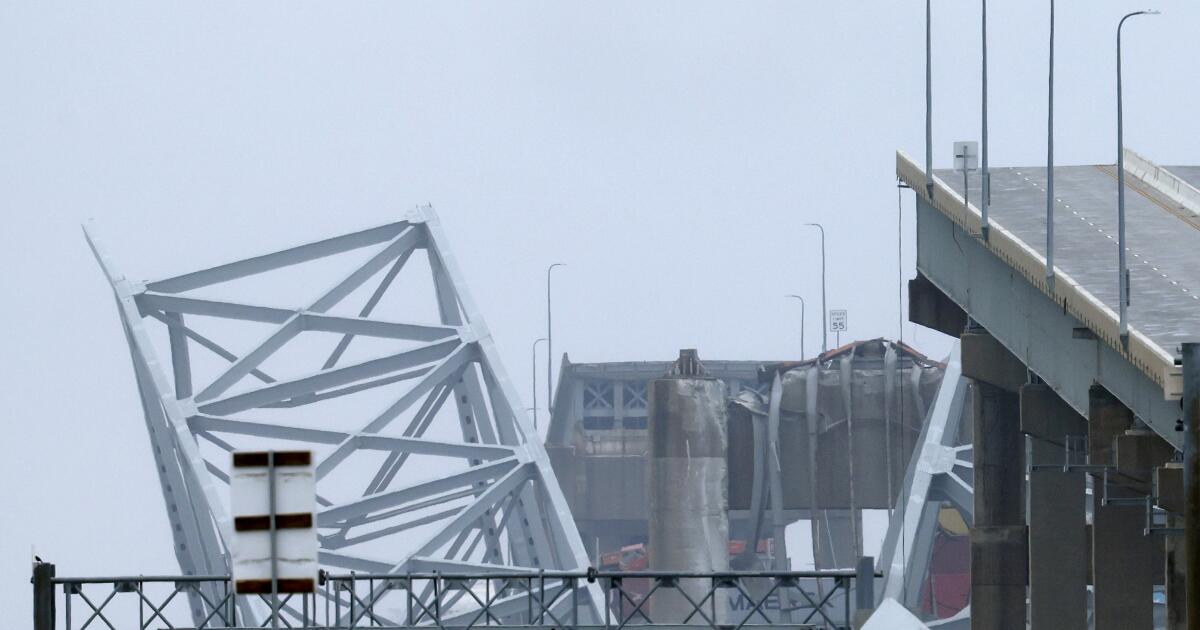
Authorities started cleaning up the wreckage of the Francis Scott Key Bridge in Baltimore on Thursday after suspending the search for the remaining four missing workers, presumed dead, who fell into the water when the bridge went down.

Eight people plummeted into the cold waters of the Patapsco River after a Singaporean cargo ship struck the bridge early Tuesday, causing the 1.6-mile span to collapse. Two people were rescued; one declined treatment and the other was hospitalized in critical condition.

Officials pulled the bodies of 35-year-old Alejandro Hernandez Fuentes of Baltimore and 26-year-old Dorlian Castillo Cabrera of Dundalk, Md., from a submerged red pickup truck near the bridge Wednesday morning, according to Col. Roland L. Butler Jr. of the Maryland State Police.

Butler said they were turning their focus to a salvage operation. Authorities halted the search for the other victims’ remains, he said, because of the dangerous conditions for the divers.

“We have exhausted all search efforts in the areas around this wreckage,” he added.

Butler said they believe the vehicles with the other victims are “encased in the superstructure and concrete that we tragically saw come down.”

Investigators with the National Transportation Safety Board also provided more details about the timeline right before the ship’s crash during a Wednesday evening news briefing.

Marcel Muise, the board’s investigator in charge of the investigation, said the agency recovered six hours of audio from the ship’s data recorder.

Multiple alarms were heard from the ship’s recorder at 1:24 a.m. shortly before the ship lost power, according to Muise. The pilot of the ship asked nearby tugboats for help at 1:26 a.m. At 1:27 a.m., the pilot ordered the cargo ship to drop the ship’s anchor and issued “additional steering commands.” The crash happened about 1:30 a.m.

There were 23 people aboard the vessel when it struck the bridge, including 21 crew members and two pilots, said Jennifer Homendy, the chair of the National Transportation Safety Board, during the briefing.

The vessel was carrying 764 tons of hazardous materials, including flammables and corrosives, in 56 containers, Homendy said. Some of the containers were spotted in the water and others were “breached significantly on the vessel itself,” she said.

“It’s pretty devastating, certainly, seeing not just what’s going on with the cargo containers, but just looking at what was a bridge span — three bridge spans that is pretty much gone,” she said. “It’s just utter devastation.”

Authorities started cleaning up the wreckage of the Francis Scott Key Bridge in Baltimore on Thursday after suspending the search for the remaining four missing workers, presumed dead, who fell into the water when the bridge went down.

Eight people plummeted into the cold waters of the Patapsco River after a Singaporean cargo ship struck the bridge early Tuesday, causing the 1.6-mile span to collapse. Two people were rescued; one declined treatment and the other was hospitalized in critical condition.

Officials pulled the bodies of 35-year-old Alejandro Hernandez Fuentes of Baltimore and 26-year-old Dorlian Castillo Cabrera of Dundalk, Md., from a submerged red pickup truck near the bridge Wednesday morning, according to Col. Roland L. Butler Jr. of the Maryland State Police.

Butler said they were turning their focus to a salvage operation. Authorities halted the search for the other victims’ remains, he said, because of the dangerous conditions for the divers.

“We have exhausted all search efforts in the areas around this wreckage,” he added.

Butler said they believe the vehicles with the other victims are “encased in the superstructure and concrete that we tragically saw come down.”

Investigators with the National Transportation Safety Board also provided more details about the timeline right before the ship’s crash during a Wednesday evening news briefing.

Marcel Muise, the board’s investigator in charge of the investigation, said the agency recovered six hours of audio from the ship’s data recorder.

Multiple alarms were heard from the ship’s recorder at 1:24 a.m. shortly before the ship lost power, according to Muise. The pilot of the ship asked nearby tugboats for help at 1:26 a.m. At 1:27 a.m., the pilot ordered the cargo ship to drop the ship’s anchor and issued “additional steering commands.” The crash happened about 1:30 a.m.

There were 23 people aboard the vessel when it struck the bridge, including 21 crew members and two pilots, said Jennifer Homendy, the chair of the National Transportation Safety Board, during the briefing.

The vessel was carrying 764 tons of hazardous materials, including flammables and corrosives, in 56 containers, Homendy said. Some of the containers were spotted in the water and others were “breached significantly on the vessel itself,” she said.

“It’s pretty devastating, certainly, seeing not just what’s going on with the cargo containers, but just looking at what was a bridge span — three bridge spans that is pretty much gone,” she said. “It’s just utter devastation.”

Authorities started cleaning up the wreckage of the Francis Scott Key Bridge in Baltimore on Thursday after suspending the search for the remaining four missing workers, presumed dead, who fell into the water when the bridge went down.

Eight people plummeted into the cold waters of the Patapsco River after a Singaporean cargo ship struck the bridge early Tuesday, causing the 1.6-mile span to collapse. Two people were rescued; one declined treatment and the other was hospitalized in critical condition.

Officials pulled the bodies of 35-year-old Alejandro Hernandez Fuentes of Baltimore and 26-year-old Dorlian Castillo Cabrera of Dundalk, Md., from a submerged red pickup truck near the bridge Wednesday morning, according to Col. Roland L. Butler Jr. of the Maryland State Police.

Butler said they were turning their focus to a salvage operation. Authorities halted the search for the other victims’ remains, he said, because of the dangerous conditions for the divers.

“We have exhausted all search efforts in the areas around this wreckage,” he added.

Butler said they believe the vehicles with the other victims are “encased in the superstructure and concrete that we tragically saw come down.”

Investigators with the National Transportation Safety Board also provided more details about the timeline right before the ship’s crash during a Wednesday evening news briefing.

Marcel Muise, the board’s investigator in charge of the investigation, said the agency recovered six hours of audio from the ship’s data recorder.

Multiple alarms were heard from the ship’s recorder at 1:24 a.m. shortly before the ship lost power, according to Muise. The pilot of the ship asked nearby tugboats for help at 1:26 a.m. At 1:27 a.m., the pilot ordered the cargo ship to drop the ship’s anchor and issued “additional steering commands.” The crash happened about 1:30 a.m.

There were 23 people aboard the vessel when it struck the bridge, including 21 crew members and two pilots, said Jennifer Homendy, the chair of the National Transportation Safety Board, during the briefing.

The vessel was carrying 764 tons of hazardous materials, including flammables and corrosives, in 56 containers, Homendy said. Some of the containers were spotted in the water and others were “breached significantly on the vessel itself,” she said.

“It’s pretty devastating, certainly, seeing not just what’s going on with the cargo containers, but just looking at what was a bridge span — three bridge spans that is pretty much gone,” she said. “It’s just utter devastation.”


Authorities started cleaning up the wreckage of the Francis Scott Key Bridge in Baltimore on Thursday after suspending the search for the remaining four missing workers, presumed dead, who fell into the water when the bridge went down.

Eight people plummeted into the cold waters of the Patapsco River after a Singaporean cargo ship struck the bridge early Tuesday, causing the 1.6-mile span to collapse. Two people were rescued; one declined treatment and the other was hospitalized in critical condition.

Officials pulled the bodies of 35-year-old Alejandro Hernandez Fuentes of Baltimore and 26-year-old Dorlian Castillo Cabrera of Dundalk, Md., from a submerged red pickup truck near the bridge Wednesday morning, according to Col. Roland L. Butler Jr. of the Maryland State Police.

Butler said they were turning their focus to a salvage operation. Authorities halted the search for the other victims’ remains, he said, because of the dangerous conditions for the divers.

“We have exhausted all search efforts in the areas around this wreckage,” he added.

Butler said they believe the vehicles with the other victims are “encased in the superstructure and concrete that we tragically saw come down.”

Investigators with the National Transportation Safety Board also provided more details about the timeline right before the ship’s crash during a Wednesday evening news briefing.

Marcel Muise, the board’s investigator in charge of the investigation, said the agency recovered six hours of audio from the ship’s data recorder.

Multiple alarms were heard from the ship’s recorder at 1:24 a.m. shortly before the ship lost power, according to Muise. The pilot of the ship asked nearby tugboats for help at 1:26 a.m. At 1:27 a.m., the pilot ordered the cargo ship to drop the ship’s anchor and issued “additional steering commands.” The crash happened about 1:30 a.m.

There were 23 people aboard the vessel when it struck the bridge, including 21 crew members and two pilots, said Jennifer Homendy, the chair of the National Transportation Safety Board, during the briefing.

The vessel was carrying 764 tons of hazardous materials, including flammables and corrosives, in 56 containers, Homendy said. Some of the containers were spotted in the water and others were “breached significantly on the vessel itself,” she said.

“It’s pretty devastating, certainly, seeing not just what’s going on with the cargo containers, but just looking at what was a bridge span — three bridge spans that is pretty much gone,” she said. “It’s just utter devastation.”

Authorities started cleaning up the wreckage of the Francis Scott Key Bridge in Baltimore on Thursday after suspending the search for the remaining four missing workers, presumed dead, who fell into the water when the bridge went down.

Eight people plummeted into the cold waters of the Patapsco River after a Singaporean cargo ship struck the bridge early Tuesday, causing the 1.6-mile span to collapse. Two people were rescued; one declined treatment and the other was hospitalized in critical condition.

Officials pulled the bodies of 35-year-old Alejandro Hernandez Fuentes of Baltimore and 26-year-old Dorlian Castillo Cabrera of Dundalk, Md., from a submerged red pickup truck near the bridge Wednesday morning, according to Col. Roland L. Butler Jr. of the Maryland State Police.

Butler said they were turning their focus to a salvage operation. Authorities halted the search for the other victims’ remains, he said, because of the dangerous conditions for the divers.

“We have exhausted all search efforts in the areas around this wreckage,” he added.

Butler said they believe the vehicles with the other victims are “encased in the superstructure and concrete that we tragically saw come down.”

Investigators with the National Transportation Safety Board also provided more details about the timeline right before the ship’s crash during a Wednesday evening news briefing.

Marcel Muise, the board’s investigator in charge of the investigation, said the agency recovered six hours of audio from the ship’s data recorder.

Multiple alarms were heard from the ship’s recorder at 1:24 a.m. shortly before the ship lost power, according to Muise. The pilot of the ship asked nearby tugboats for help at 1:26 a.m. At 1:27 a.m., the pilot ordered the cargo ship to drop the ship’s anchor and issued “additional steering commands.” The crash happened about 1:30 a.m.

There were 23 people aboard the vessel when it struck the bridge, including 21 crew members and two pilots, said Jennifer Homendy, the chair of the National Transportation Safety Board, during the briefing.

The vessel was carrying 764 tons of hazardous materials, including flammables and corrosives, in 56 containers, Homendy said. Some of the containers were spotted in the water and others were “breached significantly on the vessel itself,” she said.

“It’s pretty devastating, certainly, seeing not just what’s going on with the cargo containers, but just looking at what was a bridge span — three bridge spans that is pretty much gone,” she said. “It’s just utter devastation.”

Authorities started cleaning up the wreckage of the Francis Scott Key Bridge in Baltimore on Thursday after suspending the search for the remaining four missing workers, presumed dead, who fell into the water when the bridge went down.

Eight people plummeted into the cold waters of the Patapsco River after a Singaporean cargo ship struck the bridge early Tuesday, causing the 1.6-mile span to collapse. Two people were rescued; one declined treatment and the other was hospitalized in critical condition.

Officials pulled the bodies of 35-year-old Alejandro Hernandez Fuentes of Baltimore and 26-year-old Dorlian Castillo Cabrera of Dundalk, Md., from a submerged red pickup truck near the bridge Wednesday morning, according to Col. Roland L. Butler Jr. of the Maryland State Police.

Butler said they were turning their focus to a salvage operation. Authorities halted the search for the other victims’ remains, he said, because of the dangerous conditions for the divers.

“We have exhausted all search efforts in the areas around this wreckage,” he added.

Butler said they believe the vehicles with the other victims are “encased in the superstructure and concrete that we tragically saw come down.”

Investigators with the National Transportation Safety Board also provided more details about the timeline right before the ship’s crash during a Wednesday evening news briefing.

Marcel Muise, the board’s investigator in charge of the investigation, said the agency recovered six hours of audio from the ship’s data recorder.

Multiple alarms were heard from the ship’s recorder at 1:24 a.m. shortly before the ship lost power, according to Muise. The pilot of the ship asked nearby tugboats for help at 1:26 a.m. At 1:27 a.m., the pilot ordered the cargo ship to drop the ship’s anchor and issued “additional steering commands.” The crash happened about 1:30 a.m.

There were 23 people aboard the vessel when it struck the bridge, including 21 crew members and two pilots, said Jennifer Homendy, the chair of the National Transportation Safety Board, during the briefing.

The vessel was carrying 764 tons of hazardous materials, including flammables and corrosives, in 56 containers, Homendy said. Some of the containers were spotted in the water and others were “breached significantly on the vessel itself,” she said.

“It’s pretty devastating, certainly, seeing not just what’s going on with the cargo containers, but just looking at what was a bridge span — three bridge spans that is pretty much gone,” she said. “It’s just utter devastation.”

Authorities started cleaning up the wreckage of the Francis Scott Key Bridge in Baltimore on Thursday after suspending the search for the remaining four missing workers, presumed dead, who fell into the water when the bridge went down.

Eight people plummeted into the cold waters of the Patapsco River after a Singaporean cargo ship struck the bridge early Tuesday, causing the 1.6-mile span to collapse. Two people were rescued; one declined treatment and the other was hospitalized in critical condition.

Officials pulled the bodies of 35-year-old Alejandro Hernandez Fuentes of Baltimore and 26-year-old Dorlian Castillo Cabrera of Dundalk, Md., from a submerged red pickup truck near the bridge Wednesday morning, according to Col. Roland L. Butler Jr. of the Maryland State Police.

Butler said they were turning their focus to a salvage operation. Authorities halted the search for the other victims’ remains, he said, because of the dangerous conditions for the divers.

“We have exhausted all search efforts in the areas around this wreckage,” he added.

Butler said they believe the vehicles with the other victims are “encased in the superstructure and concrete that we tragically saw come down.”

Investigators with the National Transportation Safety Board also provided more details about the timeline right before the ship’s crash during a Wednesday evening news briefing.

Marcel Muise, the board’s investigator in charge of the investigation, said the agency recovered six hours of audio from the ship’s data recorder.

Multiple alarms were heard from the ship’s recorder at 1:24 a.m. shortly before the ship lost power, according to Muise. The pilot of the ship asked nearby tugboats for help at 1:26 a.m. At 1:27 a.m., the pilot ordered the cargo ship to drop the ship’s anchor and issued “additional steering commands.” The crash happened about 1:30 a.m.

There were 23 people aboard the vessel when it struck the bridge, including 21 crew members and two pilots, said Jennifer Homendy, the chair of the National Transportation Safety Board, during the briefing.

The vessel was carrying 764 tons of hazardous materials, including flammables and corrosives, in 56 containers, Homendy said. Some of the containers were spotted in the water and others were “breached significantly on the vessel itself,” she said.

“It’s pretty devastating, certainly, seeing not just what’s going on with the cargo containers, but just looking at what was a bridge span — three bridge spans that is pretty much gone,” she said. “It’s just utter devastation.”

Authorities started cleaning up the wreckage of the Francis Scott Key Bridge in Baltimore on Thursday after suspending the search for the remaining four missing workers, presumed dead, who fell into the water when the bridge went down.

Eight people plummeted into the cold waters of the Patapsco River after a Singaporean cargo ship struck the bridge early Tuesday, causing the 1.6-mile span to collapse. Two people were rescued; one declined treatment and the other was hospitalized in critical condition.

Officials pulled the bodies of 35-year-old Alejandro Hernandez Fuentes of Baltimore and 26-year-old Dorlian Castillo Cabrera of Dundalk, Md., from a submerged red pickup truck near the bridge Wednesday morning, according to Col. Roland L. Butler Jr. of the Maryland State Police.

Butler said they were turning their focus to a salvage operation. Authorities halted the search for the other victims’ remains, he said, because of the dangerous conditions for the divers.

“We have exhausted all search efforts in the areas around this wreckage,” he added.

Butler said they believe the vehicles with the other victims are “encased in the superstructure and concrete that we tragically saw come down.”

Investigators with the National Transportation Safety Board also provided more details about the timeline right before the ship’s crash during a Wednesday evening news briefing.

Marcel Muise, the board’s investigator in charge of the investigation, said the agency recovered six hours of audio from the ship’s data recorder.

Multiple alarms were heard from the ship’s recorder at 1:24 a.m. shortly before the ship lost power, according to Muise. The pilot of the ship asked nearby tugboats for help at 1:26 a.m. At 1:27 a.m., the pilot ordered the cargo ship to drop the ship’s anchor and issued “additional steering commands.” The crash happened about 1:30 a.m.

There were 23 people aboard the vessel when it struck the bridge, including 21 crew members and two pilots, said Jennifer Homendy, the chair of the National Transportation Safety Board, during the briefing.

The vessel was carrying 764 tons of hazardous materials, including flammables and corrosives, in 56 containers, Homendy said. Some of the containers were spotted in the water and others were “breached significantly on the vessel itself,” she said.

“It’s pretty devastating, certainly, seeing not just what’s going on with the cargo containers, but just looking at what was a bridge span — three bridge spans that is pretty much gone,” she said. “It’s just utter devastation.”

Previous Post

Karlie Kloss’ Bedford Media will resuscitate Life magazine as a print product

Next Post

They escaped a world of fast fashion to teach L.A. how to give old clothes new life

Leave a Reply Cancel reply

Your email address will not be published. Required fields are marked *

BROWSE BY CATEGORIES

  • Business
  • Culture
  • Entertainment
  • Health
  • Politics
  • Technology
  • Trending
  • Uncategorized
  • World
Binghamton Herald

© 2024 Binghamton Herald or its affiliated companies.

Navigate Site

  • About
  • Advertise
  • Terms & Conditions
  • Privacy Policy
  • Disclaimer
  • Contact

Follow Us

No Result
View All Result
  • Home
  • World
  • Politics
  • Business
  • Technology
  • Culture
  • Health
  • Entertainment
  • Trending

© 2024 Binghamton Herald or its affiliated companies.

Welcome Back!

Login to your account below

Forgotten Password?

Retrieve your password

Please enter your username or email address to reset your password.

Log In