


Washington DC
New York
Toronto
Distribution: (800) 510 9863
Press ID
  • Login
Binghamton Herald
Advertisement
Thursday, April 23, 2026
  • Home
  • World
  • Politics
  • Business
  • Technology
  • Culture
  • Health
  • Entertainment
  • Trending
No Result
View All Result
Binghamton Herald
No Result
View All Result
Home Health

Death & Co. Vintage Eggnog

by Binghamton Herald Report
December 3, 2024
in Health
Share on FacebookShare on Twitter

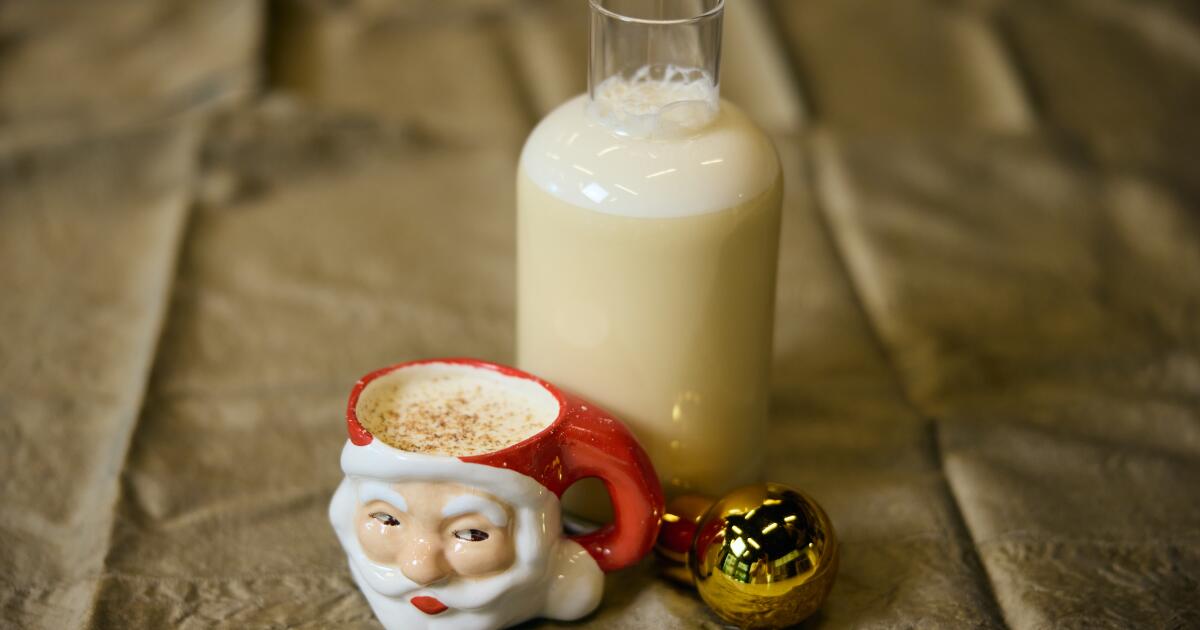
One of the bestselling seasonal drinks to ever hit the menu of world-famous cocktail bar Death & Co., the Vintage Eggnog made its debut around the holiday season in 2015 — and each year, the staff makes thousands of servings. Filled with premium spirits and fresh eggs, it’s a vast improvement on the ready-made varieties that crop up in supermarkets in November and December.

“You could buy a store-bought version of it, but if you make it yourself at home it’s going to taste so much better,” says Death & Co. L.A. bar manager Matthew Belanger. “It’s going to be so much fresher. You have a lot more control over the ingredients you put in there, and I think it’s just a better product.”

With roots in medieval England and 18th century America, eggnog and its variants have been made through the years using beer, wine and, at Death & Co., a blend of bourbon, Madeira, Cognac and rum.

In centuries past, eggnog was made in part to help preserve eggs and milk, a feat possible due to the drink’s high alcohol content. With a boozy enough blend, eggnog can be shelf-stable, but it also can be kept in the fridge or freezer. As it ages, the flavors blend and change.

“It’s a little bit more funky,” Belanger says of Death & Co.’s version as it ages. “It gets a little more well-integrated. If you make enough this year to have something to enjoy now and to put a little bit of it away — you could save a bottle in the back of your fridge — then next year, pull it out and you can taste that next to the current vintage of eggnog. And that’ll be an interesting juxtaposition.”

When making Death & Co.’s Vintage Eggnog at home, use a stand mixer or a blender, working in batches if necessary so as to not overfill your appliances. Stand mixers work well if you plan to age your eggnog, which allows the sugar to dissolve over time, but if you’d prefer to sip immediately, use a blender to ensure that the granules are broken down and dispersed.

Rich, creamy and nuanced from its blend of four spirits, this is an eggnog recipe worth saving and sampling all year round — if you can manage to save any for that long.

One of the bestselling seasonal drinks to ever hit the menu of world-famous cocktail bar Death & Co., the Vintage Eggnog made its debut around the holiday season in 2015 — and each year, the staff makes thousands of servings. Filled with premium spirits and fresh eggs, it’s a vast improvement on the ready-made varieties that crop up in supermarkets in November and December.

“You could buy a store-bought version of it, but if you make it yourself at home it’s going to taste so much better,” says Death & Co. L.A. bar manager Matthew Belanger. “It’s going to be so much fresher. You have a lot more control over the ingredients you put in there, and I think it’s just a better product.”

With roots in medieval England and 18th century America, eggnog and its variants have been made through the years using beer, wine and, at Death & Co., a blend of bourbon, Madeira, Cognac and rum.

In centuries past, eggnog was made in part to help preserve eggs and milk, a feat possible due to the drink’s high alcohol content. With a boozy enough blend, eggnog can be shelf-stable, but it also can be kept in the fridge or freezer. As it ages, the flavors blend and change.

“It’s a little bit more funky,” Belanger says of Death & Co.’s version as it ages. “It gets a little more well-integrated. If you make enough this year to have something to enjoy now and to put a little bit of it away — you could save a bottle in the back of your fridge — then next year, pull it out and you can taste that next to the current vintage of eggnog. And that’ll be an interesting juxtaposition.”

When making Death & Co.’s Vintage Eggnog at home, use a stand mixer or a blender, working in batches if necessary so as to not overfill your appliances. Stand mixers work well if you plan to age your eggnog, which allows the sugar to dissolve over time, but if you’d prefer to sip immediately, use a blender to ensure that the granules are broken down and dispersed.

Rich, creamy and nuanced from its blend of four spirits, this is an eggnog recipe worth saving and sampling all year round — if you can manage to save any for that long.

One of the bestselling seasonal drinks to ever hit the menu of world-famous cocktail bar Death & Co., the Vintage Eggnog made its debut around the holiday season in 2015 — and each year, the staff makes thousands of servings. Filled with premium spirits and fresh eggs, it’s a vast improvement on the ready-made varieties that crop up in supermarkets in November and December.

“You could buy a store-bought version of it, but if you make it yourself at home it’s going to taste so much better,” says Death & Co. L.A. bar manager Matthew Belanger. “It’s going to be so much fresher. You have a lot more control over the ingredients you put in there, and I think it’s just a better product.”

With roots in medieval England and 18th century America, eggnog and its variants have been made through the years using beer, wine and, at Death & Co., a blend of bourbon, Madeira, Cognac and rum.

In centuries past, eggnog was made in part to help preserve eggs and milk, a feat possible due to the drink’s high alcohol content. With a boozy enough blend, eggnog can be shelf-stable, but it also can be kept in the fridge or freezer. As it ages, the flavors blend and change.

“It’s a little bit more funky,” Belanger says of Death & Co.’s version as it ages. “It gets a little more well-integrated. If you make enough this year to have something to enjoy now and to put a little bit of it away — you could save a bottle in the back of your fridge — then next year, pull it out and you can taste that next to the current vintage of eggnog. And that’ll be an interesting juxtaposition.”

When making Death & Co.’s Vintage Eggnog at home, use a stand mixer or a blender, working in batches if necessary so as to not overfill your appliances. Stand mixers work well if you plan to age your eggnog, which allows the sugar to dissolve over time, but if you’d prefer to sip immediately, use a blender to ensure that the granules are broken down and dispersed.

Rich, creamy and nuanced from its blend of four spirits, this is an eggnog recipe worth saving and sampling all year round — if you can manage to save any for that long.

One of the bestselling seasonal drinks to ever hit the menu of world-famous cocktail bar Death & Co., the Vintage Eggnog made its debut around the holiday season in 2015 — and each year, the staff makes thousands of servings. Filled with premium spirits and fresh eggs, it’s a vast improvement on the ready-made varieties that crop up in supermarkets in November and December.

“You could buy a store-bought version of it, but if you make it yourself at home it’s going to taste so much better,” says Death & Co. L.A. bar manager Matthew Belanger. “It’s going to be so much fresher. You have a lot more control over the ingredients you put in there, and I think it’s just a better product.”

With roots in medieval England and 18th century America, eggnog and its variants have been made through the years using beer, wine and, at Death & Co., a blend of bourbon, Madeira, Cognac and rum.

In centuries past, eggnog was made in part to help preserve eggs and milk, a feat possible due to the drink’s high alcohol content. With a boozy enough blend, eggnog can be shelf-stable, but it also can be kept in the fridge or freezer. As it ages, the flavors blend and change.

“It’s a little bit more funky,” Belanger says of Death & Co.’s version as it ages. “It gets a little more well-integrated. If you make enough this year to have something to enjoy now and to put a little bit of it away — you could save a bottle in the back of your fridge — then next year, pull it out and you can taste that next to the current vintage of eggnog. And that’ll be an interesting juxtaposition.”

When making Death & Co.’s Vintage Eggnog at home, use a stand mixer or a blender, working in batches if necessary so as to not overfill your appliances. Stand mixers work well if you plan to age your eggnog, which allows the sugar to dissolve over time, but if you’d prefer to sip immediately, use a blender to ensure that the granules are broken down and dispersed.

Rich, creamy and nuanced from its blend of four spirits, this is an eggnog recipe worth saving and sampling all year round — if you can manage to save any for that long.


One of the bestselling seasonal drinks to ever hit the menu of world-famous cocktail bar Death & Co., the Vintage Eggnog made its debut around the holiday season in 2015 — and each year, the staff makes thousands of servings. Filled with premium spirits and fresh eggs, it’s a vast improvement on the ready-made varieties that crop up in supermarkets in November and December.

“You could buy a store-bought version of it, but if you make it yourself at home it’s going to taste so much better,” says Death & Co. L.A. bar manager Matthew Belanger. “It’s going to be so much fresher. You have a lot more control over the ingredients you put in there, and I think it’s just a better product.”

With roots in medieval England and 18th century America, eggnog and its variants have been made through the years using beer, wine and, at Death & Co., a blend of bourbon, Madeira, Cognac and rum.

In centuries past, eggnog was made in part to help preserve eggs and milk, a feat possible due to the drink’s high alcohol content. With a boozy enough blend, eggnog can be shelf-stable, but it also can be kept in the fridge or freezer. As it ages, the flavors blend and change.

“It’s a little bit more funky,” Belanger says of Death & Co.’s version as it ages. “It gets a little more well-integrated. If you make enough this year to have something to enjoy now and to put a little bit of it away — you could save a bottle in the back of your fridge — then next year, pull it out and you can taste that next to the current vintage of eggnog. And that’ll be an interesting juxtaposition.”

When making Death & Co.’s Vintage Eggnog at home, use a stand mixer or a blender, working in batches if necessary so as to not overfill your appliances. Stand mixers work well if you plan to age your eggnog, which allows the sugar to dissolve over time, but if you’d prefer to sip immediately, use a blender to ensure that the granules are broken down and dispersed.

Rich, creamy and nuanced from its blend of four spirits, this is an eggnog recipe worth saving and sampling all year round — if you can manage to save any for that long.

One of the bestselling seasonal drinks to ever hit the menu of world-famous cocktail bar Death & Co., the Vintage Eggnog made its debut around the holiday season in 2015 — and each year, the staff makes thousands of servings. Filled with premium spirits and fresh eggs, it’s a vast improvement on the ready-made varieties that crop up in supermarkets in November and December.

“You could buy a store-bought version of it, but if you make it yourself at home it’s going to taste so much better,” says Death & Co. L.A. bar manager Matthew Belanger. “It’s going to be so much fresher. You have a lot more control over the ingredients you put in there, and I think it’s just a better product.”

With roots in medieval England and 18th century America, eggnog and its variants have been made through the years using beer, wine and, at Death & Co., a blend of bourbon, Madeira, Cognac and rum.

In centuries past, eggnog was made in part to help preserve eggs and milk, a feat possible due to the drink’s high alcohol content. With a boozy enough blend, eggnog can be shelf-stable, but it also can be kept in the fridge or freezer. As it ages, the flavors blend and change.

“It’s a little bit more funky,” Belanger says of Death & Co.’s version as it ages. “It gets a little more well-integrated. If you make enough this year to have something to enjoy now and to put a little bit of it away — you could save a bottle in the back of your fridge — then next year, pull it out and you can taste that next to the current vintage of eggnog. And that’ll be an interesting juxtaposition.”

When making Death & Co.’s Vintage Eggnog at home, use a stand mixer or a blender, working in batches if necessary so as to not overfill your appliances. Stand mixers work well if you plan to age your eggnog, which allows the sugar to dissolve over time, but if you’d prefer to sip immediately, use a blender to ensure that the granules are broken down and dispersed.

Rich, creamy and nuanced from its blend of four spirits, this is an eggnog recipe worth saving and sampling all year round — if you can manage to save any for that long.

One of the bestselling seasonal drinks to ever hit the menu of world-famous cocktail bar Death & Co., the Vintage Eggnog made its debut around the holiday season in 2015 — and each year, the staff makes thousands of servings. Filled with premium spirits and fresh eggs, it’s a vast improvement on the ready-made varieties that crop up in supermarkets in November and December.

“You could buy a store-bought version of it, but if you make it yourself at home it’s going to taste so much better,” says Death & Co. L.A. bar manager Matthew Belanger. “It’s going to be so much fresher. You have a lot more control over the ingredients you put in there, and I think it’s just a better product.”

With roots in medieval England and 18th century America, eggnog and its variants have been made through the years using beer, wine and, at Death & Co., a blend of bourbon, Madeira, Cognac and rum.

In centuries past, eggnog was made in part to help preserve eggs and milk, a feat possible due to the drink’s high alcohol content. With a boozy enough blend, eggnog can be shelf-stable, but it also can be kept in the fridge or freezer. As it ages, the flavors blend and change.

“It’s a little bit more funky,” Belanger says of Death & Co.’s version as it ages. “It gets a little more well-integrated. If you make enough this year to have something to enjoy now and to put a little bit of it away — you could save a bottle in the back of your fridge — then next year, pull it out and you can taste that next to the current vintage of eggnog. And that’ll be an interesting juxtaposition.”

When making Death & Co.’s Vintage Eggnog at home, use a stand mixer or a blender, working in batches if necessary so as to not overfill your appliances. Stand mixers work well if you plan to age your eggnog, which allows the sugar to dissolve over time, but if you’d prefer to sip immediately, use a blender to ensure that the granules are broken down and dispersed.

Rich, creamy and nuanced from its blend of four spirits, this is an eggnog recipe worth saving and sampling all year round — if you can manage to save any for that long.

One of the bestselling seasonal drinks to ever hit the menu of world-famous cocktail bar Death & Co., the Vintage Eggnog made its debut around the holiday season in 2015 — and each year, the staff makes thousands of servings. Filled with premium spirits and fresh eggs, it’s a vast improvement on the ready-made varieties that crop up in supermarkets in November and December.

“You could buy a store-bought version of it, but if you make it yourself at home it’s going to taste so much better,” says Death & Co. L.A. bar manager Matthew Belanger. “It’s going to be so much fresher. You have a lot more control over the ingredients you put in there, and I think it’s just a better product.”

With roots in medieval England and 18th century America, eggnog and its variants have been made through the years using beer, wine and, at Death & Co., a blend of bourbon, Madeira, Cognac and rum.

In centuries past, eggnog was made in part to help preserve eggs and milk, a feat possible due to the drink’s high alcohol content. With a boozy enough blend, eggnog can be shelf-stable, but it also can be kept in the fridge or freezer. As it ages, the flavors blend and change.

“It’s a little bit more funky,” Belanger says of Death & Co.’s version as it ages. “It gets a little more well-integrated. If you make enough this year to have something to enjoy now and to put a little bit of it away — you could save a bottle in the back of your fridge — then next year, pull it out and you can taste that next to the current vintage of eggnog. And that’ll be an interesting juxtaposition.”

When making Death & Co.’s Vintage Eggnog at home, use a stand mixer or a blender, working in batches if necessary so as to not overfill your appliances. Stand mixers work well if you plan to age your eggnog, which allows the sugar to dissolve over time, but if you’d prefer to sip immediately, use a blender to ensure that the granules are broken down and dispersed.

Rich, creamy and nuanced from its blend of four spirits, this is an eggnog recipe worth saving and sampling all year round — if you can manage to save any for that long.

One of the bestselling seasonal drinks to ever hit the menu of world-famous cocktail bar Death & Co., the Vintage Eggnog made its debut around the holiday season in 2015 — and each year, the staff makes thousands of servings. Filled with premium spirits and fresh eggs, it’s a vast improvement on the ready-made varieties that crop up in supermarkets in November and December.

“You could buy a store-bought version of it, but if you make it yourself at home it’s going to taste so much better,” says Death & Co. L.A. bar manager Matthew Belanger. “It’s going to be so much fresher. You have a lot more control over the ingredients you put in there, and I think it’s just a better product.”

With roots in medieval England and 18th century America, eggnog and its variants have been made through the years using beer, wine and, at Death & Co., a blend of bourbon, Madeira, Cognac and rum.

In centuries past, eggnog was made in part to help preserve eggs and milk, a feat possible due to the drink’s high alcohol content. With a boozy enough blend, eggnog can be shelf-stable, but it also can be kept in the fridge or freezer. As it ages, the flavors blend and change.

“It’s a little bit more funky,” Belanger says of Death & Co.’s version as it ages. “It gets a little more well-integrated. If you make enough this year to have something to enjoy now and to put a little bit of it away — you could save a bottle in the back of your fridge — then next year, pull it out and you can taste that next to the current vintage of eggnog. And that’ll be an interesting juxtaposition.”

When making Death & Co.’s Vintage Eggnog at home, use a stand mixer or a blender, working in batches if necessary so as to not overfill your appliances. Stand mixers work well if you plan to age your eggnog, which allows the sugar to dissolve over time, but if you’d prefer to sip immediately, use a blender to ensure that the granules are broken down and dispersed.

Rich, creamy and nuanced from its blend of four spirits, this is an eggnog recipe worth saving and sampling all year round — if you can manage to save any for that long.

One of the bestselling seasonal drinks to ever hit the menu of world-famous cocktail bar Death & Co., the Vintage Eggnog made its debut around the holiday season in 2015 — and each year, the staff makes thousands of servings. Filled with premium spirits and fresh eggs, it’s a vast improvement on the ready-made varieties that crop up in supermarkets in November and December.

“You could buy a store-bought version of it, but if you make it yourself at home it’s going to taste so much better,” says Death & Co. L.A. bar manager Matthew Belanger. “It’s going to be so much fresher. You have a lot more control over the ingredients you put in there, and I think it’s just a better product.”

With roots in medieval England and 18th century America, eggnog and its variants have been made through the years using beer, wine and, at Death & Co., a blend of bourbon, Madeira, Cognac and rum.

In centuries past, eggnog was made in part to help preserve eggs and milk, a feat possible due to the drink’s high alcohol content. With a boozy enough blend, eggnog can be shelf-stable, but it also can be kept in the fridge or freezer. As it ages, the flavors blend and change.

“It’s a little bit more funky,” Belanger says of Death & Co.’s version as it ages. “It gets a little more well-integrated. If you make enough this year to have something to enjoy now and to put a little bit of it away — you could save a bottle in the back of your fridge — then next year, pull it out and you can taste that next to the current vintage of eggnog. And that’ll be an interesting juxtaposition.”

When making Death & Co.’s Vintage Eggnog at home, use a stand mixer or a blender, working in batches if necessary so as to not overfill your appliances. Stand mixers work well if you plan to age your eggnog, which allows the sugar to dissolve over time, but if you’d prefer to sip immediately, use a blender to ensure that the granules are broken down and dispersed.

Rich, creamy and nuanced from its blend of four spirits, this is an eggnog recipe worth saving and sampling all year round — if you can manage to save any for that long.

One of the bestselling seasonal drinks to ever hit the menu of world-famous cocktail bar Death & Co., the Vintage Eggnog made its debut around the holiday season in 2015 — and each year, the staff makes thousands of servings. Filled with premium spirits and fresh eggs, it’s a vast improvement on the ready-made varieties that crop up in supermarkets in November and December.

“You could buy a store-bought version of it, but if you make it yourself at home it’s going to taste so much better,” says Death & Co. L.A. bar manager Matthew Belanger. “It’s going to be so much fresher. You have a lot more control over the ingredients you put in there, and I think it’s just a better product.”

With roots in medieval England and 18th century America, eggnog and its variants have been made through the years using beer, wine and, at Death & Co., a blend of bourbon, Madeira, Cognac and rum.

In centuries past, eggnog was made in part to help preserve eggs and milk, a feat possible due to the drink’s high alcohol content. With a boozy enough blend, eggnog can be shelf-stable, but it also can be kept in the fridge or freezer. As it ages, the flavors blend and change.

“It’s a little bit more funky,” Belanger says of Death & Co.’s version as it ages. “It gets a little more well-integrated. If you make enough this year to have something to enjoy now and to put a little bit of it away — you could save a bottle in the back of your fridge — then next year, pull it out and you can taste that next to the current vintage of eggnog. And that’ll be an interesting juxtaposition.”

When making Death & Co.’s Vintage Eggnog at home, use a stand mixer or a blender, working in batches if necessary so as to not overfill your appliances. Stand mixers work well if you plan to age your eggnog, which allows the sugar to dissolve over time, but if you’d prefer to sip immediately, use a blender to ensure that the granules are broken down and dispersed.

Rich, creamy and nuanced from its blend of four spirits, this is an eggnog recipe worth saving and sampling all year round — if you can manage to save any for that long.

One of the bestselling seasonal drinks to ever hit the menu of world-famous cocktail bar Death & Co., the Vintage Eggnog made its debut around the holiday season in 2015 — and each year, the staff makes thousands of servings. Filled with premium spirits and fresh eggs, it’s a vast improvement on the ready-made varieties that crop up in supermarkets in November and December.

“You could buy a store-bought version of it, but if you make it yourself at home it’s going to taste so much better,” says Death & Co. L.A. bar manager Matthew Belanger. “It’s going to be so much fresher. You have a lot more control over the ingredients you put in there, and I think it’s just a better product.”

With roots in medieval England and 18th century America, eggnog and its variants have been made through the years using beer, wine and, at Death & Co., a blend of bourbon, Madeira, Cognac and rum.

In centuries past, eggnog was made in part to help preserve eggs and milk, a feat possible due to the drink’s high alcohol content. With a boozy enough blend, eggnog can be shelf-stable, but it also can be kept in the fridge or freezer. As it ages, the flavors blend and change.

“It’s a little bit more funky,” Belanger says of Death & Co.’s version as it ages. “It gets a little more well-integrated. If you make enough this year to have something to enjoy now and to put a little bit of it away — you could save a bottle in the back of your fridge — then next year, pull it out and you can taste that next to the current vintage of eggnog. And that’ll be an interesting juxtaposition.”

When making Death & Co.’s Vintage Eggnog at home, use a stand mixer or a blender, working in batches if necessary so as to not overfill your appliances. Stand mixers work well if you plan to age your eggnog, which allows the sugar to dissolve over time, but if you’d prefer to sip immediately, use a blender to ensure that the granules are broken down and dispersed.

Rich, creamy and nuanced from its blend of four spirits, this is an eggnog recipe worth saving and sampling all year round — if you can manage to save any for that long.

One of the bestselling seasonal drinks to ever hit the menu of world-famous cocktail bar Death & Co., the Vintage Eggnog made its debut around the holiday season in 2015 — and each year, the staff makes thousands of servings. Filled with premium spirits and fresh eggs, it’s a vast improvement on the ready-made varieties that crop up in supermarkets in November and December.

“You could buy a store-bought version of it, but if you make it yourself at home it’s going to taste so much better,” says Death & Co. L.A. bar manager Matthew Belanger. “It’s going to be so much fresher. You have a lot more control over the ingredients you put in there, and I think it’s just a better product.”

With roots in medieval England and 18th century America, eggnog and its variants have been made through the years using beer, wine and, at Death & Co., a blend of bourbon, Madeira, Cognac and rum.

In centuries past, eggnog was made in part to help preserve eggs and milk, a feat possible due to the drink’s high alcohol content. With a boozy enough blend, eggnog can be shelf-stable, but it also can be kept in the fridge or freezer. As it ages, the flavors blend and change.

“It’s a little bit more funky,” Belanger says of Death & Co.’s version as it ages. “It gets a little more well-integrated. If you make enough this year to have something to enjoy now and to put a little bit of it away — you could save a bottle in the back of your fridge — then next year, pull it out and you can taste that next to the current vintage of eggnog. And that’ll be an interesting juxtaposition.”

When making Death & Co.’s Vintage Eggnog at home, use a stand mixer or a blender, working in batches if necessary so as to not overfill your appliances. Stand mixers work well if you plan to age your eggnog, which allows the sugar to dissolve over time, but if you’d prefer to sip immediately, use a blender to ensure that the granules are broken down and dispersed.

Rich, creamy and nuanced from its blend of four spirits, this is an eggnog recipe worth saving and sampling all year round — if you can manage to save any for that long.

One of the bestselling seasonal drinks to ever hit the menu of world-famous cocktail bar Death & Co., the Vintage Eggnog made its debut around the holiday season in 2015 — and each year, the staff makes thousands of servings. Filled with premium spirits and fresh eggs, it’s a vast improvement on the ready-made varieties that crop up in supermarkets in November and December.

“You could buy a store-bought version of it, but if you make it yourself at home it’s going to taste so much better,” says Death & Co. L.A. bar manager Matthew Belanger. “It’s going to be so much fresher. You have a lot more control over the ingredients you put in there, and I think it’s just a better product.”

With roots in medieval England and 18th century America, eggnog and its variants have been made through the years using beer, wine and, at Death & Co., a blend of bourbon, Madeira, Cognac and rum.

In centuries past, eggnog was made in part to help preserve eggs and milk, a feat possible due to the drink’s high alcohol content. With a boozy enough blend, eggnog can be shelf-stable, but it also can be kept in the fridge or freezer. As it ages, the flavors blend and change.

“It’s a little bit more funky,” Belanger says of Death & Co.’s version as it ages. “It gets a little more well-integrated. If you make enough this year to have something to enjoy now and to put a little bit of it away — you could save a bottle in the back of your fridge — then next year, pull it out and you can taste that next to the current vintage of eggnog. And that’ll be an interesting juxtaposition.”

When making Death & Co.’s Vintage Eggnog at home, use a stand mixer or a blender, working in batches if necessary so as to not overfill your appliances. Stand mixers work well if you plan to age your eggnog, which allows the sugar to dissolve over time, but if you’d prefer to sip immediately, use a blender to ensure that the granules are broken down and dispersed.

Rich, creamy and nuanced from its blend of four spirits, this is an eggnog recipe worth saving and sampling all year round — if you can manage to save any for that long.

One of the bestselling seasonal drinks to ever hit the menu of world-famous cocktail bar Death & Co., the Vintage Eggnog made its debut around the holiday season in 2015 — and each year, the staff makes thousands of servings. Filled with premium spirits and fresh eggs, it’s a vast improvement on the ready-made varieties that crop up in supermarkets in November and December.

“You could buy a store-bought version of it, but if you make it yourself at home it’s going to taste so much better,” says Death & Co. L.A. bar manager Matthew Belanger. “It’s going to be so much fresher. You have a lot more control over the ingredients you put in there, and I think it’s just a better product.”

With roots in medieval England and 18th century America, eggnog and its variants have been made through the years using beer, wine and, at Death & Co., a blend of bourbon, Madeira, Cognac and rum.

In centuries past, eggnog was made in part to help preserve eggs and milk, a feat possible due to the drink’s high alcohol content. With a boozy enough blend, eggnog can be shelf-stable, but it also can be kept in the fridge or freezer. As it ages, the flavors blend and change.

“It’s a little bit more funky,” Belanger says of Death & Co.’s version as it ages. “It gets a little more well-integrated. If you make enough this year to have something to enjoy now and to put a little bit of it away — you could save a bottle in the back of your fridge — then next year, pull it out and you can taste that next to the current vintage of eggnog. And that’ll be an interesting juxtaposition.”

When making Death & Co.’s Vintage Eggnog at home, use a stand mixer or a blender, working in batches if necessary so as to not overfill your appliances. Stand mixers work well if you plan to age your eggnog, which allows the sugar to dissolve over time, but if you’d prefer to sip immediately, use a blender to ensure that the granules are broken down and dispersed.

Rich, creamy and nuanced from its blend of four spirits, this is an eggnog recipe worth saving and sampling all year round — if you can manage to save any for that long.

One of the bestselling seasonal drinks to ever hit the menu of world-famous cocktail bar Death & Co., the Vintage Eggnog made its debut around the holiday season in 2015 — and each year, the staff makes thousands of servings. Filled with premium spirits and fresh eggs, it’s a vast improvement on the ready-made varieties that crop up in supermarkets in November and December.

“You could buy a store-bought version of it, but if you make it yourself at home it’s going to taste so much better,” says Death & Co. L.A. bar manager Matthew Belanger. “It’s going to be so much fresher. You have a lot more control over the ingredients you put in there, and I think it’s just a better product.”

With roots in medieval England and 18th century America, eggnog and its variants have been made through the years using beer, wine and, at Death & Co., a blend of bourbon, Madeira, Cognac and rum.

In centuries past, eggnog was made in part to help preserve eggs and milk, a feat possible due to the drink’s high alcohol content. With a boozy enough blend, eggnog can be shelf-stable, but it also can be kept in the fridge or freezer. As it ages, the flavors blend and change.

“It’s a little bit more funky,” Belanger says of Death & Co.’s version as it ages. “It gets a little more well-integrated. If you make enough this year to have something to enjoy now and to put a little bit of it away — you could save a bottle in the back of your fridge — then next year, pull it out and you can taste that next to the current vintage of eggnog. And that’ll be an interesting juxtaposition.”

When making Death & Co.’s Vintage Eggnog at home, use a stand mixer or a blender, working in batches if necessary so as to not overfill your appliances. Stand mixers work well if you plan to age your eggnog, which allows the sugar to dissolve over time, but if you’d prefer to sip immediately, use a blender to ensure that the granules are broken down and dispersed.

Rich, creamy and nuanced from its blend of four spirits, this is an eggnog recipe worth saving and sampling all year round — if you can manage to save any for that long.

Previous Post

Glendale’s ServiceTitan seeks to raise $500 million in IPO

Next Post

Now pardoned, Hunter Biden looks at future: Writing? Podcasting? ‘Healing,’ says friend

Leave a Reply Cancel reply

Your email address will not be published. Required fields are marked *

BROWSE BY CATEGORIES

  • Business
  • Culture
  • Entertainment
  • Health
  • Politics
  • Technology
  • Trending
  • Uncategorized
  • World
Binghamton Herald

© 2024 Binghamton Herald or its affiliated companies.

Navigate Site

  • About
  • Advertise
  • Terms & Conditions
  • Privacy Policy
  • Disclaimer
  • Contact

Follow Us

No Result
View All Result
  • Home
  • World
  • Politics
  • Business
  • Technology
  • Culture
  • Health
  • Entertainment
  • Trending

© 2024 Binghamton Herald or its affiliated companies.

Welcome Back!

Login to your account below

Forgotten Password?

Retrieve your password

Please enter your username or email address to reset your password.

Log In