

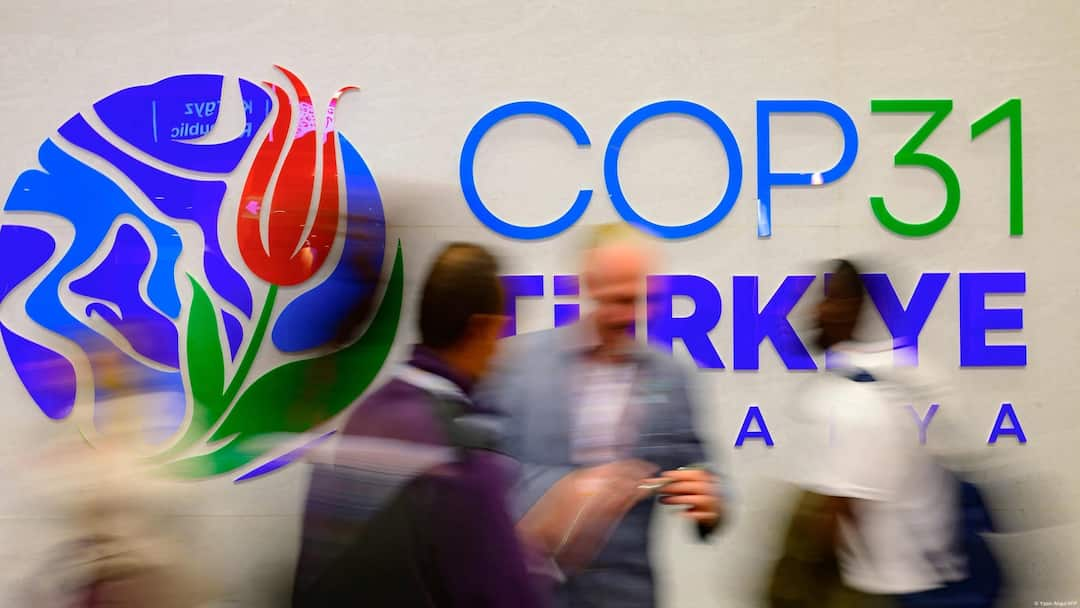
- COP31 draft deal omits fossil fuel phase-out, causing strong criticism.
- EU, LDCs, NGOs reject draft, calling it a
- Negotiations stall on electrification targets and fossil fuel reduction.
- Summit likely extended; host Turkey plans new offshore drilling.
-
Diplomats and delegates from nearly 200 countries are meeting in Antalya, Turkey
-
A new draft deal omits any mention of how to phase out fossil fuels, in what campaigners call a step ‘backwards’ and a ‘glaring regression’
These are the major developments from the closing phase of the UN’s COP31 Climate Summit in Antalya, Turkey, on Friday, November 20, 2026:
‘We fear the last couple of weeks will be just a talk show’: Sierra Leone spokesperson tells DW
The new draft declaration, which, as we’ve reported, has been panned by the EU and civil society, has also disappointed some of the world’s least developed countries (LDCs) that are most vulnerable to climate change.
The LDC Group, which comprises 44 of the world’s least wealthy nations, came into this year’s COP summit hoping for stronger climate action than what has been achieved so far.
“It’s a moment of anticipation,” Lamin Sheriff, a press attache for the Sierra Leone government, told DW’s Katharine Schantz.
“Ministers from LDCs have requests on the table for the presidency. So whilst they wait on what the outcome would be, everybody is waiting patiently. So the moment is really: we are hopeful for the future, but we are also worried because if proper care is not taken, all what we have debated about here in the last couple of weeks will just be a talk show (…) We can’t do anything at the moment.”
WATCH — Oil interests and climate promises collide at the COP31 summit
From clashes over fossil fuels to disputes over climate finance, COP31 exposes the contradictions at the heart of global climate diplomacy.
Climate activist Greta Thunberg says that COP has turned into a “greenwashed circus.”
But supporters say the world would be worse off without the COP process.
DW’s Tim Schauenberg reports from the summit in Antalya.
Summit winding down but negotiators still scrambling for substantive results
Here’s the latest dispatch from DW’s Tim Schauenberg, who is in Antalya covering the COP31 summit for us:
“Formally speaking, the final hours of the climate conference have begun. The countries’ pavilions have been coming down since Thursday: empty halls, chopped-up timber, lonely lecterns.
Things don’t look quite so bleak yet at the negotiations in Antalya, Turkey, and yet, time is running out here. If this is indeed to be, as the COP31 President has already announced, the “best COP ever,” the delegations here will have to step up their efforts considerably.
At present, the corridors are buzzing with discussions amongst scientists, NGOs and media representatives. The delegations are doing what they are here to do: negotiating. So, the long wait has begun — not just for a final decision, but also for substance.
Because that is what has been lacking here in Antalya.
Under discussion is a global target to generate 35% of primary energy from electricity by 2035. The EU is determined that this electricity should be generated from solar and wind power. Other countries, particularly those reliant on fossil fuels, want to block the target altogether.
Positions have hardened on this issue — and others — even after two weeks of negotiations. An EU spokesperson is currently making her way through the media center; anyone who doesn’t bump into her in the corridors will receive a phone call. The message: the EU will not accept the latest draft of the negotiations as it stands.
This is partly because the issue of carbon capture and storage features prominently in the presidency’s latest summary of the negotiations. However, this is expensive and technically complex, and will not halt the climate crisis. Nor is there currently any consensus on turning our backs on the root cause — namely, the burning of coal, oil and gas.
The likelihood that an agreement on this last point will be reached is close to zero, since all 197 countries must agree to this, and Saudi Arabia, Russia, Iran and India have no interest in fundamentally questioning their revenue streams and energy plans in the near future.
So the coffee stands are well stocked, and everyone is keeping at least one eye on the flickering screens in the long halls that display all the events on today’s agenda. So far, there is a gaping void when it comes to the sessions intended for the press. That could change at any moment — or take hours.
Quite a few media representatives have already brought bags full of provisions with them this morning. They are clearly preparing for a long weekend.”
Climate NGOs ‘firmly reject’ COP31 draft declaration
Climate and social justice activist Harjeet Singh has called on wealthy nations to “stop blocking” efforts to phase out fossil fuels and cut harmful emissions.
In a statement sent to DW reporters at the COP31 summit in Antalya, Singh said, “Civil society firmly rejects this COP31 draft text” which omitted any mention of fossil fuels, despite these being established by scientists as the main causes of climate change.
Singh, Global Convenor of the Fill the Fund campaign, also highlighted that the declaration failed to address funding for developing nations that would help them transition away from fossil fuels.
“Our message to rich countries is simple: stop blocking. Put real money on the table for adaptation, for loss and damage, and for developing countries to move away from fossil fuels. And cut your own emissions at home, in line with your fair share. You caused this crisis. You have the money. What you lack is the will, and history will judge you for it,” he said.
The draft text, presented on Thursday night, “erases fossil fuels, deletes the money and buries the just transition,” Singh said, adding that climate NGOs would not sign it in its current form.
“We call on developing country governments not to sign away their people’s survival for a deal that offers workshops instead of finance,” he said.
EU slams COP31 draft as ‘not acceptable’
European Union negotiators have told German news agency dpa that the current COP31 draft declaration, which omits any mention of fossil fuels, is “not acceptable,” as they aired their frustration with the current state of negotiations.
The summit is formally set to end at 6 p.m. local time (1500 UTC), but it is likely that the deadline will be extended, as it has in previous years.
The draft declaration’s main proposal aims to increase electricity’s share of global energy consumption from 23% to 35% by encouraging nations to favor cleaner electric alternatives over fossil-fuel-powered cars, heating systems and industrial processes in order to cut emissions.
Some 90 governments, including many EU states, back the proposal, although it is likely to be watered down amid opposition from oil-producing states.
Meanwhile, a number of African countries have said they will only support the electrification target if they receive increased funding to help deal with the impacts of climate change.
Turkey to start offshore hydrocarbon drilling next year
A Turkish seismic research vessel is set to start searching for oil and gas off the coast of Pakistan next year, Turkish Energy Minister Alparslan Bayraktar said Friday.
The announcement that Turkey will start drilling offshore for oil and gas resources comes as the country hosts COP31.
“At a time when global oil and natural gas markets are experiencing a historic supply shock, we are bringing the experience we have gained in our own waters and our domestic engineering expertise to our friend and brother, Pakistan,” Bayraktar said in a post on X.
Turkey’s state oil company TPAO signed hydrocarbon exploration and production agreements last year with several Pakistani companies for three offshore fields in Pakistan, as well as two onshore fields.
WATCH — UN warns climate change could displace millions
Climate-related disasters are uprooting people at an unprecedented rate. From floods in Nepal to droughts, storms and wildfires across the globe, millions are being forced from their homes.
DW speaks with Atle Solberg of the Platform on Disaster Displacement and DW climate correspondent Tim Schauenberg, who was reporting from protests at COP31 in Antalya.
IN DEPTH — Fossil fuels dropped from latest COP31 draft deal
One of the most fraught debates at the UN climate talks in Turkey has revolved around the future of coal, oil and gas.
Now, all mention of fossil fuels has been removed from the summit’s new draft agreement.
Learn more about why fossil fuels, the main drivers of global warming, were removed from the COP31 draft declaration in this report.
COP summit poised to be extended with no deal imminent
Delegations from nearly 200 countries have been meeting in the Turkish resort city of Antalya since November 9 to negotiate ways to tackle global warming and provide financial aid to the world’s poorest and most vulnerable nations to climate change.
But, as in previous years, countries remain sharply divided, and consensus has proven elusive.
Three years ago, at COP28 in Dubai, nations pledged to move away from fossil fuels, although no target or timeline was ever set.
Oil- and gas-producing countries have strongly resisted attempts to bring that particular issue back to the negotiating table.
Last year’s COP30 summit in Brazil concluded with no mention of fossil fuels, prompting some nations to pursue the fight outside of the UN’s sphere.
This year’s summit is being held against the backdrop of rising living costs and the US-Israeli war with Iran, which has sent shockwaves through global energy markets and sent prices soaring.
Those challenges have taken the focus away from long-standing issues like rising global temperatures and increasingly frequent and extreme weather disasters, which have been exacerbated by this year’s record-breaking El Nino.
In an initial draft deal earlier in the week, the phaseout of fossil fuels was included.
But a new draft declaration released on Thursday night by Australia, which is co-hosting the summit, omits any mention of gas, oil and coal, widely recognized as the main drivers of climate change.
The omission is a “black mark,” France’s Ecological Transition Minister Monique Barbut said.
Climate activists have also slammed what they call a “glaring regression.”
“You cannot solve a fossil fuel crisis by pretending we don’t need to phase out fossil fuels,” said Harjeet Singh, convenor of the Fill the Fund campaign.
The director of Power Shift Africa, Mohamed Adow, also condemned the slimmed-down draft text, which he said had “gone backwards.”
Despite the current differences, Australia’s Climate Minister Chris Bowen, who is leading negotiations, said, “We will be consulting and negotiating until it is very clear to us that we have a consensus.”
IN PICTURES — Hotter seas, more plastic: High stakes for oceans
IN DEPTH — Have we missed our chance on climate?
From record-breaking heat to devastating floods and wildfires, the warning signs are everywhere. Can rising temperatures still be brought under control?
Learn more about whether the world is acting too late to stop catastrophic climate change in this report.
Welcome to our coverage
Thank you for joining us as we bring you live updates from what is scheduled to be the final day of the COP31 climate summit in Antalya, Turkey’s southern Mediterranean resort city.

Like in previous years, however, it is looking increasingly likely that the negotiations will have to be extended, amid significant differences between delegates despite nearly two weeks of talks.
A new version of a joint draft declaration unveiled on Thursday night omits any mention of how to transition away from fossil fuels — the main causes of global warming.


Stay tuned as we bring you more details on those talks in this blog.

Disclaimer: This report first appeared on Deutsche Welle, and has been republished on ABP Live as part of a special arrangement. Apart from the headline, no changes have been made in the report by ABP Live.

