



Washington DC
New York
Toronto
Distribution: (800) 510 9863
Press ID
  • Login
Binghamton Herald
Advertisement
Friday, May 1, 2026
  • Home
  • World
  • Politics
  • Business
  • Technology
  • Culture
  • Health
  • Entertainment
  • Trending
No Result
View All Result
Binghamton Herald
No Result
View All Result
Home Business

Consumers sue to block Paramount-Warner Bros. deal

by Binghamton Herald Report
May 1, 2026
in Business
Share on FacebookShare on Twitter

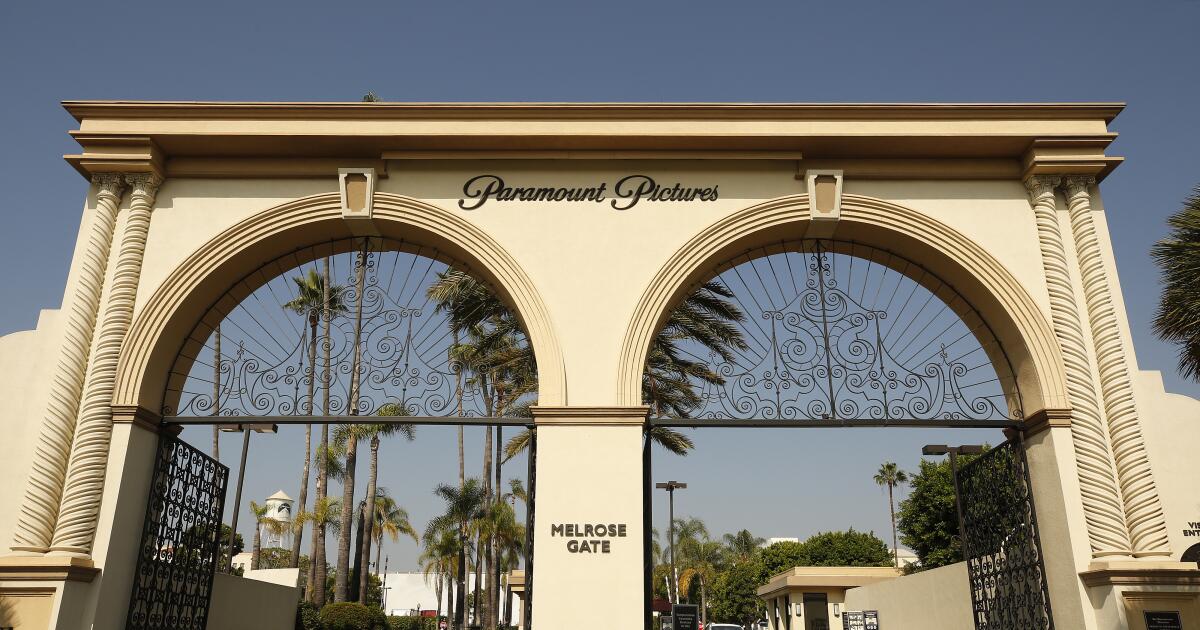
A group of five consumers have filed a lawsuit against Paramount Skydance seeking to block its acquisition of Warner Bros. Discovery and to unwind the earlier merger that joined the storied Melrose Ave. studio with David Ellison’s Skydance Media, alleging that both deals reduce marketplace competition.

The lawsuit, filed Thursday in U.S. District Court in the Northern District of California, alleges the Paramount-Warner deal will lead to increased prices, fewer consumer choices and reduce production of film and TV since a major rival in the entertainment business will be eliminated.

The suit also alleges that the Paramount-Skydance merger, which was finalized last year, led to higher prices for the Paramount+ streaming service.

The plaintiffs — Pamela Faust, Len Marazzo, Lisa McCarthy, Deborah Rubinsohn and Gary Talewsky — are either Paramount+ subscribers, pay for cable bundles that include Paramount-owned TV channels or are moviegoers who watch films in theaters.

The deal activity for Paramount is part of a growing list of recent media mergers, including Walt Disney Co.’s 2019 acquisition of much of 21st Century Fox and Amazon’s purchase of MGM in 2021.

“These acquisitions show an industry moving by successive combinations toward fewer independent rivals, exactly the consolidation backdrop that heightens the competitive threat posed by the next merger, even if the combined firm remains smaller than the largest platforms,” the lawsuit states.

Paramount is aware of the lawsuit and “confident that it is without merit,” a company spokesperson said.

“The combination of Paramount and [Warner Bros. Discovery] will create a stronger competitor that is well positioned to serve as a champion for creative talent and consumer choice,” the spokesperson said in a statement.

The Paramount-Warner deal is currently winding its way through regulatory approvals. While that process is underway, Paramount has asked the Federal Communications Commission for permission to exceed a cap on foreign ownership for U.S. media companies.

Paramount expects to receive $24 billion in funds from three Middle Eastern royal families, who will become part owners of the combined company. Those total funds will represent about 49% of equity in that new company, exceeding the current foreign ownership cap of 25%.

Paramount has said the Ellison family and RedBird Capital Partners “collectively hold the largest equity stake in the combined company and continue to be the sole owners of Class A Common Stock, representing 100% of the voting shares.”

But on Friday, Rep. Sam Liccardo (D- San Jose) urged the FCC to deny Paramount’s petition on the foreign ownership aspect of the deal.

“Congress did not entrust the public airwaves to this agency so that it could auction off America to Riyadh, Abu Dhabi and Doha,” he wrote in a statement. “This will not stand.”

A group of five consumers have filed a lawsuit against Paramount Skydance seeking to block its acquisition of Warner Bros. Discovery and to unwind the earlier merger that joined the storied Melrose Ave. studio with David Ellison’s Skydance Media, alleging that both deals reduce marketplace competition.

The lawsuit, filed Thursday in U.S. District Court in the Northern District of California, alleges the Paramount-Warner deal will lead to increased prices, fewer consumer choices and reduce production of film and TV since a major rival in the entertainment business will be eliminated.

The suit also alleges that the Paramount-Skydance merger, which was finalized last year, led to higher prices for the Paramount+ streaming service.

The plaintiffs — Pamela Faust, Len Marazzo, Lisa McCarthy, Deborah Rubinsohn and Gary Talewsky — are either Paramount+ subscribers, pay for cable bundles that include Paramount-owned TV channels or are moviegoers who watch films in theaters.

The deal activity for Paramount is part of a growing list of recent media mergers, including Walt Disney Co.’s 2019 acquisition of much of 21st Century Fox and Amazon’s purchase of MGM in 2021.

“These acquisitions show an industry moving by successive combinations toward fewer independent rivals, exactly the consolidation backdrop that heightens the competitive threat posed by the next merger, even if the combined firm remains smaller than the largest platforms,” the lawsuit states.

Paramount is aware of the lawsuit and “confident that it is without merit,” a company spokesperson said.

“The combination of Paramount and [Warner Bros. Discovery] will create a stronger competitor that is well positioned to serve as a champion for creative talent and consumer choice,” the spokesperson said in a statement.

The Paramount-Warner deal is currently winding its way through regulatory approvals. While that process is underway, Paramount has asked the Federal Communications Commission for permission to exceed a cap on foreign ownership for U.S. media companies.

Paramount expects to receive $24 billion in funds from three Middle Eastern royal families, who will become part owners of the combined company. Those total funds will represent about 49% of equity in that new company, exceeding the current foreign ownership cap of 25%.

Paramount has said the Ellison family and RedBird Capital Partners “collectively hold the largest equity stake in the combined company and continue to be the sole owners of Class A Common Stock, representing 100% of the voting shares.”

But on Friday, Rep. Sam Liccardo (D- San Jose) urged the FCC to deny Paramount’s petition on the foreign ownership aspect of the deal.

“Congress did not entrust the public airwaves to this agency so that it could auction off America to Riyadh, Abu Dhabi and Doha,” he wrote in a statement. “This will not stand.”

A group of five consumers have filed a lawsuit against Paramount Skydance seeking to block its acquisition of Warner Bros. Discovery and to unwind the earlier merger that joined the storied Melrose Ave. studio with David Ellison’s Skydance Media, alleging that both deals reduce marketplace competition.

The lawsuit, filed Thursday in U.S. District Court in the Northern District of California, alleges the Paramount-Warner deal will lead to increased prices, fewer consumer choices and reduce production of film and TV since a major rival in the entertainment business will be eliminated.

The suit also alleges that the Paramount-Skydance merger, which was finalized last year, led to higher prices for the Paramount+ streaming service.

The plaintiffs — Pamela Faust, Len Marazzo, Lisa McCarthy, Deborah Rubinsohn and Gary Talewsky — are either Paramount+ subscribers, pay for cable bundles that include Paramount-owned TV channels or are moviegoers who watch films in theaters.

The deal activity for Paramount is part of a growing list of recent media mergers, including Walt Disney Co.’s 2019 acquisition of much of 21st Century Fox and Amazon’s purchase of MGM in 2021.

“These acquisitions show an industry moving by successive combinations toward fewer independent rivals, exactly the consolidation backdrop that heightens the competitive threat posed by the next merger, even if the combined firm remains smaller than the largest platforms,” the lawsuit states.

Paramount is aware of the lawsuit and “confident that it is without merit,” a company spokesperson said.

“The combination of Paramount and [Warner Bros. Discovery] will create a stronger competitor that is well positioned to serve as a champion for creative talent and consumer choice,” the spokesperson said in a statement.

The Paramount-Warner deal is currently winding its way through regulatory approvals. While that process is underway, Paramount has asked the Federal Communications Commission for permission to exceed a cap on foreign ownership for U.S. media companies.

Paramount expects to receive $24 billion in funds from three Middle Eastern royal families, who will become part owners of the combined company. Those total funds will represent about 49% of equity in that new company, exceeding the current foreign ownership cap of 25%.

Paramount has said the Ellison family and RedBird Capital Partners “collectively hold the largest equity stake in the combined company and continue to be the sole owners of Class A Common Stock, representing 100% of the voting shares.”

But on Friday, Rep. Sam Liccardo (D- San Jose) urged the FCC to deny Paramount’s petition on the foreign ownership aspect of the deal.

“Congress did not entrust the public airwaves to this agency so that it could auction off America to Riyadh, Abu Dhabi and Doha,” he wrote in a statement. “This will not stand.”


A group of five consumers have filed a lawsuit against Paramount Skydance seeking to block its acquisition of Warner Bros. Discovery and to unwind the earlier merger that joined the storied Melrose Ave. studio with David Ellison’s Skydance Media, alleging that both deals reduce marketplace competition.

The lawsuit, filed Thursday in U.S. District Court in the Northern District of California, alleges the Paramount-Warner deal will lead to increased prices, fewer consumer choices and reduce production of film and TV since a major rival in the entertainment business will be eliminated.

The suit also alleges that the Paramount-Skydance merger, which was finalized last year, led to higher prices for the Paramount+ streaming service.

The plaintiffs — Pamela Faust, Len Marazzo, Lisa McCarthy, Deborah Rubinsohn and Gary Talewsky — are either Paramount+ subscribers, pay for cable bundles that include Paramount-owned TV channels or are moviegoers who watch films in theaters.

The deal activity for Paramount is part of a growing list of recent media mergers, including Walt Disney Co.’s 2019 acquisition of much of 21st Century Fox and Amazon’s purchase of MGM in 2021.

“These acquisitions show an industry moving by successive combinations toward fewer independent rivals, exactly the consolidation backdrop that heightens the competitive threat posed by the next merger, even if the combined firm remains smaller than the largest platforms,” the lawsuit states.

Paramount is aware of the lawsuit and “confident that it is without merit,” a company spokesperson said.

“The combination of Paramount and [Warner Bros. Discovery] will create a stronger competitor that is well positioned to serve as a champion for creative talent and consumer choice,” the spokesperson said in a statement.

The Paramount-Warner deal is currently winding its way through regulatory approvals. While that process is underway, Paramount has asked the Federal Communications Commission for permission to exceed a cap on foreign ownership for U.S. media companies.

Paramount expects to receive $24 billion in funds from three Middle Eastern royal families, who will become part owners of the combined company. Those total funds will represent about 49% of equity in that new company, exceeding the current foreign ownership cap of 25%.

Paramount has said the Ellison family and RedBird Capital Partners “collectively hold the largest equity stake in the combined company and continue to be the sole owners of Class A Common Stock, representing 100% of the voting shares.”

But on Friday, Rep. Sam Liccardo (D- San Jose) urged the FCC to deny Paramount’s petition on the foreign ownership aspect of the deal.

“Congress did not entrust the public airwaves to this agency so that it could auction off America to Riyadh, Abu Dhabi and Doha,” he wrote in a statement. “This will not stand.”

A group of five consumers have filed a lawsuit against Paramount Skydance seeking to block its acquisition of Warner Bros. Discovery and to unwind the earlier merger that joined the storied Melrose Ave. studio with David Ellison’s Skydance Media, alleging that both deals reduce marketplace competition.

The lawsuit, filed Thursday in U.S. District Court in the Northern District of California, alleges the Paramount-Warner deal will lead to increased prices, fewer consumer choices and reduce production of film and TV since a major rival in the entertainment business will be eliminated.

The suit also alleges that the Paramount-Skydance merger, which was finalized last year, led to higher prices for the Paramount+ streaming service.

The plaintiffs — Pamela Faust, Len Marazzo, Lisa McCarthy, Deborah Rubinsohn and Gary Talewsky — are either Paramount+ subscribers, pay for cable bundles that include Paramount-owned TV channels or are moviegoers who watch films in theaters.

The deal activity for Paramount is part of a growing list of recent media mergers, including Walt Disney Co.’s 2019 acquisition of much of 21st Century Fox and Amazon’s purchase of MGM in 2021.

“These acquisitions show an industry moving by successive combinations toward fewer independent rivals, exactly the consolidation backdrop that heightens the competitive threat posed by the next merger, even if the combined firm remains smaller than the largest platforms,” the lawsuit states.

Paramount is aware of the lawsuit and “confident that it is without merit,” a company spokesperson said.

“The combination of Paramount and [Warner Bros. Discovery] will create a stronger competitor that is well positioned to serve as a champion for creative talent and consumer choice,” the spokesperson said in a statement.

The Paramount-Warner deal is currently winding its way through regulatory approvals. While that process is underway, Paramount has asked the Federal Communications Commission for permission to exceed a cap on foreign ownership for U.S. media companies.

Paramount expects to receive $24 billion in funds from three Middle Eastern royal families, who will become part owners of the combined company. Those total funds will represent about 49% of equity in that new company, exceeding the current foreign ownership cap of 25%.

Paramount has said the Ellison family and RedBird Capital Partners “collectively hold the largest equity stake in the combined company and continue to be the sole owners of Class A Common Stock, representing 100% of the voting shares.”

But on Friday, Rep. Sam Liccardo (D- San Jose) urged the FCC to deny Paramount’s petition on the foreign ownership aspect of the deal.

“Congress did not entrust the public airwaves to this agency so that it could auction off America to Riyadh, Abu Dhabi and Doha,” he wrote in a statement. “This will not stand.”

A group of five consumers have filed a lawsuit against Paramount Skydance seeking to block its acquisition of Warner Bros. Discovery and to unwind the earlier merger that joined the storied Melrose Ave. studio with David Ellison’s Skydance Media, alleging that both deals reduce marketplace competition.

The lawsuit, filed Thursday in U.S. District Court in the Northern District of California, alleges the Paramount-Warner deal will lead to increased prices, fewer consumer choices and reduce production of film and TV since a major rival in the entertainment business will be eliminated.

The suit also alleges that the Paramount-Skydance merger, which was finalized last year, led to higher prices for the Paramount+ streaming service.

The plaintiffs — Pamela Faust, Len Marazzo, Lisa McCarthy, Deborah Rubinsohn and Gary Talewsky — are either Paramount+ subscribers, pay for cable bundles that include Paramount-owned TV channels or are moviegoers who watch films in theaters.

The deal activity for Paramount is part of a growing list of recent media mergers, including Walt Disney Co.’s 2019 acquisition of much of 21st Century Fox and Amazon’s purchase of MGM in 2021.

“These acquisitions show an industry moving by successive combinations toward fewer independent rivals, exactly the consolidation backdrop that heightens the competitive threat posed by the next merger, even if the combined firm remains smaller than the largest platforms,” the lawsuit states.

Paramount is aware of the lawsuit and “confident that it is without merit,” a company spokesperson said.

“The combination of Paramount and [Warner Bros. Discovery] will create a stronger competitor that is well positioned to serve as a champion for creative talent and consumer choice,” the spokesperson said in a statement.

The Paramount-Warner deal is currently winding its way through regulatory approvals. While that process is underway, Paramount has asked the Federal Communications Commission for permission to exceed a cap on foreign ownership for U.S. media companies.

Paramount expects to receive $24 billion in funds from three Middle Eastern royal families, who will become part owners of the combined company. Those total funds will represent about 49% of equity in that new company, exceeding the current foreign ownership cap of 25%.

Paramount has said the Ellison family and RedBird Capital Partners “collectively hold the largest equity stake in the combined company and continue to be the sole owners of Class A Common Stock, representing 100% of the voting shares.”

But on Friday, Rep. Sam Liccardo (D- San Jose) urged the FCC to deny Paramount’s petition on the foreign ownership aspect of the deal.

“Congress did not entrust the public airwaves to this agency so that it could auction off America to Riyadh, Abu Dhabi and Doha,” he wrote in a statement. “This will not stand.”

A group of five consumers have filed a lawsuit against Paramount Skydance seeking to block its acquisition of Warner Bros. Discovery and to unwind the earlier merger that joined the storied Melrose Ave. studio with David Ellison’s Skydance Media, alleging that both deals reduce marketplace competition.

The lawsuit, filed Thursday in U.S. District Court in the Northern District of California, alleges the Paramount-Warner deal will lead to increased prices, fewer consumer choices and reduce production of film and TV since a major rival in the entertainment business will be eliminated.

The suit also alleges that the Paramount-Skydance merger, which was finalized last year, led to higher prices for the Paramount+ streaming service.

The plaintiffs — Pamela Faust, Len Marazzo, Lisa McCarthy, Deborah Rubinsohn and Gary Talewsky — are either Paramount+ subscribers, pay for cable bundles that include Paramount-owned TV channels or are moviegoers who watch films in theaters.

The deal activity for Paramount is part of a growing list of recent media mergers, including Walt Disney Co.’s 2019 acquisition of much of 21st Century Fox and Amazon’s purchase of MGM in 2021.

“These acquisitions show an industry moving by successive combinations toward fewer independent rivals, exactly the consolidation backdrop that heightens the competitive threat posed by the next merger, even if the combined firm remains smaller than the largest platforms,” the lawsuit states.

Paramount is aware of the lawsuit and “confident that it is without merit,” a company spokesperson said.

“The combination of Paramount and [Warner Bros. Discovery] will create a stronger competitor that is well positioned to serve as a champion for creative talent and consumer choice,” the spokesperson said in a statement.

The Paramount-Warner deal is currently winding its way through regulatory approvals. While that process is underway, Paramount has asked the Federal Communications Commission for permission to exceed a cap on foreign ownership for U.S. media companies.

Paramount expects to receive $24 billion in funds from three Middle Eastern royal families, who will become part owners of the combined company. Those total funds will represent about 49% of equity in that new company, exceeding the current foreign ownership cap of 25%.

Paramount has said the Ellison family and RedBird Capital Partners “collectively hold the largest equity stake in the combined company and continue to be the sole owners of Class A Common Stock, representing 100% of the voting shares.”

But on Friday, Rep. Sam Liccardo (D- San Jose) urged the FCC to deny Paramount’s petition on the foreign ownership aspect of the deal.

“Congress did not entrust the public airwaves to this agency so that it could auction off America to Riyadh, Abu Dhabi and Doha,” he wrote in a statement. “This will not stand.”

A group of five consumers have filed a lawsuit against Paramount Skydance seeking to block its acquisition of Warner Bros. Discovery and to unwind the earlier merger that joined the storied Melrose Ave. studio with David Ellison’s Skydance Media, alleging that both deals reduce marketplace competition.

The lawsuit, filed Thursday in U.S. District Court in the Northern District of California, alleges the Paramount-Warner deal will lead to increased prices, fewer consumer choices and reduce production of film and TV since a major rival in the entertainment business will be eliminated.

The suit also alleges that the Paramount-Skydance merger, which was finalized last year, led to higher prices for the Paramount+ streaming service.

The plaintiffs — Pamela Faust, Len Marazzo, Lisa McCarthy, Deborah Rubinsohn and Gary Talewsky — are either Paramount+ subscribers, pay for cable bundles that include Paramount-owned TV channels or are moviegoers who watch films in theaters.

The deal activity for Paramount is part of a growing list of recent media mergers, including Walt Disney Co.’s 2019 acquisition of much of 21st Century Fox and Amazon’s purchase of MGM in 2021.

“These acquisitions show an industry moving by successive combinations toward fewer independent rivals, exactly the consolidation backdrop that heightens the competitive threat posed by the next merger, even if the combined firm remains smaller than the largest platforms,” the lawsuit states.

Paramount is aware of the lawsuit and “confident that it is without merit,” a company spokesperson said.

“The combination of Paramount and [Warner Bros. Discovery] will create a stronger competitor that is well positioned to serve as a champion for creative talent and consumer choice,” the spokesperson said in a statement.

The Paramount-Warner deal is currently winding its way through regulatory approvals. While that process is underway, Paramount has asked the Federal Communications Commission for permission to exceed a cap on foreign ownership for U.S. media companies.

Paramount expects to receive $24 billion in funds from three Middle Eastern royal families, who will become part owners of the combined company. Those total funds will represent about 49% of equity in that new company, exceeding the current foreign ownership cap of 25%.

Paramount has said the Ellison family and RedBird Capital Partners “collectively hold the largest equity stake in the combined company and continue to be the sole owners of Class A Common Stock, representing 100% of the voting shares.”

But on Friday, Rep. Sam Liccardo (D- San Jose) urged the FCC to deny Paramount’s petition on the foreign ownership aspect of the deal.

“Congress did not entrust the public airwaves to this agency so that it could auction off America to Riyadh, Abu Dhabi and Doha,” he wrote in a statement. “This will not stand.”

Previous Post

Review: An oppressively dumbed-down ‘Animal Farm’ has little use for George Orwell’s ideas

Leave a Reply Cancel reply

Your email address will not be published. Required fields are marked *

BROWSE BY CATEGORIES

  • Business
  • Culture
  • Entertainment
  • Health
  • Politics
  • Technology
  • Trending
  • Uncategorized
  • World
Binghamton Herald

© 2024 Binghamton Herald or its affiliated companies.

Navigate Site

  • About
  • Advertise
  • Terms & Conditions
  • Privacy Policy
  • Disclaimer
  • Contact

Follow Us

No Result
View All Result
  • Home
  • World
  • Politics
  • Business
  • Technology
  • Culture
  • Health
  • Entertainment
  • Trending

© 2024 Binghamton Herald or its affiliated companies.

Welcome Back!

Login to your account below

Forgotten Password?

Retrieve your password

Please enter your username or email address to reset your password.

Log In