


Trump continues his attack on anti-pollution regulations by falsely claiming that it will save Americans money.
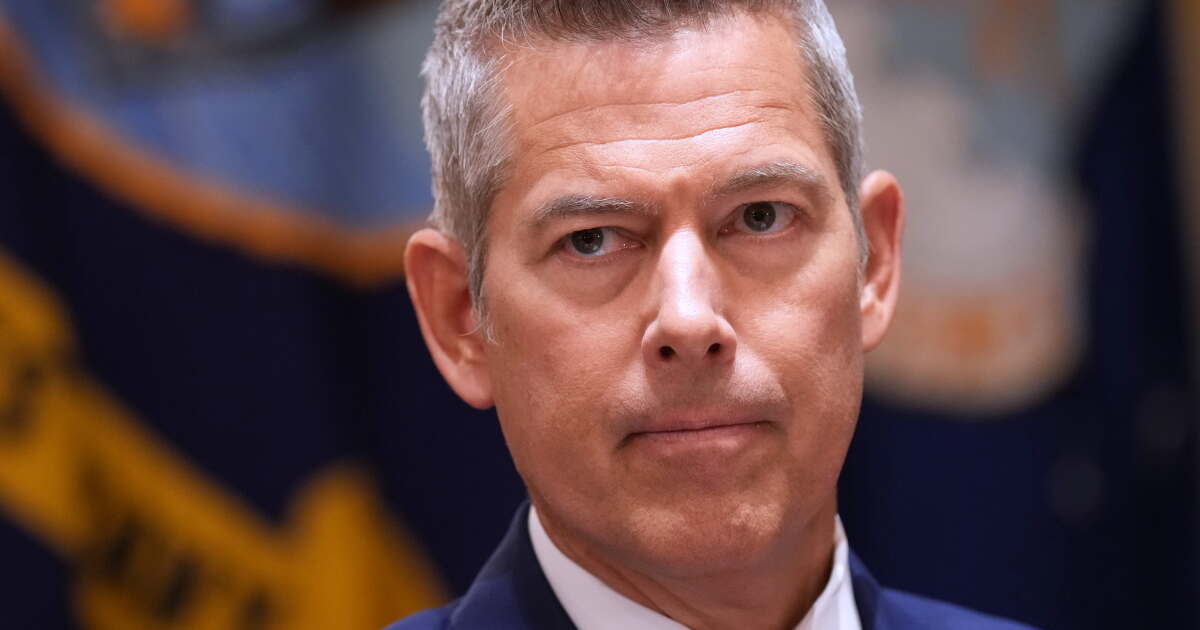
Subject to debate: What’s the dumbest idea to emerge from the Department of Transportation under its boss, former reality TV contestant Sean Duffy?
Some might vote for Duffy’s attack on bike lanes — excuse me, “DEI bike lanes” as he calls them — based on a claim that bike lanes cause traffic congestion. (They don’t.)
Or his suggestion that the travails and frustrations of modern-day air travel would be alleviated if passengers dressed up to fly, never mind that he sat by complacently as 3,000 Federal Aviation Administration employees were fired during Elon Musk’s DOGE frenzy, and that he encouraged thousands more to resign voluntarily.
There is no reason to weaken standards that are technologically feasible and have a direct benefit for the quality of the air people breathe.
— Harold Wimmer, American Lung Association
Or that he took several weeks off from doing his job to film a cross-country jaunt with his family for a six-part TV documentary that was, as my colleague Lorraine Ali noted, funded by businesses regulated by his department.
No. The worst idea is a finalized regulatory rule — rolling back fuel economy standards for automobiles that had been strengthened during the Biden administration.
The rule was formally published on Sept. 30. Among its provisions is a continuation of Trump’s attack on California’s right to set its own vehicle emission standards, resuming an effort he lost during his first term and that California has already challenged in court.
In 2024, Biden’s Transportation Department required cars in model years 2027 and later to reach a fleet average of 50.4 miles per gallon by 2031. The new rule reduces that mandate to 34.5 mpg. Duffy asserts that the new rule, which he dubs the “Freedom Means Affordable Cars” initiative, will cut the average cost of a new vehicle by $1,300. He also says the change will “save the American people $138 billion over the next five years.”
Unsurprisingly, the new regulation promptly elicited a lawsuit from California, 20 other states, the District of Columbia and from cities and counties.
These figures, however, are the product of typical Trump administration legerdemain. The administration itself acknowledged that the change could cost consumers even more in added fuel costs than they save on the cost of new vehicles — and that was an estimate produced in December, before the sharp run-up in prices resulting from Trump’s Iran war.
As of this week, the American Automobile Assn. reports, the average national price of regular gas has risen about 40% from a year ago, premium gas is up by nearly 33%, and diesel is up by nearly 72%.
In its own analysis, the White House admits that the rollback of fuel standards “may increase domestic consumption of gasoline” and consequently an “increase in the Nation’s demand for crude petroleum” compared to previous standards. It concedes that higher oil consumption “increases all domestic consumers’ exposure to the risks of potential rapid increases in oil prices.”
Bizarrely, it argues that because the U.S. is a net exporter of oil, that run-up in global prices will become “a financial benefit to the U.S. economy.” A financial benefit to oil companies perhaps, but to the economy as a whole? Doubtful.
So who is this really for?
One clue comes from the Alliance for Automotive Innovation, a lobbying arm of major auto manufacturers and equipment makers. The alliance says the government “made the right call to better align fuel economy standards with the law and current market conditions.” I asked it to comment on how rolling back fuel economy standards comports with market conditions that encompass double-digit percentage increases in gas prices, but didn’t get a reply.
Before examining the administration’s rationales for the rollback in what’s known as the Corporate Average Fuel Economy, or CAFE, standard, a look at the history of conflict between California and Trump is in order. That’s because California has been a national leader in fuel economy regulation, so much so that 13 other states and the District of Columbia, accounting for some 40% of the national auto market, have voluntarily signed on to its rules.
California has been able to set its own rules due to a waiver issued by the federal government that keeps the state’s regulations from preemption by federal law. The waiver in its various forms dates back to 1970, derived from a provision of the federal Clean Air Act that authorized the waiver as long as California could show that its rules are at least as stringent as the federal standards; that has never been a difficult threshold to reach.
Trump tried to revoke the waiver in 2019 but ran into a couple of problems. One was that there’s no provision in the Clean Air Act allowing for a waiver, once granted, to be revoked. Another is that the waiver has been tested in federal court, including the Supreme Court, and survived.
Trump tried again with a lawsuit filed in March in federal court in Riverside. The state’s motion to dismiss the case is pending.
Returning to the rule change at hand, Duffy and Trump have tied it in with the “affordability” issue. In announcing the rule change, Duffy disdained the fuel economy standard implemented by Biden and bragged of having “finally ended the illegal mandate that forced automakers to produce more expensive electric vehicles that American families didn’t want.”
A few points about that. First, there’s nothing to the claim that the Biden rule was either illegal or a “mandate” to produce electric vehicles. As the government’s rule acknowledges, the government standards “do not mandate the application of any technology.” They’re performance-based: whatever carmakers can do to meet the standards is suitable, including new technologies in gasoline-powered cars.
Duffy’s response is that the Biden standards were “set so high that they created a backdoor electric vehicle mandate.” But he’s merely parroting the industry’s position: “The standards finalized under the previous administration effectively required a switchover to electric vehicles that was out of step with market realities,” John Bozzella, chief executive of the Alliance for Automotive Innovation, said in praising the rollback.
But it’s hardly unusual for government regulations to prompt industries to modernize, or for manufacturers to claim that meeting the rules is impossible or unduly expensive.
Such claims often prove to be more rhetorical than real. Indeed, the final fuel economy rule lists no fewer than 69 technological options short of a full-scale shift into EVs by U.S. carmakers, including engineering improvements in gas-powered engines, transmissions, aerodynamic design, gas-saving tires and the sale of hybrids.
As for the claim that American families don’t want electric vehicles, the jury is still out about that. In part, that’s because Trump put his thumb on the scale by canceling federal subsidies of $7,500 for new and $4,000 for used electric vehicles. His 2025 budget bill ended those as of Sept. 30, 2025, producing an almost immediate slump in the EV market.
On his inauguration day in 2025, Trump suspended billions of dollars in federal spending on EV chargers, an infrastructure project launched under Biden. That exacerbated one of the leading obstacles to EV acceptance, so-called range anxiety, experienced when EV drivers doubt that chargers will be available for them on long trips, especially beyond urban areas.
Accordingly, EV sales in the U.S. fell by 36% in the fourth quarter of 2025 over a year earlier, and down by 27% in the first quarter of 2026 ended March 31. That implied that the effect of the subsidy terminations had slowed, in the view of market analysts at Cox Automotive.
“What comes next will be driven less by policy and more by fundamentals,” observed Stephanie Valdez Streaty of Cox: “more affordable products, smarter pricing strategies, and continued investment in infrastructure. Those longer-term fundamentals continue to support EV growth. The timeline has shifted, but the direction hasn’t.”
Even without the federal subsidies, the used EV market has been brisk — thanks largely to the spike in gas prices, as my colleague Caroline Petrow-Cohen has reported.
As was the case in 2019, Trump’s rollback of auto emissions standards is tied to his ideology-driven disdain of global warming science, which he has labeled a “hoax.” As I wrote in 2019, California’s policies, by contrast, reflect the scientific consensus that greenhouse gas emissions are a mortal threat to the environment. The necessity of maintaining fuel efficiency standards is manifest in California, where about 40% of those emissions come from auto and truck tailpipes.
The rollback of standards is a sop to industry at the expense of air quality, public health and the climate. The rule change “will create more air pollution, harm health and accelerate climate change,” American Lung Assn. President Harold Wimmer said in response. “There is no reason to weaken standards that are technologically feasible and have a direct benefit for the quality of the air people breathe.”

Trump continues his attack on anti-pollution regulations by falsely claiming that it will save Americans money.
Subject to debate: What’s the dumbest idea to emerge from the Department of Transportation under its boss, former reality TV contestant Sean Duffy?
Some might vote for Duffy’s attack on bike lanes — excuse me, “DEI bike lanes” as he calls them — based on a claim that bike lanes cause traffic congestion. (They don’t.)
Or his suggestion that the travails and frustrations of modern-day air travel would be alleviated if passengers dressed up to fly, never mind that he sat by complacently as 3,000 Federal Aviation Administration employees were fired during Elon Musk’s DOGE frenzy, and that he encouraged thousands more to resign voluntarily.
There is no reason to weaken standards that are technologically feasible and have a direct benefit for the quality of the air people breathe.
— Harold Wimmer, American Lung Association
Or that he took several weeks off from doing his job to film a cross-country jaunt with his family for a six-part TV documentary that was, as my colleague Lorraine Ali noted, funded by businesses regulated by his department.
No. The worst idea is a finalized regulatory rule — rolling back fuel economy standards for automobiles that had been strengthened during the Biden administration.
The rule was formally published on Sept. 30. Among its provisions is a continuation of Trump’s attack on California’s right to set its own vehicle emission standards, resuming an effort he lost during his first term and that California has already challenged in court.
In 2024, Biden’s Transportation Department required cars in model years 2027 and later to reach a fleet average of 50.4 miles per gallon by 2031. The new rule reduces that mandate to 34.5 mpg. Duffy asserts that the new rule, which he dubs the “Freedom Means Affordable Cars” initiative, will cut the average cost of a new vehicle by $1,300. He also says the change will “save the American people $138 billion over the next five years.”
Unsurprisingly, the new regulation promptly elicited a lawsuit from California, 20 other states, the District of Columbia and from cities and counties.
These figures, however, are the product of typical Trump administration legerdemain. The administration itself acknowledged that the change could cost consumers even more in added fuel costs than they save on the cost of new vehicles — and that was an estimate produced in December, before the sharp run-up in prices resulting from Trump’s Iran war.
As of this week, the American Automobile Assn. reports, the average national price of regular gas has risen about 40% from a year ago, premium gas is up by nearly 33%, and diesel is up by nearly 72%.
In its own analysis, the White House admits that the rollback of fuel standards “may increase domestic consumption of gasoline” and consequently an “increase in the Nation’s demand for crude petroleum” compared to previous standards. It concedes that higher oil consumption “increases all domestic consumers’ exposure to the risks of potential rapid increases in oil prices.”
Bizarrely, it argues that because the U.S. is a net exporter of oil, that run-up in global prices will become “a financial benefit to the U.S. economy.” A financial benefit to oil companies perhaps, but to the economy as a whole? Doubtful.
So who is this really for?
One clue comes from the Alliance for Automotive Innovation, a lobbying arm of major auto manufacturers and equipment makers. The alliance says the government “made the right call to better align fuel economy standards with the law and current market conditions.” I asked it to comment on how rolling back fuel economy standards comports with market conditions that encompass double-digit percentage increases in gas prices, but didn’t get a reply.
Before examining the administration’s rationales for the rollback in what’s known as the Corporate Average Fuel Economy, or CAFE, standard, a look at the history of conflict between California and Trump is in order. That’s because California has been a national leader in fuel economy regulation, so much so that 13 other states and the District of Columbia, accounting for some 40% of the national auto market, have voluntarily signed on to its rules.
California has been able to set its own rules due to a waiver issued by the federal government that keeps the state’s regulations from preemption by federal law. The waiver in its various forms dates back to 1970, derived from a provision of the federal Clean Air Act that authorized the waiver as long as California could show that its rules are at least as stringent as the federal standards; that has never been a difficult threshold to reach.
Trump tried to revoke the waiver in 2019 but ran into a couple of problems. One was that there’s no provision in the Clean Air Act allowing for a waiver, once granted, to be revoked. Another is that the waiver has been tested in federal court, including the Supreme Court, and survived.
Trump tried again with a lawsuit filed in March in federal court in Riverside. The state’s motion to dismiss the case is pending.
Returning to the rule change at hand, Duffy and Trump have tied it in with the “affordability” issue. In announcing the rule change, Duffy disdained the fuel economy standard implemented by Biden and bragged of having “finally ended the illegal mandate that forced automakers to produce more expensive electric vehicles that American families didn’t want.”
A few points about that. First, there’s nothing to the claim that the Biden rule was either illegal or a “mandate” to produce electric vehicles. As the government’s rule acknowledges, the government standards “do not mandate the application of any technology.” They’re performance-based: whatever carmakers can do to meet the standards is suitable, including new technologies in gasoline-powered cars.
Duffy’s response is that the Biden standards were “set so high that they created a backdoor electric vehicle mandate.” But he’s merely parroting the industry’s position: “The standards finalized under the previous administration effectively required a switchover to electric vehicles that was out of step with market realities,” John Bozzella, chief executive of the Alliance for Automotive Innovation, said in praising the rollback.
But it’s hardly unusual for government regulations to prompt industries to modernize, or for manufacturers to claim that meeting the rules is impossible or unduly expensive.
Such claims often prove to be more rhetorical than real. Indeed, the final fuel economy rule lists no fewer than 69 technological options short of a full-scale shift into EVs by U.S. carmakers, including engineering improvements in gas-powered engines, transmissions, aerodynamic design, gas-saving tires and the sale of hybrids.
As for the claim that American families don’t want electric vehicles, the jury is still out about that. In part, that’s because Trump put his thumb on the scale by canceling federal subsidies of $7,500 for new and $4,000 for used electric vehicles. His 2025 budget bill ended those as of Sept. 30, 2025, producing an almost immediate slump in the EV market.
On his inauguration day in 2025, Trump suspended billions of dollars in federal spending on EV chargers, an infrastructure project launched under Biden. That exacerbated one of the leading obstacles to EV acceptance, so-called range anxiety, experienced when EV drivers doubt that chargers will be available for them on long trips, especially beyond urban areas.
Accordingly, EV sales in the U.S. fell by 36% in the fourth quarter of 2025 over a year earlier, and down by 27% in the first quarter of 2026 ended March 31. That implied that the effect of the subsidy terminations had slowed, in the view of market analysts at Cox Automotive.
“What comes next will be driven less by policy and more by fundamentals,” observed Stephanie Valdez Streaty of Cox: “more affordable products, smarter pricing strategies, and continued investment in infrastructure. Those longer-term fundamentals continue to support EV growth. The timeline has shifted, but the direction hasn’t.”
Even without the federal subsidies, the used EV market has been brisk — thanks largely to the spike in gas prices, as my colleague Caroline Petrow-Cohen has reported.
As was the case in 2019, Trump’s rollback of auto emissions standards is tied to his ideology-driven disdain of global warming science, which he has labeled a “hoax.” As I wrote in 2019, California’s policies, by contrast, reflect the scientific consensus that greenhouse gas emissions are a mortal threat to the environment. The necessity of maintaining fuel efficiency standards is manifest in California, where about 40% of those emissions come from auto and truck tailpipes.
The rollback of standards is a sop to industry at the expense of air quality, public health and the climate. The rule change “will create more air pollution, harm health and accelerate climate change,” American Lung Assn. President Harold Wimmer said in response. “There is no reason to weaken standards that are technologically feasible and have a direct benefit for the quality of the air people breathe.”

Trump continues his attack on anti-pollution regulations by falsely claiming that it will save Americans money.
Subject to debate: What’s the dumbest idea to emerge from the Department of Transportation under its boss, former reality TV contestant Sean Duffy?
Some might vote for Duffy’s attack on bike lanes — excuse me, “DEI bike lanes” as he calls them — based on a claim that bike lanes cause traffic congestion. (They don’t.)
Or his suggestion that the travails and frustrations of modern-day air travel would be alleviated if passengers dressed up to fly, never mind that he sat by complacently as 3,000 Federal Aviation Administration employees were fired during Elon Musk’s DOGE frenzy, and that he encouraged thousands more to resign voluntarily.
There is no reason to weaken standards that are technologically feasible and have a direct benefit for the quality of the air people breathe.
— Harold Wimmer, American Lung Association
Or that he took several weeks off from doing his job to film a cross-country jaunt with his family for a six-part TV documentary that was, as my colleague Lorraine Ali noted, funded by businesses regulated by his department.
No. The worst idea is a finalized regulatory rule — rolling back fuel economy standards for automobiles that had been strengthened during the Biden administration.
The rule was formally published on Sept. 30. Among its provisions is a continuation of Trump’s attack on California’s right to set its own vehicle emission standards, resuming an effort he lost during his first term and that California has already challenged in court.
In 2024, Biden’s Transportation Department required cars in model years 2027 and later to reach a fleet average of 50.4 miles per gallon by 2031. The new rule reduces that mandate to 34.5 mpg. Duffy asserts that the new rule, which he dubs the “Freedom Means Affordable Cars” initiative, will cut the average cost of a new vehicle by $1,300. He also says the change will “save the American people $138 billion over the next five years.”
Unsurprisingly, the new regulation promptly elicited a lawsuit from California, 20 other states, the District of Columbia and from cities and counties.
These figures, however, are the product of typical Trump administration legerdemain. The administration itself acknowledged that the change could cost consumers even more in added fuel costs than they save on the cost of new vehicles — and that was an estimate produced in December, before the sharp run-up in prices resulting from Trump’s Iran war.
As of this week, the American Automobile Assn. reports, the average national price of regular gas has risen about 40% from a year ago, premium gas is up by nearly 33%, and diesel is up by nearly 72%.
In its own analysis, the White House admits that the rollback of fuel standards “may increase domestic consumption of gasoline” and consequently an “increase in the Nation’s demand for crude petroleum” compared to previous standards. It concedes that higher oil consumption “increases all domestic consumers’ exposure to the risks of potential rapid increases in oil prices.”
Bizarrely, it argues that because the U.S. is a net exporter of oil, that run-up in global prices will become “a financial benefit to the U.S. economy.” A financial benefit to oil companies perhaps, but to the economy as a whole? Doubtful.
So who is this really for?
One clue comes from the Alliance for Automotive Innovation, a lobbying arm of major auto manufacturers and equipment makers. The alliance says the government “made the right call to better align fuel economy standards with the law and current market conditions.” I asked it to comment on how rolling back fuel economy standards comports with market conditions that encompass double-digit percentage increases in gas prices, but didn’t get a reply.
Before examining the administration’s rationales for the rollback in what’s known as the Corporate Average Fuel Economy, or CAFE, standard, a look at the history of conflict between California and Trump is in order. That’s because California has been a national leader in fuel economy regulation, so much so that 13 other states and the District of Columbia, accounting for some 40% of the national auto market, have voluntarily signed on to its rules.
California has been able to set its own rules due to a waiver issued by the federal government that keeps the state’s regulations from preemption by federal law. The waiver in its various forms dates back to 1970, derived from a provision of the federal Clean Air Act that authorized the waiver as long as California could show that its rules are at least as stringent as the federal standards; that has never been a difficult threshold to reach.
Trump tried to revoke the waiver in 2019 but ran into a couple of problems. One was that there’s no provision in the Clean Air Act allowing for a waiver, once granted, to be revoked. Another is that the waiver has been tested in federal court, including the Supreme Court, and survived.
Trump tried again with a lawsuit filed in March in federal court in Riverside. The state’s motion to dismiss the case is pending.
Returning to the rule change at hand, Duffy and Trump have tied it in with the “affordability” issue. In announcing the rule change, Duffy disdained the fuel economy standard implemented by Biden and bragged of having “finally ended the illegal mandate that forced automakers to produce more expensive electric vehicles that American families didn’t want.”
A few points about that. First, there’s nothing to the claim that the Biden rule was either illegal or a “mandate” to produce electric vehicles. As the government’s rule acknowledges, the government standards “do not mandate the application of any technology.” They’re performance-based: whatever carmakers can do to meet the standards is suitable, including new technologies in gasoline-powered cars.
Duffy’s response is that the Biden standards were “set so high that they created a backdoor electric vehicle mandate.” But he’s merely parroting the industry’s position: “The standards finalized under the previous administration effectively required a switchover to electric vehicles that was out of step with market realities,” John Bozzella, chief executive of the Alliance for Automotive Innovation, said in praising the rollback.
But it’s hardly unusual for government regulations to prompt industries to modernize, or for manufacturers to claim that meeting the rules is impossible or unduly expensive.
Such claims often prove to be more rhetorical than real. Indeed, the final fuel economy rule lists no fewer than 69 technological options short of a full-scale shift into EVs by U.S. carmakers, including engineering improvements in gas-powered engines, transmissions, aerodynamic design, gas-saving tires and the sale of hybrids.
As for the claim that American families don’t want electric vehicles, the jury is still out about that. In part, that’s because Trump put his thumb on the scale by canceling federal subsidies of $7,500 for new and $4,000 for used electric vehicles. His 2025 budget bill ended those as of Sept. 30, 2025, producing an almost immediate slump in the EV market.
On his inauguration day in 2025, Trump suspended billions of dollars in federal spending on EV chargers, an infrastructure project launched under Biden. That exacerbated one of the leading obstacles to EV acceptance, so-called range anxiety, experienced when EV drivers doubt that chargers will be available for them on long trips, especially beyond urban areas.
Accordingly, EV sales in the U.S. fell by 36% in the fourth quarter of 2025 over a year earlier, and down by 27% in the first quarter of 2026 ended March 31. That implied that the effect of the subsidy terminations had slowed, in the view of market analysts at Cox Automotive.
“What comes next will be driven less by policy and more by fundamentals,” observed Stephanie Valdez Streaty of Cox: “more affordable products, smarter pricing strategies, and continued investment in infrastructure. Those longer-term fundamentals continue to support EV growth. The timeline has shifted, but the direction hasn’t.”
Even without the federal subsidies, the used EV market has been brisk — thanks largely to the spike in gas prices, as my colleague Caroline Petrow-Cohen has reported.
As was the case in 2019, Trump’s rollback of auto emissions standards is tied to his ideology-driven disdain of global warming science, which he has labeled a “hoax.” As I wrote in 2019, California’s policies, by contrast, reflect the scientific consensus that greenhouse gas emissions are a mortal threat to the environment. The necessity of maintaining fuel efficiency standards is manifest in California, where about 40% of those emissions come from auto and truck tailpipes.
The rollback of standards is a sop to industry at the expense of air quality, public health and the climate. The rule change “will create more air pollution, harm health and accelerate climate change,” American Lung Assn. President Harold Wimmer said in response. “There is no reason to weaken standards that are technologically feasible and have a direct benefit for the quality of the air people breathe.”
Trump continues his attack on anti-pollution regulations by falsely claiming that it will save Americans money.
Subject to debate: What’s the dumbest idea to emerge from the Department of Transportation under its boss, former reality TV contestant Sean Duffy?
Some might vote for Duffy’s attack on bike lanes — excuse me, “DEI bike lanes” as he calls them — based on a claim that bike lanes cause traffic congestion. (They don’t.)
Or his suggestion that the travails and frustrations of modern-day air travel would be alleviated if passengers dressed up to fly, never mind that he sat by complacently as 3,000 Federal Aviation Administration employees were fired during Elon Musk’s DOGE frenzy, and that he encouraged thousands more to resign voluntarily.
There is no reason to weaken standards that are technologically feasible and have a direct benefit for the quality of the air people breathe.
— Harold Wimmer, American Lung Association
Or that he took several weeks off from doing his job to film a cross-country jaunt with his family for a six-part TV documentary that was, as my colleague Lorraine Ali noted, funded by businesses regulated by his department.
No. The worst idea is a finalized regulatory rule — rolling back fuel economy standards for automobiles that had been strengthened during the Biden administration.
The rule was formally published on Sept. 30. Among its provisions is a continuation of Trump’s attack on California’s right to set its own vehicle emission standards, resuming an effort he lost during his first term and that California has already challenged in court.
In 2024, Biden’s Transportation Department required cars in model years 2027 and later to reach a fleet average of 50.4 miles per gallon by 2031. The new rule reduces that mandate to 34.5 mpg. Duffy asserts that the new rule, which he dubs the “Freedom Means Affordable Cars” initiative, will cut the average cost of a new vehicle by $1,300. He also says the change will “save the American people $138 billion over the next five years.”
Unsurprisingly, the new regulation promptly elicited a lawsuit from California, 20 other states, the District of Columbia and from cities and counties.
These figures, however, are the product of typical Trump administration legerdemain. The administration itself acknowledged that the change could cost consumers even more in added fuel costs than they save on the cost of new vehicles — and that was an estimate produced in December, before the sharp run-up in prices resulting from Trump’s Iran war.
As of this week, the American Automobile Assn. reports, the average national price of regular gas has risen about 40% from a year ago, premium gas is up by nearly 33%, and diesel is up by nearly 72%.
In its own analysis, the White House admits that the rollback of fuel standards “may increase domestic consumption of gasoline” and consequently an “increase in the Nation’s demand for crude petroleum” compared to previous standards. It concedes that higher oil consumption “increases all domestic consumers’ exposure to the risks of potential rapid increases in oil prices.”
Bizarrely, it argues that because the U.S. is a net exporter of oil, that run-up in global prices will become “a financial benefit to the U.S. economy.” A financial benefit to oil companies perhaps, but to the economy as a whole? Doubtful.
So who is this really for?
One clue comes from the Alliance for Automotive Innovation, a lobbying arm of major auto manufacturers and equipment makers. The alliance says the government “made the right call to better align fuel economy standards with the law and current market conditions.” I asked it to comment on how rolling back fuel economy standards comports with market conditions that encompass double-digit percentage increases in gas prices, but didn’t get a reply.
Before examining the administration’s rationales for the rollback in what’s known as the Corporate Average Fuel Economy, or CAFE, standard, a look at the history of conflict between California and Trump is in order. That’s because California has been a national leader in fuel economy regulation, so much so that 13 other states and the District of Columbia, accounting for some 40% of the national auto market, have voluntarily signed on to its rules.
California has been able to set its own rules due to a waiver issued by the federal government that keeps the state’s regulations from preemption by federal law. The waiver in its various forms dates back to 1970, derived from a provision of the federal Clean Air Act that authorized the waiver as long as California could show that its rules are at least as stringent as the federal standards; that has never been a difficult threshold to reach.
Trump tried to revoke the waiver in 2019 but ran into a couple of problems. One was that there’s no provision in the Clean Air Act allowing for a waiver, once granted, to be revoked. Another is that the waiver has been tested in federal court, including the Supreme Court, and survived.
Trump tried again with a lawsuit filed in March in federal court in Riverside. The state’s motion to dismiss the case is pending.
Returning to the rule change at hand, Duffy and Trump have tied it in with the “affordability” issue. In announcing the rule change, Duffy disdained the fuel economy standard implemented by Biden and bragged of having “finally ended the illegal mandate that forced automakers to produce more expensive electric vehicles that American families didn’t want.”
A few points about that. First, there’s nothing to the claim that the Biden rule was either illegal or a “mandate” to produce electric vehicles. As the government’s rule acknowledges, the government standards “do not mandate the application of any technology.” They’re performance-based: whatever carmakers can do to meet the standards is suitable, including new technologies in gasoline-powered cars.
Duffy’s response is that the Biden standards were “set so high that they created a backdoor electric vehicle mandate.” But he’s merely parroting the industry’s position: “The standards finalized under the previous administration effectively required a switchover to electric vehicles that was out of step with market realities,” John Bozzella, chief executive of the Alliance for Automotive Innovation, said in praising the rollback.
But it’s hardly unusual for government regulations to prompt industries to modernize, or for manufacturers to claim that meeting the rules is impossible or unduly expensive.
Such claims often prove to be more rhetorical than real. Indeed, the final fuel economy rule lists no fewer than 69 technological options short of a full-scale shift into EVs by U.S. carmakers, including engineering improvements in gas-powered engines, transmissions, aerodynamic design, gas-saving tires and the sale of hybrids.
As for the claim that American families don’t want electric vehicles, the jury is still out about that. In part, that’s because Trump put his thumb on the scale by canceling federal subsidies of $7,500 for new and $4,000 for used electric vehicles. His 2025 budget bill ended those as of Sept. 30, 2025, producing an almost immediate slump in the EV market.
On his inauguration day in 2025, Trump suspended billions of dollars in federal spending on EV chargers, an infrastructure project launched under Biden. That exacerbated one of the leading obstacles to EV acceptance, so-called range anxiety, experienced when EV drivers doubt that chargers will be available for them on long trips, especially beyond urban areas.
Accordingly, EV sales in the U.S. fell by 36% in the fourth quarter of 2025 over a year earlier, and down by 27% in the first quarter of 2026 ended March 31. That implied that the effect of the subsidy terminations had slowed, in the view of market analysts at Cox Automotive.
“What comes next will be driven less by policy and more by fundamentals,” observed Stephanie Valdez Streaty of Cox: “more affordable products, smarter pricing strategies, and continued investment in infrastructure. Those longer-term fundamentals continue to support EV growth. The timeline has shifted, but the direction hasn’t.”
Even without the federal subsidies, the used EV market has been brisk — thanks largely to the spike in gas prices, as my colleague Caroline Petrow-Cohen has reported.
As was the case in 2019, Trump’s rollback of auto emissions standards is tied to his ideology-driven disdain of global warming science, which he has labeled a “hoax.” As I wrote in 2019, California’s policies, by contrast, reflect the scientific consensus that greenhouse gas emissions are a mortal threat to the environment. The necessity of maintaining fuel efficiency standards is manifest in California, where about 40% of those emissions come from auto and truck tailpipes.
The rollback of standards is a sop to industry at the expense of air quality, public health and the climate. The rule change “will create more air pollution, harm health and accelerate climate change,” American Lung Assn. President Harold Wimmer said in response. “There is no reason to weaken standards that are technologically feasible and have a direct benefit for the quality of the air people breathe.”

Trump continues his attack on anti-pollution regulations by falsely claiming that it will save Americans money.
Subject to debate: What’s the dumbest idea to emerge from the Department of Transportation under its boss, former reality TV contestant Sean Duffy?
Some might vote for Duffy’s attack on bike lanes — excuse me, “DEI bike lanes” as he calls them — based on a claim that bike lanes cause traffic congestion. (They don’t.)
Or his suggestion that the travails and frustrations of modern-day air travel would be alleviated if passengers dressed up to fly, never mind that he sat by complacently as 3,000 Federal Aviation Administration employees were fired during Elon Musk’s DOGE frenzy, and that he encouraged thousands more to resign voluntarily.
There is no reason to weaken standards that are technologically feasible and have a direct benefit for the quality of the air people breathe.
— Harold Wimmer, American Lung Association
Or that he took several weeks off from doing his job to film a cross-country jaunt with his family for a six-part TV documentary that was, as my colleague Lorraine Ali noted, funded by businesses regulated by his department.
No. The worst idea is a finalized regulatory rule — rolling back fuel economy standards for automobiles that had been strengthened during the Biden administration.
The rule was formally published on Sept. 30. Among its provisions is a continuation of Trump’s attack on California’s right to set its own vehicle emission standards, resuming an effort he lost during his first term and that California has already challenged in court.
In 2024, Biden’s Transportation Department required cars in model years 2027 and later to reach a fleet average of 50.4 miles per gallon by 2031. The new rule reduces that mandate to 34.5 mpg. Duffy asserts that the new rule, which he dubs the “Freedom Means Affordable Cars” initiative, will cut the average cost of a new vehicle by $1,300. He also says the change will “save the American people $138 billion over the next five years.”
Unsurprisingly, the new regulation promptly elicited a lawsuit from California, 20 other states, the District of Columbia and from cities and counties.
These figures, however, are the product of typical Trump administration legerdemain. The administration itself acknowledged that the change could cost consumers even more in added fuel costs than they save on the cost of new vehicles — and that was an estimate produced in December, before the sharp run-up in prices resulting from Trump’s Iran war.
As of this week, the American Automobile Assn. reports, the average national price of regular gas has risen about 40% from a year ago, premium gas is up by nearly 33%, and diesel is up by nearly 72%.
In its own analysis, the White House admits that the rollback of fuel standards “may increase domestic consumption of gasoline” and consequently an “increase in the Nation’s demand for crude petroleum” compared to previous standards. It concedes that higher oil consumption “increases all domestic consumers’ exposure to the risks of potential rapid increases in oil prices.”
Bizarrely, it argues that because the U.S. is a net exporter of oil, that run-up in global prices will become “a financial benefit to the U.S. economy.” A financial benefit to oil companies perhaps, but to the economy as a whole? Doubtful.
So who is this really for?
One clue comes from the Alliance for Automotive Innovation, a lobbying arm of major auto manufacturers and equipment makers. The alliance says the government “made the right call to better align fuel economy standards with the law and current market conditions.” I asked it to comment on how rolling back fuel economy standards comports with market conditions that encompass double-digit percentage increases in gas prices, but didn’t get a reply.
Before examining the administration’s rationales for the rollback in what’s known as the Corporate Average Fuel Economy, or CAFE, standard, a look at the history of conflict between California and Trump is in order. That’s because California has been a national leader in fuel economy regulation, so much so that 13 other states and the District of Columbia, accounting for some 40% of the national auto market, have voluntarily signed on to its rules.
California has been able to set its own rules due to a waiver issued by the federal government that keeps the state’s regulations from preemption by federal law. The waiver in its various forms dates back to 1970, derived from a provision of the federal Clean Air Act that authorized the waiver as long as California could show that its rules are at least as stringent as the federal standards; that has never been a difficult threshold to reach.
Trump tried to revoke the waiver in 2019 but ran into a couple of problems. One was that there’s no provision in the Clean Air Act allowing for a waiver, once granted, to be revoked. Another is that the waiver has been tested in federal court, including the Supreme Court, and survived.
Trump tried again with a lawsuit filed in March in federal court in Riverside. The state’s motion to dismiss the case is pending.
Returning to the rule change at hand, Duffy and Trump have tied it in with the “affordability” issue. In announcing the rule change, Duffy disdained the fuel economy standard implemented by Biden and bragged of having “finally ended the illegal mandate that forced automakers to produce more expensive electric vehicles that American families didn’t want.”
A few points about that. First, there’s nothing to the claim that the Biden rule was either illegal or a “mandate” to produce electric vehicles. As the government’s rule acknowledges, the government standards “do not mandate the application of any technology.” They’re performance-based: whatever carmakers can do to meet the standards is suitable, including new technologies in gasoline-powered cars.
Duffy’s response is that the Biden standards were “set so high that they created a backdoor electric vehicle mandate.” But he’s merely parroting the industry’s position: “The standards finalized under the previous administration effectively required a switchover to electric vehicles that was out of step with market realities,” John Bozzella, chief executive of the Alliance for Automotive Innovation, said in praising the rollback.
But it’s hardly unusual for government regulations to prompt industries to modernize, or for manufacturers to claim that meeting the rules is impossible or unduly expensive.
Such claims often prove to be more rhetorical than real. Indeed, the final fuel economy rule lists no fewer than 69 technological options short of a full-scale shift into EVs by U.S. carmakers, including engineering improvements in gas-powered engines, transmissions, aerodynamic design, gas-saving tires and the sale of hybrids.
As for the claim that American families don’t want electric vehicles, the jury is still out about that. In part, that’s because Trump put his thumb on the scale by canceling federal subsidies of $7,500 for new and $4,000 for used electric vehicles. His 2025 budget bill ended those as of Sept. 30, 2025, producing an almost immediate slump in the EV market.
On his inauguration day in 2025, Trump suspended billions of dollars in federal spending on EV chargers, an infrastructure project launched under Biden. That exacerbated one of the leading obstacles to EV acceptance, so-called range anxiety, experienced when EV drivers doubt that chargers will be available for them on long trips, especially beyond urban areas.
Accordingly, EV sales in the U.S. fell by 36% in the fourth quarter of 2025 over a year earlier, and down by 27% in the first quarter of 2026 ended March 31. That implied that the effect of the subsidy terminations had slowed, in the view of market analysts at Cox Automotive.
“What comes next will be driven less by policy and more by fundamentals,” observed Stephanie Valdez Streaty of Cox: “more affordable products, smarter pricing strategies, and continued investment in infrastructure. Those longer-term fundamentals continue to support EV growth. The timeline has shifted, but the direction hasn’t.”
Even without the federal subsidies, the used EV market has been brisk — thanks largely to the spike in gas prices, as my colleague Caroline Petrow-Cohen has reported.
As was the case in 2019, Trump’s rollback of auto emissions standards is tied to his ideology-driven disdain of global warming science, which he has labeled a “hoax.” As I wrote in 2019, California’s policies, by contrast, reflect the scientific consensus that greenhouse gas emissions are a mortal threat to the environment. The necessity of maintaining fuel efficiency standards is manifest in California, where about 40% of those emissions come from auto and truck tailpipes.
The rollback of standards is a sop to industry at the expense of air quality, public health and the climate. The rule change “will create more air pollution, harm health and accelerate climate change,” American Lung Assn. President Harold Wimmer said in response. “There is no reason to weaken standards that are technologically feasible and have a direct benefit for the quality of the air people breathe.”
Trump continues his attack on anti-pollution regulations by falsely claiming that it will save Americans money.
Subject to debate: What’s the dumbest idea to emerge from the Department of Transportation under its boss, former reality TV contestant Sean Duffy?
Some might vote for Duffy’s attack on bike lanes — excuse me, “DEI bike lanes” as he calls them — based on a claim that bike lanes cause traffic congestion. (They don’t.)
Or his suggestion that the travails and frustrations of modern-day air travel would be alleviated if passengers dressed up to fly, never mind that he sat by complacently as 3,000 Federal Aviation Administration employees were fired during Elon Musk’s DOGE frenzy, and that he encouraged thousands more to resign voluntarily.
There is no reason to weaken standards that are technologically feasible and have a direct benefit for the quality of the air people breathe.
— Harold Wimmer, American Lung Association
Or that he took several weeks off from doing his job to film a cross-country jaunt with his family for a six-part TV documentary that was, as my colleague Lorraine Ali noted, funded by businesses regulated by his department.
No. The worst idea is a finalized regulatory rule — rolling back fuel economy standards for automobiles that had been strengthened during the Biden administration.
The rule was formally published on Sept. 30. Among its provisions is a continuation of Trump’s attack on California’s right to set its own vehicle emission standards, resuming an effort he lost during his first term and that California has already challenged in court.
In 2024, Biden’s Transportation Department required cars in model years 2027 and later to reach a fleet average of 50.4 miles per gallon by 2031. The new rule reduces that mandate to 34.5 mpg. Duffy asserts that the new rule, which he dubs the “Freedom Means Affordable Cars” initiative, will cut the average cost of a new vehicle by $1,300. He also says the change will “save the American people $138 billion over the next five years.”
Unsurprisingly, the new regulation promptly elicited a lawsuit from California, 20 other states, the District of Columbia and from cities and counties.
These figures, however, are the product of typical Trump administration legerdemain. The administration itself acknowledged that the change could cost consumers even more in added fuel costs than they save on the cost of new vehicles — and that was an estimate produced in December, before the sharp run-up in prices resulting from Trump’s Iran war.
As of this week, the American Automobile Assn. reports, the average national price of regular gas has risen about 40% from a year ago, premium gas is up by nearly 33%, and diesel is up by nearly 72%.
In its own analysis, the White House admits that the rollback of fuel standards “may increase domestic consumption of gasoline” and consequently an “increase in the Nation’s demand for crude petroleum” compared to previous standards. It concedes that higher oil consumption “increases all domestic consumers’ exposure to the risks of potential rapid increases in oil prices.”
Bizarrely, it argues that because the U.S. is a net exporter of oil, that run-up in global prices will become “a financial benefit to the U.S. economy.” A financial benefit to oil companies perhaps, but to the economy as a whole? Doubtful.
So who is this really for?
One clue comes from the Alliance for Automotive Innovation, a lobbying arm of major auto manufacturers and equipment makers. The alliance says the government “made the right call to better align fuel economy standards with the law and current market conditions.” I asked it to comment on how rolling back fuel economy standards comports with market conditions that encompass double-digit percentage increases in gas prices, but didn’t get a reply.
Before examining the administration’s rationales for the rollback in what’s known as the Corporate Average Fuel Economy, or CAFE, standard, a look at the history of conflict between California and Trump is in order. That’s because California has been a national leader in fuel economy regulation, so much so that 13 other states and the District of Columbia, accounting for some 40% of the national auto market, have voluntarily signed on to its rules.
California has been able to set its own rules due to a waiver issued by the federal government that keeps the state’s regulations from preemption by federal law. The waiver in its various forms dates back to 1970, derived from a provision of the federal Clean Air Act that authorized the waiver as long as California could show that its rules are at least as stringent as the federal standards; that has never been a difficult threshold to reach.
Trump tried to revoke the waiver in 2019 but ran into a couple of problems. One was that there’s no provision in the Clean Air Act allowing for a waiver, once granted, to be revoked. Another is that the waiver has been tested in federal court, including the Supreme Court, and survived.
Trump tried again with a lawsuit filed in March in federal court in Riverside. The state’s motion to dismiss the case is pending.
Returning to the rule change at hand, Duffy and Trump have tied it in with the “affordability” issue. In announcing the rule change, Duffy disdained the fuel economy standard implemented by Biden and bragged of having “finally ended the illegal mandate that forced automakers to produce more expensive electric vehicles that American families didn’t want.”
A few points about that. First, there’s nothing to the claim that the Biden rule was either illegal or a “mandate” to produce electric vehicles. As the government’s rule acknowledges, the government standards “do not mandate the application of any technology.” They’re performance-based: whatever carmakers can do to meet the standards is suitable, including new technologies in gasoline-powered cars.
Duffy’s response is that the Biden standards were “set so high that they created a backdoor electric vehicle mandate.” But he’s merely parroting the industry’s position: “The standards finalized under the previous administration effectively required a switchover to electric vehicles that was out of step with market realities,” John Bozzella, chief executive of the Alliance for Automotive Innovation, said in praising the rollback.
But it’s hardly unusual for government regulations to prompt industries to modernize, or for manufacturers to claim that meeting the rules is impossible or unduly expensive.
Such claims often prove to be more rhetorical than real. Indeed, the final fuel economy rule lists no fewer than 69 technological options short of a full-scale shift into EVs by U.S. carmakers, including engineering improvements in gas-powered engines, transmissions, aerodynamic design, gas-saving tires and the sale of hybrids.
As for the claim that American families don’t want electric vehicles, the jury is still out about that. In part, that’s because Trump put his thumb on the scale by canceling federal subsidies of $7,500 for new and $4,000 for used electric vehicles. His 2025 budget bill ended those as of Sept. 30, 2025, producing an almost immediate slump in the EV market.
On his inauguration day in 2025, Trump suspended billions of dollars in federal spending on EV chargers, an infrastructure project launched under Biden. That exacerbated one of the leading obstacles to EV acceptance, so-called range anxiety, experienced when EV drivers doubt that chargers will be available for them on long trips, especially beyond urban areas.
Accordingly, EV sales in the U.S. fell by 36% in the fourth quarter of 2025 over a year earlier, and down by 27% in the first quarter of 2026 ended March 31. That implied that the effect of the subsidy terminations had slowed, in the view of market analysts at Cox Automotive.
“What comes next will be driven less by policy and more by fundamentals,” observed Stephanie Valdez Streaty of Cox: “more affordable products, smarter pricing strategies, and continued investment in infrastructure. Those longer-term fundamentals continue to support EV growth. The timeline has shifted, but the direction hasn’t.”
Even without the federal subsidies, the used EV market has been brisk — thanks largely to the spike in gas prices, as my colleague Caroline Petrow-Cohen has reported.
As was the case in 2019, Trump’s rollback of auto emissions standards is tied to his ideology-driven disdain of global warming science, which he has labeled a “hoax.” As I wrote in 2019, California’s policies, by contrast, reflect the scientific consensus that greenhouse gas emissions are a mortal threat to the environment. The necessity of maintaining fuel efficiency standards is manifest in California, where about 40% of those emissions come from auto and truck tailpipes.
The rollback of standards is a sop to industry at the expense of air quality, public health and the climate. The rule change “will create more air pollution, harm health and accelerate climate change,” American Lung Assn. President Harold Wimmer said in response. “There is no reason to weaken standards that are technologically feasible and have a direct benefit for the quality of the air people breathe.”
Trump continues his attack on anti-pollution regulations by falsely claiming that it will save Americans money.
Subject to debate: What’s the dumbest idea to emerge from the Department of Transportation under its boss, former reality TV contestant Sean Duffy?
Some might vote for Duffy’s attack on bike lanes — excuse me, “DEI bike lanes” as he calls them — based on a claim that bike lanes cause traffic congestion. (They don’t.)
Or his suggestion that the travails and frustrations of modern-day air travel would be alleviated if passengers dressed up to fly, never mind that he sat by complacently as 3,000 Federal Aviation Administration employees were fired during Elon Musk’s DOGE frenzy, and that he encouraged thousands more to resign voluntarily.
There is no reason to weaken standards that are technologically feasible and have a direct benefit for the quality of the air people breathe.
— Harold Wimmer, American Lung Association
Or that he took several weeks off from doing his job to film a cross-country jaunt with his family for a six-part TV documentary that was, as my colleague Lorraine Ali noted, funded by businesses regulated by his department.
No. The worst idea is a finalized regulatory rule — rolling back fuel economy standards for automobiles that had been strengthened during the Biden administration.
The rule was formally published on Sept. 30. Among its provisions is a continuation of Trump’s attack on California’s right to set its own vehicle emission standards, resuming an effort he lost during his first term and that California has already challenged in court.
In 2024, Biden’s Transportation Department required cars in model years 2027 and later to reach a fleet average of 50.4 miles per gallon by 2031. The new rule reduces that mandate to 34.5 mpg. Duffy asserts that the new rule, which he dubs the “Freedom Means Affordable Cars” initiative, will cut the average cost of a new vehicle by $1,300. He also says the change will “save the American people $138 billion over the next five years.”
Unsurprisingly, the new regulation promptly elicited a lawsuit from California, 20 other states, the District of Columbia and from cities and counties.
These figures, however, are the product of typical Trump administration legerdemain. The administration itself acknowledged that the change could cost consumers even more in added fuel costs than they save on the cost of new vehicles — and that was an estimate produced in December, before the sharp run-up in prices resulting from Trump’s Iran war.
As of this week, the American Automobile Assn. reports, the average national price of regular gas has risen about 40% from a year ago, premium gas is up by nearly 33%, and diesel is up by nearly 72%.
In its own analysis, the White House admits that the rollback of fuel standards “may increase domestic consumption of gasoline” and consequently an “increase in the Nation’s demand for crude petroleum” compared to previous standards. It concedes that higher oil consumption “increases all domestic consumers’ exposure to the risks of potential rapid increases in oil prices.”
Bizarrely, it argues that because the U.S. is a net exporter of oil, that run-up in global prices will become “a financial benefit to the U.S. economy.” A financial benefit to oil companies perhaps, but to the economy as a whole? Doubtful.
So who is this really for?
One clue comes from the Alliance for Automotive Innovation, a lobbying arm of major auto manufacturers and equipment makers. The alliance says the government “made the right call to better align fuel economy standards with the law and current market conditions.” I asked it to comment on how rolling back fuel economy standards comports with market conditions that encompass double-digit percentage increases in gas prices, but didn’t get a reply.
Before examining the administration’s rationales for the rollback in what’s known as the Corporate Average Fuel Economy, or CAFE, standard, a look at the history of conflict between California and Trump is in order. That’s because California has been a national leader in fuel economy regulation, so much so that 13 other states and the District of Columbia, accounting for some 40% of the national auto market, have voluntarily signed on to its rules.
California has been able to set its own rules due to a waiver issued by the federal government that keeps the state’s regulations from preemption by federal law. The waiver in its various forms dates back to 1970, derived from a provision of the federal Clean Air Act that authorized the waiver as long as California could show that its rules are at least as stringent as the federal standards; that has never been a difficult threshold to reach.
Trump tried to revoke the waiver in 2019 but ran into a couple of problems. One was that there’s no provision in the Clean Air Act allowing for a waiver, once granted, to be revoked. Another is that the waiver has been tested in federal court, including the Supreme Court, and survived.
Trump tried again with a lawsuit filed in March in federal court in Riverside. The state’s motion to dismiss the case is pending.
Returning to the rule change at hand, Duffy and Trump have tied it in with the “affordability” issue. In announcing the rule change, Duffy disdained the fuel economy standard implemented by Biden and bragged of having “finally ended the illegal mandate that forced automakers to produce more expensive electric vehicles that American families didn’t want.”
A few points about that. First, there’s nothing to the claim that the Biden rule was either illegal or a “mandate” to produce electric vehicles. As the government’s rule acknowledges, the government standards “do not mandate the application of any technology.” They’re performance-based: whatever carmakers can do to meet the standards is suitable, including new technologies in gasoline-powered cars.
Duffy’s response is that the Biden standards were “set so high that they created a backdoor electric vehicle mandate.” But he’s merely parroting the industry’s position: “The standards finalized under the previous administration effectively required a switchover to electric vehicles that was out of step with market realities,” John Bozzella, chief executive of the Alliance for Automotive Innovation, said in praising the rollback.
But it’s hardly unusual for government regulations to prompt industries to modernize, or for manufacturers to claim that meeting the rules is impossible or unduly expensive.
Such claims often prove to be more rhetorical than real. Indeed, the final fuel economy rule lists no fewer than 69 technological options short of a full-scale shift into EVs by U.S. carmakers, including engineering improvements in gas-powered engines, transmissions, aerodynamic design, gas-saving tires and the sale of hybrids.
As for the claim that American families don’t want electric vehicles, the jury is still out about that. In part, that’s because Trump put his thumb on the scale by canceling federal subsidies of $7,500 for new and $4,000 for used electric vehicles. His 2025 budget bill ended those as of Sept. 30, 2025, producing an almost immediate slump in the EV market.
On his inauguration day in 2025, Trump suspended billions of dollars in federal spending on EV chargers, an infrastructure project launched under Biden. That exacerbated one of the leading obstacles to EV acceptance, so-called range anxiety, experienced when EV drivers doubt that chargers will be available for them on long trips, especially beyond urban areas.
Accordingly, EV sales in the U.S. fell by 36% in the fourth quarter of 2025 over a year earlier, and down by 27% in the first quarter of 2026 ended March 31. That implied that the effect of the subsidy terminations had slowed, in the view of market analysts at Cox Automotive.
“What comes next will be driven less by policy and more by fundamentals,” observed Stephanie Valdez Streaty of Cox: “more affordable products, smarter pricing strategies, and continued investment in infrastructure. Those longer-term fundamentals continue to support EV growth. The timeline has shifted, but the direction hasn’t.”
Even without the federal subsidies, the used EV market has been brisk — thanks largely to the spike in gas prices, as my colleague Caroline Petrow-Cohen has reported.
As was the case in 2019, Trump’s rollback of auto emissions standards is tied to his ideology-driven disdain of global warming science, which he has labeled a “hoax.” As I wrote in 2019, California’s policies, by contrast, reflect the scientific consensus that greenhouse gas emissions are a mortal threat to the environment. The necessity of maintaining fuel efficiency standards is manifest in California, where about 40% of those emissions come from auto and truck tailpipes.
The rollback of standards is a sop to industry at the expense of air quality, public health and the climate. The rule change “will create more air pollution, harm health and accelerate climate change,” American Lung Assn. President Harold Wimmer said in response. “There is no reason to weaken standards that are technologically feasible and have a direct benefit for the quality of the air people breathe.”
Trump continues his attack on anti-pollution regulations by falsely claiming that it will save Americans money.
Subject to debate: What’s the dumbest idea to emerge from the Department of Transportation under its boss, former reality TV contestant Sean Duffy?
Some might vote for Duffy’s attack on bike lanes — excuse me, “DEI bike lanes” as he calls them — based on a claim that bike lanes cause traffic congestion. (They don’t.)
Or his suggestion that the travails and frustrations of modern-day air travel would be alleviated if passengers dressed up to fly, never mind that he sat by complacently as 3,000 Federal Aviation Administration employees were fired during Elon Musk’s DOGE frenzy, and that he encouraged thousands more to resign voluntarily.
There is no reason to weaken standards that are technologically feasible and have a direct benefit for the quality of the air people breathe.
— Harold Wimmer, American Lung Association
Or that he took several weeks off from doing his job to film a cross-country jaunt with his family for a six-part TV documentary that was, as my colleague Lorraine Ali noted, funded by businesses regulated by his department.
No. The worst idea is a finalized regulatory rule — rolling back fuel economy standards for automobiles that had been strengthened during the Biden administration.
The rule was formally published on Sept. 30. Among its provisions is a continuation of Trump’s attack on California’s right to set its own vehicle emission standards, resuming an effort he lost during his first term and that California has already challenged in court.
In 2024, Biden’s Transportation Department required cars in model years 2027 and later to reach a fleet average of 50.4 miles per gallon by 2031. The new rule reduces that mandate to 34.5 mpg. Duffy asserts that the new rule, which he dubs the “Freedom Means Affordable Cars” initiative, will cut the average cost of a new vehicle by $1,300. He also says the change will “save the American people $138 billion over the next five years.”
Unsurprisingly, the new regulation promptly elicited a lawsuit from California, 20 other states, the District of Columbia and from cities and counties.
These figures, however, are the product of typical Trump administration legerdemain. The administration itself acknowledged that the change could cost consumers even more in added fuel costs than they save on the cost of new vehicles — and that was an estimate produced in December, before the sharp run-up in prices resulting from Trump’s Iran war.
As of this week, the American Automobile Assn. reports, the average national price of regular gas has risen about 40% from a year ago, premium gas is up by nearly 33%, and diesel is up by nearly 72%.
In its own analysis, the White House admits that the rollback of fuel standards “may increase domestic consumption of gasoline” and consequently an “increase in the Nation’s demand for crude petroleum” compared to previous standards. It concedes that higher oil consumption “increases all domestic consumers’ exposure to the risks of potential rapid increases in oil prices.”
Bizarrely, it argues that because the U.S. is a net exporter of oil, that run-up in global prices will become “a financial benefit to the U.S. economy.” A financial benefit to oil companies perhaps, but to the economy as a whole? Doubtful.
So who is this really for?
One clue comes from the Alliance for Automotive Innovation, a lobbying arm of major auto manufacturers and equipment makers. The alliance says the government “made the right call to better align fuel economy standards with the law and current market conditions.” I asked it to comment on how rolling back fuel economy standards comports with market conditions that encompass double-digit percentage increases in gas prices, but didn’t get a reply.
Before examining the administration’s rationales for the rollback in what’s known as the Corporate Average Fuel Economy, or CAFE, standard, a look at the history of conflict between California and Trump is in order. That’s because California has been a national leader in fuel economy regulation, so much so that 13 other states and the District of Columbia, accounting for some 40% of the national auto market, have voluntarily signed on to its rules.
California has been able to set its own rules due to a waiver issued by the federal government that keeps the state’s regulations from preemption by federal law. The waiver in its various forms dates back to 1970, derived from a provision of the federal Clean Air Act that authorized the waiver as long as California could show that its rules are at least as stringent as the federal standards; that has never been a difficult threshold to reach.
Trump tried to revoke the waiver in 2019 but ran into a couple of problems. One was that there’s no provision in the Clean Air Act allowing for a waiver, once granted, to be revoked. Another is that the waiver has been tested in federal court, including the Supreme Court, and survived.
Trump tried again with a lawsuit filed in March in federal court in Riverside. The state’s motion to dismiss the case is pending.
Returning to the rule change at hand, Duffy and Trump have tied it in with the “affordability” issue. In announcing the rule change, Duffy disdained the fuel economy standard implemented by Biden and bragged of having “finally ended the illegal mandate that forced automakers to produce more expensive electric vehicles that American families didn’t want.”
A few points about that. First, there’s nothing to the claim that the Biden rule was either illegal or a “mandate” to produce electric vehicles. As the government’s rule acknowledges, the government standards “do not mandate the application of any technology.” They’re performance-based: whatever carmakers can do to meet the standards is suitable, including new technologies in gasoline-powered cars.
Duffy’s response is that the Biden standards were “set so high that they created a backdoor electric vehicle mandate.” But he’s merely parroting the industry’s position: “The standards finalized under the previous administration effectively required a switchover to electric vehicles that was out of step with market realities,” John Bozzella, chief executive of the Alliance for Automotive Innovation, said in praising the rollback.
But it’s hardly unusual for government regulations to prompt industries to modernize, or for manufacturers to claim that meeting the rules is impossible or unduly expensive.
Such claims often prove to be more rhetorical than real. Indeed, the final fuel economy rule lists no fewer than 69 technological options short of a full-scale shift into EVs by U.S. carmakers, including engineering improvements in gas-powered engines, transmissions, aerodynamic design, gas-saving tires and the sale of hybrids.
As for the claim that American families don’t want electric vehicles, the jury is still out about that. In part, that’s because Trump put his thumb on the scale by canceling federal subsidies of $7,500 for new and $4,000 for used electric vehicles. His 2025 budget bill ended those as of Sept. 30, 2025, producing an almost immediate slump in the EV market.
On his inauguration day in 2025, Trump suspended billions of dollars in federal spending on EV chargers, an infrastructure project launched under Biden. That exacerbated one of the leading obstacles to EV acceptance, so-called range anxiety, experienced when EV drivers doubt that chargers will be available for them on long trips, especially beyond urban areas.
Accordingly, EV sales in the U.S. fell by 36% in the fourth quarter of 2025 over a year earlier, and down by 27% in the first quarter of 2026 ended March 31. That implied that the effect of the subsidy terminations had slowed, in the view of market analysts at Cox Automotive.
“What comes next will be driven less by policy and more by fundamentals,” observed Stephanie Valdez Streaty of Cox: “more affordable products, smarter pricing strategies, and continued investment in infrastructure. Those longer-term fundamentals continue to support EV growth. The timeline has shifted, but the direction hasn’t.”
Even without the federal subsidies, the used EV market has been brisk — thanks largely to the spike in gas prices, as my colleague Caroline Petrow-Cohen has reported.
As was the case in 2019, Trump’s rollback of auto emissions standards is tied to his ideology-driven disdain of global warming science, which he has labeled a “hoax.” As I wrote in 2019, California’s policies, by contrast, reflect the scientific consensus that greenhouse gas emissions are a mortal threat to the environment. The necessity of maintaining fuel efficiency standards is manifest in California, where about 40% of those emissions come from auto and truck tailpipes.
The rollback of standards is a sop to industry at the expense of air quality, public health and the climate. The rule change “will create more air pollution, harm health and accelerate climate change,” American Lung Assn. President Harold Wimmer said in response. “There is no reason to weaken standards that are technologically feasible and have a direct benefit for the quality of the air people breathe.”

