


Apple, Amazon and other companies are collecting billions in tariff refunds, but their customers may not see the money.
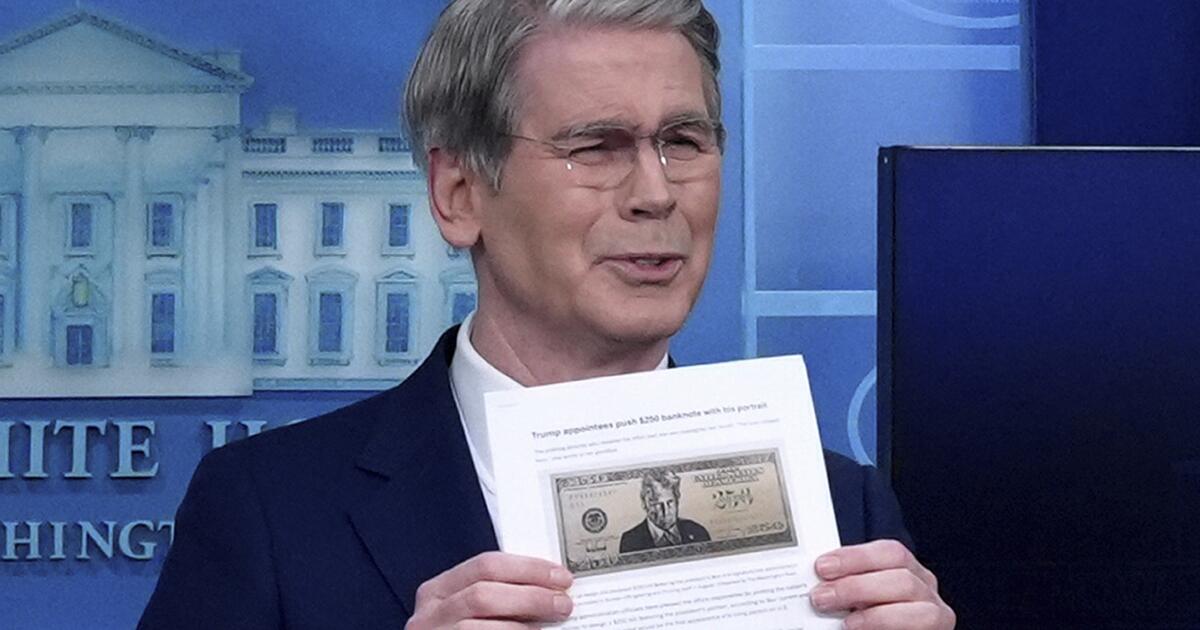
Back in February, hours after the Supreme Court overturned most of President Trump’s tariffs, Treasury Secretary Scott Bessent joshed about whether consumers would get a piece of the refunds when the government refunded the illegal duties.
Responding to a question about that at an economics conference, Bessent stated — with “a condescending smirk,” I reported at the time — “I get a feeling the American people won’t see it.”
Now that the refunds have begun, with hundreds of millions of dollars — in some cases more than a billion — going out to major retailers and manufacturers, we can test Bessent’s conclusion against reality. As it turns out, and to no one’s real surprise, he had a point.
We are not the importer of record for the large majority of items….given suppliers typically handle imports and pay relevant tariffs.
— Amazon CFO Brian Olsavsky explains why Amazon won’t be cutting tariff refund checks to most customers
Big companies have been exceedingly cagey about how they’re going to spend the refunded money. But sending checks to customers who paid higher prices because of the tariffs doesn’t seem to be in the offing. Some companies have implied that they might reduce prices, but they haven’t been very specific.
The closest any has come to clarity may be Walmart, whose top executives told investors in May that they had instituted price “rollbacks” on 7,200 items, 20% more than last year. Although they said they would devote the refund to “price investment,” which sounds like lowering prices. They said the wholesale prices on some incoming merchandise were lower than they were during the tariff period and therefore customers would pay less.
But they implied that the rollbacks reflected Walmart’s general practice of squeezing prices lower wherever they can. Anyway, Walmart announces price rollbacks on various items all the time.
Before examining what other companies are planning, here’s some background.
The duties at issue were the so-called “liberation day” tariffs Trump imposed across the globe in April last year. For months, Trump dangled the prospect of tariff refunds — actually, tariff “dividend” checks of $2,000 — in front of taxpayers. In effect, that would mean returning to taxpayers the money that his tariffs have cost them, since it’s black-letter economics that tariffs are a burden on domestic consumers, equivalent to a tax.
In his 6-3 ruling invalidating levies imposed on imports under the International Emergency Economic Powers Act of 1977, or IEEPA, Chief Justice John G. Roberts Jr. made clear that those tariffs were unconstitutional and illegal from their inception. He left no doubt that those who paid the tariffs are entitled to refunds, though he didn’t weigh in on how that should be done.
Numerous companies, including Costco, filed lawsuits or claims with the government demanding repayment. Several have announced or hinted at how much they’re getting. Apple, for example, indicated on its most recent quarterly earnings conference call that in the second quarter that ended June 31 it received more than $1.6 billion, or about half of the $3.3 billion it had previously marked as its tariff cost.
But Apple didn’t say that it would refund any portion of that sum directly to consumers, perhaps because it had never said the tariffs had prompted it to raise prices in the first place. Chief Executive Tim Cook said only that Apple plans to reinvest the refund “into the U.S.”
It’s worth noting that Apple recently raised prices on many products, but the company ascribed those increases to higher costs for memory chips, driven up by intense demand from AI firms. A company spokesman referred me to Cook’s comments on the conference call.
Amazon, which disclosed refunds of $600 million in the second quarter, says it might pass on refunds to specific customers in “a limited set of circumstances where we can trace that we passed specific import charges on to customers,” Chief Financial Officer Brian Olsavsky told investment analysts on July 30. “When we receive those refunds, we will proactively contact affected customers and automatically issue refunds to them.”
Olsavsky meant what he said when he used the term “limited.” On the July 30 earnings conference call, he said it wasn’t Amazon that paid the tariffs on most goods sold on its website.
“We are not the importer of record for the large majority of items…. given suppliers typically handle imports and pay relevant tariffs.” In other words, if you want a refund, talk to them.
As for merchandise that Amazon sold itself, Olsavsky said the company “did a lot of work forward buying and pre-positioning inventory to avoid tariff costs.” (He was trying to explain why Amazon’s tariff refund seemed so measly.) When I asked Amazon for more details on its tariff plans, its spokesperson simply referred me to Olsavsky’s remarks.
Other companies have said they’ll use tariff refunds to cover other inflationary effects, such as those due to the Iran war. They include PepsiCo and the spice merchant McCormick & Co., which both cited nontariff price increases as a target of the refunds.
Some retailers may have chosen to “eat” the tariffs without directly passing them on to customers, but it would not be surprising to learn that the charges got covered through some other corporate dollar-shifting to preserve profits — you may not have detected it at the kitchen table, but you can be sure it was there, somehow.
The invalidated tariffs cost American households $1,000 each last year and $900 each this year, the nonprofit Tax Foundation reckoned. But the components of that cost are varied and murky, making it hard to determine the best way to return the costs to consumers.
Some of the tariff effect has shown up in higher retail prices for foreign goods or domestic goods made wholly or partially from tariffed imported parts. Higher prices have a more generalized effect on economic growth, which can’t be attributed to specific products.
Trump’s disorganized tariff policies, including his on-again, off-again threats to use them to punish trade partners for actions that have nothing to do with trade, have prompted some companies to defer decisions on plant construction or other capital-intensive efforts. That has created economic headwinds, resulting in fewer jobs.
The Trump administration still seems to resent having to refund tariffs. Appearing on a webcast Tuesday hosted by right-wing figure Steve Bannon, Bessent tried to blame Democrats for pressure to refund the tariffs, even though the order came down from the Supreme Court.
“When the Democrats scream, ‘Oh, the refunds should go back to the American people,’ well, the American people had it,” Bessent said, scowling. “It was in the Treasury and it was paying down the debt.”
Is that so? The $168 billion Bessent cited as the government’s tariff take was a tax on consumers, as pretty much every qualified economist knows. It was charged to domestic importers, not to foreign exporters, and one way or another it was likely to show up at the kitchen table, often by higher prices or reduced availability of manufactured goods but sometimes in less obvious ways. I asked the Treasury Department to clarify, but it declined to comment.
According to Bessent, the tariff income was being used to “pay down the [federal] debt.” If he was implying that the money was specifically pigeonholed for an accelerated retirement of government securities, that’s untrue. The money was swept into the general fund, where it amounted to a relative pittance — one-fourteenth of the amount collected from personal income taxes in fiscal 2025.
Like any other government receipts, the tariff income was used to cover everything the government pays for, including healthcare and national security. Even if the tariff money were specifically directed at debt service, it wouldn’t have done much to defray the roughly $1 trillion in interest the government will incur this year.
By the way, what drives the national debt? To a significant extent, it’s the tax cuts that Trump signed into law in 2017, most of which went to corporations and rich Americans. To follow Bessent’s reasoning, then, ordinary American consumers got charged billions of dollars to pay for a tax cut that put pennies in their pockets.
None of this should obscure that the confusion over tariff refunds stems from federal judges’ willingness to allow Trump to collect the duties even while their legality was a live issue. Nor should anyone think that the issue has gone away: Trump has responded to the Supreme Court’s decision by conjuring up new legal rationales for new tariffs.
One unchanging feature of this battle is Trump’s determination to use tariffs to satisfy his personal pique at one trade partner or another, on grounds that have nothing at all to do with what U.S. industries, if any, need protection from foreign competition and which countries have an unduly large trade surplus with the U.S.
Refunds or not, Trump’s tariff policies will be a continuing weight on the economy, and for most Americans, that weight won’t be lifted anytime soon.

Apple, Amazon and other companies are collecting billions in tariff refunds, but their customers may not see the money.
Back in February, hours after the Supreme Court overturned most of President Trump’s tariffs, Treasury Secretary Scott Bessent joshed about whether consumers would get a piece of the refunds when the government refunded the illegal duties.
Responding to a question about that at an economics conference, Bessent stated — with “a condescending smirk,” I reported at the time — “I get a feeling the American people won’t see it.”
Now that the refunds have begun, with hundreds of millions of dollars — in some cases more than a billion — going out to major retailers and manufacturers, we can test Bessent’s conclusion against reality. As it turns out, and to no one’s real surprise, he had a point.
We are not the importer of record for the large majority of items….given suppliers typically handle imports and pay relevant tariffs.
— Amazon CFO Brian Olsavsky explains why Amazon won’t be cutting tariff refund checks to most customers
Big companies have been exceedingly cagey about how they’re going to spend the refunded money. But sending checks to customers who paid higher prices because of the tariffs doesn’t seem to be in the offing. Some companies have implied that they might reduce prices, but they haven’t been very specific.
The closest any has come to clarity may be Walmart, whose top executives told investors in May that they had instituted price “rollbacks” on 7,200 items, 20% more than last year. Although they said they would devote the refund to “price investment,” which sounds like lowering prices. They said the wholesale prices on some incoming merchandise were lower than they were during the tariff period and therefore customers would pay less.
But they implied that the rollbacks reflected Walmart’s general practice of squeezing prices lower wherever they can. Anyway, Walmart announces price rollbacks on various items all the time.
Before examining what other companies are planning, here’s some background.
The duties at issue were the so-called “liberation day” tariffs Trump imposed across the globe in April last year. For months, Trump dangled the prospect of tariff refunds — actually, tariff “dividend” checks of $2,000 — in front of taxpayers. In effect, that would mean returning to taxpayers the money that his tariffs have cost them, since it’s black-letter economics that tariffs are a burden on domestic consumers, equivalent to a tax.
In his 6-3 ruling invalidating levies imposed on imports under the International Emergency Economic Powers Act of 1977, or IEEPA, Chief Justice John G. Roberts Jr. made clear that those tariffs were unconstitutional and illegal from their inception. He left no doubt that those who paid the tariffs are entitled to refunds, though he didn’t weigh in on how that should be done.
Numerous companies, including Costco, filed lawsuits or claims with the government demanding repayment. Several have announced or hinted at how much they’re getting. Apple, for example, indicated on its most recent quarterly earnings conference call that in the second quarter that ended June 31 it received more than $1.6 billion, or about half of the $3.3 billion it had previously marked as its tariff cost.
But Apple didn’t say that it would refund any portion of that sum directly to consumers, perhaps because it had never said the tariffs had prompted it to raise prices in the first place. Chief Executive Tim Cook said only that Apple plans to reinvest the refund “into the U.S.”
It’s worth noting that Apple recently raised prices on many products, but the company ascribed those increases to higher costs for memory chips, driven up by intense demand from AI firms. A company spokesman referred me to Cook’s comments on the conference call.
Amazon, which disclosed refunds of $600 million in the second quarter, says it might pass on refunds to specific customers in “a limited set of circumstances where we can trace that we passed specific import charges on to customers,” Chief Financial Officer Brian Olsavsky told investment analysts on July 30. “When we receive those refunds, we will proactively contact affected customers and automatically issue refunds to them.”
Olsavsky meant what he said when he used the term “limited.” On the July 30 earnings conference call, he said it wasn’t Amazon that paid the tariffs on most goods sold on its website.
“We are not the importer of record for the large majority of items…. given suppliers typically handle imports and pay relevant tariffs.” In other words, if you want a refund, talk to them.
As for merchandise that Amazon sold itself, Olsavsky said the company “did a lot of work forward buying and pre-positioning inventory to avoid tariff costs.” (He was trying to explain why Amazon’s tariff refund seemed so measly.) When I asked Amazon for more details on its tariff plans, its spokesperson simply referred me to Olsavsky’s remarks.
Other companies have said they’ll use tariff refunds to cover other inflationary effects, such as those due to the Iran war. They include PepsiCo and the spice merchant McCormick & Co., which both cited nontariff price increases as a target of the refunds.
Some retailers may have chosen to “eat” the tariffs without directly passing them on to customers, but it would not be surprising to learn that the charges got covered through some other corporate dollar-shifting to preserve profits — you may not have detected it at the kitchen table, but you can be sure it was there, somehow.
The invalidated tariffs cost American households $1,000 each last year and $900 each this year, the nonprofit Tax Foundation reckoned. But the components of that cost are varied and murky, making it hard to determine the best way to return the costs to consumers.
Some of the tariff effect has shown up in higher retail prices for foreign goods or domestic goods made wholly or partially from tariffed imported parts. Higher prices have a more generalized effect on economic growth, which can’t be attributed to specific products.
Trump’s disorganized tariff policies, including his on-again, off-again threats to use them to punish trade partners for actions that have nothing to do with trade, have prompted some companies to defer decisions on plant construction or other capital-intensive efforts. That has created economic headwinds, resulting in fewer jobs.
The Trump administration still seems to resent having to refund tariffs. Appearing on a webcast Tuesday hosted by right-wing figure Steve Bannon, Bessent tried to blame Democrats for pressure to refund the tariffs, even though the order came down from the Supreme Court.
“When the Democrats scream, ‘Oh, the refunds should go back to the American people,’ well, the American people had it,” Bessent said, scowling. “It was in the Treasury and it was paying down the debt.”
Is that so? The $168 billion Bessent cited as the government’s tariff take was a tax on consumers, as pretty much every qualified economist knows. It was charged to domestic importers, not to foreign exporters, and one way or another it was likely to show up at the kitchen table, often by higher prices or reduced availability of manufactured goods but sometimes in less obvious ways. I asked the Treasury Department to clarify, but it declined to comment.
According to Bessent, the tariff income was being used to “pay down the [federal] debt.” If he was implying that the money was specifically pigeonholed for an accelerated retirement of government securities, that’s untrue. The money was swept into the general fund, where it amounted to a relative pittance — one-fourteenth of the amount collected from personal income taxes in fiscal 2025.
Like any other government receipts, the tariff income was used to cover everything the government pays for, including healthcare and national security. Even if the tariff money were specifically directed at debt service, it wouldn’t have done much to defray the roughly $1 trillion in interest the government will incur this year.
By the way, what drives the national debt? To a significant extent, it’s the tax cuts that Trump signed into law in 2017, most of which went to corporations and rich Americans. To follow Bessent’s reasoning, then, ordinary American consumers got charged billions of dollars to pay for a tax cut that put pennies in their pockets.
None of this should obscure that the confusion over tariff refunds stems from federal judges’ willingness to allow Trump to collect the duties even while their legality was a live issue. Nor should anyone think that the issue has gone away: Trump has responded to the Supreme Court’s decision by conjuring up new legal rationales for new tariffs.
One unchanging feature of this battle is Trump’s determination to use tariffs to satisfy his personal pique at one trade partner or another, on grounds that have nothing at all to do with what U.S. industries, if any, need protection from foreign competition and which countries have an unduly large trade surplus with the U.S.
Refunds or not, Trump’s tariff policies will be a continuing weight on the economy, and for most Americans, that weight won’t be lifted anytime soon.

Apple, Amazon and other companies are collecting billions in tariff refunds, but their customers may not see the money.
Back in February, hours after the Supreme Court overturned most of President Trump’s tariffs, Treasury Secretary Scott Bessent joshed about whether consumers would get a piece of the refunds when the government refunded the illegal duties.
Responding to a question about that at an economics conference, Bessent stated — with “a condescending smirk,” I reported at the time — “I get a feeling the American people won’t see it.”
Now that the refunds have begun, with hundreds of millions of dollars — in some cases more than a billion — going out to major retailers and manufacturers, we can test Bessent’s conclusion against reality. As it turns out, and to no one’s real surprise, he had a point.
We are not the importer of record for the large majority of items….given suppliers typically handle imports and pay relevant tariffs.
— Amazon CFO Brian Olsavsky explains why Amazon won’t be cutting tariff refund checks to most customers
Big companies have been exceedingly cagey about how they’re going to spend the refunded money. But sending checks to customers who paid higher prices because of the tariffs doesn’t seem to be in the offing. Some companies have implied that they might reduce prices, but they haven’t been very specific.
The closest any has come to clarity may be Walmart, whose top executives told investors in May that they had instituted price “rollbacks” on 7,200 items, 20% more than last year. Although they said they would devote the refund to “price investment,” which sounds like lowering prices. They said the wholesale prices on some incoming merchandise were lower than they were during the tariff period and therefore customers would pay less.
But they implied that the rollbacks reflected Walmart’s general practice of squeezing prices lower wherever they can. Anyway, Walmart announces price rollbacks on various items all the time.
Before examining what other companies are planning, here’s some background.
The duties at issue were the so-called “liberation day” tariffs Trump imposed across the globe in April last year. For months, Trump dangled the prospect of tariff refunds — actually, tariff “dividend” checks of $2,000 — in front of taxpayers. In effect, that would mean returning to taxpayers the money that his tariffs have cost them, since it’s black-letter economics that tariffs are a burden on domestic consumers, equivalent to a tax.
In his 6-3 ruling invalidating levies imposed on imports under the International Emergency Economic Powers Act of 1977, or IEEPA, Chief Justice John G. Roberts Jr. made clear that those tariffs were unconstitutional and illegal from their inception. He left no doubt that those who paid the tariffs are entitled to refunds, though he didn’t weigh in on how that should be done.
Numerous companies, including Costco, filed lawsuits or claims with the government demanding repayment. Several have announced or hinted at how much they’re getting. Apple, for example, indicated on its most recent quarterly earnings conference call that in the second quarter that ended June 31 it received more than $1.6 billion, or about half of the $3.3 billion it had previously marked as its tariff cost.
But Apple didn’t say that it would refund any portion of that sum directly to consumers, perhaps because it had never said the tariffs had prompted it to raise prices in the first place. Chief Executive Tim Cook said only that Apple plans to reinvest the refund “into the U.S.”
It’s worth noting that Apple recently raised prices on many products, but the company ascribed those increases to higher costs for memory chips, driven up by intense demand from AI firms. A company spokesman referred me to Cook’s comments on the conference call.
Amazon, which disclosed refunds of $600 million in the second quarter, says it might pass on refunds to specific customers in “a limited set of circumstances where we can trace that we passed specific import charges on to customers,” Chief Financial Officer Brian Olsavsky told investment analysts on July 30. “When we receive those refunds, we will proactively contact affected customers and automatically issue refunds to them.”
Olsavsky meant what he said when he used the term “limited.” On the July 30 earnings conference call, he said it wasn’t Amazon that paid the tariffs on most goods sold on its website.
“We are not the importer of record for the large majority of items…. given suppliers typically handle imports and pay relevant tariffs.” In other words, if you want a refund, talk to them.
As for merchandise that Amazon sold itself, Olsavsky said the company “did a lot of work forward buying and pre-positioning inventory to avoid tariff costs.” (He was trying to explain why Amazon’s tariff refund seemed so measly.) When I asked Amazon for more details on its tariff plans, its spokesperson simply referred me to Olsavsky’s remarks.
Other companies have said they’ll use tariff refunds to cover other inflationary effects, such as those due to the Iran war. They include PepsiCo and the spice merchant McCormick & Co., which both cited nontariff price increases as a target of the refunds.
Some retailers may have chosen to “eat” the tariffs without directly passing them on to customers, but it would not be surprising to learn that the charges got covered through some other corporate dollar-shifting to preserve profits — you may not have detected it at the kitchen table, but you can be sure it was there, somehow.
The invalidated tariffs cost American households $1,000 each last year and $900 each this year, the nonprofit Tax Foundation reckoned. But the components of that cost are varied and murky, making it hard to determine the best way to return the costs to consumers.
Some of the tariff effect has shown up in higher retail prices for foreign goods or domestic goods made wholly or partially from tariffed imported parts. Higher prices have a more generalized effect on economic growth, which can’t be attributed to specific products.
Trump’s disorganized tariff policies, including his on-again, off-again threats to use them to punish trade partners for actions that have nothing to do with trade, have prompted some companies to defer decisions on plant construction or other capital-intensive efforts. That has created economic headwinds, resulting in fewer jobs.
The Trump administration still seems to resent having to refund tariffs. Appearing on a webcast Tuesday hosted by right-wing figure Steve Bannon, Bessent tried to blame Democrats for pressure to refund the tariffs, even though the order came down from the Supreme Court.
“When the Democrats scream, ‘Oh, the refunds should go back to the American people,’ well, the American people had it,” Bessent said, scowling. “It was in the Treasury and it was paying down the debt.”
Is that so? The $168 billion Bessent cited as the government’s tariff take was a tax on consumers, as pretty much every qualified economist knows. It was charged to domestic importers, not to foreign exporters, and one way or another it was likely to show up at the kitchen table, often by higher prices or reduced availability of manufactured goods but sometimes in less obvious ways. I asked the Treasury Department to clarify, but it declined to comment.
According to Bessent, the tariff income was being used to “pay down the [federal] debt.” If he was implying that the money was specifically pigeonholed for an accelerated retirement of government securities, that’s untrue. The money was swept into the general fund, where it amounted to a relative pittance — one-fourteenth of the amount collected from personal income taxes in fiscal 2025.
Like any other government receipts, the tariff income was used to cover everything the government pays for, including healthcare and national security. Even if the tariff money were specifically directed at debt service, it wouldn’t have done much to defray the roughly $1 trillion in interest the government will incur this year.
By the way, what drives the national debt? To a significant extent, it’s the tax cuts that Trump signed into law in 2017, most of which went to corporations and rich Americans. To follow Bessent’s reasoning, then, ordinary American consumers got charged billions of dollars to pay for a tax cut that put pennies in their pockets.
None of this should obscure that the confusion over tariff refunds stems from federal judges’ willingness to allow Trump to collect the duties even while their legality was a live issue. Nor should anyone think that the issue has gone away: Trump has responded to the Supreme Court’s decision by conjuring up new legal rationales for new tariffs.
One unchanging feature of this battle is Trump’s determination to use tariffs to satisfy his personal pique at one trade partner or another, on grounds that have nothing at all to do with what U.S. industries, if any, need protection from foreign competition and which countries have an unduly large trade surplus with the U.S.
Refunds or not, Trump’s tariff policies will be a continuing weight on the economy, and for most Americans, that weight won’t be lifted anytime soon.
Apple, Amazon and other companies are collecting billions in tariff refunds, but their customers may not see the money.
Back in February, hours after the Supreme Court overturned most of President Trump’s tariffs, Treasury Secretary Scott Bessent joshed about whether consumers would get a piece of the refunds when the government refunded the illegal duties.
Responding to a question about that at an economics conference, Bessent stated — with “a condescending smirk,” I reported at the time — “I get a feeling the American people won’t see it.”
Now that the refunds have begun, with hundreds of millions of dollars — in some cases more than a billion — going out to major retailers and manufacturers, we can test Bessent’s conclusion against reality. As it turns out, and to no one’s real surprise, he had a point.
We are not the importer of record for the large majority of items….given suppliers typically handle imports and pay relevant tariffs.
— Amazon CFO Brian Olsavsky explains why Amazon won’t be cutting tariff refund checks to most customers
Big companies have been exceedingly cagey about how they’re going to spend the refunded money. But sending checks to customers who paid higher prices because of the tariffs doesn’t seem to be in the offing. Some companies have implied that they might reduce prices, but they haven’t been very specific.
The closest any has come to clarity may be Walmart, whose top executives told investors in May that they had instituted price “rollbacks” on 7,200 items, 20% more than last year. Although they said they would devote the refund to “price investment,” which sounds like lowering prices. They said the wholesale prices on some incoming merchandise were lower than they were during the tariff period and therefore customers would pay less.
But they implied that the rollbacks reflected Walmart’s general practice of squeezing prices lower wherever they can. Anyway, Walmart announces price rollbacks on various items all the time.
Before examining what other companies are planning, here’s some background.
The duties at issue were the so-called “liberation day” tariffs Trump imposed across the globe in April last year. For months, Trump dangled the prospect of tariff refunds — actually, tariff “dividend” checks of $2,000 — in front of taxpayers. In effect, that would mean returning to taxpayers the money that his tariffs have cost them, since it’s black-letter economics that tariffs are a burden on domestic consumers, equivalent to a tax.
In his 6-3 ruling invalidating levies imposed on imports under the International Emergency Economic Powers Act of 1977, or IEEPA, Chief Justice John G. Roberts Jr. made clear that those tariffs were unconstitutional and illegal from their inception. He left no doubt that those who paid the tariffs are entitled to refunds, though he didn’t weigh in on how that should be done.
Numerous companies, including Costco, filed lawsuits or claims with the government demanding repayment. Several have announced or hinted at how much they’re getting. Apple, for example, indicated on its most recent quarterly earnings conference call that in the second quarter that ended June 31 it received more than $1.6 billion, or about half of the $3.3 billion it had previously marked as its tariff cost.
But Apple didn’t say that it would refund any portion of that sum directly to consumers, perhaps because it had never said the tariffs had prompted it to raise prices in the first place. Chief Executive Tim Cook said only that Apple plans to reinvest the refund “into the U.S.”
It’s worth noting that Apple recently raised prices on many products, but the company ascribed those increases to higher costs for memory chips, driven up by intense demand from AI firms. A company spokesman referred me to Cook’s comments on the conference call.
Amazon, which disclosed refunds of $600 million in the second quarter, says it might pass on refunds to specific customers in “a limited set of circumstances where we can trace that we passed specific import charges on to customers,” Chief Financial Officer Brian Olsavsky told investment analysts on July 30. “When we receive those refunds, we will proactively contact affected customers and automatically issue refunds to them.”
Olsavsky meant what he said when he used the term “limited.” On the July 30 earnings conference call, he said it wasn’t Amazon that paid the tariffs on most goods sold on its website.
“We are not the importer of record for the large majority of items…. given suppliers typically handle imports and pay relevant tariffs.” In other words, if you want a refund, talk to them.
As for merchandise that Amazon sold itself, Olsavsky said the company “did a lot of work forward buying and pre-positioning inventory to avoid tariff costs.” (He was trying to explain why Amazon’s tariff refund seemed so measly.) When I asked Amazon for more details on its tariff plans, its spokesperson simply referred me to Olsavsky’s remarks.
Other companies have said they’ll use tariff refunds to cover other inflationary effects, such as those due to the Iran war. They include PepsiCo and the spice merchant McCormick & Co., which both cited nontariff price increases as a target of the refunds.
Some retailers may have chosen to “eat” the tariffs without directly passing them on to customers, but it would not be surprising to learn that the charges got covered through some other corporate dollar-shifting to preserve profits — you may not have detected it at the kitchen table, but you can be sure it was there, somehow.
The invalidated tariffs cost American households $1,000 each last year and $900 each this year, the nonprofit Tax Foundation reckoned. But the components of that cost are varied and murky, making it hard to determine the best way to return the costs to consumers.
Some of the tariff effect has shown up in higher retail prices for foreign goods or domestic goods made wholly or partially from tariffed imported parts. Higher prices have a more generalized effect on economic growth, which can’t be attributed to specific products.
Trump’s disorganized tariff policies, including his on-again, off-again threats to use them to punish trade partners for actions that have nothing to do with trade, have prompted some companies to defer decisions on plant construction or other capital-intensive efforts. That has created economic headwinds, resulting in fewer jobs.
The Trump administration still seems to resent having to refund tariffs. Appearing on a webcast Tuesday hosted by right-wing figure Steve Bannon, Bessent tried to blame Democrats for pressure to refund the tariffs, even though the order came down from the Supreme Court.
“When the Democrats scream, ‘Oh, the refunds should go back to the American people,’ well, the American people had it,” Bessent said, scowling. “It was in the Treasury and it was paying down the debt.”
Is that so? The $168 billion Bessent cited as the government’s tariff take was a tax on consumers, as pretty much every qualified economist knows. It was charged to domestic importers, not to foreign exporters, and one way or another it was likely to show up at the kitchen table, often by higher prices or reduced availability of manufactured goods but sometimes in less obvious ways. I asked the Treasury Department to clarify, but it declined to comment.
According to Bessent, the tariff income was being used to “pay down the [federal] debt.” If he was implying that the money was specifically pigeonholed for an accelerated retirement of government securities, that’s untrue. The money was swept into the general fund, where it amounted to a relative pittance — one-fourteenth of the amount collected from personal income taxes in fiscal 2025.
Like any other government receipts, the tariff income was used to cover everything the government pays for, including healthcare and national security. Even if the tariff money were specifically directed at debt service, it wouldn’t have done much to defray the roughly $1 trillion in interest the government will incur this year.
By the way, what drives the national debt? To a significant extent, it’s the tax cuts that Trump signed into law in 2017, most of which went to corporations and rich Americans. To follow Bessent’s reasoning, then, ordinary American consumers got charged billions of dollars to pay for a tax cut that put pennies in their pockets.
None of this should obscure that the confusion over tariff refunds stems from federal judges’ willingness to allow Trump to collect the duties even while their legality was a live issue. Nor should anyone think that the issue has gone away: Trump has responded to the Supreme Court’s decision by conjuring up new legal rationales for new tariffs.
One unchanging feature of this battle is Trump’s determination to use tariffs to satisfy his personal pique at one trade partner or another, on grounds that have nothing at all to do with what U.S. industries, if any, need protection from foreign competition and which countries have an unduly large trade surplus with the U.S.
Refunds or not, Trump’s tariff policies will be a continuing weight on the economy, and for most Americans, that weight won’t be lifted anytime soon.

Apple, Amazon and other companies are collecting billions in tariff refunds, but their customers may not see the money.
Back in February, hours after the Supreme Court overturned most of President Trump’s tariffs, Treasury Secretary Scott Bessent joshed about whether consumers would get a piece of the refunds when the government refunded the illegal duties.
Responding to a question about that at an economics conference, Bessent stated — with “a condescending smirk,” I reported at the time — “I get a feeling the American people won’t see it.”
Now that the refunds have begun, with hundreds of millions of dollars — in some cases more than a billion — going out to major retailers and manufacturers, we can test Bessent’s conclusion against reality. As it turns out, and to no one’s real surprise, he had a point.
We are not the importer of record for the large majority of items….given suppliers typically handle imports and pay relevant tariffs.
— Amazon CFO Brian Olsavsky explains why Amazon won’t be cutting tariff refund checks to most customers
Big companies have been exceedingly cagey about how they’re going to spend the refunded money. But sending checks to customers who paid higher prices because of the tariffs doesn’t seem to be in the offing. Some companies have implied that they might reduce prices, but they haven’t been very specific.
The closest any has come to clarity may be Walmart, whose top executives told investors in May that they had instituted price “rollbacks” on 7,200 items, 20% more than last year. Although they said they would devote the refund to “price investment,” which sounds like lowering prices. They said the wholesale prices on some incoming merchandise were lower than they were during the tariff period and therefore customers would pay less.
But they implied that the rollbacks reflected Walmart’s general practice of squeezing prices lower wherever they can. Anyway, Walmart announces price rollbacks on various items all the time.
Before examining what other companies are planning, here’s some background.
The duties at issue were the so-called “liberation day” tariffs Trump imposed across the globe in April last year. For months, Trump dangled the prospect of tariff refunds — actually, tariff “dividend” checks of $2,000 — in front of taxpayers. In effect, that would mean returning to taxpayers the money that his tariffs have cost them, since it’s black-letter economics that tariffs are a burden on domestic consumers, equivalent to a tax.
In his 6-3 ruling invalidating levies imposed on imports under the International Emergency Economic Powers Act of 1977, or IEEPA, Chief Justice John G. Roberts Jr. made clear that those tariffs were unconstitutional and illegal from their inception. He left no doubt that those who paid the tariffs are entitled to refunds, though he didn’t weigh in on how that should be done.
Numerous companies, including Costco, filed lawsuits or claims with the government demanding repayment. Several have announced or hinted at how much they’re getting. Apple, for example, indicated on its most recent quarterly earnings conference call that in the second quarter that ended June 31 it received more than $1.6 billion, or about half of the $3.3 billion it had previously marked as its tariff cost.
But Apple didn’t say that it would refund any portion of that sum directly to consumers, perhaps because it had never said the tariffs had prompted it to raise prices in the first place. Chief Executive Tim Cook said only that Apple plans to reinvest the refund “into the U.S.”
It’s worth noting that Apple recently raised prices on many products, but the company ascribed those increases to higher costs for memory chips, driven up by intense demand from AI firms. A company spokesman referred me to Cook’s comments on the conference call.
Amazon, which disclosed refunds of $600 million in the second quarter, says it might pass on refunds to specific customers in “a limited set of circumstances where we can trace that we passed specific import charges on to customers,” Chief Financial Officer Brian Olsavsky told investment analysts on July 30. “When we receive those refunds, we will proactively contact affected customers and automatically issue refunds to them.”
Olsavsky meant what he said when he used the term “limited.” On the July 30 earnings conference call, he said it wasn’t Amazon that paid the tariffs on most goods sold on its website.
“We are not the importer of record for the large majority of items…. given suppliers typically handle imports and pay relevant tariffs.” In other words, if you want a refund, talk to them.
As for merchandise that Amazon sold itself, Olsavsky said the company “did a lot of work forward buying and pre-positioning inventory to avoid tariff costs.” (He was trying to explain why Amazon’s tariff refund seemed so measly.) When I asked Amazon for more details on its tariff plans, its spokesperson simply referred me to Olsavsky’s remarks.
Other companies have said they’ll use tariff refunds to cover other inflationary effects, such as those due to the Iran war. They include PepsiCo and the spice merchant McCormick & Co., which both cited nontariff price increases as a target of the refunds.
Some retailers may have chosen to “eat” the tariffs without directly passing them on to customers, but it would not be surprising to learn that the charges got covered through some other corporate dollar-shifting to preserve profits — you may not have detected it at the kitchen table, but you can be sure it was there, somehow.
The invalidated tariffs cost American households $1,000 each last year and $900 each this year, the nonprofit Tax Foundation reckoned. But the components of that cost are varied and murky, making it hard to determine the best way to return the costs to consumers.
Some of the tariff effect has shown up in higher retail prices for foreign goods or domestic goods made wholly or partially from tariffed imported parts. Higher prices have a more generalized effect on economic growth, which can’t be attributed to specific products.
Trump’s disorganized tariff policies, including his on-again, off-again threats to use them to punish trade partners for actions that have nothing to do with trade, have prompted some companies to defer decisions on plant construction or other capital-intensive efforts. That has created economic headwinds, resulting in fewer jobs.
The Trump administration still seems to resent having to refund tariffs. Appearing on a webcast Tuesday hosted by right-wing figure Steve Bannon, Bessent tried to blame Democrats for pressure to refund the tariffs, even though the order came down from the Supreme Court.
“When the Democrats scream, ‘Oh, the refunds should go back to the American people,’ well, the American people had it,” Bessent said, scowling. “It was in the Treasury and it was paying down the debt.”
Is that so? The $168 billion Bessent cited as the government’s tariff take was a tax on consumers, as pretty much every qualified economist knows. It was charged to domestic importers, not to foreign exporters, and one way or another it was likely to show up at the kitchen table, often by higher prices or reduced availability of manufactured goods but sometimes in less obvious ways. I asked the Treasury Department to clarify, but it declined to comment.
According to Bessent, the tariff income was being used to “pay down the [federal] debt.” If he was implying that the money was specifically pigeonholed for an accelerated retirement of government securities, that’s untrue. The money was swept into the general fund, where it amounted to a relative pittance — one-fourteenth of the amount collected from personal income taxes in fiscal 2025.
Like any other government receipts, the tariff income was used to cover everything the government pays for, including healthcare and national security. Even if the tariff money were specifically directed at debt service, it wouldn’t have done much to defray the roughly $1 trillion in interest the government will incur this year.
By the way, what drives the national debt? To a significant extent, it’s the tax cuts that Trump signed into law in 2017, most of which went to corporations and rich Americans. To follow Bessent’s reasoning, then, ordinary American consumers got charged billions of dollars to pay for a tax cut that put pennies in their pockets.
None of this should obscure that the confusion over tariff refunds stems from federal judges’ willingness to allow Trump to collect the duties even while their legality was a live issue. Nor should anyone think that the issue has gone away: Trump has responded to the Supreme Court’s decision by conjuring up new legal rationales for new tariffs.
One unchanging feature of this battle is Trump’s determination to use tariffs to satisfy his personal pique at one trade partner or another, on grounds that have nothing at all to do with what U.S. industries, if any, need protection from foreign competition and which countries have an unduly large trade surplus with the U.S.
Refunds or not, Trump’s tariff policies will be a continuing weight on the economy, and for most Americans, that weight won’t be lifted anytime soon.
Apple, Amazon and other companies are collecting billions in tariff refunds, but their customers may not see the money.
Back in February, hours after the Supreme Court overturned most of President Trump’s tariffs, Treasury Secretary Scott Bessent joshed about whether consumers would get a piece of the refunds when the government refunded the illegal duties.
Responding to a question about that at an economics conference, Bessent stated — with “a condescending smirk,” I reported at the time — “I get a feeling the American people won’t see it.”
Now that the refunds have begun, with hundreds of millions of dollars — in some cases more than a billion — going out to major retailers and manufacturers, we can test Bessent’s conclusion against reality. As it turns out, and to no one’s real surprise, he had a point.
We are not the importer of record for the large majority of items….given suppliers typically handle imports and pay relevant tariffs.
— Amazon CFO Brian Olsavsky explains why Amazon won’t be cutting tariff refund checks to most customers
Big companies have been exceedingly cagey about how they’re going to spend the refunded money. But sending checks to customers who paid higher prices because of the tariffs doesn’t seem to be in the offing. Some companies have implied that they might reduce prices, but they haven’t been very specific.
The closest any has come to clarity may be Walmart, whose top executives told investors in May that they had instituted price “rollbacks” on 7,200 items, 20% more than last year. Although they said they would devote the refund to “price investment,” which sounds like lowering prices. They said the wholesale prices on some incoming merchandise were lower than they were during the tariff period and therefore customers would pay less.
But they implied that the rollbacks reflected Walmart’s general practice of squeezing prices lower wherever they can. Anyway, Walmart announces price rollbacks on various items all the time.
Before examining what other companies are planning, here’s some background.
The duties at issue were the so-called “liberation day” tariffs Trump imposed across the globe in April last year. For months, Trump dangled the prospect of tariff refunds — actually, tariff “dividend” checks of $2,000 — in front of taxpayers. In effect, that would mean returning to taxpayers the money that his tariffs have cost them, since it’s black-letter economics that tariffs are a burden on domestic consumers, equivalent to a tax.
In his 6-3 ruling invalidating levies imposed on imports under the International Emergency Economic Powers Act of 1977, or IEEPA, Chief Justice John G. Roberts Jr. made clear that those tariffs were unconstitutional and illegal from their inception. He left no doubt that those who paid the tariffs are entitled to refunds, though he didn’t weigh in on how that should be done.
Numerous companies, including Costco, filed lawsuits or claims with the government demanding repayment. Several have announced or hinted at how much they’re getting. Apple, for example, indicated on its most recent quarterly earnings conference call that in the second quarter that ended June 31 it received more than $1.6 billion, or about half of the $3.3 billion it had previously marked as its tariff cost.
But Apple didn’t say that it would refund any portion of that sum directly to consumers, perhaps because it had never said the tariffs had prompted it to raise prices in the first place. Chief Executive Tim Cook said only that Apple plans to reinvest the refund “into the U.S.”
It’s worth noting that Apple recently raised prices on many products, but the company ascribed those increases to higher costs for memory chips, driven up by intense demand from AI firms. A company spokesman referred me to Cook’s comments on the conference call.
Amazon, which disclosed refunds of $600 million in the second quarter, says it might pass on refunds to specific customers in “a limited set of circumstances where we can trace that we passed specific import charges on to customers,” Chief Financial Officer Brian Olsavsky told investment analysts on July 30. “When we receive those refunds, we will proactively contact affected customers and automatically issue refunds to them.”
Olsavsky meant what he said when he used the term “limited.” On the July 30 earnings conference call, he said it wasn’t Amazon that paid the tariffs on most goods sold on its website.
“We are not the importer of record for the large majority of items…. given suppliers typically handle imports and pay relevant tariffs.” In other words, if you want a refund, talk to them.
As for merchandise that Amazon sold itself, Olsavsky said the company “did a lot of work forward buying and pre-positioning inventory to avoid tariff costs.” (He was trying to explain why Amazon’s tariff refund seemed so measly.) When I asked Amazon for more details on its tariff plans, its spokesperson simply referred me to Olsavsky’s remarks.
Other companies have said they’ll use tariff refunds to cover other inflationary effects, such as those due to the Iran war. They include PepsiCo and the spice merchant McCormick & Co., which both cited nontariff price increases as a target of the refunds.
Some retailers may have chosen to “eat” the tariffs without directly passing them on to customers, but it would not be surprising to learn that the charges got covered through some other corporate dollar-shifting to preserve profits — you may not have detected it at the kitchen table, but you can be sure it was there, somehow.
The invalidated tariffs cost American households $1,000 each last year and $900 each this year, the nonprofit Tax Foundation reckoned. But the components of that cost are varied and murky, making it hard to determine the best way to return the costs to consumers.
Some of the tariff effect has shown up in higher retail prices for foreign goods or domestic goods made wholly or partially from tariffed imported parts. Higher prices have a more generalized effect on economic growth, which can’t be attributed to specific products.
Trump’s disorganized tariff policies, including his on-again, off-again threats to use them to punish trade partners for actions that have nothing to do with trade, have prompted some companies to defer decisions on plant construction or other capital-intensive efforts. That has created economic headwinds, resulting in fewer jobs.
The Trump administration still seems to resent having to refund tariffs. Appearing on a webcast Tuesday hosted by right-wing figure Steve Bannon, Bessent tried to blame Democrats for pressure to refund the tariffs, even though the order came down from the Supreme Court.
“When the Democrats scream, ‘Oh, the refunds should go back to the American people,’ well, the American people had it,” Bessent said, scowling. “It was in the Treasury and it was paying down the debt.”
Is that so? The $168 billion Bessent cited as the government’s tariff take was a tax on consumers, as pretty much every qualified economist knows. It was charged to domestic importers, not to foreign exporters, and one way or another it was likely to show up at the kitchen table, often by higher prices or reduced availability of manufactured goods but sometimes in less obvious ways. I asked the Treasury Department to clarify, but it declined to comment.
According to Bessent, the tariff income was being used to “pay down the [federal] debt.” If he was implying that the money was specifically pigeonholed for an accelerated retirement of government securities, that’s untrue. The money was swept into the general fund, where it amounted to a relative pittance — one-fourteenth of the amount collected from personal income taxes in fiscal 2025.
Like any other government receipts, the tariff income was used to cover everything the government pays for, including healthcare and national security. Even if the tariff money were specifically directed at debt service, it wouldn’t have done much to defray the roughly $1 trillion in interest the government will incur this year.
By the way, what drives the national debt? To a significant extent, it’s the tax cuts that Trump signed into law in 2017, most of which went to corporations and rich Americans. To follow Bessent’s reasoning, then, ordinary American consumers got charged billions of dollars to pay for a tax cut that put pennies in their pockets.
None of this should obscure that the confusion over tariff refunds stems from federal judges’ willingness to allow Trump to collect the duties even while their legality was a live issue. Nor should anyone think that the issue has gone away: Trump has responded to the Supreme Court’s decision by conjuring up new legal rationales for new tariffs.
One unchanging feature of this battle is Trump’s determination to use tariffs to satisfy his personal pique at one trade partner or another, on grounds that have nothing at all to do with what U.S. industries, if any, need protection from foreign competition and which countries have an unduly large trade surplus with the U.S.
Refunds or not, Trump’s tariff policies will be a continuing weight on the economy, and for most Americans, that weight won’t be lifted anytime soon.
Apple, Amazon and other companies are collecting billions in tariff refunds, but their customers may not see the money.
Back in February, hours after the Supreme Court overturned most of President Trump’s tariffs, Treasury Secretary Scott Bessent joshed about whether consumers would get a piece of the refunds when the government refunded the illegal duties.
Responding to a question about that at an economics conference, Bessent stated — with “a condescending smirk,” I reported at the time — “I get a feeling the American people won’t see it.”
Now that the refunds have begun, with hundreds of millions of dollars — in some cases more than a billion — going out to major retailers and manufacturers, we can test Bessent’s conclusion against reality. As it turns out, and to no one’s real surprise, he had a point.
We are not the importer of record for the large majority of items….given suppliers typically handle imports and pay relevant tariffs.
— Amazon CFO Brian Olsavsky explains why Amazon won’t be cutting tariff refund checks to most customers
Big companies have been exceedingly cagey about how they’re going to spend the refunded money. But sending checks to customers who paid higher prices because of the tariffs doesn’t seem to be in the offing. Some companies have implied that they might reduce prices, but they haven’t been very specific.
The closest any has come to clarity may be Walmart, whose top executives told investors in May that they had instituted price “rollbacks” on 7,200 items, 20% more than last year. Although they said they would devote the refund to “price investment,” which sounds like lowering prices. They said the wholesale prices on some incoming merchandise were lower than they were during the tariff period and therefore customers would pay less.
But they implied that the rollbacks reflected Walmart’s general practice of squeezing prices lower wherever they can. Anyway, Walmart announces price rollbacks on various items all the time.
Before examining what other companies are planning, here’s some background.
The duties at issue were the so-called “liberation day” tariffs Trump imposed across the globe in April last year. For months, Trump dangled the prospect of tariff refunds — actually, tariff “dividend” checks of $2,000 — in front of taxpayers. In effect, that would mean returning to taxpayers the money that his tariffs have cost them, since it’s black-letter economics that tariffs are a burden on domestic consumers, equivalent to a tax.
In his 6-3 ruling invalidating levies imposed on imports under the International Emergency Economic Powers Act of 1977, or IEEPA, Chief Justice John G. Roberts Jr. made clear that those tariffs were unconstitutional and illegal from their inception. He left no doubt that those who paid the tariffs are entitled to refunds, though he didn’t weigh in on how that should be done.
Numerous companies, including Costco, filed lawsuits or claims with the government demanding repayment. Several have announced or hinted at how much they’re getting. Apple, for example, indicated on its most recent quarterly earnings conference call that in the second quarter that ended June 31 it received more than $1.6 billion, or about half of the $3.3 billion it had previously marked as its tariff cost.
But Apple didn’t say that it would refund any portion of that sum directly to consumers, perhaps because it had never said the tariffs had prompted it to raise prices in the first place. Chief Executive Tim Cook said only that Apple plans to reinvest the refund “into the U.S.”
It’s worth noting that Apple recently raised prices on many products, but the company ascribed those increases to higher costs for memory chips, driven up by intense demand from AI firms. A company spokesman referred me to Cook’s comments on the conference call.
Amazon, which disclosed refunds of $600 million in the second quarter, says it might pass on refunds to specific customers in “a limited set of circumstances where we can trace that we passed specific import charges on to customers,” Chief Financial Officer Brian Olsavsky told investment analysts on July 30. “When we receive those refunds, we will proactively contact affected customers and automatically issue refunds to them.”
Olsavsky meant what he said when he used the term “limited.” On the July 30 earnings conference call, he said it wasn’t Amazon that paid the tariffs on most goods sold on its website.
“We are not the importer of record for the large majority of items…. given suppliers typically handle imports and pay relevant tariffs.” In other words, if you want a refund, talk to them.
As for merchandise that Amazon sold itself, Olsavsky said the company “did a lot of work forward buying and pre-positioning inventory to avoid tariff costs.” (He was trying to explain why Amazon’s tariff refund seemed so measly.) When I asked Amazon for more details on its tariff plans, its spokesperson simply referred me to Olsavsky’s remarks.
Other companies have said they’ll use tariff refunds to cover other inflationary effects, such as those due to the Iran war. They include PepsiCo and the spice merchant McCormick & Co., which both cited nontariff price increases as a target of the refunds.
Some retailers may have chosen to “eat” the tariffs without directly passing them on to customers, but it would not be surprising to learn that the charges got covered through some other corporate dollar-shifting to preserve profits — you may not have detected it at the kitchen table, but you can be sure it was there, somehow.
The invalidated tariffs cost American households $1,000 each last year and $900 each this year, the nonprofit Tax Foundation reckoned. But the components of that cost are varied and murky, making it hard to determine the best way to return the costs to consumers.
Some of the tariff effect has shown up in higher retail prices for foreign goods or domestic goods made wholly or partially from tariffed imported parts. Higher prices have a more generalized effect on economic growth, which can’t be attributed to specific products.
Trump’s disorganized tariff policies, including his on-again, off-again threats to use them to punish trade partners for actions that have nothing to do with trade, have prompted some companies to defer decisions on plant construction or other capital-intensive efforts. That has created economic headwinds, resulting in fewer jobs.
The Trump administration still seems to resent having to refund tariffs. Appearing on a webcast Tuesday hosted by right-wing figure Steve Bannon, Bessent tried to blame Democrats for pressure to refund the tariffs, even though the order came down from the Supreme Court.
“When the Democrats scream, ‘Oh, the refunds should go back to the American people,’ well, the American people had it,” Bessent said, scowling. “It was in the Treasury and it was paying down the debt.”
Is that so? The $168 billion Bessent cited as the government’s tariff take was a tax on consumers, as pretty much every qualified economist knows. It was charged to domestic importers, not to foreign exporters, and one way or another it was likely to show up at the kitchen table, often by higher prices or reduced availability of manufactured goods but sometimes in less obvious ways. I asked the Treasury Department to clarify, but it declined to comment.
According to Bessent, the tariff income was being used to “pay down the [federal] debt.” If he was implying that the money was specifically pigeonholed for an accelerated retirement of government securities, that’s untrue. The money was swept into the general fund, where it amounted to a relative pittance — one-fourteenth of the amount collected from personal income taxes in fiscal 2025.
Like any other government receipts, the tariff income was used to cover everything the government pays for, including healthcare and national security. Even if the tariff money were specifically directed at debt service, it wouldn’t have done much to defray the roughly $1 trillion in interest the government will incur this year.
By the way, what drives the national debt? To a significant extent, it’s the tax cuts that Trump signed into law in 2017, most of which went to corporations and rich Americans. To follow Bessent’s reasoning, then, ordinary American consumers got charged billions of dollars to pay for a tax cut that put pennies in their pockets.
None of this should obscure that the confusion over tariff refunds stems from federal judges’ willingness to allow Trump to collect the duties even while their legality was a live issue. Nor should anyone think that the issue has gone away: Trump has responded to the Supreme Court’s decision by conjuring up new legal rationales for new tariffs.
One unchanging feature of this battle is Trump’s determination to use tariffs to satisfy his personal pique at one trade partner or another, on grounds that have nothing at all to do with what U.S. industries, if any, need protection from foreign competition and which countries have an unduly large trade surplus with the U.S.
Refunds or not, Trump’s tariff policies will be a continuing weight on the economy, and for most Americans, that weight won’t be lifted anytime soon.
Apple, Amazon and other companies are collecting billions in tariff refunds, but their customers may not see the money.
Back in February, hours after the Supreme Court overturned most of President Trump’s tariffs, Treasury Secretary Scott Bessent joshed about whether consumers would get a piece of the refunds when the government refunded the illegal duties.
Responding to a question about that at an economics conference, Bessent stated — with “a condescending smirk,” I reported at the time — “I get a feeling the American people won’t see it.”
Now that the refunds have begun, with hundreds of millions of dollars — in some cases more than a billion — going out to major retailers and manufacturers, we can test Bessent’s conclusion against reality. As it turns out, and to no one’s real surprise, he had a point.
We are not the importer of record for the large majority of items….given suppliers typically handle imports and pay relevant tariffs.
— Amazon CFO Brian Olsavsky explains why Amazon won’t be cutting tariff refund checks to most customers
Big companies have been exceedingly cagey about how they’re going to spend the refunded money. But sending checks to customers who paid higher prices because of the tariffs doesn’t seem to be in the offing. Some companies have implied that they might reduce prices, but they haven’t been very specific.
The closest any has come to clarity may be Walmart, whose top executives told investors in May that they had instituted price “rollbacks” on 7,200 items, 20% more than last year. Although they said they would devote the refund to “price investment,” which sounds like lowering prices. They said the wholesale prices on some incoming merchandise were lower than they were during the tariff period and therefore customers would pay less.
But they implied that the rollbacks reflected Walmart’s general practice of squeezing prices lower wherever they can. Anyway, Walmart announces price rollbacks on various items all the time.
Before examining what other companies are planning, here’s some background.
The duties at issue were the so-called “liberation day” tariffs Trump imposed across the globe in April last year. For months, Trump dangled the prospect of tariff refunds — actually, tariff “dividend” checks of $2,000 — in front of taxpayers. In effect, that would mean returning to taxpayers the money that his tariffs have cost them, since it’s black-letter economics that tariffs are a burden on domestic consumers, equivalent to a tax.
In his 6-3 ruling invalidating levies imposed on imports under the International Emergency Economic Powers Act of 1977, or IEEPA, Chief Justice John G. Roberts Jr. made clear that those tariffs were unconstitutional and illegal from their inception. He left no doubt that those who paid the tariffs are entitled to refunds, though he didn’t weigh in on how that should be done.
Numerous companies, including Costco, filed lawsuits or claims with the government demanding repayment. Several have announced or hinted at how much they’re getting. Apple, for example, indicated on its most recent quarterly earnings conference call that in the second quarter that ended June 31 it received more than $1.6 billion, or about half of the $3.3 billion it had previously marked as its tariff cost.
But Apple didn’t say that it would refund any portion of that sum directly to consumers, perhaps because it had never said the tariffs had prompted it to raise prices in the first place. Chief Executive Tim Cook said only that Apple plans to reinvest the refund “into the U.S.”
It’s worth noting that Apple recently raised prices on many products, but the company ascribed those increases to higher costs for memory chips, driven up by intense demand from AI firms. A company spokesman referred me to Cook’s comments on the conference call.
Amazon, which disclosed refunds of $600 million in the second quarter, says it might pass on refunds to specific customers in “a limited set of circumstances where we can trace that we passed specific import charges on to customers,” Chief Financial Officer Brian Olsavsky told investment analysts on July 30. “When we receive those refunds, we will proactively contact affected customers and automatically issue refunds to them.”
Olsavsky meant what he said when he used the term “limited.” On the July 30 earnings conference call, he said it wasn’t Amazon that paid the tariffs on most goods sold on its website.
“We are not the importer of record for the large majority of items…. given suppliers typically handle imports and pay relevant tariffs.” In other words, if you want a refund, talk to them.
As for merchandise that Amazon sold itself, Olsavsky said the company “did a lot of work forward buying and pre-positioning inventory to avoid tariff costs.” (He was trying to explain why Amazon’s tariff refund seemed so measly.) When I asked Amazon for more details on its tariff plans, its spokesperson simply referred me to Olsavsky’s remarks.
Other companies have said they’ll use tariff refunds to cover other inflationary effects, such as those due to the Iran war. They include PepsiCo and the spice merchant McCormick & Co., which both cited nontariff price increases as a target of the refunds.
Some retailers may have chosen to “eat” the tariffs without directly passing them on to customers, but it would not be surprising to learn that the charges got covered through some other corporate dollar-shifting to preserve profits — you may not have detected it at the kitchen table, but you can be sure it was there, somehow.
The invalidated tariffs cost American households $1,000 each last year and $900 each this year, the nonprofit Tax Foundation reckoned. But the components of that cost are varied and murky, making it hard to determine the best way to return the costs to consumers.
Some of the tariff effect has shown up in higher retail prices for foreign goods or domestic goods made wholly or partially from tariffed imported parts. Higher prices have a more generalized effect on economic growth, which can’t be attributed to specific products.
Trump’s disorganized tariff policies, including his on-again, off-again threats to use them to punish trade partners for actions that have nothing to do with trade, have prompted some companies to defer decisions on plant construction or other capital-intensive efforts. That has created economic headwinds, resulting in fewer jobs.
The Trump administration still seems to resent having to refund tariffs. Appearing on a webcast Tuesday hosted by right-wing figure Steve Bannon, Bessent tried to blame Democrats for pressure to refund the tariffs, even though the order came down from the Supreme Court.
“When the Democrats scream, ‘Oh, the refunds should go back to the American people,’ well, the American people had it,” Bessent said, scowling. “It was in the Treasury and it was paying down the debt.”
Is that so? The $168 billion Bessent cited as the government’s tariff take was a tax on consumers, as pretty much every qualified economist knows. It was charged to domestic importers, not to foreign exporters, and one way or another it was likely to show up at the kitchen table, often by higher prices or reduced availability of manufactured goods but sometimes in less obvious ways. I asked the Treasury Department to clarify, but it declined to comment.
According to Bessent, the tariff income was being used to “pay down the [federal] debt.” If he was implying that the money was specifically pigeonholed for an accelerated retirement of government securities, that’s untrue. The money was swept into the general fund, where it amounted to a relative pittance — one-fourteenth of the amount collected from personal income taxes in fiscal 2025.
Like any other government receipts, the tariff income was used to cover everything the government pays for, including healthcare and national security. Even if the tariff money were specifically directed at debt service, it wouldn’t have done much to defray the roughly $1 trillion in interest the government will incur this year.
By the way, what drives the national debt? To a significant extent, it’s the tax cuts that Trump signed into law in 2017, most of which went to corporations and rich Americans. To follow Bessent’s reasoning, then, ordinary American consumers got charged billions of dollars to pay for a tax cut that put pennies in their pockets.
None of this should obscure that the confusion over tariff refunds stems from federal judges’ willingness to allow Trump to collect the duties even while their legality was a live issue. Nor should anyone think that the issue has gone away: Trump has responded to the Supreme Court’s decision by conjuring up new legal rationales for new tariffs.
One unchanging feature of this battle is Trump’s determination to use tariffs to satisfy his personal pique at one trade partner or another, on grounds that have nothing at all to do with what U.S. industries, if any, need protection from foreign competition and which countries have an unduly large trade surplus with the U.S.
Refunds or not, Trump’s tariff policies will be a continuing weight on the economy, and for most Americans, that weight won’t be lifted anytime soon.

