

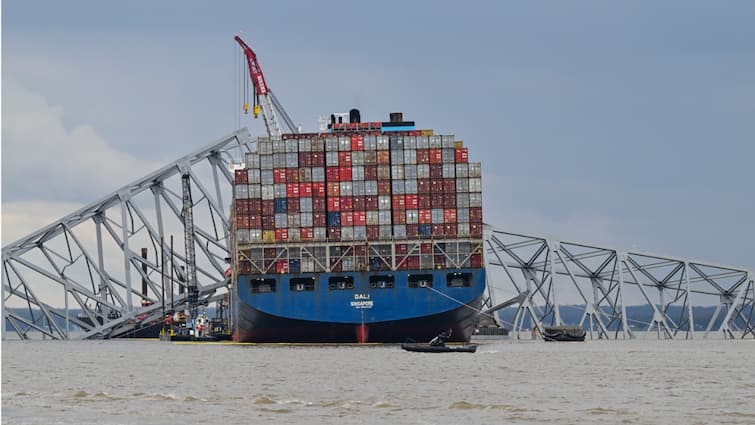
Civil rights groups are demanding that the Baltimore Bridge which collapsed on March 26 after being struck by the container ship Dali, be renamed, claiming that the national anthem author (late), after which it was renamed was a racist slave owner. Given the same, the Caucus of African American Leaders of Anne Arundel County unanimously voted on Monday to pass resolutions calling on the state government and Maryland Gov. Wes Moore to rededicate the Francis Scott Key Bridge when it is eventually rebuilt, a report by New York Post noted.
The resolution argues that the collapse of the bridge into the Patapsco River “allows Marylanders and taxpayers to remove names from bridges that do not honor all Marylanders.”
The civil groups stated that Key was a slave owner and wrote lyrics that “demeaned black people,” the report stated citing the Baltimore Banner.
The caucus, which comprises civil rights groups including United Black Clergy of Maryland and local NAACP chapters, has urged that the bridge should be renamed after the first black man from Maryland elected to the US House of Representatives — late Congressman Parren J. Mitchell.
“Of course, the naysayers will not be happy and we anticipate opposition,” the report quoted caucus convener Carl Snowden as saying.
“However, we know we are on the right side of history and will eventually prevail,” Snowden added.
Who was Francis Scott Key?
While being incarcerated on a British ship in the Port of Baltimore during the War of 1812, Key wrote the poem “The Star-Spangled Banner.” He grew up on a Maryland plantation and also owned around six slaves, the report stated citing WTOP.
Eventually he freed most of his slaves and helped several black Marylanders get their freedom in the years before the Emancipation Proclamation of Abraham Lincoln.
However, he also represented slaveholders with the hopes of regaining their “property.” He once also claimed that he could not “remember more than two instances, out of this large number, in which it did not appear that the freedom I so earnestly sought for them was their ruin,” the report stated.
Key was one of the founding members of the American Colonization Society, which promoted the emigration of black Americans to Africa.
The report also stated that the critics maintained that Key once remarked that black Americans are a “distinct and inferior race of people, which all experience proves to be the greatest evil that afflicts a community.”
The Star Spangled Music Foundation, while responding to these claims, stating that the quote was “incorrectly credited to Key as a first-person expression of his attitudes about race in the United States.”
The foundation also stated in a blog post that the quote was taken from page 40 of ‘Jefferson Morley’s generally insightful 2012 book ‘Snow-Storm in August: Washington City, Francis Scott Key and the Forgotten Race Riot of 1835,’ the report noted.
The caucus has submitted its resolution to rename the bridge to the governor’s office and is also planning to discuss the matter with the governor.
“I think any conversations along those lines, there will be time for that, but now’s not the time,” Moore said, adding that he is presently focused on recovering the bodies of the remaining construction crew employees.
The collapse claimed the lives of six workers out of which the bodies of only two workers have been recovered so far.
ALSO READ| ‘Your Nation Has Your Back’: US President Biden Surveys Collapsed Baltimore Bridge

Civil rights groups are demanding that the Baltimore Bridge which collapsed on March 26 after being struck by the container ship Dali, be renamed, claiming that the national anthem author (late), after which it was renamed was a racist slave owner. Given the same, the Caucus of African American Leaders of Anne Arundel County unanimously voted on Monday to pass resolutions calling on the state government and Maryland Gov. Wes Moore to rededicate the Francis Scott Key Bridge when it is eventually rebuilt, a report by New York Post noted.
The resolution argues that the collapse of the bridge into the Patapsco River “allows Marylanders and taxpayers to remove names from bridges that do not honor all Marylanders.”
The civil groups stated that Key was a slave owner and wrote lyrics that “demeaned black people,” the report stated citing the Baltimore Banner.
The caucus, which comprises civil rights groups including United Black Clergy of Maryland and local NAACP chapters, has urged that the bridge should be renamed after the first black man from Maryland elected to the US House of Representatives — late Congressman Parren J. Mitchell.
“Of course, the naysayers will not be happy and we anticipate opposition,” the report quoted caucus convener Carl Snowden as saying.
“However, we know we are on the right side of history and will eventually prevail,” Snowden added.
Who was Francis Scott Key?
While being incarcerated on a British ship in the Port of Baltimore during the War of 1812, Key wrote the poem “The Star-Spangled Banner.” He grew up on a Maryland plantation and also owned around six slaves, the report stated citing WTOP.
Eventually he freed most of his slaves and helped several black Marylanders get their freedom in the years before the Emancipation Proclamation of Abraham Lincoln.
However, he also represented slaveholders with the hopes of regaining their “property.” He once also claimed that he could not “remember more than two instances, out of this large number, in which it did not appear that the freedom I so earnestly sought for them was their ruin,” the report stated.
Key was one of the founding members of the American Colonization Society, which promoted the emigration of black Americans to Africa.
The report also stated that the critics maintained that Key once remarked that black Americans are a “distinct and inferior race of people, which all experience proves to be the greatest evil that afflicts a community.”
The Star Spangled Music Foundation, while responding to these claims, stating that the quote was “incorrectly credited to Key as a first-person expression of his attitudes about race in the United States.”
The foundation also stated in a blog post that the quote was taken from page 40 of ‘Jefferson Morley’s generally insightful 2012 book ‘Snow-Storm in August: Washington City, Francis Scott Key and the Forgotten Race Riot of 1835,’ the report noted.
The caucus has submitted its resolution to rename the bridge to the governor’s office and is also planning to discuss the matter with the governor.
“I think any conversations along those lines, there will be time for that, but now’s not the time,” Moore said, adding that he is presently focused on recovering the bodies of the remaining construction crew employees.
The collapse claimed the lives of six workers out of which the bodies of only two workers have been recovered so far.
ALSO READ| ‘Your Nation Has Your Back’: US President Biden Surveys Collapsed Baltimore Bridge

Civil rights groups are demanding that the Baltimore Bridge which collapsed on March 26 after being struck by the container ship Dali, be renamed, claiming that the national anthem author (late), after which it was renamed was a racist slave owner. Given the same, the Caucus of African American Leaders of Anne Arundel County unanimously voted on Monday to pass resolutions calling on the state government and Maryland Gov. Wes Moore to rededicate the Francis Scott Key Bridge when it is eventually rebuilt, a report by New York Post noted.
The resolution argues that the collapse of the bridge into the Patapsco River “allows Marylanders and taxpayers to remove names from bridges that do not honor all Marylanders.”
The civil groups stated that Key was a slave owner and wrote lyrics that “demeaned black people,” the report stated citing the Baltimore Banner.
The caucus, which comprises civil rights groups including United Black Clergy of Maryland and local NAACP chapters, has urged that the bridge should be renamed after the first black man from Maryland elected to the US House of Representatives — late Congressman Parren J. Mitchell.
“Of course, the naysayers will not be happy and we anticipate opposition,” the report quoted caucus convener Carl Snowden as saying.
“However, we know we are on the right side of history and will eventually prevail,” Snowden added.
Who was Francis Scott Key?
While being incarcerated on a British ship in the Port of Baltimore during the War of 1812, Key wrote the poem “The Star-Spangled Banner.” He grew up on a Maryland plantation and also owned around six slaves, the report stated citing WTOP.
Eventually he freed most of his slaves and helped several black Marylanders get their freedom in the years before the Emancipation Proclamation of Abraham Lincoln.
However, he also represented slaveholders with the hopes of regaining their “property.” He once also claimed that he could not “remember more than two instances, out of this large number, in which it did not appear that the freedom I so earnestly sought for them was their ruin,” the report stated.
Key was one of the founding members of the American Colonization Society, which promoted the emigration of black Americans to Africa.
The report also stated that the critics maintained that Key once remarked that black Americans are a “distinct and inferior race of people, which all experience proves to be the greatest evil that afflicts a community.”
The Star Spangled Music Foundation, while responding to these claims, stating that the quote was “incorrectly credited to Key as a first-person expression of his attitudes about race in the United States.”
The foundation also stated in a blog post that the quote was taken from page 40 of ‘Jefferson Morley’s generally insightful 2012 book ‘Snow-Storm in August: Washington City, Francis Scott Key and the Forgotten Race Riot of 1835,’ the report noted.
The caucus has submitted its resolution to rename the bridge to the governor’s office and is also planning to discuss the matter with the governor.
“I think any conversations along those lines, there will be time for that, but now’s not the time,” Moore said, adding that he is presently focused on recovering the bodies of the remaining construction crew employees.
The collapse claimed the lives of six workers out of which the bodies of only two workers have been recovered so far.
ALSO READ| ‘Your Nation Has Your Back’: US President Biden Surveys Collapsed Baltimore Bridge
Civil rights groups are demanding that the Baltimore Bridge which collapsed on March 26 after being struck by the container ship Dali, be renamed, claiming that the national anthem author (late), after which it was renamed was a racist slave owner. Given the same, the Caucus of African American Leaders of Anne Arundel County unanimously voted on Monday to pass resolutions calling on the state government and Maryland Gov. Wes Moore to rededicate the Francis Scott Key Bridge when it is eventually rebuilt, a report by New York Post noted.
The resolution argues that the collapse of the bridge into the Patapsco River “allows Marylanders and taxpayers to remove names from bridges that do not honor all Marylanders.”
The civil groups stated that Key was a slave owner and wrote lyrics that “demeaned black people,” the report stated citing the Baltimore Banner.
The caucus, which comprises civil rights groups including United Black Clergy of Maryland and local NAACP chapters, has urged that the bridge should be renamed after the first black man from Maryland elected to the US House of Representatives — late Congressman Parren J. Mitchell.
“Of course, the naysayers will not be happy and we anticipate opposition,” the report quoted caucus convener Carl Snowden as saying.
“However, we know we are on the right side of history and will eventually prevail,” Snowden added.
Who was Francis Scott Key?
While being incarcerated on a British ship in the Port of Baltimore during the War of 1812, Key wrote the poem “The Star-Spangled Banner.” He grew up on a Maryland plantation and also owned around six slaves, the report stated citing WTOP.
Eventually he freed most of his slaves and helped several black Marylanders get their freedom in the years before the Emancipation Proclamation of Abraham Lincoln.
However, he also represented slaveholders with the hopes of regaining their “property.” He once also claimed that he could not “remember more than two instances, out of this large number, in which it did not appear that the freedom I so earnestly sought for them was their ruin,” the report stated.
Key was one of the founding members of the American Colonization Society, which promoted the emigration of black Americans to Africa.
The report also stated that the critics maintained that Key once remarked that black Americans are a “distinct and inferior race of people, which all experience proves to be the greatest evil that afflicts a community.”
The Star Spangled Music Foundation, while responding to these claims, stating that the quote was “incorrectly credited to Key as a first-person expression of his attitudes about race in the United States.”
The foundation also stated in a blog post that the quote was taken from page 40 of ‘Jefferson Morley’s generally insightful 2012 book ‘Snow-Storm in August: Washington City, Francis Scott Key and the Forgotten Race Riot of 1835,’ the report noted.
The caucus has submitted its resolution to rename the bridge to the governor’s office and is also planning to discuss the matter with the governor.
“I think any conversations along those lines, there will be time for that, but now’s not the time,” Moore said, adding that he is presently focused on recovering the bodies of the remaining construction crew employees.
The collapse claimed the lives of six workers out of which the bodies of only two workers have been recovered so far.
ALSO READ| ‘Your Nation Has Your Back’: US President Biden Surveys Collapsed Baltimore Bridge

Civil rights groups are demanding that the Baltimore Bridge which collapsed on March 26 after being struck by the container ship Dali, be renamed, claiming that the national anthem author (late), after which it was renamed was a racist slave owner. Given the same, the Caucus of African American Leaders of Anne Arundel County unanimously voted on Monday to pass resolutions calling on the state government and Maryland Gov. Wes Moore to rededicate the Francis Scott Key Bridge when it is eventually rebuilt, a report by New York Post noted.
The resolution argues that the collapse of the bridge into the Patapsco River “allows Marylanders and taxpayers to remove names from bridges that do not honor all Marylanders.”
The civil groups stated that Key was a slave owner and wrote lyrics that “demeaned black people,” the report stated citing the Baltimore Banner.
The caucus, which comprises civil rights groups including United Black Clergy of Maryland and local NAACP chapters, has urged that the bridge should be renamed after the first black man from Maryland elected to the US House of Representatives — late Congressman Parren J. Mitchell.
“Of course, the naysayers will not be happy and we anticipate opposition,” the report quoted caucus convener Carl Snowden as saying.
“However, we know we are on the right side of history and will eventually prevail,” Snowden added.
Who was Francis Scott Key?
While being incarcerated on a British ship in the Port of Baltimore during the War of 1812, Key wrote the poem “The Star-Spangled Banner.” He grew up on a Maryland plantation and also owned around six slaves, the report stated citing WTOP.
Eventually he freed most of his slaves and helped several black Marylanders get their freedom in the years before the Emancipation Proclamation of Abraham Lincoln.
However, he also represented slaveholders with the hopes of regaining their “property.” He once also claimed that he could not “remember more than two instances, out of this large number, in which it did not appear that the freedom I so earnestly sought for them was their ruin,” the report stated.
Key was one of the founding members of the American Colonization Society, which promoted the emigration of black Americans to Africa.
The report also stated that the critics maintained that Key once remarked that black Americans are a “distinct and inferior race of people, which all experience proves to be the greatest evil that afflicts a community.”
The Star Spangled Music Foundation, while responding to these claims, stating that the quote was “incorrectly credited to Key as a first-person expression of his attitudes about race in the United States.”
The foundation also stated in a blog post that the quote was taken from page 40 of ‘Jefferson Morley’s generally insightful 2012 book ‘Snow-Storm in August: Washington City, Francis Scott Key and the Forgotten Race Riot of 1835,’ the report noted.
The caucus has submitted its resolution to rename the bridge to the governor’s office and is also planning to discuss the matter with the governor.
“I think any conversations along those lines, there will be time for that, but now’s not the time,” Moore said, adding that he is presently focused on recovering the bodies of the remaining construction crew employees.
The collapse claimed the lives of six workers out of which the bodies of only two workers have been recovered so far.
ALSO READ| ‘Your Nation Has Your Back’: US President Biden Surveys Collapsed Baltimore Bridge
Civil rights groups are demanding that the Baltimore Bridge which collapsed on March 26 after being struck by the container ship Dali, be renamed, claiming that the national anthem author (late), after which it was renamed was a racist slave owner. Given the same, the Caucus of African American Leaders of Anne Arundel County unanimously voted on Monday to pass resolutions calling on the state government and Maryland Gov. Wes Moore to rededicate the Francis Scott Key Bridge when it is eventually rebuilt, a report by New York Post noted.
The resolution argues that the collapse of the bridge into the Patapsco River “allows Marylanders and taxpayers to remove names from bridges that do not honor all Marylanders.”
The civil groups stated that Key was a slave owner and wrote lyrics that “demeaned black people,” the report stated citing the Baltimore Banner.
The caucus, which comprises civil rights groups including United Black Clergy of Maryland and local NAACP chapters, has urged that the bridge should be renamed after the first black man from Maryland elected to the US House of Representatives — late Congressman Parren J. Mitchell.
“Of course, the naysayers will not be happy and we anticipate opposition,” the report quoted caucus convener Carl Snowden as saying.
“However, we know we are on the right side of history and will eventually prevail,” Snowden added.
Who was Francis Scott Key?
While being incarcerated on a British ship in the Port of Baltimore during the War of 1812, Key wrote the poem “The Star-Spangled Banner.” He grew up on a Maryland plantation and also owned around six slaves, the report stated citing WTOP.
Eventually he freed most of his slaves and helped several black Marylanders get their freedom in the years before the Emancipation Proclamation of Abraham Lincoln.
However, he also represented slaveholders with the hopes of regaining their “property.” He once also claimed that he could not “remember more than two instances, out of this large number, in which it did not appear that the freedom I so earnestly sought for them was their ruin,” the report stated.
Key was one of the founding members of the American Colonization Society, which promoted the emigration of black Americans to Africa.
The report also stated that the critics maintained that Key once remarked that black Americans are a “distinct and inferior race of people, which all experience proves to be the greatest evil that afflicts a community.”
The Star Spangled Music Foundation, while responding to these claims, stating that the quote was “incorrectly credited to Key as a first-person expression of his attitudes about race in the United States.”
The foundation also stated in a blog post that the quote was taken from page 40 of ‘Jefferson Morley’s generally insightful 2012 book ‘Snow-Storm in August: Washington City, Francis Scott Key and the Forgotten Race Riot of 1835,’ the report noted.
The caucus has submitted its resolution to rename the bridge to the governor’s office and is also planning to discuss the matter with the governor.
“I think any conversations along those lines, there will be time for that, but now’s not the time,” Moore said, adding that he is presently focused on recovering the bodies of the remaining construction crew employees.
The collapse claimed the lives of six workers out of which the bodies of only two workers have been recovered so far.
ALSO READ| ‘Your Nation Has Your Back’: US President Biden Surveys Collapsed Baltimore Bridge
Civil rights groups are demanding that the Baltimore Bridge which collapsed on March 26 after being struck by the container ship Dali, be renamed, claiming that the national anthem author (late), after which it was renamed was a racist slave owner. Given the same, the Caucus of African American Leaders of Anne Arundel County unanimously voted on Monday to pass resolutions calling on the state government and Maryland Gov. Wes Moore to rededicate the Francis Scott Key Bridge when it is eventually rebuilt, a report by New York Post noted.
The resolution argues that the collapse of the bridge into the Patapsco River “allows Marylanders and taxpayers to remove names from bridges that do not honor all Marylanders.”
The civil groups stated that Key was a slave owner and wrote lyrics that “demeaned black people,” the report stated citing the Baltimore Banner.
The caucus, which comprises civil rights groups including United Black Clergy of Maryland and local NAACP chapters, has urged that the bridge should be renamed after the first black man from Maryland elected to the US House of Representatives — late Congressman Parren J. Mitchell.
“Of course, the naysayers will not be happy and we anticipate opposition,” the report quoted caucus convener Carl Snowden as saying.
“However, we know we are on the right side of history and will eventually prevail,” Snowden added.
Who was Francis Scott Key?
While being incarcerated on a British ship in the Port of Baltimore during the War of 1812, Key wrote the poem “The Star-Spangled Banner.” He grew up on a Maryland plantation and also owned around six slaves, the report stated citing WTOP.
Eventually he freed most of his slaves and helped several black Marylanders get their freedom in the years before the Emancipation Proclamation of Abraham Lincoln.
However, he also represented slaveholders with the hopes of regaining their “property.” He once also claimed that he could not “remember more than two instances, out of this large number, in which it did not appear that the freedom I so earnestly sought for them was their ruin,” the report stated.
Key was one of the founding members of the American Colonization Society, which promoted the emigration of black Americans to Africa.
The report also stated that the critics maintained that Key once remarked that black Americans are a “distinct and inferior race of people, which all experience proves to be the greatest evil that afflicts a community.”
The Star Spangled Music Foundation, while responding to these claims, stating that the quote was “incorrectly credited to Key as a first-person expression of his attitudes about race in the United States.”
The foundation also stated in a blog post that the quote was taken from page 40 of ‘Jefferson Morley’s generally insightful 2012 book ‘Snow-Storm in August: Washington City, Francis Scott Key and the Forgotten Race Riot of 1835,’ the report noted.
The caucus has submitted its resolution to rename the bridge to the governor’s office and is also planning to discuss the matter with the governor.
“I think any conversations along those lines, there will be time for that, but now’s not the time,” Moore said, adding that he is presently focused on recovering the bodies of the remaining construction crew employees.
The collapse claimed the lives of six workers out of which the bodies of only two workers have been recovered so far.
ALSO READ| ‘Your Nation Has Your Back’: US President Biden Surveys Collapsed Baltimore Bridge
Civil rights groups are demanding that the Baltimore Bridge which collapsed on March 26 after being struck by the container ship Dali, be renamed, claiming that the national anthem author (late), after which it was renamed was a racist slave owner. Given the same, the Caucus of African American Leaders of Anne Arundel County unanimously voted on Monday to pass resolutions calling on the state government and Maryland Gov. Wes Moore to rededicate the Francis Scott Key Bridge when it is eventually rebuilt, a report by New York Post noted.
The resolution argues that the collapse of the bridge into the Patapsco River “allows Marylanders and taxpayers to remove names from bridges that do not honor all Marylanders.”
The civil groups stated that Key was a slave owner and wrote lyrics that “demeaned black people,” the report stated citing the Baltimore Banner.
The caucus, which comprises civil rights groups including United Black Clergy of Maryland and local NAACP chapters, has urged that the bridge should be renamed after the first black man from Maryland elected to the US House of Representatives — late Congressman Parren J. Mitchell.
“Of course, the naysayers will not be happy and we anticipate opposition,” the report quoted caucus convener Carl Snowden as saying.
“However, we know we are on the right side of history and will eventually prevail,” Snowden added.
Who was Francis Scott Key?
While being incarcerated on a British ship in the Port of Baltimore during the War of 1812, Key wrote the poem “The Star-Spangled Banner.” He grew up on a Maryland plantation and also owned around six slaves, the report stated citing WTOP.
Eventually he freed most of his slaves and helped several black Marylanders get their freedom in the years before the Emancipation Proclamation of Abraham Lincoln.
However, he also represented slaveholders with the hopes of regaining their “property.” He once also claimed that he could not “remember more than two instances, out of this large number, in which it did not appear that the freedom I so earnestly sought for them was their ruin,” the report stated.
Key was one of the founding members of the American Colonization Society, which promoted the emigration of black Americans to Africa.
The report also stated that the critics maintained that Key once remarked that black Americans are a “distinct and inferior race of people, which all experience proves to be the greatest evil that afflicts a community.”
The Star Spangled Music Foundation, while responding to these claims, stating that the quote was “incorrectly credited to Key as a first-person expression of his attitudes about race in the United States.”
The foundation also stated in a blog post that the quote was taken from page 40 of ‘Jefferson Morley’s generally insightful 2012 book ‘Snow-Storm in August: Washington City, Francis Scott Key and the Forgotten Race Riot of 1835,’ the report noted.
The caucus has submitted its resolution to rename the bridge to the governor’s office and is also planning to discuss the matter with the governor.
“I think any conversations along those lines, there will be time for that, but now’s not the time,” Moore said, adding that he is presently focused on recovering the bodies of the remaining construction crew employees.
The collapse claimed the lives of six workers out of which the bodies of only two workers have been recovered so far.
ALSO READ| ‘Your Nation Has Your Back’: US President Biden Surveys Collapsed Baltimore Bridge

Civil rights groups are demanding that the Baltimore Bridge which collapsed on March 26 after being struck by the container ship Dali, be renamed, claiming that the national anthem author (late), after which it was renamed was a racist slave owner. Given the same, the Caucus of African American Leaders of Anne Arundel County unanimously voted on Monday to pass resolutions calling on the state government and Maryland Gov. Wes Moore to rededicate the Francis Scott Key Bridge when it is eventually rebuilt, a report by New York Post noted.
The resolution argues that the collapse of the bridge into the Patapsco River “allows Marylanders and taxpayers to remove names from bridges that do not honor all Marylanders.”
The civil groups stated that Key was a slave owner and wrote lyrics that “demeaned black people,” the report stated citing the Baltimore Banner.
The caucus, which comprises civil rights groups including United Black Clergy of Maryland and local NAACP chapters, has urged that the bridge should be renamed after the first black man from Maryland elected to the US House of Representatives — late Congressman Parren J. Mitchell.
“Of course, the naysayers will not be happy and we anticipate opposition,” the report quoted caucus convener Carl Snowden as saying.
“However, we know we are on the right side of history and will eventually prevail,” Snowden added.
Who was Francis Scott Key?
While being incarcerated on a British ship in the Port of Baltimore during the War of 1812, Key wrote the poem “The Star-Spangled Banner.” He grew up on a Maryland plantation and also owned around six slaves, the report stated citing WTOP.
Eventually he freed most of his slaves and helped several black Marylanders get their freedom in the years before the Emancipation Proclamation of Abraham Lincoln.
However, he also represented slaveholders with the hopes of regaining their “property.” He once also claimed that he could not “remember more than two instances, out of this large number, in which it did not appear that the freedom I so earnestly sought for them was their ruin,” the report stated.
Key was one of the founding members of the American Colonization Society, which promoted the emigration of black Americans to Africa.
The report also stated that the critics maintained that Key once remarked that black Americans are a “distinct and inferior race of people, which all experience proves to be the greatest evil that afflicts a community.”
The Star Spangled Music Foundation, while responding to these claims, stating that the quote was “incorrectly credited to Key as a first-person expression of his attitudes about race in the United States.”
The foundation also stated in a blog post that the quote was taken from page 40 of ‘Jefferson Morley’s generally insightful 2012 book ‘Snow-Storm in August: Washington City, Francis Scott Key and the Forgotten Race Riot of 1835,’ the report noted.
The caucus has submitted its resolution to rename the bridge to the governor’s office and is also planning to discuss the matter with the governor.
“I think any conversations along those lines, there will be time for that, but now’s not the time,” Moore said, adding that he is presently focused on recovering the bodies of the remaining construction crew employees.
The collapse claimed the lives of six workers out of which the bodies of only two workers have been recovered so far.
ALSO READ| ‘Your Nation Has Your Back’: US President Biden Surveys Collapsed Baltimore Bridge
Civil rights groups are demanding that the Baltimore Bridge which collapsed on March 26 after being struck by the container ship Dali, be renamed, claiming that the national anthem author (late), after which it was renamed was a racist slave owner. Given the same, the Caucus of African American Leaders of Anne Arundel County unanimously voted on Monday to pass resolutions calling on the state government and Maryland Gov. Wes Moore to rededicate the Francis Scott Key Bridge when it is eventually rebuilt, a report by New York Post noted.
The resolution argues that the collapse of the bridge into the Patapsco River “allows Marylanders and taxpayers to remove names from bridges that do not honor all Marylanders.”
The civil groups stated that Key was a slave owner and wrote lyrics that “demeaned black people,” the report stated citing the Baltimore Banner.
The caucus, which comprises civil rights groups including United Black Clergy of Maryland and local NAACP chapters, has urged that the bridge should be renamed after the first black man from Maryland elected to the US House of Representatives — late Congressman Parren J. Mitchell.
“Of course, the naysayers will not be happy and we anticipate opposition,” the report quoted caucus convener Carl Snowden as saying.
“However, we know we are on the right side of history and will eventually prevail,” Snowden added.
Who was Francis Scott Key?
While being incarcerated on a British ship in the Port of Baltimore during the War of 1812, Key wrote the poem “The Star-Spangled Banner.” He grew up on a Maryland plantation and also owned around six slaves, the report stated citing WTOP.
Eventually he freed most of his slaves and helped several black Marylanders get their freedom in the years before the Emancipation Proclamation of Abraham Lincoln.
However, he also represented slaveholders with the hopes of regaining their “property.” He once also claimed that he could not “remember more than two instances, out of this large number, in which it did not appear that the freedom I so earnestly sought for them was their ruin,” the report stated.
Key was one of the founding members of the American Colonization Society, which promoted the emigration of black Americans to Africa.
The report also stated that the critics maintained that Key once remarked that black Americans are a “distinct and inferior race of people, which all experience proves to be the greatest evil that afflicts a community.”
The Star Spangled Music Foundation, while responding to these claims, stating that the quote was “incorrectly credited to Key as a first-person expression of his attitudes about race in the United States.”
The foundation also stated in a blog post that the quote was taken from page 40 of ‘Jefferson Morley’s generally insightful 2012 book ‘Snow-Storm in August: Washington City, Francis Scott Key and the Forgotten Race Riot of 1835,’ the report noted.
The caucus has submitted its resolution to rename the bridge to the governor’s office and is also planning to discuss the matter with the governor.
“I think any conversations along those lines, there will be time for that, but now’s not the time,” Moore said, adding that he is presently focused on recovering the bodies of the remaining construction crew employees.
The collapse claimed the lives of six workers out of which the bodies of only two workers have been recovered so far.
ALSO READ| ‘Your Nation Has Your Back’: US President Biden Surveys Collapsed Baltimore Bridge
Civil rights groups are demanding that the Baltimore Bridge which collapsed on March 26 after being struck by the container ship Dali, be renamed, claiming that the national anthem author (late), after which it was renamed was a racist slave owner. Given the same, the Caucus of African American Leaders of Anne Arundel County unanimously voted on Monday to pass resolutions calling on the state government and Maryland Gov. Wes Moore to rededicate the Francis Scott Key Bridge when it is eventually rebuilt, a report by New York Post noted.
The resolution argues that the collapse of the bridge into the Patapsco River “allows Marylanders and taxpayers to remove names from bridges that do not honor all Marylanders.”
The civil groups stated that Key was a slave owner and wrote lyrics that “demeaned black people,” the report stated citing the Baltimore Banner.
The caucus, which comprises civil rights groups including United Black Clergy of Maryland and local NAACP chapters, has urged that the bridge should be renamed after the first black man from Maryland elected to the US House of Representatives — late Congressman Parren J. Mitchell.
“Of course, the naysayers will not be happy and we anticipate opposition,” the report quoted caucus convener Carl Snowden as saying.
“However, we know we are on the right side of history and will eventually prevail,” Snowden added.
Who was Francis Scott Key?
While being incarcerated on a British ship in the Port of Baltimore during the War of 1812, Key wrote the poem “The Star-Spangled Banner.” He grew up on a Maryland plantation and also owned around six slaves, the report stated citing WTOP.
Eventually he freed most of his slaves and helped several black Marylanders get their freedom in the years before the Emancipation Proclamation of Abraham Lincoln.
However, he also represented slaveholders with the hopes of regaining their “property.” He once also claimed that he could not “remember more than two instances, out of this large number, in which it did not appear that the freedom I so earnestly sought for them was their ruin,” the report stated.
Key was one of the founding members of the American Colonization Society, which promoted the emigration of black Americans to Africa.
The report also stated that the critics maintained that Key once remarked that black Americans are a “distinct and inferior race of people, which all experience proves to be the greatest evil that afflicts a community.”
The Star Spangled Music Foundation, while responding to these claims, stating that the quote was “incorrectly credited to Key as a first-person expression of his attitudes about race in the United States.”
The foundation also stated in a blog post that the quote was taken from page 40 of ‘Jefferson Morley’s generally insightful 2012 book ‘Snow-Storm in August: Washington City, Francis Scott Key and the Forgotten Race Riot of 1835,’ the report noted.
The caucus has submitted its resolution to rename the bridge to the governor’s office and is also planning to discuss the matter with the governor.
“I think any conversations along those lines, there will be time for that, but now’s not the time,” Moore said, adding that he is presently focused on recovering the bodies of the remaining construction crew employees.
The collapse claimed the lives of six workers out of which the bodies of only two workers have been recovered so far.
ALSO READ| ‘Your Nation Has Your Back’: US President Biden Surveys Collapsed Baltimore Bridge
Civil rights groups are demanding that the Baltimore Bridge which collapsed on March 26 after being struck by the container ship Dali, be renamed, claiming that the national anthem author (late), after which it was renamed was a racist slave owner. Given the same, the Caucus of African American Leaders of Anne Arundel County unanimously voted on Monday to pass resolutions calling on the state government and Maryland Gov. Wes Moore to rededicate the Francis Scott Key Bridge when it is eventually rebuilt, a report by New York Post noted.
The resolution argues that the collapse of the bridge into the Patapsco River “allows Marylanders and taxpayers to remove names from bridges that do not honor all Marylanders.”
The civil groups stated that Key was a slave owner and wrote lyrics that “demeaned black people,” the report stated citing the Baltimore Banner.
The caucus, which comprises civil rights groups including United Black Clergy of Maryland and local NAACP chapters, has urged that the bridge should be renamed after the first black man from Maryland elected to the US House of Representatives — late Congressman Parren J. Mitchell.
“Of course, the naysayers will not be happy and we anticipate opposition,” the report quoted caucus convener Carl Snowden as saying.
“However, we know we are on the right side of history and will eventually prevail,” Snowden added.
Who was Francis Scott Key?
While being incarcerated on a British ship in the Port of Baltimore during the War of 1812, Key wrote the poem “The Star-Spangled Banner.” He grew up on a Maryland plantation and also owned around six slaves, the report stated citing WTOP.
Eventually he freed most of his slaves and helped several black Marylanders get their freedom in the years before the Emancipation Proclamation of Abraham Lincoln.
However, he also represented slaveholders with the hopes of regaining their “property.” He once also claimed that he could not “remember more than two instances, out of this large number, in which it did not appear that the freedom I so earnestly sought for them was their ruin,” the report stated.
Key was one of the founding members of the American Colonization Society, which promoted the emigration of black Americans to Africa.
The report also stated that the critics maintained that Key once remarked that black Americans are a “distinct and inferior race of people, which all experience proves to be the greatest evil that afflicts a community.”
The Star Spangled Music Foundation, while responding to these claims, stating that the quote was “incorrectly credited to Key as a first-person expression of his attitudes about race in the United States.”
The foundation also stated in a blog post that the quote was taken from page 40 of ‘Jefferson Morley’s generally insightful 2012 book ‘Snow-Storm in August: Washington City, Francis Scott Key and the Forgotten Race Riot of 1835,’ the report noted.
The caucus has submitted its resolution to rename the bridge to the governor’s office and is also planning to discuss the matter with the governor.
“I think any conversations along those lines, there will be time for that, but now’s not the time,” Moore said, adding that he is presently focused on recovering the bodies of the remaining construction crew employees.
The collapse claimed the lives of six workers out of which the bodies of only two workers have been recovered so far.
ALSO READ| ‘Your Nation Has Your Back’: US President Biden Surveys Collapsed Baltimore Bridge
Civil rights groups are demanding that the Baltimore Bridge which collapsed on March 26 after being struck by the container ship Dali, be renamed, claiming that the national anthem author (late), after which it was renamed was a racist slave owner. Given the same, the Caucus of African American Leaders of Anne Arundel County unanimously voted on Monday to pass resolutions calling on the state government and Maryland Gov. Wes Moore to rededicate the Francis Scott Key Bridge when it is eventually rebuilt, a report by New York Post noted.
The resolution argues that the collapse of the bridge into the Patapsco River “allows Marylanders and taxpayers to remove names from bridges that do not honor all Marylanders.”
The civil groups stated that Key was a slave owner and wrote lyrics that “demeaned black people,” the report stated citing the Baltimore Banner.
The caucus, which comprises civil rights groups including United Black Clergy of Maryland and local NAACP chapters, has urged that the bridge should be renamed after the first black man from Maryland elected to the US House of Representatives — late Congressman Parren J. Mitchell.
“Of course, the naysayers will not be happy and we anticipate opposition,” the report quoted caucus convener Carl Snowden as saying.
“However, we know we are on the right side of history and will eventually prevail,” Snowden added.
Who was Francis Scott Key?
While being incarcerated on a British ship in the Port of Baltimore during the War of 1812, Key wrote the poem “The Star-Spangled Banner.” He grew up on a Maryland plantation and also owned around six slaves, the report stated citing WTOP.
Eventually he freed most of his slaves and helped several black Marylanders get their freedom in the years before the Emancipation Proclamation of Abraham Lincoln.
However, he also represented slaveholders with the hopes of regaining their “property.” He once also claimed that he could not “remember more than two instances, out of this large number, in which it did not appear that the freedom I so earnestly sought for them was their ruin,” the report stated.
Key was one of the founding members of the American Colonization Society, which promoted the emigration of black Americans to Africa.
The report also stated that the critics maintained that Key once remarked that black Americans are a “distinct and inferior race of people, which all experience proves to be the greatest evil that afflicts a community.”
The Star Spangled Music Foundation, while responding to these claims, stating that the quote was “incorrectly credited to Key as a first-person expression of his attitudes about race in the United States.”
The foundation also stated in a blog post that the quote was taken from page 40 of ‘Jefferson Morley’s generally insightful 2012 book ‘Snow-Storm in August: Washington City, Francis Scott Key and the Forgotten Race Riot of 1835,’ the report noted.
The caucus has submitted its resolution to rename the bridge to the governor’s office and is also planning to discuss the matter with the governor.
“I think any conversations along those lines, there will be time for that, but now’s not the time,” Moore said, adding that he is presently focused on recovering the bodies of the remaining construction crew employees.
The collapse claimed the lives of six workers out of which the bodies of only two workers have been recovered so far.
ALSO READ| ‘Your Nation Has Your Back’: US President Biden Surveys Collapsed Baltimore Bridge
Civil rights groups are demanding that the Baltimore Bridge which collapsed on March 26 after being struck by the container ship Dali, be renamed, claiming that the national anthem author (late), after which it was renamed was a racist slave owner. Given the same, the Caucus of African American Leaders of Anne Arundel County unanimously voted on Monday to pass resolutions calling on the state government and Maryland Gov. Wes Moore to rededicate the Francis Scott Key Bridge when it is eventually rebuilt, a report by New York Post noted.
The resolution argues that the collapse of the bridge into the Patapsco River “allows Marylanders and taxpayers to remove names from bridges that do not honor all Marylanders.”
The civil groups stated that Key was a slave owner and wrote lyrics that “demeaned black people,” the report stated citing the Baltimore Banner.
The caucus, which comprises civil rights groups including United Black Clergy of Maryland and local NAACP chapters, has urged that the bridge should be renamed after the first black man from Maryland elected to the US House of Representatives — late Congressman Parren J. Mitchell.
“Of course, the naysayers will not be happy and we anticipate opposition,” the report quoted caucus convener Carl Snowden as saying.
“However, we know we are on the right side of history and will eventually prevail,” Snowden added.
Who was Francis Scott Key?
While being incarcerated on a British ship in the Port of Baltimore during the War of 1812, Key wrote the poem “The Star-Spangled Banner.” He grew up on a Maryland plantation and also owned around six slaves, the report stated citing WTOP.
Eventually he freed most of his slaves and helped several black Marylanders get their freedom in the years before the Emancipation Proclamation of Abraham Lincoln.
However, he also represented slaveholders with the hopes of regaining their “property.” He once also claimed that he could not “remember more than two instances, out of this large number, in which it did not appear that the freedom I so earnestly sought for them was their ruin,” the report stated.
Key was one of the founding members of the American Colonization Society, which promoted the emigration of black Americans to Africa.
The report also stated that the critics maintained that Key once remarked that black Americans are a “distinct and inferior race of people, which all experience proves to be the greatest evil that afflicts a community.”
The Star Spangled Music Foundation, while responding to these claims, stating that the quote was “incorrectly credited to Key as a first-person expression of his attitudes about race in the United States.”
The foundation also stated in a blog post that the quote was taken from page 40 of ‘Jefferson Morley’s generally insightful 2012 book ‘Snow-Storm in August: Washington City, Francis Scott Key and the Forgotten Race Riot of 1835,’ the report noted.
The caucus has submitted its resolution to rename the bridge to the governor’s office and is also planning to discuss the matter with the governor.
“I think any conversations along those lines, there will be time for that, but now’s not the time,” Moore said, adding that he is presently focused on recovering the bodies of the remaining construction crew employees.
The collapse claimed the lives of six workers out of which the bodies of only two workers have been recovered so far.
ALSO READ| ‘Your Nation Has Your Back’: US President Biden Surveys Collapsed Baltimore Bridge
Civil rights groups are demanding that the Baltimore Bridge which collapsed on March 26 after being struck by the container ship Dali, be renamed, claiming that the national anthem author (late), after which it was renamed was a racist slave owner. Given the same, the Caucus of African American Leaders of Anne Arundel County unanimously voted on Monday to pass resolutions calling on the state government and Maryland Gov. Wes Moore to rededicate the Francis Scott Key Bridge when it is eventually rebuilt, a report by New York Post noted.
The resolution argues that the collapse of the bridge into the Patapsco River “allows Marylanders and taxpayers to remove names from bridges that do not honor all Marylanders.”
The civil groups stated that Key was a slave owner and wrote lyrics that “demeaned black people,” the report stated citing the Baltimore Banner.
The caucus, which comprises civil rights groups including United Black Clergy of Maryland and local NAACP chapters, has urged that the bridge should be renamed after the first black man from Maryland elected to the US House of Representatives — late Congressman Parren J. Mitchell.
“Of course, the naysayers will not be happy and we anticipate opposition,” the report quoted caucus convener Carl Snowden as saying.
“However, we know we are on the right side of history and will eventually prevail,” Snowden added.
Who was Francis Scott Key?
While being incarcerated on a British ship in the Port of Baltimore during the War of 1812, Key wrote the poem “The Star-Spangled Banner.” He grew up on a Maryland plantation and also owned around six slaves, the report stated citing WTOP.
Eventually he freed most of his slaves and helped several black Marylanders get their freedom in the years before the Emancipation Proclamation of Abraham Lincoln.
However, he also represented slaveholders with the hopes of regaining their “property.” He once also claimed that he could not “remember more than two instances, out of this large number, in which it did not appear that the freedom I so earnestly sought for them was their ruin,” the report stated.
Key was one of the founding members of the American Colonization Society, which promoted the emigration of black Americans to Africa.
The report also stated that the critics maintained that Key once remarked that black Americans are a “distinct and inferior race of people, which all experience proves to be the greatest evil that afflicts a community.”
The Star Spangled Music Foundation, while responding to these claims, stating that the quote was “incorrectly credited to Key as a first-person expression of his attitudes about race in the United States.”
The foundation also stated in a blog post that the quote was taken from page 40 of ‘Jefferson Morley’s generally insightful 2012 book ‘Snow-Storm in August: Washington City, Francis Scott Key and the Forgotten Race Riot of 1835,’ the report noted.
The caucus has submitted its resolution to rename the bridge to the governor’s office and is also planning to discuss the matter with the governor.
“I think any conversations along those lines, there will be time for that, but now’s not the time,” Moore said, adding that he is presently focused on recovering the bodies of the remaining construction crew employees.
The collapse claimed the lives of six workers out of which the bodies of only two workers have been recovered so far.
ALSO READ| ‘Your Nation Has Your Back’: US President Biden Surveys Collapsed Baltimore Bridge
Civil rights groups are demanding that the Baltimore Bridge which collapsed on March 26 after being struck by the container ship Dali, be renamed, claiming that the national anthem author (late), after which it was renamed was a racist slave owner. Given the same, the Caucus of African American Leaders of Anne Arundel County unanimously voted on Monday to pass resolutions calling on the state government and Maryland Gov. Wes Moore to rededicate the Francis Scott Key Bridge when it is eventually rebuilt, a report by New York Post noted.
The resolution argues that the collapse of the bridge into the Patapsco River “allows Marylanders and taxpayers to remove names from bridges that do not honor all Marylanders.”
The civil groups stated that Key was a slave owner and wrote lyrics that “demeaned black people,” the report stated citing the Baltimore Banner.
The caucus, which comprises civil rights groups including United Black Clergy of Maryland and local NAACP chapters, has urged that the bridge should be renamed after the first black man from Maryland elected to the US House of Representatives — late Congressman Parren J. Mitchell.
“Of course, the naysayers will not be happy and we anticipate opposition,” the report quoted caucus convener Carl Snowden as saying.
“However, we know we are on the right side of history and will eventually prevail,” Snowden added.
Who was Francis Scott Key?
While being incarcerated on a British ship in the Port of Baltimore during the War of 1812, Key wrote the poem “The Star-Spangled Banner.” He grew up on a Maryland plantation and also owned around six slaves, the report stated citing WTOP.
Eventually he freed most of his slaves and helped several black Marylanders get their freedom in the years before the Emancipation Proclamation of Abraham Lincoln.
However, he also represented slaveholders with the hopes of regaining their “property.” He once also claimed that he could not “remember more than two instances, out of this large number, in which it did not appear that the freedom I so earnestly sought for them was their ruin,” the report stated.
Key was one of the founding members of the American Colonization Society, which promoted the emigration of black Americans to Africa.
The report also stated that the critics maintained that Key once remarked that black Americans are a “distinct and inferior race of people, which all experience proves to be the greatest evil that afflicts a community.”
The Star Spangled Music Foundation, while responding to these claims, stating that the quote was “incorrectly credited to Key as a first-person expression of his attitudes about race in the United States.”
The foundation also stated in a blog post that the quote was taken from page 40 of ‘Jefferson Morley’s generally insightful 2012 book ‘Snow-Storm in August: Washington City, Francis Scott Key and the Forgotten Race Riot of 1835,’ the report noted.
The caucus has submitted its resolution to rename the bridge to the governor’s office and is also planning to discuss the matter with the governor.
“I think any conversations along those lines, there will be time for that, but now’s not the time,” Moore said, adding that he is presently focused on recovering the bodies of the remaining construction crew employees.
The collapse claimed the lives of six workers out of which the bodies of only two workers have been recovered so far.
ALSO READ| ‘Your Nation Has Your Back’: US President Biden Surveys Collapsed Baltimore Bridge

