


Chubb Ltd. is estimating that it will need to pay out $1.5 billion to cover its Los Angeles County fire claims, making the Swiss insurer the first company to report its expected losses from the conflagrations.
Chairman and Chief Executive Evan Greenberg said the figure includes the cost of “supporting our customers and helping them recover and rebuild from this catastrophe,” according to a statement in the company’s fourth-quarter earnings report released Tuesday.
“The California wildfire disaster is a terrible tragedy that is still unfolding. Our colleagues have been on the ground from the beginning, endeavoring to assist our policyholders who have lost property, been displaced from their homes and businesses, and had their lives severely disrupted,” he said.
Chubb, which earned $2.6 billion in the fourth quarter, said it anticipates the financial impact to the company will be limited to the first quarter of this year.
The size of the loss to Chubb indicates just how large the damages will be for insurers. Chubb had a 2.27% share of the California homeowners market in 2023, putting it outside the top 10 largest home insurers in the state.
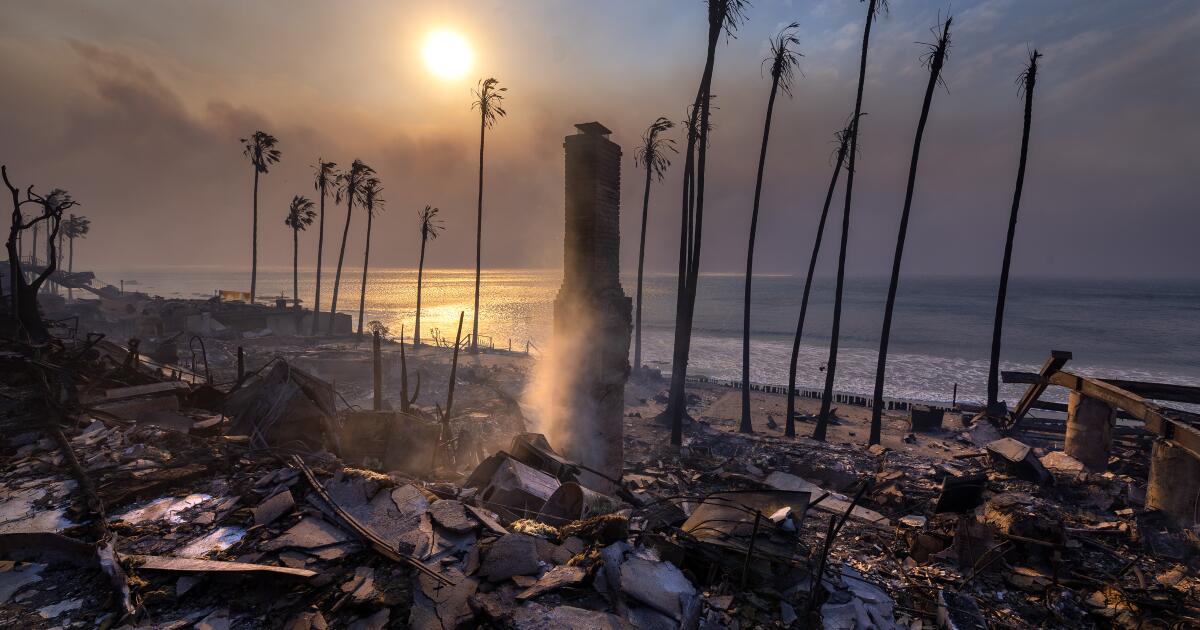
The Eaton and Palisades fires have consumed nearly 40,000 acres of homes, businesses and landmarks in Altadena and Pacific Palisades and have killed more than two dozen people.
Moody’s RMS said in a report this week that it expects the fires will weaken insurers first-quarter earnings and raise the price of reinsurance they buy to mitigate the costs of catastrophes — while increasing prices and lowering the availability of homeowners insurance in California neighborhoods at “high- and medium-risk” for wildfires.
That will continue to force more homeowners to get insurance from the FAIR Plan, the state’s already overloaded insurer of last resort, said the report from Moody’s. The state plan provides policies with lower limits that exclude some typical coverage.
While weather forecasting service AccuWeather puts the fires’ total economic loss at $250 billion to $275 billion, that figure includes the costs of healthcare, business disruptions and other economic impacts.
Risk modelers have estimated the cost to the insurance industry to pay for property damage, temporary housing costs and other claims at $20 billion to $45 billion. That would make the fires one of the country’s worst natural disasters but likely not as costly as Hurricane Katrina in 2005.

Chubb Ltd. is estimating that it will need to pay out $1.5 billion to cover its Los Angeles County fire claims, making the Swiss insurer the first company to report its expected losses from the conflagrations.
Chairman and Chief Executive Evan Greenberg said the figure includes the cost of “supporting our customers and helping them recover and rebuild from this catastrophe,” according to a statement in the company’s fourth-quarter earnings report released Tuesday.
“The California wildfire disaster is a terrible tragedy that is still unfolding. Our colleagues have been on the ground from the beginning, endeavoring to assist our policyholders who have lost property, been displaced from their homes and businesses, and had their lives severely disrupted,” he said.
Chubb, which earned $2.6 billion in the fourth quarter, said it anticipates the financial impact to the company will be limited to the first quarter of this year.
The size of the loss to Chubb indicates just how large the damages will be for insurers. Chubb had a 2.27% share of the California homeowners market in 2023, putting it outside the top 10 largest home insurers in the state.
The Eaton and Palisades fires have consumed nearly 40,000 acres of homes, businesses and landmarks in Altadena and Pacific Palisades and have killed more than two dozen people.
Moody’s RMS said in a report this week that it expects the fires will weaken insurers first-quarter earnings and raise the price of reinsurance they buy to mitigate the costs of catastrophes — while increasing prices and lowering the availability of homeowners insurance in California neighborhoods at “high- and medium-risk” for wildfires.
That will continue to force more homeowners to get insurance from the FAIR Plan, the state’s already overloaded insurer of last resort, said the report from Moody’s. The state plan provides policies with lower limits that exclude some typical coverage.
While weather forecasting service AccuWeather puts the fires’ total economic loss at $250 billion to $275 billion, that figure includes the costs of healthcare, business disruptions and other economic impacts.
Risk modelers have estimated the cost to the insurance industry to pay for property damage, temporary housing costs and other claims at $20 billion to $45 billion. That would make the fires one of the country’s worst natural disasters but likely not as costly as Hurricane Katrina in 2005.

Chubb Ltd. is estimating that it will need to pay out $1.5 billion to cover its Los Angeles County fire claims, making the Swiss insurer the first company to report its expected losses from the conflagrations.
Chairman and Chief Executive Evan Greenberg said the figure includes the cost of “supporting our customers and helping them recover and rebuild from this catastrophe,” according to a statement in the company’s fourth-quarter earnings report released Tuesday.
“The California wildfire disaster is a terrible tragedy that is still unfolding. Our colleagues have been on the ground from the beginning, endeavoring to assist our policyholders who have lost property, been displaced from their homes and businesses, and had their lives severely disrupted,” he said.
Chubb, which earned $2.6 billion in the fourth quarter, said it anticipates the financial impact to the company will be limited to the first quarter of this year.
The size of the loss to Chubb indicates just how large the damages will be for insurers. Chubb had a 2.27% share of the California homeowners market in 2023, putting it outside the top 10 largest home insurers in the state.
The Eaton and Palisades fires have consumed nearly 40,000 acres of homes, businesses and landmarks in Altadena and Pacific Palisades and have killed more than two dozen people.
Moody’s RMS said in a report this week that it expects the fires will weaken insurers first-quarter earnings and raise the price of reinsurance they buy to mitigate the costs of catastrophes — while increasing prices and lowering the availability of homeowners insurance in California neighborhoods at “high- and medium-risk” for wildfires.
That will continue to force more homeowners to get insurance from the FAIR Plan, the state’s already overloaded insurer of last resort, said the report from Moody’s. The state plan provides policies with lower limits that exclude some typical coverage.
While weather forecasting service AccuWeather puts the fires’ total economic loss at $250 billion to $275 billion, that figure includes the costs of healthcare, business disruptions and other economic impacts.
Risk modelers have estimated the cost to the insurance industry to pay for property damage, temporary housing costs and other claims at $20 billion to $45 billion. That would make the fires one of the country’s worst natural disasters but likely not as costly as Hurricane Katrina in 2005.
Chubb Ltd. is estimating that it will need to pay out $1.5 billion to cover its Los Angeles County fire claims, making the Swiss insurer the first company to report its expected losses from the conflagrations.
Chairman and Chief Executive Evan Greenberg said the figure includes the cost of “supporting our customers and helping them recover and rebuild from this catastrophe,” according to a statement in the company’s fourth-quarter earnings report released Tuesday.
“The California wildfire disaster is a terrible tragedy that is still unfolding. Our colleagues have been on the ground from the beginning, endeavoring to assist our policyholders who have lost property, been displaced from their homes and businesses, and had their lives severely disrupted,” he said.
Chubb, which earned $2.6 billion in the fourth quarter, said it anticipates the financial impact to the company will be limited to the first quarter of this year.
The size of the loss to Chubb indicates just how large the damages will be for insurers. Chubb had a 2.27% share of the California homeowners market in 2023, putting it outside the top 10 largest home insurers in the state.
The Eaton and Palisades fires have consumed nearly 40,000 acres of homes, businesses and landmarks in Altadena and Pacific Palisades and have killed more than two dozen people.
Moody’s RMS said in a report this week that it expects the fires will weaken insurers first-quarter earnings and raise the price of reinsurance they buy to mitigate the costs of catastrophes — while increasing prices and lowering the availability of homeowners insurance in California neighborhoods at “high- and medium-risk” for wildfires.
That will continue to force more homeowners to get insurance from the FAIR Plan, the state’s already overloaded insurer of last resort, said the report from Moody’s. The state plan provides policies with lower limits that exclude some typical coverage.
While weather forecasting service AccuWeather puts the fires’ total economic loss at $250 billion to $275 billion, that figure includes the costs of healthcare, business disruptions and other economic impacts.
Risk modelers have estimated the cost to the insurance industry to pay for property damage, temporary housing costs and other claims at $20 billion to $45 billion. That would make the fires one of the country’s worst natural disasters but likely not as costly as Hurricane Katrina in 2005.

Chubb Ltd. is estimating that it will need to pay out $1.5 billion to cover its Los Angeles County fire claims, making the Swiss insurer the first company to report its expected losses from the conflagrations.
Chairman and Chief Executive Evan Greenberg said the figure includes the cost of “supporting our customers and helping them recover and rebuild from this catastrophe,” according to a statement in the company’s fourth-quarter earnings report released Tuesday.
“The California wildfire disaster is a terrible tragedy that is still unfolding. Our colleagues have been on the ground from the beginning, endeavoring to assist our policyholders who have lost property, been displaced from their homes and businesses, and had their lives severely disrupted,” he said.
Chubb, which earned $2.6 billion in the fourth quarter, said it anticipates the financial impact to the company will be limited to the first quarter of this year.
The size of the loss to Chubb indicates just how large the damages will be for insurers. Chubb had a 2.27% share of the California homeowners market in 2023, putting it outside the top 10 largest home insurers in the state.
The Eaton and Palisades fires have consumed nearly 40,000 acres of homes, businesses and landmarks in Altadena and Pacific Palisades and have killed more than two dozen people.
Moody’s RMS said in a report this week that it expects the fires will weaken insurers first-quarter earnings and raise the price of reinsurance they buy to mitigate the costs of catastrophes — while increasing prices and lowering the availability of homeowners insurance in California neighborhoods at “high- and medium-risk” for wildfires.
That will continue to force more homeowners to get insurance from the FAIR Plan, the state’s already overloaded insurer of last resort, said the report from Moody’s. The state plan provides policies with lower limits that exclude some typical coverage.
While weather forecasting service AccuWeather puts the fires’ total economic loss at $250 billion to $275 billion, that figure includes the costs of healthcare, business disruptions and other economic impacts.
Risk modelers have estimated the cost to the insurance industry to pay for property damage, temporary housing costs and other claims at $20 billion to $45 billion. That would make the fires one of the country’s worst natural disasters but likely not as costly as Hurricane Katrina in 2005.
Chubb Ltd. is estimating that it will need to pay out $1.5 billion to cover its Los Angeles County fire claims, making the Swiss insurer the first company to report its expected losses from the conflagrations.
Chairman and Chief Executive Evan Greenberg said the figure includes the cost of “supporting our customers and helping them recover and rebuild from this catastrophe,” according to a statement in the company’s fourth-quarter earnings report released Tuesday.
“The California wildfire disaster is a terrible tragedy that is still unfolding. Our colleagues have been on the ground from the beginning, endeavoring to assist our policyholders who have lost property, been displaced from their homes and businesses, and had their lives severely disrupted,” he said.
Chubb, which earned $2.6 billion in the fourth quarter, said it anticipates the financial impact to the company will be limited to the first quarter of this year.
The size of the loss to Chubb indicates just how large the damages will be for insurers. Chubb had a 2.27% share of the California homeowners market in 2023, putting it outside the top 10 largest home insurers in the state.
The Eaton and Palisades fires have consumed nearly 40,000 acres of homes, businesses and landmarks in Altadena and Pacific Palisades and have killed more than two dozen people.
Moody’s RMS said in a report this week that it expects the fires will weaken insurers first-quarter earnings and raise the price of reinsurance they buy to mitigate the costs of catastrophes — while increasing prices and lowering the availability of homeowners insurance in California neighborhoods at “high- and medium-risk” for wildfires.
That will continue to force more homeowners to get insurance from the FAIR Plan, the state’s already overloaded insurer of last resort, said the report from Moody’s. The state plan provides policies with lower limits that exclude some typical coverage.
While weather forecasting service AccuWeather puts the fires’ total economic loss at $250 billion to $275 billion, that figure includes the costs of healthcare, business disruptions and other economic impacts.
Risk modelers have estimated the cost to the insurance industry to pay for property damage, temporary housing costs and other claims at $20 billion to $45 billion. That would make the fires one of the country’s worst natural disasters but likely not as costly as Hurricane Katrina in 2005.
Chubb Ltd. is estimating that it will need to pay out $1.5 billion to cover its Los Angeles County fire claims, making the Swiss insurer the first company to report its expected losses from the conflagrations.
Chairman and Chief Executive Evan Greenberg said the figure includes the cost of “supporting our customers and helping them recover and rebuild from this catastrophe,” according to a statement in the company’s fourth-quarter earnings report released Tuesday.
“The California wildfire disaster is a terrible tragedy that is still unfolding. Our colleagues have been on the ground from the beginning, endeavoring to assist our policyholders who have lost property, been displaced from their homes and businesses, and had their lives severely disrupted,” he said.
Chubb, which earned $2.6 billion in the fourth quarter, said it anticipates the financial impact to the company will be limited to the first quarter of this year.
The size of the loss to Chubb indicates just how large the damages will be for insurers. Chubb had a 2.27% share of the California homeowners market in 2023, putting it outside the top 10 largest home insurers in the state.
The Eaton and Palisades fires have consumed nearly 40,000 acres of homes, businesses and landmarks in Altadena and Pacific Palisades and have killed more than two dozen people.
Moody’s RMS said in a report this week that it expects the fires will weaken insurers first-quarter earnings and raise the price of reinsurance they buy to mitigate the costs of catastrophes — while increasing prices and lowering the availability of homeowners insurance in California neighborhoods at “high- and medium-risk” for wildfires.
That will continue to force more homeowners to get insurance from the FAIR Plan, the state’s already overloaded insurer of last resort, said the report from Moody’s. The state plan provides policies with lower limits that exclude some typical coverage.
While weather forecasting service AccuWeather puts the fires’ total economic loss at $250 billion to $275 billion, that figure includes the costs of healthcare, business disruptions and other economic impacts.
Risk modelers have estimated the cost to the insurance industry to pay for property damage, temporary housing costs and other claims at $20 billion to $45 billion. That would make the fires one of the country’s worst natural disasters but likely not as costly as Hurricane Katrina in 2005.
Chubb Ltd. is estimating that it will need to pay out $1.5 billion to cover its Los Angeles County fire claims, making the Swiss insurer the first company to report its expected losses from the conflagrations.
Chairman and Chief Executive Evan Greenberg said the figure includes the cost of “supporting our customers and helping them recover and rebuild from this catastrophe,” according to a statement in the company’s fourth-quarter earnings report released Tuesday.
“The California wildfire disaster is a terrible tragedy that is still unfolding. Our colleagues have been on the ground from the beginning, endeavoring to assist our policyholders who have lost property, been displaced from their homes and businesses, and had their lives severely disrupted,” he said.
Chubb, which earned $2.6 billion in the fourth quarter, said it anticipates the financial impact to the company will be limited to the first quarter of this year.
The size of the loss to Chubb indicates just how large the damages will be for insurers. Chubb had a 2.27% share of the California homeowners market in 2023, putting it outside the top 10 largest home insurers in the state.
The Eaton and Palisades fires have consumed nearly 40,000 acres of homes, businesses and landmarks in Altadena and Pacific Palisades and have killed more than two dozen people.
Moody’s RMS said in a report this week that it expects the fires will weaken insurers first-quarter earnings and raise the price of reinsurance they buy to mitigate the costs of catastrophes — while increasing prices and lowering the availability of homeowners insurance in California neighborhoods at “high- and medium-risk” for wildfires.
That will continue to force more homeowners to get insurance from the FAIR Plan, the state’s already overloaded insurer of last resort, said the report from Moody’s. The state plan provides policies with lower limits that exclude some typical coverage.
While weather forecasting service AccuWeather puts the fires’ total economic loss at $250 billion to $275 billion, that figure includes the costs of healthcare, business disruptions and other economic impacts.
Risk modelers have estimated the cost to the insurance industry to pay for property damage, temporary housing costs and other claims at $20 billion to $45 billion. That would make the fires one of the country’s worst natural disasters but likely not as costly as Hurricane Katrina in 2005.

