

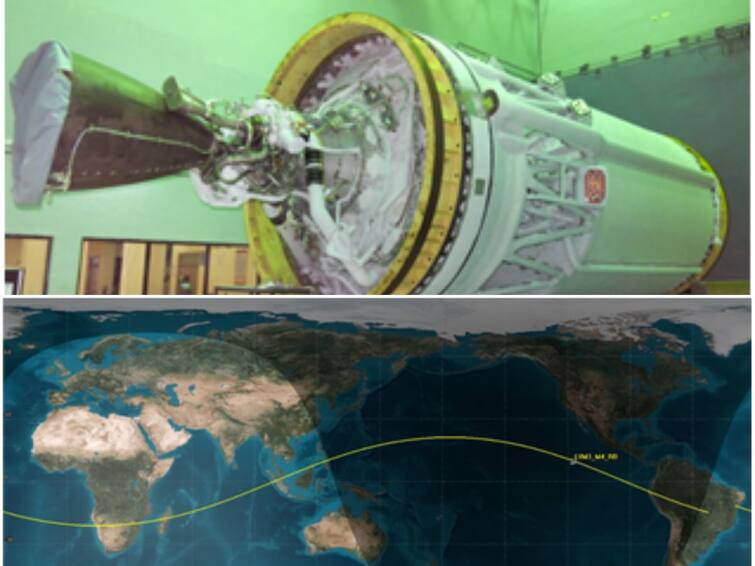

Chandrayaan-3: A part of Chandrayaan-3’s launch vehicle LVM3 M4 (Launch Vehicle Mark III) uncontrollably re-entered Earth’s atmosphere on Wednesday, November 15, 2023. This is the launch vehicle that injected India’s third Moon mission into its intended orbit on July 14, 2023. At 2:42 pm IST on November 15, the rocket’s cryogenic upper stage re-entered Earth’s atmosphere, ISRO said on its website. The name of the rocket body is NORAD id 57321.
About 124 days after launch, the rocket body re-entered Earth’s atmosphere. The Inter-Agency Space Debris Coordination Committee (IADC) recommends that the maximum post-mission orbital lifetime of low-Earth orbit objects should be 25 years. This means that the cryogenic upper stage of LVM3 is fully compliant with this rule.
MUST READ | Chandrayaan-3: Why Did Vikram And Pragyan Not Wake Up At Lunar Sunrise? Know If They Will In Future
After Chandrayaan-3 was injected into its intended orbit, the upper stage underwent a process called passivation. This helped remove all residual propellant and energy sources. It is important to remove these energy sources to minimise the risk of accidental explosions, according to the space debris mitigation guidelines by the United Nations and IADC.
The fact that the upper stage successfully performed passivation, and is also compliant with the post-mission orbital lifetime guidelines is a testament to India’s commitment to preserve the long-term sustainability of outer space activities, according to ISRO.
More about Chandrayaan-3
Chandrayaan-3 made a historic soft landing on the Moon’s south pole on August 23, 2023, making India the first country to achieve this feat. After completing a myriad of science experiments, Chandrayaan-3’s Vikram lander and Pragyan rover went to sleep. Their reawakening is unlikely.
Vikram and Pragyan made groundbreaking scientific discoveries and performed breakthrough experiments in just a week of starting operations on the Moon. Both Vikram and Pragyan started operations on August 24, 2023, the day after Chandrayaan-3 successfully soft landed on the Moon’s south pole.
MUST READ | Science For Everyone: Why It Is Important To Study The Sun, And How Aditya-L1 Will Do So
From creating the first temperature-depth profile on the Moon’s south pole, to confirming the presence of sulphur on the lunar south pole, from discovering that the lunar plasma environment above the south pole is sparse, to detecting a potential lunar quake, the payloads onboard Vikram and Pragyan achieved several milestones in less than a week.

Chandrayaan-3: A part of Chandrayaan-3’s launch vehicle LVM3 M4 (Launch Vehicle Mark III) uncontrollably re-entered Earth’s atmosphere on Wednesday, November 15, 2023. This is the launch vehicle that injected India’s third Moon mission into its intended orbit on July 14, 2023. At 2:42 pm IST on November 15, the rocket’s cryogenic upper stage re-entered Earth’s atmosphere, ISRO said on its website. The name of the rocket body is NORAD id 57321.
About 124 days after launch, the rocket body re-entered Earth’s atmosphere. The Inter-Agency Space Debris Coordination Committee (IADC) recommends that the maximum post-mission orbital lifetime of low-Earth orbit objects should be 25 years. This means that the cryogenic upper stage of LVM3 is fully compliant with this rule.
MUST READ | Chandrayaan-3: Why Did Vikram And Pragyan Not Wake Up At Lunar Sunrise? Know If They Will In Future
After Chandrayaan-3 was injected into its intended orbit, the upper stage underwent a process called passivation. This helped remove all residual propellant and energy sources. It is important to remove these energy sources to minimise the risk of accidental explosions, according to the space debris mitigation guidelines by the United Nations and IADC.
The fact that the upper stage successfully performed passivation, and is also compliant with the post-mission orbital lifetime guidelines is a testament to India’s commitment to preserve the long-term sustainability of outer space activities, according to ISRO.
More about Chandrayaan-3
Chandrayaan-3 made a historic soft landing on the Moon’s south pole on August 23, 2023, making India the first country to achieve this feat. After completing a myriad of science experiments, Chandrayaan-3’s Vikram lander and Pragyan rover went to sleep. Their reawakening is unlikely.
Vikram and Pragyan made groundbreaking scientific discoveries and performed breakthrough experiments in just a week of starting operations on the Moon. Both Vikram and Pragyan started operations on August 24, 2023, the day after Chandrayaan-3 successfully soft landed on the Moon’s south pole.
MUST READ | Science For Everyone: Why It Is Important To Study The Sun, And How Aditya-L1 Will Do So
From creating the first temperature-depth profile on the Moon’s south pole, to confirming the presence of sulphur on the lunar south pole, from discovering that the lunar plasma environment above the south pole is sparse, to detecting a potential lunar quake, the payloads onboard Vikram and Pragyan achieved several milestones in less than a week.

Chandrayaan-3: A part of Chandrayaan-3’s launch vehicle LVM3 M4 (Launch Vehicle Mark III) uncontrollably re-entered Earth’s atmosphere on Wednesday, November 15, 2023. This is the launch vehicle that injected India’s third Moon mission into its intended orbit on July 14, 2023. At 2:42 pm IST on November 15, the rocket’s cryogenic upper stage re-entered Earth’s atmosphere, ISRO said on its website. The name of the rocket body is NORAD id 57321.
About 124 days after launch, the rocket body re-entered Earth’s atmosphere. The Inter-Agency Space Debris Coordination Committee (IADC) recommends that the maximum post-mission orbital lifetime of low-Earth orbit objects should be 25 years. This means that the cryogenic upper stage of LVM3 is fully compliant with this rule.
MUST READ | Chandrayaan-3: Why Did Vikram And Pragyan Not Wake Up At Lunar Sunrise? Know If They Will In Future
After Chandrayaan-3 was injected into its intended orbit, the upper stage underwent a process called passivation. This helped remove all residual propellant and energy sources. It is important to remove these energy sources to minimise the risk of accidental explosions, according to the space debris mitigation guidelines by the United Nations and IADC.
The fact that the upper stage successfully performed passivation, and is also compliant with the post-mission orbital lifetime guidelines is a testament to India’s commitment to preserve the long-term sustainability of outer space activities, according to ISRO.
More about Chandrayaan-3
Chandrayaan-3 made a historic soft landing on the Moon’s south pole on August 23, 2023, making India the first country to achieve this feat. After completing a myriad of science experiments, Chandrayaan-3’s Vikram lander and Pragyan rover went to sleep. Their reawakening is unlikely.
Vikram and Pragyan made groundbreaking scientific discoveries and performed breakthrough experiments in just a week of starting operations on the Moon. Both Vikram and Pragyan started operations on August 24, 2023, the day after Chandrayaan-3 successfully soft landed on the Moon’s south pole.
MUST READ | Science For Everyone: Why It Is Important To Study The Sun, And How Aditya-L1 Will Do So
From creating the first temperature-depth profile on the Moon’s south pole, to confirming the presence of sulphur on the lunar south pole, from discovering that the lunar plasma environment above the south pole is sparse, to detecting a potential lunar quake, the payloads onboard Vikram and Pragyan achieved several milestones in less than a week.
Chandrayaan-3: A part of Chandrayaan-3’s launch vehicle LVM3 M4 (Launch Vehicle Mark III) uncontrollably re-entered Earth’s atmosphere on Wednesday, November 15, 2023. This is the launch vehicle that injected India’s third Moon mission into its intended orbit on July 14, 2023. At 2:42 pm IST on November 15, the rocket’s cryogenic upper stage re-entered Earth’s atmosphere, ISRO said on its website. The name of the rocket body is NORAD id 57321.
About 124 days after launch, the rocket body re-entered Earth’s atmosphere. The Inter-Agency Space Debris Coordination Committee (IADC) recommends that the maximum post-mission orbital lifetime of low-Earth orbit objects should be 25 years. This means that the cryogenic upper stage of LVM3 is fully compliant with this rule.
MUST READ | Chandrayaan-3: Why Did Vikram And Pragyan Not Wake Up At Lunar Sunrise? Know If They Will In Future
After Chandrayaan-3 was injected into its intended orbit, the upper stage underwent a process called passivation. This helped remove all residual propellant and energy sources. It is important to remove these energy sources to minimise the risk of accidental explosions, according to the space debris mitigation guidelines by the United Nations and IADC.
The fact that the upper stage successfully performed passivation, and is also compliant with the post-mission orbital lifetime guidelines is a testament to India’s commitment to preserve the long-term sustainability of outer space activities, according to ISRO.
More about Chandrayaan-3
Chandrayaan-3 made a historic soft landing on the Moon’s south pole on August 23, 2023, making India the first country to achieve this feat. After completing a myriad of science experiments, Chandrayaan-3’s Vikram lander and Pragyan rover went to sleep. Their reawakening is unlikely.
Vikram and Pragyan made groundbreaking scientific discoveries and performed breakthrough experiments in just a week of starting operations on the Moon. Both Vikram and Pragyan started operations on August 24, 2023, the day after Chandrayaan-3 successfully soft landed on the Moon’s south pole.
MUST READ | Science For Everyone: Why It Is Important To Study The Sun, And How Aditya-L1 Will Do So
From creating the first temperature-depth profile on the Moon’s south pole, to confirming the presence of sulphur on the lunar south pole, from discovering that the lunar plasma environment above the south pole is sparse, to detecting a potential lunar quake, the payloads onboard Vikram and Pragyan achieved several milestones in less than a week.

Chandrayaan-3: A part of Chandrayaan-3’s launch vehicle LVM3 M4 (Launch Vehicle Mark III) uncontrollably re-entered Earth’s atmosphere on Wednesday, November 15, 2023. This is the launch vehicle that injected India’s third Moon mission into its intended orbit on July 14, 2023. At 2:42 pm IST on November 15, the rocket’s cryogenic upper stage re-entered Earth’s atmosphere, ISRO said on its website. The name of the rocket body is NORAD id 57321.
About 124 days after launch, the rocket body re-entered Earth’s atmosphere. The Inter-Agency Space Debris Coordination Committee (IADC) recommends that the maximum post-mission orbital lifetime of low-Earth orbit objects should be 25 years. This means that the cryogenic upper stage of LVM3 is fully compliant with this rule.
MUST READ | Chandrayaan-3: Why Did Vikram And Pragyan Not Wake Up At Lunar Sunrise? Know If They Will In Future
After Chandrayaan-3 was injected into its intended orbit, the upper stage underwent a process called passivation. This helped remove all residual propellant and energy sources. It is important to remove these energy sources to minimise the risk of accidental explosions, according to the space debris mitigation guidelines by the United Nations and IADC.
The fact that the upper stage successfully performed passivation, and is also compliant with the post-mission orbital lifetime guidelines is a testament to India’s commitment to preserve the long-term sustainability of outer space activities, according to ISRO.
More about Chandrayaan-3
Chandrayaan-3 made a historic soft landing on the Moon’s south pole on August 23, 2023, making India the first country to achieve this feat. After completing a myriad of science experiments, Chandrayaan-3’s Vikram lander and Pragyan rover went to sleep. Their reawakening is unlikely.
Vikram and Pragyan made groundbreaking scientific discoveries and performed breakthrough experiments in just a week of starting operations on the Moon. Both Vikram and Pragyan started operations on August 24, 2023, the day after Chandrayaan-3 successfully soft landed on the Moon’s south pole.
MUST READ | Science For Everyone: Why It Is Important To Study The Sun, And How Aditya-L1 Will Do So
From creating the first temperature-depth profile on the Moon’s south pole, to confirming the presence of sulphur on the lunar south pole, from discovering that the lunar plasma environment above the south pole is sparse, to detecting a potential lunar quake, the payloads onboard Vikram and Pragyan achieved several milestones in less than a week.
Chandrayaan-3: A part of Chandrayaan-3’s launch vehicle LVM3 M4 (Launch Vehicle Mark III) uncontrollably re-entered Earth’s atmosphere on Wednesday, November 15, 2023. This is the launch vehicle that injected India’s third Moon mission into its intended orbit on July 14, 2023. At 2:42 pm IST on November 15, the rocket’s cryogenic upper stage re-entered Earth’s atmosphere, ISRO said on its website. The name of the rocket body is NORAD id 57321.
About 124 days after launch, the rocket body re-entered Earth’s atmosphere. The Inter-Agency Space Debris Coordination Committee (IADC) recommends that the maximum post-mission orbital lifetime of low-Earth orbit objects should be 25 years. This means that the cryogenic upper stage of LVM3 is fully compliant with this rule.
MUST READ | Chandrayaan-3: Why Did Vikram And Pragyan Not Wake Up At Lunar Sunrise? Know If They Will In Future
After Chandrayaan-3 was injected into its intended orbit, the upper stage underwent a process called passivation. This helped remove all residual propellant and energy sources. It is important to remove these energy sources to minimise the risk of accidental explosions, according to the space debris mitigation guidelines by the United Nations and IADC.
The fact that the upper stage successfully performed passivation, and is also compliant with the post-mission orbital lifetime guidelines is a testament to India’s commitment to preserve the long-term sustainability of outer space activities, according to ISRO.
More about Chandrayaan-3
Chandrayaan-3 made a historic soft landing on the Moon’s south pole on August 23, 2023, making India the first country to achieve this feat. After completing a myriad of science experiments, Chandrayaan-3’s Vikram lander and Pragyan rover went to sleep. Their reawakening is unlikely.
Vikram and Pragyan made groundbreaking scientific discoveries and performed breakthrough experiments in just a week of starting operations on the Moon. Both Vikram and Pragyan started operations on August 24, 2023, the day after Chandrayaan-3 successfully soft landed on the Moon’s south pole.
MUST READ | Science For Everyone: Why It Is Important To Study The Sun, And How Aditya-L1 Will Do So
From creating the first temperature-depth profile on the Moon’s south pole, to confirming the presence of sulphur on the lunar south pole, from discovering that the lunar plasma environment above the south pole is sparse, to detecting a potential lunar quake, the payloads onboard Vikram and Pragyan achieved several milestones in less than a week.
Chandrayaan-3: A part of Chandrayaan-3’s launch vehicle LVM3 M4 (Launch Vehicle Mark III) uncontrollably re-entered Earth’s atmosphere on Wednesday, November 15, 2023. This is the launch vehicle that injected India’s third Moon mission into its intended orbit on July 14, 2023. At 2:42 pm IST on November 15, the rocket’s cryogenic upper stage re-entered Earth’s atmosphere, ISRO said on its website. The name of the rocket body is NORAD id 57321.
About 124 days after launch, the rocket body re-entered Earth’s atmosphere. The Inter-Agency Space Debris Coordination Committee (IADC) recommends that the maximum post-mission orbital lifetime of low-Earth orbit objects should be 25 years. This means that the cryogenic upper stage of LVM3 is fully compliant with this rule.
MUST READ | Chandrayaan-3: Why Did Vikram And Pragyan Not Wake Up At Lunar Sunrise? Know If They Will In Future
After Chandrayaan-3 was injected into its intended orbit, the upper stage underwent a process called passivation. This helped remove all residual propellant and energy sources. It is important to remove these energy sources to minimise the risk of accidental explosions, according to the space debris mitigation guidelines by the United Nations and IADC.
The fact that the upper stage successfully performed passivation, and is also compliant with the post-mission orbital lifetime guidelines is a testament to India’s commitment to preserve the long-term sustainability of outer space activities, according to ISRO.
More about Chandrayaan-3
Chandrayaan-3 made a historic soft landing on the Moon’s south pole on August 23, 2023, making India the first country to achieve this feat. After completing a myriad of science experiments, Chandrayaan-3’s Vikram lander and Pragyan rover went to sleep. Their reawakening is unlikely.
Vikram and Pragyan made groundbreaking scientific discoveries and performed breakthrough experiments in just a week of starting operations on the Moon. Both Vikram and Pragyan started operations on August 24, 2023, the day after Chandrayaan-3 successfully soft landed on the Moon’s south pole.
MUST READ | Science For Everyone: Why It Is Important To Study The Sun, And How Aditya-L1 Will Do So
From creating the first temperature-depth profile on the Moon’s south pole, to confirming the presence of sulphur on the lunar south pole, from discovering that the lunar plasma environment above the south pole is sparse, to detecting a potential lunar quake, the payloads onboard Vikram and Pragyan achieved several milestones in less than a week.
Chandrayaan-3: A part of Chandrayaan-3’s launch vehicle LVM3 M4 (Launch Vehicle Mark III) uncontrollably re-entered Earth’s atmosphere on Wednesday, November 15, 2023. This is the launch vehicle that injected India’s third Moon mission into its intended orbit on July 14, 2023. At 2:42 pm IST on November 15, the rocket’s cryogenic upper stage re-entered Earth’s atmosphere, ISRO said on its website. The name of the rocket body is NORAD id 57321.
About 124 days after launch, the rocket body re-entered Earth’s atmosphere. The Inter-Agency Space Debris Coordination Committee (IADC) recommends that the maximum post-mission orbital lifetime of low-Earth orbit objects should be 25 years. This means that the cryogenic upper stage of LVM3 is fully compliant with this rule.
MUST READ | Chandrayaan-3: Why Did Vikram And Pragyan Not Wake Up At Lunar Sunrise? Know If They Will In Future
After Chandrayaan-3 was injected into its intended orbit, the upper stage underwent a process called passivation. This helped remove all residual propellant and energy sources. It is important to remove these energy sources to minimise the risk of accidental explosions, according to the space debris mitigation guidelines by the United Nations and IADC.
The fact that the upper stage successfully performed passivation, and is also compliant with the post-mission orbital lifetime guidelines is a testament to India’s commitment to preserve the long-term sustainability of outer space activities, according to ISRO.
More about Chandrayaan-3
Chandrayaan-3 made a historic soft landing on the Moon’s south pole on August 23, 2023, making India the first country to achieve this feat. After completing a myriad of science experiments, Chandrayaan-3’s Vikram lander and Pragyan rover went to sleep. Their reawakening is unlikely.
Vikram and Pragyan made groundbreaking scientific discoveries and performed breakthrough experiments in just a week of starting operations on the Moon. Both Vikram and Pragyan started operations on August 24, 2023, the day after Chandrayaan-3 successfully soft landed on the Moon’s south pole.
MUST READ | Science For Everyone: Why It Is Important To Study The Sun, And How Aditya-L1 Will Do So
From creating the first temperature-depth profile on the Moon’s south pole, to confirming the presence of sulphur on the lunar south pole, from discovering that the lunar plasma environment above the south pole is sparse, to detecting a potential lunar quake, the payloads onboard Vikram and Pragyan achieved several milestones in less than a week.

