

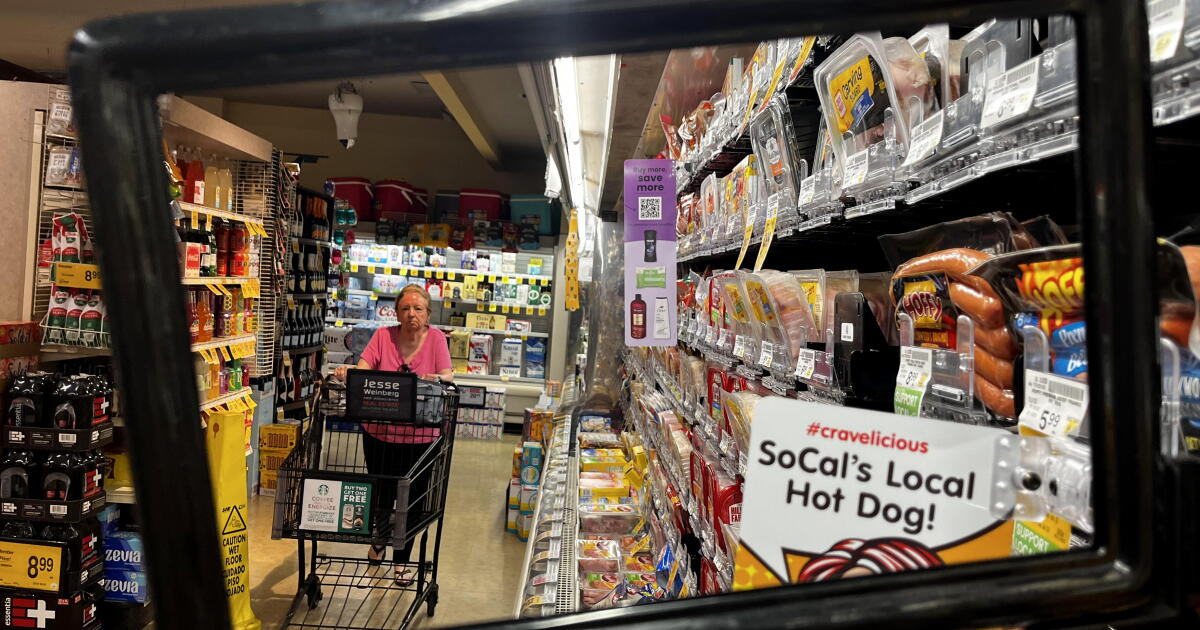
California is now on track to be the first state to create a front-of-package label to help consumers identify foods in the grocery store aisles that are not ultraprocessed.
Gov. Gavin Newsom signed Assembly Bill 2244 into law on Monday, which would “make a label clear in the grocery store so you can actually figure out what [foods are] the better and healthier choice,” the governor said in a video on YouTube.
The move comes despite the lack of a nationwide definition for what makes a food “ultraprocessed.” Some experts argue that a patchwork of state-by-state labeling, like California’s, could confuse the food industry as a whole.
Experts say ultraprocessed foods are those that have one or more ingredients that wouldn’t be found in a kitchen. Existing state law defines ultraprocessed foods, for school-provided meals, as any food or beverage that contains high amounts of saturated fat, sodium, added sugar or non-nutritive sweetener — the latter can be artificial (aspartame) or plant-based (Stevia) but are low in calories.
What the new law does
Under Assembly Bill 2244, the California Department of Public Health will be tasked with creating a standard non-ultraprocessed-food label that will be modeled after the widely recognized “USDA Organic” label, according to a news release from Newsom’s office.
“The seal will provide consumers with a simple, trustworthy way to identify healthier options with a quick glance,” the release states.
The state public health department will be required to accredit agents to certify food products as non-ultraprocessed no later than June 1, 2028.
Non-ultraprocessed foods that bear the new label will be listed on a public website maintained by the state public health department.
The bill also will require grocery stores in California to prominently display products bearing the “Non-Ultraprocessed Certified” seal.
A move to ‘empower consumers’
The term “ultraprocessed foods” was coined by nutritional epidemiologist Carlos Monteiro and his team at the University of São Paulo in the early 2000s.
They developed the Nova system, which classifies the degree to which a food product is processed, from minimal to ultraprocessed.
As the Mayo Clinic notes, “processing” can include washing, chopping, drying, packaging and a number of other things. Foods “cross into ultra-processed territory when they contain preservatives, flavorings and other food additives, or substances … to enhance flavor and increase shelf life.”
Researchers throughout the United States widely regard the Nova system when studying the correlation between the prolonged consumption of ultraprocessed foods and resulting health implications because the U.S. doesn’t have a definition of its own.
The U.S. Food and Drug Administration is currently working with the U.S. Department of Agriculture to develop a uniform definition of ultraprocessed foods.
“While Washington D.C. is paralyzed by inaction, Republicans and Democrats in California are joining forces to empower consumers to avoid harmful ultra-processed foods,” said Assemblymember Jesse Gabriel (D-Encino), author of Assembly Bill 2244. “Parents shouldn’t need a Ph.D. in chemistry to understand what they’re feeding their kids.”
Reasons for caution
Last year, researchers with USC’s Keck School of Medicine published a study that found that an increase in ultraprocessed food intake was associated with a higher risk of prediabetes, or early-stage high blood sugar that can lead to diabetes — part of their study process included taking blood samples.
However, experts at UC Davis have previously noted that the vast majority of research on ultra-processed foods has been observational, meaning people are asked to report what they eat and scientists take that information and use statistical analysis to explore associations with various health outcomes.
Many consumers struggle to distinguish between minimally processed and highly processed products due to confusing labels and marketing practices.
Anna Rosales, of the Institute of Food Technologists, said California’s new food label may sound straightforward, but for food scientists, regulators, manufacturers, and others across the food system, the new law raises a more complicated question.
“What are the implications of individual states creating certification programs around UPFs while the federal government is still working to define the term,” said Rosales, vice president of science and policy for the nonprofit society of food-science and -technology professionals, in a news release.
As California ushers in its certification label, she said, other states could adopt similar certification programs or develop their own definitions of ultraprocessed foods while a uniform federal definition is still in the works.
“[M]anufacturers, retailers, schools, and consumers could eventually face different interpretations of what qualifies as an ultra-processed food,” Rosales said.

California is now on track to be the first state to create a front-of-package label to help consumers identify foods in the grocery store aisles that are not ultraprocessed.
Gov. Gavin Newsom signed Assembly Bill 2244 into law on Monday, which would “make a label clear in the grocery store so you can actually figure out what [foods are] the better and healthier choice,” the governor said in a video on YouTube.
The move comes despite the lack of a nationwide definition for what makes a food “ultraprocessed.” Some experts argue that a patchwork of state-by-state labeling, like California’s, could confuse the food industry as a whole.
Experts say ultraprocessed foods are those that have one or more ingredients that wouldn’t be found in a kitchen. Existing state law defines ultraprocessed foods, for school-provided meals, as any food or beverage that contains high amounts of saturated fat, sodium, added sugar or non-nutritive sweetener — the latter can be artificial (aspartame) or plant-based (Stevia) but are low in calories.
What the new law does
Under Assembly Bill 2244, the California Department of Public Health will be tasked with creating a standard non-ultraprocessed-food label that will be modeled after the widely recognized “USDA Organic” label, according to a news release from Newsom’s office.
“The seal will provide consumers with a simple, trustworthy way to identify healthier options with a quick glance,” the release states.
The state public health department will be required to accredit agents to certify food products as non-ultraprocessed no later than June 1, 2028.
Non-ultraprocessed foods that bear the new label will be listed on a public website maintained by the state public health department.
The bill also will require grocery stores in California to prominently display products bearing the “Non-Ultraprocessed Certified” seal.
A move to ‘empower consumers’
The term “ultraprocessed foods” was coined by nutritional epidemiologist Carlos Monteiro and his team at the University of São Paulo in the early 2000s.
They developed the Nova system, which classifies the degree to which a food product is processed, from minimal to ultraprocessed.
As the Mayo Clinic notes, “processing” can include washing, chopping, drying, packaging and a number of other things. Foods “cross into ultra-processed territory when they contain preservatives, flavorings and other food additives, or substances … to enhance flavor and increase shelf life.”
Researchers throughout the United States widely regard the Nova system when studying the correlation between the prolonged consumption of ultraprocessed foods and resulting health implications because the U.S. doesn’t have a definition of its own.
The U.S. Food and Drug Administration is currently working with the U.S. Department of Agriculture to develop a uniform definition of ultraprocessed foods.
“While Washington D.C. is paralyzed by inaction, Republicans and Democrats in California are joining forces to empower consumers to avoid harmful ultra-processed foods,” said Assemblymember Jesse Gabriel (D-Encino), author of Assembly Bill 2244. “Parents shouldn’t need a Ph.D. in chemistry to understand what they’re feeding their kids.”
Reasons for caution
Last year, researchers with USC’s Keck School of Medicine published a study that found that an increase in ultraprocessed food intake was associated with a higher risk of prediabetes, or early-stage high blood sugar that can lead to diabetes — part of their study process included taking blood samples.
However, experts at UC Davis have previously noted that the vast majority of research on ultra-processed foods has been observational, meaning people are asked to report what they eat and scientists take that information and use statistical analysis to explore associations with various health outcomes.
Many consumers struggle to distinguish between minimally processed and highly processed products due to confusing labels and marketing practices.
Anna Rosales, of the Institute of Food Technologists, said California’s new food label may sound straightforward, but for food scientists, regulators, manufacturers, and others across the food system, the new law raises a more complicated question.
“What are the implications of individual states creating certification programs around UPFs while the federal government is still working to define the term,” said Rosales, vice president of science and policy for the nonprofit society of food-science and -technology professionals, in a news release.
As California ushers in its certification label, she said, other states could adopt similar certification programs or develop their own definitions of ultraprocessed foods while a uniform federal definition is still in the works.
“[M]anufacturers, retailers, schools, and consumers could eventually face different interpretations of what qualifies as an ultra-processed food,” Rosales said.

California is now on track to be the first state to create a front-of-package label to help consumers identify foods in the grocery store aisles that are not ultraprocessed.
Gov. Gavin Newsom signed Assembly Bill 2244 into law on Monday, which would “make a label clear in the grocery store so you can actually figure out what [foods are] the better and healthier choice,” the governor said in a video on YouTube.
The move comes despite the lack of a nationwide definition for what makes a food “ultraprocessed.” Some experts argue that a patchwork of state-by-state labeling, like California’s, could confuse the food industry as a whole.
Experts say ultraprocessed foods are those that have one or more ingredients that wouldn’t be found in a kitchen. Existing state law defines ultraprocessed foods, for school-provided meals, as any food or beverage that contains high amounts of saturated fat, sodium, added sugar or non-nutritive sweetener — the latter can be artificial (aspartame) or plant-based (Stevia) but are low in calories.
What the new law does
Under Assembly Bill 2244, the California Department of Public Health will be tasked with creating a standard non-ultraprocessed-food label that will be modeled after the widely recognized “USDA Organic” label, according to a news release from Newsom’s office.
“The seal will provide consumers with a simple, trustworthy way to identify healthier options with a quick glance,” the release states.
The state public health department will be required to accredit agents to certify food products as non-ultraprocessed no later than June 1, 2028.
Non-ultraprocessed foods that bear the new label will be listed on a public website maintained by the state public health department.
The bill also will require grocery stores in California to prominently display products bearing the “Non-Ultraprocessed Certified” seal.
A move to ‘empower consumers’
The term “ultraprocessed foods” was coined by nutritional epidemiologist Carlos Monteiro and his team at the University of São Paulo in the early 2000s.
They developed the Nova system, which classifies the degree to which a food product is processed, from minimal to ultraprocessed.
As the Mayo Clinic notes, “processing” can include washing, chopping, drying, packaging and a number of other things. Foods “cross into ultra-processed territory when they contain preservatives, flavorings and other food additives, or substances … to enhance flavor and increase shelf life.”
Researchers throughout the United States widely regard the Nova system when studying the correlation between the prolonged consumption of ultraprocessed foods and resulting health implications because the U.S. doesn’t have a definition of its own.
The U.S. Food and Drug Administration is currently working with the U.S. Department of Agriculture to develop a uniform definition of ultraprocessed foods.
“While Washington D.C. is paralyzed by inaction, Republicans and Democrats in California are joining forces to empower consumers to avoid harmful ultra-processed foods,” said Assemblymember Jesse Gabriel (D-Encino), author of Assembly Bill 2244. “Parents shouldn’t need a Ph.D. in chemistry to understand what they’re feeding their kids.”
Reasons for caution
Last year, researchers with USC’s Keck School of Medicine published a study that found that an increase in ultraprocessed food intake was associated with a higher risk of prediabetes, or early-stage high blood sugar that can lead to diabetes — part of their study process included taking blood samples.
However, experts at UC Davis have previously noted that the vast majority of research on ultra-processed foods has been observational, meaning people are asked to report what they eat and scientists take that information and use statistical analysis to explore associations with various health outcomes.
Many consumers struggle to distinguish between minimally processed and highly processed products due to confusing labels and marketing practices.
Anna Rosales, of the Institute of Food Technologists, said California’s new food label may sound straightforward, but for food scientists, regulators, manufacturers, and others across the food system, the new law raises a more complicated question.
“What are the implications of individual states creating certification programs around UPFs while the federal government is still working to define the term,” said Rosales, vice president of science and policy for the nonprofit society of food-science and -technology professionals, in a news release.
As California ushers in its certification label, she said, other states could adopt similar certification programs or develop their own definitions of ultraprocessed foods while a uniform federal definition is still in the works.
“[M]anufacturers, retailers, schools, and consumers could eventually face different interpretations of what qualifies as an ultra-processed food,” Rosales said.
California is now on track to be the first state to create a front-of-package label to help consumers identify foods in the grocery store aisles that are not ultraprocessed.
Gov. Gavin Newsom signed Assembly Bill 2244 into law on Monday, which would “make a label clear in the grocery store so you can actually figure out what [foods are] the better and healthier choice,” the governor said in a video on YouTube.
The move comes despite the lack of a nationwide definition for what makes a food “ultraprocessed.” Some experts argue that a patchwork of state-by-state labeling, like California’s, could confuse the food industry as a whole.
Experts say ultraprocessed foods are those that have one or more ingredients that wouldn’t be found in a kitchen. Existing state law defines ultraprocessed foods, for school-provided meals, as any food or beverage that contains high amounts of saturated fat, sodium, added sugar or non-nutritive sweetener — the latter can be artificial (aspartame) or plant-based (Stevia) but are low in calories.
What the new law does
Under Assembly Bill 2244, the California Department of Public Health will be tasked with creating a standard non-ultraprocessed-food label that will be modeled after the widely recognized “USDA Organic” label, according to a news release from Newsom’s office.
“The seal will provide consumers with a simple, trustworthy way to identify healthier options with a quick glance,” the release states.
The state public health department will be required to accredit agents to certify food products as non-ultraprocessed no later than June 1, 2028.
Non-ultraprocessed foods that bear the new label will be listed on a public website maintained by the state public health department.
The bill also will require grocery stores in California to prominently display products bearing the “Non-Ultraprocessed Certified” seal.
A move to ‘empower consumers’
The term “ultraprocessed foods” was coined by nutritional epidemiologist Carlos Monteiro and his team at the University of São Paulo in the early 2000s.
They developed the Nova system, which classifies the degree to which a food product is processed, from minimal to ultraprocessed.
As the Mayo Clinic notes, “processing” can include washing, chopping, drying, packaging and a number of other things. Foods “cross into ultra-processed territory when they contain preservatives, flavorings and other food additives, or substances … to enhance flavor and increase shelf life.”
Researchers throughout the United States widely regard the Nova system when studying the correlation between the prolonged consumption of ultraprocessed foods and resulting health implications because the U.S. doesn’t have a definition of its own.
The U.S. Food and Drug Administration is currently working with the U.S. Department of Agriculture to develop a uniform definition of ultraprocessed foods.
“While Washington D.C. is paralyzed by inaction, Republicans and Democrats in California are joining forces to empower consumers to avoid harmful ultra-processed foods,” said Assemblymember Jesse Gabriel (D-Encino), author of Assembly Bill 2244. “Parents shouldn’t need a Ph.D. in chemistry to understand what they’re feeding their kids.”
Reasons for caution
Last year, researchers with USC’s Keck School of Medicine published a study that found that an increase in ultraprocessed food intake was associated with a higher risk of prediabetes, or early-stage high blood sugar that can lead to diabetes — part of their study process included taking blood samples.
However, experts at UC Davis have previously noted that the vast majority of research on ultra-processed foods has been observational, meaning people are asked to report what they eat and scientists take that information and use statistical analysis to explore associations with various health outcomes.
Many consumers struggle to distinguish between minimally processed and highly processed products due to confusing labels and marketing practices.
Anna Rosales, of the Institute of Food Technologists, said California’s new food label may sound straightforward, but for food scientists, regulators, manufacturers, and others across the food system, the new law raises a more complicated question.
“What are the implications of individual states creating certification programs around UPFs while the federal government is still working to define the term,” said Rosales, vice president of science and policy for the nonprofit society of food-science and -technology professionals, in a news release.
As California ushers in its certification label, she said, other states could adopt similar certification programs or develop their own definitions of ultraprocessed foods while a uniform federal definition is still in the works.
“[M]anufacturers, retailers, schools, and consumers could eventually face different interpretations of what qualifies as an ultra-processed food,” Rosales said.

California is now on track to be the first state to create a front-of-package label to help consumers identify foods in the grocery store aisles that are not ultraprocessed.
Gov. Gavin Newsom signed Assembly Bill 2244 into law on Monday, which would “make a label clear in the grocery store so you can actually figure out what [foods are] the better and healthier choice,” the governor said in a video on YouTube.
The move comes despite the lack of a nationwide definition for what makes a food “ultraprocessed.” Some experts argue that a patchwork of state-by-state labeling, like California’s, could confuse the food industry as a whole.
Experts say ultraprocessed foods are those that have one or more ingredients that wouldn’t be found in a kitchen. Existing state law defines ultraprocessed foods, for school-provided meals, as any food or beverage that contains high amounts of saturated fat, sodium, added sugar or non-nutritive sweetener — the latter can be artificial (aspartame) or plant-based (Stevia) but are low in calories.
What the new law does
Under Assembly Bill 2244, the California Department of Public Health will be tasked with creating a standard non-ultraprocessed-food label that will be modeled after the widely recognized “USDA Organic” label, according to a news release from Newsom’s office.
“The seal will provide consumers with a simple, trustworthy way to identify healthier options with a quick glance,” the release states.
The state public health department will be required to accredit agents to certify food products as non-ultraprocessed no later than June 1, 2028.
Non-ultraprocessed foods that bear the new label will be listed on a public website maintained by the state public health department.
The bill also will require grocery stores in California to prominently display products bearing the “Non-Ultraprocessed Certified” seal.
A move to ‘empower consumers’
The term “ultraprocessed foods” was coined by nutritional epidemiologist Carlos Monteiro and his team at the University of São Paulo in the early 2000s.
They developed the Nova system, which classifies the degree to which a food product is processed, from minimal to ultraprocessed.
As the Mayo Clinic notes, “processing” can include washing, chopping, drying, packaging and a number of other things. Foods “cross into ultra-processed territory when they contain preservatives, flavorings and other food additives, or substances … to enhance flavor and increase shelf life.”
Researchers throughout the United States widely regard the Nova system when studying the correlation between the prolonged consumption of ultraprocessed foods and resulting health implications because the U.S. doesn’t have a definition of its own.
The U.S. Food and Drug Administration is currently working with the U.S. Department of Agriculture to develop a uniform definition of ultraprocessed foods.
“While Washington D.C. is paralyzed by inaction, Republicans and Democrats in California are joining forces to empower consumers to avoid harmful ultra-processed foods,” said Assemblymember Jesse Gabriel (D-Encino), author of Assembly Bill 2244. “Parents shouldn’t need a Ph.D. in chemistry to understand what they’re feeding their kids.”
Reasons for caution
Last year, researchers with USC’s Keck School of Medicine published a study that found that an increase in ultraprocessed food intake was associated with a higher risk of prediabetes, or early-stage high blood sugar that can lead to diabetes — part of their study process included taking blood samples.
However, experts at UC Davis have previously noted that the vast majority of research on ultra-processed foods has been observational, meaning people are asked to report what they eat and scientists take that information and use statistical analysis to explore associations with various health outcomes.
Many consumers struggle to distinguish between minimally processed and highly processed products due to confusing labels and marketing practices.
Anna Rosales, of the Institute of Food Technologists, said California’s new food label may sound straightforward, but for food scientists, regulators, manufacturers, and others across the food system, the new law raises a more complicated question.
“What are the implications of individual states creating certification programs around UPFs while the federal government is still working to define the term,” said Rosales, vice president of science and policy for the nonprofit society of food-science and -technology professionals, in a news release.
As California ushers in its certification label, she said, other states could adopt similar certification programs or develop their own definitions of ultraprocessed foods while a uniform federal definition is still in the works.
“[M]anufacturers, retailers, schools, and consumers could eventually face different interpretations of what qualifies as an ultra-processed food,” Rosales said.
California is now on track to be the first state to create a front-of-package label to help consumers identify foods in the grocery store aisles that are not ultraprocessed.
Gov. Gavin Newsom signed Assembly Bill 2244 into law on Monday, which would “make a label clear in the grocery store so you can actually figure out what [foods are] the better and healthier choice,” the governor said in a video on YouTube.
The move comes despite the lack of a nationwide definition for what makes a food “ultraprocessed.” Some experts argue that a patchwork of state-by-state labeling, like California’s, could confuse the food industry as a whole.
Experts say ultraprocessed foods are those that have one or more ingredients that wouldn’t be found in a kitchen. Existing state law defines ultraprocessed foods, for school-provided meals, as any food or beverage that contains high amounts of saturated fat, sodium, added sugar or non-nutritive sweetener — the latter can be artificial (aspartame) or plant-based (Stevia) but are low in calories.
What the new law does
Under Assembly Bill 2244, the California Department of Public Health will be tasked with creating a standard non-ultraprocessed-food label that will be modeled after the widely recognized “USDA Organic” label, according to a news release from Newsom’s office.
“The seal will provide consumers with a simple, trustworthy way to identify healthier options with a quick glance,” the release states.
The state public health department will be required to accredit agents to certify food products as non-ultraprocessed no later than June 1, 2028.
Non-ultraprocessed foods that bear the new label will be listed on a public website maintained by the state public health department.
The bill also will require grocery stores in California to prominently display products bearing the “Non-Ultraprocessed Certified” seal.
A move to ‘empower consumers’
The term “ultraprocessed foods” was coined by nutritional epidemiologist Carlos Monteiro and his team at the University of São Paulo in the early 2000s.
They developed the Nova system, which classifies the degree to which a food product is processed, from minimal to ultraprocessed.
As the Mayo Clinic notes, “processing” can include washing, chopping, drying, packaging and a number of other things. Foods “cross into ultra-processed territory when they contain preservatives, flavorings and other food additives, or substances … to enhance flavor and increase shelf life.”
Researchers throughout the United States widely regard the Nova system when studying the correlation between the prolonged consumption of ultraprocessed foods and resulting health implications because the U.S. doesn’t have a definition of its own.
The U.S. Food and Drug Administration is currently working with the U.S. Department of Agriculture to develop a uniform definition of ultraprocessed foods.
“While Washington D.C. is paralyzed by inaction, Republicans and Democrats in California are joining forces to empower consumers to avoid harmful ultra-processed foods,” said Assemblymember Jesse Gabriel (D-Encino), author of Assembly Bill 2244. “Parents shouldn’t need a Ph.D. in chemistry to understand what they’re feeding their kids.”
Reasons for caution
Last year, researchers with USC’s Keck School of Medicine published a study that found that an increase in ultraprocessed food intake was associated with a higher risk of prediabetes, or early-stage high blood sugar that can lead to diabetes — part of their study process included taking blood samples.
However, experts at UC Davis have previously noted that the vast majority of research on ultra-processed foods has been observational, meaning people are asked to report what they eat and scientists take that information and use statistical analysis to explore associations with various health outcomes.
Many consumers struggle to distinguish between minimally processed and highly processed products due to confusing labels and marketing practices.
Anna Rosales, of the Institute of Food Technologists, said California’s new food label may sound straightforward, but for food scientists, regulators, manufacturers, and others across the food system, the new law raises a more complicated question.
“What are the implications of individual states creating certification programs around UPFs while the federal government is still working to define the term,” said Rosales, vice president of science and policy for the nonprofit society of food-science and -technology professionals, in a news release.
As California ushers in its certification label, she said, other states could adopt similar certification programs or develop their own definitions of ultraprocessed foods while a uniform federal definition is still in the works.
“[M]anufacturers, retailers, schools, and consumers could eventually face different interpretations of what qualifies as an ultra-processed food,” Rosales said.
California is now on track to be the first state to create a front-of-package label to help consumers identify foods in the grocery store aisles that are not ultraprocessed.
Gov. Gavin Newsom signed Assembly Bill 2244 into law on Monday, which would “make a label clear in the grocery store so you can actually figure out what [foods are] the better and healthier choice,” the governor said in a video on YouTube.
The move comes despite the lack of a nationwide definition for what makes a food “ultraprocessed.” Some experts argue that a patchwork of state-by-state labeling, like California’s, could confuse the food industry as a whole.
Experts say ultraprocessed foods are those that have one or more ingredients that wouldn’t be found in a kitchen. Existing state law defines ultraprocessed foods, for school-provided meals, as any food or beverage that contains high amounts of saturated fat, sodium, added sugar or non-nutritive sweetener — the latter can be artificial (aspartame) or plant-based (Stevia) but are low in calories.
What the new law does
Under Assembly Bill 2244, the California Department of Public Health will be tasked with creating a standard non-ultraprocessed-food label that will be modeled after the widely recognized “USDA Organic” label, according to a news release from Newsom’s office.
“The seal will provide consumers with a simple, trustworthy way to identify healthier options with a quick glance,” the release states.
The state public health department will be required to accredit agents to certify food products as non-ultraprocessed no later than June 1, 2028.
Non-ultraprocessed foods that bear the new label will be listed on a public website maintained by the state public health department.
The bill also will require grocery stores in California to prominently display products bearing the “Non-Ultraprocessed Certified” seal.
A move to ‘empower consumers’
The term “ultraprocessed foods” was coined by nutritional epidemiologist Carlos Monteiro and his team at the University of São Paulo in the early 2000s.
They developed the Nova system, which classifies the degree to which a food product is processed, from minimal to ultraprocessed.
As the Mayo Clinic notes, “processing” can include washing, chopping, drying, packaging and a number of other things. Foods “cross into ultra-processed territory when they contain preservatives, flavorings and other food additives, or substances … to enhance flavor and increase shelf life.”
Researchers throughout the United States widely regard the Nova system when studying the correlation between the prolonged consumption of ultraprocessed foods and resulting health implications because the U.S. doesn’t have a definition of its own.
The U.S. Food and Drug Administration is currently working with the U.S. Department of Agriculture to develop a uniform definition of ultraprocessed foods.
“While Washington D.C. is paralyzed by inaction, Republicans and Democrats in California are joining forces to empower consumers to avoid harmful ultra-processed foods,” said Assemblymember Jesse Gabriel (D-Encino), author of Assembly Bill 2244. “Parents shouldn’t need a Ph.D. in chemistry to understand what they’re feeding their kids.”
Reasons for caution
Last year, researchers with USC’s Keck School of Medicine published a study that found that an increase in ultraprocessed food intake was associated with a higher risk of prediabetes, or early-stage high blood sugar that can lead to diabetes — part of their study process included taking blood samples.
However, experts at UC Davis have previously noted that the vast majority of research on ultra-processed foods has been observational, meaning people are asked to report what they eat and scientists take that information and use statistical analysis to explore associations with various health outcomes.
Many consumers struggle to distinguish between minimally processed and highly processed products due to confusing labels and marketing practices.
Anna Rosales, of the Institute of Food Technologists, said California’s new food label may sound straightforward, but for food scientists, regulators, manufacturers, and others across the food system, the new law raises a more complicated question.
“What are the implications of individual states creating certification programs around UPFs while the federal government is still working to define the term,” said Rosales, vice president of science and policy for the nonprofit society of food-science and -technology professionals, in a news release.
As California ushers in its certification label, she said, other states could adopt similar certification programs or develop their own definitions of ultraprocessed foods while a uniform federal definition is still in the works.
“[M]anufacturers, retailers, schools, and consumers could eventually face different interpretations of what qualifies as an ultra-processed food,” Rosales said.
California is now on track to be the first state to create a front-of-package label to help consumers identify foods in the grocery store aisles that are not ultraprocessed.
Gov. Gavin Newsom signed Assembly Bill 2244 into law on Monday, which would “make a label clear in the grocery store so you can actually figure out what [foods are] the better and healthier choice,” the governor said in a video on YouTube.
The move comes despite the lack of a nationwide definition for what makes a food “ultraprocessed.” Some experts argue that a patchwork of state-by-state labeling, like California’s, could confuse the food industry as a whole.
Experts say ultraprocessed foods are those that have one or more ingredients that wouldn’t be found in a kitchen. Existing state law defines ultraprocessed foods, for school-provided meals, as any food or beverage that contains high amounts of saturated fat, sodium, added sugar or non-nutritive sweetener — the latter can be artificial (aspartame) or plant-based (Stevia) but are low in calories.
What the new law does
Under Assembly Bill 2244, the California Department of Public Health will be tasked with creating a standard non-ultraprocessed-food label that will be modeled after the widely recognized “USDA Organic” label, according to a news release from Newsom’s office.
“The seal will provide consumers with a simple, trustworthy way to identify healthier options with a quick glance,” the release states.
The state public health department will be required to accredit agents to certify food products as non-ultraprocessed no later than June 1, 2028.
Non-ultraprocessed foods that bear the new label will be listed on a public website maintained by the state public health department.
The bill also will require grocery stores in California to prominently display products bearing the “Non-Ultraprocessed Certified” seal.
A move to ‘empower consumers’
The term “ultraprocessed foods” was coined by nutritional epidemiologist Carlos Monteiro and his team at the University of São Paulo in the early 2000s.
They developed the Nova system, which classifies the degree to which a food product is processed, from minimal to ultraprocessed.
As the Mayo Clinic notes, “processing” can include washing, chopping, drying, packaging and a number of other things. Foods “cross into ultra-processed territory when they contain preservatives, flavorings and other food additives, or substances … to enhance flavor and increase shelf life.”
Researchers throughout the United States widely regard the Nova system when studying the correlation between the prolonged consumption of ultraprocessed foods and resulting health implications because the U.S. doesn’t have a definition of its own.
The U.S. Food and Drug Administration is currently working with the U.S. Department of Agriculture to develop a uniform definition of ultraprocessed foods.
“While Washington D.C. is paralyzed by inaction, Republicans and Democrats in California are joining forces to empower consumers to avoid harmful ultra-processed foods,” said Assemblymember Jesse Gabriel (D-Encino), author of Assembly Bill 2244. “Parents shouldn’t need a Ph.D. in chemistry to understand what they’re feeding their kids.”
Reasons for caution
Last year, researchers with USC’s Keck School of Medicine published a study that found that an increase in ultraprocessed food intake was associated with a higher risk of prediabetes, or early-stage high blood sugar that can lead to diabetes — part of their study process included taking blood samples.
However, experts at UC Davis have previously noted that the vast majority of research on ultra-processed foods has been observational, meaning people are asked to report what they eat and scientists take that information and use statistical analysis to explore associations with various health outcomes.
Many consumers struggle to distinguish between minimally processed and highly processed products due to confusing labels and marketing practices.
Anna Rosales, of the Institute of Food Technologists, said California’s new food label may sound straightforward, but for food scientists, regulators, manufacturers, and others across the food system, the new law raises a more complicated question.
“What are the implications of individual states creating certification programs around UPFs while the federal government is still working to define the term,” said Rosales, vice president of science and policy for the nonprofit society of food-science and -technology professionals, in a news release.
As California ushers in its certification label, she said, other states could adopt similar certification programs or develop their own definitions of ultraprocessed foods while a uniform federal definition is still in the works.
“[M]anufacturers, retailers, schools, and consumers could eventually face different interpretations of what qualifies as an ultra-processed food,” Rosales said.

California is now on track to be the first state to create a front-of-package label to help consumers identify foods in the grocery store aisles that are not ultraprocessed.
Gov. Gavin Newsom signed Assembly Bill 2244 into law on Monday, which would “make a label clear in the grocery store so you can actually figure out what [foods are] the better and healthier choice,” the governor said in a video on YouTube.
The move comes despite the lack of a nationwide definition for what makes a food “ultraprocessed.” Some experts argue that a patchwork of state-by-state labeling, like California’s, could confuse the food industry as a whole.
Experts say ultraprocessed foods are those that have one or more ingredients that wouldn’t be found in a kitchen. Existing state law defines ultraprocessed foods, for school-provided meals, as any food or beverage that contains high amounts of saturated fat, sodium, added sugar or non-nutritive sweetener — the latter can be artificial (aspartame) or plant-based (Stevia) but are low in calories.
What the new law does
Under Assembly Bill 2244, the California Department of Public Health will be tasked with creating a standard non-ultraprocessed-food label that will be modeled after the widely recognized “USDA Organic” label, according to a news release from Newsom’s office.
“The seal will provide consumers with a simple, trustworthy way to identify healthier options with a quick glance,” the release states.
The state public health department will be required to accredit agents to certify food products as non-ultraprocessed no later than June 1, 2028.
Non-ultraprocessed foods that bear the new label will be listed on a public website maintained by the state public health department.
The bill also will require grocery stores in California to prominently display products bearing the “Non-Ultraprocessed Certified” seal.
A move to ‘empower consumers’
The term “ultraprocessed foods” was coined by nutritional epidemiologist Carlos Monteiro and his team at the University of São Paulo in the early 2000s.
They developed the Nova system, which classifies the degree to which a food product is processed, from minimal to ultraprocessed.
As the Mayo Clinic notes, “processing” can include washing, chopping, drying, packaging and a number of other things. Foods “cross into ultra-processed territory when they contain preservatives, flavorings and other food additives, or substances … to enhance flavor and increase shelf life.”
Researchers throughout the United States widely regard the Nova system when studying the correlation between the prolonged consumption of ultraprocessed foods and resulting health implications because the U.S. doesn’t have a definition of its own.
The U.S. Food and Drug Administration is currently working with the U.S. Department of Agriculture to develop a uniform definition of ultraprocessed foods.
“While Washington D.C. is paralyzed by inaction, Republicans and Democrats in California are joining forces to empower consumers to avoid harmful ultra-processed foods,” said Assemblymember Jesse Gabriel (D-Encino), author of Assembly Bill 2244. “Parents shouldn’t need a Ph.D. in chemistry to understand what they’re feeding their kids.”
Reasons for caution
Last year, researchers with USC’s Keck School of Medicine published a study that found that an increase in ultraprocessed food intake was associated with a higher risk of prediabetes, or early-stage high blood sugar that can lead to diabetes — part of their study process included taking blood samples.
However, experts at UC Davis have previously noted that the vast majority of research on ultra-processed foods has been observational, meaning people are asked to report what they eat and scientists take that information and use statistical analysis to explore associations with various health outcomes.
Many consumers struggle to distinguish between minimally processed and highly processed products due to confusing labels and marketing practices.
Anna Rosales, of the Institute of Food Technologists, said California’s new food label may sound straightforward, but for food scientists, regulators, manufacturers, and others across the food system, the new law raises a more complicated question.
“What are the implications of individual states creating certification programs around UPFs while the federal government is still working to define the term,” said Rosales, vice president of science and policy for the nonprofit society of food-science and -technology professionals, in a news release.
As California ushers in its certification label, she said, other states could adopt similar certification programs or develop their own definitions of ultraprocessed foods while a uniform federal definition is still in the works.
“[M]anufacturers, retailers, schools, and consumers could eventually face different interpretations of what qualifies as an ultra-processed food,” Rosales said.
California is now on track to be the first state to create a front-of-package label to help consumers identify foods in the grocery store aisles that are not ultraprocessed.
Gov. Gavin Newsom signed Assembly Bill 2244 into law on Monday, which would “make a label clear in the grocery store so you can actually figure out what [foods are] the better and healthier choice,” the governor said in a video on YouTube.
The move comes despite the lack of a nationwide definition for what makes a food “ultraprocessed.” Some experts argue that a patchwork of state-by-state labeling, like California’s, could confuse the food industry as a whole.
Experts say ultraprocessed foods are those that have one or more ingredients that wouldn’t be found in a kitchen. Existing state law defines ultraprocessed foods, for school-provided meals, as any food or beverage that contains high amounts of saturated fat, sodium, added sugar or non-nutritive sweetener — the latter can be artificial (aspartame) or plant-based (Stevia) but are low in calories.
What the new law does
Under Assembly Bill 2244, the California Department of Public Health will be tasked with creating a standard non-ultraprocessed-food label that will be modeled after the widely recognized “USDA Organic” label, according to a news release from Newsom’s office.
“The seal will provide consumers with a simple, trustworthy way to identify healthier options with a quick glance,” the release states.
The state public health department will be required to accredit agents to certify food products as non-ultraprocessed no later than June 1, 2028.
Non-ultraprocessed foods that bear the new label will be listed on a public website maintained by the state public health department.
The bill also will require grocery stores in California to prominently display products bearing the “Non-Ultraprocessed Certified” seal.
A move to ‘empower consumers’
The term “ultraprocessed foods” was coined by nutritional epidemiologist Carlos Monteiro and his team at the University of São Paulo in the early 2000s.
They developed the Nova system, which classifies the degree to which a food product is processed, from minimal to ultraprocessed.
As the Mayo Clinic notes, “processing” can include washing, chopping, drying, packaging and a number of other things. Foods “cross into ultra-processed territory when they contain preservatives, flavorings and other food additives, or substances … to enhance flavor and increase shelf life.”
Researchers throughout the United States widely regard the Nova system when studying the correlation between the prolonged consumption of ultraprocessed foods and resulting health implications because the U.S. doesn’t have a definition of its own.
The U.S. Food and Drug Administration is currently working with the U.S. Department of Agriculture to develop a uniform definition of ultraprocessed foods.
“While Washington D.C. is paralyzed by inaction, Republicans and Democrats in California are joining forces to empower consumers to avoid harmful ultra-processed foods,” said Assemblymember Jesse Gabriel (D-Encino), author of Assembly Bill 2244. “Parents shouldn’t need a Ph.D. in chemistry to understand what they’re feeding their kids.”
Reasons for caution
Last year, researchers with USC’s Keck School of Medicine published a study that found that an increase in ultraprocessed food intake was associated with a higher risk of prediabetes, or early-stage high blood sugar that can lead to diabetes — part of their study process included taking blood samples.
However, experts at UC Davis have previously noted that the vast majority of research on ultra-processed foods has been observational, meaning people are asked to report what they eat and scientists take that information and use statistical analysis to explore associations with various health outcomes.
Many consumers struggle to distinguish between minimally processed and highly processed products due to confusing labels and marketing practices.
Anna Rosales, of the Institute of Food Technologists, said California’s new food label may sound straightforward, but for food scientists, regulators, manufacturers, and others across the food system, the new law raises a more complicated question.
“What are the implications of individual states creating certification programs around UPFs while the federal government is still working to define the term,” said Rosales, vice president of science and policy for the nonprofit society of food-science and -technology professionals, in a news release.
As California ushers in its certification label, she said, other states could adopt similar certification programs or develop their own definitions of ultraprocessed foods while a uniform federal definition is still in the works.
“[M]anufacturers, retailers, schools, and consumers could eventually face different interpretations of what qualifies as an ultra-processed food,” Rosales said.
California is now on track to be the first state to create a front-of-package label to help consumers identify foods in the grocery store aisles that are not ultraprocessed.
Gov. Gavin Newsom signed Assembly Bill 2244 into law on Monday, which would “make a label clear in the grocery store so you can actually figure out what [foods are] the better and healthier choice,” the governor said in a video on YouTube.
The move comes despite the lack of a nationwide definition for what makes a food “ultraprocessed.” Some experts argue that a patchwork of state-by-state labeling, like California’s, could confuse the food industry as a whole.
Experts say ultraprocessed foods are those that have one or more ingredients that wouldn’t be found in a kitchen. Existing state law defines ultraprocessed foods, for school-provided meals, as any food or beverage that contains high amounts of saturated fat, sodium, added sugar or non-nutritive sweetener — the latter can be artificial (aspartame) or plant-based (Stevia) but are low in calories.
What the new law does
Under Assembly Bill 2244, the California Department of Public Health will be tasked with creating a standard non-ultraprocessed-food label that will be modeled after the widely recognized “USDA Organic” label, according to a news release from Newsom’s office.
“The seal will provide consumers with a simple, trustworthy way to identify healthier options with a quick glance,” the release states.
The state public health department will be required to accredit agents to certify food products as non-ultraprocessed no later than June 1, 2028.
Non-ultraprocessed foods that bear the new label will be listed on a public website maintained by the state public health department.
The bill also will require grocery stores in California to prominently display products bearing the “Non-Ultraprocessed Certified” seal.
A move to ‘empower consumers’
The term “ultraprocessed foods” was coined by nutritional epidemiologist Carlos Monteiro and his team at the University of São Paulo in the early 2000s.
They developed the Nova system, which classifies the degree to which a food product is processed, from minimal to ultraprocessed.
As the Mayo Clinic notes, “processing” can include washing, chopping, drying, packaging and a number of other things. Foods “cross into ultra-processed territory when they contain preservatives, flavorings and other food additives, or substances … to enhance flavor and increase shelf life.”
Researchers throughout the United States widely regard the Nova system when studying the correlation between the prolonged consumption of ultraprocessed foods and resulting health implications because the U.S. doesn’t have a definition of its own.
The U.S. Food and Drug Administration is currently working with the U.S. Department of Agriculture to develop a uniform definition of ultraprocessed foods.
“While Washington D.C. is paralyzed by inaction, Republicans and Democrats in California are joining forces to empower consumers to avoid harmful ultra-processed foods,” said Assemblymember Jesse Gabriel (D-Encino), author of Assembly Bill 2244. “Parents shouldn’t need a Ph.D. in chemistry to understand what they’re feeding their kids.”
Reasons for caution
Last year, researchers with USC’s Keck School of Medicine published a study that found that an increase in ultraprocessed food intake was associated with a higher risk of prediabetes, or early-stage high blood sugar that can lead to diabetes — part of their study process included taking blood samples.
However, experts at UC Davis have previously noted that the vast majority of research on ultra-processed foods has been observational, meaning people are asked to report what they eat and scientists take that information and use statistical analysis to explore associations with various health outcomes.
Many consumers struggle to distinguish between minimally processed and highly processed products due to confusing labels and marketing practices.
Anna Rosales, of the Institute of Food Technologists, said California’s new food label may sound straightforward, but for food scientists, regulators, manufacturers, and others across the food system, the new law raises a more complicated question.
“What are the implications of individual states creating certification programs around UPFs while the federal government is still working to define the term,” said Rosales, vice president of science and policy for the nonprofit society of food-science and -technology professionals, in a news release.
As California ushers in its certification label, she said, other states could adopt similar certification programs or develop their own definitions of ultraprocessed foods while a uniform federal definition is still in the works.
“[M]anufacturers, retailers, schools, and consumers could eventually face different interpretations of what qualifies as an ultra-processed food,” Rosales said.
California is now on track to be the first state to create a front-of-package label to help consumers identify foods in the grocery store aisles that are not ultraprocessed.
Gov. Gavin Newsom signed Assembly Bill 2244 into law on Monday, which would “make a label clear in the grocery store so you can actually figure out what [foods are] the better and healthier choice,” the governor said in a video on YouTube.
The move comes despite the lack of a nationwide definition for what makes a food “ultraprocessed.” Some experts argue that a patchwork of state-by-state labeling, like California’s, could confuse the food industry as a whole.
Experts say ultraprocessed foods are those that have one or more ingredients that wouldn’t be found in a kitchen. Existing state law defines ultraprocessed foods, for school-provided meals, as any food or beverage that contains high amounts of saturated fat, sodium, added sugar or non-nutritive sweetener — the latter can be artificial (aspartame) or plant-based (Stevia) but are low in calories.
What the new law does
Under Assembly Bill 2244, the California Department of Public Health will be tasked with creating a standard non-ultraprocessed-food label that will be modeled after the widely recognized “USDA Organic” label, according to a news release from Newsom’s office.
“The seal will provide consumers with a simple, trustworthy way to identify healthier options with a quick glance,” the release states.
The state public health department will be required to accredit agents to certify food products as non-ultraprocessed no later than June 1, 2028.
Non-ultraprocessed foods that bear the new label will be listed on a public website maintained by the state public health department.
The bill also will require grocery stores in California to prominently display products bearing the “Non-Ultraprocessed Certified” seal.
A move to ‘empower consumers’
The term “ultraprocessed foods” was coined by nutritional epidemiologist Carlos Monteiro and his team at the University of São Paulo in the early 2000s.
They developed the Nova system, which classifies the degree to which a food product is processed, from minimal to ultraprocessed.
As the Mayo Clinic notes, “processing” can include washing, chopping, drying, packaging and a number of other things. Foods “cross into ultra-processed territory when they contain preservatives, flavorings and other food additives, or substances … to enhance flavor and increase shelf life.”
Researchers throughout the United States widely regard the Nova system when studying the correlation between the prolonged consumption of ultraprocessed foods and resulting health implications because the U.S. doesn’t have a definition of its own.
The U.S. Food and Drug Administration is currently working with the U.S. Department of Agriculture to develop a uniform definition of ultraprocessed foods.
“While Washington D.C. is paralyzed by inaction, Republicans and Democrats in California are joining forces to empower consumers to avoid harmful ultra-processed foods,” said Assemblymember Jesse Gabriel (D-Encino), author of Assembly Bill 2244. “Parents shouldn’t need a Ph.D. in chemistry to understand what they’re feeding their kids.”
Reasons for caution
Last year, researchers with USC’s Keck School of Medicine published a study that found that an increase in ultraprocessed food intake was associated with a higher risk of prediabetes, or early-stage high blood sugar that can lead to diabetes — part of their study process included taking blood samples.
However, experts at UC Davis have previously noted that the vast majority of research on ultra-processed foods has been observational, meaning people are asked to report what they eat and scientists take that information and use statistical analysis to explore associations with various health outcomes.
Many consumers struggle to distinguish between minimally processed and highly processed products due to confusing labels and marketing practices.
Anna Rosales, of the Institute of Food Technologists, said California’s new food label may sound straightforward, but for food scientists, regulators, manufacturers, and others across the food system, the new law raises a more complicated question.
“What are the implications of individual states creating certification programs around UPFs while the federal government is still working to define the term,” said Rosales, vice president of science and policy for the nonprofit society of food-science and -technology professionals, in a news release.
As California ushers in its certification label, she said, other states could adopt similar certification programs or develop their own definitions of ultraprocessed foods while a uniform federal definition is still in the works.
“[M]anufacturers, retailers, schools, and consumers could eventually face different interpretations of what qualifies as an ultra-processed food,” Rosales said.
California is now on track to be the first state to create a front-of-package label to help consumers identify foods in the grocery store aisles that are not ultraprocessed.
Gov. Gavin Newsom signed Assembly Bill 2244 into law on Monday, which would “make a label clear in the grocery store so you can actually figure out what [foods are] the better and healthier choice,” the governor said in a video on YouTube.
The move comes despite the lack of a nationwide definition for what makes a food “ultraprocessed.” Some experts argue that a patchwork of state-by-state labeling, like California’s, could confuse the food industry as a whole.
Experts say ultraprocessed foods are those that have one or more ingredients that wouldn’t be found in a kitchen. Existing state law defines ultraprocessed foods, for school-provided meals, as any food or beverage that contains high amounts of saturated fat, sodium, added sugar or non-nutritive sweetener — the latter can be artificial (aspartame) or plant-based (Stevia) but are low in calories.
What the new law does
Under Assembly Bill 2244, the California Department of Public Health will be tasked with creating a standard non-ultraprocessed-food label that will be modeled after the widely recognized “USDA Organic” label, according to a news release from Newsom’s office.
“The seal will provide consumers with a simple, trustworthy way to identify healthier options with a quick glance,” the release states.
The state public health department will be required to accredit agents to certify food products as non-ultraprocessed no later than June 1, 2028.
Non-ultraprocessed foods that bear the new label will be listed on a public website maintained by the state public health department.
The bill also will require grocery stores in California to prominently display products bearing the “Non-Ultraprocessed Certified” seal.
A move to ‘empower consumers’
The term “ultraprocessed foods” was coined by nutritional epidemiologist Carlos Monteiro and his team at the University of São Paulo in the early 2000s.
They developed the Nova system, which classifies the degree to which a food product is processed, from minimal to ultraprocessed.
As the Mayo Clinic notes, “processing” can include washing, chopping, drying, packaging and a number of other things. Foods “cross into ultra-processed territory when they contain preservatives, flavorings and other food additives, or substances … to enhance flavor and increase shelf life.”
Researchers throughout the United States widely regard the Nova system when studying the correlation between the prolonged consumption of ultraprocessed foods and resulting health implications because the U.S. doesn’t have a definition of its own.
The U.S. Food and Drug Administration is currently working with the U.S. Department of Agriculture to develop a uniform definition of ultraprocessed foods.
“While Washington D.C. is paralyzed by inaction, Republicans and Democrats in California are joining forces to empower consumers to avoid harmful ultra-processed foods,” said Assemblymember Jesse Gabriel (D-Encino), author of Assembly Bill 2244. “Parents shouldn’t need a Ph.D. in chemistry to understand what they’re feeding their kids.”
Reasons for caution
Last year, researchers with USC’s Keck School of Medicine published a study that found that an increase in ultraprocessed food intake was associated with a higher risk of prediabetes, or early-stage high blood sugar that can lead to diabetes — part of their study process included taking blood samples.
However, experts at UC Davis have previously noted that the vast majority of research on ultra-processed foods has been observational, meaning people are asked to report what they eat and scientists take that information and use statistical analysis to explore associations with various health outcomes.
Many consumers struggle to distinguish between minimally processed and highly processed products due to confusing labels and marketing practices.
Anna Rosales, of the Institute of Food Technologists, said California’s new food label may sound straightforward, but for food scientists, regulators, manufacturers, and others across the food system, the new law raises a more complicated question.
“What are the implications of individual states creating certification programs around UPFs while the federal government is still working to define the term,” said Rosales, vice president of science and policy for the nonprofit society of food-science and -technology professionals, in a news release.
As California ushers in its certification label, she said, other states could adopt similar certification programs or develop their own definitions of ultraprocessed foods while a uniform federal definition is still in the works.
“[M]anufacturers, retailers, schools, and consumers could eventually face different interpretations of what qualifies as an ultra-processed food,” Rosales said.
California is now on track to be the first state to create a front-of-package label to help consumers identify foods in the grocery store aisles that are not ultraprocessed.
Gov. Gavin Newsom signed Assembly Bill 2244 into law on Monday, which would “make a label clear in the grocery store so you can actually figure out what [foods are] the better and healthier choice,” the governor said in a video on YouTube.
The move comes despite the lack of a nationwide definition for what makes a food “ultraprocessed.” Some experts argue that a patchwork of state-by-state labeling, like California’s, could confuse the food industry as a whole.
Experts say ultraprocessed foods are those that have one or more ingredients that wouldn’t be found in a kitchen. Existing state law defines ultraprocessed foods, for school-provided meals, as any food or beverage that contains high amounts of saturated fat, sodium, added sugar or non-nutritive sweetener — the latter can be artificial (aspartame) or plant-based (Stevia) but are low in calories.
What the new law does
Under Assembly Bill 2244, the California Department of Public Health will be tasked with creating a standard non-ultraprocessed-food label that will be modeled after the widely recognized “USDA Organic” label, according to a news release from Newsom’s office.
“The seal will provide consumers with a simple, trustworthy way to identify healthier options with a quick glance,” the release states.
The state public health department will be required to accredit agents to certify food products as non-ultraprocessed no later than June 1, 2028.
Non-ultraprocessed foods that bear the new label will be listed on a public website maintained by the state public health department.
The bill also will require grocery stores in California to prominently display products bearing the “Non-Ultraprocessed Certified” seal.
A move to ‘empower consumers’
The term “ultraprocessed foods” was coined by nutritional epidemiologist Carlos Monteiro and his team at the University of São Paulo in the early 2000s.
They developed the Nova system, which classifies the degree to which a food product is processed, from minimal to ultraprocessed.
As the Mayo Clinic notes, “processing” can include washing, chopping, drying, packaging and a number of other things. Foods “cross into ultra-processed territory when they contain preservatives, flavorings and other food additives, or substances … to enhance flavor and increase shelf life.”
Researchers throughout the United States widely regard the Nova system when studying the correlation between the prolonged consumption of ultraprocessed foods and resulting health implications because the U.S. doesn’t have a definition of its own.
The U.S. Food and Drug Administration is currently working with the U.S. Department of Agriculture to develop a uniform definition of ultraprocessed foods.
“While Washington D.C. is paralyzed by inaction, Republicans and Democrats in California are joining forces to empower consumers to avoid harmful ultra-processed foods,” said Assemblymember Jesse Gabriel (D-Encino), author of Assembly Bill 2244. “Parents shouldn’t need a Ph.D. in chemistry to understand what they’re feeding their kids.”
Reasons for caution
Last year, researchers with USC’s Keck School of Medicine published a study that found that an increase in ultraprocessed food intake was associated with a higher risk of prediabetes, or early-stage high blood sugar that can lead to diabetes — part of their study process included taking blood samples.
However, experts at UC Davis have previously noted that the vast majority of research on ultra-processed foods has been observational, meaning people are asked to report what they eat and scientists take that information and use statistical analysis to explore associations with various health outcomes.
Many consumers struggle to distinguish between minimally processed and highly processed products due to confusing labels and marketing practices.
Anna Rosales, of the Institute of Food Technologists, said California’s new food label may sound straightforward, but for food scientists, regulators, manufacturers, and others across the food system, the new law raises a more complicated question.
“What are the implications of individual states creating certification programs around UPFs while the federal government is still working to define the term,” said Rosales, vice president of science and policy for the nonprofit society of food-science and -technology professionals, in a news release.
As California ushers in its certification label, she said, other states could adopt similar certification programs or develop their own definitions of ultraprocessed foods while a uniform federal definition is still in the works.
“[M]anufacturers, retailers, schools, and consumers could eventually face different interpretations of what qualifies as an ultra-processed food,” Rosales said.
California is now on track to be the first state to create a front-of-package label to help consumers identify foods in the grocery store aisles that are not ultraprocessed.
Gov. Gavin Newsom signed Assembly Bill 2244 into law on Monday, which would “make a label clear in the grocery store so you can actually figure out what [foods are] the better and healthier choice,” the governor said in a video on YouTube.
The move comes despite the lack of a nationwide definition for what makes a food “ultraprocessed.” Some experts argue that a patchwork of state-by-state labeling, like California’s, could confuse the food industry as a whole.
Experts say ultraprocessed foods are those that have one or more ingredients that wouldn’t be found in a kitchen. Existing state law defines ultraprocessed foods, for school-provided meals, as any food or beverage that contains high amounts of saturated fat, sodium, added sugar or non-nutritive sweetener — the latter can be artificial (aspartame) or plant-based (Stevia) but are low in calories.
What the new law does
Under Assembly Bill 2244, the California Department of Public Health will be tasked with creating a standard non-ultraprocessed-food label that will be modeled after the widely recognized “USDA Organic” label, according to a news release from Newsom’s office.
“The seal will provide consumers with a simple, trustworthy way to identify healthier options with a quick glance,” the release states.
The state public health department will be required to accredit agents to certify food products as non-ultraprocessed no later than June 1, 2028.
Non-ultraprocessed foods that bear the new label will be listed on a public website maintained by the state public health department.
The bill also will require grocery stores in California to prominently display products bearing the “Non-Ultraprocessed Certified” seal.
A move to ‘empower consumers’
The term “ultraprocessed foods” was coined by nutritional epidemiologist Carlos Monteiro and his team at the University of São Paulo in the early 2000s.
They developed the Nova system, which classifies the degree to which a food product is processed, from minimal to ultraprocessed.
As the Mayo Clinic notes, “processing” can include washing, chopping, drying, packaging and a number of other things. Foods “cross into ultra-processed territory when they contain preservatives, flavorings and other food additives, or substances … to enhance flavor and increase shelf life.”
Researchers throughout the United States widely regard the Nova system when studying the correlation between the prolonged consumption of ultraprocessed foods and resulting health implications because the U.S. doesn’t have a definition of its own.
The U.S. Food and Drug Administration is currently working with the U.S. Department of Agriculture to develop a uniform definition of ultraprocessed foods.
“While Washington D.C. is paralyzed by inaction, Republicans and Democrats in California are joining forces to empower consumers to avoid harmful ultra-processed foods,” said Assemblymember Jesse Gabriel (D-Encino), author of Assembly Bill 2244. “Parents shouldn’t need a Ph.D. in chemistry to understand what they’re feeding their kids.”
Reasons for caution
Last year, researchers with USC’s Keck School of Medicine published a study that found that an increase in ultraprocessed food intake was associated with a higher risk of prediabetes, or early-stage high blood sugar that can lead to diabetes — part of their study process included taking blood samples.
However, experts at UC Davis have previously noted that the vast majority of research on ultra-processed foods has been observational, meaning people are asked to report what they eat and scientists take that information and use statistical analysis to explore associations with various health outcomes.
Many consumers struggle to distinguish between minimally processed and highly processed products due to confusing labels and marketing practices.
Anna Rosales, of the Institute of Food Technologists, said California’s new food label may sound straightforward, but for food scientists, regulators, manufacturers, and others across the food system, the new law raises a more complicated question.
“What are the implications of individual states creating certification programs around UPFs while the federal government is still working to define the term,” said Rosales, vice president of science and policy for the nonprofit society of food-science and -technology professionals, in a news release.
As California ushers in its certification label, she said, other states could adopt similar certification programs or develop their own definitions of ultraprocessed foods while a uniform federal definition is still in the works.
“[M]anufacturers, retailers, schools, and consumers could eventually face different interpretations of what qualifies as an ultra-processed food,” Rosales said.
California is now on track to be the first state to create a front-of-package label to help consumers identify foods in the grocery store aisles that are not ultraprocessed.
Gov. Gavin Newsom signed Assembly Bill 2244 into law on Monday, which would “make a label clear in the grocery store so you can actually figure out what [foods are] the better and healthier choice,” the governor said in a video on YouTube.
The move comes despite the lack of a nationwide definition for what makes a food “ultraprocessed.” Some experts argue that a patchwork of state-by-state labeling, like California’s, could confuse the food industry as a whole.
Experts say ultraprocessed foods are those that have one or more ingredients that wouldn’t be found in a kitchen. Existing state law defines ultraprocessed foods, for school-provided meals, as any food or beverage that contains high amounts of saturated fat, sodium, added sugar or non-nutritive sweetener — the latter can be artificial (aspartame) or plant-based (Stevia) but are low in calories.
What the new law does
Under Assembly Bill 2244, the California Department of Public Health will be tasked with creating a standard non-ultraprocessed-food label that will be modeled after the widely recognized “USDA Organic” label, according to a news release from Newsom’s office.
“The seal will provide consumers with a simple, trustworthy way to identify healthier options with a quick glance,” the release states.
The state public health department will be required to accredit agents to certify food products as non-ultraprocessed no later than June 1, 2028.
Non-ultraprocessed foods that bear the new label will be listed on a public website maintained by the state public health department.
The bill also will require grocery stores in California to prominently display products bearing the “Non-Ultraprocessed Certified” seal.
A move to ‘empower consumers’
The term “ultraprocessed foods” was coined by nutritional epidemiologist Carlos Monteiro and his team at the University of São Paulo in the early 2000s.
They developed the Nova system, which classifies the degree to which a food product is processed, from minimal to ultraprocessed.
As the Mayo Clinic notes, “processing” can include washing, chopping, drying, packaging and a number of other things. Foods “cross into ultra-processed territory when they contain preservatives, flavorings and other food additives, or substances … to enhance flavor and increase shelf life.”
Researchers throughout the United States widely regard the Nova system when studying the correlation between the prolonged consumption of ultraprocessed foods and resulting health implications because the U.S. doesn’t have a definition of its own.
The U.S. Food and Drug Administration is currently working with the U.S. Department of Agriculture to develop a uniform definition of ultraprocessed foods.
“While Washington D.C. is paralyzed by inaction, Republicans and Democrats in California are joining forces to empower consumers to avoid harmful ultra-processed foods,” said Assemblymember Jesse Gabriel (D-Encino), author of Assembly Bill 2244. “Parents shouldn’t need a Ph.D. in chemistry to understand what they’re feeding their kids.”
Reasons for caution
Last year, researchers with USC’s Keck School of Medicine published a study that found that an increase in ultraprocessed food intake was associated with a higher risk of prediabetes, or early-stage high blood sugar that can lead to diabetes — part of their study process included taking blood samples.
However, experts at UC Davis have previously noted that the vast majority of research on ultra-processed foods has been observational, meaning people are asked to report what they eat and scientists take that information and use statistical analysis to explore associations with various health outcomes.
Many consumers struggle to distinguish between minimally processed and highly processed products due to confusing labels and marketing practices.
Anna Rosales, of the Institute of Food Technologists, said California’s new food label may sound straightforward, but for food scientists, regulators, manufacturers, and others across the food system, the new law raises a more complicated question.
“What are the implications of individual states creating certification programs around UPFs while the federal government is still working to define the term,” said Rosales, vice president of science and policy for the nonprofit society of food-science and -technology professionals, in a news release.
As California ushers in its certification label, she said, other states could adopt similar certification programs or develop their own definitions of ultraprocessed foods while a uniform federal definition is still in the works.
“[M]anufacturers, retailers, schools, and consumers could eventually face different interpretations of what qualifies as an ultra-processed food,” Rosales said.

