

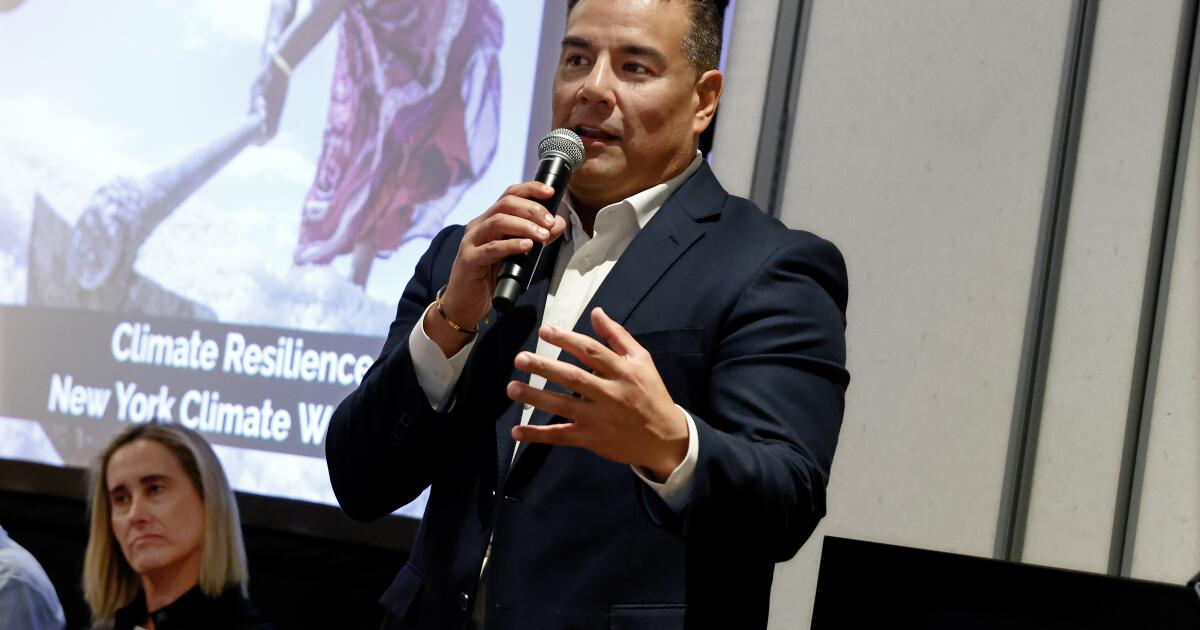

A state administrative law judge is accusing California Insurance Commissioner Ricardo Lara of denying her authority to review requests by insurers for rate increases, and later firing her after complaining the department wasn’t adhering to the law.
The Superior Court lawsuit filed by Kristin Rosi, the department’s former chief administrative law judge, takes issue with a longstanding practice in which insurance commissioners and regulators at the Department of Insurance, along with consumer groups, entered into negotiated settlements with insurers seeking rate hikes without her involvement.
Rosi claims the practice violates Proposition 103, the 1988 ballot measure that gives the insurance commissioner authority to review auto, home and other rate increases, but also guarantees public rate hearings and forbids premiums that are “excessive, inadequate, unfairly discriminatory or otherwise in violation of the Insurance Code.”
“Judge Rosi was in the unenviable position of indicating that the law must be followed,” said her attorney Wendy Musell. “Once she raised these concerns, she swiftly found herself out of a job.”
The judge, appointed in 2007, was put on leave in January 2025 and fired later that year, according to the lawsuit filed in September in Alameda County. It accuses Lara, a former deputy commissioner as well as the department, of whistleblower retaliation, sex discrimination, infliction of emotional distress and other causes of action in seeking damages.
A spokesperson for Lara and the department declined to comment.
Although the lawsuit doesn’t specify which types of insurance were at issue, Musell said they involved auto and home insurers, which have received a series of large increases over the last several years.
California auto insurance rates have jumped more than 30% since 2022, driven by expensive vehicles, complex repairs and new safety requirements.
Home insurance rates also have skyrocketed amid inflation, a rise in construction costs and rising wildfire claims. The rates have drawn the ire of homeowners, who despite the increase in premiums have lost coverage by the hundreds of thousands the last several years.
The lawsuit contends that Proposition 103 requires the commissioner to hold public hearings if insurers seek rate hikes of 7% or greater. However, it alleges that the department has not conducted the hearings and instead has illegally handled the requests by negotiating settlements without first obtaining approval from an administrative law judge.
Proposition 103 provides for an intervenor process in which consumer advocates can participate in the department’s review of rate increases and be compensated for their expenses.
Consumer Watchdog, an advocacy group founded by Proposition 103 author Harvey Rosenfield, has been the leading intervenor. That has earned the group criticism from the insurance industry, since it has received more than $15 million in intervenor fees. For its part, the group claims it has saved consumers more than $7 billion in unwarranted premium increases.
Rosenfield said Consumer Watchdog has complained about the department’s practice of not holding hearings since it began filing intervenor requests more than two decades ago.
“We protested vehemently. At the end of the day, the choice was don’t participate in the process and don’t watchdog the department’s handling of these cases, or participate and accept the limitations,” he said.
“It was my expectation that all rate challenges would go through a hearing process overseen by administrative law judges, regardless of the size of the increase,” he added.
Rex Frazier, a former regulator with the department and president of the Personal Insurance Federation of California, an industry trade group, took issue with the judge’s contention that a rate increase triggers an automatic public hearing.
“This seems to be an ongoing dispute with an administrative law judge who has attempted to exercise unprecedented powers,” he said.
The lawsuit was filed amid complaints by consumer advocates that Lara, who is leaving office in January after eight years in his post, cozied up to the insurance industry.
Rosi’s lawsuit cites “widespread press accounts” alleging how Lara used public funds for more than 46 trips to locations in Paris; Bogata, Colombia; Singapore; Glasgow, Scotland; Dubai; London and Chile, including lavish spending in five-star hotels and pricey restaurants without properly identifying the business purpose.
The Los Angeles Times reported last year that the National Assn. of Insurance Commissioners, a powerful, industry-funded trade organization, paid for Lara’s first- and business-class travel expenses, including a $11,626 ticket to Singapore for a 2024 conference on Asian insurance issues.

A state administrative law judge is accusing California Insurance Commissioner Ricardo Lara of denying her authority to review requests by insurers for rate increases, and later firing her after complaining the department wasn’t adhering to the law.
The Superior Court lawsuit filed by Kristin Rosi, the department’s former chief administrative law judge, takes issue with a longstanding practice in which insurance commissioners and regulators at the Department of Insurance, along with consumer groups, entered into negotiated settlements with insurers seeking rate hikes without her involvement.
Rosi claims the practice violates Proposition 103, the 1988 ballot measure that gives the insurance commissioner authority to review auto, home and other rate increases, but also guarantees public rate hearings and forbids premiums that are “excessive, inadequate, unfairly discriminatory or otherwise in violation of the Insurance Code.”
“Judge Rosi was in the unenviable position of indicating that the law must be followed,” said her attorney Wendy Musell. “Once she raised these concerns, she swiftly found herself out of a job.”
The judge, appointed in 2007, was put on leave in January 2025 and fired later that year, according to the lawsuit filed in September in Alameda County. It accuses Lara, a former deputy commissioner as well as the department, of whistleblower retaliation, sex discrimination, infliction of emotional distress and other causes of action in seeking damages.
A spokesperson for Lara and the department declined to comment.
Although the lawsuit doesn’t specify which types of insurance were at issue, Musell said they involved auto and home insurers, which have received a series of large increases over the last several years.
California auto insurance rates have jumped more than 30% since 2022, driven by expensive vehicles, complex repairs and new safety requirements.
Home insurance rates also have skyrocketed amid inflation, a rise in construction costs and rising wildfire claims. The rates have drawn the ire of homeowners, who despite the increase in premiums have lost coverage by the hundreds of thousands the last several years.
The lawsuit contends that Proposition 103 requires the commissioner to hold public hearings if insurers seek rate hikes of 7% or greater. However, it alleges that the department has not conducted the hearings and instead has illegally handled the requests by negotiating settlements without first obtaining approval from an administrative law judge.
Proposition 103 provides for an intervenor process in which consumer advocates can participate in the department’s review of rate increases and be compensated for their expenses.
Consumer Watchdog, an advocacy group founded by Proposition 103 author Harvey Rosenfield, has been the leading intervenor. That has earned the group criticism from the insurance industry, since it has received more than $15 million in intervenor fees. For its part, the group claims it has saved consumers more than $7 billion in unwarranted premium increases.
Rosenfield said Consumer Watchdog has complained about the department’s practice of not holding hearings since it began filing intervenor requests more than two decades ago.
“We protested vehemently. At the end of the day, the choice was don’t participate in the process and don’t watchdog the department’s handling of these cases, or participate and accept the limitations,” he said.
“It was my expectation that all rate challenges would go through a hearing process overseen by administrative law judges, regardless of the size of the increase,” he added.
Rex Frazier, a former regulator with the department and president of the Personal Insurance Federation of California, an industry trade group, took issue with the judge’s contention that a rate increase triggers an automatic public hearing.
“This seems to be an ongoing dispute with an administrative law judge who has attempted to exercise unprecedented powers,” he said.
The lawsuit was filed amid complaints by consumer advocates that Lara, who is leaving office in January after eight years in his post, cozied up to the insurance industry.
Rosi’s lawsuit cites “widespread press accounts” alleging how Lara used public funds for more than 46 trips to locations in Paris; Bogata, Colombia; Singapore; Glasgow, Scotland; Dubai; London and Chile, including lavish spending in five-star hotels and pricey restaurants without properly identifying the business purpose.
The Los Angeles Times reported last year that the National Assn. of Insurance Commissioners, a powerful, industry-funded trade organization, paid for Lara’s first- and business-class travel expenses, including a $11,626 ticket to Singapore for a 2024 conference on Asian insurance issues.

A state administrative law judge is accusing California Insurance Commissioner Ricardo Lara of denying her authority to review requests by insurers for rate increases, and later firing her after complaining the department wasn’t adhering to the law.
The Superior Court lawsuit filed by Kristin Rosi, the department’s former chief administrative law judge, takes issue with a longstanding practice in which insurance commissioners and regulators at the Department of Insurance, along with consumer groups, entered into negotiated settlements with insurers seeking rate hikes without her involvement.
Rosi claims the practice violates Proposition 103, the 1988 ballot measure that gives the insurance commissioner authority to review auto, home and other rate increases, but also guarantees public rate hearings and forbids premiums that are “excessive, inadequate, unfairly discriminatory or otherwise in violation of the Insurance Code.”
“Judge Rosi was in the unenviable position of indicating that the law must be followed,” said her attorney Wendy Musell. “Once she raised these concerns, she swiftly found herself out of a job.”
The judge, appointed in 2007, was put on leave in January 2025 and fired later that year, according to the lawsuit filed in September in Alameda County. It accuses Lara, a former deputy commissioner as well as the department, of whistleblower retaliation, sex discrimination, infliction of emotional distress and other causes of action in seeking damages.
A spokesperson for Lara and the department declined to comment.
Although the lawsuit doesn’t specify which types of insurance were at issue, Musell said they involved auto and home insurers, which have received a series of large increases over the last several years.
California auto insurance rates have jumped more than 30% since 2022, driven by expensive vehicles, complex repairs and new safety requirements.
Home insurance rates also have skyrocketed amid inflation, a rise in construction costs and rising wildfire claims. The rates have drawn the ire of homeowners, who despite the increase in premiums have lost coverage by the hundreds of thousands the last several years.
The lawsuit contends that Proposition 103 requires the commissioner to hold public hearings if insurers seek rate hikes of 7% or greater. However, it alleges that the department has not conducted the hearings and instead has illegally handled the requests by negotiating settlements without first obtaining approval from an administrative law judge.
Proposition 103 provides for an intervenor process in which consumer advocates can participate in the department’s review of rate increases and be compensated for their expenses.
Consumer Watchdog, an advocacy group founded by Proposition 103 author Harvey Rosenfield, has been the leading intervenor. That has earned the group criticism from the insurance industry, since it has received more than $15 million in intervenor fees. For its part, the group claims it has saved consumers more than $7 billion in unwarranted premium increases.
Rosenfield said Consumer Watchdog has complained about the department’s practice of not holding hearings since it began filing intervenor requests more than two decades ago.
“We protested vehemently. At the end of the day, the choice was don’t participate in the process and don’t watchdog the department’s handling of these cases, or participate and accept the limitations,” he said.
“It was my expectation that all rate challenges would go through a hearing process overseen by administrative law judges, regardless of the size of the increase,” he added.
Rex Frazier, a former regulator with the department and president of the Personal Insurance Federation of California, an industry trade group, took issue with the judge’s contention that a rate increase triggers an automatic public hearing.
“This seems to be an ongoing dispute with an administrative law judge who has attempted to exercise unprecedented powers,” he said.
The lawsuit was filed amid complaints by consumer advocates that Lara, who is leaving office in January after eight years in his post, cozied up to the insurance industry.
Rosi’s lawsuit cites “widespread press accounts” alleging how Lara used public funds for more than 46 trips to locations in Paris; Bogata, Colombia; Singapore; Glasgow, Scotland; Dubai; London and Chile, including lavish spending in five-star hotels and pricey restaurants without properly identifying the business purpose.
The Los Angeles Times reported last year that the National Assn. of Insurance Commissioners, a powerful, industry-funded trade organization, paid for Lara’s first- and business-class travel expenses, including a $11,626 ticket to Singapore for a 2024 conference on Asian insurance issues.

A state administrative law judge is accusing California Insurance Commissioner Ricardo Lara of denying her authority to review requests by insurers for rate increases, and later firing her after complaining the department wasn’t adhering to the law.
The Superior Court lawsuit filed by Kristin Rosi, the department’s former chief administrative law judge, takes issue with a longstanding practice in which insurance commissioners and regulators at the Department of Insurance, along with consumer groups, entered into negotiated settlements with insurers seeking rate hikes without her involvement.
Rosi claims the practice violates Proposition 103, the 1988 ballot measure that gives the insurance commissioner authority to review auto, home and other rate increases, but also guarantees public rate hearings and forbids premiums that are “excessive, inadequate, unfairly discriminatory or otherwise in violation of the Insurance Code.”
“Judge Rosi was in the unenviable position of indicating that the law must be followed,” said her attorney Wendy Musell. “Once she raised these concerns, she swiftly found herself out of a job.”
The judge, appointed in 2007, was put on leave in January 2025 and fired later that year, according to the lawsuit filed in September in Alameda County. It accuses Lara, a former deputy commissioner as well as the department, of whistleblower retaliation, sex discrimination, infliction of emotional distress and other causes of action in seeking damages.
A spokesperson for Lara and the department declined to comment.
Although the lawsuit doesn’t specify which types of insurance were at issue, Musell said they involved auto and home insurers, which have received a series of large increases over the last several years.
California auto insurance rates have jumped more than 30% since 2022, driven by expensive vehicles, complex repairs and new safety requirements.
Home insurance rates also have skyrocketed amid inflation, a rise in construction costs and rising wildfire claims. The rates have drawn the ire of homeowners, who despite the increase in premiums have lost coverage by the hundreds of thousands the last several years.
The lawsuit contends that Proposition 103 requires the commissioner to hold public hearings if insurers seek rate hikes of 7% or greater. However, it alleges that the department has not conducted the hearings and instead has illegally handled the requests by negotiating settlements without first obtaining approval from an administrative law judge.
Proposition 103 provides for an intervenor process in which consumer advocates can participate in the department’s review of rate increases and be compensated for their expenses.
Consumer Watchdog, an advocacy group founded by Proposition 103 author Harvey Rosenfield, has been the leading intervenor. That has earned the group criticism from the insurance industry, since it has received more than $15 million in intervenor fees. For its part, the group claims it has saved consumers more than $7 billion in unwarranted premium increases.
Rosenfield said Consumer Watchdog has complained about the department’s practice of not holding hearings since it began filing intervenor requests more than two decades ago.
“We protested vehemently. At the end of the day, the choice was don’t participate in the process and don’t watchdog the department’s handling of these cases, or participate and accept the limitations,” he said.
“It was my expectation that all rate challenges would go through a hearing process overseen by administrative law judges, regardless of the size of the increase,” he added.
Rex Frazier, a former regulator with the department and president of the Personal Insurance Federation of California, an industry trade group, took issue with the judge’s contention that a rate increase triggers an automatic public hearing.
“This seems to be an ongoing dispute with an administrative law judge who has attempted to exercise unprecedented powers,” he said.
The lawsuit was filed amid complaints by consumer advocates that Lara, who is leaving office in January after eight years in his post, cozied up to the insurance industry.
Rosi’s lawsuit cites “widespread press accounts” alleging how Lara used public funds for more than 46 trips to locations in Paris; Bogata, Colombia; Singapore; Glasgow, Scotland; Dubai; London and Chile, including lavish spending in five-star hotels and pricey restaurants without properly identifying the business purpose.
The Los Angeles Times reported last year that the National Assn. of Insurance Commissioners, a powerful, industry-funded trade organization, paid for Lara’s first- and business-class travel expenses, including a $11,626 ticket to Singapore for a 2024 conference on Asian insurance issues.