

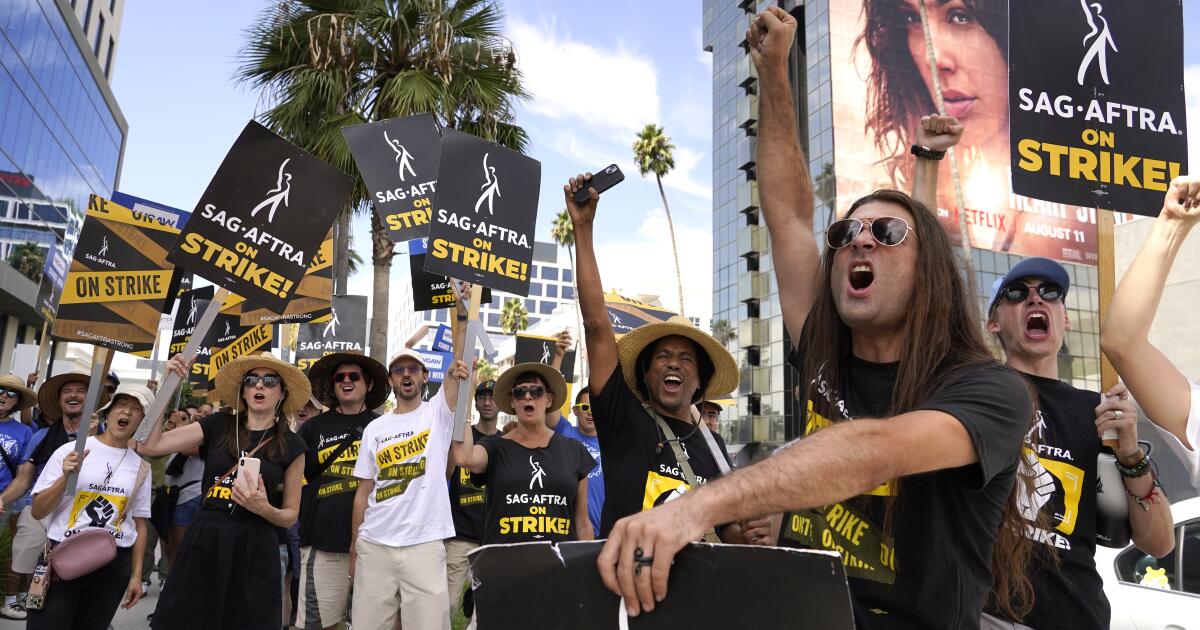

The political fight over whether workers on strike should be allowed to collect unemployment benefits is reigniting in Washington.
U.S. Rep. Adam Schiff, a California Democrat who is running for Senate, is planning to introduce legislation on Tuesday that would provide unemployment benefits nationwide to workers on strike. Most states don’t allow striking workers to collect unemployment with the exception of New York and New Jersey. Eligibility requirements and the amount of weekly unemployment pay also varies by state.
Under the Empowering Striking Workers Act of 2023, workers would be able to collect unemployment pay after two weeks on strike, according to a draft of the bill viewed by The Times. Workers would also be eligible for unemployment benefits starting on the date a lockout begins, when the employer hired permanent replacement workers or if the worker becomes unemployed after a strike or lock-out ends, whichever is earlier.
Democratic U.S. Reps. Donald Norcross of New Jersey and Alexandria Ocasio-Cortez of New York also are sponsoring the bill. Labor unions SAG-AFTRA, the Writers Guild of America, the Teamsters and the AFL-CIO are supporting the legislation as well, according to Schiff’s office.
But with Republicans controlling the House of Representatives, the odds that the bill will pass are slim. Businesses have strongly opposed the idea because they said it would lead to higher employer taxes. Employers pay state and federal payroll taxes to fund the unemployment insurance program.
The expected introduction of a federal bill comes after California Gov. Gavin Newsom vetoed state legislation in September to provide unemployment for striking workers. Newsom said he did so because of financial concerns, a move highly criticized by labor leaders.
California borrowed billions of dollars from the federal government to cover unemployment benefits, and the state’s unemployment fund debt was projected to be nearly $20 billion by the end of the year. California’s unemployment pay is $450 a week for a maximum of 26 weeks. Business fought the bill because they said they would pay additional taxes annually to repay California’s loan from the federal government.
The WGA and SAG-AFTRA lobbied for the expanded benefits, saying that they would help workers pay their bills. While members rely on side jobs and strike funds to stay afloat, that income dwindles the longer a strike goes on. The 148-day Hollywood writers strike ended after WGA members ratified a new contract. Actors and crew members represented by SAG-AFTRA have been on strike for more than 100 days.
Democrats have expressed support for labor unions ahead of the 2024 elections. Labor unions including the International Brotherhood of Teamsters, the Communication Workers of America and the Amalgamated Transit Union have endorsed Schiff for Senate, while other unions have endorsed his main Democratic rivals in the race.
During an October debate in Los Angeles, Schiff, along with California Democratic Senate candidates Barbara Lee and Katie Porter, disagreed with Newsom’s decision to veto the bill to provide striking workers unemployment benefits. He mentioned during that event he was working on federal legislation.
“When they go and strike for better work and better wages for themselves and others, they need to have unemployment compensation, because they’re striking for all workers,” Schiff said at the debate.

The political fight over whether workers on strike should be allowed to collect unemployment benefits is reigniting in Washington.
U.S. Rep. Adam Schiff, a California Democrat who is running for Senate, is planning to introduce legislation on Tuesday that would provide unemployment benefits nationwide to workers on strike. Most states don’t allow striking workers to collect unemployment with the exception of New York and New Jersey. Eligibility requirements and the amount of weekly unemployment pay also varies by state.
Under the Empowering Striking Workers Act of 2023, workers would be able to collect unemployment pay after two weeks on strike, according to a draft of the bill viewed by The Times. Workers would also be eligible for unemployment benefits starting on the date a lockout begins, when the employer hired permanent replacement workers or if the worker becomes unemployed after a strike or lock-out ends, whichever is earlier.
Democratic U.S. Reps. Donald Norcross of New Jersey and Alexandria Ocasio-Cortez of New York also are sponsoring the bill. Labor unions SAG-AFTRA, the Writers Guild of America, the Teamsters and the AFL-CIO are supporting the legislation as well, according to Schiff’s office.
But with Republicans controlling the House of Representatives, the odds that the bill will pass are slim. Businesses have strongly opposed the idea because they said it would lead to higher employer taxes. Employers pay state and federal payroll taxes to fund the unemployment insurance program.
The expected introduction of a federal bill comes after California Gov. Gavin Newsom vetoed state legislation in September to provide unemployment for striking workers. Newsom said he did so because of financial concerns, a move highly criticized by labor leaders.
California borrowed billions of dollars from the federal government to cover unemployment benefits, and the state’s unemployment fund debt was projected to be nearly $20 billion by the end of the year. California’s unemployment pay is $450 a week for a maximum of 26 weeks. Business fought the bill because they said they would pay additional taxes annually to repay California’s loan from the federal government.
The WGA and SAG-AFTRA lobbied for the expanded benefits, saying that they would help workers pay their bills. While members rely on side jobs and strike funds to stay afloat, that income dwindles the longer a strike goes on. The 148-day Hollywood writers strike ended after WGA members ratified a new contract. Actors and crew members represented by SAG-AFTRA have been on strike for more than 100 days.
Democrats have expressed support for labor unions ahead of the 2024 elections. Labor unions including the International Brotherhood of Teamsters, the Communication Workers of America and the Amalgamated Transit Union have endorsed Schiff for Senate, while other unions have endorsed his main Democratic rivals in the race.
During an October debate in Los Angeles, Schiff, along with California Democratic Senate candidates Barbara Lee and Katie Porter, disagreed with Newsom’s decision to veto the bill to provide striking workers unemployment benefits. He mentioned during that event he was working on federal legislation.
“When they go and strike for better work and better wages for themselves and others, they need to have unemployment compensation, because they’re striking for all workers,” Schiff said at the debate.

The political fight over whether workers on strike should be allowed to collect unemployment benefits is reigniting in Washington.
U.S. Rep. Adam Schiff, a California Democrat who is running for Senate, is planning to introduce legislation on Tuesday that would provide unemployment benefits nationwide to workers on strike. Most states don’t allow striking workers to collect unemployment with the exception of New York and New Jersey. Eligibility requirements and the amount of weekly unemployment pay also varies by state.
Under the Empowering Striking Workers Act of 2023, workers would be able to collect unemployment pay after two weeks on strike, according to a draft of the bill viewed by The Times. Workers would also be eligible for unemployment benefits starting on the date a lockout begins, when the employer hired permanent replacement workers or if the worker becomes unemployed after a strike or lock-out ends, whichever is earlier.
Democratic U.S. Reps. Donald Norcross of New Jersey and Alexandria Ocasio-Cortez of New York also are sponsoring the bill. Labor unions SAG-AFTRA, the Writers Guild of America, the Teamsters and the AFL-CIO are supporting the legislation as well, according to Schiff’s office.
But with Republicans controlling the House of Representatives, the odds that the bill will pass are slim. Businesses have strongly opposed the idea because they said it would lead to higher employer taxes. Employers pay state and federal payroll taxes to fund the unemployment insurance program.
The expected introduction of a federal bill comes after California Gov. Gavin Newsom vetoed state legislation in September to provide unemployment for striking workers. Newsom said he did so because of financial concerns, a move highly criticized by labor leaders.
California borrowed billions of dollars from the federal government to cover unemployment benefits, and the state’s unemployment fund debt was projected to be nearly $20 billion by the end of the year. California’s unemployment pay is $450 a week for a maximum of 26 weeks. Business fought the bill because they said they would pay additional taxes annually to repay California’s loan from the federal government.
The WGA and SAG-AFTRA lobbied for the expanded benefits, saying that they would help workers pay their bills. While members rely on side jobs and strike funds to stay afloat, that income dwindles the longer a strike goes on. The 148-day Hollywood writers strike ended after WGA members ratified a new contract. Actors and crew members represented by SAG-AFTRA have been on strike for more than 100 days.
Democrats have expressed support for labor unions ahead of the 2024 elections. Labor unions including the International Brotherhood of Teamsters, the Communication Workers of America and the Amalgamated Transit Union have endorsed Schiff for Senate, while other unions have endorsed his main Democratic rivals in the race.
During an October debate in Los Angeles, Schiff, along with California Democratic Senate candidates Barbara Lee and Katie Porter, disagreed with Newsom’s decision to veto the bill to provide striking workers unemployment benefits. He mentioned during that event he was working on federal legislation.
“When they go and strike for better work and better wages for themselves and others, they need to have unemployment compensation, because they’re striking for all workers,” Schiff said at the debate.
The political fight over whether workers on strike should be allowed to collect unemployment benefits is reigniting in Washington.
U.S. Rep. Adam Schiff, a California Democrat who is running for Senate, is planning to introduce legislation on Tuesday that would provide unemployment benefits nationwide to workers on strike. Most states don’t allow striking workers to collect unemployment with the exception of New York and New Jersey. Eligibility requirements and the amount of weekly unemployment pay also varies by state.
Under the Empowering Striking Workers Act of 2023, workers would be able to collect unemployment pay after two weeks on strike, according to a draft of the bill viewed by The Times. Workers would also be eligible for unemployment benefits starting on the date a lockout begins, when the employer hired permanent replacement workers or if the worker becomes unemployed after a strike or lock-out ends, whichever is earlier.
Democratic U.S. Reps. Donald Norcross of New Jersey and Alexandria Ocasio-Cortez of New York also are sponsoring the bill. Labor unions SAG-AFTRA, the Writers Guild of America, the Teamsters and the AFL-CIO are supporting the legislation as well, according to Schiff’s office.
But with Republicans controlling the House of Representatives, the odds that the bill will pass are slim. Businesses have strongly opposed the idea because they said it would lead to higher employer taxes. Employers pay state and federal payroll taxes to fund the unemployment insurance program.
The expected introduction of a federal bill comes after California Gov. Gavin Newsom vetoed state legislation in September to provide unemployment for striking workers. Newsom said he did so because of financial concerns, a move highly criticized by labor leaders.
California borrowed billions of dollars from the federal government to cover unemployment benefits, and the state’s unemployment fund debt was projected to be nearly $20 billion by the end of the year. California’s unemployment pay is $450 a week for a maximum of 26 weeks. Business fought the bill because they said they would pay additional taxes annually to repay California’s loan from the federal government.
The WGA and SAG-AFTRA lobbied for the expanded benefits, saying that they would help workers pay their bills. While members rely on side jobs and strike funds to stay afloat, that income dwindles the longer a strike goes on. The 148-day Hollywood writers strike ended after WGA members ratified a new contract. Actors and crew members represented by SAG-AFTRA have been on strike for more than 100 days.
Democrats have expressed support for labor unions ahead of the 2024 elections. Labor unions including the International Brotherhood of Teamsters, the Communication Workers of America and the Amalgamated Transit Union have endorsed Schiff for Senate, while other unions have endorsed his main Democratic rivals in the race.
During an October debate in Los Angeles, Schiff, along with California Democratic Senate candidates Barbara Lee and Katie Porter, disagreed with Newsom’s decision to veto the bill to provide striking workers unemployment benefits. He mentioned during that event he was working on federal legislation.
“When they go and strike for better work and better wages for themselves and others, they need to have unemployment compensation, because they’re striking for all workers,” Schiff said at the debate.

The political fight over whether workers on strike should be allowed to collect unemployment benefits is reigniting in Washington.
U.S. Rep. Adam Schiff, a California Democrat who is running for Senate, is planning to introduce legislation on Tuesday that would provide unemployment benefits nationwide to workers on strike. Most states don’t allow striking workers to collect unemployment with the exception of New York and New Jersey. Eligibility requirements and the amount of weekly unemployment pay also varies by state.
Under the Empowering Striking Workers Act of 2023, workers would be able to collect unemployment pay after two weeks on strike, according to a draft of the bill viewed by The Times. Workers would also be eligible for unemployment benefits starting on the date a lockout begins, when the employer hired permanent replacement workers or if the worker becomes unemployed after a strike or lock-out ends, whichever is earlier.
Democratic U.S. Reps. Donald Norcross of New Jersey and Alexandria Ocasio-Cortez of New York also are sponsoring the bill. Labor unions SAG-AFTRA, the Writers Guild of America, the Teamsters and the AFL-CIO are supporting the legislation as well, according to Schiff’s office.
But with Republicans controlling the House of Representatives, the odds that the bill will pass are slim. Businesses have strongly opposed the idea because they said it would lead to higher employer taxes. Employers pay state and federal payroll taxes to fund the unemployment insurance program.
The expected introduction of a federal bill comes after California Gov. Gavin Newsom vetoed state legislation in September to provide unemployment for striking workers. Newsom said he did so because of financial concerns, a move highly criticized by labor leaders.
California borrowed billions of dollars from the federal government to cover unemployment benefits, and the state’s unemployment fund debt was projected to be nearly $20 billion by the end of the year. California’s unemployment pay is $450 a week for a maximum of 26 weeks. Business fought the bill because they said they would pay additional taxes annually to repay California’s loan from the federal government.
The WGA and SAG-AFTRA lobbied for the expanded benefits, saying that they would help workers pay their bills. While members rely on side jobs and strike funds to stay afloat, that income dwindles the longer a strike goes on. The 148-day Hollywood writers strike ended after WGA members ratified a new contract. Actors and crew members represented by SAG-AFTRA have been on strike for more than 100 days.
Democrats have expressed support for labor unions ahead of the 2024 elections. Labor unions including the International Brotherhood of Teamsters, the Communication Workers of America and the Amalgamated Transit Union have endorsed Schiff for Senate, while other unions have endorsed his main Democratic rivals in the race.
During an October debate in Los Angeles, Schiff, along with California Democratic Senate candidates Barbara Lee and Katie Porter, disagreed with Newsom’s decision to veto the bill to provide striking workers unemployment benefits. He mentioned during that event he was working on federal legislation.
“When they go and strike for better work and better wages for themselves and others, they need to have unemployment compensation, because they’re striking for all workers,” Schiff said at the debate.
The political fight over whether workers on strike should be allowed to collect unemployment benefits is reigniting in Washington.
U.S. Rep. Adam Schiff, a California Democrat who is running for Senate, is planning to introduce legislation on Tuesday that would provide unemployment benefits nationwide to workers on strike. Most states don’t allow striking workers to collect unemployment with the exception of New York and New Jersey. Eligibility requirements and the amount of weekly unemployment pay also varies by state.
Under the Empowering Striking Workers Act of 2023, workers would be able to collect unemployment pay after two weeks on strike, according to a draft of the bill viewed by The Times. Workers would also be eligible for unemployment benefits starting on the date a lockout begins, when the employer hired permanent replacement workers or if the worker becomes unemployed after a strike or lock-out ends, whichever is earlier.
Democratic U.S. Reps. Donald Norcross of New Jersey and Alexandria Ocasio-Cortez of New York also are sponsoring the bill. Labor unions SAG-AFTRA, the Writers Guild of America, the Teamsters and the AFL-CIO are supporting the legislation as well, according to Schiff’s office.
But with Republicans controlling the House of Representatives, the odds that the bill will pass are slim. Businesses have strongly opposed the idea because they said it would lead to higher employer taxes. Employers pay state and federal payroll taxes to fund the unemployment insurance program.
The expected introduction of a federal bill comes after California Gov. Gavin Newsom vetoed state legislation in September to provide unemployment for striking workers. Newsom said he did so because of financial concerns, a move highly criticized by labor leaders.
California borrowed billions of dollars from the federal government to cover unemployment benefits, and the state’s unemployment fund debt was projected to be nearly $20 billion by the end of the year. California’s unemployment pay is $450 a week for a maximum of 26 weeks. Business fought the bill because they said they would pay additional taxes annually to repay California’s loan from the federal government.
The WGA and SAG-AFTRA lobbied for the expanded benefits, saying that they would help workers pay their bills. While members rely on side jobs and strike funds to stay afloat, that income dwindles the longer a strike goes on. The 148-day Hollywood writers strike ended after WGA members ratified a new contract. Actors and crew members represented by SAG-AFTRA have been on strike for more than 100 days.
Democrats have expressed support for labor unions ahead of the 2024 elections. Labor unions including the International Brotherhood of Teamsters, the Communication Workers of America and the Amalgamated Transit Union have endorsed Schiff for Senate, while other unions have endorsed his main Democratic rivals in the race.
During an October debate in Los Angeles, Schiff, along with California Democratic Senate candidates Barbara Lee and Katie Porter, disagreed with Newsom’s decision to veto the bill to provide striking workers unemployment benefits. He mentioned during that event he was working on federal legislation.
“When they go and strike for better work and better wages for themselves and others, they need to have unemployment compensation, because they’re striking for all workers,” Schiff said at the debate.
The political fight over whether workers on strike should be allowed to collect unemployment benefits is reigniting in Washington.
U.S. Rep. Adam Schiff, a California Democrat who is running for Senate, is planning to introduce legislation on Tuesday that would provide unemployment benefits nationwide to workers on strike. Most states don’t allow striking workers to collect unemployment with the exception of New York and New Jersey. Eligibility requirements and the amount of weekly unemployment pay also varies by state.
Under the Empowering Striking Workers Act of 2023, workers would be able to collect unemployment pay after two weeks on strike, according to a draft of the bill viewed by The Times. Workers would also be eligible for unemployment benefits starting on the date a lockout begins, when the employer hired permanent replacement workers or if the worker becomes unemployed after a strike or lock-out ends, whichever is earlier.
Democratic U.S. Reps. Donald Norcross of New Jersey and Alexandria Ocasio-Cortez of New York also are sponsoring the bill. Labor unions SAG-AFTRA, the Writers Guild of America, the Teamsters and the AFL-CIO are supporting the legislation as well, according to Schiff’s office.
But with Republicans controlling the House of Representatives, the odds that the bill will pass are slim. Businesses have strongly opposed the idea because they said it would lead to higher employer taxes. Employers pay state and federal payroll taxes to fund the unemployment insurance program.
The expected introduction of a federal bill comes after California Gov. Gavin Newsom vetoed state legislation in September to provide unemployment for striking workers. Newsom said he did so because of financial concerns, a move highly criticized by labor leaders.
California borrowed billions of dollars from the federal government to cover unemployment benefits, and the state’s unemployment fund debt was projected to be nearly $20 billion by the end of the year. California’s unemployment pay is $450 a week for a maximum of 26 weeks. Business fought the bill because they said they would pay additional taxes annually to repay California’s loan from the federal government.
The WGA and SAG-AFTRA lobbied for the expanded benefits, saying that they would help workers pay their bills. While members rely on side jobs and strike funds to stay afloat, that income dwindles the longer a strike goes on. The 148-day Hollywood writers strike ended after WGA members ratified a new contract. Actors and crew members represented by SAG-AFTRA have been on strike for more than 100 days.
Democrats have expressed support for labor unions ahead of the 2024 elections. Labor unions including the International Brotherhood of Teamsters, the Communication Workers of America and the Amalgamated Transit Union have endorsed Schiff for Senate, while other unions have endorsed his main Democratic rivals in the race.
During an October debate in Los Angeles, Schiff, along with California Democratic Senate candidates Barbara Lee and Katie Porter, disagreed with Newsom’s decision to veto the bill to provide striking workers unemployment benefits. He mentioned during that event he was working on federal legislation.
“When they go and strike for better work and better wages for themselves and others, they need to have unemployment compensation, because they’re striking for all workers,” Schiff said at the debate.
The political fight over whether workers on strike should be allowed to collect unemployment benefits is reigniting in Washington.
U.S. Rep. Adam Schiff, a California Democrat who is running for Senate, is planning to introduce legislation on Tuesday that would provide unemployment benefits nationwide to workers on strike. Most states don’t allow striking workers to collect unemployment with the exception of New York and New Jersey. Eligibility requirements and the amount of weekly unemployment pay also varies by state.
Under the Empowering Striking Workers Act of 2023, workers would be able to collect unemployment pay after two weeks on strike, according to a draft of the bill viewed by The Times. Workers would also be eligible for unemployment benefits starting on the date a lockout begins, when the employer hired permanent replacement workers or if the worker becomes unemployed after a strike or lock-out ends, whichever is earlier.
Democratic U.S. Reps. Donald Norcross of New Jersey and Alexandria Ocasio-Cortez of New York also are sponsoring the bill. Labor unions SAG-AFTRA, the Writers Guild of America, the Teamsters and the AFL-CIO are supporting the legislation as well, according to Schiff’s office.
But with Republicans controlling the House of Representatives, the odds that the bill will pass are slim. Businesses have strongly opposed the idea because they said it would lead to higher employer taxes. Employers pay state and federal payroll taxes to fund the unemployment insurance program.
The expected introduction of a federal bill comes after California Gov. Gavin Newsom vetoed state legislation in September to provide unemployment for striking workers. Newsom said he did so because of financial concerns, a move highly criticized by labor leaders.
California borrowed billions of dollars from the federal government to cover unemployment benefits, and the state’s unemployment fund debt was projected to be nearly $20 billion by the end of the year. California’s unemployment pay is $450 a week for a maximum of 26 weeks. Business fought the bill because they said they would pay additional taxes annually to repay California’s loan from the federal government.
The WGA and SAG-AFTRA lobbied for the expanded benefits, saying that they would help workers pay their bills. While members rely on side jobs and strike funds to stay afloat, that income dwindles the longer a strike goes on. The 148-day Hollywood writers strike ended after WGA members ratified a new contract. Actors and crew members represented by SAG-AFTRA have been on strike for more than 100 days.
Democrats have expressed support for labor unions ahead of the 2024 elections. Labor unions including the International Brotherhood of Teamsters, the Communication Workers of America and the Amalgamated Transit Union have endorsed Schiff for Senate, while other unions have endorsed his main Democratic rivals in the race.
During an October debate in Los Angeles, Schiff, along with California Democratic Senate candidates Barbara Lee and Katie Porter, disagreed with Newsom’s decision to veto the bill to provide striking workers unemployment benefits. He mentioned during that event he was working on federal legislation.
“When they go and strike for better work and better wages for themselves and others, they need to have unemployment compensation, because they’re striking for all workers,” Schiff said at the debate.

