

California is moving forward with plans to link its signature climate program, cap-and-invest, to that of Washington State, a major step officials say will cut more pollution and increase revenue for key state programs.
Gov. Gavin Newsom announced the move at Climate Week in New York City, where he is meeting with international officials and positioning himself as a climate leader in opposition to President Trump. The governor’s action will allow the California Air Resources Board, the state’s top air agency which also administers the cap-and-invest program, to begin the public process to link the two state’s markets.
“By joining forces with our partner in Washington State, we will build a stronger, more durable carbon market that will drive investment, cut pollution, and power the clean economy of the future,” Newsom said in a statement.
The changes are estimated to provide $10 billion in direct relief to electricity customers through bill credits and generate an estimated $8 billion for the state’s climate fund, the Greenhouse Gas Reduction Fund, through 2030, according to the governor’s office.
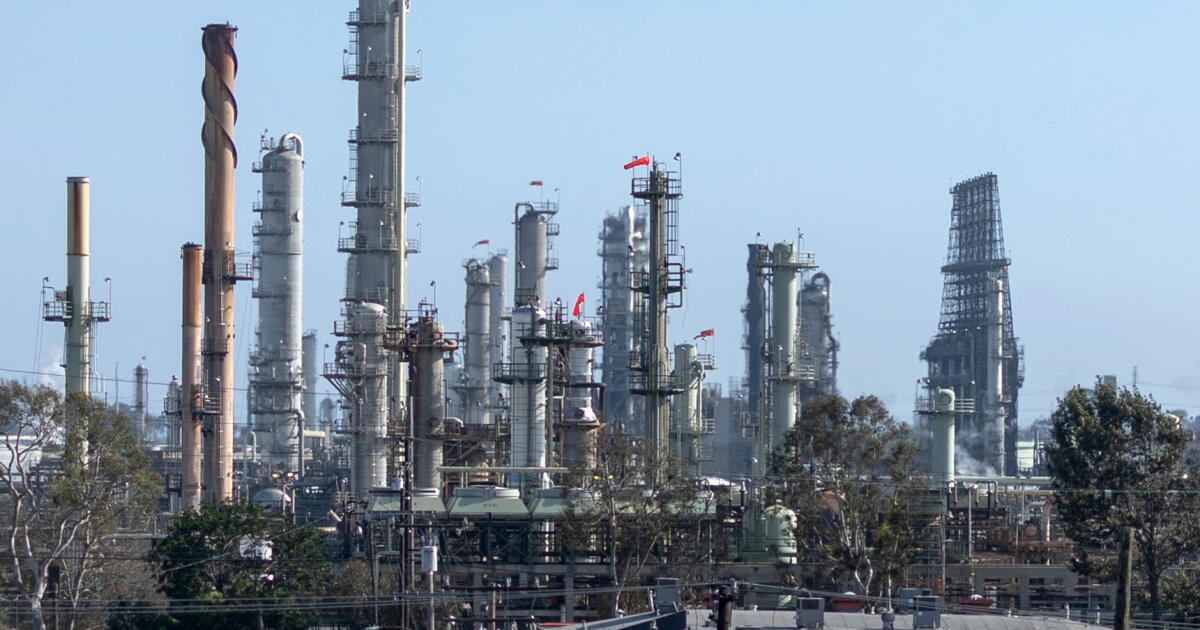
California’s cap-and-invest program was nation-leading when it launched in 2013. It forces major polluters such as power plants, oil refineries and industrial facilities to pay for each ton of planet-warming carbon they emit, and lets them buy or sell unused pollution credits, or allowances, at quarterly auctions. This allows companies to decide whether they would rather reduce their emissions or pay for allowances to cover them. Each year, fewer allowances are created, lowering the total annual climate pollution in the state.
The program has generated more than $36 billion in revenue since its inception, and the money goes to support affordable housing, wildfire resilience, clean drinking water, the high-speed rail and other projects.
Last year, state lawmakers voted to extend the program’s life to 2045, although some environmental groups were disappointed with new manufacturing incentives introduced into the program that they say could allow for more pollution.
On Monday, Newsom published a set of formal findings about Washington’s carbon market, a step required by California law to advance the linkage process. The states aim to launch the first joint auctions in 2027.
The move broadens the existing California-Quebec carbon market, linked in 2014. It means industry can use allowances generated by Washington companies or sell to them, “making it even more efficient and economical for entities to meet their obligations, and thus allowing each state to reduce emissions even more effectively,” the governor’s office said.
Some environmental groups applauded the news. The nonprofit Environmental Defense Fund pointed to modeling from the non-partisan research firm Greenline Insights, which found that linking California and Washington will cut an additional 45 million metric tons of climate pollution through 2045, equal to the annual emissions from 12 coal plants.
“California and Washington are showing how states can join forces to drive investments in affordable clean energy and curb climate pollution,” said EDF president Fred Krupp. “By scaling up proven and efficient pollution-cutting programs, states can deliver savings for families and businesses, while making a huge impact on our national emissions. More states should follow their lead.”
The actions comes as California continues to battle environmental rollbacks at the national level, including the Trump administration’s efforts to revoke the state’s long-held authority to set stricter tailpipe emission standards than the federal government.
Last week, the U.S. Environmental Protection Agency said it is rolling back most Biden-era limits on greenhouse gas emissions from power plants that burn coal or natural gas, and that it seeks to rescind regulations from the Obama administration and prevent future administrations from implementing new ones.
California’s latest greenhouse gas emissions data, released this week, shows the state continued cutting greenhouse gas emissions in 2024, which were down 3.9% from the year prior.
At Climate Week, Newsom also announced a new international agreement with Spain to expand cooperation on clean energy, electrification, battery storage and other climate actions.

California is moving forward with plans to link its signature climate program, cap-and-invest, to that of Washington State, a major step officials say will cut more pollution and increase revenue for key state programs.
Gov. Gavin Newsom announced the move at Climate Week in New York City, where he is meeting with international officials and positioning himself as a climate leader in opposition to President Trump. The governor’s action will allow the California Air Resources Board, the state’s top air agency which also administers the cap-and-invest program, to begin the public process to link the two state’s markets.
“By joining forces with our partner in Washington State, we will build a stronger, more durable carbon market that will drive investment, cut pollution, and power the clean economy of the future,” Newsom said in a statement.
The changes are estimated to provide $10 billion in direct relief to electricity customers through bill credits and generate an estimated $8 billion for the state’s climate fund, the Greenhouse Gas Reduction Fund, through 2030, according to the governor’s office.
California’s cap-and-invest program was nation-leading when it launched in 2013. It forces major polluters such as power plants, oil refineries and industrial facilities to pay for each ton of planet-warming carbon they emit, and lets them buy or sell unused pollution credits, or allowances, at quarterly auctions. This allows companies to decide whether they would rather reduce their emissions or pay for allowances to cover them. Each year, fewer allowances are created, lowering the total annual climate pollution in the state.
The program has generated more than $36 billion in revenue since its inception, and the money goes to support affordable housing, wildfire resilience, clean drinking water, the high-speed rail and other projects.
Last year, state lawmakers voted to extend the program’s life to 2045, although some environmental groups were disappointed with new manufacturing incentives introduced into the program that they say could allow for more pollution.
On Monday, Newsom published a set of formal findings about Washington’s carbon market, a step required by California law to advance the linkage process. The states aim to launch the first joint auctions in 2027.
The move broadens the existing California-Quebec carbon market, linked in 2014. It means industry can use allowances generated by Washington companies or sell to them, “making it even more efficient and economical for entities to meet their obligations, and thus allowing each state to reduce emissions even more effectively,” the governor’s office said.
Some environmental groups applauded the news. The nonprofit Environmental Defense Fund pointed to modeling from the non-partisan research firm Greenline Insights, which found that linking California and Washington will cut an additional 45 million metric tons of climate pollution through 2045, equal to the annual emissions from 12 coal plants.
“California and Washington are showing how states can join forces to drive investments in affordable clean energy and curb climate pollution,” said EDF president Fred Krupp. “By scaling up proven and efficient pollution-cutting programs, states can deliver savings for families and businesses, while making a huge impact on our national emissions. More states should follow their lead.”
The actions comes as California continues to battle environmental rollbacks at the national level, including the Trump administration’s efforts to revoke the state’s long-held authority to set stricter tailpipe emission standards than the federal government.
Last week, the U.S. Environmental Protection Agency said it is rolling back most Biden-era limits on greenhouse gas emissions from power plants that burn coal or natural gas, and that it seeks to rescind regulations from the Obama administration and prevent future administrations from implementing new ones.
California’s latest greenhouse gas emissions data, released this week, shows the state continued cutting greenhouse gas emissions in 2024, which were down 3.9% from the year prior.
At Climate Week, Newsom also announced a new international agreement with Spain to expand cooperation on clean energy, electrification, battery storage and other climate actions.

California is moving forward with plans to link its signature climate program, cap-and-invest, to that of Washington State, a major step officials say will cut more pollution and increase revenue for key state programs.
Gov. Gavin Newsom announced the move at Climate Week in New York City, where he is meeting with international officials and positioning himself as a climate leader in opposition to President Trump. The governor’s action will allow the California Air Resources Board, the state’s top air agency which also administers the cap-and-invest program, to begin the public process to link the two state’s markets.
“By joining forces with our partner in Washington State, we will build a stronger, more durable carbon market that will drive investment, cut pollution, and power the clean economy of the future,” Newsom said in a statement.
The changes are estimated to provide $10 billion in direct relief to electricity customers through bill credits and generate an estimated $8 billion for the state’s climate fund, the Greenhouse Gas Reduction Fund, through 2030, according to the governor’s office.
California’s cap-and-invest program was nation-leading when it launched in 2013. It forces major polluters such as power plants, oil refineries and industrial facilities to pay for each ton of planet-warming carbon they emit, and lets them buy or sell unused pollution credits, or allowances, at quarterly auctions. This allows companies to decide whether they would rather reduce their emissions or pay for allowances to cover them. Each year, fewer allowances are created, lowering the total annual climate pollution in the state.
The program has generated more than $36 billion in revenue since its inception, and the money goes to support affordable housing, wildfire resilience, clean drinking water, the high-speed rail and other projects.
Last year, state lawmakers voted to extend the program’s life to 2045, although some environmental groups were disappointed with new manufacturing incentives introduced into the program that they say could allow for more pollution.
On Monday, Newsom published a set of formal findings about Washington’s carbon market, a step required by California law to advance the linkage process. The states aim to launch the first joint auctions in 2027.
The move broadens the existing California-Quebec carbon market, linked in 2014. It means industry can use allowances generated by Washington companies or sell to them, “making it even more efficient and economical for entities to meet their obligations, and thus allowing each state to reduce emissions even more effectively,” the governor’s office said.
Some environmental groups applauded the news. The nonprofit Environmental Defense Fund pointed to modeling from the non-partisan research firm Greenline Insights, which found that linking California and Washington will cut an additional 45 million metric tons of climate pollution through 2045, equal to the annual emissions from 12 coal plants.
“California and Washington are showing how states can join forces to drive investments in affordable clean energy and curb climate pollution,” said EDF president Fred Krupp. “By scaling up proven and efficient pollution-cutting programs, states can deliver savings for families and businesses, while making a huge impact on our national emissions. More states should follow their lead.”
The actions comes as California continues to battle environmental rollbacks at the national level, including the Trump administration’s efforts to revoke the state’s long-held authority to set stricter tailpipe emission standards than the federal government.
Last week, the U.S. Environmental Protection Agency said it is rolling back most Biden-era limits on greenhouse gas emissions from power plants that burn coal or natural gas, and that it seeks to rescind regulations from the Obama administration and prevent future administrations from implementing new ones.
California’s latest greenhouse gas emissions data, released this week, shows the state continued cutting greenhouse gas emissions in 2024, which were down 3.9% from the year prior.
At Climate Week, Newsom also announced a new international agreement with Spain to expand cooperation on clean energy, electrification, battery storage and other climate actions.
California is moving forward with plans to link its signature climate program, cap-and-invest, to that of Washington State, a major step officials say will cut more pollution and increase revenue for key state programs.
Gov. Gavin Newsom announced the move at Climate Week in New York City, where he is meeting with international officials and positioning himself as a climate leader in opposition to President Trump. The governor’s action will allow the California Air Resources Board, the state’s top air agency which also administers the cap-and-invest program, to begin the public process to link the two state’s markets.
“By joining forces with our partner in Washington State, we will build a stronger, more durable carbon market that will drive investment, cut pollution, and power the clean economy of the future,” Newsom said in a statement.
The changes are estimated to provide $10 billion in direct relief to electricity customers through bill credits and generate an estimated $8 billion for the state’s climate fund, the Greenhouse Gas Reduction Fund, through 2030, according to the governor’s office.
California’s cap-and-invest program was nation-leading when it launched in 2013. It forces major polluters such as power plants, oil refineries and industrial facilities to pay for each ton of planet-warming carbon they emit, and lets them buy or sell unused pollution credits, or allowances, at quarterly auctions. This allows companies to decide whether they would rather reduce their emissions or pay for allowances to cover them. Each year, fewer allowances are created, lowering the total annual climate pollution in the state.
The program has generated more than $36 billion in revenue since its inception, and the money goes to support affordable housing, wildfire resilience, clean drinking water, the high-speed rail and other projects.
Last year, state lawmakers voted to extend the program’s life to 2045, although some environmental groups were disappointed with new manufacturing incentives introduced into the program that they say could allow for more pollution.
On Monday, Newsom published a set of formal findings about Washington’s carbon market, a step required by California law to advance the linkage process. The states aim to launch the first joint auctions in 2027.
The move broadens the existing California-Quebec carbon market, linked in 2014. It means industry can use allowances generated by Washington companies or sell to them, “making it even more efficient and economical for entities to meet their obligations, and thus allowing each state to reduce emissions even more effectively,” the governor’s office said.
Some environmental groups applauded the news. The nonprofit Environmental Defense Fund pointed to modeling from the non-partisan research firm Greenline Insights, which found that linking California and Washington will cut an additional 45 million metric tons of climate pollution through 2045, equal to the annual emissions from 12 coal plants.
“California and Washington are showing how states can join forces to drive investments in affordable clean energy and curb climate pollution,” said EDF president Fred Krupp. “By scaling up proven and efficient pollution-cutting programs, states can deliver savings for families and businesses, while making a huge impact on our national emissions. More states should follow their lead.”
The actions comes as California continues to battle environmental rollbacks at the national level, including the Trump administration’s efforts to revoke the state’s long-held authority to set stricter tailpipe emission standards than the federal government.
Last week, the U.S. Environmental Protection Agency said it is rolling back most Biden-era limits on greenhouse gas emissions from power plants that burn coal or natural gas, and that it seeks to rescind regulations from the Obama administration and prevent future administrations from implementing new ones.
California’s latest greenhouse gas emissions data, released this week, shows the state continued cutting greenhouse gas emissions in 2024, which were down 3.9% from the year prior.
At Climate Week, Newsom also announced a new international agreement with Spain to expand cooperation on clean energy, electrification, battery storage and other climate actions.

California is moving forward with plans to link its signature climate program, cap-and-invest, to that of Washington State, a major step officials say will cut more pollution and increase revenue for key state programs.
Gov. Gavin Newsom announced the move at Climate Week in New York City, where he is meeting with international officials and positioning himself as a climate leader in opposition to President Trump. The governor’s action will allow the California Air Resources Board, the state’s top air agency which also administers the cap-and-invest program, to begin the public process to link the two state’s markets.
“By joining forces with our partner in Washington State, we will build a stronger, more durable carbon market that will drive investment, cut pollution, and power the clean economy of the future,” Newsom said in a statement.
The changes are estimated to provide $10 billion in direct relief to electricity customers through bill credits and generate an estimated $8 billion for the state’s climate fund, the Greenhouse Gas Reduction Fund, through 2030, according to the governor’s office.
California’s cap-and-invest program was nation-leading when it launched in 2013. It forces major polluters such as power plants, oil refineries and industrial facilities to pay for each ton of planet-warming carbon they emit, and lets them buy or sell unused pollution credits, or allowances, at quarterly auctions. This allows companies to decide whether they would rather reduce their emissions or pay for allowances to cover them. Each year, fewer allowances are created, lowering the total annual climate pollution in the state.
The program has generated more than $36 billion in revenue since its inception, and the money goes to support affordable housing, wildfire resilience, clean drinking water, the high-speed rail and other projects.
Last year, state lawmakers voted to extend the program’s life to 2045, although some environmental groups were disappointed with new manufacturing incentives introduced into the program that they say could allow for more pollution.
On Monday, Newsom published a set of formal findings about Washington’s carbon market, a step required by California law to advance the linkage process. The states aim to launch the first joint auctions in 2027.
The move broadens the existing California-Quebec carbon market, linked in 2014. It means industry can use allowances generated by Washington companies or sell to them, “making it even more efficient and economical for entities to meet their obligations, and thus allowing each state to reduce emissions even more effectively,” the governor’s office said.
Some environmental groups applauded the news. The nonprofit Environmental Defense Fund pointed to modeling from the non-partisan research firm Greenline Insights, which found that linking California and Washington will cut an additional 45 million metric tons of climate pollution through 2045, equal to the annual emissions from 12 coal plants.
“California and Washington are showing how states can join forces to drive investments in affordable clean energy and curb climate pollution,” said EDF president Fred Krupp. “By scaling up proven and efficient pollution-cutting programs, states can deliver savings for families and businesses, while making a huge impact on our national emissions. More states should follow their lead.”
The actions comes as California continues to battle environmental rollbacks at the national level, including the Trump administration’s efforts to revoke the state’s long-held authority to set stricter tailpipe emission standards than the federal government.
Last week, the U.S. Environmental Protection Agency said it is rolling back most Biden-era limits on greenhouse gas emissions from power plants that burn coal or natural gas, and that it seeks to rescind regulations from the Obama administration and prevent future administrations from implementing new ones.
California’s latest greenhouse gas emissions data, released this week, shows the state continued cutting greenhouse gas emissions in 2024, which were down 3.9% from the year prior.
At Climate Week, Newsom also announced a new international agreement with Spain to expand cooperation on clean energy, electrification, battery storage and other climate actions.
California is moving forward with plans to link its signature climate program, cap-and-invest, to that of Washington State, a major step officials say will cut more pollution and increase revenue for key state programs.
Gov. Gavin Newsom announced the move at Climate Week in New York City, where he is meeting with international officials and positioning himself as a climate leader in opposition to President Trump. The governor’s action will allow the California Air Resources Board, the state’s top air agency which also administers the cap-and-invest program, to begin the public process to link the two state’s markets.
“By joining forces with our partner in Washington State, we will build a stronger, more durable carbon market that will drive investment, cut pollution, and power the clean economy of the future,” Newsom said in a statement.
The changes are estimated to provide $10 billion in direct relief to electricity customers through bill credits and generate an estimated $8 billion for the state’s climate fund, the Greenhouse Gas Reduction Fund, through 2030, according to the governor’s office.
California’s cap-and-invest program was nation-leading when it launched in 2013. It forces major polluters such as power plants, oil refineries and industrial facilities to pay for each ton of planet-warming carbon they emit, and lets them buy or sell unused pollution credits, or allowances, at quarterly auctions. This allows companies to decide whether they would rather reduce their emissions or pay for allowances to cover them. Each year, fewer allowances are created, lowering the total annual climate pollution in the state.
The program has generated more than $36 billion in revenue since its inception, and the money goes to support affordable housing, wildfire resilience, clean drinking water, the high-speed rail and other projects.
Last year, state lawmakers voted to extend the program’s life to 2045, although some environmental groups were disappointed with new manufacturing incentives introduced into the program that they say could allow for more pollution.
On Monday, Newsom published a set of formal findings about Washington’s carbon market, a step required by California law to advance the linkage process. The states aim to launch the first joint auctions in 2027.
The move broadens the existing California-Quebec carbon market, linked in 2014. It means industry can use allowances generated by Washington companies or sell to them, “making it even more efficient and economical for entities to meet their obligations, and thus allowing each state to reduce emissions even more effectively,” the governor’s office said.
Some environmental groups applauded the news. The nonprofit Environmental Defense Fund pointed to modeling from the non-partisan research firm Greenline Insights, which found that linking California and Washington will cut an additional 45 million metric tons of climate pollution through 2045, equal to the annual emissions from 12 coal plants.
“California and Washington are showing how states can join forces to drive investments in affordable clean energy and curb climate pollution,” said EDF president Fred Krupp. “By scaling up proven and efficient pollution-cutting programs, states can deliver savings for families and businesses, while making a huge impact on our national emissions. More states should follow their lead.”
The actions comes as California continues to battle environmental rollbacks at the national level, including the Trump administration’s efforts to revoke the state’s long-held authority to set stricter tailpipe emission standards than the federal government.
Last week, the U.S. Environmental Protection Agency said it is rolling back most Biden-era limits on greenhouse gas emissions from power plants that burn coal or natural gas, and that it seeks to rescind regulations from the Obama administration and prevent future administrations from implementing new ones.
California’s latest greenhouse gas emissions data, released this week, shows the state continued cutting greenhouse gas emissions in 2024, which were down 3.9% from the year prior.
At Climate Week, Newsom also announced a new international agreement with Spain to expand cooperation on clean energy, electrification, battery storage and other climate actions.
California is moving forward with plans to link its signature climate program, cap-and-invest, to that of Washington State, a major step officials say will cut more pollution and increase revenue for key state programs.
Gov. Gavin Newsom announced the move at Climate Week in New York City, where he is meeting with international officials and positioning himself as a climate leader in opposition to President Trump. The governor’s action will allow the California Air Resources Board, the state’s top air agency which also administers the cap-and-invest program, to begin the public process to link the two state’s markets.
“By joining forces with our partner in Washington State, we will build a stronger, more durable carbon market that will drive investment, cut pollution, and power the clean economy of the future,” Newsom said in a statement.
The changes are estimated to provide $10 billion in direct relief to electricity customers through bill credits and generate an estimated $8 billion for the state’s climate fund, the Greenhouse Gas Reduction Fund, through 2030, according to the governor’s office.
California’s cap-and-invest program was nation-leading when it launched in 2013. It forces major polluters such as power plants, oil refineries and industrial facilities to pay for each ton of planet-warming carbon they emit, and lets them buy or sell unused pollution credits, or allowances, at quarterly auctions. This allows companies to decide whether they would rather reduce their emissions or pay for allowances to cover them. Each year, fewer allowances are created, lowering the total annual climate pollution in the state.
The program has generated more than $36 billion in revenue since its inception, and the money goes to support affordable housing, wildfire resilience, clean drinking water, the high-speed rail and other projects.
Last year, state lawmakers voted to extend the program’s life to 2045, although some environmental groups were disappointed with new manufacturing incentives introduced into the program that they say could allow for more pollution.
On Monday, Newsom published a set of formal findings about Washington’s carbon market, a step required by California law to advance the linkage process. The states aim to launch the first joint auctions in 2027.
The move broadens the existing California-Quebec carbon market, linked in 2014. It means industry can use allowances generated by Washington companies or sell to them, “making it even more efficient and economical for entities to meet their obligations, and thus allowing each state to reduce emissions even more effectively,” the governor’s office said.
Some environmental groups applauded the news. The nonprofit Environmental Defense Fund pointed to modeling from the non-partisan research firm Greenline Insights, which found that linking California and Washington will cut an additional 45 million metric tons of climate pollution through 2045, equal to the annual emissions from 12 coal plants.
“California and Washington are showing how states can join forces to drive investments in affordable clean energy and curb climate pollution,” said EDF president Fred Krupp. “By scaling up proven and efficient pollution-cutting programs, states can deliver savings for families and businesses, while making a huge impact on our national emissions. More states should follow their lead.”
The actions comes as California continues to battle environmental rollbacks at the national level, including the Trump administration’s efforts to revoke the state’s long-held authority to set stricter tailpipe emission standards than the federal government.
Last week, the U.S. Environmental Protection Agency said it is rolling back most Biden-era limits on greenhouse gas emissions from power plants that burn coal or natural gas, and that it seeks to rescind regulations from the Obama administration and prevent future administrations from implementing new ones.
California’s latest greenhouse gas emissions data, released this week, shows the state continued cutting greenhouse gas emissions in 2024, which were down 3.9% from the year prior.
At Climate Week, Newsom also announced a new international agreement with Spain to expand cooperation on clean energy, electrification, battery storage and other climate actions.
California is moving forward with plans to link its signature climate program, cap-and-invest, to that of Washington State, a major step officials say will cut more pollution and increase revenue for key state programs.
Gov. Gavin Newsom announced the move at Climate Week in New York City, where he is meeting with international officials and positioning himself as a climate leader in opposition to President Trump. The governor’s action will allow the California Air Resources Board, the state’s top air agency which also administers the cap-and-invest program, to begin the public process to link the two state’s markets.
“By joining forces with our partner in Washington State, we will build a stronger, more durable carbon market that will drive investment, cut pollution, and power the clean economy of the future,” Newsom said in a statement.
The changes are estimated to provide $10 billion in direct relief to electricity customers through bill credits and generate an estimated $8 billion for the state’s climate fund, the Greenhouse Gas Reduction Fund, through 2030, according to the governor’s office.
California’s cap-and-invest program was nation-leading when it launched in 2013. It forces major polluters such as power plants, oil refineries and industrial facilities to pay for each ton of planet-warming carbon they emit, and lets them buy or sell unused pollution credits, or allowances, at quarterly auctions. This allows companies to decide whether they would rather reduce their emissions or pay for allowances to cover them. Each year, fewer allowances are created, lowering the total annual climate pollution in the state.
The program has generated more than $36 billion in revenue since its inception, and the money goes to support affordable housing, wildfire resilience, clean drinking water, the high-speed rail and other projects.
Last year, state lawmakers voted to extend the program’s life to 2045, although some environmental groups were disappointed with new manufacturing incentives introduced into the program that they say could allow for more pollution.
On Monday, Newsom published a set of formal findings about Washington’s carbon market, a step required by California law to advance the linkage process. The states aim to launch the first joint auctions in 2027.
The move broadens the existing California-Quebec carbon market, linked in 2014. It means industry can use allowances generated by Washington companies or sell to them, “making it even more efficient and economical for entities to meet their obligations, and thus allowing each state to reduce emissions even more effectively,” the governor’s office said.
Some environmental groups applauded the news. The nonprofit Environmental Defense Fund pointed to modeling from the non-partisan research firm Greenline Insights, which found that linking California and Washington will cut an additional 45 million metric tons of climate pollution through 2045, equal to the annual emissions from 12 coal plants.
“California and Washington are showing how states can join forces to drive investments in affordable clean energy and curb climate pollution,” said EDF president Fred Krupp. “By scaling up proven and efficient pollution-cutting programs, states can deliver savings for families and businesses, while making a huge impact on our national emissions. More states should follow their lead.”
The actions comes as California continues to battle environmental rollbacks at the national level, including the Trump administration’s efforts to revoke the state’s long-held authority to set stricter tailpipe emission standards than the federal government.
Last week, the U.S. Environmental Protection Agency said it is rolling back most Biden-era limits on greenhouse gas emissions from power plants that burn coal or natural gas, and that it seeks to rescind regulations from the Obama administration and prevent future administrations from implementing new ones.
California’s latest greenhouse gas emissions data, released this week, shows the state continued cutting greenhouse gas emissions in 2024, which were down 3.9% from the year prior.
At Climate Week, Newsom also announced a new international agreement with Spain to expand cooperation on clean energy, electrification, battery storage and other climate actions.

California is moving forward with plans to link its signature climate program, cap-and-invest, to that of Washington State, a major step officials say will cut more pollution and increase revenue for key state programs.
Gov. Gavin Newsom announced the move at Climate Week in New York City, where he is meeting with international officials and positioning himself as a climate leader in opposition to President Trump. The governor’s action will allow the California Air Resources Board, the state’s top air agency which also administers the cap-and-invest program, to begin the public process to link the two state’s markets.
“By joining forces with our partner in Washington State, we will build a stronger, more durable carbon market that will drive investment, cut pollution, and power the clean economy of the future,” Newsom said in a statement.
The changes are estimated to provide $10 billion in direct relief to electricity customers through bill credits and generate an estimated $8 billion for the state’s climate fund, the Greenhouse Gas Reduction Fund, through 2030, according to the governor’s office.
California’s cap-and-invest program was nation-leading when it launched in 2013. It forces major polluters such as power plants, oil refineries and industrial facilities to pay for each ton of planet-warming carbon they emit, and lets them buy or sell unused pollution credits, or allowances, at quarterly auctions. This allows companies to decide whether they would rather reduce their emissions or pay for allowances to cover them. Each year, fewer allowances are created, lowering the total annual climate pollution in the state.
The program has generated more than $36 billion in revenue since its inception, and the money goes to support affordable housing, wildfire resilience, clean drinking water, the high-speed rail and other projects.
Last year, state lawmakers voted to extend the program’s life to 2045, although some environmental groups were disappointed with new manufacturing incentives introduced into the program that they say could allow for more pollution.
On Monday, Newsom published a set of formal findings about Washington’s carbon market, a step required by California law to advance the linkage process. The states aim to launch the first joint auctions in 2027.
The move broadens the existing California-Quebec carbon market, linked in 2014. It means industry can use allowances generated by Washington companies or sell to them, “making it even more efficient and economical for entities to meet their obligations, and thus allowing each state to reduce emissions even more effectively,” the governor’s office said.
Some environmental groups applauded the news. The nonprofit Environmental Defense Fund pointed to modeling from the non-partisan research firm Greenline Insights, which found that linking California and Washington will cut an additional 45 million metric tons of climate pollution through 2045, equal to the annual emissions from 12 coal plants.
“California and Washington are showing how states can join forces to drive investments in affordable clean energy and curb climate pollution,” said EDF president Fred Krupp. “By scaling up proven and efficient pollution-cutting programs, states can deliver savings for families and businesses, while making a huge impact on our national emissions. More states should follow their lead.”
The actions comes as California continues to battle environmental rollbacks at the national level, including the Trump administration’s efforts to revoke the state’s long-held authority to set stricter tailpipe emission standards than the federal government.
Last week, the U.S. Environmental Protection Agency said it is rolling back most Biden-era limits on greenhouse gas emissions from power plants that burn coal or natural gas, and that it seeks to rescind regulations from the Obama administration and prevent future administrations from implementing new ones.
California’s latest greenhouse gas emissions data, released this week, shows the state continued cutting greenhouse gas emissions in 2024, which were down 3.9% from the year prior.
At Climate Week, Newsom also announced a new international agreement with Spain to expand cooperation on clean energy, electrification, battery storage and other climate actions.
California is moving forward with plans to link its signature climate program, cap-and-invest, to that of Washington State, a major step officials say will cut more pollution and increase revenue for key state programs.
Gov. Gavin Newsom announced the move at Climate Week in New York City, where he is meeting with international officials and positioning himself as a climate leader in opposition to President Trump. The governor’s action will allow the California Air Resources Board, the state’s top air agency which also administers the cap-and-invest program, to begin the public process to link the two state’s markets.
“By joining forces with our partner in Washington State, we will build a stronger, more durable carbon market that will drive investment, cut pollution, and power the clean economy of the future,” Newsom said in a statement.
The changes are estimated to provide $10 billion in direct relief to electricity customers through bill credits and generate an estimated $8 billion for the state’s climate fund, the Greenhouse Gas Reduction Fund, through 2030, according to the governor’s office.
California’s cap-and-invest program was nation-leading when it launched in 2013. It forces major polluters such as power plants, oil refineries and industrial facilities to pay for each ton of planet-warming carbon they emit, and lets them buy or sell unused pollution credits, or allowances, at quarterly auctions. This allows companies to decide whether they would rather reduce their emissions or pay for allowances to cover them. Each year, fewer allowances are created, lowering the total annual climate pollution in the state.
The program has generated more than $36 billion in revenue since its inception, and the money goes to support affordable housing, wildfire resilience, clean drinking water, the high-speed rail and other projects.
Last year, state lawmakers voted to extend the program’s life to 2045, although some environmental groups were disappointed with new manufacturing incentives introduced into the program that they say could allow for more pollution.
On Monday, Newsom published a set of formal findings about Washington’s carbon market, a step required by California law to advance the linkage process. The states aim to launch the first joint auctions in 2027.
The move broadens the existing California-Quebec carbon market, linked in 2014. It means industry can use allowances generated by Washington companies or sell to them, “making it even more efficient and economical for entities to meet their obligations, and thus allowing each state to reduce emissions even more effectively,” the governor’s office said.
Some environmental groups applauded the news. The nonprofit Environmental Defense Fund pointed to modeling from the non-partisan research firm Greenline Insights, which found that linking California and Washington will cut an additional 45 million metric tons of climate pollution through 2045, equal to the annual emissions from 12 coal plants.
“California and Washington are showing how states can join forces to drive investments in affordable clean energy and curb climate pollution,” said EDF president Fred Krupp. “By scaling up proven and efficient pollution-cutting programs, states can deliver savings for families and businesses, while making a huge impact on our national emissions. More states should follow their lead.”
The actions comes as California continues to battle environmental rollbacks at the national level, including the Trump administration’s efforts to revoke the state’s long-held authority to set stricter tailpipe emission standards than the federal government.
Last week, the U.S. Environmental Protection Agency said it is rolling back most Biden-era limits on greenhouse gas emissions from power plants that burn coal or natural gas, and that it seeks to rescind regulations from the Obama administration and prevent future administrations from implementing new ones.
California’s latest greenhouse gas emissions data, released this week, shows the state continued cutting greenhouse gas emissions in 2024, which were down 3.9% from the year prior.
At Climate Week, Newsom also announced a new international agreement with Spain to expand cooperation on clean energy, electrification, battery storage and other climate actions.
California is moving forward with plans to link its signature climate program, cap-and-invest, to that of Washington State, a major step officials say will cut more pollution and increase revenue for key state programs.
Gov. Gavin Newsom announced the move at Climate Week in New York City, where he is meeting with international officials and positioning himself as a climate leader in opposition to President Trump. The governor’s action will allow the California Air Resources Board, the state’s top air agency which also administers the cap-and-invest program, to begin the public process to link the two state’s markets.
“By joining forces with our partner in Washington State, we will build a stronger, more durable carbon market that will drive investment, cut pollution, and power the clean economy of the future,” Newsom said in a statement.
The changes are estimated to provide $10 billion in direct relief to electricity customers through bill credits and generate an estimated $8 billion for the state’s climate fund, the Greenhouse Gas Reduction Fund, through 2030, according to the governor’s office.
California’s cap-and-invest program was nation-leading when it launched in 2013. It forces major polluters such as power plants, oil refineries and industrial facilities to pay for each ton of planet-warming carbon they emit, and lets them buy or sell unused pollution credits, or allowances, at quarterly auctions. This allows companies to decide whether they would rather reduce their emissions or pay for allowances to cover them. Each year, fewer allowances are created, lowering the total annual climate pollution in the state.
The program has generated more than $36 billion in revenue since its inception, and the money goes to support affordable housing, wildfire resilience, clean drinking water, the high-speed rail and other projects.
Last year, state lawmakers voted to extend the program’s life to 2045, although some environmental groups were disappointed with new manufacturing incentives introduced into the program that they say could allow for more pollution.
On Monday, Newsom published a set of formal findings about Washington’s carbon market, a step required by California law to advance the linkage process. The states aim to launch the first joint auctions in 2027.
The move broadens the existing California-Quebec carbon market, linked in 2014. It means industry can use allowances generated by Washington companies or sell to them, “making it even more efficient and economical for entities to meet their obligations, and thus allowing each state to reduce emissions even more effectively,” the governor’s office said.
Some environmental groups applauded the news. The nonprofit Environmental Defense Fund pointed to modeling from the non-partisan research firm Greenline Insights, which found that linking California and Washington will cut an additional 45 million metric tons of climate pollution through 2045, equal to the annual emissions from 12 coal plants.
“California and Washington are showing how states can join forces to drive investments in affordable clean energy and curb climate pollution,” said EDF president Fred Krupp. “By scaling up proven and efficient pollution-cutting programs, states can deliver savings for families and businesses, while making a huge impact on our national emissions. More states should follow their lead.”
The actions comes as California continues to battle environmental rollbacks at the national level, including the Trump administration’s efforts to revoke the state’s long-held authority to set stricter tailpipe emission standards than the federal government.
Last week, the U.S. Environmental Protection Agency said it is rolling back most Biden-era limits on greenhouse gas emissions from power plants that burn coal or natural gas, and that it seeks to rescind regulations from the Obama administration and prevent future administrations from implementing new ones.
California’s latest greenhouse gas emissions data, released this week, shows the state continued cutting greenhouse gas emissions in 2024, which were down 3.9% from the year prior.
At Climate Week, Newsom also announced a new international agreement with Spain to expand cooperation on clean energy, electrification, battery storage and other climate actions.
California is moving forward with plans to link its signature climate program, cap-and-invest, to that of Washington State, a major step officials say will cut more pollution and increase revenue for key state programs.
Gov. Gavin Newsom announced the move at Climate Week in New York City, where he is meeting with international officials and positioning himself as a climate leader in opposition to President Trump. The governor’s action will allow the California Air Resources Board, the state’s top air agency which also administers the cap-and-invest program, to begin the public process to link the two state’s markets.
“By joining forces with our partner in Washington State, we will build a stronger, more durable carbon market that will drive investment, cut pollution, and power the clean economy of the future,” Newsom said in a statement.
The changes are estimated to provide $10 billion in direct relief to electricity customers through bill credits and generate an estimated $8 billion for the state’s climate fund, the Greenhouse Gas Reduction Fund, through 2030, according to the governor’s office.
California’s cap-and-invest program was nation-leading when it launched in 2013. It forces major polluters such as power plants, oil refineries and industrial facilities to pay for each ton of planet-warming carbon they emit, and lets them buy or sell unused pollution credits, or allowances, at quarterly auctions. This allows companies to decide whether they would rather reduce their emissions or pay for allowances to cover them. Each year, fewer allowances are created, lowering the total annual climate pollution in the state.
The program has generated more than $36 billion in revenue since its inception, and the money goes to support affordable housing, wildfire resilience, clean drinking water, the high-speed rail and other projects.
Last year, state lawmakers voted to extend the program’s life to 2045, although some environmental groups were disappointed with new manufacturing incentives introduced into the program that they say could allow for more pollution.
On Monday, Newsom published a set of formal findings about Washington’s carbon market, a step required by California law to advance the linkage process. The states aim to launch the first joint auctions in 2027.
The move broadens the existing California-Quebec carbon market, linked in 2014. It means industry can use allowances generated by Washington companies or sell to them, “making it even more efficient and economical for entities to meet their obligations, and thus allowing each state to reduce emissions even more effectively,” the governor’s office said.
Some environmental groups applauded the news. The nonprofit Environmental Defense Fund pointed to modeling from the non-partisan research firm Greenline Insights, which found that linking California and Washington will cut an additional 45 million metric tons of climate pollution through 2045, equal to the annual emissions from 12 coal plants.
“California and Washington are showing how states can join forces to drive investments in affordable clean energy and curb climate pollution,” said EDF president Fred Krupp. “By scaling up proven and efficient pollution-cutting programs, states can deliver savings for families and businesses, while making a huge impact on our national emissions. More states should follow their lead.”
The actions comes as California continues to battle environmental rollbacks at the national level, including the Trump administration’s efforts to revoke the state’s long-held authority to set stricter tailpipe emission standards than the federal government.
Last week, the U.S. Environmental Protection Agency said it is rolling back most Biden-era limits on greenhouse gas emissions from power plants that burn coal or natural gas, and that it seeks to rescind regulations from the Obama administration and prevent future administrations from implementing new ones.
California’s latest greenhouse gas emissions data, released this week, shows the state continued cutting greenhouse gas emissions in 2024, which were down 3.9% from the year prior.
At Climate Week, Newsom also announced a new international agreement with Spain to expand cooperation on clean energy, electrification, battery storage and other climate actions.
California is moving forward with plans to link its signature climate program, cap-and-invest, to that of Washington State, a major step officials say will cut more pollution and increase revenue for key state programs.
Gov. Gavin Newsom announced the move at Climate Week in New York City, where he is meeting with international officials and positioning himself as a climate leader in opposition to President Trump. The governor’s action will allow the California Air Resources Board, the state’s top air agency which also administers the cap-and-invest program, to begin the public process to link the two state’s markets.
“By joining forces with our partner in Washington State, we will build a stronger, more durable carbon market that will drive investment, cut pollution, and power the clean economy of the future,” Newsom said in a statement.
The changes are estimated to provide $10 billion in direct relief to electricity customers through bill credits and generate an estimated $8 billion for the state’s climate fund, the Greenhouse Gas Reduction Fund, through 2030, according to the governor’s office.
California’s cap-and-invest program was nation-leading when it launched in 2013. It forces major polluters such as power plants, oil refineries and industrial facilities to pay for each ton of planet-warming carbon they emit, and lets them buy or sell unused pollution credits, or allowances, at quarterly auctions. This allows companies to decide whether they would rather reduce their emissions or pay for allowances to cover them. Each year, fewer allowances are created, lowering the total annual climate pollution in the state.
The program has generated more than $36 billion in revenue since its inception, and the money goes to support affordable housing, wildfire resilience, clean drinking water, the high-speed rail and other projects.
Last year, state lawmakers voted to extend the program’s life to 2045, although some environmental groups were disappointed with new manufacturing incentives introduced into the program that they say could allow for more pollution.
On Monday, Newsom published a set of formal findings about Washington’s carbon market, a step required by California law to advance the linkage process. The states aim to launch the first joint auctions in 2027.
The move broadens the existing California-Quebec carbon market, linked in 2014. It means industry can use allowances generated by Washington companies or sell to them, “making it even more efficient and economical for entities to meet their obligations, and thus allowing each state to reduce emissions even more effectively,” the governor’s office said.
Some environmental groups applauded the news. The nonprofit Environmental Defense Fund pointed to modeling from the non-partisan research firm Greenline Insights, which found that linking California and Washington will cut an additional 45 million metric tons of climate pollution through 2045, equal to the annual emissions from 12 coal plants.
“California and Washington are showing how states can join forces to drive investments in affordable clean energy and curb climate pollution,” said EDF president Fred Krupp. “By scaling up proven and efficient pollution-cutting programs, states can deliver savings for families and businesses, while making a huge impact on our national emissions. More states should follow their lead.”
The actions comes as California continues to battle environmental rollbacks at the national level, including the Trump administration’s efforts to revoke the state’s long-held authority to set stricter tailpipe emission standards than the federal government.
Last week, the U.S. Environmental Protection Agency said it is rolling back most Biden-era limits on greenhouse gas emissions from power plants that burn coal or natural gas, and that it seeks to rescind regulations from the Obama administration and prevent future administrations from implementing new ones.
California’s latest greenhouse gas emissions data, released this week, shows the state continued cutting greenhouse gas emissions in 2024, which were down 3.9% from the year prior.
At Climate Week, Newsom also announced a new international agreement with Spain to expand cooperation on clean energy, electrification, battery storage and other climate actions.
California is moving forward with plans to link its signature climate program, cap-and-invest, to that of Washington State, a major step officials say will cut more pollution and increase revenue for key state programs.
Gov. Gavin Newsom announced the move at Climate Week in New York City, where he is meeting with international officials and positioning himself as a climate leader in opposition to President Trump. The governor’s action will allow the California Air Resources Board, the state’s top air agency which also administers the cap-and-invest program, to begin the public process to link the two state’s markets.
“By joining forces with our partner in Washington State, we will build a stronger, more durable carbon market that will drive investment, cut pollution, and power the clean economy of the future,” Newsom said in a statement.
The changes are estimated to provide $10 billion in direct relief to electricity customers through bill credits and generate an estimated $8 billion for the state’s climate fund, the Greenhouse Gas Reduction Fund, through 2030, according to the governor’s office.
California’s cap-and-invest program was nation-leading when it launched in 2013. It forces major polluters such as power plants, oil refineries and industrial facilities to pay for each ton of planet-warming carbon they emit, and lets them buy or sell unused pollution credits, or allowances, at quarterly auctions. This allows companies to decide whether they would rather reduce their emissions or pay for allowances to cover them. Each year, fewer allowances are created, lowering the total annual climate pollution in the state.
The program has generated more than $36 billion in revenue since its inception, and the money goes to support affordable housing, wildfire resilience, clean drinking water, the high-speed rail and other projects.
Last year, state lawmakers voted to extend the program’s life to 2045, although some environmental groups were disappointed with new manufacturing incentives introduced into the program that they say could allow for more pollution.
On Monday, Newsom published a set of formal findings about Washington’s carbon market, a step required by California law to advance the linkage process. The states aim to launch the first joint auctions in 2027.
The move broadens the existing California-Quebec carbon market, linked in 2014. It means industry can use allowances generated by Washington companies or sell to them, “making it even more efficient and economical for entities to meet their obligations, and thus allowing each state to reduce emissions even more effectively,” the governor’s office said.
Some environmental groups applauded the news. The nonprofit Environmental Defense Fund pointed to modeling from the non-partisan research firm Greenline Insights, which found that linking California and Washington will cut an additional 45 million metric tons of climate pollution through 2045, equal to the annual emissions from 12 coal plants.
“California and Washington are showing how states can join forces to drive investments in affordable clean energy and curb climate pollution,” said EDF president Fred Krupp. “By scaling up proven and efficient pollution-cutting programs, states can deliver savings for families and businesses, while making a huge impact on our national emissions. More states should follow their lead.”
The actions comes as California continues to battle environmental rollbacks at the national level, including the Trump administration’s efforts to revoke the state’s long-held authority to set stricter tailpipe emission standards than the federal government.
Last week, the U.S. Environmental Protection Agency said it is rolling back most Biden-era limits on greenhouse gas emissions from power plants that burn coal or natural gas, and that it seeks to rescind regulations from the Obama administration and prevent future administrations from implementing new ones.
California’s latest greenhouse gas emissions data, released this week, shows the state continued cutting greenhouse gas emissions in 2024, which were down 3.9% from the year prior.
At Climate Week, Newsom also announced a new international agreement with Spain to expand cooperation on clean energy, electrification, battery storage and other climate actions.
California is moving forward with plans to link its signature climate program, cap-and-invest, to that of Washington State, a major step officials say will cut more pollution and increase revenue for key state programs.
Gov. Gavin Newsom announced the move at Climate Week in New York City, where he is meeting with international officials and positioning himself as a climate leader in opposition to President Trump. The governor’s action will allow the California Air Resources Board, the state’s top air agency which also administers the cap-and-invest program, to begin the public process to link the two state’s markets.
“By joining forces with our partner in Washington State, we will build a stronger, more durable carbon market that will drive investment, cut pollution, and power the clean economy of the future,” Newsom said in a statement.
The changes are estimated to provide $10 billion in direct relief to electricity customers through bill credits and generate an estimated $8 billion for the state’s climate fund, the Greenhouse Gas Reduction Fund, through 2030, according to the governor’s office.
California’s cap-and-invest program was nation-leading when it launched in 2013. It forces major polluters such as power plants, oil refineries and industrial facilities to pay for each ton of planet-warming carbon they emit, and lets them buy or sell unused pollution credits, or allowances, at quarterly auctions. This allows companies to decide whether they would rather reduce their emissions or pay for allowances to cover them. Each year, fewer allowances are created, lowering the total annual climate pollution in the state.
The program has generated more than $36 billion in revenue since its inception, and the money goes to support affordable housing, wildfire resilience, clean drinking water, the high-speed rail and other projects.
Last year, state lawmakers voted to extend the program’s life to 2045, although some environmental groups were disappointed with new manufacturing incentives introduced into the program that they say could allow for more pollution.
On Monday, Newsom published a set of formal findings about Washington’s carbon market, a step required by California law to advance the linkage process. The states aim to launch the first joint auctions in 2027.
The move broadens the existing California-Quebec carbon market, linked in 2014. It means industry can use allowances generated by Washington companies or sell to them, “making it even more efficient and economical for entities to meet their obligations, and thus allowing each state to reduce emissions even more effectively,” the governor’s office said.
Some environmental groups applauded the news. The nonprofit Environmental Defense Fund pointed to modeling from the non-partisan research firm Greenline Insights, which found that linking California and Washington will cut an additional 45 million metric tons of climate pollution through 2045, equal to the annual emissions from 12 coal plants.
“California and Washington are showing how states can join forces to drive investments in affordable clean energy and curb climate pollution,” said EDF president Fred Krupp. “By scaling up proven and efficient pollution-cutting programs, states can deliver savings for families and businesses, while making a huge impact on our national emissions. More states should follow their lead.”
The actions comes as California continues to battle environmental rollbacks at the national level, including the Trump administration’s efforts to revoke the state’s long-held authority to set stricter tailpipe emission standards than the federal government.
Last week, the U.S. Environmental Protection Agency said it is rolling back most Biden-era limits on greenhouse gas emissions from power plants that burn coal or natural gas, and that it seeks to rescind regulations from the Obama administration and prevent future administrations from implementing new ones.
California’s latest greenhouse gas emissions data, released this week, shows the state continued cutting greenhouse gas emissions in 2024, which were down 3.9% from the year prior.
At Climate Week, Newsom also announced a new international agreement with Spain to expand cooperation on clean energy, electrification, battery storage and other climate actions.
California is moving forward with plans to link its signature climate program, cap-and-invest, to that of Washington State, a major step officials say will cut more pollution and increase revenue for key state programs.
Gov. Gavin Newsom announced the move at Climate Week in New York City, where he is meeting with international officials and positioning himself as a climate leader in opposition to President Trump. The governor’s action will allow the California Air Resources Board, the state’s top air agency which also administers the cap-and-invest program, to begin the public process to link the two state’s markets.
“By joining forces with our partner in Washington State, we will build a stronger, more durable carbon market that will drive investment, cut pollution, and power the clean economy of the future,” Newsom said in a statement.
The changes are estimated to provide $10 billion in direct relief to electricity customers through bill credits and generate an estimated $8 billion for the state’s climate fund, the Greenhouse Gas Reduction Fund, through 2030, according to the governor’s office.
California’s cap-and-invest program was nation-leading when it launched in 2013. It forces major polluters such as power plants, oil refineries and industrial facilities to pay for each ton of planet-warming carbon they emit, and lets them buy or sell unused pollution credits, or allowances, at quarterly auctions. This allows companies to decide whether they would rather reduce their emissions or pay for allowances to cover them. Each year, fewer allowances are created, lowering the total annual climate pollution in the state.
The program has generated more than $36 billion in revenue since its inception, and the money goes to support affordable housing, wildfire resilience, clean drinking water, the high-speed rail and other projects.
Last year, state lawmakers voted to extend the program’s life to 2045, although some environmental groups were disappointed with new manufacturing incentives introduced into the program that they say could allow for more pollution.
On Monday, Newsom published a set of formal findings about Washington’s carbon market, a step required by California law to advance the linkage process. The states aim to launch the first joint auctions in 2027.
The move broadens the existing California-Quebec carbon market, linked in 2014. It means industry can use allowances generated by Washington companies or sell to them, “making it even more efficient and economical for entities to meet their obligations, and thus allowing each state to reduce emissions even more effectively,” the governor’s office said.
Some environmental groups applauded the news. The nonprofit Environmental Defense Fund pointed to modeling from the non-partisan research firm Greenline Insights, which found that linking California and Washington will cut an additional 45 million metric tons of climate pollution through 2045, equal to the annual emissions from 12 coal plants.
“California and Washington are showing how states can join forces to drive investments in affordable clean energy and curb climate pollution,” said EDF president Fred Krupp. “By scaling up proven and efficient pollution-cutting programs, states can deliver savings for families and businesses, while making a huge impact on our national emissions. More states should follow their lead.”
The actions comes as California continues to battle environmental rollbacks at the national level, including the Trump administration’s efforts to revoke the state’s long-held authority to set stricter tailpipe emission standards than the federal government.
Last week, the U.S. Environmental Protection Agency said it is rolling back most Biden-era limits on greenhouse gas emissions from power plants that burn coal or natural gas, and that it seeks to rescind regulations from the Obama administration and prevent future administrations from implementing new ones.
California’s latest greenhouse gas emissions data, released this week, shows the state continued cutting greenhouse gas emissions in 2024, which were down 3.9% from the year prior.
At Climate Week, Newsom also announced a new international agreement with Spain to expand cooperation on clean energy, electrification, battery storage and other climate actions.

