

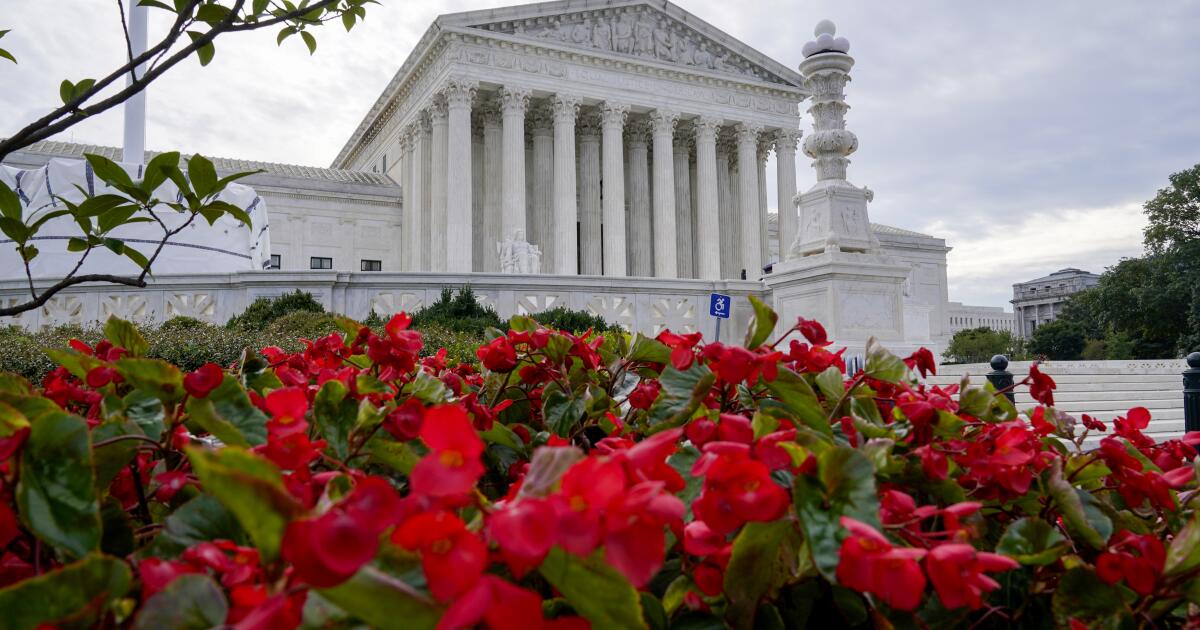
The Supreme Court ruled Friday that developers and home builders in California may challenge the fees commonly imposed by cities and counties to pay for new roads, schools, sewers and other public improvements.
The justices said these “impact fees” may be unconstitutional if builders and developers are forced to pay an unfair share of the cost of public projects.
Developers contended that limiting California’s high fees for new construction would lead to the construction of more affordable new housing.
California state courts had blocked such claims when they arose from “a development impact fee imposed pursuant to a legislatively authorized fee program” that applies to new development in a city or county.
But the 9-0 Supreme Court decision opened the door for such challenges.
In past cases from California, the Supreme Court limited the power of government officials to demand concessions from a property owner in exchange for a building permit.
In 1987, the justices ruled for the owner of a beach bungalow in Ventura who was told he could not obtain a permit to expand his home unless he agreed to allow the public access to the beachfront. The conservative majority described this demand as akin to “extortion” and said it violated the 5th Amendment’s clause that forbids the taking of “private property … for public use without just compensation.”
In a follow-up decision involving a store owner who was forced to allow a bike path on her property, the court said the government may not impose such special conditions on property owners unless it can show the new development would cause a direct harm to the community.
But in the decades since then, it has been unclear whether this property rights rule also applies to development fees and in situations where the fees are set by legislation, rather than being imposed on a single owner seeking a permit.
Justice Amy Coney Barrett said “there is no basis for affording property rights less protection in the hands of legislators than administrators. The Takings Clause applies equally to both — which means that it prohibits legislatures and agencies alike from imposing unconstitutional conditions on land-use permits.”
The case arose when property owner George Sheetz sought a permit to put a manufactured home on a lot he owned in Placerville near Sacramento. El Dorado County told him he had to pay a “traffic impact mitigation” fee of more than $23,000.
Some of the funds would pay for upgrades to Highway 50, which runs through the area.
Sheetz paid the fee and obtained his permit, and then sued to challenge the fee as unconstitutional.

The Supreme Court ruled Friday that developers and home builders in California may challenge the fees commonly imposed by cities and counties to pay for new roads, schools, sewers and other public improvements.
The justices said these “impact fees” may be unconstitutional if builders and developers are forced to pay an unfair share of the cost of public projects.
Developers contended that limiting California’s high fees for new construction would lead to the construction of more affordable new housing.
California state courts had blocked such claims when they arose from “a development impact fee imposed pursuant to a legislatively authorized fee program” that applies to new development in a city or county.
But the 9-0 Supreme Court decision opened the door for such challenges.
In past cases from California, the Supreme Court limited the power of government officials to demand concessions from a property owner in exchange for a building permit.
In 1987, the justices ruled for the owner of a beach bungalow in Ventura who was told he could not obtain a permit to expand his home unless he agreed to allow the public access to the beachfront. The conservative majority described this demand as akin to “extortion” and said it violated the 5th Amendment’s clause that forbids the taking of “private property … for public use without just compensation.”
In a follow-up decision involving a store owner who was forced to allow a bike path on her property, the court said the government may not impose such special conditions on property owners unless it can show the new development would cause a direct harm to the community.
But in the decades since then, it has been unclear whether this property rights rule also applies to development fees and in situations where the fees are set by legislation, rather than being imposed on a single owner seeking a permit.
Justice Amy Coney Barrett said “there is no basis for affording property rights less protection in the hands of legislators than administrators. The Takings Clause applies equally to both — which means that it prohibits legislatures and agencies alike from imposing unconstitutional conditions on land-use permits.”
The case arose when property owner George Sheetz sought a permit to put a manufactured home on a lot he owned in Placerville near Sacramento. El Dorado County told him he had to pay a “traffic impact mitigation” fee of more than $23,000.
Some of the funds would pay for upgrades to Highway 50, which runs through the area.
Sheetz paid the fee and obtained his permit, and then sued to challenge the fee as unconstitutional.

The Supreme Court ruled Friday that developers and home builders in California may challenge the fees commonly imposed by cities and counties to pay for new roads, schools, sewers and other public improvements.
The justices said these “impact fees” may be unconstitutional if builders and developers are forced to pay an unfair share of the cost of public projects.
Developers contended that limiting California’s high fees for new construction would lead to the construction of more affordable new housing.
California state courts had blocked such claims when they arose from “a development impact fee imposed pursuant to a legislatively authorized fee program” that applies to new development in a city or county.
But the 9-0 Supreme Court decision opened the door for such challenges.
In past cases from California, the Supreme Court limited the power of government officials to demand concessions from a property owner in exchange for a building permit.
In 1987, the justices ruled for the owner of a beach bungalow in Ventura who was told he could not obtain a permit to expand his home unless he agreed to allow the public access to the beachfront. The conservative majority described this demand as akin to “extortion” and said it violated the 5th Amendment’s clause that forbids the taking of “private property … for public use without just compensation.”
In a follow-up decision involving a store owner who was forced to allow a bike path on her property, the court said the government may not impose such special conditions on property owners unless it can show the new development would cause a direct harm to the community.
But in the decades since then, it has been unclear whether this property rights rule also applies to development fees and in situations where the fees are set by legislation, rather than being imposed on a single owner seeking a permit.
Justice Amy Coney Barrett said “there is no basis for affording property rights less protection in the hands of legislators than administrators. The Takings Clause applies equally to both — which means that it prohibits legislatures and agencies alike from imposing unconstitutional conditions on land-use permits.”
The case arose when property owner George Sheetz sought a permit to put a manufactured home on a lot he owned in Placerville near Sacramento. El Dorado County told him he had to pay a “traffic impact mitigation” fee of more than $23,000.
Some of the funds would pay for upgrades to Highway 50, which runs through the area.
Sheetz paid the fee and obtained his permit, and then sued to challenge the fee as unconstitutional.
The Supreme Court ruled Friday that developers and home builders in California may challenge the fees commonly imposed by cities and counties to pay for new roads, schools, sewers and other public improvements.
The justices said these “impact fees” may be unconstitutional if builders and developers are forced to pay an unfair share of the cost of public projects.
Developers contended that limiting California’s high fees for new construction would lead to the construction of more affordable new housing.
California state courts had blocked such claims when they arose from “a development impact fee imposed pursuant to a legislatively authorized fee program” that applies to new development in a city or county.
But the 9-0 Supreme Court decision opened the door for such challenges.
In past cases from California, the Supreme Court limited the power of government officials to demand concessions from a property owner in exchange for a building permit.
In 1987, the justices ruled for the owner of a beach bungalow in Ventura who was told he could not obtain a permit to expand his home unless he agreed to allow the public access to the beachfront. The conservative majority described this demand as akin to “extortion” and said it violated the 5th Amendment’s clause that forbids the taking of “private property … for public use without just compensation.”
In a follow-up decision involving a store owner who was forced to allow a bike path on her property, the court said the government may not impose such special conditions on property owners unless it can show the new development would cause a direct harm to the community.
But in the decades since then, it has been unclear whether this property rights rule also applies to development fees and in situations where the fees are set by legislation, rather than being imposed on a single owner seeking a permit.
Justice Amy Coney Barrett said “there is no basis for affording property rights less protection in the hands of legislators than administrators. The Takings Clause applies equally to both — which means that it prohibits legislatures and agencies alike from imposing unconstitutional conditions on land-use permits.”
The case arose when property owner George Sheetz sought a permit to put a manufactured home on a lot he owned in Placerville near Sacramento. El Dorado County told him he had to pay a “traffic impact mitigation” fee of more than $23,000.
Some of the funds would pay for upgrades to Highway 50, which runs through the area.
Sheetz paid the fee and obtained his permit, and then sued to challenge the fee as unconstitutional.

The Supreme Court ruled Friday that developers and home builders in California may challenge the fees commonly imposed by cities and counties to pay for new roads, schools, sewers and other public improvements.
The justices said these “impact fees” may be unconstitutional if builders and developers are forced to pay an unfair share of the cost of public projects.
Developers contended that limiting California’s high fees for new construction would lead to the construction of more affordable new housing.
California state courts had blocked such claims when they arose from “a development impact fee imposed pursuant to a legislatively authorized fee program” that applies to new development in a city or county.
But the 9-0 Supreme Court decision opened the door for such challenges.
In past cases from California, the Supreme Court limited the power of government officials to demand concessions from a property owner in exchange for a building permit.
In 1987, the justices ruled for the owner of a beach bungalow in Ventura who was told he could not obtain a permit to expand his home unless he agreed to allow the public access to the beachfront. The conservative majority described this demand as akin to “extortion” and said it violated the 5th Amendment’s clause that forbids the taking of “private property … for public use without just compensation.”
In a follow-up decision involving a store owner who was forced to allow a bike path on her property, the court said the government may not impose such special conditions on property owners unless it can show the new development would cause a direct harm to the community.
But in the decades since then, it has been unclear whether this property rights rule also applies to development fees and in situations where the fees are set by legislation, rather than being imposed on a single owner seeking a permit.
Justice Amy Coney Barrett said “there is no basis for affording property rights less protection in the hands of legislators than administrators. The Takings Clause applies equally to both — which means that it prohibits legislatures and agencies alike from imposing unconstitutional conditions on land-use permits.”
The case arose when property owner George Sheetz sought a permit to put a manufactured home on a lot he owned in Placerville near Sacramento. El Dorado County told him he had to pay a “traffic impact mitigation” fee of more than $23,000.
Some of the funds would pay for upgrades to Highway 50, which runs through the area.
Sheetz paid the fee and obtained his permit, and then sued to challenge the fee as unconstitutional.
The Supreme Court ruled Friday that developers and home builders in California may challenge the fees commonly imposed by cities and counties to pay for new roads, schools, sewers and other public improvements.
The justices said these “impact fees” may be unconstitutional if builders and developers are forced to pay an unfair share of the cost of public projects.
Developers contended that limiting California’s high fees for new construction would lead to the construction of more affordable new housing.
California state courts had blocked such claims when they arose from “a development impact fee imposed pursuant to a legislatively authorized fee program” that applies to new development in a city or county.
But the 9-0 Supreme Court decision opened the door for such challenges.
In past cases from California, the Supreme Court limited the power of government officials to demand concessions from a property owner in exchange for a building permit.
In 1987, the justices ruled for the owner of a beach bungalow in Ventura who was told he could not obtain a permit to expand his home unless he agreed to allow the public access to the beachfront. The conservative majority described this demand as akin to “extortion” and said it violated the 5th Amendment’s clause that forbids the taking of “private property … for public use without just compensation.”
In a follow-up decision involving a store owner who was forced to allow a bike path on her property, the court said the government may not impose such special conditions on property owners unless it can show the new development would cause a direct harm to the community.
But in the decades since then, it has been unclear whether this property rights rule also applies to development fees and in situations where the fees are set by legislation, rather than being imposed on a single owner seeking a permit.
Justice Amy Coney Barrett said “there is no basis for affording property rights less protection in the hands of legislators than administrators. The Takings Clause applies equally to both — which means that it prohibits legislatures and agencies alike from imposing unconstitutional conditions on land-use permits.”
The case arose when property owner George Sheetz sought a permit to put a manufactured home on a lot he owned in Placerville near Sacramento. El Dorado County told him he had to pay a “traffic impact mitigation” fee of more than $23,000.
Some of the funds would pay for upgrades to Highway 50, which runs through the area.
Sheetz paid the fee and obtained his permit, and then sued to challenge the fee as unconstitutional.
The Supreme Court ruled Friday that developers and home builders in California may challenge the fees commonly imposed by cities and counties to pay for new roads, schools, sewers and other public improvements.
The justices said these “impact fees” may be unconstitutional if builders and developers are forced to pay an unfair share of the cost of public projects.
Developers contended that limiting California’s high fees for new construction would lead to the construction of more affordable new housing.
California state courts had blocked such claims when they arose from “a development impact fee imposed pursuant to a legislatively authorized fee program” that applies to new development in a city or county.
But the 9-0 Supreme Court decision opened the door for such challenges.
In past cases from California, the Supreme Court limited the power of government officials to demand concessions from a property owner in exchange for a building permit.
In 1987, the justices ruled for the owner of a beach bungalow in Ventura who was told he could not obtain a permit to expand his home unless he agreed to allow the public access to the beachfront. The conservative majority described this demand as akin to “extortion” and said it violated the 5th Amendment’s clause that forbids the taking of “private property … for public use without just compensation.”
In a follow-up decision involving a store owner who was forced to allow a bike path on her property, the court said the government may not impose such special conditions on property owners unless it can show the new development would cause a direct harm to the community.
But in the decades since then, it has been unclear whether this property rights rule also applies to development fees and in situations where the fees are set by legislation, rather than being imposed on a single owner seeking a permit.
Justice Amy Coney Barrett said “there is no basis for affording property rights less protection in the hands of legislators than administrators. The Takings Clause applies equally to both — which means that it prohibits legislatures and agencies alike from imposing unconstitutional conditions on land-use permits.”
The case arose when property owner George Sheetz sought a permit to put a manufactured home on a lot he owned in Placerville near Sacramento. El Dorado County told him he had to pay a “traffic impact mitigation” fee of more than $23,000.
Some of the funds would pay for upgrades to Highway 50, which runs through the area.
Sheetz paid the fee and obtained his permit, and then sued to challenge the fee as unconstitutional.
The Supreme Court ruled Friday that developers and home builders in California may challenge the fees commonly imposed by cities and counties to pay for new roads, schools, sewers and other public improvements.
The justices said these “impact fees” may be unconstitutional if builders and developers are forced to pay an unfair share of the cost of public projects.
Developers contended that limiting California’s high fees for new construction would lead to the construction of more affordable new housing.
California state courts had blocked such claims when they arose from “a development impact fee imposed pursuant to a legislatively authorized fee program” that applies to new development in a city or county.
But the 9-0 Supreme Court decision opened the door for such challenges.
In past cases from California, the Supreme Court limited the power of government officials to demand concessions from a property owner in exchange for a building permit.
In 1987, the justices ruled for the owner of a beach bungalow in Ventura who was told he could not obtain a permit to expand his home unless he agreed to allow the public access to the beachfront. The conservative majority described this demand as akin to “extortion” and said it violated the 5th Amendment’s clause that forbids the taking of “private property … for public use without just compensation.”
In a follow-up decision involving a store owner who was forced to allow a bike path on her property, the court said the government may not impose such special conditions on property owners unless it can show the new development would cause a direct harm to the community.
But in the decades since then, it has been unclear whether this property rights rule also applies to development fees and in situations where the fees are set by legislation, rather than being imposed on a single owner seeking a permit.
Justice Amy Coney Barrett said “there is no basis for affording property rights less protection in the hands of legislators than administrators. The Takings Clause applies equally to both — which means that it prohibits legislatures and agencies alike from imposing unconstitutional conditions on land-use permits.”
The case arose when property owner George Sheetz sought a permit to put a manufactured home on a lot he owned in Placerville near Sacramento. El Dorado County told him he had to pay a “traffic impact mitigation” fee of more than $23,000.
Some of the funds would pay for upgrades to Highway 50, which runs through the area.
Sheetz paid the fee and obtained his permit, and then sued to challenge the fee as unconstitutional.

The Supreme Court ruled Friday that developers and home builders in California may challenge the fees commonly imposed by cities and counties to pay for new roads, schools, sewers and other public improvements.
The justices said these “impact fees” may be unconstitutional if builders and developers are forced to pay an unfair share of the cost of public projects.
Developers contended that limiting California’s high fees for new construction would lead to the construction of more affordable new housing.
California state courts had blocked such claims when they arose from “a development impact fee imposed pursuant to a legislatively authorized fee program” that applies to new development in a city or county.
But the 9-0 Supreme Court decision opened the door for such challenges.
In past cases from California, the Supreme Court limited the power of government officials to demand concessions from a property owner in exchange for a building permit.
In 1987, the justices ruled for the owner of a beach bungalow in Ventura who was told he could not obtain a permit to expand his home unless he agreed to allow the public access to the beachfront. The conservative majority described this demand as akin to “extortion” and said it violated the 5th Amendment’s clause that forbids the taking of “private property … for public use without just compensation.”
In a follow-up decision involving a store owner who was forced to allow a bike path on her property, the court said the government may not impose such special conditions on property owners unless it can show the new development would cause a direct harm to the community.
But in the decades since then, it has been unclear whether this property rights rule also applies to development fees and in situations where the fees are set by legislation, rather than being imposed on a single owner seeking a permit.
Justice Amy Coney Barrett said “there is no basis for affording property rights less protection in the hands of legislators than administrators. The Takings Clause applies equally to both — which means that it prohibits legislatures and agencies alike from imposing unconstitutional conditions on land-use permits.”
The case arose when property owner George Sheetz sought a permit to put a manufactured home on a lot he owned in Placerville near Sacramento. El Dorado County told him he had to pay a “traffic impact mitigation” fee of more than $23,000.
Some of the funds would pay for upgrades to Highway 50, which runs through the area.
Sheetz paid the fee and obtained his permit, and then sued to challenge the fee as unconstitutional.
The Supreme Court ruled Friday that developers and home builders in California may challenge the fees commonly imposed by cities and counties to pay for new roads, schools, sewers and other public improvements.
The justices said these “impact fees” may be unconstitutional if builders and developers are forced to pay an unfair share of the cost of public projects.
Developers contended that limiting California’s high fees for new construction would lead to the construction of more affordable new housing.
California state courts had blocked such claims when they arose from “a development impact fee imposed pursuant to a legislatively authorized fee program” that applies to new development in a city or county.
But the 9-0 Supreme Court decision opened the door for such challenges.
In past cases from California, the Supreme Court limited the power of government officials to demand concessions from a property owner in exchange for a building permit.
In 1987, the justices ruled for the owner of a beach bungalow in Ventura who was told he could not obtain a permit to expand his home unless he agreed to allow the public access to the beachfront. The conservative majority described this demand as akin to “extortion” and said it violated the 5th Amendment’s clause that forbids the taking of “private property … for public use without just compensation.”
In a follow-up decision involving a store owner who was forced to allow a bike path on her property, the court said the government may not impose such special conditions on property owners unless it can show the new development would cause a direct harm to the community.
But in the decades since then, it has been unclear whether this property rights rule also applies to development fees and in situations where the fees are set by legislation, rather than being imposed on a single owner seeking a permit.
Justice Amy Coney Barrett said “there is no basis for affording property rights less protection in the hands of legislators than administrators. The Takings Clause applies equally to both — which means that it prohibits legislatures and agencies alike from imposing unconstitutional conditions on land-use permits.”
The case arose when property owner George Sheetz sought a permit to put a manufactured home on a lot he owned in Placerville near Sacramento. El Dorado County told him he had to pay a “traffic impact mitigation” fee of more than $23,000.
Some of the funds would pay for upgrades to Highway 50, which runs through the area.
Sheetz paid the fee and obtained his permit, and then sued to challenge the fee as unconstitutional.
The Supreme Court ruled Friday that developers and home builders in California may challenge the fees commonly imposed by cities and counties to pay for new roads, schools, sewers and other public improvements.
The justices said these “impact fees” may be unconstitutional if builders and developers are forced to pay an unfair share of the cost of public projects.
Developers contended that limiting California’s high fees for new construction would lead to the construction of more affordable new housing.
California state courts had blocked such claims when they arose from “a development impact fee imposed pursuant to a legislatively authorized fee program” that applies to new development in a city or county.
But the 9-0 Supreme Court decision opened the door for such challenges.
In past cases from California, the Supreme Court limited the power of government officials to demand concessions from a property owner in exchange for a building permit.
In 1987, the justices ruled for the owner of a beach bungalow in Ventura who was told he could not obtain a permit to expand his home unless he agreed to allow the public access to the beachfront. The conservative majority described this demand as akin to “extortion” and said it violated the 5th Amendment’s clause that forbids the taking of “private property … for public use without just compensation.”
In a follow-up decision involving a store owner who was forced to allow a bike path on her property, the court said the government may not impose such special conditions on property owners unless it can show the new development would cause a direct harm to the community.
But in the decades since then, it has been unclear whether this property rights rule also applies to development fees and in situations where the fees are set by legislation, rather than being imposed on a single owner seeking a permit.
Justice Amy Coney Barrett said “there is no basis for affording property rights less protection in the hands of legislators than administrators. The Takings Clause applies equally to both — which means that it prohibits legislatures and agencies alike from imposing unconstitutional conditions on land-use permits.”
The case arose when property owner George Sheetz sought a permit to put a manufactured home on a lot he owned in Placerville near Sacramento. El Dorado County told him he had to pay a “traffic impact mitigation” fee of more than $23,000.
Some of the funds would pay for upgrades to Highway 50, which runs through the area.
Sheetz paid the fee and obtained his permit, and then sued to challenge the fee as unconstitutional.
The Supreme Court ruled Friday that developers and home builders in California may challenge the fees commonly imposed by cities and counties to pay for new roads, schools, sewers and other public improvements.
The justices said these “impact fees” may be unconstitutional if builders and developers are forced to pay an unfair share of the cost of public projects.
Developers contended that limiting California’s high fees for new construction would lead to the construction of more affordable new housing.
California state courts had blocked such claims when they arose from “a development impact fee imposed pursuant to a legislatively authorized fee program” that applies to new development in a city or county.
But the 9-0 Supreme Court decision opened the door for such challenges.
In past cases from California, the Supreme Court limited the power of government officials to demand concessions from a property owner in exchange for a building permit.
In 1987, the justices ruled for the owner of a beach bungalow in Ventura who was told he could not obtain a permit to expand his home unless he agreed to allow the public access to the beachfront. The conservative majority described this demand as akin to “extortion” and said it violated the 5th Amendment’s clause that forbids the taking of “private property … for public use without just compensation.”
In a follow-up decision involving a store owner who was forced to allow a bike path on her property, the court said the government may not impose such special conditions on property owners unless it can show the new development would cause a direct harm to the community.
But in the decades since then, it has been unclear whether this property rights rule also applies to development fees and in situations where the fees are set by legislation, rather than being imposed on a single owner seeking a permit.
Justice Amy Coney Barrett said “there is no basis for affording property rights less protection in the hands of legislators than administrators. The Takings Clause applies equally to both — which means that it prohibits legislatures and agencies alike from imposing unconstitutional conditions on land-use permits.”
The case arose when property owner George Sheetz sought a permit to put a manufactured home on a lot he owned in Placerville near Sacramento. El Dorado County told him he had to pay a “traffic impact mitigation” fee of more than $23,000.
Some of the funds would pay for upgrades to Highway 50, which runs through the area.
Sheetz paid the fee and obtained his permit, and then sued to challenge the fee as unconstitutional.
The Supreme Court ruled Friday that developers and home builders in California may challenge the fees commonly imposed by cities and counties to pay for new roads, schools, sewers and other public improvements.
The justices said these “impact fees” may be unconstitutional if builders and developers are forced to pay an unfair share of the cost of public projects.
Developers contended that limiting California’s high fees for new construction would lead to the construction of more affordable new housing.
California state courts had blocked such claims when they arose from “a development impact fee imposed pursuant to a legislatively authorized fee program” that applies to new development in a city or county.
But the 9-0 Supreme Court decision opened the door for such challenges.
In past cases from California, the Supreme Court limited the power of government officials to demand concessions from a property owner in exchange for a building permit.
In 1987, the justices ruled for the owner of a beach bungalow in Ventura who was told he could not obtain a permit to expand his home unless he agreed to allow the public access to the beachfront. The conservative majority described this demand as akin to “extortion” and said it violated the 5th Amendment’s clause that forbids the taking of “private property … for public use without just compensation.”
In a follow-up decision involving a store owner who was forced to allow a bike path on her property, the court said the government may not impose such special conditions on property owners unless it can show the new development would cause a direct harm to the community.
But in the decades since then, it has been unclear whether this property rights rule also applies to development fees and in situations where the fees are set by legislation, rather than being imposed on a single owner seeking a permit.
Justice Amy Coney Barrett said “there is no basis for affording property rights less protection in the hands of legislators than administrators. The Takings Clause applies equally to both — which means that it prohibits legislatures and agencies alike from imposing unconstitutional conditions on land-use permits.”
The case arose when property owner George Sheetz sought a permit to put a manufactured home on a lot he owned in Placerville near Sacramento. El Dorado County told him he had to pay a “traffic impact mitigation” fee of more than $23,000.
Some of the funds would pay for upgrades to Highway 50, which runs through the area.
Sheetz paid the fee and obtained his permit, and then sued to challenge the fee as unconstitutional.
The Supreme Court ruled Friday that developers and home builders in California may challenge the fees commonly imposed by cities and counties to pay for new roads, schools, sewers and other public improvements.
The justices said these “impact fees” may be unconstitutional if builders and developers are forced to pay an unfair share of the cost of public projects.
Developers contended that limiting California’s high fees for new construction would lead to the construction of more affordable new housing.
California state courts had blocked such claims when they arose from “a development impact fee imposed pursuant to a legislatively authorized fee program” that applies to new development in a city or county.
But the 9-0 Supreme Court decision opened the door for such challenges.
In past cases from California, the Supreme Court limited the power of government officials to demand concessions from a property owner in exchange for a building permit.
In 1987, the justices ruled for the owner of a beach bungalow in Ventura who was told he could not obtain a permit to expand his home unless he agreed to allow the public access to the beachfront. The conservative majority described this demand as akin to “extortion” and said it violated the 5th Amendment’s clause that forbids the taking of “private property … for public use without just compensation.”
In a follow-up decision involving a store owner who was forced to allow a bike path on her property, the court said the government may not impose such special conditions on property owners unless it can show the new development would cause a direct harm to the community.
But in the decades since then, it has been unclear whether this property rights rule also applies to development fees and in situations where the fees are set by legislation, rather than being imposed on a single owner seeking a permit.
Justice Amy Coney Barrett said “there is no basis for affording property rights less protection in the hands of legislators than administrators. The Takings Clause applies equally to both — which means that it prohibits legislatures and agencies alike from imposing unconstitutional conditions on land-use permits.”
The case arose when property owner George Sheetz sought a permit to put a manufactured home on a lot he owned in Placerville near Sacramento. El Dorado County told him he had to pay a “traffic impact mitigation” fee of more than $23,000.
Some of the funds would pay for upgrades to Highway 50, which runs through the area.
Sheetz paid the fee and obtained his permit, and then sued to challenge the fee as unconstitutional.
The Supreme Court ruled Friday that developers and home builders in California may challenge the fees commonly imposed by cities and counties to pay for new roads, schools, sewers and other public improvements.
The justices said these “impact fees” may be unconstitutional if builders and developers are forced to pay an unfair share of the cost of public projects.
Developers contended that limiting California’s high fees for new construction would lead to the construction of more affordable new housing.
California state courts had blocked such claims when they arose from “a development impact fee imposed pursuant to a legislatively authorized fee program” that applies to new development in a city or county.
But the 9-0 Supreme Court decision opened the door for such challenges.
In past cases from California, the Supreme Court limited the power of government officials to demand concessions from a property owner in exchange for a building permit.
In 1987, the justices ruled for the owner of a beach bungalow in Ventura who was told he could not obtain a permit to expand his home unless he agreed to allow the public access to the beachfront. The conservative majority described this demand as akin to “extortion” and said it violated the 5th Amendment’s clause that forbids the taking of “private property … for public use without just compensation.”
In a follow-up decision involving a store owner who was forced to allow a bike path on her property, the court said the government may not impose such special conditions on property owners unless it can show the new development would cause a direct harm to the community.
But in the decades since then, it has been unclear whether this property rights rule also applies to development fees and in situations where the fees are set by legislation, rather than being imposed on a single owner seeking a permit.
Justice Amy Coney Barrett said “there is no basis for affording property rights less protection in the hands of legislators than administrators. The Takings Clause applies equally to both — which means that it prohibits legislatures and agencies alike from imposing unconstitutional conditions on land-use permits.”
The case arose when property owner George Sheetz sought a permit to put a manufactured home on a lot he owned in Placerville near Sacramento. El Dorado County told him he had to pay a “traffic impact mitigation” fee of more than $23,000.
Some of the funds would pay for upgrades to Highway 50, which runs through the area.
Sheetz paid the fee and obtained his permit, and then sued to challenge the fee as unconstitutional.
The Supreme Court ruled Friday that developers and home builders in California may challenge the fees commonly imposed by cities and counties to pay for new roads, schools, sewers and other public improvements.
The justices said these “impact fees” may be unconstitutional if builders and developers are forced to pay an unfair share of the cost of public projects.
Developers contended that limiting California’s high fees for new construction would lead to the construction of more affordable new housing.
California state courts had blocked such claims when they arose from “a development impact fee imposed pursuant to a legislatively authorized fee program” that applies to new development in a city or county.
But the 9-0 Supreme Court decision opened the door for such challenges.
In past cases from California, the Supreme Court limited the power of government officials to demand concessions from a property owner in exchange for a building permit.
In 1987, the justices ruled for the owner of a beach bungalow in Ventura who was told he could not obtain a permit to expand his home unless he agreed to allow the public access to the beachfront. The conservative majority described this demand as akin to “extortion” and said it violated the 5th Amendment’s clause that forbids the taking of “private property … for public use without just compensation.”
In a follow-up decision involving a store owner who was forced to allow a bike path on her property, the court said the government may not impose such special conditions on property owners unless it can show the new development would cause a direct harm to the community.
But in the decades since then, it has been unclear whether this property rights rule also applies to development fees and in situations where the fees are set by legislation, rather than being imposed on a single owner seeking a permit.
Justice Amy Coney Barrett said “there is no basis for affording property rights less protection in the hands of legislators than administrators. The Takings Clause applies equally to both — which means that it prohibits legislatures and agencies alike from imposing unconstitutional conditions on land-use permits.”
The case arose when property owner George Sheetz sought a permit to put a manufactured home on a lot he owned in Placerville near Sacramento. El Dorado County told him he had to pay a “traffic impact mitigation” fee of more than $23,000.
Some of the funds would pay for upgrades to Highway 50, which runs through the area.
Sheetz paid the fee and obtained his permit, and then sued to challenge the fee as unconstitutional.

