

The world’s leaders converged on the United Nations on Tuesday for the opening sessions of the body’s annual General Assembly, held in person for the first time in three years, but with twin crises of war in Ukraine and famine in Africa weighing heavily on the gathering.
President Biden, who addresses the assembly on Wednesday, and his diplomatic team are working to buoy unity among allies to continue arming and supporting Ukraine in its fight against Russia’s invasion. With winter coming and fuel prices soaring, U.S. officials fear some European countries may be tempted to slim down their support.
The war has hurt gas supplies but done even more damage to the export of millions of tons of grain, fertilizer and cooking oil, exacerbating famine and food shortages in many parts of the world, but particularly in Africa. As a result, some African governments have refused to join Western efforts to counter Russian President Vladimir Putin, and the Biden administration hopes to offer reassurances to them.
But those options are elusive. The U.S. ambassador to the U.N., Linda Thomas-Greenfield, insisted that the sessions, which take place over two weeks, will not be dominated by Ukraine, but also acknowledged that the war has triggered a “crisis of confidence” for the U.N.
“Certainly, other countries have expressed a concern that we have not — as we focus on Ukraine, we are not paying attention to what is happening in other crises around the world,” she said. “We know that as this horrible war rages across Ukraine, we cannot ignore the rest of the world.”
The goal to shift focus beyond Ukraine, however, was made all the more difficult Tuesday when Russia-backed separatists announced plans to plow ahead with referendums in regions of Ukraine they occupy. Western officials have called the vote a sham that would be used by separatists to falsely claim that the regions — Luhansk, Donetsk, Kherson and Zaporizhzhia — should be part of Russia and that residents support the idea.
Biden is expected to roundly criticize that and other aspects of what the administration calls Putin’s escalation. There are concerns that Putin may launch a full-scale mobilization of Russian troops that would significantly intensify the fighting, just as Ukrainian forces have made important gains in retaking some of their territory.
“The United States will never recognize Russia’s claims to purportedly annex any parts of Ukraine,” said Jake Sullivan, Biden’s national security advisor. “And we will never recognize this territory as anything other than a part of Ukraine. We reject Russia’s actions unequivocally.”
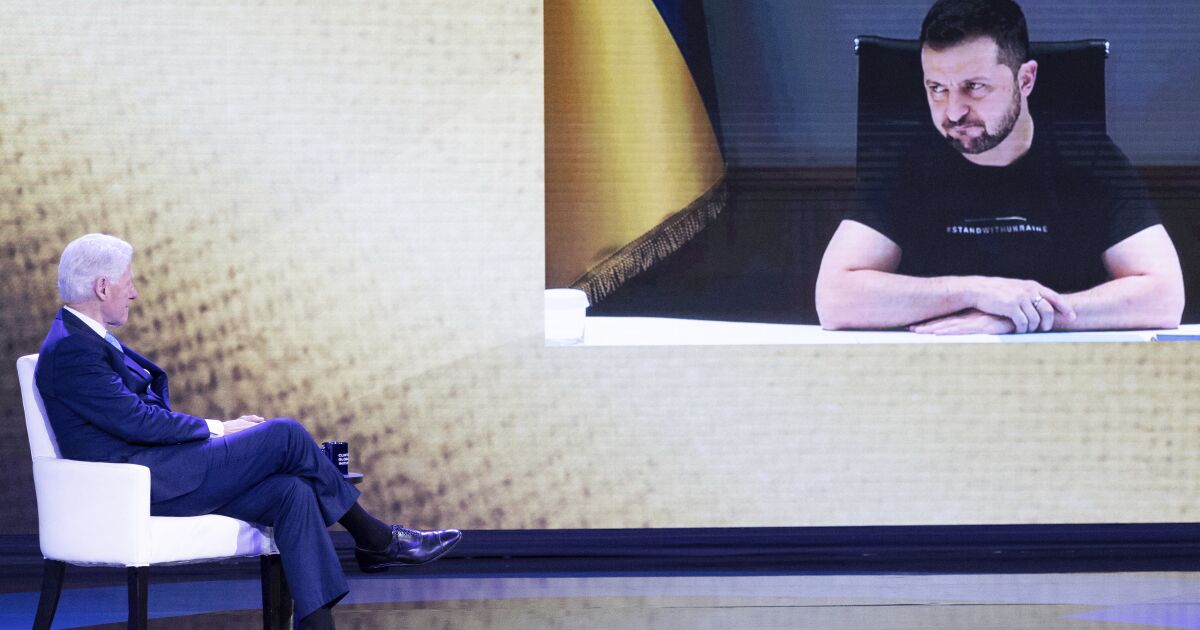
Other world leaders attending the General Assembly, such as French President Emmanuel Macron, joined in the condemnation. Putin is not in attendance and Ukraine’s President Volodymyr Zelensky is the only official who will be allowed to address the assembly remotely by video. The last two General Assemblies were virtual or partly virtual because of the COVID-19 pandemic.
The pandemic along with climate change were already depleting agricultural output and food supplies in many parts of the world. Then Russia’s Feb. 24 invasion cut off shipping from Ukraine’s Black Sea ports, plunging more regions into dire food insecurity. The World Food Program estimates at least 160 million people are facing possible starvation, primarily in the global south.
The U.N. brokered a deal with Russia that liberated some grain shipments, but the success has been spotty.
Meanwhile, the U.S. effort to shore up support for Ukraine got some good news from Britain. Prime Minister Liz Truss said her government would match or exceed the record amount of military aid it committed to Ukraine this year, about $2.6 billion.
But the overall mood at this year’s General Assembly was grim.
U.N. Secretary-General Antonio Guterres summed it up, citing myriad conflicts beyond just Ukraine — financial crisis and poverty in much of the world and lack of education for children, along with climate and health emergencies and the prospects of famine. Underlying it all is the inability of world leaders, including the U.N., to solve the problems.
“The divergence between developed and developing countries, between North and South, between the privileged and the rest, is becoming more dangerous by the day,” Guterres said. “It is at the root of the geopolitical tensions and lack of trust that poison every area of global cooperation, from vaccines to sanctions to trade.”
Nations are “gridlocked in colossal global dysfunction,” he added. “Our world is in peril — and paralyzed.”

The world’s leaders converged on the United Nations on Tuesday for the opening sessions of the body’s annual General Assembly, held in person for the first time in three years, but with twin crises of war in Ukraine and famine in Africa weighing heavily on the gathering.
President Biden, who addresses the assembly on Wednesday, and his diplomatic team are working to buoy unity among allies to continue arming and supporting Ukraine in its fight against Russia’s invasion. With winter coming and fuel prices soaring, U.S. officials fear some European countries may be tempted to slim down their support.
The war has hurt gas supplies but done even more damage to the export of millions of tons of grain, fertilizer and cooking oil, exacerbating famine and food shortages in many parts of the world, but particularly in Africa. As a result, some African governments have refused to join Western efforts to counter Russian President Vladimir Putin, and the Biden administration hopes to offer reassurances to them.
But those options are elusive. The U.S. ambassador to the U.N., Linda Thomas-Greenfield, insisted that the sessions, which take place over two weeks, will not be dominated by Ukraine, but also acknowledged that the war has triggered a “crisis of confidence” for the U.N.
“Certainly, other countries have expressed a concern that we have not — as we focus on Ukraine, we are not paying attention to what is happening in other crises around the world,” she said. “We know that as this horrible war rages across Ukraine, we cannot ignore the rest of the world.”
The goal to shift focus beyond Ukraine, however, was made all the more difficult Tuesday when Russia-backed separatists announced plans to plow ahead with referendums in regions of Ukraine they occupy. Western officials have called the vote a sham that would be used by separatists to falsely claim that the regions — Luhansk, Donetsk, Kherson and Zaporizhzhia — should be part of Russia and that residents support the idea.
Biden is expected to roundly criticize that and other aspects of what the administration calls Putin’s escalation. There are concerns that Putin may launch a full-scale mobilization of Russian troops that would significantly intensify the fighting, just as Ukrainian forces have made important gains in retaking some of their territory.
“The United States will never recognize Russia’s claims to purportedly annex any parts of Ukraine,” said Jake Sullivan, Biden’s national security advisor. “And we will never recognize this territory as anything other than a part of Ukraine. We reject Russia’s actions unequivocally.”
Other world leaders attending the General Assembly, such as French President Emmanuel Macron, joined in the condemnation. Putin is not in attendance and Ukraine’s President Volodymyr Zelensky is the only official who will be allowed to address the assembly remotely by video. The last two General Assemblies were virtual or partly virtual because of the COVID-19 pandemic.
The pandemic along with climate change were already depleting agricultural output and food supplies in many parts of the world. Then Russia’s Feb. 24 invasion cut off shipping from Ukraine’s Black Sea ports, plunging more regions into dire food insecurity. The World Food Program estimates at least 160 million people are facing possible starvation, primarily in the global south.
The U.N. brokered a deal with Russia that liberated some grain shipments, but the success has been spotty.
Meanwhile, the U.S. effort to shore up support for Ukraine got some good news from Britain. Prime Minister Liz Truss said her government would match or exceed the record amount of military aid it committed to Ukraine this year, about $2.6 billion.
But the overall mood at this year’s General Assembly was grim.
U.N. Secretary-General Antonio Guterres summed it up, citing myriad conflicts beyond just Ukraine — financial crisis and poverty in much of the world and lack of education for children, along with climate and health emergencies and the prospects of famine. Underlying it all is the inability of world leaders, including the U.N., to solve the problems.
“The divergence between developed and developing countries, between North and South, between the privileged and the rest, is becoming more dangerous by the day,” Guterres said. “It is at the root of the geopolitical tensions and lack of trust that poison every area of global cooperation, from vaccines to sanctions to trade.”
Nations are “gridlocked in colossal global dysfunction,” he added. “Our world is in peril — and paralyzed.”

The world’s leaders converged on the United Nations on Tuesday for the opening sessions of the body’s annual General Assembly, held in person for the first time in three years, but with twin crises of war in Ukraine and famine in Africa weighing heavily on the gathering.
President Biden, who addresses the assembly on Wednesday, and his diplomatic team are working to buoy unity among allies to continue arming and supporting Ukraine in its fight against Russia’s invasion. With winter coming and fuel prices soaring, U.S. officials fear some European countries may be tempted to slim down their support.
The war has hurt gas supplies but done even more damage to the export of millions of tons of grain, fertilizer and cooking oil, exacerbating famine and food shortages in many parts of the world, but particularly in Africa. As a result, some African governments have refused to join Western efforts to counter Russian President Vladimir Putin, and the Biden administration hopes to offer reassurances to them.
But those options are elusive. The U.S. ambassador to the U.N., Linda Thomas-Greenfield, insisted that the sessions, which take place over two weeks, will not be dominated by Ukraine, but also acknowledged that the war has triggered a “crisis of confidence” for the U.N.
“Certainly, other countries have expressed a concern that we have not — as we focus on Ukraine, we are not paying attention to what is happening in other crises around the world,” she said. “We know that as this horrible war rages across Ukraine, we cannot ignore the rest of the world.”
The goal to shift focus beyond Ukraine, however, was made all the more difficult Tuesday when Russia-backed separatists announced plans to plow ahead with referendums in regions of Ukraine they occupy. Western officials have called the vote a sham that would be used by separatists to falsely claim that the regions — Luhansk, Donetsk, Kherson and Zaporizhzhia — should be part of Russia and that residents support the idea.
Biden is expected to roundly criticize that and other aspects of what the administration calls Putin’s escalation. There are concerns that Putin may launch a full-scale mobilization of Russian troops that would significantly intensify the fighting, just as Ukrainian forces have made important gains in retaking some of their territory.
“The United States will never recognize Russia’s claims to purportedly annex any parts of Ukraine,” said Jake Sullivan, Biden’s national security advisor. “And we will never recognize this territory as anything other than a part of Ukraine. We reject Russia’s actions unequivocally.”
Other world leaders attending the General Assembly, such as French President Emmanuel Macron, joined in the condemnation. Putin is not in attendance and Ukraine’s President Volodymyr Zelensky is the only official who will be allowed to address the assembly remotely by video. The last two General Assemblies were virtual or partly virtual because of the COVID-19 pandemic.
The pandemic along with climate change were already depleting agricultural output and food supplies in many parts of the world. Then Russia’s Feb. 24 invasion cut off shipping from Ukraine’s Black Sea ports, plunging more regions into dire food insecurity. The World Food Program estimates at least 160 million people are facing possible starvation, primarily in the global south.
The U.N. brokered a deal with Russia that liberated some grain shipments, but the success has been spotty.
Meanwhile, the U.S. effort to shore up support for Ukraine got some good news from Britain. Prime Minister Liz Truss said her government would match or exceed the record amount of military aid it committed to Ukraine this year, about $2.6 billion.
But the overall mood at this year’s General Assembly was grim.
U.N. Secretary-General Antonio Guterres summed it up, citing myriad conflicts beyond just Ukraine — financial crisis and poverty in much of the world and lack of education for children, along with climate and health emergencies and the prospects of famine. Underlying it all is the inability of world leaders, including the U.N., to solve the problems.
“The divergence between developed and developing countries, between North and South, between the privileged and the rest, is becoming more dangerous by the day,” Guterres said. “It is at the root of the geopolitical tensions and lack of trust that poison every area of global cooperation, from vaccines to sanctions to trade.”
Nations are “gridlocked in colossal global dysfunction,” he added. “Our world is in peril — and paralyzed.”
The world’s leaders converged on the United Nations on Tuesday for the opening sessions of the body’s annual General Assembly, held in person for the first time in three years, but with twin crises of war in Ukraine and famine in Africa weighing heavily on the gathering.
President Biden, who addresses the assembly on Wednesday, and his diplomatic team are working to buoy unity among allies to continue arming and supporting Ukraine in its fight against Russia’s invasion. With winter coming and fuel prices soaring, U.S. officials fear some European countries may be tempted to slim down their support.
The war has hurt gas supplies but done even more damage to the export of millions of tons of grain, fertilizer and cooking oil, exacerbating famine and food shortages in many parts of the world, but particularly in Africa. As a result, some African governments have refused to join Western efforts to counter Russian President Vladimir Putin, and the Biden administration hopes to offer reassurances to them.
But those options are elusive. The U.S. ambassador to the U.N., Linda Thomas-Greenfield, insisted that the sessions, which take place over two weeks, will not be dominated by Ukraine, but also acknowledged that the war has triggered a “crisis of confidence” for the U.N.
“Certainly, other countries have expressed a concern that we have not — as we focus on Ukraine, we are not paying attention to what is happening in other crises around the world,” she said. “We know that as this horrible war rages across Ukraine, we cannot ignore the rest of the world.”
The goal to shift focus beyond Ukraine, however, was made all the more difficult Tuesday when Russia-backed separatists announced plans to plow ahead with referendums in regions of Ukraine they occupy. Western officials have called the vote a sham that would be used by separatists to falsely claim that the regions — Luhansk, Donetsk, Kherson and Zaporizhzhia — should be part of Russia and that residents support the idea.
Biden is expected to roundly criticize that and other aspects of what the administration calls Putin’s escalation. There are concerns that Putin may launch a full-scale mobilization of Russian troops that would significantly intensify the fighting, just as Ukrainian forces have made important gains in retaking some of their territory.
“The United States will never recognize Russia’s claims to purportedly annex any parts of Ukraine,” said Jake Sullivan, Biden’s national security advisor. “And we will never recognize this territory as anything other than a part of Ukraine. We reject Russia’s actions unequivocally.”
Other world leaders attending the General Assembly, such as French President Emmanuel Macron, joined in the condemnation. Putin is not in attendance and Ukraine’s President Volodymyr Zelensky is the only official who will be allowed to address the assembly remotely by video. The last two General Assemblies were virtual or partly virtual because of the COVID-19 pandemic.
The pandemic along with climate change were already depleting agricultural output and food supplies in many parts of the world. Then Russia’s Feb. 24 invasion cut off shipping from Ukraine’s Black Sea ports, plunging more regions into dire food insecurity. The World Food Program estimates at least 160 million people are facing possible starvation, primarily in the global south.
The U.N. brokered a deal with Russia that liberated some grain shipments, but the success has been spotty.
Meanwhile, the U.S. effort to shore up support for Ukraine got some good news from Britain. Prime Minister Liz Truss said her government would match or exceed the record amount of military aid it committed to Ukraine this year, about $2.6 billion.
But the overall mood at this year’s General Assembly was grim.
U.N. Secretary-General Antonio Guterres summed it up, citing myriad conflicts beyond just Ukraine — financial crisis and poverty in much of the world and lack of education for children, along with climate and health emergencies and the prospects of famine. Underlying it all is the inability of world leaders, including the U.N., to solve the problems.
“The divergence between developed and developing countries, between North and South, between the privileged and the rest, is becoming more dangerous by the day,” Guterres said. “It is at the root of the geopolitical tensions and lack of trust that poison every area of global cooperation, from vaccines to sanctions to trade.”
Nations are “gridlocked in colossal global dysfunction,” he added. “Our world is in peril — and paralyzed.”

The world’s leaders converged on the United Nations on Tuesday for the opening sessions of the body’s annual General Assembly, held in person for the first time in three years, but with twin crises of war in Ukraine and famine in Africa weighing heavily on the gathering.
President Biden, who addresses the assembly on Wednesday, and his diplomatic team are working to buoy unity among allies to continue arming and supporting Ukraine in its fight against Russia’s invasion. With winter coming and fuel prices soaring, U.S. officials fear some European countries may be tempted to slim down their support.
The war has hurt gas supplies but done even more damage to the export of millions of tons of grain, fertilizer and cooking oil, exacerbating famine and food shortages in many parts of the world, but particularly in Africa. As a result, some African governments have refused to join Western efforts to counter Russian President Vladimir Putin, and the Biden administration hopes to offer reassurances to them.
But those options are elusive. The U.S. ambassador to the U.N., Linda Thomas-Greenfield, insisted that the sessions, which take place over two weeks, will not be dominated by Ukraine, but also acknowledged that the war has triggered a “crisis of confidence” for the U.N.
“Certainly, other countries have expressed a concern that we have not — as we focus on Ukraine, we are not paying attention to what is happening in other crises around the world,” she said. “We know that as this horrible war rages across Ukraine, we cannot ignore the rest of the world.”
The goal to shift focus beyond Ukraine, however, was made all the more difficult Tuesday when Russia-backed separatists announced plans to plow ahead with referendums in regions of Ukraine they occupy. Western officials have called the vote a sham that would be used by separatists to falsely claim that the regions — Luhansk, Donetsk, Kherson and Zaporizhzhia — should be part of Russia and that residents support the idea.
Biden is expected to roundly criticize that and other aspects of what the administration calls Putin’s escalation. There are concerns that Putin may launch a full-scale mobilization of Russian troops that would significantly intensify the fighting, just as Ukrainian forces have made important gains in retaking some of their territory.
“The United States will never recognize Russia’s claims to purportedly annex any parts of Ukraine,” said Jake Sullivan, Biden’s national security advisor. “And we will never recognize this territory as anything other than a part of Ukraine. We reject Russia’s actions unequivocally.”
Other world leaders attending the General Assembly, such as French President Emmanuel Macron, joined in the condemnation. Putin is not in attendance and Ukraine’s President Volodymyr Zelensky is the only official who will be allowed to address the assembly remotely by video. The last two General Assemblies were virtual or partly virtual because of the COVID-19 pandemic.
The pandemic along with climate change were already depleting agricultural output and food supplies in many parts of the world. Then Russia’s Feb. 24 invasion cut off shipping from Ukraine’s Black Sea ports, plunging more regions into dire food insecurity. The World Food Program estimates at least 160 million people are facing possible starvation, primarily in the global south.
The U.N. brokered a deal with Russia that liberated some grain shipments, but the success has been spotty.
Meanwhile, the U.S. effort to shore up support for Ukraine got some good news from Britain. Prime Minister Liz Truss said her government would match or exceed the record amount of military aid it committed to Ukraine this year, about $2.6 billion.
But the overall mood at this year’s General Assembly was grim.
U.N. Secretary-General Antonio Guterres summed it up, citing myriad conflicts beyond just Ukraine — financial crisis and poverty in much of the world and lack of education for children, along with climate and health emergencies and the prospects of famine. Underlying it all is the inability of world leaders, including the U.N., to solve the problems.
“The divergence between developed and developing countries, between North and South, between the privileged and the rest, is becoming more dangerous by the day,” Guterres said. “It is at the root of the geopolitical tensions and lack of trust that poison every area of global cooperation, from vaccines to sanctions to trade.”
Nations are “gridlocked in colossal global dysfunction,” he added. “Our world is in peril — and paralyzed.”
The world’s leaders converged on the United Nations on Tuesday for the opening sessions of the body’s annual General Assembly, held in person for the first time in three years, but with twin crises of war in Ukraine and famine in Africa weighing heavily on the gathering.
President Biden, who addresses the assembly on Wednesday, and his diplomatic team are working to buoy unity among allies to continue arming and supporting Ukraine in its fight against Russia’s invasion. With winter coming and fuel prices soaring, U.S. officials fear some European countries may be tempted to slim down their support.
The war has hurt gas supplies but done even more damage to the export of millions of tons of grain, fertilizer and cooking oil, exacerbating famine and food shortages in many parts of the world, but particularly in Africa. As a result, some African governments have refused to join Western efforts to counter Russian President Vladimir Putin, and the Biden administration hopes to offer reassurances to them.
But those options are elusive. The U.S. ambassador to the U.N., Linda Thomas-Greenfield, insisted that the sessions, which take place over two weeks, will not be dominated by Ukraine, but also acknowledged that the war has triggered a “crisis of confidence” for the U.N.
“Certainly, other countries have expressed a concern that we have not — as we focus on Ukraine, we are not paying attention to what is happening in other crises around the world,” she said. “We know that as this horrible war rages across Ukraine, we cannot ignore the rest of the world.”
The goal to shift focus beyond Ukraine, however, was made all the more difficult Tuesday when Russia-backed separatists announced plans to plow ahead with referendums in regions of Ukraine they occupy. Western officials have called the vote a sham that would be used by separatists to falsely claim that the regions — Luhansk, Donetsk, Kherson and Zaporizhzhia — should be part of Russia and that residents support the idea.
Biden is expected to roundly criticize that and other aspects of what the administration calls Putin’s escalation. There are concerns that Putin may launch a full-scale mobilization of Russian troops that would significantly intensify the fighting, just as Ukrainian forces have made important gains in retaking some of their territory.
“The United States will never recognize Russia’s claims to purportedly annex any parts of Ukraine,” said Jake Sullivan, Biden’s national security advisor. “And we will never recognize this territory as anything other than a part of Ukraine. We reject Russia’s actions unequivocally.”
Other world leaders attending the General Assembly, such as French President Emmanuel Macron, joined in the condemnation. Putin is not in attendance and Ukraine’s President Volodymyr Zelensky is the only official who will be allowed to address the assembly remotely by video. The last two General Assemblies were virtual or partly virtual because of the COVID-19 pandemic.
The pandemic along with climate change were already depleting agricultural output and food supplies in many parts of the world. Then Russia’s Feb. 24 invasion cut off shipping from Ukraine’s Black Sea ports, plunging more regions into dire food insecurity. The World Food Program estimates at least 160 million people are facing possible starvation, primarily in the global south.
The U.N. brokered a deal with Russia that liberated some grain shipments, but the success has been spotty.
Meanwhile, the U.S. effort to shore up support for Ukraine got some good news from Britain. Prime Minister Liz Truss said her government would match or exceed the record amount of military aid it committed to Ukraine this year, about $2.6 billion.
But the overall mood at this year’s General Assembly was grim.
U.N. Secretary-General Antonio Guterres summed it up, citing myriad conflicts beyond just Ukraine — financial crisis and poverty in much of the world and lack of education for children, along with climate and health emergencies and the prospects of famine. Underlying it all is the inability of world leaders, including the U.N., to solve the problems.
“The divergence between developed and developing countries, between North and South, between the privileged and the rest, is becoming more dangerous by the day,” Guterres said. “It is at the root of the geopolitical tensions and lack of trust that poison every area of global cooperation, from vaccines to sanctions to trade.”
Nations are “gridlocked in colossal global dysfunction,” he added. “Our world is in peril — and paralyzed.”
The world’s leaders converged on the United Nations on Tuesday for the opening sessions of the body’s annual General Assembly, held in person for the first time in three years, but with twin crises of war in Ukraine and famine in Africa weighing heavily on the gathering.
President Biden, who addresses the assembly on Wednesday, and his diplomatic team are working to buoy unity among allies to continue arming and supporting Ukraine in its fight against Russia’s invasion. With winter coming and fuel prices soaring, U.S. officials fear some European countries may be tempted to slim down their support.
The war has hurt gas supplies but done even more damage to the export of millions of tons of grain, fertilizer and cooking oil, exacerbating famine and food shortages in many parts of the world, but particularly in Africa. As a result, some African governments have refused to join Western efforts to counter Russian President Vladimir Putin, and the Biden administration hopes to offer reassurances to them.
But those options are elusive. The U.S. ambassador to the U.N., Linda Thomas-Greenfield, insisted that the sessions, which take place over two weeks, will not be dominated by Ukraine, but also acknowledged that the war has triggered a “crisis of confidence” for the U.N.
“Certainly, other countries have expressed a concern that we have not — as we focus on Ukraine, we are not paying attention to what is happening in other crises around the world,” she said. “We know that as this horrible war rages across Ukraine, we cannot ignore the rest of the world.”
The goal to shift focus beyond Ukraine, however, was made all the more difficult Tuesday when Russia-backed separatists announced plans to plow ahead with referendums in regions of Ukraine they occupy. Western officials have called the vote a sham that would be used by separatists to falsely claim that the regions — Luhansk, Donetsk, Kherson and Zaporizhzhia — should be part of Russia and that residents support the idea.
Biden is expected to roundly criticize that and other aspects of what the administration calls Putin’s escalation. There are concerns that Putin may launch a full-scale mobilization of Russian troops that would significantly intensify the fighting, just as Ukrainian forces have made important gains in retaking some of their territory.
“The United States will never recognize Russia’s claims to purportedly annex any parts of Ukraine,” said Jake Sullivan, Biden’s national security advisor. “And we will never recognize this territory as anything other than a part of Ukraine. We reject Russia’s actions unequivocally.”
Other world leaders attending the General Assembly, such as French President Emmanuel Macron, joined in the condemnation. Putin is not in attendance and Ukraine’s President Volodymyr Zelensky is the only official who will be allowed to address the assembly remotely by video. The last two General Assemblies were virtual or partly virtual because of the COVID-19 pandemic.
The pandemic along with climate change were already depleting agricultural output and food supplies in many parts of the world. Then Russia’s Feb. 24 invasion cut off shipping from Ukraine’s Black Sea ports, plunging more regions into dire food insecurity. The World Food Program estimates at least 160 million people are facing possible starvation, primarily in the global south.
The U.N. brokered a deal with Russia that liberated some grain shipments, but the success has been spotty.
Meanwhile, the U.S. effort to shore up support for Ukraine got some good news from Britain. Prime Minister Liz Truss said her government would match or exceed the record amount of military aid it committed to Ukraine this year, about $2.6 billion.
But the overall mood at this year’s General Assembly was grim.
U.N. Secretary-General Antonio Guterres summed it up, citing myriad conflicts beyond just Ukraine — financial crisis and poverty in much of the world and lack of education for children, along with climate and health emergencies and the prospects of famine. Underlying it all is the inability of world leaders, including the U.N., to solve the problems.
“The divergence between developed and developing countries, between North and South, between the privileged and the rest, is becoming more dangerous by the day,” Guterres said. “It is at the root of the geopolitical tensions and lack of trust that poison every area of global cooperation, from vaccines to sanctions to trade.”
Nations are “gridlocked in colossal global dysfunction,” he added. “Our world is in peril — and paralyzed.”
The world’s leaders converged on the United Nations on Tuesday for the opening sessions of the body’s annual General Assembly, held in person for the first time in three years, but with twin crises of war in Ukraine and famine in Africa weighing heavily on the gathering.
President Biden, who addresses the assembly on Wednesday, and his diplomatic team are working to buoy unity among allies to continue arming and supporting Ukraine in its fight against Russia’s invasion. With winter coming and fuel prices soaring, U.S. officials fear some European countries may be tempted to slim down their support.
The war has hurt gas supplies but done even more damage to the export of millions of tons of grain, fertilizer and cooking oil, exacerbating famine and food shortages in many parts of the world, but particularly in Africa. As a result, some African governments have refused to join Western efforts to counter Russian President Vladimir Putin, and the Biden administration hopes to offer reassurances to them.
But those options are elusive. The U.S. ambassador to the U.N., Linda Thomas-Greenfield, insisted that the sessions, which take place over two weeks, will not be dominated by Ukraine, but also acknowledged that the war has triggered a “crisis of confidence” for the U.N.
“Certainly, other countries have expressed a concern that we have not — as we focus on Ukraine, we are not paying attention to what is happening in other crises around the world,” she said. “We know that as this horrible war rages across Ukraine, we cannot ignore the rest of the world.”
The goal to shift focus beyond Ukraine, however, was made all the more difficult Tuesday when Russia-backed separatists announced plans to plow ahead with referendums in regions of Ukraine they occupy. Western officials have called the vote a sham that would be used by separatists to falsely claim that the regions — Luhansk, Donetsk, Kherson and Zaporizhzhia — should be part of Russia and that residents support the idea.
Biden is expected to roundly criticize that and other aspects of what the administration calls Putin’s escalation. There are concerns that Putin may launch a full-scale mobilization of Russian troops that would significantly intensify the fighting, just as Ukrainian forces have made important gains in retaking some of their territory.
“The United States will never recognize Russia’s claims to purportedly annex any parts of Ukraine,” said Jake Sullivan, Biden’s national security advisor. “And we will never recognize this territory as anything other than a part of Ukraine. We reject Russia’s actions unequivocally.”
Other world leaders attending the General Assembly, such as French President Emmanuel Macron, joined in the condemnation. Putin is not in attendance and Ukraine’s President Volodymyr Zelensky is the only official who will be allowed to address the assembly remotely by video. The last two General Assemblies were virtual or partly virtual because of the COVID-19 pandemic.
The pandemic along with climate change were already depleting agricultural output and food supplies in many parts of the world. Then Russia’s Feb. 24 invasion cut off shipping from Ukraine’s Black Sea ports, plunging more regions into dire food insecurity. The World Food Program estimates at least 160 million people are facing possible starvation, primarily in the global south.
The U.N. brokered a deal with Russia that liberated some grain shipments, but the success has been spotty.
Meanwhile, the U.S. effort to shore up support for Ukraine got some good news from Britain. Prime Minister Liz Truss said her government would match or exceed the record amount of military aid it committed to Ukraine this year, about $2.6 billion.
But the overall mood at this year’s General Assembly was grim.
U.N. Secretary-General Antonio Guterres summed it up, citing myriad conflicts beyond just Ukraine — financial crisis and poverty in much of the world and lack of education for children, along with climate and health emergencies and the prospects of famine. Underlying it all is the inability of world leaders, including the U.N., to solve the problems.
“The divergence between developed and developing countries, between North and South, between the privileged and the rest, is becoming more dangerous by the day,” Guterres said. “It is at the root of the geopolitical tensions and lack of trust that poison every area of global cooperation, from vaccines to sanctions to trade.”
Nations are “gridlocked in colossal global dysfunction,” he added. “Our world is in peril — and paralyzed.”

The world’s leaders converged on the United Nations on Tuesday for the opening sessions of the body’s annual General Assembly, held in person for the first time in three years, but with twin crises of war in Ukraine and famine in Africa weighing heavily on the gathering.
President Biden, who addresses the assembly on Wednesday, and his diplomatic team are working to buoy unity among allies to continue arming and supporting Ukraine in its fight against Russia’s invasion. With winter coming and fuel prices soaring, U.S. officials fear some European countries may be tempted to slim down their support.
The war has hurt gas supplies but done even more damage to the export of millions of tons of grain, fertilizer and cooking oil, exacerbating famine and food shortages in many parts of the world, but particularly in Africa. As a result, some African governments have refused to join Western efforts to counter Russian President Vladimir Putin, and the Biden administration hopes to offer reassurances to them.
But those options are elusive. The U.S. ambassador to the U.N., Linda Thomas-Greenfield, insisted that the sessions, which take place over two weeks, will not be dominated by Ukraine, but also acknowledged that the war has triggered a “crisis of confidence” for the U.N.
“Certainly, other countries have expressed a concern that we have not — as we focus on Ukraine, we are not paying attention to what is happening in other crises around the world,” she said. “We know that as this horrible war rages across Ukraine, we cannot ignore the rest of the world.”
The goal to shift focus beyond Ukraine, however, was made all the more difficult Tuesday when Russia-backed separatists announced plans to plow ahead with referendums in regions of Ukraine they occupy. Western officials have called the vote a sham that would be used by separatists to falsely claim that the regions — Luhansk, Donetsk, Kherson and Zaporizhzhia — should be part of Russia and that residents support the idea.
Biden is expected to roundly criticize that and other aspects of what the administration calls Putin’s escalation. There are concerns that Putin may launch a full-scale mobilization of Russian troops that would significantly intensify the fighting, just as Ukrainian forces have made important gains in retaking some of their territory.
“The United States will never recognize Russia’s claims to purportedly annex any parts of Ukraine,” said Jake Sullivan, Biden’s national security advisor. “And we will never recognize this territory as anything other than a part of Ukraine. We reject Russia’s actions unequivocally.”
Other world leaders attending the General Assembly, such as French President Emmanuel Macron, joined in the condemnation. Putin is not in attendance and Ukraine’s President Volodymyr Zelensky is the only official who will be allowed to address the assembly remotely by video. The last two General Assemblies were virtual or partly virtual because of the COVID-19 pandemic.
The pandemic along with climate change were already depleting agricultural output and food supplies in many parts of the world. Then Russia’s Feb. 24 invasion cut off shipping from Ukraine’s Black Sea ports, plunging more regions into dire food insecurity. The World Food Program estimates at least 160 million people are facing possible starvation, primarily in the global south.
The U.N. brokered a deal with Russia that liberated some grain shipments, but the success has been spotty.
Meanwhile, the U.S. effort to shore up support for Ukraine got some good news from Britain. Prime Minister Liz Truss said her government would match or exceed the record amount of military aid it committed to Ukraine this year, about $2.6 billion.
But the overall mood at this year’s General Assembly was grim.
U.N. Secretary-General Antonio Guterres summed it up, citing myriad conflicts beyond just Ukraine — financial crisis and poverty in much of the world and lack of education for children, along with climate and health emergencies and the prospects of famine. Underlying it all is the inability of world leaders, including the U.N., to solve the problems.
“The divergence between developed and developing countries, between North and South, between the privileged and the rest, is becoming more dangerous by the day,” Guterres said. “It is at the root of the geopolitical tensions and lack of trust that poison every area of global cooperation, from vaccines to sanctions to trade.”
Nations are “gridlocked in colossal global dysfunction,” he added. “Our world is in peril — and paralyzed.”
The world’s leaders converged on the United Nations on Tuesday for the opening sessions of the body’s annual General Assembly, held in person for the first time in three years, but with twin crises of war in Ukraine and famine in Africa weighing heavily on the gathering.
President Biden, who addresses the assembly on Wednesday, and his diplomatic team are working to buoy unity among allies to continue arming and supporting Ukraine in its fight against Russia’s invasion. With winter coming and fuel prices soaring, U.S. officials fear some European countries may be tempted to slim down their support.
The war has hurt gas supplies but done even more damage to the export of millions of tons of grain, fertilizer and cooking oil, exacerbating famine and food shortages in many parts of the world, but particularly in Africa. As a result, some African governments have refused to join Western efforts to counter Russian President Vladimir Putin, and the Biden administration hopes to offer reassurances to them.
But those options are elusive. The U.S. ambassador to the U.N., Linda Thomas-Greenfield, insisted that the sessions, which take place over two weeks, will not be dominated by Ukraine, but also acknowledged that the war has triggered a “crisis of confidence” for the U.N.
“Certainly, other countries have expressed a concern that we have not — as we focus on Ukraine, we are not paying attention to what is happening in other crises around the world,” she said. “We know that as this horrible war rages across Ukraine, we cannot ignore the rest of the world.”
The goal to shift focus beyond Ukraine, however, was made all the more difficult Tuesday when Russia-backed separatists announced plans to plow ahead with referendums in regions of Ukraine they occupy. Western officials have called the vote a sham that would be used by separatists to falsely claim that the regions — Luhansk, Donetsk, Kherson and Zaporizhzhia — should be part of Russia and that residents support the idea.
Biden is expected to roundly criticize that and other aspects of what the administration calls Putin’s escalation. There are concerns that Putin may launch a full-scale mobilization of Russian troops that would significantly intensify the fighting, just as Ukrainian forces have made important gains in retaking some of their territory.
“The United States will never recognize Russia’s claims to purportedly annex any parts of Ukraine,” said Jake Sullivan, Biden’s national security advisor. “And we will never recognize this territory as anything other than a part of Ukraine. We reject Russia’s actions unequivocally.”
Other world leaders attending the General Assembly, such as French President Emmanuel Macron, joined in the condemnation. Putin is not in attendance and Ukraine’s President Volodymyr Zelensky is the only official who will be allowed to address the assembly remotely by video. The last two General Assemblies were virtual or partly virtual because of the COVID-19 pandemic.
The pandemic along with climate change were already depleting agricultural output and food supplies in many parts of the world. Then Russia’s Feb. 24 invasion cut off shipping from Ukraine’s Black Sea ports, plunging more regions into dire food insecurity. The World Food Program estimates at least 160 million people are facing possible starvation, primarily in the global south.
The U.N. brokered a deal with Russia that liberated some grain shipments, but the success has been spotty.
Meanwhile, the U.S. effort to shore up support for Ukraine got some good news from Britain. Prime Minister Liz Truss said her government would match or exceed the record amount of military aid it committed to Ukraine this year, about $2.6 billion.
But the overall mood at this year’s General Assembly was grim.
U.N. Secretary-General Antonio Guterres summed it up, citing myriad conflicts beyond just Ukraine — financial crisis and poverty in much of the world and lack of education for children, along with climate and health emergencies and the prospects of famine. Underlying it all is the inability of world leaders, including the U.N., to solve the problems.
“The divergence between developed and developing countries, between North and South, between the privileged and the rest, is becoming more dangerous by the day,” Guterres said. “It is at the root of the geopolitical tensions and lack of trust that poison every area of global cooperation, from vaccines to sanctions to trade.”
Nations are “gridlocked in colossal global dysfunction,” he added. “Our world is in peril — and paralyzed.”
The world’s leaders converged on the United Nations on Tuesday for the opening sessions of the body’s annual General Assembly, held in person for the first time in three years, but with twin crises of war in Ukraine and famine in Africa weighing heavily on the gathering.
President Biden, who addresses the assembly on Wednesday, and his diplomatic team are working to buoy unity among allies to continue arming and supporting Ukraine in its fight against Russia’s invasion. With winter coming and fuel prices soaring, U.S. officials fear some European countries may be tempted to slim down their support.
The war has hurt gas supplies but done even more damage to the export of millions of tons of grain, fertilizer and cooking oil, exacerbating famine and food shortages in many parts of the world, but particularly in Africa. As a result, some African governments have refused to join Western efforts to counter Russian President Vladimir Putin, and the Biden administration hopes to offer reassurances to them.
But those options are elusive. The U.S. ambassador to the U.N., Linda Thomas-Greenfield, insisted that the sessions, which take place over two weeks, will not be dominated by Ukraine, but also acknowledged that the war has triggered a “crisis of confidence” for the U.N.
“Certainly, other countries have expressed a concern that we have not — as we focus on Ukraine, we are not paying attention to what is happening in other crises around the world,” she said. “We know that as this horrible war rages across Ukraine, we cannot ignore the rest of the world.”
The goal to shift focus beyond Ukraine, however, was made all the more difficult Tuesday when Russia-backed separatists announced plans to plow ahead with referendums in regions of Ukraine they occupy. Western officials have called the vote a sham that would be used by separatists to falsely claim that the regions — Luhansk, Donetsk, Kherson and Zaporizhzhia — should be part of Russia and that residents support the idea.
Biden is expected to roundly criticize that and other aspects of what the administration calls Putin’s escalation. There are concerns that Putin may launch a full-scale mobilization of Russian troops that would significantly intensify the fighting, just as Ukrainian forces have made important gains in retaking some of their territory.
“The United States will never recognize Russia’s claims to purportedly annex any parts of Ukraine,” said Jake Sullivan, Biden’s national security advisor. “And we will never recognize this territory as anything other than a part of Ukraine. We reject Russia’s actions unequivocally.”
Other world leaders attending the General Assembly, such as French President Emmanuel Macron, joined in the condemnation. Putin is not in attendance and Ukraine’s President Volodymyr Zelensky is the only official who will be allowed to address the assembly remotely by video. The last two General Assemblies were virtual or partly virtual because of the COVID-19 pandemic.
The pandemic along with climate change were already depleting agricultural output and food supplies in many parts of the world. Then Russia’s Feb. 24 invasion cut off shipping from Ukraine’s Black Sea ports, plunging more regions into dire food insecurity. The World Food Program estimates at least 160 million people are facing possible starvation, primarily in the global south.
The U.N. brokered a deal with Russia that liberated some grain shipments, but the success has been spotty.
Meanwhile, the U.S. effort to shore up support for Ukraine got some good news from Britain. Prime Minister Liz Truss said her government would match or exceed the record amount of military aid it committed to Ukraine this year, about $2.6 billion.
But the overall mood at this year’s General Assembly was grim.
U.N. Secretary-General Antonio Guterres summed it up, citing myriad conflicts beyond just Ukraine — financial crisis and poverty in much of the world and lack of education for children, along with climate and health emergencies and the prospects of famine. Underlying it all is the inability of world leaders, including the U.N., to solve the problems.
“The divergence between developed and developing countries, between North and South, between the privileged and the rest, is becoming more dangerous by the day,” Guterres said. “It is at the root of the geopolitical tensions and lack of trust that poison every area of global cooperation, from vaccines to sanctions to trade.”
Nations are “gridlocked in colossal global dysfunction,” he added. “Our world is in peril — and paralyzed.”
The world’s leaders converged on the United Nations on Tuesday for the opening sessions of the body’s annual General Assembly, held in person for the first time in three years, but with twin crises of war in Ukraine and famine in Africa weighing heavily on the gathering.
President Biden, who addresses the assembly on Wednesday, and his diplomatic team are working to buoy unity among allies to continue arming and supporting Ukraine in its fight against Russia’s invasion. With winter coming and fuel prices soaring, U.S. officials fear some European countries may be tempted to slim down their support.
The war has hurt gas supplies but done even more damage to the export of millions of tons of grain, fertilizer and cooking oil, exacerbating famine and food shortages in many parts of the world, but particularly in Africa. As a result, some African governments have refused to join Western efforts to counter Russian President Vladimir Putin, and the Biden administration hopes to offer reassurances to them.
But those options are elusive. The U.S. ambassador to the U.N., Linda Thomas-Greenfield, insisted that the sessions, which take place over two weeks, will not be dominated by Ukraine, but also acknowledged that the war has triggered a “crisis of confidence” for the U.N.
“Certainly, other countries have expressed a concern that we have not — as we focus on Ukraine, we are not paying attention to what is happening in other crises around the world,” she said. “We know that as this horrible war rages across Ukraine, we cannot ignore the rest of the world.”
The goal to shift focus beyond Ukraine, however, was made all the more difficult Tuesday when Russia-backed separatists announced plans to plow ahead with referendums in regions of Ukraine they occupy. Western officials have called the vote a sham that would be used by separatists to falsely claim that the regions — Luhansk, Donetsk, Kherson and Zaporizhzhia — should be part of Russia and that residents support the idea.
Biden is expected to roundly criticize that and other aspects of what the administration calls Putin’s escalation. There are concerns that Putin may launch a full-scale mobilization of Russian troops that would significantly intensify the fighting, just as Ukrainian forces have made important gains in retaking some of their territory.
“The United States will never recognize Russia’s claims to purportedly annex any parts of Ukraine,” said Jake Sullivan, Biden’s national security advisor. “And we will never recognize this territory as anything other than a part of Ukraine. We reject Russia’s actions unequivocally.”
Other world leaders attending the General Assembly, such as French President Emmanuel Macron, joined in the condemnation. Putin is not in attendance and Ukraine’s President Volodymyr Zelensky is the only official who will be allowed to address the assembly remotely by video. The last two General Assemblies were virtual or partly virtual because of the COVID-19 pandemic.
The pandemic along with climate change were already depleting agricultural output and food supplies in many parts of the world. Then Russia’s Feb. 24 invasion cut off shipping from Ukraine’s Black Sea ports, plunging more regions into dire food insecurity. The World Food Program estimates at least 160 million people are facing possible starvation, primarily in the global south.
The U.N. brokered a deal with Russia that liberated some grain shipments, but the success has been spotty.
Meanwhile, the U.S. effort to shore up support for Ukraine got some good news from Britain. Prime Minister Liz Truss said her government would match or exceed the record amount of military aid it committed to Ukraine this year, about $2.6 billion.
But the overall mood at this year’s General Assembly was grim.
U.N. Secretary-General Antonio Guterres summed it up, citing myriad conflicts beyond just Ukraine — financial crisis and poverty in much of the world and lack of education for children, along with climate and health emergencies and the prospects of famine. Underlying it all is the inability of world leaders, including the U.N., to solve the problems.
“The divergence between developed and developing countries, between North and South, between the privileged and the rest, is becoming more dangerous by the day,” Guterres said. “It is at the root of the geopolitical tensions and lack of trust that poison every area of global cooperation, from vaccines to sanctions to trade.”
Nations are “gridlocked in colossal global dysfunction,” he added. “Our world is in peril — and paralyzed.”
The world’s leaders converged on the United Nations on Tuesday for the opening sessions of the body’s annual General Assembly, held in person for the first time in three years, but with twin crises of war in Ukraine and famine in Africa weighing heavily on the gathering.
President Biden, who addresses the assembly on Wednesday, and his diplomatic team are working to buoy unity among allies to continue arming and supporting Ukraine in its fight against Russia’s invasion. With winter coming and fuel prices soaring, U.S. officials fear some European countries may be tempted to slim down their support.
The war has hurt gas supplies but done even more damage to the export of millions of tons of grain, fertilizer and cooking oil, exacerbating famine and food shortages in many parts of the world, but particularly in Africa. As a result, some African governments have refused to join Western efforts to counter Russian President Vladimir Putin, and the Biden administration hopes to offer reassurances to them.
But those options are elusive. The U.S. ambassador to the U.N., Linda Thomas-Greenfield, insisted that the sessions, which take place over two weeks, will not be dominated by Ukraine, but also acknowledged that the war has triggered a “crisis of confidence” for the U.N.
“Certainly, other countries have expressed a concern that we have not — as we focus on Ukraine, we are not paying attention to what is happening in other crises around the world,” she said. “We know that as this horrible war rages across Ukraine, we cannot ignore the rest of the world.”
The goal to shift focus beyond Ukraine, however, was made all the more difficult Tuesday when Russia-backed separatists announced plans to plow ahead with referendums in regions of Ukraine they occupy. Western officials have called the vote a sham that would be used by separatists to falsely claim that the regions — Luhansk, Donetsk, Kherson and Zaporizhzhia — should be part of Russia and that residents support the idea.
Biden is expected to roundly criticize that and other aspects of what the administration calls Putin’s escalation. There are concerns that Putin may launch a full-scale mobilization of Russian troops that would significantly intensify the fighting, just as Ukrainian forces have made important gains in retaking some of their territory.
“The United States will never recognize Russia’s claims to purportedly annex any parts of Ukraine,” said Jake Sullivan, Biden’s national security advisor. “And we will never recognize this territory as anything other than a part of Ukraine. We reject Russia’s actions unequivocally.”
Other world leaders attending the General Assembly, such as French President Emmanuel Macron, joined in the condemnation. Putin is not in attendance and Ukraine’s President Volodymyr Zelensky is the only official who will be allowed to address the assembly remotely by video. The last two General Assemblies were virtual or partly virtual because of the COVID-19 pandemic.
The pandemic along with climate change were already depleting agricultural output and food supplies in many parts of the world. Then Russia’s Feb. 24 invasion cut off shipping from Ukraine’s Black Sea ports, plunging more regions into dire food insecurity. The World Food Program estimates at least 160 million people are facing possible starvation, primarily in the global south.
The U.N. brokered a deal with Russia that liberated some grain shipments, but the success has been spotty.
Meanwhile, the U.S. effort to shore up support for Ukraine got some good news from Britain. Prime Minister Liz Truss said her government would match or exceed the record amount of military aid it committed to Ukraine this year, about $2.6 billion.
But the overall mood at this year’s General Assembly was grim.
U.N. Secretary-General Antonio Guterres summed it up, citing myriad conflicts beyond just Ukraine — financial crisis and poverty in much of the world and lack of education for children, along with climate and health emergencies and the prospects of famine. Underlying it all is the inability of world leaders, including the U.N., to solve the problems.
“The divergence between developed and developing countries, between North and South, between the privileged and the rest, is becoming more dangerous by the day,” Guterres said. “It is at the root of the geopolitical tensions and lack of trust that poison every area of global cooperation, from vaccines to sanctions to trade.”
Nations are “gridlocked in colossal global dysfunction,” he added. “Our world is in peril — and paralyzed.”
The world’s leaders converged on the United Nations on Tuesday for the opening sessions of the body’s annual General Assembly, held in person for the first time in three years, but with twin crises of war in Ukraine and famine in Africa weighing heavily on the gathering.
President Biden, who addresses the assembly on Wednesday, and his diplomatic team are working to buoy unity among allies to continue arming and supporting Ukraine in its fight against Russia’s invasion. With winter coming and fuel prices soaring, U.S. officials fear some European countries may be tempted to slim down their support.
The war has hurt gas supplies but done even more damage to the export of millions of tons of grain, fertilizer and cooking oil, exacerbating famine and food shortages in many parts of the world, but particularly in Africa. As a result, some African governments have refused to join Western efforts to counter Russian President Vladimir Putin, and the Biden administration hopes to offer reassurances to them.
But those options are elusive. The U.S. ambassador to the U.N., Linda Thomas-Greenfield, insisted that the sessions, which take place over two weeks, will not be dominated by Ukraine, but also acknowledged that the war has triggered a “crisis of confidence” for the U.N.
“Certainly, other countries have expressed a concern that we have not — as we focus on Ukraine, we are not paying attention to what is happening in other crises around the world,” she said. “We know that as this horrible war rages across Ukraine, we cannot ignore the rest of the world.”
The goal to shift focus beyond Ukraine, however, was made all the more difficult Tuesday when Russia-backed separatists announced plans to plow ahead with referendums in regions of Ukraine they occupy. Western officials have called the vote a sham that would be used by separatists to falsely claim that the regions — Luhansk, Donetsk, Kherson and Zaporizhzhia — should be part of Russia and that residents support the idea.
Biden is expected to roundly criticize that and other aspects of what the administration calls Putin’s escalation. There are concerns that Putin may launch a full-scale mobilization of Russian troops that would significantly intensify the fighting, just as Ukrainian forces have made important gains in retaking some of their territory.
“The United States will never recognize Russia’s claims to purportedly annex any parts of Ukraine,” said Jake Sullivan, Biden’s national security advisor. “And we will never recognize this territory as anything other than a part of Ukraine. We reject Russia’s actions unequivocally.”
Other world leaders attending the General Assembly, such as French President Emmanuel Macron, joined in the condemnation. Putin is not in attendance and Ukraine’s President Volodymyr Zelensky is the only official who will be allowed to address the assembly remotely by video. The last two General Assemblies were virtual or partly virtual because of the COVID-19 pandemic.
The pandemic along with climate change were already depleting agricultural output and food supplies in many parts of the world. Then Russia’s Feb. 24 invasion cut off shipping from Ukraine’s Black Sea ports, plunging more regions into dire food insecurity. The World Food Program estimates at least 160 million people are facing possible starvation, primarily in the global south.
The U.N. brokered a deal with Russia that liberated some grain shipments, but the success has been spotty.
Meanwhile, the U.S. effort to shore up support for Ukraine got some good news from Britain. Prime Minister Liz Truss said her government would match or exceed the record amount of military aid it committed to Ukraine this year, about $2.6 billion.
But the overall mood at this year’s General Assembly was grim.
U.N. Secretary-General Antonio Guterres summed it up, citing myriad conflicts beyond just Ukraine — financial crisis and poverty in much of the world and lack of education for children, along with climate and health emergencies and the prospects of famine. Underlying it all is the inability of world leaders, including the U.N., to solve the problems.
“The divergence between developed and developing countries, between North and South, between the privileged and the rest, is becoming more dangerous by the day,” Guterres said. “It is at the root of the geopolitical tensions and lack of trust that poison every area of global cooperation, from vaccines to sanctions to trade.”
Nations are “gridlocked in colossal global dysfunction,” he added. “Our world is in peril — and paralyzed.”
The world’s leaders converged on the United Nations on Tuesday for the opening sessions of the body’s annual General Assembly, held in person for the first time in three years, but with twin crises of war in Ukraine and famine in Africa weighing heavily on the gathering.
President Biden, who addresses the assembly on Wednesday, and his diplomatic team are working to buoy unity among allies to continue arming and supporting Ukraine in its fight against Russia’s invasion. With winter coming and fuel prices soaring, U.S. officials fear some European countries may be tempted to slim down their support.
The war has hurt gas supplies but done even more damage to the export of millions of tons of grain, fertilizer and cooking oil, exacerbating famine and food shortages in many parts of the world, but particularly in Africa. As a result, some African governments have refused to join Western efforts to counter Russian President Vladimir Putin, and the Biden administration hopes to offer reassurances to them.
But those options are elusive. The U.S. ambassador to the U.N., Linda Thomas-Greenfield, insisted that the sessions, which take place over two weeks, will not be dominated by Ukraine, but also acknowledged that the war has triggered a “crisis of confidence” for the U.N.
“Certainly, other countries have expressed a concern that we have not — as we focus on Ukraine, we are not paying attention to what is happening in other crises around the world,” she said. “We know that as this horrible war rages across Ukraine, we cannot ignore the rest of the world.”
The goal to shift focus beyond Ukraine, however, was made all the more difficult Tuesday when Russia-backed separatists announced plans to plow ahead with referendums in regions of Ukraine they occupy. Western officials have called the vote a sham that would be used by separatists to falsely claim that the regions — Luhansk, Donetsk, Kherson and Zaporizhzhia — should be part of Russia and that residents support the idea.
Biden is expected to roundly criticize that and other aspects of what the administration calls Putin’s escalation. There are concerns that Putin may launch a full-scale mobilization of Russian troops that would significantly intensify the fighting, just as Ukrainian forces have made important gains in retaking some of their territory.
“The United States will never recognize Russia’s claims to purportedly annex any parts of Ukraine,” said Jake Sullivan, Biden’s national security advisor. “And we will never recognize this territory as anything other than a part of Ukraine. We reject Russia’s actions unequivocally.”
Other world leaders attending the General Assembly, such as French President Emmanuel Macron, joined in the condemnation. Putin is not in attendance and Ukraine’s President Volodymyr Zelensky is the only official who will be allowed to address the assembly remotely by video. The last two General Assemblies were virtual or partly virtual because of the COVID-19 pandemic.
The pandemic along with climate change were already depleting agricultural output and food supplies in many parts of the world. Then Russia’s Feb. 24 invasion cut off shipping from Ukraine’s Black Sea ports, plunging more regions into dire food insecurity. The World Food Program estimates at least 160 million people are facing possible starvation, primarily in the global south.
The U.N. brokered a deal with Russia that liberated some grain shipments, but the success has been spotty.
Meanwhile, the U.S. effort to shore up support for Ukraine got some good news from Britain. Prime Minister Liz Truss said her government would match or exceed the record amount of military aid it committed to Ukraine this year, about $2.6 billion.
But the overall mood at this year’s General Assembly was grim.
U.N. Secretary-General Antonio Guterres summed it up, citing myriad conflicts beyond just Ukraine — financial crisis and poverty in much of the world and lack of education for children, along with climate and health emergencies and the prospects of famine. Underlying it all is the inability of world leaders, including the U.N., to solve the problems.
“The divergence between developed and developing countries, between North and South, between the privileged and the rest, is becoming more dangerous by the day,” Guterres said. “It is at the root of the geopolitical tensions and lack of trust that poison every area of global cooperation, from vaccines to sanctions to trade.”
Nations are “gridlocked in colossal global dysfunction,” he added. “Our world is in peril — and paralyzed.”
The world’s leaders converged on the United Nations on Tuesday for the opening sessions of the body’s annual General Assembly, held in person for the first time in three years, but with twin crises of war in Ukraine and famine in Africa weighing heavily on the gathering.
President Biden, who addresses the assembly on Wednesday, and his diplomatic team are working to buoy unity among allies to continue arming and supporting Ukraine in its fight against Russia’s invasion. With winter coming and fuel prices soaring, U.S. officials fear some European countries may be tempted to slim down their support.
The war has hurt gas supplies but done even more damage to the export of millions of tons of grain, fertilizer and cooking oil, exacerbating famine and food shortages in many parts of the world, but particularly in Africa. As a result, some African governments have refused to join Western efforts to counter Russian President Vladimir Putin, and the Biden administration hopes to offer reassurances to them.
But those options are elusive. The U.S. ambassador to the U.N., Linda Thomas-Greenfield, insisted that the sessions, which take place over two weeks, will not be dominated by Ukraine, but also acknowledged that the war has triggered a “crisis of confidence” for the U.N.
“Certainly, other countries have expressed a concern that we have not — as we focus on Ukraine, we are not paying attention to what is happening in other crises around the world,” she said. “We know that as this horrible war rages across Ukraine, we cannot ignore the rest of the world.”
The goal to shift focus beyond Ukraine, however, was made all the more difficult Tuesday when Russia-backed separatists announced plans to plow ahead with referendums in regions of Ukraine they occupy. Western officials have called the vote a sham that would be used by separatists to falsely claim that the regions — Luhansk, Donetsk, Kherson and Zaporizhzhia — should be part of Russia and that residents support the idea.
Biden is expected to roundly criticize that and other aspects of what the administration calls Putin’s escalation. There are concerns that Putin may launch a full-scale mobilization of Russian troops that would significantly intensify the fighting, just as Ukrainian forces have made important gains in retaking some of their territory.
“The United States will never recognize Russia’s claims to purportedly annex any parts of Ukraine,” said Jake Sullivan, Biden’s national security advisor. “And we will never recognize this territory as anything other than a part of Ukraine. We reject Russia’s actions unequivocally.”
Other world leaders attending the General Assembly, such as French President Emmanuel Macron, joined in the condemnation. Putin is not in attendance and Ukraine’s President Volodymyr Zelensky is the only official who will be allowed to address the assembly remotely by video. The last two General Assemblies were virtual or partly virtual because of the COVID-19 pandemic.
The pandemic along with climate change were already depleting agricultural output and food supplies in many parts of the world. Then Russia’s Feb. 24 invasion cut off shipping from Ukraine’s Black Sea ports, plunging more regions into dire food insecurity. The World Food Program estimates at least 160 million people are facing possible starvation, primarily in the global south.
The U.N. brokered a deal with Russia that liberated some grain shipments, but the success has been spotty.
Meanwhile, the U.S. effort to shore up support for Ukraine got some good news from Britain. Prime Minister Liz Truss said her government would match or exceed the record amount of military aid it committed to Ukraine this year, about $2.6 billion.
But the overall mood at this year’s General Assembly was grim.
U.N. Secretary-General Antonio Guterres summed it up, citing myriad conflicts beyond just Ukraine — financial crisis and poverty in much of the world and lack of education for children, along with climate and health emergencies and the prospects of famine. Underlying it all is the inability of world leaders, including the U.N., to solve the problems.
“The divergence between developed and developing countries, between North and South, between the privileged and the rest, is becoming more dangerous by the day,” Guterres said. “It is at the root of the geopolitical tensions and lack of trust that poison every area of global cooperation, from vaccines to sanctions to trade.”
Nations are “gridlocked in colossal global dysfunction,” he added. “Our world is in peril — and paralyzed.”

