


Washington DC
New York
Toronto
Distribution: (800) 510 9863
Press ID
  • Login
Binghamton Herald
Advertisement
Wednesday, April 29, 2026
  • Home
  • World
  • Politics
  • Business
  • Technology
  • Culture
  • Health
  • Entertainment
  • Trending
No Result
View All Result
Binghamton Herald
No Result
View All Result
Home Trending

After ‘Silence’ Diktat, Taliban Bans Women From ‘Hearing’ Each Other

by Binghamton Herald Report
November 2, 2024
in Trending
Share on FacebookShare on Twitter

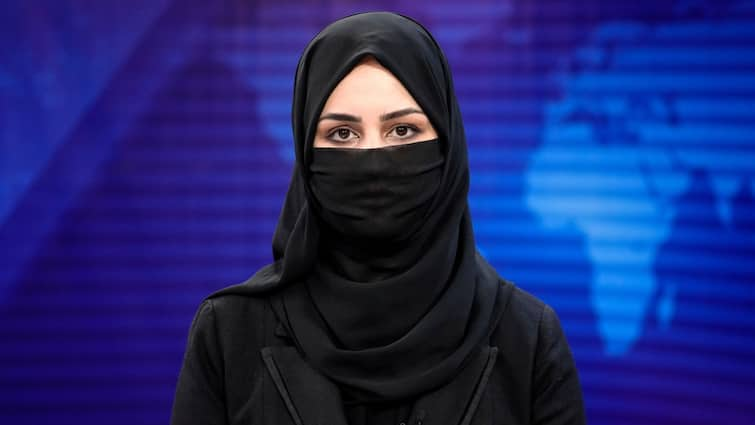
In its latest diktat for women, the Taliban government of Afghanistan has banned them from hearing each other’s voices. Khalid Hanafi, the Taliban’s Minister for the Promotion of Virtue and Prevention of Vice, has said that women– who are already prohibited from speaking in public– aren’t even permitted to hear each other’s voices

Hanafi declared that women must even refrain from reciting the Quran aloud in the presence of other women, according to a report by Amu TV, an Afghan news channel based in Virginia, US.

“When women are not permitted to call takbir or athan [Islamic call to prayer], they certainly cannot sing songs or music,” he said.

ALSO READ: New Taliban Law Classifies Loud Female Voices As ‘Immodest’, Tightens Restrictions

“Even when an adult female prays and another female passes by, she must not pray loudly enough for them to hear … How could they be allowed to sing if they aren’t even permitted to hear [each other’s] voices while praying, let alone for anything else,” The Daily Telegraph quoted Hanafi as saying. 

As per the Minister, women’s voices are considered awrah, which means they must be covered, and not be heard in public, even by other women.

More details regarding the Taliban’s bizarre new edict to further curb the voices of women are not clear yet, but as per a report by the New York Post, Hanafi has said it “will be gradually implemented, and God will be helping us in each step we take”.

The latest prohibition comes months after the Taliban, in August, banned women’s voices in public spaces.

Human rights activists from the country and around the world have criticized the move, claiming it would mean that Afghan women would be banned from holding conversations with one another.

“It is hard to imagine the situation getting worse after the Taliban banned women’s voices and faces in public last month, but with this latest decree, we have seen that the Taliban’s capacity to inflict harm on women has no limits,” Zohal Azra, from the Australian Hazara Advocacy Network, told news.com.au.

“Since returning to power in Afghanistan the Taliban has effectively erased women and girls from public life in a methodical, and systematic approach involving over 105 decrees, edicts, and orders that are enforced violently and arbitrarily, including through detention, sexual abuse, torture and cruel, inhuman, or other degrading treatment and punishment such stoning and whipping women and girls,” she added.

Notably, the Taliban have attempted to partially defend their new laws by claiming they are intended to safeguard women.

Long before the Taliban came to power, Afghanistan granted women the right to vote in 1919, a year before the United States. It opened its first schools for girls in 1921, according to The Washington Post.

In its latest diktat for women, the Taliban government of Afghanistan has banned them from hearing each other’s voices. Khalid Hanafi, the Taliban’s Minister for the Promotion of Virtue and Prevention of Vice, has said that women– who are already prohibited from speaking in public– aren’t even permitted to hear each other’s voices

Hanafi declared that women must even refrain from reciting the Quran aloud in the presence of other women, according to a report by Amu TV, an Afghan news channel based in Virginia, US.

“When women are not permitted to call takbir or athan [Islamic call to prayer], they certainly cannot sing songs or music,” he said.

ALSO READ: New Taliban Law Classifies Loud Female Voices As ‘Immodest’, Tightens Restrictions

“Even when an adult female prays and another female passes by, she must not pray loudly enough for them to hear … How could they be allowed to sing if they aren’t even permitted to hear [each other’s] voices while praying, let alone for anything else,” The Daily Telegraph quoted Hanafi as saying. 

As per the Minister, women’s voices are considered awrah, which means they must be covered, and not be heard in public, even by other women.

More details regarding the Taliban’s bizarre new edict to further curb the voices of women are not clear yet, but as per a report by the New York Post, Hanafi has said it “will be gradually implemented, and God will be helping us in each step we take”.

The latest prohibition comes months after the Taliban, in August, banned women’s voices in public spaces.

Human rights activists from the country and around the world have criticized the move, claiming it would mean that Afghan women would be banned from holding conversations with one another.

“It is hard to imagine the situation getting worse after the Taliban banned women’s voices and faces in public last month, but with this latest decree, we have seen that the Taliban’s capacity to inflict harm on women has no limits,” Zohal Azra, from the Australian Hazara Advocacy Network, told news.com.au.

“Since returning to power in Afghanistan the Taliban has effectively erased women and girls from public life in a methodical, and systematic approach involving over 105 decrees, edicts, and orders that are enforced violently and arbitrarily, including through detention, sexual abuse, torture and cruel, inhuman, or other degrading treatment and punishment such stoning and whipping women and girls,” she added.

Notably, the Taliban have attempted to partially defend their new laws by claiming they are intended to safeguard women.

Long before the Taliban came to power, Afghanistan granted women the right to vote in 1919, a year before the United States. It opened its first schools for girls in 1921, according to The Washington Post.

In its latest diktat for women, the Taliban government of Afghanistan has banned them from hearing each other’s voices. Khalid Hanafi, the Taliban’s Minister for the Promotion of Virtue and Prevention of Vice, has said that women– who are already prohibited from speaking in public– aren’t even permitted to hear each other’s voices

Hanafi declared that women must even refrain from reciting the Quran aloud in the presence of other women, according to a report by Amu TV, an Afghan news channel based in Virginia, US.

“When women are not permitted to call takbir or athan [Islamic call to prayer], they certainly cannot sing songs or music,” he said.

ALSO READ: New Taliban Law Classifies Loud Female Voices As ‘Immodest’, Tightens Restrictions

“Even when an adult female prays and another female passes by, she must not pray loudly enough for them to hear … How could they be allowed to sing if they aren’t even permitted to hear [each other’s] voices while praying, let alone for anything else,” The Daily Telegraph quoted Hanafi as saying. 

As per the Minister, women’s voices are considered awrah, which means they must be covered, and not be heard in public, even by other women.

More details regarding the Taliban’s bizarre new edict to further curb the voices of women are not clear yet, but as per a report by the New York Post, Hanafi has said it “will be gradually implemented, and God will be helping us in each step we take”.

The latest prohibition comes months after the Taliban, in August, banned women’s voices in public spaces.

Human rights activists from the country and around the world have criticized the move, claiming it would mean that Afghan women would be banned from holding conversations with one another.

“It is hard to imagine the situation getting worse after the Taliban banned women’s voices and faces in public last month, but with this latest decree, we have seen that the Taliban’s capacity to inflict harm on women has no limits,” Zohal Azra, from the Australian Hazara Advocacy Network, told news.com.au.

“Since returning to power in Afghanistan the Taliban has effectively erased women and girls from public life in a methodical, and systematic approach involving over 105 decrees, edicts, and orders that are enforced violently and arbitrarily, including through detention, sexual abuse, torture and cruel, inhuman, or other degrading treatment and punishment such stoning and whipping women and girls,” she added.

Notably, the Taliban have attempted to partially defend their new laws by claiming they are intended to safeguard women.

Long before the Taliban came to power, Afghanistan granted women the right to vote in 1919, a year before the United States. It opened its first schools for girls in 1921, according to The Washington Post.

In its latest diktat for women, the Taliban government of Afghanistan has banned them from hearing each other’s voices. Khalid Hanafi, the Taliban’s Minister for the Promotion of Virtue and Prevention of Vice, has said that women– who are already prohibited from speaking in public– aren’t even permitted to hear each other’s voices

Hanafi declared that women must even refrain from reciting the Quran aloud in the presence of other women, according to a report by Amu TV, an Afghan news channel based in Virginia, US.

“When women are not permitted to call takbir or athan [Islamic call to prayer], they certainly cannot sing songs or music,” he said.

ALSO READ: New Taliban Law Classifies Loud Female Voices As ‘Immodest’, Tightens Restrictions

“Even when an adult female prays and another female passes by, she must not pray loudly enough for them to hear … How could they be allowed to sing if they aren’t even permitted to hear [each other’s] voices while praying, let alone for anything else,” The Daily Telegraph quoted Hanafi as saying. 

As per the Minister, women’s voices are considered awrah, which means they must be covered, and not be heard in public, even by other women.

More details regarding the Taliban’s bizarre new edict to further curb the voices of women are not clear yet, but as per a report by the New York Post, Hanafi has said it “will be gradually implemented, and God will be helping us in each step we take”.

The latest prohibition comes months after the Taliban, in August, banned women’s voices in public spaces.

Human rights activists from the country and around the world have criticized the move, claiming it would mean that Afghan women would be banned from holding conversations with one another.

“It is hard to imagine the situation getting worse after the Taliban banned women’s voices and faces in public last month, but with this latest decree, we have seen that the Taliban’s capacity to inflict harm on women has no limits,” Zohal Azra, from the Australian Hazara Advocacy Network, told news.com.au.

“Since returning to power in Afghanistan the Taliban has effectively erased women and girls from public life in a methodical, and systematic approach involving over 105 decrees, edicts, and orders that are enforced violently and arbitrarily, including through detention, sexual abuse, torture and cruel, inhuman, or other degrading treatment and punishment such stoning and whipping women and girls,” she added.

Notably, the Taliban have attempted to partially defend their new laws by claiming they are intended to safeguard women.

Long before the Taliban came to power, Afghanistan granted women the right to vote in 1919, a year before the United States. It opened its first schools for girls in 1921, according to The Washington Post.


In its latest diktat for women, the Taliban government of Afghanistan has banned them from hearing each other’s voices. Khalid Hanafi, the Taliban’s Minister for the Promotion of Virtue and Prevention of Vice, has said that women– who are already prohibited from speaking in public– aren’t even permitted to hear each other’s voices

Hanafi declared that women must even refrain from reciting the Quran aloud in the presence of other women, according to a report by Amu TV, an Afghan news channel based in Virginia, US.

“When women are not permitted to call takbir or athan [Islamic call to prayer], they certainly cannot sing songs or music,” he said.

ALSO READ: New Taliban Law Classifies Loud Female Voices As ‘Immodest’, Tightens Restrictions

“Even when an adult female prays and another female passes by, she must not pray loudly enough for them to hear … How could they be allowed to sing if they aren’t even permitted to hear [each other’s] voices while praying, let alone for anything else,” The Daily Telegraph quoted Hanafi as saying. 

As per the Minister, women’s voices are considered awrah, which means they must be covered, and not be heard in public, even by other women.

More details regarding the Taliban’s bizarre new edict to further curb the voices of women are not clear yet, but as per a report by the New York Post, Hanafi has said it “will be gradually implemented, and God will be helping us in each step we take”.

The latest prohibition comes months after the Taliban, in August, banned women’s voices in public spaces.

Human rights activists from the country and around the world have criticized the move, claiming it would mean that Afghan women would be banned from holding conversations with one another.

“It is hard to imagine the situation getting worse after the Taliban banned women’s voices and faces in public last month, but with this latest decree, we have seen that the Taliban’s capacity to inflict harm on women has no limits,” Zohal Azra, from the Australian Hazara Advocacy Network, told news.com.au.

“Since returning to power in Afghanistan the Taliban has effectively erased women and girls from public life in a methodical, and systematic approach involving over 105 decrees, edicts, and orders that are enforced violently and arbitrarily, including through detention, sexual abuse, torture and cruel, inhuman, or other degrading treatment and punishment such stoning and whipping women and girls,” she added.

Notably, the Taliban have attempted to partially defend their new laws by claiming they are intended to safeguard women.

Long before the Taliban came to power, Afghanistan granted women the right to vote in 1919, a year before the United States. It opened its first schools for girls in 1921, according to The Washington Post.

In its latest diktat for women, the Taliban government of Afghanistan has banned them from hearing each other’s voices. Khalid Hanafi, the Taliban’s Minister for the Promotion of Virtue and Prevention of Vice, has said that women– who are already prohibited from speaking in public– aren’t even permitted to hear each other’s voices

Hanafi declared that women must even refrain from reciting the Quran aloud in the presence of other women, according to a report by Amu TV, an Afghan news channel based in Virginia, US.

“When women are not permitted to call takbir or athan [Islamic call to prayer], they certainly cannot sing songs or music,” he said.

ALSO READ: New Taliban Law Classifies Loud Female Voices As ‘Immodest’, Tightens Restrictions

“Even when an adult female prays and another female passes by, she must not pray loudly enough for them to hear … How could they be allowed to sing if they aren’t even permitted to hear [each other’s] voices while praying, let alone for anything else,” The Daily Telegraph quoted Hanafi as saying. 

As per the Minister, women’s voices are considered awrah, which means they must be covered, and not be heard in public, even by other women.

More details regarding the Taliban’s bizarre new edict to further curb the voices of women are not clear yet, but as per a report by the New York Post, Hanafi has said it “will be gradually implemented, and God will be helping us in each step we take”.

The latest prohibition comes months after the Taliban, in August, banned women’s voices in public spaces.

Human rights activists from the country and around the world have criticized the move, claiming it would mean that Afghan women would be banned from holding conversations with one another.

“It is hard to imagine the situation getting worse after the Taliban banned women’s voices and faces in public last month, but with this latest decree, we have seen that the Taliban’s capacity to inflict harm on women has no limits,” Zohal Azra, from the Australian Hazara Advocacy Network, told news.com.au.

“Since returning to power in Afghanistan the Taliban has effectively erased women and girls from public life in a methodical, and systematic approach involving over 105 decrees, edicts, and orders that are enforced violently and arbitrarily, including through detention, sexual abuse, torture and cruel, inhuman, or other degrading treatment and punishment such stoning and whipping women and girls,” she added.

Notably, the Taliban have attempted to partially defend their new laws by claiming they are intended to safeguard women.

Long before the Taliban came to power, Afghanistan granted women the right to vote in 1919, a year before the United States. It opened its first schools for girls in 1921, according to The Washington Post.

In its latest diktat for women, the Taliban government of Afghanistan has banned them from hearing each other’s voices. Khalid Hanafi, the Taliban’s Minister for the Promotion of Virtue and Prevention of Vice, has said that women– who are already prohibited from speaking in public– aren’t even permitted to hear each other’s voices

Hanafi declared that women must even refrain from reciting the Quran aloud in the presence of other women, according to a report by Amu TV, an Afghan news channel based in Virginia, US.

“When women are not permitted to call takbir or athan [Islamic call to prayer], they certainly cannot sing songs or music,” he said.

ALSO READ: New Taliban Law Classifies Loud Female Voices As ‘Immodest’, Tightens Restrictions

“Even when an adult female prays and another female passes by, she must not pray loudly enough for them to hear … How could they be allowed to sing if they aren’t even permitted to hear [each other’s] voices while praying, let alone for anything else,” The Daily Telegraph quoted Hanafi as saying. 

As per the Minister, women’s voices are considered awrah, which means they must be covered, and not be heard in public, even by other women.

More details regarding the Taliban’s bizarre new edict to further curb the voices of women are not clear yet, but as per a report by the New York Post, Hanafi has said it “will be gradually implemented, and God will be helping us in each step we take”.

The latest prohibition comes months after the Taliban, in August, banned women’s voices in public spaces.

Human rights activists from the country and around the world have criticized the move, claiming it would mean that Afghan women would be banned from holding conversations with one another.

“It is hard to imagine the situation getting worse after the Taliban banned women’s voices and faces in public last month, but with this latest decree, we have seen that the Taliban’s capacity to inflict harm on women has no limits,” Zohal Azra, from the Australian Hazara Advocacy Network, told news.com.au.

“Since returning to power in Afghanistan the Taliban has effectively erased women and girls from public life in a methodical, and systematic approach involving over 105 decrees, edicts, and orders that are enforced violently and arbitrarily, including through detention, sexual abuse, torture and cruel, inhuman, or other degrading treatment and punishment such stoning and whipping women and girls,” she added.

Notably, the Taliban have attempted to partially defend their new laws by claiming they are intended to safeguard women.

Long before the Taliban came to power, Afghanistan granted women the right to vote in 1919, a year before the United States. It opened its first schools for girls in 1921, according to The Washington Post.

In its latest diktat for women, the Taliban government of Afghanistan has banned them from hearing each other’s voices. Khalid Hanafi, the Taliban’s Minister for the Promotion of Virtue and Prevention of Vice, has said that women– who are already prohibited from speaking in public– aren’t even permitted to hear each other’s voices

Hanafi declared that women must even refrain from reciting the Quran aloud in the presence of other women, according to a report by Amu TV, an Afghan news channel based in Virginia, US.

“When women are not permitted to call takbir or athan [Islamic call to prayer], they certainly cannot sing songs or music,” he said.

ALSO READ: New Taliban Law Classifies Loud Female Voices As ‘Immodest’, Tightens Restrictions

“Even when an adult female prays and another female passes by, she must not pray loudly enough for them to hear … How could they be allowed to sing if they aren’t even permitted to hear [each other’s] voices while praying, let alone for anything else,” The Daily Telegraph quoted Hanafi as saying. 

As per the Minister, women’s voices are considered awrah, which means they must be covered, and not be heard in public, even by other women.

More details regarding the Taliban’s bizarre new edict to further curb the voices of women are not clear yet, but as per a report by the New York Post, Hanafi has said it “will be gradually implemented, and God will be helping us in each step we take”.

The latest prohibition comes months after the Taliban, in August, banned women’s voices in public spaces.

Human rights activists from the country and around the world have criticized the move, claiming it would mean that Afghan women would be banned from holding conversations with one another.

“It is hard to imagine the situation getting worse after the Taliban banned women’s voices and faces in public last month, but with this latest decree, we have seen that the Taliban’s capacity to inflict harm on women has no limits,” Zohal Azra, from the Australian Hazara Advocacy Network, told news.com.au.

“Since returning to power in Afghanistan the Taliban has effectively erased women and girls from public life in a methodical, and systematic approach involving over 105 decrees, edicts, and orders that are enforced violently and arbitrarily, including through detention, sexual abuse, torture and cruel, inhuman, or other degrading treatment and punishment such stoning and whipping women and girls,” she added.

Notably, the Taliban have attempted to partially defend their new laws by claiming they are intended to safeguard women.

Long before the Taliban came to power, Afghanistan granted women the right to vote in 1919, a year before the United States. It opened its first schools for girls in 1921, according to The Washington Post.

In its latest diktat for women, the Taliban government of Afghanistan has banned them from hearing each other’s voices. Khalid Hanafi, the Taliban’s Minister for the Promotion of Virtue and Prevention of Vice, has said that women– who are already prohibited from speaking in public– aren’t even permitted to hear each other’s voices

Hanafi declared that women must even refrain from reciting the Quran aloud in the presence of other women, according to a report by Amu TV, an Afghan news channel based in Virginia, US.

“When women are not permitted to call takbir or athan [Islamic call to prayer], they certainly cannot sing songs or music,” he said.

ALSO READ: New Taliban Law Classifies Loud Female Voices As ‘Immodest’, Tightens Restrictions

“Even when an adult female prays and another female passes by, she must not pray loudly enough for them to hear … How could they be allowed to sing if they aren’t even permitted to hear [each other’s] voices while praying, let alone for anything else,” The Daily Telegraph quoted Hanafi as saying. 

As per the Minister, women’s voices are considered awrah, which means they must be covered, and not be heard in public, even by other women.

More details regarding the Taliban’s bizarre new edict to further curb the voices of women are not clear yet, but as per a report by the New York Post, Hanafi has said it “will be gradually implemented, and God will be helping us in each step we take”.

The latest prohibition comes months after the Taliban, in August, banned women’s voices in public spaces.

Human rights activists from the country and around the world have criticized the move, claiming it would mean that Afghan women would be banned from holding conversations with one another.

“It is hard to imagine the situation getting worse after the Taliban banned women’s voices and faces in public last month, but with this latest decree, we have seen that the Taliban’s capacity to inflict harm on women has no limits,” Zohal Azra, from the Australian Hazara Advocacy Network, told news.com.au.

“Since returning to power in Afghanistan the Taliban has effectively erased women and girls from public life in a methodical, and systematic approach involving over 105 decrees, edicts, and orders that are enforced violently and arbitrarily, including through detention, sexual abuse, torture and cruel, inhuman, or other degrading treatment and punishment such stoning and whipping women and girls,” she added.

Notably, the Taliban have attempted to partially defend their new laws by claiming they are intended to safeguard women.

Long before the Taliban came to power, Afghanistan granted women the right to vote in 1919, a year before the United States. It opened its first schools for girls in 1921, according to The Washington Post.

In its latest diktat for women, the Taliban government of Afghanistan has banned them from hearing each other’s voices. Khalid Hanafi, the Taliban’s Minister for the Promotion of Virtue and Prevention of Vice, has said that women– who are already prohibited from speaking in public– aren’t even permitted to hear each other’s voices

Hanafi declared that women must even refrain from reciting the Quran aloud in the presence of other women, according to a report by Amu TV, an Afghan news channel based in Virginia, US.

“When women are not permitted to call takbir or athan [Islamic call to prayer], they certainly cannot sing songs or music,” he said.

ALSO READ: New Taliban Law Classifies Loud Female Voices As ‘Immodest’, Tightens Restrictions

“Even when an adult female prays and another female passes by, she must not pray loudly enough for them to hear … How could they be allowed to sing if they aren’t even permitted to hear [each other’s] voices while praying, let alone for anything else,” The Daily Telegraph quoted Hanafi as saying. 

As per the Minister, women’s voices are considered awrah, which means they must be covered, and not be heard in public, even by other women.

More details regarding the Taliban’s bizarre new edict to further curb the voices of women are not clear yet, but as per a report by the New York Post, Hanafi has said it “will be gradually implemented, and God will be helping us in each step we take”.

The latest prohibition comes months after the Taliban, in August, banned women’s voices in public spaces.

Human rights activists from the country and around the world have criticized the move, claiming it would mean that Afghan women would be banned from holding conversations with one another.

“It is hard to imagine the situation getting worse after the Taliban banned women’s voices and faces in public last month, but with this latest decree, we have seen that the Taliban’s capacity to inflict harm on women has no limits,” Zohal Azra, from the Australian Hazara Advocacy Network, told news.com.au.

“Since returning to power in Afghanistan the Taliban has effectively erased women and girls from public life in a methodical, and systematic approach involving over 105 decrees, edicts, and orders that are enforced violently and arbitrarily, including through detention, sexual abuse, torture and cruel, inhuman, or other degrading treatment and punishment such stoning and whipping women and girls,” she added.

Notably, the Taliban have attempted to partially defend their new laws by claiming they are intended to safeguard women.

Long before the Taliban came to power, Afghanistan granted women the right to vote in 1919, a year before the United States. It opened its first schools for girls in 1921, according to The Washington Post.

In its latest diktat for women, the Taliban government of Afghanistan has banned them from hearing each other’s voices. Khalid Hanafi, the Taliban’s Minister for the Promotion of Virtue and Prevention of Vice, has said that women– who are already prohibited from speaking in public– aren’t even permitted to hear each other’s voices

Hanafi declared that women must even refrain from reciting the Quran aloud in the presence of other women, according to a report by Amu TV, an Afghan news channel based in Virginia, US.

“When women are not permitted to call takbir or athan [Islamic call to prayer], they certainly cannot sing songs or music,” he said.

ALSO READ: New Taliban Law Classifies Loud Female Voices As ‘Immodest’, Tightens Restrictions

“Even when an adult female prays and another female passes by, she must not pray loudly enough for them to hear … How could they be allowed to sing if they aren’t even permitted to hear [each other’s] voices while praying, let alone for anything else,” The Daily Telegraph quoted Hanafi as saying. 

As per the Minister, women’s voices are considered awrah, which means they must be covered, and not be heard in public, even by other women.

More details regarding the Taliban’s bizarre new edict to further curb the voices of women are not clear yet, but as per a report by the New York Post, Hanafi has said it “will be gradually implemented, and God will be helping us in each step we take”.

The latest prohibition comes months after the Taliban, in August, banned women’s voices in public spaces.

Human rights activists from the country and around the world have criticized the move, claiming it would mean that Afghan women would be banned from holding conversations with one another.

“It is hard to imagine the situation getting worse after the Taliban banned women’s voices and faces in public last month, but with this latest decree, we have seen that the Taliban’s capacity to inflict harm on women has no limits,” Zohal Azra, from the Australian Hazara Advocacy Network, told news.com.au.

“Since returning to power in Afghanistan the Taliban has effectively erased women and girls from public life in a methodical, and systematic approach involving over 105 decrees, edicts, and orders that are enforced violently and arbitrarily, including through detention, sexual abuse, torture and cruel, inhuman, or other degrading treatment and punishment such stoning and whipping women and girls,” she added.

Notably, the Taliban have attempted to partially defend their new laws by claiming they are intended to safeguard women.

Long before the Taliban came to power, Afghanistan granted women the right to vote in 1919, a year before the United States. It opened its first schools for girls in 1921, according to The Washington Post.

In its latest diktat for women, the Taliban government of Afghanistan has banned them from hearing each other’s voices. Khalid Hanafi, the Taliban’s Minister for the Promotion of Virtue and Prevention of Vice, has said that women– who are already prohibited from speaking in public– aren’t even permitted to hear each other’s voices

Hanafi declared that women must even refrain from reciting the Quran aloud in the presence of other women, according to a report by Amu TV, an Afghan news channel based in Virginia, US.

“When women are not permitted to call takbir or athan [Islamic call to prayer], they certainly cannot sing songs or music,” he said.

ALSO READ: New Taliban Law Classifies Loud Female Voices As ‘Immodest’, Tightens Restrictions

“Even when an adult female prays and another female passes by, she must not pray loudly enough for them to hear … How could they be allowed to sing if they aren’t even permitted to hear [each other’s] voices while praying, let alone for anything else,” The Daily Telegraph quoted Hanafi as saying. 

As per the Minister, women’s voices are considered awrah, which means they must be covered, and not be heard in public, even by other women.

More details regarding the Taliban’s bizarre new edict to further curb the voices of women are not clear yet, but as per a report by the New York Post, Hanafi has said it “will be gradually implemented, and God will be helping us in each step we take”.

The latest prohibition comes months after the Taliban, in August, banned women’s voices in public spaces.

Human rights activists from the country and around the world have criticized the move, claiming it would mean that Afghan women would be banned from holding conversations with one another.

“It is hard to imagine the situation getting worse after the Taliban banned women’s voices and faces in public last month, but with this latest decree, we have seen that the Taliban’s capacity to inflict harm on women has no limits,” Zohal Azra, from the Australian Hazara Advocacy Network, told news.com.au.

“Since returning to power in Afghanistan the Taliban has effectively erased women and girls from public life in a methodical, and systematic approach involving over 105 decrees, edicts, and orders that are enforced violently and arbitrarily, including through detention, sexual abuse, torture and cruel, inhuman, or other degrading treatment and punishment such stoning and whipping women and girls,” she added.

Notably, the Taliban have attempted to partially defend their new laws by claiming they are intended to safeguard women.

Long before the Taliban came to power, Afghanistan granted women the right to vote in 1919, a year before the United States. It opened its first schools for girls in 1921, according to The Washington Post.

In its latest diktat for women, the Taliban government of Afghanistan has banned them from hearing each other’s voices. Khalid Hanafi, the Taliban’s Minister for the Promotion of Virtue and Prevention of Vice, has said that women– who are already prohibited from speaking in public– aren’t even permitted to hear each other’s voices

Hanafi declared that women must even refrain from reciting the Quran aloud in the presence of other women, according to a report by Amu TV, an Afghan news channel based in Virginia, US.

“When women are not permitted to call takbir or athan [Islamic call to prayer], they certainly cannot sing songs or music,” he said.

ALSO READ: New Taliban Law Classifies Loud Female Voices As ‘Immodest’, Tightens Restrictions

“Even when an adult female prays and another female passes by, she must not pray loudly enough for them to hear … How could they be allowed to sing if they aren’t even permitted to hear [each other’s] voices while praying, let alone for anything else,” The Daily Telegraph quoted Hanafi as saying. 

As per the Minister, women’s voices are considered awrah, which means they must be covered, and not be heard in public, even by other women.

More details regarding the Taliban’s bizarre new edict to further curb the voices of women are not clear yet, but as per a report by the New York Post, Hanafi has said it “will be gradually implemented, and God will be helping us in each step we take”.

The latest prohibition comes months after the Taliban, in August, banned women’s voices in public spaces.

Human rights activists from the country and around the world have criticized the move, claiming it would mean that Afghan women would be banned from holding conversations with one another.

“It is hard to imagine the situation getting worse after the Taliban banned women’s voices and faces in public last month, but with this latest decree, we have seen that the Taliban’s capacity to inflict harm on women has no limits,” Zohal Azra, from the Australian Hazara Advocacy Network, told news.com.au.

“Since returning to power in Afghanistan the Taliban has effectively erased women and girls from public life in a methodical, and systematic approach involving over 105 decrees, edicts, and orders that are enforced violently and arbitrarily, including through detention, sexual abuse, torture and cruel, inhuman, or other degrading treatment and punishment such stoning and whipping women and girls,” she added.

Notably, the Taliban have attempted to partially defend their new laws by claiming they are intended to safeguard women.

Long before the Taliban came to power, Afghanistan granted women the right to vote in 1919, a year before the United States. It opened its first schools for girls in 1921, according to The Washington Post.

In its latest diktat for women, the Taliban government of Afghanistan has banned them from hearing each other’s voices. Khalid Hanafi, the Taliban’s Minister for the Promotion of Virtue and Prevention of Vice, has said that women– who are already prohibited from speaking in public– aren’t even permitted to hear each other’s voices

Hanafi declared that women must even refrain from reciting the Quran aloud in the presence of other women, according to a report by Amu TV, an Afghan news channel based in Virginia, US.

“When women are not permitted to call takbir or athan [Islamic call to prayer], they certainly cannot sing songs or music,” he said.

ALSO READ: New Taliban Law Classifies Loud Female Voices As ‘Immodest’, Tightens Restrictions

“Even when an adult female prays and another female passes by, she must not pray loudly enough for them to hear … How could they be allowed to sing if they aren’t even permitted to hear [each other’s] voices while praying, let alone for anything else,” The Daily Telegraph quoted Hanafi as saying. 

As per the Minister, women’s voices are considered awrah, which means they must be covered, and not be heard in public, even by other women.

More details regarding the Taliban’s bizarre new edict to further curb the voices of women are not clear yet, but as per a report by the New York Post, Hanafi has said it “will be gradually implemented, and God will be helping us in each step we take”.

The latest prohibition comes months after the Taliban, in August, banned women’s voices in public spaces.

Human rights activists from the country and around the world have criticized the move, claiming it would mean that Afghan women would be banned from holding conversations with one another.

“It is hard to imagine the situation getting worse after the Taliban banned women’s voices and faces in public last month, but with this latest decree, we have seen that the Taliban’s capacity to inflict harm on women has no limits,” Zohal Azra, from the Australian Hazara Advocacy Network, told news.com.au.

“Since returning to power in Afghanistan the Taliban has effectively erased women and girls from public life in a methodical, and systematic approach involving over 105 decrees, edicts, and orders that are enforced violently and arbitrarily, including through detention, sexual abuse, torture and cruel, inhuman, or other degrading treatment and punishment such stoning and whipping women and girls,” she added.

Notably, the Taliban have attempted to partially defend their new laws by claiming they are intended to safeguard women.

Long before the Taliban came to power, Afghanistan granted women the right to vote in 1919, a year before the United States. It opened its first schools for girls in 1921, according to The Washington Post.

In its latest diktat for women, the Taliban government of Afghanistan has banned them from hearing each other’s voices. Khalid Hanafi, the Taliban’s Minister for the Promotion of Virtue and Prevention of Vice, has said that women– who are already prohibited from speaking in public– aren’t even permitted to hear each other’s voices

Hanafi declared that women must even refrain from reciting the Quran aloud in the presence of other women, according to a report by Amu TV, an Afghan news channel based in Virginia, US.

“When women are not permitted to call takbir or athan [Islamic call to prayer], they certainly cannot sing songs or music,” he said.

ALSO READ: New Taliban Law Classifies Loud Female Voices As ‘Immodest’, Tightens Restrictions

“Even when an adult female prays and another female passes by, she must not pray loudly enough for them to hear … How could they be allowed to sing if they aren’t even permitted to hear [each other’s] voices while praying, let alone for anything else,” The Daily Telegraph quoted Hanafi as saying. 

As per the Minister, women’s voices are considered awrah, which means they must be covered, and not be heard in public, even by other women.

More details regarding the Taliban’s bizarre new edict to further curb the voices of women are not clear yet, but as per a report by the New York Post, Hanafi has said it “will be gradually implemented, and God will be helping us in each step we take”.

The latest prohibition comes months after the Taliban, in August, banned women’s voices in public spaces.

Human rights activists from the country and around the world have criticized the move, claiming it would mean that Afghan women would be banned from holding conversations with one another.

“It is hard to imagine the situation getting worse after the Taliban banned women’s voices and faces in public last month, but with this latest decree, we have seen that the Taliban’s capacity to inflict harm on women has no limits,” Zohal Azra, from the Australian Hazara Advocacy Network, told news.com.au.

“Since returning to power in Afghanistan the Taliban has effectively erased women and girls from public life in a methodical, and systematic approach involving over 105 decrees, edicts, and orders that are enforced violently and arbitrarily, including through detention, sexual abuse, torture and cruel, inhuman, or other degrading treatment and punishment such stoning and whipping women and girls,” she added.

Notably, the Taliban have attempted to partially defend their new laws by claiming they are intended to safeguard women.

Long before the Taliban came to power, Afghanistan granted women the right to vote in 1919, a year before the United States. It opened its first schools for girls in 1921, according to The Washington Post.

In its latest diktat for women, the Taliban government of Afghanistan has banned them from hearing each other’s voices. Khalid Hanafi, the Taliban’s Minister for the Promotion of Virtue and Prevention of Vice, has said that women– who are already prohibited from speaking in public– aren’t even permitted to hear each other’s voices

Hanafi declared that women must even refrain from reciting the Quran aloud in the presence of other women, according to a report by Amu TV, an Afghan news channel based in Virginia, US.

“When women are not permitted to call takbir or athan [Islamic call to prayer], they certainly cannot sing songs or music,” he said.

ALSO READ: New Taliban Law Classifies Loud Female Voices As ‘Immodest’, Tightens Restrictions

“Even when an adult female prays and another female passes by, she must not pray loudly enough for them to hear … How could they be allowed to sing if they aren’t even permitted to hear [each other’s] voices while praying, let alone for anything else,” The Daily Telegraph quoted Hanafi as saying. 

As per the Minister, women’s voices are considered awrah, which means they must be covered, and not be heard in public, even by other women.

More details regarding the Taliban’s bizarre new edict to further curb the voices of women are not clear yet, but as per a report by the New York Post, Hanafi has said it “will be gradually implemented, and God will be helping us in each step we take”.

The latest prohibition comes months after the Taliban, in August, banned women’s voices in public spaces.

Human rights activists from the country and around the world have criticized the move, claiming it would mean that Afghan women would be banned from holding conversations with one another.

“It is hard to imagine the situation getting worse after the Taliban banned women’s voices and faces in public last month, but with this latest decree, we have seen that the Taliban’s capacity to inflict harm on women has no limits,” Zohal Azra, from the Australian Hazara Advocacy Network, told news.com.au.

“Since returning to power in Afghanistan the Taliban has effectively erased women and girls from public life in a methodical, and systematic approach involving over 105 decrees, edicts, and orders that are enforced violently and arbitrarily, including through detention, sexual abuse, torture and cruel, inhuman, or other degrading treatment and punishment such stoning and whipping women and girls,” she added.

Notably, the Taliban have attempted to partially defend their new laws by claiming they are intended to safeguard women.

Long before the Taliban came to power, Afghanistan granted women the right to vote in 1919, a year before the United States. It opened its first schools for girls in 1921, according to The Washington Post.

Tags: AfghanistanDiktat on WomenTalibanWomen can
Previous Post

Review: In ‘Emilia Pérez,’ a musical heightened by danger, passion pours out like a confession

Next Post

Elon Musk To Face Deportation For Immigration Violation? Here’s What He Has To Say

Leave a Reply Cancel reply

Your email address will not be published. Required fields are marked *

BROWSE BY CATEGORIES

  • Business
  • Culture
  • Entertainment
  • Health
  • Politics
  • Technology
  • Trending
  • Uncategorized
  • World
Binghamton Herald

© 2024 Binghamton Herald or its affiliated companies.

Navigate Site

  • About
  • Advertise
  • Terms & Conditions
  • Privacy Policy
  • Disclaimer
  • Contact

Follow Us

No Result
View All Result
  • Home
  • World
  • Politics
  • Business
  • Technology
  • Culture
  • Health
  • Entertainment
  • Trending

© 2024 Binghamton Herald or its affiliated companies.

Welcome Back!

Login to your account below

Forgotten Password?

Retrieve your password

Please enter your username or email address to reset your password.

Log In