


Washington DC
New York
Toronto
Distribution: (800) 510 9863
Press ID
  • Login
Binghamton Herald
Advertisement
Friday, May 8, 2026
  • Home
  • World
  • Politics
  • Business
  • Technology
  • Culture
  • Health
  • Entertainment
  • Trending
No Result
View All Result
Binghamton Herald
No Result
View All Result
Home Trending

Aditya-L1 Performs Third Earth-Bound Manoeuvre. Here’s When The Next Perigee Burn Will Occur

by Binghamton Herald Report
September 10, 2023
in Trending
Share on FacebookShare on Twitter

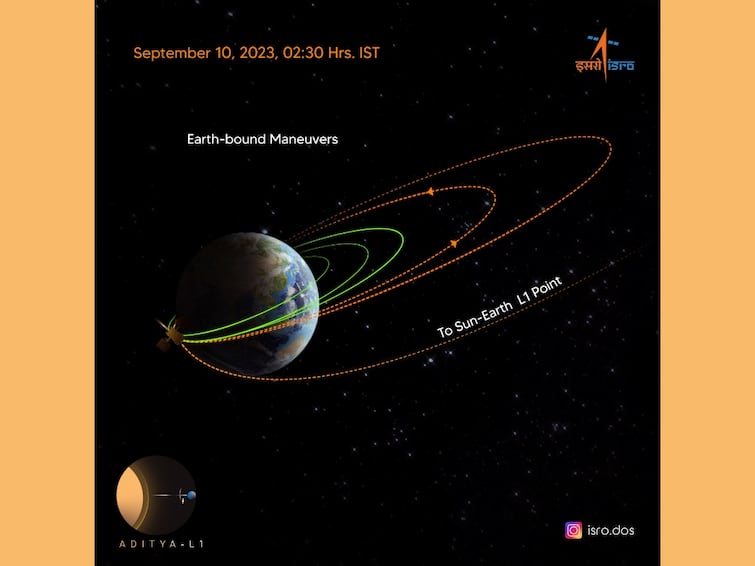
Aditya-L1 has successfully undergone its third Earth-bound manoeuvre. The perigee burn, which helped Aditya-L1 raise its orbit and make it more elliptical than before, was performed at 2:30 am IST on September 10, 2023, the Indian Space Research Organisation (ISRO) said in a mission update. After this Earth-bound manoeuvre, Aditya-L1 is an orbit of size 296 km × 71767 km. The Earth-bound manoeuvre was successfully performed from the ISRO Telemetry, Tracking and Command Network (ISTRAC) in Bengaluru, and was tracked by ground stations at Satish Dhawan Space Centre, Sriharikota; Bengaluru; Mauritius; and Port Blair. 

Aditya-L1 will perform its next Earth-bound manoeuvre on September 15, 2023, at around 2:00 am IST. 

Aditya-L1 is India’s first space-based solar observatory to study the Sun. It was launched on September 2, 2023, at 11:50 am IST. The spacecraft will be placed in a halo orbit around Lagrange point 1 (L1), where it will have an uninterrupted view of the Sun for the entirety of its mission duration, and will also be able to save fuel because at that location, the centripetal force of the observatory will be balanced by the gravitational forces exerted by the Sun and the Earth. 

Aditya-L1 will study the solar corona, the dynamics of coronal mass ejections, pre-flare and flare activities, propagation of particles and fields from the Sun, the mechanisms occurring in the photosphere and chromosphere, the magnetic field around the Sun, the properties of plasma from the Sun, and how solar activities affect the region around L1. In other words, Aditya-L1 will study the effect of space weather on the interplanetary medium in real time.

Aditya-L1 is equipped with seven payloads, four of which are remote sensing instruments, and three are in-situ payloads. The remote sensing payloads will serve as spectrometers, two of the in-situ payloads will serve as particle analysers, and one is a magnetometer.

Aditya-L1 will reach the halo orbit around L1 about four months from launch, in January 2024. It will study the Sun and the effect of solar activities on the interplanetary medium for five years.

Aditya-L1 has successfully undergone its third Earth-bound manoeuvre. The perigee burn, which helped Aditya-L1 raise its orbit and make it more elliptical than before, was performed at 2:30 am IST on September 10, 2023, the Indian Space Research Organisation (ISRO) said in a mission update. After this Earth-bound manoeuvre, Aditya-L1 is an orbit of size 296 km × 71767 km. The Earth-bound manoeuvre was successfully performed from the ISRO Telemetry, Tracking and Command Network (ISTRAC) in Bengaluru, and was tracked by ground stations at Satish Dhawan Space Centre, Sriharikota; Bengaluru; Mauritius; and Port Blair. 

Aditya-L1 will perform its next Earth-bound manoeuvre on September 15, 2023, at around 2:00 am IST. 

Aditya-L1 is India’s first space-based solar observatory to study the Sun. It was launched on September 2, 2023, at 11:50 am IST. The spacecraft will be placed in a halo orbit around Lagrange point 1 (L1), where it will have an uninterrupted view of the Sun for the entirety of its mission duration, and will also be able to save fuel because at that location, the centripetal force of the observatory will be balanced by the gravitational forces exerted by the Sun and the Earth. 

Aditya-L1 will study the solar corona, the dynamics of coronal mass ejections, pre-flare and flare activities, propagation of particles and fields from the Sun, the mechanisms occurring in the photosphere and chromosphere, the magnetic field around the Sun, the properties of plasma from the Sun, and how solar activities affect the region around L1. In other words, Aditya-L1 will study the effect of space weather on the interplanetary medium in real time.

Aditya-L1 is equipped with seven payloads, four of which are remote sensing instruments, and three are in-situ payloads. The remote sensing payloads will serve as spectrometers, two of the in-situ payloads will serve as particle analysers, and one is a magnetometer.

Aditya-L1 will reach the halo orbit around L1 about four months from launch, in January 2024. It will study the Sun and the effect of solar activities on the interplanetary medium for five years.

Aditya-L1 has successfully undergone its third Earth-bound manoeuvre. The perigee burn, which helped Aditya-L1 raise its orbit and make it more elliptical than before, was performed at 2:30 am IST on September 10, 2023, the Indian Space Research Organisation (ISRO) said in a mission update. After this Earth-bound manoeuvre, Aditya-L1 is an orbit of size 296 km × 71767 km. The Earth-bound manoeuvre was successfully performed from the ISRO Telemetry, Tracking and Command Network (ISTRAC) in Bengaluru, and was tracked by ground stations at Satish Dhawan Space Centre, Sriharikota; Bengaluru; Mauritius; and Port Blair. 

Aditya-L1 will perform its next Earth-bound manoeuvre on September 15, 2023, at around 2:00 am IST. 

Aditya-L1 is India’s first space-based solar observatory to study the Sun. It was launched on September 2, 2023, at 11:50 am IST. The spacecraft will be placed in a halo orbit around Lagrange point 1 (L1), where it will have an uninterrupted view of the Sun for the entirety of its mission duration, and will also be able to save fuel because at that location, the centripetal force of the observatory will be balanced by the gravitational forces exerted by the Sun and the Earth. 

Aditya-L1 will study the solar corona, the dynamics of coronal mass ejections, pre-flare and flare activities, propagation of particles and fields from the Sun, the mechanisms occurring in the photosphere and chromosphere, the magnetic field around the Sun, the properties of plasma from the Sun, and how solar activities affect the region around L1. In other words, Aditya-L1 will study the effect of space weather on the interplanetary medium in real time.

Aditya-L1 is equipped with seven payloads, four of which are remote sensing instruments, and three are in-situ payloads. The remote sensing payloads will serve as spectrometers, two of the in-situ payloads will serve as particle analysers, and one is a magnetometer.

Aditya-L1 will reach the halo orbit around L1 about four months from launch, in January 2024. It will study the Sun and the effect of solar activities on the interplanetary medium for five years.

Aditya-L1 has successfully undergone its third Earth-bound manoeuvre. The perigee burn, which helped Aditya-L1 raise its orbit and make it more elliptical than before, was performed at 2:30 am IST on September 10, 2023, the Indian Space Research Organisation (ISRO) said in a mission update. After this Earth-bound manoeuvre, Aditya-L1 is an orbit of size 296 km × 71767 km. The Earth-bound manoeuvre was successfully performed from the ISRO Telemetry, Tracking and Command Network (ISTRAC) in Bengaluru, and was tracked by ground stations at Satish Dhawan Space Centre, Sriharikota; Bengaluru; Mauritius; and Port Blair. 

Aditya-L1 will perform its next Earth-bound manoeuvre on September 15, 2023, at around 2:00 am IST. 

Aditya-L1 is India’s first space-based solar observatory to study the Sun. It was launched on September 2, 2023, at 11:50 am IST. The spacecraft will be placed in a halo orbit around Lagrange point 1 (L1), where it will have an uninterrupted view of the Sun for the entirety of its mission duration, and will also be able to save fuel because at that location, the centripetal force of the observatory will be balanced by the gravitational forces exerted by the Sun and the Earth. 

Aditya-L1 will study the solar corona, the dynamics of coronal mass ejections, pre-flare and flare activities, propagation of particles and fields from the Sun, the mechanisms occurring in the photosphere and chromosphere, the magnetic field around the Sun, the properties of plasma from the Sun, and how solar activities affect the region around L1. In other words, Aditya-L1 will study the effect of space weather on the interplanetary medium in real time.

Aditya-L1 is equipped with seven payloads, four of which are remote sensing instruments, and three are in-situ payloads. The remote sensing payloads will serve as spectrometers, two of the in-situ payloads will serve as particle analysers, and one is a magnetometer.

Aditya-L1 will reach the halo orbit around L1 about four months from launch, in January 2024. It will study the Sun and the effect of solar activities on the interplanetary medium for five years.


Aditya-L1 has successfully undergone its third Earth-bound manoeuvre. The perigee burn, which helped Aditya-L1 raise its orbit and make it more elliptical than before, was performed at 2:30 am IST on September 10, 2023, the Indian Space Research Organisation (ISRO) said in a mission update. After this Earth-bound manoeuvre, Aditya-L1 is an orbit of size 296 km × 71767 km. The Earth-bound manoeuvre was successfully performed from the ISRO Telemetry, Tracking and Command Network (ISTRAC) in Bengaluru, and was tracked by ground stations at Satish Dhawan Space Centre, Sriharikota; Bengaluru; Mauritius; and Port Blair. 

Aditya-L1 will perform its next Earth-bound manoeuvre on September 15, 2023, at around 2:00 am IST. 

Aditya-L1 is India’s first space-based solar observatory to study the Sun. It was launched on September 2, 2023, at 11:50 am IST. The spacecraft will be placed in a halo orbit around Lagrange point 1 (L1), where it will have an uninterrupted view of the Sun for the entirety of its mission duration, and will also be able to save fuel because at that location, the centripetal force of the observatory will be balanced by the gravitational forces exerted by the Sun and the Earth. 

Aditya-L1 will study the solar corona, the dynamics of coronal mass ejections, pre-flare and flare activities, propagation of particles and fields from the Sun, the mechanisms occurring in the photosphere and chromosphere, the magnetic field around the Sun, the properties of plasma from the Sun, and how solar activities affect the region around L1. In other words, Aditya-L1 will study the effect of space weather on the interplanetary medium in real time.

Aditya-L1 is equipped with seven payloads, four of which are remote sensing instruments, and three are in-situ payloads. The remote sensing payloads will serve as spectrometers, two of the in-situ payloads will serve as particle analysers, and one is a magnetometer.

Aditya-L1 will reach the halo orbit around L1 about four months from launch, in January 2024. It will study the Sun and the effect of solar activities on the interplanetary medium for five years.

Aditya-L1 has successfully undergone its third Earth-bound manoeuvre. The perigee burn, which helped Aditya-L1 raise its orbit and make it more elliptical than before, was performed at 2:30 am IST on September 10, 2023, the Indian Space Research Organisation (ISRO) said in a mission update. After this Earth-bound manoeuvre, Aditya-L1 is an orbit of size 296 km × 71767 km. The Earth-bound manoeuvre was successfully performed from the ISRO Telemetry, Tracking and Command Network (ISTRAC) in Bengaluru, and was tracked by ground stations at Satish Dhawan Space Centre, Sriharikota; Bengaluru; Mauritius; and Port Blair. 

Aditya-L1 will perform its next Earth-bound manoeuvre on September 15, 2023, at around 2:00 am IST. 

Aditya-L1 is India’s first space-based solar observatory to study the Sun. It was launched on September 2, 2023, at 11:50 am IST. The spacecraft will be placed in a halo orbit around Lagrange point 1 (L1), where it will have an uninterrupted view of the Sun for the entirety of its mission duration, and will also be able to save fuel because at that location, the centripetal force of the observatory will be balanced by the gravitational forces exerted by the Sun and the Earth. 

Aditya-L1 will study the solar corona, the dynamics of coronal mass ejections, pre-flare and flare activities, propagation of particles and fields from the Sun, the mechanisms occurring in the photosphere and chromosphere, the magnetic field around the Sun, the properties of plasma from the Sun, and how solar activities affect the region around L1. In other words, Aditya-L1 will study the effect of space weather on the interplanetary medium in real time.

Aditya-L1 is equipped with seven payloads, four of which are remote sensing instruments, and three are in-situ payloads. The remote sensing payloads will serve as spectrometers, two of the in-situ payloads will serve as particle analysers, and one is a magnetometer.

Aditya-L1 will reach the halo orbit around L1 about four months from launch, in January 2024. It will study the Sun and the effect of solar activities on the interplanetary medium for five years.

Aditya-L1 has successfully undergone its third Earth-bound manoeuvre. The perigee burn, which helped Aditya-L1 raise its orbit and make it more elliptical than before, was performed at 2:30 am IST on September 10, 2023, the Indian Space Research Organisation (ISRO) said in a mission update. After this Earth-bound manoeuvre, Aditya-L1 is an orbit of size 296 km × 71767 km. The Earth-bound manoeuvre was successfully performed from the ISRO Telemetry, Tracking and Command Network (ISTRAC) in Bengaluru, and was tracked by ground stations at Satish Dhawan Space Centre, Sriharikota; Bengaluru; Mauritius; and Port Blair. 

Aditya-L1 will perform its next Earth-bound manoeuvre on September 15, 2023, at around 2:00 am IST. 

Aditya-L1 is India’s first space-based solar observatory to study the Sun. It was launched on September 2, 2023, at 11:50 am IST. The spacecraft will be placed in a halo orbit around Lagrange point 1 (L1), where it will have an uninterrupted view of the Sun for the entirety of its mission duration, and will also be able to save fuel because at that location, the centripetal force of the observatory will be balanced by the gravitational forces exerted by the Sun and the Earth. 

Aditya-L1 will study the solar corona, the dynamics of coronal mass ejections, pre-flare and flare activities, propagation of particles and fields from the Sun, the mechanisms occurring in the photosphere and chromosphere, the magnetic field around the Sun, the properties of plasma from the Sun, and how solar activities affect the region around L1. In other words, Aditya-L1 will study the effect of space weather on the interplanetary medium in real time.

Aditya-L1 is equipped with seven payloads, four of which are remote sensing instruments, and three are in-situ payloads. The remote sensing payloads will serve as spectrometers, two of the in-situ payloads will serve as particle analysers, and one is a magnetometer.

Aditya-L1 will reach the halo orbit around L1 about four months from launch, in January 2024. It will study the Sun and the effect of solar activities on the interplanetary medium for five years.

Aditya-L1 has successfully undergone its third Earth-bound manoeuvre. The perigee burn, which helped Aditya-L1 raise its orbit and make it more elliptical than before, was performed at 2:30 am IST on September 10, 2023, the Indian Space Research Organisation (ISRO) said in a mission update. After this Earth-bound manoeuvre, Aditya-L1 is an orbit of size 296 km × 71767 km. The Earth-bound manoeuvre was successfully performed from the ISRO Telemetry, Tracking and Command Network (ISTRAC) in Bengaluru, and was tracked by ground stations at Satish Dhawan Space Centre, Sriharikota; Bengaluru; Mauritius; and Port Blair. 

Aditya-L1 will perform its next Earth-bound manoeuvre on September 15, 2023, at around 2:00 am IST. 

Aditya-L1 is India’s first space-based solar observatory to study the Sun. It was launched on September 2, 2023, at 11:50 am IST. The spacecraft will be placed in a halo orbit around Lagrange point 1 (L1), where it will have an uninterrupted view of the Sun for the entirety of its mission duration, and will also be able to save fuel because at that location, the centripetal force of the observatory will be balanced by the gravitational forces exerted by the Sun and the Earth. 

Aditya-L1 will study the solar corona, the dynamics of coronal mass ejections, pre-flare and flare activities, propagation of particles and fields from the Sun, the mechanisms occurring in the photosphere and chromosphere, the magnetic field around the Sun, the properties of plasma from the Sun, and how solar activities affect the region around L1. In other words, Aditya-L1 will study the effect of space weather on the interplanetary medium in real time.

Aditya-L1 is equipped with seven payloads, four of which are remote sensing instruments, and three are in-situ payloads. The remote sensing payloads will serve as spectrometers, two of the in-situ payloads will serve as particle analysers, and one is a magnetometer.

Aditya-L1 will reach the halo orbit around L1 about four months from launch, in January 2024. It will study the Sun and the effect of solar activities on the interplanetary medium for five years.

Aditya-L1 has successfully undergone its third Earth-bound manoeuvre. The perigee burn, which helped Aditya-L1 raise its orbit and make it more elliptical than before, was performed at 2:30 am IST on September 10, 2023, the Indian Space Research Organisation (ISRO) said in a mission update. After this Earth-bound manoeuvre, Aditya-L1 is an orbit of size 296 km × 71767 km. The Earth-bound manoeuvre was successfully performed from the ISRO Telemetry, Tracking and Command Network (ISTRAC) in Bengaluru, and was tracked by ground stations at Satish Dhawan Space Centre, Sriharikota; Bengaluru; Mauritius; and Port Blair. 

Aditya-L1 will perform its next Earth-bound manoeuvre on September 15, 2023, at around 2:00 am IST. 

Aditya-L1 is India’s first space-based solar observatory to study the Sun. It was launched on September 2, 2023, at 11:50 am IST. The spacecraft will be placed in a halo orbit around Lagrange point 1 (L1), where it will have an uninterrupted view of the Sun for the entirety of its mission duration, and will also be able to save fuel because at that location, the centripetal force of the observatory will be balanced by the gravitational forces exerted by the Sun and the Earth. 

Aditya-L1 will study the solar corona, the dynamics of coronal mass ejections, pre-flare and flare activities, propagation of particles and fields from the Sun, the mechanisms occurring in the photosphere and chromosphere, the magnetic field around the Sun, the properties of plasma from the Sun, and how solar activities affect the region around L1. In other words, Aditya-L1 will study the effect of space weather on the interplanetary medium in real time.

Aditya-L1 is equipped with seven payloads, four of which are remote sensing instruments, and three are in-situ payloads. The remote sensing payloads will serve as spectrometers, two of the in-situ payloads will serve as particle analysers, and one is a magnetometer.

Aditya-L1 will reach the halo orbit around L1 about four months from launch, in January 2024. It will study the Sun and the effect of solar activities on the interplanetary medium for five years.

Aditya-L1 has successfully undergone its third Earth-bound manoeuvre. The perigee burn, which helped Aditya-L1 raise its orbit and make it more elliptical than before, was performed at 2:30 am IST on September 10, 2023, the Indian Space Research Organisation (ISRO) said in a mission update. After this Earth-bound manoeuvre, Aditya-L1 is an orbit of size 296 km × 71767 km. The Earth-bound manoeuvre was successfully performed from the ISRO Telemetry, Tracking and Command Network (ISTRAC) in Bengaluru, and was tracked by ground stations at Satish Dhawan Space Centre, Sriharikota; Bengaluru; Mauritius; and Port Blair. 

Aditya-L1 will perform its next Earth-bound manoeuvre on September 15, 2023, at around 2:00 am IST. 

Aditya-L1 is India’s first space-based solar observatory to study the Sun. It was launched on September 2, 2023, at 11:50 am IST. The spacecraft will be placed in a halo orbit around Lagrange point 1 (L1), where it will have an uninterrupted view of the Sun for the entirety of its mission duration, and will also be able to save fuel because at that location, the centripetal force of the observatory will be balanced by the gravitational forces exerted by the Sun and the Earth. 

Aditya-L1 will study the solar corona, the dynamics of coronal mass ejections, pre-flare and flare activities, propagation of particles and fields from the Sun, the mechanisms occurring in the photosphere and chromosphere, the magnetic field around the Sun, the properties of plasma from the Sun, and how solar activities affect the region around L1. In other words, Aditya-L1 will study the effect of space weather on the interplanetary medium in real time.

Aditya-L1 is equipped with seven payloads, four of which are remote sensing instruments, and three are in-situ payloads. The remote sensing payloads will serve as spectrometers, two of the in-situ payloads will serve as particle analysers, and one is a magnetometer.

Aditya-L1 will reach the halo orbit around L1 about four months from launch, in January 2024. It will study the Sun and the effect of solar activities on the interplanetary medium for five years.

Aditya-L1 has successfully undergone its third Earth-bound manoeuvre. The perigee burn, which helped Aditya-L1 raise its orbit and make it more elliptical than before, was performed at 2:30 am IST on September 10, 2023, the Indian Space Research Organisation (ISRO) said in a mission update. After this Earth-bound manoeuvre, Aditya-L1 is an orbit of size 296 km × 71767 km. The Earth-bound manoeuvre was successfully performed from the ISRO Telemetry, Tracking and Command Network (ISTRAC) in Bengaluru, and was tracked by ground stations at Satish Dhawan Space Centre, Sriharikota; Bengaluru; Mauritius; and Port Blair. 

Aditya-L1 will perform its next Earth-bound manoeuvre on September 15, 2023, at around 2:00 am IST. 

Aditya-L1 is India’s first space-based solar observatory to study the Sun. It was launched on September 2, 2023, at 11:50 am IST. The spacecraft will be placed in a halo orbit around Lagrange point 1 (L1), where it will have an uninterrupted view of the Sun for the entirety of its mission duration, and will also be able to save fuel because at that location, the centripetal force of the observatory will be balanced by the gravitational forces exerted by the Sun and the Earth. 

Aditya-L1 will study the solar corona, the dynamics of coronal mass ejections, pre-flare and flare activities, propagation of particles and fields from the Sun, the mechanisms occurring in the photosphere and chromosphere, the magnetic field around the Sun, the properties of plasma from the Sun, and how solar activities affect the region around L1. In other words, Aditya-L1 will study the effect of space weather on the interplanetary medium in real time.

Aditya-L1 is equipped with seven payloads, four of which are remote sensing instruments, and three are in-situ payloads. The remote sensing payloads will serve as spectrometers, two of the in-situ payloads will serve as particle analysers, and one is a magnetometer.

Aditya-L1 will reach the halo orbit around L1 about four months from launch, in January 2024. It will study the Sun and the effect of solar activities on the interplanetary medium for five years.

Aditya-L1 has successfully undergone its third Earth-bound manoeuvre. The perigee burn, which helped Aditya-L1 raise its orbit and make it more elliptical than before, was performed at 2:30 am IST on September 10, 2023, the Indian Space Research Organisation (ISRO) said in a mission update. After this Earth-bound manoeuvre, Aditya-L1 is an orbit of size 296 km × 71767 km. The Earth-bound manoeuvre was successfully performed from the ISRO Telemetry, Tracking and Command Network (ISTRAC) in Bengaluru, and was tracked by ground stations at Satish Dhawan Space Centre, Sriharikota; Bengaluru; Mauritius; and Port Blair. 

Aditya-L1 will perform its next Earth-bound manoeuvre on September 15, 2023, at around 2:00 am IST. 

Aditya-L1 is India’s first space-based solar observatory to study the Sun. It was launched on September 2, 2023, at 11:50 am IST. The spacecraft will be placed in a halo orbit around Lagrange point 1 (L1), where it will have an uninterrupted view of the Sun for the entirety of its mission duration, and will also be able to save fuel because at that location, the centripetal force of the observatory will be balanced by the gravitational forces exerted by the Sun and the Earth. 

Aditya-L1 will study the solar corona, the dynamics of coronal mass ejections, pre-flare and flare activities, propagation of particles and fields from the Sun, the mechanisms occurring in the photosphere and chromosphere, the magnetic field around the Sun, the properties of plasma from the Sun, and how solar activities affect the region around L1. In other words, Aditya-L1 will study the effect of space weather on the interplanetary medium in real time.

Aditya-L1 is equipped with seven payloads, four of which are remote sensing instruments, and three are in-situ payloads. The remote sensing payloads will serve as spectrometers, two of the in-situ payloads will serve as particle analysers, and one is a magnetometer.

Aditya-L1 will reach the halo orbit around L1 about four months from launch, in January 2024. It will study the Sun and the effect of solar activities on the interplanetary medium for five years.

Aditya-L1 has successfully undergone its third Earth-bound manoeuvre. The perigee burn, which helped Aditya-L1 raise its orbit and make it more elliptical than before, was performed at 2:30 am IST on September 10, 2023, the Indian Space Research Organisation (ISRO) said in a mission update. After this Earth-bound manoeuvre, Aditya-L1 is an orbit of size 296 km × 71767 km. The Earth-bound manoeuvre was successfully performed from the ISRO Telemetry, Tracking and Command Network (ISTRAC) in Bengaluru, and was tracked by ground stations at Satish Dhawan Space Centre, Sriharikota; Bengaluru; Mauritius; and Port Blair. 

Aditya-L1 will perform its next Earth-bound manoeuvre on September 15, 2023, at around 2:00 am IST. 

Aditya-L1 is India’s first space-based solar observatory to study the Sun. It was launched on September 2, 2023, at 11:50 am IST. The spacecraft will be placed in a halo orbit around Lagrange point 1 (L1), where it will have an uninterrupted view of the Sun for the entirety of its mission duration, and will also be able to save fuel because at that location, the centripetal force of the observatory will be balanced by the gravitational forces exerted by the Sun and the Earth. 

Aditya-L1 will study the solar corona, the dynamics of coronal mass ejections, pre-flare and flare activities, propagation of particles and fields from the Sun, the mechanisms occurring in the photosphere and chromosphere, the magnetic field around the Sun, the properties of plasma from the Sun, and how solar activities affect the region around L1. In other words, Aditya-L1 will study the effect of space weather on the interplanetary medium in real time.

Aditya-L1 is equipped with seven payloads, four of which are remote sensing instruments, and three are in-situ payloads. The remote sensing payloads will serve as spectrometers, two of the in-situ payloads will serve as particle analysers, and one is a magnetometer.

Aditya-L1 will reach the halo orbit around L1 about four months from launch, in January 2024. It will study the Sun and the effect of solar activities on the interplanetary medium for five years.

Aditya-L1 has successfully undergone its third Earth-bound manoeuvre. The perigee burn, which helped Aditya-L1 raise its orbit and make it more elliptical than before, was performed at 2:30 am IST on September 10, 2023, the Indian Space Research Organisation (ISRO) said in a mission update. After this Earth-bound manoeuvre, Aditya-L1 is an orbit of size 296 km × 71767 km. The Earth-bound manoeuvre was successfully performed from the ISRO Telemetry, Tracking and Command Network (ISTRAC) in Bengaluru, and was tracked by ground stations at Satish Dhawan Space Centre, Sriharikota; Bengaluru; Mauritius; and Port Blair. 

Aditya-L1 will perform its next Earth-bound manoeuvre on September 15, 2023, at around 2:00 am IST. 

Aditya-L1 is India’s first space-based solar observatory to study the Sun. It was launched on September 2, 2023, at 11:50 am IST. The spacecraft will be placed in a halo orbit around Lagrange point 1 (L1), where it will have an uninterrupted view of the Sun for the entirety of its mission duration, and will also be able to save fuel because at that location, the centripetal force of the observatory will be balanced by the gravitational forces exerted by the Sun and the Earth. 

Aditya-L1 will study the solar corona, the dynamics of coronal mass ejections, pre-flare and flare activities, propagation of particles and fields from the Sun, the mechanisms occurring in the photosphere and chromosphere, the magnetic field around the Sun, the properties of plasma from the Sun, and how solar activities affect the region around L1. In other words, Aditya-L1 will study the effect of space weather on the interplanetary medium in real time.

Aditya-L1 is equipped with seven payloads, four of which are remote sensing instruments, and three are in-situ payloads. The remote sensing payloads will serve as spectrometers, two of the in-situ payloads will serve as particle analysers, and one is a magnetometer.

Aditya-L1 will reach the halo orbit around L1 about four months from launch, in January 2024. It will study the Sun and the effect of solar activities on the interplanetary medium for five years.

Aditya-L1 has successfully undergone its third Earth-bound manoeuvre. The perigee burn, which helped Aditya-L1 raise its orbit and make it more elliptical than before, was performed at 2:30 am IST on September 10, 2023, the Indian Space Research Organisation (ISRO) said in a mission update. After this Earth-bound manoeuvre, Aditya-L1 is an orbit of size 296 km × 71767 km. The Earth-bound manoeuvre was successfully performed from the ISRO Telemetry, Tracking and Command Network (ISTRAC) in Bengaluru, and was tracked by ground stations at Satish Dhawan Space Centre, Sriharikota; Bengaluru; Mauritius; and Port Blair. 

Aditya-L1 will perform its next Earth-bound manoeuvre on September 15, 2023, at around 2:00 am IST. 

Aditya-L1 is India’s first space-based solar observatory to study the Sun. It was launched on September 2, 2023, at 11:50 am IST. The spacecraft will be placed in a halo orbit around Lagrange point 1 (L1), where it will have an uninterrupted view of the Sun for the entirety of its mission duration, and will also be able to save fuel because at that location, the centripetal force of the observatory will be balanced by the gravitational forces exerted by the Sun and the Earth. 

Aditya-L1 will study the solar corona, the dynamics of coronal mass ejections, pre-flare and flare activities, propagation of particles and fields from the Sun, the mechanisms occurring in the photosphere and chromosphere, the magnetic field around the Sun, the properties of plasma from the Sun, and how solar activities affect the region around L1. In other words, Aditya-L1 will study the effect of space weather on the interplanetary medium in real time.

Aditya-L1 is equipped with seven payloads, four of which are remote sensing instruments, and three are in-situ payloads. The remote sensing payloads will serve as spectrometers, two of the in-situ payloads will serve as particle analysers, and one is a magnetometer.

Aditya-L1 will reach the halo orbit around L1 about four months from launch, in January 2024. It will study the Sun and the effect of solar activities on the interplanetary medium for five years.

Aditya-L1 has successfully undergone its third Earth-bound manoeuvre. The perigee burn, which helped Aditya-L1 raise its orbit and make it more elliptical than before, was performed at 2:30 am IST on September 10, 2023, the Indian Space Research Organisation (ISRO) said in a mission update. After this Earth-bound manoeuvre, Aditya-L1 is an orbit of size 296 km × 71767 km. The Earth-bound manoeuvre was successfully performed from the ISRO Telemetry, Tracking and Command Network (ISTRAC) in Bengaluru, and was tracked by ground stations at Satish Dhawan Space Centre, Sriharikota; Bengaluru; Mauritius; and Port Blair. 

Aditya-L1 will perform its next Earth-bound manoeuvre on September 15, 2023, at around 2:00 am IST. 

Aditya-L1 is India’s first space-based solar observatory to study the Sun. It was launched on September 2, 2023, at 11:50 am IST. The spacecraft will be placed in a halo orbit around Lagrange point 1 (L1), where it will have an uninterrupted view of the Sun for the entirety of its mission duration, and will also be able to save fuel because at that location, the centripetal force of the observatory will be balanced by the gravitational forces exerted by the Sun and the Earth. 

Aditya-L1 will study the solar corona, the dynamics of coronal mass ejections, pre-flare and flare activities, propagation of particles and fields from the Sun, the mechanisms occurring in the photosphere and chromosphere, the magnetic field around the Sun, the properties of plasma from the Sun, and how solar activities affect the region around L1. In other words, Aditya-L1 will study the effect of space weather on the interplanetary medium in real time.

Aditya-L1 is equipped with seven payloads, four of which are remote sensing instruments, and three are in-situ payloads. The remote sensing payloads will serve as spectrometers, two of the in-situ payloads will serve as particle analysers, and one is a magnetometer.

Aditya-L1 will reach the halo orbit around L1 about four months from launch, in January 2024. It will study the Sun and the effect of solar activities on the interplanetary medium for five years.

Tags: ABP LiveAditya L1 Solar MissionAditya-L1Breaking NewsisroISRO Solar Mission
Previous Post

Paul Reubens makes final film appearance in Awkwafina, Sandra Oh comedy ‘Quiz Lady’

Next Post

Lil Nas X documentary premiere delayed by bomb threat at Toronto film festival

Leave a Reply Cancel reply

Your email address will not be published. Required fields are marked *

BROWSE BY CATEGORIES

  • Business
  • Culture
  • Entertainment
  • Health
  • Politics
  • Technology
  • Trending
  • Uncategorized
  • World
Binghamton Herald

© 2024 Binghamton Herald or its affiliated companies.

Navigate Site

  • About
  • Advertise
  • Terms & Conditions
  • Privacy Policy
  • Disclaimer
  • Contact

Follow Us

No Result
View All Result
  • Home
  • World
  • Politics
  • Business
  • Technology
  • Culture
  • Health
  • Entertainment
  • Trending

© 2024 Binghamton Herald or its affiliated companies.

Welcome Back!

Login to your account below

Forgotten Password?

Retrieve your password

Please enter your username or email address to reset your password.

Log In