

WASHINGTON — Expectations were low entering President Trump’s meetings with China’s leader, Xi Jinping, this week, after officials on both sides tempered hopes for a breakthrough. Yet the summit’s stark lack of substance surprised even the closest China watchers.
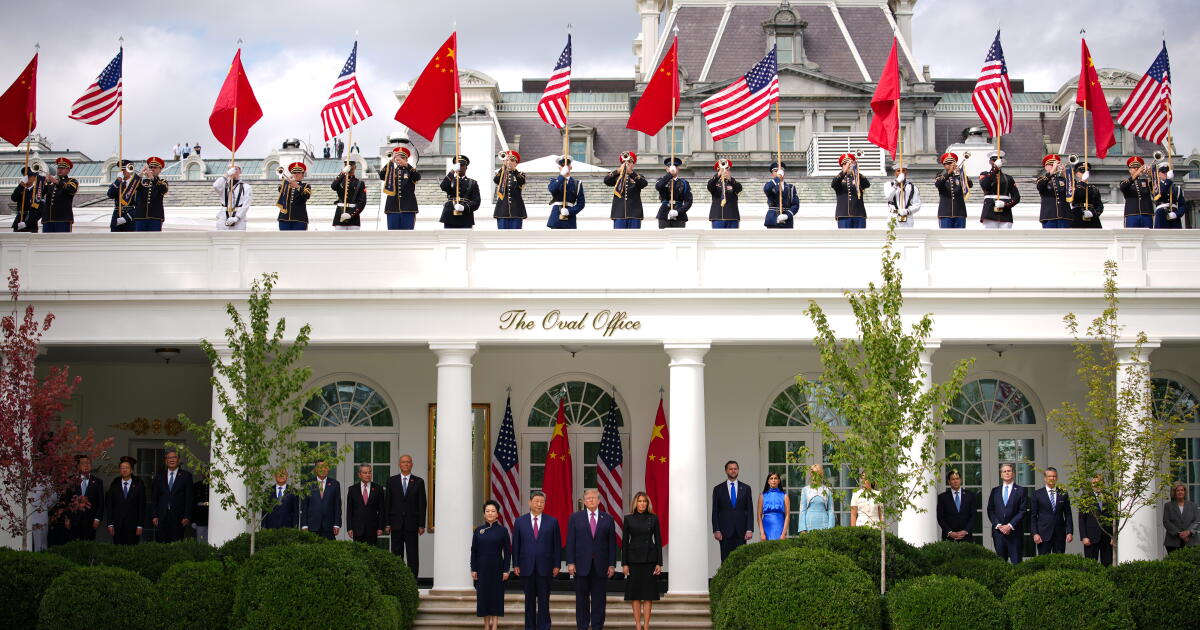
It was a visual affair designed to project a new phase of managed competition between a prevailing superpower and a rising one — a message that Washington and Beijing are ultimately capable of responsible leadership. But even a cursory look beneath the surface revealed the challenges ahead for the world’s most consequential bilateral relationship.
Industry pleas and bipartisan calls for Trump to negotiate a meaningful framework on artificial intelligence fell on deaf ears. A trade truce between the two sides was extended for a mere two months. And Trump again warned Xi not to assist Iran as the U.S. war there continues — a warning that, so far, has gone unheeded, with millions of dollars’ worth of crucial Chinese parts reportedly arriving in Tehran by the planeload.
“The U.S.-China relationship has settled into a managed stalemate. It has stabilized at the top without stabilizing underneath,” said Craig Singleton, a senior fellow on China at the Foundation for Defense of Democracies.
“The elaborate pageantry matters precisely because there is still relatively little substantive progress to showcase,” Singleton said. “Trump appears to value the personal relationship as an end in itself. Xi treats his relationship with Trump as a means to shape U.S. choices and forestall future competitive actions.”
President Trump and First Lady Melania Trump stand with Chinese President Xi Jinping and First Lady Peng Liyuan before Thursday night’s state dinner.
(Kevin Dietsch / Getty Images)
The summit followed a playbook from Trump that has become familiar over the last decade, placing his direct relationships at the center of diplomacy and reducing the complexities of statecraft to blunt attempts at charm.
As he did during his lavish state visit to Beijing this spring, Trump repeatedly patted Xi on the back, a gesture considered highly inappropriate in Chinese political culture that nevertheless reflected Trump’s strategic focus on personal friendship.
He toured Xi around a series of controversial renovations to the White House, including the South Lawn — now paved over with a massive helipad designed as the presidential seal — and the Rose Garden, also paved over in order for Trump to host al fresco dinner parties.
Before entering a heavily gilded Oval Office, Trump walked Xi along a renovated colonnade now adorned with gold-framed portraits of U.S. presidents. He paused at one for his predecessor, President Biden, replaced with a mocking image of an autopen, suggesting the former president was incapable of signing documents himself.
Trump patted Xi on the back once more, and the two men laughed, in a moment that generated outrage online.
“Let’s be very clear on this one point,” John Delaney, a former Democratic member of Congress, wrote on social media. “The President mocking a former President in front of the communist leader of China is the most un-American thing an American president has ever done.”

Tim Cook, executive chairman of Apple Inc., during the state dinner for Chinese President Xi Jinping.
(Annabelle Gordon / Bloomberg / Getty Images)
Part of the state visit included a dinner at the White House that was attended by some of the country’s most prominent tech executives, such as Elon Musk, Sam Altman and Mark Zuckerberg. The tech giants’ presence at the event was notable given that there was heightened public interest in knowing how China and the United States are planning to regulate artificial intelligence.
During the visit, Xi called for artificial intelligence to remain “under human control” as the two countries race for technological advancement in the industry. Lawmakers and AI industry leaders have also called for guardrails on the nascent technology, which experts warn could soon surpass human understanding. Trump, however, has been reluctant to embrace limits on the industry, and it is unclear how much the topic was discussed while Xi was in Washington.
Xi Jinping’s remarks reflect growing concern within China over whether governments in Washington or Beijing will be able to contain a technology with potentially transformative capabilities, according to a U.S. official.
But the visit showed a surprising alignment of visions between the U.S. and Chinese presidents, embracing fierce competition that avoids miscalculation and conflict. Both stressed the importance of dialogue, with Xi invoking the concept of the Thucydides trap, a historical paradigm that holds that rising powers inevitably clash with established ones.
“I don’t think anyone will be surprised if there are no significant agreements,” said David Ochmanek, a senior researcher at Rand. “My sense is that Xi sees little reason to compromise with us on anything right now.”

Trump and Xi arrive for a state dinner in the East Room of the White House on Thursday night.
(Brendan Smialowski / AFP / Getty Images)
The two men are expected to meet twice more this year, alongside other world leaders, at the Asia-Pacific Economic Cooperation summit in Shenzhen, China, and the Group of 20 summit in Miami.
“We do not need to avoid mentioning competition, but our competition should be a healthy one, and should be kept within bounds,” the Chinese president said Thursday from the Cross Hall of the White House. “It should be a race of catching up with one another, not a wrestle in which one either wins or loses. China and the United States must hold the line of no conflict, and no confrontation between us.
“Our two militaries should maintain regular dialogue, and improve mechanisms for crisis communication and prevention,” he continued. “The Thucydides trap can be overcome.”

WASHINGTON — Expectations were low entering President Trump’s meetings with China’s leader, Xi Jinping, this week, after officials on both sides tempered hopes for a breakthrough. Yet the summit’s stark lack of substance surprised even the closest China watchers.
It was a visual affair designed to project a new phase of managed competition between a prevailing superpower and a rising one — a message that Washington and Beijing are ultimately capable of responsible leadership. But even a cursory look beneath the surface revealed the challenges ahead for the world’s most consequential bilateral relationship.
Industry pleas and bipartisan calls for Trump to negotiate a meaningful framework on artificial intelligence fell on deaf ears. A trade truce between the two sides was extended for a mere two months. And Trump again warned Xi not to assist Iran as the U.S. war there continues — a warning that, so far, has gone unheeded, with millions of dollars’ worth of crucial Chinese parts reportedly arriving in Tehran by the planeload.
“The U.S.-China relationship has settled into a managed stalemate. It has stabilized at the top without stabilizing underneath,” said Craig Singleton, a senior fellow on China at the Foundation for Defense of Democracies.
“The elaborate pageantry matters precisely because there is still relatively little substantive progress to showcase,” Singleton said. “Trump appears to value the personal relationship as an end in itself. Xi treats his relationship with Trump as a means to shape U.S. choices and forestall future competitive actions.”
President Trump and First Lady Melania Trump stand with Chinese President Xi Jinping and First Lady Peng Liyuan before Thursday night’s state dinner.
(Kevin Dietsch / Getty Images)
The summit followed a playbook from Trump that has become familiar over the last decade, placing his direct relationships at the center of diplomacy and reducing the complexities of statecraft to blunt attempts at charm.
As he did during his lavish state visit to Beijing this spring, Trump repeatedly patted Xi on the back, a gesture considered highly inappropriate in Chinese political culture that nevertheless reflected Trump’s strategic focus on personal friendship.
He toured Xi around a series of controversial renovations to the White House, including the South Lawn — now paved over with a massive helipad designed as the presidential seal — and the Rose Garden, also paved over in order for Trump to host al fresco dinner parties.
Before entering a heavily gilded Oval Office, Trump walked Xi along a renovated colonnade now adorned with gold-framed portraits of U.S. presidents. He paused at one for his predecessor, President Biden, replaced with a mocking image of an autopen, suggesting the former president was incapable of signing documents himself.
Trump patted Xi on the back once more, and the two men laughed, in a moment that generated outrage online.
“Let’s be very clear on this one point,” John Delaney, a former Democratic member of Congress, wrote on social media. “The President mocking a former President in front of the communist leader of China is the most un-American thing an American president has ever done.”
Tim Cook, executive chairman of Apple Inc., during the state dinner for Chinese President Xi Jinping.
(Annabelle Gordon / Bloomberg / Getty Images)
Part of the state visit included a dinner at the White House that was attended by some of the country’s most prominent tech executives, such as Elon Musk, Sam Altman and Mark Zuckerberg. The tech giants’ presence at the event was notable given that there was heightened public interest in knowing how China and the United States are planning to regulate artificial intelligence.
During the visit, Xi called for artificial intelligence to remain “under human control” as the two countries race for technological advancement in the industry. Lawmakers and AI industry leaders have also called for guardrails on the nascent technology, which experts warn could soon surpass human understanding. Trump, however, has been reluctant to embrace limits on the industry, and it is unclear how much the topic was discussed while Xi was in Washington.
Xi Jinping’s remarks reflect growing concern within China over whether governments in Washington or Beijing will be able to contain a technology with potentially transformative capabilities, according to a U.S. official.
But the visit showed a surprising alignment of visions between the U.S. and Chinese presidents, embracing fierce competition that avoids miscalculation and conflict. Both stressed the importance of dialogue, with Xi invoking the concept of the Thucydides trap, a historical paradigm that holds that rising powers inevitably clash with established ones.
“I don’t think anyone will be surprised if there are no significant agreements,” said David Ochmanek, a senior researcher at Rand. “My sense is that Xi sees little reason to compromise with us on anything right now.”
Trump and Xi arrive for a state dinner in the East Room of the White House on Thursday night.
(Brendan Smialowski / AFP / Getty Images)
The two men are expected to meet twice more this year, alongside other world leaders, at the Asia-Pacific Economic Cooperation summit in Shenzhen, China, and the Group of 20 summit in Miami.
“We do not need to avoid mentioning competition, but our competition should be a healthy one, and should be kept within bounds,” the Chinese president said Thursday from the Cross Hall of the White House. “It should be a race of catching up with one another, not a wrestle in which one either wins or loses. China and the United States must hold the line of no conflict, and no confrontation between us.
“Our two militaries should maintain regular dialogue, and improve mechanisms for crisis communication and prevention,” he continued. “The Thucydides trap can be overcome.”

WASHINGTON — Expectations were low entering President Trump’s meetings with China’s leader, Xi Jinping, this week, after officials on both sides tempered hopes for a breakthrough. Yet the summit’s stark lack of substance surprised even the closest China watchers.
It was a visual affair designed to project a new phase of managed competition between a prevailing superpower and a rising one — a message that Washington and Beijing are ultimately capable of responsible leadership. But even a cursory look beneath the surface revealed the challenges ahead for the world’s most consequential bilateral relationship.
Industry pleas and bipartisan calls for Trump to negotiate a meaningful framework on artificial intelligence fell on deaf ears. A trade truce between the two sides was extended for a mere two months. And Trump again warned Xi not to assist Iran as the U.S. war there continues — a warning that, so far, has gone unheeded, with millions of dollars’ worth of crucial Chinese parts reportedly arriving in Tehran by the planeload.
“The U.S.-China relationship has settled into a managed stalemate. It has stabilized at the top without stabilizing underneath,” said Craig Singleton, a senior fellow on China at the Foundation for Defense of Democracies.
“The elaborate pageantry matters precisely because there is still relatively little substantive progress to showcase,” Singleton said. “Trump appears to value the personal relationship as an end in itself. Xi treats his relationship with Trump as a means to shape U.S. choices and forestall future competitive actions.”
President Trump and First Lady Melania Trump stand with Chinese President Xi Jinping and First Lady Peng Liyuan before Thursday night’s state dinner.
(Kevin Dietsch / Getty Images)
The summit followed a playbook from Trump that has become familiar over the last decade, placing his direct relationships at the center of diplomacy and reducing the complexities of statecraft to blunt attempts at charm.
As he did during his lavish state visit to Beijing this spring, Trump repeatedly patted Xi on the back, a gesture considered highly inappropriate in Chinese political culture that nevertheless reflected Trump’s strategic focus on personal friendship.
He toured Xi around a series of controversial renovations to the White House, including the South Lawn — now paved over with a massive helipad designed as the presidential seal — and the Rose Garden, also paved over in order for Trump to host al fresco dinner parties.
Before entering a heavily gilded Oval Office, Trump walked Xi along a renovated colonnade now adorned with gold-framed portraits of U.S. presidents. He paused at one for his predecessor, President Biden, replaced with a mocking image of an autopen, suggesting the former president was incapable of signing documents himself.
Trump patted Xi on the back once more, and the two men laughed, in a moment that generated outrage online.
“Let’s be very clear on this one point,” John Delaney, a former Democratic member of Congress, wrote on social media. “The President mocking a former President in front of the communist leader of China is the most un-American thing an American president has ever done.”
Tim Cook, executive chairman of Apple Inc., during the state dinner for Chinese President Xi Jinping.
(Annabelle Gordon / Bloomberg / Getty Images)
Part of the state visit included a dinner at the White House that was attended by some of the country’s most prominent tech executives, such as Elon Musk, Sam Altman and Mark Zuckerberg. The tech giants’ presence at the event was notable given that there was heightened public interest in knowing how China and the United States are planning to regulate artificial intelligence.
During the visit, Xi called for artificial intelligence to remain “under human control” as the two countries race for technological advancement in the industry. Lawmakers and AI industry leaders have also called for guardrails on the nascent technology, which experts warn could soon surpass human understanding. Trump, however, has been reluctant to embrace limits on the industry, and it is unclear how much the topic was discussed while Xi was in Washington.
Xi Jinping’s remarks reflect growing concern within China over whether governments in Washington or Beijing will be able to contain a technology with potentially transformative capabilities, according to a U.S. official.
But the visit showed a surprising alignment of visions between the U.S. and Chinese presidents, embracing fierce competition that avoids miscalculation and conflict. Both stressed the importance of dialogue, with Xi invoking the concept of the Thucydides trap, a historical paradigm that holds that rising powers inevitably clash with established ones.
“I don’t think anyone will be surprised if there are no significant agreements,” said David Ochmanek, a senior researcher at Rand. “My sense is that Xi sees little reason to compromise with us on anything right now.”
Trump and Xi arrive for a state dinner in the East Room of the White House on Thursday night.
(Brendan Smialowski / AFP / Getty Images)
The two men are expected to meet twice more this year, alongside other world leaders, at the Asia-Pacific Economic Cooperation summit in Shenzhen, China, and the Group of 20 summit in Miami.
“We do not need to avoid mentioning competition, but our competition should be a healthy one, and should be kept within bounds,” the Chinese president said Thursday from the Cross Hall of the White House. “It should be a race of catching up with one another, not a wrestle in which one either wins or loses. China and the United States must hold the line of no conflict, and no confrontation between us.
“Our two militaries should maintain regular dialogue, and improve mechanisms for crisis communication and prevention,” he continued. “The Thucydides trap can be overcome.”
WASHINGTON — Expectations were low entering President Trump’s meetings with China’s leader, Xi Jinping, this week, after officials on both sides tempered hopes for a breakthrough. Yet the summit’s stark lack of substance surprised even the closest China watchers.
It was a visual affair designed to project a new phase of managed competition between a prevailing superpower and a rising one — a message that Washington and Beijing are ultimately capable of responsible leadership. But even a cursory look beneath the surface revealed the challenges ahead for the world’s most consequential bilateral relationship.
Industry pleas and bipartisan calls for Trump to negotiate a meaningful framework on artificial intelligence fell on deaf ears. A trade truce between the two sides was extended for a mere two months. And Trump again warned Xi not to assist Iran as the U.S. war there continues — a warning that, so far, has gone unheeded, with millions of dollars’ worth of crucial Chinese parts reportedly arriving in Tehran by the planeload.
“The U.S.-China relationship has settled into a managed stalemate. It has stabilized at the top without stabilizing underneath,” said Craig Singleton, a senior fellow on China at the Foundation for Defense of Democracies.
“The elaborate pageantry matters precisely because there is still relatively little substantive progress to showcase,” Singleton said. “Trump appears to value the personal relationship as an end in itself. Xi treats his relationship with Trump as a means to shape U.S. choices and forestall future competitive actions.”
President Trump and First Lady Melania Trump stand with Chinese President Xi Jinping and First Lady Peng Liyuan before Thursday night’s state dinner.
(Kevin Dietsch / Getty Images)
The summit followed a playbook from Trump that has become familiar over the last decade, placing his direct relationships at the center of diplomacy and reducing the complexities of statecraft to blunt attempts at charm.
As he did during his lavish state visit to Beijing this spring, Trump repeatedly patted Xi on the back, a gesture considered highly inappropriate in Chinese political culture that nevertheless reflected Trump’s strategic focus on personal friendship.
He toured Xi around a series of controversial renovations to the White House, including the South Lawn — now paved over with a massive helipad designed as the presidential seal — and the Rose Garden, also paved over in order for Trump to host al fresco dinner parties.
Before entering a heavily gilded Oval Office, Trump walked Xi along a renovated colonnade now adorned with gold-framed portraits of U.S. presidents. He paused at one for his predecessor, President Biden, replaced with a mocking image of an autopen, suggesting the former president was incapable of signing documents himself.
Trump patted Xi on the back once more, and the two men laughed, in a moment that generated outrage online.
“Let’s be very clear on this one point,” John Delaney, a former Democratic member of Congress, wrote on social media. “The President mocking a former President in front of the communist leader of China is the most un-American thing an American president has ever done.”
Tim Cook, executive chairman of Apple Inc., during the state dinner for Chinese President Xi Jinping.
(Annabelle Gordon / Bloomberg / Getty Images)
Part of the state visit included a dinner at the White House that was attended by some of the country’s most prominent tech executives, such as Elon Musk, Sam Altman and Mark Zuckerberg. The tech giants’ presence at the event was notable given that there was heightened public interest in knowing how China and the United States are planning to regulate artificial intelligence.
During the visit, Xi called for artificial intelligence to remain “under human control” as the two countries race for technological advancement in the industry. Lawmakers and AI industry leaders have also called for guardrails on the nascent technology, which experts warn could soon surpass human understanding. Trump, however, has been reluctant to embrace limits on the industry, and it is unclear how much the topic was discussed while Xi was in Washington.
Xi Jinping’s remarks reflect growing concern within China over whether governments in Washington or Beijing will be able to contain a technology with potentially transformative capabilities, according to a U.S. official.
But the visit showed a surprising alignment of visions between the U.S. and Chinese presidents, embracing fierce competition that avoids miscalculation and conflict. Both stressed the importance of dialogue, with Xi invoking the concept of the Thucydides trap, a historical paradigm that holds that rising powers inevitably clash with established ones.
“I don’t think anyone will be surprised if there are no significant agreements,” said David Ochmanek, a senior researcher at Rand. “My sense is that Xi sees little reason to compromise with us on anything right now.”
Trump and Xi arrive for a state dinner in the East Room of the White House on Thursday night.
(Brendan Smialowski / AFP / Getty Images)
The two men are expected to meet twice more this year, alongside other world leaders, at the Asia-Pacific Economic Cooperation summit in Shenzhen, China, and the Group of 20 summit in Miami.
“We do not need to avoid mentioning competition, but our competition should be a healthy one, and should be kept within bounds,” the Chinese president said Thursday from the Cross Hall of the White House. “It should be a race of catching up with one another, not a wrestle in which one either wins or loses. China and the United States must hold the line of no conflict, and no confrontation between us.
“Our two militaries should maintain regular dialogue, and improve mechanisms for crisis communication and prevention,” he continued. “The Thucydides trap can be overcome.”

WASHINGTON — Expectations were low entering President Trump’s meetings with China’s leader, Xi Jinping, this week, after officials on both sides tempered hopes for a breakthrough. Yet the summit’s stark lack of substance surprised even the closest China watchers.
It was a visual affair designed to project a new phase of managed competition between a prevailing superpower and a rising one — a message that Washington and Beijing are ultimately capable of responsible leadership. But even a cursory look beneath the surface revealed the challenges ahead for the world’s most consequential bilateral relationship.
Industry pleas and bipartisan calls for Trump to negotiate a meaningful framework on artificial intelligence fell on deaf ears. A trade truce between the two sides was extended for a mere two months. And Trump again warned Xi not to assist Iran as the U.S. war there continues — a warning that, so far, has gone unheeded, with millions of dollars’ worth of crucial Chinese parts reportedly arriving in Tehran by the planeload.
“The U.S.-China relationship has settled into a managed stalemate. It has stabilized at the top without stabilizing underneath,” said Craig Singleton, a senior fellow on China at the Foundation for Defense of Democracies.
“The elaborate pageantry matters precisely because there is still relatively little substantive progress to showcase,” Singleton said. “Trump appears to value the personal relationship as an end in itself. Xi treats his relationship with Trump as a means to shape U.S. choices and forestall future competitive actions.”
President Trump and First Lady Melania Trump stand with Chinese President Xi Jinping and First Lady Peng Liyuan before Thursday night’s state dinner.
(Kevin Dietsch / Getty Images)
The summit followed a playbook from Trump that has become familiar over the last decade, placing his direct relationships at the center of diplomacy and reducing the complexities of statecraft to blunt attempts at charm.
As he did during his lavish state visit to Beijing this spring, Trump repeatedly patted Xi on the back, a gesture considered highly inappropriate in Chinese political culture that nevertheless reflected Trump’s strategic focus on personal friendship.
He toured Xi around a series of controversial renovations to the White House, including the South Lawn — now paved over with a massive helipad designed as the presidential seal — and the Rose Garden, also paved over in order for Trump to host al fresco dinner parties.
Before entering a heavily gilded Oval Office, Trump walked Xi along a renovated colonnade now adorned with gold-framed portraits of U.S. presidents. He paused at one for his predecessor, President Biden, replaced with a mocking image of an autopen, suggesting the former president was incapable of signing documents himself.
Trump patted Xi on the back once more, and the two men laughed, in a moment that generated outrage online.
“Let’s be very clear on this one point,” John Delaney, a former Democratic member of Congress, wrote on social media. “The President mocking a former President in front of the communist leader of China is the most un-American thing an American president has ever done.”
Tim Cook, executive chairman of Apple Inc., during the state dinner for Chinese President Xi Jinping.
(Annabelle Gordon / Bloomberg / Getty Images)
Part of the state visit included a dinner at the White House that was attended by some of the country’s most prominent tech executives, such as Elon Musk, Sam Altman and Mark Zuckerberg. The tech giants’ presence at the event was notable given that there was heightened public interest in knowing how China and the United States are planning to regulate artificial intelligence.
During the visit, Xi called for artificial intelligence to remain “under human control” as the two countries race for technological advancement in the industry. Lawmakers and AI industry leaders have also called for guardrails on the nascent technology, which experts warn could soon surpass human understanding. Trump, however, has been reluctant to embrace limits on the industry, and it is unclear how much the topic was discussed while Xi was in Washington.
Xi Jinping’s remarks reflect growing concern within China over whether governments in Washington or Beijing will be able to contain a technology with potentially transformative capabilities, according to a U.S. official.
But the visit showed a surprising alignment of visions between the U.S. and Chinese presidents, embracing fierce competition that avoids miscalculation and conflict. Both stressed the importance of dialogue, with Xi invoking the concept of the Thucydides trap, a historical paradigm that holds that rising powers inevitably clash with established ones.
“I don’t think anyone will be surprised if there are no significant agreements,” said David Ochmanek, a senior researcher at Rand. “My sense is that Xi sees little reason to compromise with us on anything right now.”
Trump and Xi arrive for a state dinner in the East Room of the White House on Thursday night.
(Brendan Smialowski / AFP / Getty Images)
The two men are expected to meet twice more this year, alongside other world leaders, at the Asia-Pacific Economic Cooperation summit in Shenzhen, China, and the Group of 20 summit in Miami.
“We do not need to avoid mentioning competition, but our competition should be a healthy one, and should be kept within bounds,” the Chinese president said Thursday from the Cross Hall of the White House. “It should be a race of catching up with one another, not a wrestle in which one either wins or loses. China and the United States must hold the line of no conflict, and no confrontation between us.
“Our two militaries should maintain regular dialogue, and improve mechanisms for crisis communication and prevention,” he continued. “The Thucydides trap can be overcome.”
WASHINGTON — Expectations were low entering President Trump’s meetings with China’s leader, Xi Jinping, this week, after officials on both sides tempered hopes for a breakthrough. Yet the summit’s stark lack of substance surprised even the closest China watchers.
It was a visual affair designed to project a new phase of managed competition between a prevailing superpower and a rising one — a message that Washington and Beijing are ultimately capable of responsible leadership. But even a cursory look beneath the surface revealed the challenges ahead for the world’s most consequential bilateral relationship.
Industry pleas and bipartisan calls for Trump to negotiate a meaningful framework on artificial intelligence fell on deaf ears. A trade truce between the two sides was extended for a mere two months. And Trump again warned Xi not to assist Iran as the U.S. war there continues — a warning that, so far, has gone unheeded, with millions of dollars’ worth of crucial Chinese parts reportedly arriving in Tehran by the planeload.
“The U.S.-China relationship has settled into a managed stalemate. It has stabilized at the top without stabilizing underneath,” said Craig Singleton, a senior fellow on China at the Foundation for Defense of Democracies.
“The elaborate pageantry matters precisely because there is still relatively little substantive progress to showcase,” Singleton said. “Trump appears to value the personal relationship as an end in itself. Xi treats his relationship with Trump as a means to shape U.S. choices and forestall future competitive actions.”
President Trump and First Lady Melania Trump stand with Chinese President Xi Jinping and First Lady Peng Liyuan before Thursday night’s state dinner.
(Kevin Dietsch / Getty Images)
The summit followed a playbook from Trump that has become familiar over the last decade, placing his direct relationships at the center of diplomacy and reducing the complexities of statecraft to blunt attempts at charm.
As he did during his lavish state visit to Beijing this spring, Trump repeatedly patted Xi on the back, a gesture considered highly inappropriate in Chinese political culture that nevertheless reflected Trump’s strategic focus on personal friendship.
He toured Xi around a series of controversial renovations to the White House, including the South Lawn — now paved over with a massive helipad designed as the presidential seal — and the Rose Garden, also paved over in order for Trump to host al fresco dinner parties.
Before entering a heavily gilded Oval Office, Trump walked Xi along a renovated colonnade now adorned with gold-framed portraits of U.S. presidents. He paused at one for his predecessor, President Biden, replaced with a mocking image of an autopen, suggesting the former president was incapable of signing documents himself.
Trump patted Xi on the back once more, and the two men laughed, in a moment that generated outrage online.
“Let’s be very clear on this one point,” John Delaney, a former Democratic member of Congress, wrote on social media. “The President mocking a former President in front of the communist leader of China is the most un-American thing an American president has ever done.”
Tim Cook, executive chairman of Apple Inc., during the state dinner for Chinese President Xi Jinping.
(Annabelle Gordon / Bloomberg / Getty Images)
Part of the state visit included a dinner at the White House that was attended by some of the country’s most prominent tech executives, such as Elon Musk, Sam Altman and Mark Zuckerberg. The tech giants’ presence at the event was notable given that there was heightened public interest in knowing how China and the United States are planning to regulate artificial intelligence.
During the visit, Xi called for artificial intelligence to remain “under human control” as the two countries race for technological advancement in the industry. Lawmakers and AI industry leaders have also called for guardrails on the nascent technology, which experts warn could soon surpass human understanding. Trump, however, has been reluctant to embrace limits on the industry, and it is unclear how much the topic was discussed while Xi was in Washington.
Xi Jinping’s remarks reflect growing concern within China over whether governments in Washington or Beijing will be able to contain a technology with potentially transformative capabilities, according to a U.S. official.
But the visit showed a surprising alignment of visions between the U.S. and Chinese presidents, embracing fierce competition that avoids miscalculation and conflict. Both stressed the importance of dialogue, with Xi invoking the concept of the Thucydides trap, a historical paradigm that holds that rising powers inevitably clash with established ones.
“I don’t think anyone will be surprised if there are no significant agreements,” said David Ochmanek, a senior researcher at Rand. “My sense is that Xi sees little reason to compromise with us on anything right now.”
Trump and Xi arrive for a state dinner in the East Room of the White House on Thursday night.
(Brendan Smialowski / AFP / Getty Images)
The two men are expected to meet twice more this year, alongside other world leaders, at the Asia-Pacific Economic Cooperation summit in Shenzhen, China, and the Group of 20 summit in Miami.
“We do not need to avoid mentioning competition, but our competition should be a healthy one, and should be kept within bounds,” the Chinese president said Thursday from the Cross Hall of the White House. “It should be a race of catching up with one another, not a wrestle in which one either wins or loses. China and the United States must hold the line of no conflict, and no confrontation between us.
“Our two militaries should maintain regular dialogue, and improve mechanisms for crisis communication and prevention,” he continued. “The Thucydides trap can be overcome.”
WASHINGTON — Expectations were low entering President Trump’s meetings with China’s leader, Xi Jinping, this week, after officials on both sides tempered hopes for a breakthrough. Yet the summit’s stark lack of substance surprised even the closest China watchers.
It was a visual affair designed to project a new phase of managed competition between a prevailing superpower and a rising one — a message that Washington and Beijing are ultimately capable of responsible leadership. But even a cursory look beneath the surface revealed the challenges ahead for the world’s most consequential bilateral relationship.
Industry pleas and bipartisan calls for Trump to negotiate a meaningful framework on artificial intelligence fell on deaf ears. A trade truce between the two sides was extended for a mere two months. And Trump again warned Xi not to assist Iran as the U.S. war there continues — a warning that, so far, has gone unheeded, with millions of dollars’ worth of crucial Chinese parts reportedly arriving in Tehran by the planeload.
“The U.S.-China relationship has settled into a managed stalemate. It has stabilized at the top without stabilizing underneath,” said Craig Singleton, a senior fellow on China at the Foundation for Defense of Democracies.
“The elaborate pageantry matters precisely because there is still relatively little substantive progress to showcase,” Singleton said. “Trump appears to value the personal relationship as an end in itself. Xi treats his relationship with Trump as a means to shape U.S. choices and forestall future competitive actions.”
President Trump and First Lady Melania Trump stand with Chinese President Xi Jinping and First Lady Peng Liyuan before Thursday night’s state dinner.
(Kevin Dietsch / Getty Images)
The summit followed a playbook from Trump that has become familiar over the last decade, placing his direct relationships at the center of diplomacy and reducing the complexities of statecraft to blunt attempts at charm.
As he did during his lavish state visit to Beijing this spring, Trump repeatedly patted Xi on the back, a gesture considered highly inappropriate in Chinese political culture that nevertheless reflected Trump’s strategic focus on personal friendship.
He toured Xi around a series of controversial renovations to the White House, including the South Lawn — now paved over with a massive helipad designed as the presidential seal — and the Rose Garden, also paved over in order for Trump to host al fresco dinner parties.
Before entering a heavily gilded Oval Office, Trump walked Xi along a renovated colonnade now adorned with gold-framed portraits of U.S. presidents. He paused at one for his predecessor, President Biden, replaced with a mocking image of an autopen, suggesting the former president was incapable of signing documents himself.
Trump patted Xi on the back once more, and the two men laughed, in a moment that generated outrage online.
“Let’s be very clear on this one point,” John Delaney, a former Democratic member of Congress, wrote on social media. “The President mocking a former President in front of the communist leader of China is the most un-American thing an American president has ever done.”
Tim Cook, executive chairman of Apple Inc., during the state dinner for Chinese President Xi Jinping.
(Annabelle Gordon / Bloomberg / Getty Images)
Part of the state visit included a dinner at the White House that was attended by some of the country’s most prominent tech executives, such as Elon Musk, Sam Altman and Mark Zuckerberg. The tech giants’ presence at the event was notable given that there was heightened public interest in knowing how China and the United States are planning to regulate artificial intelligence.
During the visit, Xi called for artificial intelligence to remain “under human control” as the two countries race for technological advancement in the industry. Lawmakers and AI industry leaders have also called for guardrails on the nascent technology, which experts warn could soon surpass human understanding. Trump, however, has been reluctant to embrace limits on the industry, and it is unclear how much the topic was discussed while Xi was in Washington.
Xi Jinping’s remarks reflect growing concern within China over whether governments in Washington or Beijing will be able to contain a technology with potentially transformative capabilities, according to a U.S. official.
But the visit showed a surprising alignment of visions between the U.S. and Chinese presidents, embracing fierce competition that avoids miscalculation and conflict. Both stressed the importance of dialogue, with Xi invoking the concept of the Thucydides trap, a historical paradigm that holds that rising powers inevitably clash with established ones.
“I don’t think anyone will be surprised if there are no significant agreements,” said David Ochmanek, a senior researcher at Rand. “My sense is that Xi sees little reason to compromise with us on anything right now.”
Trump and Xi arrive for a state dinner in the East Room of the White House on Thursday night.
(Brendan Smialowski / AFP / Getty Images)
The two men are expected to meet twice more this year, alongside other world leaders, at the Asia-Pacific Economic Cooperation summit in Shenzhen, China, and the Group of 20 summit in Miami.
“We do not need to avoid mentioning competition, but our competition should be a healthy one, and should be kept within bounds,” the Chinese president said Thursday from the Cross Hall of the White House. “It should be a race of catching up with one another, not a wrestle in which one either wins or loses. China and the United States must hold the line of no conflict, and no confrontation between us.
“Our two militaries should maintain regular dialogue, and improve mechanisms for crisis communication and prevention,” he continued. “The Thucydides trap can be overcome.”
WASHINGTON — Expectations were low entering President Trump’s meetings with China’s leader, Xi Jinping, this week, after officials on both sides tempered hopes for a breakthrough. Yet the summit’s stark lack of substance surprised even the closest China watchers.
It was a visual affair designed to project a new phase of managed competition between a prevailing superpower and a rising one — a message that Washington and Beijing are ultimately capable of responsible leadership. But even a cursory look beneath the surface revealed the challenges ahead for the world’s most consequential bilateral relationship.
Industry pleas and bipartisan calls for Trump to negotiate a meaningful framework on artificial intelligence fell on deaf ears. A trade truce between the two sides was extended for a mere two months. And Trump again warned Xi not to assist Iran as the U.S. war there continues — a warning that, so far, has gone unheeded, with millions of dollars’ worth of crucial Chinese parts reportedly arriving in Tehran by the planeload.
“The U.S.-China relationship has settled into a managed stalemate. It has stabilized at the top without stabilizing underneath,” said Craig Singleton, a senior fellow on China at the Foundation for Defense of Democracies.
“The elaborate pageantry matters precisely because there is still relatively little substantive progress to showcase,” Singleton said. “Trump appears to value the personal relationship as an end in itself. Xi treats his relationship with Trump as a means to shape U.S. choices and forestall future competitive actions.”
President Trump and First Lady Melania Trump stand with Chinese President Xi Jinping and First Lady Peng Liyuan before Thursday night’s state dinner.
(Kevin Dietsch / Getty Images)
The summit followed a playbook from Trump that has become familiar over the last decade, placing his direct relationships at the center of diplomacy and reducing the complexities of statecraft to blunt attempts at charm.
As he did during his lavish state visit to Beijing this spring, Trump repeatedly patted Xi on the back, a gesture considered highly inappropriate in Chinese political culture that nevertheless reflected Trump’s strategic focus on personal friendship.
He toured Xi around a series of controversial renovations to the White House, including the South Lawn — now paved over with a massive helipad designed as the presidential seal — and the Rose Garden, also paved over in order for Trump to host al fresco dinner parties.
Before entering a heavily gilded Oval Office, Trump walked Xi along a renovated colonnade now adorned with gold-framed portraits of U.S. presidents. He paused at one for his predecessor, President Biden, replaced with a mocking image of an autopen, suggesting the former president was incapable of signing documents himself.
Trump patted Xi on the back once more, and the two men laughed, in a moment that generated outrage online.
“Let’s be very clear on this one point,” John Delaney, a former Democratic member of Congress, wrote on social media. “The President mocking a former President in front of the communist leader of China is the most un-American thing an American president has ever done.”
Tim Cook, executive chairman of Apple Inc., during the state dinner for Chinese President Xi Jinping.
(Annabelle Gordon / Bloomberg / Getty Images)
Part of the state visit included a dinner at the White House that was attended by some of the country’s most prominent tech executives, such as Elon Musk, Sam Altman and Mark Zuckerberg. The tech giants’ presence at the event was notable given that there was heightened public interest in knowing how China and the United States are planning to regulate artificial intelligence.
During the visit, Xi called for artificial intelligence to remain “under human control” as the two countries race for technological advancement in the industry. Lawmakers and AI industry leaders have also called for guardrails on the nascent technology, which experts warn could soon surpass human understanding. Trump, however, has been reluctant to embrace limits on the industry, and it is unclear how much the topic was discussed while Xi was in Washington.
Xi Jinping’s remarks reflect growing concern within China over whether governments in Washington or Beijing will be able to contain a technology with potentially transformative capabilities, according to a U.S. official.
But the visit showed a surprising alignment of visions between the U.S. and Chinese presidents, embracing fierce competition that avoids miscalculation and conflict. Both stressed the importance of dialogue, with Xi invoking the concept of the Thucydides trap, a historical paradigm that holds that rising powers inevitably clash with established ones.
“I don’t think anyone will be surprised if there are no significant agreements,” said David Ochmanek, a senior researcher at Rand. “My sense is that Xi sees little reason to compromise with us on anything right now.”
Trump and Xi arrive for a state dinner in the East Room of the White House on Thursday night.
(Brendan Smialowski / AFP / Getty Images)
The two men are expected to meet twice more this year, alongside other world leaders, at the Asia-Pacific Economic Cooperation summit in Shenzhen, China, and the Group of 20 summit in Miami.
“We do not need to avoid mentioning competition, but our competition should be a healthy one, and should be kept within bounds,” the Chinese president said Thursday from the Cross Hall of the White House. “It should be a race of catching up with one another, not a wrestle in which one either wins or loses. China and the United States must hold the line of no conflict, and no confrontation between us.
“Our two militaries should maintain regular dialogue, and improve mechanisms for crisis communication and prevention,” he continued. “The Thucydides trap can be overcome.”

WASHINGTON — Expectations were low entering President Trump’s meetings with China’s leader, Xi Jinping, this week, after officials on both sides tempered hopes for a breakthrough. Yet the summit’s stark lack of substance surprised even the closest China watchers.
It was a visual affair designed to project a new phase of managed competition between a prevailing superpower and a rising one — a message that Washington and Beijing are ultimately capable of responsible leadership. But even a cursory look beneath the surface revealed the challenges ahead for the world’s most consequential bilateral relationship.
Industry pleas and bipartisan calls for Trump to negotiate a meaningful framework on artificial intelligence fell on deaf ears. A trade truce between the two sides was extended for a mere two months. And Trump again warned Xi not to assist Iran as the U.S. war there continues — a warning that, so far, has gone unheeded, with millions of dollars’ worth of crucial Chinese parts reportedly arriving in Tehran by the planeload.
“The U.S.-China relationship has settled into a managed stalemate. It has stabilized at the top without stabilizing underneath,” said Craig Singleton, a senior fellow on China at the Foundation for Defense of Democracies.
“The elaborate pageantry matters precisely because there is still relatively little substantive progress to showcase,” Singleton said. “Trump appears to value the personal relationship as an end in itself. Xi treats his relationship with Trump as a means to shape U.S. choices and forestall future competitive actions.”
President Trump and First Lady Melania Trump stand with Chinese President Xi Jinping and First Lady Peng Liyuan before Thursday night’s state dinner.
(Kevin Dietsch / Getty Images)
The summit followed a playbook from Trump that has become familiar over the last decade, placing his direct relationships at the center of diplomacy and reducing the complexities of statecraft to blunt attempts at charm.
As he did during his lavish state visit to Beijing this spring, Trump repeatedly patted Xi on the back, a gesture considered highly inappropriate in Chinese political culture that nevertheless reflected Trump’s strategic focus on personal friendship.
He toured Xi around a series of controversial renovations to the White House, including the South Lawn — now paved over with a massive helipad designed as the presidential seal — and the Rose Garden, also paved over in order for Trump to host al fresco dinner parties.
Before entering a heavily gilded Oval Office, Trump walked Xi along a renovated colonnade now adorned with gold-framed portraits of U.S. presidents. He paused at one for his predecessor, President Biden, replaced with a mocking image of an autopen, suggesting the former president was incapable of signing documents himself.
Trump patted Xi on the back once more, and the two men laughed, in a moment that generated outrage online.
“Let’s be very clear on this one point,” John Delaney, a former Democratic member of Congress, wrote on social media. “The President mocking a former President in front of the communist leader of China is the most un-American thing an American president has ever done.”
Tim Cook, executive chairman of Apple Inc., during the state dinner for Chinese President Xi Jinping.
(Annabelle Gordon / Bloomberg / Getty Images)
Part of the state visit included a dinner at the White House that was attended by some of the country’s most prominent tech executives, such as Elon Musk, Sam Altman and Mark Zuckerberg. The tech giants’ presence at the event was notable given that there was heightened public interest in knowing how China and the United States are planning to regulate artificial intelligence.
During the visit, Xi called for artificial intelligence to remain “under human control” as the two countries race for technological advancement in the industry. Lawmakers and AI industry leaders have also called for guardrails on the nascent technology, which experts warn could soon surpass human understanding. Trump, however, has been reluctant to embrace limits on the industry, and it is unclear how much the topic was discussed while Xi was in Washington.
Xi Jinping’s remarks reflect growing concern within China over whether governments in Washington or Beijing will be able to contain a technology with potentially transformative capabilities, according to a U.S. official.
But the visit showed a surprising alignment of visions between the U.S. and Chinese presidents, embracing fierce competition that avoids miscalculation and conflict. Both stressed the importance of dialogue, with Xi invoking the concept of the Thucydides trap, a historical paradigm that holds that rising powers inevitably clash with established ones.
“I don’t think anyone will be surprised if there are no significant agreements,” said David Ochmanek, a senior researcher at Rand. “My sense is that Xi sees little reason to compromise with us on anything right now.”
Trump and Xi arrive for a state dinner in the East Room of the White House on Thursday night.
(Brendan Smialowski / AFP / Getty Images)
The two men are expected to meet twice more this year, alongside other world leaders, at the Asia-Pacific Economic Cooperation summit in Shenzhen, China, and the Group of 20 summit in Miami.
“We do not need to avoid mentioning competition, but our competition should be a healthy one, and should be kept within bounds,” the Chinese president said Thursday from the Cross Hall of the White House. “It should be a race of catching up with one another, not a wrestle in which one either wins or loses. China and the United States must hold the line of no conflict, and no confrontation between us.
“Our two militaries should maintain regular dialogue, and improve mechanisms for crisis communication and prevention,” he continued. “The Thucydides trap can be overcome.”
WASHINGTON — Expectations were low entering President Trump’s meetings with China’s leader, Xi Jinping, this week, after officials on both sides tempered hopes for a breakthrough. Yet the summit’s stark lack of substance surprised even the closest China watchers.
It was a visual affair designed to project a new phase of managed competition between a prevailing superpower and a rising one — a message that Washington and Beijing are ultimately capable of responsible leadership. But even a cursory look beneath the surface revealed the challenges ahead for the world’s most consequential bilateral relationship.
Industry pleas and bipartisan calls for Trump to negotiate a meaningful framework on artificial intelligence fell on deaf ears. A trade truce between the two sides was extended for a mere two months. And Trump again warned Xi not to assist Iran as the U.S. war there continues — a warning that, so far, has gone unheeded, with millions of dollars’ worth of crucial Chinese parts reportedly arriving in Tehran by the planeload.
“The U.S.-China relationship has settled into a managed stalemate. It has stabilized at the top without stabilizing underneath,” said Craig Singleton, a senior fellow on China at the Foundation for Defense of Democracies.
“The elaborate pageantry matters precisely because there is still relatively little substantive progress to showcase,” Singleton said. “Trump appears to value the personal relationship as an end in itself. Xi treats his relationship with Trump as a means to shape U.S. choices and forestall future competitive actions.”
President Trump and First Lady Melania Trump stand with Chinese President Xi Jinping and First Lady Peng Liyuan before Thursday night’s state dinner.
(Kevin Dietsch / Getty Images)
The summit followed a playbook from Trump that has become familiar over the last decade, placing his direct relationships at the center of diplomacy and reducing the complexities of statecraft to blunt attempts at charm.
As he did during his lavish state visit to Beijing this spring, Trump repeatedly patted Xi on the back, a gesture considered highly inappropriate in Chinese political culture that nevertheless reflected Trump’s strategic focus on personal friendship.
He toured Xi around a series of controversial renovations to the White House, including the South Lawn — now paved over with a massive helipad designed as the presidential seal — and the Rose Garden, also paved over in order for Trump to host al fresco dinner parties.
Before entering a heavily gilded Oval Office, Trump walked Xi along a renovated colonnade now adorned with gold-framed portraits of U.S. presidents. He paused at one for his predecessor, President Biden, replaced with a mocking image of an autopen, suggesting the former president was incapable of signing documents himself.
Trump patted Xi on the back once more, and the two men laughed, in a moment that generated outrage online.
“Let’s be very clear on this one point,” John Delaney, a former Democratic member of Congress, wrote on social media. “The President mocking a former President in front of the communist leader of China is the most un-American thing an American president has ever done.”
Tim Cook, executive chairman of Apple Inc., during the state dinner for Chinese President Xi Jinping.
(Annabelle Gordon / Bloomberg / Getty Images)
Part of the state visit included a dinner at the White House that was attended by some of the country’s most prominent tech executives, such as Elon Musk, Sam Altman and Mark Zuckerberg. The tech giants’ presence at the event was notable given that there was heightened public interest in knowing how China and the United States are planning to regulate artificial intelligence.
During the visit, Xi called for artificial intelligence to remain “under human control” as the two countries race for technological advancement in the industry. Lawmakers and AI industry leaders have also called for guardrails on the nascent technology, which experts warn could soon surpass human understanding. Trump, however, has been reluctant to embrace limits on the industry, and it is unclear how much the topic was discussed while Xi was in Washington.
Xi Jinping’s remarks reflect growing concern within China over whether governments in Washington or Beijing will be able to contain a technology with potentially transformative capabilities, according to a U.S. official.
But the visit showed a surprising alignment of visions between the U.S. and Chinese presidents, embracing fierce competition that avoids miscalculation and conflict. Both stressed the importance of dialogue, with Xi invoking the concept of the Thucydides trap, a historical paradigm that holds that rising powers inevitably clash with established ones.
“I don’t think anyone will be surprised if there are no significant agreements,” said David Ochmanek, a senior researcher at Rand. “My sense is that Xi sees little reason to compromise with us on anything right now.”
Trump and Xi arrive for a state dinner in the East Room of the White House on Thursday night.
(Brendan Smialowski / AFP / Getty Images)
The two men are expected to meet twice more this year, alongside other world leaders, at the Asia-Pacific Economic Cooperation summit in Shenzhen, China, and the Group of 20 summit in Miami.
“We do not need to avoid mentioning competition, but our competition should be a healthy one, and should be kept within bounds,” the Chinese president said Thursday from the Cross Hall of the White House. “It should be a race of catching up with one another, not a wrestle in which one either wins or loses. China and the United States must hold the line of no conflict, and no confrontation between us.
“Our two militaries should maintain regular dialogue, and improve mechanisms for crisis communication and prevention,” he continued. “The Thucydides trap can be overcome.”
WASHINGTON — Expectations were low entering President Trump’s meetings with China’s leader, Xi Jinping, this week, after officials on both sides tempered hopes for a breakthrough. Yet the summit’s stark lack of substance surprised even the closest China watchers.
It was a visual affair designed to project a new phase of managed competition between a prevailing superpower and a rising one — a message that Washington and Beijing are ultimately capable of responsible leadership. But even a cursory look beneath the surface revealed the challenges ahead for the world’s most consequential bilateral relationship.
Industry pleas and bipartisan calls for Trump to negotiate a meaningful framework on artificial intelligence fell on deaf ears. A trade truce between the two sides was extended for a mere two months. And Trump again warned Xi not to assist Iran as the U.S. war there continues — a warning that, so far, has gone unheeded, with millions of dollars’ worth of crucial Chinese parts reportedly arriving in Tehran by the planeload.
“The U.S.-China relationship has settled into a managed stalemate. It has stabilized at the top without stabilizing underneath,” said Craig Singleton, a senior fellow on China at the Foundation for Defense of Democracies.
“The elaborate pageantry matters precisely because there is still relatively little substantive progress to showcase,” Singleton said. “Trump appears to value the personal relationship as an end in itself. Xi treats his relationship with Trump as a means to shape U.S. choices and forestall future competitive actions.”
President Trump and First Lady Melania Trump stand with Chinese President Xi Jinping and First Lady Peng Liyuan before Thursday night’s state dinner.
(Kevin Dietsch / Getty Images)
The summit followed a playbook from Trump that has become familiar over the last decade, placing his direct relationships at the center of diplomacy and reducing the complexities of statecraft to blunt attempts at charm.
As he did during his lavish state visit to Beijing this spring, Trump repeatedly patted Xi on the back, a gesture considered highly inappropriate in Chinese political culture that nevertheless reflected Trump’s strategic focus on personal friendship.
He toured Xi around a series of controversial renovations to the White House, including the South Lawn — now paved over with a massive helipad designed as the presidential seal — and the Rose Garden, also paved over in order for Trump to host al fresco dinner parties.
Before entering a heavily gilded Oval Office, Trump walked Xi along a renovated colonnade now adorned with gold-framed portraits of U.S. presidents. He paused at one for his predecessor, President Biden, replaced with a mocking image of an autopen, suggesting the former president was incapable of signing documents himself.
Trump patted Xi on the back once more, and the two men laughed, in a moment that generated outrage online.
“Let’s be very clear on this one point,” John Delaney, a former Democratic member of Congress, wrote on social media. “The President mocking a former President in front of the communist leader of China is the most un-American thing an American president has ever done.”
Tim Cook, executive chairman of Apple Inc., during the state dinner for Chinese President Xi Jinping.
(Annabelle Gordon / Bloomberg / Getty Images)
Part of the state visit included a dinner at the White House that was attended by some of the country’s most prominent tech executives, such as Elon Musk, Sam Altman and Mark Zuckerberg. The tech giants’ presence at the event was notable given that there was heightened public interest in knowing how China and the United States are planning to regulate artificial intelligence.
During the visit, Xi called for artificial intelligence to remain “under human control” as the two countries race for technological advancement in the industry. Lawmakers and AI industry leaders have also called for guardrails on the nascent technology, which experts warn could soon surpass human understanding. Trump, however, has been reluctant to embrace limits on the industry, and it is unclear how much the topic was discussed while Xi was in Washington.
Xi Jinping’s remarks reflect growing concern within China over whether governments in Washington or Beijing will be able to contain a technology with potentially transformative capabilities, according to a U.S. official.
But the visit showed a surprising alignment of visions between the U.S. and Chinese presidents, embracing fierce competition that avoids miscalculation and conflict. Both stressed the importance of dialogue, with Xi invoking the concept of the Thucydides trap, a historical paradigm that holds that rising powers inevitably clash with established ones.
“I don’t think anyone will be surprised if there are no significant agreements,” said David Ochmanek, a senior researcher at Rand. “My sense is that Xi sees little reason to compromise with us on anything right now.”
Trump and Xi arrive for a state dinner in the East Room of the White House on Thursday night.
(Brendan Smialowski / AFP / Getty Images)
The two men are expected to meet twice more this year, alongside other world leaders, at the Asia-Pacific Economic Cooperation summit in Shenzhen, China, and the Group of 20 summit in Miami.
“We do not need to avoid mentioning competition, but our competition should be a healthy one, and should be kept within bounds,” the Chinese president said Thursday from the Cross Hall of the White House. “It should be a race of catching up with one another, not a wrestle in which one either wins or loses. China and the United States must hold the line of no conflict, and no confrontation between us.
“Our two militaries should maintain regular dialogue, and improve mechanisms for crisis communication and prevention,” he continued. “The Thucydides trap can be overcome.”
WASHINGTON — Expectations were low entering President Trump’s meetings with China’s leader, Xi Jinping, this week, after officials on both sides tempered hopes for a breakthrough. Yet the summit’s stark lack of substance surprised even the closest China watchers.
It was a visual affair designed to project a new phase of managed competition between a prevailing superpower and a rising one — a message that Washington and Beijing are ultimately capable of responsible leadership. But even a cursory look beneath the surface revealed the challenges ahead for the world’s most consequential bilateral relationship.
Industry pleas and bipartisan calls for Trump to negotiate a meaningful framework on artificial intelligence fell on deaf ears. A trade truce between the two sides was extended for a mere two months. And Trump again warned Xi not to assist Iran as the U.S. war there continues — a warning that, so far, has gone unheeded, with millions of dollars’ worth of crucial Chinese parts reportedly arriving in Tehran by the planeload.
“The U.S.-China relationship has settled into a managed stalemate. It has stabilized at the top without stabilizing underneath,” said Craig Singleton, a senior fellow on China at the Foundation for Defense of Democracies.
“The elaborate pageantry matters precisely because there is still relatively little substantive progress to showcase,” Singleton said. “Trump appears to value the personal relationship as an end in itself. Xi treats his relationship with Trump as a means to shape U.S. choices and forestall future competitive actions.”
President Trump and First Lady Melania Trump stand with Chinese President Xi Jinping and First Lady Peng Liyuan before Thursday night’s state dinner.
(Kevin Dietsch / Getty Images)
The summit followed a playbook from Trump that has become familiar over the last decade, placing his direct relationships at the center of diplomacy and reducing the complexities of statecraft to blunt attempts at charm.
As he did during his lavish state visit to Beijing this spring, Trump repeatedly patted Xi on the back, a gesture considered highly inappropriate in Chinese political culture that nevertheless reflected Trump’s strategic focus on personal friendship.
He toured Xi around a series of controversial renovations to the White House, including the South Lawn — now paved over with a massive helipad designed as the presidential seal — and the Rose Garden, also paved over in order for Trump to host al fresco dinner parties.
Before entering a heavily gilded Oval Office, Trump walked Xi along a renovated colonnade now adorned with gold-framed portraits of U.S. presidents. He paused at one for his predecessor, President Biden, replaced with a mocking image of an autopen, suggesting the former president was incapable of signing documents himself.
Trump patted Xi on the back once more, and the two men laughed, in a moment that generated outrage online.
“Let’s be very clear on this one point,” John Delaney, a former Democratic member of Congress, wrote on social media. “The President mocking a former President in front of the communist leader of China is the most un-American thing an American president has ever done.”
Tim Cook, executive chairman of Apple Inc., during the state dinner for Chinese President Xi Jinping.
(Annabelle Gordon / Bloomberg / Getty Images)
Part of the state visit included a dinner at the White House that was attended by some of the country’s most prominent tech executives, such as Elon Musk, Sam Altman and Mark Zuckerberg. The tech giants’ presence at the event was notable given that there was heightened public interest in knowing how China and the United States are planning to regulate artificial intelligence.
During the visit, Xi called for artificial intelligence to remain “under human control” as the two countries race for technological advancement in the industry. Lawmakers and AI industry leaders have also called for guardrails on the nascent technology, which experts warn could soon surpass human understanding. Trump, however, has been reluctant to embrace limits on the industry, and it is unclear how much the topic was discussed while Xi was in Washington.
Xi Jinping’s remarks reflect growing concern within China over whether governments in Washington or Beijing will be able to contain a technology with potentially transformative capabilities, according to a U.S. official.
But the visit showed a surprising alignment of visions between the U.S. and Chinese presidents, embracing fierce competition that avoids miscalculation and conflict. Both stressed the importance of dialogue, with Xi invoking the concept of the Thucydides trap, a historical paradigm that holds that rising powers inevitably clash with established ones.
“I don’t think anyone will be surprised if there are no significant agreements,” said David Ochmanek, a senior researcher at Rand. “My sense is that Xi sees little reason to compromise with us on anything right now.”
Trump and Xi arrive for a state dinner in the East Room of the White House on Thursday night.
(Brendan Smialowski / AFP / Getty Images)
The two men are expected to meet twice more this year, alongside other world leaders, at the Asia-Pacific Economic Cooperation summit in Shenzhen, China, and the Group of 20 summit in Miami.
“We do not need to avoid mentioning competition, but our competition should be a healthy one, and should be kept within bounds,” the Chinese president said Thursday from the Cross Hall of the White House. “It should be a race of catching up with one another, not a wrestle in which one either wins or loses. China and the United States must hold the line of no conflict, and no confrontation between us.
“Our two militaries should maintain regular dialogue, and improve mechanisms for crisis communication and prevention,” he continued. “The Thucydides trap can be overcome.”
WASHINGTON — Expectations were low entering President Trump’s meetings with China’s leader, Xi Jinping, this week, after officials on both sides tempered hopes for a breakthrough. Yet the summit’s stark lack of substance surprised even the closest China watchers.
It was a visual affair designed to project a new phase of managed competition between a prevailing superpower and a rising one — a message that Washington and Beijing are ultimately capable of responsible leadership. But even a cursory look beneath the surface revealed the challenges ahead for the world’s most consequential bilateral relationship.
Industry pleas and bipartisan calls for Trump to negotiate a meaningful framework on artificial intelligence fell on deaf ears. A trade truce between the two sides was extended for a mere two months. And Trump again warned Xi not to assist Iran as the U.S. war there continues — a warning that, so far, has gone unheeded, with millions of dollars’ worth of crucial Chinese parts reportedly arriving in Tehran by the planeload.
“The U.S.-China relationship has settled into a managed stalemate. It has stabilized at the top without stabilizing underneath,” said Craig Singleton, a senior fellow on China at the Foundation for Defense of Democracies.
“The elaborate pageantry matters precisely because there is still relatively little substantive progress to showcase,” Singleton said. “Trump appears to value the personal relationship as an end in itself. Xi treats his relationship with Trump as a means to shape U.S. choices and forestall future competitive actions.”
President Trump and First Lady Melania Trump stand with Chinese President Xi Jinping and First Lady Peng Liyuan before Thursday night’s state dinner.
(Kevin Dietsch / Getty Images)
The summit followed a playbook from Trump that has become familiar over the last decade, placing his direct relationships at the center of diplomacy and reducing the complexities of statecraft to blunt attempts at charm.
As he did during his lavish state visit to Beijing this spring, Trump repeatedly patted Xi on the back, a gesture considered highly inappropriate in Chinese political culture that nevertheless reflected Trump’s strategic focus on personal friendship.
He toured Xi around a series of controversial renovations to the White House, including the South Lawn — now paved over with a massive helipad designed as the presidential seal — and the Rose Garden, also paved over in order for Trump to host al fresco dinner parties.
Before entering a heavily gilded Oval Office, Trump walked Xi along a renovated colonnade now adorned with gold-framed portraits of U.S. presidents. He paused at one for his predecessor, President Biden, replaced with a mocking image of an autopen, suggesting the former president was incapable of signing documents himself.
Trump patted Xi on the back once more, and the two men laughed, in a moment that generated outrage online.
“Let’s be very clear on this one point,” John Delaney, a former Democratic member of Congress, wrote on social media. “The President mocking a former President in front of the communist leader of China is the most un-American thing an American president has ever done.”
Tim Cook, executive chairman of Apple Inc., during the state dinner for Chinese President Xi Jinping.
(Annabelle Gordon / Bloomberg / Getty Images)
Part of the state visit included a dinner at the White House that was attended by some of the country’s most prominent tech executives, such as Elon Musk, Sam Altman and Mark Zuckerberg. The tech giants’ presence at the event was notable given that there was heightened public interest in knowing how China and the United States are planning to regulate artificial intelligence.
During the visit, Xi called for artificial intelligence to remain “under human control” as the two countries race for technological advancement in the industry. Lawmakers and AI industry leaders have also called for guardrails on the nascent technology, which experts warn could soon surpass human understanding. Trump, however, has been reluctant to embrace limits on the industry, and it is unclear how much the topic was discussed while Xi was in Washington.
Xi Jinping’s remarks reflect growing concern within China over whether governments in Washington or Beijing will be able to contain a technology with potentially transformative capabilities, according to a U.S. official.
But the visit showed a surprising alignment of visions between the U.S. and Chinese presidents, embracing fierce competition that avoids miscalculation and conflict. Both stressed the importance of dialogue, with Xi invoking the concept of the Thucydides trap, a historical paradigm that holds that rising powers inevitably clash with established ones.
“I don’t think anyone will be surprised if there are no significant agreements,” said David Ochmanek, a senior researcher at Rand. “My sense is that Xi sees little reason to compromise with us on anything right now.”
Trump and Xi arrive for a state dinner in the East Room of the White House on Thursday night.
(Brendan Smialowski / AFP / Getty Images)
The two men are expected to meet twice more this year, alongside other world leaders, at the Asia-Pacific Economic Cooperation summit in Shenzhen, China, and the Group of 20 summit in Miami.
“We do not need to avoid mentioning competition, but our competition should be a healthy one, and should be kept within bounds,” the Chinese president said Thursday from the Cross Hall of the White House. “It should be a race of catching up with one another, not a wrestle in which one either wins or loses. China and the United States must hold the line of no conflict, and no confrontation between us.
“Our two militaries should maintain regular dialogue, and improve mechanisms for crisis communication and prevention,” he continued. “The Thucydides trap can be overcome.”
WASHINGTON — Expectations were low entering President Trump’s meetings with China’s leader, Xi Jinping, this week, after officials on both sides tempered hopes for a breakthrough. Yet the summit’s stark lack of substance surprised even the closest China watchers.
It was a visual affair designed to project a new phase of managed competition between a prevailing superpower and a rising one — a message that Washington and Beijing are ultimately capable of responsible leadership. But even a cursory look beneath the surface revealed the challenges ahead for the world’s most consequential bilateral relationship.
Industry pleas and bipartisan calls for Trump to negotiate a meaningful framework on artificial intelligence fell on deaf ears. A trade truce between the two sides was extended for a mere two months. And Trump again warned Xi not to assist Iran as the U.S. war there continues — a warning that, so far, has gone unheeded, with millions of dollars’ worth of crucial Chinese parts reportedly arriving in Tehran by the planeload.
“The U.S.-China relationship has settled into a managed stalemate. It has stabilized at the top without stabilizing underneath,” said Craig Singleton, a senior fellow on China at the Foundation for Defense of Democracies.
“The elaborate pageantry matters precisely because there is still relatively little substantive progress to showcase,” Singleton said. “Trump appears to value the personal relationship as an end in itself. Xi treats his relationship with Trump as a means to shape U.S. choices and forestall future competitive actions.”
President Trump and First Lady Melania Trump stand with Chinese President Xi Jinping and First Lady Peng Liyuan before Thursday night’s state dinner.
(Kevin Dietsch / Getty Images)
The summit followed a playbook from Trump that has become familiar over the last decade, placing his direct relationships at the center of diplomacy and reducing the complexities of statecraft to blunt attempts at charm.
As he did during his lavish state visit to Beijing this spring, Trump repeatedly patted Xi on the back, a gesture considered highly inappropriate in Chinese political culture that nevertheless reflected Trump’s strategic focus on personal friendship.
He toured Xi around a series of controversial renovations to the White House, including the South Lawn — now paved over with a massive helipad designed as the presidential seal — and the Rose Garden, also paved over in order for Trump to host al fresco dinner parties.
Before entering a heavily gilded Oval Office, Trump walked Xi along a renovated colonnade now adorned with gold-framed portraits of U.S. presidents. He paused at one for his predecessor, President Biden, replaced with a mocking image of an autopen, suggesting the former president was incapable of signing documents himself.
Trump patted Xi on the back once more, and the two men laughed, in a moment that generated outrage online.
“Let’s be very clear on this one point,” John Delaney, a former Democratic member of Congress, wrote on social media. “The President mocking a former President in front of the communist leader of China is the most un-American thing an American president has ever done.”
Tim Cook, executive chairman of Apple Inc., during the state dinner for Chinese President Xi Jinping.
(Annabelle Gordon / Bloomberg / Getty Images)
Part of the state visit included a dinner at the White House that was attended by some of the country’s most prominent tech executives, such as Elon Musk, Sam Altman and Mark Zuckerberg. The tech giants’ presence at the event was notable given that there was heightened public interest in knowing how China and the United States are planning to regulate artificial intelligence.
During the visit, Xi called for artificial intelligence to remain “under human control” as the two countries race for technological advancement in the industry. Lawmakers and AI industry leaders have also called for guardrails on the nascent technology, which experts warn could soon surpass human understanding. Trump, however, has been reluctant to embrace limits on the industry, and it is unclear how much the topic was discussed while Xi was in Washington.
Xi Jinping’s remarks reflect growing concern within China over whether governments in Washington or Beijing will be able to contain a technology with potentially transformative capabilities, according to a U.S. official.
But the visit showed a surprising alignment of visions between the U.S. and Chinese presidents, embracing fierce competition that avoids miscalculation and conflict. Both stressed the importance of dialogue, with Xi invoking the concept of the Thucydides trap, a historical paradigm that holds that rising powers inevitably clash with established ones.
“I don’t think anyone will be surprised if there are no significant agreements,” said David Ochmanek, a senior researcher at Rand. “My sense is that Xi sees little reason to compromise with us on anything right now.”
Trump and Xi arrive for a state dinner in the East Room of the White House on Thursday night.
(Brendan Smialowski / AFP / Getty Images)
The two men are expected to meet twice more this year, alongside other world leaders, at the Asia-Pacific Economic Cooperation summit in Shenzhen, China, and the Group of 20 summit in Miami.
“We do not need to avoid mentioning competition, but our competition should be a healthy one, and should be kept within bounds,” the Chinese president said Thursday from the Cross Hall of the White House. “It should be a race of catching up with one another, not a wrestle in which one either wins or loses. China and the United States must hold the line of no conflict, and no confrontation between us.
“Our two militaries should maintain regular dialogue, and improve mechanisms for crisis communication and prevention,” he continued. “The Thucydides trap can be overcome.”
WASHINGTON — Expectations were low entering President Trump’s meetings with China’s leader, Xi Jinping, this week, after officials on both sides tempered hopes for a breakthrough. Yet the summit’s stark lack of substance surprised even the closest China watchers.
It was a visual affair designed to project a new phase of managed competition between a prevailing superpower and a rising one — a message that Washington and Beijing are ultimately capable of responsible leadership. But even a cursory look beneath the surface revealed the challenges ahead for the world’s most consequential bilateral relationship.
Industry pleas and bipartisan calls for Trump to negotiate a meaningful framework on artificial intelligence fell on deaf ears. A trade truce between the two sides was extended for a mere two months. And Trump again warned Xi not to assist Iran as the U.S. war there continues — a warning that, so far, has gone unheeded, with millions of dollars’ worth of crucial Chinese parts reportedly arriving in Tehran by the planeload.
“The U.S.-China relationship has settled into a managed stalemate. It has stabilized at the top without stabilizing underneath,” said Craig Singleton, a senior fellow on China at the Foundation for Defense of Democracies.
“The elaborate pageantry matters precisely because there is still relatively little substantive progress to showcase,” Singleton said. “Trump appears to value the personal relationship as an end in itself. Xi treats his relationship with Trump as a means to shape U.S. choices and forestall future competitive actions.”
President Trump and First Lady Melania Trump stand with Chinese President Xi Jinping and First Lady Peng Liyuan before Thursday night’s state dinner.
(Kevin Dietsch / Getty Images)
The summit followed a playbook from Trump that has become familiar over the last decade, placing his direct relationships at the center of diplomacy and reducing the complexities of statecraft to blunt attempts at charm.
As he did during his lavish state visit to Beijing this spring, Trump repeatedly patted Xi on the back, a gesture considered highly inappropriate in Chinese political culture that nevertheless reflected Trump’s strategic focus on personal friendship.
He toured Xi around a series of controversial renovations to the White House, including the South Lawn — now paved over with a massive helipad designed as the presidential seal — and the Rose Garden, also paved over in order for Trump to host al fresco dinner parties.
Before entering a heavily gilded Oval Office, Trump walked Xi along a renovated colonnade now adorned with gold-framed portraits of U.S. presidents. He paused at one for his predecessor, President Biden, replaced with a mocking image of an autopen, suggesting the former president was incapable of signing documents himself.
Trump patted Xi on the back once more, and the two men laughed, in a moment that generated outrage online.
“Let’s be very clear on this one point,” John Delaney, a former Democratic member of Congress, wrote on social media. “The President mocking a former President in front of the communist leader of China is the most un-American thing an American president has ever done.”
Tim Cook, executive chairman of Apple Inc., during the state dinner for Chinese President Xi Jinping.
(Annabelle Gordon / Bloomberg / Getty Images)
Part of the state visit included a dinner at the White House that was attended by some of the country’s most prominent tech executives, such as Elon Musk, Sam Altman and Mark Zuckerberg. The tech giants’ presence at the event was notable given that there was heightened public interest in knowing how China and the United States are planning to regulate artificial intelligence.
During the visit, Xi called for artificial intelligence to remain “under human control” as the two countries race for technological advancement in the industry. Lawmakers and AI industry leaders have also called for guardrails on the nascent technology, which experts warn could soon surpass human understanding. Trump, however, has been reluctant to embrace limits on the industry, and it is unclear how much the topic was discussed while Xi was in Washington.
Xi Jinping’s remarks reflect growing concern within China over whether governments in Washington or Beijing will be able to contain a technology with potentially transformative capabilities, according to a U.S. official.
But the visit showed a surprising alignment of visions between the U.S. and Chinese presidents, embracing fierce competition that avoids miscalculation and conflict. Both stressed the importance of dialogue, with Xi invoking the concept of the Thucydides trap, a historical paradigm that holds that rising powers inevitably clash with established ones.
“I don’t think anyone will be surprised if there are no significant agreements,” said David Ochmanek, a senior researcher at Rand. “My sense is that Xi sees little reason to compromise with us on anything right now.”
Trump and Xi arrive for a state dinner in the East Room of the White House on Thursday night.
(Brendan Smialowski / AFP / Getty Images)
The two men are expected to meet twice more this year, alongside other world leaders, at the Asia-Pacific Economic Cooperation summit in Shenzhen, China, and the Group of 20 summit in Miami.
“We do not need to avoid mentioning competition, but our competition should be a healthy one, and should be kept within bounds,” the Chinese president said Thursday from the Cross Hall of the White House. “It should be a race of catching up with one another, not a wrestle in which one either wins or loses. China and the United States must hold the line of no conflict, and no confrontation between us.
“Our two militaries should maintain regular dialogue, and improve mechanisms for crisis communication and prevention,” he continued. “The Thucydides trap can be overcome.”
WASHINGTON — Expectations were low entering President Trump’s meetings with China’s leader, Xi Jinping, this week, after officials on both sides tempered hopes for a breakthrough. Yet the summit’s stark lack of substance surprised even the closest China watchers.
It was a visual affair designed to project a new phase of managed competition between a prevailing superpower and a rising one — a message that Washington and Beijing are ultimately capable of responsible leadership. But even a cursory look beneath the surface revealed the challenges ahead for the world’s most consequential bilateral relationship.
Industry pleas and bipartisan calls for Trump to negotiate a meaningful framework on artificial intelligence fell on deaf ears. A trade truce between the two sides was extended for a mere two months. And Trump again warned Xi not to assist Iran as the U.S. war there continues — a warning that, so far, has gone unheeded, with millions of dollars’ worth of crucial Chinese parts reportedly arriving in Tehran by the planeload.
“The U.S.-China relationship has settled into a managed stalemate. It has stabilized at the top without stabilizing underneath,” said Craig Singleton, a senior fellow on China at the Foundation for Defense of Democracies.
“The elaborate pageantry matters precisely because there is still relatively little substantive progress to showcase,” Singleton said. “Trump appears to value the personal relationship as an end in itself. Xi treats his relationship with Trump as a means to shape U.S. choices and forestall future competitive actions.”
President Trump and First Lady Melania Trump stand with Chinese President Xi Jinping and First Lady Peng Liyuan before Thursday night’s state dinner.
(Kevin Dietsch / Getty Images)
The summit followed a playbook from Trump that has become familiar over the last decade, placing his direct relationships at the center of diplomacy and reducing the complexities of statecraft to blunt attempts at charm.
As he did during his lavish state visit to Beijing this spring, Trump repeatedly patted Xi on the back, a gesture considered highly inappropriate in Chinese political culture that nevertheless reflected Trump’s strategic focus on personal friendship.
He toured Xi around a series of controversial renovations to the White House, including the South Lawn — now paved over with a massive helipad designed as the presidential seal — and the Rose Garden, also paved over in order for Trump to host al fresco dinner parties.
Before entering a heavily gilded Oval Office, Trump walked Xi along a renovated colonnade now adorned with gold-framed portraits of U.S. presidents. He paused at one for his predecessor, President Biden, replaced with a mocking image of an autopen, suggesting the former president was incapable of signing documents himself.
Trump patted Xi on the back once more, and the two men laughed, in a moment that generated outrage online.
“Let’s be very clear on this one point,” John Delaney, a former Democratic member of Congress, wrote on social media. “The President mocking a former President in front of the communist leader of China is the most un-American thing an American president has ever done.”
Tim Cook, executive chairman of Apple Inc., during the state dinner for Chinese President Xi Jinping.
(Annabelle Gordon / Bloomberg / Getty Images)
Part of the state visit included a dinner at the White House that was attended by some of the country’s most prominent tech executives, such as Elon Musk, Sam Altman and Mark Zuckerberg. The tech giants’ presence at the event was notable given that there was heightened public interest in knowing how China and the United States are planning to regulate artificial intelligence.
During the visit, Xi called for artificial intelligence to remain “under human control” as the two countries race for technological advancement in the industry. Lawmakers and AI industry leaders have also called for guardrails on the nascent technology, which experts warn could soon surpass human understanding. Trump, however, has been reluctant to embrace limits on the industry, and it is unclear how much the topic was discussed while Xi was in Washington.
Xi Jinping’s remarks reflect growing concern within China over whether governments in Washington or Beijing will be able to contain a technology with potentially transformative capabilities, according to a U.S. official.
But the visit showed a surprising alignment of visions between the U.S. and Chinese presidents, embracing fierce competition that avoids miscalculation and conflict. Both stressed the importance of dialogue, with Xi invoking the concept of the Thucydides trap, a historical paradigm that holds that rising powers inevitably clash with established ones.
“I don’t think anyone will be surprised if there are no significant agreements,” said David Ochmanek, a senior researcher at Rand. “My sense is that Xi sees little reason to compromise with us on anything right now.”
Trump and Xi arrive for a state dinner in the East Room of the White House on Thursday night.
(Brendan Smialowski / AFP / Getty Images)
The two men are expected to meet twice more this year, alongside other world leaders, at the Asia-Pacific Economic Cooperation summit in Shenzhen, China, and the Group of 20 summit in Miami.
“We do not need to avoid mentioning competition, but our competition should be a healthy one, and should be kept within bounds,” the Chinese president said Thursday from the Cross Hall of the White House. “It should be a race of catching up with one another, not a wrestle in which one either wins or loses. China and the United States must hold the line of no conflict, and no confrontation between us.
“Our two militaries should maintain regular dialogue, and improve mechanisms for crisis communication and prevention,” he continued. “The Thucydides trap can be overcome.”

