



Washington DC
New York
Toronto
Distribution: (800) 510 9863
Press ID
  • Login
Binghamton Herald
Advertisement
Friday, August 21, 2026
  • Home
  • World
  • Politics
  • Business
  • Technology
  • Culture
  • Health
  • Entertainment
  • Trending
No Result
View All Result
Binghamton Herald
No Result
View All Result
Home Culture

5 easy exercises for your hands, wrists, forearms and elbows to alleviate desk job aches and pains

by Binghamton Herald Report
January 28, 2025
in Culture
Share on FacebookShare on Twitter

Prolonged desk work can lead to musculoskeletal problems ranging from annoying aches and pains to injuries. This month, we launched a six-part series showing you how to stretch and strengthen your body parts to prepare them for marathon sitting sessions at your desk. We’ll roll out a new exercise routine every week, each focusing on a different area of the body, that will help alleviate desk job-related woes.

Last week we published exercises for the shoulders and chest. This week we’re tackling hands, wrists, forearms and elbows.

To learn more about how sitting affects the body, and why these exercises are important, read our first piece in the series.

  • Share via

A routine for your hands, wrists, forearms and elbows

Typing and mousing for long periods is stressful for the finger and wrist muscles as well as the forearms. The forearms are designed to pick up sticks and pull fruit off of trees, not to tap a keyboard for eight hours straight. As a result, developing inflammation in the area is common. Scar tissue can also develop from long-term inflammation, often where the muscles of the forearm attach to the elbows. The result is stiff fingers and wrists, achy joints and tennis or golf elbow — painful, inflamed tendons — among other conditions.

Do these exercises to help stretch and strengthen your hands, wrists, forearms and elbows. They’re demonstrated by trainer Melissa Gunn, of Pure Strength LA, whose team trains desk workers on how to protect their bodies through exercise.

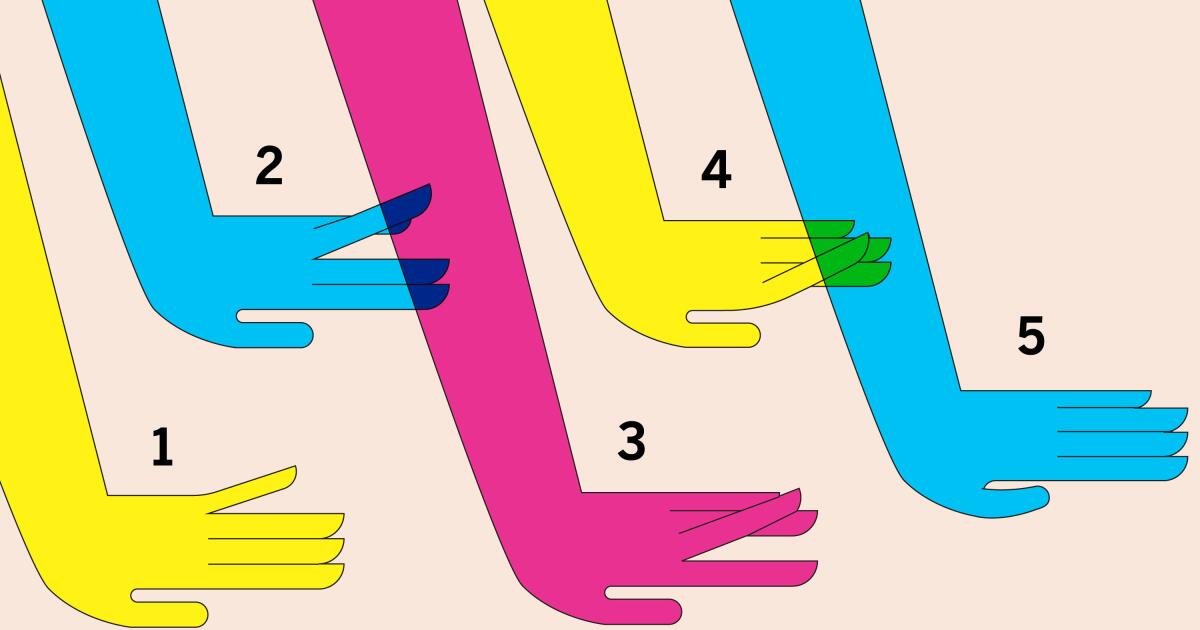
  1. Put all five fingertips together on one hand, as if grabbing a pinch of salt. Put a rubber band around your fingernails and open your fingers, pushing into the resistance of the band and spreading your fingers as far apart as possible, until you have a wide-open hand. Repeat 5 times on each hand.
  1. Standing or sitting, put the palms of your hands together in front of your chest, at chest height, as if praying. Slowly raise your elbows, with your thumbs against your body, and your hands will naturally drop down. Do it until you feel a stretch in your fingers and forearms. Repeat 5-10 times.
  1. Place your hand flat, palm down, on a desk or table. Gently lift one finger at a time off the table and then lower it. You can also lift all your fingers at once and then lower them. Repeat 5-10 times on each hand.
  1. Lay your arm flat on a table or desk with your wrist hanging over the edge. Keep your arm straight while lifting your wrist up toward the ceiling and hold for 5-10 seconds. Gently lower your wrist down toward the floor and hold for 5-10 seconds. Repeat this 5 times for each wrist or do both together.
  1. Slowly roll your wrists inward and outward, 5-10 times on each side.

(Exercises came from Dr. Joshua T. Goldman, UCLA sports medicine; Melissa Gunn, Pure Strength LA; Tom Hendrickx, Pivot Physical Therapy; Vanessa Martinez Kercher, Indiana University-Bloomington, School of Public Health; Nico Pronk, Health Partners Institute; Niki Saccareccia, Light Inside Yoga.)

Prolonged desk work can lead to musculoskeletal problems ranging from annoying aches and pains to injuries. This month, we launched a six-part series showing you how to stretch and strengthen your body parts to prepare them for marathon sitting sessions at your desk. We’ll roll out a new exercise routine every week, each focusing on a different area of the body, that will help alleviate desk job-related woes.

Last week we published exercises for the shoulders and chest. This week we’re tackling hands, wrists, forearms and elbows.

To learn more about how sitting affects the body, and why these exercises are important, read our first piece in the series.

  • Share via

A routine for your hands, wrists, forearms and elbows

Typing and mousing for long periods is stressful for the finger and wrist muscles as well as the forearms. The forearms are designed to pick up sticks and pull fruit off of trees, not to tap a keyboard for eight hours straight. As a result, developing inflammation in the area is common. Scar tissue can also develop from long-term inflammation, often where the muscles of the forearm attach to the elbows. The result is stiff fingers and wrists, achy joints and tennis or golf elbow — painful, inflamed tendons — among other conditions.

Do these exercises to help stretch and strengthen your hands, wrists, forearms and elbows. They’re demonstrated by trainer Melissa Gunn, of Pure Strength LA, whose team trains desk workers on how to protect their bodies through exercise.

  1. Put all five fingertips together on one hand, as if grabbing a pinch of salt. Put a rubber band around your fingernails and open your fingers, pushing into the resistance of the band and spreading your fingers as far apart as possible, until you have a wide-open hand. Repeat 5 times on each hand.
  1. Standing or sitting, put the palms of your hands together in front of your chest, at chest height, as if praying. Slowly raise your elbows, with your thumbs against your body, and your hands will naturally drop down. Do it until you feel a stretch in your fingers and forearms. Repeat 5-10 times.
  1. Place your hand flat, palm down, on a desk or table. Gently lift one finger at a time off the table and then lower it. You can also lift all your fingers at once and then lower them. Repeat 5-10 times on each hand.
  1. Lay your arm flat on a table or desk with your wrist hanging over the edge. Keep your arm straight while lifting your wrist up toward the ceiling and hold for 5-10 seconds. Gently lower your wrist down toward the floor and hold for 5-10 seconds. Repeat this 5 times for each wrist or do both together.
  1. Slowly roll your wrists inward and outward, 5-10 times on each side.

(Exercises came from Dr. Joshua T. Goldman, UCLA sports medicine; Melissa Gunn, Pure Strength LA; Tom Hendrickx, Pivot Physical Therapy; Vanessa Martinez Kercher, Indiana University-Bloomington, School of Public Health; Nico Pronk, Health Partners Institute; Niki Saccareccia, Light Inside Yoga.)

Prolonged desk work can lead to musculoskeletal problems ranging from annoying aches and pains to injuries. This month, we launched a six-part series showing you how to stretch and strengthen your body parts to prepare them for marathon sitting sessions at your desk. We’ll roll out a new exercise routine every week, each focusing on a different area of the body, that will help alleviate desk job-related woes.

Last week we published exercises for the shoulders and chest. This week we’re tackling hands, wrists, forearms and elbows.

To learn more about how sitting affects the body, and why these exercises are important, read our first piece in the series.

  • Share via

A routine for your hands, wrists, forearms and elbows

Typing and mousing for long periods is stressful for the finger and wrist muscles as well as the forearms. The forearms are designed to pick up sticks and pull fruit off of trees, not to tap a keyboard for eight hours straight. As a result, developing inflammation in the area is common. Scar tissue can also develop from long-term inflammation, often where the muscles of the forearm attach to the elbows. The result is stiff fingers and wrists, achy joints and tennis or golf elbow — painful, inflamed tendons — among other conditions.

Do these exercises to help stretch and strengthen your hands, wrists, forearms and elbows. They’re demonstrated by trainer Melissa Gunn, of Pure Strength LA, whose team trains desk workers on how to protect their bodies through exercise.

  1. Put all five fingertips together on one hand, as if grabbing a pinch of salt. Put a rubber band around your fingernails and open your fingers, pushing into the resistance of the band and spreading your fingers as far apart as possible, until you have a wide-open hand. Repeat 5 times on each hand.
  1. Standing or sitting, put the palms of your hands together in front of your chest, at chest height, as if praying. Slowly raise your elbows, with your thumbs against your body, and your hands will naturally drop down. Do it until you feel a stretch in your fingers and forearms. Repeat 5-10 times.
  1. Place your hand flat, palm down, on a desk or table. Gently lift one finger at a time off the table and then lower it. You can also lift all your fingers at once and then lower them. Repeat 5-10 times on each hand.
  1. Lay your arm flat on a table or desk with your wrist hanging over the edge. Keep your arm straight while lifting your wrist up toward the ceiling and hold for 5-10 seconds. Gently lower your wrist down toward the floor and hold for 5-10 seconds. Repeat this 5 times for each wrist or do both together.
  1. Slowly roll your wrists inward and outward, 5-10 times on each side.

(Exercises came from Dr. Joshua T. Goldman, UCLA sports medicine; Melissa Gunn, Pure Strength LA; Tom Hendrickx, Pivot Physical Therapy; Vanessa Martinez Kercher, Indiana University-Bloomington, School of Public Health; Nico Pronk, Health Partners Institute; Niki Saccareccia, Light Inside Yoga.)


Prolonged desk work can lead to musculoskeletal problems ranging from annoying aches and pains to injuries. This month, we launched a six-part series showing you how to stretch and strengthen your body parts to prepare them for marathon sitting sessions at your desk. We’ll roll out a new exercise routine every week, each focusing on a different area of the body, that will help alleviate desk job-related woes.

Last week we published exercises for the shoulders and chest. This week we’re tackling hands, wrists, forearms and elbows.

To learn more about how sitting affects the body, and why these exercises are important, read our first piece in the series.

  • Share via

A routine for your hands, wrists, forearms and elbows

Typing and mousing for long periods is stressful for the finger and wrist muscles as well as the forearms. The forearms are designed to pick up sticks and pull fruit off of trees, not to tap a keyboard for eight hours straight. As a result, developing inflammation in the area is common. Scar tissue can also develop from long-term inflammation, often where the muscles of the forearm attach to the elbows. The result is stiff fingers and wrists, achy joints and tennis or golf elbow — painful, inflamed tendons — among other conditions.

Do these exercises to help stretch and strengthen your hands, wrists, forearms and elbows. They’re demonstrated by trainer Melissa Gunn, of Pure Strength LA, whose team trains desk workers on how to protect their bodies through exercise.

  1. Put all five fingertips together on one hand, as if grabbing a pinch of salt. Put a rubber band around your fingernails and open your fingers, pushing into the resistance of the band and spreading your fingers as far apart as possible, until you have a wide-open hand. Repeat 5 times on each hand.
  1. Standing or sitting, put the palms of your hands together in front of your chest, at chest height, as if praying. Slowly raise your elbows, with your thumbs against your body, and your hands will naturally drop down. Do it until you feel a stretch in your fingers and forearms. Repeat 5-10 times.
  1. Place your hand flat, palm down, on a desk or table. Gently lift one finger at a time off the table and then lower it. You can also lift all your fingers at once and then lower them. Repeat 5-10 times on each hand.
  1. Lay your arm flat on a table or desk with your wrist hanging over the edge. Keep your arm straight while lifting your wrist up toward the ceiling and hold for 5-10 seconds. Gently lower your wrist down toward the floor and hold for 5-10 seconds. Repeat this 5 times for each wrist or do both together.
  1. Slowly roll your wrists inward and outward, 5-10 times on each side.

(Exercises came from Dr. Joshua T. Goldman, UCLA sports medicine; Melissa Gunn, Pure Strength LA; Tom Hendrickx, Pivot Physical Therapy; Vanessa Martinez Kercher, Indiana University-Bloomington, School of Public Health; Nico Pronk, Health Partners Institute; Niki Saccareccia, Light Inside Yoga.)

Prolonged desk work can lead to musculoskeletal problems ranging from annoying aches and pains to injuries. This month, we launched a six-part series showing you how to stretch and strengthen your body parts to prepare them for marathon sitting sessions at your desk. We’ll roll out a new exercise routine every week, each focusing on a different area of the body, that will help alleviate desk job-related woes.

Last week we published exercises for the shoulders and chest. This week we’re tackling hands, wrists, forearms and elbows.

To learn more about how sitting affects the body, and why these exercises are important, read our first piece in the series.

  • Share via

A routine for your hands, wrists, forearms and elbows

Typing and mousing for long periods is stressful for the finger and wrist muscles as well as the forearms. The forearms are designed to pick up sticks and pull fruit off of trees, not to tap a keyboard for eight hours straight. As a result, developing inflammation in the area is common. Scar tissue can also develop from long-term inflammation, often where the muscles of the forearm attach to the elbows. The result is stiff fingers and wrists, achy joints and tennis or golf elbow — painful, inflamed tendons — among other conditions.

Do these exercises to help stretch and strengthen your hands, wrists, forearms and elbows. They’re demonstrated by trainer Melissa Gunn, of Pure Strength LA, whose team trains desk workers on how to protect their bodies through exercise.

  1. Put all five fingertips together on one hand, as if grabbing a pinch of salt. Put a rubber band around your fingernails and open your fingers, pushing into the resistance of the band and spreading your fingers as far apart as possible, until you have a wide-open hand. Repeat 5 times on each hand.
  1. Standing or sitting, put the palms of your hands together in front of your chest, at chest height, as if praying. Slowly raise your elbows, with your thumbs against your body, and your hands will naturally drop down. Do it until you feel a stretch in your fingers and forearms. Repeat 5-10 times.
  1. Place your hand flat, palm down, on a desk or table. Gently lift one finger at a time off the table and then lower it. You can also lift all your fingers at once and then lower them. Repeat 5-10 times on each hand.
  1. Lay your arm flat on a table or desk with your wrist hanging over the edge. Keep your arm straight while lifting your wrist up toward the ceiling and hold for 5-10 seconds. Gently lower your wrist down toward the floor and hold for 5-10 seconds. Repeat this 5 times for each wrist or do both together.
  1. Slowly roll your wrists inward and outward, 5-10 times on each side.

(Exercises came from Dr. Joshua T. Goldman, UCLA sports medicine; Melissa Gunn, Pure Strength LA; Tom Hendrickx, Pivot Physical Therapy; Vanessa Martinez Kercher, Indiana University-Bloomington, School of Public Health; Nico Pronk, Health Partners Institute; Niki Saccareccia, Light Inside Yoga.)

Prolonged desk work can lead to musculoskeletal problems ranging from annoying aches and pains to injuries. This month, we launched a six-part series showing you how to stretch and strengthen your body parts to prepare them for marathon sitting sessions at your desk. We’ll roll out a new exercise routine every week, each focusing on a different area of the body, that will help alleviate desk job-related woes.

Last week we published exercises for the shoulders and chest. This week we’re tackling hands, wrists, forearms and elbows.

To learn more about how sitting affects the body, and why these exercises are important, read our first piece in the series.

  • Share via

A routine for your hands, wrists, forearms and elbows

Typing and mousing for long periods is stressful for the finger and wrist muscles as well as the forearms. The forearms are designed to pick up sticks and pull fruit off of trees, not to tap a keyboard for eight hours straight. As a result, developing inflammation in the area is common. Scar tissue can also develop from long-term inflammation, often where the muscles of the forearm attach to the elbows. The result is stiff fingers and wrists, achy joints and tennis or golf elbow — painful, inflamed tendons — among other conditions.

Do these exercises to help stretch and strengthen your hands, wrists, forearms and elbows. They’re demonstrated by trainer Melissa Gunn, of Pure Strength LA, whose team trains desk workers on how to protect their bodies through exercise.

  1. Put all five fingertips together on one hand, as if grabbing a pinch of salt. Put a rubber band around your fingernails and open your fingers, pushing into the resistance of the band and spreading your fingers as far apart as possible, until you have a wide-open hand. Repeat 5 times on each hand.
  1. Standing or sitting, put the palms of your hands together in front of your chest, at chest height, as if praying. Slowly raise your elbows, with your thumbs against your body, and your hands will naturally drop down. Do it until you feel a stretch in your fingers and forearms. Repeat 5-10 times.
  1. Place your hand flat, palm down, on a desk or table. Gently lift one finger at a time off the table and then lower it. You can also lift all your fingers at once and then lower them. Repeat 5-10 times on each hand.
  1. Lay your arm flat on a table or desk with your wrist hanging over the edge. Keep your arm straight while lifting your wrist up toward the ceiling and hold for 5-10 seconds. Gently lower your wrist down toward the floor and hold for 5-10 seconds. Repeat this 5 times for each wrist or do both together.
  1. Slowly roll your wrists inward and outward, 5-10 times on each side.

(Exercises came from Dr. Joshua T. Goldman, UCLA sports medicine; Melissa Gunn, Pure Strength LA; Tom Hendrickx, Pivot Physical Therapy; Vanessa Martinez Kercher, Indiana University-Bloomington, School of Public Health; Nico Pronk, Health Partners Institute; Niki Saccareccia, Light Inside Yoga.)

Prolonged desk work can lead to musculoskeletal problems ranging from annoying aches and pains to injuries. This month, we launched a six-part series showing you how to stretch and strengthen your body parts to prepare them for marathon sitting sessions at your desk. We’ll roll out a new exercise routine every week, each focusing on a different area of the body, that will help alleviate desk job-related woes.

Last week we published exercises for the shoulders and chest. This week we’re tackling hands, wrists, forearms and elbows.

To learn more about how sitting affects the body, and why these exercises are important, read our first piece in the series.

  • Share via

A routine for your hands, wrists, forearms and elbows

Typing and mousing for long periods is stressful for the finger and wrist muscles as well as the forearms. The forearms are designed to pick up sticks and pull fruit off of trees, not to tap a keyboard for eight hours straight. As a result, developing inflammation in the area is common. Scar tissue can also develop from long-term inflammation, often where the muscles of the forearm attach to the elbows. The result is stiff fingers and wrists, achy joints and tennis or golf elbow — painful, inflamed tendons — among other conditions.

Do these exercises to help stretch and strengthen your hands, wrists, forearms and elbows. They’re demonstrated by trainer Melissa Gunn, of Pure Strength LA, whose team trains desk workers on how to protect their bodies through exercise.

  1. Put all five fingertips together on one hand, as if grabbing a pinch of salt. Put a rubber band around your fingernails and open your fingers, pushing into the resistance of the band and spreading your fingers as far apart as possible, until you have a wide-open hand. Repeat 5 times on each hand.
  1. Standing or sitting, put the palms of your hands together in front of your chest, at chest height, as if praying. Slowly raise your elbows, with your thumbs against your body, and your hands will naturally drop down. Do it until you feel a stretch in your fingers and forearms. Repeat 5-10 times.
  1. Place your hand flat, palm down, on a desk or table. Gently lift one finger at a time off the table and then lower it. You can also lift all your fingers at once and then lower them. Repeat 5-10 times on each hand.
  1. Lay your arm flat on a table or desk with your wrist hanging over the edge. Keep your arm straight while lifting your wrist up toward the ceiling and hold for 5-10 seconds. Gently lower your wrist down toward the floor and hold for 5-10 seconds. Repeat this 5 times for each wrist or do both together.
  1. Slowly roll your wrists inward and outward, 5-10 times on each side.

(Exercises came from Dr. Joshua T. Goldman, UCLA sports medicine; Melissa Gunn, Pure Strength LA; Tom Hendrickx, Pivot Physical Therapy; Vanessa Martinez Kercher, Indiana University-Bloomington, School of Public Health; Nico Pronk, Health Partners Institute; Niki Saccareccia, Light Inside Yoga.)

Prolonged desk work can lead to musculoskeletal problems ranging from annoying aches and pains to injuries. This month, we launched a six-part series showing you how to stretch and strengthen your body parts to prepare them for marathon sitting sessions at your desk. We’ll roll out a new exercise routine every week, each focusing on a different area of the body, that will help alleviate desk job-related woes.

Last week we published exercises for the shoulders and chest. This week we’re tackling hands, wrists, forearms and elbows.

To learn more about how sitting affects the body, and why these exercises are important, read our first piece in the series.

  • Share via

A routine for your hands, wrists, forearms and elbows

Typing and mousing for long periods is stressful for the finger and wrist muscles as well as the forearms. The forearms are designed to pick up sticks and pull fruit off of trees, not to tap a keyboard for eight hours straight. As a result, developing inflammation in the area is common. Scar tissue can also develop from long-term inflammation, often where the muscles of the forearm attach to the elbows. The result is stiff fingers and wrists, achy joints and tennis or golf elbow — painful, inflamed tendons — among other conditions.

Do these exercises to help stretch and strengthen your hands, wrists, forearms and elbows. They’re demonstrated by trainer Melissa Gunn, of Pure Strength LA, whose team trains desk workers on how to protect their bodies through exercise.

  1. Put all five fingertips together on one hand, as if grabbing a pinch of salt. Put a rubber band around your fingernails and open your fingers, pushing into the resistance of the band and spreading your fingers as far apart as possible, until you have a wide-open hand. Repeat 5 times on each hand.
  1. Standing or sitting, put the palms of your hands together in front of your chest, at chest height, as if praying. Slowly raise your elbows, with your thumbs against your body, and your hands will naturally drop down. Do it until you feel a stretch in your fingers and forearms. Repeat 5-10 times.
  1. Place your hand flat, palm down, on a desk or table. Gently lift one finger at a time off the table and then lower it. You can also lift all your fingers at once and then lower them. Repeat 5-10 times on each hand.
  1. Lay your arm flat on a table or desk with your wrist hanging over the edge. Keep your arm straight while lifting your wrist up toward the ceiling and hold for 5-10 seconds. Gently lower your wrist down toward the floor and hold for 5-10 seconds. Repeat this 5 times for each wrist or do both together.
  1. Slowly roll your wrists inward and outward, 5-10 times on each side.

(Exercises came from Dr. Joshua T. Goldman, UCLA sports medicine; Melissa Gunn, Pure Strength LA; Tom Hendrickx, Pivot Physical Therapy; Vanessa Martinez Kercher, Indiana University-Bloomington, School of Public Health; Nico Pronk, Health Partners Institute; Niki Saccareccia, Light Inside Yoga.)

Prolonged desk work can lead to musculoskeletal problems ranging from annoying aches and pains to injuries. This month, we launched a six-part series showing you how to stretch and strengthen your body parts to prepare them for marathon sitting sessions at your desk. We’ll roll out a new exercise routine every week, each focusing on a different area of the body, that will help alleviate desk job-related woes.

Last week we published exercises for the shoulders and chest. This week we’re tackling hands, wrists, forearms and elbows.

To learn more about how sitting affects the body, and why these exercises are important, read our first piece in the series.

  • Share via

A routine for your hands, wrists, forearms and elbows

Typing and mousing for long periods is stressful for the finger and wrist muscles as well as the forearms. The forearms are designed to pick up sticks and pull fruit off of trees, not to tap a keyboard for eight hours straight. As a result, developing inflammation in the area is common. Scar tissue can also develop from long-term inflammation, often where the muscles of the forearm attach to the elbows. The result is stiff fingers and wrists, achy joints and tennis or golf elbow — painful, inflamed tendons — among other conditions.

Do these exercises to help stretch and strengthen your hands, wrists, forearms and elbows. They’re demonstrated by trainer Melissa Gunn, of Pure Strength LA, whose team trains desk workers on how to protect their bodies through exercise.

  1. Put all five fingertips together on one hand, as if grabbing a pinch of salt. Put a rubber band around your fingernails and open your fingers, pushing into the resistance of the band and spreading your fingers as far apart as possible, until you have a wide-open hand. Repeat 5 times on each hand.
  1. Standing or sitting, put the palms of your hands together in front of your chest, at chest height, as if praying. Slowly raise your elbows, with your thumbs against your body, and your hands will naturally drop down. Do it until you feel a stretch in your fingers and forearms. Repeat 5-10 times.
  1. Place your hand flat, palm down, on a desk or table. Gently lift one finger at a time off the table and then lower it. You can also lift all your fingers at once and then lower them. Repeat 5-10 times on each hand.
  1. Lay your arm flat on a table or desk with your wrist hanging over the edge. Keep your arm straight while lifting your wrist up toward the ceiling and hold for 5-10 seconds. Gently lower your wrist down toward the floor and hold for 5-10 seconds. Repeat this 5 times for each wrist or do both together.
  1. Slowly roll your wrists inward and outward, 5-10 times on each side.

(Exercises came from Dr. Joshua T. Goldman, UCLA sports medicine; Melissa Gunn, Pure Strength LA; Tom Hendrickx, Pivot Physical Therapy; Vanessa Martinez Kercher, Indiana University-Bloomington, School of Public Health; Nico Pronk, Health Partners Institute; Niki Saccareccia, Light Inside Yoga.)

Prolonged desk work can lead to musculoskeletal problems ranging from annoying aches and pains to injuries. This month, we launched a six-part series showing you how to stretch and strengthen your body parts to prepare them for marathon sitting sessions at your desk. We’ll roll out a new exercise routine every week, each focusing on a different area of the body, that will help alleviate desk job-related woes.

Last week we published exercises for the shoulders and chest. This week we’re tackling hands, wrists, forearms and elbows.

To learn more about how sitting affects the body, and why these exercises are important, read our first piece in the series.

  • Share via

A routine for your hands, wrists, forearms and elbows

Typing and mousing for long periods is stressful for the finger and wrist muscles as well as the forearms. The forearms are designed to pick up sticks and pull fruit off of trees, not to tap a keyboard for eight hours straight. As a result, developing inflammation in the area is common. Scar tissue can also develop from long-term inflammation, often where the muscles of the forearm attach to the elbows. The result is stiff fingers and wrists, achy joints and tennis or golf elbow — painful, inflamed tendons — among other conditions.

Do these exercises to help stretch and strengthen your hands, wrists, forearms and elbows. They’re demonstrated by trainer Melissa Gunn, of Pure Strength LA, whose team trains desk workers on how to protect their bodies through exercise.

  1. Put all five fingertips together on one hand, as if grabbing a pinch of salt. Put a rubber band around your fingernails and open your fingers, pushing into the resistance of the band and spreading your fingers as far apart as possible, until you have a wide-open hand. Repeat 5 times on each hand.
  1. Standing or sitting, put the palms of your hands together in front of your chest, at chest height, as if praying. Slowly raise your elbows, with your thumbs against your body, and your hands will naturally drop down. Do it until you feel a stretch in your fingers and forearms. Repeat 5-10 times.
  1. Place your hand flat, palm down, on a desk or table. Gently lift one finger at a time off the table and then lower it. You can also lift all your fingers at once and then lower them. Repeat 5-10 times on each hand.
  1. Lay your arm flat on a table or desk with your wrist hanging over the edge. Keep your arm straight while lifting your wrist up toward the ceiling and hold for 5-10 seconds. Gently lower your wrist down toward the floor and hold for 5-10 seconds. Repeat this 5 times for each wrist or do both together.
  1. Slowly roll your wrists inward and outward, 5-10 times on each side.

(Exercises came from Dr. Joshua T. Goldman, UCLA sports medicine; Melissa Gunn, Pure Strength LA; Tom Hendrickx, Pivot Physical Therapy; Vanessa Martinez Kercher, Indiana University-Bloomington, School of Public Health; Nico Pronk, Health Partners Institute; Niki Saccareccia, Light Inside Yoga.)

Prolonged desk work can lead to musculoskeletal problems ranging from annoying aches and pains to injuries. This month, we launched a six-part series showing you how to stretch and strengthen your body parts to prepare them for marathon sitting sessions at your desk. We’ll roll out a new exercise routine every week, each focusing on a different area of the body, that will help alleviate desk job-related woes.

Last week we published exercises for the shoulders and chest. This week we’re tackling hands, wrists, forearms and elbows.

To learn more about how sitting affects the body, and why these exercises are important, read our first piece in the series.

  • Share via

A routine for your hands, wrists, forearms and elbows

Typing and mousing for long periods is stressful for the finger and wrist muscles as well as the forearms. The forearms are designed to pick up sticks and pull fruit off of trees, not to tap a keyboard for eight hours straight. As a result, developing inflammation in the area is common. Scar tissue can also develop from long-term inflammation, often where the muscles of the forearm attach to the elbows. The result is stiff fingers and wrists, achy joints and tennis or golf elbow — painful, inflamed tendons — among other conditions.

Do these exercises to help stretch and strengthen your hands, wrists, forearms and elbows. They’re demonstrated by trainer Melissa Gunn, of Pure Strength LA, whose team trains desk workers on how to protect their bodies through exercise.

  1. Put all five fingertips together on one hand, as if grabbing a pinch of salt. Put a rubber band around your fingernails and open your fingers, pushing into the resistance of the band and spreading your fingers as far apart as possible, until you have a wide-open hand. Repeat 5 times on each hand.
  1. Standing or sitting, put the palms of your hands together in front of your chest, at chest height, as if praying. Slowly raise your elbows, with your thumbs against your body, and your hands will naturally drop down. Do it until you feel a stretch in your fingers and forearms. Repeat 5-10 times.
  1. Place your hand flat, palm down, on a desk or table. Gently lift one finger at a time off the table and then lower it. You can also lift all your fingers at once and then lower them. Repeat 5-10 times on each hand.
  1. Lay your arm flat on a table or desk with your wrist hanging over the edge. Keep your arm straight while lifting your wrist up toward the ceiling and hold for 5-10 seconds. Gently lower your wrist down toward the floor and hold for 5-10 seconds. Repeat this 5 times for each wrist or do both together.
  1. Slowly roll your wrists inward and outward, 5-10 times on each side.

(Exercises came from Dr. Joshua T. Goldman, UCLA sports medicine; Melissa Gunn, Pure Strength LA; Tom Hendrickx, Pivot Physical Therapy; Vanessa Martinez Kercher, Indiana University-Bloomington, School of Public Health; Nico Pronk, Health Partners Institute; Niki Saccareccia, Light Inside Yoga.)

Prolonged desk work can lead to musculoskeletal problems ranging from annoying aches and pains to injuries. This month, we launched a six-part series showing you how to stretch and strengthen your body parts to prepare them for marathon sitting sessions at your desk. We’ll roll out a new exercise routine every week, each focusing on a different area of the body, that will help alleviate desk job-related woes.

Last week we published exercises for the shoulders and chest. This week we’re tackling hands, wrists, forearms and elbows.

To learn more about how sitting affects the body, and why these exercises are important, read our first piece in the series.

  • Share via

A routine for your hands, wrists, forearms and elbows

Typing and mousing for long periods is stressful for the finger and wrist muscles as well as the forearms. The forearms are designed to pick up sticks and pull fruit off of trees, not to tap a keyboard for eight hours straight. As a result, developing inflammation in the area is common. Scar tissue can also develop from long-term inflammation, often where the muscles of the forearm attach to the elbows. The result is stiff fingers and wrists, achy joints and tennis or golf elbow — painful, inflamed tendons — among other conditions.

Do these exercises to help stretch and strengthen your hands, wrists, forearms and elbows. They’re demonstrated by trainer Melissa Gunn, of Pure Strength LA, whose team trains desk workers on how to protect their bodies through exercise.

  1. Put all five fingertips together on one hand, as if grabbing a pinch of salt. Put a rubber band around your fingernails and open your fingers, pushing into the resistance of the band and spreading your fingers as far apart as possible, until you have a wide-open hand. Repeat 5 times on each hand.
  1. Standing or sitting, put the palms of your hands together in front of your chest, at chest height, as if praying. Slowly raise your elbows, with your thumbs against your body, and your hands will naturally drop down. Do it until you feel a stretch in your fingers and forearms. Repeat 5-10 times.
  1. Place your hand flat, palm down, on a desk or table. Gently lift one finger at a time off the table and then lower it. You can also lift all your fingers at once and then lower them. Repeat 5-10 times on each hand.
  1. Lay your arm flat on a table or desk with your wrist hanging over the edge. Keep your arm straight while lifting your wrist up toward the ceiling and hold for 5-10 seconds. Gently lower your wrist down toward the floor and hold for 5-10 seconds. Repeat this 5 times for each wrist or do both together.
  1. Slowly roll your wrists inward and outward, 5-10 times on each side.

(Exercises came from Dr. Joshua T. Goldman, UCLA sports medicine; Melissa Gunn, Pure Strength LA; Tom Hendrickx, Pivot Physical Therapy; Vanessa Martinez Kercher, Indiana University-Bloomington, School of Public Health; Nico Pronk, Health Partners Institute; Niki Saccareccia, Light Inside Yoga.)

Prolonged desk work can lead to musculoskeletal problems ranging from annoying aches and pains to injuries. This month, we launched a six-part series showing you how to stretch and strengthen your body parts to prepare them for marathon sitting sessions at your desk. We’ll roll out a new exercise routine every week, each focusing on a different area of the body, that will help alleviate desk job-related woes.

Last week we published exercises for the shoulders and chest. This week we’re tackling hands, wrists, forearms and elbows.

To learn more about how sitting affects the body, and why these exercises are important, read our first piece in the series.

  • Share via

A routine for your hands, wrists, forearms and elbows

Typing and mousing for long periods is stressful for the finger and wrist muscles as well as the forearms. The forearms are designed to pick up sticks and pull fruit off of trees, not to tap a keyboard for eight hours straight. As a result, developing inflammation in the area is common. Scar tissue can also develop from long-term inflammation, often where the muscles of the forearm attach to the elbows. The result is stiff fingers and wrists, achy joints and tennis or golf elbow — painful, inflamed tendons — among other conditions.

Do these exercises to help stretch and strengthen your hands, wrists, forearms and elbows. They’re demonstrated by trainer Melissa Gunn, of Pure Strength LA, whose team trains desk workers on how to protect their bodies through exercise.

  1. Put all five fingertips together on one hand, as if grabbing a pinch of salt. Put a rubber band around your fingernails and open your fingers, pushing into the resistance of the band and spreading your fingers as far apart as possible, until you have a wide-open hand. Repeat 5 times on each hand.
  1. Standing or sitting, put the palms of your hands together in front of your chest, at chest height, as if praying. Slowly raise your elbows, with your thumbs against your body, and your hands will naturally drop down. Do it until you feel a stretch in your fingers and forearms. Repeat 5-10 times.
  1. Place your hand flat, palm down, on a desk or table. Gently lift one finger at a time off the table and then lower it. You can also lift all your fingers at once and then lower them. Repeat 5-10 times on each hand.
  1. Lay your arm flat on a table or desk with your wrist hanging over the edge. Keep your arm straight while lifting your wrist up toward the ceiling and hold for 5-10 seconds. Gently lower your wrist down toward the floor and hold for 5-10 seconds. Repeat this 5 times for each wrist or do both together.
  1. Slowly roll your wrists inward and outward, 5-10 times on each side.

(Exercises came from Dr. Joshua T. Goldman, UCLA sports medicine; Melissa Gunn, Pure Strength LA; Tom Hendrickx, Pivot Physical Therapy; Vanessa Martinez Kercher, Indiana University-Bloomington, School of Public Health; Nico Pronk, Health Partners Institute; Niki Saccareccia, Light Inside Yoga.)

Prolonged desk work can lead to musculoskeletal problems ranging from annoying aches and pains to injuries. This month, we launched a six-part series showing you how to stretch and strengthen your body parts to prepare them for marathon sitting sessions at your desk. We’ll roll out a new exercise routine every week, each focusing on a different area of the body, that will help alleviate desk job-related woes.

Last week we published exercises for the shoulders and chest. This week we’re tackling hands, wrists, forearms and elbows.

To learn more about how sitting affects the body, and why these exercises are important, read our first piece in the series.

  • Share via

A routine for your hands, wrists, forearms and elbows

Typing and mousing for long periods is stressful for the finger and wrist muscles as well as the forearms. The forearms are designed to pick up sticks and pull fruit off of trees, not to tap a keyboard for eight hours straight. As a result, developing inflammation in the area is common. Scar tissue can also develop from long-term inflammation, often where the muscles of the forearm attach to the elbows. The result is stiff fingers and wrists, achy joints and tennis or golf elbow — painful, inflamed tendons — among other conditions.

Do these exercises to help stretch and strengthen your hands, wrists, forearms and elbows. They’re demonstrated by trainer Melissa Gunn, of Pure Strength LA, whose team trains desk workers on how to protect their bodies through exercise.

  1. Put all five fingertips together on one hand, as if grabbing a pinch of salt. Put a rubber band around your fingernails and open your fingers, pushing into the resistance of the band and spreading your fingers as far apart as possible, until you have a wide-open hand. Repeat 5 times on each hand.
  1. Standing or sitting, put the palms of your hands together in front of your chest, at chest height, as if praying. Slowly raise your elbows, with your thumbs against your body, and your hands will naturally drop down. Do it until you feel a stretch in your fingers and forearms. Repeat 5-10 times.
  1. Place your hand flat, palm down, on a desk or table. Gently lift one finger at a time off the table and then lower it. You can also lift all your fingers at once and then lower them. Repeat 5-10 times on each hand.
  1. Lay your arm flat on a table or desk with your wrist hanging over the edge. Keep your arm straight while lifting your wrist up toward the ceiling and hold for 5-10 seconds. Gently lower your wrist down toward the floor and hold for 5-10 seconds. Repeat this 5 times for each wrist or do both together.
  1. Slowly roll your wrists inward and outward, 5-10 times on each side.

(Exercises came from Dr. Joshua T. Goldman, UCLA sports medicine; Melissa Gunn, Pure Strength LA; Tom Hendrickx, Pivot Physical Therapy; Vanessa Martinez Kercher, Indiana University-Bloomington, School of Public Health; Nico Pronk, Health Partners Institute; Niki Saccareccia, Light Inside Yoga.)

Prolonged desk work can lead to musculoskeletal problems ranging from annoying aches and pains to injuries. This month, we launched a six-part series showing you how to stretch and strengthen your body parts to prepare them for marathon sitting sessions at your desk. We’ll roll out a new exercise routine every week, each focusing on a different area of the body, that will help alleviate desk job-related woes.

Last week we published exercises for the shoulders and chest. This week we’re tackling hands, wrists, forearms and elbows.

To learn more about how sitting affects the body, and why these exercises are important, read our first piece in the series.

  • Share via

A routine for your hands, wrists, forearms and elbows

Typing and mousing for long periods is stressful for the finger and wrist muscles as well as the forearms. The forearms are designed to pick up sticks and pull fruit off of trees, not to tap a keyboard for eight hours straight. As a result, developing inflammation in the area is common. Scar tissue can also develop from long-term inflammation, often where the muscles of the forearm attach to the elbows. The result is stiff fingers and wrists, achy joints and tennis or golf elbow — painful, inflamed tendons — among other conditions.

Do these exercises to help stretch and strengthen your hands, wrists, forearms and elbows. They’re demonstrated by trainer Melissa Gunn, of Pure Strength LA, whose team trains desk workers on how to protect their bodies through exercise.

  1. Put all five fingertips together on one hand, as if grabbing a pinch of salt. Put a rubber band around your fingernails and open your fingers, pushing into the resistance of the band and spreading your fingers as far apart as possible, until you have a wide-open hand. Repeat 5 times on each hand.
  1. Standing or sitting, put the palms of your hands together in front of your chest, at chest height, as if praying. Slowly raise your elbows, with your thumbs against your body, and your hands will naturally drop down. Do it until you feel a stretch in your fingers and forearms. Repeat 5-10 times.
  1. Place your hand flat, palm down, on a desk or table. Gently lift one finger at a time off the table and then lower it. You can also lift all your fingers at once and then lower them. Repeat 5-10 times on each hand.
  1. Lay your arm flat on a table or desk with your wrist hanging over the edge. Keep your arm straight while lifting your wrist up toward the ceiling and hold for 5-10 seconds. Gently lower your wrist down toward the floor and hold for 5-10 seconds. Repeat this 5 times for each wrist or do both together.
  1. Slowly roll your wrists inward and outward, 5-10 times on each side.

(Exercises came from Dr. Joshua T. Goldman, UCLA sports medicine; Melissa Gunn, Pure Strength LA; Tom Hendrickx, Pivot Physical Therapy; Vanessa Martinez Kercher, Indiana University-Bloomington, School of Public Health; Nico Pronk, Health Partners Institute; Niki Saccareccia, Light Inside Yoga.)

Prolonged desk work can lead to musculoskeletal problems ranging from annoying aches and pains to injuries. This month, we launched a six-part series showing you how to stretch and strengthen your body parts to prepare them for marathon sitting sessions at your desk. We’ll roll out a new exercise routine every week, each focusing on a different area of the body, that will help alleviate desk job-related woes.

Last week we published exercises for the shoulders and chest. This week we’re tackling hands, wrists, forearms and elbows.

To learn more about how sitting affects the body, and why these exercises are important, read our first piece in the series.

  • Share via

A routine for your hands, wrists, forearms and elbows

Typing and mousing for long periods is stressful for the finger and wrist muscles as well as the forearms. The forearms are designed to pick up sticks and pull fruit off of trees, not to tap a keyboard for eight hours straight. As a result, developing inflammation in the area is common. Scar tissue can also develop from long-term inflammation, often where the muscles of the forearm attach to the elbows. The result is stiff fingers and wrists, achy joints and tennis or golf elbow — painful, inflamed tendons — among other conditions.

Do these exercises to help stretch and strengthen your hands, wrists, forearms and elbows. They’re demonstrated by trainer Melissa Gunn, of Pure Strength LA, whose team trains desk workers on how to protect their bodies through exercise.

  1. Put all five fingertips together on one hand, as if grabbing a pinch of salt. Put a rubber band around your fingernails and open your fingers, pushing into the resistance of the band and spreading your fingers as far apart as possible, until you have a wide-open hand. Repeat 5 times on each hand.
  1. Standing or sitting, put the palms of your hands together in front of your chest, at chest height, as if praying. Slowly raise your elbows, with your thumbs against your body, and your hands will naturally drop down. Do it until you feel a stretch in your fingers and forearms. Repeat 5-10 times.
  1. Place your hand flat, palm down, on a desk or table. Gently lift one finger at a time off the table and then lower it. You can also lift all your fingers at once and then lower them. Repeat 5-10 times on each hand.
  1. Lay your arm flat on a table or desk with your wrist hanging over the edge. Keep your arm straight while lifting your wrist up toward the ceiling and hold for 5-10 seconds. Gently lower your wrist down toward the floor and hold for 5-10 seconds. Repeat this 5 times for each wrist or do both together.
  1. Slowly roll your wrists inward and outward, 5-10 times on each side.

(Exercises came from Dr. Joshua T. Goldman, UCLA sports medicine; Melissa Gunn, Pure Strength LA; Tom Hendrickx, Pivot Physical Therapy; Vanessa Martinez Kercher, Indiana University-Bloomington, School of Public Health; Nico Pronk, Health Partners Institute; Niki Saccareccia, Light Inside Yoga.)

Previous Post

Sale of Wicked Witch’s hat from ‘The Wizard of Oz’ sparks fraud lawsuit

Next Post

For some affluent homeowners, private fire hydrants are in big demand after devastating L.A. wildfires

Leave a Reply Cancel reply

Your email address will not be published. Required fields are marked *

BROWSE BY CATEGORIES

  • Business
  • Culture
  • Entertainment
  • Health
  • Politics
  • Technology
  • Trending
  • Uncategorized
  • World
Binghamton Herald

© 2024 Binghamton Herald or its affiliated companies.

Navigate Site

  • About
  • Advertise
  • Terms & Conditions
  • Privacy Policy
  • Disclaimer
  • Contact

Follow Us

No Result
View All Result
  • Home
  • World
  • Politics
  • Business
  • Technology
  • Culture
  • Health
  • Entertainment
  • Trending

© 2024 Binghamton Herald or its affiliated companies.

Welcome Back!

Login to your account below

Forgotten Password?

Retrieve your password

Please enter your username or email address to reset your password.

Log In