

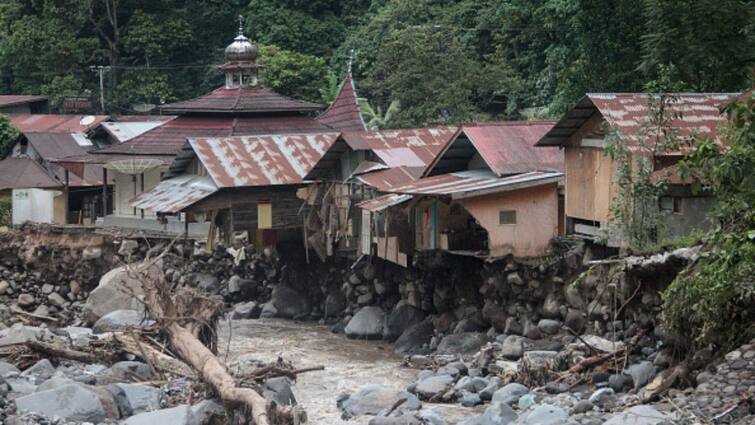
At least 34 people were dead and 16 others were missing after flash floods and cold lava from Mount Marapi, one of Indonesia’s most active volcanoes, struck the western part of the country, news agency AFP reported on Sunday. The disaster ravaged homes, roads, and mosques in Anga, and Tanah Datar districts of West Sumatra province, following hours of relentless rain on Saturday evening.
The flash floods and cold lava flow hit the two districts at around 10:30 pm (1530 GMT) on Saturday, according to the Basarnas search and rescue agency.
Cold lava, also known as lahar, is volcanic material such as ash, sand and pebbles carried down a volcano’s slopes by rain.
Residents Recount Horrowing Experiences
As torrents of water and debris descended from the mountainside, residents recounted harrowing experiences. Rina Devina, a housewife, described the terrifying sounds of falling rocks, narrating the loss of three of her neighbours.
“It was pitch black, so I used my cellphone as a flashlight. The road was muddy, so I chanted ‘God, have mercy!’ over and over again,” she shared from her evacuation ordeal, as reported by AFP.
Ilham Wahab, spokesperson for the West Sumatra disaster agency, confirmed the casualties, indicating 16 deaths in Angam district and 18 in Tanah Datar, with 18 others sustaining injuries. He told AFP that the search operations involving local rescuers, police, soldiers, and volunteers are ongoing, with efforts concentrated on locating the missing individuals.
Abdul Muhari, spokesperson for the National Disaster Mitigation Agency, disclosed extensive damage to infrastructure in Tanah Datar, including 84 homes, 16 bridges, and two mosques. As per the report, the disaster also wreaked havoc on agricultural land, with 20 hectares of rice fields affected. Aerial footage revealed the extent of destruction, with roads submerged in mud and debris, hindering rescue efforts and access to the affected areas.
The recent tragedy adds to Indonesia’s history of natural disasters, exacerbated by deforestation and environmental degradation. Mount Marapi, known for its volatility, last erupted in December, killing 24 climbers.

At least 34 people were dead and 16 others were missing after flash floods and cold lava from Mount Marapi, one of Indonesia’s most active volcanoes, struck the western part of the country, news agency AFP reported on Sunday. The disaster ravaged homes, roads, and mosques in Anga, and Tanah Datar districts of West Sumatra province, following hours of relentless rain on Saturday evening.
The flash floods and cold lava flow hit the two districts at around 10:30 pm (1530 GMT) on Saturday, according to the Basarnas search and rescue agency.
Cold lava, also known as lahar, is volcanic material such as ash, sand and pebbles carried down a volcano’s slopes by rain.
Residents Recount Horrowing Experiences
As torrents of water and debris descended from the mountainside, residents recounted harrowing experiences. Rina Devina, a housewife, described the terrifying sounds of falling rocks, narrating the loss of three of her neighbours.
“It was pitch black, so I used my cellphone as a flashlight. The road was muddy, so I chanted ‘God, have mercy!’ over and over again,” she shared from her evacuation ordeal, as reported by AFP.
Ilham Wahab, spokesperson for the West Sumatra disaster agency, confirmed the casualties, indicating 16 deaths in Angam district and 18 in Tanah Datar, with 18 others sustaining injuries. He told AFP that the search operations involving local rescuers, police, soldiers, and volunteers are ongoing, with efforts concentrated on locating the missing individuals.
Abdul Muhari, spokesperson for the National Disaster Mitigation Agency, disclosed extensive damage to infrastructure in Tanah Datar, including 84 homes, 16 bridges, and two mosques. As per the report, the disaster also wreaked havoc on agricultural land, with 20 hectares of rice fields affected. Aerial footage revealed the extent of destruction, with roads submerged in mud and debris, hindering rescue efforts and access to the affected areas.
The recent tragedy adds to Indonesia’s history of natural disasters, exacerbated by deforestation and environmental degradation. Mount Marapi, known for its volatility, last erupted in December, killing 24 climbers.

At least 34 people were dead and 16 others were missing after flash floods and cold lava from Mount Marapi, one of Indonesia’s most active volcanoes, struck the western part of the country, news agency AFP reported on Sunday. The disaster ravaged homes, roads, and mosques in Anga, and Tanah Datar districts of West Sumatra province, following hours of relentless rain on Saturday evening.
The flash floods and cold lava flow hit the two districts at around 10:30 pm (1530 GMT) on Saturday, according to the Basarnas search and rescue agency.
Cold lava, also known as lahar, is volcanic material such as ash, sand and pebbles carried down a volcano’s slopes by rain.
Residents Recount Horrowing Experiences
As torrents of water and debris descended from the mountainside, residents recounted harrowing experiences. Rina Devina, a housewife, described the terrifying sounds of falling rocks, narrating the loss of three of her neighbours.
“It was pitch black, so I used my cellphone as a flashlight. The road was muddy, so I chanted ‘God, have mercy!’ over and over again,” she shared from her evacuation ordeal, as reported by AFP.
Ilham Wahab, spokesperson for the West Sumatra disaster agency, confirmed the casualties, indicating 16 deaths in Angam district and 18 in Tanah Datar, with 18 others sustaining injuries. He told AFP that the search operations involving local rescuers, police, soldiers, and volunteers are ongoing, with efforts concentrated on locating the missing individuals.
Abdul Muhari, spokesperson for the National Disaster Mitigation Agency, disclosed extensive damage to infrastructure in Tanah Datar, including 84 homes, 16 bridges, and two mosques. As per the report, the disaster also wreaked havoc on agricultural land, with 20 hectares of rice fields affected. Aerial footage revealed the extent of destruction, with roads submerged in mud and debris, hindering rescue efforts and access to the affected areas.
The recent tragedy adds to Indonesia’s history of natural disasters, exacerbated by deforestation and environmental degradation. Mount Marapi, known for its volatility, last erupted in December, killing 24 climbers.
At least 34 people were dead and 16 others were missing after flash floods and cold lava from Mount Marapi, one of Indonesia’s most active volcanoes, struck the western part of the country, news agency AFP reported on Sunday. The disaster ravaged homes, roads, and mosques in Anga, and Tanah Datar districts of West Sumatra province, following hours of relentless rain on Saturday evening.
The flash floods and cold lava flow hit the two districts at around 10:30 pm (1530 GMT) on Saturday, according to the Basarnas search and rescue agency.
Cold lava, also known as lahar, is volcanic material such as ash, sand and pebbles carried down a volcano’s slopes by rain.
Residents Recount Horrowing Experiences
As torrents of water and debris descended from the mountainside, residents recounted harrowing experiences. Rina Devina, a housewife, described the terrifying sounds of falling rocks, narrating the loss of three of her neighbours.
“It was pitch black, so I used my cellphone as a flashlight. The road was muddy, so I chanted ‘God, have mercy!’ over and over again,” she shared from her evacuation ordeal, as reported by AFP.
Ilham Wahab, spokesperson for the West Sumatra disaster agency, confirmed the casualties, indicating 16 deaths in Angam district and 18 in Tanah Datar, with 18 others sustaining injuries. He told AFP that the search operations involving local rescuers, police, soldiers, and volunteers are ongoing, with efforts concentrated on locating the missing individuals.
Abdul Muhari, spokesperson for the National Disaster Mitigation Agency, disclosed extensive damage to infrastructure in Tanah Datar, including 84 homes, 16 bridges, and two mosques. As per the report, the disaster also wreaked havoc on agricultural land, with 20 hectares of rice fields affected. Aerial footage revealed the extent of destruction, with roads submerged in mud and debris, hindering rescue efforts and access to the affected areas.
The recent tragedy adds to Indonesia’s history of natural disasters, exacerbated by deforestation and environmental degradation. Mount Marapi, known for its volatility, last erupted in December, killing 24 climbers.

At least 34 people were dead and 16 others were missing after flash floods and cold lava from Mount Marapi, one of Indonesia’s most active volcanoes, struck the western part of the country, news agency AFP reported on Sunday. The disaster ravaged homes, roads, and mosques in Anga, and Tanah Datar districts of West Sumatra province, following hours of relentless rain on Saturday evening.
The flash floods and cold lava flow hit the two districts at around 10:30 pm (1530 GMT) on Saturday, according to the Basarnas search and rescue agency.
Cold lava, also known as lahar, is volcanic material such as ash, sand and pebbles carried down a volcano’s slopes by rain.
Residents Recount Horrowing Experiences
As torrents of water and debris descended from the mountainside, residents recounted harrowing experiences. Rina Devina, a housewife, described the terrifying sounds of falling rocks, narrating the loss of three of her neighbours.
“It was pitch black, so I used my cellphone as a flashlight. The road was muddy, so I chanted ‘God, have mercy!’ over and over again,” she shared from her evacuation ordeal, as reported by AFP.
Ilham Wahab, spokesperson for the West Sumatra disaster agency, confirmed the casualties, indicating 16 deaths in Angam district and 18 in Tanah Datar, with 18 others sustaining injuries. He told AFP that the search operations involving local rescuers, police, soldiers, and volunteers are ongoing, with efforts concentrated on locating the missing individuals.
Abdul Muhari, spokesperson for the National Disaster Mitigation Agency, disclosed extensive damage to infrastructure in Tanah Datar, including 84 homes, 16 bridges, and two mosques. As per the report, the disaster also wreaked havoc on agricultural land, with 20 hectares of rice fields affected. Aerial footage revealed the extent of destruction, with roads submerged in mud and debris, hindering rescue efforts and access to the affected areas.
The recent tragedy adds to Indonesia’s history of natural disasters, exacerbated by deforestation and environmental degradation. Mount Marapi, known for its volatility, last erupted in December, killing 24 climbers.
At least 34 people were dead and 16 others were missing after flash floods and cold lava from Mount Marapi, one of Indonesia’s most active volcanoes, struck the western part of the country, news agency AFP reported on Sunday. The disaster ravaged homes, roads, and mosques in Anga, and Tanah Datar districts of West Sumatra province, following hours of relentless rain on Saturday evening.
The flash floods and cold lava flow hit the two districts at around 10:30 pm (1530 GMT) on Saturday, according to the Basarnas search and rescue agency.
Cold lava, also known as lahar, is volcanic material such as ash, sand and pebbles carried down a volcano’s slopes by rain.
Residents Recount Horrowing Experiences
As torrents of water and debris descended from the mountainside, residents recounted harrowing experiences. Rina Devina, a housewife, described the terrifying sounds of falling rocks, narrating the loss of three of her neighbours.
“It was pitch black, so I used my cellphone as a flashlight. The road was muddy, so I chanted ‘God, have mercy!’ over and over again,” she shared from her evacuation ordeal, as reported by AFP.
Ilham Wahab, spokesperson for the West Sumatra disaster agency, confirmed the casualties, indicating 16 deaths in Angam district and 18 in Tanah Datar, with 18 others sustaining injuries. He told AFP that the search operations involving local rescuers, police, soldiers, and volunteers are ongoing, with efforts concentrated on locating the missing individuals.
Abdul Muhari, spokesperson for the National Disaster Mitigation Agency, disclosed extensive damage to infrastructure in Tanah Datar, including 84 homes, 16 bridges, and two mosques. As per the report, the disaster also wreaked havoc on agricultural land, with 20 hectares of rice fields affected. Aerial footage revealed the extent of destruction, with roads submerged in mud and debris, hindering rescue efforts and access to the affected areas.
The recent tragedy adds to Indonesia’s history of natural disasters, exacerbated by deforestation and environmental degradation. Mount Marapi, known for its volatility, last erupted in December, killing 24 climbers.
At least 34 people were dead and 16 others were missing after flash floods and cold lava from Mount Marapi, one of Indonesia’s most active volcanoes, struck the western part of the country, news agency AFP reported on Sunday. The disaster ravaged homes, roads, and mosques in Anga, and Tanah Datar districts of West Sumatra province, following hours of relentless rain on Saturday evening.
The flash floods and cold lava flow hit the two districts at around 10:30 pm (1530 GMT) on Saturday, according to the Basarnas search and rescue agency.
Cold lava, also known as lahar, is volcanic material such as ash, sand and pebbles carried down a volcano’s slopes by rain.
Residents Recount Horrowing Experiences
As torrents of water and debris descended from the mountainside, residents recounted harrowing experiences. Rina Devina, a housewife, described the terrifying sounds of falling rocks, narrating the loss of three of her neighbours.
“It was pitch black, so I used my cellphone as a flashlight. The road was muddy, so I chanted ‘God, have mercy!’ over and over again,” she shared from her evacuation ordeal, as reported by AFP.
Ilham Wahab, spokesperson for the West Sumatra disaster agency, confirmed the casualties, indicating 16 deaths in Angam district and 18 in Tanah Datar, with 18 others sustaining injuries. He told AFP that the search operations involving local rescuers, police, soldiers, and volunteers are ongoing, with efforts concentrated on locating the missing individuals.
Abdul Muhari, spokesperson for the National Disaster Mitigation Agency, disclosed extensive damage to infrastructure in Tanah Datar, including 84 homes, 16 bridges, and two mosques. As per the report, the disaster also wreaked havoc on agricultural land, with 20 hectares of rice fields affected. Aerial footage revealed the extent of destruction, with roads submerged in mud and debris, hindering rescue efforts and access to the affected areas.
The recent tragedy adds to Indonesia’s history of natural disasters, exacerbated by deforestation and environmental degradation. Mount Marapi, known for its volatility, last erupted in December, killing 24 climbers.
At least 34 people were dead and 16 others were missing after flash floods and cold lava from Mount Marapi, one of Indonesia’s most active volcanoes, struck the western part of the country, news agency AFP reported on Sunday. The disaster ravaged homes, roads, and mosques in Anga, and Tanah Datar districts of West Sumatra province, following hours of relentless rain on Saturday evening.
The flash floods and cold lava flow hit the two districts at around 10:30 pm (1530 GMT) on Saturday, according to the Basarnas search and rescue agency.
Cold lava, also known as lahar, is volcanic material such as ash, sand and pebbles carried down a volcano’s slopes by rain.
Residents Recount Horrowing Experiences
As torrents of water and debris descended from the mountainside, residents recounted harrowing experiences. Rina Devina, a housewife, described the terrifying sounds of falling rocks, narrating the loss of three of her neighbours.
“It was pitch black, so I used my cellphone as a flashlight. The road was muddy, so I chanted ‘God, have mercy!’ over and over again,” she shared from her evacuation ordeal, as reported by AFP.
Ilham Wahab, spokesperson for the West Sumatra disaster agency, confirmed the casualties, indicating 16 deaths in Angam district and 18 in Tanah Datar, with 18 others sustaining injuries. He told AFP that the search operations involving local rescuers, police, soldiers, and volunteers are ongoing, with efforts concentrated on locating the missing individuals.
Abdul Muhari, spokesperson for the National Disaster Mitigation Agency, disclosed extensive damage to infrastructure in Tanah Datar, including 84 homes, 16 bridges, and two mosques. As per the report, the disaster also wreaked havoc on agricultural land, with 20 hectares of rice fields affected. Aerial footage revealed the extent of destruction, with roads submerged in mud and debris, hindering rescue efforts and access to the affected areas.
The recent tragedy adds to Indonesia’s history of natural disasters, exacerbated by deforestation and environmental degradation. Mount Marapi, known for its volatility, last erupted in December, killing 24 climbers.

At least 34 people were dead and 16 others were missing after flash floods and cold lava from Mount Marapi, one of Indonesia’s most active volcanoes, struck the western part of the country, news agency AFP reported on Sunday. The disaster ravaged homes, roads, and mosques in Anga, and Tanah Datar districts of West Sumatra province, following hours of relentless rain on Saturday evening.
The flash floods and cold lava flow hit the two districts at around 10:30 pm (1530 GMT) on Saturday, according to the Basarnas search and rescue agency.
Cold lava, also known as lahar, is volcanic material such as ash, sand and pebbles carried down a volcano’s slopes by rain.
Residents Recount Horrowing Experiences
As torrents of water and debris descended from the mountainside, residents recounted harrowing experiences. Rina Devina, a housewife, described the terrifying sounds of falling rocks, narrating the loss of three of her neighbours.
“It was pitch black, so I used my cellphone as a flashlight. The road was muddy, so I chanted ‘God, have mercy!’ over and over again,” she shared from her evacuation ordeal, as reported by AFP.
Ilham Wahab, spokesperson for the West Sumatra disaster agency, confirmed the casualties, indicating 16 deaths in Angam district and 18 in Tanah Datar, with 18 others sustaining injuries. He told AFP that the search operations involving local rescuers, police, soldiers, and volunteers are ongoing, with efforts concentrated on locating the missing individuals.
Abdul Muhari, spokesperson for the National Disaster Mitigation Agency, disclosed extensive damage to infrastructure in Tanah Datar, including 84 homes, 16 bridges, and two mosques. As per the report, the disaster also wreaked havoc on agricultural land, with 20 hectares of rice fields affected. Aerial footage revealed the extent of destruction, with roads submerged in mud and debris, hindering rescue efforts and access to the affected areas.
The recent tragedy adds to Indonesia’s history of natural disasters, exacerbated by deforestation and environmental degradation. Mount Marapi, known for its volatility, last erupted in December, killing 24 climbers.
At least 34 people were dead and 16 others were missing after flash floods and cold lava from Mount Marapi, one of Indonesia’s most active volcanoes, struck the western part of the country, news agency AFP reported on Sunday. The disaster ravaged homes, roads, and mosques in Anga, and Tanah Datar districts of West Sumatra province, following hours of relentless rain on Saturday evening.
The flash floods and cold lava flow hit the two districts at around 10:30 pm (1530 GMT) on Saturday, according to the Basarnas search and rescue agency.
Cold lava, also known as lahar, is volcanic material such as ash, sand and pebbles carried down a volcano’s slopes by rain.
Residents Recount Horrowing Experiences
As torrents of water and debris descended from the mountainside, residents recounted harrowing experiences. Rina Devina, a housewife, described the terrifying sounds of falling rocks, narrating the loss of three of her neighbours.
“It was pitch black, so I used my cellphone as a flashlight. The road was muddy, so I chanted ‘God, have mercy!’ over and over again,” she shared from her evacuation ordeal, as reported by AFP.
Ilham Wahab, spokesperson for the West Sumatra disaster agency, confirmed the casualties, indicating 16 deaths in Angam district and 18 in Tanah Datar, with 18 others sustaining injuries. He told AFP that the search operations involving local rescuers, police, soldiers, and volunteers are ongoing, with efforts concentrated on locating the missing individuals.
Abdul Muhari, spokesperson for the National Disaster Mitigation Agency, disclosed extensive damage to infrastructure in Tanah Datar, including 84 homes, 16 bridges, and two mosques. As per the report, the disaster also wreaked havoc on agricultural land, with 20 hectares of rice fields affected. Aerial footage revealed the extent of destruction, with roads submerged in mud and debris, hindering rescue efforts and access to the affected areas.
The recent tragedy adds to Indonesia’s history of natural disasters, exacerbated by deforestation and environmental degradation. Mount Marapi, known for its volatility, last erupted in December, killing 24 climbers.
At least 34 people were dead and 16 others were missing after flash floods and cold lava from Mount Marapi, one of Indonesia’s most active volcanoes, struck the western part of the country, news agency AFP reported on Sunday. The disaster ravaged homes, roads, and mosques in Anga, and Tanah Datar districts of West Sumatra province, following hours of relentless rain on Saturday evening.
The flash floods and cold lava flow hit the two districts at around 10:30 pm (1530 GMT) on Saturday, according to the Basarnas search and rescue agency.
Cold lava, also known as lahar, is volcanic material such as ash, sand and pebbles carried down a volcano’s slopes by rain.
Residents Recount Horrowing Experiences
As torrents of water and debris descended from the mountainside, residents recounted harrowing experiences. Rina Devina, a housewife, described the terrifying sounds of falling rocks, narrating the loss of three of her neighbours.
“It was pitch black, so I used my cellphone as a flashlight. The road was muddy, so I chanted ‘God, have mercy!’ over and over again,” she shared from her evacuation ordeal, as reported by AFP.
Ilham Wahab, spokesperson for the West Sumatra disaster agency, confirmed the casualties, indicating 16 deaths in Angam district and 18 in Tanah Datar, with 18 others sustaining injuries. He told AFP that the search operations involving local rescuers, police, soldiers, and volunteers are ongoing, with efforts concentrated on locating the missing individuals.
Abdul Muhari, spokesperson for the National Disaster Mitigation Agency, disclosed extensive damage to infrastructure in Tanah Datar, including 84 homes, 16 bridges, and two mosques. As per the report, the disaster also wreaked havoc on agricultural land, with 20 hectares of rice fields affected. Aerial footage revealed the extent of destruction, with roads submerged in mud and debris, hindering rescue efforts and access to the affected areas.
The recent tragedy adds to Indonesia’s history of natural disasters, exacerbated by deforestation and environmental degradation. Mount Marapi, known for its volatility, last erupted in December, killing 24 climbers.
At least 34 people were dead and 16 others were missing after flash floods and cold lava from Mount Marapi, one of Indonesia’s most active volcanoes, struck the western part of the country, news agency AFP reported on Sunday. The disaster ravaged homes, roads, and mosques in Anga, and Tanah Datar districts of West Sumatra province, following hours of relentless rain on Saturday evening.
The flash floods and cold lava flow hit the two districts at around 10:30 pm (1530 GMT) on Saturday, according to the Basarnas search and rescue agency.
Cold lava, also known as lahar, is volcanic material such as ash, sand and pebbles carried down a volcano’s slopes by rain.
Residents Recount Horrowing Experiences
As torrents of water and debris descended from the mountainside, residents recounted harrowing experiences. Rina Devina, a housewife, described the terrifying sounds of falling rocks, narrating the loss of three of her neighbours.
“It was pitch black, so I used my cellphone as a flashlight. The road was muddy, so I chanted ‘God, have mercy!’ over and over again,” she shared from her evacuation ordeal, as reported by AFP.
Ilham Wahab, spokesperson for the West Sumatra disaster agency, confirmed the casualties, indicating 16 deaths in Angam district and 18 in Tanah Datar, with 18 others sustaining injuries. He told AFP that the search operations involving local rescuers, police, soldiers, and volunteers are ongoing, with efforts concentrated on locating the missing individuals.
Abdul Muhari, spokesperson for the National Disaster Mitigation Agency, disclosed extensive damage to infrastructure in Tanah Datar, including 84 homes, 16 bridges, and two mosques. As per the report, the disaster also wreaked havoc on agricultural land, with 20 hectares of rice fields affected. Aerial footage revealed the extent of destruction, with roads submerged in mud and debris, hindering rescue efforts and access to the affected areas.
The recent tragedy adds to Indonesia’s history of natural disasters, exacerbated by deforestation and environmental degradation. Mount Marapi, known for its volatility, last erupted in December, killing 24 climbers.
At least 34 people were dead and 16 others were missing after flash floods and cold lava from Mount Marapi, one of Indonesia’s most active volcanoes, struck the western part of the country, news agency AFP reported on Sunday. The disaster ravaged homes, roads, and mosques in Anga, and Tanah Datar districts of West Sumatra province, following hours of relentless rain on Saturday evening.
The flash floods and cold lava flow hit the two districts at around 10:30 pm (1530 GMT) on Saturday, according to the Basarnas search and rescue agency.
Cold lava, also known as lahar, is volcanic material such as ash, sand and pebbles carried down a volcano’s slopes by rain.
Residents Recount Horrowing Experiences
As torrents of water and debris descended from the mountainside, residents recounted harrowing experiences. Rina Devina, a housewife, described the terrifying sounds of falling rocks, narrating the loss of three of her neighbours.
“It was pitch black, so I used my cellphone as a flashlight. The road was muddy, so I chanted ‘God, have mercy!’ over and over again,” she shared from her evacuation ordeal, as reported by AFP.
Ilham Wahab, spokesperson for the West Sumatra disaster agency, confirmed the casualties, indicating 16 deaths in Angam district and 18 in Tanah Datar, with 18 others sustaining injuries. He told AFP that the search operations involving local rescuers, police, soldiers, and volunteers are ongoing, with efforts concentrated on locating the missing individuals.
Abdul Muhari, spokesperson for the National Disaster Mitigation Agency, disclosed extensive damage to infrastructure in Tanah Datar, including 84 homes, 16 bridges, and two mosques. As per the report, the disaster also wreaked havoc on agricultural land, with 20 hectares of rice fields affected. Aerial footage revealed the extent of destruction, with roads submerged in mud and debris, hindering rescue efforts and access to the affected areas.
The recent tragedy adds to Indonesia’s history of natural disasters, exacerbated by deforestation and environmental degradation. Mount Marapi, known for its volatility, last erupted in December, killing 24 climbers.
At least 34 people were dead and 16 others were missing after flash floods and cold lava from Mount Marapi, one of Indonesia’s most active volcanoes, struck the western part of the country, news agency AFP reported on Sunday. The disaster ravaged homes, roads, and mosques in Anga, and Tanah Datar districts of West Sumatra province, following hours of relentless rain on Saturday evening.
The flash floods and cold lava flow hit the two districts at around 10:30 pm (1530 GMT) on Saturday, according to the Basarnas search and rescue agency.
Cold lava, also known as lahar, is volcanic material such as ash, sand and pebbles carried down a volcano’s slopes by rain.
Residents Recount Horrowing Experiences
As torrents of water and debris descended from the mountainside, residents recounted harrowing experiences. Rina Devina, a housewife, described the terrifying sounds of falling rocks, narrating the loss of three of her neighbours.
“It was pitch black, so I used my cellphone as a flashlight. The road was muddy, so I chanted ‘God, have mercy!’ over and over again,” she shared from her evacuation ordeal, as reported by AFP.
Ilham Wahab, spokesperson for the West Sumatra disaster agency, confirmed the casualties, indicating 16 deaths in Angam district and 18 in Tanah Datar, with 18 others sustaining injuries. He told AFP that the search operations involving local rescuers, police, soldiers, and volunteers are ongoing, with efforts concentrated on locating the missing individuals.
Abdul Muhari, spokesperson for the National Disaster Mitigation Agency, disclosed extensive damage to infrastructure in Tanah Datar, including 84 homes, 16 bridges, and two mosques. As per the report, the disaster also wreaked havoc on agricultural land, with 20 hectares of rice fields affected. Aerial footage revealed the extent of destruction, with roads submerged in mud and debris, hindering rescue efforts and access to the affected areas.
The recent tragedy adds to Indonesia’s history of natural disasters, exacerbated by deforestation and environmental degradation. Mount Marapi, known for its volatility, last erupted in December, killing 24 climbers.
At least 34 people were dead and 16 others were missing after flash floods and cold lava from Mount Marapi, one of Indonesia’s most active volcanoes, struck the western part of the country, news agency AFP reported on Sunday. The disaster ravaged homes, roads, and mosques in Anga, and Tanah Datar districts of West Sumatra province, following hours of relentless rain on Saturday evening.
The flash floods and cold lava flow hit the two districts at around 10:30 pm (1530 GMT) on Saturday, according to the Basarnas search and rescue agency.
Cold lava, also known as lahar, is volcanic material such as ash, sand and pebbles carried down a volcano’s slopes by rain.
Residents Recount Horrowing Experiences
As torrents of water and debris descended from the mountainside, residents recounted harrowing experiences. Rina Devina, a housewife, described the terrifying sounds of falling rocks, narrating the loss of three of her neighbours.
“It was pitch black, so I used my cellphone as a flashlight. The road was muddy, so I chanted ‘God, have mercy!’ over and over again,” she shared from her evacuation ordeal, as reported by AFP.
Ilham Wahab, spokesperson for the West Sumatra disaster agency, confirmed the casualties, indicating 16 deaths in Angam district and 18 in Tanah Datar, with 18 others sustaining injuries. He told AFP that the search operations involving local rescuers, police, soldiers, and volunteers are ongoing, with efforts concentrated on locating the missing individuals.
Abdul Muhari, spokesperson for the National Disaster Mitigation Agency, disclosed extensive damage to infrastructure in Tanah Datar, including 84 homes, 16 bridges, and two mosques. As per the report, the disaster also wreaked havoc on agricultural land, with 20 hectares of rice fields affected. Aerial footage revealed the extent of destruction, with roads submerged in mud and debris, hindering rescue efforts and access to the affected areas.
The recent tragedy adds to Indonesia’s history of natural disasters, exacerbated by deforestation and environmental degradation. Mount Marapi, known for its volatility, last erupted in December, killing 24 climbers.
At least 34 people were dead and 16 others were missing after flash floods and cold lava from Mount Marapi, one of Indonesia’s most active volcanoes, struck the western part of the country, news agency AFP reported on Sunday. The disaster ravaged homes, roads, and mosques in Anga, and Tanah Datar districts of West Sumatra province, following hours of relentless rain on Saturday evening.
The flash floods and cold lava flow hit the two districts at around 10:30 pm (1530 GMT) on Saturday, according to the Basarnas search and rescue agency.
Cold lava, also known as lahar, is volcanic material such as ash, sand and pebbles carried down a volcano’s slopes by rain.
Residents Recount Horrowing Experiences
As torrents of water and debris descended from the mountainside, residents recounted harrowing experiences. Rina Devina, a housewife, described the terrifying sounds of falling rocks, narrating the loss of three of her neighbours.
“It was pitch black, so I used my cellphone as a flashlight. The road was muddy, so I chanted ‘God, have mercy!’ over and over again,” she shared from her evacuation ordeal, as reported by AFP.
Ilham Wahab, spokesperson for the West Sumatra disaster agency, confirmed the casualties, indicating 16 deaths in Angam district and 18 in Tanah Datar, with 18 others sustaining injuries. He told AFP that the search operations involving local rescuers, police, soldiers, and volunteers are ongoing, with efforts concentrated on locating the missing individuals.
Abdul Muhari, spokesperson for the National Disaster Mitigation Agency, disclosed extensive damage to infrastructure in Tanah Datar, including 84 homes, 16 bridges, and two mosques. As per the report, the disaster also wreaked havoc on agricultural land, with 20 hectares of rice fields affected. Aerial footage revealed the extent of destruction, with roads submerged in mud and debris, hindering rescue efforts and access to the affected areas.
The recent tragedy adds to Indonesia’s history of natural disasters, exacerbated by deforestation and environmental degradation. Mount Marapi, known for its volatility, last erupted in December, killing 24 climbers.

