

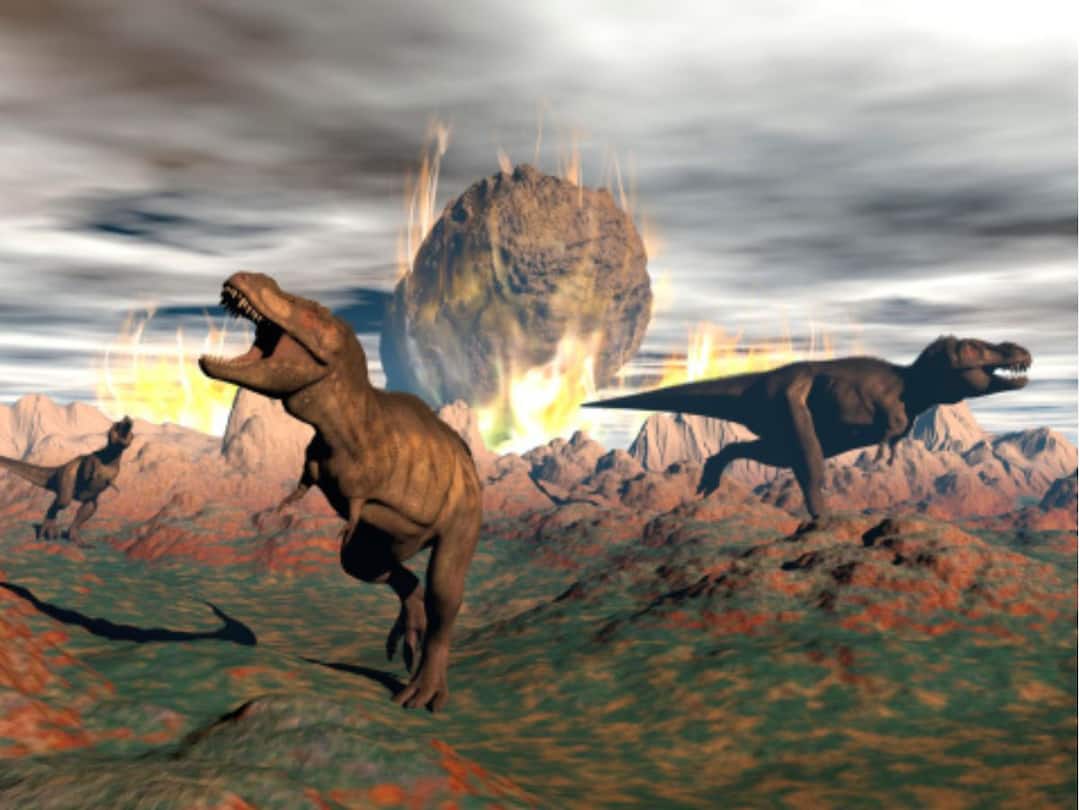

An asteroid over kilometres wide collided with Earth over 66 million years, triggering a mass extinction and killing most dinosaurs. The asteroid, called the Chicxulub asteroid, wiped out non-bird dinosaurs, including Tyrannosaurus rex and Triceratops, but mammals and other species such as turtles and crocodiles survived the impact. A new study published in the journal Science Advances has explained the reason behind this.
An international team of palaeontologists and ecologists led by researchers from the University of Edinburgh analysed 1,600 fossil records from North America, as part of the study. They also modelled the food chains and ecological habitats of terrestrial and freshwater animals during the last several million years of the Cretaceous period (145 million to 66 million years ago), and the first few million years of the Paleogene period (66 million to 43 million years ago), after the asteroid hit Earth.
Why did mammals, birds, crocodiles and turtles survive the impact?
Many small mammals lived alongside dinosaurs. The new research reveals that mammals were adapting to their environments and becoming more important components of the ecosystem as the Cretaceous period unfolded. On the other hand, dinosaurs were rooted in stable niches to which they were supremely adapted.
According to experts, mammals did not just take advantage of the dinosaurs dying, but also created their own advantages through diversification. This means that mammals occupied new ecological niches, evolved more varied diets and behaviours, and endured small shifts in climate, by rapidly adapting. Due to these behaviours, the mammals were able to cope better than dinosaurs with the radical and abrupt destruction caused by the asteroid. As a result, they were able to survive.
What do experts say about mammals, birds and crocodiles surviving the asteroid impact?
In a statement released by University of Edinburgh, Jorge García-Gíron, the first author on the paper, said the study provides a compelling picture of the ecological structure, food webs, and niches of the last dinosaur-dominated ecosystems of the Cretaceous period and the first mammal-dominated ecosystems after the asteroid hit. He added that the study also helps researchers understand one of the age-old mysteries of palaeontology: why all the non-bird dinosaurs died, but birds and mammals endured.
Alfio Alessandro Chiarenza, one of the co-lead authors on the papers said the stable ecology of the last dinosaurs actually hindered their survival in the wake of the asteroid impact, which abruptly changed the ecological rules of the time. Meanwhile some birds, mammals, crocodiles and turtles had previously adapted better to unstable and rapid shifts in their environments, which might have made them better able to survive when things suddenly went bad when the asteroid hit, Chiarenza said.
Professor Steve Brusatte from the University of Edinburgh, a senior author on the paper, said dinosaurs were going strong, with stable ecosystems, right until the asteroid suddenly killed them off. On the other hand, mammals were diversifying their diets, ecologies and behaviours while dinosaurs were still alive. He explained that it was not simply that mammals took advantage of the dinosaurs dying, but were making their own advantages. This ecologically preadapted the mammals to survive the extinction and move into niches left vacant by the dead dinosaurs, Brusatte added.

An asteroid over kilometres wide collided with Earth over 66 million years, triggering a mass extinction and killing most dinosaurs. The asteroid, called the Chicxulub asteroid, wiped out non-bird dinosaurs, including Tyrannosaurus rex and Triceratops, but mammals and other species such as turtles and crocodiles survived the impact. A new study published in the journal Science Advances has explained the reason behind this.
An international team of palaeontologists and ecologists led by researchers from the University of Edinburgh analysed 1,600 fossil records from North America, as part of the study. They also modelled the food chains and ecological habitats of terrestrial and freshwater animals during the last several million years of the Cretaceous period (145 million to 66 million years ago), and the first few million years of the Paleogene period (66 million to 43 million years ago), after the asteroid hit Earth.
Why did mammals, birds, crocodiles and turtles survive the impact?
Many small mammals lived alongside dinosaurs. The new research reveals that mammals were adapting to their environments and becoming more important components of the ecosystem as the Cretaceous period unfolded. On the other hand, dinosaurs were rooted in stable niches to which they were supremely adapted.
According to experts, mammals did not just take advantage of the dinosaurs dying, but also created their own advantages through diversification. This means that mammals occupied new ecological niches, evolved more varied diets and behaviours, and endured small shifts in climate, by rapidly adapting. Due to these behaviours, the mammals were able to cope better than dinosaurs with the radical and abrupt destruction caused by the asteroid. As a result, they were able to survive.
What do experts say about mammals, birds and crocodiles surviving the asteroid impact?
In a statement released by University of Edinburgh, Jorge García-Gíron, the first author on the paper, said the study provides a compelling picture of the ecological structure, food webs, and niches of the last dinosaur-dominated ecosystems of the Cretaceous period and the first mammal-dominated ecosystems after the asteroid hit. He added that the study also helps researchers understand one of the age-old mysteries of palaeontology: why all the non-bird dinosaurs died, but birds and mammals endured.
Alfio Alessandro Chiarenza, one of the co-lead authors on the papers said the stable ecology of the last dinosaurs actually hindered their survival in the wake of the asteroid impact, which abruptly changed the ecological rules of the time. Meanwhile some birds, mammals, crocodiles and turtles had previously adapted better to unstable and rapid shifts in their environments, which might have made them better able to survive when things suddenly went bad when the asteroid hit, Chiarenza said.
Professor Steve Brusatte from the University of Edinburgh, a senior author on the paper, said dinosaurs were going strong, with stable ecosystems, right until the asteroid suddenly killed them off. On the other hand, mammals were diversifying their diets, ecologies and behaviours while dinosaurs were still alive. He explained that it was not simply that mammals took advantage of the dinosaurs dying, but were making their own advantages. This ecologically preadapted the mammals to survive the extinction and move into niches left vacant by the dead dinosaurs, Brusatte added.

An asteroid over kilometres wide collided with Earth over 66 million years, triggering a mass extinction and killing most dinosaurs. The asteroid, called the Chicxulub asteroid, wiped out non-bird dinosaurs, including Tyrannosaurus rex and Triceratops, but mammals and other species such as turtles and crocodiles survived the impact. A new study published in the journal Science Advances has explained the reason behind this.
An international team of palaeontologists and ecologists led by researchers from the University of Edinburgh analysed 1,600 fossil records from North America, as part of the study. They also modelled the food chains and ecological habitats of terrestrial and freshwater animals during the last several million years of the Cretaceous period (145 million to 66 million years ago), and the first few million years of the Paleogene period (66 million to 43 million years ago), after the asteroid hit Earth.
Why did mammals, birds, crocodiles and turtles survive the impact?
Many small mammals lived alongside dinosaurs. The new research reveals that mammals were adapting to their environments and becoming more important components of the ecosystem as the Cretaceous period unfolded. On the other hand, dinosaurs were rooted in stable niches to which they were supremely adapted.
According to experts, mammals did not just take advantage of the dinosaurs dying, but also created their own advantages through diversification. This means that mammals occupied new ecological niches, evolved more varied diets and behaviours, and endured small shifts in climate, by rapidly adapting. Due to these behaviours, the mammals were able to cope better than dinosaurs with the radical and abrupt destruction caused by the asteroid. As a result, they were able to survive.
What do experts say about mammals, birds and crocodiles surviving the asteroid impact?
In a statement released by University of Edinburgh, Jorge García-Gíron, the first author on the paper, said the study provides a compelling picture of the ecological structure, food webs, and niches of the last dinosaur-dominated ecosystems of the Cretaceous period and the first mammal-dominated ecosystems after the asteroid hit. He added that the study also helps researchers understand one of the age-old mysteries of palaeontology: why all the non-bird dinosaurs died, but birds and mammals endured.
Alfio Alessandro Chiarenza, one of the co-lead authors on the papers said the stable ecology of the last dinosaurs actually hindered their survival in the wake of the asteroid impact, which abruptly changed the ecological rules of the time. Meanwhile some birds, mammals, crocodiles and turtles had previously adapted better to unstable and rapid shifts in their environments, which might have made them better able to survive when things suddenly went bad when the asteroid hit, Chiarenza said.
Professor Steve Brusatte from the University of Edinburgh, a senior author on the paper, said dinosaurs were going strong, with stable ecosystems, right until the asteroid suddenly killed them off. On the other hand, mammals were diversifying their diets, ecologies and behaviours while dinosaurs were still alive. He explained that it was not simply that mammals took advantage of the dinosaurs dying, but were making their own advantages. This ecologically preadapted the mammals to survive the extinction and move into niches left vacant by the dead dinosaurs, Brusatte added.
An asteroid over kilometres wide collided with Earth over 66 million years, triggering a mass extinction and killing most dinosaurs. The asteroid, called the Chicxulub asteroid, wiped out non-bird dinosaurs, including Tyrannosaurus rex and Triceratops, but mammals and other species such as turtles and crocodiles survived the impact. A new study published in the journal Science Advances has explained the reason behind this.
An international team of palaeontologists and ecologists led by researchers from the University of Edinburgh analysed 1,600 fossil records from North America, as part of the study. They also modelled the food chains and ecological habitats of terrestrial and freshwater animals during the last several million years of the Cretaceous period (145 million to 66 million years ago), and the first few million years of the Paleogene period (66 million to 43 million years ago), after the asteroid hit Earth.
Why did mammals, birds, crocodiles and turtles survive the impact?
Many small mammals lived alongside dinosaurs. The new research reveals that mammals were adapting to their environments and becoming more important components of the ecosystem as the Cretaceous period unfolded. On the other hand, dinosaurs were rooted in stable niches to which they were supremely adapted.
According to experts, mammals did not just take advantage of the dinosaurs dying, but also created their own advantages through diversification. This means that mammals occupied new ecological niches, evolved more varied diets and behaviours, and endured small shifts in climate, by rapidly adapting. Due to these behaviours, the mammals were able to cope better than dinosaurs with the radical and abrupt destruction caused by the asteroid. As a result, they were able to survive.
What do experts say about mammals, birds and crocodiles surviving the asteroid impact?
In a statement released by University of Edinburgh, Jorge García-Gíron, the first author on the paper, said the study provides a compelling picture of the ecological structure, food webs, and niches of the last dinosaur-dominated ecosystems of the Cretaceous period and the first mammal-dominated ecosystems after the asteroid hit. He added that the study also helps researchers understand one of the age-old mysteries of palaeontology: why all the non-bird dinosaurs died, but birds and mammals endured.
Alfio Alessandro Chiarenza, one of the co-lead authors on the papers said the stable ecology of the last dinosaurs actually hindered their survival in the wake of the asteroid impact, which abruptly changed the ecological rules of the time. Meanwhile some birds, mammals, crocodiles and turtles had previously adapted better to unstable and rapid shifts in their environments, which might have made them better able to survive when things suddenly went bad when the asteroid hit, Chiarenza said.
Professor Steve Brusatte from the University of Edinburgh, a senior author on the paper, said dinosaurs were going strong, with stable ecosystems, right until the asteroid suddenly killed them off. On the other hand, mammals were diversifying their diets, ecologies and behaviours while dinosaurs were still alive. He explained that it was not simply that mammals took advantage of the dinosaurs dying, but were making their own advantages. This ecologically preadapted the mammals to survive the extinction and move into niches left vacant by the dead dinosaurs, Brusatte added.

An asteroid over kilometres wide collided with Earth over 66 million years, triggering a mass extinction and killing most dinosaurs. The asteroid, called the Chicxulub asteroid, wiped out non-bird dinosaurs, including Tyrannosaurus rex and Triceratops, but mammals and other species such as turtles and crocodiles survived the impact. A new study published in the journal Science Advances has explained the reason behind this.
An international team of palaeontologists and ecologists led by researchers from the University of Edinburgh analysed 1,600 fossil records from North America, as part of the study. They also modelled the food chains and ecological habitats of terrestrial and freshwater animals during the last several million years of the Cretaceous period (145 million to 66 million years ago), and the first few million years of the Paleogene period (66 million to 43 million years ago), after the asteroid hit Earth.
Why did mammals, birds, crocodiles and turtles survive the impact?
Many small mammals lived alongside dinosaurs. The new research reveals that mammals were adapting to their environments and becoming more important components of the ecosystem as the Cretaceous period unfolded. On the other hand, dinosaurs were rooted in stable niches to which they were supremely adapted.
According to experts, mammals did not just take advantage of the dinosaurs dying, but also created their own advantages through diversification. This means that mammals occupied new ecological niches, evolved more varied diets and behaviours, and endured small shifts in climate, by rapidly adapting. Due to these behaviours, the mammals were able to cope better than dinosaurs with the radical and abrupt destruction caused by the asteroid. As a result, they were able to survive.
What do experts say about mammals, birds and crocodiles surviving the asteroid impact?
In a statement released by University of Edinburgh, Jorge García-Gíron, the first author on the paper, said the study provides a compelling picture of the ecological structure, food webs, and niches of the last dinosaur-dominated ecosystems of the Cretaceous period and the first mammal-dominated ecosystems after the asteroid hit. He added that the study also helps researchers understand one of the age-old mysteries of palaeontology: why all the non-bird dinosaurs died, but birds and mammals endured.
Alfio Alessandro Chiarenza, one of the co-lead authors on the papers said the stable ecology of the last dinosaurs actually hindered their survival in the wake of the asteroid impact, which abruptly changed the ecological rules of the time. Meanwhile some birds, mammals, crocodiles and turtles had previously adapted better to unstable and rapid shifts in their environments, which might have made them better able to survive when things suddenly went bad when the asteroid hit, Chiarenza said.
Professor Steve Brusatte from the University of Edinburgh, a senior author on the paper, said dinosaurs were going strong, with stable ecosystems, right until the asteroid suddenly killed them off. On the other hand, mammals were diversifying their diets, ecologies and behaviours while dinosaurs were still alive. He explained that it was not simply that mammals took advantage of the dinosaurs dying, but were making their own advantages. This ecologically preadapted the mammals to survive the extinction and move into niches left vacant by the dead dinosaurs, Brusatte added.
An asteroid over kilometres wide collided with Earth over 66 million years, triggering a mass extinction and killing most dinosaurs. The asteroid, called the Chicxulub asteroid, wiped out non-bird dinosaurs, including Tyrannosaurus rex and Triceratops, but mammals and other species such as turtles and crocodiles survived the impact. A new study published in the journal Science Advances has explained the reason behind this.
An international team of palaeontologists and ecologists led by researchers from the University of Edinburgh analysed 1,600 fossil records from North America, as part of the study. They also modelled the food chains and ecological habitats of terrestrial and freshwater animals during the last several million years of the Cretaceous period (145 million to 66 million years ago), and the first few million years of the Paleogene period (66 million to 43 million years ago), after the asteroid hit Earth.
Why did mammals, birds, crocodiles and turtles survive the impact?
Many small mammals lived alongside dinosaurs. The new research reveals that mammals were adapting to their environments and becoming more important components of the ecosystem as the Cretaceous period unfolded. On the other hand, dinosaurs were rooted in stable niches to which they were supremely adapted.
According to experts, mammals did not just take advantage of the dinosaurs dying, but also created their own advantages through diversification. This means that mammals occupied new ecological niches, evolved more varied diets and behaviours, and endured small shifts in climate, by rapidly adapting. Due to these behaviours, the mammals were able to cope better than dinosaurs with the radical and abrupt destruction caused by the asteroid. As a result, they were able to survive.
What do experts say about mammals, birds and crocodiles surviving the asteroid impact?
In a statement released by University of Edinburgh, Jorge García-Gíron, the first author on the paper, said the study provides a compelling picture of the ecological structure, food webs, and niches of the last dinosaur-dominated ecosystems of the Cretaceous period and the first mammal-dominated ecosystems after the asteroid hit. He added that the study also helps researchers understand one of the age-old mysteries of palaeontology: why all the non-bird dinosaurs died, but birds and mammals endured.
Alfio Alessandro Chiarenza, one of the co-lead authors on the papers said the stable ecology of the last dinosaurs actually hindered their survival in the wake of the asteroid impact, which abruptly changed the ecological rules of the time. Meanwhile some birds, mammals, crocodiles and turtles had previously adapted better to unstable and rapid shifts in their environments, which might have made them better able to survive when things suddenly went bad when the asteroid hit, Chiarenza said.
Professor Steve Brusatte from the University of Edinburgh, a senior author on the paper, said dinosaurs were going strong, with stable ecosystems, right until the asteroid suddenly killed them off. On the other hand, mammals were diversifying their diets, ecologies and behaviours while dinosaurs were still alive. He explained that it was not simply that mammals took advantage of the dinosaurs dying, but were making their own advantages. This ecologically preadapted the mammals to survive the extinction and move into niches left vacant by the dead dinosaurs, Brusatte added.
An asteroid over kilometres wide collided with Earth over 66 million years, triggering a mass extinction and killing most dinosaurs. The asteroid, called the Chicxulub asteroid, wiped out non-bird dinosaurs, including Tyrannosaurus rex and Triceratops, but mammals and other species such as turtles and crocodiles survived the impact. A new study published in the journal Science Advances has explained the reason behind this.
An international team of palaeontologists and ecologists led by researchers from the University of Edinburgh analysed 1,600 fossil records from North America, as part of the study. They also modelled the food chains and ecological habitats of terrestrial and freshwater animals during the last several million years of the Cretaceous period (145 million to 66 million years ago), and the first few million years of the Paleogene period (66 million to 43 million years ago), after the asteroid hit Earth.
Why did mammals, birds, crocodiles and turtles survive the impact?
Many small mammals lived alongside dinosaurs. The new research reveals that mammals were adapting to their environments and becoming more important components of the ecosystem as the Cretaceous period unfolded. On the other hand, dinosaurs were rooted in stable niches to which they were supremely adapted.
According to experts, mammals did not just take advantage of the dinosaurs dying, but also created their own advantages through diversification. This means that mammals occupied new ecological niches, evolved more varied diets and behaviours, and endured small shifts in climate, by rapidly adapting. Due to these behaviours, the mammals were able to cope better than dinosaurs with the radical and abrupt destruction caused by the asteroid. As a result, they were able to survive.
What do experts say about mammals, birds and crocodiles surviving the asteroid impact?
In a statement released by University of Edinburgh, Jorge García-Gíron, the first author on the paper, said the study provides a compelling picture of the ecological structure, food webs, and niches of the last dinosaur-dominated ecosystems of the Cretaceous period and the first mammal-dominated ecosystems after the asteroid hit. He added that the study also helps researchers understand one of the age-old mysteries of palaeontology: why all the non-bird dinosaurs died, but birds and mammals endured.
Alfio Alessandro Chiarenza, one of the co-lead authors on the papers said the stable ecology of the last dinosaurs actually hindered their survival in the wake of the asteroid impact, which abruptly changed the ecological rules of the time. Meanwhile some birds, mammals, crocodiles and turtles had previously adapted better to unstable and rapid shifts in their environments, which might have made them better able to survive when things suddenly went bad when the asteroid hit, Chiarenza said.
Professor Steve Brusatte from the University of Edinburgh, a senior author on the paper, said dinosaurs were going strong, with stable ecosystems, right until the asteroid suddenly killed them off. On the other hand, mammals were diversifying their diets, ecologies and behaviours while dinosaurs were still alive. He explained that it was not simply that mammals took advantage of the dinosaurs dying, but were making their own advantages. This ecologically preadapted the mammals to survive the extinction and move into niches left vacant by the dead dinosaurs, Brusatte added.
An asteroid over kilometres wide collided with Earth over 66 million years, triggering a mass extinction and killing most dinosaurs. The asteroid, called the Chicxulub asteroid, wiped out non-bird dinosaurs, including Tyrannosaurus rex and Triceratops, but mammals and other species such as turtles and crocodiles survived the impact. A new study published in the journal Science Advances has explained the reason behind this.
An international team of palaeontologists and ecologists led by researchers from the University of Edinburgh analysed 1,600 fossil records from North America, as part of the study. They also modelled the food chains and ecological habitats of terrestrial and freshwater animals during the last several million years of the Cretaceous period (145 million to 66 million years ago), and the first few million years of the Paleogene period (66 million to 43 million years ago), after the asteroid hit Earth.
Why did mammals, birds, crocodiles and turtles survive the impact?
Many small mammals lived alongside dinosaurs. The new research reveals that mammals were adapting to their environments and becoming more important components of the ecosystem as the Cretaceous period unfolded. On the other hand, dinosaurs were rooted in stable niches to which they were supremely adapted.
According to experts, mammals did not just take advantage of the dinosaurs dying, but also created their own advantages through diversification. This means that mammals occupied new ecological niches, evolved more varied diets and behaviours, and endured small shifts in climate, by rapidly adapting. Due to these behaviours, the mammals were able to cope better than dinosaurs with the radical and abrupt destruction caused by the asteroid. As a result, they were able to survive.
What do experts say about mammals, birds and crocodiles surviving the asteroid impact?
In a statement released by University of Edinburgh, Jorge García-Gíron, the first author on the paper, said the study provides a compelling picture of the ecological structure, food webs, and niches of the last dinosaur-dominated ecosystems of the Cretaceous period and the first mammal-dominated ecosystems after the asteroid hit. He added that the study also helps researchers understand one of the age-old mysteries of palaeontology: why all the non-bird dinosaurs died, but birds and mammals endured.
Alfio Alessandro Chiarenza, one of the co-lead authors on the papers said the stable ecology of the last dinosaurs actually hindered their survival in the wake of the asteroid impact, which abruptly changed the ecological rules of the time. Meanwhile some birds, mammals, crocodiles and turtles had previously adapted better to unstable and rapid shifts in their environments, which might have made them better able to survive when things suddenly went bad when the asteroid hit, Chiarenza said.
Professor Steve Brusatte from the University of Edinburgh, a senior author on the paper, said dinosaurs were going strong, with stable ecosystems, right until the asteroid suddenly killed them off. On the other hand, mammals were diversifying their diets, ecologies and behaviours while dinosaurs were still alive. He explained that it was not simply that mammals took advantage of the dinosaurs dying, but were making their own advantages. This ecologically preadapted the mammals to survive the extinction and move into niches left vacant by the dead dinosaurs, Brusatte added.

