



A group of female fossil hunters in Queensland, Australia have discovered the fossilised remains of a 100-million-year-old plesiosaur in a cattle station. Palaeontologists are likening the remains to the Rosetta Stone, The Guardian reports. The Rosetta Stone is an ancient Egyptian stone bearing inscriptions in several languages and scripts, and is an important artefact because it holds the key to understanding Egyptian hieroglyphs. The plesiosaur fossil is believed to have the potential to unlock the discovery of several new species of prehistoric marine animals.
One of the amateur palaeontologists unearthed the fossilised remains while searching her western Queensland cattle station in August, 2022, according to a report by The Guardian.
What are plesiosaurs?
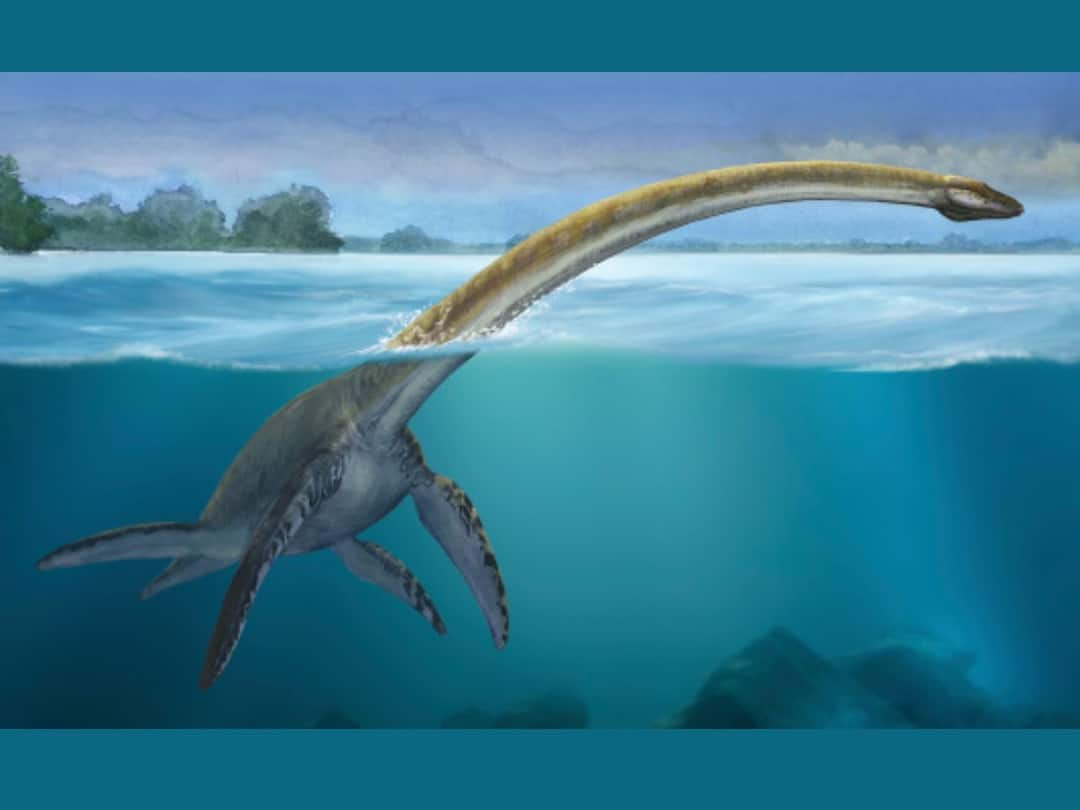
Plesiosaurs were long-necked marine reptiles that existed from the Late Triassic Period to the Late Cretaceous Period (215 million to 66 million years ago). They were 4.5 metres long, had a broad and flat body, a relatively short tail, and swam by flapping their fins in water, similar to sea lions. The plesiosaur is also called elasmosaur.
The discovery of the plesiosaur fossils by the fossil hunters, who call themselves “Rock Chicks”, marks the first time an elasmosaur fossil has been found connected to its body in Australia.
Why has the plesiosaur fossil been compared to the Rosetta Stone?
The Rosetta Stone with its three inscriptions allowed philologists (people who engage in historical linguistics) to crack ancient Egyptian hieroglyphics. Similar to the Rosetta Stone, the information of the fossilised plesiosaur could allow palaeontologists to decipher other fossils held in museums, the report says.
According to Dr Espen Knutsen, the senior curator of palaeontology at the Queensland Museum, a fossil like the one discovered in Australia is globally rare.
While the museum holds the skull of an elasmosaur in its collection, a skull connected to a body has proved elusive, the report says.
Description of the plesiosaur fossil
The fossilised remains of the elasmosaur discovered in Australia had its skull, neck and front half of the body all preserved together. However, the back half of its body is missing.
According to Knutsen, the elasmosaur might have been “bitten in half” by the apex predator of its day. At that time, the apex predator was a 10-metre, 11-tonne kronosaur. Due to the puncture, the rest of the elasmosaur corpse could have sunk to the bottom of what was then a 50-metre deep inland sea.

A group of female fossil hunters in Queensland, Australia have discovered the fossilised remains of a 100-million-year-old plesiosaur in a cattle station. Palaeontologists are likening the remains to the Rosetta Stone, The Guardian reports. The Rosetta Stone is an ancient Egyptian stone bearing inscriptions in several languages and scripts, and is an important artefact because it holds the key to understanding Egyptian hieroglyphs. The plesiosaur fossil is believed to have the potential to unlock the discovery of several new species of prehistoric marine animals.
One of the amateur palaeontologists unearthed the fossilised remains while searching her western Queensland cattle station in August, 2022, according to a report by The Guardian.
What are plesiosaurs?
Plesiosaurs were long-necked marine reptiles that existed from the Late Triassic Period to the Late Cretaceous Period (215 million to 66 million years ago). They were 4.5 metres long, had a broad and flat body, a relatively short tail, and swam by flapping their fins in water, similar to sea lions. The plesiosaur is also called elasmosaur.
The discovery of the plesiosaur fossils by the fossil hunters, who call themselves “Rock Chicks”, marks the first time an elasmosaur fossil has been found connected to its body in Australia.
Why has the plesiosaur fossil been compared to the Rosetta Stone?
The Rosetta Stone with its three inscriptions allowed philologists (people who engage in historical linguistics) to crack ancient Egyptian hieroglyphics. Similar to the Rosetta Stone, the information of the fossilised plesiosaur could allow palaeontologists to decipher other fossils held in museums, the report says.
According to Dr Espen Knutsen, the senior curator of palaeontology at the Queensland Museum, a fossil like the one discovered in Australia is globally rare.
While the museum holds the skull of an elasmosaur in its collection, a skull connected to a body has proved elusive, the report says.
Description of the plesiosaur fossil
The fossilised remains of the elasmosaur discovered in Australia had its skull, neck and front half of the body all preserved together. However, the back half of its body is missing.
According to Knutsen, the elasmosaur might have been “bitten in half” by the apex predator of its day. At that time, the apex predator was a 10-metre, 11-tonne kronosaur. Due to the puncture, the rest of the elasmosaur corpse could have sunk to the bottom of what was then a 50-metre deep inland sea.

A group of female fossil hunters in Queensland, Australia have discovered the fossilised remains of a 100-million-year-old plesiosaur in a cattle station. Palaeontologists are likening the remains to the Rosetta Stone, The Guardian reports. The Rosetta Stone is an ancient Egyptian stone bearing inscriptions in several languages and scripts, and is an important artefact because it holds the key to understanding Egyptian hieroglyphs. The plesiosaur fossil is believed to have the potential to unlock the discovery of several new species of prehistoric marine animals.
One of the amateur palaeontologists unearthed the fossilised remains while searching her western Queensland cattle station in August, 2022, according to a report by The Guardian.
What are plesiosaurs?
Plesiosaurs were long-necked marine reptiles that existed from the Late Triassic Period to the Late Cretaceous Period (215 million to 66 million years ago). They were 4.5 metres long, had a broad and flat body, a relatively short tail, and swam by flapping their fins in water, similar to sea lions. The plesiosaur is also called elasmosaur.
The discovery of the plesiosaur fossils by the fossil hunters, who call themselves “Rock Chicks”, marks the first time an elasmosaur fossil has been found connected to its body in Australia.
Why has the plesiosaur fossil been compared to the Rosetta Stone?
The Rosetta Stone with its three inscriptions allowed philologists (people who engage in historical linguistics) to crack ancient Egyptian hieroglyphics. Similar to the Rosetta Stone, the information of the fossilised plesiosaur could allow palaeontologists to decipher other fossils held in museums, the report says.
According to Dr Espen Knutsen, the senior curator of palaeontology at the Queensland Museum, a fossil like the one discovered in Australia is globally rare.
While the museum holds the skull of an elasmosaur in its collection, a skull connected to a body has proved elusive, the report says.
Description of the plesiosaur fossil
The fossilised remains of the elasmosaur discovered in Australia had its skull, neck and front half of the body all preserved together. However, the back half of its body is missing.
According to Knutsen, the elasmosaur might have been “bitten in half” by the apex predator of its day. At that time, the apex predator was a 10-metre, 11-tonne kronosaur. Due to the puncture, the rest of the elasmosaur corpse could have sunk to the bottom of what was then a 50-metre deep inland sea.
A group of female fossil hunters in Queensland, Australia have discovered the fossilised remains of a 100-million-year-old plesiosaur in a cattle station. Palaeontologists are likening the remains to the Rosetta Stone, The Guardian reports. The Rosetta Stone is an ancient Egyptian stone bearing inscriptions in several languages and scripts, and is an important artefact because it holds the key to understanding Egyptian hieroglyphs. The plesiosaur fossil is believed to have the potential to unlock the discovery of several new species of prehistoric marine animals.
One of the amateur palaeontologists unearthed the fossilised remains while searching her western Queensland cattle station in August, 2022, according to a report by The Guardian.
What are plesiosaurs?
Plesiosaurs were long-necked marine reptiles that existed from the Late Triassic Period to the Late Cretaceous Period (215 million to 66 million years ago). They were 4.5 metres long, had a broad and flat body, a relatively short tail, and swam by flapping their fins in water, similar to sea lions. The plesiosaur is also called elasmosaur.
The discovery of the plesiosaur fossils by the fossil hunters, who call themselves “Rock Chicks”, marks the first time an elasmosaur fossil has been found connected to its body in Australia.
Why has the plesiosaur fossil been compared to the Rosetta Stone?
The Rosetta Stone with its three inscriptions allowed philologists (people who engage in historical linguistics) to crack ancient Egyptian hieroglyphics. Similar to the Rosetta Stone, the information of the fossilised plesiosaur could allow palaeontologists to decipher other fossils held in museums, the report says.
According to Dr Espen Knutsen, the senior curator of palaeontology at the Queensland Museum, a fossil like the one discovered in Australia is globally rare.
While the museum holds the skull of an elasmosaur in its collection, a skull connected to a body has proved elusive, the report says.
Description of the plesiosaur fossil
The fossilised remains of the elasmosaur discovered in Australia had its skull, neck and front half of the body all preserved together. However, the back half of its body is missing.
According to Knutsen, the elasmosaur might have been “bitten in half” by the apex predator of its day. At that time, the apex predator was a 10-metre, 11-tonne kronosaur. Due to the puncture, the rest of the elasmosaur corpse could have sunk to the bottom of what was then a 50-metre deep inland sea.

