

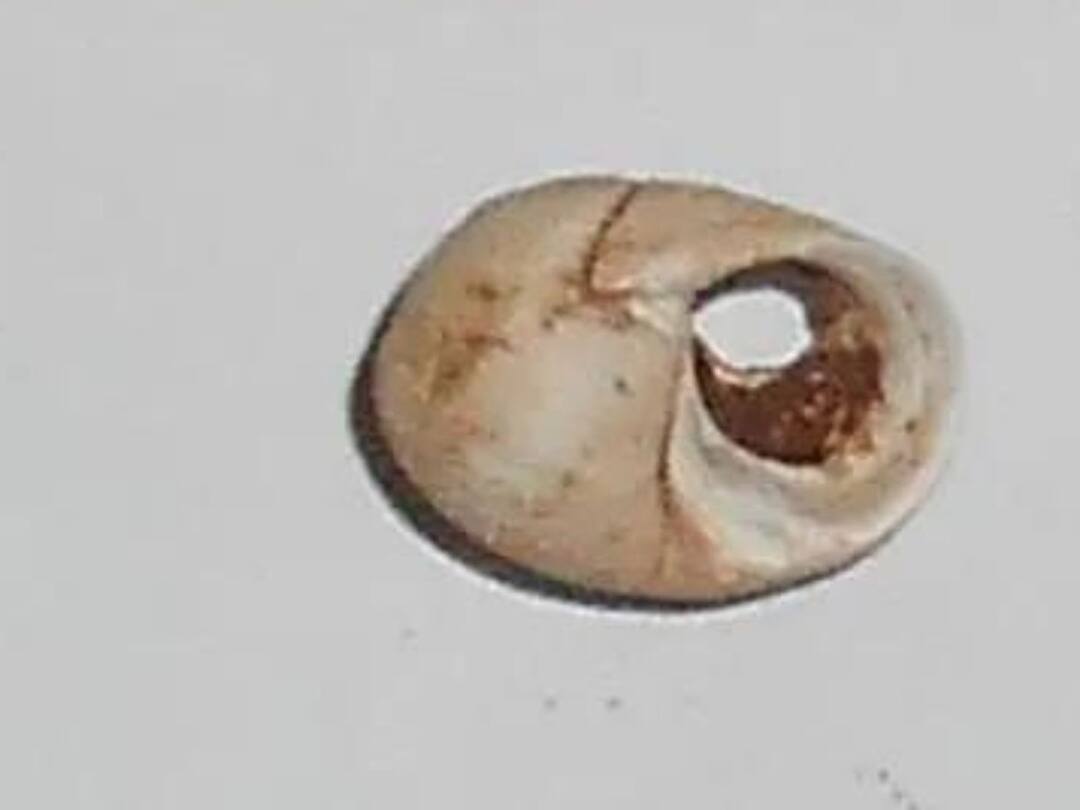
Archaeologists have discovered the earliest human remains ever found in northern Britain, and determined they date back to 11,000 years. The remains include a human bone and a periwinkle shell bead. These were unearthed at Heaning Wood Bone Cave, Great Urswick, Cumbria, by local archaeologist Martin Stables.
The remains belong to the Mesolithic era
Dr Rick Peterson and Keziah Warburton from University of Central Lancashire examined these human remains and prehistoric artefacts.
In a statement released by University of Central Lancashire, Peterson said this is a fantastic discovery, and the university is delighted to confirm that Martin’s unbelievable find dates back around 11,000 years ago, and gives the team clear evidence of Mesolithic burials in the north. The Mesolithic period refers to the middle part of the Stone Age, between the Paleolithic (era of chipped stone tools) and Neolithic (era of polished stone tools).
ALSO READ | Unusual New Pterosaur Species With Over 400 Teeth Like Comb Prongs Identified In Germany
Peterson added that these are some of the earliest dates for human activity in Britain after the end of the last Ice Age. ,
The remains were of ancient burials
According to the statement, Stables has been excavating the Heaning Wood Bone Cave since 2016, and has discovered human and animal bone, stone tools, prehistoric pottery and beads made from perforated periwinkle shells, which belong to small, edible sea snails with gills.
At least eight different people were buried in the cave, the team has found. The human remains are in a fragmented condition, but the accompanying artefacts prove that burials were deliberate.
The team radiocarbon dated seven different burials from the Heaning Wood Bone Cave.
The cave was used for burials at three different periods in the prehistoric past, according to the university. These were the Early Bronze Age, the Early Neolithic, and Early Mesolithic Period. The cave was used for burials around 4,000 years ago in the Early Bronze Age, about 5,500 years ago in the Early Neolithic, and about 11,000 years ago during the early part of the Mesolithic period.
One of the shell beads was dated to be around 11,000 years old, and likely to have been used during a burial.
What makes the discovery unique?
While earlier human remains are known from southern England and from Wales, the destructive effect of past glaciations means that such discoveries are rare in northern Britain.
Before the discovery of 11,000-year-old remains in northern Britain, the “earliest northerner” was a 10,000-year-old burial from the nearby Kent’s Bank Cavern discovered in 2013.
Peterson said cave burials like this are well known from some periods of British prehistory and the Heaning Wood burials are an important addition to researchers’ knowledge of funeral practices.
What is next?
Scientists continue research on the site, and are performing a detailed study on what happened to each individual after they were placed in the cave. In order to determine where the people buried in the cave came from and how they were related, scientists from the Ancient Genomics Laboratory, at the Francis Crick Institute, have sampled the burials to look for ancient DNA evidence.

Archaeologists have discovered the earliest human remains ever found in northern Britain, and determined they date back to 11,000 years. The remains include a human bone and a periwinkle shell bead. These were unearthed at Heaning Wood Bone Cave, Great Urswick, Cumbria, by local archaeologist Martin Stables.
The remains belong to the Mesolithic era
Dr Rick Peterson and Keziah Warburton from University of Central Lancashire examined these human remains and prehistoric artefacts.
In a statement released by University of Central Lancashire, Peterson said this is a fantastic discovery, and the university is delighted to confirm that Martin’s unbelievable find dates back around 11,000 years ago, and gives the team clear evidence of Mesolithic burials in the north. The Mesolithic period refers to the middle part of the Stone Age, between the Paleolithic (era of chipped stone tools) and Neolithic (era of polished stone tools).
ALSO READ | Unusual New Pterosaur Species With Over 400 Teeth Like Comb Prongs Identified In Germany
Peterson added that these are some of the earliest dates for human activity in Britain after the end of the last Ice Age. ,
The remains were of ancient burials
According to the statement, Stables has been excavating the Heaning Wood Bone Cave since 2016, and has discovered human and animal bone, stone tools, prehistoric pottery and beads made from perforated periwinkle shells, which belong to small, edible sea snails with gills.
At least eight different people were buried in the cave, the team has found. The human remains are in a fragmented condition, but the accompanying artefacts prove that burials were deliberate.
The team radiocarbon dated seven different burials from the Heaning Wood Bone Cave.
The cave was used for burials at three different periods in the prehistoric past, according to the university. These were the Early Bronze Age, the Early Neolithic, and Early Mesolithic Period. The cave was used for burials around 4,000 years ago in the Early Bronze Age, about 5,500 years ago in the Early Neolithic, and about 11,000 years ago during the early part of the Mesolithic period.
One of the shell beads was dated to be around 11,000 years old, and likely to have been used during a burial.
What makes the discovery unique?
While earlier human remains are known from southern England and from Wales, the destructive effect of past glaciations means that such discoveries are rare in northern Britain.
Before the discovery of 11,000-year-old remains in northern Britain, the “earliest northerner” was a 10,000-year-old burial from the nearby Kent’s Bank Cavern discovered in 2013.
Peterson said cave burials like this are well known from some periods of British prehistory and the Heaning Wood burials are an important addition to researchers’ knowledge of funeral practices.
What is next?
Scientists continue research on the site, and are performing a detailed study on what happened to each individual after they were placed in the cave. In order to determine where the people buried in the cave came from and how they were related, scientists from the Ancient Genomics Laboratory, at the Francis Crick Institute, have sampled the burials to look for ancient DNA evidence.

Archaeologists have discovered the earliest human remains ever found in northern Britain, and determined they date back to 11,000 years. The remains include a human bone and a periwinkle shell bead. These were unearthed at Heaning Wood Bone Cave, Great Urswick, Cumbria, by local archaeologist Martin Stables.
The remains belong to the Mesolithic era
Dr Rick Peterson and Keziah Warburton from University of Central Lancashire examined these human remains and prehistoric artefacts.
In a statement released by University of Central Lancashire, Peterson said this is a fantastic discovery, and the university is delighted to confirm that Martin’s unbelievable find dates back around 11,000 years ago, and gives the team clear evidence of Mesolithic burials in the north. The Mesolithic period refers to the middle part of the Stone Age, between the Paleolithic (era of chipped stone tools) and Neolithic (era of polished stone tools).
ALSO READ | Unusual New Pterosaur Species With Over 400 Teeth Like Comb Prongs Identified In Germany
Peterson added that these are some of the earliest dates for human activity in Britain after the end of the last Ice Age. ,
The remains were of ancient burials
According to the statement, Stables has been excavating the Heaning Wood Bone Cave since 2016, and has discovered human and animal bone, stone tools, prehistoric pottery and beads made from perforated periwinkle shells, which belong to small, edible sea snails with gills.
At least eight different people were buried in the cave, the team has found. The human remains are in a fragmented condition, but the accompanying artefacts prove that burials were deliberate.
The team radiocarbon dated seven different burials from the Heaning Wood Bone Cave.
The cave was used for burials at three different periods in the prehistoric past, according to the university. These were the Early Bronze Age, the Early Neolithic, and Early Mesolithic Period. The cave was used for burials around 4,000 years ago in the Early Bronze Age, about 5,500 years ago in the Early Neolithic, and about 11,000 years ago during the early part of the Mesolithic period.
One of the shell beads was dated to be around 11,000 years old, and likely to have been used during a burial.
What makes the discovery unique?
While earlier human remains are known from southern England and from Wales, the destructive effect of past glaciations means that such discoveries are rare in northern Britain.
Before the discovery of 11,000-year-old remains in northern Britain, the “earliest northerner” was a 10,000-year-old burial from the nearby Kent’s Bank Cavern discovered in 2013.
Peterson said cave burials like this are well known from some periods of British prehistory and the Heaning Wood burials are an important addition to researchers’ knowledge of funeral practices.
What is next?
Scientists continue research on the site, and are performing a detailed study on what happened to each individual after they were placed in the cave. In order to determine where the people buried in the cave came from and how they were related, scientists from the Ancient Genomics Laboratory, at the Francis Crick Institute, have sampled the burials to look for ancient DNA evidence.
Archaeologists have discovered the earliest human remains ever found in northern Britain, and determined they date back to 11,000 years. The remains include a human bone and a periwinkle shell bead. These were unearthed at Heaning Wood Bone Cave, Great Urswick, Cumbria, by local archaeologist Martin Stables.
The remains belong to the Mesolithic era
Dr Rick Peterson and Keziah Warburton from University of Central Lancashire examined these human remains and prehistoric artefacts.
In a statement released by University of Central Lancashire, Peterson said this is a fantastic discovery, and the university is delighted to confirm that Martin’s unbelievable find dates back around 11,000 years ago, and gives the team clear evidence of Mesolithic burials in the north. The Mesolithic period refers to the middle part of the Stone Age, between the Paleolithic (era of chipped stone tools) and Neolithic (era of polished stone tools).
ALSO READ | Unusual New Pterosaur Species With Over 400 Teeth Like Comb Prongs Identified In Germany
Peterson added that these are some of the earliest dates for human activity in Britain after the end of the last Ice Age. ,
The remains were of ancient burials
According to the statement, Stables has been excavating the Heaning Wood Bone Cave since 2016, and has discovered human and animal bone, stone tools, prehistoric pottery and beads made from perforated periwinkle shells, which belong to small, edible sea snails with gills.
At least eight different people were buried in the cave, the team has found. The human remains are in a fragmented condition, but the accompanying artefacts prove that burials were deliberate.
The team radiocarbon dated seven different burials from the Heaning Wood Bone Cave.
The cave was used for burials at three different periods in the prehistoric past, according to the university. These were the Early Bronze Age, the Early Neolithic, and Early Mesolithic Period. The cave was used for burials around 4,000 years ago in the Early Bronze Age, about 5,500 years ago in the Early Neolithic, and about 11,000 years ago during the early part of the Mesolithic period.
One of the shell beads was dated to be around 11,000 years old, and likely to have been used during a burial.
What makes the discovery unique?
While earlier human remains are known from southern England and from Wales, the destructive effect of past glaciations means that such discoveries are rare in northern Britain.
Before the discovery of 11,000-year-old remains in northern Britain, the “earliest northerner” was a 10,000-year-old burial from the nearby Kent’s Bank Cavern discovered in 2013.
Peterson said cave burials like this are well known from some periods of British prehistory and the Heaning Wood burials are an important addition to researchers’ knowledge of funeral practices.
What is next?
Scientists continue research on the site, and are performing a detailed study on what happened to each individual after they were placed in the cave. In order to determine where the people buried in the cave came from and how they were related, scientists from the Ancient Genomics Laboratory, at the Francis Crick Institute, have sampled the burials to look for ancient DNA evidence.

Archaeologists have discovered the earliest human remains ever found in northern Britain, and determined they date back to 11,000 years. The remains include a human bone and a periwinkle shell bead. These were unearthed at Heaning Wood Bone Cave, Great Urswick, Cumbria, by local archaeologist Martin Stables.
The remains belong to the Mesolithic era
Dr Rick Peterson and Keziah Warburton from University of Central Lancashire examined these human remains and prehistoric artefacts.
In a statement released by University of Central Lancashire, Peterson said this is a fantastic discovery, and the university is delighted to confirm that Martin’s unbelievable find dates back around 11,000 years ago, and gives the team clear evidence of Mesolithic burials in the north. The Mesolithic period refers to the middle part of the Stone Age, between the Paleolithic (era of chipped stone tools) and Neolithic (era of polished stone tools).
ALSO READ | Unusual New Pterosaur Species With Over 400 Teeth Like Comb Prongs Identified In Germany
Peterson added that these are some of the earliest dates for human activity in Britain after the end of the last Ice Age. ,
The remains were of ancient burials
According to the statement, Stables has been excavating the Heaning Wood Bone Cave since 2016, and has discovered human and animal bone, stone tools, prehistoric pottery and beads made from perforated periwinkle shells, which belong to small, edible sea snails with gills.
At least eight different people were buried in the cave, the team has found. The human remains are in a fragmented condition, but the accompanying artefacts prove that burials were deliberate.
The team radiocarbon dated seven different burials from the Heaning Wood Bone Cave.
The cave was used for burials at three different periods in the prehistoric past, according to the university. These were the Early Bronze Age, the Early Neolithic, and Early Mesolithic Period. The cave was used for burials around 4,000 years ago in the Early Bronze Age, about 5,500 years ago in the Early Neolithic, and about 11,000 years ago during the early part of the Mesolithic period.
One of the shell beads was dated to be around 11,000 years old, and likely to have been used during a burial.
What makes the discovery unique?
While earlier human remains are known from southern England and from Wales, the destructive effect of past glaciations means that such discoveries are rare in northern Britain.
Before the discovery of 11,000-year-old remains in northern Britain, the “earliest northerner” was a 10,000-year-old burial from the nearby Kent’s Bank Cavern discovered in 2013.
Peterson said cave burials like this are well known from some periods of British prehistory and the Heaning Wood burials are an important addition to researchers’ knowledge of funeral practices.
What is next?
Scientists continue research on the site, and are performing a detailed study on what happened to each individual after they were placed in the cave. In order to determine where the people buried in the cave came from and how they were related, scientists from the Ancient Genomics Laboratory, at the Francis Crick Institute, have sampled the burials to look for ancient DNA evidence.
Archaeologists have discovered the earliest human remains ever found in northern Britain, and determined they date back to 11,000 years. The remains include a human bone and a periwinkle shell bead. These were unearthed at Heaning Wood Bone Cave, Great Urswick, Cumbria, by local archaeologist Martin Stables.
The remains belong to the Mesolithic era
Dr Rick Peterson and Keziah Warburton from University of Central Lancashire examined these human remains and prehistoric artefacts.
In a statement released by University of Central Lancashire, Peterson said this is a fantastic discovery, and the university is delighted to confirm that Martin’s unbelievable find dates back around 11,000 years ago, and gives the team clear evidence of Mesolithic burials in the north. The Mesolithic period refers to the middle part of the Stone Age, between the Paleolithic (era of chipped stone tools) and Neolithic (era of polished stone tools).
ALSO READ | Unusual New Pterosaur Species With Over 400 Teeth Like Comb Prongs Identified In Germany
Peterson added that these are some of the earliest dates for human activity in Britain after the end of the last Ice Age. ,
The remains were of ancient burials
According to the statement, Stables has been excavating the Heaning Wood Bone Cave since 2016, and has discovered human and animal bone, stone tools, prehistoric pottery and beads made from perforated periwinkle shells, which belong to small, edible sea snails with gills.
At least eight different people were buried in the cave, the team has found. The human remains are in a fragmented condition, but the accompanying artefacts prove that burials were deliberate.
The team radiocarbon dated seven different burials from the Heaning Wood Bone Cave.
The cave was used for burials at three different periods in the prehistoric past, according to the university. These were the Early Bronze Age, the Early Neolithic, and Early Mesolithic Period. The cave was used for burials around 4,000 years ago in the Early Bronze Age, about 5,500 years ago in the Early Neolithic, and about 11,000 years ago during the early part of the Mesolithic period.
One of the shell beads was dated to be around 11,000 years old, and likely to have been used during a burial.
What makes the discovery unique?
While earlier human remains are known from southern England and from Wales, the destructive effect of past glaciations means that such discoveries are rare in northern Britain.
Before the discovery of 11,000-year-old remains in northern Britain, the “earliest northerner” was a 10,000-year-old burial from the nearby Kent’s Bank Cavern discovered in 2013.
Peterson said cave burials like this are well known from some periods of British prehistory and the Heaning Wood burials are an important addition to researchers’ knowledge of funeral practices.
What is next?
Scientists continue research on the site, and are performing a detailed study on what happened to each individual after they were placed in the cave. In order to determine where the people buried in the cave came from and how they were related, scientists from the Ancient Genomics Laboratory, at the Francis Crick Institute, have sampled the burials to look for ancient DNA evidence.
Archaeologists have discovered the earliest human remains ever found in northern Britain, and determined they date back to 11,000 years. The remains include a human bone and a periwinkle shell bead. These were unearthed at Heaning Wood Bone Cave, Great Urswick, Cumbria, by local archaeologist Martin Stables.
The remains belong to the Mesolithic era
Dr Rick Peterson and Keziah Warburton from University of Central Lancashire examined these human remains and prehistoric artefacts.
In a statement released by University of Central Lancashire, Peterson said this is a fantastic discovery, and the university is delighted to confirm that Martin’s unbelievable find dates back around 11,000 years ago, and gives the team clear evidence of Mesolithic burials in the north. The Mesolithic period refers to the middle part of the Stone Age, between the Paleolithic (era of chipped stone tools) and Neolithic (era of polished stone tools).
ALSO READ | Unusual New Pterosaur Species With Over 400 Teeth Like Comb Prongs Identified In Germany
Peterson added that these are some of the earliest dates for human activity in Britain after the end of the last Ice Age. ,
The remains were of ancient burials
According to the statement, Stables has been excavating the Heaning Wood Bone Cave since 2016, and has discovered human and animal bone, stone tools, prehistoric pottery and beads made from perforated periwinkle shells, which belong to small, edible sea snails with gills.
At least eight different people were buried in the cave, the team has found. The human remains are in a fragmented condition, but the accompanying artefacts prove that burials were deliberate.
The team radiocarbon dated seven different burials from the Heaning Wood Bone Cave.
The cave was used for burials at three different periods in the prehistoric past, according to the university. These were the Early Bronze Age, the Early Neolithic, and Early Mesolithic Period. The cave was used for burials around 4,000 years ago in the Early Bronze Age, about 5,500 years ago in the Early Neolithic, and about 11,000 years ago during the early part of the Mesolithic period.
One of the shell beads was dated to be around 11,000 years old, and likely to have been used during a burial.
What makes the discovery unique?
While earlier human remains are known from southern England and from Wales, the destructive effect of past glaciations means that such discoveries are rare in northern Britain.
Before the discovery of 11,000-year-old remains in northern Britain, the “earliest northerner” was a 10,000-year-old burial from the nearby Kent’s Bank Cavern discovered in 2013.
Peterson said cave burials like this are well known from some periods of British prehistory and the Heaning Wood burials are an important addition to researchers’ knowledge of funeral practices.
What is next?
Scientists continue research on the site, and are performing a detailed study on what happened to each individual after they were placed in the cave. In order to determine where the people buried in the cave came from and how they were related, scientists from the Ancient Genomics Laboratory, at the Francis Crick Institute, have sampled the burials to look for ancient DNA evidence.
Archaeologists have discovered the earliest human remains ever found in northern Britain, and determined they date back to 11,000 years. The remains include a human bone and a periwinkle shell bead. These were unearthed at Heaning Wood Bone Cave, Great Urswick, Cumbria, by local archaeologist Martin Stables.
The remains belong to the Mesolithic era
Dr Rick Peterson and Keziah Warburton from University of Central Lancashire examined these human remains and prehistoric artefacts.
In a statement released by University of Central Lancashire, Peterson said this is a fantastic discovery, and the university is delighted to confirm that Martin’s unbelievable find dates back around 11,000 years ago, and gives the team clear evidence of Mesolithic burials in the north. The Mesolithic period refers to the middle part of the Stone Age, between the Paleolithic (era of chipped stone tools) and Neolithic (era of polished stone tools).
ALSO READ | Unusual New Pterosaur Species With Over 400 Teeth Like Comb Prongs Identified In Germany
Peterson added that these are some of the earliest dates for human activity in Britain after the end of the last Ice Age. ,
The remains were of ancient burials
According to the statement, Stables has been excavating the Heaning Wood Bone Cave since 2016, and has discovered human and animal bone, stone tools, prehistoric pottery and beads made from perforated periwinkle shells, which belong to small, edible sea snails with gills.
At least eight different people were buried in the cave, the team has found. The human remains are in a fragmented condition, but the accompanying artefacts prove that burials were deliberate.
The team radiocarbon dated seven different burials from the Heaning Wood Bone Cave.
The cave was used for burials at three different periods in the prehistoric past, according to the university. These were the Early Bronze Age, the Early Neolithic, and Early Mesolithic Period. The cave was used for burials around 4,000 years ago in the Early Bronze Age, about 5,500 years ago in the Early Neolithic, and about 11,000 years ago during the early part of the Mesolithic period.
One of the shell beads was dated to be around 11,000 years old, and likely to have been used during a burial.
What makes the discovery unique?
While earlier human remains are known from southern England and from Wales, the destructive effect of past glaciations means that such discoveries are rare in northern Britain.
Before the discovery of 11,000-year-old remains in northern Britain, the “earliest northerner” was a 10,000-year-old burial from the nearby Kent’s Bank Cavern discovered in 2013.
Peterson said cave burials like this are well known from some periods of British prehistory and the Heaning Wood burials are an important addition to researchers’ knowledge of funeral practices.
What is next?
Scientists continue research on the site, and are performing a detailed study on what happened to each individual after they were placed in the cave. In order to determine where the people buried in the cave came from and how they were related, scientists from the Ancient Genomics Laboratory, at the Francis Crick Institute, have sampled the burials to look for ancient DNA evidence.

Archaeologists have discovered the earliest human remains ever found in northern Britain, and determined they date back to 11,000 years. The remains include a human bone and a periwinkle shell bead. These were unearthed at Heaning Wood Bone Cave, Great Urswick, Cumbria, by local archaeologist Martin Stables.
The remains belong to the Mesolithic era
Dr Rick Peterson and Keziah Warburton from University of Central Lancashire examined these human remains and prehistoric artefacts.
In a statement released by University of Central Lancashire, Peterson said this is a fantastic discovery, and the university is delighted to confirm that Martin’s unbelievable find dates back around 11,000 years ago, and gives the team clear evidence of Mesolithic burials in the north. The Mesolithic period refers to the middle part of the Stone Age, between the Paleolithic (era of chipped stone tools) and Neolithic (era of polished stone tools).
ALSO READ | Unusual New Pterosaur Species With Over 400 Teeth Like Comb Prongs Identified In Germany
Peterson added that these are some of the earliest dates for human activity in Britain after the end of the last Ice Age. ,
The remains were of ancient burials
According to the statement, Stables has been excavating the Heaning Wood Bone Cave since 2016, and has discovered human and animal bone, stone tools, prehistoric pottery and beads made from perforated periwinkle shells, which belong to small, edible sea snails with gills.
At least eight different people were buried in the cave, the team has found. The human remains are in a fragmented condition, but the accompanying artefacts prove that burials were deliberate.
The team radiocarbon dated seven different burials from the Heaning Wood Bone Cave.
The cave was used for burials at three different periods in the prehistoric past, according to the university. These were the Early Bronze Age, the Early Neolithic, and Early Mesolithic Period. The cave was used for burials around 4,000 years ago in the Early Bronze Age, about 5,500 years ago in the Early Neolithic, and about 11,000 years ago during the early part of the Mesolithic period.
One of the shell beads was dated to be around 11,000 years old, and likely to have been used during a burial.
What makes the discovery unique?
While earlier human remains are known from southern England and from Wales, the destructive effect of past glaciations means that such discoveries are rare in northern Britain.
Before the discovery of 11,000-year-old remains in northern Britain, the “earliest northerner” was a 10,000-year-old burial from the nearby Kent’s Bank Cavern discovered in 2013.
Peterson said cave burials like this are well known from some periods of British prehistory and the Heaning Wood burials are an important addition to researchers’ knowledge of funeral practices.
What is next?
Scientists continue research on the site, and are performing a detailed study on what happened to each individual after they were placed in the cave. In order to determine where the people buried in the cave came from and how they were related, scientists from the Ancient Genomics Laboratory, at the Francis Crick Institute, have sampled the burials to look for ancient DNA evidence.
Archaeologists have discovered the earliest human remains ever found in northern Britain, and determined they date back to 11,000 years. The remains include a human bone and a periwinkle shell bead. These were unearthed at Heaning Wood Bone Cave, Great Urswick, Cumbria, by local archaeologist Martin Stables.
The remains belong to the Mesolithic era
Dr Rick Peterson and Keziah Warburton from University of Central Lancashire examined these human remains and prehistoric artefacts.
In a statement released by University of Central Lancashire, Peterson said this is a fantastic discovery, and the university is delighted to confirm that Martin’s unbelievable find dates back around 11,000 years ago, and gives the team clear evidence of Mesolithic burials in the north. The Mesolithic period refers to the middle part of the Stone Age, between the Paleolithic (era of chipped stone tools) and Neolithic (era of polished stone tools).
ALSO READ | Unusual New Pterosaur Species With Over 400 Teeth Like Comb Prongs Identified In Germany
Peterson added that these are some of the earliest dates for human activity in Britain after the end of the last Ice Age. ,
The remains were of ancient burials
According to the statement, Stables has been excavating the Heaning Wood Bone Cave since 2016, and has discovered human and animal bone, stone tools, prehistoric pottery and beads made from perforated periwinkle shells, which belong to small, edible sea snails with gills.
At least eight different people were buried in the cave, the team has found. The human remains are in a fragmented condition, but the accompanying artefacts prove that burials were deliberate.
The team radiocarbon dated seven different burials from the Heaning Wood Bone Cave.
The cave was used for burials at three different periods in the prehistoric past, according to the university. These were the Early Bronze Age, the Early Neolithic, and Early Mesolithic Period. The cave was used for burials around 4,000 years ago in the Early Bronze Age, about 5,500 years ago in the Early Neolithic, and about 11,000 years ago during the early part of the Mesolithic period.
One of the shell beads was dated to be around 11,000 years old, and likely to have been used during a burial.
What makes the discovery unique?
While earlier human remains are known from southern England and from Wales, the destructive effect of past glaciations means that such discoveries are rare in northern Britain.
Before the discovery of 11,000-year-old remains in northern Britain, the “earliest northerner” was a 10,000-year-old burial from the nearby Kent’s Bank Cavern discovered in 2013.
Peterson said cave burials like this are well known from some periods of British prehistory and the Heaning Wood burials are an important addition to researchers’ knowledge of funeral practices.
What is next?
Scientists continue research on the site, and are performing a detailed study on what happened to each individual after they were placed in the cave. In order to determine where the people buried in the cave came from and how they were related, scientists from the Ancient Genomics Laboratory, at the Francis Crick Institute, have sampled the burials to look for ancient DNA evidence.
Archaeologists have discovered the earliest human remains ever found in northern Britain, and determined they date back to 11,000 years. The remains include a human bone and a periwinkle shell bead. These were unearthed at Heaning Wood Bone Cave, Great Urswick, Cumbria, by local archaeologist Martin Stables.
The remains belong to the Mesolithic era
Dr Rick Peterson and Keziah Warburton from University of Central Lancashire examined these human remains and prehistoric artefacts.
In a statement released by University of Central Lancashire, Peterson said this is a fantastic discovery, and the university is delighted to confirm that Martin’s unbelievable find dates back around 11,000 years ago, and gives the team clear evidence of Mesolithic burials in the north. The Mesolithic period refers to the middle part of the Stone Age, between the Paleolithic (era of chipped stone tools) and Neolithic (era of polished stone tools).
ALSO READ | Unusual New Pterosaur Species With Over 400 Teeth Like Comb Prongs Identified In Germany
Peterson added that these are some of the earliest dates for human activity in Britain after the end of the last Ice Age. ,
The remains were of ancient burials
According to the statement, Stables has been excavating the Heaning Wood Bone Cave since 2016, and has discovered human and animal bone, stone tools, prehistoric pottery and beads made from perforated periwinkle shells, which belong to small, edible sea snails with gills.
At least eight different people were buried in the cave, the team has found. The human remains are in a fragmented condition, but the accompanying artefacts prove that burials were deliberate.
The team radiocarbon dated seven different burials from the Heaning Wood Bone Cave.
The cave was used for burials at three different periods in the prehistoric past, according to the university. These were the Early Bronze Age, the Early Neolithic, and Early Mesolithic Period. The cave was used for burials around 4,000 years ago in the Early Bronze Age, about 5,500 years ago in the Early Neolithic, and about 11,000 years ago during the early part of the Mesolithic period.
One of the shell beads was dated to be around 11,000 years old, and likely to have been used during a burial.
What makes the discovery unique?
While earlier human remains are known from southern England and from Wales, the destructive effect of past glaciations means that such discoveries are rare in northern Britain.
Before the discovery of 11,000-year-old remains in northern Britain, the “earliest northerner” was a 10,000-year-old burial from the nearby Kent’s Bank Cavern discovered in 2013.
Peterson said cave burials like this are well known from some periods of British prehistory and the Heaning Wood burials are an important addition to researchers’ knowledge of funeral practices.
What is next?
Scientists continue research on the site, and are performing a detailed study on what happened to each individual after they were placed in the cave. In order to determine where the people buried in the cave came from and how they were related, scientists from the Ancient Genomics Laboratory, at the Francis Crick Institute, have sampled the burials to look for ancient DNA evidence.
Archaeologists have discovered the earliest human remains ever found in northern Britain, and determined they date back to 11,000 years. The remains include a human bone and a periwinkle shell bead. These were unearthed at Heaning Wood Bone Cave, Great Urswick, Cumbria, by local archaeologist Martin Stables.
The remains belong to the Mesolithic era
Dr Rick Peterson and Keziah Warburton from University of Central Lancashire examined these human remains and prehistoric artefacts.
In a statement released by University of Central Lancashire, Peterson said this is a fantastic discovery, and the university is delighted to confirm that Martin’s unbelievable find dates back around 11,000 years ago, and gives the team clear evidence of Mesolithic burials in the north. The Mesolithic period refers to the middle part of the Stone Age, between the Paleolithic (era of chipped stone tools) and Neolithic (era of polished stone tools).
ALSO READ | Unusual New Pterosaur Species With Over 400 Teeth Like Comb Prongs Identified In Germany
Peterson added that these are some of the earliest dates for human activity in Britain after the end of the last Ice Age. ,
The remains were of ancient burials
According to the statement, Stables has been excavating the Heaning Wood Bone Cave since 2016, and has discovered human and animal bone, stone tools, prehistoric pottery and beads made from perforated periwinkle shells, which belong to small, edible sea snails with gills.
At least eight different people were buried in the cave, the team has found. The human remains are in a fragmented condition, but the accompanying artefacts prove that burials were deliberate.
The team radiocarbon dated seven different burials from the Heaning Wood Bone Cave.
The cave was used for burials at three different periods in the prehistoric past, according to the university. These were the Early Bronze Age, the Early Neolithic, and Early Mesolithic Period. The cave was used for burials around 4,000 years ago in the Early Bronze Age, about 5,500 years ago in the Early Neolithic, and about 11,000 years ago during the early part of the Mesolithic period.
One of the shell beads was dated to be around 11,000 years old, and likely to have been used during a burial.
What makes the discovery unique?
While earlier human remains are known from southern England and from Wales, the destructive effect of past glaciations means that such discoveries are rare in northern Britain.
Before the discovery of 11,000-year-old remains in northern Britain, the “earliest northerner” was a 10,000-year-old burial from the nearby Kent’s Bank Cavern discovered in 2013.
Peterson said cave burials like this are well known from some periods of British prehistory and the Heaning Wood burials are an important addition to researchers’ knowledge of funeral practices.
What is next?
Scientists continue research on the site, and are performing a detailed study on what happened to each individual after they were placed in the cave. In order to determine where the people buried in the cave came from and how they were related, scientists from the Ancient Genomics Laboratory, at the Francis Crick Institute, have sampled the burials to look for ancient DNA evidence.
Archaeologists have discovered the earliest human remains ever found in northern Britain, and determined they date back to 11,000 years. The remains include a human bone and a periwinkle shell bead. These were unearthed at Heaning Wood Bone Cave, Great Urswick, Cumbria, by local archaeologist Martin Stables.
The remains belong to the Mesolithic era
Dr Rick Peterson and Keziah Warburton from University of Central Lancashire examined these human remains and prehistoric artefacts.
In a statement released by University of Central Lancashire, Peterson said this is a fantastic discovery, and the university is delighted to confirm that Martin’s unbelievable find dates back around 11,000 years ago, and gives the team clear evidence of Mesolithic burials in the north. The Mesolithic period refers to the middle part of the Stone Age, between the Paleolithic (era of chipped stone tools) and Neolithic (era of polished stone tools).
ALSO READ | Unusual New Pterosaur Species With Over 400 Teeth Like Comb Prongs Identified In Germany
Peterson added that these are some of the earliest dates for human activity in Britain after the end of the last Ice Age. ,
The remains were of ancient burials
According to the statement, Stables has been excavating the Heaning Wood Bone Cave since 2016, and has discovered human and animal bone, stone tools, prehistoric pottery and beads made from perforated periwinkle shells, which belong to small, edible sea snails with gills.
At least eight different people were buried in the cave, the team has found. The human remains are in a fragmented condition, but the accompanying artefacts prove that burials were deliberate.
The team radiocarbon dated seven different burials from the Heaning Wood Bone Cave.
The cave was used for burials at three different periods in the prehistoric past, according to the university. These were the Early Bronze Age, the Early Neolithic, and Early Mesolithic Period. The cave was used for burials around 4,000 years ago in the Early Bronze Age, about 5,500 years ago in the Early Neolithic, and about 11,000 years ago during the early part of the Mesolithic period.
One of the shell beads was dated to be around 11,000 years old, and likely to have been used during a burial.
What makes the discovery unique?
While earlier human remains are known from southern England and from Wales, the destructive effect of past glaciations means that such discoveries are rare in northern Britain.
Before the discovery of 11,000-year-old remains in northern Britain, the “earliest northerner” was a 10,000-year-old burial from the nearby Kent’s Bank Cavern discovered in 2013.
Peterson said cave burials like this are well known from some periods of British prehistory and the Heaning Wood burials are an important addition to researchers’ knowledge of funeral practices.
What is next?
Scientists continue research on the site, and are performing a detailed study on what happened to each individual after they were placed in the cave. In order to determine where the people buried in the cave came from and how they were related, scientists from the Ancient Genomics Laboratory, at the Francis Crick Institute, have sampled the burials to look for ancient DNA evidence.
Archaeologists have discovered the earliest human remains ever found in northern Britain, and determined they date back to 11,000 years. The remains include a human bone and a periwinkle shell bead. These were unearthed at Heaning Wood Bone Cave, Great Urswick, Cumbria, by local archaeologist Martin Stables.
The remains belong to the Mesolithic era
Dr Rick Peterson and Keziah Warburton from University of Central Lancashire examined these human remains and prehistoric artefacts.
In a statement released by University of Central Lancashire, Peterson said this is a fantastic discovery, and the university is delighted to confirm that Martin’s unbelievable find dates back around 11,000 years ago, and gives the team clear evidence of Mesolithic burials in the north. The Mesolithic period refers to the middle part of the Stone Age, between the Paleolithic (era of chipped stone tools) and Neolithic (era of polished stone tools).
ALSO READ | Unusual New Pterosaur Species With Over 400 Teeth Like Comb Prongs Identified In Germany
Peterson added that these are some of the earliest dates for human activity in Britain after the end of the last Ice Age. ,
The remains were of ancient burials
According to the statement, Stables has been excavating the Heaning Wood Bone Cave since 2016, and has discovered human and animal bone, stone tools, prehistoric pottery and beads made from perforated periwinkle shells, which belong to small, edible sea snails with gills.
At least eight different people were buried in the cave, the team has found. The human remains are in a fragmented condition, but the accompanying artefacts prove that burials were deliberate.
The team radiocarbon dated seven different burials from the Heaning Wood Bone Cave.
The cave was used for burials at three different periods in the prehistoric past, according to the university. These were the Early Bronze Age, the Early Neolithic, and Early Mesolithic Period. The cave was used for burials around 4,000 years ago in the Early Bronze Age, about 5,500 years ago in the Early Neolithic, and about 11,000 years ago during the early part of the Mesolithic period.
One of the shell beads was dated to be around 11,000 years old, and likely to have been used during a burial.
What makes the discovery unique?
While earlier human remains are known from southern England and from Wales, the destructive effect of past glaciations means that such discoveries are rare in northern Britain.
Before the discovery of 11,000-year-old remains in northern Britain, the “earliest northerner” was a 10,000-year-old burial from the nearby Kent’s Bank Cavern discovered in 2013.
Peterson said cave burials like this are well known from some periods of British prehistory and the Heaning Wood burials are an important addition to researchers’ knowledge of funeral practices.
What is next?
Scientists continue research on the site, and are performing a detailed study on what happened to each individual after they were placed in the cave. In order to determine where the people buried in the cave came from and how they were related, scientists from the Ancient Genomics Laboratory, at the Francis Crick Institute, have sampled the burials to look for ancient DNA evidence.
Archaeologists have discovered the earliest human remains ever found in northern Britain, and determined they date back to 11,000 years. The remains include a human bone and a periwinkle shell bead. These were unearthed at Heaning Wood Bone Cave, Great Urswick, Cumbria, by local archaeologist Martin Stables.
The remains belong to the Mesolithic era
Dr Rick Peterson and Keziah Warburton from University of Central Lancashire examined these human remains and prehistoric artefacts.
In a statement released by University of Central Lancashire, Peterson said this is a fantastic discovery, and the university is delighted to confirm that Martin’s unbelievable find dates back around 11,000 years ago, and gives the team clear evidence of Mesolithic burials in the north. The Mesolithic period refers to the middle part of the Stone Age, between the Paleolithic (era of chipped stone tools) and Neolithic (era of polished stone tools).
ALSO READ | Unusual New Pterosaur Species With Over 400 Teeth Like Comb Prongs Identified In Germany
Peterson added that these are some of the earliest dates for human activity in Britain after the end of the last Ice Age. ,
The remains were of ancient burials
According to the statement, Stables has been excavating the Heaning Wood Bone Cave since 2016, and has discovered human and animal bone, stone tools, prehistoric pottery and beads made from perforated periwinkle shells, which belong to small, edible sea snails with gills.
At least eight different people were buried in the cave, the team has found. The human remains are in a fragmented condition, but the accompanying artefacts prove that burials were deliberate.
The team radiocarbon dated seven different burials from the Heaning Wood Bone Cave.
The cave was used for burials at three different periods in the prehistoric past, according to the university. These were the Early Bronze Age, the Early Neolithic, and Early Mesolithic Period. The cave was used for burials around 4,000 years ago in the Early Bronze Age, about 5,500 years ago in the Early Neolithic, and about 11,000 years ago during the early part of the Mesolithic period.
One of the shell beads was dated to be around 11,000 years old, and likely to have been used during a burial.
What makes the discovery unique?
While earlier human remains are known from southern England and from Wales, the destructive effect of past glaciations means that such discoveries are rare in northern Britain.
Before the discovery of 11,000-year-old remains in northern Britain, the “earliest northerner” was a 10,000-year-old burial from the nearby Kent’s Bank Cavern discovered in 2013.
Peterson said cave burials like this are well known from some periods of British prehistory and the Heaning Wood burials are an important addition to researchers’ knowledge of funeral practices.
What is next?
Scientists continue research on the site, and are performing a detailed study on what happened to each individual after they were placed in the cave. In order to determine where the people buried in the cave came from and how they were related, scientists from the Ancient Genomics Laboratory, at the Francis Crick Institute, have sampled the burials to look for ancient DNA evidence.
Archaeologists have discovered the earliest human remains ever found in northern Britain, and determined they date back to 11,000 years. The remains include a human bone and a periwinkle shell bead. These were unearthed at Heaning Wood Bone Cave, Great Urswick, Cumbria, by local archaeologist Martin Stables.
The remains belong to the Mesolithic era
Dr Rick Peterson and Keziah Warburton from University of Central Lancashire examined these human remains and prehistoric artefacts.
In a statement released by University of Central Lancashire, Peterson said this is a fantastic discovery, and the university is delighted to confirm that Martin’s unbelievable find dates back around 11,000 years ago, and gives the team clear evidence of Mesolithic burials in the north. The Mesolithic period refers to the middle part of the Stone Age, between the Paleolithic (era of chipped stone tools) and Neolithic (era of polished stone tools).
ALSO READ | Unusual New Pterosaur Species With Over 400 Teeth Like Comb Prongs Identified In Germany
Peterson added that these are some of the earliest dates for human activity in Britain after the end of the last Ice Age. ,
The remains were of ancient burials
According to the statement, Stables has been excavating the Heaning Wood Bone Cave since 2016, and has discovered human and animal bone, stone tools, prehistoric pottery and beads made from perforated periwinkle shells, which belong to small, edible sea snails with gills.
At least eight different people were buried in the cave, the team has found. The human remains are in a fragmented condition, but the accompanying artefacts prove that burials were deliberate.
The team radiocarbon dated seven different burials from the Heaning Wood Bone Cave.
The cave was used for burials at three different periods in the prehistoric past, according to the university. These were the Early Bronze Age, the Early Neolithic, and Early Mesolithic Period. The cave was used for burials around 4,000 years ago in the Early Bronze Age, about 5,500 years ago in the Early Neolithic, and about 11,000 years ago during the early part of the Mesolithic period.
One of the shell beads was dated to be around 11,000 years old, and likely to have been used during a burial.
What makes the discovery unique?
While earlier human remains are known from southern England and from Wales, the destructive effect of past glaciations means that such discoveries are rare in northern Britain.
Before the discovery of 11,000-year-old remains in northern Britain, the “earliest northerner” was a 10,000-year-old burial from the nearby Kent’s Bank Cavern discovered in 2013.
Peterson said cave burials like this are well known from some periods of British prehistory and the Heaning Wood burials are an important addition to researchers’ knowledge of funeral practices.
What is next?
Scientists continue research on the site, and are performing a detailed study on what happened to each individual after they were placed in the cave. In order to determine where the people buried in the cave came from and how they were related, scientists from the Ancient Genomics Laboratory, at the Francis Crick Institute, have sampled the burials to look for ancient DNA evidence.

