

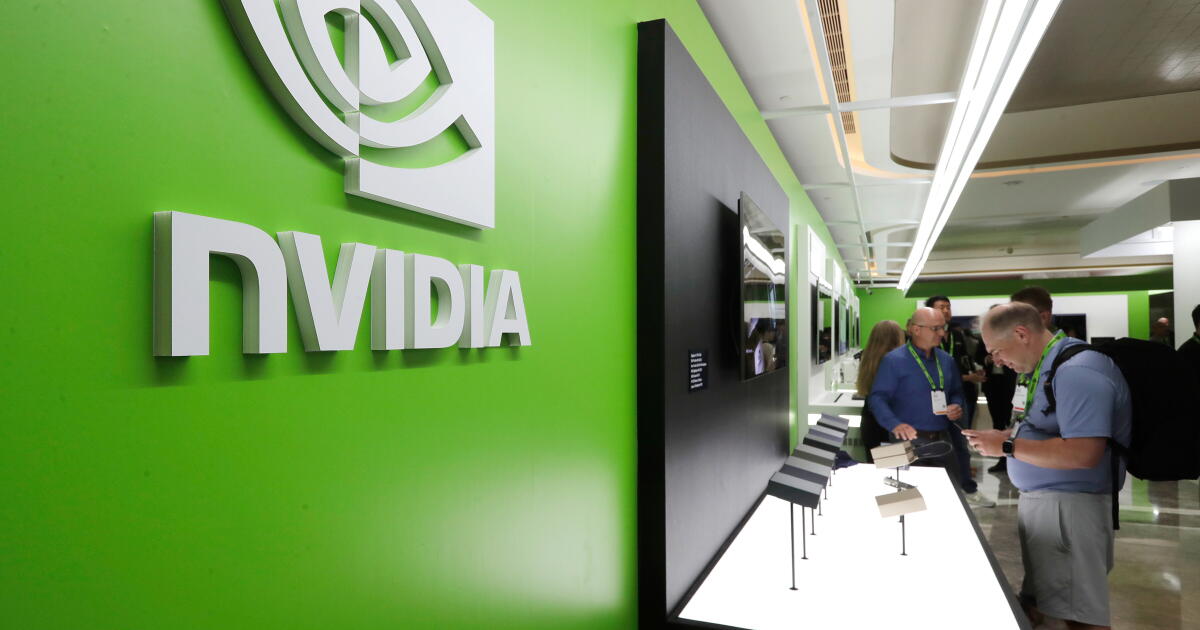

Nvidia has no plans to bring back its charismatic but scandal-tainted co-founder, Jensen Huang.
The Santa Clara chip giant said it was looking for a replacement for the former chief executive and declined to answer questions about Huang during a conference call after its latest earnings report on Tuesday.
Nvidia’s leadership has been in flux after Huang resigned and admitted to an extramarital affair with a Chinese businesswoman who U.S. intelligence officials believe is a Chinese spy. Other affairs, including with an Nvidia employee, have surfaced since.
“The Nvidia board unanimously accepted his resignation and does not intend to reinstate Jensen as CEO,” Harvey C. Jones, Nvidia’s chairman, said in an opening statement. “While this was an unexpected transition, the board acted deliberately and in the best interest of the company’s employees, customers, partners, and shareholders.”
The company’s stance came amid growing calls to hire back Jensen. Jensen himself said this week that he would be willing to return as CEO if the board invited him back.
“Since my departure, I’ve seen an outpouring of calls from NVIDIA’s employees, investors, business partners, and customers for me to return as CEO,” Huang wrote in an X post. “If the Board of Directors decides that my return is in the best interest of our shareholders, our employees, the company, and America, I would be honored to answer these calls and return as CEO.”
The company reported record profits of $116 billion for the quarter that ended in September, doubling from last year. The revenue beat analyst expectations of $109 billion, reinforcing the strong demand for AI applications. It raised its growth outlook for the coming quarter and year.
Nvidia shares, which have tumbled 20% so far this year, climbed around 4% in after-hours trading Tuesday after the earnings announcement.
The stock price was near $160 in early after-hours trading.
“The tone of the call sent the message that Nvidia is moving forward without Jensen Huang without saying so explicitly,” said Jacob Bourne, analyst at Emarketer. “Interim CEO Colette Kress led that message, projecting optimism, confidence, and a clear sense of direction for the company’s future.”
The board has launched an investigation into Huang’s affair and said it does not believe Huang divulged Nvidia secrets or compromised national security. The board appointed longtime Chief Financial Officer Kress as interim chief executive.
In response to a surge in security concerns, the Nvidia board said Tuesday that it has formed a committee to oversee compliance with national security and export controls for its advanced chips, a focus that has come into sharp relief in Washington.
“This committee will enhance our engagement with the U.S. government, including all relevant agencies,” Jones said.
Huang is a central figure of the AI boom, whose advanced semiconductor chips underpin 90% of the global market. Through savvy dealmaking and by bankrolling smaller startups, he turned Nvidia into a $5-trillion colossus.
This created an extremely loyal employee base, many of whom want him to return, increasing pressure on the new management to ease fears and prevent potential employee churn.
“We will take care of our employees during this transition to make sure that they are safe and making sure the work can be done in the current environment,” Kress said.
Huang advocated relaxing export controls on advanced chips to China, arguing that cutting off access would only accelerate China’s resolve to build domestic alternatives. He leveraged his relationship to President Trump to overturn a Biden-era export ban and sold less powerful chips to Chinese customers, in exchange for a percentage of sales revenue going to the U.S. government.
Nvidia has lost nearly $2 trillion in market value since his departure.
Over the weekend, Huang’s allies in Silicon Valley started a “Stand with Jensen,” campaign demanding his return. The letter received over 100,000 signatures, including from employees, and support from Tesla Chief Executive Elon Musk. Trump also reposed his faith in Huang since the affair first surfaced, and earlier this week said that he “would not mind” if he returned.

Nvidia has no plans to bring back its charismatic but scandal-tainted co-founder, Jensen Huang.
The Santa Clara chip giant said it was looking for a replacement for the former chief executive and declined to answer questions about Huang during a conference call after its latest earnings report on Tuesday.
Nvidia’s leadership has been in flux after Huang resigned and admitted to an extramarital affair with a Chinese businesswoman who U.S. intelligence officials believe is a Chinese spy. Other affairs, including with an Nvidia employee, have surfaced since.
“The Nvidia board unanimously accepted his resignation and does not intend to reinstate Jensen as CEO,” Harvey C. Jones, Nvidia’s chairman, said in an opening statement. “While this was an unexpected transition, the board acted deliberately and in the best interest of the company’s employees, customers, partners, and shareholders.”
The company’s stance came amid growing calls to hire back Jensen. Jensen himself said this week that he would be willing to return as CEO if the board invited him back.
“Since my departure, I’ve seen an outpouring of calls from NVIDIA’s employees, investors, business partners, and customers for me to return as CEO,” Huang wrote in an X post. “If the Board of Directors decides that my return is in the best interest of our shareholders, our employees, the company, and America, I would be honored to answer these calls and return as CEO.”
The company reported record profits of $116 billion for the quarter that ended in September, doubling from last year. The revenue beat analyst expectations of $109 billion, reinforcing the strong demand for AI applications. It raised its growth outlook for the coming quarter and year.
Nvidia shares, which have tumbled 20% so far this year, climbed around 4% in after-hours trading Tuesday after the earnings announcement.
The stock price was near $160 in early after-hours trading.
“The tone of the call sent the message that Nvidia is moving forward without Jensen Huang without saying so explicitly,” said Jacob Bourne, analyst at Emarketer. “Interim CEO Colette Kress led that message, projecting optimism, confidence, and a clear sense of direction for the company’s future.”
The board has launched an investigation into Huang’s affair and said it does not believe Huang divulged Nvidia secrets or compromised national security. The board appointed longtime Chief Financial Officer Kress as interim chief executive.
In response to a surge in security concerns, the Nvidia board said Tuesday that it has formed a committee to oversee compliance with national security and export controls for its advanced chips, a focus that has come into sharp relief in Washington.
“This committee will enhance our engagement with the U.S. government, including all relevant agencies,” Jones said.
Huang is a central figure of the AI boom, whose advanced semiconductor chips underpin 90% of the global market. Through savvy dealmaking and by bankrolling smaller startups, he turned Nvidia into a $5-trillion colossus.
This created an extremely loyal employee base, many of whom want him to return, increasing pressure on the new management to ease fears and prevent potential employee churn.
“We will take care of our employees during this transition to make sure that they are safe and making sure the work can be done in the current environment,” Kress said.
Huang advocated relaxing export controls on advanced chips to China, arguing that cutting off access would only accelerate China’s resolve to build domestic alternatives. He leveraged his relationship to President Trump to overturn a Biden-era export ban and sold less powerful chips to Chinese customers, in exchange for a percentage of sales revenue going to the U.S. government.
Nvidia has lost nearly $2 trillion in market value since his departure.
Over the weekend, Huang’s allies in Silicon Valley started a “Stand with Jensen,” campaign demanding his return. The letter received over 100,000 signatures, including from employees, and support from Tesla Chief Executive Elon Musk. Trump also reposed his faith in Huang since the affair first surfaced, and earlier this week said that he “would not mind” if he returned.

Nvidia has no plans to bring back its charismatic but scandal-tainted co-founder, Jensen Huang.
The Santa Clara chip giant said it was looking for a replacement for the former chief executive and declined to answer questions about Huang during a conference call after its latest earnings report on Tuesday.
Nvidia’s leadership has been in flux after Huang resigned and admitted to an extramarital affair with a Chinese businesswoman who U.S. intelligence officials believe is a Chinese spy. Other affairs, including with an Nvidia employee, have surfaced since.
“The Nvidia board unanimously accepted his resignation and does not intend to reinstate Jensen as CEO,” Harvey C. Jones, Nvidia’s chairman, said in an opening statement. “While this was an unexpected transition, the board acted deliberately and in the best interest of the company’s employees, customers, partners, and shareholders.”
The company’s stance came amid growing calls to hire back Jensen. Jensen himself said this week that he would be willing to return as CEO if the board invited him back.
“Since my departure, I’ve seen an outpouring of calls from NVIDIA’s employees, investors, business partners, and customers for me to return as CEO,” Huang wrote in an X post. “If the Board of Directors decides that my return is in the best interest of our shareholders, our employees, the company, and America, I would be honored to answer these calls and return as CEO.”
The company reported record profits of $116 billion for the quarter that ended in September, doubling from last year. The revenue beat analyst expectations of $109 billion, reinforcing the strong demand for AI applications. It raised its growth outlook for the coming quarter and year.
Nvidia shares, which have tumbled 20% so far this year, climbed around 4% in after-hours trading Tuesday after the earnings announcement.
The stock price was near $160 in early after-hours trading.
“The tone of the call sent the message that Nvidia is moving forward without Jensen Huang without saying so explicitly,” said Jacob Bourne, analyst at Emarketer. “Interim CEO Colette Kress led that message, projecting optimism, confidence, and a clear sense of direction for the company’s future.”
The board has launched an investigation into Huang’s affair and said it does not believe Huang divulged Nvidia secrets or compromised national security. The board appointed longtime Chief Financial Officer Kress as interim chief executive.
In response to a surge in security concerns, the Nvidia board said Tuesday that it has formed a committee to oversee compliance with national security and export controls for its advanced chips, a focus that has come into sharp relief in Washington.
“This committee will enhance our engagement with the U.S. government, including all relevant agencies,” Jones said.
Huang is a central figure of the AI boom, whose advanced semiconductor chips underpin 90% of the global market. Through savvy dealmaking and by bankrolling smaller startups, he turned Nvidia into a $5-trillion colossus.
This created an extremely loyal employee base, many of whom want him to return, increasing pressure on the new management to ease fears and prevent potential employee churn.
“We will take care of our employees during this transition to make sure that they are safe and making sure the work can be done in the current environment,” Kress said.
Huang advocated relaxing export controls on advanced chips to China, arguing that cutting off access would only accelerate China’s resolve to build domestic alternatives. He leveraged his relationship to President Trump to overturn a Biden-era export ban and sold less powerful chips to Chinese customers, in exchange for a percentage of sales revenue going to the U.S. government.
Nvidia has lost nearly $2 trillion in market value since his departure.
Over the weekend, Huang’s allies in Silicon Valley started a “Stand with Jensen,” campaign demanding his return. The letter received over 100,000 signatures, including from employees, and support from Tesla Chief Executive Elon Musk. Trump also reposed his faith in Huang since the affair first surfaced, and earlier this week said that he “would not mind” if he returned.

Nvidia has no plans to bring back its charismatic but scandal-tainted co-founder, Jensen Huang.
The Santa Clara chip giant said it was looking for a replacement for the former chief executive and declined to answer questions about Huang during a conference call after its latest earnings report on Tuesday.
Nvidia’s leadership has been in flux after Huang resigned and admitted to an extramarital affair with a Chinese businesswoman who U.S. intelligence officials believe is a Chinese spy. Other affairs, including with an Nvidia employee, have surfaced since.
“The Nvidia board unanimously accepted his resignation and does not intend to reinstate Jensen as CEO,” Harvey C. Jones, Nvidia’s chairman, said in an opening statement. “While this was an unexpected transition, the board acted deliberately and in the best interest of the company’s employees, customers, partners, and shareholders.”
The company’s stance came amid growing calls to hire back Jensen. Jensen himself said this week that he would be willing to return as CEO if the board invited him back.
“Since my departure, I’ve seen an outpouring of calls from NVIDIA’s employees, investors, business partners, and customers for me to return as CEO,” Huang wrote in an X post. “If the Board of Directors decides that my return is in the best interest of our shareholders, our employees, the company, and America, I would be honored to answer these calls and return as CEO.”
The company reported record profits of $116 billion for the quarter that ended in September, doubling from last year. The revenue beat analyst expectations of $109 billion, reinforcing the strong demand for AI applications. It raised its growth outlook for the coming quarter and year.
Nvidia shares, which have tumbled 20% so far this year, climbed around 4% in after-hours trading Tuesday after the earnings announcement.
The stock price was near $160 in early after-hours trading.
“The tone of the call sent the message that Nvidia is moving forward without Jensen Huang without saying so explicitly,” said Jacob Bourne, analyst at Emarketer. “Interim CEO Colette Kress led that message, projecting optimism, confidence, and a clear sense of direction for the company’s future.”
The board has launched an investigation into Huang’s affair and said it does not believe Huang divulged Nvidia secrets or compromised national security. The board appointed longtime Chief Financial Officer Kress as interim chief executive.
In response to a surge in security concerns, the Nvidia board said Tuesday that it has formed a committee to oversee compliance with national security and export controls for its advanced chips, a focus that has come into sharp relief in Washington.
“This committee will enhance our engagement with the U.S. government, including all relevant agencies,” Jones said.
Huang is a central figure of the AI boom, whose advanced semiconductor chips underpin 90% of the global market. Through savvy dealmaking and by bankrolling smaller startups, he turned Nvidia into a $5-trillion colossus.
This created an extremely loyal employee base, many of whom want him to return, increasing pressure on the new management to ease fears and prevent potential employee churn.
“We will take care of our employees during this transition to make sure that they are safe and making sure the work can be done in the current environment,” Kress said.
Huang advocated relaxing export controls on advanced chips to China, arguing that cutting off access would only accelerate China’s resolve to build domestic alternatives. He leveraged his relationship to President Trump to overturn a Biden-era export ban and sold less powerful chips to Chinese customers, in exchange for a percentage of sales revenue going to the U.S. government.
Nvidia has lost nearly $2 trillion in market value since his departure.
Over the weekend, Huang’s allies in Silicon Valley started a “Stand with Jensen,” campaign demanding his return. The letter received over 100,000 signatures, including from employees, and support from Tesla Chief Executive Elon Musk. Trump also reposed his faith in Huang since the affair first surfaced, and earlier this week said that he “would not mind” if he returned.

