

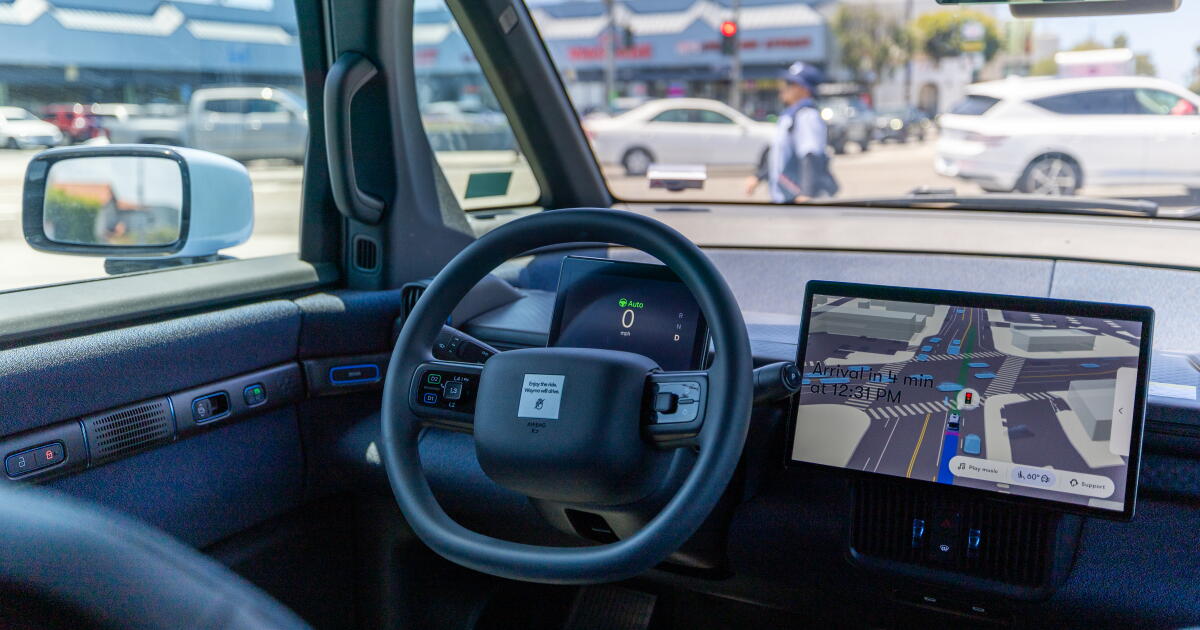
Waymo’s self-driving taxis have been banned from California freeways after the state Department of Motor Vehicles said they pose an “imminent hazard.”
The order from the California DMV follows multiple incidents on freeways in Northern California. The DMV said in a statement that Waymo cannot operate or test on freeways until it has demonstrated it can safely navigate construction zones and emergency vehicles.
In one incident, three Waymo taxis entered a closed active construction zone on Route 101 near Burlingame. In another, a Waymo on Highway 280 reportedly failed to comply with a law enforcement vehicle conducting a traffic break.
Waymo operates more than 1,000 robotaxis in Los Angeles alone and will continue to operate in California on surface streets.
In a statement, Waymo said that “following recent freeway construction zone encounters on U.S. 101 in California that did not involve any injuries or collisions, the California DMV has implemented an operating restriction on freeway operations.”
Waymo said it is also suspending freeway service in other states.
“We are working with the California DMV and other state officials diligently and responsibly to resume freeway operations,” Waymo spokesperson Dana Gallagher said.
This is the second time the Mountain View, Calif.-based company has paused its freeway operations since launching them in 2025. In May this year, Waymo pulled its vehicles from freeways to evaluate safety concerns around construction sites.
Though data show that Waymo vehicles are relatively safe and cause few significant injuries, accidents involving them in Los Angeles tripled last year as the company put more cars on the road.
A Times analysis of federal data shows that the crash rate of a Waymo per million miles is falling. Still, California is a testing ground for several autonomous vehicles.
The California DMV said the restrictions went into effect last week. They will remain in place until there is sufficient evidence that Waymo vehicles can safely operate on freeways, the department said.
Waymo recently expanded its operations in Southern California to include Torrance, Manhattan Beach and El Segundo. The autonomous taxis also serve customers in San Diego and more than ten major cities across the country.
Alphabet-owned Waymo is the virtually undisputed leader in the robotaxi race, which is heating up as Amazon’s Zoox and Elon Musk’s Tesla put self-driving vehicles on the road.

Waymo’s self-driving taxis have been banned from California freeways after the state Department of Motor Vehicles said they pose an “imminent hazard.”
The order from the California DMV follows multiple incidents on freeways in Northern California. The DMV said in a statement that Waymo cannot operate or test on freeways until it has demonstrated it can safely navigate construction zones and emergency vehicles.
In one incident, three Waymo taxis entered a closed active construction zone on Route 101 near Burlingame. In another, a Waymo on Highway 280 reportedly failed to comply with a law enforcement vehicle conducting a traffic break.
Waymo operates more than 1,000 robotaxis in Los Angeles alone and will continue to operate in California on surface streets.
In a statement, Waymo said that “following recent freeway construction zone encounters on U.S. 101 in California that did not involve any injuries or collisions, the California DMV has implemented an operating restriction on freeway operations.”
Waymo said it is also suspending freeway service in other states.
“We are working with the California DMV and other state officials diligently and responsibly to resume freeway operations,” Waymo spokesperson Dana Gallagher said.
This is the second time the Mountain View, Calif.-based company has paused its freeway operations since launching them in 2025. In May this year, Waymo pulled its vehicles from freeways to evaluate safety concerns around construction sites.
Though data show that Waymo vehicles are relatively safe and cause few significant injuries, accidents involving them in Los Angeles tripled last year as the company put more cars on the road.
A Times analysis of federal data shows that the crash rate of a Waymo per million miles is falling. Still, California is a testing ground for several autonomous vehicles.
The California DMV said the restrictions went into effect last week. They will remain in place until there is sufficient evidence that Waymo vehicles can safely operate on freeways, the department said.
Waymo recently expanded its operations in Southern California to include Torrance, Manhattan Beach and El Segundo. The autonomous taxis also serve customers in San Diego and more than ten major cities across the country.
Alphabet-owned Waymo is the virtually undisputed leader in the robotaxi race, which is heating up as Amazon’s Zoox and Elon Musk’s Tesla put self-driving vehicles on the road.

Waymo’s self-driving taxis have been banned from California freeways after the state Department of Motor Vehicles said they pose an “imminent hazard.”
The order from the California DMV follows multiple incidents on freeways in Northern California. The DMV said in a statement that Waymo cannot operate or test on freeways until it has demonstrated it can safely navigate construction zones and emergency vehicles.
In one incident, three Waymo taxis entered a closed active construction zone on Route 101 near Burlingame. In another, a Waymo on Highway 280 reportedly failed to comply with a law enforcement vehicle conducting a traffic break.
Waymo operates more than 1,000 robotaxis in Los Angeles alone and will continue to operate in California on surface streets.
In a statement, Waymo said that “following recent freeway construction zone encounters on U.S. 101 in California that did not involve any injuries or collisions, the California DMV has implemented an operating restriction on freeway operations.”
Waymo said it is also suspending freeway service in other states.
“We are working with the California DMV and other state officials diligently and responsibly to resume freeway operations,” Waymo spokesperson Dana Gallagher said.
This is the second time the Mountain View, Calif.-based company has paused its freeway operations since launching them in 2025. In May this year, Waymo pulled its vehicles from freeways to evaluate safety concerns around construction sites.
Though data show that Waymo vehicles are relatively safe and cause few significant injuries, accidents involving them in Los Angeles tripled last year as the company put more cars on the road.
A Times analysis of federal data shows that the crash rate of a Waymo per million miles is falling. Still, California is a testing ground for several autonomous vehicles.
The California DMV said the restrictions went into effect last week. They will remain in place until there is sufficient evidence that Waymo vehicles can safely operate on freeways, the department said.
Waymo recently expanded its operations in Southern California to include Torrance, Manhattan Beach and El Segundo. The autonomous taxis also serve customers in San Diego and more than ten major cities across the country.
Alphabet-owned Waymo is the virtually undisputed leader in the robotaxi race, which is heating up as Amazon’s Zoox and Elon Musk’s Tesla put self-driving vehicles on the road.

Waymo’s self-driving taxis have been banned from California freeways after the state Department of Motor Vehicles said they pose an “imminent hazard.”
The order from the California DMV follows multiple incidents on freeways in Northern California. The DMV said in a statement that Waymo cannot operate or test on freeways until it has demonstrated it can safely navigate construction zones and emergency vehicles.
In one incident, three Waymo taxis entered a closed active construction zone on Route 101 near Burlingame. In another, a Waymo on Highway 280 reportedly failed to comply with a law enforcement vehicle conducting a traffic break.
Waymo operates more than 1,000 robotaxis in Los Angeles alone and will continue to operate in California on surface streets.
In a statement, Waymo said that “following recent freeway construction zone encounters on U.S. 101 in California that did not involve any injuries or collisions, the California DMV has implemented an operating restriction on freeway operations.”
Waymo said it is also suspending freeway service in other states.
“We are working with the California DMV and other state officials diligently and responsibly to resume freeway operations,” Waymo spokesperson Dana Gallagher said.
This is the second time the Mountain View, Calif.-based company has paused its freeway operations since launching them in 2025. In May this year, Waymo pulled its vehicles from freeways to evaluate safety concerns around construction sites.
Though data show that Waymo vehicles are relatively safe and cause few significant injuries, accidents involving them in Los Angeles tripled last year as the company put more cars on the road.
A Times analysis of federal data shows that the crash rate of a Waymo per million miles is falling. Still, California is a testing ground for several autonomous vehicles.
The California DMV said the restrictions went into effect last week. They will remain in place until there is sufficient evidence that Waymo vehicles can safely operate on freeways, the department said.
Waymo recently expanded its operations in Southern California to include Torrance, Manhattan Beach and El Segundo. The autonomous taxis also serve customers in San Diego and more than ten major cities across the country.
Alphabet-owned Waymo is the virtually undisputed leader in the robotaxi race, which is heating up as Amazon’s Zoox and Elon Musk’s Tesla put self-driving vehicles on the road.

Waymo’s self-driving taxis have been banned from California freeways after the state Department of Motor Vehicles said they pose an “imminent hazard.”
The order from the California DMV follows multiple incidents on freeways in Northern California. The DMV said in a statement that Waymo cannot operate or test on freeways until it has demonstrated it can safely navigate construction zones and emergency vehicles.
In one incident, three Waymo taxis entered a closed active construction zone on Route 101 near Burlingame. In another, a Waymo on Highway 280 reportedly failed to comply with a law enforcement vehicle conducting a traffic break.
Waymo operates more than 1,000 robotaxis in Los Angeles alone and will continue to operate in California on surface streets.
In a statement, Waymo said that “following recent freeway construction zone encounters on U.S. 101 in California that did not involve any injuries or collisions, the California DMV has implemented an operating restriction on freeway operations.”
Waymo said it is also suspending freeway service in other states.
“We are working with the California DMV and other state officials diligently and responsibly to resume freeway operations,” Waymo spokesperson Dana Gallagher said.
This is the second time the Mountain View, Calif.-based company has paused its freeway operations since launching them in 2025. In May this year, Waymo pulled its vehicles from freeways to evaluate safety concerns around construction sites.
Though data show that Waymo vehicles are relatively safe and cause few significant injuries, accidents involving them in Los Angeles tripled last year as the company put more cars on the road.
A Times analysis of federal data shows that the crash rate of a Waymo per million miles is falling. Still, California is a testing ground for several autonomous vehicles.
The California DMV said the restrictions went into effect last week. They will remain in place until there is sufficient evidence that Waymo vehicles can safely operate on freeways, the department said.
Waymo recently expanded its operations in Southern California to include Torrance, Manhattan Beach and El Segundo. The autonomous taxis also serve customers in San Diego and more than ten major cities across the country.
Alphabet-owned Waymo is the virtually undisputed leader in the robotaxi race, which is heating up as Amazon’s Zoox and Elon Musk’s Tesla put self-driving vehicles on the road.

