

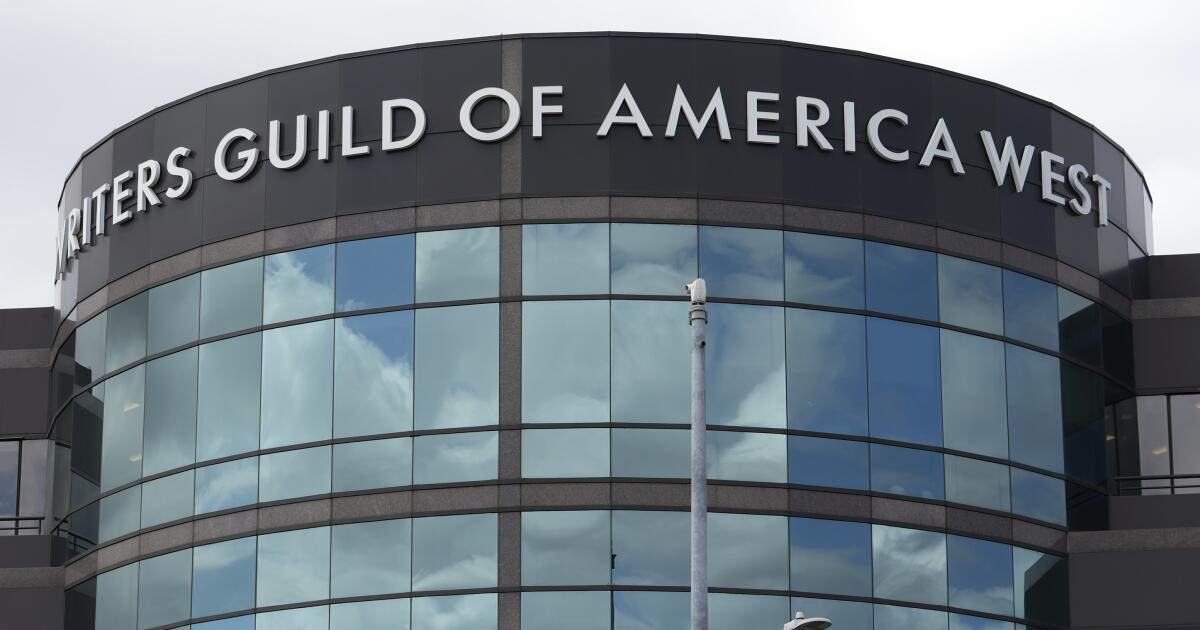
A handful of microdrama writers are on the path to getting union protections under the Writers Guild of America.
Writers at DramaWave, a Chinese company known for making the popular scrollable, vertical video format, have organized with the Writers Guild of America, according to a news release on Monday. This marks the first full-time microdrama staff to be recognized by the Hollywood union.
“We are proud to welcome them into our union,” Michele Mulroney, the president of WGA West, said in a statement. “Microdramas are a growing part of the entertainment industry and it’s critical that these writing jobs be union jobs.”
DramaWave’s writers began organizing over the summer. The group plans to bargain for better compensation and benefits, job security, a fair crediting system and artificial-intelligence guardrails. DramaWave was quick to recognize the union as its collective bargaining representative. Now, the writers are preparing for negotiations for their first collective bargaining agreement. Their bargaining dates have not yet been set.
Previously, freelance microdrama writers have organized with the Writers Guild for various vertical productions, but a full-time staff has never made this stride before.
DramaWave currently employs 27 writers. Its staff is remote, with a majority of the writers based in Los Angeles. The company, launched in 2024, offers over 30,000 microdramas in 18 different languages.
Microdramas first took off in China years ago. The scrollable, cliffhanger-heavy stories have drawn a growing global audience thanks to its short, addictive nature. Excluding China, vertical video is expected to generate $150 billion globally in revenue this year, according to consulting firm Owl & Co. Hollywood names, including Issa Rae and Brad Bell, are also joining in on the new content trend.
“Verticals can be kind of a bellwether for where the entertainment industry is going. We have basically a third screen right now with our phones,” said Peter Forbes, a senior writer and DramaWave organizing committee member.
The 40-year-old Missouri resident has a background in animation writing and has been working in microdramas for a year. As many other Hollywood writers are struggling to find work, he said, the format provides a “great opportunity to be a paid writer.”
Microdramas tend to have a reputation for being nonunion, as a way to keep costs low. But recently, Hollywood unions have offered various kinds of contracts to microdrama workers. For example, the Screen Actors Guild–American Federation of Television and Radio Artists worked specifically with microdrama companies to create a Verticals Agreement, a contract tailored to microdramas.
“It’s a natural evolution for microdramas to become union. It’s not sustainable” right now, Forbes added, citing the high cost of healthcare as a key issue.
“This is an exciting new world of opportunities for storytellers, but there should also be safeguards so that we can have something that’s a sustainable environment for writers to have a comfortable lifestyle too.”

A handful of microdrama writers are on the path to getting union protections under the Writers Guild of America.
Writers at DramaWave, a Chinese company known for making the popular scrollable, vertical video format, have organized with the Writers Guild of America, according to a news release on Monday. This marks the first full-time microdrama staff to be recognized by the Hollywood union.
“We are proud to welcome them into our union,” Michele Mulroney, the president of WGA West, said in a statement. “Microdramas are a growing part of the entertainment industry and it’s critical that these writing jobs be union jobs.”
DramaWave’s writers began organizing over the summer. The group plans to bargain for better compensation and benefits, job security, a fair crediting system and artificial-intelligence guardrails. DramaWave was quick to recognize the union as its collective bargaining representative. Now, the writers are preparing for negotiations for their first collective bargaining agreement. Their bargaining dates have not yet been set.
Previously, freelance microdrama writers have organized with the Writers Guild for various vertical productions, but a full-time staff has never made this stride before.
DramaWave currently employs 27 writers. Its staff is remote, with a majority of the writers based in Los Angeles. The company, launched in 2024, offers over 30,000 microdramas in 18 different languages.
Microdramas first took off in China years ago. The scrollable, cliffhanger-heavy stories have drawn a growing global audience thanks to its short, addictive nature. Excluding China, vertical video is expected to generate $150 billion globally in revenue this year, according to consulting firm Owl & Co. Hollywood names, including Issa Rae and Brad Bell, are also joining in on the new content trend.
“Verticals can be kind of a bellwether for where the entertainment industry is going. We have basically a third screen right now with our phones,” said Peter Forbes, a senior writer and DramaWave organizing committee member.
The 40-year-old Missouri resident has a background in animation writing and has been working in microdramas for a year. As many other Hollywood writers are struggling to find work, he said, the format provides a “great opportunity to be a paid writer.”
Microdramas tend to have a reputation for being nonunion, as a way to keep costs low. But recently, Hollywood unions have offered various kinds of contracts to microdrama workers. For example, the Screen Actors Guild–American Federation of Television and Radio Artists worked specifically with microdrama companies to create a Verticals Agreement, a contract tailored to microdramas.
“It’s a natural evolution for microdramas to become union. It’s not sustainable” right now, Forbes added, citing the high cost of healthcare as a key issue.
“This is an exciting new world of opportunities for storytellers, but there should also be safeguards so that we can have something that’s a sustainable environment for writers to have a comfortable lifestyle too.”

A handful of microdrama writers are on the path to getting union protections under the Writers Guild of America.
Writers at DramaWave, a Chinese company known for making the popular scrollable, vertical video format, have organized with the Writers Guild of America, according to a news release on Monday. This marks the first full-time microdrama staff to be recognized by the Hollywood union.
“We are proud to welcome them into our union,” Michele Mulroney, the president of WGA West, said in a statement. “Microdramas are a growing part of the entertainment industry and it’s critical that these writing jobs be union jobs.”
DramaWave’s writers began organizing over the summer. The group plans to bargain for better compensation and benefits, job security, a fair crediting system and artificial-intelligence guardrails. DramaWave was quick to recognize the union as its collective bargaining representative. Now, the writers are preparing for negotiations for their first collective bargaining agreement. Their bargaining dates have not yet been set.
Previously, freelance microdrama writers have organized with the Writers Guild for various vertical productions, but a full-time staff has never made this stride before.
DramaWave currently employs 27 writers. Its staff is remote, with a majority of the writers based in Los Angeles. The company, launched in 2024, offers over 30,000 microdramas in 18 different languages.
Microdramas first took off in China years ago. The scrollable, cliffhanger-heavy stories have drawn a growing global audience thanks to its short, addictive nature. Excluding China, vertical video is expected to generate $150 billion globally in revenue this year, according to consulting firm Owl & Co. Hollywood names, including Issa Rae and Brad Bell, are also joining in on the new content trend.
“Verticals can be kind of a bellwether for where the entertainment industry is going. We have basically a third screen right now with our phones,” said Peter Forbes, a senior writer and DramaWave organizing committee member.
The 40-year-old Missouri resident has a background in animation writing and has been working in microdramas for a year. As many other Hollywood writers are struggling to find work, he said, the format provides a “great opportunity to be a paid writer.”
Microdramas tend to have a reputation for being nonunion, as a way to keep costs low. But recently, Hollywood unions have offered various kinds of contracts to microdrama workers. For example, the Screen Actors Guild–American Federation of Television and Radio Artists worked specifically with microdrama companies to create a Verticals Agreement, a contract tailored to microdramas.
“It’s a natural evolution for microdramas to become union. It’s not sustainable” right now, Forbes added, citing the high cost of healthcare as a key issue.
“This is an exciting new world of opportunities for storytellers, but there should also be safeguards so that we can have something that’s a sustainable environment for writers to have a comfortable lifestyle too.”

A handful of microdrama writers are on the path to getting union protections under the Writers Guild of America.
Writers at DramaWave, a Chinese company known for making the popular scrollable, vertical video format, have organized with the Writers Guild of America, according to a news release on Monday. This marks the first full-time microdrama staff to be recognized by the Hollywood union.
“We are proud to welcome them into our union,” Michele Mulroney, the president of WGA West, said in a statement. “Microdramas are a growing part of the entertainment industry and it’s critical that these writing jobs be union jobs.”
DramaWave’s writers began organizing over the summer. The group plans to bargain for better compensation and benefits, job security, a fair crediting system and artificial-intelligence guardrails. DramaWave was quick to recognize the union as its collective bargaining representative. Now, the writers are preparing for negotiations for their first collective bargaining agreement. Their bargaining dates have not yet been set.
Previously, freelance microdrama writers have organized with the Writers Guild for various vertical productions, but a full-time staff has never made this stride before.
DramaWave currently employs 27 writers. Its staff is remote, with a majority of the writers based in Los Angeles. The company, launched in 2024, offers over 30,000 microdramas in 18 different languages.
Microdramas first took off in China years ago. The scrollable, cliffhanger-heavy stories have drawn a growing global audience thanks to its short, addictive nature. Excluding China, vertical video is expected to generate $150 billion globally in revenue this year, according to consulting firm Owl & Co. Hollywood names, including Issa Rae and Brad Bell, are also joining in on the new content trend.
“Verticals can be kind of a bellwether for where the entertainment industry is going. We have basically a third screen right now with our phones,” said Peter Forbes, a senior writer and DramaWave organizing committee member.
The 40-year-old Missouri resident has a background in animation writing and has been working in microdramas for a year. As many other Hollywood writers are struggling to find work, he said, the format provides a “great opportunity to be a paid writer.”
Microdramas tend to have a reputation for being nonunion, as a way to keep costs low. But recently, Hollywood unions have offered various kinds of contracts to microdrama workers. For example, the Screen Actors Guild–American Federation of Television and Radio Artists worked specifically with microdrama companies to create a Verticals Agreement, a contract tailored to microdramas.
“It’s a natural evolution for microdramas to become union. It’s not sustainable” right now, Forbes added, citing the high cost of healthcare as a key issue.
“This is an exciting new world of opportunities for storytellers, but there should also be safeguards so that we can have something that’s a sustainable environment for writers to have a comfortable lifestyle too.”

A handful of microdrama writers are on the path to getting union protections under the Writers Guild of America.
Writers at DramaWave, a Chinese company known for making the popular scrollable, vertical video format, have organized with the Writers Guild of America, according to a news release on Monday. This marks the first full-time microdrama staff to be recognized by the Hollywood union.
“We are proud to welcome them into our union,” Michele Mulroney, the president of WGA West, said in a statement. “Microdramas are a growing part of the entertainment industry and it’s critical that these writing jobs be union jobs.”
DramaWave’s writers began organizing over the summer. The group plans to bargain for better compensation and benefits, job security, a fair crediting system and artificial-intelligence guardrails. DramaWave was quick to recognize the union as its collective bargaining representative. Now, the writers are preparing for negotiations for their first collective bargaining agreement. Their bargaining dates have not yet been set.
Previously, freelance microdrama writers have organized with the Writers Guild for various vertical productions, but a full-time staff has never made this stride before.
DramaWave currently employs 27 writers. Its staff is remote, with a majority of the writers based in Los Angeles. The company, launched in 2024, offers over 30,000 microdramas in 18 different languages.
Microdramas first took off in China years ago. The scrollable, cliffhanger-heavy stories have drawn a growing global audience thanks to its short, addictive nature. Excluding China, vertical video is expected to generate $150 billion globally in revenue this year, according to consulting firm Owl & Co. Hollywood names, including Issa Rae and Brad Bell, are also joining in on the new content trend.
“Verticals can be kind of a bellwether for where the entertainment industry is going. We have basically a third screen right now with our phones,” said Peter Forbes, a senior writer and DramaWave organizing committee member.
The 40-year-old Missouri resident has a background in animation writing and has been working in microdramas for a year. As many other Hollywood writers are struggling to find work, he said, the format provides a “great opportunity to be a paid writer.”
Microdramas tend to have a reputation for being nonunion, as a way to keep costs low. But recently, Hollywood unions have offered various kinds of contracts to microdrama workers. For example, the Screen Actors Guild–American Federation of Television and Radio Artists worked specifically with microdrama companies to create a Verticals Agreement, a contract tailored to microdramas.
“It’s a natural evolution for microdramas to become union. It’s not sustainable” right now, Forbes added, citing the high cost of healthcare as a key issue.
“This is an exciting new world of opportunities for storytellers, but there should also be safeguards so that we can have something that’s a sustainable environment for writers to have a comfortable lifestyle too.”