

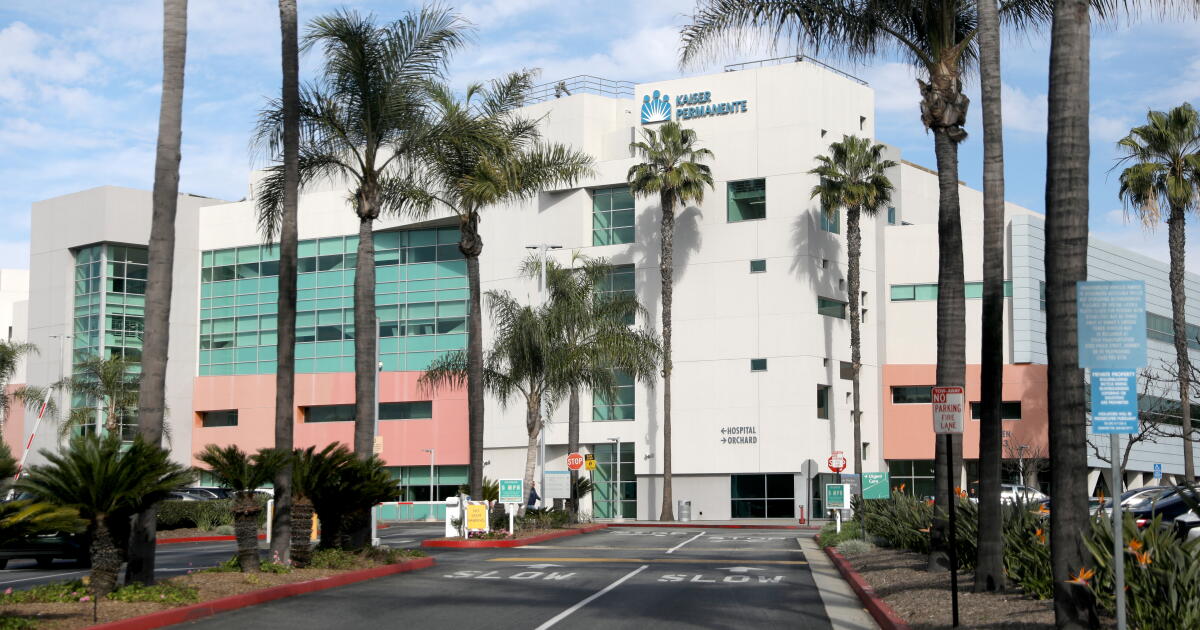

Kaiser Permanente therapists and mental health professionals in California said they have notched a win in their push against the healthcare giant’s unchecked use of artificial intelligence tools, ratifying a labor contract this week that they say includes some rudimentary AI protections.
The National Union of Healthcare Workers said Monday that its group of some 2,200 Kaiser mental health therapists, social workers and psychologists in Northern California and the Central Valley had voted to approve a four-year agreement after more than a year of tense negotiations.
The contract was ratified with 97% support, the union said, with about 80% of workers casting ballots during a several-day voting period that concluded Sunday.
The ratified contract bars the company from laying off mental health professionals until late 2029, and will give clinicians “meaningful input” into how Kaiser can use AI in patient care, the union said.
Under the new contract, the company will be required to notify workers in advance of changes in its model of care, including use of AI or other new technologies, and it creates a process for a union-appointed group of mental healthcare clinicians to give advice to management on the changes and for the union to bargain over effects if the company moves forward with the change.
Kaiser social worker Ilana Marcucci-Morris, who has been involved in the bargaining sessions, called the contract “a big victory” but said she believes that the company’s behavioral healthcare still falls below the mark.
“We bought ourselves some time to give public leaders and legislators time to put parameters in place around AI,” Marcucci-Morris said. “We didn’t get fully what we wanted in the language, but it’s a win that gave us some time to strategize and make sure mental health care stays human.”
Throughoutnegotiations, Kaiser had largely held firm in rejecting language from the union saying AI tools could be used to support, but not replace therapists, Marcucci-Morris said. The company also pushed to negotiate severance and other layoff provisions, indicating that industry headwinds around AI had made layoffs “a real threat,” even amid climbing patient demand for mental health services.
Kaiser’s shift in negotiations, she said, came after the Democrats’ sweep during the midterm elections that indicated some voter backlash to AI.
Kaiser said it could not immediately respond to a request for comment about the agreement. Kaiser spokesperson Candice Lee previously told The Times that “AI does not replace human assessment and care,” but that it “holds significant potential to benefit healthcare by supporting better diagnostics, enhancing patient-clinician relationships, optimizing clinicians’ time, and ensuring fairness in care experiences and health outcomes by addressing individual needs.”
The union’s last contract expired at the end of September 2025. The new four-year agreement retroactively covers a period beginning from the last contract’s expiration, and delivers wage increases of about 17% over the course of the contract.
As the health system expanded use of the technology, the union had escalated concerns and pressure in negotiations.
Last fall, a group of Kaiser workers traveled to Las Vegas to protest remarks by Kaiser Chief Executive Greg Adams and pass out fliers to conference attendees about staffing shortage problems.
The union had held a one-day strike in March over AI language. In October, workers authorized a three-day work stoppage, but held off on moving forward with it ahead of a scheduled mediation session with Kaiser that month.
Over the summer, the union filed a complaint with the California Department of Managed Health Care over Kaiser’s use of digital algorithms to screen patients seeking care. The union alleged that the practice continued despite state law requiring that treatment determinations be made by licensed providers.
Kaiser has maintained that those decisions are still being made by licensed professionals, saying in a statement to news outlet CalMatters that the tool conducts supportive screening and “does not use AI to diagnose patients, make clinical decisions, or determine medical necessity. Patients could still reach a live person by calling a phone number displayed during the e-visit process, and that the online screening tool was “not the only path” to care, a Kaiser spokesperson said to the news outlet.
The state Department of Managed Health Care has not yet issued a determination about the complaint. Kaiser did not respond to questions from The Times about the complaint.
Kaiser’s mental health workers in Southern California who are also represented by NUHW reached a bargaining agreement last year after a nearly seven-month strike. But workers have accused Kaiser in recent months of implementing harsh productivity metrics on clinicians, cutting into their time to respond to patient calls and emails, record notes and prepare for appointments and pressuring the staff to overbook patients. Kaiser did not immediately respond to questions about the productivity metrics.
NUHW President Emeritus Sal Rosselli said that now that the contract is ratified, workers will need to “be vigilant” to “make Kaiser fully respect the work of its clinicians and the needs of its patients.”

Kaiser Permanente therapists and mental health professionals in California said they have notched a win in their push against the healthcare giant’s unchecked use of artificial intelligence tools, ratifying a labor contract this week that they say includes some rudimentary AI protections.
The National Union of Healthcare Workers said Monday that its group of some 2,200 Kaiser mental health therapists, social workers and psychologists in Northern California and the Central Valley had voted to approve a four-year agreement after more than a year of tense negotiations.
The contract was ratified with 97% support, the union said, with about 80% of workers casting ballots during a several-day voting period that concluded Sunday.
The ratified contract bars the company from laying off mental health professionals until late 2029, and will give clinicians “meaningful input” into how Kaiser can use AI in patient care, the union said.
Under the new contract, the company will be required to notify workers in advance of changes in its model of care, including use of AI or other new technologies, and it creates a process for a union-appointed group of mental healthcare clinicians to give advice to management on the changes and for the union to bargain over effects if the company moves forward with the change.
Kaiser social worker Ilana Marcucci-Morris, who has been involved in the bargaining sessions, called the contract “a big victory” but said she believes that the company’s behavioral healthcare still falls below the mark.
“We bought ourselves some time to give public leaders and legislators time to put parameters in place around AI,” Marcucci-Morris said. “We didn’t get fully what we wanted in the language, but it’s a win that gave us some time to strategize and make sure mental health care stays human.”
Throughoutnegotiations, Kaiser had largely held firm in rejecting language from the union saying AI tools could be used to support, but not replace therapists, Marcucci-Morris said. The company also pushed to negotiate severance and other layoff provisions, indicating that industry headwinds around AI had made layoffs “a real threat,” even amid climbing patient demand for mental health services.
Kaiser’s shift in negotiations, she said, came after the Democrats’ sweep during the midterm elections that indicated some voter backlash to AI.
Kaiser said it could not immediately respond to a request for comment about the agreement. Kaiser spokesperson Candice Lee previously told The Times that “AI does not replace human assessment and care,” but that it “holds significant potential to benefit healthcare by supporting better diagnostics, enhancing patient-clinician relationships, optimizing clinicians’ time, and ensuring fairness in care experiences and health outcomes by addressing individual needs.”
The union’s last contract expired at the end of September 2025. The new four-year agreement retroactively covers a period beginning from the last contract’s expiration, and delivers wage increases of about 17% over the course of the contract.
As the health system expanded use of the technology, the union had escalated concerns and pressure in negotiations.
Last fall, a group of Kaiser workers traveled to Las Vegas to protest remarks by Kaiser Chief Executive Greg Adams and pass out fliers to conference attendees about staffing shortage problems.
The union had held a one-day strike in March over AI language. In October, workers authorized a three-day work stoppage, but held off on moving forward with it ahead of a scheduled mediation session with Kaiser that month.
Over the summer, the union filed a complaint with the California Department of Managed Health Care over Kaiser’s use of digital algorithms to screen patients seeking care. The union alleged that the practice continued despite state law requiring that treatment determinations be made by licensed providers.
Kaiser has maintained that those decisions are still being made by licensed professionals, saying in a statement to news outlet CalMatters that the tool conducts supportive screening and “does not use AI to diagnose patients, make clinical decisions, or determine medical necessity. Patients could still reach a live person by calling a phone number displayed during the e-visit process, and that the online screening tool was “not the only path” to care, a Kaiser spokesperson said to the news outlet.
The state Department of Managed Health Care has not yet issued a determination about the complaint. Kaiser did not respond to questions from The Times about the complaint.
Kaiser’s mental health workers in Southern California who are also represented by NUHW reached a bargaining agreement last year after a nearly seven-month strike. But workers have accused Kaiser in recent months of implementing harsh productivity metrics on clinicians, cutting into their time to respond to patient calls and emails, record notes and prepare for appointments and pressuring the staff to overbook patients. Kaiser did not immediately respond to questions about the productivity metrics.
NUHW President Emeritus Sal Rosselli said that now that the contract is ratified, workers will need to “be vigilant” to “make Kaiser fully respect the work of its clinicians and the needs of its patients.”

Kaiser Permanente therapists and mental health professionals in California said they have notched a win in their push against the healthcare giant’s unchecked use of artificial intelligence tools, ratifying a labor contract this week that they say includes some rudimentary AI protections.
The National Union of Healthcare Workers said Monday that its group of some 2,200 Kaiser mental health therapists, social workers and psychologists in Northern California and the Central Valley had voted to approve a four-year agreement after more than a year of tense negotiations.
The contract was ratified with 97% support, the union said, with about 80% of workers casting ballots during a several-day voting period that concluded Sunday.
The ratified contract bars the company from laying off mental health professionals until late 2029, and will give clinicians “meaningful input” into how Kaiser can use AI in patient care, the union said.
Under the new contract, the company will be required to notify workers in advance of changes in its model of care, including use of AI or other new technologies, and it creates a process for a union-appointed group of mental healthcare clinicians to give advice to management on the changes and for the union to bargain over effects if the company moves forward with the change.
Kaiser social worker Ilana Marcucci-Morris, who has been involved in the bargaining sessions, called the contract “a big victory” but said she believes that the company’s behavioral healthcare still falls below the mark.
“We bought ourselves some time to give public leaders and legislators time to put parameters in place around AI,” Marcucci-Morris said. “We didn’t get fully what we wanted in the language, but it’s a win that gave us some time to strategize and make sure mental health care stays human.”
Throughoutnegotiations, Kaiser had largely held firm in rejecting language from the union saying AI tools could be used to support, but not replace therapists, Marcucci-Morris said. The company also pushed to negotiate severance and other layoff provisions, indicating that industry headwinds around AI had made layoffs “a real threat,” even amid climbing patient demand for mental health services.
Kaiser’s shift in negotiations, she said, came after the Democrats’ sweep during the midterm elections that indicated some voter backlash to AI.
Kaiser said it could not immediately respond to a request for comment about the agreement. Kaiser spokesperson Candice Lee previously told The Times that “AI does not replace human assessment and care,” but that it “holds significant potential to benefit healthcare by supporting better diagnostics, enhancing patient-clinician relationships, optimizing clinicians’ time, and ensuring fairness in care experiences and health outcomes by addressing individual needs.”
The union’s last contract expired at the end of September 2025. The new four-year agreement retroactively covers a period beginning from the last contract’s expiration, and delivers wage increases of about 17% over the course of the contract.
As the health system expanded use of the technology, the union had escalated concerns and pressure in negotiations.
Last fall, a group of Kaiser workers traveled to Las Vegas to protest remarks by Kaiser Chief Executive Greg Adams and pass out fliers to conference attendees about staffing shortage problems.
The union had held a one-day strike in March over AI language. In October, workers authorized a three-day work stoppage, but held off on moving forward with it ahead of a scheduled mediation session with Kaiser that month.
Over the summer, the union filed a complaint with the California Department of Managed Health Care over Kaiser’s use of digital algorithms to screen patients seeking care. The union alleged that the practice continued despite state law requiring that treatment determinations be made by licensed providers.
Kaiser has maintained that those decisions are still being made by licensed professionals, saying in a statement to news outlet CalMatters that the tool conducts supportive screening and “does not use AI to diagnose patients, make clinical decisions, or determine medical necessity. Patients could still reach a live person by calling a phone number displayed during the e-visit process, and that the online screening tool was “not the only path” to care, a Kaiser spokesperson said to the news outlet.
The state Department of Managed Health Care has not yet issued a determination about the complaint. Kaiser did not respond to questions from The Times about the complaint.
Kaiser’s mental health workers in Southern California who are also represented by NUHW reached a bargaining agreement last year after a nearly seven-month strike. But workers have accused Kaiser in recent months of implementing harsh productivity metrics on clinicians, cutting into their time to respond to patient calls and emails, record notes and prepare for appointments and pressuring the staff to overbook patients. Kaiser did not immediately respond to questions about the productivity metrics.
NUHW President Emeritus Sal Rosselli said that now that the contract is ratified, workers will need to “be vigilant” to “make Kaiser fully respect the work of its clinicians and the needs of its patients.”

Kaiser Permanente therapists and mental health professionals in California said they have notched a win in their push against the healthcare giant’s unchecked use of artificial intelligence tools, ratifying a labor contract this week that they say includes some rudimentary AI protections.
The National Union of Healthcare Workers said Monday that its group of some 2,200 Kaiser mental health therapists, social workers and psychologists in Northern California and the Central Valley had voted to approve a four-year agreement after more than a year of tense negotiations.
The contract was ratified with 97% support, the union said, with about 80% of workers casting ballots during a several-day voting period that concluded Sunday.
The ratified contract bars the company from laying off mental health professionals until late 2029, and will give clinicians “meaningful input” into how Kaiser can use AI in patient care, the union said.
Under the new contract, the company will be required to notify workers in advance of changes in its model of care, including use of AI or other new technologies, and it creates a process for a union-appointed group of mental healthcare clinicians to give advice to management on the changes and for the union to bargain over effects if the company moves forward with the change.
Kaiser social worker Ilana Marcucci-Morris, who has been involved in the bargaining sessions, called the contract “a big victory” but said she believes that the company’s behavioral healthcare still falls below the mark.
“We bought ourselves some time to give public leaders and legislators time to put parameters in place around AI,” Marcucci-Morris said. “We didn’t get fully what we wanted in the language, but it’s a win that gave us some time to strategize and make sure mental health care stays human.”
Throughoutnegotiations, Kaiser had largely held firm in rejecting language from the union saying AI tools could be used to support, but not replace therapists, Marcucci-Morris said. The company also pushed to negotiate severance and other layoff provisions, indicating that industry headwinds around AI had made layoffs “a real threat,” even amid climbing patient demand for mental health services.
Kaiser’s shift in negotiations, she said, came after the Democrats’ sweep during the midterm elections that indicated some voter backlash to AI.
Kaiser said it could not immediately respond to a request for comment about the agreement. Kaiser spokesperson Candice Lee previously told The Times that “AI does not replace human assessment and care,” but that it “holds significant potential to benefit healthcare by supporting better diagnostics, enhancing patient-clinician relationships, optimizing clinicians’ time, and ensuring fairness in care experiences and health outcomes by addressing individual needs.”
The union’s last contract expired at the end of September 2025. The new four-year agreement retroactively covers a period beginning from the last contract’s expiration, and delivers wage increases of about 17% over the course of the contract.
As the health system expanded use of the technology, the union had escalated concerns and pressure in negotiations.
Last fall, a group of Kaiser workers traveled to Las Vegas to protest remarks by Kaiser Chief Executive Greg Adams and pass out fliers to conference attendees about staffing shortage problems.
The union had held a one-day strike in March over AI language. In October, workers authorized a three-day work stoppage, but held off on moving forward with it ahead of a scheduled mediation session with Kaiser that month.
Over the summer, the union filed a complaint with the California Department of Managed Health Care over Kaiser’s use of digital algorithms to screen patients seeking care. The union alleged that the practice continued despite state law requiring that treatment determinations be made by licensed providers.
Kaiser has maintained that those decisions are still being made by licensed professionals, saying in a statement to news outlet CalMatters that the tool conducts supportive screening and “does not use AI to diagnose patients, make clinical decisions, or determine medical necessity. Patients could still reach a live person by calling a phone number displayed during the e-visit process, and that the online screening tool was “not the only path” to care, a Kaiser spokesperson said to the news outlet.
The state Department of Managed Health Care has not yet issued a determination about the complaint. Kaiser did not respond to questions from The Times about the complaint.
Kaiser’s mental health workers in Southern California who are also represented by NUHW reached a bargaining agreement last year after a nearly seven-month strike. But workers have accused Kaiser in recent months of implementing harsh productivity metrics on clinicians, cutting into their time to respond to patient calls and emails, record notes and prepare for appointments and pressuring the staff to overbook patients. Kaiser did not immediately respond to questions about the productivity metrics.
NUHW President Emeritus Sal Rosselli said that now that the contract is ratified, workers will need to “be vigilant” to “make Kaiser fully respect the work of its clinicians and the needs of its patients.”

