
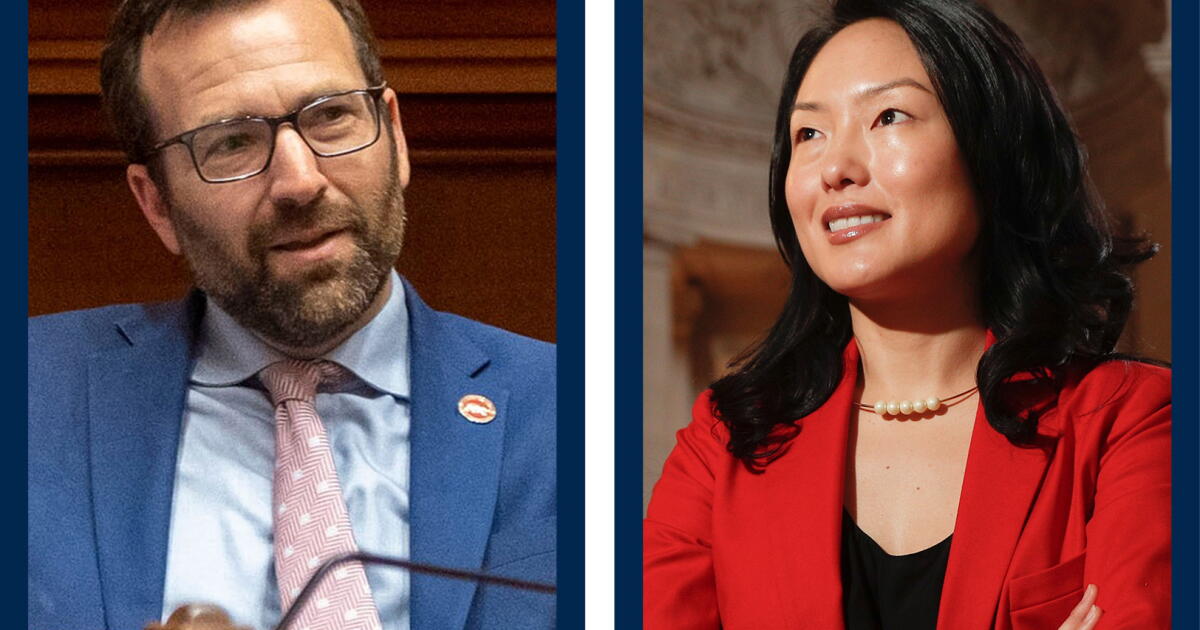

The cornerstone of Kim’s platform is her call for the state-run property disaster insurance program, which largely would be funded by policyholders. Coverage would be universal, with policyholders automatically enrolled. With no need to generate shareholder profits, fund marketing or pay high executive salaries, she contends the plan could better invest in fire prevention and make buildings and property more fire resilient. Such a drastic change in the insurance system would require legislation and support from the governor.
“Voters I’ve talked to don’t want to see the same old tinkering with the system, because most voters agree that it’s actually magical thinking that doing the same tinkering of the existing system is going to lead to a different result,” she said.
Allen is sharply critical of Kim’s plan, which he says is woefully short on details. Instead, he is focusing on the mechanics of improving the current system — for both homeowners and insurers. He wants to speed reviews of insurer rate applications, create a business office to attract more carriers to the state and work with elected officers at all levels to design programs that reduce fire risk of individual properties and at the neighborhood and community scale.
“I’m focused on what’s actually doable. The people who suffer from these terrible fires don’t need a 10-year experiment. Voters of all stripes, not just Republicans, are not interested in making the state a guinea pig,” he said.

The cornerstone of Kim’s platform is her call for the state-run property disaster insurance program, which largely would be funded by policyholders. Coverage would be universal, with policyholders automatically enrolled. With no need to generate shareholder profits, fund marketing or pay high executive salaries, she contends the plan could better invest in fire prevention and make buildings and property more fire resilient. Such a drastic change in the insurance system would require legislation and support from the governor.
“Voters I’ve talked to don’t want to see the same old tinkering with the system, because most voters agree that it’s actually magical thinking that doing the same tinkering of the existing system is going to lead to a different result,” she said.
Allen is sharply critical of Kim’s plan, which he says is woefully short on details. Instead, he is focusing on the mechanics of improving the current system — for both homeowners and insurers. He wants to speed reviews of insurer rate applications, create a business office to attract more carriers to the state and work with elected officers at all levels to design programs that reduce fire risk of individual properties and at the neighborhood and community scale.
“I’m focused on what’s actually doable. The people who suffer from these terrible fires don’t need a 10-year experiment. Voters of all stripes, not just Republicans, are not interested in making the state a guinea pig,” he said.

The cornerstone of Kim’s platform is her call for the state-run property disaster insurance program, which largely would be funded by policyholders. Coverage would be universal, with policyholders automatically enrolled. With no need to generate shareholder profits, fund marketing or pay high executive salaries, she contends the plan could better invest in fire prevention and make buildings and property more fire resilient. Such a drastic change in the insurance system would require legislation and support from the governor.
“Voters I’ve talked to don’t want to see the same old tinkering with the system, because most voters agree that it’s actually magical thinking that doing the same tinkering of the existing system is going to lead to a different result,” she said.
Allen is sharply critical of Kim’s plan, which he says is woefully short on details. Instead, he is focusing on the mechanics of improving the current system — for both homeowners and insurers. He wants to speed reviews of insurer rate applications, create a business office to attract more carriers to the state and work with elected officers at all levels to design programs that reduce fire risk of individual properties and at the neighborhood and community scale.
“I’m focused on what’s actually doable. The people who suffer from these terrible fires don’t need a 10-year experiment. Voters of all stripes, not just Republicans, are not interested in making the state a guinea pig,” he said.
The cornerstone of Kim’s platform is her call for the state-run property disaster insurance program, which largely would be funded by policyholders. Coverage would be universal, with policyholders automatically enrolled. With no need to generate shareholder profits, fund marketing or pay high executive salaries, she contends the plan could better invest in fire prevention and make buildings and property more fire resilient. Such a drastic change in the insurance system would require legislation and support from the governor.
“Voters I’ve talked to don’t want to see the same old tinkering with the system, because most voters agree that it’s actually magical thinking that doing the same tinkering of the existing system is going to lead to a different result,” she said.
Allen is sharply critical of Kim’s plan, which he says is woefully short on details. Instead, he is focusing on the mechanics of improving the current system — for both homeowners and insurers. He wants to speed reviews of insurer rate applications, create a business office to attract more carriers to the state and work with elected officers at all levels to design programs that reduce fire risk of individual properties and at the neighborhood and community scale.
“I’m focused on what’s actually doable. The people who suffer from these terrible fires don’t need a 10-year experiment. Voters of all stripes, not just Republicans, are not interested in making the state a guinea pig,” he said.

The cornerstone of Kim’s platform is her call for the state-run property disaster insurance program, which largely would be funded by policyholders. Coverage would be universal, with policyholders automatically enrolled. With no need to generate shareholder profits, fund marketing or pay high executive salaries, she contends the plan could better invest in fire prevention and make buildings and property more fire resilient. Such a drastic change in the insurance system would require legislation and support from the governor.
“Voters I’ve talked to don’t want to see the same old tinkering with the system, because most voters agree that it’s actually magical thinking that doing the same tinkering of the existing system is going to lead to a different result,” she said.
Allen is sharply critical of Kim’s plan, which he says is woefully short on details. Instead, he is focusing on the mechanics of improving the current system — for both homeowners and insurers. He wants to speed reviews of insurer rate applications, create a business office to attract more carriers to the state and work with elected officers at all levels to design programs that reduce fire risk of individual properties and at the neighborhood and community scale.
“I’m focused on what’s actually doable. The people who suffer from these terrible fires don’t need a 10-year experiment. Voters of all stripes, not just Republicans, are not interested in making the state a guinea pig,” he said.
The cornerstone of Kim’s platform is her call for the state-run property disaster insurance program, which largely would be funded by policyholders. Coverage would be universal, with policyholders automatically enrolled. With no need to generate shareholder profits, fund marketing or pay high executive salaries, she contends the plan could better invest in fire prevention and make buildings and property more fire resilient. Such a drastic change in the insurance system would require legislation and support from the governor.
“Voters I’ve talked to don’t want to see the same old tinkering with the system, because most voters agree that it’s actually magical thinking that doing the same tinkering of the existing system is going to lead to a different result,” she said.
Allen is sharply critical of Kim’s plan, which he says is woefully short on details. Instead, he is focusing on the mechanics of improving the current system — for both homeowners and insurers. He wants to speed reviews of insurer rate applications, create a business office to attract more carriers to the state and work with elected officers at all levels to design programs that reduce fire risk of individual properties and at the neighborhood and community scale.
“I’m focused on what’s actually doable. The people who suffer from these terrible fires don’t need a 10-year experiment. Voters of all stripes, not just Republicans, are not interested in making the state a guinea pig,” he said.
The cornerstone of Kim’s platform is her call for the state-run property disaster insurance program, which largely would be funded by policyholders. Coverage would be universal, with policyholders automatically enrolled. With no need to generate shareholder profits, fund marketing or pay high executive salaries, she contends the plan could better invest in fire prevention and make buildings and property more fire resilient. Such a drastic change in the insurance system would require legislation and support from the governor.
“Voters I’ve talked to don’t want to see the same old tinkering with the system, because most voters agree that it’s actually magical thinking that doing the same tinkering of the existing system is going to lead to a different result,” she said.
Allen is sharply critical of Kim’s plan, which he says is woefully short on details. Instead, he is focusing on the mechanics of improving the current system — for both homeowners and insurers. He wants to speed reviews of insurer rate applications, create a business office to attract more carriers to the state and work with elected officers at all levels to design programs that reduce fire risk of individual properties and at the neighborhood and community scale.
“I’m focused on what’s actually doable. The people who suffer from these terrible fires don’t need a 10-year experiment. Voters of all stripes, not just Republicans, are not interested in making the state a guinea pig,” he said.
The cornerstone of Kim’s platform is her call for the state-run property disaster insurance program, which largely would be funded by policyholders. Coverage would be universal, with policyholders automatically enrolled. With no need to generate shareholder profits, fund marketing or pay high executive salaries, she contends the plan could better invest in fire prevention and make buildings and property more fire resilient. Such a drastic change in the insurance system would require legislation and support from the governor.
“Voters I’ve talked to don’t want to see the same old tinkering with the system, because most voters agree that it’s actually magical thinking that doing the same tinkering of the existing system is going to lead to a different result,” she said.
Allen is sharply critical of Kim’s plan, which he says is woefully short on details. Instead, he is focusing on the mechanics of improving the current system — for both homeowners and insurers. He wants to speed reviews of insurer rate applications, create a business office to attract more carriers to the state and work with elected officers at all levels to design programs that reduce fire risk of individual properties and at the neighborhood and community scale.
“I’m focused on what’s actually doable. The people who suffer from these terrible fires don’t need a 10-year experiment. Voters of all stripes, not just Republicans, are not interested in making the state a guinea pig,” he said.