

Edited by: Wesley Rahn
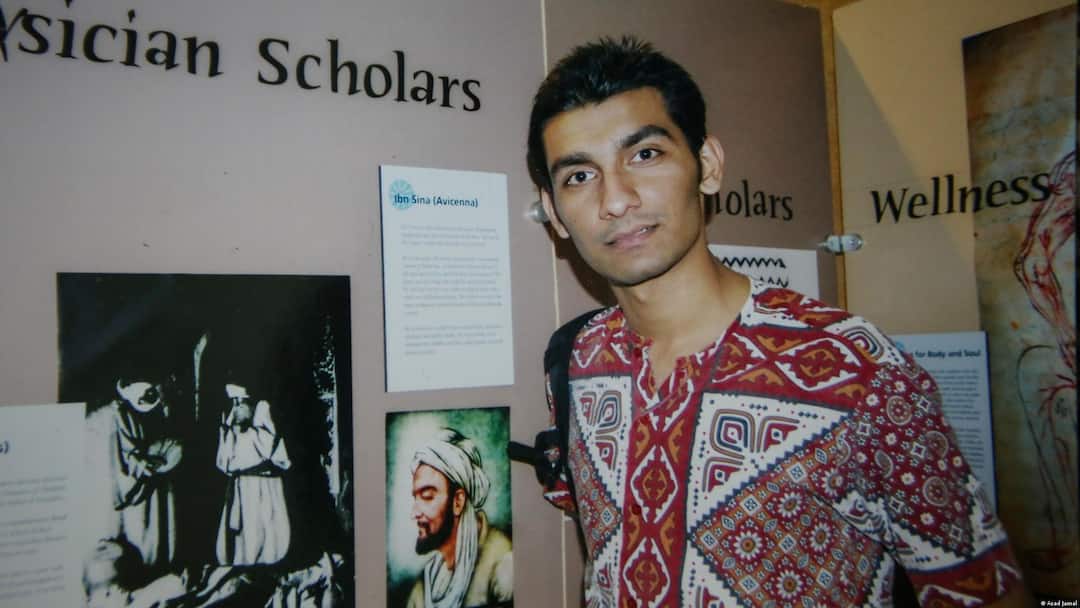
Junaid Hafeez, a former university lecturer and Fullbright scholar was thrown in prison 13 years ago under Pakistan’s strict blasphemy laws for comments he allegedly made on Facebook. After a trial that spanned years, a court in 2019 sentenced him to death.
Last week, a high court in Lahore began hearing Hafeez’s appeal, raising hopes his conviction could be overturned.

“I want to see my son free and back home. We are fighting a very difficult battle,” Junaid Hafeez’s father, Hafeez-un-Naseer, told DW.
Naseer said he met with his son in prison last Thursday through a glass window, speaking to him by phone.
“This case has taken everything from us,” he said.
Saif-ul-Malook, a lawyer representing Hafeez, said the academic has read thousands of books during his years in prison.
“He is an intellectual. His health is fine, but he is frustrated inside the jail,” Malook told DW. “I am hopeful that under this bench, he will be released.”
Who is Junaid Hafeez?
Before his arrest, Hafeez was a Fulbright scholar and had studied in the United States. He later returned to Pakistan and began working as a lecturer in English literature at Bahauddin Zakariya University in the city of Multan.
Human rights groups say that shortly after he began working there as a graduate student in 2011, he found himself targeted by an Islamist student group who took issue with what they considered Hafeez’s “liberal” teaching.
Hafeez was arrested on March 13, 2013, accused of using a fake Facebook profile to insult the Prophet Muhammad in a closed group called “So-Called Liberals of Pakistan.”
His father has said he was set up by the Islamists on campus, who wanted to get one of their own into an open position at the university.
What are the details of the blasphemy case?
His trial began in 2014. Because of security concerns, legal proceedings were later moved to Multan Central Jail, and were repeatedly delayed until he was sentenced to death by a trial court in Multan. Hafeez challenged the verdict in 2020, and his appeal has yet to be decided.
The Lahore High Court heard Hafeez’s appeal on September 22 before a two-member bench. The judges issued notices to the prosecution and the complainant and asked for arguments on the electronic evidence being relied upon in the case. This includes Facebook material attributed to Hafeez.
“Lahore High Court judges have generally been reluctant to hear blasphemy appeals. This time, Justice Sadiq Mahmud Khurram is on the bench. Let’s see how he approaches the case. In my experience, there is prejudice against the accused at every stage,” Malook said.
Pakistan’s blasphemy laws in focus
Hafiz Ehtisham Ahmed, an Islamabad-based Islamic activist, told DW he thinks the court should uphold the blasphemy conviction, arguing abolishing the laws could “encourage disrespect for religion.”
“There is international pressure on Pakistan to change these laws. If Hafeez is acquitted, it would raise serious questions about the justice system,” Ahmed said.
Strict blasphemy laws in Muslim-majority Pakistan have been widely condemned internationally for their arbitrary applicaiton and the potential for abuse of power.
Pakistani policy analyst Raza Rumi said that judges are under intense pressure when handling blasphemy cases.
“Acquittals or even procedural decisions can trigger threats and public backlash, contributing to delays and caution in handling such cases,” Rumi told DW.
Security has been a major issue throughout the proceedings.
“Human rights groups have documented threats against judges, lawyers, and prosecutors in blasphemy cases. Concerns over their safety can affect both the pace of proceedings and judicial independence,” Rumi added.

At least seven judges were transferred during the trial. Hafeez’s first lawyer, Rashid Rehman, was shot dead in his Multan office in May 2014. He had reportedly received threats in connection with the case.
What are the chances for Hafeez’s appeal?
Hafeez can still be released if the Lahore High Court overturns his conviction. But that will depend on the judges’ assessment of the evidence and the arguments made during the appeal. A death sentence imposed by a trial court does not become final without scrutiny by the high court.
For Hafeez, the question now is how quickly the Lahore High Court can hear and decide his appeal after years of delays. The next hearing is due on October 10, but it is unclear how long it will take the court to decide.
“We wish that one night we could go to sleep and wake up to find our son free and back home,” said father Naseer.
“I still remember the pain we have endured over all these years since my son was falsely accused. Thirteen years have taken so much from our family, but we have never stopped hoping that one day Junaid will walk free,” Naseer added.
Human Rights Watch (HRW) has called for the blasphemy conviction to be overturned. In a February press statement, HRW called for Hafeez’s release, adding he has been kept in solitary confinement since June 2014.
“If his appeal is rejected, Junaid’s mother will not survive it. His father can barely walk. The whole family has been destroyed. If released, I believe Junaid will become an internationally recognized intellectual, lecturing at leading universities,” said lawyer Malook.

“We hope that Hafeez’s remaining life will not be wasted in the prison on the death row and [that his] case will be finally concluded and he will be acquitted,” Malookadded.

(Disclaimer: This report first appeared on Deutsche Welle, and has been republished on ABP Live as part of a special arrangement. Apart from the headline, no changes have been made in the report by ABP Live.)

