



WASHINGTON — President Trump’s pledge to give every American adult $5,000 if Republicans retain control of Congress in November is drawing scrutiny over its legality, the price tag and whether he truly intends to follow through on such a spectacular promise.
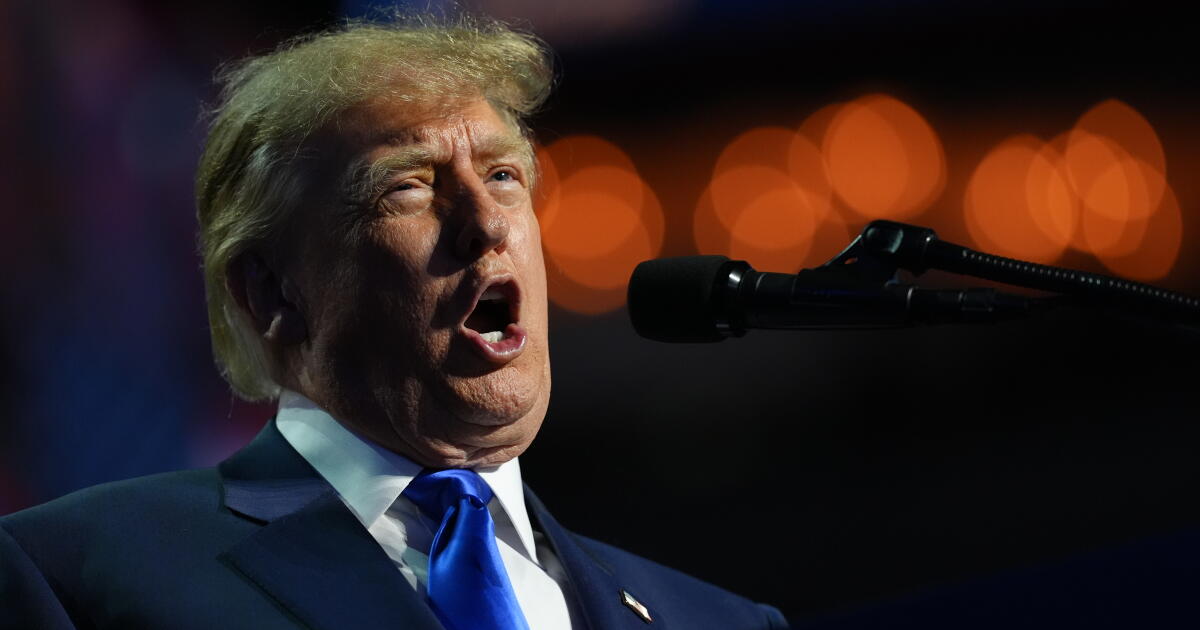
Speaking at the Republican midterm convention in Dallas on Wednesday night, Trump told the crowd that if the GOP wins, Americans will “win with us” and get paid. He added: “It will be called the Trump Dividend.”
But the proposal — which would need congressional approval — raised immediate questions about whether the president can legally promise voters a payout contingent on his party’s success at the polls and drew criticism from both sides of the aisle, including some GOP donors, who saw the idea as a potential bribe.
“I am hugely in favor of winning the midterms, and love much about this admin, but am strongly against bread and circus bribes,” Joe Lonsdale, co-founder of technology firm Palantir and a Republican donor, said on X.
Legal experts, meanwhile, say the pledge — however unusual — is unlikely to run afoul of federal bribery and vote-buying statutes. It is almost certainly protected by the 1st Amendment, said UCLA law professor Rick Hasen.
“I believe they are constitutionally protected,” Hasen wrote Thursday on his Election Law Blog. “How is this different from a candidate pledging if elected to secure ‘medicare for all’ or to cut everyone’s taxes?”
The White House did not respond when asked if the president had received a legal opinion on the proposal or who had signed off on it. But in a statement, White House spokesperson Davis Ingle dismissed the criticism, saying it was fueled by “the doomers and naysayers” who have consistently doubted Trump’s ability to deliver on his campaign promises.
“President Trump has consistently proven his doubters wrong, drawing a clear contrast with the Democrats’ record of historic inflation, unfettered illegal immigration, skyrocketing crime, and weakness on the world stage,” Ingle said. “With the continued support of the American people, President Trump will keep delivering real results.”
Trump offered the proposal as his standing with voters has been sliding for months, and as a growing number of Americans have expressed disapproval with his heavy-handed tariff policies, crackdowns on immigrant labor and ongoing war in Iran that has increased fuel prices.
Hours before Trump promised the payments, he told reporters that he believes the war with Iran will be over “immediately” after the midterm elections, and that as a result, gas prices will go down. Trump did not offer a clear timeline as to when after the midterms it would end.
“They’re going to be tumbling down, and we’ll get them down. I think for gasoline, we’ll get them below $2 a gallon,” the president predicted. He claimed Iranian leaders “can’t hold out any longer,” but are trying to affect the outcome of the election so that Democrats win and “leave them alone and let them have their nuclear weapon.”
Despite the economic pressures, Trump said the $5,000 payments would be possible because of the United States’ “tremendous strength and success economically.” They would cost more than $1 trillion, add significantly to the country’s nearly $1.8-trillion annual budget deficit and exacerbate concerns about inflation. Last month, the national debt topped $40 trillion for the first time.
Economists balked at the proposal, questioning whether any future Congress, regardless of party control, would pass a plan that would balloon the national debt and annual deficit.
The Committee for a Responsible Federal Budget estimated it would cost $1.2 trillion, or 3.5% of the GDP, a move that “would nearly double the deficit during a time when we’re at full employment, inflation is running ahead of target, and bond yields appear to signal more inflation in the future,” said Eric Zwick, a professor of economics and finance at the University of Chicago Booth School of Business.
“I find it hard to imagine any Congress would be willing to do this at this scale,” Zwick said, noting that the One Big Beautiful Bill Act — the signature legislation of Trump’s second term — cost less than a third as much as Trump’s newest proposal per year, and barely passed with party-line support.
Valerie Ramey, a senior fellow at the Hoover Institution at Stanford and a research associate of the National Bureau of Economic Research, said Trump’s policy proposal would likely lead to even higher inflation and interest rates.
“Distributing $1.3 trillion in dividends to Americans when federal debt is already at 100% of [gross domestic product] would be a highly irresponsible policy,” Ramey said. “It might even lead to a U.S. debt crisis.”
Some Republican candidates, however, endorsed the idea.
“I will get a bill ready so that we can get the Trump Dividend passed immediately after the November 3rd election,” Sen. Bernie Moreno (R-Ohio) wrote on X late Wednesday. “Because Republicans (and America) will win!”
Vice President JD Vance appeared to try to walk back Trump’s proposal — at least in part — by suggesting the dividend payments would not go to the wealthy. Vance suggested it could be paid for by U.S. tariff revenues, though the suggested payment dwarfs what the U.S. has taken in through the protectionist measures.
Trump has made similar promises. Last year, he promised to use tariff revenue to give middle- and low-income Americans a $2,000 dividend. That proposal has not materialized.
David Becker, the executive director of the Center for Election Innovation & Research, said Trump’s proposal appeared to be a “desperate” attempt to sow doubt ahead of the midterm elections.
“Ultimately, it is going to be up to voters whether or not they trust this man to deliver on his promises,” Becker said. “If I were a voter, I would be asking myself, why are you promising to do this in 2027? You control both houses now. Why not deliver on this promise now?”
Asked in an interview with Fox News on Wednesday why he was not giving the money now, Trump blamed Democrats, who are in the minority.
“Because the Democrats can’t do it,” he said. “Because with them it is negative growth, with us it is so positive.”
This article includes reporting by the Associated Press.

WASHINGTON — President Trump’s pledge to give every American adult $5,000 if Republicans retain control of Congress in November is drawing scrutiny over its legality, the price tag and whether he truly intends to follow through on such a spectacular promise.
Speaking at the Republican midterm convention in Dallas on Wednesday night, Trump told the crowd that if the GOP wins, Americans will “win with us” and get paid. He added: “It will be called the Trump Dividend.”
But the proposal — which would need congressional approval — raised immediate questions about whether the president can legally promise voters a payout contingent on his party’s success at the polls and drew criticism from both sides of the aisle, including some GOP donors, who saw the idea as a potential bribe.
“I am hugely in favor of winning the midterms, and love much about this admin, but am strongly against bread and circus bribes,” Joe Lonsdale, co-founder of technology firm Palantir and a Republican donor, said on X.
Legal experts, meanwhile, say the pledge — however unusual — is unlikely to run afoul of federal bribery and vote-buying statutes. It is almost certainly protected by the 1st Amendment, said UCLA law professor Rick Hasen.
“I believe they are constitutionally protected,” Hasen wrote Thursday on his Election Law Blog. “How is this different from a candidate pledging if elected to secure ‘medicare for all’ or to cut everyone’s taxes?”
The White House did not respond when asked if the president had received a legal opinion on the proposal or who had signed off on it. But in a statement, White House spokesperson Davis Ingle dismissed the criticism, saying it was fueled by “the doomers and naysayers” who have consistently doubted Trump’s ability to deliver on his campaign promises.
“President Trump has consistently proven his doubters wrong, drawing a clear contrast with the Democrats’ record of historic inflation, unfettered illegal immigration, skyrocketing crime, and weakness on the world stage,” Ingle said. “With the continued support of the American people, President Trump will keep delivering real results.”
Trump offered the proposal as his standing with voters has been sliding for months, and as a growing number of Americans have expressed disapproval with his heavy-handed tariff policies, crackdowns on immigrant labor and ongoing war in Iran that has increased fuel prices.
Hours before Trump promised the payments, he told reporters that he believes the war with Iran will be over “immediately” after the midterm elections, and that as a result, gas prices will go down. Trump did not offer a clear timeline as to when after the midterms it would end.
“They’re going to be tumbling down, and we’ll get them down. I think for gasoline, we’ll get them below $2 a gallon,” the president predicted. He claimed Iranian leaders “can’t hold out any longer,” but are trying to affect the outcome of the election so that Democrats win and “leave them alone and let them have their nuclear weapon.”
Despite the economic pressures, Trump said the $5,000 payments would be possible because of the United States’ “tremendous strength and success economically.” They would cost more than $1 trillion, add significantly to the country’s nearly $1.8-trillion annual budget deficit and exacerbate concerns about inflation. Last month, the national debt topped $40 trillion for the first time.
Economists balked at the proposal, questioning whether any future Congress, regardless of party control, would pass a plan that would balloon the national debt and annual deficit.
The Committee for a Responsible Federal Budget estimated it would cost $1.2 trillion, or 3.5% of the GDP, a move that “would nearly double the deficit during a time when we’re at full employment, inflation is running ahead of target, and bond yields appear to signal more inflation in the future,” said Eric Zwick, a professor of economics and finance at the University of Chicago Booth School of Business.
“I find it hard to imagine any Congress would be willing to do this at this scale,” Zwick said, noting that the One Big Beautiful Bill Act — the signature legislation of Trump’s second term — cost less than a third as much as Trump’s newest proposal per year, and barely passed with party-line support.
Valerie Ramey, a senior fellow at the Hoover Institution at Stanford and a research associate of the National Bureau of Economic Research, said Trump’s policy proposal would likely lead to even higher inflation and interest rates.
“Distributing $1.3 trillion in dividends to Americans when federal debt is already at 100% of [gross domestic product] would be a highly irresponsible policy,” Ramey said. “It might even lead to a U.S. debt crisis.”
Some Republican candidates, however, endorsed the idea.
“I will get a bill ready so that we can get the Trump Dividend passed immediately after the November 3rd election,” Sen. Bernie Moreno (R-Ohio) wrote on X late Wednesday. “Because Republicans (and America) will win!”
Vice President JD Vance appeared to try to walk back Trump’s proposal — at least in part — by suggesting the dividend payments would not go to the wealthy. Vance suggested it could be paid for by U.S. tariff revenues, though the suggested payment dwarfs what the U.S. has taken in through the protectionist measures.
Trump has made similar promises. Last year, he promised to use tariff revenue to give middle- and low-income Americans a $2,000 dividend. That proposal has not materialized.
David Becker, the executive director of the Center for Election Innovation & Research, said Trump’s proposal appeared to be a “desperate” attempt to sow doubt ahead of the midterm elections.
“Ultimately, it is going to be up to voters whether or not they trust this man to deliver on his promises,” Becker said. “If I were a voter, I would be asking myself, why are you promising to do this in 2027? You control both houses now. Why not deliver on this promise now?”
Asked in an interview with Fox News on Wednesday why he was not giving the money now, Trump blamed Democrats, who are in the minority.
“Because the Democrats can’t do it,” he said. “Because with them it is negative growth, with us it is so positive.”
This article includes reporting by the Associated Press.

WASHINGTON — President Trump’s pledge to give every American adult $5,000 if Republicans retain control of Congress in November is drawing scrutiny over its legality, the price tag and whether he truly intends to follow through on such a spectacular promise.
Speaking at the Republican midterm convention in Dallas on Wednesday night, Trump told the crowd that if the GOP wins, Americans will “win with us” and get paid. He added: “It will be called the Trump Dividend.”
But the proposal — which would need congressional approval — raised immediate questions about whether the president can legally promise voters a payout contingent on his party’s success at the polls and drew criticism from both sides of the aisle, including some GOP donors, who saw the idea as a potential bribe.
“I am hugely in favor of winning the midterms, and love much about this admin, but am strongly against bread and circus bribes,” Joe Lonsdale, co-founder of technology firm Palantir and a Republican donor, said on X.
Legal experts, meanwhile, say the pledge — however unusual — is unlikely to run afoul of federal bribery and vote-buying statutes. It is almost certainly protected by the 1st Amendment, said UCLA law professor Rick Hasen.
“I believe they are constitutionally protected,” Hasen wrote Thursday on his Election Law Blog. “How is this different from a candidate pledging if elected to secure ‘medicare for all’ or to cut everyone’s taxes?”
The White House did not respond when asked if the president had received a legal opinion on the proposal or who had signed off on it. But in a statement, White House spokesperson Davis Ingle dismissed the criticism, saying it was fueled by “the doomers and naysayers” who have consistently doubted Trump’s ability to deliver on his campaign promises.
“President Trump has consistently proven his doubters wrong, drawing a clear contrast with the Democrats’ record of historic inflation, unfettered illegal immigration, skyrocketing crime, and weakness on the world stage,” Ingle said. “With the continued support of the American people, President Trump will keep delivering real results.”
Trump offered the proposal as his standing with voters has been sliding for months, and as a growing number of Americans have expressed disapproval with his heavy-handed tariff policies, crackdowns on immigrant labor and ongoing war in Iran that has increased fuel prices.
Hours before Trump promised the payments, he told reporters that he believes the war with Iran will be over “immediately” after the midterm elections, and that as a result, gas prices will go down. Trump did not offer a clear timeline as to when after the midterms it would end.
“They’re going to be tumbling down, and we’ll get them down. I think for gasoline, we’ll get them below $2 a gallon,” the president predicted. He claimed Iranian leaders “can’t hold out any longer,” but are trying to affect the outcome of the election so that Democrats win and “leave them alone and let them have their nuclear weapon.”
Despite the economic pressures, Trump said the $5,000 payments would be possible because of the United States’ “tremendous strength and success economically.” They would cost more than $1 trillion, add significantly to the country’s nearly $1.8-trillion annual budget deficit and exacerbate concerns about inflation. Last month, the national debt topped $40 trillion for the first time.
Economists balked at the proposal, questioning whether any future Congress, regardless of party control, would pass a plan that would balloon the national debt and annual deficit.
The Committee for a Responsible Federal Budget estimated it would cost $1.2 trillion, or 3.5% of the GDP, a move that “would nearly double the deficit during a time when we’re at full employment, inflation is running ahead of target, and bond yields appear to signal more inflation in the future,” said Eric Zwick, a professor of economics and finance at the University of Chicago Booth School of Business.
“I find it hard to imagine any Congress would be willing to do this at this scale,” Zwick said, noting that the One Big Beautiful Bill Act — the signature legislation of Trump’s second term — cost less than a third as much as Trump’s newest proposal per year, and barely passed with party-line support.
Valerie Ramey, a senior fellow at the Hoover Institution at Stanford and a research associate of the National Bureau of Economic Research, said Trump’s policy proposal would likely lead to even higher inflation and interest rates.
“Distributing $1.3 trillion in dividends to Americans when federal debt is already at 100% of [gross domestic product] would be a highly irresponsible policy,” Ramey said. “It might even lead to a U.S. debt crisis.”
Some Republican candidates, however, endorsed the idea.
“I will get a bill ready so that we can get the Trump Dividend passed immediately after the November 3rd election,” Sen. Bernie Moreno (R-Ohio) wrote on X late Wednesday. “Because Republicans (and America) will win!”
Vice President JD Vance appeared to try to walk back Trump’s proposal — at least in part — by suggesting the dividend payments would not go to the wealthy. Vance suggested it could be paid for by U.S. tariff revenues, though the suggested payment dwarfs what the U.S. has taken in through the protectionist measures.
Trump has made similar promises. Last year, he promised to use tariff revenue to give middle- and low-income Americans a $2,000 dividend. That proposal has not materialized.
David Becker, the executive director of the Center for Election Innovation & Research, said Trump’s proposal appeared to be a “desperate” attempt to sow doubt ahead of the midterm elections.
“Ultimately, it is going to be up to voters whether or not they trust this man to deliver on his promises,” Becker said. “If I were a voter, I would be asking myself, why are you promising to do this in 2027? You control both houses now. Why not deliver on this promise now?”
Asked in an interview with Fox News on Wednesday why he was not giving the money now, Trump blamed Democrats, who are in the minority.
“Because the Democrats can’t do it,” he said. “Because with them it is negative growth, with us it is so positive.”
This article includes reporting by the Associated Press.
WASHINGTON — President Trump’s pledge to give every American adult $5,000 if Republicans retain control of Congress in November is drawing scrutiny over its legality, the price tag and whether he truly intends to follow through on such a spectacular promise.
Speaking at the Republican midterm convention in Dallas on Wednesday night, Trump told the crowd that if the GOP wins, Americans will “win with us” and get paid. He added: “It will be called the Trump Dividend.”
But the proposal — which would need congressional approval — raised immediate questions about whether the president can legally promise voters a payout contingent on his party’s success at the polls and drew criticism from both sides of the aisle, including some GOP donors, who saw the idea as a potential bribe.
“I am hugely in favor of winning the midterms, and love much about this admin, but am strongly against bread and circus bribes,” Joe Lonsdale, co-founder of technology firm Palantir and a Republican donor, said on X.
Legal experts, meanwhile, say the pledge — however unusual — is unlikely to run afoul of federal bribery and vote-buying statutes. It is almost certainly protected by the 1st Amendment, said UCLA law professor Rick Hasen.
“I believe they are constitutionally protected,” Hasen wrote Thursday on his Election Law Blog. “How is this different from a candidate pledging if elected to secure ‘medicare for all’ or to cut everyone’s taxes?”
The White House did not respond when asked if the president had received a legal opinion on the proposal or who had signed off on it. But in a statement, White House spokesperson Davis Ingle dismissed the criticism, saying it was fueled by “the doomers and naysayers” who have consistently doubted Trump’s ability to deliver on his campaign promises.
“President Trump has consistently proven his doubters wrong, drawing a clear contrast with the Democrats’ record of historic inflation, unfettered illegal immigration, skyrocketing crime, and weakness on the world stage,” Ingle said. “With the continued support of the American people, President Trump will keep delivering real results.”
Trump offered the proposal as his standing with voters has been sliding for months, and as a growing number of Americans have expressed disapproval with his heavy-handed tariff policies, crackdowns on immigrant labor and ongoing war in Iran that has increased fuel prices.
Hours before Trump promised the payments, he told reporters that he believes the war with Iran will be over “immediately” after the midterm elections, and that as a result, gas prices will go down. Trump did not offer a clear timeline as to when after the midterms it would end.
“They’re going to be tumbling down, and we’ll get them down. I think for gasoline, we’ll get them below $2 a gallon,” the president predicted. He claimed Iranian leaders “can’t hold out any longer,” but are trying to affect the outcome of the election so that Democrats win and “leave them alone and let them have their nuclear weapon.”
Despite the economic pressures, Trump said the $5,000 payments would be possible because of the United States’ “tremendous strength and success economically.” They would cost more than $1 trillion, add significantly to the country’s nearly $1.8-trillion annual budget deficit and exacerbate concerns about inflation. Last month, the national debt topped $40 trillion for the first time.
Economists balked at the proposal, questioning whether any future Congress, regardless of party control, would pass a plan that would balloon the national debt and annual deficit.
The Committee for a Responsible Federal Budget estimated it would cost $1.2 trillion, or 3.5% of the GDP, a move that “would nearly double the deficit during a time when we’re at full employment, inflation is running ahead of target, and bond yields appear to signal more inflation in the future,” said Eric Zwick, a professor of economics and finance at the University of Chicago Booth School of Business.
“I find it hard to imagine any Congress would be willing to do this at this scale,” Zwick said, noting that the One Big Beautiful Bill Act — the signature legislation of Trump’s second term — cost less than a third as much as Trump’s newest proposal per year, and barely passed with party-line support.
Valerie Ramey, a senior fellow at the Hoover Institution at Stanford and a research associate of the National Bureau of Economic Research, said Trump’s policy proposal would likely lead to even higher inflation and interest rates.
“Distributing $1.3 trillion in dividends to Americans when federal debt is already at 100% of [gross domestic product] would be a highly irresponsible policy,” Ramey said. “It might even lead to a U.S. debt crisis.”
Some Republican candidates, however, endorsed the idea.
“I will get a bill ready so that we can get the Trump Dividend passed immediately after the November 3rd election,” Sen. Bernie Moreno (R-Ohio) wrote on X late Wednesday. “Because Republicans (and America) will win!”
Vice President JD Vance appeared to try to walk back Trump’s proposal — at least in part — by suggesting the dividend payments would not go to the wealthy. Vance suggested it could be paid for by U.S. tariff revenues, though the suggested payment dwarfs what the U.S. has taken in through the protectionist measures.
Trump has made similar promises. Last year, he promised to use tariff revenue to give middle- and low-income Americans a $2,000 dividend. That proposal has not materialized.
David Becker, the executive director of the Center for Election Innovation & Research, said Trump’s proposal appeared to be a “desperate” attempt to sow doubt ahead of the midterm elections.
“Ultimately, it is going to be up to voters whether or not they trust this man to deliver on his promises,” Becker said. “If I were a voter, I would be asking myself, why are you promising to do this in 2027? You control both houses now. Why not deliver on this promise now?”
Asked in an interview with Fox News on Wednesday why he was not giving the money now, Trump blamed Democrats, who are in the minority.
“Because the Democrats can’t do it,” he said. “Because with them it is negative growth, with us it is so positive.”
This article includes reporting by the Associated Press.

