

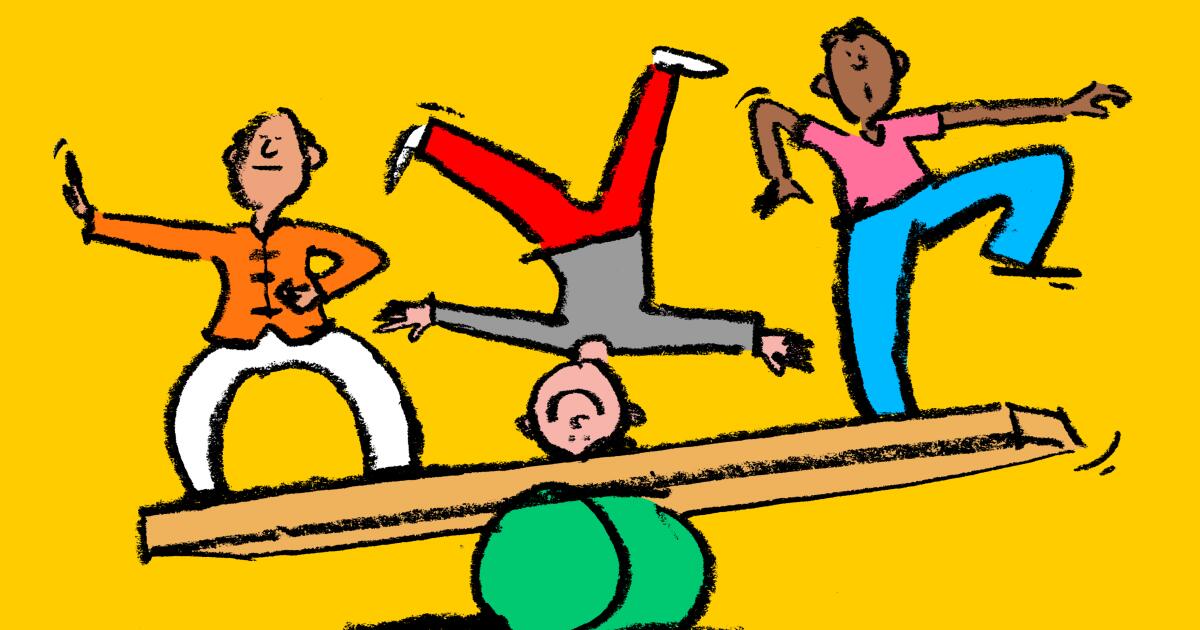

I’m standing in a stork-like position in my living room balancing on one leg, the other leg kicked out behind me. My arms are extended at my sides and I’m leaning forward slightly — not unlike a 3-year-old pretending to be an airplane readying for takeoff. (Such is the life of a wellness writer!)
The exercise is ridiculously easy. Until it’s not. I close my eyes and, suddenly, my legs wobble and my ankles quiver. I sway to the left, then to the right, before finally toppling forward.

Good balance is beneficial for living a longer, healthier life — at any age. Check out our series featuring the latest research, a balance IQ test and simple at-home exercises.
The single-leg activity, meant to test my balance, is giving me critical information for my future. Much to my chagrin, I failed — and if the data is any indication, living to a ripe old age isn’t as much of a given as I expected.
When it comes to fitness and longevity, cardio, strength training and stretching have long gotten the spotlight as the go-to approaches for optimizing our health span and lifespan. But balance is having a moment, quickly becoming the fourth tent pole of wellness and healthy aging. And it’s now even seen as a predictor of longevity. According to a 2022 study published in the British Journal of Sports Medicine, participants 51 to 75 years old who couldn’t perform a similar test to the one I did (standing on one leg for at least 10 seconds with eyes open), had an 84% higher risk of death within the next decade.
The single leg balance test is even considered a leading indicator of neuromuscular aging, says a 2024 Mayo Clinic study. “The duration an individual, whether male or female, can maintain balance on one leg,” it concluded, “emerges as the most reliable determinant of aging, surpassing strength, gait, and other balance parameters.”
Why balance predicts lifespan
Mike Teater is the director of balance education for Fyzical, a national network of clinics specializing in balance and dizziness. He says that balance is “100% a predictor of longevity” partly because it initiates a domino effect.
“Falls lead to injury. Which leads to decreased mobility, confidence and decreased activity,” he says. “That leads to a higher risk of chronic disease, like heart disease, diabetes, obesity. And social isolation — which can lead to depression and is a contributing factor to declining mental health and cognition, including dementia.”
Injurious falls in older adults are so common, it’s become a national public health crisis. One in four adults in the U.S. age 65 or older falls annually, according to the Centers for Disease Control and Prevention — in 2020, that was about 14 million people. Falls are the leading cause of injury-related death in older adults, with the “fall death rate” rising about 4.1% annually from 1999 to 2020. In 2024, more than 43,000 adults over 65 died from a fall. The related cost on the U.S. healthcare system is estimated to be about $80 billion annually, according to the CDC, which in 2012 released a fall prevention initiative called STEADI (Stopping Elderly Accidents, Deaths & Injuries).
But we have more control over our balance than we may realize, urges Duke University balance researcher, Kristal M. Riska, who’s president of the American Balance Society.
“Often, as we get older, we attribute balance problems to ‘oh, that’s just aging’ — and certainly there are age-related changes — but that doesn’t mean we can’t intervene,” Riska says. “Over the last several decades there’s been a push among doctors and researchers to improve detection of balance impairment and falls prevention, with many multifaceted programs available to help improve balance, strength, flexibility and coordination.”
“We’re all looking to live longer and have more quality of life,” adds Teater. “And one of the ways to do that is to continue to engage with the world and stay active. Having good balance is critical for that.”
Balance is a game changer at any age

(Ryan Gillett / For The Times)
The idea that balance is only important for wobbly seniors, however, is a stereotype. Balance is crucial at any age. It helps younger people and athletes optimize athletic performance, prevent sports-related injuries and stay fit. It’s a component in strength training and vice versa: strength is fundamental for balance, as muscle supports stability and mobility.
A balanced musculoskeletal system, in everyday life, helps prevent abnormal movement patterns that can lead to chronic injuries, even in nonathletes. That’s particularly true for individuals whose occupations involve significant movement, such as delivery drivers, teachers, caregivers and food industry servers, says exercise physiologist Rachelle Reed, who is head of scientific research at Therabody, a wellness technology company.
“Having good movement quality and well-maintained neuromuscular feedback, meaning the connection of your brain to your body and where it is in space — which is balance — helps with resiliency to needless injuries that might happen from twisting too fast or misjudging how far you have to reach back to grab something,” Reed says. “Balance is integral for that.”
The science behind staying upright
Balance is a nuanced mix of the body’s sensory systems working together: the ocular system (sight), the gravity-dependent vestibular system (inner ear) and proprioception (your awareness of where your body is in space). That’s why, when you close your eyes while doing a balance exercise, it’s more difficult — your brain only has two senses from which to draw information instead of three. The same is true if you’re standing on an uneven or soft surface: the body’s proprioception, or touch, cue is compromised. Balance also involves neuromuscular coordination (how well your brain and body communicate) as well as muscular strength and joint health (you need a strong core, legs and ankles to stay steady).
It’s so “multifactorial,” that one UCLA Health sports medicine physician, Kimberly M. Burbank, likens balance training to “almost like brain training.”
“The reason balance is so important in the medical field,” Burbank says, “is because it’s a real-time assessment of how well our systems are working together — our brain, nerves and muscles. That’s why it’s one of the strongest functional predictors of health, including healthy aging. It requires a ton of coordination and different brain processing centers to be well balanced.”
But because it’s so integrative, balance diminishes faster than strength as we age, Burbank says. Balance naturally deteriorates as our eyesight, sense of touch, strength and vestibular systems decline. Avoiding outdoor excursions, or reaching more frequently for walls or furniture to steady yourself while walking, particularly in familiar spaces, could be an indicator your balance is declining. As would be feeling unsteady on your feet or being overly concerned with falling.
For that reason, it’s important to start balance training early on — and continue it as you get older.
“Balance is super helpful when you’re young, from an athletic standpoint,” Burbank says. “But also for the longevity piece. If you start training your balance early, then you can maintain it longer.”
How to improve your balance
The good news: You can improve your balance. And there are myriad approaches to balance training. Whereas surfing is beneficial for building core strength and balance, yoga is helpful for mobility and proprioception, for example. For older adults, physical therapists often recommend the low-impact Otago Exercise Program, composed of 17 controlled progressive strength and balance exercises in conjunction with a walking plan.
Balance training isn’t meant to replace regular exercise: the average adult still needs to do aerobic exercise for cardiovascular health, stretching for flexibility and strength training to build muscles and bone density. (The current recommendation is 150 minutes of moderate-intensity exercise or 75 minutes of vigorous exercise a week, according to the CDC, along with strength-building exercise at least two times a week.)
But targeted balance exercises should be added to your workout routine. They don’t have to be long or involved: five one-minute exercises, for example, three to four times a week. Add balance exercises to the end of a gym routine; or do balance training at home, in your free time.
Keep it simple. Watching TV? Balance on one leg for 30 seconds during a commercial break, then switch legs at the next commercial. Waiting for an Uber? Walk heel-to-toe on the sidewalk to the curb and back. (You live in L.A. — no one will blink.)
“You’re retraining the neuromuscular system,” Burbank says, adding that it could take three to six months to notice concrete improvement. “But eventually, your body starts remembering and you can build upon the baseline you develop by doing it repetitively.”
We queried experts across sports medicine, personal training and physical therapy to devise easy routines comprising simple exercises you can do at home to test and train your balance. They don’t involve fancy gym equipment or even much time. The key, with all of them, is consistency and progression, making the exercises increasingly more difficult as you master them.
The first step? Test your “balance IQ.” Meaning: your balance skill level.
You can find three easy, DIY balance tests here as well as a questionnaire to get you started.
So go ahead, clear a spot in your living room, extend your arms and strike your best airplane pose — your future self will thank you.

I’m standing in a stork-like position in my living room balancing on one leg, the other leg kicked out behind me. My arms are extended at my sides and I’m leaning forward slightly — not unlike a 3-year-old pretending to be an airplane readying for takeoff. (Such is the life of a wellness writer!)
The exercise is ridiculously easy. Until it’s not. I close my eyes and, suddenly, my legs wobble and my ankles quiver. I sway to the left, then to the right, before finally toppling forward.
Good balance is beneficial for living a longer, healthier life — at any age. Check out our series featuring the latest research, a balance IQ test and simple at-home exercises.
The single-leg activity, meant to test my balance, is giving me critical information for my future. Much to my chagrin, I failed — and if the data is any indication, living to a ripe old age isn’t as much of a given as I expected.
When it comes to fitness and longevity, cardio, strength training and stretching have long gotten the spotlight as the go-to approaches for optimizing our health span and lifespan. But balance is having a moment, quickly becoming the fourth tent pole of wellness and healthy aging. And it’s now even seen as a predictor of longevity. According to a 2022 study published in the British Journal of Sports Medicine, participants 51 to 75 years old who couldn’t perform a similar test to the one I did (standing on one leg for at least 10 seconds with eyes open), had an 84% higher risk of death within the next decade.
The single leg balance test is even considered a leading indicator of neuromuscular aging, says a 2024 Mayo Clinic study. “The duration an individual, whether male or female, can maintain balance on one leg,” it concluded, “emerges as the most reliable determinant of aging, surpassing strength, gait, and other balance parameters.”
Why balance predicts lifespan
Mike Teater is the director of balance education for Fyzical, a national network of clinics specializing in balance and dizziness. He says that balance is “100% a predictor of longevity” partly because it initiates a domino effect.
“Falls lead to injury. Which leads to decreased mobility, confidence and decreased activity,” he says. “That leads to a higher risk of chronic disease, like heart disease, diabetes, obesity. And social isolation — which can lead to depression and is a contributing factor to declining mental health and cognition, including dementia.”
Injurious falls in older adults are so common, it’s become a national public health crisis. One in four adults in the U.S. age 65 or older falls annually, according to the Centers for Disease Control and Prevention — in 2020, that was about 14 million people. Falls are the leading cause of injury-related death in older adults, with the “fall death rate” rising about 4.1% annually from 1999 to 2020. In 2024, more than 43,000 adults over 65 died from a fall. The related cost on the U.S. healthcare system is estimated to be about $80 billion annually, according to the CDC, which in 2012 released a fall prevention initiative called STEADI (Stopping Elderly Accidents, Deaths & Injuries).
But we have more control over our balance than we may realize, urges Duke University balance researcher, Kristal M. Riska, who’s president of the American Balance Society.
“Often, as we get older, we attribute balance problems to ‘oh, that’s just aging’ — and certainly there are age-related changes — but that doesn’t mean we can’t intervene,” Riska says. “Over the last several decades there’s been a push among doctors and researchers to improve detection of balance impairment and falls prevention, with many multifaceted programs available to help improve balance, strength, flexibility and coordination.”
“We’re all looking to live longer and have more quality of life,” adds Teater. “And one of the ways to do that is to continue to engage with the world and stay active. Having good balance is critical for that.”
Balance is a game changer at any age
(Ryan Gillett / For The Times)
The idea that balance is only important for wobbly seniors, however, is a stereotype. Balance is crucial at any age. It helps younger people and athletes optimize athletic performance, prevent sports-related injuries and stay fit. It’s a component in strength training and vice versa: strength is fundamental for balance, as muscle supports stability and mobility.
A balanced musculoskeletal system, in everyday life, helps prevent abnormal movement patterns that can lead to chronic injuries, even in nonathletes. That’s particularly true for individuals whose occupations involve significant movement, such as delivery drivers, teachers, caregivers and food industry servers, says exercise physiologist Rachelle Reed, who is head of scientific research at Therabody, a wellness technology company.
“Having good movement quality and well-maintained neuromuscular feedback, meaning the connection of your brain to your body and where it is in space — which is balance — helps with resiliency to needless injuries that might happen from twisting too fast or misjudging how far you have to reach back to grab something,” Reed says. “Balance is integral for that.”
The science behind staying upright
Balance is a nuanced mix of the body’s sensory systems working together: the ocular system (sight), the gravity-dependent vestibular system (inner ear) and proprioception (your awareness of where your body is in space). That’s why, when you close your eyes while doing a balance exercise, it’s more difficult — your brain only has two senses from which to draw information instead of three. The same is true if you’re standing on an uneven or soft surface: the body’s proprioception, or touch, cue is compromised. Balance also involves neuromuscular coordination (how well your brain and body communicate) as well as muscular strength and joint health (you need a strong core, legs and ankles to stay steady).
It’s so “multifactorial,” that one UCLA Health sports medicine physician, Kimberly M. Burbank, likens balance training to “almost like brain training.”
“The reason balance is so important in the medical field,” Burbank says, “is because it’s a real-time assessment of how well our systems are working together — our brain, nerves and muscles. That’s why it’s one of the strongest functional predictors of health, including healthy aging. It requires a ton of coordination and different brain processing centers to be well balanced.”
But because it’s so integrative, balance diminishes faster than strength as we age, Burbank says. Balance naturally deteriorates as our eyesight, sense of touch, strength and vestibular systems decline. Avoiding outdoor excursions, or reaching more frequently for walls or furniture to steady yourself while walking, particularly in familiar spaces, could be an indicator your balance is declining. As would be feeling unsteady on your feet or being overly concerned with falling.
For that reason, it’s important to start balance training early on — and continue it as you get older.
“Balance is super helpful when you’re young, from an athletic standpoint,” Burbank says. “But also for the longevity piece. If you start training your balance early, then you can maintain it longer.”
How to improve your balance
The good news: You can improve your balance. And there are myriad approaches to balance training. Whereas surfing is beneficial for building core strength and balance, yoga is helpful for mobility and proprioception, for example. For older adults, physical therapists often recommend the low-impact Otago Exercise Program, composed of 17 controlled progressive strength and balance exercises in conjunction with a walking plan.
Balance training isn’t meant to replace regular exercise: the average adult still needs to do aerobic exercise for cardiovascular health, stretching for flexibility and strength training to build muscles and bone density. (The current recommendation is 150 minutes of moderate-intensity exercise or 75 minutes of vigorous exercise a week, according to the CDC, along with strength-building exercise at least two times a week.)
But targeted balance exercises should be added to your workout routine. They don’t have to be long or involved: five one-minute exercises, for example, three to four times a week. Add balance exercises to the end of a gym routine; or do balance training at home, in your free time.
Keep it simple. Watching TV? Balance on one leg for 30 seconds during a commercial break, then switch legs at the next commercial. Waiting for an Uber? Walk heel-to-toe on the sidewalk to the curb and back. (You live in L.A. — no one will blink.)
“You’re retraining the neuromuscular system,” Burbank says, adding that it could take three to six months to notice concrete improvement. “But eventually, your body starts remembering and you can build upon the baseline you develop by doing it repetitively.”
We queried experts across sports medicine, personal training and physical therapy to devise easy routines comprising simple exercises you can do at home to test and train your balance. They don’t involve fancy gym equipment or even much time. The key, with all of them, is consistency and progression, making the exercises increasingly more difficult as you master them.
The first step? Test your “balance IQ.” Meaning: your balance skill level.
You can find three easy, DIY balance tests here as well as a questionnaire to get you started.
So go ahead, clear a spot in your living room, extend your arms and strike your best airplane pose — your future self will thank you.

I’m standing in a stork-like position in my living room balancing on one leg, the other leg kicked out behind me. My arms are extended at my sides and I’m leaning forward slightly — not unlike a 3-year-old pretending to be an airplane readying for takeoff. (Such is the life of a wellness writer!)
The exercise is ridiculously easy. Until it’s not. I close my eyes and, suddenly, my legs wobble and my ankles quiver. I sway to the left, then to the right, before finally toppling forward.
Good balance is beneficial for living a longer, healthier life — at any age. Check out our series featuring the latest research, a balance IQ test and simple at-home exercises.
The single-leg activity, meant to test my balance, is giving me critical information for my future. Much to my chagrin, I failed — and if the data is any indication, living to a ripe old age isn’t as much of a given as I expected.
When it comes to fitness and longevity, cardio, strength training and stretching have long gotten the spotlight as the go-to approaches for optimizing our health span and lifespan. But balance is having a moment, quickly becoming the fourth tent pole of wellness and healthy aging. And it’s now even seen as a predictor of longevity. According to a 2022 study published in the British Journal of Sports Medicine, participants 51 to 75 years old who couldn’t perform a similar test to the one I did (standing on one leg for at least 10 seconds with eyes open), had an 84% higher risk of death within the next decade.
The single leg balance test is even considered a leading indicator of neuromuscular aging, says a 2024 Mayo Clinic study. “The duration an individual, whether male or female, can maintain balance on one leg,” it concluded, “emerges as the most reliable determinant of aging, surpassing strength, gait, and other balance parameters.”
Why balance predicts lifespan
Mike Teater is the director of balance education for Fyzical, a national network of clinics specializing in balance and dizziness. He says that balance is “100% a predictor of longevity” partly because it initiates a domino effect.
“Falls lead to injury. Which leads to decreased mobility, confidence and decreased activity,” he says. “That leads to a higher risk of chronic disease, like heart disease, diabetes, obesity. And social isolation — which can lead to depression and is a contributing factor to declining mental health and cognition, including dementia.”
Injurious falls in older adults are so common, it’s become a national public health crisis. One in four adults in the U.S. age 65 or older falls annually, according to the Centers for Disease Control and Prevention — in 2020, that was about 14 million people. Falls are the leading cause of injury-related death in older adults, with the “fall death rate” rising about 4.1% annually from 1999 to 2020. In 2024, more than 43,000 adults over 65 died from a fall. The related cost on the U.S. healthcare system is estimated to be about $80 billion annually, according to the CDC, which in 2012 released a fall prevention initiative called STEADI (Stopping Elderly Accidents, Deaths & Injuries).
But we have more control over our balance than we may realize, urges Duke University balance researcher, Kristal M. Riska, who’s president of the American Balance Society.
“Often, as we get older, we attribute balance problems to ‘oh, that’s just aging’ — and certainly there are age-related changes — but that doesn’t mean we can’t intervene,” Riska says. “Over the last several decades there’s been a push among doctors and researchers to improve detection of balance impairment and falls prevention, with many multifaceted programs available to help improve balance, strength, flexibility and coordination.”
“We’re all looking to live longer and have more quality of life,” adds Teater. “And one of the ways to do that is to continue to engage with the world and stay active. Having good balance is critical for that.”
Balance is a game changer at any age
(Ryan Gillett / For The Times)
The idea that balance is only important for wobbly seniors, however, is a stereotype. Balance is crucial at any age. It helps younger people and athletes optimize athletic performance, prevent sports-related injuries and stay fit. It’s a component in strength training and vice versa: strength is fundamental for balance, as muscle supports stability and mobility.
A balanced musculoskeletal system, in everyday life, helps prevent abnormal movement patterns that can lead to chronic injuries, even in nonathletes. That’s particularly true for individuals whose occupations involve significant movement, such as delivery drivers, teachers, caregivers and food industry servers, says exercise physiologist Rachelle Reed, who is head of scientific research at Therabody, a wellness technology company.
“Having good movement quality and well-maintained neuromuscular feedback, meaning the connection of your brain to your body and where it is in space — which is balance — helps with resiliency to needless injuries that might happen from twisting too fast or misjudging how far you have to reach back to grab something,” Reed says. “Balance is integral for that.”
The science behind staying upright
Balance is a nuanced mix of the body’s sensory systems working together: the ocular system (sight), the gravity-dependent vestibular system (inner ear) and proprioception (your awareness of where your body is in space). That’s why, when you close your eyes while doing a balance exercise, it’s more difficult — your brain only has two senses from which to draw information instead of three. The same is true if you’re standing on an uneven or soft surface: the body’s proprioception, or touch, cue is compromised. Balance also involves neuromuscular coordination (how well your brain and body communicate) as well as muscular strength and joint health (you need a strong core, legs and ankles to stay steady).
It’s so “multifactorial,” that one UCLA Health sports medicine physician, Kimberly M. Burbank, likens balance training to “almost like brain training.”
“The reason balance is so important in the medical field,” Burbank says, “is because it’s a real-time assessment of how well our systems are working together — our brain, nerves and muscles. That’s why it’s one of the strongest functional predictors of health, including healthy aging. It requires a ton of coordination and different brain processing centers to be well balanced.”
But because it’s so integrative, balance diminishes faster than strength as we age, Burbank says. Balance naturally deteriorates as our eyesight, sense of touch, strength and vestibular systems decline. Avoiding outdoor excursions, or reaching more frequently for walls or furniture to steady yourself while walking, particularly in familiar spaces, could be an indicator your balance is declining. As would be feeling unsteady on your feet or being overly concerned with falling.
For that reason, it’s important to start balance training early on — and continue it as you get older.
“Balance is super helpful when you’re young, from an athletic standpoint,” Burbank says. “But also for the longevity piece. If you start training your balance early, then you can maintain it longer.”
How to improve your balance
The good news: You can improve your balance. And there are myriad approaches to balance training. Whereas surfing is beneficial for building core strength and balance, yoga is helpful for mobility and proprioception, for example. For older adults, physical therapists often recommend the low-impact Otago Exercise Program, composed of 17 controlled progressive strength and balance exercises in conjunction with a walking plan.
Balance training isn’t meant to replace regular exercise: the average adult still needs to do aerobic exercise for cardiovascular health, stretching for flexibility and strength training to build muscles and bone density. (The current recommendation is 150 minutes of moderate-intensity exercise or 75 minutes of vigorous exercise a week, according to the CDC, along with strength-building exercise at least two times a week.)
But targeted balance exercises should be added to your workout routine. They don’t have to be long or involved: five one-minute exercises, for example, three to four times a week. Add balance exercises to the end of a gym routine; or do balance training at home, in your free time.
Keep it simple. Watching TV? Balance on one leg for 30 seconds during a commercial break, then switch legs at the next commercial. Waiting for an Uber? Walk heel-to-toe on the sidewalk to the curb and back. (You live in L.A. — no one will blink.)
“You’re retraining the neuromuscular system,” Burbank says, adding that it could take three to six months to notice concrete improvement. “But eventually, your body starts remembering and you can build upon the baseline you develop by doing it repetitively.”
We queried experts across sports medicine, personal training and physical therapy to devise easy routines comprising simple exercises you can do at home to test and train your balance. They don’t involve fancy gym equipment or even much time. The key, with all of them, is consistency and progression, making the exercises increasingly more difficult as you master them.
The first step? Test your “balance IQ.” Meaning: your balance skill level.
You can find three easy, DIY balance tests here as well as a questionnaire to get you started.
So go ahead, clear a spot in your living room, extend your arms and strike your best airplane pose — your future self will thank you.
I’m standing in a stork-like position in my living room balancing on one leg, the other leg kicked out behind me. My arms are extended at my sides and I’m leaning forward slightly — not unlike a 3-year-old pretending to be an airplane readying for takeoff. (Such is the life of a wellness writer!)
The exercise is ridiculously easy. Until it’s not. I close my eyes and, suddenly, my legs wobble and my ankles quiver. I sway to the left, then to the right, before finally toppling forward.
Good balance is beneficial for living a longer, healthier life — at any age. Check out our series featuring the latest research, a balance IQ test and simple at-home exercises.
The single-leg activity, meant to test my balance, is giving me critical information for my future. Much to my chagrin, I failed — and if the data is any indication, living to a ripe old age isn’t as much of a given as I expected.
When it comes to fitness and longevity, cardio, strength training and stretching have long gotten the spotlight as the go-to approaches for optimizing our health span and lifespan. But balance is having a moment, quickly becoming the fourth tent pole of wellness and healthy aging. And it’s now even seen as a predictor of longevity. According to a 2022 study published in the British Journal of Sports Medicine, participants 51 to 75 years old who couldn’t perform a similar test to the one I did (standing on one leg for at least 10 seconds with eyes open), had an 84% higher risk of death within the next decade.
The single leg balance test is even considered a leading indicator of neuromuscular aging, says a 2024 Mayo Clinic study. “The duration an individual, whether male or female, can maintain balance on one leg,” it concluded, “emerges as the most reliable determinant of aging, surpassing strength, gait, and other balance parameters.”
Why balance predicts lifespan
Mike Teater is the director of balance education for Fyzical, a national network of clinics specializing in balance and dizziness. He says that balance is “100% a predictor of longevity” partly because it initiates a domino effect.
“Falls lead to injury. Which leads to decreased mobility, confidence and decreased activity,” he says. “That leads to a higher risk of chronic disease, like heart disease, diabetes, obesity. And social isolation — which can lead to depression and is a contributing factor to declining mental health and cognition, including dementia.”
Injurious falls in older adults are so common, it’s become a national public health crisis. One in four adults in the U.S. age 65 or older falls annually, according to the Centers for Disease Control and Prevention — in 2020, that was about 14 million people. Falls are the leading cause of injury-related death in older adults, with the “fall death rate” rising about 4.1% annually from 1999 to 2020. In 2024, more than 43,000 adults over 65 died from a fall. The related cost on the U.S. healthcare system is estimated to be about $80 billion annually, according to the CDC, which in 2012 released a fall prevention initiative called STEADI (Stopping Elderly Accidents, Deaths & Injuries).
But we have more control over our balance than we may realize, urges Duke University balance researcher, Kristal M. Riska, who’s president of the American Balance Society.
“Often, as we get older, we attribute balance problems to ‘oh, that’s just aging’ — and certainly there are age-related changes — but that doesn’t mean we can’t intervene,” Riska says. “Over the last several decades there’s been a push among doctors and researchers to improve detection of balance impairment and falls prevention, with many multifaceted programs available to help improve balance, strength, flexibility and coordination.”
“We’re all looking to live longer and have more quality of life,” adds Teater. “And one of the ways to do that is to continue to engage with the world and stay active. Having good balance is critical for that.”
Balance is a game changer at any age
(Ryan Gillett / For The Times)
The idea that balance is only important for wobbly seniors, however, is a stereotype. Balance is crucial at any age. It helps younger people and athletes optimize athletic performance, prevent sports-related injuries and stay fit. It’s a component in strength training and vice versa: strength is fundamental for balance, as muscle supports stability and mobility.
A balanced musculoskeletal system, in everyday life, helps prevent abnormal movement patterns that can lead to chronic injuries, even in nonathletes. That’s particularly true for individuals whose occupations involve significant movement, such as delivery drivers, teachers, caregivers and food industry servers, says exercise physiologist Rachelle Reed, who is head of scientific research at Therabody, a wellness technology company.
“Having good movement quality and well-maintained neuromuscular feedback, meaning the connection of your brain to your body and where it is in space — which is balance — helps with resiliency to needless injuries that might happen from twisting too fast or misjudging how far you have to reach back to grab something,” Reed says. “Balance is integral for that.”
The science behind staying upright
Balance is a nuanced mix of the body’s sensory systems working together: the ocular system (sight), the gravity-dependent vestibular system (inner ear) and proprioception (your awareness of where your body is in space). That’s why, when you close your eyes while doing a balance exercise, it’s more difficult — your brain only has two senses from which to draw information instead of three. The same is true if you’re standing on an uneven or soft surface: the body’s proprioception, or touch, cue is compromised. Balance also involves neuromuscular coordination (how well your brain and body communicate) as well as muscular strength and joint health (you need a strong core, legs and ankles to stay steady).
It’s so “multifactorial,” that one UCLA Health sports medicine physician, Kimberly M. Burbank, likens balance training to “almost like brain training.”
“The reason balance is so important in the medical field,” Burbank says, “is because it’s a real-time assessment of how well our systems are working together — our brain, nerves and muscles. That’s why it’s one of the strongest functional predictors of health, including healthy aging. It requires a ton of coordination and different brain processing centers to be well balanced.”
But because it’s so integrative, balance diminishes faster than strength as we age, Burbank says. Balance naturally deteriorates as our eyesight, sense of touch, strength and vestibular systems decline. Avoiding outdoor excursions, or reaching more frequently for walls or furniture to steady yourself while walking, particularly in familiar spaces, could be an indicator your balance is declining. As would be feeling unsteady on your feet or being overly concerned with falling.
For that reason, it’s important to start balance training early on — and continue it as you get older.
“Balance is super helpful when you’re young, from an athletic standpoint,” Burbank says. “But also for the longevity piece. If you start training your balance early, then you can maintain it longer.”
How to improve your balance
The good news: You can improve your balance. And there are myriad approaches to balance training. Whereas surfing is beneficial for building core strength and balance, yoga is helpful for mobility and proprioception, for example. For older adults, physical therapists often recommend the low-impact Otago Exercise Program, composed of 17 controlled progressive strength and balance exercises in conjunction with a walking plan.
Balance training isn’t meant to replace regular exercise: the average adult still needs to do aerobic exercise for cardiovascular health, stretching for flexibility and strength training to build muscles and bone density. (The current recommendation is 150 minutes of moderate-intensity exercise or 75 minutes of vigorous exercise a week, according to the CDC, along with strength-building exercise at least two times a week.)
But targeted balance exercises should be added to your workout routine. They don’t have to be long or involved: five one-minute exercises, for example, three to four times a week. Add balance exercises to the end of a gym routine; or do balance training at home, in your free time.
Keep it simple. Watching TV? Balance on one leg for 30 seconds during a commercial break, then switch legs at the next commercial. Waiting for an Uber? Walk heel-to-toe on the sidewalk to the curb and back. (You live in L.A. — no one will blink.)
“You’re retraining the neuromuscular system,” Burbank says, adding that it could take three to six months to notice concrete improvement. “But eventually, your body starts remembering and you can build upon the baseline you develop by doing it repetitively.”
We queried experts across sports medicine, personal training and physical therapy to devise easy routines comprising simple exercises you can do at home to test and train your balance. They don’t involve fancy gym equipment or even much time. The key, with all of them, is consistency and progression, making the exercises increasingly more difficult as you master them.
The first step? Test your “balance IQ.” Meaning: your balance skill level.
You can find three easy, DIY balance tests here as well as a questionnaire to get you started.
So go ahead, clear a spot in your living room, extend your arms and strike your best airplane pose — your future self will thank you.

I’m standing in a stork-like position in my living room balancing on one leg, the other leg kicked out behind me. My arms are extended at my sides and I’m leaning forward slightly — not unlike a 3-year-old pretending to be an airplane readying for takeoff. (Such is the life of a wellness writer!)
The exercise is ridiculously easy. Until it’s not. I close my eyes and, suddenly, my legs wobble and my ankles quiver. I sway to the left, then to the right, before finally toppling forward.
Good balance is beneficial for living a longer, healthier life — at any age. Check out our series featuring the latest research, a balance IQ test and simple at-home exercises.
The single-leg activity, meant to test my balance, is giving me critical information for my future. Much to my chagrin, I failed — and if the data is any indication, living to a ripe old age isn’t as much of a given as I expected.
When it comes to fitness and longevity, cardio, strength training and stretching have long gotten the spotlight as the go-to approaches for optimizing our health span and lifespan. But balance is having a moment, quickly becoming the fourth tent pole of wellness and healthy aging. And it’s now even seen as a predictor of longevity. According to a 2022 study published in the British Journal of Sports Medicine, participants 51 to 75 years old who couldn’t perform a similar test to the one I did (standing on one leg for at least 10 seconds with eyes open), had an 84% higher risk of death within the next decade.
The single leg balance test is even considered a leading indicator of neuromuscular aging, says a 2024 Mayo Clinic study. “The duration an individual, whether male or female, can maintain balance on one leg,” it concluded, “emerges as the most reliable determinant of aging, surpassing strength, gait, and other balance parameters.”
Why balance predicts lifespan
Mike Teater is the director of balance education for Fyzical, a national network of clinics specializing in balance and dizziness. He says that balance is “100% a predictor of longevity” partly because it initiates a domino effect.
“Falls lead to injury. Which leads to decreased mobility, confidence and decreased activity,” he says. “That leads to a higher risk of chronic disease, like heart disease, diabetes, obesity. And social isolation — which can lead to depression and is a contributing factor to declining mental health and cognition, including dementia.”
Injurious falls in older adults are so common, it’s become a national public health crisis. One in four adults in the U.S. age 65 or older falls annually, according to the Centers for Disease Control and Prevention — in 2020, that was about 14 million people. Falls are the leading cause of injury-related death in older adults, with the “fall death rate” rising about 4.1% annually from 1999 to 2020. In 2024, more than 43,000 adults over 65 died from a fall. The related cost on the U.S. healthcare system is estimated to be about $80 billion annually, according to the CDC, which in 2012 released a fall prevention initiative called STEADI (Stopping Elderly Accidents, Deaths & Injuries).
But we have more control over our balance than we may realize, urges Duke University balance researcher, Kristal M. Riska, who’s president of the American Balance Society.
“Often, as we get older, we attribute balance problems to ‘oh, that’s just aging’ — and certainly there are age-related changes — but that doesn’t mean we can’t intervene,” Riska says. “Over the last several decades there’s been a push among doctors and researchers to improve detection of balance impairment and falls prevention, with many multifaceted programs available to help improve balance, strength, flexibility and coordination.”
“We’re all looking to live longer and have more quality of life,” adds Teater. “And one of the ways to do that is to continue to engage with the world and stay active. Having good balance is critical for that.”
Balance is a game changer at any age
(Ryan Gillett / For The Times)
The idea that balance is only important for wobbly seniors, however, is a stereotype. Balance is crucial at any age. It helps younger people and athletes optimize athletic performance, prevent sports-related injuries and stay fit. It’s a component in strength training and vice versa: strength is fundamental for balance, as muscle supports stability and mobility.
A balanced musculoskeletal system, in everyday life, helps prevent abnormal movement patterns that can lead to chronic injuries, even in nonathletes. That’s particularly true for individuals whose occupations involve significant movement, such as delivery drivers, teachers, caregivers and food industry servers, says exercise physiologist Rachelle Reed, who is head of scientific research at Therabody, a wellness technology company.
“Having good movement quality and well-maintained neuromuscular feedback, meaning the connection of your brain to your body and where it is in space — which is balance — helps with resiliency to needless injuries that might happen from twisting too fast or misjudging how far you have to reach back to grab something,” Reed says. “Balance is integral for that.”
The science behind staying upright
Balance is a nuanced mix of the body’s sensory systems working together: the ocular system (sight), the gravity-dependent vestibular system (inner ear) and proprioception (your awareness of where your body is in space). That’s why, when you close your eyes while doing a balance exercise, it’s more difficult — your brain only has two senses from which to draw information instead of three. The same is true if you’re standing on an uneven or soft surface: the body’s proprioception, or touch, cue is compromised. Balance also involves neuromuscular coordination (how well your brain and body communicate) as well as muscular strength and joint health (you need a strong core, legs and ankles to stay steady).
It’s so “multifactorial,” that one UCLA Health sports medicine physician, Kimberly M. Burbank, likens balance training to “almost like brain training.”
“The reason balance is so important in the medical field,” Burbank says, “is because it’s a real-time assessment of how well our systems are working together — our brain, nerves and muscles. That’s why it’s one of the strongest functional predictors of health, including healthy aging. It requires a ton of coordination and different brain processing centers to be well balanced.”
But because it’s so integrative, balance diminishes faster than strength as we age, Burbank says. Balance naturally deteriorates as our eyesight, sense of touch, strength and vestibular systems decline. Avoiding outdoor excursions, or reaching more frequently for walls or furniture to steady yourself while walking, particularly in familiar spaces, could be an indicator your balance is declining. As would be feeling unsteady on your feet or being overly concerned with falling.
For that reason, it’s important to start balance training early on — and continue it as you get older.
“Balance is super helpful when you’re young, from an athletic standpoint,” Burbank says. “But also for the longevity piece. If you start training your balance early, then you can maintain it longer.”
How to improve your balance
The good news: You can improve your balance. And there are myriad approaches to balance training. Whereas surfing is beneficial for building core strength and balance, yoga is helpful for mobility and proprioception, for example. For older adults, physical therapists often recommend the low-impact Otago Exercise Program, composed of 17 controlled progressive strength and balance exercises in conjunction with a walking plan.
Balance training isn’t meant to replace regular exercise: the average adult still needs to do aerobic exercise for cardiovascular health, stretching for flexibility and strength training to build muscles and bone density. (The current recommendation is 150 minutes of moderate-intensity exercise or 75 minutes of vigorous exercise a week, according to the CDC, along with strength-building exercise at least two times a week.)
But targeted balance exercises should be added to your workout routine. They don’t have to be long or involved: five one-minute exercises, for example, three to four times a week. Add balance exercises to the end of a gym routine; or do balance training at home, in your free time.
Keep it simple. Watching TV? Balance on one leg for 30 seconds during a commercial break, then switch legs at the next commercial. Waiting for an Uber? Walk heel-to-toe on the sidewalk to the curb and back. (You live in L.A. — no one will blink.)
“You’re retraining the neuromuscular system,” Burbank says, adding that it could take three to six months to notice concrete improvement. “But eventually, your body starts remembering and you can build upon the baseline you develop by doing it repetitively.”
We queried experts across sports medicine, personal training and physical therapy to devise easy routines comprising simple exercises you can do at home to test and train your balance. They don’t involve fancy gym equipment or even much time. The key, with all of them, is consistency and progression, making the exercises increasingly more difficult as you master them.
The first step? Test your “balance IQ.” Meaning: your balance skill level.
You can find three easy, DIY balance tests here as well as a questionnaire to get you started.
So go ahead, clear a spot in your living room, extend your arms and strike your best airplane pose — your future self will thank you.
I’m standing in a stork-like position in my living room balancing on one leg, the other leg kicked out behind me. My arms are extended at my sides and I’m leaning forward slightly — not unlike a 3-year-old pretending to be an airplane readying for takeoff. (Such is the life of a wellness writer!)
The exercise is ridiculously easy. Until it’s not. I close my eyes and, suddenly, my legs wobble and my ankles quiver. I sway to the left, then to the right, before finally toppling forward.
Good balance is beneficial for living a longer, healthier life — at any age. Check out our series featuring the latest research, a balance IQ test and simple at-home exercises.
The single-leg activity, meant to test my balance, is giving me critical information for my future. Much to my chagrin, I failed — and if the data is any indication, living to a ripe old age isn’t as much of a given as I expected.
When it comes to fitness and longevity, cardio, strength training and stretching have long gotten the spotlight as the go-to approaches for optimizing our health span and lifespan. But balance is having a moment, quickly becoming the fourth tent pole of wellness and healthy aging. And it’s now even seen as a predictor of longevity. According to a 2022 study published in the British Journal of Sports Medicine, participants 51 to 75 years old who couldn’t perform a similar test to the one I did (standing on one leg for at least 10 seconds with eyes open), had an 84% higher risk of death within the next decade.
The single leg balance test is even considered a leading indicator of neuromuscular aging, says a 2024 Mayo Clinic study. “The duration an individual, whether male or female, can maintain balance on one leg,” it concluded, “emerges as the most reliable determinant of aging, surpassing strength, gait, and other balance parameters.”
Why balance predicts lifespan
Mike Teater is the director of balance education for Fyzical, a national network of clinics specializing in balance and dizziness. He says that balance is “100% a predictor of longevity” partly because it initiates a domino effect.
“Falls lead to injury. Which leads to decreased mobility, confidence and decreased activity,” he says. “That leads to a higher risk of chronic disease, like heart disease, diabetes, obesity. And social isolation — which can lead to depression and is a contributing factor to declining mental health and cognition, including dementia.”
Injurious falls in older adults are so common, it’s become a national public health crisis. One in four adults in the U.S. age 65 or older falls annually, according to the Centers for Disease Control and Prevention — in 2020, that was about 14 million people. Falls are the leading cause of injury-related death in older adults, with the “fall death rate” rising about 4.1% annually from 1999 to 2020. In 2024, more than 43,000 adults over 65 died from a fall. The related cost on the U.S. healthcare system is estimated to be about $80 billion annually, according to the CDC, which in 2012 released a fall prevention initiative called STEADI (Stopping Elderly Accidents, Deaths & Injuries).
But we have more control over our balance than we may realize, urges Duke University balance researcher, Kristal M. Riska, who’s president of the American Balance Society.
“Often, as we get older, we attribute balance problems to ‘oh, that’s just aging’ — and certainly there are age-related changes — but that doesn’t mean we can’t intervene,” Riska says. “Over the last several decades there’s been a push among doctors and researchers to improve detection of balance impairment and falls prevention, with many multifaceted programs available to help improve balance, strength, flexibility and coordination.”
“We’re all looking to live longer and have more quality of life,” adds Teater. “And one of the ways to do that is to continue to engage with the world and stay active. Having good balance is critical for that.”
Balance is a game changer at any age
(Ryan Gillett / For The Times)
The idea that balance is only important for wobbly seniors, however, is a stereotype. Balance is crucial at any age. It helps younger people and athletes optimize athletic performance, prevent sports-related injuries and stay fit. It’s a component in strength training and vice versa: strength is fundamental for balance, as muscle supports stability and mobility.
A balanced musculoskeletal system, in everyday life, helps prevent abnormal movement patterns that can lead to chronic injuries, even in nonathletes. That’s particularly true for individuals whose occupations involve significant movement, such as delivery drivers, teachers, caregivers and food industry servers, says exercise physiologist Rachelle Reed, who is head of scientific research at Therabody, a wellness technology company.
“Having good movement quality and well-maintained neuromuscular feedback, meaning the connection of your brain to your body and where it is in space — which is balance — helps with resiliency to needless injuries that might happen from twisting too fast or misjudging how far you have to reach back to grab something,” Reed says. “Balance is integral for that.”
The science behind staying upright
Balance is a nuanced mix of the body’s sensory systems working together: the ocular system (sight), the gravity-dependent vestibular system (inner ear) and proprioception (your awareness of where your body is in space). That’s why, when you close your eyes while doing a balance exercise, it’s more difficult — your brain only has two senses from which to draw information instead of three. The same is true if you’re standing on an uneven or soft surface: the body’s proprioception, or touch, cue is compromised. Balance also involves neuromuscular coordination (how well your brain and body communicate) as well as muscular strength and joint health (you need a strong core, legs and ankles to stay steady).
It’s so “multifactorial,” that one UCLA Health sports medicine physician, Kimberly M. Burbank, likens balance training to “almost like brain training.”
“The reason balance is so important in the medical field,” Burbank says, “is because it’s a real-time assessment of how well our systems are working together — our brain, nerves and muscles. That’s why it’s one of the strongest functional predictors of health, including healthy aging. It requires a ton of coordination and different brain processing centers to be well balanced.”
But because it’s so integrative, balance diminishes faster than strength as we age, Burbank says. Balance naturally deteriorates as our eyesight, sense of touch, strength and vestibular systems decline. Avoiding outdoor excursions, or reaching more frequently for walls or furniture to steady yourself while walking, particularly in familiar spaces, could be an indicator your balance is declining. As would be feeling unsteady on your feet or being overly concerned with falling.
For that reason, it’s important to start balance training early on — and continue it as you get older.
“Balance is super helpful when you’re young, from an athletic standpoint,” Burbank says. “But also for the longevity piece. If you start training your balance early, then you can maintain it longer.”
How to improve your balance
The good news: You can improve your balance. And there are myriad approaches to balance training. Whereas surfing is beneficial for building core strength and balance, yoga is helpful for mobility and proprioception, for example. For older adults, physical therapists often recommend the low-impact Otago Exercise Program, composed of 17 controlled progressive strength and balance exercises in conjunction with a walking plan.
Balance training isn’t meant to replace regular exercise: the average adult still needs to do aerobic exercise for cardiovascular health, stretching for flexibility and strength training to build muscles and bone density. (The current recommendation is 150 minutes of moderate-intensity exercise or 75 minutes of vigorous exercise a week, according to the CDC, along with strength-building exercise at least two times a week.)
But targeted balance exercises should be added to your workout routine. They don’t have to be long or involved: five one-minute exercises, for example, three to four times a week. Add balance exercises to the end of a gym routine; or do balance training at home, in your free time.
Keep it simple. Watching TV? Balance on one leg for 30 seconds during a commercial break, then switch legs at the next commercial. Waiting for an Uber? Walk heel-to-toe on the sidewalk to the curb and back. (You live in L.A. — no one will blink.)
“You’re retraining the neuromuscular system,” Burbank says, adding that it could take three to six months to notice concrete improvement. “But eventually, your body starts remembering and you can build upon the baseline you develop by doing it repetitively.”
We queried experts across sports medicine, personal training and physical therapy to devise easy routines comprising simple exercises you can do at home to test and train your balance. They don’t involve fancy gym equipment or even much time. The key, with all of them, is consistency and progression, making the exercises increasingly more difficult as you master them.
The first step? Test your “balance IQ.” Meaning: your balance skill level.
You can find three easy, DIY balance tests here as well as a questionnaire to get you started.
So go ahead, clear a spot in your living room, extend your arms and strike your best airplane pose — your future self will thank you.
I’m standing in a stork-like position in my living room balancing on one leg, the other leg kicked out behind me. My arms are extended at my sides and I’m leaning forward slightly — not unlike a 3-year-old pretending to be an airplane readying for takeoff. (Such is the life of a wellness writer!)
The exercise is ridiculously easy. Until it’s not. I close my eyes and, suddenly, my legs wobble and my ankles quiver. I sway to the left, then to the right, before finally toppling forward.
Good balance is beneficial for living a longer, healthier life — at any age. Check out our series featuring the latest research, a balance IQ test and simple at-home exercises.
The single-leg activity, meant to test my balance, is giving me critical information for my future. Much to my chagrin, I failed — and if the data is any indication, living to a ripe old age isn’t as much of a given as I expected.
When it comes to fitness and longevity, cardio, strength training and stretching have long gotten the spotlight as the go-to approaches for optimizing our health span and lifespan. But balance is having a moment, quickly becoming the fourth tent pole of wellness and healthy aging. And it’s now even seen as a predictor of longevity. According to a 2022 study published in the British Journal of Sports Medicine, participants 51 to 75 years old who couldn’t perform a similar test to the one I did (standing on one leg for at least 10 seconds with eyes open), had an 84% higher risk of death within the next decade.
The single leg balance test is even considered a leading indicator of neuromuscular aging, says a 2024 Mayo Clinic study. “The duration an individual, whether male or female, can maintain balance on one leg,” it concluded, “emerges as the most reliable determinant of aging, surpassing strength, gait, and other balance parameters.”
Why balance predicts lifespan
Mike Teater is the director of balance education for Fyzical, a national network of clinics specializing in balance and dizziness. He says that balance is “100% a predictor of longevity” partly because it initiates a domino effect.
“Falls lead to injury. Which leads to decreased mobility, confidence and decreased activity,” he says. “That leads to a higher risk of chronic disease, like heart disease, diabetes, obesity. And social isolation — which can lead to depression and is a contributing factor to declining mental health and cognition, including dementia.”
Injurious falls in older adults are so common, it’s become a national public health crisis. One in four adults in the U.S. age 65 or older falls annually, according to the Centers for Disease Control and Prevention — in 2020, that was about 14 million people. Falls are the leading cause of injury-related death in older adults, with the “fall death rate” rising about 4.1% annually from 1999 to 2020. In 2024, more than 43,000 adults over 65 died from a fall. The related cost on the U.S. healthcare system is estimated to be about $80 billion annually, according to the CDC, which in 2012 released a fall prevention initiative called STEADI (Stopping Elderly Accidents, Deaths & Injuries).
But we have more control over our balance than we may realize, urges Duke University balance researcher, Kristal M. Riska, who’s president of the American Balance Society.
“Often, as we get older, we attribute balance problems to ‘oh, that’s just aging’ — and certainly there are age-related changes — but that doesn’t mean we can’t intervene,” Riska says. “Over the last several decades there’s been a push among doctors and researchers to improve detection of balance impairment and falls prevention, with many multifaceted programs available to help improve balance, strength, flexibility and coordination.”
“We’re all looking to live longer and have more quality of life,” adds Teater. “And one of the ways to do that is to continue to engage with the world and stay active. Having good balance is critical for that.”
Balance is a game changer at any age
(Ryan Gillett / For The Times)
The idea that balance is only important for wobbly seniors, however, is a stereotype. Balance is crucial at any age. It helps younger people and athletes optimize athletic performance, prevent sports-related injuries and stay fit. It’s a component in strength training and vice versa: strength is fundamental for balance, as muscle supports stability and mobility.
A balanced musculoskeletal system, in everyday life, helps prevent abnormal movement patterns that can lead to chronic injuries, even in nonathletes. That’s particularly true for individuals whose occupations involve significant movement, such as delivery drivers, teachers, caregivers and food industry servers, says exercise physiologist Rachelle Reed, who is head of scientific research at Therabody, a wellness technology company.
“Having good movement quality and well-maintained neuromuscular feedback, meaning the connection of your brain to your body and where it is in space — which is balance — helps with resiliency to needless injuries that might happen from twisting too fast or misjudging how far you have to reach back to grab something,” Reed says. “Balance is integral for that.”
The science behind staying upright
Balance is a nuanced mix of the body’s sensory systems working together: the ocular system (sight), the gravity-dependent vestibular system (inner ear) and proprioception (your awareness of where your body is in space). That’s why, when you close your eyes while doing a balance exercise, it’s more difficult — your brain only has two senses from which to draw information instead of three. The same is true if you’re standing on an uneven or soft surface: the body’s proprioception, or touch, cue is compromised. Balance also involves neuromuscular coordination (how well your brain and body communicate) as well as muscular strength and joint health (you need a strong core, legs and ankles to stay steady).
It’s so “multifactorial,” that one UCLA Health sports medicine physician, Kimberly M. Burbank, likens balance training to “almost like brain training.”
“The reason balance is so important in the medical field,” Burbank says, “is because it’s a real-time assessment of how well our systems are working together — our brain, nerves and muscles. That’s why it’s one of the strongest functional predictors of health, including healthy aging. It requires a ton of coordination and different brain processing centers to be well balanced.”
But because it’s so integrative, balance diminishes faster than strength as we age, Burbank says. Balance naturally deteriorates as our eyesight, sense of touch, strength and vestibular systems decline. Avoiding outdoor excursions, or reaching more frequently for walls or furniture to steady yourself while walking, particularly in familiar spaces, could be an indicator your balance is declining. As would be feeling unsteady on your feet or being overly concerned with falling.
For that reason, it’s important to start balance training early on — and continue it as you get older.
“Balance is super helpful when you’re young, from an athletic standpoint,” Burbank says. “But also for the longevity piece. If you start training your balance early, then you can maintain it longer.”
How to improve your balance
The good news: You can improve your balance. And there are myriad approaches to balance training. Whereas surfing is beneficial for building core strength and balance, yoga is helpful for mobility and proprioception, for example. For older adults, physical therapists often recommend the low-impact Otago Exercise Program, composed of 17 controlled progressive strength and balance exercises in conjunction with a walking plan.
Balance training isn’t meant to replace regular exercise: the average adult still needs to do aerobic exercise for cardiovascular health, stretching for flexibility and strength training to build muscles and bone density. (The current recommendation is 150 minutes of moderate-intensity exercise or 75 minutes of vigorous exercise a week, according to the CDC, along with strength-building exercise at least two times a week.)
But targeted balance exercises should be added to your workout routine. They don’t have to be long or involved: five one-minute exercises, for example, three to four times a week. Add balance exercises to the end of a gym routine; or do balance training at home, in your free time.
Keep it simple. Watching TV? Balance on one leg for 30 seconds during a commercial break, then switch legs at the next commercial. Waiting for an Uber? Walk heel-to-toe on the sidewalk to the curb and back. (You live in L.A. — no one will blink.)
“You’re retraining the neuromuscular system,” Burbank says, adding that it could take three to six months to notice concrete improvement. “But eventually, your body starts remembering and you can build upon the baseline you develop by doing it repetitively.”
We queried experts across sports medicine, personal training and physical therapy to devise easy routines comprising simple exercises you can do at home to test and train your balance. They don’t involve fancy gym equipment or even much time. The key, with all of them, is consistency and progression, making the exercises increasingly more difficult as you master them.
The first step? Test your “balance IQ.” Meaning: your balance skill level.
You can find three easy, DIY balance tests here as well as a questionnaire to get you started.
So go ahead, clear a spot in your living room, extend your arms and strike your best airplane pose — your future self will thank you.
I’m standing in a stork-like position in my living room balancing on one leg, the other leg kicked out behind me. My arms are extended at my sides and I’m leaning forward slightly — not unlike a 3-year-old pretending to be an airplane readying for takeoff. (Such is the life of a wellness writer!)
The exercise is ridiculously easy. Until it’s not. I close my eyes and, suddenly, my legs wobble and my ankles quiver. I sway to the left, then to the right, before finally toppling forward.
Good balance is beneficial for living a longer, healthier life — at any age. Check out our series featuring the latest research, a balance IQ test and simple at-home exercises.
The single-leg activity, meant to test my balance, is giving me critical information for my future. Much to my chagrin, I failed — and if the data is any indication, living to a ripe old age isn’t as much of a given as I expected.
When it comes to fitness and longevity, cardio, strength training and stretching have long gotten the spotlight as the go-to approaches for optimizing our health span and lifespan. But balance is having a moment, quickly becoming the fourth tent pole of wellness and healthy aging. And it’s now even seen as a predictor of longevity. According to a 2022 study published in the British Journal of Sports Medicine, participants 51 to 75 years old who couldn’t perform a similar test to the one I did (standing on one leg for at least 10 seconds with eyes open), had an 84% higher risk of death within the next decade.
The single leg balance test is even considered a leading indicator of neuromuscular aging, says a 2024 Mayo Clinic study. “The duration an individual, whether male or female, can maintain balance on one leg,” it concluded, “emerges as the most reliable determinant of aging, surpassing strength, gait, and other balance parameters.”
Why balance predicts lifespan
Mike Teater is the director of balance education for Fyzical, a national network of clinics specializing in balance and dizziness. He says that balance is “100% a predictor of longevity” partly because it initiates a domino effect.
“Falls lead to injury. Which leads to decreased mobility, confidence and decreased activity,” he says. “That leads to a higher risk of chronic disease, like heart disease, diabetes, obesity. And social isolation — which can lead to depression and is a contributing factor to declining mental health and cognition, including dementia.”
Injurious falls in older adults are so common, it’s become a national public health crisis. One in four adults in the U.S. age 65 or older falls annually, according to the Centers for Disease Control and Prevention — in 2020, that was about 14 million people. Falls are the leading cause of injury-related death in older adults, with the “fall death rate” rising about 4.1% annually from 1999 to 2020. In 2024, more than 43,000 adults over 65 died from a fall. The related cost on the U.S. healthcare system is estimated to be about $80 billion annually, according to the CDC, which in 2012 released a fall prevention initiative called STEADI (Stopping Elderly Accidents, Deaths & Injuries).
But we have more control over our balance than we may realize, urges Duke University balance researcher, Kristal M. Riska, who’s president of the American Balance Society.
“Often, as we get older, we attribute balance problems to ‘oh, that’s just aging’ — and certainly there are age-related changes — but that doesn’t mean we can’t intervene,” Riska says. “Over the last several decades there’s been a push among doctors and researchers to improve detection of balance impairment and falls prevention, with many multifaceted programs available to help improve balance, strength, flexibility and coordination.”
“We’re all looking to live longer and have more quality of life,” adds Teater. “And one of the ways to do that is to continue to engage with the world and stay active. Having good balance is critical for that.”
Balance is a game changer at any age
(Ryan Gillett / For The Times)
The idea that balance is only important for wobbly seniors, however, is a stereotype. Balance is crucial at any age. It helps younger people and athletes optimize athletic performance, prevent sports-related injuries and stay fit. It’s a component in strength training and vice versa: strength is fundamental for balance, as muscle supports stability and mobility.
A balanced musculoskeletal system, in everyday life, helps prevent abnormal movement patterns that can lead to chronic injuries, even in nonathletes. That’s particularly true for individuals whose occupations involve significant movement, such as delivery drivers, teachers, caregivers and food industry servers, says exercise physiologist Rachelle Reed, who is head of scientific research at Therabody, a wellness technology company.
“Having good movement quality and well-maintained neuromuscular feedback, meaning the connection of your brain to your body and where it is in space — which is balance — helps with resiliency to needless injuries that might happen from twisting too fast or misjudging how far you have to reach back to grab something,” Reed says. “Balance is integral for that.”
The science behind staying upright
Balance is a nuanced mix of the body’s sensory systems working together: the ocular system (sight), the gravity-dependent vestibular system (inner ear) and proprioception (your awareness of where your body is in space). That’s why, when you close your eyes while doing a balance exercise, it’s more difficult — your brain only has two senses from which to draw information instead of three. The same is true if you’re standing on an uneven or soft surface: the body’s proprioception, or touch, cue is compromised. Balance also involves neuromuscular coordination (how well your brain and body communicate) as well as muscular strength and joint health (you need a strong core, legs and ankles to stay steady).
It’s so “multifactorial,” that one UCLA Health sports medicine physician, Kimberly M. Burbank, likens balance training to “almost like brain training.”
“The reason balance is so important in the medical field,” Burbank says, “is because it’s a real-time assessment of how well our systems are working together — our brain, nerves and muscles. That’s why it’s one of the strongest functional predictors of health, including healthy aging. It requires a ton of coordination and different brain processing centers to be well balanced.”
But because it’s so integrative, balance diminishes faster than strength as we age, Burbank says. Balance naturally deteriorates as our eyesight, sense of touch, strength and vestibular systems decline. Avoiding outdoor excursions, or reaching more frequently for walls or furniture to steady yourself while walking, particularly in familiar spaces, could be an indicator your balance is declining. As would be feeling unsteady on your feet or being overly concerned with falling.
For that reason, it’s important to start balance training early on — and continue it as you get older.
“Balance is super helpful when you’re young, from an athletic standpoint,” Burbank says. “But also for the longevity piece. If you start training your balance early, then you can maintain it longer.”
How to improve your balance
The good news: You can improve your balance. And there are myriad approaches to balance training. Whereas surfing is beneficial for building core strength and balance, yoga is helpful for mobility and proprioception, for example. For older adults, physical therapists often recommend the low-impact Otago Exercise Program, composed of 17 controlled progressive strength and balance exercises in conjunction with a walking plan.
Balance training isn’t meant to replace regular exercise: the average adult still needs to do aerobic exercise for cardiovascular health, stretching for flexibility and strength training to build muscles and bone density. (The current recommendation is 150 minutes of moderate-intensity exercise or 75 minutes of vigorous exercise a week, according to the CDC, along with strength-building exercise at least two times a week.)
But targeted balance exercises should be added to your workout routine. They don’t have to be long or involved: five one-minute exercises, for example, three to four times a week. Add balance exercises to the end of a gym routine; or do balance training at home, in your free time.
Keep it simple. Watching TV? Balance on one leg for 30 seconds during a commercial break, then switch legs at the next commercial. Waiting for an Uber? Walk heel-to-toe on the sidewalk to the curb and back. (You live in L.A. — no one will blink.)
“You’re retraining the neuromuscular system,” Burbank says, adding that it could take three to six months to notice concrete improvement. “But eventually, your body starts remembering and you can build upon the baseline you develop by doing it repetitively.”
We queried experts across sports medicine, personal training and physical therapy to devise easy routines comprising simple exercises you can do at home to test and train your balance. They don’t involve fancy gym equipment or even much time. The key, with all of them, is consistency and progression, making the exercises increasingly more difficult as you master them.
The first step? Test your “balance IQ.” Meaning: your balance skill level.
You can find three easy, DIY balance tests here as well as a questionnaire to get you started.
So go ahead, clear a spot in your living room, extend your arms and strike your best airplane pose — your future self will thank you.

