

Celebrated Japanese writer-director Hirokazu Kore-eda specializes in gentle, sentimental films about the tiny fissures that form along the foundation of families. When he’s at his best, such as with 2018’s Oscar-nominated “Shoplifters,” his stories unspool with measured ease, their lifelike flow building slowly into something larger and more profound about the bonds that connect us — and sometimes tear us apart.
But when Kore-eda’s execution isn’t as assured, as is the case with his latest, all that delicacy simply floats off into the ether, rarely amounting to much more than a halfhearted shrug. “Sheep in the Box” couldn’t be timelier in its speculative sci-fi depiction of an anxious age in which AI increasingly permeates our lives, even giving grieving parents their dead children back to them, in a fashion. But after a familiar setup, the movie stubbornly refuses to go in compelling new directions or offer fresh observations. The film may be set in the future, but Kore-eda’s ideas feel outdated.
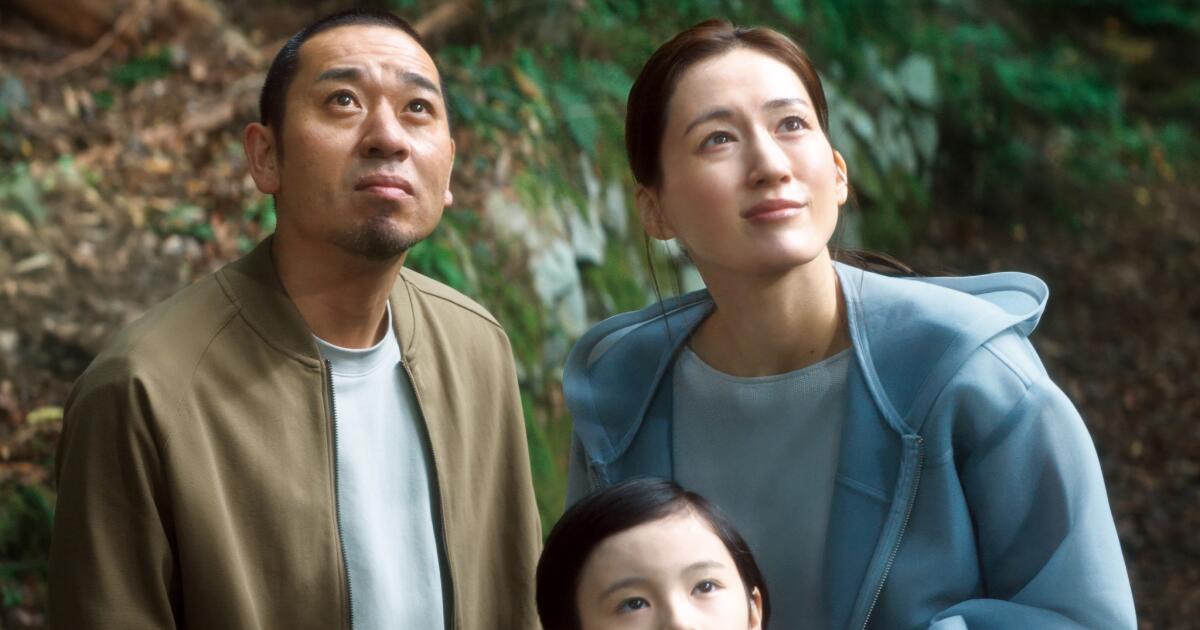
Haruka Ayase, who starred in Kore-eda’s 2015 sibling drama “Our Little Sister,” plays Otone, an architect still devastated by the loss of her young son Kakeru two years ago. She receives a strange invitation in the mail from REbirth, a company that claims to create humanoid replicas of deceased loved ones. Her husband, Kensuke (Daigo Yamamoto), expresses reservations about the service — “They’re hyenas cashing in on misfortune,” he insists — but Otone is resolute. In short order, an android that looks exactly like Kakeru (newcomer Rimu Kuwaki) arrives at their front door.
Films ranging from “Pinocchio” to “A.I. Artificial Intelligence” have touched on the dangers of trying to simulate life, while the more recent “M3GAN” and “Companion” satirized AI’s insidious skill at making it difficult to determine what’s real and what’s not. But even if “Sheep in the Box” overlaps with these memorable movies, this story would seem an ideal opportunity for Kore-eda to revisit a favorite subject: how loss can linger. Plus, his new movie harkens to “Air Doll,” his provocative 2009 film about a sex doll that develops consciousness.
Yet his latest fails to magically transcend its deceptively simple premise. Part of the problem is a lack of layered characters. At first, Otone and Kensuke disagree about whether to bring this new Kakeru into their home. (At a sappy REbirth video presentation extolling the company’s oh-so-noble mission, he rolls his eyes, while she’s in tears.) But that conflict quickly fizzles as both parents become acquainted with this robot, whose memories only extend to the information the couple provided. Because Kakeru’s death is shrouded in some degree of mystery — Otone and Kensuke obliquely refer to it as “the accident” — “Sheep in the Box” eventually becomes the father’s attempt to get answers as a means of alleviating his gnawing guilt.
Unfortunately, the underwhelming revelations don’t elicit the tears Kore-eda regularly wrings. That muted response is in keeping with the film’s blasé attitude toward our tech-heavy world. A tranquil opening shot consists of a beautiful seaside view that’s quickly invaded by buzzing drones carrying packages. The REbirth offices are sleek but drab. There’s no wonder or dread in this future — just the resigned acceptance that nothing is remarkable, despite all the nifty gadgets everyone has. And unlike cinema’s previous AI creations, Kakeru has no driving curiosity concerning whether he has a soul. When life has lost its spark, who cares if it’s “real” or not?
Composer Yuta Bandoh’s lovely score hints at Otone and Kensuke’s pent-up sorrow, even after Kakeru is returned to them. But because Kore-eda’s subpar script is short on emotional depth, the director leans on Bandoh to sell a poignancy the audience isn’t feeling. Kore-eda’s films frequently focus on individuals who aren’t as happy as they thought they’d be. “Sheep in the Box” suggests that, not long from now, these psychic wounds may be poked anew. But the movie doesn’t closely enough resemble the heart-and-soul complexity of life itself, falling into an uncanny valley in which the drama is decidedly artificial.
‘Sheep in the Box’
In Japanese, with subtitles
Rated: PG, for thematic material, some language, smoking and a brief bloody image
Running time: 2 hours, 6 minutes
Playing: Opens Friday, July 24, in limited release

Celebrated Japanese writer-director Hirokazu Kore-eda specializes in gentle, sentimental films about the tiny fissures that form along the foundation of families. When he’s at his best, such as with 2018’s Oscar-nominated “Shoplifters,” his stories unspool with measured ease, their lifelike flow building slowly into something larger and more profound about the bonds that connect us — and sometimes tear us apart.
But when Kore-eda’s execution isn’t as assured, as is the case with his latest, all that delicacy simply floats off into the ether, rarely amounting to much more than a halfhearted shrug. “Sheep in the Box” couldn’t be timelier in its speculative sci-fi depiction of an anxious age in which AI increasingly permeates our lives, even giving grieving parents their dead children back to them, in a fashion. But after a familiar setup, the movie stubbornly refuses to go in compelling new directions or offer fresh observations. The film may be set in the future, but Kore-eda’s ideas feel outdated.
Haruka Ayase, who starred in Kore-eda’s 2015 sibling drama “Our Little Sister,” plays Otone, an architect still devastated by the loss of her young son Kakeru two years ago. She receives a strange invitation in the mail from REbirth, a company that claims to create humanoid replicas of deceased loved ones. Her husband, Kensuke (Daigo Yamamoto), expresses reservations about the service — “They’re hyenas cashing in on misfortune,” he insists — but Otone is resolute. In short order, an android that looks exactly like Kakeru (newcomer Rimu Kuwaki) arrives at their front door.
Films ranging from “Pinocchio” to “A.I. Artificial Intelligence” have touched on the dangers of trying to simulate life, while the more recent “M3GAN” and “Companion” satirized AI’s insidious skill at making it difficult to determine what’s real and what’s not. But even if “Sheep in the Box” overlaps with these memorable movies, this story would seem an ideal opportunity for Kore-eda to revisit a favorite subject: how loss can linger. Plus, his new movie harkens to “Air Doll,” his provocative 2009 film about a sex doll that develops consciousness.
Yet his latest fails to magically transcend its deceptively simple premise. Part of the problem is a lack of layered characters. At first, Otone and Kensuke disagree about whether to bring this new Kakeru into their home. (At a sappy REbirth video presentation extolling the company’s oh-so-noble mission, he rolls his eyes, while she’s in tears.) But that conflict quickly fizzles as both parents become acquainted with this robot, whose memories only extend to the information the couple provided. Because Kakeru’s death is shrouded in some degree of mystery — Otone and Kensuke obliquely refer to it as “the accident” — “Sheep in the Box” eventually becomes the father’s attempt to get answers as a means of alleviating his gnawing guilt.
Unfortunately, the underwhelming revelations don’t elicit the tears Kore-eda regularly wrings. That muted response is in keeping with the film’s blasé attitude toward our tech-heavy world. A tranquil opening shot consists of a beautiful seaside view that’s quickly invaded by buzzing drones carrying packages. The REbirth offices are sleek but drab. There’s no wonder or dread in this future — just the resigned acceptance that nothing is remarkable, despite all the nifty gadgets everyone has. And unlike cinema’s previous AI creations, Kakeru has no driving curiosity concerning whether he has a soul. When life has lost its spark, who cares if it’s “real” or not?
Composer Yuta Bandoh’s lovely score hints at Otone and Kensuke’s pent-up sorrow, even after Kakeru is returned to them. But because Kore-eda’s subpar script is short on emotional depth, the director leans on Bandoh to sell a poignancy the audience isn’t feeling. Kore-eda’s films frequently focus on individuals who aren’t as happy as they thought they’d be. “Sheep in the Box” suggests that, not long from now, these psychic wounds may be poked anew. But the movie doesn’t closely enough resemble the heart-and-soul complexity of life itself, falling into an uncanny valley in which the drama is decidedly artificial.
‘Sheep in the Box’
In Japanese, with subtitles
Rated: PG, for thematic material, some language, smoking and a brief bloody image
Running time: 2 hours, 6 minutes
Playing: Opens Friday, July 24, in limited release

Celebrated Japanese writer-director Hirokazu Kore-eda specializes in gentle, sentimental films about the tiny fissures that form along the foundation of families. When he’s at his best, such as with 2018’s Oscar-nominated “Shoplifters,” his stories unspool with measured ease, their lifelike flow building slowly into something larger and more profound about the bonds that connect us — and sometimes tear us apart.
But when Kore-eda’s execution isn’t as assured, as is the case with his latest, all that delicacy simply floats off into the ether, rarely amounting to much more than a halfhearted shrug. “Sheep in the Box” couldn’t be timelier in its speculative sci-fi depiction of an anxious age in which AI increasingly permeates our lives, even giving grieving parents their dead children back to them, in a fashion. But after a familiar setup, the movie stubbornly refuses to go in compelling new directions or offer fresh observations. The film may be set in the future, but Kore-eda’s ideas feel outdated.
Haruka Ayase, who starred in Kore-eda’s 2015 sibling drama “Our Little Sister,” plays Otone, an architect still devastated by the loss of her young son Kakeru two years ago. She receives a strange invitation in the mail from REbirth, a company that claims to create humanoid replicas of deceased loved ones. Her husband, Kensuke (Daigo Yamamoto), expresses reservations about the service — “They’re hyenas cashing in on misfortune,” he insists — but Otone is resolute. In short order, an android that looks exactly like Kakeru (newcomer Rimu Kuwaki) arrives at their front door.
Films ranging from “Pinocchio” to “A.I. Artificial Intelligence” have touched on the dangers of trying to simulate life, while the more recent “M3GAN” and “Companion” satirized AI’s insidious skill at making it difficult to determine what’s real and what’s not. But even if “Sheep in the Box” overlaps with these memorable movies, this story would seem an ideal opportunity for Kore-eda to revisit a favorite subject: how loss can linger. Plus, his new movie harkens to “Air Doll,” his provocative 2009 film about a sex doll that develops consciousness.
Yet his latest fails to magically transcend its deceptively simple premise. Part of the problem is a lack of layered characters. At first, Otone and Kensuke disagree about whether to bring this new Kakeru into their home. (At a sappy REbirth video presentation extolling the company’s oh-so-noble mission, he rolls his eyes, while she’s in tears.) But that conflict quickly fizzles as both parents become acquainted with this robot, whose memories only extend to the information the couple provided. Because Kakeru’s death is shrouded in some degree of mystery — Otone and Kensuke obliquely refer to it as “the accident” — “Sheep in the Box” eventually becomes the father’s attempt to get answers as a means of alleviating his gnawing guilt.
Unfortunately, the underwhelming revelations don’t elicit the tears Kore-eda regularly wrings. That muted response is in keeping with the film’s blasé attitude toward our tech-heavy world. A tranquil opening shot consists of a beautiful seaside view that’s quickly invaded by buzzing drones carrying packages. The REbirth offices are sleek but drab. There’s no wonder or dread in this future — just the resigned acceptance that nothing is remarkable, despite all the nifty gadgets everyone has. And unlike cinema’s previous AI creations, Kakeru has no driving curiosity concerning whether he has a soul. When life has lost its spark, who cares if it’s “real” or not?
Composer Yuta Bandoh’s lovely score hints at Otone and Kensuke’s pent-up sorrow, even after Kakeru is returned to them. But because Kore-eda’s subpar script is short on emotional depth, the director leans on Bandoh to sell a poignancy the audience isn’t feeling. Kore-eda’s films frequently focus on individuals who aren’t as happy as they thought they’d be. “Sheep in the Box” suggests that, not long from now, these psychic wounds may be poked anew. But the movie doesn’t closely enough resemble the heart-and-soul complexity of life itself, falling into an uncanny valley in which the drama is decidedly artificial.
‘Sheep in the Box’
In Japanese, with subtitles
Rated: PG, for thematic material, some language, smoking and a brief bloody image
Running time: 2 hours, 6 minutes
Playing: Opens Friday, July 24, in limited release
Celebrated Japanese writer-director Hirokazu Kore-eda specializes in gentle, sentimental films about the tiny fissures that form along the foundation of families. When he’s at his best, such as with 2018’s Oscar-nominated “Shoplifters,” his stories unspool with measured ease, their lifelike flow building slowly into something larger and more profound about the bonds that connect us — and sometimes tear us apart.
But when Kore-eda’s execution isn’t as assured, as is the case with his latest, all that delicacy simply floats off into the ether, rarely amounting to much more than a halfhearted shrug. “Sheep in the Box” couldn’t be timelier in its speculative sci-fi depiction of an anxious age in which AI increasingly permeates our lives, even giving grieving parents their dead children back to them, in a fashion. But after a familiar setup, the movie stubbornly refuses to go in compelling new directions or offer fresh observations. The film may be set in the future, but Kore-eda’s ideas feel outdated.
Haruka Ayase, who starred in Kore-eda’s 2015 sibling drama “Our Little Sister,” plays Otone, an architect still devastated by the loss of her young son Kakeru two years ago. She receives a strange invitation in the mail from REbirth, a company that claims to create humanoid replicas of deceased loved ones. Her husband, Kensuke (Daigo Yamamoto), expresses reservations about the service — “They’re hyenas cashing in on misfortune,” he insists — but Otone is resolute. In short order, an android that looks exactly like Kakeru (newcomer Rimu Kuwaki) arrives at their front door.
Films ranging from “Pinocchio” to “A.I. Artificial Intelligence” have touched on the dangers of trying to simulate life, while the more recent “M3GAN” and “Companion” satirized AI’s insidious skill at making it difficult to determine what’s real and what’s not. But even if “Sheep in the Box” overlaps with these memorable movies, this story would seem an ideal opportunity for Kore-eda to revisit a favorite subject: how loss can linger. Plus, his new movie harkens to “Air Doll,” his provocative 2009 film about a sex doll that develops consciousness.
Yet his latest fails to magically transcend its deceptively simple premise. Part of the problem is a lack of layered characters. At first, Otone and Kensuke disagree about whether to bring this new Kakeru into their home. (At a sappy REbirth video presentation extolling the company’s oh-so-noble mission, he rolls his eyes, while she’s in tears.) But that conflict quickly fizzles as both parents become acquainted with this robot, whose memories only extend to the information the couple provided. Because Kakeru’s death is shrouded in some degree of mystery — Otone and Kensuke obliquely refer to it as “the accident” — “Sheep in the Box” eventually becomes the father’s attempt to get answers as a means of alleviating his gnawing guilt.
Unfortunately, the underwhelming revelations don’t elicit the tears Kore-eda regularly wrings. That muted response is in keeping with the film’s blasé attitude toward our tech-heavy world. A tranquil opening shot consists of a beautiful seaside view that’s quickly invaded by buzzing drones carrying packages. The REbirth offices are sleek but drab. There’s no wonder or dread in this future — just the resigned acceptance that nothing is remarkable, despite all the nifty gadgets everyone has. And unlike cinema’s previous AI creations, Kakeru has no driving curiosity concerning whether he has a soul. When life has lost its spark, who cares if it’s “real” or not?
Composer Yuta Bandoh’s lovely score hints at Otone and Kensuke’s pent-up sorrow, even after Kakeru is returned to them. But because Kore-eda’s subpar script is short on emotional depth, the director leans on Bandoh to sell a poignancy the audience isn’t feeling. Kore-eda’s films frequently focus on individuals who aren’t as happy as they thought they’d be. “Sheep in the Box” suggests that, not long from now, these psychic wounds may be poked anew. But the movie doesn’t closely enough resemble the heart-and-soul complexity of life itself, falling into an uncanny valley in which the drama is decidedly artificial.
‘Sheep in the Box’
In Japanese, with subtitles
Rated: PG, for thematic material, some language, smoking and a brief bloody image
Running time: 2 hours, 6 minutes
Playing: Opens Friday, July 24, in limited release

Celebrated Japanese writer-director Hirokazu Kore-eda specializes in gentle, sentimental films about the tiny fissures that form along the foundation of families. When he’s at his best, such as with 2018’s Oscar-nominated “Shoplifters,” his stories unspool with measured ease, their lifelike flow building slowly into something larger and more profound about the bonds that connect us — and sometimes tear us apart.
But when Kore-eda’s execution isn’t as assured, as is the case with his latest, all that delicacy simply floats off into the ether, rarely amounting to much more than a halfhearted shrug. “Sheep in the Box” couldn’t be timelier in its speculative sci-fi depiction of an anxious age in which AI increasingly permeates our lives, even giving grieving parents their dead children back to them, in a fashion. But after a familiar setup, the movie stubbornly refuses to go in compelling new directions or offer fresh observations. The film may be set in the future, but Kore-eda’s ideas feel outdated.
Haruka Ayase, who starred in Kore-eda’s 2015 sibling drama “Our Little Sister,” plays Otone, an architect still devastated by the loss of her young son Kakeru two years ago. She receives a strange invitation in the mail from REbirth, a company that claims to create humanoid replicas of deceased loved ones. Her husband, Kensuke (Daigo Yamamoto), expresses reservations about the service — “They’re hyenas cashing in on misfortune,” he insists — but Otone is resolute. In short order, an android that looks exactly like Kakeru (newcomer Rimu Kuwaki) arrives at their front door.
Films ranging from “Pinocchio” to “A.I. Artificial Intelligence” have touched on the dangers of trying to simulate life, while the more recent “M3GAN” and “Companion” satirized AI’s insidious skill at making it difficult to determine what’s real and what’s not. But even if “Sheep in the Box” overlaps with these memorable movies, this story would seem an ideal opportunity for Kore-eda to revisit a favorite subject: how loss can linger. Plus, his new movie harkens to “Air Doll,” his provocative 2009 film about a sex doll that develops consciousness.
Yet his latest fails to magically transcend its deceptively simple premise. Part of the problem is a lack of layered characters. At first, Otone and Kensuke disagree about whether to bring this new Kakeru into their home. (At a sappy REbirth video presentation extolling the company’s oh-so-noble mission, he rolls his eyes, while she’s in tears.) But that conflict quickly fizzles as both parents become acquainted with this robot, whose memories only extend to the information the couple provided. Because Kakeru’s death is shrouded in some degree of mystery — Otone and Kensuke obliquely refer to it as “the accident” — “Sheep in the Box” eventually becomes the father’s attempt to get answers as a means of alleviating his gnawing guilt.
Unfortunately, the underwhelming revelations don’t elicit the tears Kore-eda regularly wrings. That muted response is in keeping with the film’s blasé attitude toward our tech-heavy world. A tranquil opening shot consists of a beautiful seaside view that’s quickly invaded by buzzing drones carrying packages. The REbirth offices are sleek but drab. There’s no wonder or dread in this future — just the resigned acceptance that nothing is remarkable, despite all the nifty gadgets everyone has. And unlike cinema’s previous AI creations, Kakeru has no driving curiosity concerning whether he has a soul. When life has lost its spark, who cares if it’s “real” or not?
Composer Yuta Bandoh’s lovely score hints at Otone and Kensuke’s pent-up sorrow, even after Kakeru is returned to them. But because Kore-eda’s subpar script is short on emotional depth, the director leans on Bandoh to sell a poignancy the audience isn’t feeling. Kore-eda’s films frequently focus on individuals who aren’t as happy as they thought they’d be. “Sheep in the Box” suggests that, not long from now, these psychic wounds may be poked anew. But the movie doesn’t closely enough resemble the heart-and-soul complexity of life itself, falling into an uncanny valley in which the drama is decidedly artificial.
‘Sheep in the Box’
In Japanese, with subtitles
Rated: PG, for thematic material, some language, smoking and a brief bloody image
Running time: 2 hours, 6 minutes
Playing: Opens Friday, July 24, in limited release
Celebrated Japanese writer-director Hirokazu Kore-eda specializes in gentle, sentimental films about the tiny fissures that form along the foundation of families. When he’s at his best, such as with 2018’s Oscar-nominated “Shoplifters,” his stories unspool with measured ease, their lifelike flow building slowly into something larger and more profound about the bonds that connect us — and sometimes tear us apart.
But when Kore-eda’s execution isn’t as assured, as is the case with his latest, all that delicacy simply floats off into the ether, rarely amounting to much more than a halfhearted shrug. “Sheep in the Box” couldn’t be timelier in its speculative sci-fi depiction of an anxious age in which AI increasingly permeates our lives, even giving grieving parents their dead children back to them, in a fashion. But after a familiar setup, the movie stubbornly refuses to go in compelling new directions or offer fresh observations. The film may be set in the future, but Kore-eda’s ideas feel outdated.
Haruka Ayase, who starred in Kore-eda’s 2015 sibling drama “Our Little Sister,” plays Otone, an architect still devastated by the loss of her young son Kakeru two years ago. She receives a strange invitation in the mail from REbirth, a company that claims to create humanoid replicas of deceased loved ones. Her husband, Kensuke (Daigo Yamamoto), expresses reservations about the service — “They’re hyenas cashing in on misfortune,” he insists — but Otone is resolute. In short order, an android that looks exactly like Kakeru (newcomer Rimu Kuwaki) arrives at their front door.
Films ranging from “Pinocchio” to “A.I. Artificial Intelligence” have touched on the dangers of trying to simulate life, while the more recent “M3GAN” and “Companion” satirized AI’s insidious skill at making it difficult to determine what’s real and what’s not. But even if “Sheep in the Box” overlaps with these memorable movies, this story would seem an ideal opportunity for Kore-eda to revisit a favorite subject: how loss can linger. Plus, his new movie harkens to “Air Doll,” his provocative 2009 film about a sex doll that develops consciousness.
Yet his latest fails to magically transcend its deceptively simple premise. Part of the problem is a lack of layered characters. At first, Otone and Kensuke disagree about whether to bring this new Kakeru into their home. (At a sappy REbirth video presentation extolling the company’s oh-so-noble mission, he rolls his eyes, while she’s in tears.) But that conflict quickly fizzles as both parents become acquainted with this robot, whose memories only extend to the information the couple provided. Because Kakeru’s death is shrouded in some degree of mystery — Otone and Kensuke obliquely refer to it as “the accident” — “Sheep in the Box” eventually becomes the father’s attempt to get answers as a means of alleviating his gnawing guilt.
Unfortunately, the underwhelming revelations don’t elicit the tears Kore-eda regularly wrings. That muted response is in keeping with the film’s blasé attitude toward our tech-heavy world. A tranquil opening shot consists of a beautiful seaside view that’s quickly invaded by buzzing drones carrying packages. The REbirth offices are sleek but drab. There’s no wonder or dread in this future — just the resigned acceptance that nothing is remarkable, despite all the nifty gadgets everyone has. And unlike cinema’s previous AI creations, Kakeru has no driving curiosity concerning whether he has a soul. When life has lost its spark, who cares if it’s “real” or not?
Composer Yuta Bandoh’s lovely score hints at Otone and Kensuke’s pent-up sorrow, even after Kakeru is returned to them. But because Kore-eda’s subpar script is short on emotional depth, the director leans on Bandoh to sell a poignancy the audience isn’t feeling. Kore-eda’s films frequently focus on individuals who aren’t as happy as they thought they’d be. “Sheep in the Box” suggests that, not long from now, these psychic wounds may be poked anew. But the movie doesn’t closely enough resemble the heart-and-soul complexity of life itself, falling into an uncanny valley in which the drama is decidedly artificial.
‘Sheep in the Box’
In Japanese, with subtitles
Rated: PG, for thematic material, some language, smoking and a brief bloody image
Running time: 2 hours, 6 minutes
Playing: Opens Friday, July 24, in limited release
Celebrated Japanese writer-director Hirokazu Kore-eda specializes in gentle, sentimental films about the tiny fissures that form along the foundation of families. When he’s at his best, such as with 2018’s Oscar-nominated “Shoplifters,” his stories unspool with measured ease, their lifelike flow building slowly into something larger and more profound about the bonds that connect us — and sometimes tear us apart.
But when Kore-eda’s execution isn’t as assured, as is the case with his latest, all that delicacy simply floats off into the ether, rarely amounting to much more than a halfhearted shrug. “Sheep in the Box” couldn’t be timelier in its speculative sci-fi depiction of an anxious age in which AI increasingly permeates our lives, even giving grieving parents their dead children back to them, in a fashion. But after a familiar setup, the movie stubbornly refuses to go in compelling new directions or offer fresh observations. The film may be set in the future, but Kore-eda’s ideas feel outdated.
Haruka Ayase, who starred in Kore-eda’s 2015 sibling drama “Our Little Sister,” plays Otone, an architect still devastated by the loss of her young son Kakeru two years ago. She receives a strange invitation in the mail from REbirth, a company that claims to create humanoid replicas of deceased loved ones. Her husband, Kensuke (Daigo Yamamoto), expresses reservations about the service — “They’re hyenas cashing in on misfortune,” he insists — but Otone is resolute. In short order, an android that looks exactly like Kakeru (newcomer Rimu Kuwaki) arrives at their front door.
Films ranging from “Pinocchio” to “A.I. Artificial Intelligence” have touched on the dangers of trying to simulate life, while the more recent “M3GAN” and “Companion” satirized AI’s insidious skill at making it difficult to determine what’s real and what’s not. But even if “Sheep in the Box” overlaps with these memorable movies, this story would seem an ideal opportunity for Kore-eda to revisit a favorite subject: how loss can linger. Plus, his new movie harkens to “Air Doll,” his provocative 2009 film about a sex doll that develops consciousness.
Yet his latest fails to magically transcend its deceptively simple premise. Part of the problem is a lack of layered characters. At first, Otone and Kensuke disagree about whether to bring this new Kakeru into their home. (At a sappy REbirth video presentation extolling the company’s oh-so-noble mission, he rolls his eyes, while she’s in tears.) But that conflict quickly fizzles as both parents become acquainted with this robot, whose memories only extend to the information the couple provided. Because Kakeru’s death is shrouded in some degree of mystery — Otone and Kensuke obliquely refer to it as “the accident” — “Sheep in the Box” eventually becomes the father’s attempt to get answers as a means of alleviating his gnawing guilt.
Unfortunately, the underwhelming revelations don’t elicit the tears Kore-eda regularly wrings. That muted response is in keeping with the film’s blasé attitude toward our tech-heavy world. A tranquil opening shot consists of a beautiful seaside view that’s quickly invaded by buzzing drones carrying packages. The REbirth offices are sleek but drab. There’s no wonder or dread in this future — just the resigned acceptance that nothing is remarkable, despite all the nifty gadgets everyone has. And unlike cinema’s previous AI creations, Kakeru has no driving curiosity concerning whether he has a soul. When life has lost its spark, who cares if it’s “real” or not?
Composer Yuta Bandoh’s lovely score hints at Otone and Kensuke’s pent-up sorrow, even after Kakeru is returned to them. But because Kore-eda’s subpar script is short on emotional depth, the director leans on Bandoh to sell a poignancy the audience isn’t feeling. Kore-eda’s films frequently focus on individuals who aren’t as happy as they thought they’d be. “Sheep in the Box” suggests that, not long from now, these psychic wounds may be poked anew. But the movie doesn’t closely enough resemble the heart-and-soul complexity of life itself, falling into an uncanny valley in which the drama is decidedly artificial.
‘Sheep in the Box’
In Japanese, with subtitles
Rated: PG, for thematic material, some language, smoking and a brief bloody image
Running time: 2 hours, 6 minutes
Playing: Opens Friday, July 24, in limited release
Celebrated Japanese writer-director Hirokazu Kore-eda specializes in gentle, sentimental films about the tiny fissures that form along the foundation of families. When he’s at his best, such as with 2018’s Oscar-nominated “Shoplifters,” his stories unspool with measured ease, their lifelike flow building slowly into something larger and more profound about the bonds that connect us — and sometimes tear us apart.
But when Kore-eda’s execution isn’t as assured, as is the case with his latest, all that delicacy simply floats off into the ether, rarely amounting to much more than a halfhearted shrug. “Sheep in the Box” couldn’t be timelier in its speculative sci-fi depiction of an anxious age in which AI increasingly permeates our lives, even giving grieving parents their dead children back to them, in a fashion. But after a familiar setup, the movie stubbornly refuses to go in compelling new directions or offer fresh observations. The film may be set in the future, but Kore-eda’s ideas feel outdated.
Haruka Ayase, who starred in Kore-eda’s 2015 sibling drama “Our Little Sister,” plays Otone, an architect still devastated by the loss of her young son Kakeru two years ago. She receives a strange invitation in the mail from REbirth, a company that claims to create humanoid replicas of deceased loved ones. Her husband, Kensuke (Daigo Yamamoto), expresses reservations about the service — “They’re hyenas cashing in on misfortune,” he insists — but Otone is resolute. In short order, an android that looks exactly like Kakeru (newcomer Rimu Kuwaki) arrives at their front door.
Films ranging from “Pinocchio” to “A.I. Artificial Intelligence” have touched on the dangers of trying to simulate life, while the more recent “M3GAN” and “Companion” satirized AI’s insidious skill at making it difficult to determine what’s real and what’s not. But even if “Sheep in the Box” overlaps with these memorable movies, this story would seem an ideal opportunity for Kore-eda to revisit a favorite subject: how loss can linger. Plus, his new movie harkens to “Air Doll,” his provocative 2009 film about a sex doll that develops consciousness.
Yet his latest fails to magically transcend its deceptively simple premise. Part of the problem is a lack of layered characters. At first, Otone and Kensuke disagree about whether to bring this new Kakeru into their home. (At a sappy REbirth video presentation extolling the company’s oh-so-noble mission, he rolls his eyes, while she’s in tears.) But that conflict quickly fizzles as both parents become acquainted with this robot, whose memories only extend to the information the couple provided. Because Kakeru’s death is shrouded in some degree of mystery — Otone and Kensuke obliquely refer to it as “the accident” — “Sheep in the Box” eventually becomes the father’s attempt to get answers as a means of alleviating his gnawing guilt.
Unfortunately, the underwhelming revelations don’t elicit the tears Kore-eda regularly wrings. That muted response is in keeping with the film’s blasé attitude toward our tech-heavy world. A tranquil opening shot consists of a beautiful seaside view that’s quickly invaded by buzzing drones carrying packages. The REbirth offices are sleek but drab. There’s no wonder or dread in this future — just the resigned acceptance that nothing is remarkable, despite all the nifty gadgets everyone has. And unlike cinema’s previous AI creations, Kakeru has no driving curiosity concerning whether he has a soul. When life has lost its spark, who cares if it’s “real” or not?
Composer Yuta Bandoh’s lovely score hints at Otone and Kensuke’s pent-up sorrow, even after Kakeru is returned to them. But because Kore-eda’s subpar script is short on emotional depth, the director leans on Bandoh to sell a poignancy the audience isn’t feeling. Kore-eda’s films frequently focus on individuals who aren’t as happy as they thought they’d be. “Sheep in the Box” suggests that, not long from now, these psychic wounds may be poked anew. But the movie doesn’t closely enough resemble the heart-and-soul complexity of life itself, falling into an uncanny valley in which the drama is decidedly artificial.
‘Sheep in the Box’
In Japanese, with subtitles
Rated: PG, for thematic material, some language, smoking and a brief bloody image
Running time: 2 hours, 6 minutes
Playing: Opens Friday, July 24, in limited release

Celebrated Japanese writer-director Hirokazu Kore-eda specializes in gentle, sentimental films about the tiny fissures that form along the foundation of families. When he’s at his best, such as with 2018’s Oscar-nominated “Shoplifters,” his stories unspool with measured ease, their lifelike flow building slowly into something larger and more profound about the bonds that connect us — and sometimes tear us apart.
But when Kore-eda’s execution isn’t as assured, as is the case with his latest, all that delicacy simply floats off into the ether, rarely amounting to much more than a halfhearted shrug. “Sheep in the Box” couldn’t be timelier in its speculative sci-fi depiction of an anxious age in which AI increasingly permeates our lives, even giving grieving parents their dead children back to them, in a fashion. But after a familiar setup, the movie stubbornly refuses to go in compelling new directions or offer fresh observations. The film may be set in the future, but Kore-eda’s ideas feel outdated.
Haruka Ayase, who starred in Kore-eda’s 2015 sibling drama “Our Little Sister,” plays Otone, an architect still devastated by the loss of her young son Kakeru two years ago. She receives a strange invitation in the mail from REbirth, a company that claims to create humanoid replicas of deceased loved ones. Her husband, Kensuke (Daigo Yamamoto), expresses reservations about the service — “They’re hyenas cashing in on misfortune,” he insists — but Otone is resolute. In short order, an android that looks exactly like Kakeru (newcomer Rimu Kuwaki) arrives at their front door.
Films ranging from “Pinocchio” to “A.I. Artificial Intelligence” have touched on the dangers of trying to simulate life, while the more recent “M3GAN” and “Companion” satirized AI’s insidious skill at making it difficult to determine what’s real and what’s not. But even if “Sheep in the Box” overlaps with these memorable movies, this story would seem an ideal opportunity for Kore-eda to revisit a favorite subject: how loss can linger. Plus, his new movie harkens to “Air Doll,” his provocative 2009 film about a sex doll that develops consciousness.
Yet his latest fails to magically transcend its deceptively simple premise. Part of the problem is a lack of layered characters. At first, Otone and Kensuke disagree about whether to bring this new Kakeru into their home. (At a sappy REbirth video presentation extolling the company’s oh-so-noble mission, he rolls his eyes, while she’s in tears.) But that conflict quickly fizzles as both parents become acquainted with this robot, whose memories only extend to the information the couple provided. Because Kakeru’s death is shrouded in some degree of mystery — Otone and Kensuke obliquely refer to it as “the accident” — “Sheep in the Box” eventually becomes the father’s attempt to get answers as a means of alleviating his gnawing guilt.
Unfortunately, the underwhelming revelations don’t elicit the tears Kore-eda regularly wrings. That muted response is in keeping with the film’s blasé attitude toward our tech-heavy world. A tranquil opening shot consists of a beautiful seaside view that’s quickly invaded by buzzing drones carrying packages. The REbirth offices are sleek but drab. There’s no wonder or dread in this future — just the resigned acceptance that nothing is remarkable, despite all the nifty gadgets everyone has. And unlike cinema’s previous AI creations, Kakeru has no driving curiosity concerning whether he has a soul. When life has lost its spark, who cares if it’s “real” or not?
Composer Yuta Bandoh’s lovely score hints at Otone and Kensuke’s pent-up sorrow, even after Kakeru is returned to them. But because Kore-eda’s subpar script is short on emotional depth, the director leans on Bandoh to sell a poignancy the audience isn’t feeling. Kore-eda’s films frequently focus on individuals who aren’t as happy as they thought they’d be. “Sheep in the Box” suggests that, not long from now, these psychic wounds may be poked anew. But the movie doesn’t closely enough resemble the heart-and-soul complexity of life itself, falling into an uncanny valley in which the drama is decidedly artificial.
‘Sheep in the Box’
In Japanese, with subtitles
Rated: PG, for thematic material, some language, smoking and a brief bloody image
Running time: 2 hours, 6 minutes
Playing: Opens Friday, July 24, in limited release
Celebrated Japanese writer-director Hirokazu Kore-eda specializes in gentle, sentimental films about the tiny fissures that form along the foundation of families. When he’s at his best, such as with 2018’s Oscar-nominated “Shoplifters,” his stories unspool with measured ease, their lifelike flow building slowly into something larger and more profound about the bonds that connect us — and sometimes tear us apart.
But when Kore-eda’s execution isn’t as assured, as is the case with his latest, all that delicacy simply floats off into the ether, rarely amounting to much more than a halfhearted shrug. “Sheep in the Box” couldn’t be timelier in its speculative sci-fi depiction of an anxious age in which AI increasingly permeates our lives, even giving grieving parents their dead children back to them, in a fashion. But after a familiar setup, the movie stubbornly refuses to go in compelling new directions or offer fresh observations. The film may be set in the future, but Kore-eda’s ideas feel outdated.
Haruka Ayase, who starred in Kore-eda’s 2015 sibling drama “Our Little Sister,” plays Otone, an architect still devastated by the loss of her young son Kakeru two years ago. She receives a strange invitation in the mail from REbirth, a company that claims to create humanoid replicas of deceased loved ones. Her husband, Kensuke (Daigo Yamamoto), expresses reservations about the service — “They’re hyenas cashing in on misfortune,” he insists — but Otone is resolute. In short order, an android that looks exactly like Kakeru (newcomer Rimu Kuwaki) arrives at their front door.
Films ranging from “Pinocchio” to “A.I. Artificial Intelligence” have touched on the dangers of trying to simulate life, while the more recent “M3GAN” and “Companion” satirized AI’s insidious skill at making it difficult to determine what’s real and what’s not. But even if “Sheep in the Box” overlaps with these memorable movies, this story would seem an ideal opportunity for Kore-eda to revisit a favorite subject: how loss can linger. Plus, his new movie harkens to “Air Doll,” his provocative 2009 film about a sex doll that develops consciousness.
Yet his latest fails to magically transcend its deceptively simple premise. Part of the problem is a lack of layered characters. At first, Otone and Kensuke disagree about whether to bring this new Kakeru into their home. (At a sappy REbirth video presentation extolling the company’s oh-so-noble mission, he rolls his eyes, while she’s in tears.) But that conflict quickly fizzles as both parents become acquainted with this robot, whose memories only extend to the information the couple provided. Because Kakeru’s death is shrouded in some degree of mystery — Otone and Kensuke obliquely refer to it as “the accident” — “Sheep in the Box” eventually becomes the father’s attempt to get answers as a means of alleviating his gnawing guilt.
Unfortunately, the underwhelming revelations don’t elicit the tears Kore-eda regularly wrings. That muted response is in keeping with the film’s blasé attitude toward our tech-heavy world. A tranquil opening shot consists of a beautiful seaside view that’s quickly invaded by buzzing drones carrying packages. The REbirth offices are sleek but drab. There’s no wonder or dread in this future — just the resigned acceptance that nothing is remarkable, despite all the nifty gadgets everyone has. And unlike cinema’s previous AI creations, Kakeru has no driving curiosity concerning whether he has a soul. When life has lost its spark, who cares if it’s “real” or not?
Composer Yuta Bandoh’s lovely score hints at Otone and Kensuke’s pent-up sorrow, even after Kakeru is returned to them. But because Kore-eda’s subpar script is short on emotional depth, the director leans on Bandoh to sell a poignancy the audience isn’t feeling. Kore-eda’s films frequently focus on individuals who aren’t as happy as they thought they’d be. “Sheep in the Box” suggests that, not long from now, these psychic wounds may be poked anew. But the movie doesn’t closely enough resemble the heart-and-soul complexity of life itself, falling into an uncanny valley in which the drama is decidedly artificial.
‘Sheep in the Box’
In Japanese, with subtitles
Rated: PG, for thematic material, some language, smoking and a brief bloody image
Running time: 2 hours, 6 minutes
Playing: Opens Friday, July 24, in limited release
Celebrated Japanese writer-director Hirokazu Kore-eda specializes in gentle, sentimental films about the tiny fissures that form along the foundation of families. When he’s at his best, such as with 2018’s Oscar-nominated “Shoplifters,” his stories unspool with measured ease, their lifelike flow building slowly into something larger and more profound about the bonds that connect us — and sometimes tear us apart.
But when Kore-eda’s execution isn’t as assured, as is the case with his latest, all that delicacy simply floats off into the ether, rarely amounting to much more than a halfhearted shrug. “Sheep in the Box” couldn’t be timelier in its speculative sci-fi depiction of an anxious age in which AI increasingly permeates our lives, even giving grieving parents their dead children back to them, in a fashion. But after a familiar setup, the movie stubbornly refuses to go in compelling new directions or offer fresh observations. The film may be set in the future, but Kore-eda’s ideas feel outdated.
Haruka Ayase, who starred in Kore-eda’s 2015 sibling drama “Our Little Sister,” plays Otone, an architect still devastated by the loss of her young son Kakeru two years ago. She receives a strange invitation in the mail from REbirth, a company that claims to create humanoid replicas of deceased loved ones. Her husband, Kensuke (Daigo Yamamoto), expresses reservations about the service — “They’re hyenas cashing in on misfortune,” he insists — but Otone is resolute. In short order, an android that looks exactly like Kakeru (newcomer Rimu Kuwaki) arrives at their front door.
Films ranging from “Pinocchio” to “A.I. Artificial Intelligence” have touched on the dangers of trying to simulate life, while the more recent “M3GAN” and “Companion” satirized AI’s insidious skill at making it difficult to determine what’s real and what’s not. But even if “Sheep in the Box” overlaps with these memorable movies, this story would seem an ideal opportunity for Kore-eda to revisit a favorite subject: how loss can linger. Plus, his new movie harkens to “Air Doll,” his provocative 2009 film about a sex doll that develops consciousness.
Yet his latest fails to magically transcend its deceptively simple premise. Part of the problem is a lack of layered characters. At first, Otone and Kensuke disagree about whether to bring this new Kakeru into their home. (At a sappy REbirth video presentation extolling the company’s oh-so-noble mission, he rolls his eyes, while she’s in tears.) But that conflict quickly fizzles as both parents become acquainted with this robot, whose memories only extend to the information the couple provided. Because Kakeru’s death is shrouded in some degree of mystery — Otone and Kensuke obliquely refer to it as “the accident” — “Sheep in the Box” eventually becomes the father’s attempt to get answers as a means of alleviating his gnawing guilt.
Unfortunately, the underwhelming revelations don’t elicit the tears Kore-eda regularly wrings. That muted response is in keeping with the film’s blasé attitude toward our tech-heavy world. A tranquil opening shot consists of a beautiful seaside view that’s quickly invaded by buzzing drones carrying packages. The REbirth offices are sleek but drab. There’s no wonder or dread in this future — just the resigned acceptance that nothing is remarkable, despite all the nifty gadgets everyone has. And unlike cinema’s previous AI creations, Kakeru has no driving curiosity concerning whether he has a soul. When life has lost its spark, who cares if it’s “real” or not?
Composer Yuta Bandoh’s lovely score hints at Otone and Kensuke’s pent-up sorrow, even after Kakeru is returned to them. But because Kore-eda’s subpar script is short on emotional depth, the director leans on Bandoh to sell a poignancy the audience isn’t feeling. Kore-eda’s films frequently focus on individuals who aren’t as happy as they thought they’d be. “Sheep in the Box” suggests that, not long from now, these psychic wounds may be poked anew. But the movie doesn’t closely enough resemble the heart-and-soul complexity of life itself, falling into an uncanny valley in which the drama is decidedly artificial.
‘Sheep in the Box’
In Japanese, with subtitles
Rated: PG, for thematic material, some language, smoking and a brief bloody image
Running time: 2 hours, 6 minutes
Playing: Opens Friday, July 24, in limited release
Celebrated Japanese writer-director Hirokazu Kore-eda specializes in gentle, sentimental films about the tiny fissures that form along the foundation of families. When he’s at his best, such as with 2018’s Oscar-nominated “Shoplifters,” his stories unspool with measured ease, their lifelike flow building slowly into something larger and more profound about the bonds that connect us — and sometimes tear us apart.
But when Kore-eda’s execution isn’t as assured, as is the case with his latest, all that delicacy simply floats off into the ether, rarely amounting to much more than a halfhearted shrug. “Sheep in the Box” couldn’t be timelier in its speculative sci-fi depiction of an anxious age in which AI increasingly permeates our lives, even giving grieving parents their dead children back to them, in a fashion. But after a familiar setup, the movie stubbornly refuses to go in compelling new directions or offer fresh observations. The film may be set in the future, but Kore-eda’s ideas feel outdated.
Haruka Ayase, who starred in Kore-eda’s 2015 sibling drama “Our Little Sister,” plays Otone, an architect still devastated by the loss of her young son Kakeru two years ago. She receives a strange invitation in the mail from REbirth, a company that claims to create humanoid replicas of deceased loved ones. Her husband, Kensuke (Daigo Yamamoto), expresses reservations about the service — “They’re hyenas cashing in on misfortune,” he insists — but Otone is resolute. In short order, an android that looks exactly like Kakeru (newcomer Rimu Kuwaki) arrives at their front door.
Films ranging from “Pinocchio” to “A.I. Artificial Intelligence” have touched on the dangers of trying to simulate life, while the more recent “M3GAN” and “Companion” satirized AI’s insidious skill at making it difficult to determine what’s real and what’s not. But even if “Sheep in the Box” overlaps with these memorable movies, this story would seem an ideal opportunity for Kore-eda to revisit a favorite subject: how loss can linger. Plus, his new movie harkens to “Air Doll,” his provocative 2009 film about a sex doll that develops consciousness.
Yet his latest fails to magically transcend its deceptively simple premise. Part of the problem is a lack of layered characters. At first, Otone and Kensuke disagree about whether to bring this new Kakeru into their home. (At a sappy REbirth video presentation extolling the company’s oh-so-noble mission, he rolls his eyes, while she’s in tears.) But that conflict quickly fizzles as both parents become acquainted with this robot, whose memories only extend to the information the couple provided. Because Kakeru’s death is shrouded in some degree of mystery — Otone and Kensuke obliquely refer to it as “the accident” — “Sheep in the Box” eventually becomes the father’s attempt to get answers as a means of alleviating his gnawing guilt.
Unfortunately, the underwhelming revelations don’t elicit the tears Kore-eda regularly wrings. That muted response is in keeping with the film’s blasé attitude toward our tech-heavy world. A tranquil opening shot consists of a beautiful seaside view that’s quickly invaded by buzzing drones carrying packages. The REbirth offices are sleek but drab. There’s no wonder or dread in this future — just the resigned acceptance that nothing is remarkable, despite all the nifty gadgets everyone has. And unlike cinema’s previous AI creations, Kakeru has no driving curiosity concerning whether he has a soul. When life has lost its spark, who cares if it’s “real” or not?
Composer Yuta Bandoh’s lovely score hints at Otone and Kensuke’s pent-up sorrow, even after Kakeru is returned to them. But because Kore-eda’s subpar script is short on emotional depth, the director leans on Bandoh to sell a poignancy the audience isn’t feeling. Kore-eda’s films frequently focus on individuals who aren’t as happy as they thought they’d be. “Sheep in the Box” suggests that, not long from now, these psychic wounds may be poked anew. But the movie doesn’t closely enough resemble the heart-and-soul complexity of life itself, falling into an uncanny valley in which the drama is decidedly artificial.
‘Sheep in the Box’
In Japanese, with subtitles
Rated: PG, for thematic material, some language, smoking and a brief bloody image
Running time: 2 hours, 6 minutes
Playing: Opens Friday, July 24, in limited release
Celebrated Japanese writer-director Hirokazu Kore-eda specializes in gentle, sentimental films about the tiny fissures that form along the foundation of families. When he’s at his best, such as with 2018’s Oscar-nominated “Shoplifters,” his stories unspool with measured ease, their lifelike flow building slowly into something larger and more profound about the bonds that connect us — and sometimes tear us apart.
But when Kore-eda’s execution isn’t as assured, as is the case with his latest, all that delicacy simply floats off into the ether, rarely amounting to much more than a halfhearted shrug. “Sheep in the Box” couldn’t be timelier in its speculative sci-fi depiction of an anxious age in which AI increasingly permeates our lives, even giving grieving parents their dead children back to them, in a fashion. But after a familiar setup, the movie stubbornly refuses to go in compelling new directions or offer fresh observations. The film may be set in the future, but Kore-eda’s ideas feel outdated.
Haruka Ayase, who starred in Kore-eda’s 2015 sibling drama “Our Little Sister,” plays Otone, an architect still devastated by the loss of her young son Kakeru two years ago. She receives a strange invitation in the mail from REbirth, a company that claims to create humanoid replicas of deceased loved ones. Her husband, Kensuke (Daigo Yamamoto), expresses reservations about the service — “They’re hyenas cashing in on misfortune,” he insists — but Otone is resolute. In short order, an android that looks exactly like Kakeru (newcomer Rimu Kuwaki) arrives at their front door.
Films ranging from “Pinocchio” to “A.I. Artificial Intelligence” have touched on the dangers of trying to simulate life, while the more recent “M3GAN” and “Companion” satirized AI’s insidious skill at making it difficult to determine what’s real and what’s not. But even if “Sheep in the Box” overlaps with these memorable movies, this story would seem an ideal opportunity for Kore-eda to revisit a favorite subject: how loss can linger. Plus, his new movie harkens to “Air Doll,” his provocative 2009 film about a sex doll that develops consciousness.
Yet his latest fails to magically transcend its deceptively simple premise. Part of the problem is a lack of layered characters. At first, Otone and Kensuke disagree about whether to bring this new Kakeru into their home. (At a sappy REbirth video presentation extolling the company’s oh-so-noble mission, he rolls his eyes, while she’s in tears.) But that conflict quickly fizzles as both parents become acquainted with this robot, whose memories only extend to the information the couple provided. Because Kakeru’s death is shrouded in some degree of mystery — Otone and Kensuke obliquely refer to it as “the accident” — “Sheep in the Box” eventually becomes the father’s attempt to get answers as a means of alleviating his gnawing guilt.
Unfortunately, the underwhelming revelations don’t elicit the tears Kore-eda regularly wrings. That muted response is in keeping with the film’s blasé attitude toward our tech-heavy world. A tranquil opening shot consists of a beautiful seaside view that’s quickly invaded by buzzing drones carrying packages. The REbirth offices are sleek but drab. There’s no wonder or dread in this future — just the resigned acceptance that nothing is remarkable, despite all the nifty gadgets everyone has. And unlike cinema’s previous AI creations, Kakeru has no driving curiosity concerning whether he has a soul. When life has lost its spark, who cares if it’s “real” or not?
Composer Yuta Bandoh’s lovely score hints at Otone and Kensuke’s pent-up sorrow, even after Kakeru is returned to them. But because Kore-eda’s subpar script is short on emotional depth, the director leans on Bandoh to sell a poignancy the audience isn’t feeling. Kore-eda’s films frequently focus on individuals who aren’t as happy as they thought they’d be. “Sheep in the Box” suggests that, not long from now, these psychic wounds may be poked anew. But the movie doesn’t closely enough resemble the heart-and-soul complexity of life itself, falling into an uncanny valley in which the drama is decidedly artificial.
‘Sheep in the Box’
In Japanese, with subtitles
Rated: PG, for thematic material, some language, smoking and a brief bloody image
Running time: 2 hours, 6 minutes
Playing: Opens Friday, July 24, in limited release
Celebrated Japanese writer-director Hirokazu Kore-eda specializes in gentle, sentimental films about the tiny fissures that form along the foundation of families. When he’s at his best, such as with 2018’s Oscar-nominated “Shoplifters,” his stories unspool with measured ease, their lifelike flow building slowly into something larger and more profound about the bonds that connect us — and sometimes tear us apart.
But when Kore-eda’s execution isn’t as assured, as is the case with his latest, all that delicacy simply floats off into the ether, rarely amounting to much more than a halfhearted shrug. “Sheep in the Box” couldn’t be timelier in its speculative sci-fi depiction of an anxious age in which AI increasingly permeates our lives, even giving grieving parents their dead children back to them, in a fashion. But after a familiar setup, the movie stubbornly refuses to go in compelling new directions or offer fresh observations. The film may be set in the future, but Kore-eda’s ideas feel outdated.
Haruka Ayase, who starred in Kore-eda’s 2015 sibling drama “Our Little Sister,” plays Otone, an architect still devastated by the loss of her young son Kakeru two years ago. She receives a strange invitation in the mail from REbirth, a company that claims to create humanoid replicas of deceased loved ones. Her husband, Kensuke (Daigo Yamamoto), expresses reservations about the service — “They’re hyenas cashing in on misfortune,” he insists — but Otone is resolute. In short order, an android that looks exactly like Kakeru (newcomer Rimu Kuwaki) arrives at their front door.
Films ranging from “Pinocchio” to “A.I. Artificial Intelligence” have touched on the dangers of trying to simulate life, while the more recent “M3GAN” and “Companion” satirized AI’s insidious skill at making it difficult to determine what’s real and what’s not. But even if “Sheep in the Box” overlaps with these memorable movies, this story would seem an ideal opportunity for Kore-eda to revisit a favorite subject: how loss can linger. Plus, his new movie harkens to “Air Doll,” his provocative 2009 film about a sex doll that develops consciousness.
Yet his latest fails to magically transcend its deceptively simple premise. Part of the problem is a lack of layered characters. At first, Otone and Kensuke disagree about whether to bring this new Kakeru into their home. (At a sappy REbirth video presentation extolling the company’s oh-so-noble mission, he rolls his eyes, while she’s in tears.) But that conflict quickly fizzles as both parents become acquainted with this robot, whose memories only extend to the information the couple provided. Because Kakeru’s death is shrouded in some degree of mystery — Otone and Kensuke obliquely refer to it as “the accident” — “Sheep in the Box” eventually becomes the father’s attempt to get answers as a means of alleviating his gnawing guilt.
Unfortunately, the underwhelming revelations don’t elicit the tears Kore-eda regularly wrings. That muted response is in keeping with the film’s blasé attitude toward our tech-heavy world. A tranquil opening shot consists of a beautiful seaside view that’s quickly invaded by buzzing drones carrying packages. The REbirth offices are sleek but drab. There’s no wonder or dread in this future — just the resigned acceptance that nothing is remarkable, despite all the nifty gadgets everyone has. And unlike cinema’s previous AI creations, Kakeru has no driving curiosity concerning whether he has a soul. When life has lost its spark, who cares if it’s “real” or not?
Composer Yuta Bandoh’s lovely score hints at Otone and Kensuke’s pent-up sorrow, even after Kakeru is returned to them. But because Kore-eda’s subpar script is short on emotional depth, the director leans on Bandoh to sell a poignancy the audience isn’t feeling. Kore-eda’s films frequently focus on individuals who aren’t as happy as they thought they’d be. “Sheep in the Box” suggests that, not long from now, these psychic wounds may be poked anew. But the movie doesn’t closely enough resemble the heart-and-soul complexity of life itself, falling into an uncanny valley in which the drama is decidedly artificial.
‘Sheep in the Box’
In Japanese, with subtitles
Rated: PG, for thematic material, some language, smoking and a brief bloody image
Running time: 2 hours, 6 minutes
Playing: Opens Friday, July 24, in limited release
Celebrated Japanese writer-director Hirokazu Kore-eda specializes in gentle, sentimental films about the tiny fissures that form along the foundation of families. When he’s at his best, such as with 2018’s Oscar-nominated “Shoplifters,” his stories unspool with measured ease, their lifelike flow building slowly into something larger and more profound about the bonds that connect us — and sometimes tear us apart.
But when Kore-eda’s execution isn’t as assured, as is the case with his latest, all that delicacy simply floats off into the ether, rarely amounting to much more than a halfhearted shrug. “Sheep in the Box” couldn’t be timelier in its speculative sci-fi depiction of an anxious age in which AI increasingly permeates our lives, even giving grieving parents their dead children back to them, in a fashion. But after a familiar setup, the movie stubbornly refuses to go in compelling new directions or offer fresh observations. The film may be set in the future, but Kore-eda’s ideas feel outdated.
Haruka Ayase, who starred in Kore-eda’s 2015 sibling drama “Our Little Sister,” plays Otone, an architect still devastated by the loss of her young son Kakeru two years ago. She receives a strange invitation in the mail from REbirth, a company that claims to create humanoid replicas of deceased loved ones. Her husband, Kensuke (Daigo Yamamoto), expresses reservations about the service — “They’re hyenas cashing in on misfortune,” he insists — but Otone is resolute. In short order, an android that looks exactly like Kakeru (newcomer Rimu Kuwaki) arrives at their front door.
Films ranging from “Pinocchio” to “A.I. Artificial Intelligence” have touched on the dangers of trying to simulate life, while the more recent “M3GAN” and “Companion” satirized AI’s insidious skill at making it difficult to determine what’s real and what’s not. But even if “Sheep in the Box” overlaps with these memorable movies, this story would seem an ideal opportunity for Kore-eda to revisit a favorite subject: how loss can linger. Plus, his new movie harkens to “Air Doll,” his provocative 2009 film about a sex doll that develops consciousness.
Yet his latest fails to magically transcend its deceptively simple premise. Part of the problem is a lack of layered characters. At first, Otone and Kensuke disagree about whether to bring this new Kakeru into their home. (At a sappy REbirth video presentation extolling the company’s oh-so-noble mission, he rolls his eyes, while she’s in tears.) But that conflict quickly fizzles as both parents become acquainted with this robot, whose memories only extend to the information the couple provided. Because Kakeru’s death is shrouded in some degree of mystery — Otone and Kensuke obliquely refer to it as “the accident” — “Sheep in the Box” eventually becomes the father’s attempt to get answers as a means of alleviating his gnawing guilt.
Unfortunately, the underwhelming revelations don’t elicit the tears Kore-eda regularly wrings. That muted response is in keeping with the film’s blasé attitude toward our tech-heavy world. A tranquil opening shot consists of a beautiful seaside view that’s quickly invaded by buzzing drones carrying packages. The REbirth offices are sleek but drab. There’s no wonder or dread in this future — just the resigned acceptance that nothing is remarkable, despite all the nifty gadgets everyone has. And unlike cinema’s previous AI creations, Kakeru has no driving curiosity concerning whether he has a soul. When life has lost its spark, who cares if it’s “real” or not?
Composer Yuta Bandoh’s lovely score hints at Otone and Kensuke’s pent-up sorrow, even after Kakeru is returned to them. But because Kore-eda’s subpar script is short on emotional depth, the director leans on Bandoh to sell a poignancy the audience isn’t feeling. Kore-eda’s films frequently focus on individuals who aren’t as happy as they thought they’d be. “Sheep in the Box” suggests that, not long from now, these psychic wounds may be poked anew. But the movie doesn’t closely enough resemble the heart-and-soul complexity of life itself, falling into an uncanny valley in which the drama is decidedly artificial.
‘Sheep in the Box’
In Japanese, with subtitles
Rated: PG, for thematic material, some language, smoking and a brief bloody image
Running time: 2 hours, 6 minutes
Playing: Opens Friday, July 24, in limited release
Celebrated Japanese writer-director Hirokazu Kore-eda specializes in gentle, sentimental films about the tiny fissures that form along the foundation of families. When he’s at his best, such as with 2018’s Oscar-nominated “Shoplifters,” his stories unspool with measured ease, their lifelike flow building slowly into something larger and more profound about the bonds that connect us — and sometimes tear us apart.
But when Kore-eda’s execution isn’t as assured, as is the case with his latest, all that delicacy simply floats off into the ether, rarely amounting to much more than a halfhearted shrug. “Sheep in the Box” couldn’t be timelier in its speculative sci-fi depiction of an anxious age in which AI increasingly permeates our lives, even giving grieving parents their dead children back to them, in a fashion. But after a familiar setup, the movie stubbornly refuses to go in compelling new directions or offer fresh observations. The film may be set in the future, but Kore-eda’s ideas feel outdated.
Haruka Ayase, who starred in Kore-eda’s 2015 sibling drama “Our Little Sister,” plays Otone, an architect still devastated by the loss of her young son Kakeru two years ago. She receives a strange invitation in the mail from REbirth, a company that claims to create humanoid replicas of deceased loved ones. Her husband, Kensuke (Daigo Yamamoto), expresses reservations about the service — “They’re hyenas cashing in on misfortune,” he insists — but Otone is resolute. In short order, an android that looks exactly like Kakeru (newcomer Rimu Kuwaki) arrives at their front door.
Films ranging from “Pinocchio” to “A.I. Artificial Intelligence” have touched on the dangers of trying to simulate life, while the more recent “M3GAN” and “Companion” satirized AI’s insidious skill at making it difficult to determine what’s real and what’s not. But even if “Sheep in the Box” overlaps with these memorable movies, this story would seem an ideal opportunity for Kore-eda to revisit a favorite subject: how loss can linger. Plus, his new movie harkens to “Air Doll,” his provocative 2009 film about a sex doll that develops consciousness.
Yet his latest fails to magically transcend its deceptively simple premise. Part of the problem is a lack of layered characters. At first, Otone and Kensuke disagree about whether to bring this new Kakeru into their home. (At a sappy REbirth video presentation extolling the company’s oh-so-noble mission, he rolls his eyes, while she’s in tears.) But that conflict quickly fizzles as both parents become acquainted with this robot, whose memories only extend to the information the couple provided. Because Kakeru’s death is shrouded in some degree of mystery — Otone and Kensuke obliquely refer to it as “the accident” — “Sheep in the Box” eventually becomes the father’s attempt to get answers as a means of alleviating his gnawing guilt.
Unfortunately, the underwhelming revelations don’t elicit the tears Kore-eda regularly wrings. That muted response is in keeping with the film’s blasé attitude toward our tech-heavy world. A tranquil opening shot consists of a beautiful seaside view that’s quickly invaded by buzzing drones carrying packages. The REbirth offices are sleek but drab. There’s no wonder or dread in this future — just the resigned acceptance that nothing is remarkable, despite all the nifty gadgets everyone has. And unlike cinema’s previous AI creations, Kakeru has no driving curiosity concerning whether he has a soul. When life has lost its spark, who cares if it’s “real” or not?
Composer Yuta Bandoh’s lovely score hints at Otone and Kensuke’s pent-up sorrow, even after Kakeru is returned to them. But because Kore-eda’s subpar script is short on emotional depth, the director leans on Bandoh to sell a poignancy the audience isn’t feeling. Kore-eda’s films frequently focus on individuals who aren’t as happy as they thought they’d be. “Sheep in the Box” suggests that, not long from now, these psychic wounds may be poked anew. But the movie doesn’t closely enough resemble the heart-and-soul complexity of life itself, falling into an uncanny valley in which the drama is decidedly artificial.
‘Sheep in the Box’
In Japanese, with subtitles
Rated: PG, for thematic material, some language, smoking and a brief bloody image
Running time: 2 hours, 6 minutes
Playing: Opens Friday, July 24, in limited release

