

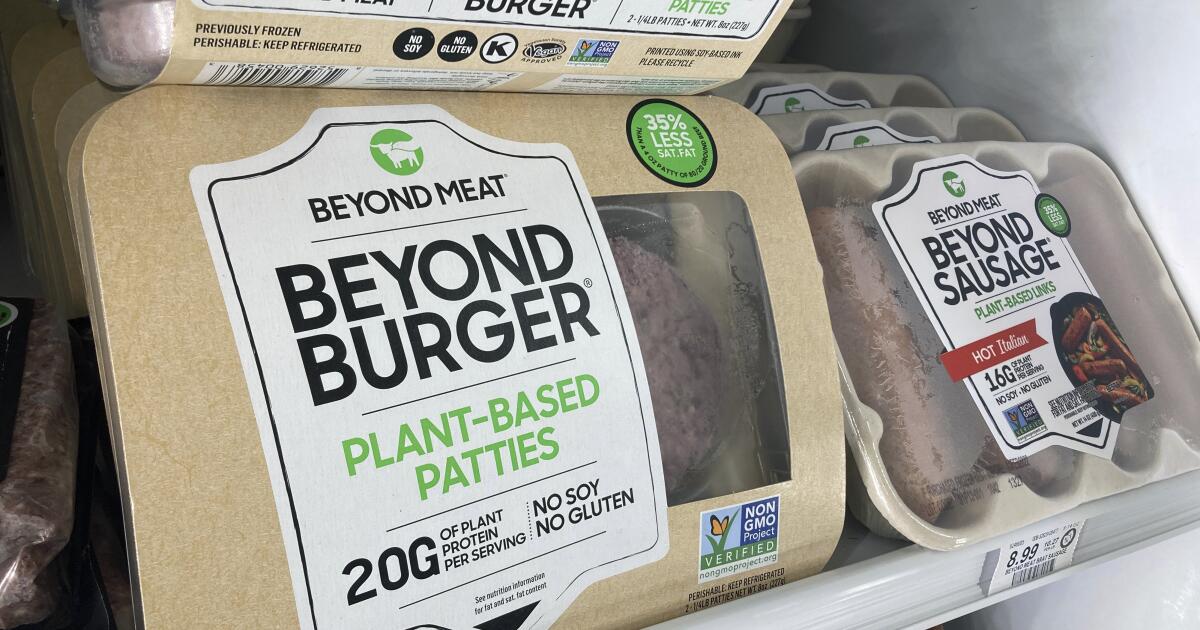
Beyond the Plant Protein Co., formerly Beyond Meat, is trying to channel its plant-protein expertise into new products to attract new customers.
In March, the El Segundo-based company decided to drop “meat” from its name to expand into other plant-based protein products. Earlier this year, Beyond launched a sparkling protein beverage called Beyond Immerse to appeal to the recent surge in demand for protein drinks.
The beverage boasts 20 grams of protein, 7 grams of fiber and 100 calories in each 12-ounce can.
It uses Beyond’s clean pea plant protein as its main protein source to keep calories low, and comes in three flavors.
It is available in packs of 12 on Beyond’s website for $35.99.
In June, the brand announced it would launch in New York through Big Geyser, with Josh Hart of the New York Knicks as its brand ambassador.
Chief Executive Ethan Brown founded the company in 2009 with plant-based chicken strips before expanding into products such as pork and its signature product: the Beyond burger patty.
When the company went public in 2019, its shares surged to more than $230. It had raised more than $70 million in venture financing from the likes of Bill Gates, Tyson Foods and Twitter co-founder Biz Stone.
Beyond has struggled to maintain relevance as the hype surrounding plant-based meat died down, with health influencers pioneering new trends of clean eating, whole foods and a focus on incorporating protein, fiber and electrolytes into their diets.
Meanwhile, inflation, which has led to higher grocery bills, made customers less likely to spring for costly premium products like plant-based protein.
Beyond’s shares have steadily declined since its 2019 peak, tumbling more than 20% so far this year to close Wednesday at around $0.65.
While Beyond’s restaurant deals fizzled out over the years, its biggest competitor, Impossible Foods, also based in California, secured a partnership with Burger King for the Impossible Whopper.
Beyond hopes a new line of clean protein products will change the tide.
In its first-quarter earnings call in May, Brown said its new product was designed for athletes and GLP-1 users seeking clean beverages with minimal calories.
“I believe that introducing consumers to our brand and our foundational commitment to great taste, clean ingredients, and plant-based nutrition in less controversial applications, we will bring back many to the center of the plate,” said Brown in a recent earnings call.
Brown highlighted the drink’s convenience to consumers and said it has the potential to become popular among athletes and hiking enthusiasts and in active spaces such as run clubs, and that the appeal will spread to the general public from there.
Brown said he has no plans to abandon the company’s original market of plant-based meat products, despite the rebrand.

Beyond the Plant Protein Co., formerly Beyond Meat, is trying to channel its plant-protein expertise into new products to attract new customers.
In March, the El Segundo-based company decided to drop “meat” from its name to expand into other plant-based protein products. Earlier this year, Beyond launched a sparkling protein beverage called Beyond Immerse to appeal to the recent surge in demand for protein drinks.
The beverage boasts 20 grams of protein, 7 grams of fiber and 100 calories in each 12-ounce can.
It uses Beyond’s clean pea plant protein as its main protein source to keep calories low, and comes in three flavors.
It is available in packs of 12 on Beyond’s website for $35.99.
In June, the brand announced it would launch in New York through Big Geyser, with Josh Hart of the New York Knicks as its brand ambassador.
Chief Executive Ethan Brown founded the company in 2009 with plant-based chicken strips before expanding into products such as pork and its signature product: the Beyond burger patty.
When the company went public in 2019, its shares surged to more than $230. It had raised more than $70 million in venture financing from the likes of Bill Gates, Tyson Foods and Twitter co-founder Biz Stone.
Beyond has struggled to maintain relevance as the hype surrounding plant-based meat died down, with health influencers pioneering new trends of clean eating, whole foods and a focus on incorporating protein, fiber and electrolytes into their diets.
Meanwhile, inflation, which has led to higher grocery bills, made customers less likely to spring for costly premium products like plant-based protein.
Beyond’s shares have steadily declined since its 2019 peak, tumbling more than 20% so far this year to close Wednesday at around $0.65.
While Beyond’s restaurant deals fizzled out over the years, its biggest competitor, Impossible Foods, also based in California, secured a partnership with Burger King for the Impossible Whopper.
Beyond hopes a new line of clean protein products will change the tide.
In its first-quarter earnings call in May, Brown said its new product was designed for athletes and GLP-1 users seeking clean beverages with minimal calories.
“I believe that introducing consumers to our brand and our foundational commitment to great taste, clean ingredients, and plant-based nutrition in less controversial applications, we will bring back many to the center of the plate,” said Brown in a recent earnings call.
Brown highlighted the drink’s convenience to consumers and said it has the potential to become popular among athletes and hiking enthusiasts and in active spaces such as run clubs, and that the appeal will spread to the general public from there.
Brown said he has no plans to abandon the company’s original market of plant-based meat products, despite the rebrand.

Beyond the Plant Protein Co., formerly Beyond Meat, is trying to channel its plant-protein expertise into new products to attract new customers.
In March, the El Segundo-based company decided to drop “meat” from its name to expand into other plant-based protein products. Earlier this year, Beyond launched a sparkling protein beverage called Beyond Immerse to appeal to the recent surge in demand for protein drinks.
The beverage boasts 20 grams of protein, 7 grams of fiber and 100 calories in each 12-ounce can.
It uses Beyond’s clean pea plant protein as its main protein source to keep calories low, and comes in three flavors.
It is available in packs of 12 on Beyond’s website for $35.99.
In June, the brand announced it would launch in New York through Big Geyser, with Josh Hart of the New York Knicks as its brand ambassador.
Chief Executive Ethan Brown founded the company in 2009 with plant-based chicken strips before expanding into products such as pork and its signature product: the Beyond burger patty.
When the company went public in 2019, its shares surged to more than $230. It had raised more than $70 million in venture financing from the likes of Bill Gates, Tyson Foods and Twitter co-founder Biz Stone.
Beyond has struggled to maintain relevance as the hype surrounding plant-based meat died down, with health influencers pioneering new trends of clean eating, whole foods and a focus on incorporating protein, fiber and electrolytes into their diets.
Meanwhile, inflation, which has led to higher grocery bills, made customers less likely to spring for costly premium products like plant-based protein.
Beyond’s shares have steadily declined since its 2019 peak, tumbling more than 20% so far this year to close Wednesday at around $0.65.
While Beyond’s restaurant deals fizzled out over the years, its biggest competitor, Impossible Foods, also based in California, secured a partnership with Burger King for the Impossible Whopper.
Beyond hopes a new line of clean protein products will change the tide.
In its first-quarter earnings call in May, Brown said its new product was designed for athletes and GLP-1 users seeking clean beverages with minimal calories.
“I believe that introducing consumers to our brand and our foundational commitment to great taste, clean ingredients, and plant-based nutrition in less controversial applications, we will bring back many to the center of the plate,” said Brown in a recent earnings call.
Brown highlighted the drink’s convenience to consumers and said it has the potential to become popular among athletes and hiking enthusiasts and in active spaces such as run clubs, and that the appeal will spread to the general public from there.
Brown said he has no plans to abandon the company’s original market of plant-based meat products, despite the rebrand.
Beyond the Plant Protein Co., formerly Beyond Meat, is trying to channel its plant-protein expertise into new products to attract new customers.
In March, the El Segundo-based company decided to drop “meat” from its name to expand into other plant-based protein products. Earlier this year, Beyond launched a sparkling protein beverage called Beyond Immerse to appeal to the recent surge in demand for protein drinks.
The beverage boasts 20 grams of protein, 7 grams of fiber and 100 calories in each 12-ounce can.
It uses Beyond’s clean pea plant protein as its main protein source to keep calories low, and comes in three flavors.
It is available in packs of 12 on Beyond’s website for $35.99.
In June, the brand announced it would launch in New York through Big Geyser, with Josh Hart of the New York Knicks as its brand ambassador.
Chief Executive Ethan Brown founded the company in 2009 with plant-based chicken strips before expanding into products such as pork and its signature product: the Beyond burger patty.
When the company went public in 2019, its shares surged to more than $230. It had raised more than $70 million in venture financing from the likes of Bill Gates, Tyson Foods and Twitter co-founder Biz Stone.
Beyond has struggled to maintain relevance as the hype surrounding plant-based meat died down, with health influencers pioneering new trends of clean eating, whole foods and a focus on incorporating protein, fiber and electrolytes into their diets.
Meanwhile, inflation, which has led to higher grocery bills, made customers less likely to spring for costly premium products like plant-based protein.
Beyond’s shares have steadily declined since its 2019 peak, tumbling more than 20% so far this year to close Wednesday at around $0.65.
While Beyond’s restaurant deals fizzled out over the years, its biggest competitor, Impossible Foods, also based in California, secured a partnership with Burger King for the Impossible Whopper.
Beyond hopes a new line of clean protein products will change the tide.
In its first-quarter earnings call in May, Brown said its new product was designed for athletes and GLP-1 users seeking clean beverages with minimal calories.
“I believe that introducing consumers to our brand and our foundational commitment to great taste, clean ingredients, and plant-based nutrition in less controversial applications, we will bring back many to the center of the plate,” said Brown in a recent earnings call.
Brown highlighted the drink’s convenience to consumers and said it has the potential to become popular among athletes and hiking enthusiasts and in active spaces such as run clubs, and that the appeal will spread to the general public from there.
Brown said he has no plans to abandon the company’s original market of plant-based meat products, despite the rebrand.

Beyond the Plant Protein Co., formerly Beyond Meat, is trying to channel its plant-protein expertise into new products to attract new customers.
In March, the El Segundo-based company decided to drop “meat” from its name to expand into other plant-based protein products. Earlier this year, Beyond launched a sparkling protein beverage called Beyond Immerse to appeal to the recent surge in demand for protein drinks.
The beverage boasts 20 grams of protein, 7 grams of fiber and 100 calories in each 12-ounce can.
It uses Beyond’s clean pea plant protein as its main protein source to keep calories low, and comes in three flavors.
It is available in packs of 12 on Beyond’s website for $35.99.
In June, the brand announced it would launch in New York through Big Geyser, with Josh Hart of the New York Knicks as its brand ambassador.
Chief Executive Ethan Brown founded the company in 2009 with plant-based chicken strips before expanding into products such as pork and its signature product: the Beyond burger patty.
When the company went public in 2019, its shares surged to more than $230. It had raised more than $70 million in venture financing from the likes of Bill Gates, Tyson Foods and Twitter co-founder Biz Stone.
Beyond has struggled to maintain relevance as the hype surrounding plant-based meat died down, with health influencers pioneering new trends of clean eating, whole foods and a focus on incorporating protein, fiber and electrolytes into their diets.
Meanwhile, inflation, which has led to higher grocery bills, made customers less likely to spring for costly premium products like plant-based protein.
Beyond’s shares have steadily declined since its 2019 peak, tumbling more than 20% so far this year to close Wednesday at around $0.65.
While Beyond’s restaurant deals fizzled out over the years, its biggest competitor, Impossible Foods, also based in California, secured a partnership with Burger King for the Impossible Whopper.
Beyond hopes a new line of clean protein products will change the tide.
In its first-quarter earnings call in May, Brown said its new product was designed for athletes and GLP-1 users seeking clean beverages with minimal calories.
“I believe that introducing consumers to our brand and our foundational commitment to great taste, clean ingredients, and plant-based nutrition in less controversial applications, we will bring back many to the center of the plate,” said Brown in a recent earnings call.
Brown highlighted the drink’s convenience to consumers and said it has the potential to become popular among athletes and hiking enthusiasts and in active spaces such as run clubs, and that the appeal will spread to the general public from there.
Brown said he has no plans to abandon the company’s original market of plant-based meat products, despite the rebrand.
Beyond the Plant Protein Co., formerly Beyond Meat, is trying to channel its plant-protein expertise into new products to attract new customers.
In March, the El Segundo-based company decided to drop “meat” from its name to expand into other plant-based protein products. Earlier this year, Beyond launched a sparkling protein beverage called Beyond Immerse to appeal to the recent surge in demand for protein drinks.
The beverage boasts 20 grams of protein, 7 grams of fiber and 100 calories in each 12-ounce can.
It uses Beyond’s clean pea plant protein as its main protein source to keep calories low, and comes in three flavors.
It is available in packs of 12 on Beyond’s website for $35.99.
In June, the brand announced it would launch in New York through Big Geyser, with Josh Hart of the New York Knicks as its brand ambassador.
Chief Executive Ethan Brown founded the company in 2009 with plant-based chicken strips before expanding into products such as pork and its signature product: the Beyond burger patty.
When the company went public in 2019, its shares surged to more than $230. It had raised more than $70 million in venture financing from the likes of Bill Gates, Tyson Foods and Twitter co-founder Biz Stone.
Beyond has struggled to maintain relevance as the hype surrounding plant-based meat died down, with health influencers pioneering new trends of clean eating, whole foods and a focus on incorporating protein, fiber and electrolytes into their diets.
Meanwhile, inflation, which has led to higher grocery bills, made customers less likely to spring for costly premium products like plant-based protein.
Beyond’s shares have steadily declined since its 2019 peak, tumbling more than 20% so far this year to close Wednesday at around $0.65.
While Beyond’s restaurant deals fizzled out over the years, its biggest competitor, Impossible Foods, also based in California, secured a partnership with Burger King for the Impossible Whopper.
Beyond hopes a new line of clean protein products will change the tide.
In its first-quarter earnings call in May, Brown said its new product was designed for athletes and GLP-1 users seeking clean beverages with minimal calories.
“I believe that introducing consumers to our brand and our foundational commitment to great taste, clean ingredients, and plant-based nutrition in less controversial applications, we will bring back many to the center of the plate,” said Brown in a recent earnings call.
Brown highlighted the drink’s convenience to consumers and said it has the potential to become popular among athletes and hiking enthusiasts and in active spaces such as run clubs, and that the appeal will spread to the general public from there.
Brown said he has no plans to abandon the company’s original market of plant-based meat products, despite the rebrand.
Beyond the Plant Protein Co., formerly Beyond Meat, is trying to channel its plant-protein expertise into new products to attract new customers.
In March, the El Segundo-based company decided to drop “meat” from its name to expand into other plant-based protein products. Earlier this year, Beyond launched a sparkling protein beverage called Beyond Immerse to appeal to the recent surge in demand for protein drinks.
The beverage boasts 20 grams of protein, 7 grams of fiber and 100 calories in each 12-ounce can.
It uses Beyond’s clean pea plant protein as its main protein source to keep calories low, and comes in three flavors.
It is available in packs of 12 on Beyond’s website for $35.99.
In June, the brand announced it would launch in New York through Big Geyser, with Josh Hart of the New York Knicks as its brand ambassador.
Chief Executive Ethan Brown founded the company in 2009 with plant-based chicken strips before expanding into products such as pork and its signature product: the Beyond burger patty.
When the company went public in 2019, its shares surged to more than $230. It had raised more than $70 million in venture financing from the likes of Bill Gates, Tyson Foods and Twitter co-founder Biz Stone.
Beyond has struggled to maintain relevance as the hype surrounding plant-based meat died down, with health influencers pioneering new trends of clean eating, whole foods and a focus on incorporating protein, fiber and electrolytes into their diets.
Meanwhile, inflation, which has led to higher grocery bills, made customers less likely to spring for costly premium products like plant-based protein.
Beyond’s shares have steadily declined since its 2019 peak, tumbling more than 20% so far this year to close Wednesday at around $0.65.
While Beyond’s restaurant deals fizzled out over the years, its biggest competitor, Impossible Foods, also based in California, secured a partnership with Burger King for the Impossible Whopper.
Beyond hopes a new line of clean protein products will change the tide.
In its first-quarter earnings call in May, Brown said its new product was designed for athletes and GLP-1 users seeking clean beverages with minimal calories.
“I believe that introducing consumers to our brand and our foundational commitment to great taste, clean ingredients, and plant-based nutrition in less controversial applications, we will bring back many to the center of the plate,” said Brown in a recent earnings call.
Brown highlighted the drink’s convenience to consumers and said it has the potential to become popular among athletes and hiking enthusiasts and in active spaces such as run clubs, and that the appeal will spread to the general public from there.
Brown said he has no plans to abandon the company’s original market of plant-based meat products, despite the rebrand.
Beyond the Plant Protein Co., formerly Beyond Meat, is trying to channel its plant-protein expertise into new products to attract new customers.
In March, the El Segundo-based company decided to drop “meat” from its name to expand into other plant-based protein products. Earlier this year, Beyond launched a sparkling protein beverage called Beyond Immerse to appeal to the recent surge in demand for protein drinks.
The beverage boasts 20 grams of protein, 7 grams of fiber and 100 calories in each 12-ounce can.
It uses Beyond’s clean pea plant protein as its main protein source to keep calories low, and comes in three flavors.
It is available in packs of 12 on Beyond’s website for $35.99.
In June, the brand announced it would launch in New York through Big Geyser, with Josh Hart of the New York Knicks as its brand ambassador.
Chief Executive Ethan Brown founded the company in 2009 with plant-based chicken strips before expanding into products such as pork and its signature product: the Beyond burger patty.
When the company went public in 2019, its shares surged to more than $230. It had raised more than $70 million in venture financing from the likes of Bill Gates, Tyson Foods and Twitter co-founder Biz Stone.
Beyond has struggled to maintain relevance as the hype surrounding plant-based meat died down, with health influencers pioneering new trends of clean eating, whole foods and a focus on incorporating protein, fiber and electrolytes into their diets.
Meanwhile, inflation, which has led to higher grocery bills, made customers less likely to spring for costly premium products like plant-based protein.
Beyond’s shares have steadily declined since its 2019 peak, tumbling more than 20% so far this year to close Wednesday at around $0.65.
While Beyond’s restaurant deals fizzled out over the years, its biggest competitor, Impossible Foods, also based in California, secured a partnership with Burger King for the Impossible Whopper.
Beyond hopes a new line of clean protein products will change the tide.
In its first-quarter earnings call in May, Brown said its new product was designed for athletes and GLP-1 users seeking clean beverages with minimal calories.
“I believe that introducing consumers to our brand and our foundational commitment to great taste, clean ingredients, and plant-based nutrition in less controversial applications, we will bring back many to the center of the plate,” said Brown in a recent earnings call.
Brown highlighted the drink’s convenience to consumers and said it has the potential to become popular among athletes and hiking enthusiasts and in active spaces such as run clubs, and that the appeal will spread to the general public from there.
Brown said he has no plans to abandon the company’s original market of plant-based meat products, despite the rebrand.

Beyond the Plant Protein Co., formerly Beyond Meat, is trying to channel its plant-protein expertise into new products to attract new customers.
In March, the El Segundo-based company decided to drop “meat” from its name to expand into other plant-based protein products. Earlier this year, Beyond launched a sparkling protein beverage called Beyond Immerse to appeal to the recent surge in demand for protein drinks.
The beverage boasts 20 grams of protein, 7 grams of fiber and 100 calories in each 12-ounce can.
It uses Beyond’s clean pea plant protein as its main protein source to keep calories low, and comes in three flavors.
It is available in packs of 12 on Beyond’s website for $35.99.
In June, the brand announced it would launch in New York through Big Geyser, with Josh Hart of the New York Knicks as its brand ambassador.
Chief Executive Ethan Brown founded the company in 2009 with plant-based chicken strips before expanding into products such as pork and its signature product: the Beyond burger patty.
When the company went public in 2019, its shares surged to more than $230. It had raised more than $70 million in venture financing from the likes of Bill Gates, Tyson Foods and Twitter co-founder Biz Stone.
Beyond has struggled to maintain relevance as the hype surrounding plant-based meat died down, with health influencers pioneering new trends of clean eating, whole foods and a focus on incorporating protein, fiber and electrolytes into their diets.
Meanwhile, inflation, which has led to higher grocery bills, made customers less likely to spring for costly premium products like plant-based protein.
Beyond’s shares have steadily declined since its 2019 peak, tumbling more than 20% so far this year to close Wednesday at around $0.65.
While Beyond’s restaurant deals fizzled out over the years, its biggest competitor, Impossible Foods, also based in California, secured a partnership with Burger King for the Impossible Whopper.
Beyond hopes a new line of clean protein products will change the tide.
In its first-quarter earnings call in May, Brown said its new product was designed for athletes and GLP-1 users seeking clean beverages with minimal calories.
“I believe that introducing consumers to our brand and our foundational commitment to great taste, clean ingredients, and plant-based nutrition in less controversial applications, we will bring back many to the center of the plate,” said Brown in a recent earnings call.
Brown highlighted the drink’s convenience to consumers and said it has the potential to become popular among athletes and hiking enthusiasts and in active spaces such as run clubs, and that the appeal will spread to the general public from there.
Brown said he has no plans to abandon the company’s original market of plant-based meat products, despite the rebrand.
Beyond the Plant Protein Co., formerly Beyond Meat, is trying to channel its plant-protein expertise into new products to attract new customers.
In March, the El Segundo-based company decided to drop “meat” from its name to expand into other plant-based protein products. Earlier this year, Beyond launched a sparkling protein beverage called Beyond Immerse to appeal to the recent surge in demand for protein drinks.
The beverage boasts 20 grams of protein, 7 grams of fiber and 100 calories in each 12-ounce can.
It uses Beyond’s clean pea plant protein as its main protein source to keep calories low, and comes in three flavors.
It is available in packs of 12 on Beyond’s website for $35.99.
In June, the brand announced it would launch in New York through Big Geyser, with Josh Hart of the New York Knicks as its brand ambassador.
Chief Executive Ethan Brown founded the company in 2009 with plant-based chicken strips before expanding into products such as pork and its signature product: the Beyond burger patty.
When the company went public in 2019, its shares surged to more than $230. It had raised more than $70 million in venture financing from the likes of Bill Gates, Tyson Foods and Twitter co-founder Biz Stone.
Beyond has struggled to maintain relevance as the hype surrounding plant-based meat died down, with health influencers pioneering new trends of clean eating, whole foods and a focus on incorporating protein, fiber and electrolytes into their diets.
Meanwhile, inflation, which has led to higher grocery bills, made customers less likely to spring for costly premium products like plant-based protein.
Beyond’s shares have steadily declined since its 2019 peak, tumbling more than 20% so far this year to close Wednesday at around $0.65.
While Beyond’s restaurant deals fizzled out over the years, its biggest competitor, Impossible Foods, also based in California, secured a partnership with Burger King for the Impossible Whopper.
Beyond hopes a new line of clean protein products will change the tide.
In its first-quarter earnings call in May, Brown said its new product was designed for athletes and GLP-1 users seeking clean beverages with minimal calories.
“I believe that introducing consumers to our brand and our foundational commitment to great taste, clean ingredients, and plant-based nutrition in less controversial applications, we will bring back many to the center of the plate,” said Brown in a recent earnings call.
Brown highlighted the drink’s convenience to consumers and said it has the potential to become popular among athletes and hiking enthusiasts and in active spaces such as run clubs, and that the appeal will spread to the general public from there.
Brown said he has no plans to abandon the company’s original market of plant-based meat products, despite the rebrand.
Beyond the Plant Protein Co., formerly Beyond Meat, is trying to channel its plant-protein expertise into new products to attract new customers.
In March, the El Segundo-based company decided to drop “meat” from its name to expand into other plant-based protein products. Earlier this year, Beyond launched a sparkling protein beverage called Beyond Immerse to appeal to the recent surge in demand for protein drinks.
The beverage boasts 20 grams of protein, 7 grams of fiber and 100 calories in each 12-ounce can.
It uses Beyond’s clean pea plant protein as its main protein source to keep calories low, and comes in three flavors.
It is available in packs of 12 on Beyond’s website for $35.99.
In June, the brand announced it would launch in New York through Big Geyser, with Josh Hart of the New York Knicks as its brand ambassador.
Chief Executive Ethan Brown founded the company in 2009 with plant-based chicken strips before expanding into products such as pork and its signature product: the Beyond burger patty.
When the company went public in 2019, its shares surged to more than $230. It had raised more than $70 million in venture financing from the likes of Bill Gates, Tyson Foods and Twitter co-founder Biz Stone.
Beyond has struggled to maintain relevance as the hype surrounding plant-based meat died down, with health influencers pioneering new trends of clean eating, whole foods and a focus on incorporating protein, fiber and electrolytes into their diets.
Meanwhile, inflation, which has led to higher grocery bills, made customers less likely to spring for costly premium products like plant-based protein.
Beyond’s shares have steadily declined since its 2019 peak, tumbling more than 20% so far this year to close Wednesday at around $0.65.
While Beyond’s restaurant deals fizzled out over the years, its biggest competitor, Impossible Foods, also based in California, secured a partnership with Burger King for the Impossible Whopper.
Beyond hopes a new line of clean protein products will change the tide.
In its first-quarter earnings call in May, Brown said its new product was designed for athletes and GLP-1 users seeking clean beverages with minimal calories.
“I believe that introducing consumers to our brand and our foundational commitment to great taste, clean ingredients, and plant-based nutrition in less controversial applications, we will bring back many to the center of the plate,” said Brown in a recent earnings call.
Brown highlighted the drink’s convenience to consumers and said it has the potential to become popular among athletes and hiking enthusiasts and in active spaces such as run clubs, and that the appeal will spread to the general public from there.
Brown said he has no plans to abandon the company’s original market of plant-based meat products, despite the rebrand.
Beyond the Plant Protein Co., formerly Beyond Meat, is trying to channel its plant-protein expertise into new products to attract new customers.
In March, the El Segundo-based company decided to drop “meat” from its name to expand into other plant-based protein products. Earlier this year, Beyond launched a sparkling protein beverage called Beyond Immerse to appeal to the recent surge in demand for protein drinks.
The beverage boasts 20 grams of protein, 7 grams of fiber and 100 calories in each 12-ounce can.
It uses Beyond’s clean pea plant protein as its main protein source to keep calories low, and comes in three flavors.
It is available in packs of 12 on Beyond’s website for $35.99.
In June, the brand announced it would launch in New York through Big Geyser, with Josh Hart of the New York Knicks as its brand ambassador.
Chief Executive Ethan Brown founded the company in 2009 with plant-based chicken strips before expanding into products such as pork and its signature product: the Beyond burger patty.
When the company went public in 2019, its shares surged to more than $230. It had raised more than $70 million in venture financing from the likes of Bill Gates, Tyson Foods and Twitter co-founder Biz Stone.
Beyond has struggled to maintain relevance as the hype surrounding plant-based meat died down, with health influencers pioneering new trends of clean eating, whole foods and a focus on incorporating protein, fiber and electrolytes into their diets.
Meanwhile, inflation, which has led to higher grocery bills, made customers less likely to spring for costly premium products like plant-based protein.
Beyond’s shares have steadily declined since its 2019 peak, tumbling more than 20% so far this year to close Wednesday at around $0.65.
While Beyond’s restaurant deals fizzled out over the years, its biggest competitor, Impossible Foods, also based in California, secured a partnership with Burger King for the Impossible Whopper.
Beyond hopes a new line of clean protein products will change the tide.
In its first-quarter earnings call in May, Brown said its new product was designed for athletes and GLP-1 users seeking clean beverages with minimal calories.
“I believe that introducing consumers to our brand and our foundational commitment to great taste, clean ingredients, and plant-based nutrition in less controversial applications, we will bring back many to the center of the plate,” said Brown in a recent earnings call.
Brown highlighted the drink’s convenience to consumers and said it has the potential to become popular among athletes and hiking enthusiasts and in active spaces such as run clubs, and that the appeal will spread to the general public from there.
Brown said he has no plans to abandon the company’s original market of plant-based meat products, despite the rebrand.
Beyond the Plant Protein Co., formerly Beyond Meat, is trying to channel its plant-protein expertise into new products to attract new customers.
In March, the El Segundo-based company decided to drop “meat” from its name to expand into other plant-based protein products. Earlier this year, Beyond launched a sparkling protein beverage called Beyond Immerse to appeal to the recent surge in demand for protein drinks.
The beverage boasts 20 grams of protein, 7 grams of fiber and 100 calories in each 12-ounce can.
It uses Beyond’s clean pea plant protein as its main protein source to keep calories low, and comes in three flavors.
It is available in packs of 12 on Beyond’s website for $35.99.
In June, the brand announced it would launch in New York through Big Geyser, with Josh Hart of the New York Knicks as its brand ambassador.
Chief Executive Ethan Brown founded the company in 2009 with plant-based chicken strips before expanding into products such as pork and its signature product: the Beyond burger patty.
When the company went public in 2019, its shares surged to more than $230. It had raised more than $70 million in venture financing from the likes of Bill Gates, Tyson Foods and Twitter co-founder Biz Stone.
Beyond has struggled to maintain relevance as the hype surrounding plant-based meat died down, with health influencers pioneering new trends of clean eating, whole foods and a focus on incorporating protein, fiber and electrolytes into their diets.
Meanwhile, inflation, which has led to higher grocery bills, made customers less likely to spring for costly premium products like plant-based protein.
Beyond’s shares have steadily declined since its 2019 peak, tumbling more than 20% so far this year to close Wednesday at around $0.65.
While Beyond’s restaurant deals fizzled out over the years, its biggest competitor, Impossible Foods, also based in California, secured a partnership with Burger King for the Impossible Whopper.
Beyond hopes a new line of clean protein products will change the tide.
In its first-quarter earnings call in May, Brown said its new product was designed for athletes and GLP-1 users seeking clean beverages with minimal calories.
“I believe that introducing consumers to our brand and our foundational commitment to great taste, clean ingredients, and plant-based nutrition in less controversial applications, we will bring back many to the center of the plate,” said Brown in a recent earnings call.
Brown highlighted the drink’s convenience to consumers and said it has the potential to become popular among athletes and hiking enthusiasts and in active spaces such as run clubs, and that the appeal will spread to the general public from there.
Brown said he has no plans to abandon the company’s original market of plant-based meat products, despite the rebrand.
Beyond the Plant Protein Co., formerly Beyond Meat, is trying to channel its plant-protein expertise into new products to attract new customers.
In March, the El Segundo-based company decided to drop “meat” from its name to expand into other plant-based protein products. Earlier this year, Beyond launched a sparkling protein beverage called Beyond Immerse to appeal to the recent surge in demand for protein drinks.
The beverage boasts 20 grams of protein, 7 grams of fiber and 100 calories in each 12-ounce can.
It uses Beyond’s clean pea plant protein as its main protein source to keep calories low, and comes in three flavors.
It is available in packs of 12 on Beyond’s website for $35.99.
In June, the brand announced it would launch in New York through Big Geyser, with Josh Hart of the New York Knicks as its brand ambassador.
Chief Executive Ethan Brown founded the company in 2009 with plant-based chicken strips before expanding into products such as pork and its signature product: the Beyond burger patty.
When the company went public in 2019, its shares surged to more than $230. It had raised more than $70 million in venture financing from the likes of Bill Gates, Tyson Foods and Twitter co-founder Biz Stone.
Beyond has struggled to maintain relevance as the hype surrounding plant-based meat died down, with health influencers pioneering new trends of clean eating, whole foods and a focus on incorporating protein, fiber and electrolytes into their diets.
Meanwhile, inflation, which has led to higher grocery bills, made customers less likely to spring for costly premium products like plant-based protein.
Beyond’s shares have steadily declined since its 2019 peak, tumbling more than 20% so far this year to close Wednesday at around $0.65.
While Beyond’s restaurant deals fizzled out over the years, its biggest competitor, Impossible Foods, also based in California, secured a partnership with Burger King for the Impossible Whopper.
Beyond hopes a new line of clean protein products will change the tide.
In its first-quarter earnings call in May, Brown said its new product was designed for athletes and GLP-1 users seeking clean beverages with minimal calories.
“I believe that introducing consumers to our brand and our foundational commitment to great taste, clean ingredients, and plant-based nutrition in less controversial applications, we will bring back many to the center of the plate,” said Brown in a recent earnings call.
Brown highlighted the drink’s convenience to consumers and said it has the potential to become popular among athletes and hiking enthusiasts and in active spaces such as run clubs, and that the appeal will spread to the general public from there.
Brown said he has no plans to abandon the company’s original market of plant-based meat products, despite the rebrand.
Beyond the Plant Protein Co., formerly Beyond Meat, is trying to channel its plant-protein expertise into new products to attract new customers.
In March, the El Segundo-based company decided to drop “meat” from its name to expand into other plant-based protein products. Earlier this year, Beyond launched a sparkling protein beverage called Beyond Immerse to appeal to the recent surge in demand for protein drinks.
The beverage boasts 20 grams of protein, 7 grams of fiber and 100 calories in each 12-ounce can.
It uses Beyond’s clean pea plant protein as its main protein source to keep calories low, and comes in three flavors.
It is available in packs of 12 on Beyond’s website for $35.99.
In June, the brand announced it would launch in New York through Big Geyser, with Josh Hart of the New York Knicks as its brand ambassador.
Chief Executive Ethan Brown founded the company in 2009 with plant-based chicken strips before expanding into products such as pork and its signature product: the Beyond burger patty.
When the company went public in 2019, its shares surged to more than $230. It had raised more than $70 million in venture financing from the likes of Bill Gates, Tyson Foods and Twitter co-founder Biz Stone.
Beyond has struggled to maintain relevance as the hype surrounding plant-based meat died down, with health influencers pioneering new trends of clean eating, whole foods and a focus on incorporating protein, fiber and electrolytes into their diets.
Meanwhile, inflation, which has led to higher grocery bills, made customers less likely to spring for costly premium products like plant-based protein.
Beyond’s shares have steadily declined since its 2019 peak, tumbling more than 20% so far this year to close Wednesday at around $0.65.
While Beyond’s restaurant deals fizzled out over the years, its biggest competitor, Impossible Foods, also based in California, secured a partnership with Burger King for the Impossible Whopper.
Beyond hopes a new line of clean protein products will change the tide.
In its first-quarter earnings call in May, Brown said its new product was designed for athletes and GLP-1 users seeking clean beverages with minimal calories.
“I believe that introducing consumers to our brand and our foundational commitment to great taste, clean ingredients, and plant-based nutrition in less controversial applications, we will bring back many to the center of the plate,” said Brown in a recent earnings call.
Brown highlighted the drink’s convenience to consumers and said it has the potential to become popular among athletes and hiking enthusiasts and in active spaces such as run clubs, and that the appeal will spread to the general public from there.
Brown said he has no plans to abandon the company’s original market of plant-based meat products, despite the rebrand.
Beyond the Plant Protein Co., formerly Beyond Meat, is trying to channel its plant-protein expertise into new products to attract new customers.
In March, the El Segundo-based company decided to drop “meat” from its name to expand into other plant-based protein products. Earlier this year, Beyond launched a sparkling protein beverage called Beyond Immerse to appeal to the recent surge in demand for protein drinks.
The beverage boasts 20 grams of protein, 7 grams of fiber and 100 calories in each 12-ounce can.
It uses Beyond’s clean pea plant protein as its main protein source to keep calories low, and comes in three flavors.
It is available in packs of 12 on Beyond’s website for $35.99.
In June, the brand announced it would launch in New York through Big Geyser, with Josh Hart of the New York Knicks as its brand ambassador.
Chief Executive Ethan Brown founded the company in 2009 with plant-based chicken strips before expanding into products such as pork and its signature product: the Beyond burger patty.
When the company went public in 2019, its shares surged to more than $230. It had raised more than $70 million in venture financing from the likes of Bill Gates, Tyson Foods and Twitter co-founder Biz Stone.
Beyond has struggled to maintain relevance as the hype surrounding plant-based meat died down, with health influencers pioneering new trends of clean eating, whole foods and a focus on incorporating protein, fiber and electrolytes into their diets.
Meanwhile, inflation, which has led to higher grocery bills, made customers less likely to spring for costly premium products like plant-based protein.
Beyond’s shares have steadily declined since its 2019 peak, tumbling more than 20% so far this year to close Wednesday at around $0.65.
While Beyond’s restaurant deals fizzled out over the years, its biggest competitor, Impossible Foods, also based in California, secured a partnership with Burger King for the Impossible Whopper.
Beyond hopes a new line of clean protein products will change the tide.
In its first-quarter earnings call in May, Brown said its new product was designed for athletes and GLP-1 users seeking clean beverages with minimal calories.
“I believe that introducing consumers to our brand and our foundational commitment to great taste, clean ingredients, and plant-based nutrition in less controversial applications, we will bring back many to the center of the plate,” said Brown in a recent earnings call.
Brown highlighted the drink’s convenience to consumers and said it has the potential to become popular among athletes and hiking enthusiasts and in active spaces such as run clubs, and that the appeal will spread to the general public from there.
Brown said he has no plans to abandon the company’s original market of plant-based meat products, despite the rebrand.

