

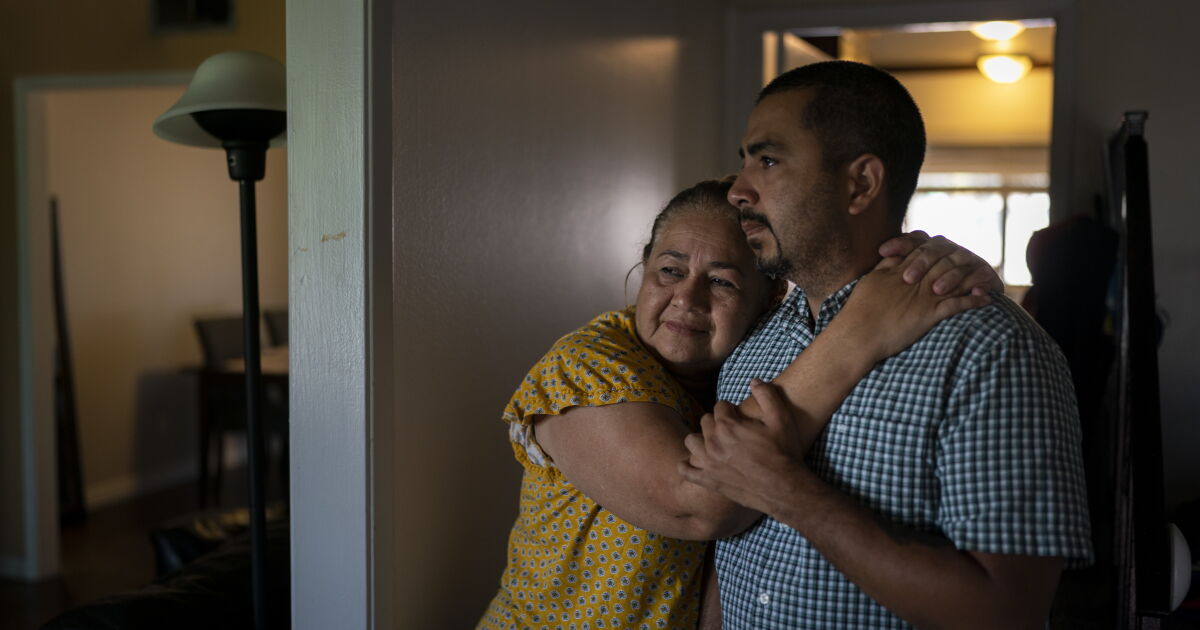
When Eyvin Hernandez stopped calling while vacationing in Colombia in late March, his younger brother thought the worst had happened.
Hernandez, a Los Angeles County deputy public defender, finally left a voice message on April 4, saying he was detained in Venezuela but should be free in 45 days.
“They don’t have anything on me,” he said. “I’m not a spy. I’m not a terrorist.”
Nearly nine months later, Hernandez and his brother, Henry Martinez, are still separated.
Hernandez, 44, is being held at a maximum-security military prison in Venezuela and has been charged with criminal association and conspiracy, which can result in up to 16 years in prison.
U.S. State Department officials have determined that Hernandez is being wrongfully detained — a classification that triggers enhanced government attention.
On Dec. 21, Los Angeles Mayor Karen Bass, Rep. Nanette Diaz Barragán (D-San Pedro) and other congressional representatives sent a letter to President Biden, asking his administration to work to secure Hernandez’s freedom.
“Expeditious action is needed,” the letter stated. “The judicial system in Venezuela is highly compromised, and any trial against Mr. Hernandez is unlikely to produce a fair result.”
A few days before Hernandez was due to return to L.A., a friend asked him to accompany her to the Colombia-Venezuela border, near the Colombian town of Cúcuta, Martinez said.
Hernandez’s family said he had had no intention of entering Venezuela.
At the border, Hernandez and his friend were intercepted by what reports have variously described as a paramilitary group, a gang or official Venezuelan forces. Hernandez and his friend were turned over to Venezuelan security forces and jailed. The friend is also still detained in Venezuela.
A photo of Eyvin Hernandez on his mother’s phone. Hernandez, a Los Angeles County public defender, has been jailed in Venezuela for nearly nine months.
(Jae C. Hong / Associated Press)
The Venezuelan government did not respond to requests for comment.
There has been an alarming increase in wrongful detentions of U.S. citizens in Venezuela and elsewhere around the globe in recent years, according to the James W. Foley Legacy Foundation, which tracks such cases and helps detainees’ families.
Earlier this month, basketball star Brittney Griner was released in a prisoner swap after nearly 10 months of detention in Russia on charges that she was carrying a small amount of cannabis oil.
In October, Venezuela freed seven American prisoners in exchange for the release of two nephews of President Nicolás Maduro’s wife, who were serving time in U.S. prisons for drug smuggling.
Hernandez’s family and supporters question why he was not included in the exchange.
“When a U.S. citizen is detained overseas, the Department works to provide all appropriate assistance,” U.S. State Department officials said in a statement to The Times.
In recent years, armed conflict has dramatically increased along the Colombia-Venezuela border. The U.S. State Department classifies the region as a high-risk area where U.S. citizens are threatened with detention under Maduro’s authoritarian government.
Martinez said he thinks the U.S. government has let his brother down, allowing him to languish in what he describes as a “dungeon.”
In phone calls to his family, Hernandez said he was in solitary confinement at one point. His cell has no windows, and he is allowed to walk only in circles for 30 minutes in an outside area the size of two vehicles. He is sleep-deprived because the lights in his cell are kept on all the time, and he subsists mostly on a diet of stale tortillas, he told them.
“This place is meant to break you psychologically and spiritually,” Hernandez said in a secretly recorded jailhouse message in August. “If you don’t get us out soon, then there might not be anyone left to save.”

Eyvin Hernandez’s mother, Ana Sandoval, and his stepfather, Pedro Martinez, in Compton in August.
(Jae C. Hong / Associated Press)
Hernandez was born in El Salvador in 1978, and his family fled with him to Los Angeles when he was 3, just before the country’s civil war. He grew up in South L.A. and attended UCLA, earning a degree in physics and math, then graduating from the law school in 2005.
Hernandez then joined the L.A. County public defender’s office. His most recent assignment was handling felony cases in downtown L.A., and he has trained and mentored many public defenders, according to his family.
When Hernandez seems especially down during their phone calls, Martinez tries to reassure him.
“‘It’s not going to be forever, man,’” Martinez says he tells him. “‘Stay strong. You’re going to be home soon.’”
Special correspondent Mery Mogollon contributed to this report.

When Eyvin Hernandez stopped calling while vacationing in Colombia in late March, his younger brother thought the worst had happened.
Hernandez, a Los Angeles County deputy public defender, finally left a voice message on April 4, saying he was detained in Venezuela but should be free in 45 days.
“They don’t have anything on me,” he said. “I’m not a spy. I’m not a terrorist.”
Nearly nine months later, Hernandez and his brother, Henry Martinez, are still separated.
Hernandez, 44, is being held at a maximum-security military prison in Venezuela and has been charged with criminal association and conspiracy, which can result in up to 16 years in prison.
U.S. State Department officials have determined that Hernandez is being wrongfully detained — a classification that triggers enhanced government attention.
On Dec. 21, Los Angeles Mayor Karen Bass, Rep. Nanette Diaz Barragán (D-San Pedro) and other congressional representatives sent a letter to President Biden, asking his administration to work to secure Hernandez’s freedom.
“Expeditious action is needed,” the letter stated. “The judicial system in Venezuela is highly compromised, and any trial against Mr. Hernandez is unlikely to produce a fair result.”
A few days before Hernandez was due to return to L.A., a friend asked him to accompany her to the Colombia-Venezuela border, near the Colombian town of Cúcuta, Martinez said.
Hernandez’s family said he had had no intention of entering Venezuela.
At the border, Hernandez and his friend were intercepted by what reports have variously described as a paramilitary group, a gang or official Venezuelan forces. Hernandez and his friend were turned over to Venezuelan security forces and jailed. The friend is also still detained in Venezuela.
A photo of Eyvin Hernandez on his mother’s phone. Hernandez, a Los Angeles County public defender, has been jailed in Venezuela for nearly nine months.
(Jae C. Hong / Associated Press)
The Venezuelan government did not respond to requests for comment.
There has been an alarming increase in wrongful detentions of U.S. citizens in Venezuela and elsewhere around the globe in recent years, according to the James W. Foley Legacy Foundation, which tracks such cases and helps detainees’ families.
Earlier this month, basketball star Brittney Griner was released in a prisoner swap after nearly 10 months of detention in Russia on charges that she was carrying a small amount of cannabis oil.
In October, Venezuela freed seven American prisoners in exchange for the release of two nephews of President Nicolás Maduro’s wife, who were serving time in U.S. prisons for drug smuggling.
Hernandez’s family and supporters question why he was not included in the exchange.
“When a U.S. citizen is detained overseas, the Department works to provide all appropriate assistance,” U.S. State Department officials said in a statement to The Times.
In recent years, armed conflict has dramatically increased along the Colombia-Venezuela border. The U.S. State Department classifies the region as a high-risk area where U.S. citizens are threatened with detention under Maduro’s authoritarian government.
Martinez said he thinks the U.S. government has let his brother down, allowing him to languish in what he describes as a “dungeon.”
In phone calls to his family, Hernandez said he was in solitary confinement at one point. His cell has no windows, and he is allowed to walk only in circles for 30 minutes in an outside area the size of two vehicles. He is sleep-deprived because the lights in his cell are kept on all the time, and he subsists mostly on a diet of stale tortillas, he told them.
“This place is meant to break you psychologically and spiritually,” Hernandez said in a secretly recorded jailhouse message in August. “If you don’t get us out soon, then there might not be anyone left to save.”
Eyvin Hernandez’s mother, Ana Sandoval, and his stepfather, Pedro Martinez, in Compton in August.
(Jae C. Hong / Associated Press)
Hernandez was born in El Salvador in 1978, and his family fled with him to Los Angeles when he was 3, just before the country’s civil war. He grew up in South L.A. and attended UCLA, earning a degree in physics and math, then graduating from the law school in 2005.
Hernandez then joined the L.A. County public defender’s office. His most recent assignment was handling felony cases in downtown L.A., and he has trained and mentored many public defenders, according to his family.
When Hernandez seems especially down during their phone calls, Martinez tries to reassure him.
“‘It’s not going to be forever, man,’” Martinez says he tells him. “‘Stay strong. You’re going to be home soon.’”
Special correspondent Mery Mogollon contributed to this report.

When Eyvin Hernandez stopped calling while vacationing in Colombia in late March, his younger brother thought the worst had happened.
Hernandez, a Los Angeles County deputy public defender, finally left a voice message on April 4, saying he was detained in Venezuela but should be free in 45 days.
“They don’t have anything on me,” he said. “I’m not a spy. I’m not a terrorist.”
Nearly nine months later, Hernandez and his brother, Henry Martinez, are still separated.
Hernandez, 44, is being held at a maximum-security military prison in Venezuela and has been charged with criminal association and conspiracy, which can result in up to 16 years in prison.
U.S. State Department officials have determined that Hernandez is being wrongfully detained — a classification that triggers enhanced government attention.
On Dec. 21, Los Angeles Mayor Karen Bass, Rep. Nanette Diaz Barragán (D-San Pedro) and other congressional representatives sent a letter to President Biden, asking his administration to work to secure Hernandez’s freedom.
“Expeditious action is needed,” the letter stated. “The judicial system in Venezuela is highly compromised, and any trial against Mr. Hernandez is unlikely to produce a fair result.”
A few days before Hernandez was due to return to L.A., a friend asked him to accompany her to the Colombia-Venezuela border, near the Colombian town of Cúcuta, Martinez said.
Hernandez’s family said he had had no intention of entering Venezuela.
At the border, Hernandez and his friend were intercepted by what reports have variously described as a paramilitary group, a gang or official Venezuelan forces. Hernandez and his friend were turned over to Venezuelan security forces and jailed. The friend is also still detained in Venezuela.
A photo of Eyvin Hernandez on his mother’s phone. Hernandez, a Los Angeles County public defender, has been jailed in Venezuela for nearly nine months.
(Jae C. Hong / Associated Press)
The Venezuelan government did not respond to requests for comment.
There has been an alarming increase in wrongful detentions of U.S. citizens in Venezuela and elsewhere around the globe in recent years, according to the James W. Foley Legacy Foundation, which tracks such cases and helps detainees’ families.
Earlier this month, basketball star Brittney Griner was released in a prisoner swap after nearly 10 months of detention in Russia on charges that she was carrying a small amount of cannabis oil.
In October, Venezuela freed seven American prisoners in exchange for the release of two nephews of President Nicolás Maduro’s wife, who were serving time in U.S. prisons for drug smuggling.
Hernandez’s family and supporters question why he was not included in the exchange.
“When a U.S. citizen is detained overseas, the Department works to provide all appropriate assistance,” U.S. State Department officials said in a statement to The Times.
In recent years, armed conflict has dramatically increased along the Colombia-Venezuela border. The U.S. State Department classifies the region as a high-risk area where U.S. citizens are threatened with detention under Maduro’s authoritarian government.
Martinez said he thinks the U.S. government has let his brother down, allowing him to languish in what he describes as a “dungeon.”
In phone calls to his family, Hernandez said he was in solitary confinement at one point. His cell has no windows, and he is allowed to walk only in circles for 30 minutes in an outside area the size of two vehicles. He is sleep-deprived because the lights in his cell are kept on all the time, and he subsists mostly on a diet of stale tortillas, he told them.
“This place is meant to break you psychologically and spiritually,” Hernandez said in a secretly recorded jailhouse message in August. “If you don’t get us out soon, then there might not be anyone left to save.”
Eyvin Hernandez’s mother, Ana Sandoval, and his stepfather, Pedro Martinez, in Compton in August.
(Jae C. Hong / Associated Press)
Hernandez was born in El Salvador in 1978, and his family fled with him to Los Angeles when he was 3, just before the country’s civil war. He grew up in South L.A. and attended UCLA, earning a degree in physics and math, then graduating from the law school in 2005.
Hernandez then joined the L.A. County public defender’s office. His most recent assignment was handling felony cases in downtown L.A., and he has trained and mentored many public defenders, according to his family.
When Hernandez seems especially down during their phone calls, Martinez tries to reassure him.
“‘It’s not going to be forever, man,’” Martinez says he tells him. “‘Stay strong. You’re going to be home soon.’”
Special correspondent Mery Mogollon contributed to this report.

When Eyvin Hernandez stopped calling while vacationing in Colombia in late March, his younger brother thought the worst had happened.
Hernandez, a Los Angeles County deputy public defender, finally left a voice message on April 4, saying he was detained in Venezuela but should be free in 45 days.
“They don’t have anything on me,” he said. “I’m not a spy. I’m not a terrorist.”
Nearly nine months later, Hernandez and his brother, Henry Martinez, are still separated.
Hernandez, 44, is being held at a maximum-security military prison in Venezuela and has been charged with criminal association and conspiracy, which can result in up to 16 years in prison.
U.S. State Department officials have determined that Hernandez is being wrongfully detained — a classification that triggers enhanced government attention.
On Dec. 21, Los Angeles Mayor Karen Bass, Rep. Nanette Diaz Barragán (D-San Pedro) and other congressional representatives sent a letter to President Biden, asking his administration to work to secure Hernandez’s freedom.
“Expeditious action is needed,” the letter stated. “The judicial system in Venezuela is highly compromised, and any trial against Mr. Hernandez is unlikely to produce a fair result.”
A few days before Hernandez was due to return to L.A., a friend asked him to accompany her to the Colombia-Venezuela border, near the Colombian town of Cúcuta, Martinez said.
Hernandez’s family said he had had no intention of entering Venezuela.
At the border, Hernandez and his friend were intercepted by what reports have variously described as a paramilitary group, a gang or official Venezuelan forces. Hernandez and his friend were turned over to Venezuelan security forces and jailed. The friend is also still detained in Venezuela.
A photo of Eyvin Hernandez on his mother’s phone. Hernandez, a Los Angeles County public defender, has been jailed in Venezuela for nearly nine months.
(Jae C. Hong / Associated Press)
The Venezuelan government did not respond to requests for comment.
There has been an alarming increase in wrongful detentions of U.S. citizens in Venezuela and elsewhere around the globe in recent years, according to the James W. Foley Legacy Foundation, which tracks such cases and helps detainees’ families.
Earlier this month, basketball star Brittney Griner was released in a prisoner swap after nearly 10 months of detention in Russia on charges that she was carrying a small amount of cannabis oil.
In October, Venezuela freed seven American prisoners in exchange for the release of two nephews of President Nicolás Maduro’s wife, who were serving time in U.S. prisons for drug smuggling.
Hernandez’s family and supporters question why he was not included in the exchange.
“When a U.S. citizen is detained overseas, the Department works to provide all appropriate assistance,” U.S. State Department officials said in a statement to The Times.
In recent years, armed conflict has dramatically increased along the Colombia-Venezuela border. The U.S. State Department classifies the region as a high-risk area where U.S. citizens are threatened with detention under Maduro’s authoritarian government.
Martinez said he thinks the U.S. government has let his brother down, allowing him to languish in what he describes as a “dungeon.”
In phone calls to his family, Hernandez said he was in solitary confinement at one point. His cell has no windows, and he is allowed to walk only in circles for 30 minutes in an outside area the size of two vehicles. He is sleep-deprived because the lights in his cell are kept on all the time, and he subsists mostly on a diet of stale tortillas, he told them.
“This place is meant to break you psychologically and spiritually,” Hernandez said in a secretly recorded jailhouse message in August. “If you don’t get us out soon, then there might not be anyone left to save.”
Eyvin Hernandez’s mother, Ana Sandoval, and his stepfather, Pedro Martinez, in Compton in August.
(Jae C. Hong / Associated Press)
Hernandez was born in El Salvador in 1978, and his family fled with him to Los Angeles when he was 3, just before the country’s civil war. He grew up in South L.A. and attended UCLA, earning a degree in physics and math, then graduating from the law school in 2005.
Hernandez then joined the L.A. County public defender’s office. His most recent assignment was handling felony cases in downtown L.A., and he has trained and mentored many public defenders, according to his family.
When Hernandez seems especially down during their phone calls, Martinez tries to reassure him.
“‘It’s not going to be forever, man,’” Martinez says he tells him. “‘Stay strong. You’re going to be home soon.’”
Special correspondent Mery Mogollon contributed to this report.

When Eyvin Hernandez stopped calling while vacationing in Colombia in late March, his younger brother thought the worst had happened.
Hernandez, a Los Angeles County deputy public defender, finally left a voice message on April 4, saying he was detained in Venezuela but should be free in 45 days.
“They don’t have anything on me,” he said. “I’m not a spy. I’m not a terrorist.”
Nearly nine months later, Hernandez and his brother, Henry Martinez, are still separated.
Hernandez, 44, is being held at a maximum-security military prison in Venezuela and has been charged with criminal association and conspiracy, which can result in up to 16 years in prison.
U.S. State Department officials have determined that Hernandez is being wrongfully detained — a classification that triggers enhanced government attention.
On Dec. 21, Los Angeles Mayor Karen Bass, Rep. Nanette Diaz Barragán (D-San Pedro) and other congressional representatives sent a letter to President Biden, asking his administration to work to secure Hernandez’s freedom.
“Expeditious action is needed,” the letter stated. “The judicial system in Venezuela is highly compromised, and any trial against Mr. Hernandez is unlikely to produce a fair result.”
A few days before Hernandez was due to return to L.A., a friend asked him to accompany her to the Colombia-Venezuela border, near the Colombian town of Cúcuta, Martinez said.
Hernandez’s family said he had had no intention of entering Venezuela.
At the border, Hernandez and his friend were intercepted by what reports have variously described as a paramilitary group, a gang or official Venezuelan forces. Hernandez and his friend were turned over to Venezuelan security forces and jailed. The friend is also still detained in Venezuela.
A photo of Eyvin Hernandez on his mother’s phone. Hernandez, a Los Angeles County public defender, has been jailed in Venezuela for nearly nine months.
(Jae C. Hong / Associated Press)
The Venezuelan government did not respond to requests for comment.
There has been an alarming increase in wrongful detentions of U.S. citizens in Venezuela and elsewhere around the globe in recent years, according to the James W. Foley Legacy Foundation, which tracks such cases and helps detainees’ families.
Earlier this month, basketball star Brittney Griner was released in a prisoner swap after nearly 10 months of detention in Russia on charges that she was carrying a small amount of cannabis oil.
In October, Venezuela freed seven American prisoners in exchange for the release of two nephews of President Nicolás Maduro’s wife, who were serving time in U.S. prisons for drug smuggling.
Hernandez’s family and supporters question why he was not included in the exchange.
“When a U.S. citizen is detained overseas, the Department works to provide all appropriate assistance,” U.S. State Department officials said in a statement to The Times.
In recent years, armed conflict has dramatically increased along the Colombia-Venezuela border. The U.S. State Department classifies the region as a high-risk area where U.S. citizens are threatened with detention under Maduro’s authoritarian government.
Martinez said he thinks the U.S. government has let his brother down, allowing him to languish in what he describes as a “dungeon.”
In phone calls to his family, Hernandez said he was in solitary confinement at one point. His cell has no windows, and he is allowed to walk only in circles for 30 minutes in an outside area the size of two vehicles. He is sleep-deprived because the lights in his cell are kept on all the time, and he subsists mostly on a diet of stale tortillas, he told them.
“This place is meant to break you psychologically and spiritually,” Hernandez said in a secretly recorded jailhouse message in August. “If you don’t get us out soon, then there might not be anyone left to save.”
Eyvin Hernandez’s mother, Ana Sandoval, and his stepfather, Pedro Martinez, in Compton in August.
(Jae C. Hong / Associated Press)
Hernandez was born in El Salvador in 1978, and his family fled with him to Los Angeles when he was 3, just before the country’s civil war. He grew up in South L.A. and attended UCLA, earning a degree in physics and math, then graduating from the law school in 2005.
Hernandez then joined the L.A. County public defender’s office. His most recent assignment was handling felony cases in downtown L.A., and he has trained and mentored many public defenders, according to his family.
When Hernandez seems especially down during their phone calls, Martinez tries to reassure him.
“‘It’s not going to be forever, man,’” Martinez says he tells him. “‘Stay strong. You’re going to be home soon.’”
Special correspondent Mery Mogollon contributed to this report.

