

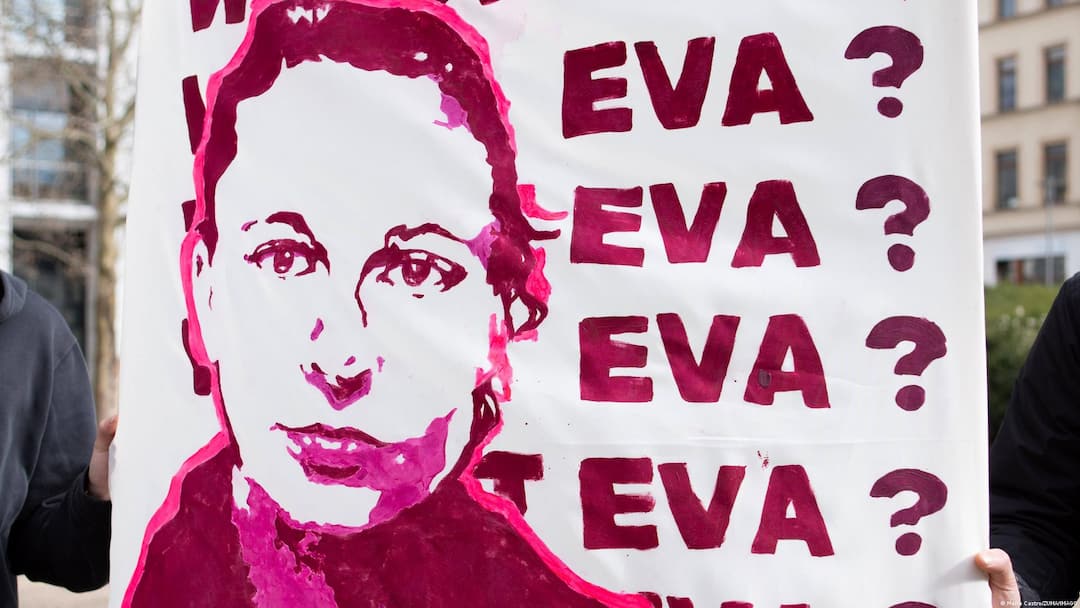
- German journalist Eva Michelmann returned home after Syrian disappearance.
- She was held in solitary confinement, now doing well.
- They disappeared during Syrian offensive against Kurdish fighters.
Edited by: Rana Taha
German journalist Eva Maria Michelmann, who went missing early this year in Syria while reporting on the remnants of more than a decade of civil war, returned to Germany on Friday, her lawyer said.
“It can be confirmed that Eva M. Michelmann was released this morning and returned to Germany this afternoon,” her lawyer Roland Meister told the AFP news agency, also making similar comments to other outlets.

What else do we know about Michelmann’s return?
Her brother Antonius Michelmann later told the German dpa news agency that “We went to collect her,” as she returned to Germany via Jordan.
He said that she was doing well, given the circumstances.
He said she had been held in solitary confinement for an extended period but did not provide further details.
What had happened to Michelmann?
Michelmann had gone missing during an offensive by Syrian government forces against Kurdish fighters in the northeast in January this year. Her colleague Turkish-Kurdish journalist Ahmed Polad disappeared at the same time.
Antonius Michelmann said that Polad’s whereabout were still not known.
According to the Committee to Protect Journalists (CPJ), they both worked for the Istanbul-based socialist Etkin News Agency (ETHA) and the Ozgur TV channel.
For months it was not entirely clear what had become of them.

The German Foreign Ministry last week said it was working at a high level to secure Michelmann’s release.
It wasn’t clear why the reporter from the western city of Cologne was detained or if she was charged with any crime.
Who’s running Syria since the fall of Bashar Assad?
The West has broadly welcomed the new Syrian government, led by former Islamist militant group leader Ahmed al-Sharaa, who has pledged to turn over a new, inclusive leaf now he’s in power in Damascus.
But religious and ethnic minorities including the Kurds in Syria have voiced concern about the new Sunni regime that toppled longstanding dictator Bashar Assad in December 2024.

As well as the military clashes with Kurdish forces and reports of violence against Alawites and Druze, more mundane changes like curbs on alcohol sales in Damascus have also prompted criticism and protests.
Don’t let the algorithm hide the news. If you rely on our team for trusted reporting, please take a moment to select us as a preferred source on Google, so you’ll always see our verified news first.

Disclaimer: This report first appeared on Deutsche Welle, and has been republished on ABP Live as part of a special arrangement. Apart from the headline, no changes have been made in the report by ABP Live.
Ayodhya Donation Controversy: Senior Temple Official Questions Oversight, Calls for Full Transparency

