

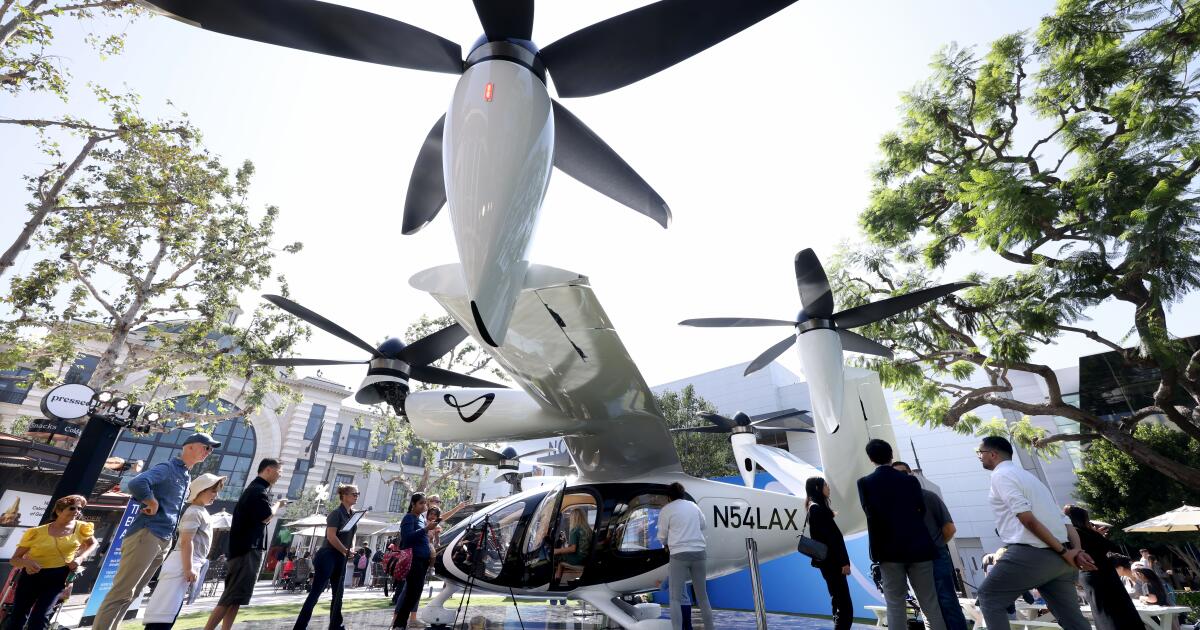
Two California companies at the front of the global race to bring battery-powered air taxis to the public are trying to trip each other up in court.
While Joby Aviation and Archer Aviation are based within an hour of each other in Northern California, they are bitter rivals, each hoping their own small electric vertical take-off and landing aircraft will rule the skies like Ubers shuttling people over cities.
Over the last year, the companies have been entangled in a mix of suits and countersuits, taking jabs at each other’s products and progress.
Archer says Joby is hiding its dependence on money and parts from China. Joby alleges Archer stole its technology.
Eric Lentell, chief legal and strategy officer for Archer, said the company is “not worried at all” about the corporate espionage accusations.
At stake is the first-mover advantage in an electric air taxi market that could eventually include autonomous aircraft. Morgan Stanley has predicted the industry could be worth $1.5 trillion by 2040.
“It’s very normal for companies to get into this tit for tat, especially in a new industry,” said Sergio Cecutta, co-founder of the aerospace consulting firm SMG Consulting and creator of the Advanced Air Mobility Reality Index.
San Jose-based Archer and Santa Cruz-based Joby both plan to offer a commercial air-taxi service using electric vertical takeoff and landing aircraft, or eVTOL. Both companies’ aircraft are designed for a pilot and four passengers.
The companies are among the survivors of the quest to disrupt aviation using new aircraft designs, electricity and AI. Even as front-runners, they have each taken a hit this year amid worries that they are taking too long and requiring too much investment, even as new challengers are emerging from China and elsewhere.
The shares in both companies are down more than 20% this year. Joby’s market value of more than $8.5 billion is close to twice that of Archer.
They have tried to direct investor focus to the future.
Joby could launch commercial air taxis in the United Arab Emirates in the next year. Archer recently spent more than $100 million to take over Hawthorne Municipal Airport. It says its goal is to operate in Los Angeles in time for the 2028 Olympic Games.
Meanwhile, the two companies are trying to shoot each other out of the sky in court.
Joby filed a suit in November, alleging corporate espionage against Archer and George Kivork, a former Joby employee who left to work for Archer. It accused Kivork of stealing technical information and communications with stakeholders from Joby and providing them to its competitor.
“By virtue of his position with Joby, Kivork had access to confidential and proprietary information,” the complaint said. “Archer brazenly used that stolen information.”
Both Archer and Kivork filed motions to dismiss the claims in January.
In March, Archer filed a lawsuit accusing Joby of defrauding the government by concealing close ties to China and misclassifying aircraft parts of Chinese origin.
Last month, in response to a complaint filed on behalf of Archer, the International Trade Commission opened an investigation into Joby and its relationship with China to determine whether it has violated tariff or patent law. The results of that investigation could affect Joby’s entrance into the U.S. market, Cecutta said.
Joby filed to dismiss the lawsuit in April, saying in court documents that “Joby has disclosed its China-based subsidiary in every annual report filed with the SEC since Joby became publicly traded.”
In Archer’s motion to dismiss the claims against Kivork and the company for corporate espionage, Archer wrote that Kivork “decided to accept a job with Joby’s more innovative competitor” and that the accusations were “an anti-competitive gambit by Joby to slow down a more successful competitor.”
In Joby’s motion to dismiss Archer’s counterclaims months later, Joby wrote that Archer was “attempting to recapture the narrative” and that its claims “do not deny that Joby is ahead.”
Joby’s court filing said Archer’s complaint was “long on innuendo, but short on factual allegations supporting cognizable legal theories.”
According to Cecutta, Joby is flying ahead in the race.
“Archer is one to two years behind Joby when it comes to development of the aircraft,” Cecutta said. “We do think Joby can have aircraft FAA certified for carrying passengers in the 2028 time frame, while Archer at the Olympics is probably not going to happen.”
Joby manufactures about one aircraft per month and is working on the production version that will undergo the Federal Aviation Administration certification process, Cecutta said. It has produced around nine aircraft so far. Archer is still working on preproduction models, he said, meaning it is not yet making the aircraft that will be used for commercial service.
Archer said it is the only air taxi company to complete the third stage of the FAA’s four-stage type certification process for eVTOLs. Type certification is the approval of the design of the aircraft and comes before production certification.
Archer’s Lentell thinks the two companies are about even in their progress.
“I would expect that both of us start right flying with FAA pilots in the aircraft sometime next year,” he said in an interview. “I really think we are neck and neck.”

Two California companies at the front of the global race to bring battery-powered air taxis to the public are trying to trip each other up in court.
While Joby Aviation and Archer Aviation are based within an hour of each other in Northern California, they are bitter rivals, each hoping their own small electric vertical take-off and landing aircraft will rule the skies like Ubers shuttling people over cities.
Over the last year, the companies have been entangled in a mix of suits and countersuits, taking jabs at each other’s products and progress.
Archer says Joby is hiding its dependence on money and parts from China. Joby alleges Archer stole its technology.
Eric Lentell, chief legal and strategy officer for Archer, said the company is “not worried at all” about the corporate espionage accusations.
At stake is the first-mover advantage in an electric air taxi market that could eventually include autonomous aircraft. Morgan Stanley has predicted the industry could be worth $1.5 trillion by 2040.
“It’s very normal for companies to get into this tit for tat, especially in a new industry,” said Sergio Cecutta, co-founder of the aerospace consulting firm SMG Consulting and creator of the Advanced Air Mobility Reality Index.
San Jose-based Archer and Santa Cruz-based Joby both plan to offer a commercial air-taxi service using electric vertical takeoff and landing aircraft, or eVTOL. Both companies’ aircraft are designed for a pilot and four passengers.
The companies are among the survivors of the quest to disrupt aviation using new aircraft designs, electricity and AI. Even as front-runners, they have each taken a hit this year amid worries that they are taking too long and requiring too much investment, even as new challengers are emerging from China and elsewhere.
The shares in both companies are down more than 20% this year. Joby’s market value of more than $8.5 billion is close to twice that of Archer.
They have tried to direct investor focus to the future.
Joby could launch commercial air taxis in the United Arab Emirates in the next year. Archer recently spent more than $100 million to take over Hawthorne Municipal Airport. It says its goal is to operate in Los Angeles in time for the 2028 Olympic Games.
Meanwhile, the two companies are trying to shoot each other out of the sky in court.
Joby filed a suit in November, alleging corporate espionage against Archer and George Kivork, a former Joby employee who left to work for Archer. It accused Kivork of stealing technical information and communications with stakeholders from Joby and providing them to its competitor.
“By virtue of his position with Joby, Kivork had access to confidential and proprietary information,” the complaint said. “Archer brazenly used that stolen information.”
Both Archer and Kivork filed motions to dismiss the claims in January.
In March, Archer filed a lawsuit accusing Joby of defrauding the government by concealing close ties to China and misclassifying aircraft parts of Chinese origin.
Last month, in response to a complaint filed on behalf of Archer, the International Trade Commission opened an investigation into Joby and its relationship with China to determine whether it has violated tariff or patent law. The results of that investigation could affect Joby’s entrance into the U.S. market, Cecutta said.
Joby filed to dismiss the lawsuit in April, saying in court documents that “Joby has disclosed its China-based subsidiary in every annual report filed with the SEC since Joby became publicly traded.”
In Archer’s motion to dismiss the claims against Kivork and the company for corporate espionage, Archer wrote that Kivork “decided to accept a job with Joby’s more innovative competitor” and that the accusations were “an anti-competitive gambit by Joby to slow down a more successful competitor.”
In Joby’s motion to dismiss Archer’s counterclaims months later, Joby wrote that Archer was “attempting to recapture the narrative” and that its claims “do not deny that Joby is ahead.”
Joby’s court filing said Archer’s complaint was “long on innuendo, but short on factual allegations supporting cognizable legal theories.”
According to Cecutta, Joby is flying ahead in the race.
“Archer is one to two years behind Joby when it comes to development of the aircraft,” Cecutta said. “We do think Joby can have aircraft FAA certified for carrying passengers in the 2028 time frame, while Archer at the Olympics is probably not going to happen.”
Joby manufactures about one aircraft per month and is working on the production version that will undergo the Federal Aviation Administration certification process, Cecutta said. It has produced around nine aircraft so far. Archer is still working on preproduction models, he said, meaning it is not yet making the aircraft that will be used for commercial service.
Archer said it is the only air taxi company to complete the third stage of the FAA’s four-stage type certification process for eVTOLs. Type certification is the approval of the design of the aircraft and comes before production certification.
Archer’s Lentell thinks the two companies are about even in their progress.
“I would expect that both of us start right flying with FAA pilots in the aircraft sometime next year,” he said in an interview. “I really think we are neck and neck.”

Two California companies at the front of the global race to bring battery-powered air taxis to the public are trying to trip each other up in court.
While Joby Aviation and Archer Aviation are based within an hour of each other in Northern California, they are bitter rivals, each hoping their own small electric vertical take-off and landing aircraft will rule the skies like Ubers shuttling people over cities.
Over the last year, the companies have been entangled in a mix of suits and countersuits, taking jabs at each other’s products and progress.
Archer says Joby is hiding its dependence on money and parts from China. Joby alleges Archer stole its technology.
Eric Lentell, chief legal and strategy officer for Archer, said the company is “not worried at all” about the corporate espionage accusations.
At stake is the first-mover advantage in an electric air taxi market that could eventually include autonomous aircraft. Morgan Stanley has predicted the industry could be worth $1.5 trillion by 2040.
“It’s very normal for companies to get into this tit for tat, especially in a new industry,” said Sergio Cecutta, co-founder of the aerospace consulting firm SMG Consulting and creator of the Advanced Air Mobility Reality Index.
San Jose-based Archer and Santa Cruz-based Joby both plan to offer a commercial air-taxi service using electric vertical takeoff and landing aircraft, or eVTOL. Both companies’ aircraft are designed for a pilot and four passengers.
The companies are among the survivors of the quest to disrupt aviation using new aircraft designs, electricity and AI. Even as front-runners, they have each taken a hit this year amid worries that they are taking too long and requiring too much investment, even as new challengers are emerging from China and elsewhere.
The shares in both companies are down more than 20% this year. Joby’s market value of more than $8.5 billion is close to twice that of Archer.
They have tried to direct investor focus to the future.
Joby could launch commercial air taxis in the United Arab Emirates in the next year. Archer recently spent more than $100 million to take over Hawthorne Municipal Airport. It says its goal is to operate in Los Angeles in time for the 2028 Olympic Games.
Meanwhile, the two companies are trying to shoot each other out of the sky in court.
Joby filed a suit in November, alleging corporate espionage against Archer and George Kivork, a former Joby employee who left to work for Archer. It accused Kivork of stealing technical information and communications with stakeholders from Joby and providing them to its competitor.
“By virtue of his position with Joby, Kivork had access to confidential and proprietary information,” the complaint said. “Archer brazenly used that stolen information.”
Both Archer and Kivork filed motions to dismiss the claims in January.
In March, Archer filed a lawsuit accusing Joby of defrauding the government by concealing close ties to China and misclassifying aircraft parts of Chinese origin.
Last month, in response to a complaint filed on behalf of Archer, the International Trade Commission opened an investigation into Joby and its relationship with China to determine whether it has violated tariff or patent law. The results of that investigation could affect Joby’s entrance into the U.S. market, Cecutta said.
Joby filed to dismiss the lawsuit in April, saying in court documents that “Joby has disclosed its China-based subsidiary in every annual report filed with the SEC since Joby became publicly traded.”
In Archer’s motion to dismiss the claims against Kivork and the company for corporate espionage, Archer wrote that Kivork “decided to accept a job with Joby’s more innovative competitor” and that the accusations were “an anti-competitive gambit by Joby to slow down a more successful competitor.”
In Joby’s motion to dismiss Archer’s counterclaims months later, Joby wrote that Archer was “attempting to recapture the narrative” and that its claims “do not deny that Joby is ahead.”
Joby’s court filing said Archer’s complaint was “long on innuendo, but short on factual allegations supporting cognizable legal theories.”
According to Cecutta, Joby is flying ahead in the race.
“Archer is one to two years behind Joby when it comes to development of the aircraft,” Cecutta said. “We do think Joby can have aircraft FAA certified for carrying passengers in the 2028 time frame, while Archer at the Olympics is probably not going to happen.”
Joby manufactures about one aircraft per month and is working on the production version that will undergo the Federal Aviation Administration certification process, Cecutta said. It has produced around nine aircraft so far. Archer is still working on preproduction models, he said, meaning it is not yet making the aircraft that will be used for commercial service.
Archer said it is the only air taxi company to complete the third stage of the FAA’s four-stage type certification process for eVTOLs. Type certification is the approval of the design of the aircraft and comes before production certification.
Archer’s Lentell thinks the two companies are about even in their progress.
“I would expect that both of us start right flying with FAA pilots in the aircraft sometime next year,” he said in an interview. “I really think we are neck and neck.”
Two California companies at the front of the global race to bring battery-powered air taxis to the public are trying to trip each other up in court.
While Joby Aviation and Archer Aviation are based within an hour of each other in Northern California, they are bitter rivals, each hoping their own small electric vertical take-off and landing aircraft will rule the skies like Ubers shuttling people over cities.
Over the last year, the companies have been entangled in a mix of suits and countersuits, taking jabs at each other’s products and progress.
Archer says Joby is hiding its dependence on money and parts from China. Joby alleges Archer stole its technology.
Eric Lentell, chief legal and strategy officer for Archer, said the company is “not worried at all” about the corporate espionage accusations.
At stake is the first-mover advantage in an electric air taxi market that could eventually include autonomous aircraft. Morgan Stanley has predicted the industry could be worth $1.5 trillion by 2040.
“It’s very normal for companies to get into this tit for tat, especially in a new industry,” said Sergio Cecutta, co-founder of the aerospace consulting firm SMG Consulting and creator of the Advanced Air Mobility Reality Index.
San Jose-based Archer and Santa Cruz-based Joby both plan to offer a commercial air-taxi service using electric vertical takeoff and landing aircraft, or eVTOL. Both companies’ aircraft are designed for a pilot and four passengers.
The companies are among the survivors of the quest to disrupt aviation using new aircraft designs, electricity and AI. Even as front-runners, they have each taken a hit this year amid worries that they are taking too long and requiring too much investment, even as new challengers are emerging from China and elsewhere.
The shares in both companies are down more than 20% this year. Joby’s market value of more than $8.5 billion is close to twice that of Archer.
They have tried to direct investor focus to the future.
Joby could launch commercial air taxis in the United Arab Emirates in the next year. Archer recently spent more than $100 million to take over Hawthorne Municipal Airport. It says its goal is to operate in Los Angeles in time for the 2028 Olympic Games.
Meanwhile, the two companies are trying to shoot each other out of the sky in court.
Joby filed a suit in November, alleging corporate espionage against Archer and George Kivork, a former Joby employee who left to work for Archer. It accused Kivork of stealing technical information and communications with stakeholders from Joby and providing them to its competitor.
“By virtue of his position with Joby, Kivork had access to confidential and proprietary information,” the complaint said. “Archer brazenly used that stolen information.”
Both Archer and Kivork filed motions to dismiss the claims in January.
In March, Archer filed a lawsuit accusing Joby of defrauding the government by concealing close ties to China and misclassifying aircraft parts of Chinese origin.
Last month, in response to a complaint filed on behalf of Archer, the International Trade Commission opened an investigation into Joby and its relationship with China to determine whether it has violated tariff or patent law. The results of that investigation could affect Joby’s entrance into the U.S. market, Cecutta said.
Joby filed to dismiss the lawsuit in April, saying in court documents that “Joby has disclosed its China-based subsidiary in every annual report filed with the SEC since Joby became publicly traded.”
In Archer’s motion to dismiss the claims against Kivork and the company for corporate espionage, Archer wrote that Kivork “decided to accept a job with Joby’s more innovative competitor” and that the accusations were “an anti-competitive gambit by Joby to slow down a more successful competitor.”
In Joby’s motion to dismiss Archer’s counterclaims months later, Joby wrote that Archer was “attempting to recapture the narrative” and that its claims “do not deny that Joby is ahead.”
Joby’s court filing said Archer’s complaint was “long on innuendo, but short on factual allegations supporting cognizable legal theories.”
According to Cecutta, Joby is flying ahead in the race.
“Archer is one to two years behind Joby when it comes to development of the aircraft,” Cecutta said. “We do think Joby can have aircraft FAA certified for carrying passengers in the 2028 time frame, while Archer at the Olympics is probably not going to happen.”
Joby manufactures about one aircraft per month and is working on the production version that will undergo the Federal Aviation Administration certification process, Cecutta said. It has produced around nine aircraft so far. Archer is still working on preproduction models, he said, meaning it is not yet making the aircraft that will be used for commercial service.
Archer said it is the only air taxi company to complete the third stage of the FAA’s four-stage type certification process for eVTOLs. Type certification is the approval of the design of the aircraft and comes before production certification.
Archer’s Lentell thinks the two companies are about even in their progress.
“I would expect that both of us start right flying with FAA pilots in the aircraft sometime next year,” he said in an interview. “I really think we are neck and neck.”

Two California companies at the front of the global race to bring battery-powered air taxis to the public are trying to trip each other up in court.
While Joby Aviation and Archer Aviation are based within an hour of each other in Northern California, they are bitter rivals, each hoping their own small electric vertical take-off and landing aircraft will rule the skies like Ubers shuttling people over cities.
Over the last year, the companies have been entangled in a mix of suits and countersuits, taking jabs at each other’s products and progress.
Archer says Joby is hiding its dependence on money and parts from China. Joby alleges Archer stole its technology.
Eric Lentell, chief legal and strategy officer for Archer, said the company is “not worried at all” about the corporate espionage accusations.
At stake is the first-mover advantage in an electric air taxi market that could eventually include autonomous aircraft. Morgan Stanley has predicted the industry could be worth $1.5 trillion by 2040.
“It’s very normal for companies to get into this tit for tat, especially in a new industry,” said Sergio Cecutta, co-founder of the aerospace consulting firm SMG Consulting and creator of the Advanced Air Mobility Reality Index.
San Jose-based Archer and Santa Cruz-based Joby both plan to offer a commercial air-taxi service using electric vertical takeoff and landing aircraft, or eVTOL. Both companies’ aircraft are designed for a pilot and four passengers.
The companies are among the survivors of the quest to disrupt aviation using new aircraft designs, electricity and AI. Even as front-runners, they have each taken a hit this year amid worries that they are taking too long and requiring too much investment, even as new challengers are emerging from China and elsewhere.
The shares in both companies are down more than 20% this year. Joby’s market value of more than $8.5 billion is close to twice that of Archer.
They have tried to direct investor focus to the future.
Joby could launch commercial air taxis in the United Arab Emirates in the next year. Archer recently spent more than $100 million to take over Hawthorne Municipal Airport. It says its goal is to operate in Los Angeles in time for the 2028 Olympic Games.
Meanwhile, the two companies are trying to shoot each other out of the sky in court.
Joby filed a suit in November, alleging corporate espionage against Archer and George Kivork, a former Joby employee who left to work for Archer. It accused Kivork of stealing technical information and communications with stakeholders from Joby and providing them to its competitor.
“By virtue of his position with Joby, Kivork had access to confidential and proprietary information,” the complaint said. “Archer brazenly used that stolen information.”
Both Archer and Kivork filed motions to dismiss the claims in January.
In March, Archer filed a lawsuit accusing Joby of defrauding the government by concealing close ties to China and misclassifying aircraft parts of Chinese origin.
Last month, in response to a complaint filed on behalf of Archer, the International Trade Commission opened an investigation into Joby and its relationship with China to determine whether it has violated tariff or patent law. The results of that investigation could affect Joby’s entrance into the U.S. market, Cecutta said.
Joby filed to dismiss the lawsuit in April, saying in court documents that “Joby has disclosed its China-based subsidiary in every annual report filed with the SEC since Joby became publicly traded.”
In Archer’s motion to dismiss the claims against Kivork and the company for corporate espionage, Archer wrote that Kivork “decided to accept a job with Joby’s more innovative competitor” and that the accusations were “an anti-competitive gambit by Joby to slow down a more successful competitor.”
In Joby’s motion to dismiss Archer’s counterclaims months later, Joby wrote that Archer was “attempting to recapture the narrative” and that its claims “do not deny that Joby is ahead.”
Joby’s court filing said Archer’s complaint was “long on innuendo, but short on factual allegations supporting cognizable legal theories.”
According to Cecutta, Joby is flying ahead in the race.
“Archer is one to two years behind Joby when it comes to development of the aircraft,” Cecutta said. “We do think Joby can have aircraft FAA certified for carrying passengers in the 2028 time frame, while Archer at the Olympics is probably not going to happen.”
Joby manufactures about one aircraft per month and is working on the production version that will undergo the Federal Aviation Administration certification process, Cecutta said. It has produced around nine aircraft so far. Archer is still working on preproduction models, he said, meaning it is not yet making the aircraft that will be used for commercial service.
Archer said it is the only air taxi company to complete the third stage of the FAA’s four-stage type certification process for eVTOLs. Type certification is the approval of the design of the aircraft and comes before production certification.
Archer’s Lentell thinks the two companies are about even in their progress.
“I would expect that both of us start right flying with FAA pilots in the aircraft sometime next year,” he said in an interview. “I really think we are neck and neck.”
Two California companies at the front of the global race to bring battery-powered air taxis to the public are trying to trip each other up in court.
While Joby Aviation and Archer Aviation are based within an hour of each other in Northern California, they are bitter rivals, each hoping their own small electric vertical take-off and landing aircraft will rule the skies like Ubers shuttling people over cities.
Over the last year, the companies have been entangled in a mix of suits and countersuits, taking jabs at each other’s products and progress.
Archer says Joby is hiding its dependence on money and parts from China. Joby alleges Archer stole its technology.
Eric Lentell, chief legal and strategy officer for Archer, said the company is “not worried at all” about the corporate espionage accusations.
At stake is the first-mover advantage in an electric air taxi market that could eventually include autonomous aircraft. Morgan Stanley has predicted the industry could be worth $1.5 trillion by 2040.
“It’s very normal for companies to get into this tit for tat, especially in a new industry,” said Sergio Cecutta, co-founder of the aerospace consulting firm SMG Consulting and creator of the Advanced Air Mobility Reality Index.
San Jose-based Archer and Santa Cruz-based Joby both plan to offer a commercial air-taxi service using electric vertical takeoff and landing aircraft, or eVTOL. Both companies’ aircraft are designed for a pilot and four passengers.
The companies are among the survivors of the quest to disrupt aviation using new aircraft designs, electricity and AI. Even as front-runners, they have each taken a hit this year amid worries that they are taking too long and requiring too much investment, even as new challengers are emerging from China and elsewhere.
The shares in both companies are down more than 20% this year. Joby’s market value of more than $8.5 billion is close to twice that of Archer.
They have tried to direct investor focus to the future.
Joby could launch commercial air taxis in the United Arab Emirates in the next year. Archer recently spent more than $100 million to take over Hawthorne Municipal Airport. It says its goal is to operate in Los Angeles in time for the 2028 Olympic Games.
Meanwhile, the two companies are trying to shoot each other out of the sky in court.
Joby filed a suit in November, alleging corporate espionage against Archer and George Kivork, a former Joby employee who left to work for Archer. It accused Kivork of stealing technical information and communications with stakeholders from Joby and providing them to its competitor.
“By virtue of his position with Joby, Kivork had access to confidential and proprietary information,” the complaint said. “Archer brazenly used that stolen information.”
Both Archer and Kivork filed motions to dismiss the claims in January.
In March, Archer filed a lawsuit accusing Joby of defrauding the government by concealing close ties to China and misclassifying aircraft parts of Chinese origin.
Last month, in response to a complaint filed on behalf of Archer, the International Trade Commission opened an investigation into Joby and its relationship with China to determine whether it has violated tariff or patent law. The results of that investigation could affect Joby’s entrance into the U.S. market, Cecutta said.
Joby filed to dismiss the lawsuit in April, saying in court documents that “Joby has disclosed its China-based subsidiary in every annual report filed with the SEC since Joby became publicly traded.”
In Archer’s motion to dismiss the claims against Kivork and the company for corporate espionage, Archer wrote that Kivork “decided to accept a job with Joby’s more innovative competitor” and that the accusations were “an anti-competitive gambit by Joby to slow down a more successful competitor.”
In Joby’s motion to dismiss Archer’s counterclaims months later, Joby wrote that Archer was “attempting to recapture the narrative” and that its claims “do not deny that Joby is ahead.”
Joby’s court filing said Archer’s complaint was “long on innuendo, but short on factual allegations supporting cognizable legal theories.”
According to Cecutta, Joby is flying ahead in the race.
“Archer is one to two years behind Joby when it comes to development of the aircraft,” Cecutta said. “We do think Joby can have aircraft FAA certified for carrying passengers in the 2028 time frame, while Archer at the Olympics is probably not going to happen.”
Joby manufactures about one aircraft per month and is working on the production version that will undergo the Federal Aviation Administration certification process, Cecutta said. It has produced around nine aircraft so far. Archer is still working on preproduction models, he said, meaning it is not yet making the aircraft that will be used for commercial service.
Archer said it is the only air taxi company to complete the third stage of the FAA’s four-stage type certification process for eVTOLs. Type certification is the approval of the design of the aircraft and comes before production certification.
Archer’s Lentell thinks the two companies are about even in their progress.
“I would expect that both of us start right flying with FAA pilots in the aircraft sometime next year,” he said in an interview. “I really think we are neck and neck.”
Two California companies at the front of the global race to bring battery-powered air taxis to the public are trying to trip each other up in court.
While Joby Aviation and Archer Aviation are based within an hour of each other in Northern California, they are bitter rivals, each hoping their own small electric vertical take-off and landing aircraft will rule the skies like Ubers shuttling people over cities.
Over the last year, the companies have been entangled in a mix of suits and countersuits, taking jabs at each other’s products and progress.
Archer says Joby is hiding its dependence on money and parts from China. Joby alleges Archer stole its technology.
Eric Lentell, chief legal and strategy officer for Archer, said the company is “not worried at all” about the corporate espionage accusations.
At stake is the first-mover advantage in an electric air taxi market that could eventually include autonomous aircraft. Morgan Stanley has predicted the industry could be worth $1.5 trillion by 2040.
“It’s very normal for companies to get into this tit for tat, especially in a new industry,” said Sergio Cecutta, co-founder of the aerospace consulting firm SMG Consulting and creator of the Advanced Air Mobility Reality Index.
San Jose-based Archer and Santa Cruz-based Joby both plan to offer a commercial air-taxi service using electric vertical takeoff and landing aircraft, or eVTOL. Both companies’ aircraft are designed for a pilot and four passengers.
The companies are among the survivors of the quest to disrupt aviation using new aircraft designs, electricity and AI. Even as front-runners, they have each taken a hit this year amid worries that they are taking too long and requiring too much investment, even as new challengers are emerging from China and elsewhere.
The shares in both companies are down more than 20% this year. Joby’s market value of more than $8.5 billion is close to twice that of Archer.
They have tried to direct investor focus to the future.
Joby could launch commercial air taxis in the United Arab Emirates in the next year. Archer recently spent more than $100 million to take over Hawthorne Municipal Airport. It says its goal is to operate in Los Angeles in time for the 2028 Olympic Games.
Meanwhile, the two companies are trying to shoot each other out of the sky in court.
Joby filed a suit in November, alleging corporate espionage against Archer and George Kivork, a former Joby employee who left to work for Archer. It accused Kivork of stealing technical information and communications with stakeholders from Joby and providing them to its competitor.
“By virtue of his position with Joby, Kivork had access to confidential and proprietary information,” the complaint said. “Archer brazenly used that stolen information.”
Both Archer and Kivork filed motions to dismiss the claims in January.
In March, Archer filed a lawsuit accusing Joby of defrauding the government by concealing close ties to China and misclassifying aircraft parts of Chinese origin.
Last month, in response to a complaint filed on behalf of Archer, the International Trade Commission opened an investigation into Joby and its relationship with China to determine whether it has violated tariff or patent law. The results of that investigation could affect Joby’s entrance into the U.S. market, Cecutta said.
Joby filed to dismiss the lawsuit in April, saying in court documents that “Joby has disclosed its China-based subsidiary in every annual report filed with the SEC since Joby became publicly traded.”
In Archer’s motion to dismiss the claims against Kivork and the company for corporate espionage, Archer wrote that Kivork “decided to accept a job with Joby’s more innovative competitor” and that the accusations were “an anti-competitive gambit by Joby to slow down a more successful competitor.”
In Joby’s motion to dismiss Archer’s counterclaims months later, Joby wrote that Archer was “attempting to recapture the narrative” and that its claims “do not deny that Joby is ahead.”
Joby’s court filing said Archer’s complaint was “long on innuendo, but short on factual allegations supporting cognizable legal theories.”
According to Cecutta, Joby is flying ahead in the race.
“Archer is one to two years behind Joby when it comes to development of the aircraft,” Cecutta said. “We do think Joby can have aircraft FAA certified for carrying passengers in the 2028 time frame, while Archer at the Olympics is probably not going to happen.”
Joby manufactures about one aircraft per month and is working on the production version that will undergo the Federal Aviation Administration certification process, Cecutta said. It has produced around nine aircraft so far. Archer is still working on preproduction models, he said, meaning it is not yet making the aircraft that will be used for commercial service.
Archer said it is the only air taxi company to complete the third stage of the FAA’s four-stage type certification process for eVTOLs. Type certification is the approval of the design of the aircraft and comes before production certification.
Archer’s Lentell thinks the two companies are about even in their progress.
“I would expect that both of us start right flying with FAA pilots in the aircraft sometime next year,” he said in an interview. “I really think we are neck and neck.”
Two California companies at the front of the global race to bring battery-powered air taxis to the public are trying to trip each other up in court.
While Joby Aviation and Archer Aviation are based within an hour of each other in Northern California, they are bitter rivals, each hoping their own small electric vertical take-off and landing aircraft will rule the skies like Ubers shuttling people over cities.
Over the last year, the companies have been entangled in a mix of suits and countersuits, taking jabs at each other’s products and progress.
Archer says Joby is hiding its dependence on money and parts from China. Joby alleges Archer stole its technology.
Eric Lentell, chief legal and strategy officer for Archer, said the company is “not worried at all” about the corporate espionage accusations.
At stake is the first-mover advantage in an electric air taxi market that could eventually include autonomous aircraft. Morgan Stanley has predicted the industry could be worth $1.5 trillion by 2040.
“It’s very normal for companies to get into this tit for tat, especially in a new industry,” said Sergio Cecutta, co-founder of the aerospace consulting firm SMG Consulting and creator of the Advanced Air Mobility Reality Index.
San Jose-based Archer and Santa Cruz-based Joby both plan to offer a commercial air-taxi service using electric vertical takeoff and landing aircraft, or eVTOL. Both companies’ aircraft are designed for a pilot and four passengers.
The companies are among the survivors of the quest to disrupt aviation using new aircraft designs, electricity and AI. Even as front-runners, they have each taken a hit this year amid worries that they are taking too long and requiring too much investment, even as new challengers are emerging from China and elsewhere.
The shares in both companies are down more than 20% this year. Joby’s market value of more than $8.5 billion is close to twice that of Archer.
They have tried to direct investor focus to the future.
Joby could launch commercial air taxis in the United Arab Emirates in the next year. Archer recently spent more than $100 million to take over Hawthorne Municipal Airport. It says its goal is to operate in Los Angeles in time for the 2028 Olympic Games.
Meanwhile, the two companies are trying to shoot each other out of the sky in court.
Joby filed a suit in November, alleging corporate espionage against Archer and George Kivork, a former Joby employee who left to work for Archer. It accused Kivork of stealing technical information and communications with stakeholders from Joby and providing them to its competitor.
“By virtue of his position with Joby, Kivork had access to confidential and proprietary information,” the complaint said. “Archer brazenly used that stolen information.”
Both Archer and Kivork filed motions to dismiss the claims in January.
In March, Archer filed a lawsuit accusing Joby of defrauding the government by concealing close ties to China and misclassifying aircraft parts of Chinese origin.
Last month, in response to a complaint filed on behalf of Archer, the International Trade Commission opened an investigation into Joby and its relationship with China to determine whether it has violated tariff or patent law. The results of that investigation could affect Joby’s entrance into the U.S. market, Cecutta said.
Joby filed to dismiss the lawsuit in April, saying in court documents that “Joby has disclosed its China-based subsidiary in every annual report filed with the SEC since Joby became publicly traded.”
In Archer’s motion to dismiss the claims against Kivork and the company for corporate espionage, Archer wrote that Kivork “decided to accept a job with Joby’s more innovative competitor” and that the accusations were “an anti-competitive gambit by Joby to slow down a more successful competitor.”
In Joby’s motion to dismiss Archer’s counterclaims months later, Joby wrote that Archer was “attempting to recapture the narrative” and that its claims “do not deny that Joby is ahead.”
Joby’s court filing said Archer’s complaint was “long on innuendo, but short on factual allegations supporting cognizable legal theories.”
According to Cecutta, Joby is flying ahead in the race.
“Archer is one to two years behind Joby when it comes to development of the aircraft,” Cecutta said. “We do think Joby can have aircraft FAA certified for carrying passengers in the 2028 time frame, while Archer at the Olympics is probably not going to happen.”
Joby manufactures about one aircraft per month and is working on the production version that will undergo the Federal Aviation Administration certification process, Cecutta said. It has produced around nine aircraft so far. Archer is still working on preproduction models, he said, meaning it is not yet making the aircraft that will be used for commercial service.
Archer said it is the only air taxi company to complete the third stage of the FAA’s four-stage type certification process for eVTOLs. Type certification is the approval of the design of the aircraft and comes before production certification.
Archer’s Lentell thinks the two companies are about even in their progress.
“I would expect that both of us start right flying with FAA pilots in the aircraft sometime next year,” he said in an interview. “I really think we are neck and neck.”

Two California companies at the front of the global race to bring battery-powered air taxis to the public are trying to trip each other up in court.
While Joby Aviation and Archer Aviation are based within an hour of each other in Northern California, they are bitter rivals, each hoping their own small electric vertical take-off and landing aircraft will rule the skies like Ubers shuttling people over cities.
Over the last year, the companies have been entangled in a mix of suits and countersuits, taking jabs at each other’s products and progress.
Archer says Joby is hiding its dependence on money and parts from China. Joby alleges Archer stole its technology.
Eric Lentell, chief legal and strategy officer for Archer, said the company is “not worried at all” about the corporate espionage accusations.
At stake is the first-mover advantage in an electric air taxi market that could eventually include autonomous aircraft. Morgan Stanley has predicted the industry could be worth $1.5 trillion by 2040.
“It’s very normal for companies to get into this tit for tat, especially in a new industry,” said Sergio Cecutta, co-founder of the aerospace consulting firm SMG Consulting and creator of the Advanced Air Mobility Reality Index.
San Jose-based Archer and Santa Cruz-based Joby both plan to offer a commercial air-taxi service using electric vertical takeoff and landing aircraft, or eVTOL. Both companies’ aircraft are designed for a pilot and four passengers.
The companies are among the survivors of the quest to disrupt aviation using new aircraft designs, electricity and AI. Even as front-runners, they have each taken a hit this year amid worries that they are taking too long and requiring too much investment, even as new challengers are emerging from China and elsewhere.
The shares in both companies are down more than 20% this year. Joby’s market value of more than $8.5 billion is close to twice that of Archer.
They have tried to direct investor focus to the future.
Joby could launch commercial air taxis in the United Arab Emirates in the next year. Archer recently spent more than $100 million to take over Hawthorne Municipal Airport. It says its goal is to operate in Los Angeles in time for the 2028 Olympic Games.
Meanwhile, the two companies are trying to shoot each other out of the sky in court.
Joby filed a suit in November, alleging corporate espionage against Archer and George Kivork, a former Joby employee who left to work for Archer. It accused Kivork of stealing technical information and communications with stakeholders from Joby and providing them to its competitor.
“By virtue of his position with Joby, Kivork had access to confidential and proprietary information,” the complaint said. “Archer brazenly used that stolen information.”
Both Archer and Kivork filed motions to dismiss the claims in January.
In March, Archer filed a lawsuit accusing Joby of defrauding the government by concealing close ties to China and misclassifying aircraft parts of Chinese origin.
Last month, in response to a complaint filed on behalf of Archer, the International Trade Commission opened an investigation into Joby and its relationship with China to determine whether it has violated tariff or patent law. The results of that investigation could affect Joby’s entrance into the U.S. market, Cecutta said.
Joby filed to dismiss the lawsuit in April, saying in court documents that “Joby has disclosed its China-based subsidiary in every annual report filed with the SEC since Joby became publicly traded.”
In Archer’s motion to dismiss the claims against Kivork and the company for corporate espionage, Archer wrote that Kivork “decided to accept a job with Joby’s more innovative competitor” and that the accusations were “an anti-competitive gambit by Joby to slow down a more successful competitor.”
In Joby’s motion to dismiss Archer’s counterclaims months later, Joby wrote that Archer was “attempting to recapture the narrative” and that its claims “do not deny that Joby is ahead.”
Joby’s court filing said Archer’s complaint was “long on innuendo, but short on factual allegations supporting cognizable legal theories.”
According to Cecutta, Joby is flying ahead in the race.
“Archer is one to two years behind Joby when it comes to development of the aircraft,” Cecutta said. “We do think Joby can have aircraft FAA certified for carrying passengers in the 2028 time frame, while Archer at the Olympics is probably not going to happen.”
Joby manufactures about one aircraft per month and is working on the production version that will undergo the Federal Aviation Administration certification process, Cecutta said. It has produced around nine aircraft so far. Archer is still working on preproduction models, he said, meaning it is not yet making the aircraft that will be used for commercial service.
Archer said it is the only air taxi company to complete the third stage of the FAA’s four-stage type certification process for eVTOLs. Type certification is the approval of the design of the aircraft and comes before production certification.
Archer’s Lentell thinks the two companies are about even in their progress.
“I would expect that both of us start right flying with FAA pilots in the aircraft sometime next year,” he said in an interview. “I really think we are neck and neck.”
Two California companies at the front of the global race to bring battery-powered air taxis to the public are trying to trip each other up in court.
While Joby Aviation and Archer Aviation are based within an hour of each other in Northern California, they are bitter rivals, each hoping their own small electric vertical take-off and landing aircraft will rule the skies like Ubers shuttling people over cities.
Over the last year, the companies have been entangled in a mix of suits and countersuits, taking jabs at each other’s products and progress.
Archer says Joby is hiding its dependence on money and parts from China. Joby alleges Archer stole its technology.
Eric Lentell, chief legal and strategy officer for Archer, said the company is “not worried at all” about the corporate espionage accusations.
At stake is the first-mover advantage in an electric air taxi market that could eventually include autonomous aircraft. Morgan Stanley has predicted the industry could be worth $1.5 trillion by 2040.
“It’s very normal for companies to get into this tit for tat, especially in a new industry,” said Sergio Cecutta, co-founder of the aerospace consulting firm SMG Consulting and creator of the Advanced Air Mobility Reality Index.
San Jose-based Archer and Santa Cruz-based Joby both plan to offer a commercial air-taxi service using electric vertical takeoff and landing aircraft, or eVTOL. Both companies’ aircraft are designed for a pilot and four passengers.
The companies are among the survivors of the quest to disrupt aviation using new aircraft designs, electricity and AI. Even as front-runners, they have each taken a hit this year amid worries that they are taking too long and requiring too much investment, even as new challengers are emerging from China and elsewhere.
The shares in both companies are down more than 20% this year. Joby’s market value of more than $8.5 billion is close to twice that of Archer.
They have tried to direct investor focus to the future.
Joby could launch commercial air taxis in the United Arab Emirates in the next year. Archer recently spent more than $100 million to take over Hawthorne Municipal Airport. It says its goal is to operate in Los Angeles in time for the 2028 Olympic Games.
Meanwhile, the two companies are trying to shoot each other out of the sky in court.
Joby filed a suit in November, alleging corporate espionage against Archer and George Kivork, a former Joby employee who left to work for Archer. It accused Kivork of stealing technical information and communications with stakeholders from Joby and providing them to its competitor.
“By virtue of his position with Joby, Kivork had access to confidential and proprietary information,” the complaint said. “Archer brazenly used that stolen information.”
Both Archer and Kivork filed motions to dismiss the claims in January.
In March, Archer filed a lawsuit accusing Joby of defrauding the government by concealing close ties to China and misclassifying aircraft parts of Chinese origin.
Last month, in response to a complaint filed on behalf of Archer, the International Trade Commission opened an investigation into Joby and its relationship with China to determine whether it has violated tariff or patent law. The results of that investigation could affect Joby’s entrance into the U.S. market, Cecutta said.
Joby filed to dismiss the lawsuit in April, saying in court documents that “Joby has disclosed its China-based subsidiary in every annual report filed with the SEC since Joby became publicly traded.”
In Archer’s motion to dismiss the claims against Kivork and the company for corporate espionage, Archer wrote that Kivork “decided to accept a job with Joby’s more innovative competitor” and that the accusations were “an anti-competitive gambit by Joby to slow down a more successful competitor.”
In Joby’s motion to dismiss Archer’s counterclaims months later, Joby wrote that Archer was “attempting to recapture the narrative” and that its claims “do not deny that Joby is ahead.”
Joby’s court filing said Archer’s complaint was “long on innuendo, but short on factual allegations supporting cognizable legal theories.”
According to Cecutta, Joby is flying ahead in the race.
“Archer is one to two years behind Joby when it comes to development of the aircraft,” Cecutta said. “We do think Joby can have aircraft FAA certified for carrying passengers in the 2028 time frame, while Archer at the Olympics is probably not going to happen.”
Joby manufactures about one aircraft per month and is working on the production version that will undergo the Federal Aviation Administration certification process, Cecutta said. It has produced around nine aircraft so far. Archer is still working on preproduction models, he said, meaning it is not yet making the aircraft that will be used for commercial service.
Archer said it is the only air taxi company to complete the third stage of the FAA’s four-stage type certification process for eVTOLs. Type certification is the approval of the design of the aircraft and comes before production certification.
Archer’s Lentell thinks the two companies are about even in their progress.
“I would expect that both of us start right flying with FAA pilots in the aircraft sometime next year,” he said in an interview. “I really think we are neck and neck.”
Two California companies at the front of the global race to bring battery-powered air taxis to the public are trying to trip each other up in court.
While Joby Aviation and Archer Aviation are based within an hour of each other in Northern California, they are bitter rivals, each hoping their own small electric vertical take-off and landing aircraft will rule the skies like Ubers shuttling people over cities.
Over the last year, the companies have been entangled in a mix of suits and countersuits, taking jabs at each other’s products and progress.
Archer says Joby is hiding its dependence on money and parts from China. Joby alleges Archer stole its technology.
Eric Lentell, chief legal and strategy officer for Archer, said the company is “not worried at all” about the corporate espionage accusations.
At stake is the first-mover advantage in an electric air taxi market that could eventually include autonomous aircraft. Morgan Stanley has predicted the industry could be worth $1.5 trillion by 2040.
“It’s very normal for companies to get into this tit for tat, especially in a new industry,” said Sergio Cecutta, co-founder of the aerospace consulting firm SMG Consulting and creator of the Advanced Air Mobility Reality Index.
San Jose-based Archer and Santa Cruz-based Joby both plan to offer a commercial air-taxi service using electric vertical takeoff and landing aircraft, or eVTOL. Both companies’ aircraft are designed for a pilot and four passengers.
The companies are among the survivors of the quest to disrupt aviation using new aircraft designs, electricity and AI. Even as front-runners, they have each taken a hit this year amid worries that they are taking too long and requiring too much investment, even as new challengers are emerging from China and elsewhere.
The shares in both companies are down more than 20% this year. Joby’s market value of more than $8.5 billion is close to twice that of Archer.
They have tried to direct investor focus to the future.
Joby could launch commercial air taxis in the United Arab Emirates in the next year. Archer recently spent more than $100 million to take over Hawthorne Municipal Airport. It says its goal is to operate in Los Angeles in time for the 2028 Olympic Games.
Meanwhile, the two companies are trying to shoot each other out of the sky in court.
Joby filed a suit in November, alleging corporate espionage against Archer and George Kivork, a former Joby employee who left to work for Archer. It accused Kivork of stealing technical information and communications with stakeholders from Joby and providing them to its competitor.
“By virtue of his position with Joby, Kivork had access to confidential and proprietary information,” the complaint said. “Archer brazenly used that stolen information.”
Both Archer and Kivork filed motions to dismiss the claims in January.
In March, Archer filed a lawsuit accusing Joby of defrauding the government by concealing close ties to China and misclassifying aircraft parts of Chinese origin.
Last month, in response to a complaint filed on behalf of Archer, the International Trade Commission opened an investigation into Joby and its relationship with China to determine whether it has violated tariff or patent law. The results of that investigation could affect Joby’s entrance into the U.S. market, Cecutta said.
Joby filed to dismiss the lawsuit in April, saying in court documents that “Joby has disclosed its China-based subsidiary in every annual report filed with the SEC since Joby became publicly traded.”
In Archer’s motion to dismiss the claims against Kivork and the company for corporate espionage, Archer wrote that Kivork “decided to accept a job with Joby’s more innovative competitor” and that the accusations were “an anti-competitive gambit by Joby to slow down a more successful competitor.”
In Joby’s motion to dismiss Archer’s counterclaims months later, Joby wrote that Archer was “attempting to recapture the narrative” and that its claims “do not deny that Joby is ahead.”
Joby’s court filing said Archer’s complaint was “long on innuendo, but short on factual allegations supporting cognizable legal theories.”
According to Cecutta, Joby is flying ahead in the race.
“Archer is one to two years behind Joby when it comes to development of the aircraft,” Cecutta said. “We do think Joby can have aircraft FAA certified for carrying passengers in the 2028 time frame, while Archer at the Olympics is probably not going to happen.”
Joby manufactures about one aircraft per month and is working on the production version that will undergo the Federal Aviation Administration certification process, Cecutta said. It has produced around nine aircraft so far. Archer is still working on preproduction models, he said, meaning it is not yet making the aircraft that will be used for commercial service.
Archer said it is the only air taxi company to complete the third stage of the FAA’s four-stage type certification process for eVTOLs. Type certification is the approval of the design of the aircraft and comes before production certification.
Archer’s Lentell thinks the two companies are about even in their progress.
“I would expect that both of us start right flying with FAA pilots in the aircraft sometime next year,” he said in an interview. “I really think we are neck and neck.”
Two California companies at the front of the global race to bring battery-powered air taxis to the public are trying to trip each other up in court.
While Joby Aviation and Archer Aviation are based within an hour of each other in Northern California, they are bitter rivals, each hoping their own small electric vertical take-off and landing aircraft will rule the skies like Ubers shuttling people over cities.
Over the last year, the companies have been entangled in a mix of suits and countersuits, taking jabs at each other’s products and progress.
Archer says Joby is hiding its dependence on money and parts from China. Joby alleges Archer stole its technology.
Eric Lentell, chief legal and strategy officer for Archer, said the company is “not worried at all” about the corporate espionage accusations.
At stake is the first-mover advantage in an electric air taxi market that could eventually include autonomous aircraft. Morgan Stanley has predicted the industry could be worth $1.5 trillion by 2040.
“It’s very normal for companies to get into this tit for tat, especially in a new industry,” said Sergio Cecutta, co-founder of the aerospace consulting firm SMG Consulting and creator of the Advanced Air Mobility Reality Index.
San Jose-based Archer and Santa Cruz-based Joby both plan to offer a commercial air-taxi service using electric vertical takeoff and landing aircraft, or eVTOL. Both companies’ aircraft are designed for a pilot and four passengers.
The companies are among the survivors of the quest to disrupt aviation using new aircraft designs, electricity and AI. Even as front-runners, they have each taken a hit this year amid worries that they are taking too long and requiring too much investment, even as new challengers are emerging from China and elsewhere.
The shares in both companies are down more than 20% this year. Joby’s market value of more than $8.5 billion is close to twice that of Archer.
They have tried to direct investor focus to the future.
Joby could launch commercial air taxis in the United Arab Emirates in the next year. Archer recently spent more than $100 million to take over Hawthorne Municipal Airport. It says its goal is to operate in Los Angeles in time for the 2028 Olympic Games.
Meanwhile, the two companies are trying to shoot each other out of the sky in court.
Joby filed a suit in November, alleging corporate espionage against Archer and George Kivork, a former Joby employee who left to work for Archer. It accused Kivork of stealing technical information and communications with stakeholders from Joby and providing them to its competitor.
“By virtue of his position with Joby, Kivork had access to confidential and proprietary information,” the complaint said. “Archer brazenly used that stolen information.”
Both Archer and Kivork filed motions to dismiss the claims in January.
In March, Archer filed a lawsuit accusing Joby of defrauding the government by concealing close ties to China and misclassifying aircraft parts of Chinese origin.
Last month, in response to a complaint filed on behalf of Archer, the International Trade Commission opened an investigation into Joby and its relationship with China to determine whether it has violated tariff or patent law. The results of that investigation could affect Joby’s entrance into the U.S. market, Cecutta said.
Joby filed to dismiss the lawsuit in April, saying in court documents that “Joby has disclosed its China-based subsidiary in every annual report filed with the SEC since Joby became publicly traded.”
In Archer’s motion to dismiss the claims against Kivork and the company for corporate espionage, Archer wrote that Kivork “decided to accept a job with Joby’s more innovative competitor” and that the accusations were “an anti-competitive gambit by Joby to slow down a more successful competitor.”
In Joby’s motion to dismiss Archer’s counterclaims months later, Joby wrote that Archer was “attempting to recapture the narrative” and that its claims “do not deny that Joby is ahead.”
Joby’s court filing said Archer’s complaint was “long on innuendo, but short on factual allegations supporting cognizable legal theories.”
According to Cecutta, Joby is flying ahead in the race.
“Archer is one to two years behind Joby when it comes to development of the aircraft,” Cecutta said. “We do think Joby can have aircraft FAA certified for carrying passengers in the 2028 time frame, while Archer at the Olympics is probably not going to happen.”
Joby manufactures about one aircraft per month and is working on the production version that will undergo the Federal Aviation Administration certification process, Cecutta said. It has produced around nine aircraft so far. Archer is still working on preproduction models, he said, meaning it is not yet making the aircraft that will be used for commercial service.
Archer said it is the only air taxi company to complete the third stage of the FAA’s four-stage type certification process for eVTOLs. Type certification is the approval of the design of the aircraft and comes before production certification.
Archer’s Lentell thinks the two companies are about even in their progress.
“I would expect that both of us start right flying with FAA pilots in the aircraft sometime next year,” he said in an interview. “I really think we are neck and neck.”
Two California companies at the front of the global race to bring battery-powered air taxis to the public are trying to trip each other up in court.
While Joby Aviation and Archer Aviation are based within an hour of each other in Northern California, they are bitter rivals, each hoping their own small electric vertical take-off and landing aircraft will rule the skies like Ubers shuttling people over cities.
Over the last year, the companies have been entangled in a mix of suits and countersuits, taking jabs at each other’s products and progress.
Archer says Joby is hiding its dependence on money and parts from China. Joby alleges Archer stole its technology.
Eric Lentell, chief legal and strategy officer for Archer, said the company is “not worried at all” about the corporate espionage accusations.
At stake is the first-mover advantage in an electric air taxi market that could eventually include autonomous aircraft. Morgan Stanley has predicted the industry could be worth $1.5 trillion by 2040.
“It’s very normal for companies to get into this tit for tat, especially in a new industry,” said Sergio Cecutta, co-founder of the aerospace consulting firm SMG Consulting and creator of the Advanced Air Mobility Reality Index.
San Jose-based Archer and Santa Cruz-based Joby both plan to offer a commercial air-taxi service using electric vertical takeoff and landing aircraft, or eVTOL. Both companies’ aircraft are designed for a pilot and four passengers.
The companies are among the survivors of the quest to disrupt aviation using new aircraft designs, electricity and AI. Even as front-runners, they have each taken a hit this year amid worries that they are taking too long and requiring too much investment, even as new challengers are emerging from China and elsewhere.
The shares in both companies are down more than 20% this year. Joby’s market value of more than $8.5 billion is close to twice that of Archer.
They have tried to direct investor focus to the future.
Joby could launch commercial air taxis in the United Arab Emirates in the next year. Archer recently spent more than $100 million to take over Hawthorne Municipal Airport. It says its goal is to operate in Los Angeles in time for the 2028 Olympic Games.
Meanwhile, the two companies are trying to shoot each other out of the sky in court.
Joby filed a suit in November, alleging corporate espionage against Archer and George Kivork, a former Joby employee who left to work for Archer. It accused Kivork of stealing technical information and communications with stakeholders from Joby and providing them to its competitor.
“By virtue of his position with Joby, Kivork had access to confidential and proprietary information,” the complaint said. “Archer brazenly used that stolen information.”
Both Archer and Kivork filed motions to dismiss the claims in January.
In March, Archer filed a lawsuit accusing Joby of defrauding the government by concealing close ties to China and misclassifying aircraft parts of Chinese origin.
Last month, in response to a complaint filed on behalf of Archer, the International Trade Commission opened an investigation into Joby and its relationship with China to determine whether it has violated tariff or patent law. The results of that investigation could affect Joby’s entrance into the U.S. market, Cecutta said.
Joby filed to dismiss the lawsuit in April, saying in court documents that “Joby has disclosed its China-based subsidiary in every annual report filed with the SEC since Joby became publicly traded.”
In Archer’s motion to dismiss the claims against Kivork and the company for corporate espionage, Archer wrote that Kivork “decided to accept a job with Joby’s more innovative competitor” and that the accusations were “an anti-competitive gambit by Joby to slow down a more successful competitor.”
In Joby’s motion to dismiss Archer’s counterclaims months later, Joby wrote that Archer was “attempting to recapture the narrative” and that its claims “do not deny that Joby is ahead.”
Joby’s court filing said Archer’s complaint was “long on innuendo, but short on factual allegations supporting cognizable legal theories.”
According to Cecutta, Joby is flying ahead in the race.
“Archer is one to two years behind Joby when it comes to development of the aircraft,” Cecutta said. “We do think Joby can have aircraft FAA certified for carrying passengers in the 2028 time frame, while Archer at the Olympics is probably not going to happen.”
Joby manufactures about one aircraft per month and is working on the production version that will undergo the Federal Aviation Administration certification process, Cecutta said. It has produced around nine aircraft so far. Archer is still working on preproduction models, he said, meaning it is not yet making the aircraft that will be used for commercial service.
Archer said it is the only air taxi company to complete the third stage of the FAA’s four-stage type certification process for eVTOLs. Type certification is the approval of the design of the aircraft and comes before production certification.
Archer’s Lentell thinks the two companies are about even in their progress.
“I would expect that both of us start right flying with FAA pilots in the aircraft sometime next year,” he said in an interview. “I really think we are neck and neck.”
Two California companies at the front of the global race to bring battery-powered air taxis to the public are trying to trip each other up in court.
While Joby Aviation and Archer Aviation are based within an hour of each other in Northern California, they are bitter rivals, each hoping their own small electric vertical take-off and landing aircraft will rule the skies like Ubers shuttling people over cities.
Over the last year, the companies have been entangled in a mix of suits and countersuits, taking jabs at each other’s products and progress.
Archer says Joby is hiding its dependence on money and parts from China. Joby alleges Archer stole its technology.
Eric Lentell, chief legal and strategy officer for Archer, said the company is “not worried at all” about the corporate espionage accusations.
At stake is the first-mover advantage in an electric air taxi market that could eventually include autonomous aircraft. Morgan Stanley has predicted the industry could be worth $1.5 trillion by 2040.
“It’s very normal for companies to get into this tit for tat, especially in a new industry,” said Sergio Cecutta, co-founder of the aerospace consulting firm SMG Consulting and creator of the Advanced Air Mobility Reality Index.
San Jose-based Archer and Santa Cruz-based Joby both plan to offer a commercial air-taxi service using electric vertical takeoff and landing aircraft, or eVTOL. Both companies’ aircraft are designed for a pilot and four passengers.
The companies are among the survivors of the quest to disrupt aviation using new aircraft designs, electricity and AI. Even as front-runners, they have each taken a hit this year amid worries that they are taking too long and requiring too much investment, even as new challengers are emerging from China and elsewhere.
The shares in both companies are down more than 20% this year. Joby’s market value of more than $8.5 billion is close to twice that of Archer.
They have tried to direct investor focus to the future.
Joby could launch commercial air taxis in the United Arab Emirates in the next year. Archer recently spent more than $100 million to take over Hawthorne Municipal Airport. It says its goal is to operate in Los Angeles in time for the 2028 Olympic Games.
Meanwhile, the two companies are trying to shoot each other out of the sky in court.
Joby filed a suit in November, alleging corporate espionage against Archer and George Kivork, a former Joby employee who left to work for Archer. It accused Kivork of stealing technical information and communications with stakeholders from Joby and providing them to its competitor.
“By virtue of his position with Joby, Kivork had access to confidential and proprietary information,” the complaint said. “Archer brazenly used that stolen information.”
Both Archer and Kivork filed motions to dismiss the claims in January.
In March, Archer filed a lawsuit accusing Joby of defrauding the government by concealing close ties to China and misclassifying aircraft parts of Chinese origin.
Last month, in response to a complaint filed on behalf of Archer, the International Trade Commission opened an investigation into Joby and its relationship with China to determine whether it has violated tariff or patent law. The results of that investigation could affect Joby’s entrance into the U.S. market, Cecutta said.
Joby filed to dismiss the lawsuit in April, saying in court documents that “Joby has disclosed its China-based subsidiary in every annual report filed with the SEC since Joby became publicly traded.”
In Archer’s motion to dismiss the claims against Kivork and the company for corporate espionage, Archer wrote that Kivork “decided to accept a job with Joby’s more innovative competitor” and that the accusations were “an anti-competitive gambit by Joby to slow down a more successful competitor.”
In Joby’s motion to dismiss Archer’s counterclaims months later, Joby wrote that Archer was “attempting to recapture the narrative” and that its claims “do not deny that Joby is ahead.”
Joby’s court filing said Archer’s complaint was “long on innuendo, but short on factual allegations supporting cognizable legal theories.”
According to Cecutta, Joby is flying ahead in the race.
“Archer is one to two years behind Joby when it comes to development of the aircraft,” Cecutta said. “We do think Joby can have aircraft FAA certified for carrying passengers in the 2028 time frame, while Archer at the Olympics is probably not going to happen.”
Joby manufactures about one aircraft per month and is working on the production version that will undergo the Federal Aviation Administration certification process, Cecutta said. It has produced around nine aircraft so far. Archer is still working on preproduction models, he said, meaning it is not yet making the aircraft that will be used for commercial service.
Archer said it is the only air taxi company to complete the third stage of the FAA’s four-stage type certification process for eVTOLs. Type certification is the approval of the design of the aircraft and comes before production certification.
Archer’s Lentell thinks the two companies are about even in their progress.
“I would expect that both of us start right flying with FAA pilots in the aircraft sometime next year,” he said in an interview. “I really think we are neck and neck.”
Two California companies at the front of the global race to bring battery-powered air taxis to the public are trying to trip each other up in court.
While Joby Aviation and Archer Aviation are based within an hour of each other in Northern California, they are bitter rivals, each hoping their own small electric vertical take-off and landing aircraft will rule the skies like Ubers shuttling people over cities.
Over the last year, the companies have been entangled in a mix of suits and countersuits, taking jabs at each other’s products and progress.
Archer says Joby is hiding its dependence on money and parts from China. Joby alleges Archer stole its technology.
Eric Lentell, chief legal and strategy officer for Archer, said the company is “not worried at all” about the corporate espionage accusations.
At stake is the first-mover advantage in an electric air taxi market that could eventually include autonomous aircraft. Morgan Stanley has predicted the industry could be worth $1.5 trillion by 2040.
“It’s very normal for companies to get into this tit for tat, especially in a new industry,” said Sergio Cecutta, co-founder of the aerospace consulting firm SMG Consulting and creator of the Advanced Air Mobility Reality Index.
San Jose-based Archer and Santa Cruz-based Joby both plan to offer a commercial air-taxi service using electric vertical takeoff and landing aircraft, or eVTOL. Both companies’ aircraft are designed for a pilot and four passengers.
The companies are among the survivors of the quest to disrupt aviation using new aircraft designs, electricity and AI. Even as front-runners, they have each taken a hit this year amid worries that they are taking too long and requiring too much investment, even as new challengers are emerging from China and elsewhere.
The shares in both companies are down more than 20% this year. Joby’s market value of more than $8.5 billion is close to twice that of Archer.
They have tried to direct investor focus to the future.
Joby could launch commercial air taxis in the United Arab Emirates in the next year. Archer recently spent more than $100 million to take over Hawthorne Municipal Airport. It says its goal is to operate in Los Angeles in time for the 2028 Olympic Games.
Meanwhile, the two companies are trying to shoot each other out of the sky in court.
Joby filed a suit in November, alleging corporate espionage against Archer and George Kivork, a former Joby employee who left to work for Archer. It accused Kivork of stealing technical information and communications with stakeholders from Joby and providing them to its competitor.
“By virtue of his position with Joby, Kivork had access to confidential and proprietary information,” the complaint said. “Archer brazenly used that stolen information.”
Both Archer and Kivork filed motions to dismiss the claims in January.
In March, Archer filed a lawsuit accusing Joby of defrauding the government by concealing close ties to China and misclassifying aircraft parts of Chinese origin.
Last month, in response to a complaint filed on behalf of Archer, the International Trade Commission opened an investigation into Joby and its relationship with China to determine whether it has violated tariff or patent law. The results of that investigation could affect Joby’s entrance into the U.S. market, Cecutta said.
Joby filed to dismiss the lawsuit in April, saying in court documents that “Joby has disclosed its China-based subsidiary in every annual report filed with the SEC since Joby became publicly traded.”
In Archer’s motion to dismiss the claims against Kivork and the company for corporate espionage, Archer wrote that Kivork “decided to accept a job with Joby’s more innovative competitor” and that the accusations were “an anti-competitive gambit by Joby to slow down a more successful competitor.”
In Joby’s motion to dismiss Archer’s counterclaims months later, Joby wrote that Archer was “attempting to recapture the narrative” and that its claims “do not deny that Joby is ahead.”
Joby’s court filing said Archer’s complaint was “long on innuendo, but short on factual allegations supporting cognizable legal theories.”
According to Cecutta, Joby is flying ahead in the race.
“Archer is one to two years behind Joby when it comes to development of the aircraft,” Cecutta said. “We do think Joby can have aircraft FAA certified for carrying passengers in the 2028 time frame, while Archer at the Olympics is probably not going to happen.”
Joby manufactures about one aircraft per month and is working on the production version that will undergo the Federal Aviation Administration certification process, Cecutta said. It has produced around nine aircraft so far. Archer is still working on preproduction models, he said, meaning it is not yet making the aircraft that will be used for commercial service.
Archer said it is the only air taxi company to complete the third stage of the FAA’s four-stage type certification process for eVTOLs. Type certification is the approval of the design of the aircraft and comes before production certification.
Archer’s Lentell thinks the two companies are about even in their progress.
“I would expect that both of us start right flying with FAA pilots in the aircraft sometime next year,” he said in an interview. “I really think we are neck and neck.”
Two California companies at the front of the global race to bring battery-powered air taxis to the public are trying to trip each other up in court.
While Joby Aviation and Archer Aviation are based within an hour of each other in Northern California, they are bitter rivals, each hoping their own small electric vertical take-off and landing aircraft will rule the skies like Ubers shuttling people over cities.
Over the last year, the companies have been entangled in a mix of suits and countersuits, taking jabs at each other’s products and progress.
Archer says Joby is hiding its dependence on money and parts from China. Joby alleges Archer stole its technology.
Eric Lentell, chief legal and strategy officer for Archer, said the company is “not worried at all” about the corporate espionage accusations.
At stake is the first-mover advantage in an electric air taxi market that could eventually include autonomous aircraft. Morgan Stanley has predicted the industry could be worth $1.5 trillion by 2040.
“It’s very normal for companies to get into this tit for tat, especially in a new industry,” said Sergio Cecutta, co-founder of the aerospace consulting firm SMG Consulting and creator of the Advanced Air Mobility Reality Index.
San Jose-based Archer and Santa Cruz-based Joby both plan to offer a commercial air-taxi service using electric vertical takeoff and landing aircraft, or eVTOL. Both companies’ aircraft are designed for a pilot and four passengers.
The companies are among the survivors of the quest to disrupt aviation using new aircraft designs, electricity and AI. Even as front-runners, they have each taken a hit this year amid worries that they are taking too long and requiring too much investment, even as new challengers are emerging from China and elsewhere.
The shares in both companies are down more than 20% this year. Joby’s market value of more than $8.5 billion is close to twice that of Archer.
They have tried to direct investor focus to the future.
Joby could launch commercial air taxis in the United Arab Emirates in the next year. Archer recently spent more than $100 million to take over Hawthorne Municipal Airport. It says its goal is to operate in Los Angeles in time for the 2028 Olympic Games.
Meanwhile, the two companies are trying to shoot each other out of the sky in court.
Joby filed a suit in November, alleging corporate espionage against Archer and George Kivork, a former Joby employee who left to work for Archer. It accused Kivork of stealing technical information and communications with stakeholders from Joby and providing them to its competitor.
“By virtue of his position with Joby, Kivork had access to confidential and proprietary information,” the complaint said. “Archer brazenly used that stolen information.”
Both Archer and Kivork filed motions to dismiss the claims in January.
In March, Archer filed a lawsuit accusing Joby of defrauding the government by concealing close ties to China and misclassifying aircraft parts of Chinese origin.
Last month, in response to a complaint filed on behalf of Archer, the International Trade Commission opened an investigation into Joby and its relationship with China to determine whether it has violated tariff or patent law. The results of that investigation could affect Joby’s entrance into the U.S. market, Cecutta said.
Joby filed to dismiss the lawsuit in April, saying in court documents that “Joby has disclosed its China-based subsidiary in every annual report filed with the SEC since Joby became publicly traded.”
In Archer’s motion to dismiss the claims against Kivork and the company for corporate espionage, Archer wrote that Kivork “decided to accept a job with Joby’s more innovative competitor” and that the accusations were “an anti-competitive gambit by Joby to slow down a more successful competitor.”
In Joby’s motion to dismiss Archer’s counterclaims months later, Joby wrote that Archer was “attempting to recapture the narrative” and that its claims “do not deny that Joby is ahead.”
Joby’s court filing said Archer’s complaint was “long on innuendo, but short on factual allegations supporting cognizable legal theories.”
According to Cecutta, Joby is flying ahead in the race.
“Archer is one to two years behind Joby when it comes to development of the aircraft,” Cecutta said. “We do think Joby can have aircraft FAA certified for carrying passengers in the 2028 time frame, while Archer at the Olympics is probably not going to happen.”
Joby manufactures about one aircraft per month and is working on the production version that will undergo the Federal Aviation Administration certification process, Cecutta said. It has produced around nine aircraft so far. Archer is still working on preproduction models, he said, meaning it is not yet making the aircraft that will be used for commercial service.
Archer said it is the only air taxi company to complete the third stage of the FAA’s four-stage type certification process for eVTOLs. Type certification is the approval of the design of the aircraft and comes before production certification.
Archer’s Lentell thinks the two companies are about even in their progress.
“I would expect that both of us start right flying with FAA pilots in the aircraft sometime next year,” he said in an interview. “I really think we are neck and neck.”

