

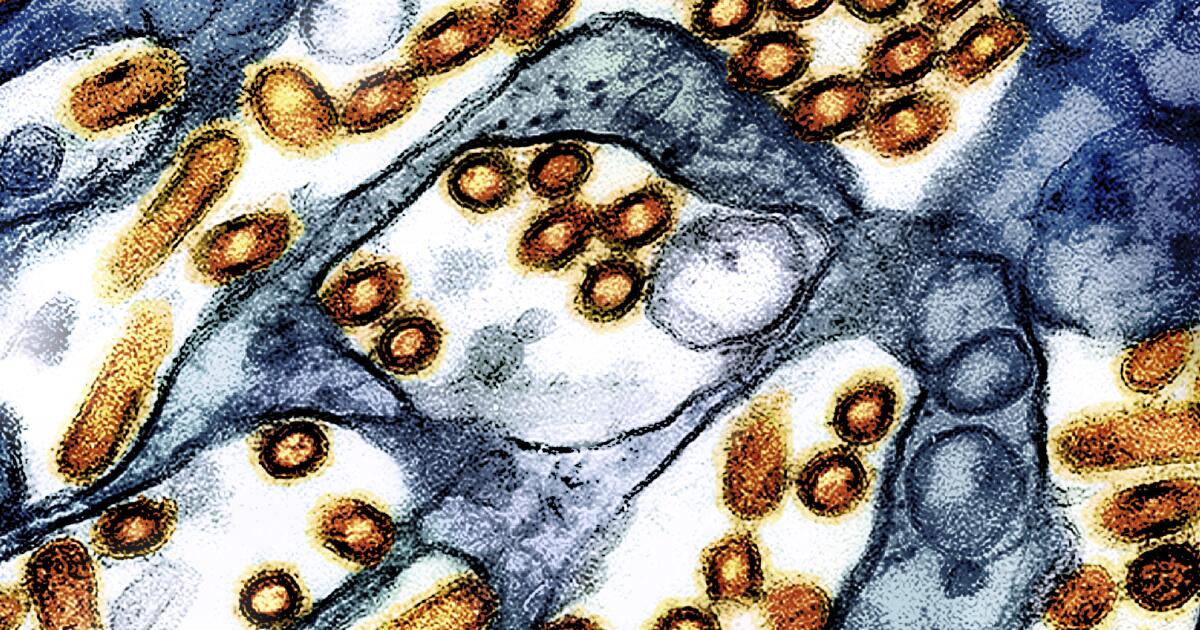

The first person infected with the H5N5 bird flu has died, according to health officials in Washington.
The person, who lived in Grays Harbor County, had been hospitalized earlier this month in Kings County, where Seattle is located.
Officials from the Washington State Department of Health did not release the person’s name, age or gender. According to a news release from Grays Harbor County health officials last week, the person was considered “older” and had underlying health conditions. Their symptoms included a high fever, confusion and trouble breathing.
The person had a backyard flock consisting of mixed domestic poultry.
Testing by the health department found virus in the “environment of the flock … making exposure to the domestic poultry, their environment, or wild birds the most likely source of exposure for this patient.”
Officials at the state’s health department said they were monitoring other people who were exposed to the flock and environment.
This particular strain of bird flu, H5N5, had never been seen in a person before. It appeared first in 2023, infecting birds and mammals in eastern Canada.
According to research published last year on the novel strain, some infected animals carried a key mutation in the virus that allows it to transfer more easily between mammals.
Epidemiologists and virologists worry that avian influenza could generate a pandemic if allowed to spread and mutate. For instance, the H5N1 virus circulating in dairy cattle in North America is one mutation away from being able to spread easily between people.
Every time a bird flu virus infects a person, concerns grow that it could change, becoming more transmissible or more deadly. For instance, if a sickened person also has another flu virus replicating in their body, there’s concern the viruses could exchange genetic material. Just by having an opportunity to replicate and evolve millions of times in the human body, it could acquire deadly mutations.
Health officials say the risk to the public remains low and that no other people involved have tested positive for avian influenza. They say there is no evidence of transmission of the virus between people, but they are monitoring anyone who was in close contact with the patient.

The first person infected with the H5N5 bird flu has died, according to health officials in Washington.
The person, who lived in Grays Harbor County, had been hospitalized earlier this month in Kings County, where Seattle is located.
Officials from the Washington State Department of Health did not release the person’s name, age or gender. According to a news release from Grays Harbor County health officials last week, the person was considered “older” and had underlying health conditions. Their symptoms included a high fever, confusion and trouble breathing.
The person had a backyard flock consisting of mixed domestic poultry.
Testing by the health department found virus in the “environment of the flock … making exposure to the domestic poultry, their environment, or wild birds the most likely source of exposure for this patient.”
Officials at the state’s health department said they were monitoring other people who were exposed to the flock and environment.
This particular strain of bird flu, H5N5, had never been seen in a person before. It appeared first in 2023, infecting birds and mammals in eastern Canada.
According to research published last year on the novel strain, some infected animals carried a key mutation in the virus that allows it to transfer more easily between mammals.
Epidemiologists and virologists worry that avian influenza could generate a pandemic if allowed to spread and mutate. For instance, the H5N1 virus circulating in dairy cattle in North America is one mutation away from being able to spread easily between people.
Every time a bird flu virus infects a person, concerns grow that it could change, becoming more transmissible or more deadly. For instance, if a sickened person also has another flu virus replicating in their body, there’s concern the viruses could exchange genetic material. Just by having an opportunity to replicate and evolve millions of times in the human body, it could acquire deadly mutations.
Health officials say the risk to the public remains low and that no other people involved have tested positive for avian influenza. They say there is no evidence of transmission of the virus between people, but they are monitoring anyone who was in close contact with the patient.

The first person infected with the H5N5 bird flu has died, according to health officials in Washington.
The person, who lived in Grays Harbor County, had been hospitalized earlier this month in Kings County, where Seattle is located.
Officials from the Washington State Department of Health did not release the person’s name, age or gender. According to a news release from Grays Harbor County health officials last week, the person was considered “older” and had underlying health conditions. Their symptoms included a high fever, confusion and trouble breathing.
The person had a backyard flock consisting of mixed domestic poultry.
Testing by the health department found virus in the “environment of the flock … making exposure to the domestic poultry, their environment, or wild birds the most likely source of exposure for this patient.”
Officials at the state’s health department said they were monitoring other people who were exposed to the flock and environment.
This particular strain of bird flu, H5N5, had never been seen in a person before. It appeared first in 2023, infecting birds and mammals in eastern Canada.
According to research published last year on the novel strain, some infected animals carried a key mutation in the virus that allows it to transfer more easily between mammals.
Epidemiologists and virologists worry that avian influenza could generate a pandemic if allowed to spread and mutate. For instance, the H5N1 virus circulating in dairy cattle in North America is one mutation away from being able to spread easily between people.
Every time a bird flu virus infects a person, concerns grow that it could change, becoming more transmissible or more deadly. For instance, if a sickened person also has another flu virus replicating in their body, there’s concern the viruses could exchange genetic material. Just by having an opportunity to replicate and evolve millions of times in the human body, it could acquire deadly mutations.
Health officials say the risk to the public remains low and that no other people involved have tested positive for avian influenza. They say there is no evidence of transmission of the virus between people, but they are monitoring anyone who was in close contact with the patient.
The first person infected with the H5N5 bird flu has died, according to health officials in Washington.
The person, who lived in Grays Harbor County, had been hospitalized earlier this month in Kings County, where Seattle is located.
Officials from the Washington State Department of Health did not release the person’s name, age or gender. According to a news release from Grays Harbor County health officials last week, the person was considered “older” and had underlying health conditions. Their symptoms included a high fever, confusion and trouble breathing.
The person had a backyard flock consisting of mixed domestic poultry.
Testing by the health department found virus in the “environment of the flock … making exposure to the domestic poultry, their environment, or wild birds the most likely source of exposure for this patient.”
Officials at the state’s health department said they were monitoring other people who were exposed to the flock and environment.
This particular strain of bird flu, H5N5, had never been seen in a person before. It appeared first in 2023, infecting birds and mammals in eastern Canada.
According to research published last year on the novel strain, some infected animals carried a key mutation in the virus that allows it to transfer more easily between mammals.
Epidemiologists and virologists worry that avian influenza could generate a pandemic if allowed to spread and mutate. For instance, the H5N1 virus circulating in dairy cattle in North America is one mutation away from being able to spread easily between people.
Every time a bird flu virus infects a person, concerns grow that it could change, becoming more transmissible or more deadly. For instance, if a sickened person also has another flu virus replicating in their body, there’s concern the viruses could exchange genetic material. Just by having an opportunity to replicate and evolve millions of times in the human body, it could acquire deadly mutations.
Health officials say the risk to the public remains low and that no other people involved have tested positive for avian influenza. They say there is no evidence of transmission of the virus between people, but they are monitoring anyone who was in close contact with the patient.

The first person infected with the H5N5 bird flu has died, according to health officials in Washington.
The person, who lived in Grays Harbor County, had been hospitalized earlier this month in Kings County, where Seattle is located.
Officials from the Washington State Department of Health did not release the person’s name, age or gender. According to a news release from Grays Harbor County health officials last week, the person was considered “older” and had underlying health conditions. Their symptoms included a high fever, confusion and trouble breathing.
The person had a backyard flock consisting of mixed domestic poultry.
Testing by the health department found virus in the “environment of the flock … making exposure to the domestic poultry, their environment, or wild birds the most likely source of exposure for this patient.”
Officials at the state’s health department said they were monitoring other people who were exposed to the flock and environment.
This particular strain of bird flu, H5N5, had never been seen in a person before. It appeared first in 2023, infecting birds and mammals in eastern Canada.
According to research published last year on the novel strain, some infected animals carried a key mutation in the virus that allows it to transfer more easily between mammals.
Epidemiologists and virologists worry that avian influenza could generate a pandemic if allowed to spread and mutate. For instance, the H5N1 virus circulating in dairy cattle in North America is one mutation away from being able to spread easily between people.
Every time a bird flu virus infects a person, concerns grow that it could change, becoming more transmissible or more deadly. For instance, if a sickened person also has another flu virus replicating in their body, there’s concern the viruses could exchange genetic material. Just by having an opportunity to replicate and evolve millions of times in the human body, it could acquire deadly mutations.
Health officials say the risk to the public remains low and that no other people involved have tested positive for avian influenza. They say there is no evidence of transmission of the virus between people, but they are monitoring anyone who was in close contact with the patient.
The first person infected with the H5N5 bird flu has died, according to health officials in Washington.
The person, who lived in Grays Harbor County, had been hospitalized earlier this month in Kings County, where Seattle is located.
Officials from the Washington State Department of Health did not release the person’s name, age or gender. According to a news release from Grays Harbor County health officials last week, the person was considered “older” and had underlying health conditions. Their symptoms included a high fever, confusion and trouble breathing.
The person had a backyard flock consisting of mixed domestic poultry.
Testing by the health department found virus in the “environment of the flock … making exposure to the domestic poultry, their environment, or wild birds the most likely source of exposure for this patient.”
Officials at the state’s health department said they were monitoring other people who were exposed to the flock and environment.
This particular strain of bird flu, H5N5, had never been seen in a person before. It appeared first in 2023, infecting birds and mammals in eastern Canada.
According to research published last year on the novel strain, some infected animals carried a key mutation in the virus that allows it to transfer more easily between mammals.
Epidemiologists and virologists worry that avian influenza could generate a pandemic if allowed to spread and mutate. For instance, the H5N1 virus circulating in dairy cattle in North America is one mutation away from being able to spread easily between people.
Every time a bird flu virus infects a person, concerns grow that it could change, becoming more transmissible or more deadly. For instance, if a sickened person also has another flu virus replicating in their body, there’s concern the viruses could exchange genetic material. Just by having an opportunity to replicate and evolve millions of times in the human body, it could acquire deadly mutations.
Health officials say the risk to the public remains low and that no other people involved have tested positive for avian influenza. They say there is no evidence of transmission of the virus between people, but they are monitoring anyone who was in close contact with the patient.
The first person infected with the H5N5 bird flu has died, according to health officials in Washington.
The person, who lived in Grays Harbor County, had been hospitalized earlier this month in Kings County, where Seattle is located.
Officials from the Washington State Department of Health did not release the person’s name, age or gender. According to a news release from Grays Harbor County health officials last week, the person was considered “older” and had underlying health conditions. Their symptoms included a high fever, confusion and trouble breathing.
The person had a backyard flock consisting of mixed domestic poultry.
Testing by the health department found virus in the “environment of the flock … making exposure to the domestic poultry, their environment, or wild birds the most likely source of exposure for this patient.”
Officials at the state’s health department said they were monitoring other people who were exposed to the flock and environment.
This particular strain of bird flu, H5N5, had never been seen in a person before. It appeared first in 2023, infecting birds and mammals in eastern Canada.
According to research published last year on the novel strain, some infected animals carried a key mutation in the virus that allows it to transfer more easily between mammals.
Epidemiologists and virologists worry that avian influenza could generate a pandemic if allowed to spread and mutate. For instance, the H5N1 virus circulating in dairy cattle in North America is one mutation away from being able to spread easily between people.
Every time a bird flu virus infects a person, concerns grow that it could change, becoming more transmissible or more deadly. For instance, if a sickened person also has another flu virus replicating in their body, there’s concern the viruses could exchange genetic material. Just by having an opportunity to replicate and evolve millions of times in the human body, it could acquire deadly mutations.
Health officials say the risk to the public remains low and that no other people involved have tested positive for avian influenza. They say there is no evidence of transmission of the virus between people, but they are monitoring anyone who was in close contact with the patient.
The first person infected with the H5N5 bird flu has died, according to health officials in Washington.
The person, who lived in Grays Harbor County, had been hospitalized earlier this month in Kings County, where Seattle is located.
Officials from the Washington State Department of Health did not release the person’s name, age or gender. According to a news release from Grays Harbor County health officials last week, the person was considered “older” and had underlying health conditions. Their symptoms included a high fever, confusion and trouble breathing.
The person had a backyard flock consisting of mixed domestic poultry.
Testing by the health department found virus in the “environment of the flock … making exposure to the domestic poultry, their environment, or wild birds the most likely source of exposure for this patient.”
Officials at the state’s health department said they were monitoring other people who were exposed to the flock and environment.
This particular strain of bird flu, H5N5, had never been seen in a person before. It appeared first in 2023, infecting birds and mammals in eastern Canada.
According to research published last year on the novel strain, some infected animals carried a key mutation in the virus that allows it to transfer more easily between mammals.
Epidemiologists and virologists worry that avian influenza could generate a pandemic if allowed to spread and mutate. For instance, the H5N1 virus circulating in dairy cattle in North America is one mutation away from being able to spread easily between people.
Every time a bird flu virus infects a person, concerns grow that it could change, becoming more transmissible or more deadly. For instance, if a sickened person also has another flu virus replicating in their body, there’s concern the viruses could exchange genetic material. Just by having an opportunity to replicate and evolve millions of times in the human body, it could acquire deadly mutations.
Health officials say the risk to the public remains low and that no other people involved have tested positive for avian influenza. They say there is no evidence of transmission of the virus between people, but they are monitoring anyone who was in close contact with the patient.

