

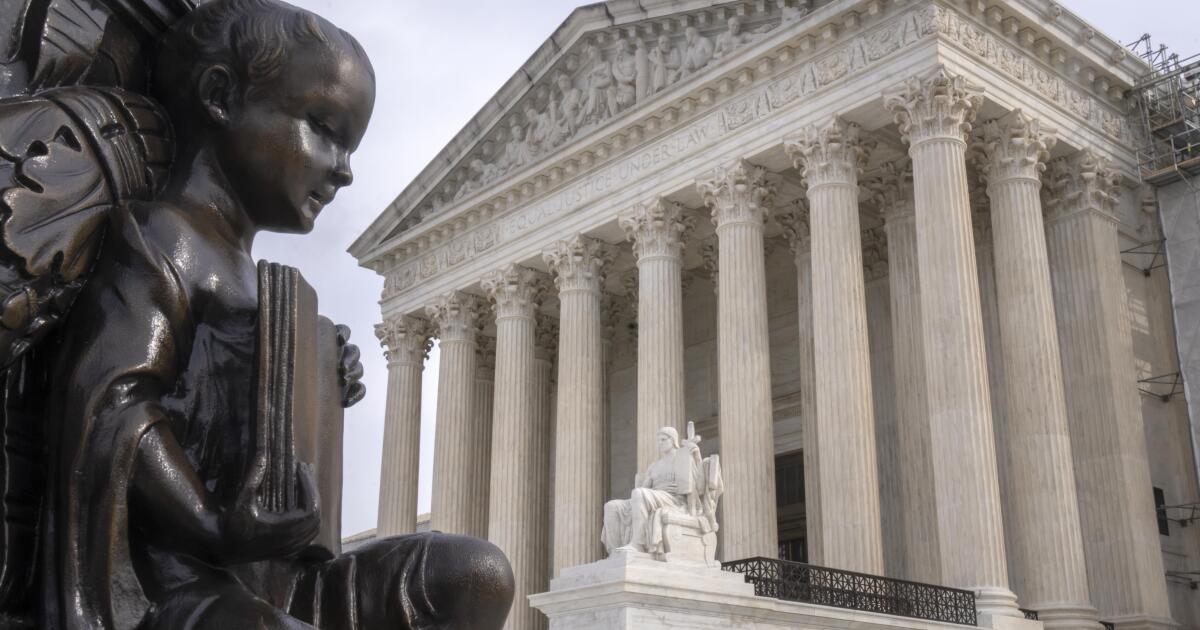
WASHINGTON — The Supreme Court on Thursday sharply limited the reach of environmental impact statements in a victory for developers.
The justices said these claims of the potential impact on the environment have been used too often to delay or block new projects.
“A 1970 legislative acorn has grown over the years into a judicial oak that has hindered infrastructure development under the guise of just a little more process. A course correction of sorts is appropriate,” said Justice Brett M. Kavanaugh, speaking for the court.
He said procedural law has given judges and environmentalists too much authority to hinder or prevent development, he said.
“Fewer projects make it to the finish line. Indeed, fewer projects make it to the starting line. Those that survive often end up costing much more than is anticipated or necessary,” he said. “And that in turn means fewer and more expensive railroads, airports, wind turbines, transmission lines, dams, housing developments, highways, bridges, subways, stadiums, arenas, data centers, and the like. And that also means fewer jobs, as new projects become difficult to finance and build in a timely fashion.”
In a unanimous decision, the high court ruled for the developers of a proposed 88-mile railroad in northeastern Utah which could carry crude oil that would be refined along the Gulf Coast.
In blocking the proposal, judges had cited its potential to spur more drilling for oil in Utah and more pollution along the Gulf Coast.

WASHINGTON — The Supreme Court on Thursday sharply limited the reach of environmental impact statements in a victory for developers.
The justices said these claims of the potential impact on the environment have been used too often to delay or block new projects.
“A 1970 legislative acorn has grown over the years into a judicial oak that has hindered infrastructure development under the guise of just a little more process. A course correction of sorts is appropriate,” said Justice Brett M. Kavanaugh, speaking for the court.
He said procedural law has given judges and environmentalists too much authority to hinder or prevent development, he said.
“Fewer projects make it to the finish line. Indeed, fewer projects make it to the starting line. Those that survive often end up costing much more than is anticipated or necessary,” he said. “And that in turn means fewer and more expensive railroads, airports, wind turbines, transmission lines, dams, housing developments, highways, bridges, subways, stadiums, arenas, data centers, and the like. And that also means fewer jobs, as new projects become difficult to finance and build in a timely fashion.”
In a unanimous decision, the high court ruled for the developers of a proposed 88-mile railroad in northeastern Utah which could carry crude oil that would be refined along the Gulf Coast.
In blocking the proposal, judges had cited its potential to spur more drilling for oil in Utah and more pollution along the Gulf Coast.

WASHINGTON — The Supreme Court on Thursday sharply limited the reach of environmental impact statements in a victory for developers.
The justices said these claims of the potential impact on the environment have been used too often to delay or block new projects.
“A 1970 legislative acorn has grown over the years into a judicial oak that has hindered infrastructure development under the guise of just a little more process. A course correction of sorts is appropriate,” said Justice Brett M. Kavanaugh, speaking for the court.
He said procedural law has given judges and environmentalists too much authority to hinder or prevent development, he said.
“Fewer projects make it to the finish line. Indeed, fewer projects make it to the starting line. Those that survive often end up costing much more than is anticipated or necessary,” he said. “And that in turn means fewer and more expensive railroads, airports, wind turbines, transmission lines, dams, housing developments, highways, bridges, subways, stadiums, arenas, data centers, and the like. And that also means fewer jobs, as new projects become difficult to finance and build in a timely fashion.”
In a unanimous decision, the high court ruled for the developers of a proposed 88-mile railroad in northeastern Utah which could carry crude oil that would be refined along the Gulf Coast.
In blocking the proposal, judges had cited its potential to spur more drilling for oil in Utah and more pollution along the Gulf Coast.
WASHINGTON — The Supreme Court on Thursday sharply limited the reach of environmental impact statements in a victory for developers.
The justices said these claims of the potential impact on the environment have been used too often to delay or block new projects.
“A 1970 legislative acorn has grown over the years into a judicial oak that has hindered infrastructure development under the guise of just a little more process. A course correction of sorts is appropriate,” said Justice Brett M. Kavanaugh, speaking for the court.
He said procedural law has given judges and environmentalists too much authority to hinder or prevent development, he said.
“Fewer projects make it to the finish line. Indeed, fewer projects make it to the starting line. Those that survive often end up costing much more than is anticipated or necessary,” he said. “And that in turn means fewer and more expensive railroads, airports, wind turbines, transmission lines, dams, housing developments, highways, bridges, subways, stadiums, arenas, data centers, and the like. And that also means fewer jobs, as new projects become difficult to finance and build in a timely fashion.”
In a unanimous decision, the high court ruled for the developers of a proposed 88-mile railroad in northeastern Utah which could carry crude oil that would be refined along the Gulf Coast.
In blocking the proposal, judges had cited its potential to spur more drilling for oil in Utah and more pollution along the Gulf Coast.

WASHINGTON — The Supreme Court on Thursday sharply limited the reach of environmental impact statements in a victory for developers.
The justices said these claims of the potential impact on the environment have been used too often to delay or block new projects.
“A 1970 legislative acorn has grown over the years into a judicial oak that has hindered infrastructure development under the guise of just a little more process. A course correction of sorts is appropriate,” said Justice Brett M. Kavanaugh, speaking for the court.
He said procedural law has given judges and environmentalists too much authority to hinder or prevent development, he said.
“Fewer projects make it to the finish line. Indeed, fewer projects make it to the starting line. Those that survive often end up costing much more than is anticipated or necessary,” he said. “And that in turn means fewer and more expensive railroads, airports, wind turbines, transmission lines, dams, housing developments, highways, bridges, subways, stadiums, arenas, data centers, and the like. And that also means fewer jobs, as new projects become difficult to finance and build in a timely fashion.”
In a unanimous decision, the high court ruled for the developers of a proposed 88-mile railroad in northeastern Utah which could carry crude oil that would be refined along the Gulf Coast.
In blocking the proposal, judges had cited its potential to spur more drilling for oil in Utah and more pollution along the Gulf Coast.
WASHINGTON — The Supreme Court on Thursday sharply limited the reach of environmental impact statements in a victory for developers.
The justices said these claims of the potential impact on the environment have been used too often to delay or block new projects.
“A 1970 legislative acorn has grown over the years into a judicial oak that has hindered infrastructure development under the guise of just a little more process. A course correction of sorts is appropriate,” said Justice Brett M. Kavanaugh, speaking for the court.
He said procedural law has given judges and environmentalists too much authority to hinder or prevent development, he said.
“Fewer projects make it to the finish line. Indeed, fewer projects make it to the starting line. Those that survive often end up costing much more than is anticipated or necessary,” he said. “And that in turn means fewer and more expensive railroads, airports, wind turbines, transmission lines, dams, housing developments, highways, bridges, subways, stadiums, arenas, data centers, and the like. And that also means fewer jobs, as new projects become difficult to finance and build in a timely fashion.”
In a unanimous decision, the high court ruled for the developers of a proposed 88-mile railroad in northeastern Utah which could carry crude oil that would be refined along the Gulf Coast.
In blocking the proposal, judges had cited its potential to spur more drilling for oil in Utah and more pollution along the Gulf Coast.
WASHINGTON — The Supreme Court on Thursday sharply limited the reach of environmental impact statements in a victory for developers.
The justices said these claims of the potential impact on the environment have been used too often to delay or block new projects.
“A 1970 legislative acorn has grown over the years into a judicial oak that has hindered infrastructure development under the guise of just a little more process. A course correction of sorts is appropriate,” said Justice Brett M. Kavanaugh, speaking for the court.
He said procedural law has given judges and environmentalists too much authority to hinder or prevent development, he said.
“Fewer projects make it to the finish line. Indeed, fewer projects make it to the starting line. Those that survive often end up costing much more than is anticipated or necessary,” he said. “And that in turn means fewer and more expensive railroads, airports, wind turbines, transmission lines, dams, housing developments, highways, bridges, subways, stadiums, arenas, data centers, and the like. And that also means fewer jobs, as new projects become difficult to finance and build in a timely fashion.”
In a unanimous decision, the high court ruled for the developers of a proposed 88-mile railroad in northeastern Utah which could carry crude oil that would be refined along the Gulf Coast.
In blocking the proposal, judges had cited its potential to spur more drilling for oil in Utah and more pollution along the Gulf Coast.
WASHINGTON — The Supreme Court on Thursday sharply limited the reach of environmental impact statements in a victory for developers.
The justices said these claims of the potential impact on the environment have been used too often to delay or block new projects.
“A 1970 legislative acorn has grown over the years into a judicial oak that has hindered infrastructure development under the guise of just a little more process. A course correction of sorts is appropriate,” said Justice Brett M. Kavanaugh, speaking for the court.
He said procedural law has given judges and environmentalists too much authority to hinder or prevent development, he said.
“Fewer projects make it to the finish line. Indeed, fewer projects make it to the starting line. Those that survive often end up costing much more than is anticipated or necessary,” he said. “And that in turn means fewer and more expensive railroads, airports, wind turbines, transmission lines, dams, housing developments, highways, bridges, subways, stadiums, arenas, data centers, and the like. And that also means fewer jobs, as new projects become difficult to finance and build in a timely fashion.”
In a unanimous decision, the high court ruled for the developers of a proposed 88-mile railroad in northeastern Utah which could carry crude oil that would be refined along the Gulf Coast.
In blocking the proposal, judges had cited its potential to spur more drilling for oil in Utah and more pollution along the Gulf Coast.

WASHINGTON — The Supreme Court on Thursday sharply limited the reach of environmental impact statements in a victory for developers.
The justices said these claims of the potential impact on the environment have been used too often to delay or block new projects.
“A 1970 legislative acorn has grown over the years into a judicial oak that has hindered infrastructure development under the guise of just a little more process. A course correction of sorts is appropriate,” said Justice Brett M. Kavanaugh, speaking for the court.
He said procedural law has given judges and environmentalists too much authority to hinder or prevent development, he said.
“Fewer projects make it to the finish line. Indeed, fewer projects make it to the starting line. Those that survive often end up costing much more than is anticipated or necessary,” he said. “And that in turn means fewer and more expensive railroads, airports, wind turbines, transmission lines, dams, housing developments, highways, bridges, subways, stadiums, arenas, data centers, and the like. And that also means fewer jobs, as new projects become difficult to finance and build in a timely fashion.”
In a unanimous decision, the high court ruled for the developers of a proposed 88-mile railroad in northeastern Utah which could carry crude oil that would be refined along the Gulf Coast.
In blocking the proposal, judges had cited its potential to spur more drilling for oil in Utah and more pollution along the Gulf Coast.
WASHINGTON — The Supreme Court on Thursday sharply limited the reach of environmental impact statements in a victory for developers.
The justices said these claims of the potential impact on the environment have been used too often to delay or block new projects.
“A 1970 legislative acorn has grown over the years into a judicial oak that has hindered infrastructure development under the guise of just a little more process. A course correction of sorts is appropriate,” said Justice Brett M. Kavanaugh, speaking for the court.
He said procedural law has given judges and environmentalists too much authority to hinder or prevent development, he said.
“Fewer projects make it to the finish line. Indeed, fewer projects make it to the starting line. Those that survive often end up costing much more than is anticipated or necessary,” he said. “And that in turn means fewer and more expensive railroads, airports, wind turbines, transmission lines, dams, housing developments, highways, bridges, subways, stadiums, arenas, data centers, and the like. And that also means fewer jobs, as new projects become difficult to finance and build in a timely fashion.”
In a unanimous decision, the high court ruled for the developers of a proposed 88-mile railroad in northeastern Utah which could carry crude oil that would be refined along the Gulf Coast.
In blocking the proposal, judges had cited its potential to spur more drilling for oil in Utah and more pollution along the Gulf Coast.
WASHINGTON — The Supreme Court on Thursday sharply limited the reach of environmental impact statements in a victory for developers.
The justices said these claims of the potential impact on the environment have been used too often to delay or block new projects.
“A 1970 legislative acorn has grown over the years into a judicial oak that has hindered infrastructure development under the guise of just a little more process. A course correction of sorts is appropriate,” said Justice Brett M. Kavanaugh, speaking for the court.
He said procedural law has given judges and environmentalists too much authority to hinder or prevent development, he said.
“Fewer projects make it to the finish line. Indeed, fewer projects make it to the starting line. Those that survive often end up costing much more than is anticipated or necessary,” he said. “And that in turn means fewer and more expensive railroads, airports, wind turbines, transmission lines, dams, housing developments, highways, bridges, subways, stadiums, arenas, data centers, and the like. And that also means fewer jobs, as new projects become difficult to finance and build in a timely fashion.”
In a unanimous decision, the high court ruled for the developers of a proposed 88-mile railroad in northeastern Utah which could carry crude oil that would be refined along the Gulf Coast.
In blocking the proposal, judges had cited its potential to spur more drilling for oil in Utah and more pollution along the Gulf Coast.
WASHINGTON — The Supreme Court on Thursday sharply limited the reach of environmental impact statements in a victory for developers.
The justices said these claims of the potential impact on the environment have been used too often to delay or block new projects.
“A 1970 legislative acorn has grown over the years into a judicial oak that has hindered infrastructure development under the guise of just a little more process. A course correction of sorts is appropriate,” said Justice Brett M. Kavanaugh, speaking for the court.
He said procedural law has given judges and environmentalists too much authority to hinder or prevent development, he said.
“Fewer projects make it to the finish line. Indeed, fewer projects make it to the starting line. Those that survive often end up costing much more than is anticipated or necessary,” he said. “And that in turn means fewer and more expensive railroads, airports, wind turbines, transmission lines, dams, housing developments, highways, bridges, subways, stadiums, arenas, data centers, and the like. And that also means fewer jobs, as new projects become difficult to finance and build in a timely fashion.”
In a unanimous decision, the high court ruled for the developers of a proposed 88-mile railroad in northeastern Utah which could carry crude oil that would be refined along the Gulf Coast.
In blocking the proposal, judges had cited its potential to spur more drilling for oil in Utah and more pollution along the Gulf Coast.
WASHINGTON — The Supreme Court on Thursday sharply limited the reach of environmental impact statements in a victory for developers.
The justices said these claims of the potential impact on the environment have been used too often to delay or block new projects.
“A 1970 legislative acorn has grown over the years into a judicial oak that has hindered infrastructure development under the guise of just a little more process. A course correction of sorts is appropriate,” said Justice Brett M. Kavanaugh, speaking for the court.
He said procedural law has given judges and environmentalists too much authority to hinder or prevent development, he said.
“Fewer projects make it to the finish line. Indeed, fewer projects make it to the starting line. Those that survive often end up costing much more than is anticipated or necessary,” he said. “And that in turn means fewer and more expensive railroads, airports, wind turbines, transmission lines, dams, housing developments, highways, bridges, subways, stadiums, arenas, data centers, and the like. And that also means fewer jobs, as new projects become difficult to finance and build in a timely fashion.”
In a unanimous decision, the high court ruled for the developers of a proposed 88-mile railroad in northeastern Utah which could carry crude oil that would be refined along the Gulf Coast.
In blocking the proposal, judges had cited its potential to spur more drilling for oil in Utah and more pollution along the Gulf Coast.
WASHINGTON — The Supreme Court on Thursday sharply limited the reach of environmental impact statements in a victory for developers.
The justices said these claims of the potential impact on the environment have been used too often to delay or block new projects.
“A 1970 legislative acorn has grown over the years into a judicial oak that has hindered infrastructure development under the guise of just a little more process. A course correction of sorts is appropriate,” said Justice Brett M. Kavanaugh, speaking for the court.
He said procedural law has given judges and environmentalists too much authority to hinder or prevent development, he said.
“Fewer projects make it to the finish line. Indeed, fewer projects make it to the starting line. Those that survive often end up costing much more than is anticipated or necessary,” he said. “And that in turn means fewer and more expensive railroads, airports, wind turbines, transmission lines, dams, housing developments, highways, bridges, subways, stadiums, arenas, data centers, and the like. And that also means fewer jobs, as new projects become difficult to finance and build in a timely fashion.”
In a unanimous decision, the high court ruled for the developers of a proposed 88-mile railroad in northeastern Utah which could carry crude oil that would be refined along the Gulf Coast.
In blocking the proposal, judges had cited its potential to spur more drilling for oil in Utah and more pollution along the Gulf Coast.
WASHINGTON — The Supreme Court on Thursday sharply limited the reach of environmental impact statements in a victory for developers.
The justices said these claims of the potential impact on the environment have been used too often to delay or block new projects.
“A 1970 legislative acorn has grown over the years into a judicial oak that has hindered infrastructure development under the guise of just a little more process. A course correction of sorts is appropriate,” said Justice Brett M. Kavanaugh, speaking for the court.
He said procedural law has given judges and environmentalists too much authority to hinder or prevent development, he said.
“Fewer projects make it to the finish line. Indeed, fewer projects make it to the starting line. Those that survive often end up costing much more than is anticipated or necessary,” he said. “And that in turn means fewer and more expensive railroads, airports, wind turbines, transmission lines, dams, housing developments, highways, bridges, subways, stadiums, arenas, data centers, and the like. And that also means fewer jobs, as new projects become difficult to finance and build in a timely fashion.”
In a unanimous decision, the high court ruled for the developers of a proposed 88-mile railroad in northeastern Utah which could carry crude oil that would be refined along the Gulf Coast.
In blocking the proposal, judges had cited its potential to spur more drilling for oil in Utah and more pollution along the Gulf Coast.
WASHINGTON — The Supreme Court on Thursday sharply limited the reach of environmental impact statements in a victory for developers.
The justices said these claims of the potential impact on the environment have been used too often to delay or block new projects.
“A 1970 legislative acorn has grown over the years into a judicial oak that has hindered infrastructure development under the guise of just a little more process. A course correction of sorts is appropriate,” said Justice Brett M. Kavanaugh, speaking for the court.
He said procedural law has given judges and environmentalists too much authority to hinder or prevent development, he said.
“Fewer projects make it to the finish line. Indeed, fewer projects make it to the starting line. Those that survive often end up costing much more than is anticipated or necessary,” he said. “And that in turn means fewer and more expensive railroads, airports, wind turbines, transmission lines, dams, housing developments, highways, bridges, subways, stadiums, arenas, data centers, and the like. And that also means fewer jobs, as new projects become difficult to finance and build in a timely fashion.”
In a unanimous decision, the high court ruled for the developers of a proposed 88-mile railroad in northeastern Utah which could carry crude oil that would be refined along the Gulf Coast.
In blocking the proposal, judges had cited its potential to spur more drilling for oil in Utah and more pollution along the Gulf Coast.

