

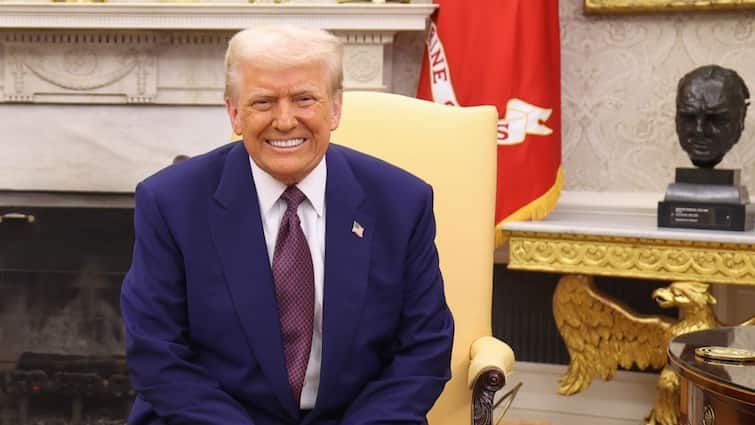
In a notable shift from his earlier tough stance, US President Donald Trump has suggested that the steep tariffs imposed on Chinese imports might be significantly lowered, though not completely removed.
Speaking at a White House press briefing on Tuesday, Trump said the tariff rate, which has reached as high as 145 per cent, is “very high and it won’t be that high.” He added, “It won’t be anywhere near that high. It’ll come down substantially. But it won’t be zero,” reported CNN.
His comments marked a departure from the combative rhetoric that has defined the US-China trade conflict, a prolonged standoff that has rattled global markets and strained economic ties between the world’s two largest economies.
The possibility of a softer approach was also hinted at by Treasury Secretary Scott Bessent earlier that day. According to a source familiar with his remarks at a private JP Morgan Chase conference, Bessent described the current tariff situation as unsustainable and predicted a near-term easing of tensions. He reportedly emphasised that rather than a full decoupling, the US is aiming for a trade “rebalancing.”
Chinese social media users quickly seized on Trump’s comments, with the hashtag “Trump chickened out” amassing over 110 million views on Weibo by Wednesday.
Also Read : Tax Alert! Watches, Handbags, And Other Luxury Purchases Over Rs 10 Lakh To Face 1 Per Cent TCS Now
China’s Defiant Posture Persists Amid Diplomatic Maneuvers
Despite hints of compromise from Washington, Beijing has so far maintained a firm stance. China countered US tariffs by raising its own to 125 per cent earlier, tightening export controls on vital minerals, and adding more American firms to its unreliable entity list. Additional pressure was applied through cultural and commercial avenues, including the rejection of Boeing aircraft and restrictions on Hollywood films.
Still, Trump has consistently stated he enjoys a “very good relationship” with Chinese President Xi Jinping. At Tuesday’s event, Trump reiterated his desire for Xi to join him at the negotiating table, stating, “We’re going to be very nice. They’re going to be very nice, and we’ll see what happens.”
When asked if the US would take a tougher approach or raise issues like the Covid-19 pandemic during negotiations, Trump dismissed the idea. “No, no,” he responded, before adding, “ultimately, they have to make a deal, because otherwise they’re not going to be able to deal in the United States, and we want them involved.”
According to a source familiar with Beijing’s internal discussions, China remains open to negotiations, but only on the basis of mutual respect and balanced terms. The source noted that prior to Trump’s announcement of the “Liberation Day” tariffs on April 2, China had already appointed a point person for US talks. However, uncertainty about who on the American side would lead the discussions created confusion, particularly as Trump appeared inclined to act as his own chief negotiator—an approach the Chinese government finds inconsistent with its protocol.

In a notable shift from his earlier tough stance, US President Donald Trump has suggested that the steep tariffs imposed on Chinese imports might be significantly lowered, though not completely removed.
Speaking at a White House press briefing on Tuesday, Trump said the tariff rate, which has reached as high as 145 per cent, is “very high and it won’t be that high.” He added, “It won’t be anywhere near that high. It’ll come down substantially. But it won’t be zero,” reported CNN.
His comments marked a departure from the combative rhetoric that has defined the US-China trade conflict, a prolonged standoff that has rattled global markets and strained economic ties between the world’s two largest economies.
The possibility of a softer approach was also hinted at by Treasury Secretary Scott Bessent earlier that day. According to a source familiar with his remarks at a private JP Morgan Chase conference, Bessent described the current tariff situation as unsustainable and predicted a near-term easing of tensions. He reportedly emphasised that rather than a full decoupling, the US is aiming for a trade “rebalancing.”
Chinese social media users quickly seized on Trump’s comments, with the hashtag “Trump chickened out” amassing over 110 million views on Weibo by Wednesday.
Also Read : Tax Alert! Watches, Handbags, And Other Luxury Purchases Over Rs 10 Lakh To Face 1 Per Cent TCS Now
China’s Defiant Posture Persists Amid Diplomatic Maneuvers
Despite hints of compromise from Washington, Beijing has so far maintained a firm stance. China countered US tariffs by raising its own to 125 per cent earlier, tightening export controls on vital minerals, and adding more American firms to its unreliable entity list. Additional pressure was applied through cultural and commercial avenues, including the rejection of Boeing aircraft and restrictions on Hollywood films.
Still, Trump has consistently stated he enjoys a “very good relationship” with Chinese President Xi Jinping. At Tuesday’s event, Trump reiterated his desire for Xi to join him at the negotiating table, stating, “We’re going to be very nice. They’re going to be very nice, and we’ll see what happens.”
When asked if the US would take a tougher approach or raise issues like the Covid-19 pandemic during negotiations, Trump dismissed the idea. “No, no,” he responded, before adding, “ultimately, they have to make a deal, because otherwise they’re not going to be able to deal in the United States, and we want them involved.”
According to a source familiar with Beijing’s internal discussions, China remains open to negotiations, but only on the basis of mutual respect and balanced terms. The source noted that prior to Trump’s announcement of the “Liberation Day” tariffs on April 2, China had already appointed a point person for US talks. However, uncertainty about who on the American side would lead the discussions created confusion, particularly as Trump appeared inclined to act as his own chief negotiator—an approach the Chinese government finds inconsistent with its protocol.

In a notable shift from his earlier tough stance, US President Donald Trump has suggested that the steep tariffs imposed on Chinese imports might be significantly lowered, though not completely removed.
Speaking at a White House press briefing on Tuesday, Trump said the tariff rate, which has reached as high as 145 per cent, is “very high and it won’t be that high.” He added, “It won’t be anywhere near that high. It’ll come down substantially. But it won’t be zero,” reported CNN.
His comments marked a departure from the combative rhetoric that has defined the US-China trade conflict, a prolonged standoff that has rattled global markets and strained economic ties between the world’s two largest economies.
The possibility of a softer approach was also hinted at by Treasury Secretary Scott Bessent earlier that day. According to a source familiar with his remarks at a private JP Morgan Chase conference, Bessent described the current tariff situation as unsustainable and predicted a near-term easing of tensions. He reportedly emphasised that rather than a full decoupling, the US is aiming for a trade “rebalancing.”
Chinese social media users quickly seized on Trump’s comments, with the hashtag “Trump chickened out” amassing over 110 million views on Weibo by Wednesday.
Also Read : Tax Alert! Watches, Handbags, And Other Luxury Purchases Over Rs 10 Lakh To Face 1 Per Cent TCS Now
China’s Defiant Posture Persists Amid Diplomatic Maneuvers
Despite hints of compromise from Washington, Beijing has so far maintained a firm stance. China countered US tariffs by raising its own to 125 per cent earlier, tightening export controls on vital minerals, and adding more American firms to its unreliable entity list. Additional pressure was applied through cultural and commercial avenues, including the rejection of Boeing aircraft and restrictions on Hollywood films.
Still, Trump has consistently stated he enjoys a “very good relationship” with Chinese President Xi Jinping. At Tuesday’s event, Trump reiterated his desire for Xi to join him at the negotiating table, stating, “We’re going to be very nice. They’re going to be very nice, and we’ll see what happens.”
When asked if the US would take a tougher approach or raise issues like the Covid-19 pandemic during negotiations, Trump dismissed the idea. “No, no,” he responded, before adding, “ultimately, they have to make a deal, because otherwise they’re not going to be able to deal in the United States, and we want them involved.”
According to a source familiar with Beijing’s internal discussions, China remains open to negotiations, but only on the basis of mutual respect and balanced terms. The source noted that prior to Trump’s announcement of the “Liberation Day” tariffs on April 2, China had already appointed a point person for US talks. However, uncertainty about who on the American side would lead the discussions created confusion, particularly as Trump appeared inclined to act as his own chief negotiator—an approach the Chinese government finds inconsistent with its protocol.
In a notable shift from his earlier tough stance, US President Donald Trump has suggested that the steep tariffs imposed on Chinese imports might be significantly lowered, though not completely removed.
Speaking at a White House press briefing on Tuesday, Trump said the tariff rate, which has reached as high as 145 per cent, is “very high and it won’t be that high.” He added, “It won’t be anywhere near that high. It’ll come down substantially. But it won’t be zero,” reported CNN.
His comments marked a departure from the combative rhetoric that has defined the US-China trade conflict, a prolonged standoff that has rattled global markets and strained economic ties between the world’s two largest economies.
The possibility of a softer approach was also hinted at by Treasury Secretary Scott Bessent earlier that day. According to a source familiar with his remarks at a private JP Morgan Chase conference, Bessent described the current tariff situation as unsustainable and predicted a near-term easing of tensions. He reportedly emphasised that rather than a full decoupling, the US is aiming for a trade “rebalancing.”
Chinese social media users quickly seized on Trump’s comments, with the hashtag “Trump chickened out” amassing over 110 million views on Weibo by Wednesday.
Also Read : Tax Alert! Watches, Handbags, And Other Luxury Purchases Over Rs 10 Lakh To Face 1 Per Cent TCS Now
China’s Defiant Posture Persists Amid Diplomatic Maneuvers
Despite hints of compromise from Washington, Beijing has so far maintained a firm stance. China countered US tariffs by raising its own to 125 per cent earlier, tightening export controls on vital minerals, and adding more American firms to its unreliable entity list. Additional pressure was applied through cultural and commercial avenues, including the rejection of Boeing aircraft and restrictions on Hollywood films.
Still, Trump has consistently stated he enjoys a “very good relationship” with Chinese President Xi Jinping. At Tuesday’s event, Trump reiterated his desire for Xi to join him at the negotiating table, stating, “We’re going to be very nice. They’re going to be very nice, and we’ll see what happens.”
When asked if the US would take a tougher approach or raise issues like the Covid-19 pandemic during negotiations, Trump dismissed the idea. “No, no,” he responded, before adding, “ultimately, they have to make a deal, because otherwise they’re not going to be able to deal in the United States, and we want them involved.”
According to a source familiar with Beijing’s internal discussions, China remains open to negotiations, but only on the basis of mutual respect and balanced terms. The source noted that prior to Trump’s announcement of the “Liberation Day” tariffs on April 2, China had already appointed a point person for US talks. However, uncertainty about who on the American side would lead the discussions created confusion, particularly as Trump appeared inclined to act as his own chief negotiator—an approach the Chinese government finds inconsistent with its protocol.

In a notable shift from his earlier tough stance, US President Donald Trump has suggested that the steep tariffs imposed on Chinese imports might be significantly lowered, though not completely removed.
Speaking at a White House press briefing on Tuesday, Trump said the tariff rate, which has reached as high as 145 per cent, is “very high and it won’t be that high.” He added, “It won’t be anywhere near that high. It’ll come down substantially. But it won’t be zero,” reported CNN.
His comments marked a departure from the combative rhetoric that has defined the US-China trade conflict, a prolonged standoff that has rattled global markets and strained economic ties between the world’s two largest economies.
The possibility of a softer approach was also hinted at by Treasury Secretary Scott Bessent earlier that day. According to a source familiar with his remarks at a private JP Morgan Chase conference, Bessent described the current tariff situation as unsustainable and predicted a near-term easing of tensions. He reportedly emphasised that rather than a full decoupling, the US is aiming for a trade “rebalancing.”
Chinese social media users quickly seized on Trump’s comments, with the hashtag “Trump chickened out” amassing over 110 million views on Weibo by Wednesday.
Also Read : Tax Alert! Watches, Handbags, And Other Luxury Purchases Over Rs 10 Lakh To Face 1 Per Cent TCS Now
China’s Defiant Posture Persists Amid Diplomatic Maneuvers
Despite hints of compromise from Washington, Beijing has so far maintained a firm stance. China countered US tariffs by raising its own to 125 per cent earlier, tightening export controls on vital minerals, and adding more American firms to its unreliable entity list. Additional pressure was applied through cultural and commercial avenues, including the rejection of Boeing aircraft and restrictions on Hollywood films.
Still, Trump has consistently stated he enjoys a “very good relationship” with Chinese President Xi Jinping. At Tuesday’s event, Trump reiterated his desire for Xi to join him at the negotiating table, stating, “We’re going to be very nice. They’re going to be very nice, and we’ll see what happens.”
When asked if the US would take a tougher approach or raise issues like the Covid-19 pandemic during negotiations, Trump dismissed the idea. “No, no,” he responded, before adding, “ultimately, they have to make a deal, because otherwise they’re not going to be able to deal in the United States, and we want them involved.”
According to a source familiar with Beijing’s internal discussions, China remains open to negotiations, but only on the basis of mutual respect and balanced terms. The source noted that prior to Trump’s announcement of the “Liberation Day” tariffs on April 2, China had already appointed a point person for US talks. However, uncertainty about who on the American side would lead the discussions created confusion, particularly as Trump appeared inclined to act as his own chief negotiator—an approach the Chinese government finds inconsistent with its protocol.
In a notable shift from his earlier tough stance, US President Donald Trump has suggested that the steep tariffs imposed on Chinese imports might be significantly lowered, though not completely removed.
Speaking at a White House press briefing on Tuesday, Trump said the tariff rate, which has reached as high as 145 per cent, is “very high and it won’t be that high.” He added, “It won’t be anywhere near that high. It’ll come down substantially. But it won’t be zero,” reported CNN.
His comments marked a departure from the combative rhetoric that has defined the US-China trade conflict, a prolonged standoff that has rattled global markets and strained economic ties between the world’s two largest economies.
The possibility of a softer approach was also hinted at by Treasury Secretary Scott Bessent earlier that day. According to a source familiar with his remarks at a private JP Morgan Chase conference, Bessent described the current tariff situation as unsustainable and predicted a near-term easing of tensions. He reportedly emphasised that rather than a full decoupling, the US is aiming for a trade “rebalancing.”
Chinese social media users quickly seized on Trump’s comments, with the hashtag “Trump chickened out” amassing over 110 million views on Weibo by Wednesday.
Also Read : Tax Alert! Watches, Handbags, And Other Luxury Purchases Over Rs 10 Lakh To Face 1 Per Cent TCS Now
China’s Defiant Posture Persists Amid Diplomatic Maneuvers
Despite hints of compromise from Washington, Beijing has so far maintained a firm stance. China countered US tariffs by raising its own to 125 per cent earlier, tightening export controls on vital minerals, and adding more American firms to its unreliable entity list. Additional pressure was applied through cultural and commercial avenues, including the rejection of Boeing aircraft and restrictions on Hollywood films.
Still, Trump has consistently stated he enjoys a “very good relationship” with Chinese President Xi Jinping. At Tuesday’s event, Trump reiterated his desire for Xi to join him at the negotiating table, stating, “We’re going to be very nice. They’re going to be very nice, and we’ll see what happens.”
When asked if the US would take a tougher approach or raise issues like the Covid-19 pandemic during negotiations, Trump dismissed the idea. “No, no,” he responded, before adding, “ultimately, they have to make a deal, because otherwise they’re not going to be able to deal in the United States, and we want them involved.”
According to a source familiar with Beijing’s internal discussions, China remains open to negotiations, but only on the basis of mutual respect and balanced terms. The source noted that prior to Trump’s announcement of the “Liberation Day” tariffs on April 2, China had already appointed a point person for US talks. However, uncertainty about who on the American side would lead the discussions created confusion, particularly as Trump appeared inclined to act as his own chief negotiator—an approach the Chinese government finds inconsistent with its protocol.
In a notable shift from his earlier tough stance, US President Donald Trump has suggested that the steep tariffs imposed on Chinese imports might be significantly lowered, though not completely removed.
Speaking at a White House press briefing on Tuesday, Trump said the tariff rate, which has reached as high as 145 per cent, is “very high and it won’t be that high.” He added, “It won’t be anywhere near that high. It’ll come down substantially. But it won’t be zero,” reported CNN.
His comments marked a departure from the combative rhetoric that has defined the US-China trade conflict, a prolonged standoff that has rattled global markets and strained economic ties between the world’s two largest economies.
The possibility of a softer approach was also hinted at by Treasury Secretary Scott Bessent earlier that day. According to a source familiar with his remarks at a private JP Morgan Chase conference, Bessent described the current tariff situation as unsustainable and predicted a near-term easing of tensions. He reportedly emphasised that rather than a full decoupling, the US is aiming for a trade “rebalancing.”
Chinese social media users quickly seized on Trump’s comments, with the hashtag “Trump chickened out” amassing over 110 million views on Weibo by Wednesday.
Also Read : Tax Alert! Watches, Handbags, And Other Luxury Purchases Over Rs 10 Lakh To Face 1 Per Cent TCS Now
China’s Defiant Posture Persists Amid Diplomatic Maneuvers
Despite hints of compromise from Washington, Beijing has so far maintained a firm stance. China countered US tariffs by raising its own to 125 per cent earlier, tightening export controls on vital minerals, and adding more American firms to its unreliable entity list. Additional pressure was applied through cultural and commercial avenues, including the rejection of Boeing aircraft and restrictions on Hollywood films.
Still, Trump has consistently stated he enjoys a “very good relationship” with Chinese President Xi Jinping. At Tuesday’s event, Trump reiterated his desire for Xi to join him at the negotiating table, stating, “We’re going to be very nice. They’re going to be very nice, and we’ll see what happens.”
When asked if the US would take a tougher approach or raise issues like the Covid-19 pandemic during negotiations, Trump dismissed the idea. “No, no,” he responded, before adding, “ultimately, they have to make a deal, because otherwise they’re not going to be able to deal in the United States, and we want them involved.”
According to a source familiar with Beijing’s internal discussions, China remains open to negotiations, but only on the basis of mutual respect and balanced terms. The source noted that prior to Trump’s announcement of the “Liberation Day” tariffs on April 2, China had already appointed a point person for US talks. However, uncertainty about who on the American side would lead the discussions created confusion, particularly as Trump appeared inclined to act as his own chief negotiator—an approach the Chinese government finds inconsistent with its protocol.
In a notable shift from his earlier tough stance, US President Donald Trump has suggested that the steep tariffs imposed on Chinese imports might be significantly lowered, though not completely removed.
Speaking at a White House press briefing on Tuesday, Trump said the tariff rate, which has reached as high as 145 per cent, is “very high and it won’t be that high.” He added, “It won’t be anywhere near that high. It’ll come down substantially. But it won’t be zero,” reported CNN.
His comments marked a departure from the combative rhetoric that has defined the US-China trade conflict, a prolonged standoff that has rattled global markets and strained economic ties between the world’s two largest economies.
The possibility of a softer approach was also hinted at by Treasury Secretary Scott Bessent earlier that day. According to a source familiar with his remarks at a private JP Morgan Chase conference, Bessent described the current tariff situation as unsustainable and predicted a near-term easing of tensions. He reportedly emphasised that rather than a full decoupling, the US is aiming for a trade “rebalancing.”
Chinese social media users quickly seized on Trump’s comments, with the hashtag “Trump chickened out” amassing over 110 million views on Weibo by Wednesday.
Also Read : Tax Alert! Watches, Handbags, And Other Luxury Purchases Over Rs 10 Lakh To Face 1 Per Cent TCS Now
China’s Defiant Posture Persists Amid Diplomatic Maneuvers
Despite hints of compromise from Washington, Beijing has so far maintained a firm stance. China countered US tariffs by raising its own to 125 per cent earlier, tightening export controls on vital minerals, and adding more American firms to its unreliable entity list. Additional pressure was applied through cultural and commercial avenues, including the rejection of Boeing aircraft and restrictions on Hollywood films.
Still, Trump has consistently stated he enjoys a “very good relationship” with Chinese President Xi Jinping. At Tuesday’s event, Trump reiterated his desire for Xi to join him at the negotiating table, stating, “We’re going to be very nice. They’re going to be very nice, and we’ll see what happens.”
When asked if the US would take a tougher approach or raise issues like the Covid-19 pandemic during negotiations, Trump dismissed the idea. “No, no,” he responded, before adding, “ultimately, they have to make a deal, because otherwise they’re not going to be able to deal in the United States, and we want them involved.”
According to a source familiar with Beijing’s internal discussions, China remains open to negotiations, but only on the basis of mutual respect and balanced terms. The source noted that prior to Trump’s announcement of the “Liberation Day” tariffs on April 2, China had already appointed a point person for US talks. However, uncertainty about who on the American side would lead the discussions created confusion, particularly as Trump appeared inclined to act as his own chief negotiator—an approach the Chinese government finds inconsistent with its protocol.

In a notable shift from his earlier tough stance, US President Donald Trump has suggested that the steep tariffs imposed on Chinese imports might be significantly lowered, though not completely removed.
Speaking at a White House press briefing on Tuesday, Trump said the tariff rate, which has reached as high as 145 per cent, is “very high and it won’t be that high.” He added, “It won’t be anywhere near that high. It’ll come down substantially. But it won’t be zero,” reported CNN.
His comments marked a departure from the combative rhetoric that has defined the US-China trade conflict, a prolonged standoff that has rattled global markets and strained economic ties between the world’s two largest economies.
The possibility of a softer approach was also hinted at by Treasury Secretary Scott Bessent earlier that day. According to a source familiar with his remarks at a private JP Morgan Chase conference, Bessent described the current tariff situation as unsustainable and predicted a near-term easing of tensions. He reportedly emphasised that rather than a full decoupling, the US is aiming for a trade “rebalancing.”
Chinese social media users quickly seized on Trump’s comments, with the hashtag “Trump chickened out” amassing over 110 million views on Weibo by Wednesday.
Also Read : Tax Alert! Watches, Handbags, And Other Luxury Purchases Over Rs 10 Lakh To Face 1 Per Cent TCS Now
China’s Defiant Posture Persists Amid Diplomatic Maneuvers
Despite hints of compromise from Washington, Beijing has so far maintained a firm stance. China countered US tariffs by raising its own to 125 per cent earlier, tightening export controls on vital minerals, and adding more American firms to its unreliable entity list. Additional pressure was applied through cultural and commercial avenues, including the rejection of Boeing aircraft and restrictions on Hollywood films.
Still, Trump has consistently stated he enjoys a “very good relationship” with Chinese President Xi Jinping. At Tuesday’s event, Trump reiterated his desire for Xi to join him at the negotiating table, stating, “We’re going to be very nice. They’re going to be very nice, and we’ll see what happens.”
When asked if the US would take a tougher approach or raise issues like the Covid-19 pandemic during negotiations, Trump dismissed the idea. “No, no,” he responded, before adding, “ultimately, they have to make a deal, because otherwise they’re not going to be able to deal in the United States, and we want them involved.”
According to a source familiar with Beijing’s internal discussions, China remains open to negotiations, but only on the basis of mutual respect and balanced terms. The source noted that prior to Trump’s announcement of the “Liberation Day” tariffs on April 2, China had already appointed a point person for US talks. However, uncertainty about who on the American side would lead the discussions created confusion, particularly as Trump appeared inclined to act as his own chief negotiator—an approach the Chinese government finds inconsistent with its protocol.
In a notable shift from his earlier tough stance, US President Donald Trump has suggested that the steep tariffs imposed on Chinese imports might be significantly lowered, though not completely removed.
Speaking at a White House press briefing on Tuesday, Trump said the tariff rate, which has reached as high as 145 per cent, is “very high and it won’t be that high.” He added, “It won’t be anywhere near that high. It’ll come down substantially. But it won’t be zero,” reported CNN.
His comments marked a departure from the combative rhetoric that has defined the US-China trade conflict, a prolonged standoff that has rattled global markets and strained economic ties between the world’s two largest economies.
The possibility of a softer approach was also hinted at by Treasury Secretary Scott Bessent earlier that day. According to a source familiar with his remarks at a private JP Morgan Chase conference, Bessent described the current tariff situation as unsustainable and predicted a near-term easing of tensions. He reportedly emphasised that rather than a full decoupling, the US is aiming for a trade “rebalancing.”
Chinese social media users quickly seized on Trump’s comments, with the hashtag “Trump chickened out” amassing over 110 million views on Weibo by Wednesday.
Also Read : Tax Alert! Watches, Handbags, And Other Luxury Purchases Over Rs 10 Lakh To Face 1 Per Cent TCS Now
China’s Defiant Posture Persists Amid Diplomatic Maneuvers
Despite hints of compromise from Washington, Beijing has so far maintained a firm stance. China countered US tariffs by raising its own to 125 per cent earlier, tightening export controls on vital minerals, and adding more American firms to its unreliable entity list. Additional pressure was applied through cultural and commercial avenues, including the rejection of Boeing aircraft and restrictions on Hollywood films.
Still, Trump has consistently stated he enjoys a “very good relationship” with Chinese President Xi Jinping. At Tuesday’s event, Trump reiterated his desire for Xi to join him at the negotiating table, stating, “We’re going to be very nice. They’re going to be very nice, and we’ll see what happens.”
When asked if the US would take a tougher approach or raise issues like the Covid-19 pandemic during negotiations, Trump dismissed the idea. “No, no,” he responded, before adding, “ultimately, they have to make a deal, because otherwise they’re not going to be able to deal in the United States, and we want them involved.”
According to a source familiar with Beijing’s internal discussions, China remains open to negotiations, but only on the basis of mutual respect and balanced terms. The source noted that prior to Trump’s announcement of the “Liberation Day” tariffs on April 2, China had already appointed a point person for US talks. However, uncertainty about who on the American side would lead the discussions created confusion, particularly as Trump appeared inclined to act as his own chief negotiator—an approach the Chinese government finds inconsistent with its protocol.
In a notable shift from his earlier tough stance, US President Donald Trump has suggested that the steep tariffs imposed on Chinese imports might be significantly lowered, though not completely removed.
Speaking at a White House press briefing on Tuesday, Trump said the tariff rate, which has reached as high as 145 per cent, is “very high and it won’t be that high.” He added, “It won’t be anywhere near that high. It’ll come down substantially. But it won’t be zero,” reported CNN.
His comments marked a departure from the combative rhetoric that has defined the US-China trade conflict, a prolonged standoff that has rattled global markets and strained economic ties between the world’s two largest economies.
The possibility of a softer approach was also hinted at by Treasury Secretary Scott Bessent earlier that day. According to a source familiar with his remarks at a private JP Morgan Chase conference, Bessent described the current tariff situation as unsustainable and predicted a near-term easing of tensions. He reportedly emphasised that rather than a full decoupling, the US is aiming for a trade “rebalancing.”
Chinese social media users quickly seized on Trump’s comments, with the hashtag “Trump chickened out” amassing over 110 million views on Weibo by Wednesday.
Also Read : Tax Alert! Watches, Handbags, And Other Luxury Purchases Over Rs 10 Lakh To Face 1 Per Cent TCS Now
China’s Defiant Posture Persists Amid Diplomatic Maneuvers
Despite hints of compromise from Washington, Beijing has so far maintained a firm stance. China countered US tariffs by raising its own to 125 per cent earlier, tightening export controls on vital minerals, and adding more American firms to its unreliable entity list. Additional pressure was applied through cultural and commercial avenues, including the rejection of Boeing aircraft and restrictions on Hollywood films.
Still, Trump has consistently stated he enjoys a “very good relationship” with Chinese President Xi Jinping. At Tuesday’s event, Trump reiterated his desire for Xi to join him at the negotiating table, stating, “We’re going to be very nice. They’re going to be very nice, and we’ll see what happens.”
When asked if the US would take a tougher approach or raise issues like the Covid-19 pandemic during negotiations, Trump dismissed the idea. “No, no,” he responded, before adding, “ultimately, they have to make a deal, because otherwise they’re not going to be able to deal in the United States, and we want them involved.”
According to a source familiar with Beijing’s internal discussions, China remains open to negotiations, but only on the basis of mutual respect and balanced terms. The source noted that prior to Trump’s announcement of the “Liberation Day” tariffs on April 2, China had already appointed a point person for US talks. However, uncertainty about who on the American side would lead the discussions created confusion, particularly as Trump appeared inclined to act as his own chief negotiator—an approach the Chinese government finds inconsistent with its protocol.
In a notable shift from his earlier tough stance, US President Donald Trump has suggested that the steep tariffs imposed on Chinese imports might be significantly lowered, though not completely removed.
Speaking at a White House press briefing on Tuesday, Trump said the tariff rate, which has reached as high as 145 per cent, is “very high and it won’t be that high.” He added, “It won’t be anywhere near that high. It’ll come down substantially. But it won’t be zero,” reported CNN.
His comments marked a departure from the combative rhetoric that has defined the US-China trade conflict, a prolonged standoff that has rattled global markets and strained economic ties between the world’s two largest economies.
The possibility of a softer approach was also hinted at by Treasury Secretary Scott Bessent earlier that day. According to a source familiar with his remarks at a private JP Morgan Chase conference, Bessent described the current tariff situation as unsustainable and predicted a near-term easing of tensions. He reportedly emphasised that rather than a full decoupling, the US is aiming for a trade “rebalancing.”
Chinese social media users quickly seized on Trump’s comments, with the hashtag “Trump chickened out” amassing over 110 million views on Weibo by Wednesday.
Also Read : Tax Alert! Watches, Handbags, And Other Luxury Purchases Over Rs 10 Lakh To Face 1 Per Cent TCS Now
China’s Defiant Posture Persists Amid Diplomatic Maneuvers
Despite hints of compromise from Washington, Beijing has so far maintained a firm stance. China countered US tariffs by raising its own to 125 per cent earlier, tightening export controls on vital minerals, and adding more American firms to its unreliable entity list. Additional pressure was applied through cultural and commercial avenues, including the rejection of Boeing aircraft and restrictions on Hollywood films.
Still, Trump has consistently stated he enjoys a “very good relationship” with Chinese President Xi Jinping. At Tuesday’s event, Trump reiterated his desire for Xi to join him at the negotiating table, stating, “We’re going to be very nice. They’re going to be very nice, and we’ll see what happens.”
When asked if the US would take a tougher approach or raise issues like the Covid-19 pandemic during negotiations, Trump dismissed the idea. “No, no,” he responded, before adding, “ultimately, they have to make a deal, because otherwise they’re not going to be able to deal in the United States, and we want them involved.”
According to a source familiar with Beijing’s internal discussions, China remains open to negotiations, but only on the basis of mutual respect and balanced terms. The source noted that prior to Trump’s announcement of the “Liberation Day” tariffs on April 2, China had already appointed a point person for US talks. However, uncertainty about who on the American side would lead the discussions created confusion, particularly as Trump appeared inclined to act as his own chief negotiator—an approach the Chinese government finds inconsistent with its protocol.
In a notable shift from his earlier tough stance, US President Donald Trump has suggested that the steep tariffs imposed on Chinese imports might be significantly lowered, though not completely removed.
Speaking at a White House press briefing on Tuesday, Trump said the tariff rate, which has reached as high as 145 per cent, is “very high and it won’t be that high.” He added, “It won’t be anywhere near that high. It’ll come down substantially. But it won’t be zero,” reported CNN.
His comments marked a departure from the combative rhetoric that has defined the US-China trade conflict, a prolonged standoff that has rattled global markets and strained economic ties between the world’s two largest economies.
The possibility of a softer approach was also hinted at by Treasury Secretary Scott Bessent earlier that day. According to a source familiar with his remarks at a private JP Morgan Chase conference, Bessent described the current tariff situation as unsustainable and predicted a near-term easing of tensions. He reportedly emphasised that rather than a full decoupling, the US is aiming for a trade “rebalancing.”
Chinese social media users quickly seized on Trump’s comments, with the hashtag “Trump chickened out” amassing over 110 million views on Weibo by Wednesday.
Also Read : Tax Alert! Watches, Handbags, And Other Luxury Purchases Over Rs 10 Lakh To Face 1 Per Cent TCS Now
China’s Defiant Posture Persists Amid Diplomatic Maneuvers
Despite hints of compromise from Washington, Beijing has so far maintained a firm stance. China countered US tariffs by raising its own to 125 per cent earlier, tightening export controls on vital minerals, and adding more American firms to its unreliable entity list. Additional pressure was applied through cultural and commercial avenues, including the rejection of Boeing aircraft and restrictions on Hollywood films.
Still, Trump has consistently stated he enjoys a “very good relationship” with Chinese President Xi Jinping. At Tuesday’s event, Trump reiterated his desire for Xi to join him at the negotiating table, stating, “We’re going to be very nice. They’re going to be very nice, and we’ll see what happens.”
When asked if the US would take a tougher approach or raise issues like the Covid-19 pandemic during negotiations, Trump dismissed the idea. “No, no,” he responded, before adding, “ultimately, they have to make a deal, because otherwise they’re not going to be able to deal in the United States, and we want them involved.”
According to a source familiar with Beijing’s internal discussions, China remains open to negotiations, but only on the basis of mutual respect and balanced terms. The source noted that prior to Trump’s announcement of the “Liberation Day” tariffs on April 2, China had already appointed a point person for US talks. However, uncertainty about who on the American side would lead the discussions created confusion, particularly as Trump appeared inclined to act as his own chief negotiator—an approach the Chinese government finds inconsistent with its protocol.
In a notable shift from his earlier tough stance, US President Donald Trump has suggested that the steep tariffs imposed on Chinese imports might be significantly lowered, though not completely removed.
Speaking at a White House press briefing on Tuesday, Trump said the tariff rate, which has reached as high as 145 per cent, is “very high and it won’t be that high.” He added, “It won’t be anywhere near that high. It’ll come down substantially. But it won’t be zero,” reported CNN.
His comments marked a departure from the combative rhetoric that has defined the US-China trade conflict, a prolonged standoff that has rattled global markets and strained economic ties between the world’s two largest economies.
The possibility of a softer approach was also hinted at by Treasury Secretary Scott Bessent earlier that day. According to a source familiar with his remarks at a private JP Morgan Chase conference, Bessent described the current tariff situation as unsustainable and predicted a near-term easing of tensions. He reportedly emphasised that rather than a full decoupling, the US is aiming for a trade “rebalancing.”
Chinese social media users quickly seized on Trump’s comments, with the hashtag “Trump chickened out” amassing over 110 million views on Weibo by Wednesday.
Also Read : Tax Alert! Watches, Handbags, And Other Luxury Purchases Over Rs 10 Lakh To Face 1 Per Cent TCS Now
China’s Defiant Posture Persists Amid Diplomatic Maneuvers
Despite hints of compromise from Washington, Beijing has so far maintained a firm stance. China countered US tariffs by raising its own to 125 per cent earlier, tightening export controls on vital minerals, and adding more American firms to its unreliable entity list. Additional pressure was applied through cultural and commercial avenues, including the rejection of Boeing aircraft and restrictions on Hollywood films.
Still, Trump has consistently stated he enjoys a “very good relationship” with Chinese President Xi Jinping. At Tuesday’s event, Trump reiterated his desire for Xi to join him at the negotiating table, stating, “We’re going to be very nice. They’re going to be very nice, and we’ll see what happens.”
When asked if the US would take a tougher approach or raise issues like the Covid-19 pandemic during negotiations, Trump dismissed the idea. “No, no,” he responded, before adding, “ultimately, they have to make a deal, because otherwise they’re not going to be able to deal in the United States, and we want them involved.”
According to a source familiar with Beijing’s internal discussions, China remains open to negotiations, but only on the basis of mutual respect and balanced terms. The source noted that prior to Trump’s announcement of the “Liberation Day” tariffs on April 2, China had already appointed a point person for US talks. However, uncertainty about who on the American side would lead the discussions created confusion, particularly as Trump appeared inclined to act as his own chief negotiator—an approach the Chinese government finds inconsistent with its protocol.
In a notable shift from his earlier tough stance, US President Donald Trump has suggested that the steep tariffs imposed on Chinese imports might be significantly lowered, though not completely removed.
Speaking at a White House press briefing on Tuesday, Trump said the tariff rate, which has reached as high as 145 per cent, is “very high and it won’t be that high.” He added, “It won’t be anywhere near that high. It’ll come down substantially. But it won’t be zero,” reported CNN.
His comments marked a departure from the combative rhetoric that has defined the US-China trade conflict, a prolonged standoff that has rattled global markets and strained economic ties between the world’s two largest economies.
The possibility of a softer approach was also hinted at by Treasury Secretary Scott Bessent earlier that day. According to a source familiar with his remarks at a private JP Morgan Chase conference, Bessent described the current tariff situation as unsustainable and predicted a near-term easing of tensions. He reportedly emphasised that rather than a full decoupling, the US is aiming for a trade “rebalancing.”
Chinese social media users quickly seized on Trump’s comments, with the hashtag “Trump chickened out” amassing over 110 million views on Weibo by Wednesday.
Also Read : Tax Alert! Watches, Handbags, And Other Luxury Purchases Over Rs 10 Lakh To Face 1 Per Cent TCS Now
China’s Defiant Posture Persists Amid Diplomatic Maneuvers
Despite hints of compromise from Washington, Beijing has so far maintained a firm stance. China countered US tariffs by raising its own to 125 per cent earlier, tightening export controls on vital minerals, and adding more American firms to its unreliable entity list. Additional pressure was applied through cultural and commercial avenues, including the rejection of Boeing aircraft and restrictions on Hollywood films.
Still, Trump has consistently stated he enjoys a “very good relationship” with Chinese President Xi Jinping. At Tuesday’s event, Trump reiterated his desire for Xi to join him at the negotiating table, stating, “We’re going to be very nice. They’re going to be very nice, and we’ll see what happens.”
When asked if the US would take a tougher approach or raise issues like the Covid-19 pandemic during negotiations, Trump dismissed the idea. “No, no,” he responded, before adding, “ultimately, they have to make a deal, because otherwise they’re not going to be able to deal in the United States, and we want them involved.”
According to a source familiar with Beijing’s internal discussions, China remains open to negotiations, but only on the basis of mutual respect and balanced terms. The source noted that prior to Trump’s announcement of the “Liberation Day” tariffs on April 2, China had already appointed a point person for US talks. However, uncertainty about who on the American side would lead the discussions created confusion, particularly as Trump appeared inclined to act as his own chief negotiator—an approach the Chinese government finds inconsistent with its protocol.
In a notable shift from his earlier tough stance, US President Donald Trump has suggested that the steep tariffs imposed on Chinese imports might be significantly lowered, though not completely removed.
Speaking at a White House press briefing on Tuesday, Trump said the tariff rate, which has reached as high as 145 per cent, is “very high and it won’t be that high.” He added, “It won’t be anywhere near that high. It’ll come down substantially. But it won’t be zero,” reported CNN.
His comments marked a departure from the combative rhetoric that has defined the US-China trade conflict, a prolonged standoff that has rattled global markets and strained economic ties between the world’s two largest economies.
The possibility of a softer approach was also hinted at by Treasury Secretary Scott Bessent earlier that day. According to a source familiar with his remarks at a private JP Morgan Chase conference, Bessent described the current tariff situation as unsustainable and predicted a near-term easing of tensions. He reportedly emphasised that rather than a full decoupling, the US is aiming for a trade “rebalancing.”
Chinese social media users quickly seized on Trump’s comments, with the hashtag “Trump chickened out” amassing over 110 million views on Weibo by Wednesday.
Also Read : Tax Alert! Watches, Handbags, And Other Luxury Purchases Over Rs 10 Lakh To Face 1 Per Cent TCS Now
China’s Defiant Posture Persists Amid Diplomatic Maneuvers
Despite hints of compromise from Washington, Beijing has so far maintained a firm stance. China countered US tariffs by raising its own to 125 per cent earlier, tightening export controls on vital minerals, and adding more American firms to its unreliable entity list. Additional pressure was applied through cultural and commercial avenues, including the rejection of Boeing aircraft and restrictions on Hollywood films.
Still, Trump has consistently stated he enjoys a “very good relationship” with Chinese President Xi Jinping. At Tuesday’s event, Trump reiterated his desire for Xi to join him at the negotiating table, stating, “We’re going to be very nice. They’re going to be very nice, and we’ll see what happens.”
When asked if the US would take a tougher approach or raise issues like the Covid-19 pandemic during negotiations, Trump dismissed the idea. “No, no,” he responded, before adding, “ultimately, they have to make a deal, because otherwise they’re not going to be able to deal in the United States, and we want them involved.”
According to a source familiar with Beijing’s internal discussions, China remains open to negotiations, but only on the basis of mutual respect and balanced terms. The source noted that prior to Trump’s announcement of the “Liberation Day” tariffs on April 2, China had already appointed a point person for US talks. However, uncertainty about who on the American side would lead the discussions created confusion, particularly as Trump appeared inclined to act as his own chief negotiator—an approach the Chinese government finds inconsistent with its protocol.

