

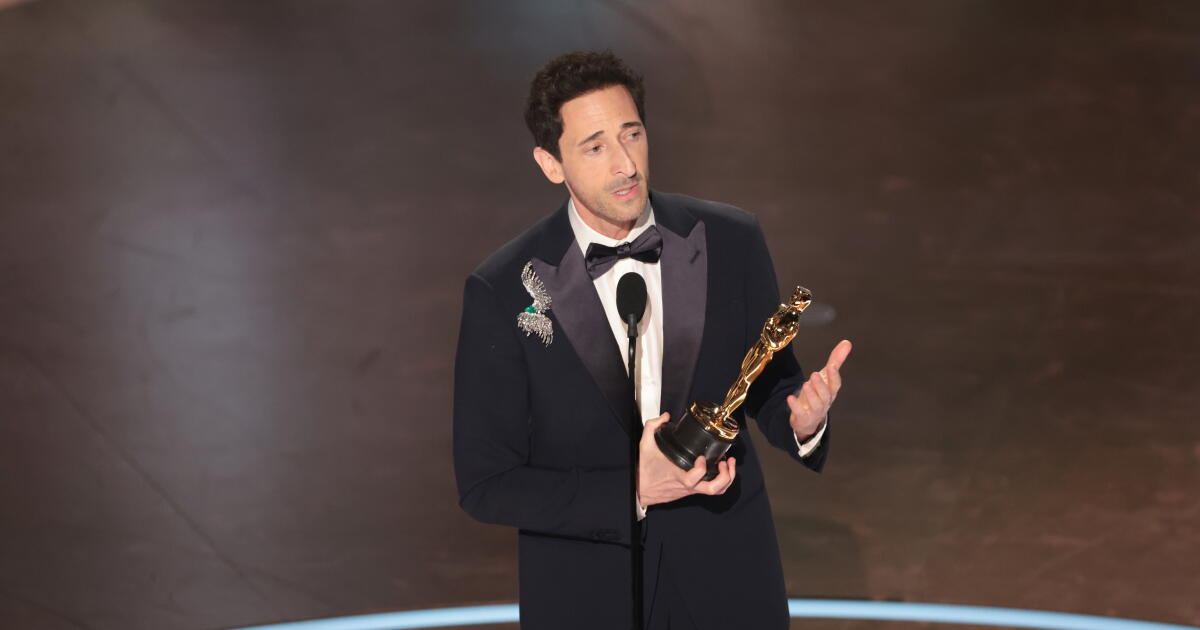

Adrien Brody flashed his status as a two-time Oscar winner to ward off the orchestral music that was nudging him to wrap up his lengthy acceptance speech Sunday evening.
“Please turn the music off. I’ve done this before,” he said, well into his speech, promising to not be “egregious” in the rest of his remarks. “It’s not my first rodeo.”
The actor, who took the lead actor Oscar for his performance as Hungarian Jewish Holocaust survivor and architect László Tóth in “The Brutalist,” received his first Academy Award in 2003 for playing Holocaust survivor Wladyslaw Szpilman in “The Pianist.”
“I’m here, once again, to represent the lingering traumas and the repercussions of war and systematic oppression and of antisemitism and racism and of othering,” he said in his speech. “I pray for a healthier and a happier and a more inclusive world, and I believe if the past can teach us anything, it’s a reminder to not let hate go unchecked.”
Brody was then played off for a second time, and he obliged.
Speaking to a room full of journalists backstage after his win, Brody took the opportunity to continue his thoughts without music threatening to cut him off.
“I think we all know that it’s an important time to recognize that there’s no place for intolerance,” Brody said in response to a question from The Times. “As I had mentioned in my speech, I’m oddly receiving recognition for representing a time in history that we witnessed unchecked antisemitism and hatred and oppression and their place in this world and that we must learn from the past.”
Brody’s mother and grandparents fled Hungary, giving him a unique perspective and personal tie to “The Brutalist.”
“My grandparents’ struggles and their loss and their resilience have paved the way for my own good fortune,” he said in the media room. “I had an opportunity to honor them in this film, and the truths and the insight that I’ve gained to these hardships of so many people of many different backgrounds and ethnicities have made me aware of a need for us to be empathetic.”
Brody won several other awards this season for “The Brutalist,” including the Golden Globe, BAFTA and Critics’ Choice awards.

Adrien Brody flashed his status as a two-time Oscar winner to ward off the orchestral music that was nudging him to wrap up his lengthy acceptance speech Sunday evening.
“Please turn the music off. I’ve done this before,” he said, well into his speech, promising to not be “egregious” in the rest of his remarks. “It’s not my first rodeo.”
The actor, who took the lead actor Oscar for his performance as Hungarian Jewish Holocaust survivor and architect László Tóth in “The Brutalist,” received his first Academy Award in 2003 for playing Holocaust survivor Wladyslaw Szpilman in “The Pianist.”
“I’m here, once again, to represent the lingering traumas and the repercussions of war and systematic oppression and of antisemitism and racism and of othering,” he said in his speech. “I pray for a healthier and a happier and a more inclusive world, and I believe if the past can teach us anything, it’s a reminder to not let hate go unchecked.”
Brody was then played off for a second time, and he obliged.
Speaking to a room full of journalists backstage after his win, Brody took the opportunity to continue his thoughts without music threatening to cut him off.
“I think we all know that it’s an important time to recognize that there’s no place for intolerance,” Brody said in response to a question from The Times. “As I had mentioned in my speech, I’m oddly receiving recognition for representing a time in history that we witnessed unchecked antisemitism and hatred and oppression and their place in this world and that we must learn from the past.”
Brody’s mother and grandparents fled Hungary, giving him a unique perspective and personal tie to “The Brutalist.”
“My grandparents’ struggles and their loss and their resilience have paved the way for my own good fortune,” he said in the media room. “I had an opportunity to honor them in this film, and the truths and the insight that I’ve gained to these hardships of so many people of many different backgrounds and ethnicities have made me aware of a need for us to be empathetic.”
Brody won several other awards this season for “The Brutalist,” including the Golden Globe, BAFTA and Critics’ Choice awards.

Adrien Brody flashed his status as a two-time Oscar winner to ward off the orchestral music that was nudging him to wrap up his lengthy acceptance speech Sunday evening.
“Please turn the music off. I’ve done this before,” he said, well into his speech, promising to not be “egregious” in the rest of his remarks. “It’s not my first rodeo.”
The actor, who took the lead actor Oscar for his performance as Hungarian Jewish Holocaust survivor and architect László Tóth in “The Brutalist,” received his first Academy Award in 2003 for playing Holocaust survivor Wladyslaw Szpilman in “The Pianist.”
“I’m here, once again, to represent the lingering traumas and the repercussions of war and systematic oppression and of antisemitism and racism and of othering,” he said in his speech. “I pray for a healthier and a happier and a more inclusive world, and I believe if the past can teach us anything, it’s a reminder to not let hate go unchecked.”
Brody was then played off for a second time, and he obliged.
Speaking to a room full of journalists backstage after his win, Brody took the opportunity to continue his thoughts without music threatening to cut him off.
“I think we all know that it’s an important time to recognize that there’s no place for intolerance,” Brody said in response to a question from The Times. “As I had mentioned in my speech, I’m oddly receiving recognition for representing a time in history that we witnessed unchecked antisemitism and hatred and oppression and their place in this world and that we must learn from the past.”
Brody’s mother and grandparents fled Hungary, giving him a unique perspective and personal tie to “The Brutalist.”
“My grandparents’ struggles and their loss and their resilience have paved the way for my own good fortune,” he said in the media room. “I had an opportunity to honor them in this film, and the truths and the insight that I’ve gained to these hardships of so many people of many different backgrounds and ethnicities have made me aware of a need for us to be empathetic.”
Brody won several other awards this season for “The Brutalist,” including the Golden Globe, BAFTA and Critics’ Choice awards.

Adrien Brody flashed his status as a two-time Oscar winner to ward off the orchestral music that was nudging him to wrap up his lengthy acceptance speech Sunday evening.
“Please turn the music off. I’ve done this before,” he said, well into his speech, promising to not be “egregious” in the rest of his remarks. “It’s not my first rodeo.”
The actor, who took the lead actor Oscar for his performance as Hungarian Jewish Holocaust survivor and architect László Tóth in “The Brutalist,” received his first Academy Award in 2003 for playing Holocaust survivor Wladyslaw Szpilman in “The Pianist.”
“I’m here, once again, to represent the lingering traumas and the repercussions of war and systematic oppression and of antisemitism and racism and of othering,” he said in his speech. “I pray for a healthier and a happier and a more inclusive world, and I believe if the past can teach us anything, it’s a reminder to not let hate go unchecked.”
Brody was then played off for a second time, and he obliged.
Speaking to a room full of journalists backstage after his win, Brody took the opportunity to continue his thoughts without music threatening to cut him off.
“I think we all know that it’s an important time to recognize that there’s no place for intolerance,” Brody said in response to a question from The Times. “As I had mentioned in my speech, I’m oddly receiving recognition for representing a time in history that we witnessed unchecked antisemitism and hatred and oppression and their place in this world and that we must learn from the past.”
Brody’s mother and grandparents fled Hungary, giving him a unique perspective and personal tie to “The Brutalist.”
“My grandparents’ struggles and their loss and their resilience have paved the way for my own good fortune,” he said in the media room. “I had an opportunity to honor them in this film, and the truths and the insight that I’ve gained to these hardships of so many people of many different backgrounds and ethnicities have made me aware of a need for us to be empathetic.”
Brody won several other awards this season for “The Brutalist,” including the Golden Globe, BAFTA and Critics’ Choice awards.

