

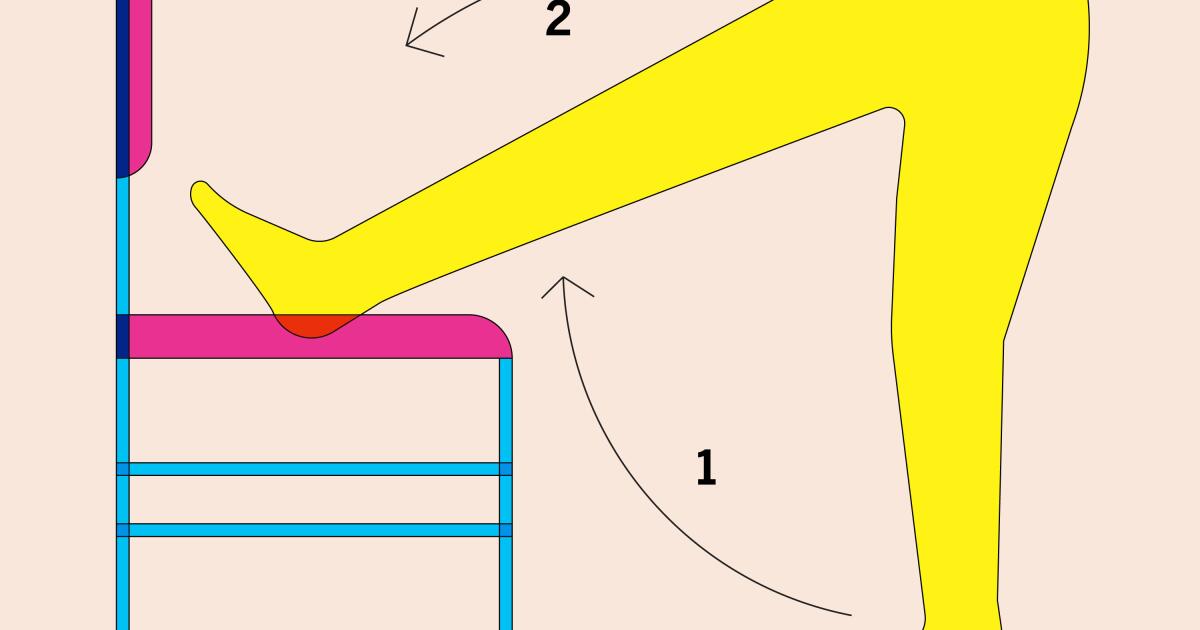
Prolonged desk work can lead to musculoskeletal problems ranging from annoying aches and pains to injuries. This month, we launched a six-part series showing you how to stretch and strengthen your body parts to prepare them for marathon sitting sessions at your desk. We’ll roll out a new exercise routine every week, each focusing on a different area of the body, that will help alleviate desk job-related woes.
Last week we published exercises for the lower back. This week? We’ll be addressing your hips and hamstrings.
To learn more about how sitting affects the body, and why these exercises are important, read our first piece in the series. And you can find the entire series here.
-
Share via
A routine for your hips and hamstrings
When we sit, the hips and knees are flexed at a 90-degree angle. The hip flexors — the muscles that run along the front of the hip — become compressed and shortened. Over time, like a rubber band left untouched in a drawer for a year, they lose elasticity. When you stand up, those muscles are stretched out to 180 degrees, often resulting in hip tightness and pain. The hip flexor muscles are anchored to the lumbar spine and they pull on the lower back, so tightness in your hips contributes to lower back pain as well.
Similarly, when the knee is bent at a 90-degree angle, the hamstrings shorten and tighten. Tightness in the hamstrings tugs on the pelvis and can lead to buttocks and lower back pain and may put you at risk for tearing the hamstring when running or participating in sports.
Do these exercises to help stretch and strengthen your hips and hamstrings. They’re demonstrated by trainer Melissa Gunn, of Pure Strength LA, whose team trains desk workers on how to protect their bodies through exercise.
- Stand and raise your right knee up, to about hip height, as if marching. Turn your right thigh outward, to the side, still at hip height. Then lower your foot to the ground, so your toes touch the floor. Now raise your leg and bring it back to the starting position, touching the floor with your toes. Do 10 times and repeat on the other side.
-
Sitting on a chair, put your left ankle on top of your right knee and bend forward, hinging at the hips, lowering your chest to your leg. Feel a stretch in the left hip. Repeat on the other side. Do 10 times.
- Stand up straight. Place your right foot over the left ankle and bend forward, keeping your knees straight. Feel a stretch in the hamstrings.
-
Put the heel of your foot on a couch or coffee table and extend your leg, keeping it straight, toes pointed up. Bend at the waist, keeping your back straight and chest up. Do it until you feel a stretch in the hamstrings. Do it 5-10 times on each side.
- In a standing position, feet hip distance apart, step forward with your right leg, so that your back leg is straight, heel off the ground, and your right leg is bent at a 90-degree angle (with your thigh parallel to the ground). Tuck your pelvis and gently drop your hips, keeping your back straight. Keep pushing forward for 30 seconds, feeling a stretch in the front of your hip and quads of the left leg. Then come back up. Do five times. Switch sides.
(Exercises came from Dr. Joshua T. Goldman, UCLA sports medicine; Melissa Gunn, Pure Strength LA; Tom Hendrickx, Pivot Physical Therapy; Vanessa Martinez Kercher, Indiana University-Bloomington, School of Public Health; Nico Pronk, Health Partners Institute; Niki Saccareccia, Light Inside Yoga.)

Prolonged desk work can lead to musculoskeletal problems ranging from annoying aches and pains to injuries. This month, we launched a six-part series showing you how to stretch and strengthen your body parts to prepare them for marathon sitting sessions at your desk. We’ll roll out a new exercise routine every week, each focusing on a different area of the body, that will help alleviate desk job-related woes.
Last week we published exercises for the lower back. This week? We’ll be addressing your hips and hamstrings.
To learn more about how sitting affects the body, and why these exercises are important, read our first piece in the series. And you can find the entire series here.
-
Share via
A routine for your hips and hamstrings
When we sit, the hips and knees are flexed at a 90-degree angle. The hip flexors — the muscles that run along the front of the hip — become compressed and shortened. Over time, like a rubber band left untouched in a drawer for a year, they lose elasticity. When you stand up, those muscles are stretched out to 180 degrees, often resulting in hip tightness and pain. The hip flexor muscles are anchored to the lumbar spine and they pull on the lower back, so tightness in your hips contributes to lower back pain as well.
Similarly, when the knee is bent at a 90-degree angle, the hamstrings shorten and tighten. Tightness in the hamstrings tugs on the pelvis and can lead to buttocks and lower back pain and may put you at risk for tearing the hamstring when running or participating in sports.
Do these exercises to help stretch and strengthen your hips and hamstrings. They’re demonstrated by trainer Melissa Gunn, of Pure Strength LA, whose team trains desk workers on how to protect their bodies through exercise.
- Stand and raise your right knee up, to about hip height, as if marching. Turn your right thigh outward, to the side, still at hip height. Then lower your foot to the ground, so your toes touch the floor. Now raise your leg and bring it back to the starting position, touching the floor with your toes. Do 10 times and repeat on the other side.
-
Sitting on a chair, put your left ankle on top of your right knee and bend forward, hinging at the hips, lowering your chest to your leg. Feel a stretch in the left hip. Repeat on the other side. Do 10 times.
- Stand up straight. Place your right foot over the left ankle and bend forward, keeping your knees straight. Feel a stretch in the hamstrings.
-
Put the heel of your foot on a couch or coffee table and extend your leg, keeping it straight, toes pointed up. Bend at the waist, keeping your back straight and chest up. Do it until you feel a stretch in the hamstrings. Do it 5-10 times on each side.
- In a standing position, feet hip distance apart, step forward with your right leg, so that your back leg is straight, heel off the ground, and your right leg is bent at a 90-degree angle (with your thigh parallel to the ground). Tuck your pelvis and gently drop your hips, keeping your back straight. Keep pushing forward for 30 seconds, feeling a stretch in the front of your hip and quads of the left leg. Then come back up. Do five times. Switch sides.
(Exercises came from Dr. Joshua T. Goldman, UCLA sports medicine; Melissa Gunn, Pure Strength LA; Tom Hendrickx, Pivot Physical Therapy; Vanessa Martinez Kercher, Indiana University-Bloomington, School of Public Health; Nico Pronk, Health Partners Institute; Niki Saccareccia, Light Inside Yoga.)

Prolonged desk work can lead to musculoskeletal problems ranging from annoying aches and pains to injuries. This month, we launched a six-part series showing you how to stretch and strengthen your body parts to prepare them for marathon sitting sessions at your desk. We’ll roll out a new exercise routine every week, each focusing on a different area of the body, that will help alleviate desk job-related woes.
Last week we published exercises for the lower back. This week? We’ll be addressing your hips and hamstrings.
To learn more about how sitting affects the body, and why these exercises are important, read our first piece in the series. And you can find the entire series here.
-
Share via
A routine for your hips and hamstrings
When we sit, the hips and knees are flexed at a 90-degree angle. The hip flexors — the muscles that run along the front of the hip — become compressed and shortened. Over time, like a rubber band left untouched in a drawer for a year, they lose elasticity. When you stand up, those muscles are stretched out to 180 degrees, often resulting in hip tightness and pain. The hip flexor muscles are anchored to the lumbar spine and they pull on the lower back, so tightness in your hips contributes to lower back pain as well.
Similarly, when the knee is bent at a 90-degree angle, the hamstrings shorten and tighten. Tightness in the hamstrings tugs on the pelvis and can lead to buttocks and lower back pain and may put you at risk for tearing the hamstring when running or participating in sports.
Do these exercises to help stretch and strengthen your hips and hamstrings. They’re demonstrated by trainer Melissa Gunn, of Pure Strength LA, whose team trains desk workers on how to protect their bodies through exercise.
- Stand and raise your right knee up, to about hip height, as if marching. Turn your right thigh outward, to the side, still at hip height. Then lower your foot to the ground, so your toes touch the floor. Now raise your leg and bring it back to the starting position, touching the floor with your toes. Do 10 times and repeat on the other side.
-
Sitting on a chair, put your left ankle on top of your right knee and bend forward, hinging at the hips, lowering your chest to your leg. Feel a stretch in the left hip. Repeat on the other side. Do 10 times.
- Stand up straight. Place your right foot over the left ankle and bend forward, keeping your knees straight. Feel a stretch in the hamstrings.
-
Put the heel of your foot on a couch or coffee table and extend your leg, keeping it straight, toes pointed up. Bend at the waist, keeping your back straight and chest up. Do it until you feel a stretch in the hamstrings. Do it 5-10 times on each side.
- In a standing position, feet hip distance apart, step forward with your right leg, so that your back leg is straight, heel off the ground, and your right leg is bent at a 90-degree angle (with your thigh parallel to the ground). Tuck your pelvis and gently drop your hips, keeping your back straight. Keep pushing forward for 30 seconds, feeling a stretch in the front of your hip and quads of the left leg. Then come back up. Do five times. Switch sides.
(Exercises came from Dr. Joshua T. Goldman, UCLA sports medicine; Melissa Gunn, Pure Strength LA; Tom Hendrickx, Pivot Physical Therapy; Vanessa Martinez Kercher, Indiana University-Bloomington, School of Public Health; Nico Pronk, Health Partners Institute; Niki Saccareccia, Light Inside Yoga.)

Prolonged desk work can lead to musculoskeletal problems ranging from annoying aches and pains to injuries. This month, we launched a six-part series showing you how to stretch and strengthen your body parts to prepare them for marathon sitting sessions at your desk. We’ll roll out a new exercise routine every week, each focusing on a different area of the body, that will help alleviate desk job-related woes.
Last week we published exercises for the lower back. This week? We’ll be addressing your hips and hamstrings.
To learn more about how sitting affects the body, and why these exercises are important, read our first piece in the series. And you can find the entire series here.
-
Share via
A routine for your hips and hamstrings
When we sit, the hips and knees are flexed at a 90-degree angle. The hip flexors — the muscles that run along the front of the hip — become compressed and shortened. Over time, like a rubber band left untouched in a drawer for a year, they lose elasticity. When you stand up, those muscles are stretched out to 180 degrees, often resulting in hip tightness and pain. The hip flexor muscles are anchored to the lumbar spine and they pull on the lower back, so tightness in your hips contributes to lower back pain as well.
Similarly, when the knee is bent at a 90-degree angle, the hamstrings shorten and tighten. Tightness in the hamstrings tugs on the pelvis and can lead to buttocks and lower back pain and may put you at risk for tearing the hamstring when running or participating in sports.
Do these exercises to help stretch and strengthen your hips and hamstrings. They’re demonstrated by trainer Melissa Gunn, of Pure Strength LA, whose team trains desk workers on how to protect their bodies through exercise.
- Stand and raise your right knee up, to about hip height, as if marching. Turn your right thigh outward, to the side, still at hip height. Then lower your foot to the ground, so your toes touch the floor. Now raise your leg and bring it back to the starting position, touching the floor with your toes. Do 10 times and repeat on the other side.
-
Sitting on a chair, put your left ankle on top of your right knee and bend forward, hinging at the hips, lowering your chest to your leg. Feel a stretch in the left hip. Repeat on the other side. Do 10 times.
- Stand up straight. Place your right foot over the left ankle and bend forward, keeping your knees straight. Feel a stretch in the hamstrings.
-
Put the heel of your foot on a couch or coffee table and extend your leg, keeping it straight, toes pointed up. Bend at the waist, keeping your back straight and chest up. Do it until you feel a stretch in the hamstrings. Do it 5-10 times on each side.
- In a standing position, feet hip distance apart, step forward with your right leg, so that your back leg is straight, heel off the ground, and your right leg is bent at a 90-degree angle (with your thigh parallel to the ground). Tuck your pelvis and gently drop your hips, keeping your back straight. Keep pushing forward for 30 seconds, feeling a stretch in the front of your hip and quads of the left leg. Then come back up. Do five times. Switch sides.
(Exercises came from Dr. Joshua T. Goldman, UCLA sports medicine; Melissa Gunn, Pure Strength LA; Tom Hendrickx, Pivot Physical Therapy; Vanessa Martinez Kercher, Indiana University-Bloomington, School of Public Health; Nico Pronk, Health Partners Institute; Niki Saccareccia, Light Inside Yoga.)

Prolonged desk work can lead to musculoskeletal problems ranging from annoying aches and pains to injuries. This month, we launched a six-part series showing you how to stretch and strengthen your body parts to prepare them for marathon sitting sessions at your desk. We’ll roll out a new exercise routine every week, each focusing on a different area of the body, that will help alleviate desk job-related woes.
Last week we published exercises for the lower back. This week? We’ll be addressing your hips and hamstrings.
To learn more about how sitting affects the body, and why these exercises are important, read our first piece in the series. And you can find the entire series here.
-
Share via
A routine for your hips and hamstrings
When we sit, the hips and knees are flexed at a 90-degree angle. The hip flexors — the muscles that run along the front of the hip — become compressed and shortened. Over time, like a rubber band left untouched in a drawer for a year, they lose elasticity. When you stand up, those muscles are stretched out to 180 degrees, often resulting in hip tightness and pain. The hip flexor muscles are anchored to the lumbar spine and they pull on the lower back, so tightness in your hips contributes to lower back pain as well.
Similarly, when the knee is bent at a 90-degree angle, the hamstrings shorten and tighten. Tightness in the hamstrings tugs on the pelvis and can lead to buttocks and lower back pain and may put you at risk for tearing the hamstring when running or participating in sports.
Do these exercises to help stretch and strengthen your hips and hamstrings. They’re demonstrated by trainer Melissa Gunn, of Pure Strength LA, whose team trains desk workers on how to protect their bodies through exercise.
- Stand and raise your right knee up, to about hip height, as if marching. Turn your right thigh outward, to the side, still at hip height. Then lower your foot to the ground, so your toes touch the floor. Now raise your leg and bring it back to the starting position, touching the floor with your toes. Do 10 times and repeat on the other side.
-
Sitting on a chair, put your left ankle on top of your right knee and bend forward, hinging at the hips, lowering your chest to your leg. Feel a stretch in the left hip. Repeat on the other side. Do 10 times.
- Stand up straight. Place your right foot over the left ankle and bend forward, keeping your knees straight. Feel a stretch in the hamstrings.
-
Put the heel of your foot on a couch or coffee table and extend your leg, keeping it straight, toes pointed up. Bend at the waist, keeping your back straight and chest up. Do it until you feel a stretch in the hamstrings. Do it 5-10 times on each side.
- In a standing position, feet hip distance apart, step forward with your right leg, so that your back leg is straight, heel off the ground, and your right leg is bent at a 90-degree angle (with your thigh parallel to the ground). Tuck your pelvis and gently drop your hips, keeping your back straight. Keep pushing forward for 30 seconds, feeling a stretch in the front of your hip and quads of the left leg. Then come back up. Do five times. Switch sides.
(Exercises came from Dr. Joshua T. Goldman, UCLA sports medicine; Melissa Gunn, Pure Strength LA; Tom Hendrickx, Pivot Physical Therapy; Vanessa Martinez Kercher, Indiana University-Bloomington, School of Public Health; Nico Pronk, Health Partners Institute; Niki Saccareccia, Light Inside Yoga.)