

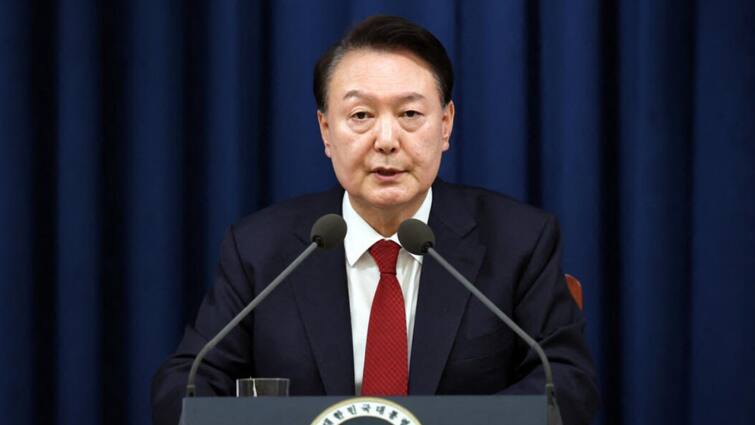
South Korean Law enforcement requested a court warrant on Monday, to detain the impeached President Yoon Suk Yeol as a part of an investigation into whether his shot-live martial law decree on December 3 constituted an act of rebellion.
According to AFP, on Sunday, Yoon refused a summons to appear for questioning defying the investigators for the third time in two weeks. He also failed to attend a hearing he was summoned to last Wednesday, giving no explanation for his absence.
The Corruption Investigation Office for High-Ranking Officials has led a joint investigation with police and military authorities into the martial law that lasted only a few hours and confirmed it requested the warrant from the Seoul Western District Court, according to the Associated Press (AP). They plan to question Yoon on charges of abuse of authority and orchestrating a rebellion. It’s not clear whether the court will grant the warrant or whether Yoon can be compelled to appear for questioning.
On December 14, the conservative leader was stripped of his duties by parliament, following the martial law declaration that plunged the country into its worst political crisis in decades, halted high-level diplomacy and rattled financial markets.
Based on South Korean law, locations potentially associated with military secrets cannot be seized or searched without the consent of the person in charge. Given these constraints, it is unlikely that Yoon will voluntarily leave his residence if he faces detainment. According to AP, Yoon’s fate now lies with the Constitutional Court, which has begun deliberations on whether to uphold the impeachment and formally remove Yoon from office or reinstate him.
If upheld by the court, which is required to deliver its ruling within six months of the impeachment, a by-election must be held within 60 days of the court’s decision, as per AFP.
Yoon defended that the martial law decree was a necessary act of governance, saying it was a warning against the liberal opposition Democratic Party. He has accused the party, which holds a parliamentary majority, of obstructing his administration’s legislative agenda.
Last week, the South Korean parliament voted to impeach Prime Minister Han Duck-soo, who had assumed the role of acting president after Yoon’s powers were suspended, due to his reluctance to fill Constitutional Court vacancies ahead of the court’s review of Yoon’s case.
The current interim leader is Deputy Prime Minister Choi Sang-mok, he is also finance minister.

South Korean Law enforcement requested a court warrant on Monday, to detain the impeached President Yoon Suk Yeol as a part of an investigation into whether his shot-live martial law decree on December 3 constituted an act of rebellion.
According to AFP, on Sunday, Yoon refused a summons to appear for questioning defying the investigators for the third time in two weeks. He also failed to attend a hearing he was summoned to last Wednesday, giving no explanation for his absence.
The Corruption Investigation Office for High-Ranking Officials has led a joint investigation with police and military authorities into the martial law that lasted only a few hours and confirmed it requested the warrant from the Seoul Western District Court, according to the Associated Press (AP). They plan to question Yoon on charges of abuse of authority and orchestrating a rebellion. It’s not clear whether the court will grant the warrant or whether Yoon can be compelled to appear for questioning.
On December 14, the conservative leader was stripped of his duties by parliament, following the martial law declaration that plunged the country into its worst political crisis in decades, halted high-level diplomacy and rattled financial markets.
Based on South Korean law, locations potentially associated with military secrets cannot be seized or searched without the consent of the person in charge. Given these constraints, it is unlikely that Yoon will voluntarily leave his residence if he faces detainment. According to AP, Yoon’s fate now lies with the Constitutional Court, which has begun deliberations on whether to uphold the impeachment and formally remove Yoon from office or reinstate him.
If upheld by the court, which is required to deliver its ruling within six months of the impeachment, a by-election must be held within 60 days of the court’s decision, as per AFP.
Yoon defended that the martial law decree was a necessary act of governance, saying it was a warning against the liberal opposition Democratic Party. He has accused the party, which holds a parliamentary majority, of obstructing his administration’s legislative agenda.
Last week, the South Korean parliament voted to impeach Prime Minister Han Duck-soo, who had assumed the role of acting president after Yoon’s powers were suspended, due to his reluctance to fill Constitutional Court vacancies ahead of the court’s review of Yoon’s case.
The current interim leader is Deputy Prime Minister Choi Sang-mok, he is also finance minister.

South Korean Law enforcement requested a court warrant on Monday, to detain the impeached President Yoon Suk Yeol as a part of an investigation into whether his shot-live martial law decree on December 3 constituted an act of rebellion.
According to AFP, on Sunday, Yoon refused a summons to appear for questioning defying the investigators for the third time in two weeks. He also failed to attend a hearing he was summoned to last Wednesday, giving no explanation for his absence.
The Corruption Investigation Office for High-Ranking Officials has led a joint investigation with police and military authorities into the martial law that lasted only a few hours and confirmed it requested the warrant from the Seoul Western District Court, according to the Associated Press (AP). They plan to question Yoon on charges of abuse of authority and orchestrating a rebellion. It’s not clear whether the court will grant the warrant or whether Yoon can be compelled to appear for questioning.
On December 14, the conservative leader was stripped of his duties by parliament, following the martial law declaration that plunged the country into its worst political crisis in decades, halted high-level diplomacy and rattled financial markets.
Based on South Korean law, locations potentially associated with military secrets cannot be seized or searched without the consent of the person in charge. Given these constraints, it is unlikely that Yoon will voluntarily leave his residence if he faces detainment. According to AP, Yoon’s fate now lies with the Constitutional Court, which has begun deliberations on whether to uphold the impeachment and formally remove Yoon from office or reinstate him.
If upheld by the court, which is required to deliver its ruling within six months of the impeachment, a by-election must be held within 60 days of the court’s decision, as per AFP.
Yoon defended that the martial law decree was a necessary act of governance, saying it was a warning against the liberal opposition Democratic Party. He has accused the party, which holds a parliamentary majority, of obstructing his administration’s legislative agenda.
Last week, the South Korean parliament voted to impeach Prime Minister Han Duck-soo, who had assumed the role of acting president after Yoon’s powers were suspended, due to his reluctance to fill Constitutional Court vacancies ahead of the court’s review of Yoon’s case.
The current interim leader is Deputy Prime Minister Choi Sang-mok, he is also finance minister.
South Korean Law enforcement requested a court warrant on Monday, to detain the impeached President Yoon Suk Yeol as a part of an investigation into whether his shot-live martial law decree on December 3 constituted an act of rebellion.
According to AFP, on Sunday, Yoon refused a summons to appear for questioning defying the investigators for the third time in two weeks. He also failed to attend a hearing he was summoned to last Wednesday, giving no explanation for his absence.
The Corruption Investigation Office for High-Ranking Officials has led a joint investigation with police and military authorities into the martial law that lasted only a few hours and confirmed it requested the warrant from the Seoul Western District Court, according to the Associated Press (AP). They plan to question Yoon on charges of abuse of authority and orchestrating a rebellion. It’s not clear whether the court will grant the warrant or whether Yoon can be compelled to appear for questioning.
On December 14, the conservative leader was stripped of his duties by parliament, following the martial law declaration that plunged the country into its worst political crisis in decades, halted high-level diplomacy and rattled financial markets.
Based on South Korean law, locations potentially associated with military secrets cannot be seized or searched without the consent of the person in charge. Given these constraints, it is unlikely that Yoon will voluntarily leave his residence if he faces detainment. According to AP, Yoon’s fate now lies with the Constitutional Court, which has begun deliberations on whether to uphold the impeachment and formally remove Yoon from office or reinstate him.
If upheld by the court, which is required to deliver its ruling within six months of the impeachment, a by-election must be held within 60 days of the court’s decision, as per AFP.
Yoon defended that the martial law decree was a necessary act of governance, saying it was a warning against the liberal opposition Democratic Party. He has accused the party, which holds a parliamentary majority, of obstructing his administration’s legislative agenda.
Last week, the South Korean parliament voted to impeach Prime Minister Han Duck-soo, who had assumed the role of acting president after Yoon’s powers were suspended, due to his reluctance to fill Constitutional Court vacancies ahead of the court’s review of Yoon’s case.
The current interim leader is Deputy Prime Minister Choi Sang-mok, he is also finance minister.

South Korean Law enforcement requested a court warrant on Monday, to detain the impeached President Yoon Suk Yeol as a part of an investigation into whether his shot-live martial law decree on December 3 constituted an act of rebellion.
According to AFP, on Sunday, Yoon refused a summons to appear for questioning defying the investigators for the third time in two weeks. He also failed to attend a hearing he was summoned to last Wednesday, giving no explanation for his absence.
The Corruption Investigation Office for High-Ranking Officials has led a joint investigation with police and military authorities into the martial law that lasted only a few hours and confirmed it requested the warrant from the Seoul Western District Court, according to the Associated Press (AP). They plan to question Yoon on charges of abuse of authority and orchestrating a rebellion. It’s not clear whether the court will grant the warrant or whether Yoon can be compelled to appear for questioning.
On December 14, the conservative leader was stripped of his duties by parliament, following the martial law declaration that plunged the country into its worst political crisis in decades, halted high-level diplomacy and rattled financial markets.
Based on South Korean law, locations potentially associated with military secrets cannot be seized or searched without the consent of the person in charge. Given these constraints, it is unlikely that Yoon will voluntarily leave his residence if he faces detainment. According to AP, Yoon’s fate now lies with the Constitutional Court, which has begun deliberations on whether to uphold the impeachment and formally remove Yoon from office or reinstate him.
If upheld by the court, which is required to deliver its ruling within six months of the impeachment, a by-election must be held within 60 days of the court’s decision, as per AFP.
Yoon defended that the martial law decree was a necessary act of governance, saying it was a warning against the liberal opposition Democratic Party. He has accused the party, which holds a parliamentary majority, of obstructing his administration’s legislative agenda.
Last week, the South Korean parliament voted to impeach Prime Minister Han Duck-soo, who had assumed the role of acting president after Yoon’s powers were suspended, due to his reluctance to fill Constitutional Court vacancies ahead of the court’s review of Yoon’s case.
The current interim leader is Deputy Prime Minister Choi Sang-mok, he is also finance minister.
South Korean Law enforcement requested a court warrant on Monday, to detain the impeached President Yoon Suk Yeol as a part of an investigation into whether his shot-live martial law decree on December 3 constituted an act of rebellion.
According to AFP, on Sunday, Yoon refused a summons to appear for questioning defying the investigators for the third time in two weeks. He also failed to attend a hearing he was summoned to last Wednesday, giving no explanation for his absence.
The Corruption Investigation Office for High-Ranking Officials has led a joint investigation with police and military authorities into the martial law that lasted only a few hours and confirmed it requested the warrant from the Seoul Western District Court, according to the Associated Press (AP). They plan to question Yoon on charges of abuse of authority and orchestrating a rebellion. It’s not clear whether the court will grant the warrant or whether Yoon can be compelled to appear for questioning.
On December 14, the conservative leader was stripped of his duties by parliament, following the martial law declaration that plunged the country into its worst political crisis in decades, halted high-level diplomacy and rattled financial markets.
Based on South Korean law, locations potentially associated with military secrets cannot be seized or searched without the consent of the person in charge. Given these constraints, it is unlikely that Yoon will voluntarily leave his residence if he faces detainment. According to AP, Yoon’s fate now lies with the Constitutional Court, which has begun deliberations on whether to uphold the impeachment and formally remove Yoon from office or reinstate him.
If upheld by the court, which is required to deliver its ruling within six months of the impeachment, a by-election must be held within 60 days of the court’s decision, as per AFP.
Yoon defended that the martial law decree was a necessary act of governance, saying it was a warning against the liberal opposition Democratic Party. He has accused the party, which holds a parliamentary majority, of obstructing his administration’s legislative agenda.
Last week, the South Korean parliament voted to impeach Prime Minister Han Duck-soo, who had assumed the role of acting president after Yoon’s powers were suspended, due to his reluctance to fill Constitutional Court vacancies ahead of the court’s review of Yoon’s case.
The current interim leader is Deputy Prime Minister Choi Sang-mok, he is also finance minister.
South Korean Law enforcement requested a court warrant on Monday, to detain the impeached President Yoon Suk Yeol as a part of an investigation into whether his shot-live martial law decree on December 3 constituted an act of rebellion.
According to AFP, on Sunday, Yoon refused a summons to appear for questioning defying the investigators for the third time in two weeks. He also failed to attend a hearing he was summoned to last Wednesday, giving no explanation for his absence.
The Corruption Investigation Office for High-Ranking Officials has led a joint investigation with police and military authorities into the martial law that lasted only a few hours and confirmed it requested the warrant from the Seoul Western District Court, according to the Associated Press (AP). They plan to question Yoon on charges of abuse of authority and orchestrating a rebellion. It’s not clear whether the court will grant the warrant or whether Yoon can be compelled to appear for questioning.
On December 14, the conservative leader was stripped of his duties by parliament, following the martial law declaration that plunged the country into its worst political crisis in decades, halted high-level diplomacy and rattled financial markets.
Based on South Korean law, locations potentially associated with military secrets cannot be seized or searched without the consent of the person in charge. Given these constraints, it is unlikely that Yoon will voluntarily leave his residence if he faces detainment. According to AP, Yoon’s fate now lies with the Constitutional Court, which has begun deliberations on whether to uphold the impeachment and formally remove Yoon from office or reinstate him.
If upheld by the court, which is required to deliver its ruling within six months of the impeachment, a by-election must be held within 60 days of the court’s decision, as per AFP.
Yoon defended that the martial law decree was a necessary act of governance, saying it was a warning against the liberal opposition Democratic Party. He has accused the party, which holds a parliamentary majority, of obstructing his administration’s legislative agenda.
Last week, the South Korean parliament voted to impeach Prime Minister Han Duck-soo, who had assumed the role of acting president after Yoon’s powers were suspended, due to his reluctance to fill Constitutional Court vacancies ahead of the court’s review of Yoon’s case.
The current interim leader is Deputy Prime Minister Choi Sang-mok, he is also finance minister.
South Korean Law enforcement requested a court warrant on Monday, to detain the impeached President Yoon Suk Yeol as a part of an investigation into whether his shot-live martial law decree on December 3 constituted an act of rebellion.
According to AFP, on Sunday, Yoon refused a summons to appear for questioning defying the investigators for the third time in two weeks. He also failed to attend a hearing he was summoned to last Wednesday, giving no explanation for his absence.
The Corruption Investigation Office for High-Ranking Officials has led a joint investigation with police and military authorities into the martial law that lasted only a few hours and confirmed it requested the warrant from the Seoul Western District Court, according to the Associated Press (AP). They plan to question Yoon on charges of abuse of authority and orchestrating a rebellion. It’s not clear whether the court will grant the warrant or whether Yoon can be compelled to appear for questioning.
On December 14, the conservative leader was stripped of his duties by parliament, following the martial law declaration that plunged the country into its worst political crisis in decades, halted high-level diplomacy and rattled financial markets.
Based on South Korean law, locations potentially associated with military secrets cannot be seized or searched without the consent of the person in charge. Given these constraints, it is unlikely that Yoon will voluntarily leave his residence if he faces detainment. According to AP, Yoon’s fate now lies with the Constitutional Court, which has begun deliberations on whether to uphold the impeachment and formally remove Yoon from office or reinstate him.
If upheld by the court, which is required to deliver its ruling within six months of the impeachment, a by-election must be held within 60 days of the court’s decision, as per AFP.
Yoon defended that the martial law decree was a necessary act of governance, saying it was a warning against the liberal opposition Democratic Party. He has accused the party, which holds a parliamentary majority, of obstructing his administration’s legislative agenda.
Last week, the South Korean parliament voted to impeach Prime Minister Han Duck-soo, who had assumed the role of acting president after Yoon’s powers were suspended, due to his reluctance to fill Constitutional Court vacancies ahead of the court’s review of Yoon’s case.
The current interim leader is Deputy Prime Minister Choi Sang-mok, he is also finance minister.

South Korean Law enforcement requested a court warrant on Monday, to detain the impeached President Yoon Suk Yeol as a part of an investigation into whether his shot-live martial law decree on December 3 constituted an act of rebellion.
According to AFP, on Sunday, Yoon refused a summons to appear for questioning defying the investigators for the third time in two weeks. He also failed to attend a hearing he was summoned to last Wednesday, giving no explanation for his absence.
The Corruption Investigation Office for High-Ranking Officials has led a joint investigation with police and military authorities into the martial law that lasted only a few hours and confirmed it requested the warrant from the Seoul Western District Court, according to the Associated Press (AP). They plan to question Yoon on charges of abuse of authority and orchestrating a rebellion. It’s not clear whether the court will grant the warrant or whether Yoon can be compelled to appear for questioning.
On December 14, the conservative leader was stripped of his duties by parliament, following the martial law declaration that plunged the country into its worst political crisis in decades, halted high-level diplomacy and rattled financial markets.
Based on South Korean law, locations potentially associated with military secrets cannot be seized or searched without the consent of the person in charge. Given these constraints, it is unlikely that Yoon will voluntarily leave his residence if he faces detainment. According to AP, Yoon’s fate now lies with the Constitutional Court, which has begun deliberations on whether to uphold the impeachment and formally remove Yoon from office or reinstate him.
If upheld by the court, which is required to deliver its ruling within six months of the impeachment, a by-election must be held within 60 days of the court’s decision, as per AFP.
Yoon defended that the martial law decree was a necessary act of governance, saying it was a warning against the liberal opposition Democratic Party. He has accused the party, which holds a parliamentary majority, of obstructing his administration’s legislative agenda.
Last week, the South Korean parliament voted to impeach Prime Minister Han Duck-soo, who had assumed the role of acting president after Yoon’s powers were suspended, due to his reluctance to fill Constitutional Court vacancies ahead of the court’s review of Yoon’s case.
The current interim leader is Deputy Prime Minister Choi Sang-mok, he is also finance minister.
South Korean Law enforcement requested a court warrant on Monday, to detain the impeached President Yoon Suk Yeol as a part of an investigation into whether his shot-live martial law decree on December 3 constituted an act of rebellion.
According to AFP, on Sunday, Yoon refused a summons to appear for questioning defying the investigators for the third time in two weeks. He also failed to attend a hearing he was summoned to last Wednesday, giving no explanation for his absence.
The Corruption Investigation Office for High-Ranking Officials has led a joint investigation with police and military authorities into the martial law that lasted only a few hours and confirmed it requested the warrant from the Seoul Western District Court, according to the Associated Press (AP). They plan to question Yoon on charges of abuse of authority and orchestrating a rebellion. It’s not clear whether the court will grant the warrant or whether Yoon can be compelled to appear for questioning.
On December 14, the conservative leader was stripped of his duties by parliament, following the martial law declaration that plunged the country into its worst political crisis in decades, halted high-level diplomacy and rattled financial markets.
Based on South Korean law, locations potentially associated with military secrets cannot be seized or searched without the consent of the person in charge. Given these constraints, it is unlikely that Yoon will voluntarily leave his residence if he faces detainment. According to AP, Yoon’s fate now lies with the Constitutional Court, which has begun deliberations on whether to uphold the impeachment and formally remove Yoon from office or reinstate him.
If upheld by the court, which is required to deliver its ruling within six months of the impeachment, a by-election must be held within 60 days of the court’s decision, as per AFP.
Yoon defended that the martial law decree was a necessary act of governance, saying it was a warning against the liberal opposition Democratic Party. He has accused the party, which holds a parliamentary majority, of obstructing his administration’s legislative agenda.
Last week, the South Korean parliament voted to impeach Prime Minister Han Duck-soo, who had assumed the role of acting president after Yoon’s powers were suspended, due to his reluctance to fill Constitutional Court vacancies ahead of the court’s review of Yoon’s case.
The current interim leader is Deputy Prime Minister Choi Sang-mok, he is also finance minister.
South Korean Law enforcement requested a court warrant on Monday, to detain the impeached President Yoon Suk Yeol as a part of an investigation into whether his shot-live martial law decree on December 3 constituted an act of rebellion.
According to AFP, on Sunday, Yoon refused a summons to appear for questioning defying the investigators for the third time in two weeks. He also failed to attend a hearing he was summoned to last Wednesday, giving no explanation for his absence.
The Corruption Investigation Office for High-Ranking Officials has led a joint investigation with police and military authorities into the martial law that lasted only a few hours and confirmed it requested the warrant from the Seoul Western District Court, according to the Associated Press (AP). They plan to question Yoon on charges of abuse of authority and orchestrating a rebellion. It’s not clear whether the court will grant the warrant or whether Yoon can be compelled to appear for questioning.
On December 14, the conservative leader was stripped of his duties by parliament, following the martial law declaration that plunged the country into its worst political crisis in decades, halted high-level diplomacy and rattled financial markets.
Based on South Korean law, locations potentially associated with military secrets cannot be seized or searched without the consent of the person in charge. Given these constraints, it is unlikely that Yoon will voluntarily leave his residence if he faces detainment. According to AP, Yoon’s fate now lies with the Constitutional Court, which has begun deliberations on whether to uphold the impeachment and formally remove Yoon from office or reinstate him.
If upheld by the court, which is required to deliver its ruling within six months of the impeachment, a by-election must be held within 60 days of the court’s decision, as per AFP.
Yoon defended that the martial law decree was a necessary act of governance, saying it was a warning against the liberal opposition Democratic Party. He has accused the party, which holds a parliamentary majority, of obstructing his administration’s legislative agenda.
Last week, the South Korean parliament voted to impeach Prime Minister Han Duck-soo, who had assumed the role of acting president after Yoon’s powers were suspended, due to his reluctance to fill Constitutional Court vacancies ahead of the court’s review of Yoon’s case.
The current interim leader is Deputy Prime Minister Choi Sang-mok, he is also finance minister.
South Korean Law enforcement requested a court warrant on Monday, to detain the impeached President Yoon Suk Yeol as a part of an investigation into whether his shot-live martial law decree on December 3 constituted an act of rebellion.
According to AFP, on Sunday, Yoon refused a summons to appear for questioning defying the investigators for the third time in two weeks. He also failed to attend a hearing he was summoned to last Wednesday, giving no explanation for his absence.
The Corruption Investigation Office for High-Ranking Officials has led a joint investigation with police and military authorities into the martial law that lasted only a few hours and confirmed it requested the warrant from the Seoul Western District Court, according to the Associated Press (AP). They plan to question Yoon on charges of abuse of authority and orchestrating a rebellion. It’s not clear whether the court will grant the warrant or whether Yoon can be compelled to appear for questioning.
On December 14, the conservative leader was stripped of his duties by parliament, following the martial law declaration that plunged the country into its worst political crisis in decades, halted high-level diplomacy and rattled financial markets.
Based on South Korean law, locations potentially associated with military secrets cannot be seized or searched without the consent of the person in charge. Given these constraints, it is unlikely that Yoon will voluntarily leave his residence if he faces detainment. According to AP, Yoon’s fate now lies with the Constitutional Court, which has begun deliberations on whether to uphold the impeachment and formally remove Yoon from office or reinstate him.
If upheld by the court, which is required to deliver its ruling within six months of the impeachment, a by-election must be held within 60 days of the court’s decision, as per AFP.
Yoon defended that the martial law decree was a necessary act of governance, saying it was a warning against the liberal opposition Democratic Party. He has accused the party, which holds a parliamentary majority, of obstructing his administration’s legislative agenda.
Last week, the South Korean parliament voted to impeach Prime Minister Han Duck-soo, who had assumed the role of acting president after Yoon’s powers were suspended, due to his reluctance to fill Constitutional Court vacancies ahead of the court’s review of Yoon’s case.
The current interim leader is Deputy Prime Minister Choi Sang-mok, he is also finance minister.
South Korean Law enforcement requested a court warrant on Monday, to detain the impeached President Yoon Suk Yeol as a part of an investigation into whether his shot-live martial law decree on December 3 constituted an act of rebellion.
According to AFP, on Sunday, Yoon refused a summons to appear for questioning defying the investigators for the third time in two weeks. He also failed to attend a hearing he was summoned to last Wednesday, giving no explanation for his absence.
The Corruption Investigation Office for High-Ranking Officials has led a joint investigation with police and military authorities into the martial law that lasted only a few hours and confirmed it requested the warrant from the Seoul Western District Court, according to the Associated Press (AP). They plan to question Yoon on charges of abuse of authority and orchestrating a rebellion. It’s not clear whether the court will grant the warrant or whether Yoon can be compelled to appear for questioning.
On December 14, the conservative leader was stripped of his duties by parliament, following the martial law declaration that plunged the country into its worst political crisis in decades, halted high-level diplomacy and rattled financial markets.
Based on South Korean law, locations potentially associated with military secrets cannot be seized or searched without the consent of the person in charge. Given these constraints, it is unlikely that Yoon will voluntarily leave his residence if he faces detainment. According to AP, Yoon’s fate now lies with the Constitutional Court, which has begun deliberations on whether to uphold the impeachment and formally remove Yoon from office or reinstate him.
If upheld by the court, which is required to deliver its ruling within six months of the impeachment, a by-election must be held within 60 days of the court’s decision, as per AFP.
Yoon defended that the martial law decree was a necessary act of governance, saying it was a warning against the liberal opposition Democratic Party. He has accused the party, which holds a parliamentary majority, of obstructing his administration’s legislative agenda.
Last week, the South Korean parliament voted to impeach Prime Minister Han Duck-soo, who had assumed the role of acting president after Yoon’s powers were suspended, due to his reluctance to fill Constitutional Court vacancies ahead of the court’s review of Yoon’s case.
The current interim leader is Deputy Prime Minister Choi Sang-mok, he is also finance minister.
South Korean Law enforcement requested a court warrant on Monday, to detain the impeached President Yoon Suk Yeol as a part of an investigation into whether his shot-live martial law decree on December 3 constituted an act of rebellion.
According to AFP, on Sunday, Yoon refused a summons to appear for questioning defying the investigators for the third time in two weeks. He also failed to attend a hearing he was summoned to last Wednesday, giving no explanation for his absence.
The Corruption Investigation Office for High-Ranking Officials has led a joint investigation with police and military authorities into the martial law that lasted only a few hours and confirmed it requested the warrant from the Seoul Western District Court, according to the Associated Press (AP). They plan to question Yoon on charges of abuse of authority and orchestrating a rebellion. It’s not clear whether the court will grant the warrant or whether Yoon can be compelled to appear for questioning.
On December 14, the conservative leader was stripped of his duties by parliament, following the martial law declaration that plunged the country into its worst political crisis in decades, halted high-level diplomacy and rattled financial markets.
Based on South Korean law, locations potentially associated with military secrets cannot be seized or searched without the consent of the person in charge. Given these constraints, it is unlikely that Yoon will voluntarily leave his residence if he faces detainment. According to AP, Yoon’s fate now lies with the Constitutional Court, which has begun deliberations on whether to uphold the impeachment and formally remove Yoon from office or reinstate him.
If upheld by the court, which is required to deliver its ruling within six months of the impeachment, a by-election must be held within 60 days of the court’s decision, as per AFP.
Yoon defended that the martial law decree was a necessary act of governance, saying it was a warning against the liberal opposition Democratic Party. He has accused the party, which holds a parliamentary majority, of obstructing his administration’s legislative agenda.
Last week, the South Korean parliament voted to impeach Prime Minister Han Duck-soo, who had assumed the role of acting president after Yoon’s powers were suspended, due to his reluctance to fill Constitutional Court vacancies ahead of the court’s review of Yoon’s case.
The current interim leader is Deputy Prime Minister Choi Sang-mok, he is also finance minister.
South Korean Law enforcement requested a court warrant on Monday, to detain the impeached President Yoon Suk Yeol as a part of an investigation into whether his shot-live martial law decree on December 3 constituted an act of rebellion.
According to AFP, on Sunday, Yoon refused a summons to appear for questioning defying the investigators for the third time in two weeks. He also failed to attend a hearing he was summoned to last Wednesday, giving no explanation for his absence.
The Corruption Investigation Office for High-Ranking Officials has led a joint investigation with police and military authorities into the martial law that lasted only a few hours and confirmed it requested the warrant from the Seoul Western District Court, according to the Associated Press (AP). They plan to question Yoon on charges of abuse of authority and orchestrating a rebellion. It’s not clear whether the court will grant the warrant or whether Yoon can be compelled to appear for questioning.
On December 14, the conservative leader was stripped of his duties by parliament, following the martial law declaration that plunged the country into its worst political crisis in decades, halted high-level diplomacy and rattled financial markets.
Based on South Korean law, locations potentially associated with military secrets cannot be seized or searched without the consent of the person in charge. Given these constraints, it is unlikely that Yoon will voluntarily leave his residence if he faces detainment. According to AP, Yoon’s fate now lies with the Constitutional Court, which has begun deliberations on whether to uphold the impeachment and formally remove Yoon from office or reinstate him.
If upheld by the court, which is required to deliver its ruling within six months of the impeachment, a by-election must be held within 60 days of the court’s decision, as per AFP.
Yoon defended that the martial law decree was a necessary act of governance, saying it was a warning against the liberal opposition Democratic Party. He has accused the party, which holds a parliamentary majority, of obstructing his administration’s legislative agenda.
Last week, the South Korean parliament voted to impeach Prime Minister Han Duck-soo, who had assumed the role of acting president after Yoon’s powers were suspended, due to his reluctance to fill Constitutional Court vacancies ahead of the court’s review of Yoon’s case.
The current interim leader is Deputy Prime Minister Choi Sang-mok, he is also finance minister.
South Korean Law enforcement requested a court warrant on Monday, to detain the impeached President Yoon Suk Yeol as a part of an investigation into whether his shot-live martial law decree on December 3 constituted an act of rebellion.
According to AFP, on Sunday, Yoon refused a summons to appear for questioning defying the investigators for the third time in two weeks. He also failed to attend a hearing he was summoned to last Wednesday, giving no explanation for his absence.
The Corruption Investigation Office for High-Ranking Officials has led a joint investigation with police and military authorities into the martial law that lasted only a few hours and confirmed it requested the warrant from the Seoul Western District Court, according to the Associated Press (AP). They plan to question Yoon on charges of abuse of authority and orchestrating a rebellion. It’s not clear whether the court will grant the warrant or whether Yoon can be compelled to appear for questioning.
On December 14, the conservative leader was stripped of his duties by parliament, following the martial law declaration that plunged the country into its worst political crisis in decades, halted high-level diplomacy and rattled financial markets.
Based on South Korean law, locations potentially associated with military secrets cannot be seized or searched without the consent of the person in charge. Given these constraints, it is unlikely that Yoon will voluntarily leave his residence if he faces detainment. According to AP, Yoon’s fate now lies with the Constitutional Court, which has begun deliberations on whether to uphold the impeachment and formally remove Yoon from office or reinstate him.
If upheld by the court, which is required to deliver its ruling within six months of the impeachment, a by-election must be held within 60 days of the court’s decision, as per AFP.
Yoon defended that the martial law decree was a necessary act of governance, saying it was a warning against the liberal opposition Democratic Party. He has accused the party, which holds a parliamentary majority, of obstructing his administration’s legislative agenda.
Last week, the South Korean parliament voted to impeach Prime Minister Han Duck-soo, who had assumed the role of acting president after Yoon’s powers were suspended, due to his reluctance to fill Constitutional Court vacancies ahead of the court’s review of Yoon’s case.
The current interim leader is Deputy Prime Minister Choi Sang-mok, he is also finance minister.

