

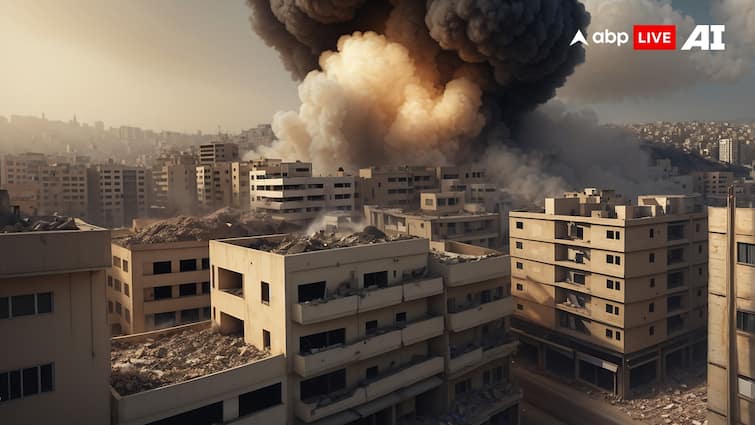

Russia launched a large-scale aerial assault against Ukraine on Friday, firing 93 missiles and nearly 200 drones, according to Ukrainian President Volodymyr Zelenskyy. He described the attack as one of the heaviest strikes on the energy infrastructure of the country since the full-scale invasion began almost three years ago.
According to a report by Associate Press, Ukraine’s defenses intercepted 81 missiles, including 11 cruise missiles brought down by F-16 fighter jets supplied by Western allies earlier this year, Zelenskyy said. He accused Russia of “terrorising millions” with such attacks and urged the international community to stand united against Russian President Vladimir Putin. “A strong reaction from the world is needed: a massive strike – a massive reaction. This is the only way to stop terror,” Zelenskyy said.
Meanwhile, uncertainty looms over the war’s trajectory next year, as U.S. President-elect Donald Trump, set to assume office next month, has pledged to end the conflict, raising questions about the future of critical U.S. military aid to Ukraine.
In Moscow, the Defense Ministry stated that the attack targeted “critically important fuel and energy facilities” essential to the military-industrial complex of Ukraine. The assault was described as retaliation for Ukraine’s use of U.S.-supplied Army Tactical Missile Systems (ATACMs) in a Wednesday strike on a Russian air base.
The U.S. Embassy in Kyiv said Friday’s attacks also targeted transport infrastructure and other critical sites. Ukraine’s largest private energy company, DTEK, confirmed that its thermal power plants suffered major damage following the strikes.
Russia has repeatedly sought to incapacitate Ukraine’s power grid, aiming to weaken civilian morale, disrupt defense production, and leave communities without electricity, water, or heating during the harsh winter months.
Ukrainian Energy Minister Herman Halushchenko stated that energy workers are making every effort to “minimise the negative impact on the energy system,” pledging to give more details on the damage once the security situation permits.
Russia Is Stockpiling Cruise, Ballistic Missiles For Future Attacks: Officials
Ukraine’s air force reported overnight drone strikes followed by waves of cruise missiles entering the airspace of the country. Russia also deployed air-launched ballistic Kinzhal missiles targeting Ukraine’s western regions, as per the report.
A similar large-scale assault on November 28 involved approximately 200 missiles and drones, leaving over a million households without power until emergency teams restored supplies. The officials of Ukrainian have cautioned that Russia is stockpiling cruise and ballistic missiles for future attacks.
On November 21, Russia deployed an intermediate-range hypersonic ballistic missile for the first time, striking an industrial plant in Dnipro. President Vladimir Putin described the use of the Oreshnik missile as retaliation for Ukrainian attacks on Russian territory using Western-supplied longer-range weapons. He warned that further strikes with the new weapon could follow. Although U.S. officials have indicated the Oreshnik may be used again, there was no indication it was deployed in Friday’s attack.
Nearly half of the energy infrastructure of Ukraine was destroyed during the war, resulting in widespread and frequent rolling blackouts. Despite receiving air defense systems from Western allies to safeguard critical infrastructure, Ukraine went through challenges as Russia used “swarms” of missiles and drones to overwhelm defenses.

Russia launched a large-scale aerial assault against Ukraine on Friday, firing 93 missiles and nearly 200 drones, according to Ukrainian President Volodymyr Zelenskyy. He described the attack as one of the heaviest strikes on the energy infrastructure of the country since the full-scale invasion began almost three years ago.
According to a report by Associate Press, Ukraine’s defenses intercepted 81 missiles, including 11 cruise missiles brought down by F-16 fighter jets supplied by Western allies earlier this year, Zelenskyy said. He accused Russia of “terrorising millions” with such attacks and urged the international community to stand united against Russian President Vladimir Putin. “A strong reaction from the world is needed: a massive strike – a massive reaction. This is the only way to stop terror,” Zelenskyy said.
Meanwhile, uncertainty looms over the war’s trajectory next year, as U.S. President-elect Donald Trump, set to assume office next month, has pledged to end the conflict, raising questions about the future of critical U.S. military aid to Ukraine.
In Moscow, the Defense Ministry stated that the attack targeted “critically important fuel and energy facilities” essential to the military-industrial complex of Ukraine. The assault was described as retaliation for Ukraine’s use of U.S.-supplied Army Tactical Missile Systems (ATACMs) in a Wednesday strike on a Russian air base.
The U.S. Embassy in Kyiv said Friday’s attacks also targeted transport infrastructure and other critical sites. Ukraine’s largest private energy company, DTEK, confirmed that its thermal power plants suffered major damage following the strikes.
Russia has repeatedly sought to incapacitate Ukraine’s power grid, aiming to weaken civilian morale, disrupt defense production, and leave communities without electricity, water, or heating during the harsh winter months.
Ukrainian Energy Minister Herman Halushchenko stated that energy workers are making every effort to “minimise the negative impact on the energy system,” pledging to give more details on the damage once the security situation permits.
Russia Is Stockpiling Cruise, Ballistic Missiles For Future Attacks: Officials
Ukraine’s air force reported overnight drone strikes followed by waves of cruise missiles entering the airspace of the country. Russia also deployed air-launched ballistic Kinzhal missiles targeting Ukraine’s western regions, as per the report.
A similar large-scale assault on November 28 involved approximately 200 missiles and drones, leaving over a million households without power until emergency teams restored supplies. The officials of Ukrainian have cautioned that Russia is stockpiling cruise and ballistic missiles for future attacks.
On November 21, Russia deployed an intermediate-range hypersonic ballistic missile for the first time, striking an industrial plant in Dnipro. President Vladimir Putin described the use of the Oreshnik missile as retaliation for Ukrainian attacks on Russian territory using Western-supplied longer-range weapons. He warned that further strikes with the new weapon could follow. Although U.S. officials have indicated the Oreshnik may be used again, there was no indication it was deployed in Friday’s attack.
Nearly half of the energy infrastructure of Ukraine was destroyed during the war, resulting in widespread and frequent rolling blackouts. Despite receiving air defense systems from Western allies to safeguard critical infrastructure, Ukraine went through challenges as Russia used “swarms” of missiles and drones to overwhelm defenses.

Russia launched a large-scale aerial assault against Ukraine on Friday, firing 93 missiles and nearly 200 drones, according to Ukrainian President Volodymyr Zelenskyy. He described the attack as one of the heaviest strikes on the energy infrastructure of the country since the full-scale invasion began almost three years ago.
According to a report by Associate Press, Ukraine’s defenses intercepted 81 missiles, including 11 cruise missiles brought down by F-16 fighter jets supplied by Western allies earlier this year, Zelenskyy said. He accused Russia of “terrorising millions” with such attacks and urged the international community to stand united against Russian President Vladimir Putin. “A strong reaction from the world is needed: a massive strike – a massive reaction. This is the only way to stop terror,” Zelenskyy said.
Meanwhile, uncertainty looms over the war’s trajectory next year, as U.S. President-elect Donald Trump, set to assume office next month, has pledged to end the conflict, raising questions about the future of critical U.S. military aid to Ukraine.
In Moscow, the Defense Ministry stated that the attack targeted “critically important fuel and energy facilities” essential to the military-industrial complex of Ukraine. The assault was described as retaliation for Ukraine’s use of U.S.-supplied Army Tactical Missile Systems (ATACMs) in a Wednesday strike on a Russian air base.
The U.S. Embassy in Kyiv said Friday’s attacks also targeted transport infrastructure and other critical sites. Ukraine’s largest private energy company, DTEK, confirmed that its thermal power plants suffered major damage following the strikes.
Russia has repeatedly sought to incapacitate Ukraine’s power grid, aiming to weaken civilian morale, disrupt defense production, and leave communities without electricity, water, or heating during the harsh winter months.
Ukrainian Energy Minister Herman Halushchenko stated that energy workers are making every effort to “minimise the negative impact on the energy system,” pledging to give more details on the damage once the security situation permits.
Russia Is Stockpiling Cruise, Ballistic Missiles For Future Attacks: Officials
Ukraine’s air force reported overnight drone strikes followed by waves of cruise missiles entering the airspace of the country. Russia also deployed air-launched ballistic Kinzhal missiles targeting Ukraine’s western regions, as per the report.
A similar large-scale assault on November 28 involved approximately 200 missiles and drones, leaving over a million households without power until emergency teams restored supplies. The officials of Ukrainian have cautioned that Russia is stockpiling cruise and ballistic missiles for future attacks.
On November 21, Russia deployed an intermediate-range hypersonic ballistic missile for the first time, striking an industrial plant in Dnipro. President Vladimir Putin described the use of the Oreshnik missile as retaliation for Ukrainian attacks on Russian territory using Western-supplied longer-range weapons. He warned that further strikes with the new weapon could follow. Although U.S. officials have indicated the Oreshnik may be used again, there was no indication it was deployed in Friday’s attack.
Nearly half of the energy infrastructure of Ukraine was destroyed during the war, resulting in widespread and frequent rolling blackouts. Despite receiving air defense systems from Western allies to safeguard critical infrastructure, Ukraine went through challenges as Russia used “swarms” of missiles and drones to overwhelm defenses.
Russia launched a large-scale aerial assault against Ukraine on Friday, firing 93 missiles and nearly 200 drones, according to Ukrainian President Volodymyr Zelenskyy. He described the attack as one of the heaviest strikes on the energy infrastructure of the country since the full-scale invasion began almost three years ago.
According to a report by Associate Press, Ukraine’s defenses intercepted 81 missiles, including 11 cruise missiles brought down by F-16 fighter jets supplied by Western allies earlier this year, Zelenskyy said. He accused Russia of “terrorising millions” with such attacks and urged the international community to stand united against Russian President Vladimir Putin. “A strong reaction from the world is needed: a massive strike – a massive reaction. This is the only way to stop terror,” Zelenskyy said.
Meanwhile, uncertainty looms over the war’s trajectory next year, as U.S. President-elect Donald Trump, set to assume office next month, has pledged to end the conflict, raising questions about the future of critical U.S. military aid to Ukraine.
In Moscow, the Defense Ministry stated that the attack targeted “critically important fuel and energy facilities” essential to the military-industrial complex of Ukraine. The assault was described as retaliation for Ukraine’s use of U.S.-supplied Army Tactical Missile Systems (ATACMs) in a Wednesday strike on a Russian air base.
The U.S. Embassy in Kyiv said Friday’s attacks also targeted transport infrastructure and other critical sites. Ukraine’s largest private energy company, DTEK, confirmed that its thermal power plants suffered major damage following the strikes.
Russia has repeatedly sought to incapacitate Ukraine’s power grid, aiming to weaken civilian morale, disrupt defense production, and leave communities without electricity, water, or heating during the harsh winter months.
Ukrainian Energy Minister Herman Halushchenko stated that energy workers are making every effort to “minimise the negative impact on the energy system,” pledging to give more details on the damage once the security situation permits.
Russia Is Stockpiling Cruise, Ballistic Missiles For Future Attacks: Officials
Ukraine’s air force reported overnight drone strikes followed by waves of cruise missiles entering the airspace of the country. Russia also deployed air-launched ballistic Kinzhal missiles targeting Ukraine’s western regions, as per the report.
A similar large-scale assault on November 28 involved approximately 200 missiles and drones, leaving over a million households without power until emergency teams restored supplies. The officials of Ukrainian have cautioned that Russia is stockpiling cruise and ballistic missiles for future attacks.
On November 21, Russia deployed an intermediate-range hypersonic ballistic missile for the first time, striking an industrial plant in Dnipro. President Vladimir Putin described the use of the Oreshnik missile as retaliation for Ukrainian attacks on Russian territory using Western-supplied longer-range weapons. He warned that further strikes with the new weapon could follow. Although U.S. officials have indicated the Oreshnik may be used again, there was no indication it was deployed in Friday’s attack.
Nearly half of the energy infrastructure of Ukraine was destroyed during the war, resulting in widespread and frequent rolling blackouts. Despite receiving air defense systems from Western allies to safeguard critical infrastructure, Ukraine went through challenges as Russia used “swarms” of missiles and drones to overwhelm defenses.

Russia launched a large-scale aerial assault against Ukraine on Friday, firing 93 missiles and nearly 200 drones, according to Ukrainian President Volodymyr Zelenskyy. He described the attack as one of the heaviest strikes on the energy infrastructure of the country since the full-scale invasion began almost three years ago.
According to a report by Associate Press, Ukraine’s defenses intercepted 81 missiles, including 11 cruise missiles brought down by F-16 fighter jets supplied by Western allies earlier this year, Zelenskyy said. He accused Russia of “terrorising millions” with such attacks and urged the international community to stand united against Russian President Vladimir Putin. “A strong reaction from the world is needed: a massive strike – a massive reaction. This is the only way to stop terror,” Zelenskyy said.
Meanwhile, uncertainty looms over the war’s trajectory next year, as U.S. President-elect Donald Trump, set to assume office next month, has pledged to end the conflict, raising questions about the future of critical U.S. military aid to Ukraine.
In Moscow, the Defense Ministry stated that the attack targeted “critically important fuel and energy facilities” essential to the military-industrial complex of Ukraine. The assault was described as retaliation for Ukraine’s use of U.S.-supplied Army Tactical Missile Systems (ATACMs) in a Wednesday strike on a Russian air base.
The U.S. Embassy in Kyiv said Friday’s attacks also targeted transport infrastructure and other critical sites. Ukraine’s largest private energy company, DTEK, confirmed that its thermal power plants suffered major damage following the strikes.
Russia has repeatedly sought to incapacitate Ukraine’s power grid, aiming to weaken civilian morale, disrupt defense production, and leave communities without electricity, water, or heating during the harsh winter months.
Ukrainian Energy Minister Herman Halushchenko stated that energy workers are making every effort to “minimise the negative impact on the energy system,” pledging to give more details on the damage once the security situation permits.
Russia Is Stockpiling Cruise, Ballistic Missiles For Future Attacks: Officials
Ukraine’s air force reported overnight drone strikes followed by waves of cruise missiles entering the airspace of the country. Russia also deployed air-launched ballistic Kinzhal missiles targeting Ukraine’s western regions, as per the report.
A similar large-scale assault on November 28 involved approximately 200 missiles and drones, leaving over a million households without power until emergency teams restored supplies. The officials of Ukrainian have cautioned that Russia is stockpiling cruise and ballistic missiles for future attacks.
On November 21, Russia deployed an intermediate-range hypersonic ballistic missile for the first time, striking an industrial plant in Dnipro. President Vladimir Putin described the use of the Oreshnik missile as retaliation for Ukrainian attacks on Russian territory using Western-supplied longer-range weapons. He warned that further strikes with the new weapon could follow. Although U.S. officials have indicated the Oreshnik may be used again, there was no indication it was deployed in Friday’s attack.
Nearly half of the energy infrastructure of Ukraine was destroyed during the war, resulting in widespread and frequent rolling blackouts. Despite receiving air defense systems from Western allies to safeguard critical infrastructure, Ukraine went through challenges as Russia used “swarms” of missiles and drones to overwhelm defenses.
Russia launched a large-scale aerial assault against Ukraine on Friday, firing 93 missiles and nearly 200 drones, according to Ukrainian President Volodymyr Zelenskyy. He described the attack as one of the heaviest strikes on the energy infrastructure of the country since the full-scale invasion began almost three years ago.
According to a report by Associate Press, Ukraine’s defenses intercepted 81 missiles, including 11 cruise missiles brought down by F-16 fighter jets supplied by Western allies earlier this year, Zelenskyy said. He accused Russia of “terrorising millions” with such attacks and urged the international community to stand united against Russian President Vladimir Putin. “A strong reaction from the world is needed: a massive strike – a massive reaction. This is the only way to stop terror,” Zelenskyy said.
Meanwhile, uncertainty looms over the war’s trajectory next year, as U.S. President-elect Donald Trump, set to assume office next month, has pledged to end the conflict, raising questions about the future of critical U.S. military aid to Ukraine.
In Moscow, the Defense Ministry stated that the attack targeted “critically important fuel and energy facilities” essential to the military-industrial complex of Ukraine. The assault was described as retaliation for Ukraine’s use of U.S.-supplied Army Tactical Missile Systems (ATACMs) in a Wednesday strike on a Russian air base.
The U.S. Embassy in Kyiv said Friday’s attacks also targeted transport infrastructure and other critical sites. Ukraine’s largest private energy company, DTEK, confirmed that its thermal power plants suffered major damage following the strikes.
Russia has repeatedly sought to incapacitate Ukraine’s power grid, aiming to weaken civilian morale, disrupt defense production, and leave communities without electricity, water, or heating during the harsh winter months.
Ukrainian Energy Minister Herman Halushchenko stated that energy workers are making every effort to “minimise the negative impact on the energy system,” pledging to give more details on the damage once the security situation permits.
Russia Is Stockpiling Cruise, Ballistic Missiles For Future Attacks: Officials
Ukraine’s air force reported overnight drone strikes followed by waves of cruise missiles entering the airspace of the country. Russia also deployed air-launched ballistic Kinzhal missiles targeting Ukraine’s western regions, as per the report.
A similar large-scale assault on November 28 involved approximately 200 missiles and drones, leaving over a million households without power until emergency teams restored supplies. The officials of Ukrainian have cautioned that Russia is stockpiling cruise and ballistic missiles for future attacks.
On November 21, Russia deployed an intermediate-range hypersonic ballistic missile for the first time, striking an industrial plant in Dnipro. President Vladimir Putin described the use of the Oreshnik missile as retaliation for Ukrainian attacks on Russian territory using Western-supplied longer-range weapons. He warned that further strikes with the new weapon could follow. Although U.S. officials have indicated the Oreshnik may be used again, there was no indication it was deployed in Friday’s attack.
Nearly half of the energy infrastructure of Ukraine was destroyed during the war, resulting in widespread and frequent rolling blackouts. Despite receiving air defense systems from Western allies to safeguard critical infrastructure, Ukraine went through challenges as Russia used “swarms” of missiles and drones to overwhelm defenses.
Russia launched a large-scale aerial assault against Ukraine on Friday, firing 93 missiles and nearly 200 drones, according to Ukrainian President Volodymyr Zelenskyy. He described the attack as one of the heaviest strikes on the energy infrastructure of the country since the full-scale invasion began almost three years ago.
According to a report by Associate Press, Ukraine’s defenses intercepted 81 missiles, including 11 cruise missiles brought down by F-16 fighter jets supplied by Western allies earlier this year, Zelenskyy said. He accused Russia of “terrorising millions” with such attacks and urged the international community to stand united against Russian President Vladimir Putin. “A strong reaction from the world is needed: a massive strike – a massive reaction. This is the only way to stop terror,” Zelenskyy said.
Meanwhile, uncertainty looms over the war’s trajectory next year, as U.S. President-elect Donald Trump, set to assume office next month, has pledged to end the conflict, raising questions about the future of critical U.S. military aid to Ukraine.
In Moscow, the Defense Ministry stated that the attack targeted “critically important fuel and energy facilities” essential to the military-industrial complex of Ukraine. The assault was described as retaliation for Ukraine’s use of U.S.-supplied Army Tactical Missile Systems (ATACMs) in a Wednesday strike on a Russian air base.
The U.S. Embassy in Kyiv said Friday’s attacks also targeted transport infrastructure and other critical sites. Ukraine’s largest private energy company, DTEK, confirmed that its thermal power plants suffered major damage following the strikes.
Russia has repeatedly sought to incapacitate Ukraine’s power grid, aiming to weaken civilian morale, disrupt defense production, and leave communities without electricity, water, or heating during the harsh winter months.
Ukrainian Energy Minister Herman Halushchenko stated that energy workers are making every effort to “minimise the negative impact on the energy system,” pledging to give more details on the damage once the security situation permits.
Russia Is Stockpiling Cruise, Ballistic Missiles For Future Attacks: Officials
Ukraine’s air force reported overnight drone strikes followed by waves of cruise missiles entering the airspace of the country. Russia also deployed air-launched ballistic Kinzhal missiles targeting Ukraine’s western regions, as per the report.
A similar large-scale assault on November 28 involved approximately 200 missiles and drones, leaving over a million households without power until emergency teams restored supplies. The officials of Ukrainian have cautioned that Russia is stockpiling cruise and ballistic missiles for future attacks.
On November 21, Russia deployed an intermediate-range hypersonic ballistic missile for the first time, striking an industrial plant in Dnipro. President Vladimir Putin described the use of the Oreshnik missile as retaliation for Ukrainian attacks on Russian territory using Western-supplied longer-range weapons. He warned that further strikes with the new weapon could follow. Although U.S. officials have indicated the Oreshnik may be used again, there was no indication it was deployed in Friday’s attack.
Nearly half of the energy infrastructure of Ukraine was destroyed during the war, resulting in widespread and frequent rolling blackouts. Despite receiving air defense systems from Western allies to safeguard critical infrastructure, Ukraine went through challenges as Russia used “swarms” of missiles and drones to overwhelm defenses.
Russia launched a large-scale aerial assault against Ukraine on Friday, firing 93 missiles and nearly 200 drones, according to Ukrainian President Volodymyr Zelenskyy. He described the attack as one of the heaviest strikes on the energy infrastructure of the country since the full-scale invasion began almost three years ago.
According to a report by Associate Press, Ukraine’s defenses intercepted 81 missiles, including 11 cruise missiles brought down by F-16 fighter jets supplied by Western allies earlier this year, Zelenskyy said. He accused Russia of “terrorising millions” with such attacks and urged the international community to stand united against Russian President Vladimir Putin. “A strong reaction from the world is needed: a massive strike – a massive reaction. This is the only way to stop terror,” Zelenskyy said.
Meanwhile, uncertainty looms over the war’s trajectory next year, as U.S. President-elect Donald Trump, set to assume office next month, has pledged to end the conflict, raising questions about the future of critical U.S. military aid to Ukraine.
In Moscow, the Defense Ministry stated that the attack targeted “critically important fuel and energy facilities” essential to the military-industrial complex of Ukraine. The assault was described as retaliation for Ukraine’s use of U.S.-supplied Army Tactical Missile Systems (ATACMs) in a Wednesday strike on a Russian air base.
The U.S. Embassy in Kyiv said Friday’s attacks also targeted transport infrastructure and other critical sites. Ukraine’s largest private energy company, DTEK, confirmed that its thermal power plants suffered major damage following the strikes.
Russia has repeatedly sought to incapacitate Ukraine’s power grid, aiming to weaken civilian morale, disrupt defense production, and leave communities without electricity, water, or heating during the harsh winter months.
Ukrainian Energy Minister Herman Halushchenko stated that energy workers are making every effort to “minimise the negative impact on the energy system,” pledging to give more details on the damage once the security situation permits.
Russia Is Stockpiling Cruise, Ballistic Missiles For Future Attacks: Officials
Ukraine’s air force reported overnight drone strikes followed by waves of cruise missiles entering the airspace of the country. Russia also deployed air-launched ballistic Kinzhal missiles targeting Ukraine’s western regions, as per the report.
A similar large-scale assault on November 28 involved approximately 200 missiles and drones, leaving over a million households without power until emergency teams restored supplies. The officials of Ukrainian have cautioned that Russia is stockpiling cruise and ballistic missiles for future attacks.
On November 21, Russia deployed an intermediate-range hypersonic ballistic missile for the first time, striking an industrial plant in Dnipro. President Vladimir Putin described the use of the Oreshnik missile as retaliation for Ukrainian attacks on Russian territory using Western-supplied longer-range weapons. He warned that further strikes with the new weapon could follow. Although U.S. officials have indicated the Oreshnik may be used again, there was no indication it was deployed in Friday’s attack.
Nearly half of the energy infrastructure of Ukraine was destroyed during the war, resulting in widespread and frequent rolling blackouts. Despite receiving air defense systems from Western allies to safeguard critical infrastructure, Ukraine went through challenges as Russia used “swarms” of missiles and drones to overwhelm defenses.

